Articles
Bequest value in two forest communities in Mexico
El valor de legado en dos comunidades forestales en México
Bequest value in two forest communities in Mexico
Acta universitaria, vol. 34, e4120, 2024
Universidad de Guanajuato, Dirección de Investigación y Posgrado
Received: 08 February 2024
Accepted: 14 June 2024
Published: 18 September 2024
Abstract: This study recognizes and identifies the existence of a bequest motive (BM) closely related to forest conservation in forest communities with forest logging. This was based on a contingent valuation standard survey of households living in two contrasting forest communities. Results show that between 71% and 83% of heads of households declared their willingness to endure an altruistic sacrifice so that their children can enjoy the forest resources available in the communities. Variables such as age, gender, income, education, and forest type are closely related to BM. The variations of these determinants depend on the payment vehicle. The main difference between communities is that the greater the benefits they receive from the forest resources they own the greater the bequest value they possess. The findings are important because they identify that even poor households are willing to make an altruistic sacrifice for the enjoyment of the forest for future generations.
Keywords: Willingness to pay, poor communities, forest conservation.
Resumen: Este estudio reconoce e identifica la existencia de un motivo de legado (ML) relacionado con la conservación de los bosques en comunidades forestales con aprovechamiento forestal. Para ello, se realizó una encuesta tipo de valoración contingente en hogares de dos comunidades forestales contrastantes. Los resultados muestran que entre el 71% y el 83% de los jefes de hogar declararon su disposición a hacer un esfuerzo altruista; de esta manera, variables como la edad, el género, los ingresos, la educación y el tipo de bosque están estrechamente relacionadas con el ML. Las variaciones de estos determinantes dependen del “vehículo de pago”. La principal diferencia entre las comunidades es que cuanto mayores son los beneficios que obtienen de los recursos forestales que poseen, mayor es la disponibilidad a heredar. Los hallazgos son importantes pues corroboran que los hogares pobres aún están dispuestos a hacer un sacrificio altruista para el disfrute forestal de las generaciones futuras.
Palabras clave: Disponibilidad de pago, comunidades pobres, conservación forestal.
Introduction
Bequest value is one of the most understudied ecosystem services (Oleson et al., 2015). It refers to the altruistic value that a human generation assigns to forests so that future generations can enjoy an acceptable quantity and quality of the forest resources that currently exist (Amacher et al., 2002). The concept was conceived as part of a collection of values known as non-use values of natural resources (Pearce, 1993).
The literature suggests that the higher the value assigned to this intergenerational transference, the greater the owner’s effort to conserve a natural resource (Conway et al., 2003). Such conservation has its costs, often associated with a reduction of profits derived from the exploitation of the resource or its restoration, which in both cases lowers owner’s present consumption (Knudsen et al., 2018). Therefore, the decision of whether to bequeath the environmental resource depends on the resource’s characteristics and the present generation’s welfare level. In addition, if such a resource produces a valuable public good, then there is larger chance to convince current generations to conserve it.
Willingness to pay or sacrifice profits in order to bequeath a public good have been either challenged (Diafas et al., 2017) or highlighted at the level of states or groups of states (Lockwood et al., 1993; Popp, 2001), groups of localities or regions (Mallawaarachchi et al., 2001), and at the level of an individual owner of natural resources (Conway et al., 2003; Diafas et al., 2017; Tahvonen, 1998; Thompson & Hansen, 2012). The existence of a bequest motive is undeniable (Cummings & Harrison, 1995) and has been well identified in the case of private forestry producers (Tahvonen, 1998).
The exploration of the existence of a bequest value in forest communities has two relevant aspects. First, the bequest value for forest communities is not just a conservation value, in that, beyond the public goods the bequeathed areas may provide, these communities obtain benefits from harvest timber and non-timber forest products; hence, bequeathing a forest track means also bequeathing an ongoing income stream to the next generation. Therefore, the existence of a bequest value is a proxy to estimate the desire to maintain a long-term income stream. Second, the existence of a bequest value in these forest communities is a proxy to strengthen the application for alternative forest conservation public policy instruments -such as the devolution of property rights to forest resources to communities (Lindhjem & Mitani, 2012; Thompson & Hansen, 2012)- and to build capacities to foster forest conservation (Torres-Rojo et al., 2019).
The present research aimed to identify the existence of bequest value in two contrasting forest communities. In particular, the objective was to identify the socioeconomic and environmental individual and collective attributes that relate to the willingness to bequeath through different payment vehicles.
Materials and methods
Theoretical considerations and context
The approximation to identify the bequest value uses the analytical framework of a willingness to pay model (Lindhjem & Mitani, 2012). Under this framework we assume a representative forest community member who derives utility from timber and non-timber forest products and amenities through the following indirect utility function:
where is the community’s forest stock; represents the price of goods and services; is a function representing the net monetary income (deducting forest management costs) derived from the forest stock (timber and non-timber); represents the non-market benefits (non-monetary) from the stock; and is the vector of characteristics of the community member, and the community as a whole, influencing their utility.
The decision to bequeath consists of evaluating two choices. The first one is to maintain the current use of the forest stock; the second choice is to isolate a part of the forest stock to be bequeathed and maintained in conservation for future generations, so that he/she will be the only using a remaining forest stock . Then, if the bequeathed part of the forest () produces a certain level of utility for the community member, then it will expand until the compensating welfare measure equates the following indirect utility functions:
where B represents the bequest value that compensates the forgone benefits derived from bequeath a part of the forest stock. Such value can be approximated by the difference in direct monetary income derived from reducing the use of the forest stock ; the difference (in monetary terms) of the utility derived from nonmarket services and amenities, which will no longer be used in the bequeathed forest; and the additional investment on reforestation, conservation, or protection activities in the bequeathed area beyond the usual or required forest protection, conservation, or management costs. We would expect and to be non-negative since the reduction in forest stock will diminish the amount of resources to be used by the community member, although it could be 0 in the case has no current use or utility for the community. Summarizing the components, the bequest value can be approximated as:
This estimate for only considers the forgone income and utility for the community member derived from the use or enjoyment of market and non-market products, services and amenities, as well as additional investment costs in that could turn it more valuable in the future. Hence, in equation 3 can be approximated as a function of the typical set of variables in a CV standard approach as follows:
where represents the forest resource conditions, stands for the community member attributes (e.g., age, gender, income, and education level, among others), refers to community’s characteristics where individual decisions are taken (governance structure, rights, among others), and represents the market variables (e.g., prices and costs). Hence, equation 4 is the base for our empirical approach, assuming each component in equation 3 represents a payment vehicle.
Characteristics of the forest communities under study
El Balcón (EB) is a forest community located in the state of Guerrero, Mexico (Figure 1). It covers a total of 25 565 ha, including 15 190 ha of temperate forests. Timber production is carried out on 72% of the forested area, and the remaining surface is devoted to conservation and restoration. EB has successfully established a community forest enterprise (CFE), which is based on logging the communal forest. The CFE became an exporting lumber company since the 1990s and has shown the ability to organize its community to preserve its forests, generate income, offer public services, strengthen its social capital, and reduce forest-related violence (Durán et al., 2011). It is estimated that the CFE invests about 90% of the community’s profits in the provision of public goods, which includes rehabilitation of roads and the supplying of drinking water, energy, education, health services, and housing (Torres-Rojo et al., 2005). However, in the last years, EB has faced the presence of organized crime, which has affected the forest community production framework.
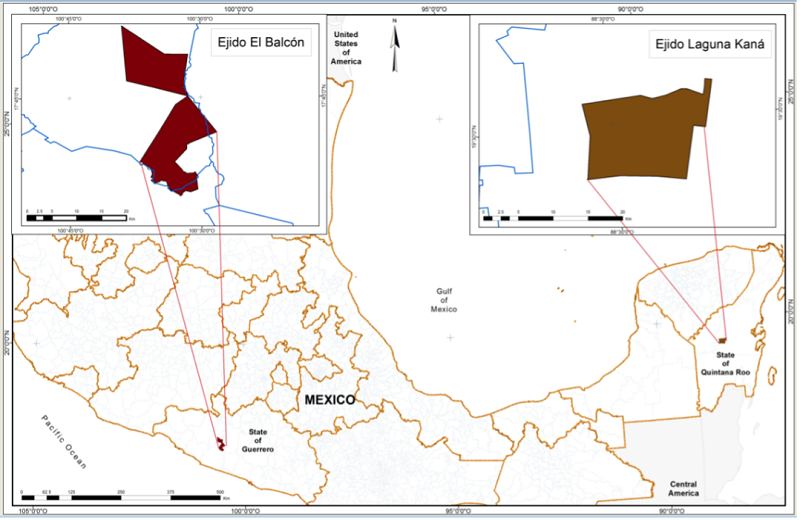
Figure 1
Location of the study area.
Source: Author’s own elaboration.
Laguna Kaná (LK) is a Mayan community located in the state of Quintana Roo (Figure 1); it was founded in 1942, but it was not legally recognized as an agrarian community until 1999 (Bray & Merino, 2004). The community has 18 495 ha of territory, most of it covered by a diverse tropical forest. Timber production is limited to felling and hauling, activities carried out by the community members. Logs are sold to outside’s community logging contractors. Other forest activities within the forest area beyond logging include: the exploitation of chicle, hunting, agroforestry, sustainable agriculture, and production of palizada (wood used for tourism activities).
In contrast to EB, this CFE generates few jobs for community members because the authorized logging volume in the management plan is much lower. It is estimated that tree felling provides employment for one half of the community members with land ownership rights and for three and four months a year. Profits from timber sales are distributed in cash to members with ownership rights, and only a small percentage is destined for reinvestment in forest areas or for the provision of public goods.
In both communities, the government approved forest management programs which partition the forest into conservation areas and logging areas. In the conservation areas there is no logging, but extraction of non-timber forest products is permitted. The logging areas are usually divided into (1) an area that is logged under normally ten-year management plans and (2) logging reserve areas to be harvested in future cycles. Investment in conservation and restoration activities is very low in LK and a bit larger in EB.
Collection of data and methods
A standard CV approach to elicit the components of the bequest value equation 4 was followed, trying to make them as clear as possible to the respondent. Under this approach, values are collected from a survey where respondents are asked to state their total willingness to pay (WTP) for conservation, including bequest. Afterwards, they were asked to decompose this amount into the different values (bequest, existence, own use, etc.) linked with conservation (O’Garra, 2009). The approach directly links the questions to the components of the bequest value stated in equation 3, e.g., forgone income and utility for the community member derived from the use or enjoyment of market products (), non-market products, services and amenities , and the additional investment costs to improve a bequeathed part of the forest ().
Each questionnaire was applied to the head of the family or to his/her spouse in the locality with the largest population of each forest community, regardless of whether they had ownership rights of the community forest.
In order to present a frame of reference for the questionnaire and to recognize the typical conservation and management activities in each community, preliminary research was conducted through interviews with different focal groups in the community to identify details on the use of forest resources, the governance structure for decision-making, and the different ways in which investments in conservation and protection are made. With this information respondents were first reminded of the benefits derived from the use of forest resources, contrasting this information with the current harvest rates and different uses recorded by the community’s authorities. Then after, they were presented with the following three scenarios:
-
A reduction in the current harvest rate to ensure that a proportional part of forest land being kept in reserve for future generations. This scenario aims to be a proxy to ∆I in equation 3. The following direct referendum-type of question was used to capture the WTP for this proxy: By what percentage do you think the assembly should be requested to reduce the harvest volume to ensure that your children will continue to work in the forest activity?
-
An increase of constraints to activities such as hunting wildlife, harvesting mature trees, or using reserved areas for water protection or recreational and cultural purposes. The constraints were framed as alternatives to reserve forest lands producing nonmarket services and amenities for future generations. The set of questions included frequency of use, participation in these activities, frequency of hunting activities and recreational activities, and the use or protection of some sections of the forest. These questions were used to establish a frame of reference for the individual surveyed so that they could estimate the benefits obtained from their forest. In addition, these questions aided the individual in identifying an anchor or reference value (Kahneman et al., 1999) for the open question of willingness to accept a cost to bequeath a part of their forest. The answers were used to build a proxy for the value of ∆Q in equation 3. The value of management constraints was estimated from the basic information obtained from the questionnaire. In most cases this was calculated by multiplying the average price times the estimated volume not harvested or used. Since constraints and uses to estimate ∆Q are different in both communities, we used a dichotomous variable (nmkt) which registers the rejection (nmkt = 1) or not (nmkt = 0) of at least one constraint, instead of using the estimated value of the constraints. For instance, if a community member was willing to stop hunting (accept a cost) but was in favor of harvesting mature trees in the reserve area (not to accept a cost), then his/her answer was recorded as a rejection to accept a constraint in favor of the conservation of nonmarket services and amenities in the reserved or constrained area (nmkt = 1). Equation 4 was then fitted taking as response variable nmkt.
-
Estimate of how many working days they would be willing to give to the community within a year and with no payment at all, to perform practices he/she considers should be implemented to conserve the bequeathed forest for future generations. This estimate was used as a proxy to estimate in equation 3.
Control questions at the household level were added in four groups: (1) participation in the community’s decision making, (2) family information (size of the family, education of the members of the family, use of timber and non-timber forest products, size of livestock, beneficiaries from a social, education, forestry or agricultural program, family expenses and additional assets), (3) individual information (age, education, number of working days along the year, and income), and (4) perception on conservation and forest management activities in the community. Table 1 defines the set of variables used in the models.
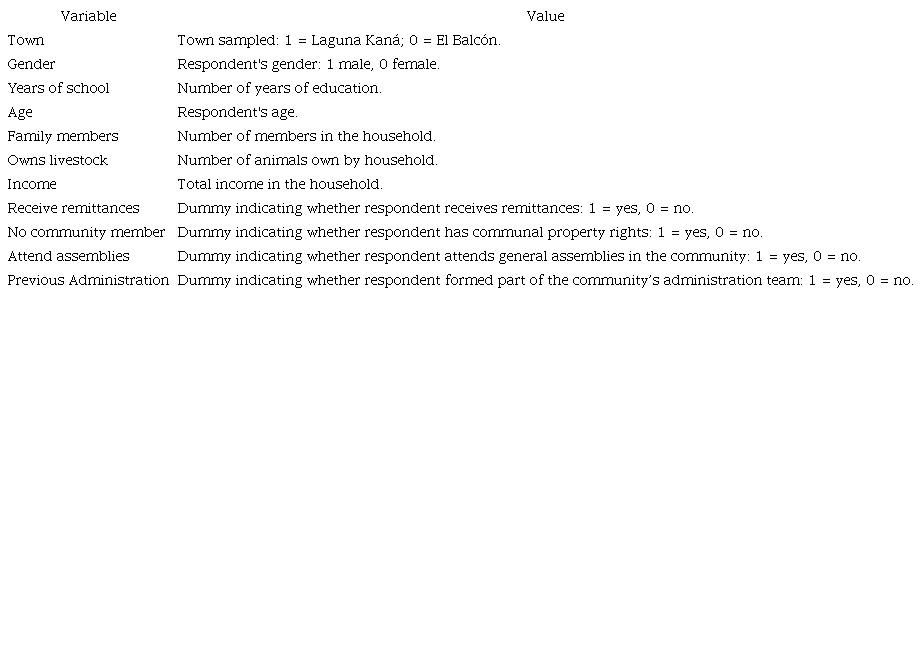
Source: Author’s own elaboration.
The analysis of the information consisted of defining basic statistics and relating response variables (integrated by the different alternatives of evaluation of the bequest motive) with socioeconomic variables by means of econometric models.
Results
Demographic and socio-economic characteristics of studied communities
There was a total of 161 interviews for LK and 67 for EB. Selected demographic and socio-economic characteristics for both communities are presented in Table 2. LK residents are somewhat older and have higher education and fewer household members than in EB. By contrast, EB has more access to agricultural lands within the community than LK, has an income more than three times higher, and has much higher timber volumes. There is widespread access to agricultural land in both communities, and both are beneficiaries of government poverty alleviation programs to varying degrees.
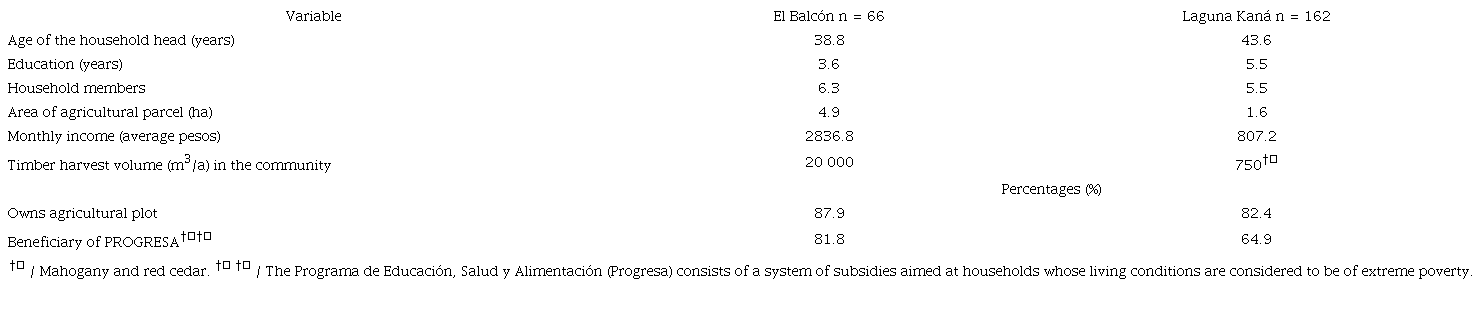
Source: Author’s own elaboration based on the surveys applied in household in both communities.
Estimates of willingness to pay
Table 3 shows the estimates for the average values used to approximate bequest value from the three components described in equation 3. The average WTP reduction in harvest volume for both communities was 12.3% (std dev = 15.04%), with a higher value for LK (14.5%) than for EB (6.5%). Despite this big difference, community members from EB are willing to sacrifice sixfold the amount of money the average member from LK. This estimate was made by converting the average percentage reduction into annual volume and multiplying that value times the stumpage price (at 2010 log prices).
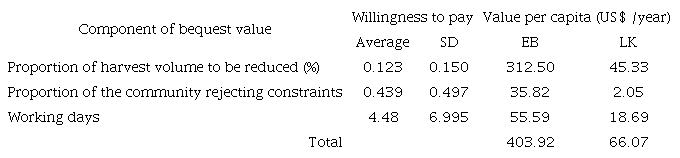
Estimates obtained from the sample at year 2010 prices SD = Standard Deviation, EB = El Balcón, LK = Laguna Kaná. The proportion of the community rejecting constraints shows the ratio of respondents who refuse to make sacrifices to inherit future generations. Source: Author’s own elaboration.
Constraints on the use of forest resources were valued by accounting volume harvest not used times a proxy of market prices. In the case of working days willing to sacrifice to bequeath a better forest, we estimated the average number of working days per year from the sample (by community). Then, this value was scaled by the price of one working day (jornal). Table 3 shows the summary of estimates for the bequest value components by community.
As expected, the biggest component of the bequest value is ∆I. No doubt it is a component that can be more precisely valued under the current conditions in both communities. It accounts for more than 70% of the total value estimated for bequest. The big difference in value between LK and EB is due to the weight forestry has in the economy of EB, not only from logging but from the production of lumber and furniture. Beyond the differences, the value estimate is large in both communities. For the case of LK, it represents almost 3.1% of one year’s average income, while for EB it goes up to 17% of that average yearly income. For the case of EB, there are two likely reasons supporting this high value, one of them is that EB distributes most of the profits from forestry to the community members through public goods. The second one is that the FCE in EB is more diversified and offers more jobs to community members.
Finally, investment measured through working days for the community is a standard way the communities handle the social work that must be done in the community; therefore, it is a well-known instrument to measure WTP known as willingness to work (WTW). The following section aims to identify which variables at individual or community level are related to each one of the bequest components.
WTP by accepting a reduction in tangible current benefits
Results suggest that inclination to reduce the volume of the present harvest is in the majority. Nevertheless, 28.5% of those interviewed declared unwillingness to do so, and almost 14% declared WTP, but they did not report to have a figure in mind for that reduction, particularly concentrated in EB (assumed as no WTP). A version of equation 4 was fitted, taking as response variable the percentage of reduction of the current harvest rate (p) which community members are willing to sacrifice to bequeath a forest track. Table 4 provides the results with four models. Model 1 uses a simple OLS fit, model 2 uses the Freeman-Tukey variance stabilizing arc sin transformation for the proportions to stabilize variance with OLS, model 3 uses a maximum likelihood estimation using a Probit model to model the proportion, and model 4 uses the arc sin transformation for the proportion but considering a reduced sample, where uncertain respondents were excluded from the analysis. This last fit obeys to the simple principle that uncertainty does not imply unwillingness to conserve forest areas.
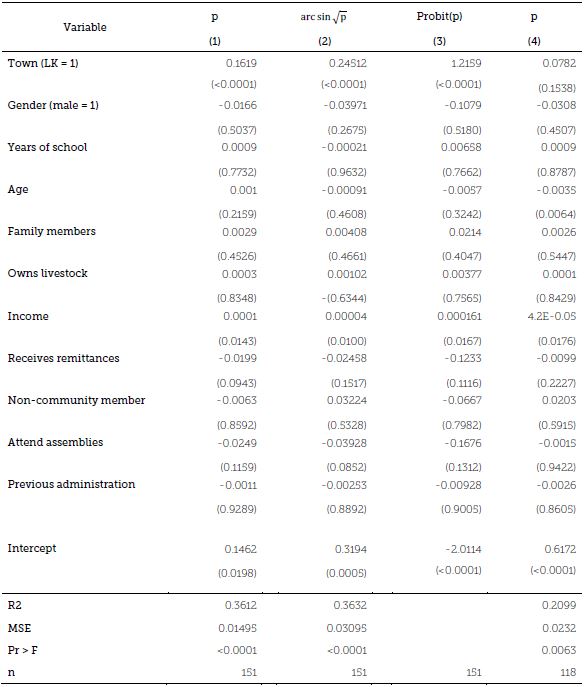
Values in parenthesis correspond to p-values. Source: Author’s own elaboration.
The four models are very consistent in the sign of the potential determinants for the proxy for ∆I. Control variables related to the respondent such as gender, years of school, age, and number of family members showed no effect on the response variable. Variables related to income, such as assets and additional earning (remittances), had a low effect. In contrast, income shows a direct relationship (with statistical significance) with the percentage of reduction (p) in the current harvest elicited by the respondent. This trend favors the hypothesis that community members with higher income levels are more willing to sacrifice some of their present profits in favor of future generations.
Willingness to pay accepting additional constraints in the use of nonmarket services and amenities as payment vehicle
Table 5 provides the results with a Probit model fitted by maximum likelihood estimation (MLE) using the dichotomous variable nmkt and the same set of exogenous variables as in the previous models. As expected, EB is more dependent on timber goods; hence, these people are less willing to accept constraints in the use of forest resources. Some community members in LK use the tropical forest as the main source of animal protein for their diet; however, despite this dependence on the forest, most of the community is willing to accept constraints on hunting and extraction of bushmeat to bequeath a better quality of forest resources to their heirs.
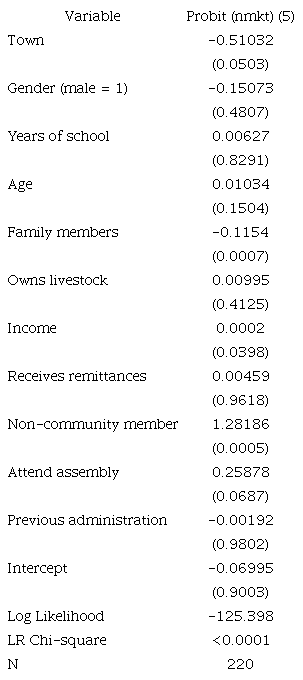
Values in parenthesis correspond to p-values. Source: Author’s own elaboration.
The model fit suggests that the larger the family size the larger the willingness to accept forest conservation constraints in the forest area. This behavior is likely to be related to the higher dependence that large families have on forest resources to get non-timber forest products (NTFP) and amenities. Results suggest that the higher the income coming from the main activities (logging), the lower the willingness to accept constraints in the use of forest resources, particularly NTFP.
Investment to bequeath a better conserved forest as payment vehicle
Evaluation of the bequest value through investment in silvicultural practices was evaluated by the WTW question. The most frequent answers were one or two weeks, in that order (Figure 2). The silvicultural practices they recommended were basically reforestation and wildfire management. Most of the people which suggested reforestation in LK also pointed out the poor results (survival rate) from this activity as justification to not devote free working days to this activity. On the contrary, EB were more willing to give time for the restoration and conservation of forest for future generations, especially in restoration and wildfire control and suppression.
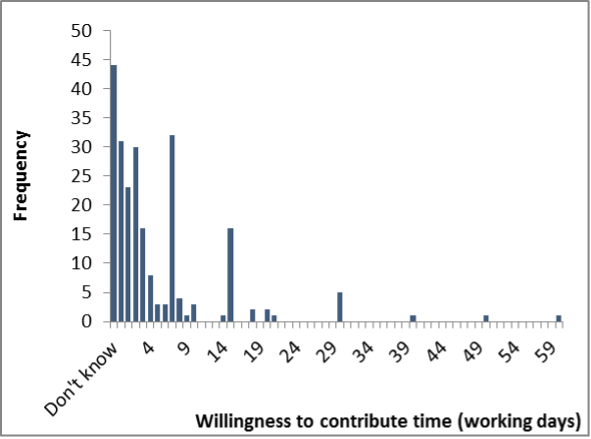
Figure 2
Frequency distribution for the willingness to contribute time.
Source: Author’s own elaboration.
Model 4 was fitted taking as response variable the working days willing to contribute for the improvement of the conditions of the forest for future generations. Table 6 provides the results with four models. The fit labeled 6 uses a simple OLS, fit labeled 7 uses OLS as well and a log transformation in the response variable to stabilize variance, while the model fit labeled 8 includes the proxies for the other two components of B, namely ∆I and , to try to identify any likely correlation within the model.
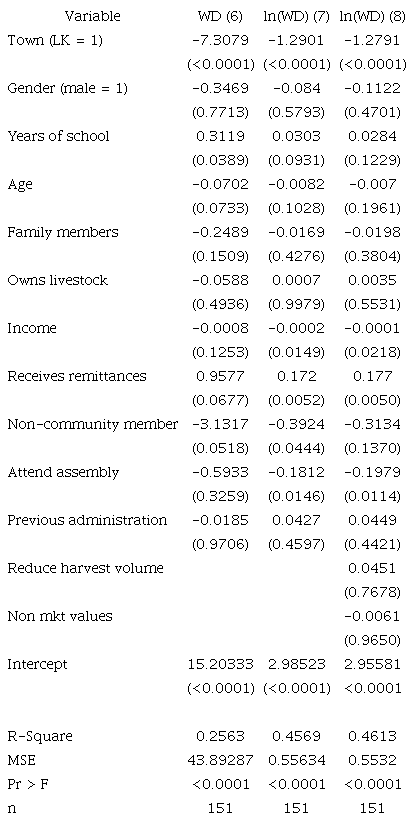
Values in parenthesis correspond to p-values. Source: Author’s own elaboration.
There is consistency in the results under the three models. In all cases, they show there is a significant difference between both communities. Community members of LK are less willing to contribute with time for conserving or protecting forest for future generations. Level of education seems to have some effect in defining a larger willingness to provide working days; however, it only has significance in the weakest model.
Age shows a consistent negative sign although with low significance. Its sign shows that the elderly are less willing to sacrifice working days than the young. The reason argued in literature is based on the idea that an elderly person would not express much willingness to reinvest, knowing that his life horizon is reduced over the years (Riddel & Shaw, 2003).
The effect of income is consistent, although its significance varies according to the model fit. The sign suggests that higher income community members are less willing to sacrifice time as they evidently have a larger opportunity cost. The positive effect of income in WTP for bequest, as reported in the literature (O’Garra, 2009), is clearer in the variable “remittances”. These latter effects show that surplus working days are not as abundant as they were thought in poor communities, since only those community members having an additional income source are willing to sacrifice this resource.
Model fit 8 shows that the other variables composing the bequest value according to equation 3 seem not to be related to the WTW to improve the bequeathed forest tract, which might suggest that the community member distinguishes among the three components of the bequest value.
Discussion
The main differences in WTP using the percentage of reduction on the current harvest rate are accounted by differences among communities, except in the last fit (4). EB community members are less willing to sacrifice volume for future generations probably due to their higher dependency on logging to cover community’s necessities as well as jobs for the community (Figure 3). This effect is comparable to that found in “non-industrial private forest” owners with forests in good condition and with high yield (Conway et al., 2003), or with those reported by Thompson & Hansen (2012) related to willingness to conserve.
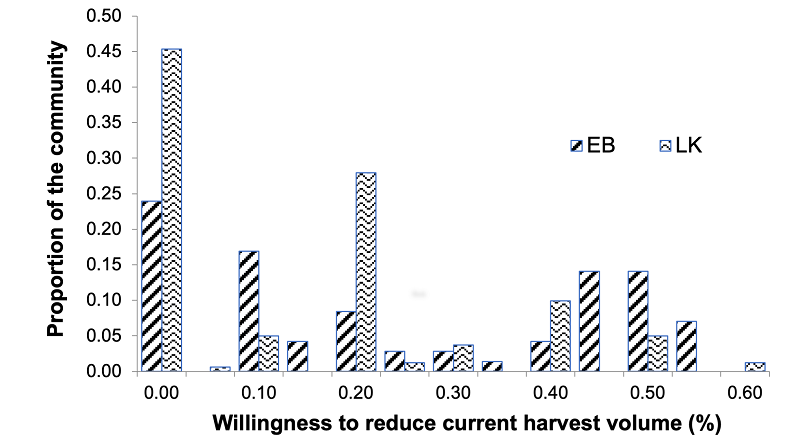
Figure 3
Frequency distribution of percentage of reduction in current harvest (p) by community: El Balcon (EB) and Laguna Kaná (LK).
Source: Author’s own elaboration.
It is interesting to observe that there seems to be no differences among community members, with or without land ownership rights. This result reveals that the bequest motive is not necessarily related with direct participation in profits associated with timber exploitation, but rather there must be other perceptions regarding forest goods and services provided by the forests.
The approximations to WTP using this payment vehicle does not allow comparison of the monetary value among the two communities as the quality and quantity of the log volume produced is radically different among them; however, it does permit a comparison of their perception in terms of the benefits they obtain. In other words, we consider that this WTP is more an expression of attitude toward bequest (Kahneman et al., 1999) than an indication of economic preference in the strictest sense. In this respect, the analysis did not attempt to estimate parameters of the distribution of the willingness-to-pay function, but only to define the determinants of this bequest attitude using the mean value of p to estimate ∆I. One final observation is that model 4 shows no differences among communities once uncertain community members are not considered and age becomes a statistically significant variable.
The WTP accepting additional constraints in the use of nonmarket services and amenities as payment vehicle seems to be more related to community variables as these constraints are defined at community level, namely, the presence of property rights and the level of participation in assemblies. In this context, community members with no property rights reject adding constraints to the use of resources with the goal to conserve the quality of the forest for future generations. The result is clear if we consider that these community members are usually the poorest members of the community and the ones having more restricted access to land, and the only benefit they get from residence in the community is the freedom to use public services and the non-market goods and amenities provided by the forest.
Participation in assemblies seems to have a negative effect on the willingness to impose constraints for conservation for future generations. It is likely that people attending assemblies are more aware of the outcomes of management constraints and the low effectiveness of enforcement mechanisms. In addition, they have experience in weighing the social costs of imposing those constraints and comparing them against the benefits (Bray, 2020). Hence, it seems plausible to hypothesize that debating those constraints in the general assembly tend to generate lengthy discussions and high social costs (transaction costs). Therefore, community members attending assemblies tend to reject the adoption of these constraints.
The variables related to the interaction between community and the community member are once again rather interesting in the definition of WTW to bequeath a better conserved forest (fits 6-8, Table 6). As expected, non-community members are less willing to sacrifice working days, despite they have the right to use non-market goods and services in both communities. On the contrary, participation in assemblies and having previous administrative experience in the community seem to have a negative effect for community members with rights. Tracking the questions related with this variable, we found an interesting reason for this result: most of the people, particularly in LK, who are not willing to participate with working days affirm reforestation and silvicultural practices are not successful since there are low survival rates or few effects in the forest. Members of this community also affirm that the work invested in firebreaks is not productive since they are rapidly absorbed by the jungle.
Apparently, these issues are vigorously discussed in assemblies before making the decision to undertake restoration and forest protection activities, hence, the strong significance this variable has on the final decision to participate or not in these activities. Evidently, this result illustrates that investment does not necessarily have to be made in the forest. The inheritance of a better governance structure for the community, better internal rules, and better transparency mechanisms can add significantly to the bequest value.
It is worth to mention that the dichotomous variable, community, attempts to capture characteristics that are not specified in the WTW model, but that distinguishes one population from another. In this case, it is observed that there is relatively less willingness to invest in the community of LK with respect to that of EB, probably reflecting other factors than those considered. A probable reason for this difference is that logging is much more important as an income source for the population of EB, reflecting the importance that this population gives to good management. Another likely reason is that EB possesses superior social capital to that of LK, since in EB the community decides to invest logging profits in public goods. These two elements could influence the fact that EB community members have a more positive attitude toward investment in public goods. It should also be noted that the result is consistent with results, showing that tropical forest communities have a higher discount rate than temperate forest communities; therefore, there is more conservation in the latter (Velázquez et al., 2003).
Finally, the three proxys to measure bequest seem to be well differentiated by community members; additionally, they seem to be rather independent. However, additional research is needed to identify if those variables do not correspond to expressions of other values or feelings from community members toward forest conservation.
Conclusions
In this study, the existence of a bequest or intergenerational value, closely related with the conservation of forests by poor forest communities, has been confirmed. This attitude of bequest undoubtedly makes it possible to mitigate the loss of forests that are in the hands of marginal rural communities that manage forest resources.
Depending on the modality of effort, an elevated figure that ranges between 71% and 83% of heads of household declared their willingness to make an altruistic sacrifice for the subsequent enjoyment of this resource by their children. It was detected that there is a greater propensity for sacrificing present profits (reduction of the volume of extracted harvest) rather than work effort. In the study, arguments are provided to confirm that this altruistic disposition depends on the characteristics of each individual, community structure, and decision-making processes on the use of common pool resources, as well as lack of information on the effect of investments or constraints on the use of resources.
All measures of bequest were related with income. However, the effect depends on the element of the bequest component it is referred to. Hence national policy instruments or internal rules within communities must identify the proper institutions to align incentives to the expected result. In any case, efforts aimed at diversifying a population’s income source and reducing their poverty can exert a significant effect on conservation due to the value that individuals place on the possibility that their children will be able to enjoy these resources in the future.
References
Amacher, G. S., Koskela, E., Ollikainen, M., & Conway, C. (2002). Bequest intentions of forest landowners: theory and empirical evidence. American Journal Of Agricultural Economics, 84(4), 1103-1114. https://doi.org/10.1111/1467-8276.00371
Bray, D., & Merino, L. (2004). La experiencia de las comunidades forestales en México: Veinticinco años de silvicultura y construcción de empresas forestales comunitarias. Instituto Nacional de Ecología.
Bray, D. (2020). Mexico’s Community Forest Enterprises: Success on the Commons and the Seeds of a Good Anthropocene. University of Arizona Press.
Conway, M. C., Amacher, G. C., Sullivan, J., & Wear, D. (2003). Decisions non-industrial forest landowners make: an empirical examination. Journal of Forest Economics, 9(3), 181-201. https://doi.org/10.1078/1104-6899-00034
Cummings, R. G., & Harrison, G. W. (1995). The measurement and decomposition of nonuse values: a critical review. Environmental and Resource Economics, 5, 225-247. https://doi.org/10.1007/BF00691518
Diafas, I., Barkmann, J., & Mburu, J. (2017). Measurement of bequest value using a non-monetary payment in a choice experiment-The case of improving forest ecosystem services for the benefit of local communities in rural Kenya.Ecological Economics, 140, 157-165. https://doi.org/10.1016/j.ecolecon.2017.05.006
Durán, E., Bray, D. B., Velázquez, A., & Larrazábal, A. (2011). Multi-scale forest governance, deforestation, and violence in two regions of Guerrero, Mexico. World Development, 39(4), 611-619. https://doi.org/10.1016/j.worlddev.2010.08.018
Kahneman, D., Ritov, I., Schkade, D., Sherman, S. J., & Varian, H. R. (1999). Economic preferences or attitude expressions?: An analysis of dollar responses to public issues. In B. Fischhoff & C. F. Manski (eds.), Elicitation of preferences (pp. 203-242). Springer. https://doi.org/10.1007/978-94-017-1406-8_8
Knudsen, C., Rigby, D., Yadav, A., & Global, I. P. E. (2018). Willingness to pay versus willingness to work: Does NREGA Target Women?. IPE Global Limited.
Lindhjem, H., & Mitani, Y. (2012). Forest owners’ willingness to accept compensation for voluntary conservation: a contingent valuation approach. Journal of Forest Economics, 18(4), 290-302. https://doi.org/10.1016/j.jfe.2012.06.004
Lockwood, M., Loomis, J. & DeLacy, T. (1993). A contingent valuation survey and benefit cost analysis of forest preservation in east Gippsland, Australia. Journal of Environmental Management, 38(3), 233-243. https://doi.org/10.1006/jema.1993.1042
Mallawaarachchi, T., Blamey, R. K., Morrison, M. D., Johnson, A. K. L., & Bennett, J. W. (2001). Community values for environmental protection in a cane farming catchment in Northern Australia: a choice modeling study. Journal of Environmental Management, 62(3), 301-316. https://doi.org/10.1006/jema.2001.0446
O’Garra, T. (2009). Bequest values for marine resources: how important for indigenous communities in less-developed economies?. Environmental and Resource Economics , 44(2), 179-202. https://10.1007/s10640-009-9279-3
Oleson, K. L. L., Barnes, M., Brander, L. M., Oliver, T. A., van Beek, I., Zafindrasilivonona, B., & van Beukering, P. (2015). Cultural bequest values for ecosystem service flows among indigenous fishers: a discrete choice experiment validated with mixed methods.Ecological Economics,114, 104-116. https://doi.org/10.1016/j.ecolecon.2015.02.028
Pearce, D. (1993). Blueprint 3: measuring sustainable development. CSERGE, Earthscan Publications.
Popp, D. (2001). Altruism and the demand for environmental quality. Land Economics, 77(3), 339-349. https://doi.org/10.2307/3147128
Riddel, M., & Shaw, W. D. (2003). Option wealth and bequest values: the value of protecting future generations from health risks on nuclear waste storage. Land Economics, 79(4), 537-548. https://doi.org/10.2307/3147298
Tahvonen, O. (1998). Bequests, credit rationing and in situ values in the Faustmann-Pressler-Ohlin forestry model. Scandinavian Journal of Economics, 100(4), 781-800. https://doi.org/10.1111/1467-9442.00136
Thompson, D. W., & Hansen, E. N. (2012). Factors affecting the attitudes of nonindustrial private forest landowners regarding carbon sequestration and trading. Journal of Forestry, 110(3), 129-137. https://doi.org/10.5849/jof.11-010
Torres-Rojo, J. M., Guevara, A., & Bray, D. B. (2005). The managerial economics of Mexican community forestry. In D. Bray, L. Merino, & D. Barry (eds.), The community forests of México: managing for sustainable landscapes (pp. 273-304). University of Texas Press.
Torres-Rojo, J. M., Moreno-Sánchez, R., & Amador-Callejas, J. (2019). Effect of capacity building in alleviating poverty and improving forest conservation in the communal forests of Mexico. World Development, 121, 108-122. https://doi.org/10.1016/j.worlddev.2019.04.016
Velázquez, A., Durán, E., Ramı́rez, I., Mas, J. F., Bocco, G., Ramı́rez, G., & Palacio, J. L. (2003). Land use-cover change processes in highly biodiverse areas: the case of Oaxaca, Mexico.Global Environmental Change,13, 3, 175-184.
Cómo citar:
Conflict of interest
Author notes
*Autor de correspondencia juan.torres@ibero.mx