Carátula del artículo
SHARING VIDEOS ON WHATSAPP
 Lucas Lopes Ferreira Souza lucaslfsouza@unifor.br
Universidade de Fortaleza (UNIFOR), Brasil
Ana Augusta Ferreira Freitas ana.freitas@uece.br
Universidade Estadual do Ceará (UECE), Brasil
Márcio de Oliveira Mota marcio.mota@uece.br
Universidade Estadual do Ceará (UECE), Brasil
Caio Victor de Paula Sousa caiovictor.rns@gmail.com
Universidade Estadual do Ceará (UECE), Brasil
Revista Pensamento Contemporâneo em Administração, vol. 16, núm. 2, pp. 1-13, 2022
Universidade Federal Fluminense
Recepción: 03 Agosto 2022
Aprobación: 08 Agosto 2022
Introduction
Social networks have been widely used for many purposes from developing and keeping social relationships to more formally-oriented purposes (Vermeulen, Vandebosch, & Heirman, 2018). Indeed, social networks have become a new important element in businesses’ marketing mix and on the establishment of a relationship with consumers. It is also changing the way how word of mouth occurs and evidencing the power of social networks as marketing tools (Mangold & Faulds, 2009).
Amongst different kinds of social media, WhatsApp is a way to communicate through instant messages in smartphones, and it has largely spread worldwide (Church & De Oliveira, 2011). It was created in 2009 and Facebook bought it in 2014 by USD 16 billion (Gomes, 2014). According to Seekr (2015), there are more than 800 million users, 38 million only in Brazil, and it is the largest virtual community in the world (Rocha, 2014).
In the present time, even there a lot of research that studied how electronic word of mouth takes place on social networks (Chu & Kim, 2011; Wang, Miao, Tayi, & Xie, 2019) there is not researches about how WhatsApp may be used as a tool do advertise (Duffett, 2016). However, it is known that there is a great impact of electronic word of mouth on instant messaging among their users (Godey, Manthiou, Pederzoli, Rokka, Aiello, Donvito, & Singh, 2016). There is an intense exchange of messages on WhatsApp among its users and a great number of video sharing as well, so that social media may be a mean of tool to be used by firms in order to obtain a higher number of new consumers (Wang & Kim, 2017).
In line with this, firms may take advantage of the likelihood of sharing among users to be able to communicate with the target audience. Among some of the possibilities, it is worth mentioning video sharing as a tool able to reaching large numbers of customers (Wang & Kim, 2017). Moreover, firms should lead to seek out creative ads and incorporate web 2.0 into their efforts to reach the target audience (Nascimento & Da Silveira, 2017; Osatuyi, 2013).
Social networks have been recently researched by scholars and some of them aimed to understand the reason and the purpose of its use (Lu & Hsiao, 2007; Chen & Corkindale, 2008; Dunne, Lawlor, & Rowley, 2010; Lee & Ma, 2012; Ma, Lee, & Goh, 2014; Ksiazek, Peer, & Lessard, 2016; Lyons, Henderson, 2005; Sun, Youn, Wu, & Kuntaraporn, 2006; Shoham & Ruvio, 2008). One of the identified purposes is the intention to share (Lu & Hsiao, 2007; Lee & Ma, 2012; Ma et al., 2014). People have an innate tendency to share information (Osatuyi, 2013) and this variable is still little studied in the marketing field (Wang, Chen, Ou, & Ren, 2019; Kim, 2018). In addition, we have not found manuscripts in the literature that evidenced the intention to share videos in social networks.
This study aims to verify how different appeals of videos influence WhatsApp users to share videos. The specific objectives are to analyze (i) the relationship between motives and behaviors on intention to share video and (ii) how (a) intention to share video, (b) attitude towards the ad and (c) information seeking about the product can be influenced by different appeals of the video.
Theoretical background
In this section, we revise the literature about the motivators and behaviors that influence the intention to share videos. In addition, we will also explore how different types of videos influence favorable attitude toward ads, information seeking and intention to share videos.
Motivators and behaviors that influence the intention to share videos
In order to recognize which variables influence the intention to share videos, we used the variables of the Uses and Gratification (U & G). U & G Theory attempts to explain how social and psychological needs motivate people to choose a particular media and how their actions occur in that specific media (Larose, Mastro, & Eastin, 2001; Lee & Ma, 2012; Chen & Corkindale, 2008). U & G Theory is composed of four variables: information seeking; socialization; entertainment; and status-seeking (Park, Kee, & Valenzuela, 2009; Lee & Ma, 2012). Due to the lack of the search of information tool in WhatsApp, we did not use this first dimension of the U & G Theory.
The influence of opinion leaders in social networks is an empirical phenomenon studied in recent years. Researchers indicate that (i) they influence the intention to share new information (Ma et al., 2014), (ii) they are influenced by innovation, and (iii) they influence online information seeking, online conversations and information receivers (Sun et al., 2006). Ma et al (2014) suggest that receivers are always looking for new information in order to keep updated. This way to share news and receive updated knowledge makes them information transmitters. Indeed, we suggest that people who demonstrate receiver behavior also share videos due to their needs to take part in the social context and to evidence their opinion as leaders (Ma et al., 2014). Another reason that would lead these people to share would be the sense of helping other individuals, sharing something they like (Zhao & Detlor, 2021).
H1: The self-perception of opinion receiver positively influences the intention to share videos.
Ma et al (2014) argue that social networks opinion leaders use their status and reputation to overexpose themselves as influencers. Therefore, information exchanges are means to increase reputation and status on social groups (Lee & Ma, 2012). Moreover, Park et al (2009) emphasize that status-seeking is one of the causes to use social networks because users can easily expose their opinions. Larose et al (2001) demonstrate that status-seeking is one of the main motives that make people use the internet. In addition, status-seeking is one of the reasons that leads an individual to have a sharing behavior (Zhao & Detlor, 2021; Sun, Li, Millet, Ali & Petit, 2022).
H2: Status-seeking has a positive influence on the intention to share videos
According to Brynjolfsson, Hu, and Simester (2011), there has been a wide expansion of possibilities concerning contents selection. Moreover, content selection is no longer limited by traditional media. Hence, an important construct is the preference that an individual demonstrates for something. Preference is defined by one who desires to view more news about his/her personal interests (Sundar, 1999). Furthermore, Mojzisch, Grouneva and Schulz‐Hardt (2010) have argued that people tend to evaluate something positively when related to their preferences. The authors also diagnosed that groups chat more when the topics of their interests are discussed online. Furthermore, the individual's attitude towards content makes them intend to share that content (Sun, Leung & Bai, 2021). Moreover, Ma et al. (2014) found that preference and relevance of information are important antecedents of intention to share on the internet.
H3: Perceived preference videos positively influence the intention to share.
According to Chen and Corkindale (2008), socialization and information seeking are both characteristics that motivate people to use the internet. Moreover, social networks are formed by individuals who use social networks for different reasons such as communication and socialization that allows one to express himself by sharing pictures, messages, and videos (Sun et al., 2006). WhatsApp is highlighted as an important interaction tool due to the possibility to have contact with people and groups that have common interests. Lee and Ma (2012) also point out the existence of a positive relationship between socialization and media consumption. In addition, socialization has already been found as a motive for sharing behavior (Sun et al., 2022). Furthermore, sharing activity on social networking sites helps create and maintain social relationships (Kim & Gweon, 2016; Zhao & Detlor, 2021).
H4: Socialisation positively influences the intention to share video.
The use of entertainment as a variable on social networks is very common (Larose et al., 2001; Chen & Corkindale, 2008). Park et al (2009) suggest that people engage social networks to find leisure and entertainment. The use of social network is considered a hobby that can fight against boredom (Dunne et al., 2010; Lee & Ma, 2012). Lee, Goh, Chua and Ang (2010) confirm that sharing on social networks is a way of entertainment and exchanging information can create involvement and amusement. Furthermore, videos with entertainment content are expected to positively impact the intention to share (Kim, Kim & Lee, 2021).
H5: The search for entertainment positively influences the intention to share video.
This section explores the topics related to the types of video, attitude toward the ad, search for information and intention to share videos. According to Johnson and Ranzini (2018) effects of individual self-perception motives the online sharing of particular types of mass media content. Because of this, it was used three types of video appeal.
Types of videos, attitude toward ads, information seeking and intention to share videos
WhatsApp is a tool used for instant messaging. Media sharing such as videos and pictures is also common on this ‘app’. Zhu and Chen (2015) point out that videos with humor appeals are intensively shared on the internet. Another type of video appeal on WhatsApp is sexual material. There is a lack in the literature in studying this kind of material that is shared in this social media. According to Nogueira (2013), WhatsApp has become a depository of videos and according Brinkley, Ackerman, Ehrenreich and Underwood (2017), 65% of teenagers share sexual contents in instant messages apps. In this paper, three appeals of videos (functional, humor and sexual) are used to verify which one of these three is more susceptible to intention to share on WhatsApp. Indeed, attitude towards the ad is also a success key to amplifying intention to share (Mitchell & Olson, 1981; Sun et al., 2021).
H6: Intention to share video is influenced by the type of video appeal.
H7: Attitude towards the ad is influenced by the type of video appeal.
Videos are shared on WhatsApp in order to transmit thoughts or messages. Ma et al (2014) argues that when opinion leaders share their messages, they lead their followers to look for more information about that specific topic. Another way to transmit information is used by the cinematographic industry; trailers and teasers can cause higher levels of exhibits and more information searching about the issue (Quintana, 2003). Moreover, based on the U & G Theory, social networks lead their users to seek for information using WhatsApp or a search engine (e.g., Chrome, Firefox, Safari etc.). WhatsApp is not the best way to get information, but people receive a lot of information from this platform. So, it is expected that a kind of video could influence in the information received and if the people will search for more information or not.
H8: Information seeking is influenced by the type of video appeal.
Method
The nature of this study is quantitative and cross-sectional. The sample used was non-probabilistic for accessibility due to no statistical procedure used to choose the respondents. Data were collected through online questionnaire distribution.
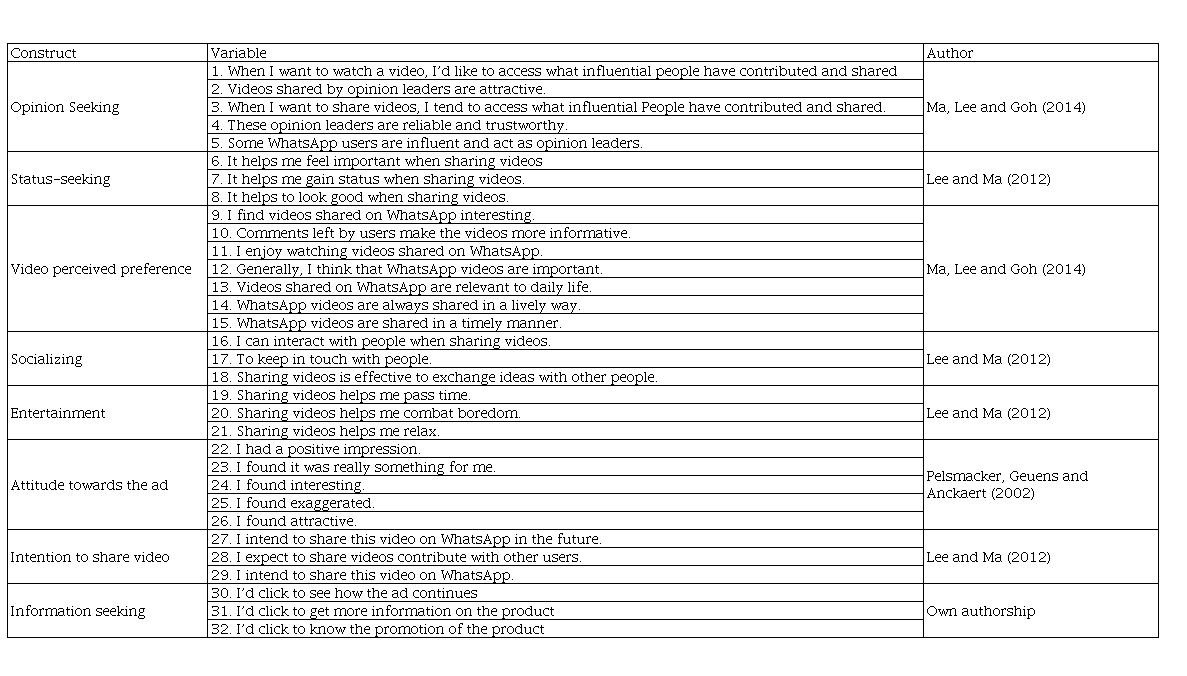
We added two discriminant questions in the questionnaire that needed to be answered by the respondents: the frequency of the use of WhatsApp and the frequency of sharing videos. If the respondent did not use WhatsApp or share videos, these forms were not considered in the data analysis. In order to measure Opinion Receiver (OR), Perceived Preference of Videos (PP) and Intention to Share Videos (IS), scales were adapted from the studies of Ma et al (2014). Scales to measure Status-Seeking (SS), Socialization (SO) and Entertainment (ES) were adapted from Lee and Ma (2012), and the Attitude Towards the Ad (AD) scale was adapted from Pelsmacker, Geuens and Anckaert (2002) (Table 1). Lastly, we developed the scale of Information Seeking (IS). All the statements used a seven-point Likert scale.
Table 1 -
Construct Scales
 Source: Elaborated by the authors.
Hypotheses were tested (i.e. H1, H2, H3, H4, and H5) using Structural Equation Modelling in order to understand which constructs influence Intention to Share Videos (Figure 1). For the second part of this study, ANOVA and Hochberg’s GT2 post hoc test were used to know which type of video appeal influences in higher degrees of Attitude Towards the Ad, Intention to Share Video and Information seeking (i.e. H6, H7, H8). We used three types of car ads: one with the functional appeal (advertising Honda Civic ), another with humor appeal (advertising Renault Clio ) and the last one with the sexual appeal (advertising Seat Ponde ). After watching the ads, the respondents were asked to answer the questions about the attitude towards the ad, intention to share videos and information seeking.
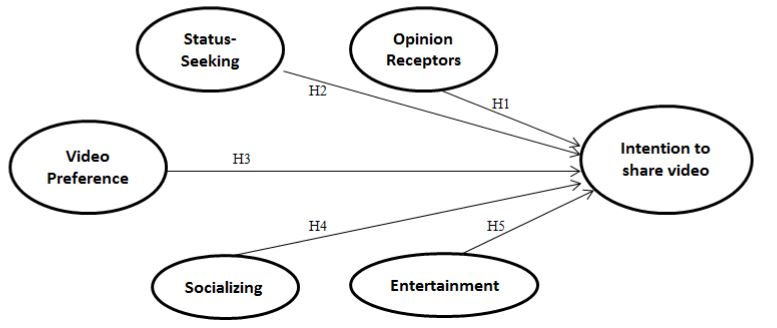 Figure 1 -
Theoretical framework of motivators and behavior
Source: Elaborated by the authors.
Figure 1 -
Theoretical framework of motivators and behavior
Source: Elaborated by the authors.
Results
The first two questions were used to make sure that respondents use and share videos on WhatsApp. As we have already mentioned that the survey was online, respondents who did not use the app and/or who did not share videos were asked to pause their questionnaires right after these two questions. Table 2 shows the frequency of the use of WhatsApp and Table 3 shows the frequency of video sharing.
Table 2 -
WhatsApp frequency use
 Source: Elaborated by the authors.
Table 3 -
Video sharing frequency
 Source: Elaborated by the authors.
Only five people out of 208 do not have WhatsApp, and of those who have it, more than 90% of its use is more than once a day. 18 respondents of all have never shared videos, including the ones who do not have WhatsApp. In other words, 13 respondents do not share videos. Almost 35% of all respondents share videos three times a week or more.
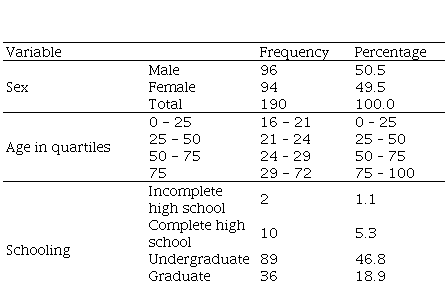
Table 4 below presents the sociodemographic data of the respondents. We excluded the 18 respondents who never shared videos so that we have only 190 respondents. The sample is composed of 50.5% of male and 49.5% of female. The age is mainly distributed with respondents around 20 years old. Finally, the level of Education is largely composed of undergraduate students.
Table 4 –
Sociodemographic data
 Source: Elaborated by the authors.
Study 1
Study 1 aims to understand which variables influence the intention to share videos on WhatsApp (IC). Indeed, a literature review was carried out in order to identify variables that influence the intention to share videos. The following variables were found: opinion recipients (OR); Status-seeking (SS); Video preference (VP); socialization (SO) and search for entertainment (SI).
The first study was carried out with 190 respondents because 18 was removed in the filters questions. The first step was to analyze Cronbach’s Alpha and convergent and discriminant validities of the constructs (Table 5) and then, test the hypotheses by Structural Equation Modelling using the AMOS. Convergent and discriminant validities are well adjusted according to the literature (Byrne, 2013) so that we started the hypotheses tests. To test the first five hypotheses (Table 6), the following values were obtained: CMIN/DF (2,389); CFI (0.91), IFI (0.91) and TLI (0.90).
Table 5 -
Cronbach’s Alpha, Convergent Validity and Discriminant Validity
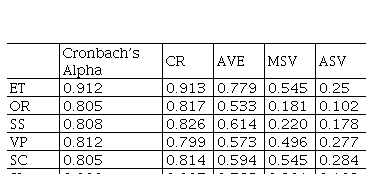 Source: Elaborated by the authors.Note: Composite Reliability (CR) > 0.7; Average Variance Extracted (AVE) > 0.5; Maximum Shared Square Variance < AVE; Average Shared Square Variance (ASV) < AVE, according to Garver and Mentzer (1999).
Table 6 -
Hypothesis test
 Source: Elaborated by the authors.
We observed that H1 (opinion receiver à intention to share) and H2 (status-seeking à intention to share) were not supported to intention to share videos. A possible explanation is that the receiver may whether or not share videos or messages and the opinion leaders may not know if he/she share them once WhatsApp does not provide this information to them. According to Park et al (2009) and Le and Ma (2012), status-seeking is based on a number of opinions one can make after sharing messages or videos. The same way occurs with status-seeking due to the impossibility to know if most people would say something about the messages and videos due to other people belong to several groups that the transmitter does not belong.
The construct Perceived Preference of Videos presented the highest positive influence on Intention to Share Videos. Indeed, it is considered an important success key as a predictor to intensify the intention to share videos.
Socialization also influences intention to share videos but this influence is negative. So, H4 is not supported. This means that the higher the socialization the less is the level of sharing videos. It might occur because WhatsApp needs to one may have a priori contact with members outside his/her social networks. Park et al (2009) affirm that social networks exist with the purpose of one belonging to groups.
Entertainment has also a positive influence on intention to share videos on WhatsApp. These findings are consonant to Park et al (2009), who suggests that people use social networks as a source of fun and leisure time. Nov, Naaman and Ye (2010) argue that sharing information is a way of entertainment.
Study 2
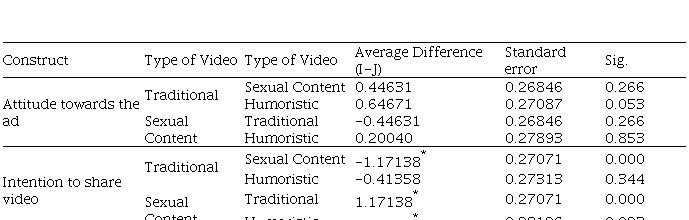
A second study was carried out in order to analyse which types of video appeals influence the intention to share videos, attitude towards the ad and information seeking. Data were analysed via ANOVA comparing with each constructs above. For the attitude towards the ad the results show (Mtrad= 4.40, SD= 1.44; Msex= 3.96, SD= 1.48; Mhum= 3.76, SD= 1.65; F(2, 186)= 3.045, p= 0.05) that are significantly different among the different types of videos. For the intention to share videos (Mtrad=1.80, SD= 0.99; Msex= 2.97, SD= 1.88; Mhum= 2.22, SD= 1.66; F(2, 186)= 9.52, p<0.000) the outcomes show that are significantly different among the different types of videos. Finally, for information seeking results show that are not significantly different among the different types of videos (Mtrad=2.66, SD=1.51; Msex=3.11, SD= 1.68; Mhum= 2.89, SD= 1.80; F(2, 186)= 1.173, p=0.312). So, hypothesis H6 and H7 were supported, but H8 was not supported.
Table 7 presents the results of the post hoc Hochberg GT2 test indicated when there are disparate numbers in each sample group. We can perceive that there are significant differences in attitude towards the ad between functional and humor appeals. Furthermore, we also found differences in intention to share videos between sexual and functional and sexual and humor appeals.
Table 7 -
Post hoc test for the questionnaire related to the constructs
 Source: Elaborated by the authors.
Additional Results
Given to the importance for firms to focus and understand their target audience, we also analysed differences between the sex of respondents. For Attitude toward Ads, the results (Mmale = 4.40, SD = 1.37, Mfemale = 3.72, SD = 1.63, F (1,187) = 9,481, p = 0.002). For Intention to Share Videos and Information Seeking, the results were also significant (Mmale = 2.60, SD = 1.74, Mfemale = 2.02, SD = 1.40, F (1.187) = 6.208, p = 0.014) and (Mmale = 3.20, SD = 1.70, Mfemale = 2.56, SD = 1.57, F (1.187) = 7.255, p = 0.008), respectively. These results emphasize the differences in behavior between men and women.
In addition, we also analyzed whether or not differences of Attitude towards the Ad, Intention to share videos and Information Seeking for men and women with the types of video ads occur. For the traditional video advertising, there was no difference between them. For sexual appeal advertising, Attitude towards the Ad and Information Seeking were higher for men than for women, (Mmale = 4.28, SD = 1.44; 23 Mfemale = 3.42, SD = 1.43; F (1,187) = 5,197, p = 0.026) and (Mmale = 3.56, SD = 1.73, Mfemale = 2.43, SD = 1.38, F (1.187) = 6.540, p = 0.013), respectively. However, for Intention to Share Videos (Mmale = 3.31, SD = 1.97, Mfemale = 2.42, SD = 1.63, F (1.187) = 3.352, p = 0.072), the difference was not statistically significant. Finally, for funny advertising, the only difference was for Attitude towards the Ad (Mmale = 4.54, SD = 1.19, Mfemale = 3.42, SD = 1.72, F (1.187) = 6.234, p = 0.015), where men had higher average answers than women. These higher averages may have occurred due to the fact that the product appeared in the ads was a car so that for psychological reasons, cars are higher valued by men than by women (Buss, 1988).
Discussion
This article built and contributed to the lack of investigations that explore WhatsApp as a dissemination and sharing tool (Duffett, 2016). Our research has contributed to academia due to an innovative empirical advance between WhatsApp and the Theory of Uses and Gratification (U&G).
The results of Study 1 showed, from hypothesis 1, that being an opinion receiver does not influence the individual to share videos on WhatsApp. Research indicates that when following an opinion leader, receivers would intend to share the video to expand knowledge (Zhao & Detlor, 2021). Still, the finding of this research demonstrates that not every type of video is interested in sharing. Hypothesis H2, which tested the effect of status-seeking, was also not supported, showing that video sharing is not always in search of status.
Then, it was evidenced that the preference for the received video is a predictor of the intention to share videos, supporting hypothesis 3. Previous studies have argued that the preference is defined by those who want to see more news about their interests (Mojzisch, Grouneva & Schulz-Hardt, 2010; Sundar, 1999). In our evidence, video preference had the most significant impact on video sharing intention. In other words, if someone likes the video, they're likely to share it. This result may be due to the fact that individuals tend to positively evaluate something of their interest (Mojzisch, Grouneva & Schulz-Hardt, 2010). Video preference was the most important predictor of intention to share on the internet, corroborating the findings of Ma et al. (2014).
We decided to explore the impact of socialization on video sharing intent. Based on previous studies (Chen & Corkindale, 2008; Sun et al., 2006), individuals use social networks for various reasons, such as communication and socialization, allowing them to express themselves through sharing photos, messages, and videos. Our hypothesis was not supported; however, it showed a significant but negative relationship. Our evidence reports that individuals who understand that videos are essential for interacting share less. In contrast, individuals with a higher intention to share videos believe that it is not important to socialize with others. This result may stem from the fact that existing interactions on Whatsapp need to have a priori contact with members outside this network. Therefore, when sharing a video, individuals do not do so because they want to socialize since they probably already know each other outside the social network. These results are in opposition to the literature.
In hypothesis 5, a supported hypothesis was investigated whether entertainment positively influences the intention to share videos. This result corroborates the perspective that individuals engage in social networks to find leisure and entertainment (Park et al., 2009; Chen & Corkindale, 2008; Larose et al., 2001), generating involvement and fun (Lee, Goh, Chua & Ang, 2010; Kim et al., 2021). Furthermore, it can be inferred that Whatsapp, a dynamic and interactive social network, is a hobby among individuals, helping to combat boredom (Dunne et al., 2010; Lee & Ma, 2012).
Then, Study 2 showed which types of video appeals influence video sharing intention, attitude towards the ad, and information search. For the development of attitude towards the advertisement, the traditional appeals obtained higher averages; however, this appeal was significantly different from the humorous appeal. On the other hand, sex appeal videos can be superior to humorous and functional videos to develop video sharing intent among individuals. This result corroborates the perspective of sharing sex appeal videos identified by Ackerman, Ehrenreich, and Underwood (2017).
Sex appeal was the type of video that showed the highest level of sharing and information-seeking intent. In addition, we can also mention that humorous ads follow these influences in second place. Non-traditional ads have higher levels of information seeking and sharing purpose, so we argue that companies should use these videos if their communication goals are high sharing and information seeking rates about their products or services.
Finally, as additional results, we also observed that men and women have different characteristics compared to these video ads, an effect similar to Sun et al. (2021). The latter pointed out that men and women have different attitudes towards the type of content. As for the intention to share videos, attitude towards the ad, and search for information, men showed higher and more significant levels than women. Then, regarding types of videos, men showed higher levels when compared to sex appeals and humorous ads, but there was no difference compared to traditional ads.
Conclusions
This study analyzed the causal relationship between motives and behaviors on intention to share videos in WhatsApp and how this intention and the attitude towards the ad and the information seeking vary according to the type of video. The results showed that Preference for the Video, Entertainment, and Socialization influence the intention to share videos in WhatsApp. We also presented additional evidence about the differences between the type of the video and the gender.
The first study clarified which variables influenced the intention to share videos. Indeed, video preference and entertainment influence positively intention to share. Therefore, firms should focus on the consumer's preference for the video and information seeking when they plan to produce their videos if they want their videos to be shared on WhatsApp.
The second study aimed to understand which type of ad would have higher levels of intention to share. The first evidence indicated that men are more likely to have a favorable attitude towards the ad, intention to share video and information seeking. On the one hand, we emphasize that humoristic ads are those that cause higher levels of favorable attitude toward men. On the other hand, traditional advertisements cause higher impacts for women.
The first limitation is the non-probabilistic sample of our study. We also did not perform a previous test to know if the respondents had any preference for the advertising brand. In addition, we also did not ask if respondents had an interest in acquiring a car due to the situation that respondents may have no intention of seeking for information about a car or had no purchasing power to buy one.
As suggestions for future research, we believe that heavy and light users may differ in the behavior of sharing videos. The same way may occur with the ones who use more or less WhatsApp. Some constructs demonstrated no differences between men and women and some did not influence the Intention to Share videos or negatively influenced it. A deeper understanding of these outcomes is also necessary. More surveys to measure the influence of video types on the purchase intention and the testing of other product categories with their target audiences should be conducted for future studies. Finally, we suggest measuring how different types of videos influence the intention to purchase and their relationship with other product categories and target audience.
References
Brinkley, D., Ackerman, R., Ehrenreich, S., & Underwood, M. (2017). Sending and receiving text messages with sexual content: Relations with early sexual activity and borderline personality features in late adolescence. Computers in human behavior, 70, 119-130. doi: 10.1016/j.chb.2016.12.082
Brynjolfsson, E., Hu, Y., & Simester, D. (2011). Goodbye pareto principle, hello long tail: The effect of search costs on the concentration of product sales. Management Science, 57(8), 1373-1386. doi: 10.1287/mnsc.1110.1371
Buss, D. (1988). The evolution of human intrasexual competition: tactics of mate attraction. Journal of personality and social psychology, 54(4), 616-628. doi: 10.1037/0022-3514.54.4.616
Byrne, B. (2013). Structural equation modeling with Mplus: Basic concepts, applications, and programming. routledge.
Chen, Y., & Corkindale, D. (2008). Towards an understanding of the behavioral intention to use online news services: An exploratory study. Internet Research, 18(3), 286-312. doi: 10.1108/10662240810883326
Chu, S., & Kim, Y. (2011). Determinants of consumer engagement in electronic word-of-mouth (eWOM) in social networking sites. International journal of Advertising, 30(1), 47-75. doi: 10.2501/IJA-30-1-047-075
Church, K., & De Oliveira, R. (2013, August). What's up with WhatsApp? Comparing mobile instant messaging behaviors with traditional SMS. In Proceedings of the 15th international conference on Human-computer interaction with mobile devices and services (352-361). doi: 10.1145/2493190.2493225
De Pelsmacker, P., Geuens, M., & Anckaert, P. (2002). Media context and advertising effectiveness: The role of context appreciation and context/ad similarity. Journal of Advertising, 31(2), 49-61. doi: 10.1080/00913367.2002.10673666.
Duffett, R. (2016). Effect of Instant Messaging Advertising on the Hierarchy‐of‐Effects Model Amid Teenagers in South Africa. The Electronic Journal of Information Systems in Developing Countries, 72(1), 1-21. doi: 10.1002/j.1681-4835.2016.tb00523.x
Dunne, Á., Lawlor, M., & Rowley, J. (2010). Young people's use of online social networking sites–a uses and gratifications perspective. Journal of Research in interactive Marketing, 4(1), 46-58. doi: 10.1108/17505931011033551
Garver, M., & Mentzer, J. (1999). Logistics research methods: employing structural equation modeling to test for construct validity. Journal of business logistics, 20(1), 33.
Godey, B., Manthiou, A., Pederzoli, D., Rokka, J., Aiello, G., Donvito, R., & Singh, R. (2016). Social media marketing efforts of luxury brands: Influence on brand equity and consumer behavior. Journal of business research, 69(12), 5833-5841. doi: 10.1016/j.jbusres.2016.04.181
Johnson, B., & Ranzini, G. (2018). Click here to look clever: Self-presentation via selective sharing of music and film on social media. Computers in Human Behavior, 82, 148-158. doi: 10.1016/j.chb.2018.01.008
Kim, A., & Gweon, G. (2016). Comfortable with friends sharing your picture on Facebook?-Effects of closeness and ownership on picture sharing preference. Computers in Human Behavior, 62, 666-675. doi: 10.1016/j.chb.2016.04.036
Kim, J. (2018). They liked and shared: Effects of social media virality metrics on perceptions of message influence and behavioral intentions. Computers in Human Behavior, 84, 153-161. doi: 10.1016/j.chb.2018.01.030
Kim, S. E., Kim, H. L., & Lee, S. (2021). How event information is trusted and shared on social media: a uses and gratification perspective. Journal of Travel & Tourism Marketing, 38(5), 444-460.
Ksiazek, T., Peer, L., & Lessard, K. (2016). User engagement with online news: Conceptualizing interactivity and exploring the relationship between online news videos and user comments. New media & society, 18(3), 502-520. doi: 10.1177/1461444814545073
LaRose, R., Mastro, D., & Eastin, M (2001). Understanding Internet Usage. Social-Cognitive Approach to Uses and Gratifications, 19(4), 395-413. doi: 10.1177/089443930101900401
Lee, C., & Ma, L. (2012). News sharing in social media: The effect of gratifications and prior experience. Computers in human behavior, 28(2), 331-339. doi: 10.1016/j.chb.2011.10.002.
Lee, C., Goh, D., Chua, A., & Ang, R. (2010). Indagator: Investigating perceived gratifications of an application that blends mobile content sharing with gameplay. Journal of the American Society for Information Science and Technology, 61(6), 1244-1257. doi: 10.1002/asi.21305
Lu, H., & Hsiao, K. (2007). Understanding intention to continuously share information on weblogs. Internet research, 17(4), 345-361. doi: 10.1108/10662240710828030.
Lyons, B., & Henderson, K. (2005). Opinion leadership in a computer‐mediated environment. Journal of Consumer Behaviour: An International Research Review, 4(5), 319-329. doi: 10.1002/cb.22.
Ma, L., Lee, C., & Goh, D. (2014). Understanding news sharing in social media: An explanation from the diffusion of innovations theory. Online information review, 38(5), 598-615. doi: 10.1108/OIR-10-2013-0239.
Mangold, W., & Faulds, D. (2009). Social media: The new hybrid element of the promotion mix. Business horizons, 52(4), 357-365. doi: 10.1016/j.bushor.2009.03.002.
Mitchell, A., & Olson, J. (1981). Are product attribute beliefs the only mediator of advertising effects on brand attitude?. Journal of marketing research, 18(3), 318-332. doi: 10.1353/asr.2000.0010.
Mojzisch, A., Grouneva, L., & Schulz‐Hardt, S. (2010). Biased evaluation of information during discussion: Disentangling the effects of preference consistency, social validation, and ownership of information. European Journal of Social Psychology, 40(6), 946-956. doi: 10.1002/ejsp.660.
Nascimento, A., & Da Silveira, D. (2017). A systematic mapping study on using social media for business process improvement. Computers in Human Behavior, 73, 670-675.
Nov, O., Naaman, M., & Ye, C. (2010). Analysis of participation in an online photo‐sharing community: A multidimensional perspective. Journal of the American Society for Information Science and Technology, 61(3), 555-566. doi: 10.1002/asi.21278.
Osatuyi, B. (2013). Information sharing on social media sites. Computers in Human Behavior, 29(6), 2622-2631. doi: 10.1016/j.chb.2013.07.001.
Park, N., Kee, K., & Valenzuela, S. (2009). Being immersed in social networking environment: Facebook groups, uses and gratifications, and social outcomes. Cyberpsychology & behavior, 12(6), 729-733. doi: 10.1089/cpb.2009.0003.
Quintana, H. (2003). O trailer no sistema de marketing de cinema: à procura do quinto elemento. In Anais do XXVI Congresso Anual em Ciência da Comunicação.
Shoham, A., & Ruvio, A. (2008). Opinion leaders and followers: A replication and extension. Psychology & Marketing, 25(3), 280-297. doi: 10.1002/mar.20209.
Sun, J., Leung, X. Y., & Bai, B. (2021). How social media influencer’s event endorsement changes attitudes of followers: the moderating effect of followers’ gender. International Journal of Contemporary Hospitality Management, 33(7), 2337-2351.
Sun, R., Li, C., Millet, B., Ali, K. I., & Petit, J. (2022). Sharing news with online friends: A study of network homophily, network size, and news type. Telematics and Informatics, 67, 101763.
Sun, T., Youn, S., Wu, G., & Kuntaraporn, M. (2006). Online word-of-mouth (or mouse): An exploration of its antecedents and consequences. Journal of Computer-Mediated Communication, 11(4), 1104-1127. doi: 10.1111/j.1083-6101.2006.00310.x.
Sundar, S. (1999). Exploring receivers' criteria for perception of print and online news. Journalism & Mass Communication Quarterly, 76(2), 373-386. doi: 10.1177/107769909907600213.
Vermeulen, A., Vandebosch, H., & Heirman, W. (2018). # Smiling,# venting, or both? Adolescents’ social sharing of emotions on social media. Computers in Human Behavior, 84, 211-219. doi: 10.1016/j.chb.2018.02.022.
Wang, Q., Miao, F., Tayi, G., & Xie, E. (2019). What makes online content viral? The contingent effects of hub users versus non–hub users on social media platforms. Journal of the Academy of Marketing Science, 47(6), 1005-1026. doi: 10.1007/s11747-019-00678-2.
Wang, W., Chen, R., Ou, C., & Ren, S. (2019). Media or message, which is the king in social commerce?: An empirical study of participants' intention to repost marketing messages on social media. Computers in Human Behavior, 93, 176-191. doi: 10.1016/j.chb.2018.12.007.
Wang, Z., & Kim, H. (2017). Can social media marketing improve customer relationship capabilities and firm performance? Dynamic capability perspective. Journal of Interactive Marketing, 39, 15-26.
Zhao, L., & Detlor, B. (2021). Towards a contingency model of knowledge sharing: interaction between social capital and social exchange theories. Knowledge Management Research & Practice, 1-13.
Zhu, Y., & Chen, H. (2015). Social media and human need satisfaction: Implications for social media marketing. Business horizons, 58(3), 335-345. doi: 10.1016/j.bushor.2015.01.006.
