Recepción: 05 Junio 2025
Aprobación: 21 Julio 2025
DOI: https://doi.org/10.12712/rpca.v.192.68084
Abstract: This study investigates the link between organizational culture, environmental ethics, and green practices with the mediation of green innovation in relationship to green practice. Structural equation modeling was implemented to investigate the proposed relationships between variables. A sample of 300 staff from manufacturing firms in Iraq. The results show that green innovation is considerably influenced by organizational culture and environmental ethics, which in turn promotes green practices. Environmental ethics and organizational culture have a direct influence on green innovation, while green innovation significantly influence green practices. Green innovation is found to mediate the relationship between environmental ethics and organizational culture on green practices.
Keywords: Environmental Ethics, Organizational Culture, Green Innovation, Green Practices, Sustainability.
Resumo: Este estudo investiga a relação entre cultura organizacional, ética ambiental e práticas verdes com a mediação da inovação verde em relação às práticas verdes. A modelagem de equações estruturais foi implementada para investigar as relações propostas entre as variáveis. Uma amostra de 300 funcionários de empresas de manufatura no Iraque. Os resultados mostram que a inovação verde é consideravelmente influenciada pela cultura organizacional e pela ética ambiental, que por sua vez promovem práticas verdes. A ética ambiental e a cultura organizacional têm influência direta na inovação verde, enquanto a inovação verde influencia significativamente as práticas verdes. A inovação verde medeia a relação entre a ética ambiental e a cultura organizacional nas práticas verdes.
Palavras-chave: Ética Ambiental, Cultura Organizacional, Inovação Verde, Práticas Verdes, Sustentabilidade.
Introduction
In recent years, the increasing urgency of environmental challenges such as climate change, resource depletion, and pollution has intensified the global discourse on sustainable development. As one of the most resource-intensive and polluting sectors, manufacturing plays a pivotal role in either exacerbating or alleviating environmental degradation. Consequently, the adoption of green practices, defined as environmentally friendly operations, processes, and strategies has become a central focus in both academic research and industrial policy. While external regulatory pressures and market demands have historically driven sustainability efforts, growing attention is being directed toward internal organizational factors such as environmental ethics and organizational culture, which shape corporate attitudes and behaviors toward sustainability.
Environmental ethics and organizational culture as two approaches to sustainable manufacturing are tempting but overlooked in a part of the world like Iraq where industrial growth and environmental degradation represents one of the major challenges faced in developing sustainable practices in the manufacture sector (Sadler-Smith & Akstinaite, 2022). Environmental ethics also represent the moral and philosophical process that guide organizations' applications to protect the environment. Ethical commitment towards sustainability can significantly impact organizational behavior according to a study by Sumlin et al., (2021). This is in line with the commitment to use green technologies and methods. Similarly, so has organizational culture, as it influences attitudes and behaviors concerning sustainability. A society which is environmentally responsible breeds innovation as well as collective action (Ispiryan et al., 2024). In contrast, green implementation is the dependent variable with green innovation serving as a mediating mechanism bridging it to these underlying drivers. Enbaia et al., (2020) argue that green innovation is essential as a policy tool for translating ethical and cultural commitments of an economy into reality, through environmental policies taking advantage of the latter that include the reduction of pollution, energy-saving and the use of sustainable use of resources.
This study identifies a gap in the sustainability literature for developing countries such as Iraq where there is rapid industrialization without proper regulation. It investigates the mediating role between environmental ethics and organizational culture, with an emphasis on green practices among the Iraqi manufacturing sector. The study seeks to explore the direct effects of environmental ethics and organizational culture on green practices and to consider the mediating role of green innovation. There are, however, three strengths of this study: First, comparisons of ethical and cultural values alone are not enough; one must also look at innovation capabilities concurrently. The novelty of this study is in the fact that the country context and green practices explanation is examined in one model, including ethical and cultural values and innovation capabilities. Furthermore, it adds new empirical evidence from the Middle East region, as research on environmental sustainability within organizations in this region is still limited. In connecting theoretical understanding with practical implications, this work contributes to a deeper academic debate and offers practical tools for those who are interested in promoting sustainable paths through intra-organizational change and innovation.
Literature Review
Environmental Ethics and Green Innovation
Environmental ethics are the ethical guidelines that regulate human interaction with the environment. It emphasizes the human role within an ecosystem, the importance of biodiversity and the ecological calling of today’s humans. Environmental philosophy has also been instrumental in advancing sustainable behaviors in the industrial sector (Santiago et al., 2025). Studies suggest that companies that are ethically conscious of environmental responsibility should be more likely to engage in green initiatives and lower their ecological impact (Aftab et al., 2022). In Iraq, adopting environmental ethics as a strategic core value in all industrial enterprises may lead to the sustainability approach as the urge to the environment among industrial activities are less important as personals. This dire situation is exemplified in Iraq which has faced numerous environmental problems aggravated by heavy dependence on oil and gas and which has contributed to severe environmental damage.
Building resilience in Iraq is among the countries most affected by climate change, and is confronted with significant economic and environmental damage from lack of water, desertification, and temperature increases (Global Climate Risk Index, 2021). The great urgency of Iraq making a shift towards sustainable methods is highlighted by research, including that of Al-Maamary et al. (2017), which is very much based on the use of fossil fuels with negative expectations in the long term. By building an ethical environmental base, Iraqi industries can follow green practices in line with global benchmarks and eventually promote ecological sustainability and capability (Agha et al., 2023). Iraq can reduce its climate risks and ensure that the country contributes to global efforts for a sustainable future by integrating sustainability within organizational culture and innovations. A study by Chen et al. (2018) found that that when companies stress the importance of environmental ethics, they are more likely to engage in green innovation, thus working towards being sustainable. From the above, the authors postulated the following hypotheses:
H1: Green innovation is possitively influenced by Enviornmental ethics..
H2: Green innovation mediates the relation between environmental ethics and green practices
Organizational Culture and Green innovation
Recognition of green organizational culture can inspire the adoption of businesses in Iraq that generally prioritizes short-term goals over long term ones, owing to traditional culture (Afshar Jahanshahi et al., 2020). Encouraging and applying environmental commitment throughout the organization put the stakeholders in the right path to sustainable development. In their study, DeQuero-Navarro et al. (2020) indicated that adopting sustainability in business practices can improve resilience and competitiveness of resource-based economy such as Iraq. Moreover, research by Massoudi and Ahmed (2021) finds that adoption of environmentally sustainable practices can result in decrease of environmental degradation and comply with international sustainability requirements simultaneously. The shift does not only solve Iraq's immediate environmental problems, but also turns its industries into contributors for worldwide sustainable development.
This part examines how the organizational culture impact on green innovation and practices. Iddik (2024) has established that supportive organizational culture of sustainability positively influences green innovation. Similarly, an organization’s culture that promotes green innovation may be associated with the increased acceptance of green practices (Fok et al., 2023). Therefore, the green innovation may possibly have a mediating role. Abbas & Khan (2023) revealed a significant effect of organizational culture on EnP making further claims about an innovative and cooperative culture for EGP is warranted these claims even further. These arguments lead to the following hypotheses:
H3: Organizational culture positively influences green innovation.
H4: Organizational culture positively influences green practices through green innovation.
Green Innovation and Green Practices
Green practices are the strategies and actions taken by an organization to minimize its environmental impact e.g., sustainable use of resources, reducing waste, energy conservation, etc. These practices are sometimes driven by outside forces, like regulatory demands, and also internal considerations, like pledges to act ethically and values inherent to the organization. Indeed, not only are green practices beneficial to the environment, but they also improve organizational success, as established by studies in this field. Maziriri (2018) also argues that the adoption of green practices leads to enhanced competitiveness and better market positioning for companies. Green practices are also essential for achieving sustainable development because they promote resource efficiency and reduced pollution (Mikhno et al., 2021). In countries like Iraq, where environmental laws are weak or poorly enforced. Thus, adopting green practices would enable manufacturing firms to minimize their environmental footprint while improving their public image.
Alternatively, Green innovation is the introduction of a new product or process designed to improve environmental sustainability in terms of energy use, more efficient manufacturing processes and renewable resources replacement. The role is like a bridge between environmental ethics, organizational culture, and green practices, by turning ethical and cultural commitments into doing. Song & Yu (2018) have argued that green innovation is important for sustainability, since innovating in ‘‘green’’ ways (in such a light, that organizations address environmental predicament, but are also viable). One way to approach the concept of green innovation is to consider it as the solution for bridging the gap between the traditional production and the sustainable industry in terms of Iraq (Massoudi et al., 2024). Creation of such new technology allows for an avenue in which Iraqi manufacturers can benefit and create products that help to resolve the particular environmental challenges that the country faces, such as water scarcity and air pollution. Through investments in renewable energy, including wind and solar, for example, Iraq may reduce its dependence of fossil fuel and thus, reduce its CO2 emissions. Green innovation is an even better one that gets you good environmental performance plus global market opportunities for growth and for differentiation. This paragraph investigates the association between green innovation and firm's green practices. According to Singh et al. (2021) the development of green innovation is facilitating the acceptance of the sustainable practices via proposing ecofriendly alternatives, here implying that the firms successfully innovating in green technologies and processes have a better chance of adopting and implementing wider sustainability practices. This led the authors to propose the following hypothesis:
H5: Green innovation can influence green practices.
Theoretical Framework
In this theoretical framework, the influence of organizational culture and environmental ethics was examined in relation to green approaches with green innovation as a mediating process. Green organizational culture supporting sustainable and responsible behavior toward the environment is noted to drive green innovation, the latter of which may in turn practically implement green practices within an organization (Fietz Günther 2021). This is consistent with prior research which showed that attitudes and behaviors related to the environment are greatly influenced by organizational culture (Al-Swidi et al., 2021; Ullah et al., 2022). The proposed model further implies that a strong ethical consideration about environmental protection not only directly influences green innovation and green practice adoption but also demonstrates ethical values to be a robust determinant of pro-environmental behaviors. This expectation is consistent with previous strategic work from the organizational culture perspective, and with green innovation being becoming an “important link between organizational culture and environmental ethics” (Demir et al., 2025). Grounded in literature on organizational behavior, environmental ethics and innovation management, this conceptual framework provides a holistic view on dimensions that underline the green approaches into the organizations.
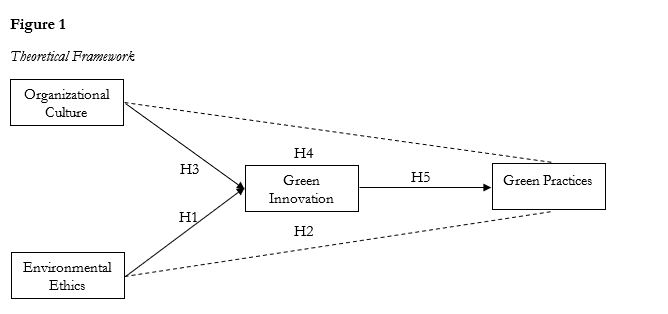
Figure 1
Theoretical Framework
Methodology
Research Design
This paper investigates the interactions among environmental ethics, organizational culture, green innovation and green practices using a quantitative research perspective. Data from respondents was gathered using a cross-sectional survey approach, therefore allowing the study of causal correlations between variables. This design is appropriate for examining the relationships between variables and testing the proposed hypotheses. The study focuses on the manufacturing sector in Iraq, targeting employees, managers, and decision-makers in manufacturing firms.
Statistical analysis of quantitative data can be performed which lends well to hypothesis testing and inference on the correlations of variables. Data will be analyzed through Partial Least Square Structural Equation Modeling by using Smart PLS. This study is particularly suitable to be implemented via PLS-SEM, since it can accommodate complex models with multiple constructs and relationships with moderate sample sizes, as emphasized by Hair et al. (2024). In addition, the primary use of PLS-SEM for prediction and its less restrictive distributional assumptions relative to covariance-based approaches renders it suitable for investigating the complex relationships between factors related to green practices and innovation in this framework. This corresponds with the suggestions of Hair et al. (2024) for research aimed at variance explaining a dependent variable and complex path relation
Data Collection and Sampling
The study explores the relationships between environmental ethics, organizational culture, green innovation, and green behaviors in promoting sustainability. Organizational culture influences internal norms and the adoption of sustainable practices, while environmental ethics guide corporate responsibility. Green innovation translates these principles into actionable strategies aligned with global sustainability goals.
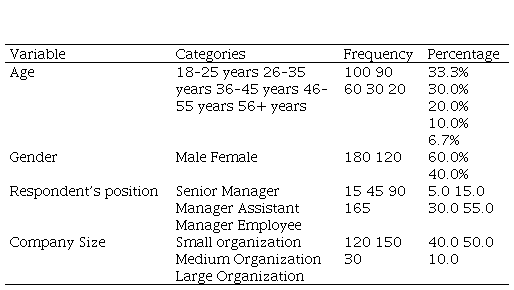
The study employed purposive sampling, targeting professionals, managers, and employees involved in sustainability efforts within Iraqi manufacturing sector. A standardized questionnaire was used, distributed both online and in person, collecting responses from 300 participants in the industrial sector of Iraq. The sample size was deemed sufficient for Structural Equation Modeling (SEM), ensuring statistical validity. The questionnaire’s content validity was confirmed by five environmental management experts before data collection. The questionnaire utilizes Likert-scale measuring participants’ perceptions of environmental ethics, organizational culture, green innovation, and sustainable practices. Smart PLS was used for exploratory analysis, examining both direct and indirect effects within the research model. Table 1 illustrates the demographic variables of respondents.
Demographics
Measurement Scales
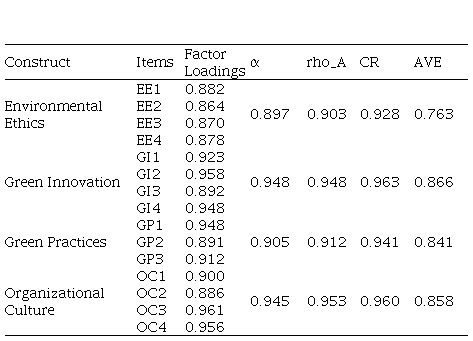
The survey used a validated measures, as indicated in the PLS-SEM model, presenting reflective indicators for each construct. Four items (OC1–OC4) were adopted and rephrased from Imran& Jingzu (2022) to measure organizational culture (OC) with the factor loadings ranging between 0.886 and 0.961. Environmental ethics (EE) was measured via 4 items (EE1–EE4) taken from Aftab et al. (2022) with factor loadings of 0.864–0.882. Green innovation (GI) was screened through four items (GI1–GI4) retrieved from Yousaf (2021) and demonstrated factor loadings ranging from 0.892 to 0.958. Finally, green practices (GP) were measured using three items (GP1–GP3) from Massoudi et al. (2019) and showed factor loadings between 0.891 and 0.948. The data were analyzed with Smart PLS 4, which is a variance-based SEM, suitable for the analysis of complex models that comprise mediating effects (Hair et al., 2024). The analysis considered measures the reliability through Cronbach’s Alpha and Composite Reliability to confirm internal coherence and validity through Average Variance Extracted for the evaluation of convergent validity. Path modeling was used to investigate direct and indirect effects as outlined in the PLS-SEM framework. In addition, ethical issues were addressed and the questionnaire was validated by the experts, respecting to the data confidentiality and the informed consent protocol.
Results
Measerment Model
The measurement model shows acceptable reliability and validity. According to Hair et al. (2024) all factors loading are higher than 0.70 suggesting that items are good indicators. Table 2 describes that Cronbach's Alpha (α) and rho_A of all constructs are above 0.70 signifying high internal consistency among the variables. High Composite Reliability (CR) values are also above the 0.90 threshold, validating the reliability of the constructs. Furthermore, all constructs have a value of AVE above 0.50 indicating a convergent validity, as each construct accounts for more than 50% of variance in its indicators. More specifically, environmental ethics (AVE = 0.763), green innovation (AVE = 0.866), green practices (AVE = 0.841), and organizational culture (AVE = 0.858) satisfied this criterion. This result proves a robust measurement model, and offers satisfactory validity to permit additional analysis such as testing the structural relationship between variables.
Factor Loadings, Reliability and Validity
Discriminant Validity
Discriminant validity was assessed by employing the Fornell-Larcker criterion to differentiate the uniqueness of each construct from other constructs in the model. The diagonal (bolded) values are the square root of the construct Average Variance Extracted (AVE) while the off-diagonal values represent the correlations between constructs. For discriminant validity to exist, the diagonal values of the matrix should be greater than the respective off-diagonal values in the same row and column (Hair et al., 2024). As illustrated in table 3, the diagonal values (0.874 for EE, 0.931 for GI, 0.917 for GP, and 0.926 for OC) are higher than the off-diagonal values in their row and column. This demonstrates that every construct explains greater variance with its indicators than with other constructs, attesting to discriminant validity. Thus, since all constructs pass the Fornell-Larcker criterion, the measurement model is valid for further exploration.
Fornell-Larcker Criterion

Predictive Power of the Constructs
The R² and R² Adjusted coefficients indicate that the constructs have good predictive ability, thus it demonstrates the explained power of the examined model. The R² value for Green Innovation (0.144, adjusted R² 0.139) indicates that around 14.4% of the variance in green innovation is accounted for by the predictors. Although this is a small value, this suggests a significant association in the model. For the green practices the R² value is 0.426 (adjusted R² = 0.424) indicating that approximately 42.6% of the variance in the green practices is accounted for by its predictors demonstrating a strong explanatory power. Findings of this study are in line with Hair et al. (2024), who posit that R² values above.20 are good enough in behavioral research, and R² values above.40 are large. Therefore, the model shows sufficient predictive validity for subsequent exploration as shown in table 4 and figure 2 below.
R² Coefficients
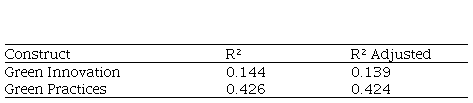
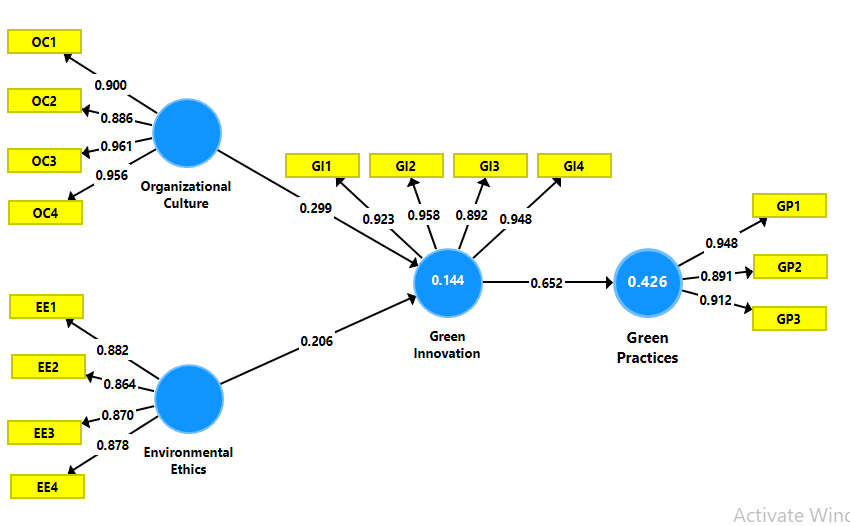
Figure 2
Measurement Model
Assessment of Structural Model
The results show that the structural model has established high levels of reliability, validity, and predictive power. The factor loadings for all constructs are higher than 0.70, which suggests that these items are strong indicators of their corresponding constructs (e.g., OC1 = 0.900, GP1 = 0.948, E1 = 0.882). The R² values for green innovation (0.144) and green practices (0.426) suggest that the model can account for a significant amount of variance of both constructs; being particularly strong for green practices. The direct path coefficients indicate significant associations including the powerful association between green innovation and green practices (0.652) along with the moderate association between organizational culture and green innovation (0.299). Similarly, the Fornell-Larcker criterion and AVE values also attest to the discriminant validity as each construct shares more variance with its indicators than with other constructs. Finally, the research model is strong, trustworthy, and legitimate to detail associations between environmental ethics, organizational culture, green innovation, and green practices.
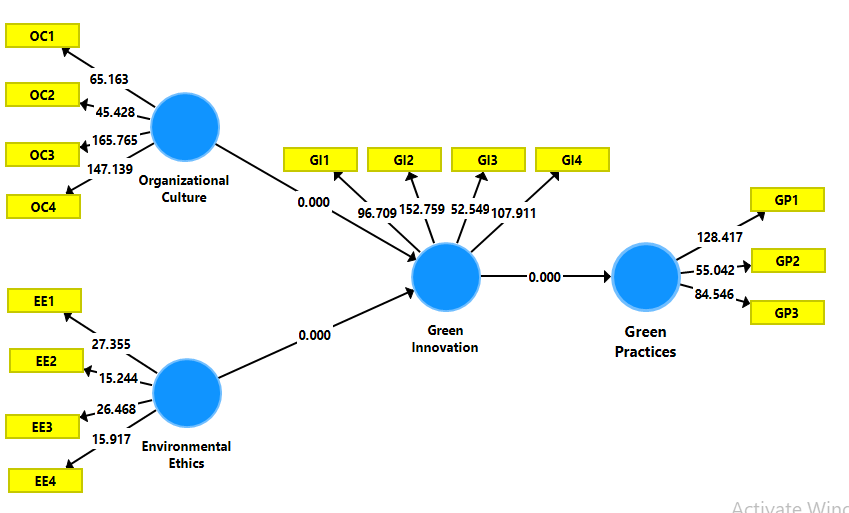
Figure 3
Structure Model
According to Hair et al. (2024), Smart PLS model represent relations done between environmental ethics, organizational culture, green innovation with green practices. Path coefficients (β) of 0.000 indicate a non-significant relation and these needs to be confirmed through bootstrapped p-values and t-statistics. If the indicator values are high (for instance, OC3 = 165.765), it suggests multicollinearity issues, so we should check the Variance Inflation Factor (VIF). According to Hair et al. (2024), VIF must be kept at ≤ 5. Model fit can also be assessed with R² values, and indicators with low loading can be eliminated to enhance reliability. Since green innovation significantly affects green practices (as indicated by large t-values), it is essential to appropriately specify the model to draw valid inferences.
Hypotheses Testing
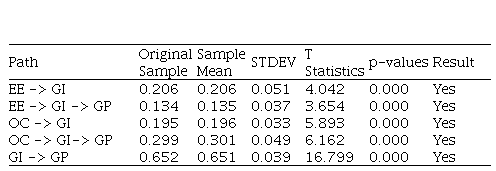
All hypothesized associations in the model are significant based on the path coefficients and results of hypothesis testing. All T statistics for paths are above the threshold value of 1.96, and the p values are less than 0.001, which provides strong evidence to accept the hypotheses (Hair et al., 2024).
As shown in table 5 and figure 3 the findings show that environmental ethics has positive relationship with green innovation (β = 0.206, t = 4.042, p = 0.000) thus, H1 is supported. Also, environmental ethics and green practices are mediated by green innovation (β = 0.134, t = 3.654, p = 0.000) therefore, H2 is supported. Also, organizational culture has positive relationship with green practices (β = 0.195, t = 5.893, p = 0.000) therefore, H3 is supported. Additionally, green innovation mediates the relationship between organizational culture and green practices (β = 0.652, t = 16.799, p = 0.000) thus H4 is supported. Lastly, green innovation has a strong positive relation with green practices (β = 0.652, t = 16.799, p = 0.000) thus, H5 is supported.
These outcomes emphasized the key role of environmental ethics and organizational culture in driving green practices; however, the in direct impact of green innovation may require further exploration.
Hypotheses Result
Discussion
The results of this study confirm all the hypotheses, focusing on the influences between environmental ethics, organizational culture, green innovation, and green practices. Notably, confirming the first hypothesis which emphasizes that environmental ethics do influence green innovation. The finding corresponds with Singh et al. (2021), who observed that businesses maintaining environmental values are motivated to adopt sustainable development and indorsing innovation. Likewise, Chen et al. (2018) who found that the integration of ethical principles into environmental decisions can create eco-friendly improvements.
In Iraq’s manufacturing industry, which faces major environmental issues including water shortages, pollution and depleting resource, it is crucial to implement environmental ethic and encourage employees to pursue ethically based solutions to current ecological issues. Consequently, this outcome is in line with the notion that environmental ethics is a moral guide a a strategic catalyst for green innovation, mainly in counties fraught with sustainability challenges.
The second hypothesis confirms the mediating role of green innovation between environmental ethics and green practices, stressing the significance of innovation by transforming ethical values into a practical sustainable effort. As mentioned earlier, environmental ethics deeply outline firm’s environmental responsibility. organizations that stress ethical environmental values are expected to include sustainability into their plans, thus shifting ethical intentions to green practices frequently necessitates innovative capabilities. This outcome corresponds with Ribeiro et al. (2023) who stated that environmental values organizations tend to invest in eco-innovative technologies, which advance their ability to implement sustainable practices. Likewise, Dong et al. (2024) stressed that green innovation is an important tool for transforming ethical values into active business actions.
In Iraq, with the absence of environmental regulations, green innovation becoming a critical among younger generation. Consequently, the manufacturing industry should back the adoption of green innovation by funding research and development, employees training, and strategic alliances to turn ethical commitments into tangible environmental results. This understanding offers practical road map for emerging markets businesses trying to insert ethics-based sustainability into their operations.
The empirical findings also supported the third hypothesis showing organizational culture does influence green innovation, is also. This outcome highlights the importance of organizational cultural forces in determining innovation capabilities, mainly in the dominion of sustainability. It is characterized by empowering employees, directness, teamwork, and shared values which can knowingly adopt creativity and innovation intended to improve the environment. Khan and Terason (2022) stressed that a robust organizational culture inspires employees to innovate, mainly when associated with sustainability objectives. Such cultures produce employee’s motivation and psychological safety to embrace environmental creativities. This connection holds specific standing in the Iraqi context, where many firms operate within traditional, hierarchical structures that may limit employee involvement and stifle innovative thinking.
For green innovation to thrive, it is essential that Iraqi firms reshape their organizational culture to prioritize open communication, teamwork, these cultural features can serve as a catalyst for innovation, enabling firms to transition from compliance-oriented environmental practices to proactive, innovation-led sustainability strategies. Thus, Leadership should recognize culture as a strategic asset that can unlock the firm’s green innovation possible catalyst for competitive advantage and environmental resilience in emerging markets.
The findings also confirm the fourth hypothesis, organizational culture and green practices are mediated by green innovation This result corresponds with Fok et al. (2022), emphasizing that an organizational culture directly contributes to the adoption of sustainable practices. An organizational culture that encourages creativity, knowledge sharing, and employee involvement fosters the conditions necessary for green innovation to emerge and thrive. Such a culture enables firms to develop eco-friendly technologies, sustainable processes, and green business models.
In the Iraqi context, this has specific relevance where many businesses operate within centralized organizational structures. This managerial hierarchy can be a barrier to innovation unless transformed. Consequently, adopting a culture that values open communication, staff engagement, and environmental responsibility can considerably expand the development of green practices. Inserting green innovation into the culture, the organization can transform sustainability values into actionable and scalable practices.
Finally, the fifth hypothesis was confirmed emphasizing the crucial job of innovation as a direct driver of sustainable operations. This outcome is consistent with De Giovanni and Cariola (2021), who established that progression in green technologies and innovations is significantly related with the implementation of eco-friendly practices across various sectors. In addition, Akhtar et al. (2024) indicated that if businesses investment in renewable energy, they are more likely to espouse green practices such as energy and waste management and emissions control.
In Iraq, since all industries are dominated by the oil and gas sector, the implications of this relationship are specifically relevant. These industries, which are often resource intensive and environmentally impactful, stand to gain substantial benefits from the integration of green innovations. By adopting technologies and processes designed to reduce emissions, optimize energy usage, and manage industrial waste more effectively, Iraqi firms can enhance their environmental performance while also improving operational efficiency and aligning with global sustainability standards. Therefore, green innovation should be viewed as not only an environmental imperative but also a strategic opportunity for Iraqi industries.
Conclusion
This study provides practical indication on the critical role of environmental ethics and organizational culture in endorsing green practices within the manufacturing sector, with green innovation serving as a significant mediating factor. The findings highlight that both environmental ethics and organizational culture not only have direct effects on green innovation but also indirectly influence green practices through this innovation pathway. By focusing on manufacturing firms in Iraq, a context with limited empirical exploration in sustainability research this study fills an important gap in the literature and underscores the relevance of internal organizational factors in driving sustainable outcomes. The research reinforces the notion that fostering a culture of environmental responsibility and ethical values can stimulate innovative green solutions, which are essential for achieving broader sustainability goals. These insights carry important theoretical and practical implications for advancing sustainable development, particularly in emerging economies. Organizations and policymakers should therefore prioritize ethical and cultural dimensions as strategic levers for enhancing green innovation and practices, ultimately contributing to more sustainable industrial growth.
Theoretical and practical Implications
This article donates to the theoretical advancement of sustainability and organizational behavior literature by integrating ethics, culture, and green innovation into a unified framework for understanding green practices. By empirically validating the mediating role of green innovation, the research extends existing models of sustainable behavior within organizations, particularly in under-researched contexts such as Iraq. It enriches the theoretical discourse on how internal organizational values and ethical orientations influence external sustainability outcomes. Additionally, the study provides empirical support for the resource-based view and institutional theory by demonstrating how intangible resources such as ethical commitment and cultural norms can lead to strategic capabilities in the form of green innovation, which subsequently enhances environmental performance.
Practically, the results provide practical insights for managers and policymakers who attempt to integrate sustainability into manufacturing activities. Support is offered for the development of an ethical climate and an environmental culture as basis on which innovative green technology and practice will be established in an organization. That is why it is so important for the leaders' commitment, civil ethics and value-based management to lead sustainable development. For policy makers, the findings provide key insights into developing enabling environments, including incentives, rules and awareness programmed which will help the organization to invest in green innovation. In countries such as Iraq, the process of accredited training is in its infancy in terms of education for development and sustainability in the industrial sector, and as a result, such insights obtained are useful for policy orientation.
Limitations and Future Direction
The study is limited to region-specific and the findings may not apply in general. Moreover, cross-sectional data were used which did not allow to make inferences about causality between variables. Furthermore, the use of survey responses may be biased as participants may over-report related to environmental ethics and green behaviors. Finally, other factors, such as regulatory environment or organizational culture, that could impact the relationship were not included.
Longitudinal designs would be needed to determine if causal relations exist across time and should be used in future research. Studying across industries or countries, the results can offer various perspectives on the effect of green innovation on sustainability. Finally, further research might examine the impact of external influences such as government regulation and corporate social responsibility activities etc.
References
Abbas, J., & Khan, S. M. (2023). Green knowledge management and organizational green culture: an interaction for organizational green innovation and green performance. Journal of Knowledge Management, 27(7), 1852-1870. https://psycnet.apa.org/doi/10.1108/JKM-03-2022-0156
Afshar Jahanshahi, A., Al‐Gamrh, B., & Gharleghi, B. (2020). Sustainable development in Iran post‐sanction: Embracing green innovation by small and medium‐sized enterprises. Sustainable Development, 28(4), 781-790. https://doi.org/10.1002/sd.2028
Aftab, J., Abid, N., Sarwar, H., & Veneziani, M. (2022). Environmental ethics, green innovation, and sustainable performance: Exploring the role of environmental leadership and environmental strategy. Journal of Cleaner Production, 378, 134639. http://dx.doi.org/10.1016/j.jclepro.2022.134639
Agha, A. M., Massoudi, A. H., & Zaidan, M. N. (2023). The Influence of Individual, Environmental, Technology, and Manufacturing Factors on Iraqi Gas and Oil Companies. Cihan University-Erbil Journal of Humanities and Social Sciences, 7(1), 136-147. https://doi.org/10.24086/cuejhss.v7n1y2023.pp136-147
Akhtar, S., Li, C., Sohu, J. M., Rasool, Y., Hassan, M. I. U., & Bilal, M. (2024). Unlocking green innovation and environmental performance: the mediated moderation of green absorptive capacity and green innovation climate. Environmental Science and Pollution Research, 31(3), 4547-4562. https://doi.org/10.1007/s11356-023-31403-w
Al-Maamary, H. M. S., Kazem, H. A., & Chaichan, M. T. (2017). Climate change: The game changer in the Gulf Cooperation Council Region. Renewable and Sustainable Energy Reviews, 76, 555-576. http://dx.doi.org/10.1016/j.rser.2017.03.048
Al-Swidi, A. K., Gelaidan, H. M., & Saleh, R. M. (2021). The joint impact of green human resource management, leadership and organizational culture on employees’ green behavior and organizational environmental performance. Journal of cleaner production, 316, 128112. http://dx.doi.org/10.1016/j.jclepro.2021.128112
Chen, Y. S., Chang, C. H., & Lin, Y. H. (2018). The determinants of green innovation performance: The roles of green intellectual capital and green social capital. Corporate Social Responsibility and Environmental Management, 25(5), 479-493. http://dx.doi.org/10.1108/00251741211194886
De Giovanni, P., & Cariola, A. (2021). Process innovation through industry 4.0 technologies, lean practices and green supply chains. Research in Transportation Economics, 90, 100869. https://doi.org/10.1016/j.retrec.2020.100869
Demir, B., Akdemir, M. A., Kara, A. U., Sagbas, M., Sahin, Y., & Topcuoglu, E. (2025). The Mediating Role of Green Innovation and Environmental Performance in the Effect of Green Transformational Leadership on Sustainable Competitive Advantage. Sustainability, 17(4), 1407. https://doi.org/10.3390/su17041407
DeQuero-Navarro, B., Aoun Barakat, K., Shultz, C. J., Araque-Padilla, R. A., & Montero-Simo, M. J. (2020). From conflict to cooperation: A macromarketing view of sustainable and inclusive development in Lebanon and the Middle East. Environmental Management, 66, 232-247. https://link.springer.com/article/10.1007/s00267-020-01300-w
Dong, Q., Wu, Y., Lin, H., Sun, Z., & Liang, R. (2024). Fostering green innovation for corporate competitive advantages in big data era: The role of institutional benefits. Technology Analysis & Strategic Management, 36(2), 181-194. http://dx.doi.org/10.1080/09537325.2022.2026321
Enbaia, E., Alzubi, A., Iyiola, K., & Aljuhmani, H. Y. (2024). The Interplay Between Environmental Ethics and Sustainable Performance: Does Organizational Green Culture and Green Innovation Really Matter? Sustainability, 16(23), 10230. https://doi.org/10.3390/su162310230
Fietz, B., & Günther, E. (2021). Changing organizational culture to establish sustainability. Controlling & Management Review, 65, 32-40. https://doi.org/10.1007/s12176-021-0379-4
Fok, L., Morgan, Y. C., Zee, S., & Mock, V. E. (2023). The impact of organizational culture and total quality management on the relationship between green practices and sustainability performance. International Journal of Quality & Reliability Management, 40(6), 1564-1586. http://dx.doi.org/10.1108/IJQRM-12-2021-0450
Fok, L., Zee, S., & Morgan, Y. C. T. (2022). Green practices and sustainability performance: the exploratory links of organizational culture and quality improvement practices. Journal of Manufacturing Technology Management, 33(5), 913-933. http://dx.doi.org/10.1108/JMTM-11-2021-0439
Global Climate Risk Index (2021). Who suffers Most from Extreme Weather Events? Weather-related Loss Events in 2019 and 2000 to 2019. GermanWatch. https://www.germanwatch.org/en/19777
Hair, J. F., Sharma, P. N., Sarstedt, M., Ringle, C. M., & Liengaard, B. D. (2024). The shortcomings of equal weights estimation and the composite equivalence index in PLS-SEM. European Journal of Marketing, 58(13), 30-55. https://doi.org/10.1108/EJM-04-2023-0307
Iddik, S. (2024). The role of cultural factors in green supply chain management practices: a conceptual framework and an empirical investigation. RAUSP Management Journal, 59(2), 96-122. http://dx.doi.org/10.1108/RAUSP-07-2023-0118
Imran, M., & Jingzu, G. (2022). Green organizational culture, organizational performance, green innovation, environmental performance: A mediation-moderation model. Journal of Asia-Pacific Business, 23(2), 161-182. http://dx.doi.org/10.1080/10599231.2022.2072493
Ispiryan, A., Pakeltiene, R., Ispiryan, O., & Giedraitis, A. (2024). Fostering Organizational Sustainability Through Employee Collaboration: An Integrative Approach to Environmental, Social, and Economic Dimensions. Encyclopedia, 4(4), 1806-1826. https://doi.org/10.3390/encyclopedia4040119
Khan, M. S., & Terason, S. (2022). Encouraging pro‐environmental behavior in university employees: An approach toward environmental sustainability as moderated by green organizational culture. Journal of Community Psychology, 50(3), 1454-1469. https://doi.org/10.1002/jcop.22726
Massoudi, A. H., Fatah, S. J., & Ahmed, M. E. (2019). Incorporating green innovation to enhance environmental sustainability. Incorporating Green Innovation to Enhance Environmental Sustainability. WSEAS Transactions on Business and Economics, 16, 477-486.
Massoudi, A. H., & Ahmed, M. E. (2021). Assessing the sustainability of facilities management in the food sector in Kurdistan Region of Iraq. Cihan University-Erbil Journal of Humanities and Social Sciences, 5(1), 106-110. http://dx.doi.org/10.24086/cuejhss.v5n1y2021.pp106-110
Massoudi, A., Zaidan, M.N. & Agha A.Q. (2024). The Adoption of Technology Acceptance Model in E-commerce with Artificial Intelligence as a Mediator. GECONTEC: Revista Internacional de Gestión del Conocimiento y la Tecnología, 12(2), 20-36. https://doi.org/10.5281/zenodo.14511604
Maziriri, E. T. (2018). The impact of green marketing practices on competitive advantage and business performance among manufacturing small and medium enterprises (SMEs) in South Africa. [Doctoral dissertation, University of the Witwatersrand, Faculty of Commerce, Law and Management, School of Economic and Business Sciences].
Mikhno, I., Koval, V., Shvets, G., Garmatiuk, O., & Tamošiūnienė, R. (2021). Green economy in sustainable development and improvement of resource efficiency. Central European Business Review, 10(1),99-113. https://doi.org/10.18267/j.cebr.252
Ribeiro, H. F., da Silveira, C. C., Borsatto, J. M. L. S., de Araújo, A. A., & Marcolin, C. B. (2023). Green Growth and Technology: Is there a Relationship with Green Innovation?. European Journal of Sustainable Development, 12(4), 339-339. http://dx.doi.org/10.14207/ejsd.2023.v12n4p339
Sadler-Smith, E., & Akstinaite, V. (2022). Human hubris, anthropogenic climate change, and an environmental ethic of humility. Organization & Environment, 35(3), 446-467. http://dx.doi.org/10.1177/10860266211039000
Santiago, B. D. S., Scavarda, L. F., Gusmão Caiado, R. G., Santos, R. S., & Mattos Nascimento, D. L. D. (2025). Corporate social responsibility and circular economy integration framework within sustainable supply chain management: Building blocks for industry 5.0. Corporate Social Responsibility and Environmental Management, 32(1), 269-290. http://dx.doi.org/10.1002/CSR.2949
Singh, S. K., Del Giudice, M., Chierici, R., & Graziano, D. (2021). Green innovation and environmental performance: The role of green transformational leadership and green human resource management. Technological Forecasting and Social Change, 162, 120397. https://doi.org/10.1016/j.techfore.2019.119762
Song, W., & Yu, H. (2018). Green innovation strategy and green innovation: The roles of green creativity and green organizational identity. Corporate Social Responsibility and Environmental Management, 25(2), 135-150. https://doi.org/10.1002/csr.1445
Sumlin, C., Hough, C., & Green, K. (2021). Impact of Ethics Environment, Organizational Commitment, and Job Satisfaction on Organizational Performance. Journal of Business and Management, 27(1), 53-78. https://doi.org/10.6347/JBM.202103_27%281%29.000
Ullah, S., Khan, F. U., & Ahmad, N. (2022). Promoting sustainability through green innovation adoption: a case of manufacturing industry. Environmental Science and Pollution Research, 29(14), 21119-21139. https://doi.org/10.1007/s11356-021-17322-8
Yousaf, Z. (2021). Go for green: green innovation through green dynamic capabilities: accessing the mediating role of green practices and green value co-creation. Environmental science and pollution research, 28(39), 54863-54875. https://doi.org/10.1007/s11356-021-14343-1
Información adicional
redalyc-journal-id: 4417
