2025
231
24042023
27102023

Universidad de Costa Rica, San José, Costa Rica
Universidad de Costa Rica, San José, Costa Rica
Abstract: Maximum heart rate equations (HRmax) have been used due to their easy availability and practicality, as compared to stress tests. However, the best-known equation, “220 – age”, shows low reliability and deviations of up to 12 beats/min. New formulae have been proposed, but they have not been correctly validated. The purpose of this study was to validate 7 prediction equations by using an independent data set. A data base of 634 subjects (474 men and 160 women) 18–85 years of age, obtained within a health service developed at the University of Michigan from 1990–1992, has been used. The subjects performed a VO2max test on a treadmill, following a free protocol. A linear regression technique was used in which the appropriate equations were those that met the two hypotheses: slope = 1 and constant = 0. According to the results, none of the equations analyzed for the full sample accepted both hypotheses. When doing the analysis by sex, six of the equations met the two hypotheses for the women, but none of them for the men; and when the analysis was done by age group, 4 of the equations met the hypotheses for the group 40 years old or younger, but not for those above 40. The HRmax seems to be difficult to predict through a single equation. Therefore, it is recommended that, when a valid measure for this variable is needed, a stress test be used.
Keywords: exercise tests, stress tests, health.
Resumen: Las ecuaciones de frecuencia cardiaca máxima (FCmax) se han utilizado por su fácil obtención y practicidad, en comparación con las pruebas de esfuerzo. Sin embargo, la ecuación más conocida “220 − edad” presenta baja fiabilidad y desviaciones de hasta 12 lat/min. Se han planteado nuevas fórmulas, pero estas no han sido correctamente validadas. El propósito de este estudio fue validar 7 ecuaciones de predicción utilizando una base de datos independiente. Se utiliza una base con datos de 634 sujetos (474 hombres y 160 mujeres) de 18-85 años, que fueron obtenidos como parte de un servicio de salud desarrollado en la Universidad de Michigan entre 1990- 1992. Los sujetos realizaron una prueba de VO2max en banda sin fin, siguiendo un protocolo libre. Se utilizó la técnica de regresión lineal, en la que las ecuaciones adecuadas fueron aquellas que cumplieron con las dos hipótesis: pendiente =1 y constante =0. De acuerdo con los resultados, ninguna de las ecuaciones analizadas para toda la muestra aceptó ambas hipótesis. Al realizar el análisis de acuerdo con el sexo, seis de las ecuaciones cumplieron con las dos hipótesis para las mujeres, pero ninguna para los hombres; y, cuando se realizó de acuerdo con el grupo de edad, 4 de las ecuaciones cumplieron las hipótesis para el grupo de personas de 40 años o menos, pero no para el grupo de mayores de 40 años. La FCmax parece ser difícil de predecir por una única ecuación , por lo que se recomienda que, cuando se necesite una medida válida de esta variable, se recurra a una prueba directa,
Palabras clave: pruebas de ejercicio, pruebas de esfuerzo, salud.
Resumo: As equações de predição da frequência cardíaca máxima (FCmax) têm sido utilizadas devido à sua facilidade de obtenção e praticidade, quando comparadas aos testes de esforço. No entanto, a equação mais conhecida "220 − idade" apresenta baixa confiabilidade e desvios de até 12 batimentos/min. Foram propostas novas fórmulas, entretanto não foram devidamente validadas. O objetivo deste estudo foi validar 7 equações de predição usando um banco de dados independente. Utiliza-se um banco de dados de 634 indivíduos (474 homens e 160 mulheres) com idades entre 18 e 85 anos, obtidos como parte de um serviço de saúde desenvolvido na Universidade de Michigan entre 1990-1992. Os sujeitos realizaram um teste de VO2máx em uma esteira, seguindo um protocolo livre. Utilizou-se a técnica de regressão linear, na qual as equações apropriadas foram aquelas que preencheram as duas hipóteses: inclinação = 1 e constante = 0. De acordo com os resultados, nenhuma das equações analisadas para toda a amostra aceitou ambas as hipóteses. Ao realizar a análise por sexo, seis das equações atenderam às duas hipóteses para as mulheres, mas nenhuma para os homens; e, quando realizadas de acordo com a faixa etária, 4 das equações atenderam às hipóteses para o grupo de pessoas com 40 anos ou menos, mas não para o grupo de pessoas com mais de 40 anos. A FCmax parece ser difícil de prever por uma única equação, por isso recomenda-se que, quando uma medida válida dessa variável for necessária, seja utilizado um teste direto.
Palavras-chave: testes ergométricos, testes de esforço, saúde.
Investigación descriptiva, correlacional o cualitativa
Maximum heart rate prediction equations fail key external validation test
Las ecuaciones predictoras de frecuencia cardiaca máxima no superan prueba clave de validación externa
Equações de predição da frequência cardíaca máxima não superam teste-chave de validação externa

Recepción: 24 Abril 2023
Recibido del documento revisado: 29 Agosto 2023
Aprobación: 27 Octubre 2023
Publicación: 09 Abril 2025
Over the years, heart rate (HR) has been used as a form of physiological control that evaluates the intensity of effort at which exercise is performed. This is possible because there is a relationship between Maximal Oxygen Consumption (VO2max) and Maximal Heart Rate (HRmax) (Bouzas-Marins et al., 2010; McArdle et al., 2010).
The maximum heart rate is the highest heart rate obtained during progressive exercise, which is intended to be performed at maximum effort (Mahon et al., 2010). The HRmax varies between individuals and is influenced by a number of factors, such as the central nervous system command, but external factors, such as type of exercise (Bouzas-Marins et al., 2013), temperature, and altitude can affect it (Povea and Cabrera, 2018).
Stress tests allow us to know how well the heart functions during physical activity and to detect cardiac disorders, diagnose coronary artery disease, arrhythmia and to see if people are at risk of having a heart attack or other heart condition. To perform them, electrodes are attached and connected to an electrocardiogram (ECG) machine that records the heart's electrical activity throughout the test. Exercise difficulty is increased until the HRmax. is reached, but may be stopped earlier if symptoms such as chest pain, shortness of breath, dizziness, fatigue are present, or if the ECG reflects a problem with the heart (American College of Sports Medicine [ACSM], 2021; Vilcant & Zeltser, 2022).
There are two ways in which HRmax can be obtained: directly: with maximal effort tests, as explained above; or indirectly, by means of prediction . The latter method has stood out for its ease of obtaining and practicality, compared to performing an ergometric test (Machado & Denadai, 2011).
However, there is controversy regarding the use of predictive equations for HRmax. The best-known formula is that of "220 - age", but it was not obtained by regression analysis and it was even shown that, if a linear regression is performed on the data from which it was obtained, the equation does not coincide with the proposed line of best fit. Both its use and its provenance are questionable (Robergs & Landwehr, 2002).
The "220 - age" formula is still used to determine whether or not a stress test is considered maximal - a classic example of circular logic, and, on some occasions, in sports and health contexts; despite studies that prove its low reliability and data showing a deviation of up to 12 beats/min with respect to stress tests (Gellish et al., 2007). Added to this, it is known that this formula overestimates the values in young people and underestimates them in older people and that the HRmax does not decrease by one beat per year, as the formula proposes, but by approximately 0.7 beats each year (Povea & Cabrera, 2018).
There have already been studies questioning the use and validity of the formula "220 - age" to obtain the HRmax, (Aragón-Vargas et al., 1993; Bouzas-Marins et al., 2013; Bouzas-Marins & Delgado-Fernández, 2007; Pereira-Rodríguez et al., 2017; Robergs & Landwehr, 2002), so new predictor equations for HRmax have been developed using a linear model with a single variable, but also some involving multiple variables (Londeree & Moeschbeger, 1982; Whaley et al., 1992). Since it is known that HRmax is closely related to age (as age increases, HRmax decreases) and that age modulates much of HRmax, despite the existence of other related variables, most prediction equations include it as a single variable (Bouzas-Marins et al., 2010). These equations, as well as about 50 others, have been proposed as a solution to the problem. Examples of the new equations are: the "208− 0.7 age" equation, developed by Tanaka et al. (2001), and the "207− 0.7 age" equation, by Gellish et al. (2007), which have gained popularity.
The Tanaka et al. (2001) equation, one of the most widely used at present, was developed by means of a meta-analysis in which a regression equation is obtained, taking into account a total of 18 712 subjects and was cross-validated in a subsequent experimental study with 514 subjects. A study by Miragaya & Magri (2016) concludes that the formula of Tanaka et al. (2001) is better for people aged under 40 who did or did not have a cardiovascular risk factor when compared with the formula "220− age", and in the study by Bouzas-Marins et al. (2010) it is observed that it was the most appropriate for the men in the study. However, the error of this equation (208 - 0.7 x age) is not reported by the authors.
On the other hand, the equation of Gellish et al. (2007) is obtained from measurements on subjects over 25 years, for a total of 908 measurements. After the measurements, the regression equation is also obtained, which reports a range of ±5-8 beats per minute. This equation has been recognized for resorting to more modern statistical methods and stands out for the conclusion that age and HRmax do not show a linear relationship (Jackson, 2007). Despite this, the authors are inclined to use a linear model to provide a useful and more practical equation (Gellish et al., 2007).
As well as these two, equations have been proposed for specific populations (coronary heart disease, hypertension, mental retardation, trained individuals) and for the general population (Fernhall et al., 2001; Graettinger et al., 1995; Nes et al., 2013; Ricard et al., 1990). However, it is difficult to find the original source of many of them (e.g., Morris, cited by Pereira-Rodriguez et al., 2017) and few efforts have been developed to validate these equations in independent databases after they are proposed.
Validity is a property of the inferences made in a study. External validity establishes the extent to which the results of a study can be generalized to a broader population (generalizability) or to other populations (transportability) (Findley et al., 2021). Criterion validity is a method that examines how the result obtained from a test relates to an external criterion to ultimately demonstrate whether the calculated value predicts the actual result (Piedmont, 2014). The importance of validating equations lies in the fact that the equation obtained from one set of data will always be the best for these same data, but is not necessarily applicable to data from other samples (Berrar, 2018).
Added to this, previous studies aimed at discovering the best equation to predict HRmax (Bouzas-Marins et al., 2010; Cruz-Martínez et al., 2014; Miragaya & Magri, 2016; Bouzas- Marins and Delgado-Fernández, 2007, among others), present characteristics (sometimes limitations) such as: smaller samples, insufficient statistical analysis and protocols that do not use stress tests to obtain HRmax as a point of comparison.
When using a stress test to obtain HRmax, different protocols can be followed. The Bruce treadmill protocol and the modified Bruce protocol are the ones most commonly used, but it has been suggested that a more gradual approach might better estimate exercise capacity. Others such as Balke, Astrand, Ellestad and Naughton could be considered, taking into account that what is really important is to individualize the protocol (Myers & Bellin, 2012).
Certain criteria must be met in order for a test to be considered a maximal test, but these are difficult to determine. For example, the American College of Sports Medicine (ACSM) has set criteria such as: reaching a plateau in oxygen consumption with increases in workload, lack of increase in HR with increases in workload, post-exercise lactate concentration greater than 8.0 mmol-L-1, perceived exertion greater than 17 on the 6-20 scale or greater than 7 on the 0-10 scale, a peak respiratory exchange ratio (RER) ≥ 1.10. However, there is no consensus on the number of criteria that must be met to ensure a maximal test. Peak RER has been considered the most accurate and objective noninvasive indicator, while the other criteria have been considered questionable on certain occasions (ACSM, 2021).
Due to the multiple limitations existing in the HRmax prediction equations, it becomes important to perform a study that indicates whether the prediction formulas proposed are valid. The purpose of this study is to validate the HRmax prediction equations of Fernhall et al. (2001), Gellish et al. (2007), Graettinger et al. (1995), Nes et al. (2013), Morris (cited by Pereira-Rodriguez et al., 2017), Ricard et al. (1990) and Tanaka et al. (2001) against the results obtained from their application to an independent database (Aragon-Vargas et al., 2022).
The subjects' data were obtained as part of a health service developed by the Fitness Research Center of the University of Michigan between 1990 and 1992 (Aragón-Vargas et al., 2014). The tests were performed throughout the day, according to the time availability of those tested, under laboratory environmental conditions in accordance with Occupational Safety and Health Administration (OSHA) recommended standards, namely, between 20-24.5° Celsius and relative humidity between 20% and 60%. A certified clinical exercise physiologist provided supervision during testing. Those with a diagnosis of heart disease and those who had to stop the test for safety reasons without meeting the criteria for a maximal test were excluded.
Prior to the measurements, the subjects filled out an information form: age, sex, tobacco use and habitual level of physical activity. Then, they underwent a pulmonary evaluation, anthropometric measurements were taken, and a hydrostatic weighing was performed.
Maximal Aerobic Capacity was obtained by means of a Maximal Oxygen Consumption test performed on a treadmill, following a free protocol that performed progressive increases in speed and incline. During the test, RER (respiratory quotient or respiratory exchange ratio), ventilation rate, oxygen consumption and heart rate were monitored. Subjects inhaled ambient air and exhaled gases, which were analyzed on a Sensormedics 2009 energy expenditure unit.
The test was stopped when the subject could not continue and was considered a maximal effort test if it met at least 2 of the following criteria: 1-RER>1.20 2- HRmax equal to or greater than the HRmax predicted by the equation 220 - age, minus 10 bpm 3- Considerable increase in ventilation rate.
Conventional criteria were used to terminate the test early in case of electrocardiogram abnormalities. Maximum heart rate was defined as the highest sinus or atrial rate (average of two series of three consecutive beats) obtained manually from the electrocardiogram during the last minute of the test, with a Cardizem ECG ruler. This was the measured or actual heart rate.
To obtain the values predicted by the equation of Aragón et al. (1993) (CalAragón), the original database was taken, with the actual HRmax values and the ages reported by each of the subjects, and the equation "218.78-0.79 age" was applied. Likewise, to obtain the values for the other equations, the same procedure was performed for each one and the variable was named CalSurnameFirstAuthor. The equations used were Fernhall et al. (2001), Gellish et al. (2007), Graettinger et al. (1995), Nes et al. (2013), Morris (cited by Pereira-Rodríguez et al., 2017), Ricard et al. (1990) and Tanaka et al. (2001). Each equation is clearly presented in Table 2. In addition, the Fox & Naughton (1972) equation "220- age" was added fir the purpose only of showing their data, even though there have been previous studies questioning it.
The sample consisted of 634 subjects, 474 men and 160 women, aged between 18 and 85 years, with different levels of habitual physical activity.
The JMP Pro-15 statistical package was used. For descriptive statistics, the mean, standard deviation, minimum and maximum were calculated. For inferential statistics, the following analyses were performed: in order to compare the values of the HRmax calculated by a specific formula and the HRmax obtained by measurement, a linear regression given by μY|X=α+βX was used, where Y = HR obtained by measurement and X
calculated according to the equations, in which the following hypotheses are established: α = 0 and β = 1. An equation was considered satisfactory if it fulfilled both hypotheses, so that X = Y is satisfied. A significance level of .05 was established for the hypothesis tests. In addition, the R-squared (R2) was calculated, which defines how close the data are to the regression line and indicates what percentage of variation of a variable is explained by the linear model or by what percentage the changes in Y are explained by a change X. The candidate equations considered to have a good prediction would be those in which neither of the two hypotheses is rejected.
After performing the analyses for the equations using the complete sample, the same procedure was performed but separating the sample by sex (men and women), using the same equation described by the authors for both subgroups. Subsequently, the procedure was performed separating the sample by age groups (younger or equal to 40 years and older than 40 years), using, in the same way, the same equation for the two subgroups. The assumptions of normality and heteroscedasticity were evaluated by means of a plot of residuals against predicted values.
The characteristics of the subjects: age, height, mass, VO2max, vital capacity, actual HRmax, and HRmax obtained by means of the different equations, are described in Table 1 (Portuguez-Molina and Aragón-Vargas, 2023).
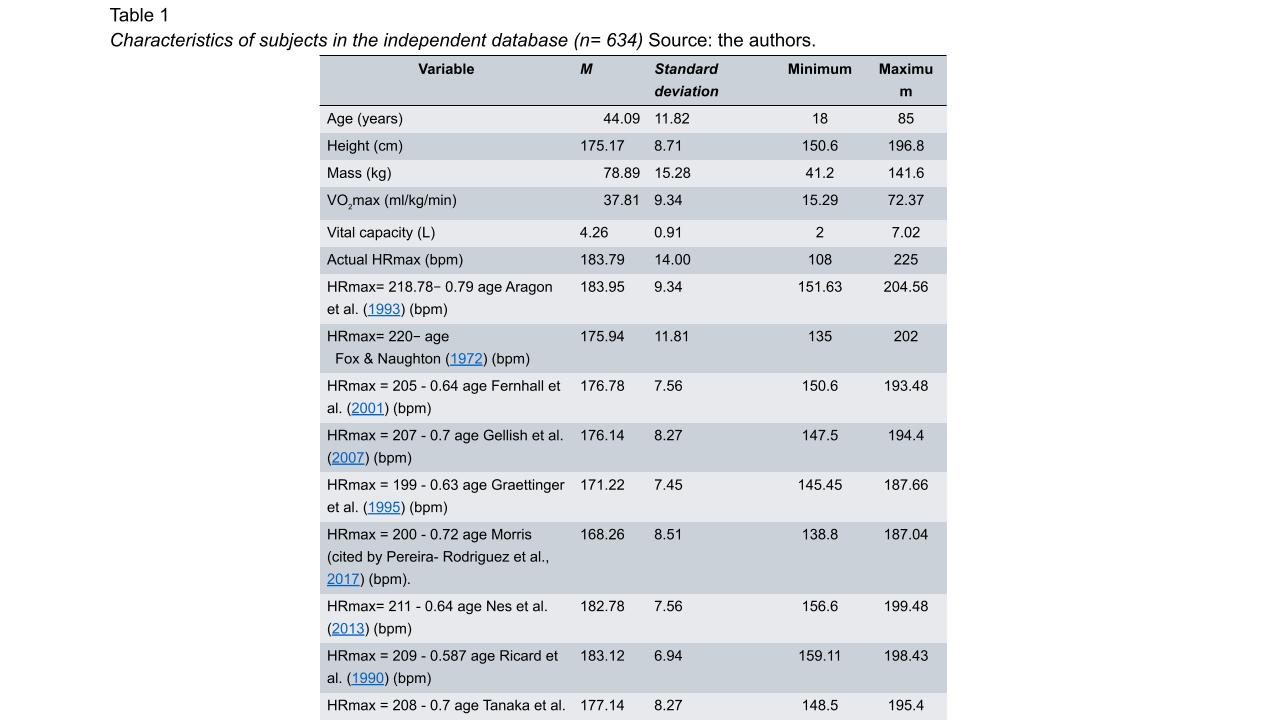
Figure 1 presents the data for age and maximum heart rate for each of the subjects.
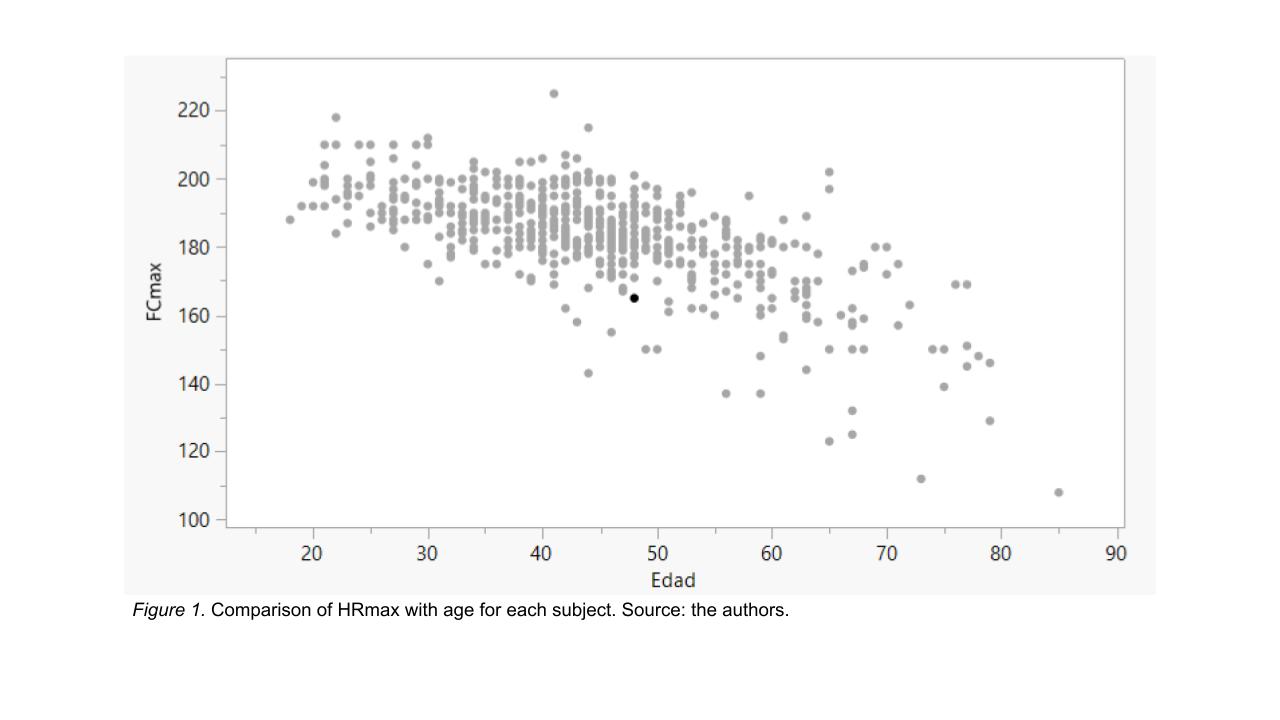
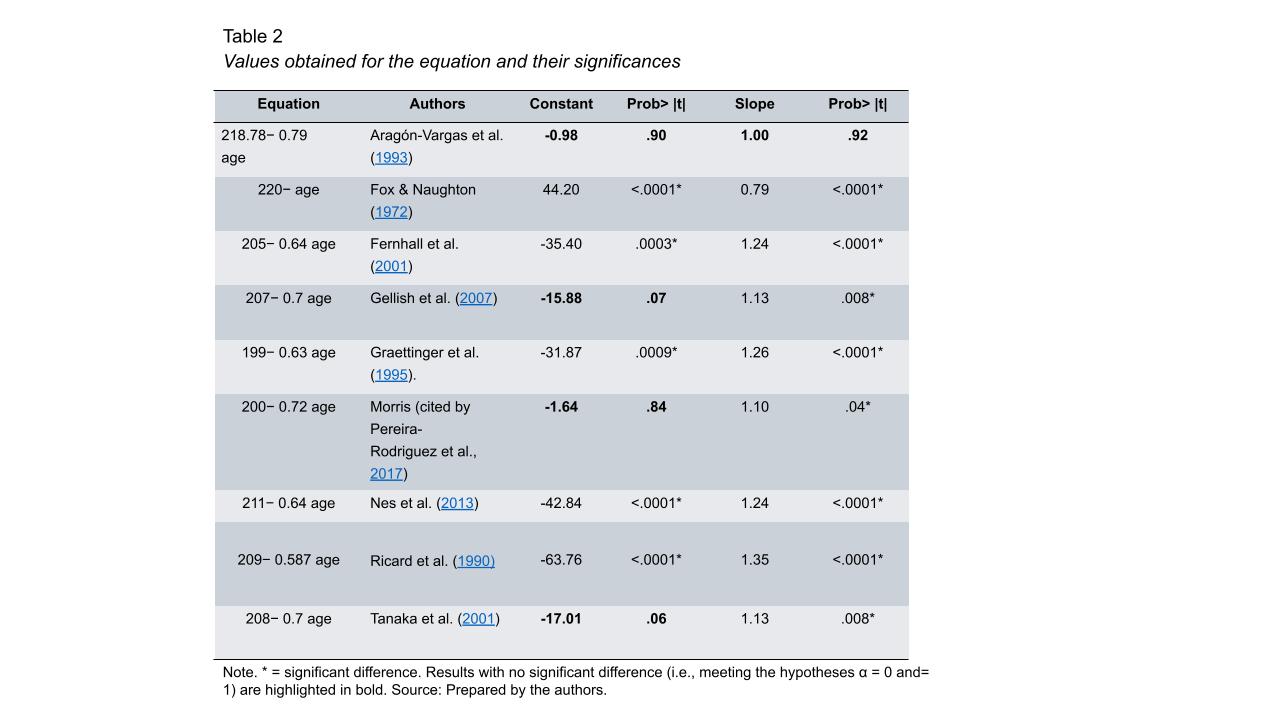
Table 2 presents the values of the constant and slope, as well as the significance value for each equation. The equation of Aragón et al. (1993) is the only one that fulfills the hypotheses that the slope= 1 and the constant= 0 y (this can be observed graphically in Figure 2). For the equations of Tanaka et al. (2001), Gellish et al. (2007) and Morris (cited by Pereira-Rodríguez et al., 2017), the results indicate that there is no statistically significant difference between the constant obtained and 0, but there is a statistically significant difference between the slope and 1 (which can be observed in Figure 3). On the other hand, in the results of the equations of Nes et al. (2013), Fernhall et al. (2001), Ricard et al. (1990) and Graettinger et al. (1995) it can be observed that the value of the constant is different from 0 and the slope different from 1, so they do not meet any of the two hypotheses (Figure 3). The R-squared value for all equations was 0. 45.
It is important to note that Figures 2 and 3 show two lines: the line of best fit for each equation (red) and the line of identity (green), which is when the slope= 1 and the constant = 0.
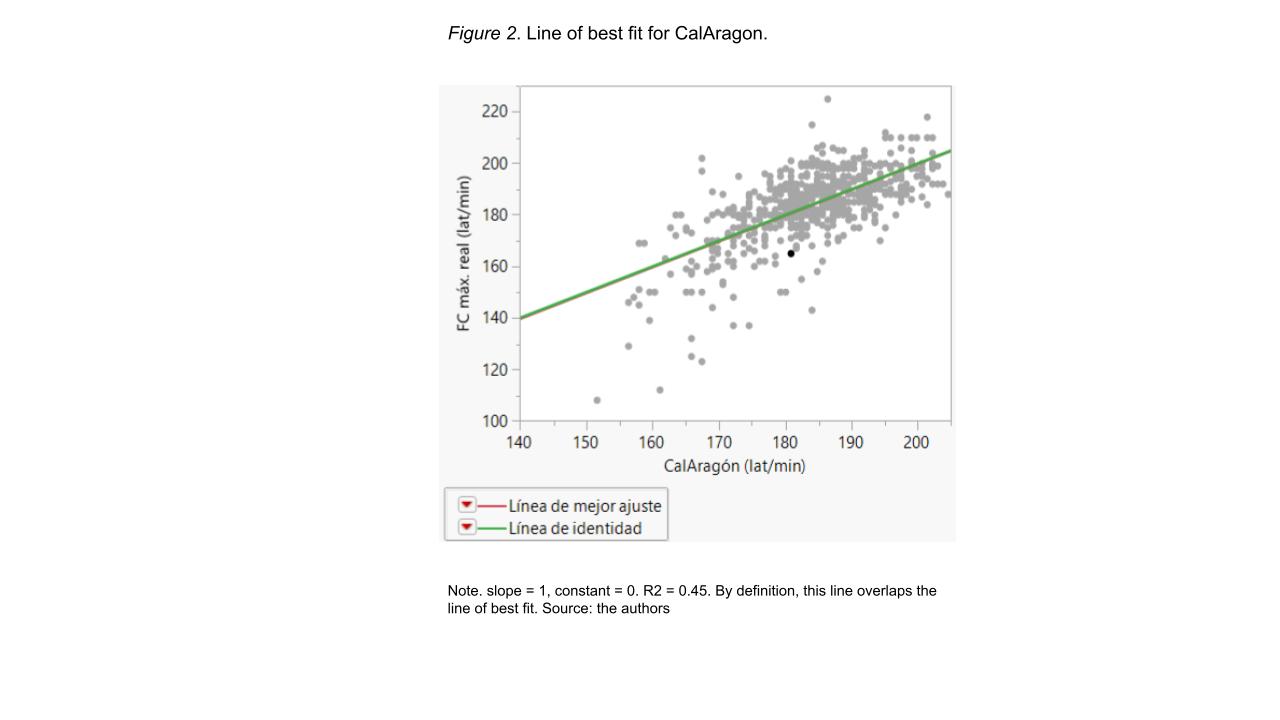
Note. slope = 1, constant = 0. R2 = 0.45. By definition, this line overlaps the line of best fit.
Source: the authors.
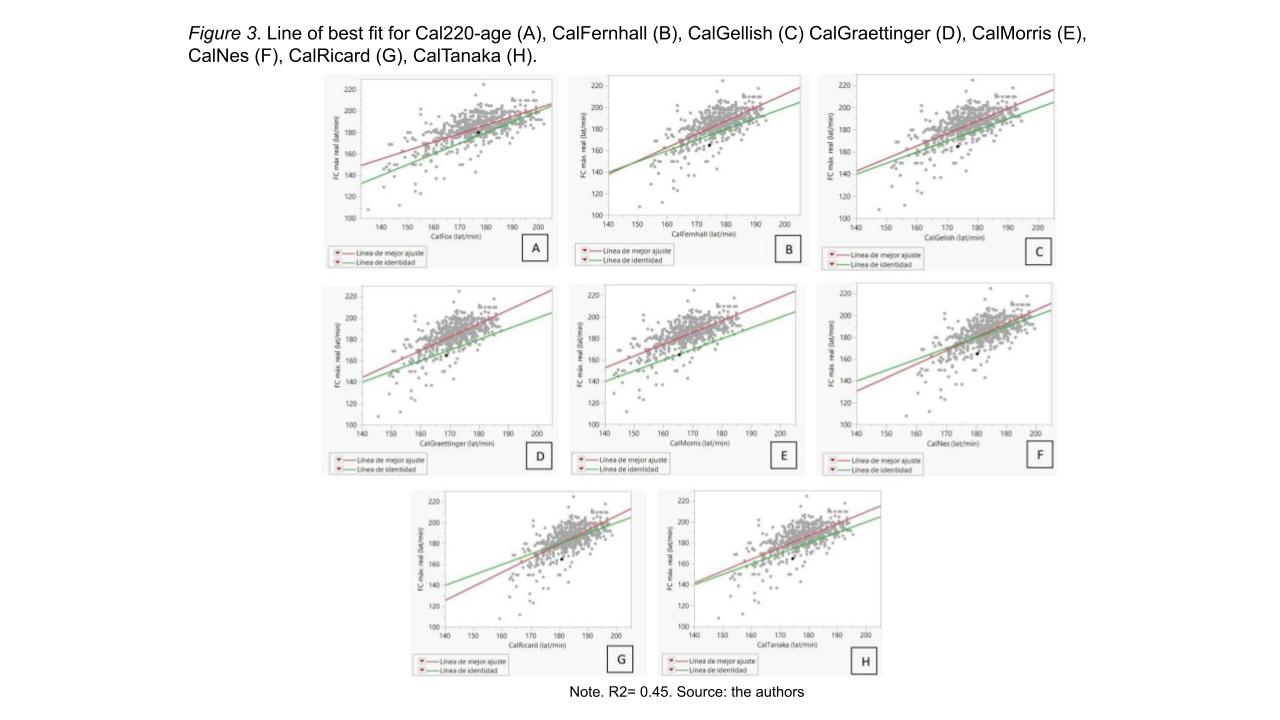
Note. R2=
0.45.
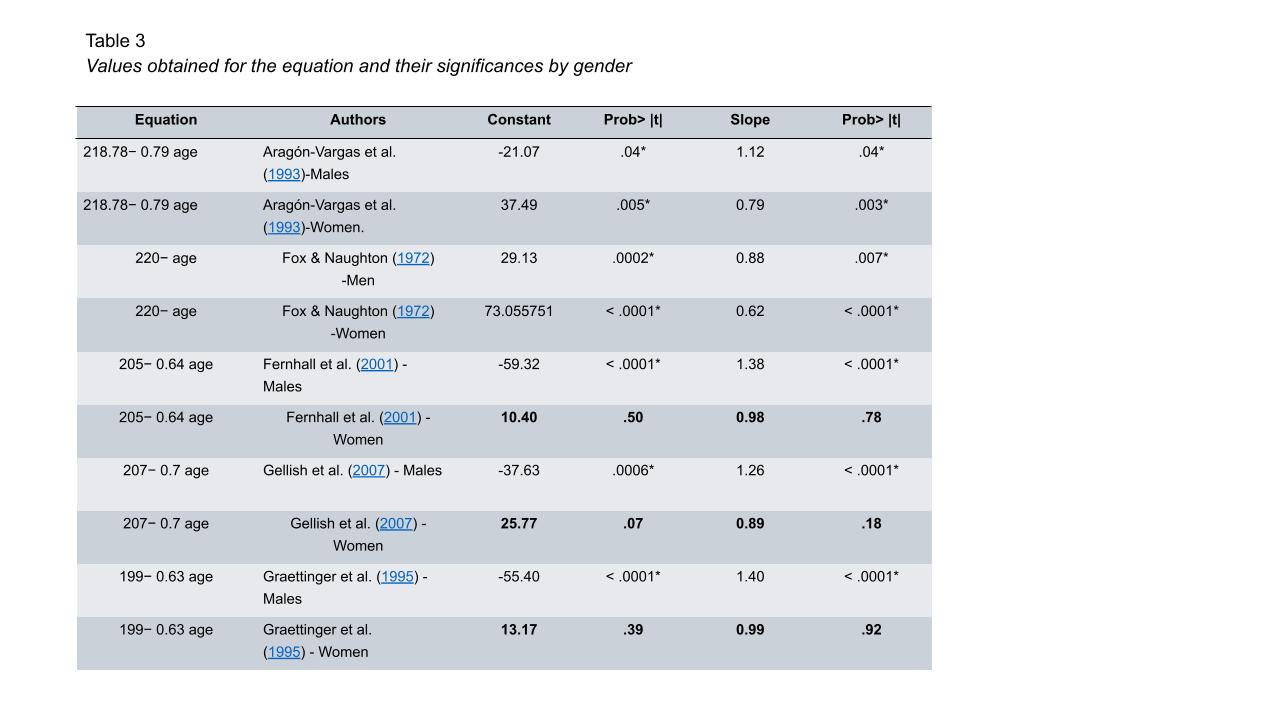
Source: the authors.When analyzing the data for each of the equations, dividing the group into males and females, Table 3 shows that all, except for Aragón et al. (1993) and Morris (cited by Pereira-Rodríguez et al., 2017), meet both hypotheses (constant = 0, slope = 1) for the female group. However, the Morris equation fulfills the slope hypothesis, but not the constant hypothesis. For the male group, none of the equations fulfilled the hypotheses. Regarding the value of R2 for males, the value was 0.46 and for females it was 0.44.
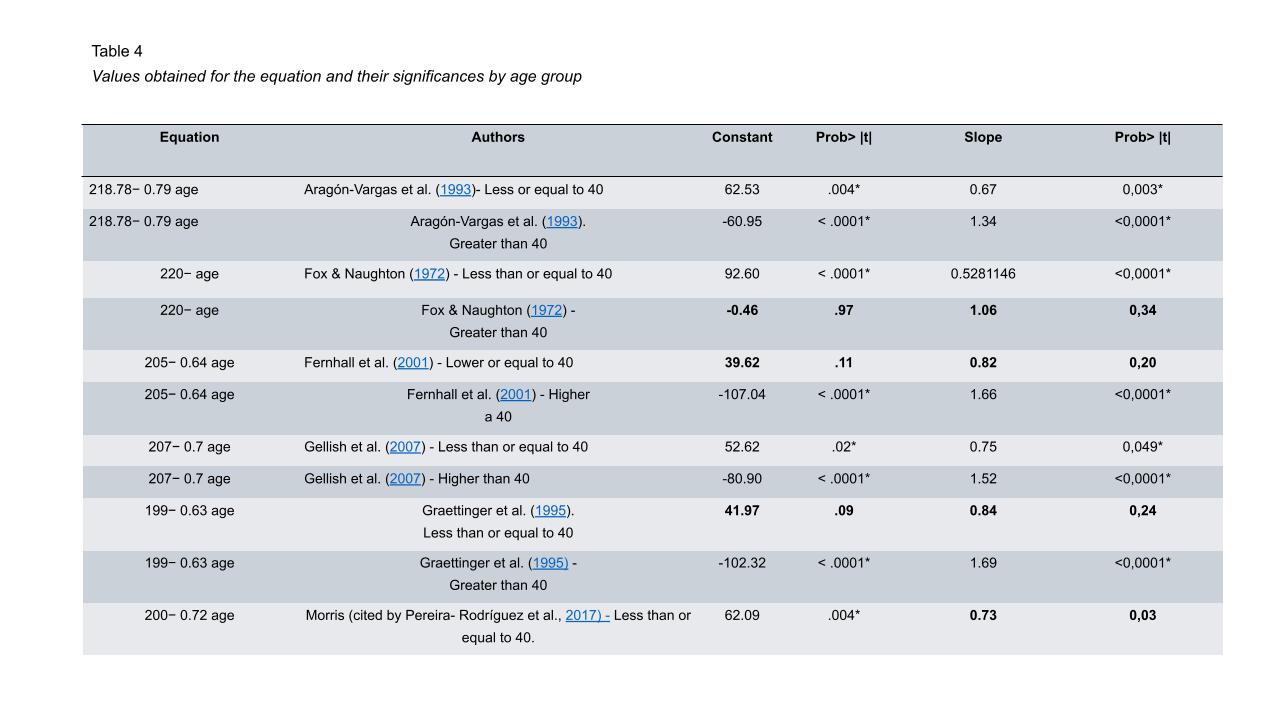
When the analysis is performed by dividing the initial group (both men and women) into two categories according to their age (older than 40 years and 40 years or younger), the following was obtained: the equations of Nes et al. (2013), Fernhall et al. (2001), Ricard et al. (1990) and Graettinger et al. (1995) fulfill both hypotheses for the group under or equal to 40 years, but not for the group over 40 years. That of Morris (cited by Pereira- Rodriguez et al., 2017), fulfills the hypothesis of slope= 1, but not the other. The rest of the equations do not meet the hypotheses for either group. These values are presented in Table 4. For the group over 40 years of age, the R2 was 0.40, while that of the group under or equal to 40 years of age was 0.14.
The present study uses an independent database to validate maximum heart rate (HRmax) prediction equations that have been performed by different authors. For this, linear regression is used to test the following hypotheses:
1- The slope must be equal to 1.
2- The constant must be equal to 0.
When evaluating the equations with the hypotheses proposed, it could be observed that the equation of Aragón et al. (1993) is the only one that can accept that the slope is 1 and that the constant is 0. This result is in accordance with what was expected, since the equation of these authors arises from the data being analyzed and, as mentioned, the importance of validating an equation lies in the fact that the model that is made will precisely adapt to the database used. That is, this equation is the best model for this data set, but it is not necessarily going to be able to have the same prediction capacity with others (Berrar, 2018).
On the other hand, the equations of Tanaka et al. (2001), Gellish et al. (2007) and Morris (cited by Pereira-Rodríguez et al., 2017) accept the hypothesis that constant = 0, but reject that slope = 1. The slope is the most important variable when making regression equations of this type because it indicates how X and Y are related (Ruppert, 2014). The value of the slope describes the consistency of the data; that is, when this hypothesis is satisfied, the actual values and the calculated values vary together consistently in their ranges (Smith & Rose, 1995) and when it is different from 1, the gap between the simulated and observed curves will be proportional to the point values (Mesplé et al., 1996).
Regarding the constant, although this variable has nothing to do with the association between the X and Y variables (LeBlanc, 2004), it can perform transformations that center or deviate the data. So, even though the calculated values are not changed, the origin point is changed and, because of this, although the prediction has not changed (it has the same line), the position of the 0 point on the horizontal axis changes (Judd et al., 2017).
However, it has been argued that the constant test= 0 is only really useful when the slope is not different from 1 (Smith & Rose, 1995). The constant can give information about the bias of the model, but it is meaningless if taken literally: the value of Y when X is 0, essentially because for certain variables there are no values of X = 0, as is the case HRmax. In this sense, the usefulness of the constant is limited to mathematically ensuring that a prediction is correct; it is a value that must always be added to the slope component for it to be properly predicted (Lewis-Beck & Lewis-Beck, 2015).
What is then observed in the equations of Tanaka et al. (2001), Gellish et al. (2007) and Morris (cited by Pereira-Rodriguez et al., 2017) is that, as the constant is 0 and the slope > 1, the calculated values will underestimate the measured values and are therefore invalid.
The remaining equations do not meet any of the hypotheses, so if their slopes are different from 1 and their constants different from 0, they are not adequate to predict the real values and have different possibilities (overestimation, underestimation or both, at different points along the line).
Regarding R2, it had a value of 0.45 for all equations. The coefficient of determination indicates which proportion of the total variance can be explained by the regression model, i.e., how much of the variation in the actual values is explained by the variation in the predicted levels (Piñeiro et al., 2008). The model can be used as a useful metric to measure the success of predicting the dependent variable from the independent ones (Nagelkerke, 1991).
As all the equations use age as the only variable, the R2 indicates that it explains 45% of the total variance, which has been confirmed by other studies, such as Tanaka et al. (2001), in which age alone explained approximately 80% of the variability. Engels et al. (1998) reported 43% of the total variance and Londeree & Moeschberg (1982) from 70 to 75%.
The percentage of explanation can be influenced by other variables, as has been seen with sex, level of physical activity and others; but, as in the case of the study by Aragón et al. (1993), the authors decided to use the model with a single variable, where age accounted for 45% of the variation, as opposed to a model with multiple variables that achieved only 49%. This is important because the value of R2 increases as independent variables are added to the model, even if the variable is not relevant, and therefore special care must be taken whether or not to accept the addition of these variables (Hagquist & Stenbeck, 1998).
The total sample (634) was divided into men (474) and women (160) to evaluate whether the results differ according to the sex of the participants. The same equation was used for both sexes.
When the analysis is performed with the regression equation for each of the subgroups, most of the equations fulfill both hypotheses for the group of women, but none do so for men. This is interesting, since, according to what has been reported by different authors (Aragón et al., 1993; Gellish et al., 2007; Tanaka et al., 2001), sex was not a significant explanatory factor in the model they performed; however, others have reported differences between sexes (Roy & McCrory, 2015), even creating differentiated equations for men and women (Whaley et al., 1992). It seems that this relationship remains unclear among authors and there is still discrepancy in this regard that may be due to the age groups analyzed or other factors. In addition, it has been seen that there are differences when exercising on a treadmill with results on a cycloergometer (Bouzas-Marins et al., 2013), which continues to add variables to be considered.
The present study coincides with others in which the equations have been differentiated between men and women, but no equation is found to work better for the first subgroup. The results are clear that, when using the equations that meet the two hypotheses for women, the results are valid, unlike when used for men.
Some authors claim that more research needs to be done on the influence of sex on maximum heart rate (Bouzas-Marins et al., 2010), but how much research is enough? These same authors cite more than 16 papers that offer points of view from each side (no differences or differences with respect to sex). It must be recognized that human beings are highly variable and that, for this reason, the principle of individualization is clear in the discipline of Human Movement Sciences and recommended for both exercise assesment and prescription (ACSM, 2021)
On the other hand, the Morris equation (cited by Pereira-Rodríguez et al., 2017) fulfills the hypothesis of the slope= 1, but rejects that of the constant= 0. This case is interesting because, although the line is adequate, it is not centered. The constant > 0 caused a transformation of the data moving the line upwards, which causes the data to be consistently underestimated throughout the cardiac frecuencies;which makes it invalid. This error could be corrected by changing the constant and centering the data, but the equation as it stands presents a problem in predicting the true values.
Dividing the group by sex, we obtained an R2 value of 0.46 for men and 0.44 for women. That is, although the value increases in men, it is still quite similar in both cases and with respect to the value for the total sample. Age explains 46% of the HRmax for men and 44% for women.
The total sample (634) was divided into those aged 40 years or younger (170) and older than 40 years (400) to assess whether the results differed according to the age group of the participants. The same equation was used for both groups.
The results show that some of the equations meet both hypotheses for the group younger or equal to 40 years, while none meet them for the group older than 40 years. On the other hand, the Morris equation (cited by Pereira-Rodríguez et al., 2017) meets the hypothesis of slope = 1, but rejects that of constant = 0, as it does when analyzing the data according to sex.
Similar results have been seen in previous studies in which the use of equations has been proposed for specific ages. For example, in the study by Bouzas-Marins & Delgado- Fernandez (2007), the Tanaka et al. (2001) equation was the most appropriate for the study participants, who were on average approximately 21-22 years old.
The study by Miragaya & Magri (2016) found that the Tanaka et al. (2001) formula was more accurate in people younger than 40 years, which is similar to the results of this study in which some equations were better for this age group. However, there is a discrepancy, as that of Tanaka et al. (2001) fails to accept both hypotheses for either age group. In any case, it is apparent that the equations predicting HRmax from age are not good for people older than 40 years.
As for the R2, it was higher for the group older than 40 years (0.40) and decreased to a great extent for the group younger or equal to 40 years (0.14). This means that the group of people younger or equal has a much higher variability, which may be influenced by the sample size; the latter is different for both groups and makes it difficult to interpret (Hagquist & Stenbeck, 1998).
It is important to emphasize that the R2 gives a measure of agreement between the observed and predicted data, but what is not really known is how much variance should be explained for the model to be good, since it has been said that it is a purely descriptive measure (Hagquist & Stenbeck, 1998). However, it has been suggested that, although there are no established values, there is a basis on which it can be interpreted, where 1 is a perfect fit and 0 indicates no fit. Even so, this has been considered a limitation of R2 (Hagquist & Stenbeck, 1998).
The present study corresponds to a secondary data analysis, hence some variables were not controlled, for example: the time each measurement was taken, the environmental conditions, the person taking the measurement, among others.
· For VO2max measurements, a free protocol was used, so, although it can be assured that a maximum was reached by means of the established criteria, this limits the comparison with studies using other protocols.
· By using a database in which measurements had already been made, one of limitations is that the criterion "HRmax equal to or greater than the HRmax predicted by the equation 220 - age, minus 10 bpm" is used as one of the three to define whether a test was maximal or not. This is supported by the use of at least one extra criterion, but its use is not recommended in future studies.
· It is important that, for all equations that are developed, validation is performed on populations other than those used for their creation.
· The equations created should report the associated error or range so that those who want to use them keep in mind that they are not exact, but present values within which they may vary. Of the equations presented, that of Gellish et al. (2007) reports a range of ±5-8 bpm, that of Nes et al. (2013) presents a standard error of measurement of 10.8 bpm and that of Fernhall (2001) 9.9 bpm. In addition, Tanaka et al. (2001) comment about variations of about 10 bpm for the values of each subject. The others do not report this criterion.
The equations performed must have their respective reference that can be consulted to obtain information about their development and the population used.
After many attempts to create a prediction equation for HRmax, it can be noted that the equations are still not valid, especially for generic use. HRmax seems to be difficult to predict, so it is recommended that, in case a valid measure of this variable is needed, a direct test should be used.
In addition, creating equations for specific subgroups may be an alternative to improve the prediction of HRmax. Equations that have already been created for more specific populations should be validated. In case of resorting to an equation, according to the validation performed in this study, those shown in Table 5 can be recommended.
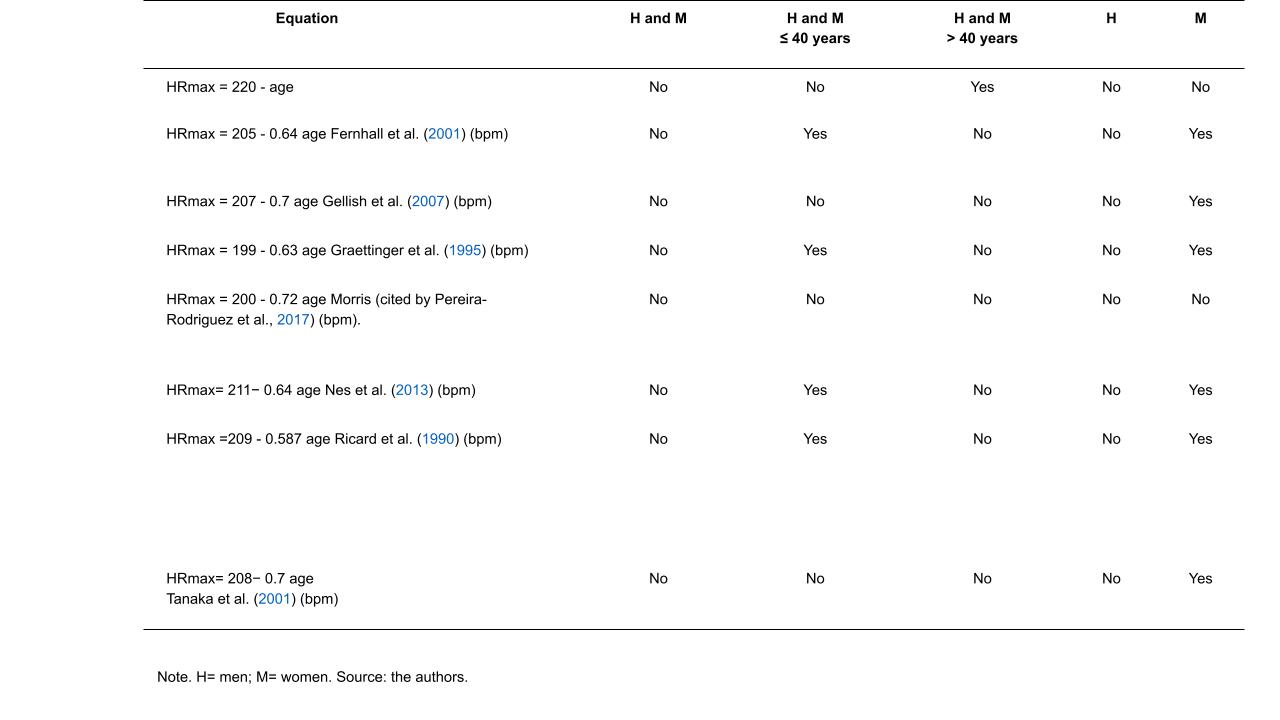
None of the equations analyzed can be used to predict HRmax in a generic way. When performed according to sex, six of the equations, Fernhall et al. (2001), Gellish et al. (2007), Graettinger et al. (1995), Nes et al. (2013), Ricard et al. (1990), and Tanaka et al. (2001) met both hypotheses for women, but none for men; and, when performed according to age group, four of the equations, Fernhall et al. (2001), Graettinger et al. (1995), Nes et al. (2013), and Ricard et al. (1990), met the hypotheses for the group aged 40 years or younger, but not for the group over 40 years.
Associated editor in charge: : Ph.D. Pedro Carazo Vargas
*Luis Fernando Aragón is director from Pensar en Movimiento.: The peer review process was done independently of him until a decision was made
Acknowledgments:: The authors would like to thank María Isabel González Lutz and Ricardo Alvarado Barrantes, who made special contributions to the data analysis. In addition, we extend our thanks to Dr. Dee W. Edington (R.I.P.) and Dr. M. Anthony Schork (R.I.P.), as contributors to the original data analysis in 1993 (Aragón-Vargas et al., 1993).
redalyc-journal-id: 4420
Note. slope = 1, constant = 0. R2 = 0.45. By definition, this line overlaps the line of best fit.
Source: the authors.Note. R2=
0.45.
Source: the authors.