Artículos
Received: 04 December 2023
Accepted: 10 January 2024
Published: 30 June 2024
DOI: https://doi.org/10.57065/shilap.898
Abstract: With this new report of Stygioides italica Mazzei & Yakovlev, 2016 for southern Italy (Calabria: Monte Pollino), we take the opportunity to survey some populations from central and southern Italy from a moleculargenetic point of view and to highlight some morphoanatomical characters that may facilitate the distinction between the recent S. italica Mazzei & Yakovlev and Stygioides colchica (Herrich-Schäffer, 1851).
Keywords: Lepidoptera, Cossidae, Stygioides italica, Stygioides colchica, Italy.
Resumen: Con este nuevo informe de Stygioides italica Mazzei & Yakovlev, 2016 para el sur de Italia (Calabria: Monte Pollino), aprovechamos la oportunidad para sondear algunas poblaciones del centro y sur de Italia desde un punto de vista genético-molecular y destacar algunos caracteres morfoanatómicos que pueden facilitar la distinción entre los recientes S. italica Mazzei & Yakovlev y Stygioides colchica (Herrich-Schäffer, 1851).
Palabras clave: Lepidoptera, Cossidae, Stygioides italica, Stygioides colchica, Italia.
Riassunto: Con questa nuova segnalazione di Stygioides italica Mazzei & Yakovlev, 2016 per il sud Italia (Calabria: Monte Pollino), si coglie l’occasione per sondare sotto l’aspetto genetico-molecolare alcune popolazioni dell’Italia centrale e meridionale ed evidenziare alcuni caratteri morfo anatomici che possono agevolare la distinzione fra la recente S. italica Mazzei & Yakovlev e Stygioides colchica (Herrich-Schäffer, 1851).
Parole chiave: Lepidoptera, Cossidae, Stygioides italica, Stygioides colchica, Italia.
Introduction
The recent description of Stygioides italicaMazzei & Yakovlev, 2016 (Lepidoptera: Cossidae) asked for a revision of the scarce records available for Italy concerning Stygioides colchica (HerrichSchäffer, 1851) (= tricolor auct. nec Lederer, 1858) (Pinzari & Pinzari, 2020).
First Italian records are very old (Curò, 1890; Ragusa, 1893), followed by other data some of which very recent (Turati, 1919; Dannehl, 1927a,b,c,d; Daniel, 1954-55; de Freina & Witt, 1990; Bertaccini et al. 1997; Parenzan & Porcelli, 2006; Grassi et al. 2007; Cabella & Fiori, 2010; Pinzari & Pinzari, 2023).
The careful examination of a male collected on the 1st of July 2002 in the Abruzzo region, around Campo Felice, L’Aquila, at 1300 m a.s.l., and initially identified as Stygioides colchica (Grassi et al. 2007), led to the description of a new species, Stygioides italicaMazzei & Yakovlev, 2016. As consequence, all previous Italian records of Stygioides colchica need to be revised to ascertain whether both species are present in Italy or not. Our research, supported by molecular analyses, indicate the presence of one species only (Stygioides italica). However, further investigation is needed to investigate the presence in Sicily on the Madonie Mountains (Ragusa, 1893) due to data uncertainty and isolation of island populations.
Italian distribution of Stygioides italicaMazzei & Yakovlev, 2016 (nec Stygioides colchica Herrich-Schäffer, 1851 = tricolor auct. nec Lederer, 1858) was largely documented in Mazzei & Yakovlev (2016), Pinzari & Pinzari (2020), here updated by one record in Apulia (Rolli, 2023), several specimens from Latium (Pinzari & Pinzari, 2023), and one more original record.
Materials and methods
The field collecting was carried out on the South slope of the Mount Pollino, on a dry rocky prairie (Figures 1-2). Snow melting was incomplete and spring flowering just started. During collecting day there were sunny sky, no wind, and warm temperatures (16-18ºC).
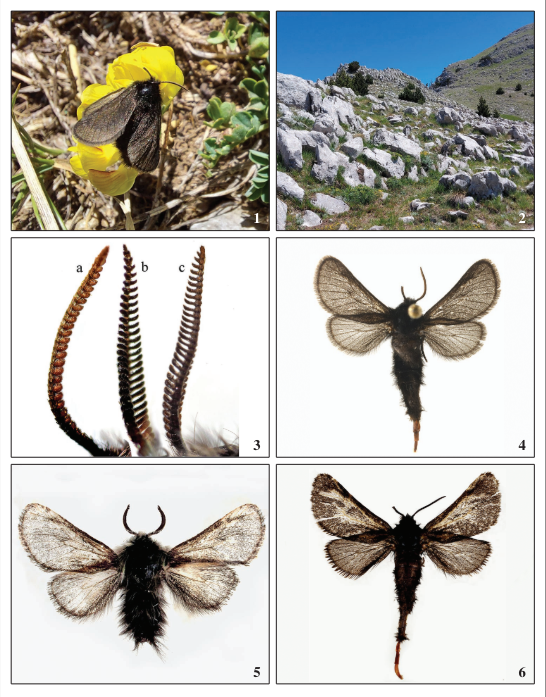
Figures 1-6.
1.Stygioides italica ♀ (live) Mount Pollino, 8-VI-2022. 2. Collecting site of Stygioides italica on the Pollino Massif. 3a-c.Stygioides italica: 3a. female antenna, Pollino Massif, 8-VI-2022 3b-c. male antenna, Lazio: Vallemare (RI), 1455 m, 2-VI-2022. 4.Stygioides italica ♀ Pollino Massif, wingspan 15,2 mm. 5.Stygioides italica ♂ Lazio: Vallemare (RI), 1455 m, 2-VI-2022, wingspan 15,3 mm. 6.Stygioides italica ♀ Aspromonte: Montalto (RC), 1700 m, 31-V-1994, wingspan 17,2 mm.
The legs of four Stygioides italica specimens, 1 ♀, Monte Pollino, Calabria, Italy, 2050 m, 08-VI2022, sample ID: BC_ZSM_Lep_116421, leg. Bertaccini, coll. Bertaccini; 1 ♀, Vallemare, Lazio, Italy, 1455 m, 2-VI-2022, sample ID: BC_ZSM_Lep_116423, leg. M. Pinzari, coll. Pinzari; 1 ♀, Aranova, Fiumicino, Lazio, Italy, 50 m, 3-VI-2020, sample ID: BC_ZSM_Lep_116422, leg. Mn. & M. Pinzari, coll. Pinzari; 1 ♂, Vallemare, Lazio, Italy, 1455 m, 2-VI-2022, sample ID: BC_ZSM_Lep_117095, leg. M. Pinzari, coll. Bertaccini) were submitted to molecular barcoding analysis to explore intra-specific genetic diversity. The standard protocol of the Canadian Centre for DNA Barcoding (CCDB) was used for sequencing the barcode fragment (658bp) of the mitochondrial cytochrome oxidase gene, subunit 1 (COI 5’), which is accepted as a standard marker for the identification of most animals. LepF1 and LepR1 were the primers used for PCR and sequencing (Hajibabaei et al. 2006). Sequences are deposited in the Barcode of Life DataSystems (BOLD), accessible at www.boldsystems.org in the public dataset DS-STYGIOID (doi: https://dx.doi.org/10.5883/DS-STYGIOID).
Comparisons of male genitalia of S. italica with its nearest taxa were carried out by using images available in de Freina & Witt (1990) for S. colchica and in Saldaitis et al. (2007) for Stygioides colchica dercetis (Grum-Grshimailo, 1899).
Results and Discussions
Original record: Mount Pollino, Cosenza, Italy, 2050 m a.s.l., 1 ♀, 8-VI-2022.
The female was found on the South slope of the Mount Pollino, on a dry rocky prairie (Figures 1- 2). We observed very scarce butterflies and small geometrids such as several Cleta filacearia (HerrichSchäffer, [1847]) and rare Lythria cruentaria (Hufnagel, 1767). At 13:30 a specimen supposedly belonging to the Psychidae family was observed flying frenetically on the ground, jumping from one flower to the next. Its correct identification as a specimen of Stygioides, very rare in Italy, was early recognized and here specifically identified as Stygioides italicaMazzei & Yakovlev, 2016.
To the best of our knowledge, this is the record at the highest altitude for this species. Previously a female was found on the Montalto, Aspromonte Mountains, at 1700 metres above the sea level (Bertaccini et al. 1997).
Stygioides italica was found in very different habitats despite the paucity of records, being collected from lowland to more than 2000 metres of altitude. Larval foodplants are unknown, but we can suppose it feeds on some Boraginaceae such as Echium and Cynoglossum like the congeneric Stygioides colchica (Korb, 1910).
Stygioides italica seems to be an Italian endemic, whilst Stygioides colchica is known from Greece (Peloponnese peninsula), SW Russia, Ukraine (Crimea, Zaporozhskaya Reg.) Turkey, Lebanon, Syria, Israel, Armenia, and Iran (Alipanah et al. 2021).
DNA barcoding analyses recovered a full sequence of 658bp for the Pollino and one of the Vallemare specimens and a shorter sequence of 627bp for the second specimen from Vallemare and of 345bp for the Aranova specimen as follows.
Sample ID: BC_ZSM_Lep_116421; sequence ID: GWOUK940-22; Pollino (658bp)
AACATTATATTTTATTTTTGGTATTTGATCTGGATTAGTAGGAACTTCTCTTAGTCTTTTAATTCGAGCTGAATTAGGTAATCCTGGATCTTTAATTGGTAATGATCAAATTTATAATACTATTGTTACAGCTCATGCTTTTATTATAATTTTTTTTATAGTTATACCTATTATAATTGGAGGTTTTGGTAATTGATTAGTACCATTAATGTTAGGAGCCCCTGATATAGCTTTCCCACGAATAAATAATATAAGTTTTTGATTACTCCCCCCCTCTTTAACCCTTTTAATTTCTAGAAGAATCGTTGAAAATGGTGCTGGAACAGGATGAACAGTTTATCCACCTTTATCTTCTAATATCGCCCATAGAGGAAGTTCAGTTGATTTAGCTATTTTTTCCCTTCATTTAGCTGGTATTTCCTCAATTTTAGGAGCTATTAATTTTATTACCACTATTATTAATATACGACCCTATAATATATCATTTGACCAAATACCTCTTTTTGTCTGAGCAGTTGGCATCACCGCTTTATTATTACTTCTTTCTCTTCCTGTATTAGCAGGAGCTATTACTATATTATTAACTGATCGAAATTTAAATACTTCATTTTTTGACCCAGCAGGAGGTGGAGATCCAATTTTATATCAACATTTATT.
Sample ID: BC_ZSM_Lep_116423; sequence ID: GWOUK942-22; Vallemare (658bp)
AACATTATATTTTATTTTTGGAATTTGATCTGGATTAGTAGGAACTTCTCTTAGTCTTTTAATTCGAGCTGAATTAGGTAATCCTGGATCTTTAATTGGTAATGATCAAATTTATAATACTATTGTTACAGCTCATGCTTTTATTATAATTTTTTTTATAGTTATACCTATTATAATTGGAGGCTTTGGTAATTGATTAGTACCATTAATATTAGGAGCCCCTGATATAGCTTTCCCACGAATAAATAATATAAGTTTTTGATTACTCCCCCCCTCTTTAACCCTTTTAATTTCTAGAAGAATCGTTGAAAATGGTGCTGGAACAGGATGAACAGTTTATCCACCCTTATCTTCTAATATCGCCCATAGAGGAAGTTCAGTTGACTTAGCTATTTTTTCCCTTCATTTAGCTGGTATTTCCTCAATTTTAGGAGCTATTAATTTTATTACCACTATTATTAATATACGACCCTATAATATATCATTTGACCAAATACCTCTTTTTGTCTGAGCAGTTGGCATTACCGCTTTATTATTACTTCTTTCTCTTCCTGTATTAGCAGGAGCTATTACTATATTATTAACTGATCGAAATTTAAATACTTCATTTTTTGACCCAGCAGGAGGTGGAGATCCAATTTTATACCAACATTTATT .
Sample ID: BC_ZSM_Lep_117095; sequence ID: GWOUL189-23; Vallemare (627bp)
AACATTATATTTTATTTTTGGAATTTGATCTGGATTAGTAGGAACTTCTCTTAGTCTTTTAATTCGAGCTGAATTAGGTAATCCTGGATCTTTAATTGGTAATGATCAAATTTATAATACTATTGTTACAGCTCATGCTTTTATTATAATTTTTTTTATAGTTATACCTATTATAATTGGAGGCTTTGGTAATTGATTAGTACCATTAATATTAGGAGCCCCTGATATAGCTTTCCCACGAATAAATAATATAAGTTTTTGATTACTCCCCCCCTCTTTAACCCTTTTAATTTCTAGAAGAATCGTTGAAAATGGTGCTGGAACAGGATGAACAGTTTATCCACCCTTATCTTCTAATATCGCCCATAGAGGAAGTTCAGTTGACTTAGCTATTTTTTCCCTTCATTTAGCTGGTATTTCCTCAATTTTAGGAGCTATTAATTTTATTACCACTATTATTAATATACGACCCTATAATATATCATTTGACCAAATACCTCTTTTTGTCTGAGCAGTTGGCATTACCGCTTTATTATTACTTCTTTCTCTTCCTGTATTAGCAGGAGCTATTACTATATTATTAACTGATCGAAATTTA AATACTTCATTTTTTGACCCAGCAGGAG.
Sample ID: BC_ZSM_Lep_116422; sequence ID: GWOUK941-22; Aranova (345bp)
CCTCCCCCCTCTTTAACCCTTTTAATTTCTAGAAGAATCGTTGAAAATGGTGCCGGAACAGGATGAACAGTCTATCCACCTTTATCTTCTAATATCGCCCATAGAGGAAGTTCAGTTGACTTAGCTATTTTTTCCCTTCATTTAGCTGGTATTTCCTCAATTTTAGGAGCTATTAATTTTATTACCACTATTATTAATATACGACCCTATAATATATCATTTGACCAAATACCTCTTTTTGTCTGAGCAGTTGGCATCACCGCTTTATTATTACTTCTTTCTCTTCCTGTATTAGCAGG AGCTATTACTATATTATTAACTGATCGAAATTTAAATACTTCATT.
Specimens submitted to DNA barcoding analysis were found in very different habitats ranging from 50 to 2050 m of altitude. The completely uniform morphology of adults corresponds to a genetic difference (BOLD Barcode Gap Analysis) comprised between the 0.97% of the Pollino-Vallemare pair and the 1.76% of the Vallemare-Aranova pair. The two sequences from Vallemare specimens were identical. The short length of the sequence recovered for the Aranova specimen (345bp) suggest caution in the interpretation of data.
Comparisons of male genitalia with available iconography of nearest taxa showed a clear affinity of S. italica with S. colchica dercetis that should be better evaluated when molecular data will be available also for S. colchica colchica and S. colchica dercetis.
Lastly, in addition to the adult habitus of Stygioides italica (Figures 4-6), some important distinctive characters, such as the antennas (Figures 3a-c), the scales that cover the upper surface of the female forewings (Figures 7-9) and the male genitalia of nearest species (Figures 10-12), were shown.
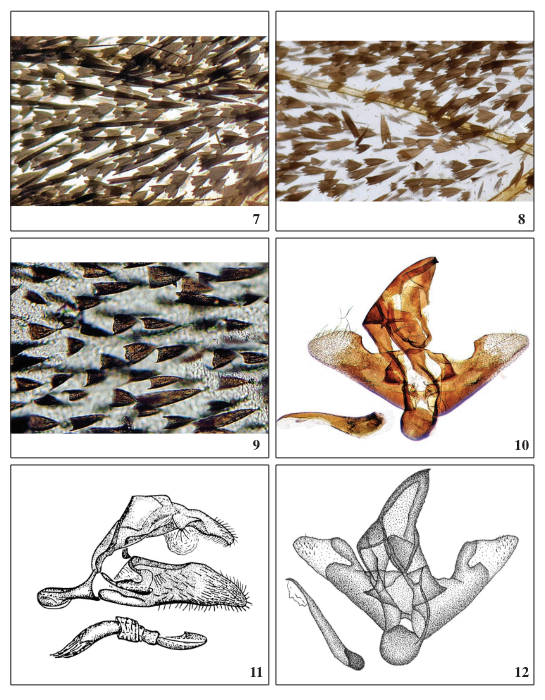
Figures 7-12.
7.Stygioides italica ♀ (articulated scales) Pollino Massif. 8.Stygioides italica ♀ (articulated scales) Aspromonte: Montalto (RC). 9.Stygioides colchica ♀ (simple scales) Turchia: Taurus, 1500 m, 21-V1978 (leg. de Freina: ZSM). 10.Stygioides italica (male genitalia) Lazio: Vallemare (RI), 1455 m, 2-VI-2022 (P.G. 1095 E. Bertaccini). 11.Stygioides colchica (male genitalia) (de Freina & Witt, 1990). 12.Stygioides colchica dercetis (male genitalia) (Saldaitis et al. 2007).
Conclusions
Stygioides italica Mazzei & Yakovlev, was recorded after its description for few localities of Central and South Italy, but comparisons with the congeneric S. colchica are lacking. In this paper we provided original distribution data, the first molecular data for S. italica, and contributed to the knowledge of some distinctive characters such as antennae, scales covering forewings of females, and male genitalia of nearest species. The availability of full DNA barcode sequence for all taxa can strongly contribute in the future to investigate the interspecific relationships within the genus Stygioides.
Acknowledgments
We want to thank Paul Hebert, Evgeny Zakharov, and Sujeevan Ratnasingham (Centre for Biodiversity Genomics (CBG), University of Guelph, Canada), Josef J. de Freina (München, Germany), and Aidas Saldaitis (Institute of Ecology of Vilnius University, Lithuania) for their collaboration.
References
Alipanah, H., Yakovlev, R. V., Falsafi, H., Witt, T., & Saldaitis, A. (2021). Cossidae (Lepidoptera) of Iran: a review with description of two new species. Zootaxa, 5062(1), 001-100. https://doi.org/10.11646/zootaxa.5062.1.1
Bertaccini, E., Fiumi, G., & Provera, P. (1997). Bombici e Sfingi d’Italia (Lepidoptera Heterocera) (Vol. 2). NaturaGiuliano Russo Editore, Monterenzio.
Cabella, C., & Fiori, F. (2010). I macrolepidotteri della provincia di Alessandria (Piemonte Sud Orientale). Secondo contributo (Lepidoptera). Rivista Piemontese di Storia naturale, 31, 107-138.
Curò, A. (1890). Aggiunte alla parte prima del Saggio di un Catalogo dei Lepidotteri d’Italia. Bullettino della Società Entomologica Italiana, 21(3/4), 76-85.
Daniel, F. (1955). Monographie der Cossidae. I. (Lep.-Het.). Kritische Beurteilung der bisher dem Genus Stygia Latr. zugeteilten Arten. Mitteilungen der Münchner Entomologischen Gesellschaft, 44-45, 159-181.
Dannehl, F. (1927a). Sammelreise nach Mittelitalien 1926 und ihre Ergebnisse. Lepidopterologische Rundschau, 1(1) 11-12.
Dannehl, F. (1927b). Sammelreise nach Mittelitalien 1926 und ihre Ergebnisse. Lepidopterologische Rundschau, 1(2) 26-28.
Dannehl, F. (1927c). Sammelreise nach Mittelitalien 1926 und ihre Ergebnisse. Lepidopterologische Rundschau, 1(3) 35-37.
Dannehl, F. (1927d). Sammelreise nach Mittelitalien 1926 und ihre Ergebnisse. Lepidopterologische Rundschau, 1(4) 46-48.
de Freina, J., & Witt T. (1990). Die Bombyces und Sphinges der Westpalaearktis (Insecta, Lepidoptera) (Vol. 2). Forschung & Wissenschaft.
Grassi, A., Pimpinelli, I., Pinzari, M., & Zilli, A. (2007). Some noteworthy records of macromoths from central Italy (Lepidoptera). Bollettino dell’Associazione Romana di Entomologia, 62(1-4), 131-144.
Hajibabaei, M., Smith, M. A., Janzen, D. H., Rodriguez, J. J., Whitfield, J. B., Hebert, P. D. N. (2006). A minimalist barcode can identify a specimen whose DNA is degraded. Molecular Ecology Notes, 6, 959-964. https://doi.org/10.1111/j.1471-8286.2006.01470.x
Korb, M. (1910). Die Arten der Cossiden-Gattung Stygia Latr. Beobachtungen uber ihr Vorkommen u. ihre Lebensweise. Miitteillungen Munchen Entomologischen Gesselschaften, 1, 25- 29.
Mazzei, P., & Yakovlev, R. V. (2016). Stygioides italica Mazzei et Yakovlev - new species of Cossidae (Lepidoptera) from Italy. Russian Entomological Journal, 25(4), 401-403. https://doi.org/10.15298/rusentj.25.4.08
Parenzan, P., & Porcelli, F. (2006). I macrolepidotteri italiani. Phytophaga, 15, 1-1051.
Pinzari, M., & Pinzari, M. (2020). First external description of the female of Stygioides italica Mazzei & Yakovlev, 2016 (Lepidoptera: Cossidae). SHILAP Revista de lepidopterologia, 48(191), 565-568. https://doi.org/10.57065/shilap.374
Pinzari, M., & Pinzari, M. (2023). Hylaea fasciaria (Linnaeus, 1758), Stygiodes italica Mazzei & Yakovlev, 2016 ed altre specie nuove per i dintorni del Sic di Monte Cagno, Borbona (Provincia di Rieti, Lazio) (Lepidoptera). Bollettino dell’Associazione Romana di Entomologia, Nuova Serie, 3 (1-4). In press accepted for publication on 1st December 2023.
Ragusa, E. (1893). Note lepidotterologiche. Il Naturalista siciliano, 12(9), 206-207.
Rolli, E. (2023). Note in merito al primo ritrovamento per l’Italia meridionale di un esemplare femmina di Stygioides italica Mazzei & Yakovlev, 2016 (Lepidoptera: Cossidae). Bollettino della Società Entomologica Italiana, 155(2), 87-89.
Saldaitis, A., Yakovlev, R. V., & Ivinskis, P. (2007). Carpenter moths (Insecta: Lepidoptera, Cossidae) of Lebanon. Acta Zoologica Lituanica, 17 (3), 191-197. https://doi.org/10.1080/13921657.2007.10512831
Turati, E. (1919). Nuove forme di Lepidotteri. Correzioni e note critiche IV. Il Naturalista siciliano, 23, 203-368.
Author notes
* Autor para la correspondencia / Corresponding author: manuela.pinzari@uniroma3.it
