ARTÍCULO
CHARACTERISTICS OF SHEEP FARMS AND LIVESTOCK PRACTICES THAT INFLUENCE SHEEP PREDATION IN URUGUAY
CARACTERÍSTICAS DE LAS EXPLOTACIONES OVINAS Y LAS PRÁCTICAS GANADERAS QUE INFLUYEN EN LA DEPREDACIÓN OVINA EN URUGUAY
CHARACTERISTICS OF SHEEP FARMS AND LIVESTOCK PRACTICES THAT INFLUENCE SHEEP PREDATION IN URUGUAY
Mastozoología Neotropical, vol. 29, núm. 1, p. 569, 2022
Sociedad Argentina para el Estudio de los Mamíferos
Recepción: 10 Noviembre 2020
Aprobación: 17 Diciembre 2021
Abstract: Animal predation is a main problem in sheep production with an important impact on animal production. Factors such as the size of the herd, animals location, and decisions on livestock practices influence the probability of predator attacks. The aim was to determine the characteristic of the sheep farms and factors related with the sheep husbandry associated with the risk of predation, according to the perception of Uruguayan sheep farmers. A virtual structured survey with 30 closed questions was applied to 91 sheep farmers. The survey provided information about social aspects of farmers surveyed, farm characterization, management of the animals, the occurrance of attacks by predators and the predator species. More than 85% of the farmers reported predator attacks, but attacks were 8.3 times less when the farms had electric fences in all paddocks. The proportion of predation was greater in the northern region of the country, and lower when the paddock was visited more than once per day. In general, attacks from pampas foxes and free-ranging dogs had an inverse relationship. The principal predator species reported as responsible for sheep attacks were the southern caracaras, pampas foxes, free-ranging dogs and wild boars. We consider that there may be a probable spatial and temporal avoidance by the pampas fox when free-ranging dogs are present. The high impact of occurrence of predators’ attacks indicates the need and the importance of collecting more information and developing management programs that can help to mitigate human-livestock predators conflict.
Keywords: Behavior, Carnivora, livestock depredation, sheep losses, ungulates.
Resumen: La depredación es un problema principal en la producción ovina con un impacto importante en la producción animal. Factores como el número y ubicación de los animales y las decisiones sobre prácticas ganaderas influyen en la probabilidad de ataques por predadores. El objetivo fue determinar las características de los predios ovejeros y los factores relacionados con el manejo ovino asociados con el riesgo de depredación, según la percepción de los productores ovinos de Uruguay. Se aplicó una encuesta electrónica estructurada con 30 preguntas cerradas a 91 productores ovinos. La encuesta proporcionó información sobre aspectos sociales de los productores, caracterización del predio, manejo de los animales, presencia de ataques y especie de predador. Más del 85% de los productores reportaron ataques de predadores, pero estos fueron 8.3 veces menores cuando los predios tenían cercas eléctricas en todos los potreros. La proporción de depredación fue mayor en la región norte del país y menor cuando se visitó el potrero más de una vez al día. En general, los ataques de zorros y perros tuvieron una relación inversa. Las principales especies reportadas como responsables de los ataques a los ovinos fueron los caranchos, zorros, perros y jabalíes. Consideramos que puede existir una posible evitación espacial y temporal por parte del zorro cuando los perros están presentes. El alto impacto de la ocurrencia de ataques de predadores indica la necesidad e importancia de recopilar más información y desarrollar programas de manejo que puedan ayudar a mitigar el conflicto entre humanos y predadores.
Palabras clave: Carnivora, comportamiento, depredación de ganado, pérdidas ovinas, ungulados.
INTRODUCTION
Predation of farm animals is a main problem in animal production, with an important impact in several countries (Treves & Karanth 2003; Berger 2006; Van Eeden et al. 2017; Gordon 2018). In the Southern Cone of South America, main livestock predator species are the red fox (Pseudalopex culpaeus, Travaini et al. 2000), the puma (Puma concolor, Rodriguez et al. 2019; Balbuena-Serrano et al. 2021; Guerisoli et al. 2021), the jaguar (Panthera onca, Cunha De Paula & Pires 2015; Caruso et al. 2020), the chilla fox (Lycalopex griseus, Silva-Rodríguez et al. 2009) and the wild boar (Sus scrofa, Lombardi et al. 2015). The probability of a wild predator-domestic prey interaction, and its result, depends on the landscape characteristic (as topography, vegetation type and structure, weather conditions) (Wilkinson et al. 2020), the modification of the natural habitat of predators by anthropogenic disturbances (Miller & Schmitz 2019), the predator’s abundance and ecology (Wilkinson et al. 2020), the quantity and distribution of domestic animals in the area (Kovarík et al. 2014) and the presence/absence of mitigation methods (Andelt 2004; Scasta et al. 2017).
On the other hand, the perception of the predator-prey interaction is strongly influenced by the social and cultural experiences of the farmer, but also by the damage produced in their farm animals (Sillero-Zubiri et al. 2007; Ramalho et al. 2015). The factors related with farmers and their livestock that influence the probability of predator’s attacks are the size of the flock, how close are the animals from the proprieties, and the livestock management. Reducing the flock size, keeping them close to people and buildings, collecting the carcasses of dead animals and improving the construction of enclosures, are some of the recommendations that can contribute to reduce the probabilities of predator attacks to livestock (Sillero-Zubiri et al. 2007). Besides, the relative impact of predation depends largely on the farm size (USDA 2002). In this sense, small farms are more vulnerable, as the consequences of predation are proportionally greater than in big farms (USDA 2002; Ramalhoetal 2015).
In Uruguay, there are 11.4 million cattle and 6.6 million sheep (DIEA 2020). Per year 1108 thousand tons of meat beef, 67 thousand tons of sheep meat and 26.6 thousand tons of wool (dirty basis) are produced, so sheep husbandry is a main component of the economy of the country (DIEA 2020). In general, sheep husbandry is based in extensive grazing, with animals remaining in native pastures as the main source of food (Ruggia et al. 2021). In extensive breeding systems, the main causes of lamb mortality are births traumas, lamb’s starvation and hypothermia, infectious disease and predation, in minor proportion (Dwyer et al. 2016). In Uruguay, predation is one of the main causes of lamb deaths, with a strong negative impact in sheep breeders, being in many cases the main cause of abandonment or reduction of the sheep production (Frade 2015). In general, it is assumed that pampas fox (Lycalopex gymnocercus), free-ranging dogs (Canis lupus familiaris), wild boars (Sus scrofa) and southern caracara (Caracara plancus) are the most important sheep predators in Uruguay (Fernández-Abella 1985; Herrero & Fernández De Luco 2003), although there are no studies determining the relative importance of these species.
Considering the predators reported in Uruguay and the lack of updated studies on sheep predation in the country, the aim of this study was to determine the characteristics of the farms and the sheep husbandry practices associated with a greater risk of predation, according to the perception of Uruguayan sheep farmers. The work includes farms from all the country, considering the southern caracara, pampas foxes, free-ranging dogs and wild boars as potential main sheep predators.
MATERIALS AND METHODS
The study covered the República Oriental del Uruguay, located in the Southern Cone of South America (30° to 35° S, and 53° to 58° W), with an area of 176215 km2 (Fig. 1). The climate is temperate (with a Koppen climate classification type ‘Cfa’, INUMET 2021) with a mean annual temperature ranging between 19 ºC at the NW and 16 ºC at the SE (INUMET 2021), with a mean annual rainfall between 1100 and 1400 mm/y (Brazeiro et al. 2020). The main land cover are natural grasslands (approximately 52%, Petraglia et al. 2019). Native woodlands areas correspond to 4.7% of the country (Petraglia et al. 2019) and forest plantations to 5.9% (Boscana & Arriaga 2019).
An online structured survey was applied between November 2016 and March 2017, concerning the occurrence of attacks during 2016 (see survey included as Supplement 1). The targeted population were owners of sheep farms, and the sample was selected by snowball sampling. This is a nonprobability method to select the sample surveyed. It implies the identification of an initial set of the population to be interviewed and who, in turn, are asked to share the survey with other interested people having similar characteristics to those interviewed for the initial sample (Johnson 2005; Voicu & Babonea 2011). The survey was sent directly to 157 farmers and 29 institutions related to the productive sector of the country (farmers’ associations, research institutions). In most cases, there was an initial phone contact to explain the request, and then, the questionnaires were electronically applied through Google Form (Google LLC, California, USA). The questionnaire was initially tested with other farmers (n = 20), and refined, defining a structured survey with 30 closed questions distributed in four sections: 1) Characteristics of the farm, 2) General management of the animals, 3) Previous information on sheep predation, and 4) Socio-demographic data (survey included as Supplement 1). Considering that in the north of the country there is the greater number of sheep farms, mainly based in different productive systems than those located in the southern region (DIEA 2020), the country was divided in two regions (northern and southern regions, Fig. 1) and farms were assigned into each region according to their geographical location.
Sample characteristics
We received responses from 91 farmers, from which 56% corresponded to farms located in the northern region and 44% in the southern region of the country. The questionnaires were answered by owners (61.5%), family members of the owner (9.9%), professional technicians (veterinarian, agronomist or other; 20.9%) and field administrators (6.6%); 1.1% of the 91 farmers did not respond this question. Age categories were younger than 30 years (6.6%), between 30 and 60 years (78.0%), and older than 60 years (12.1%); 3.3% did not respond their age. In relation to the last education level of the interviewed, 61.5% were university professionals, 7.7% studied in technical or agricultural schools, 16.5% finished high school, and 2.2% only the elementary school; other 7.7% acceded to another type of education (4.4% did not answer this question). For analyzing the moments of the day when the attacks from different predators occurred, the day was divided in four periods, considering ranges that cover only daytime hours, only nighttime hours, sunrise and sunset times.
Statistical analysis
According to the type of variable, the data were analyzed using logistic regression or lineal regressions. The responding variables “attacks by predators” (attacks understood as occurrence of sheep injured or killed by predators), and “species of predator reported by the farmers as responsible for attacks” were analyzed with logistic regressions. For the occurrence of attacks by predators, the factors included in the model were: region of the farm (northern or southern), presence of forest plantations close to the farm (yes or no), use of electric fences in all paddocks (yes or no), collection of dead sheep carcasses (yes or no), and place where births of sheep occurred (if they were in the paddocks or not). To analyze the reports of pampas fox and free-ranging dogs as responsible for attacks, the factors included were: region of the farm, presence of forest plantations close to the farm, use of electric fences in all paddocks, collection of dead sheep carcasses, frequency of visits to the paddock (more than once per day, once per day, or every two days) and reports of attacks by wild felids and wild boar. Attacks by pampas foxes and by free-ranging dogs were also included as factors in the models to study associations with reports of attacks by free-ranging dogs and pampas foxes, respectively. For the reports of wild boars as responsible for attacks, the factors were the same that for pampas fox and free-ranging dogs, but without including the use of electric fences in all paddocks and reports of attacks by wild felids. Reports of attacks by pampas foxes or free-ranging dogs were also included. The model for the incidence of attacks by southern caracaras included: presence of forest plantations close to the farm, collection of carcasses of dead sheep, frequency of visits to the paddock and reports of attacks by wild boar, pampas foxes or free-ranging dogs.
The responding variable “proportions of predation” (number of sheep killed by predators / total number of sheep in the farm) were analyzed with lineal regressions after normalizing the data with the Bliss transformation [arcosen(√%)]. The independent variables were the regions of the farm, size of paddocks used for sheep, presence of forest plantations close to the farm, use of electric fences in all the paddocks, collection of carcasses of dead sheep, frequency of visits to the paddock and the place where births of sheep occurred.
All statistical analyses were performed with STATA15 (StataCorp, Texas, USA). The factors included in each model were selected according to the species of predator analyzed (terrestrial or aerial), the number of responses received for each factor and responding variable analyzed simultaneously. The reports of visits to the paddock once per week were not considered in any analysis due to the low number of data (n = 3) and all the results of effects were considered significantly different when p ≤ 0.05.
RESULTS
Description of productive characteristics of the sampled farms
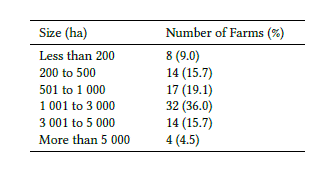
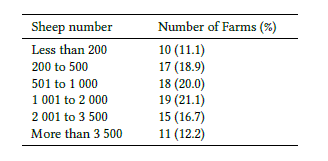
Most farms had an area between 1001 and 3000 ha, and only less than 5% were farms bigger than 5000 ha (Table 1). All farms breed sheep, and 93% of them also breed cattle. The number of sheep/farms is presented in Table 2, and ranged between 40 and 10000 sheep/farm.
Births of sheep occurred mostly during spring (85.6% farms, n = 77), in the same paddocks where the animals lived (73.6% farms, n = 67), in enclosures close to the house and sheds (14.3% farms, n = 13), or in both places indistinctly (12.1% farms, n = 11). The paddocks where the sheep were allocated were visited more than once per day (47.3%, n = 43), once/day (33%, n = 30), every two days (16.5%, n = 15) or once per week (3.2%, n = 3), and the carcasses of dead animal were collected in 52.7%, (n = 48) of the farms. The natural environments predominant in the proprieties were native forest, ravine, streams and rivers (77.9%, n = 67; from these, 22.4%, also had hills), followed by forest plantations (33.7%, n = 29). Only 9 of 85 farms (10.6%) had electric fences in all of their paddocks.
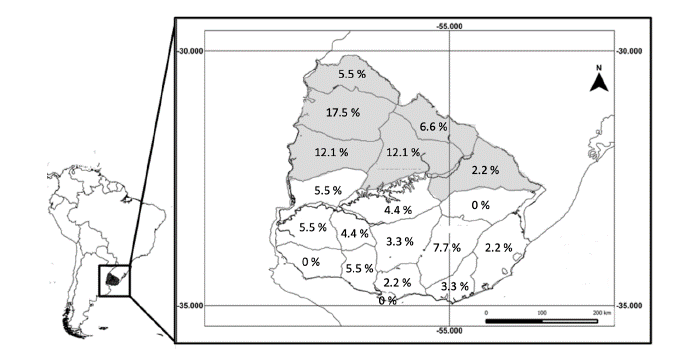
Fig. 1
Geographical location of República Oriental del Uruguay and percent of surveys made in each state of the northern region (grey) and southern region (white) of the country (N = 91).
General characterization of the attacks
From the total, the southern caracaras were mentioned as responsible for attacks by 37.6% of the farmers, the pampas foxes by 34.8%, free-ranging dogs by 16.3 %, followed by wild boars and wild felids (9.6% and 1.7% respectively). Overall, in 2016, 78 farmers (85.7%) reported at least one incident of predation in their flock (60.3% with theirs farms in the northern region and 39.7% in the southern region). Winter and spring were the seasons with more reports of occurrence of predators’ attacks (41.2% each), followed by autumn (10.1%) and summer (7.6%); the distribution of attacks from different predators along the day is presented in Fig. 2. According to the farmers, the southern caracara attacked the sheep mainly during the daytime (7:00 to 18:00 h), the pampa fox and wild boar attacks occurred mainly at night (20:00 to 5:00 h), and the free-ranging dogs do not have a clear predominant moment of the day to attack the flocks (similar frequency during the day and the night).
Farm practices and occurrence of predators’ attacks
The use of electric fences in all paddocks was the only practice significantly associated with fewer attacks, decreasing them 8.3 times (odds ratio, p-value, standard error; OR = 0.12, p = 0.04, SE = 0.13) (Table 3). In relation to the proportion of predation, these was associated with the region of the country (p = 0.03) and with the frequency of visits to the paddock (p = 0.03). The proportion of predation (mean, standard deviation) was greater in farms located in the northern region (M = 0.05, SD = 0.08) than in the southern region (M = 0.04, SD = 0.04), and was lower when farmers visited the paddock more than once per day (M = 0.03, SD = 0.02) than when they visited it once daily (M = 0.07, SD = 0.10). The other factors evaluated did not have a significant association with the proportions of predation in the farms (Table 3).
Species of predators
The reports of pampas fox as responsible for sheep attacks were 3.8 times lower when the rancher reported attacks by free-ranging dogs (OR = 0.26, p = 0.04, SE = 0.17) (Table 3). Inversely, reports of attacks by free-ranging dogs were 3.7 times less frequent when the rancher reported attacks by pampas foxes (OR = 0.27, p = 0.05, SE = 0.18) (Table 3). The reports of southern caracara as responsible for sheep attacks were 5.3 times lower if there were forest plantations close to the farm (OR = 0.19, p = 0.02, SE = 0.14), and there were no factors significantly associated with attacks by wild boars (Table 3). The presence of different terrestrial predators did not differ between northern or southern areas of the country (Table 3).
DISCUSSION
More than 85% of the farmers reported attacks to their flocks. However, is important to be cautious before assuming that this may represent a general pattern, as it is possible that farmers whose flocks were attacked by predators were more motivated to respond to the survey. Therefore, the most important new inputs are the farm practices associated with the risk of receiving attacks and the conditions related to the presence of each species of predator. In this sense, among the practices employed by farm owners that responded the survey, the use of electric fences seems to be the most effective physical tool associated with a lower risk of attacks by terrestrial predators. This coincides with reports on the effectiveness of electric fences toward other terrestrial predators, as coyotes (Linhart et al. 1982), Iberian lynx (Garrote et al. 2015), snow leopards (Samelius et al. 2020), wolves (Musiani et al. 2004; Samelius et al. 2020), puma and jaguars (Cavalcanti et al. 2012). In any case, considering that the effectiveness of electric fences is influenced by the topography of the place and type of habitat, and that implies additional costs (Macon et al. 2018), it is recommended to evaluate all the factors together before applying it in any farm.
According to the farmers, the proportion of predation was greater in the northern region of the country, and was lower when the paddock was more frequently visited. The difference between the northern and the southern regions may be at least partially explained by the greater flock size in the northern region (DIEA 2020), where predators could have a frequency-dependent food selection, probably switching (Murdoch 1969) as a foraging strategy. Switching refers to a predator’s preference for capturing preys that are relatively more abundant in the zone, strategy also known as negative frequency-dependence (Murdoch 1969; Greenwood 1984). The increase in the frequency of visits to the paddock by farmers would increase the likelihood of finding abandoned, sick or injured animals, which are more vulnerable to be attacked by predators, as well as caring about animals lost from the flock (Stone et al. 2016; Macon et al. 2018). Moreover, it may be easier to detect abnormal movements in the flock, as acute changes in the behavioral activity can be related to the presence of predators in the area (Stone et al. 2016). On the other hand, the presence of humans deters the wild animals (Macon et al. 2018), perhaps by an innate aversion of them to humans, which may be considered by wild animals as potential predators. This type of non-lethal protection was also recently reported as an effective tool against other livestock predators (e.g., wolves, coyote, black bear and puma; Stone et al. 2016; Eklund et al. 2017; Moreira-Arce et al. 2018).
According to the distribution of attacks of predators along the day, the pampas foxes and wild boars are considered as predominantly nocturnal-crepuscular, the southern caracaras as diurnal, and the free-ranging dogs do not seem to have a clear pattern, being similarly active at any moment of the day. These results agree with previous reports on the activity patterns of these species in Uruguay (González & Martínez 2012; Lombardi et al. 2015), Brazil (Carvalho & Marini 2007), Argentina (Caruso et al. 2018) and Bolivia (Maffei et al. 2007). Therefore, it should be recommended to the farmers to visit the paddock in the moment of the day when predator attacks are most frequent according to the predator present.
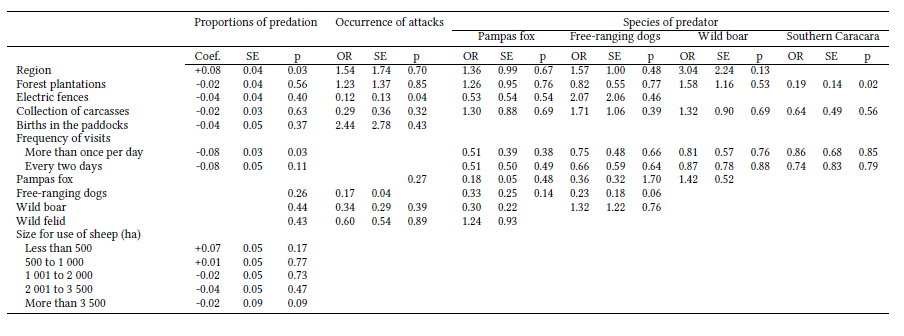
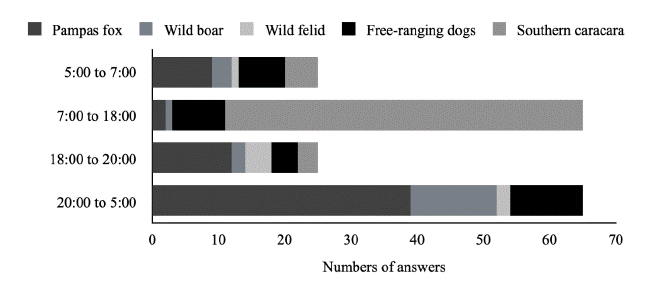
Fig. 2
Distribution of predator attacks along the day in Uruguay according to farmers’ perception.
The inverse relationship between attacks by pampas fox and by free-ranging dogs may be due to the scarce presence of each one of these predators originally in the area, or might be explained by a spatial and temporal avoidance by the pampas fox when free-ranging dogs are present, reducing the probabilities to overlapping (Kronfeld-Schor & Dayan 2003; Malhotra et al. 2021). In agreement with the latter, native carnivores have been reported to modify their behavior to reduce the risk of agonistic encounters with free-ranging dogs, based on the body size difference (Donadio & Buskirk 2006; Malhotra et al. 2021). Although the impact of free-ranging dogs on the structure of the communities of other sympatric carnivores is scarcely reported, free-ranging dogs interfere negatively with the activity of other native carnivores, excluding them through harassment and intraguild predation (Mitchell & Banks 2005; Vanak et al. 2014), as happens with the Vulpes bengalensis (India, Vanak & Gompper 2010), Lycalopex griseus (Chile, Silva-Rodríguez et al. 2010) and Cerdocyon thous (Brazil, Paschoal et al. 2012).
The presence of the southern caracara was lower when there was forest plantations close to the farm. Similar findings were presented by Kilpp et al. (2021), they found less registers of Caracara plancus in forestry areas (areas originally covered by fields, now covered by exotic forests) than in grassland with extensive livestock and catalogued this specie as “very common” in open semi-natural habitat and as “uncommon” in forested semi-natural habitat. Although the response of these raptors to habitat disturbance is not clearly known (Carvalho & Marini 2007), one possible reason of the result of our study—considering that the southern caracaras is a diurnal raptor (Falconiformes) of primarily open habitats (Saggese et al. 2021)—could be related with a possible visual obstruction of southern caracaras caused by the trees and darker understory (Phifer et al. 2017).
To the best of our knowledge there are no studies relating the presence of Southern Caracara with forest plantations, but habitat transformation is known to negatively affect the abundance and diversity of diurnal raptors (Carvalho & Marini 2007; Carrete et al. 2009). The southern caracaras can be found in a variety of primarily open habitats, as prairies, grasslands, agro-ecosystems, crop fields, and urban areas (Saggese et al. 2021), and surely the presence of this species of diurnal raptors could be affected by the anthropogenic disturbances such as the forestry. Considering that forestry areas in Uruguay increased during the last decade, and probably will continue increasing (Boscana & Borgano 2018), there is an important opportunity to develop longitudinal studies on the relationship of forestry, presence of southern caracara and incidence of attacks in farms close to new forest plantations.
In summary, this study showed that the use of electrical fences in the paddocks and a frequent control of the animals are main strategies to decrease the risks of predation and might prevent the occurrence of attacks of some predators. Besides, there would be an inverse relationship between reports of fox and feral dog attacks. Therefore, the present study helps to update the topic providing more information about predatory species of sheep that were scarcely studied in the region. Also, it provides more information about the characteristics of the sheep farms and their management practices that could be associated with the risk of predation and that could help to mitigate human-livestock predators’ conflict, opening the possibility of developing new research and solutions for specific problems.
Supplementary materials
Sup 1 (pdf)
Acknowledgments
The authors thank Patricia Román Reyes for reviewing the questionnaire; the Secretariado Uruguayo de la Lana (SUL, Uruguay) for collaborating with the pilot test; the institutions related to the productive sector that helped us contacting the farmers, and especially those farmers that responded to our request. This research did not receive any specific funding.
REFERENCES
Andelt, W. F. 2004. Use of livestock guarding animals to reduce predation on livestock. Sheep & Goat Research Journal 19:72-75.
Balbuena-Serrano, Á., M. M. Zarco-González, O. Monroy-Vilchis, R. G. Morato, & R. C. De Paula. 2021. Hotspots of livestock depredation by pumas and jaguars in Brazil: a biome-scale analysis. Animal Conservation, 24:181-193. https://doi.org/10.1111/acv.12619
Berger, K. M. 2006. Carnivore-livestock conflicts: effects of subsidized predator control and economic correlates on the sheep industry. Conservation Biology 20:751-761. https://doi.org/10.1111/j.1523-1739.2006.00336.x
Boscana, M., & E. Arriaga. 2019. Cartografía forestal nacional de bosques plantados. Anuario de la Oficina de Programación y Política Agropecuaria. Ministerio de Ganadería Agricultura y Pesca, Montevideo.
Boscana, M., & L. Borgano. 2018. Actualidad del sector forestal. Análisis sectorial y cadenas productivas. Anuario de la Oficina de Programación y Política Agropecuaria. Ministerio de Ganadería Agricultura y Pesca, Montevideo.
Brazeiro, A., M. Achkar, C. Toranza, & L. Bartesaghi. 2020. Agricultural expansion in Uruguayan grasslands and priority areas for vertebrate and woody plant conservation. Ecology and Society 25:15. https://doi.org/10.5751/es-11360-250115
Cain, J. W., R. C. Karsch, E. J. Goldstein, E. M. Rominger, & W. R. Gould. 2019. Survival and cause-speci<U+FB01>c mortality of desert bighorn sheep lambs. The Journal of Wildlife Management 83:245-505. https://doi.org/10.1002/jwmg.21597
Carrete, M., J. L. Tella, G. Blanco, & M. Bertellotti. 2009. Effects of habitat degradation on the abundance, richness and diversity of raptors across Neotropical biomes. Biological Conservation 142:2002-2011. https://doi.org/10.1016/j.biocon.2009.02.012
Caruso, N., A. E. J. Valenzuela, C. L. Burdett, E. M. Luengos Vidal, D. Birochio, & E. B. Casanave. 2018. Summer habitat use and activity patterns of wild boar Sus scrofa in rangelands of central Argentina. PLOS ONE 13:e0206513. https://doi.org/10.1371/journal.pone.0206513
Caruso, F. et al. 2020. People and jaguars: new insights into the role of social factors in an old conflict. Oryx 54:678-686. https://doi.org/10.1017/s0030605318001552
Carvalho, C. E. A., & M. A. Marini. 2007. Distribution patterns of diurnal raptors in open and forested habitats in south-eastern Brazil and the effects of urbanization. Bird Conservation International 17:367-380. https://doi.org/10.1017/s0959270907000822
Cavalcanti, C. M. S., P. G. Crawshaw, & F. R. Tortato. 2012. Use of Electric Fencing and Associated Measures as Deterrents to Jaguar Predation on Cattle in the Pantanal of Brazil. Fencing for Conservation (M. J. Somers & M. Hayward, eds.). Springer, New York. https://doi.org/10.1007/978-1-4614-0902-116
Cunha De Paula, R., & R. Pires. 2015. Caracterização dos conflitos: Aspectos Socioculturais e Impactos Econômicos. Conflitos com mamíferos carnívoros: uma referência para o manejo e a convivência (S. Cavalcanti, R. Cunha de Paula & R. Gasparini-Morato, eds.). ICMBio, Sao Paulo.
DIEA. 2020. Anuario Estadístico Agropecuario. Ministerio de Ganadería Agricultura y Pesca. Gráfica Mosca, Montevideo.
Donadio, E., & S. W. Buskirk. 2006. Diet, morphology, and interspecific killing in carnivora. The American Naturalist 167:524-536. https://doi.org/10.1086/501033
Dwyer, C. M. et al. 2016. Invited review: Improving neonatal survival in small ruminants: science into practice. Animal 10:449-459. https://doi.org/10.1017/s1751731115001974
Eklund, A., J. V. López-Bao, M. Tourani, G. Chapron, & J. Frank. 2017. Limited evidence on the effectiveness of interventions to reduce livestock predation by large carnivores. Scientific Reports 7:1-9. https://doi.org/10.1038/s41598-017-02323-w
Fernández-Abella, D. 1985. Mortalidad neonatal de corderos. I. Causas de la mortalidad neonatal. Avances en Alimentación y Melhora Animal 26:311-316.
Frade, J. 2015. Experiencias exitosas en el control de predadores. Lana Noticias 169:21-25.
Garrote, G., G. López, M. Ruiz, S. De Lillo, J. F. Bueno, & M. A. Simón.2015. Effectiveness of electric fences as a means to prevent Iberian lynx (Lynx pardinus) predation on lambs. Hystrix the Italian Journal of Mammalogy 26:61-62. https://doi.org/10.1515/mammalia-2015-0124
González, E., & J. A. Martínez. 2012. Mamíferos de Uruguay: guía de campo e introducción a su estudio y conservación. Banda Oriental, Montevideo.
Gordon, I. J. 2018. Review: Livestock production increasingly influences wildlife across the globe. Animal 12:1-11. https://doi.org/10.1017/s1751731118001349
Greenwood, J. J. D. 1984. The functional basis of frequency-dependent food selection. Biological Journal of the Linnean Society 23:177-199. https://doi.org/10.1111/j.1095- 8312.1984.tb00137.x
Guerisoli, M. de las M., E. L. Vidal, N. Caruso, A. J. Giordano, & M. Lucherini. 2021. Puma–livestock conflicts in the Americas: a review of the evidence. Mammal Review 51:228-246. https://doi.org/10.1111/mam.12224
Herrero, J., & D. Fernández De Luco. 2003. Wild boars (Sus scrofa L.) in Uruguay: scavengers or predators? Mammalia 67:485-491. https://doi.org/10.1515/mamm-2003-0402
INUMET. 2021. Instituto Uruguayo de Meteorología. Estadísticas climatológicas. URL https://www.inumet.gub.uy
Johnson, T. P. 2005. Snowball sampling. Encyclopedia of Biostatistics (P. Armitage & T. Colton, eds.). Wiley InterScience, Hoboken.
Kilpp, J. C., M. Sander, G. E. Dal Pizzol, & E. Schneider-Costa. 2021. Comparison of diurnal birds of prey community between natural and anthropized environments in highland grasslands of Rio Grande do Sul, Brazil. Oecologia Australis 25:69-79. https://doi.org/10.4257/oeco.2021.2501.07
Kovarík, P., M. Kutal, & I. Machar. 2014. Sheep and wolves: Is the occurrence of large predators a limiting factor for sheep grazing in the Czech Carpathians? Journal for Nature Conservation 22:479-486. https://doi.org/10.1016/j.jnc.2014.06.001
Kronfeld-Schor, N., & T. Dayan. 2003. Partitioning of time as an ecological resource. Annual Review of Ecology, Evolution, and Systematics 34:153-181. https://doi.org/10.1146/annurev.ecolsys.34.011802.132435
Linhart, S. B., J. D. Roberts, & G. J. Dasch. 1982. Electric fencing reduces coyote predation on pastured sheep. Journal of Range Management 35:276-281. https://doi.org/10.2307/3898301
Lombardi, R., G. Geymonat, & R. Berrini. 2015. El jabalí en el Uruguay. Problema, desafío y oportunidad. Mastergraf, Montevideo.
Macon, D. et al. 2018. Livestock protection tools for California ranchers. ANR Publications, California.
Maffei, L., P. Reinaldo, A. Segundo, & A. Noss. 2007. Home range and activity of two sympatric fox species in the Bolivian Dry Chaco. Canid News 10.4 [online].
Malhotra, R., J. E. Jiménez, & N. C. Harris. 2021. Patch characteristics and domestic dogs differentially affect carnivore space use in fragmented landscapes in southern Chile. Diversity and Distributions - https://doi.org/10.1111/ddi.13391
Miller, J. R. B., & O. J. Schmitz. 2019. Landscape of fear and human-predator coexistence: applying spatial predator-prey interaction theory to understand and reduce carnivore-livestock conflict. Biological Conservation 236:464-473. https://doi.org/10.1016/j.biocon.2019.06.009
Mitchell, B. D., & P. B. Banks. 2005. Do wild dogs exclude foxes? Evidence for competition from dietary and spatial overlaps. Austral Ecology 30:581-591. https://doi.org/10.1111/j.1442-9993.2005.01473.x
Moreira-Arce, D., C. S. Ugarte, F. Zorondo-Rodríguez, & J. Simonetti. 2018. Management tools to reduce carnivore-livestock conflicts: current gap and future challenges. Rangeland Ecology & Management 71:389-394. https://doi.org/10.1016/j.rama.2018.02.005
Murdoch, W. W. 1969. Switching in general predators: experiments on predator specificity and stability of prey populations. Ecological Monographs 39:335-354. https://doi.org/10.2307/1942352
Musiani, M. et al. 2004. Wolves in rural agricultural areas of Western North America: Conflict and conservation. People and predators. From conflict to coexistence (N. Fascione, A. Delach, & M. Smith, eds.). Island Press, Washington.
Paschoal, A. M. O., R. L. Massara, J. L. Santos, & A. G. Chiarello. 2012. Is the domestic dog becoming an abundant species in the Atlantic forest? A study case in southeastern Brazil. Mammalia 76:67-76. https://doi.org/10.1515/mammalia-2012-0501
Peña-Mondragón, J. L., & A. Castillo. 2013. Livestock predation by jaguars and other carnivores in Northeastern Mexico. Therya 4:431-446.
Petraglia, C., M. Dell’acqua, G. Pereira, & E. Yussim. 2019. Mapa integrado de cobertura/uso del suelo del Uruguay año 2018. Anuario de la Oficina de Programación y Política Agropecuaria. Ministerio de Ganadería Agricultura y Pesca, Montevideo. https://doi.org/10.4067/s0365-28072007000100010
Phifer, C. C., J. L. Knowlton, C. R. Webster, D. J. Flaspohler, & J. A. Licata. 2017. Bird community responses to afforested eucalyptus plantations in the Argentine pampas. Biodiversity and Conservation 26:3073-3101. https://doi.org/10.1007/s10531-016-1126-6
Pimenta, V., I. Barros, L. Boitani, & P. Beja. 2017. Wolf predation on cattle in Portugal: assessing the effects of husbandry systems. Biological Conservation 207:17-26. https://doi.org/10.1016/j.biocon.2017.01.008
Ramalho, E., E. A. R. Carvalho Jr, & M. B. Main. 2015. Considerações sobre conflitos entre homens e mamíferos carnívoros na Amazônia brasileira. Conflitos com mamíferos carnívoros: uma referência para o manejo e a convivência (S. Cavalcanti, R. Cunha de Paula, & R. Gasparini-Morato, eds.). ICMBio, Sao Paulo. https://doi.org/10.22533/at.ed.6502028055
Rodriguez, V., D. A. Poo-Muñoz, L. E. Escobar, F. Astorga, & G. Medina-Vogel. 2019. Carnivore-livestock conflicts in Chile: evidence and methods for mitigation. Human-Wildlife Interactions 13:50-62.
Ruggia, A. et al. 2021. The application of ecologically intensive principles to the systemic redesign of livestock farms on native grasslands: A case of co-innovation in Rocha, Uruguay. Agricultural Systems 191:103-148. https://doi.org/10.1016/j.agsy.2021.103148
Saggese, M. D. et al. 2021. Breeding Ecology of Southern Caracaras (Caracara plancus) in Southern Continental Patagonia, Santa Cruz Province, Argentina. Journal of Raptor Research 55:190-200. https://doi.org/10.3356/jrr-20-78
Samelius, G. et al. 2020. Keeping predators out: testing fences to reduce livestock depredation at night-time corrals. Oryx 55:466- 472. https://doi.org/10.1017/s0030605319000565
Scasta, J. D., B. Stam, & J. L. Windh. 2017. Rancher-reported efficacy of lethal and non-lethal livestock predation mitigation strategies for a suite of carnivores. Scientific Reports 7:14105. https://doi.org/10.1038/s41598-017-14462-1
Sillero-Zubiri, C., R. Sukumar, & A. Treves. 2007. Living with wildlife: the roots of conflict and the solutions. Key topics in conservation biology (D. MacDonald & C. Service, eds.). Blackwell Publishing, Oxford.
Silva-Rodríguez, E. A., G. Ortega-Solís, & J. E. Jiménez. 2010. Conservation and ecological implications of the use of space by chilla foxes and free-ranging dogs in a human-dominated landscape in southern Chile. Austral Ecology 35:765-777. https://doi.org/10.1111/j.1442-9993.2009.02083.x
Silva-Rodríguez, E. A., M. Soto-Gamboa, G. R. Ortega-Solís, & J. E. Jiménez. 2009. Foxes, people and hens: human dimensions of a conflict in a rural area of southern Chile. Revista Chilena de Historia Natural 82:375-386. https://doi.org/10.4067/s0716-078x2009000300005
Stone, S. A., E. Edge, N. Fascione, C. Miller, & C. Weaver. 2016. Livestock and wolves: A guide to nonlethal tools and methods to reduce conflicts. Defenders of Wildlife, Washington.
Travaini, A., S. C. Zapata, R. Martínez-Peck, & M. Delibes. 2000. Percepción y actitud humanas hacia la predación de ganado ovino por el zorro colorado (Pseudalopex culpaeus) en Santa Cruz, Patagonia Argentina. Mastozoología Neotropical 7:117-129.
Treves, A., & K. U. Karanth. 2003. Human-Carnivore Conflict and Perspectives on Carnivore Management Worldwide. Conservation Biology 17:1491-1499. https://doi.org/10.1111/j.1523-1739.2003.00059.x
USDA. 2002. Wildlife Services: Helping Producers Manage Predation. United States Department of Agriculture, Washington.
Van Eeden, L. M. et al. 2017. Managing conflict between large carnivores and livestock. Conservation Biology 32:26-34. https://doi.org/10.1111/cobi.12959
Vanak, A. T., & M. E. Gompper. 2010. Interference competition at the landscape level: the effect of free-ranging dogs on a native mesocarnivore. Journal of Applied Ecology 47:1225-1232. https://doi.org/10.1111/j.1365-2664.2010.01870.x
Vanak, A. T., C. R. Dickman, E. A. Silva-Rodriguez, J. Butler, & E. G. Ritchie. 2014. Top-dogs and under-dogs: competition between dogs and sympatric carnivores. Free-ranging dogs and wildlife conservation (M. E. Gompper, ed.). Oxford University Press, Oxford. https://doi.org/10.1093/acprof:osobl/9780199663217.003.0003
Voicu, M. C., & A. M. Babonea. 2011. Using the snowball method in marketing research on hidden populations. Challenges of the Knowledge Society 1341-1351.
Wilkinson C. E., A. Mcinturff, J. R. B. Miller, V. Yovovich, K. M. Gaynor, & K. Calhoun. 2020. An ecological framework for contextualizing carnivore–livestock conflict. Conservation Biology 34:854-867. https://doi.org/10.1111/cobi.13469
Información adicional
Editor asociado: Dr. Alejandro Valenzuela
Cite as: Zambra, N., J. Piaggio & R. Ungerfeld. 2022. Characteristics of sheep farms and livestock practices that influence sheep predation in Uruguay. Mastozoología Neotropical, 29(1):e0569. https://doi.org/saremMN.22.29.1.05.e0569