Ciencias de la Salud, Biológicas y Químicas
Ambystoma Unveiled: A Scientometric Analysis of Salamanders
Ambystoma develado: un relato cienciométrico en el mundo de las salamandras

Ambystoma Unveiled: A Scientometric Analysis of Salamanders
Entreciencias: Diálogos en la Sociedad del Conocimiento, vol. 13, núm. 27, pp. 1-14, 2025
Universidad Nacional Autónoma de México
Recepción: 28 Octubre 2024
Aprobación: 12 Marzo 2025
Publicación: 27 Marzo 2025
Abstract:
Purpose: To analyze the development of scientific information produced worldwide on the genus Ambystoma and identify existing trends and knowledge gaps.
Methodological design: We analyzed publications registered in the Scopus database containing the word “Ambystoma” in the title. The results were systematized using the Excel ® program to exclude non-scientific records and categorized by subject area, species, authorship, and institutional affiliation. VOSviewer software was used to visualize collaboration networks between authors.
Results: The analysis identified Ambystoma mexicanum (axolotl) as the most studied species, mainly due to its utility as a model organism. Most research originated from North America, particularly the United States, with limited international collaboration. Studies focused on areas such as genetics, ecology, and morphophysiology.
Research limitations: The study excluded publications that did not explicitly mention Ambystoma in the title, potentially overlooking broader research contributions related to the genus.
Findings: The findings highlight the need for increased international collaboration and a more comprehensive research focus on lesser-known Ambystoma species. Diversifying research efforts can enhance conservation strategies and improve scientific understanding of this genus.
Keywords: endangered, axolotl, amphibians, biodiversity, conservation..
Resumen:
Propósito: analizar la producción científica a nivel mundial sobre el género Ambystoma e identificar las tendencias y vacíos de conocimiento existentes.
Diseño metodológico: se analizaron las publicaciones indizadas en Scopus que contenían la palabra Ambystoma en el título. Los datos obtenidos se sistematizaron utilizando el programa Excel® para excluir registros no científicos y se categorizaron por área temática, especies, autoría y afiliación institucional. Se utilizó el software VOSviewer para visualizar redes de colaboración entre autores.
Resultados: el análisis identificó a Ambystoma mexicanum (ajolote) como la especie más estudiada, debido a su utilidad como organismo modelo. La mayor parte de la investigación se originó en Norte América, particularmente, en Estados Unidos, con una colaboración internacional limitada. Los estudios se centraron en áreas como genética, ecología y morfofisiología.
Limitaciones de la investigación: el estudio excluyó publicaciones que no mencionaban explícitamente a Ambystoma en el título, lo que podría haber pasado por alto contribuciones más amplias relacionadas con el género.
Hallazgos: los hallazgos destacan la necesidad de una mayor colaboración internacional y un enfoque de investigación más integral en especies menos conocidas de Ambystoma. Diversificar los esfuerzos de investigación puede mejorar las estrategias de conservación y profundizar el entendimiento científico de este género.
Palabras clave: Amenazado, ajolote, anfibios, biodiversidad, conservación..
Introduction
The genus Ambystoma, Class Amphibia, includes the species commonly known as salamanders. Approximately 32 described species in this genus (AmphibiaWeb, 2024) are distributed in North America, from southern Canada to central Mexico. Seventeen species inhabit Mexico, of which 16 are considered endemic by the Secretaría del Medio Ambiente y Recursos Naturales (Semarnat, 2018; Ávila-Akerberg et al., 2021).
Pollution and habitat destruction have caused 88 % of the Ambystoma species in Mexico to be listed in the Mexican Official Norm (NOM-059) in some risk category. Specifically, Ambystoma mexicanum (Shaw and Nodder, 1798) is an endangered species (Semarnat, 2010). In the Red List of the International Union for Conservation of Nature (iucn), six species of the genus Ambystoma are classified as “Critically Endangered” category: Ambystoma amblycephalum (Taylor, 1940), Ambystoma andersoni (Krebs and Brandon, 1984), Ambystoma dumerilii (Dugès, 1870), Ambystoma leorae (Taylor, 1943), A. mexicanum and Ambystoma taylori (Brandon, Maruska and Rumph, 1982) (iucn, 2015a; b; 2016; 2020a; b; c).
Captive breeding has been essential for conserving A. mexicanum, with the captive population far exceeding the wild population (Reiß, 2022). Initially brought to Paris in 1864, the popularity of axolotl as both an exotic pet and a model organism skyrocketed due to its unique regenerative abilities and neoteny, which have made it a key species in laboratories around the world (Gresens, 2004; Vance, 2017). Despite its widespread use in research and as a pet, significant gaps in our understanding of Ambystoma biology remain (e.g., Ocaranza-Joya et al., 2021). Reiß (2022) observed that the success of breeding and research on A. mexicanum was heavily reliant on practical knowledge and infrastructure, pointing to the need for continued study, not only of these species but also of others in the genus, to expand our understanding of their biology and conservation needs.
Analyzing and evaluating the knowledge generated by scientific activity is essential to accelerating scientific production while improving its visibility and quality (Arencibia-Jorge and de Moya-Anegón, 2008). Scientometrics methods provide quantitative insights into scientific production, examining its theoretical, methodological, economic, and social aspects (Leydesdorff and Milojević, 2015). This discipline analyzes science as an economic activity, evaluating and comparing research policies of different countries and their results and impact on society. It aims to establish structures and patterns in scientific practice through systematic measurements and analysis (Araújo-Ruiz and Arencibia-Jorge, 2002; Michán, 2011). For example, Chong-Carrillo et al. (2023) evaluated scientific production in native and exotic aquatic species of importance for human consumption. The authors showed that funded projects have focused mainly on native species, although resources have also been allocated to invasive species. In addition, they argue that research directed at these species has a low social impact.
Our study was motivated by the fact that the genus Ambystoma is a good subject for scientometrics study due to its ecological and scientific importance. Understanding trends in scientific production and identifying knowledge gaps could contribute to the conservation of these species at risk of extinction in their natural habitats.
Materials and methods
The methodology described by Chong-Carrillo (2018) was used: publications registered in the Scopus database containing the word Ambystoma in the title were analyzed; terms such as axolotl and salamander were not included, as they were part of later studies. The results were systematized in the Excel ® program to be later validated and standardized (excluding repeated records, erratum, and documents that were not scientific articles). The PRISMA (Page et al., 2021) flow diagram is shown in Figure 1.
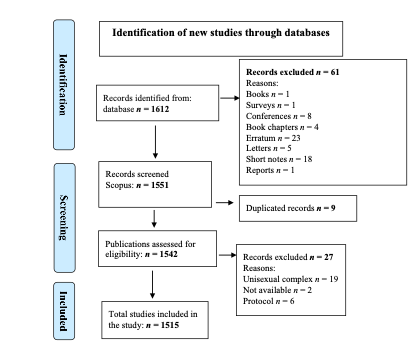
Figure 1.
PRISMA flow diagram of studies screening for this research
Source: authors' elaboration based on the PRISMA method by Page et al. (2021).
- 1. Subject area of study: Aquaculture/Captivity, Food, Biochemistry, Ecology, Embryology, Ethology, Genetics/Molecular Biology, Immunology, Medicine, Morphophysiology, Parasitology, Regeneration, Reproduction and Toxicology.
- 2. Species: The species of the genus that were studied in the document.
- 3. Countries: Classified by continent and individual country.
- 4. Authors: The authors with the highest production were registered.
- 5. Affiliations: Institutions that collaborated in the study of genus.
The results were transformed into graphs for visualization. VOSviewer software (version 1.6.19) was used to generate clustering maps and visualize collaboration networks between authors. The complete count method was applied, excluding documents with more than 25 authors. The Red List of Threatened Species of the International Union for Conservation of Nature (iucn, 2024) was consulted to determine the conservation status of the species recorded.
Results
The search resulted in 1515 publications that included “Ambystoma” in their title from 1911 to 2023 (Figure 2). From 1960 to 1980, the production of scientific articles increased exponentially. The following decades showed an asymptotic growth, which has continued to this day. Figure 3 shows the timeline of publications related to Ambystoma species. Ambystoma mexicanum is the most studied species (643 publications), followed by Ambystoma tigrinum (Green, 1888) with 340 publications, Ambystoma maculatum (Shaw, 1802) with 201 publications, Ambystoma opacum (Gravenhorst, 1807) with 73 publications, Ambystoma talpoideum (Holbrook, 1838) with 54 publications, and Ambystoma macrodactylum (Baird, 1850) with 54 publications. The species that did not register any article in the Scopus database (considering only the title of the article) were Ambystoma bombypellum (Taylor, 1940) and Ambystoma silvense (Webb, 2004).
The publications on A. mexicanum and A. tigrinum showed an increase from the 1960s, although some were already recorded in previous decades, but only marginally. The other Ambystoma species in Figure 3 increased their production over time but did not show abrupt growth.
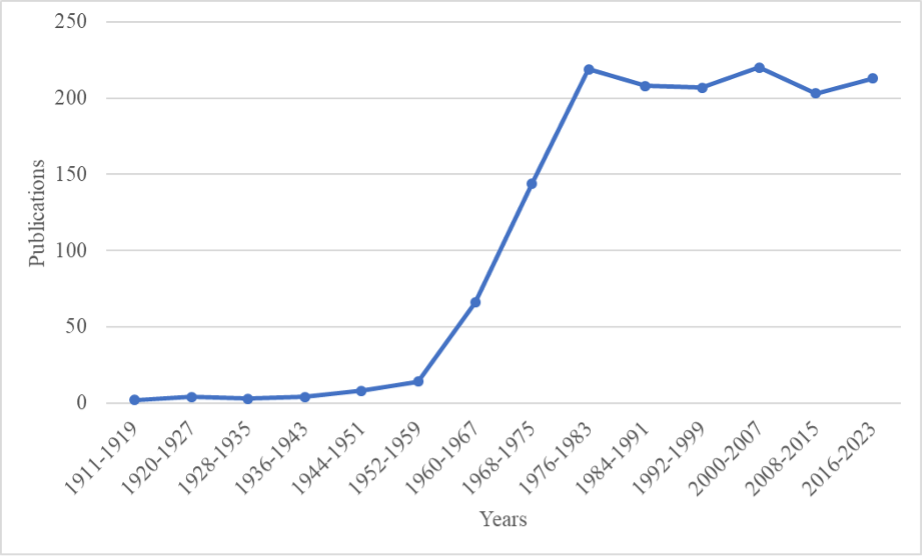
Figure 2.
Classification by year of articles on the genus Ambystoma registered in the Scopus database using the criterion of the term “Ambystoma” in the document title
Source: authors' elaboration.
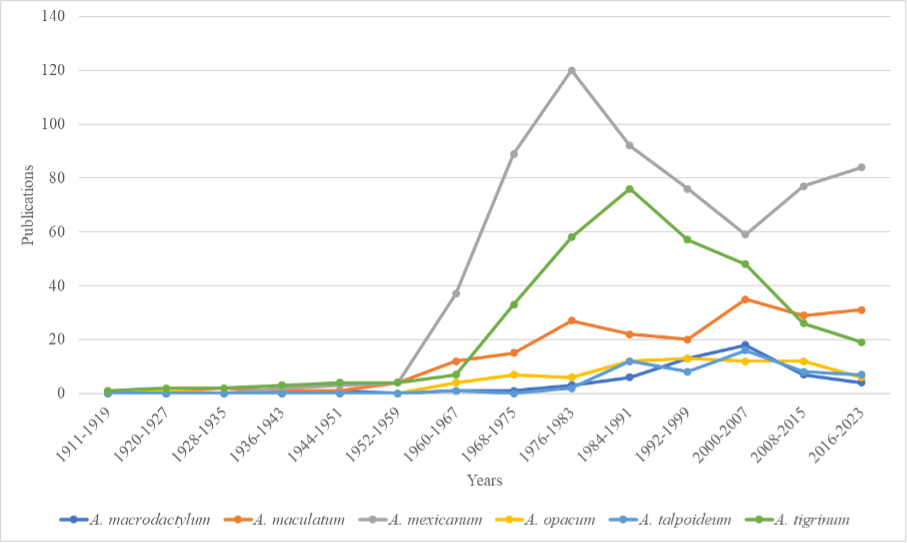
Figure 3.
Timeline of publications by species of the genus Ambystoma with more than 50 total records
Source: authors' elaboration.
The number of total publications by area of study and species (Table 1) shows the species that have contributed the most prolific areas, highlighting A. mexicanum, A. tigrinum, and A. maculatum; also these species are the most mentioned in almost all other areas of knowledge. The species Ambystoma altamirani (Dugès, 1895), A. andersoni, Ambystoma barbouri (Kraus and Petranka, 1989), Ambystoma bishop (Goin, 1950), Ambystoma californiense (Gray, 1853), Ambystoma laterale (Hallowell, 1856) and A. leorae, which have been studied in at most 30 publications in total each, have the highest number of publications in the last decades. This is an indication that these species are being increasingly studied. If the trend continues in the coming years, this may contribute to filling more gaps in knowledge about these species and the genus.
| Research area | Percentage of publications | Ambystoma species |
| Morphophysiology | 24% | A. mexicanum, A. tigrinum, A. maculatum |
| Ecology | 14% | A. maculatum, A. tigrinum, A. opacum |
| Biochemistry | 13% | A. mexicanum, A. tigrinum, A. maculatum |
| Genetics/molecular biology | 13% | A. mexicanum, A. tigrinum, A. maculatum |
| Regeneration | 9% | A. mexicanum, A. maculatum, A. opacum |
| Embryology | 7% | A. mexicanum, A. maculatum, A. gracile |
| Reproduction | 5% | A. mexicanum, A. talpoideum, A. tigrinum |
| Immunology | 4% | A. mexicanum, A. tigrinum, A. andersoni |
| Ethology | 4% | A. tigrinum, A. maculatum, A. opacum |
| Toxicology | 2% | A. mexicanum, A. maculatum, A. tigrinum |
| Parasitology | 2% | A. tigrinum, A. maculatum, A. jeffersonianum |
| Aquaculture/ Captivity | 1% | A. mexicanum, A. tigrinum, A. maculatum |
| Nutrition | 1% | A. mexicanum, A. tigrinum, A. ordinarium |
| Medicine | 1% | A. mexicanum |
Morphophysiology, ecology, biochemistry, and genetics/molecular biology stand out, as they have had the most significant growth over the years (Figure 4). Ecology was the only area that did not show any decrease in production over time and is the one with the highest growth trend at present.
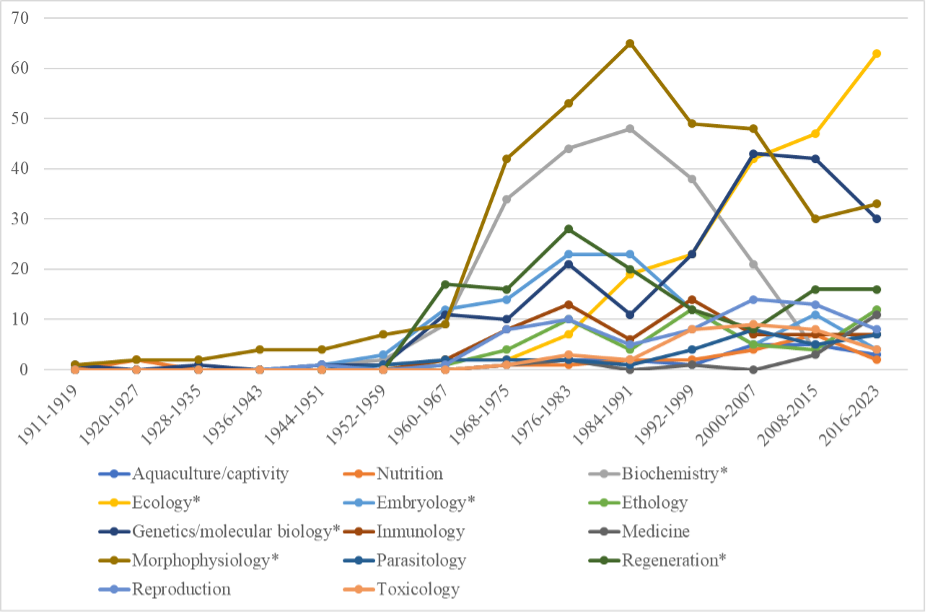
Figure 4.
Timeline of publications on the genus Ambystoma classified by research area from 1911 to 2023
Note: *: identifies the most popular research areas
Source: authors' elaboration.Ambystoma mexicanum is the species with the highest contributions in 10 of 14 study areas. This can be explained by the fact that it is the species with the highest percentage of published articles (Table 2). Together with A. tigrinum and A. maculatum, this species accounts for more than 70 % of all the publications analyzed in this study.
| iucn assessment | Species | Publications |
| Critically endangered | A. mexicanum | 38.7% |
| Least concern | A. tigrinum | 20.4% |
| Least concern | A. maculatum | 12.1% |
| Least concern | A. opacum | 4.4% |
| Least concern | A. macrodactylum | 3.2% |
| Least concern | A. talpoideum | 3.2% |
| Least concern | A. jeffersonianum | 2.3% |
| Least concern | A. gracile | 2.1% |
| Least concern | A. texanum | 2.1% |
| Vulnerable | A. californiense | 1.4% |
| Least concern | A. laterale | 1.4% |
| Least concern | A. annulatum | 1.3% |
| Near threatened | A. barbouri | 1.2% |
| Critically endangered | A. altamirani | 1.0% |
| Vulnerable | A. cingulatum | 0.7% |
| Critically endangered | A. dumerilii | 0.6% |
| Endangered | A. ordinarium | 0.6% |
| Vulnerable | A. bishopi | 0.4% |
| Endangered | A. rivulare | 0.4% |
| Least concern | A. velasci | 0.4% |
| Critically endangered | A. andersoni | 0.4% |
| Critically Endangered | A. leorae | 0.4% |
| Least Concern | A. mavortium | 0.4% |
| Least Concern | A. mabeei | 0.2% |
| Critically endangered | A. taylori | 0.2% |
| Endangered | A. granulosum | 0.1% |
| Critically endangered | A. amblycephalum | 0.1% |
| Endangered | A. flavipiperatum | 0.1% |
| Endangered | A. lermaense | 0.1% |
| Least concern | A. rosaceum | 0.1% |
| Data deficient | A. bombypellum | 0.0% |
| Data deficient | A. silvense | 0.0% |
The analysis showed a geographical disparity in scientific production. Although 38 countries contributed publications, North American countries accounted for 73 % of scientific production. The United States had the highest production, generating 59 % of total publications, followed by Canada and Mexico with 8 % and 6 %, respectively (Figure 5). Despite the diversity of participating countries, Europe represented a smaller proportion, with Germany as the primary contributor (5 %).
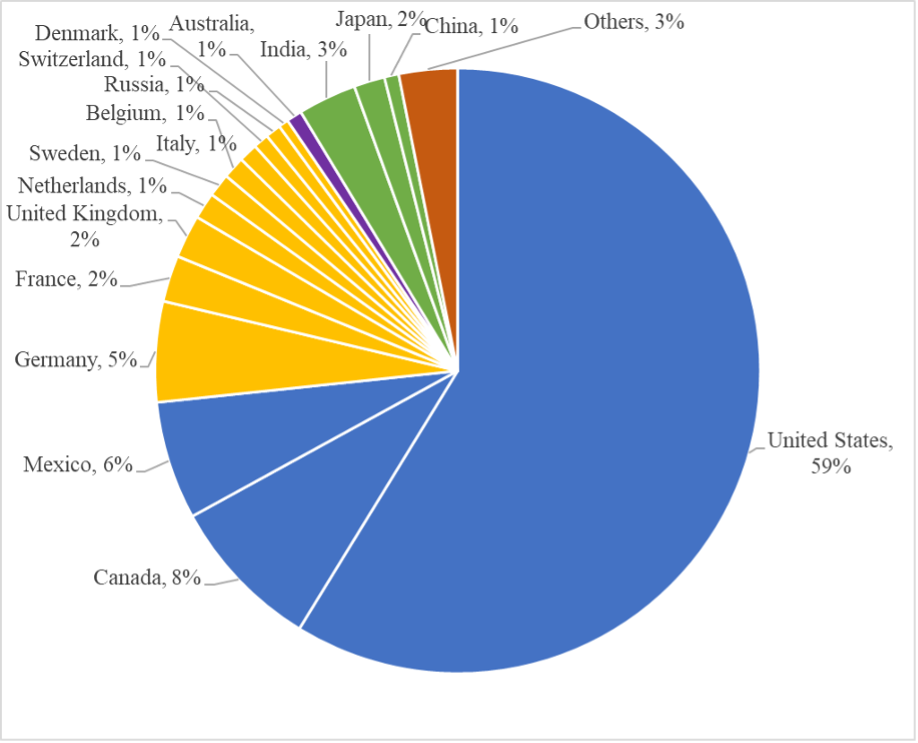
Figure 5.
Percentage of publications on the genus Ambystoma by country and geographic region
Note: Blue: North America, yellow: Europe, purple: Oceania, green: Asia, red: other countries.
Source: authors' elaboration.The 20 authors with the highest number of publications registered in this study are from the two most productive countries: the United States and Canada. Lemanski was the author with the highest number of publications (Figure 6), all with A. mexicanun, and the subject most studied by the author was genetics. A. tigrinum was the most studied species by 50 % of the most productive authors.
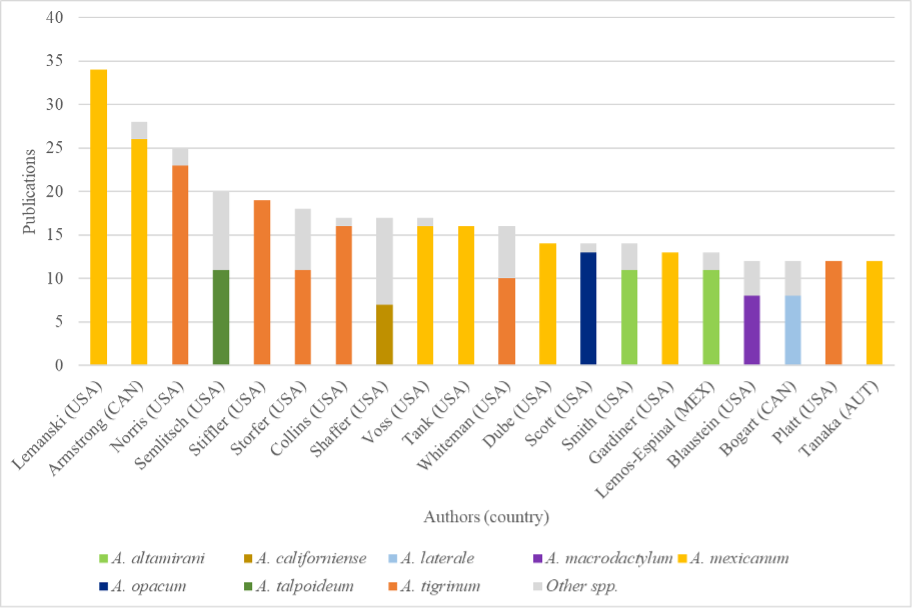
Figure 6.
Top authors worldwide in Ambystoma research and the most studied species by each of them
Note: USA: United States of America. CAN: Canada. MEX: Mexico. AUT: Austria
Source: authors' elaboration.Only one Mexican scientist managed to be in this classification. However, in the register of affiliations, the Universidad Nacional Autónoma de México (unam) was the institution with the second-highest percentage of publications (Figure 7). This is the only Mexican institution among the 20 most productive. Of the rest, 17 belong to the United States and two to Canada.
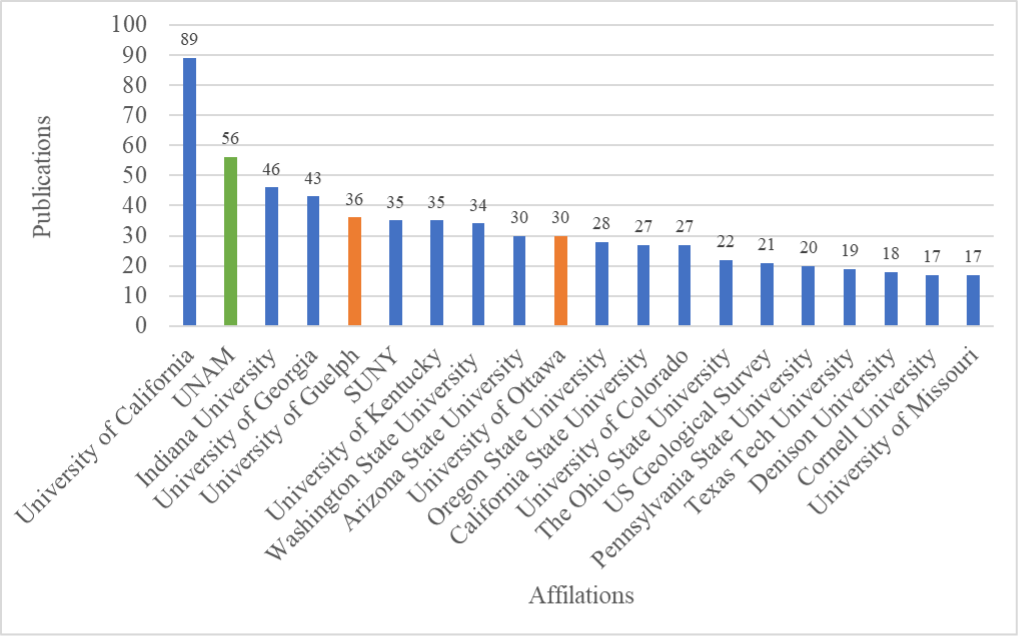
Figure 7.
Top global affiliations with the highest percentage of published articles on the genus Ambystoma found in this study.
Note: Total number of articles per affiliation shown above the bar. Blue: United States, Green: Mexico, Orange: Canada. unam: Universidad Nacional Autónoma de México. suny: The State University of New York. US: United States
Source: authors' elaboration.In the visualization map of co-authorship networks, the circles of the same color represent a “cluster” or scientific group (Figure 8). The size of the circle is proportional to the number of authorships, and the intensity of the co-authorship relationships is visualized as the thickness of the lines linking the authors. The map showed that the collaborations of highly productive authors such as Lemanski or Armstrong are not strongly interconnected with other researchers outside their immediate circles.
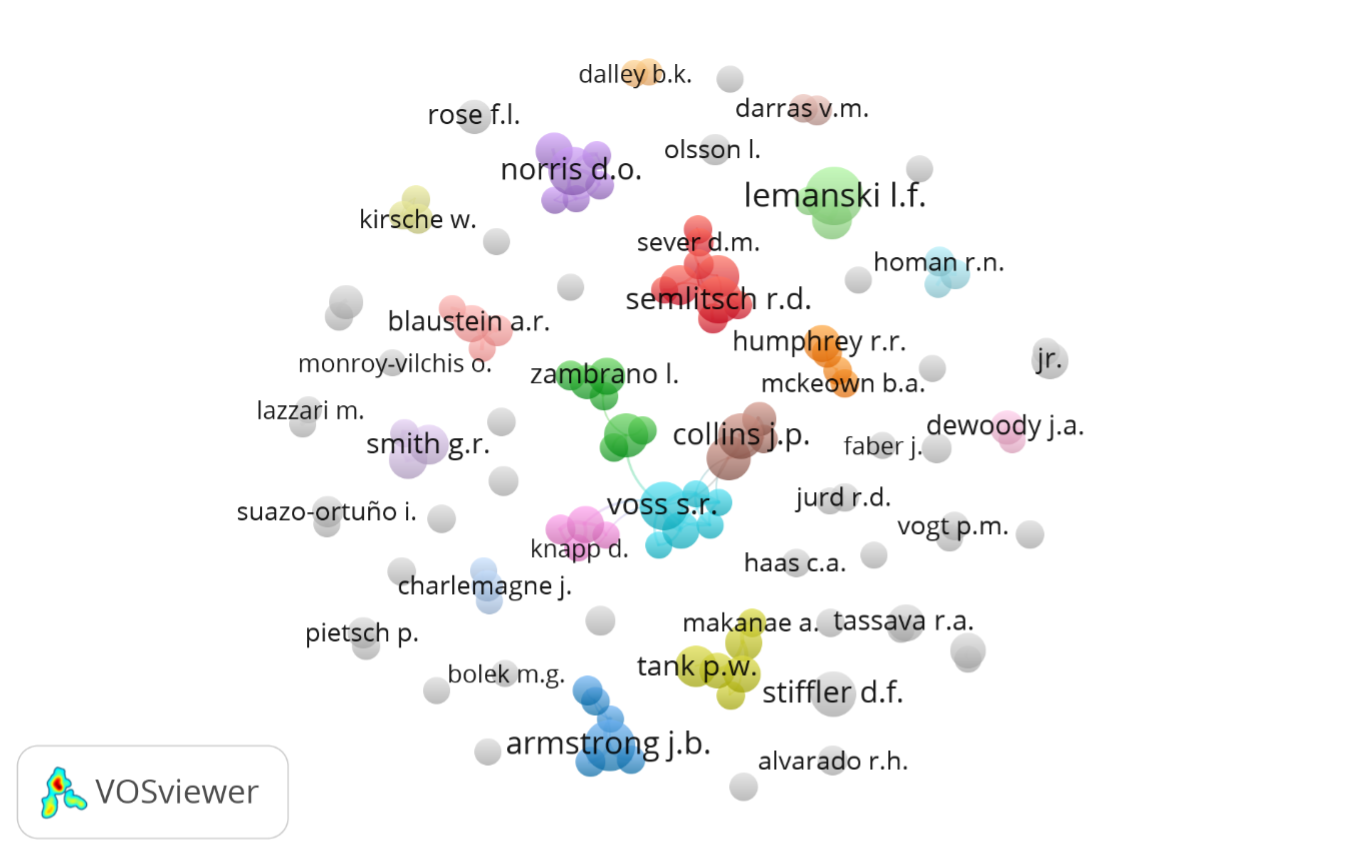
Figure 8.
Co-authorship network visualization map for publications on the genus Ambystoma
Source: authors' elaboration using VOSviewer software [version 1.6.19] (2023).
This study shows that research on the genus Ambystoma presents several strengths, such as the focus on the study of A. mexicanum and the concentration of scientific efforts in Biochemistry, Ecology, Genetics/Molecular Biology, and Morphophysiology. In addition, North America stands out as the leading producer of research on Ambystoma species.
Although there are great strengths, important weaknesses have also been identified, such as (i) the scarcity of research directed at species other than A. mexicanum, A. triginum, and A. maculatum, (ii) the lack of international collaboration and (iii) the lack of continuity in long-standing lines of research, which limits the possible development of areas that have been little explored.
The increase in publications on the genus Ambystoma from 1960 to 1980 is probably related to the emergence and development of new scientific methodologies in molecular biology, developmental biology, and genetics (Slack, 1983). During that era, molecular biology and genetics began to expand rapidly thanks to technological advances such as dna sequencing, cloning techniques, and the development of tools for gene and protein analysis (Tsonis, 2000). These advances allowed scientists to study organisms at a much more detailed level and to understand their molecular and developmental mechanisms better. In addition, Ambystoma became an important model for study in developmental biology due to its ability to regenerate limbs and other body parts (Voss et al., 2009). This characteristic made this genus of great interest in developmental biology and genetics research, contributing to increased publications. Therefore, it is very likely that the increase in publications during this period is related to adopting these new methodologies and the interest in the unique capabilities of Ambystoma in these scientific fields.
About the Ecology theme, which also features a good number of scientific publications on the genus, this may be due to several key factors. Many Ambystoma species are threatened due to habitat loss, water pollution, and climate change (Semarnat, 2018). This has generated a growing interest in research on the ecology of these species, as understanding their environment and their interaction with the ecosystem is essential to designing effective conservation strategies. In addition, they are excellent bioindicators due to their skin's permeability, making them sensitive to water and soil quality. Monitoring their health and behavior can provide valuable information on the health of the aquatic and terrestrial ecosystems they inhabit (Davic and Welsh, 2004). Despite advances in Ambystoma research, many questions remain to be answered, especially for species with fewer than 30 publications. Further studies are needed to understand the ecological needs of these species thoroughly, identify the most critical threats, and develop long-term conservation strategies. Research in this field is critical to ensure the survival of these unique amphibians and the ecosystems they inhabit.
Regarding the conservation status of Ambystoma species, the iucn identifies that 45 % of the registered species are in some state of threat or critical risk due to a combination of factors, many of which are related to human activity and environmental changes: (i) habitat loss, (ii) water pollution, (iii) climate change, (iv) introduction of exotic species, (v) commercial exploitation and fishing, (vi) disease, (vii) limited dispersal capacity (Adams, 2000; Kats and Ferrer, 2003; Mann et al., 2009; Parra-Olea, 2021; Semlitsch, 2000; Wake and Vredenburg, 2008; Walther et al., 2002). These factors interact with each other, exacerbating the vulnerability of Ambystoma species and contributing to their threatened status. The conservation of these species requires a holistic approach that addresses the protection of their habitats and mitigating the direct and indirect threats they face.
Geographical disparities in research
The geographic distribution of the genus throughout North America (Frost, 2024) may be one of the main reasons why these countries are the most productive, as there is the possibility not only to perform in vivo experiments but also in situ studies in areas where the organisms are found in their natural habitat. This is reflected in the three species with the most significant contribution to ecology: A. maculatum, A. tigrinum, and A. opacum. The classification of these species as “Least Concern” may indicate that locating them in their natural habitat is easier, thus promoting their ecological study, surpassing the species classified as “Critically Endangered”.
Notably, the United States and Canada dominate research in the genus, which could be explained by the fact that they have a solid and well-funded scientific infrastructure, including laboratories equipped with state-of-the-art technology. This allows them to conduct more advanced research with greater frequency. The case of Ambystoma’s regenerative capacity, especially the A. mexicanum, has captured the interest of studies in biomedicine and genetics, areas in which the United States has traditionally led. In addition, funding is a determining factor in scientific productivity. In the United States, multiple agencies fund research projects in biological and ecological sciences. This access to resources allows researchers to sustain long-term projects on Ambystoma, generating a steady volume of publications.
Scientific collaboration networks: A co-authorship analysis
The lack of strongly connected researchers outside their immediate circles suggests that while they publish prolifically and even on similar species, their collaborations focus more on their group or institution, limiting further synergy with other researchers globally. The results suggest that Mexican researchers do not maintain a constant and lasting line of research on the genus Ambystoma. This affects the accumulation of publications over time, making it difficult to stand out as the “most productive” authors. In the analysis of co-authorship networks, it is evident, as in the case of USA scientists, that there is no strong collaboration between Mexican and foreign scientific groups. The lack of international collaborations could limit the visibility of Mexican researchers in multicenter studies, which tend to generate more high-impact publications.
A similar case reported for the crustacean genus Macrobrachium (Chong-Carrillo et al., 2018) in which co-authorship networks reveal similar concentrations of research activity in certain regions (India, Brazil and the United States) and species: Macrobrachium rosenbergii (De Man, 1879), Macrobrachium nipponense (De Haan, 1849) and Macrobrachium amazonicum (Heller, 1862). Although local co-authorship networks are strong in these countries, international collaborations are scarce. However, for this genus, some authors have maintained their relevance for several years and have established solid and continuous collaboration networks over time, which is crucial for the sustainability and evolution of studies in this field.
The most studied species are those of particular interest to humans, while endangered species that do not have desirable characteristics for research have been largely neglected.
Silva (2019) conducted a scientometrics study for all amphibian and reptile species using the Web of Science database. He reported that A. mexicanum had the highest number of publications, although A. maculatum surpassed A. mexicanum in the study area of biodiversity and conservation. These results are similar to those found in this study despite using different databases.
Conclusions
The study of A. mexicanum has become one of the most prolific research areas within the genus Ambystoma. This approach has not only allowed significant advances in understanding its biology and ecology. However, it has also positioned this species as an important model in studies of regeneration and development, which is crucial for fields such as biomedicine and genetics.
Researchers in the United States stand out as the largest producers of research on the genus Ambystoma. This leadership reflects a robust scientific infrastructure and a continued interest in research on native species, which has generated many high-impact publications in the last decade.
Analysis of co-authorship networks and institutional affiliations reveals insufficient international collaboration. The lack of synergy between institutions in different countries impedes the flow of knowledge and resources that could significantly enrich research. This situation is of particular concern in a global context where collaboration is key to addressing scientific and conservation challenges that transcend national boundaries.
A lack of continuity has been identified in long-lived lines of research, especially in the case of less-studied species. This discontinuity truncates the long-term research development essential for a deep and comprehensive understanding of the Ambystoma genus. The lack of a sustained focus on less explored areas may lead to missed opportunities for important discoveries and weaken the ability to respond to new environmental or biological threats affecting these species.
It is crucial to diversify research efforts to include a more significant number of species within the genus Ambystoma. Encouraging studies on less researched species will allow for a more complete understanding and help develop more effective conservation strategies. To overcome current limitations, it is essential to foster international collaboration, facilitating the participation of researchers from diverse regions of the world. This will improve the quality of research and help create more robust and resilient networks of knowledge.
Implementing policies and programs that promote continuity in research is essential to ensuring that advances in the study of the genus Ambystoma are not interrupted. This includes supporting long-term research in emerging and less explored areas, which is critical for sustained scientific knowledge advances.
These findings underscore the need for a more balanced and collaborative research strategy that builds on existing strengths and effectively addresses identified weaknesses. Such an approach will allow significant insights into understanding the genus Ambystoma and a broader and more lasting impact on amphibian biology and conservation in general.
Acknowledgments
The authors thank Secihti for their financial support in carrying out this study through the doctoral and postdoctoral scholarships. Special thanks to Armando Escobedo Galván for their kind suggestions and criticisms that helped us improve the quality of this manuscript.
References
Adams, M.J. (2000). Pond permanence & the effects of exotic vertebrates on anurans. Ecological Applications, 10 (2), 559-568. https://doi.org/10.1890/1051-0761(2000)010[0559:PPATEO]2.0.CO;2
AmphibiaWeb. (2024). Ambystomatide.https://amphibiaweb.org/lists/Ambystomatidae.shtml.
Araújo-Ruiz, J.A., and Arencibia-Jorge, R. (2002). Informetría, bibliometría y cienciometría: aspectos teórico-prácticos. Acimed, 10 (4), 5-6. https://www.researchgate.net/publication/28802145_Informetria_bibliometria_y_cienciometria_aspectos_teorico-practicos
Arencibia-Jorge. R., and De Moya-Anegón F. (2008). La evaluación de la investigación científica: una aproximación teórica desde la cienciometría. Acimed, 17 (4), 1-27. https://www.researchgate.net/publication/287277963_The_evaluation_of_scientific_research_A_theoretical_approach_from_scientometrics
Ávila-Akerberg, V.D., González-Martínez, T.M., González-Hernández, A., and Vázquez-Trejo, M. (2021). El género Ambystoma en México ¿Qué son los ajolotes? CIENCIA ergo-sum, Revista Científica Multidisciplinaria de Prospectiva, 28 (2). https://www.redalyc.org/articulo.oa?id=10466283011
Centre for Science & Technology Studies. (2023). VOSviewer software (version 1.6.19) [Software]. https://www.vosviewer.com/download
Chong-Carrillo, O. (2018). Caracterización de la investigación científica mundial sobre el género Macrobrachium desde la perspectiva cienciométrica. (Unpublished Doctoral Thesis). Centro Universitario de la Costa, Universidad de Guadalajara.
Chong-Carrillo, O., Peña-Almaraz, O.A., Aréchiga-Palomera, M.A., and Vega-Villasante, F. (2023). Aquaculture research with funding from Conahcyt in three public research centers in Mexico. Agro Productividad. https://doi.org/10.32854/agrop.v16i7.2656
Davic, R.D., and Welsh, H.H. (2004). On the ecological roles of salamanders. Annual Review of Ecology, Evolution, and Systematics, 35 (1), 405-434. https://doi.org/10.1146/annurev.ecolsys.35.112202.130116
Frost, D.R. (2024). Amphibian Species of the World: An Online Reference. Version 6.2. American Museum of Natural History. https://amphibiansoftheworld.amnh.org/index.php.
Gresens, J. (2004). An introduction to the Mexican Axolotl (Ambystoma mexicanum). Lab animal, 33 (9), 41-47. https://doi.org/10.1038/laban1004-41
International Union for Conservation of Nature (iucn). 2024. The iucn Red List of Threatened Species. Version 2024-1.https://www.iucnredlist.org.
International Union for Conservation of Nature (iucn) SSC Amphibian Specialist Group. (2015a). Ambystoma andersoni (errata version published in 2020). The iucn Red List of Threatened Species 2015: e.T59051A176772780. https://www.iucnredlist.org/species/59051/176772780
International Union for Conservation of Nature (iucn) SSC Amphibian Specialist Group. (2015b). Ambystoma taylori (errata version published in 2020). The iucn Red List of Threatened Species 2015: e.T59070A176772315.https://www.iucnredlist.org/species/59070/176772315
International Union for Conservation of Nature (iucn) SSC Amphibian Specialist Group. (2016). Ambystoma amblycephalum. The iucn Red List of Threatened Species 2016: e.T59050A53973313.https://www.iucnredlist.org/species/59050/53973313
International Union for Conservation of Nature (iucn) SSC Amphibian Specialist Group. (2020a). Ambystoma dumerilii. The iucn Red List of Threatened Species 2020: e.T59055A53973725. https://www.iucnredlist.org/species/59055/53973725
International Union for Conservation of Nature (iucn) SSC Amphibian Specialist Group. (2020b). Ambystoma leorae. The iucn Red List of Threatened Species 2020: e.T59061A53974072. https://www.iucnredlist.org/species/59061/53974072
International Union for Conservation of Nature (iucn) SSC Amphibian Specialist Group. (2020c). Ambystoma mexicanum. The iucn Red List of Threatened Species 2020: e.T1095A53947343. https://www.iucnredlist.org/species/1095/53947343
Kats, L.B., and Ferrer, R.P. (2003). Alien predators and amphibian decline: a review of two decades of science and the transition to conservation. Diversity and distributions, 9 (2), 99-110. https://doi.org/10.1046/j.1472-4642.2003.00013.x
Leydesdorff, L., and Milojević, S. (2015). Scientometrics. In J. D. Wright, International Encyclopedia of the Social & Behavioral Sciences (Second Edition) (pp. 322-327). Oxford: Elsevier. https://doi.org/10.48550/arXiv.1208.4566
Mann, R.M., Hyne, R.V., Choung, C.B., and Wilson, S.P. (2009). Amphibians and agricultural chemicals: a review of the risks in a complex environment. Environmental pollution, 157 (11), 2903-2927. https://doi.org/10.1016/j.envpol.2009.05.015
Michán, L. (2011). Cienciometría, información e informática en ciencias biológicas: enfoque interdisciplinario para estudiar interdisciplinas. Ludus Vitalis, 19 (35), 239-243. https://www.ludus-vitalis.org/html/textos/35/35_29_michan.pdf
Ocaranza-Joya, V.S., Martínez-Cárdenas, L., Badillo-Zapata, D., Montoya-Martínez, C.E., López-Félix, E.F., and Vega-Villasante, F. (2021). First attempt to fill gaps in the feeding of the axolotl Ambystoma mexicanum (Shaw and Nodder, 1798) in captivity: attractiveness of some animal oils. Agro Productividad. https://revista-agroproductividad.org/index.php/agroproductividad/issue/view/153/136
Page, M. J., McKenzie, J. E., Bossuyt, P. M., Boutron, I., Hoffmann, T. C., Mulrow, C. D., Shamseer, L., Tetzlaff, J. M., Akl, E. A., Brennan, S. E., Chou, R., Glanville, J., Grimshaw, J. M., Hróbjartsson, A., Lalu, M. M., Li, T., Loder, E. W., Mayo-Wilson, E., McDonald, S., McGuinness, L.A., …, and Moher, D. (2021). The PRISMA 2020 statement: an updated guideline for reporting systematic reviews. BMJ, 372, 71. https://doi.org/10.1136/bmj.n71
Parra-Olea, G. (2021). Batrachochytrium dendrobatidis occurrence in dead amphibians of central Mexico: an Ambystoma altamirani and Lithobates montezumae report. Revista Latinoamericana De Herpetología, 4 (1), 173-177. https://doi.org/10.22201/fc.25942158e.2021.1.209
Reiß, C. (2022). From Existential Knowledge to Experimental Practice: The Mexican Axolotl, the Paris Ménagerie, and the Epistemic Benefits of Keeping Unknown Animals, 1850-1876. Centaurus, 64, 615-634. https://doi.org/10.1484/J.CNT.5.132102
Secretaría de Medio Ambiente y Recursos Naturales [Semarnat]. (2018). Programa de Acción para la Conservación de las Especies Ambystoma spp. Semarnat/Conanp. https://www.gob.mx/conanp/documentos/programa-de-accion-para-la-conservacion-de-especies-pace-ambystoma-ambystoma-spp
Secretaría de Medio Ambiente y Recursos Naturales [Semarnat]. ( December 30, 2010). Norma Oficial Mexicana NOM-059-SEMARNAT-2010, Protección ambiental -Especies nativas de México de Flora y Fauna Silvestres-Categorías de Riesgo y especificaciones para su inclusión, exclusión o cambio-Lista de Especies en Riesgo. Diario Oficial de la Federación.https://www.profepa.gob.mx/innovaportal/file/435/1/nom_059_semarnat_2010.pdf
Semlitsch, R.D. (2000). Principles for management of aquatic-breeding Amphibians. The journal of wildlife management, 615-631. https://doi.org/10.2307/3802732
Silva, A.F.D. (2019). Qual o nosso interesse nos amfíbios? uma abordagem cienciométrica. (Unpublished Master Thesis). Universidade Federal de Alagoas. http://www.repositorio.ufal.br/jspui/handle/riufal/5097
Slack, J.M.W. (1983). From Egg to Embryo: Deterministic Events in Early Development. Cambridge University Press.
Tsonis, P.A. (2000). Regeneration in vertebrates. Developmental biology, 221, 273-284. https://doi.org/10.1006/dbio.2000.9667
Vance, E. (2017). The axolotl paradox. Nature, 552 (7685), 302-302. https://doi.org/10.1006/dbio.2000.9667
Voss, S.R., Epperlein, H.H., and Tanaka, E.M. (2009). Ambystoma mexicanum, the axolotl: a versatile amphibian model for regeneration, development, and evolution studies. Cold Spring Harbor Protocols, 2009 (8). https://doi.org/10.1101/pdb.emo128
Wake, D.B. and Vredenburg, V.T. (2008). Are we in the midst of the sixth mass extinction? A view from the world of amphibians. Proceedings of the National Academy of Sciences, 105 (1), 11466-11473. https://doi.org/10.1073/pnas.0801921105
Walther, G.R., Post, E., Convey, P., Menzel, A., Parmesan, C., Beebee, T.J.C., Fromentin, J., Hoegh-Guldberg, O., and Bairlein, F. (2002). Ecological responses to recent climate change. Nature, 416 (6879), 389-395. https://doi.org/10.1038/416389a
Notas de autor
-
Ocaranza-Joya, V.S., Martínez-Cárdenas, L., Badillo-Zapata, D., Montoya-Martínez, C.E., López, E.F., and Vega-Villasante, F. (2021). First attempts to fill gaps in the feeding of the axolotl. Agro Productividad. https://revista-agroproductividad.org/index.php/agroproductividad/issue/view/153/136
-
Ocaranza-Joya, V.S., Vega-Villasante, F., Montoya-Martínez, C.E., Badillo-Zapata, D., López-Félix, E.F., Nolasco-Soria, H., and Martínez, L. (2022). Palatability of animal oils included in the diet of the Mexican axolotl and its effect on growth and survival. Agro Productividad. https://doi.org/10.32854/agrop.v15i12.2294
-
Montoya-Martínez, C.E., Mendiola-Altamirano, T.Y., Guerrero-Galván, S.R., Huerta-Ávila, G., Ocaranza-Joya, V.S., Badillo-Zapata, D., and Vega-Villasante, F. (2022). Efecto atrayente de harinas de pescado, camarón y Spirulina para el ajolote mexicano (Ambystoma mexicanum).Revista Latinoamericana de Recursos Naturales, 18 (2), 56-61. https://www.acuiculturalab.com/proyectos/efecto-atrayente-de-harinas-de-pescado-camaron-y-spirulina-para-ajolote-mexicano-ambystoma-mexicanum/
-
Chong-Carrillo, O., Peña-Almaraz, O.A., Aréchiga-Palomera, M.A., Nieves-Rodríguez, K.N., Palma-Cancino, D.J., Guerrero-Galván, S.R., Vargas-Ceballos, M.A., Hernández-Hernández, L.H. and Vega-Villasante, F. (2024). Scientific research on crustacean farming in Mexico: a scientometric scenario. Agro Productividad, 17(9), 183-200. doi.org/10.32854/agrop.v17i9.2946
-
Nieves-Rodríguez, K.N., Chong-Carrillo, O., Aréchiga-Palomera, M.A., Peña-Almaraz, O.A., Palma-Cancino, D.J., Vargas-Ceballos, M.A., Kelly-Gutiérrez, L.D., Badillo-Zapata, D. and Vega-Villasante, F. (2024). Scientific research on exotic and native fish farming in Mexico: a scientometric view. Agro Productividad. https://doi.org/10.32854/agrop.v17i5.2907
-
Chong-Carrillo, O., Aréchiga-Palomera, M. A., Peña-Almaraz, O. A., Nieves-Rodríguez, K. N., Palma-Cancino, D. J., Kelly-Gutiérrez, L. D., Badillo-Zapata D., Vargas-Ceballos, M. A. & Vega-Villasante, F. (2024). Scientific research on exotic and native mollusk farming in Mexico according to SCOPUS. Agro Productividad. https://doi.org/10.32854/agrop.v17i5.2918
-
Chong-Carrillo, O., Peña-Almaraz, O.A., Aréchiga-Palomera, M.A., Nieves-Rodríguez, K. N.,Palma-Cancino, D. J., Guerrero-Galván, S.R.,Vargas-Ceballos, M.A., Hernández-Hernández, L. H. and Vega-Villasante, F. (2024). Scientific research on crustacean farming in Mexico: a scientometric scenario. Agro Productividad, 17(9), 183-200. https://doi.org/10.32854/agrop.v17i9.2946
-
Aréchiga-Palomera, M.A., Vega-Villasante, F., Nieves-Rodríguez, K.N. et al. Characterization of the digestive enzymes of juvenile Dormitator latifrons (Richardson, 1844). Fish Physiol Biochem (2024). https://doi.org/10.1007/s10695-024-01400-y
-
Nieves-Rodríguez, K.N., Chong-Carrillo, O., Aréchiga-Palomera, M.A., Peña-Almaraz, O.A., Palma-Cancino, D.J., Vargas-Ceballos, M.A., Kelly-Gutiérrez, L.D., Badillo-Zapata, D. and Vega-Villasante, F. (2024). Scientific research on exotic and native fish farming in Mexico: a scientometric view. Agro Productividad.https://doi.org/10.32854/agrop.v17i5.2907
-
Peña-Almaraz, O.A., Castillo-Jiménez, H.E., Vargas-Ceballos, M. A., Badillo-Zapata, D., Chong-Carrillo, O. and Vega-Villasante, F. (2024). Una vida controlada por la corriente: comportamiento de reotaxis del langostino de río Macrobrachium tenellum (Decapoda: Palaemonidae). Revista de Biología Tropical, 72(1), e56514. doi.org/10.15517/rev.biol.trop..v72i1.56514.
-
Chong-Carrillo, O., Peña-Almaraz, O.A., Aréchiga-Palomera, M.A., Nieves-Rodríguez, K.N., Palma-Cancino, D.J., Guerrero-Galván, S.R., Vargas-Ceballos, M.A., Hernández-Hernández, L.H. and Vega-Villasante, F. (2024). Scientific research on crustacean farming in Mexico: a scientometric scenario. Agro Productividad, 17(9), 183-200. https://doi.org/10.32854/agrop.v17i9.2946
-
Chong-Carrillo, O., Peña-Almaraz, O. A., Aréchiga-Palomera, M. A. and Vega-Villasante, F. (2023). Aquaculture research with funding from CONAHCYT in three public research centers in Mexico. Agro Productividad.
-
Chong-Carrillo, O., Peña-Almaraz, O.A., Aréchiga-Palomera, M.A., Nieves-Rodríguez, K.N., Palma-Cancino, D.J., Guerrero-Galván, S.R., Vargas-Ceballos, M.A., Hernández-Hernández, L.H. and Vega-Villasante, F. (2024). Scientific research on crustacean farming in Mexico: a scientometric scenario. Agro Productividad, 17(9), 183-200. doi.org/10.32854/agrop.v17i9.2946
-
Peña-Almaraz, O.A., Castillo-Jiménez, H.E., Vargas-Ceballos, M. A., Badillo-Zapata, D., Chong-Carrillo, O. and Vega-Villasante, F. (2024). Una vida controlada por la corriente: comportamiento de reotaxis del langostino de río Macrobrachium tenellum (Decapoda: Palaemonidae). Revista de Biología Tropical, 72(1), e56514. doi.org/10.15517/rev.biol.trop..v72i1.56514.
-
Hernández Hernández, L.H., Powell, M.S., Gómez, S.A.F. et al. Scientific knowledge of the Cinnamon River prawn Macrobrachium acanthurus and future perspectives for aquaculture. Aquacult Int 32, 10215–10230 (2024). https://doi.org/10.1007/s10499-024-01658-2
fvillasante@cuc.udg.mx
Información adicional
redalyc-journal-id: 4576