Artigos
Wine Tourism and Wine Marketing in Family-Owned Micro Wineries in Guadalupe Valley, Mexico
Enoturismo e Comercialização de Vinho em Micro Vinícolas de Propriedade Familiar no Vale de Guadalupe, México
Wine Tourism and Wine Marketing in Family-Owned Micro Wineries in Guadalupe Valley, Mexico
Rosa dos Ventos, vol. 10, no. 4, pp. 690-711, 2018
Universidade de Caxias do Sul
Received: 11 November 2017
Accepted: 21 May 2018
Abstract: Given the importance of the wine sector in Baja California, Mexico, the purpose of this research is to explore the tourism and marketing characteristics of family-owned micro wineries with a production of no more than 5,000 annual/boxes of wine from the Guadalupe Valley, and to identify the socio-demographic consumption parameters. Based on the results, recommendations were made with the cautionary note that more research is needed to address the gap of information that exists in this topic. The research design was a mixed one, qualitative and quantitative, in which a convenience sample of 200 visitors to the Guadalupe Valley were surveyed, and 17 experts in the domain area were interviewed, which allowed to gather data about wine shopping behavior, wine marketing, wine tourism and country background. The results indicated the existence of a significant relationship between dependent and independent variables using Chi Square analysis in SPSS (type of wine + frequency of consumption, type of retailer and willingness to pay). Additionally, a large number of smaller, family-owned wineries, that have limited production runs, and diversify their services via restaurant and boutique type lodging, was uncovered. Conclusions are drawn and implications discussed.
Keywords: Wine Tourism, Marketing, Small Family Wineries, Baja California, Mexico.
Resumo: Dada a importância do setor vitivinícola em Baja California, no México, o objetivo desta pesquisa é o de apresentar as características turísticas e mercadológicas das micro vinícolas de propriedade familiar no Vale de Guadalupe, que produzem anualmente mais de 5.000 caixas de vinho, e de identificar os parâmetros sociodemográfico de consumo. Com base nos resultados, foram feitas recomendações, mas com a advertência de que mais pesquisas são necessárias para abordar a lacuna de informações sobre a questão. O delineamento da pesquisa foi misto, qualitativo e quantitativo, envolvendo uma amostra, por conveniência, de 200 visitantes do Vale no Guadalupe. Foram entrevistados 17 especialistas, o que permitiu coletar dados sobre o comportamento de compra de vinho, marketing de vinhos e enoturismo. Os resultados indicaram a existência de uma relação significativa entre variáveis dependentes e independentes, utilizando a análise de Qui-Quadrado no SPSS (tipo de vinho + frequência de consumo, tipo de varejista e disposição de pagar). Além disso, constatou-se a existência de um grande número de vinícolas menores, de propriedade familiar, com produção limitada e diversidade de serviços, como restaurantes e hotéis boutique.
Palavras-chave: Enoturismo, Marketing, Micro Vinícolas Familiares, Baixa California, México.
INTRODUCTION
Structural changes in the way tourism is carried out, resulting from increased income on the part of the tourist, as well as a maturation of the destinies of sun and beach a fragmentation into shorter periods and the search for new experiences, has resulted in tourism diversification: cultural tourism, religious tourism, ecotourism, sustainable tourism, wine tourism amongst others (Ruiz & Gil, 2012; Durán, Álvarez & Del Rio, 2017; Rodríguez, López-Guzmán, Cañizarez & Jiménez, 2010; Berselli & da Silva, 2007; Castillo, Nuñez & Sanchez, 2016; Troung & Hall, 2016; Hall & Mitchell, 2000).
Given this, emerging countries from the New World Wine Producers [NWWP] in Latin America, such as Argentina, Chile, Brazil, Urugay (Camussi & Zamora, 2016) and Mexico (Meraz & Ruiz, 2016) have potentiated themselves via their tourism routes (Férnandez & Guzmán, 2003), or wine routes (Bruwer, 2003); wineries in Europe have been pioneers in this for many years, with a strong presence of national and international visitors, especially in Spain with the rise in denomination of origin of Jeréz (Vieira, López-Guzmán & Rodríguez, 2013), Penedés, Rioja (Barco, 2014) and Ribera del Duero (López-Guzmán, Rodríguez & Viera, 2013). Wine tourism has grown in recent years, especially in rural areas (Gómez, González-Díaz & Molina, 2015), but it needs adequate commercialization to guarantee the satisfaction of demand (Secretaria de Turismo, 2000). It is because of this that the customer experience should be promoted with marketing strategies (Festa, Cuomo, Metallo & Festa, 2016), as it constitutes an important resource for satisfying the needs and consumption of products, services and brands (Bautzer, 2010).
The Guadalupe Valley, in Baja California, Mexico, is the main wine region in Mexico (Orta, Olague, Lobo & Cruz, 2016). However, it faces a serious enological problem that place at risk its ecosystem (Camacho, 2016) and its commercial tourist structure (Sánchez, 2007) made up mostly of micro family wineries (Meraz & Pelegrín, 2016). Given this, it is evident that marketing or wine marketing specifically is a key mechanism to foster the economic, social and tourism development (Villanueva, 2015) of the wine regions in NWWP, as has been demonstrated by several studies (e.g., Barber, Dodd & Ghiselli, 2008; Berselli & da Silva, 2017; Clemente-Ricolfe, Escribá-Pérez, Rodríguez-Barrio & Buitrago-Vera, 2012; Festa et al., 2016; Hollebeek, Jaeger, Roderick & Balemi, 2007; Truong & Hall, 2016; Xu, Barbieri, Anderson & Leung, 2016), but in Mexico, not many studies have been done (Alpizar & Maldonado, 2009; Bringas & Israel, 2004; Quiñonez, Bringas & Barrios, 2012; Ruiz, 2014; Thomé, Vizcarra & Espinoza, 2015; Velásquez, 2007).
Hence the research question is: What enological strategies of tourism and marketing are small family-owned wineries in the Guadalupe Valley - producing less than 5,000 boxes/year - developing? Therefore, the main objective of this study is to help close the gap in knowledge regarding wine tourism and partially determine the tourism and marketing characteristics of micro wineries that have the aforementioned production level, on the Guadalupe Valley, Mexico. Parallel to this, it is hoped to propose a reclassification of the wineries can be done, based on size and production levels, considering the original classification, carried out by the economic development office from the state government (Sedeco, p. 20), as well as obtaining a representative sample of the visitors to the region, in order to establish socio-demographic parameters about consumption and target market, and interviewing owners or sales representatives of the wineries.
This way, the article has been divided into four sections: Section II addresses a theoretical and conceptual review of wine tourism and marketing and country background. Section III raised methodological and descriptive aspects of the scope of the framed study. The results are displayed in section IV. In section V, the main conclusions and future research areas are proposed, and relevant aspects of management will be shared.
WINE TOURISM AND MARKETING
It is known that one of the functions of wine tourism is to visit wineries and wine regions with the goal of enjoying wine, food, culture and scenery (Alpizar & Maldonado, 2009), in addition to attending the festivities or wine tasting demonstrations (Hall & Mitchell, 2000), where the senses of taste, touch, sound, sight and smell come into play (Getz & Brown, 2006). It is this type of tourist that has had the largest growth, especially in European wine regions or most commonly known as Old World Wine Producers (OWWP), but somehow it has crossed over to the NWWP (Camussi & Zamora, 2016). One must understand that there is a variation amongst the needs of these tourists, who usually have a certain level of wine knowledge and motivators to make the trips, framed in four possible groups: wine lovers, wine enthusiasts, wine novices, and hangers-on [going as part of a group than wanted to visit] (Charters & Ali-Knight, 2002). It should be noted that every winery experience, which entails the visit, assessment and knowledge (Vladerrama, Verjáan & Velázquez, 2010), is influenced by tangible and intangible aspects (López-Guzmán & Sánchez, 2008) which in turn add value to the wine (Zamora & Barril, 2007).
An indispensable complement to wine tourism is the wine route, which will generate incentives to visit (Briedehhann & Wickens, 2003) that go beyond offering food and wine (Bruwer, 2003), inserting itself into geographic itineraries as you go toward the winery, along with historic sites and places of interest related to wine (Hall et al., 2000). Hence, its design should contemplate several elements such as objects to sell, knowledge about the tourist demand, analysis and interpretation of tourist information, and adaptation of the data to the taste and preference of travelers (Rodríguez et al., 2010). Hence, to have a proper commercialization, they must have adequate conditions as related to infrastructure: road signs, roads, transportation, security, etc. (Getz, 2000; Szmulewicz, 2007). Some authors make the case that in order to establish a wine route a synergy of collaboration is necessary amongst all the involved parties (hotels, restaurants and wineries) (Jurincic & Bojnec, 2009; Millán & Melián, 2008), employing marketing activities (Berselli & da Silva, 2017) which constitute the process of planning and setting up prices, promotion and distribution of goods and services which will satisfy the needs of the individuals and organizations (Aaker et al., 2001; Armstrong & Kotler, 2003), resulting from an adequate market study in order to gain knowledge about the consumers (Orozco, 1999).
Advances in the theory confirm that wine tourist perceive positive and negative attitudes in terms of demography, related to gender, age and highest level of studies achieved (e.g., Ahmed, 1986; Korça, 1998; McGehee & Andereck, 2004; Perdue, Long, P. T., & Allen, 1990; Tomlijenovic & Faulkner, 1999; Xu et al., 2016), which translate into positive and negative effects on the buying intent (Pedragosa, Biscaia & Correia, 2015; Pelegrín-Borondo, Arias-Oliva & Olarte-Pascual, 2016). Consequently, changes in the voluntary consumer behavior arise (Troung & Hall, 2016) because of marketing carried out by the companies in order to generate brand recognition of food and drink items (Vieira, López-Guzmán & Rodríguez, 2013). But, it should be noted, that in the process of wine buying, several factors come into play: wine brand, wine label and bottle type, price level, region of origin, and discounts, among others (e.g., Diamantopoulos, Schlegelmilch & Palihawadana, 2011; Ghvanidze, Velikova, Dodd & Oldewage-Theron, 2016; Hollebeek et al., 2007; Mueller & Lockshin, 2008; Tang, Tchetchik & Cohen, 2015; Teng, 2009; Williamson, Lockshin, Leigh & Mueller et al., 2016).
Price is an important predictor on the buying decision, since it influences the consumer’s beliefs. For example, several companies offer a student discount, which in turn leads to an increase in the level of sales during a single transaction (Teng, 1999). This way, the buying intent of a particular brand is not limited to those described earlier, but also on competing brands (Laroche, Kim & Zhou, 1996), and its attractiveness (Ilicic & Webster, 2011). This being a relevant topic where consumer role and his behavior on buying intent regarding brand converge (Bennet & Harrel, 1975), his symbolic association, and self-congruence (Das, 2014) come into play.
Hence, wine marketing is geared toward expressing the beneficial emotions that the products and services convey (Buil, Martínez & Montaner, 2012) fostering positive attitudes (Chang & Chieng, 2006). Thus, brand plays an important role, as it allows assessment and familiarization (Teng, 2009). Studies show that as a brand is known to consumers, they will feel secure and at ease with it. (Bennet & Harrel, 1975; Laroche et al., 1996, McCole, Ramsey & Williams, 2010), which engenders a larger buying intent (Lu, Chang & Chang, 2014). This psychological behavior occurs during the buying decision process, where needs, values and consumer’s interest intersect (Wang, Yu & Wei, 2012). As attitudes not only form part of the past (Mazodier & Merunka, 2014) but also are shaped by the affective and cognitive information of the individual (Hamari, 2015).
Even though research has been carried out, there is still a need for more studies in the wine marketing and consumer attitudes relating to buying intent in specialized fields (Hamari, 2015) such as the case of wine. From this, the concept of wine marketing is espoused, which mostly relates to the extrinsic characteristics of the product (Lockshin, Corsi, Cohen, Lee & Williamson, 2016) determined by the market conditions for each segment (Barber et al., 2008). Therefore, this study adds to the knowledge in the area of wine buying by researching how the role in the buying process influences the buying decision of consumers, especially in the region of NWWP.
COUNTRY BACKGROUND
Baja California is the wine region with the highest production of wine in Mexico [Figure 1]; it is a peninsula surrounded by Pacific Ocean and the Sea of Cortez on either side, and north of it, the state of California, in the United States of America (Trejo-Pech, López-Reyna, House & Sarmiento-Pérez, 2010). One of the largest activities is tourism, according to the State Tourism office of Baja California (2014), receiving and influx of 160,000 visitors per year, offering 27 hotels and 42 restaurants with traditional cuisines as well as five self-service stores and six tour operators (Celaya, 2014).
Wine production in Mexico, as a whole, is very low compared to other countries (Meraz & Ruiz, 2016), as it only contributes with 0.38% of world production, placing it 24th of wine producing countries: Spain, France, Italy, United States, Argentina, Germany, and Chile (Ruiz, 2014). This suggests more attention needs to be paid, as 65% of the wine consumed is of foreign origin (Instituto Español de Comercio Exterior, 2012).
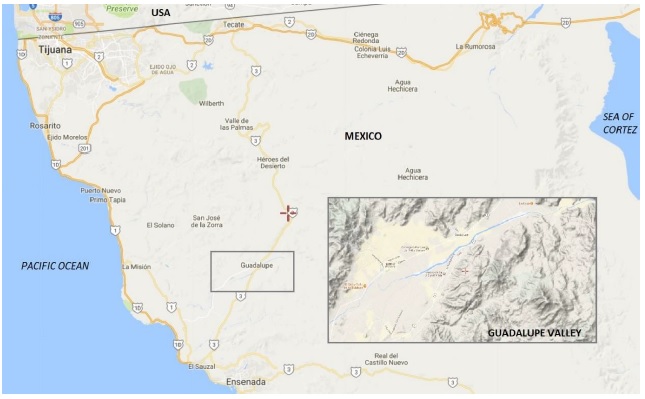
Figure 1
Guadalupe Valley in Baja California, Mexico
Adapted from Google Maps
Mexico is recognized as an emerging market susceptible to triple its production and consumption of wine in the next six years (Celaya, 2014). Consumption of wine is 600 milliliters per capita per year, unlike the consumption levels in the Old World Wine Capitals. In response, the wineries are directing its marketing efforts toward a younger market of 20 and 30 year olds (Millennials) through the Horeca channel, and in specific cities such as Mexico City, Monterrey, Guadalajara, Ensenada, Cancun and Los Cabos (Instituto Español de Comercio Exterior, 2012).
Trade agreements between countries in Latin America and Europe have increased wine exports in recent years. As an example, we have Chile [Valle del Maipo] in 1999, North American Free Trade Agreement [U.S.A., Canada and Mexico] in 1994, Spain [D.O. Rioja and Ribera del Duero] and France with Free Trade Agreement between Mexico and the European Union in 2000, from which 72% of imported comes (Ruiz, 2014). Similarly, wines from Argentina, Italy and the United States [Napa Valley] have an important representation as foreign wine (Ruiz, 2014). The Mexican wine industry in reinforced by its export to 20 countries, among which are mainly: United States, Ireland, Japan, France, and Germany, representing 68% of the total value of exports. These wines, given their high quality, are known as Premium, having won more than 300 national and international awards (González & Fuentes, 2013; Ruiz, 2014). Likewise, Enrique de la Madrid, representative of the Ministry of Tourism in Mexico, during the Sixth Meeting of Tourism Ministers of the Group of Twenty, emphasized the value of tourism in Mexico as a trigger for economic growth, generating employment for small and medium enterprises (Secretaria de Turismo, 2015), which also agrees with arguments of Thomé (2016).
For this reason, wine tourism in the country represents a strategy for economic development, which has been reinforced by the consolidation of wine routes [Figure 2], especially those of Baja California [in 2000 the tourist corridor of Tijuana-Rosarito-Ensenada and the wine routes in the Guadalupe Valley, North Gate, Old Wine Route and Wine Route of Ojos Negros], giving rise to micro, mini, small and medium enterprises [MSME]. Another important route is in the State of Queretaro [established between 2008 and 2009, spanning the municipalities of San Juan del Rio, Ezequiel Montes, Bernal y Tequisquiapan], which has highlighted the value of the local culture, environment, food and wine (Alpizar & Maldonado, 2009; López-Moreno & Thomé, 2015; Quiñonez et al., 2012).
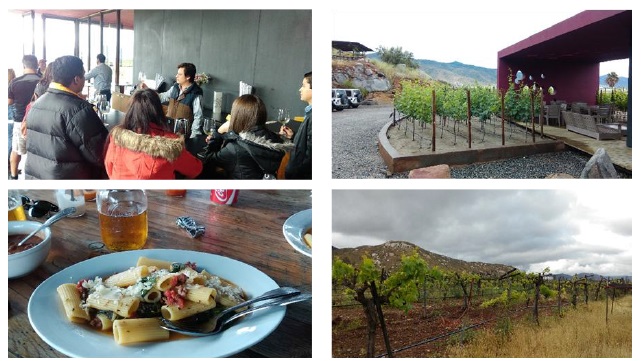
Figures 2
Wine tourism experiences in Baja California
By Authors
All this wine tourist activity in Baja California is in its initial phase, characterized by having a national and international recognition, particularly for the quality of its wines and wine-making experiences, it is an activity that complements traditional sun and beach products and cruises (Quiñonez et al., 2012). The competitiveness of the wine sector in Baja California has been a key factor in the development of the region, hence it is important to measure the factors that impact growth (Secretaria de Turismo del Estado de Baja California, 2011).
According to Gabriel Diaz in an interview (2017), director of the Wine Museum, he states that the Museum has on record 120 wine producers, which translates to an in situ sampling of 350 to 400 labels. This site receives an influx of 70 thousand visitors during peak season, which runs from March until September, coming in from other Mexican states (30%), Mexicali and Tecate (25%), Tijuana (10%), Ensenada and Rosarito (10%), and the remainder 10% from abroad, mostly from the state of California, in the United States of America. These visitors go to the largest and better-known producers in the region, however, a large conglomerate of micro wineries exist in the region, that by virtue of their location, low production yield and recent opening are unknown, which are classified according to their production level [and not by number of persons employed] [see Table 1], as indicated by Sedeco (2004, p. 20):
[…] this is because the difference in number of workers between small and medium size enterprises, sometimes is irrelevant; however, if we take into account the production level, it can be observed, that a sharp difference is evident, reflecting the different dynamics between production and weight of the activity […] The local wine producing system in the valley, is comprised mostly of SMES, and it is very competitive. A large number of companies that have between six and 15 employees exist, mostly family-owned, representing about 77% of the whole productive system. While the productive units that employ more than 1,000 workers account for the remaining 23% […].
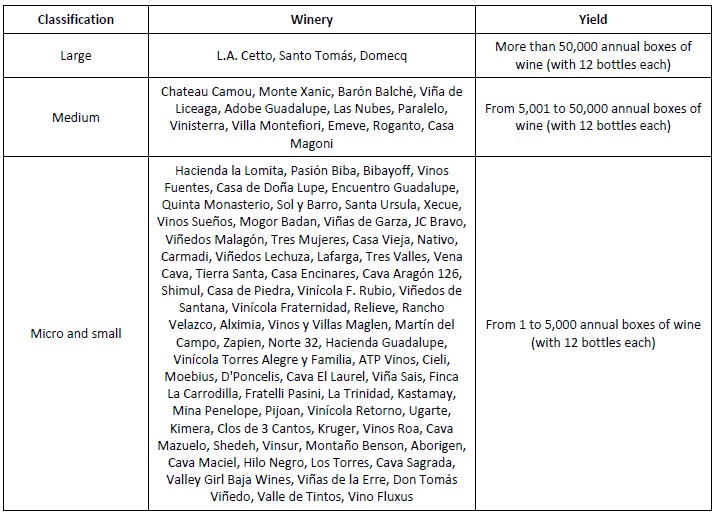
Table 1
Classification of the Guadalupe Valley wineries by production yield
Modified from Sedeco (2004, p.20)
METHOD
In accordance with the stated objectives of this research, the authors used a mixed methods approach for the research design. The qualitative part was conducted via literature review and interviews with 17 experts in the field [Figure 3], which allowed the identification of key components that where incorporated into the quantitative measuring instrument, taking as the object of study the wineries with a production of less than five thousand boxes per year, in an area that encompasses San Antonio de las Minas, El Porvenir y Guadalupe. 30% of the owners or sales representatives were interviewed (video recorded) about commercialization, production, and sales in the winery. The sample was defined based on the depth of information that the interviewees were providing. After 17 interviews, it was clear that the information gathered was getting redundant, so there was no need to conduct further interviews.
It should be noted that the annual production of 12 bottles per box was used as the parameter of each winery in this study, thus being able to review the different marketing strategies employed by each of the wineries. Nonetheless, “there are certain common characteristics employed by all wineries, regardless of their size, production process or the marketing nature of its products or services” (Saaverdra & Hernandez, 2008, p. 123), therefore this study may be of use to any winery regardless of size.
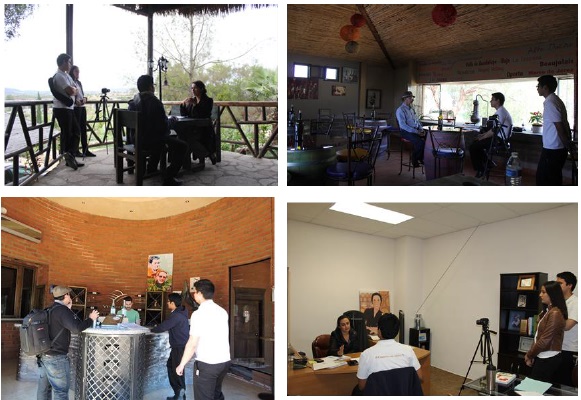
Figures 3
Wine tourism experiences in Baja California
By Author
During the quantitative part of the study, 200 questionnaires were analyzed from a convenience sample of individuals who visited the Guadalupe Valley from September through November 2015 on different random spots in the area, as well as the Wine Museum, convenience stores, and gas stations. It should be noted that the study with a small sampling allows putting into context the problem (Malhorta, 2006). Additionally the use of the survey allows for the comparison of results, both Horn & Simmons (2002) state that it serves as an ideal research method to get to know the perception of the individuals in a tourist destination. Therefore, during the span of four months, the survey was conducted to the tourist that visited the described locations; all the visitors were invited to take part in the study. Table 2 shows the literature review about the influence of these variables:
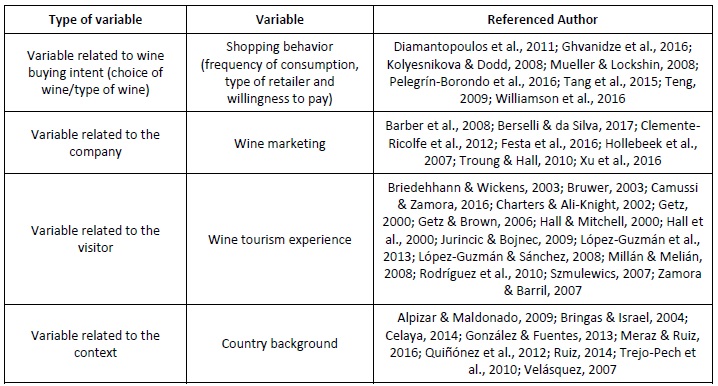
Table 2
Study variables
by authors
The dependent variables chosen for the study were: (1) frequency of consumption, (2) type of retailer, and (3) willingness to pay for one bottle of wine. The independent variable for the study was the type of wine preferred by the participants. With the data that resulted from the study, statistically significant relationships between dependent and independent variables were established with Chi Squared analyses. These analyses were facilitated by the use of Statistical Package for the Social Science (SPSS). This was a convenience sample, so clearly the results may not be applied to the general population, but given the exploratory nature of the study, the results may serve help future research efforts, and justify the trial of specific marketing tactics.
RESULTS
The results from the survey apply only to the population under study, which consists of 200 individuals who visited the Guadalupe Valley recently and agreed to respond to the questionnaire. There were 106 female participants in the survey out of the 200. Fifty-five percent reported residing in the state of Baja California, and approximately 16% noted that they were visiting from the United States. Over 60% of the respondents were repeat visitors, and the most popular wine establishments were L.A. Cetto and Santo Tomas, with 17% and 11% of the visitor sample respectively. A little over 50% of the respondents reported to hold an undergraduate degree and almost 19% of those in the sample reported to make $13,501 MX or more per month. The results from the survey [Appendix 1, 2, 3] serve to suggest that there is a relationship between the independent variable (choice of wine preferred by the respondents) and the three dependent variables (frequency of consumption, type of retailer, and willingness to pay for one bottle). Statistical significance was established through Chi Squared test and their respective p values noted in Table 3.
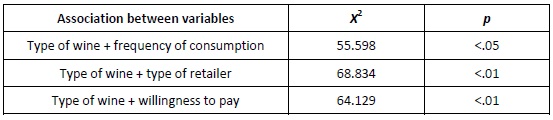
Table 3
Chi Squared test for marketing-related variables
By Authors
This is an explanatory examination of the consumption patterns of wine customers in the sample. While the results are not representative of a wider segment of the population, they may serve decision-makers in the wine industry to develop future marketing initiatives aimed at developing more focused strategies designed to better address their target markets. The application of the results will be explained in detail in the next section.
In regards to the qualitative analysis of the information, it was found that generally the establishments are family-owned wineries “Kastamay was an Hacienda of the paternal great grandparents of Laura in Campeche […]” (Kastamay, 2015) and of new creation “given the rise in wine culture, they realized that they could use their land to grow grapes and make their own wine, and here is where the winery comes to be. In 2011 construction began in Valley of the Rondo […]” (Rondo del Valle, 2015). Production in these establishments is limited “today, 2000 boxes of wine annuall […]” (Santa Ursula, 2015) using varieties such as “Nebbiolo, Cabernet and Chenin Blanc […]” amongst others (Sol de Media Noche, 2015), additionally they offer other services like “tastings, restaurants […]” (Sol y Barro, 2015), as well as “spaces on lease for private and social events, advising, conferences, private wine tastings, tours […]” (Solar Fortum, 2015).
This forces them to limit their marketing costs, thus resorting to promotions via “world wide web, web pages, written articles and mouth to mouth […]” (Shimul, 2015), or on the “wine route map VCC […]”, stating that this last option has had good reception (Tres Mujeres, 2015). Their distribution channels extend up to some large cities in Mexico: “Guadalajara, DF, Monterrey, Cabo, Sonora […]” (Trinidad, 2015; Ugarte, 2015). The number of labels that they manage varies from 1 up to 6 approximately (Villa Emiliana, 2015), which are created based on the representative ideology of the winery, as stated by Vinisterra (2015): “the design originates from an idea of a friend of Christof, and comes hand in hand with the name of the winery Vinisterra, which comes from wine land, the lines at the left side represent like a small hill […]”.
They also highlighted some challenges in the region, for example, “fight against the authorities […]” (Viñas Tierra Santa, 2015), “problems inside the winery […]” (Vinistor, 2015), “high costs of electricity and the alarming state of water […]” (Vinos Lechuza, 2015), “salty water […]” (Vinos Sueños, 2015), insecurity, etcetera. For these reasons, bets have been placed on the goal market of wine enthusiasts, who enjoys wine tourism by attending event such as Wine Harvest Festival or 100 Mexican Wines (Wine Factor, 2015).
CONCLUSIONS
This study provided information to help close the gap in information that may help determined the tourism characteristics and marketing of micro, family-owned wineries with a production of less than 5,000 annual boxes of wine in the Guadalupe Valley, and it identified the socio-demographic parameters of consumption, additionally it interviewed expert agents related to the wine sector. Specifically, this research found that the managers of wineries should increase their efforts to educate visitors and local residents about the positive impacts that consuming wine of the region has. Additionally, the consumption that tourist engage in helps promote the wine route, and more importantly, helps the sustainable development of the local community, which also benefits from this industry.
This study also contributed to shedding some light on the nature of tourism activity overall, and touring routes and wine tourism in particular, as well as expanding the personal benefits scale to capture the variable buying intent – choice of wine. Thus, opening a new line of research on the frequency of consumption and willingness to pay, particularly in the Mexican market, which has not been research in sufficiently in depth. On the other hand, strategies for each segment need to be developed, keeping in mind the different characteristics and particular interests of wine tourist, therefore it is essential that companies design specific products or services and marketing campaigns for each group of visitors.
The idea of interviewing experts in the field is crucial; through them, the study can obtain suggestions and offer recommendations and opinions. Also highlighted is the high value micro family-owned wineries have as economic development agents in the area, and by being located in a high potential tourist area (near the United States) for activities related first to wine, and second to cuisine, culture, heritage, etcetera. This represents a clear delimitation for the study. While there are other wine region in Mexico, as well as other notable examples in the United States, the authors felt that their own geographic location provided a clear advantage to study the market. This advantage was leveraged into identifying and gaining access to the 17 experts who were interviewed and obtaining institutional support on the part of one of the local universities.
It becomes evident that Mexico is positioned as one of the emerging countries of the New World Wine Producers [NWWP] in Latin America, and that thanks to its wine routes [mainly Baja California and Queretaro] it has established itself as a world-class tourist destination (López-Moreno & Thomé, 2015). It is worth noting also that the wines produced in Mexico are recognized by their quality and awards received in international competitions. But, as mentioned by Meraz & Ruiz (2016), it necessary to have “other elements that identify and generate appeal that position mainly the products and the territory itself, by way of example, the brands or grape varieties, like Chile does with Carmenere and Argentina with Malbec” (p. 92).
Several limitations may have affected the results of this research. The sample size was limited, although students helped with their application and in the interviews with experts, the results need to be interpreted with some caution. Consumer data was only collected at four locations, attending a wine event is recommended to gather more data, say for example, a Wine Harvest Fair. The limited historical information with respects to consumption and demand in Mexico, as well as the types of tourist that visit wine events, like 100 Mexican Wines, makes it difficult to carry out research.
The main recommendation for follow-up on the current project is to continue this topic, taking into consideration that the current study was an initial exploratory assessment of the Guadalupe Valley wine market, with the specific emphasis on the examination of the consumer behavior. In conclusion, the Mexican wine market requires a concentrated research effort aimed at further identifying types of consumers, as well as the factors that influence their preferences and purchasing decisions, but also in terms of the development of proper marketing strategies for wine companies.
Acknowledgements
This work was supported with funding from the Universidad Autonoma de Baja California (Project 440/7/N/70/1 “Trends in wine marketing in emerging wineries in the Guadalupe Valley with a production of less than 5000 annual boxes”) in attention to the state and regional demands of the private sector in the modality of applied research, Mexico. We would also like to acknowledge the work of Leoncio Samuel Garcia Ramirez (335622) and Oscar Gerardo Herrera Valenzuela (335580), research assistants from the bachelor’s in culinary arts.
References
Aaker, D., Day, G., & Kumar, V. (2001). Investigación de mercados. Mexico: Editorial Limusa.
Ahmed, S. (1986). Understanding residents’ reaction to tourism marketing strategies. Journal of Travel Research, 25(2), 13-18. Link
Alpizar, V. A. & Maldonado, M. M. (2009). Integración de la Ruta del Vino en Querétaro, un producto innovador. Quivera, 11(2), 97-109. Link
Armstrong, G., & Kotler, P. (2003). Fundamentos de Marketing. Mexico: Pearson Education.
Barber, N., Dodd, T. & Ghiselli, R. (2008). Capturing the Younger Wine Consumer. Journal of Wine Research, 19(2), 123-141. Link
Barco, E. (2014). Factores determinantes del funcionamiento económico del sector vitivinícola en la Denominación de Origen Calificada Rioja (DOCa Rioja) y su adaptación a los cambios en el entorno económico. Tese de doutorado. Logroño: Universidad de La Rioja. Link
Bautzer, D. (2010). Marketing de cidades: construção de identidade, imagem e futuro. Sao Paulo: Atlas S. A.
Bennet, P. & Harrel, G. (1975). The Role of Confidence in Understanding and Predicting Buyers’ Attitudes and Purchase Intentions. Journal of Consumer Research, 2(2), 110-117. Link
Berselli, C. & da Silva, E. (2017). Turismo e Marketing: Parque Turístico Nossa Senhora da Conceição, em Canguçu, RS, Brasil. Revista Rosa dos Ventos – Turismo e Hospitalidade, 9(1), 49-63. Link
Briedenhann, J. & Wickens, E. (2003). Tourism Routes as a Tool for the Economic Development of rural Areas-Vibrant hope or impossible Dream? Journal Tourism Management, 25(1), 71-79. Link
Bringas, N. L. & Israel J. I. (2004). El turismo alternativo: una opción para el desarrollo local en dos comunidades indígenas de Baja California. Economía, Sociedad y Territorio, 4(15), 551-590. Link
Bruwer, J. (2003). South Africa Wine Routes: Some Perspectives on the Wine Tourism Industry’s Structural Dimensions and Wine Tourism Product. Tourism Management, 24(1), 423-435. Link
Buil, I., Martínez, E. & Montaner, T. (2012). La influencia de las acciones de marketing con causa en la actitud hacia la marca. Cuadernos de Economía y Dirección de la Empresa, 15(2), 84-93. Link
Camacho, A. (2016). Análisis de las estrategias de adaptación a la escasez hídrica de las empresas vitivinícolas del Valle de Guadalupe, B. C. Tese de doutorado. Tijuana: El Colegio de la Frontera Norte. Link
Camussi, G. M. & Zamora, J. I. (2016). Turismo enológico en Uruguay: ¿qué quiere el visitante local? PASOS – Revista de Turismo y Patrimonio Cultural, 14(4), 963-980. Link
Castillo, A. M., Núñez, J. M. & Sánchez, S. M. (2016). Local Community’ Perceptions on Tourist Impacts and Associated Development: A Case Study on Sal and Boa Vista Islands. Mediterranean Journal of Social Sciences, 7(1), 383-394. Link
Celaya, D. (2014). El desarrollo del sector vitivinícola en Baja California (2000-2013): Un análisis desde la perspectiva del desarrollo endógeno. Tese de doutorado. Tijuana: El Colegio de la Frontera Norte. Link
Chang, P. L. & Chieng, M. H. (2006). Building Consumer-Brand Relationship: A Cross-Cultural Experiential View. Psychology & Marketing, 23(11), 927-959. Link
Charters, S. & Ali-Knight, J. (2002). Who is the wine tourist? Tourism Management, 23(3), 311-319. Link
Clemente-Ricolfe, J. S., Escribá-Pérez, C., Rodríguez-Barrio, J. E. & Buitrago-Vera, J. M. (2012). The potential wine tourist market: the case of Valencia (Spain). Journal of Wine Research, 23(2), 185-202. Link
Das, G. (2014). Factors affecting Indian shoppersx³ attitude and purchase intentions: An empirical check. Journal of Retailing and Consumer Services, 21(4), 561-569. Link
Diamantopoulos, A., Schlegelmilch, B. & Palihawadana, D. (2011). The relationship between country-of-origin image and brand image as drivers of purchase intentions: A test of alternative perspectives. International Marketing Review, 28(5), 508-524. Link
Durán, A., Álvarez, J. & del Río, M. (2017). Bases de datos internacionales, la cobertura de la producción científica sobre turismo gastronómico. p. 52-70. In: Norrild, J. A. (Org.). Gastronomía y Turismo, Destinos con sal y pimienta. España: Centro de Investigaciones y Estudios Turísticos (CIET).
Fernández, G. & Guzmán, A. (2003). El patrimonio industrial como recurso para organizar rutas turísticas. Actas del III Encuentro de Turismo Cultural Naya. Buenos Aires, Argentina. Link
Festa, G., Cuomo, M. T., Metallo, G. & Festa, A. (2016). The (r)evolution of wine marketing mix: From the 4Ps to the 4Es. Journal of Business Research, 69(5), 1550-1555. Link
Ghvanidze, S., Velikova, N., Dodd, T. H. & Oldewage-Theron, W. (2016). Consumers’ environmental and ethical consciousness and the use of the related food products information: The role of perceived consumer effectiveness. Appetite, 107(1), 311-322. Link
Getz, D. (2000). Explore wine tourism, management, development and destinations. New York: Cognizant Communications Corporation.
Getz, D. & Brown, G. (2006). Critical Success Factors for wine tourism regions: A demand analysis. Tourism Management, 27(1), 146-158. Link
Google Maps (s.f.). Location of the Guadalupe Valley. Link
Gómez, M., González-Díaz, B. & Molina, A. (2015). Priority maps at wine tourism destinations: An empirical approach in five Spanish wine regions. Journal of Destination Marketing & Management, 4(4), 258-267. Link
González, S. & Fuentes, N. A. (2013). Matriz de insumo-producto vitivinícola de Baja California, México. Revista de Economía, 30(81), 57-88. Link
Hall, C. M. & Mitchell, R. (2001). Wine Tourism in Mediterranean: A tool for restructuring and development. Thunderbird International Business Review, 42(4), 445-465. Link
Hall, C. M., Sharples, L., Cambourne, B. & Mancionis, N. (2000). Wine Tourism around the world: development, management and markets. London: Elsevier.
Hamari, J. (2015). Why do people buy virtual goods? Attitude toward virtual good purchases versus game enjoyment. International Journal of Information Management, 35(1), 299-308. Link
Hollebeek, L. D., Jaeger, S. R., Roderick, J. B. & Balemi, A. (2007). The influence of involvement on purchase intention for new world wine. Food Quality and Preference, 18(8), 1033-1049. Link
Horn, C. & Simmons, D. (2002). Community adaptation to tourism: comparisons between Rotorua and Kaikoura, New Zeland. Tourism Management, 23(2), 133-143. Link
Ilicic, J. & Webster, C. (2011). Effects of multiple endorsements and consumer-celebrity attachment on attitude and purchase intentions. Australasian Marketing Journal, 19(4), 230-237. Link
Instituto Español de Comercio Exterior (2012). El mercado de vino en México. Madrid: Oficina Económica y Comercial de la Embajada de España en México.
Jurincic, I. & Bojnec, S. (2010). Wine tourism development: the case of the wine district in Slovenia. Tourism: An International Interdisciplinary Journal, 57(4), 435-448.
Kolyesnikova, N., Dodd, T. H. & Duhan, D. F. (2008). Consumer attitudes towards local wines in an emerging region: a segmentation approach. International Journal of Wine Business Research, 20(4), 321-334. Link
Korça, P. (1998). Resident perceptions of tourism in a resort town. Leisure Sciences: An Interdisciplinary Journal, 20(3), 193-212. Link
Laroche, M., Kim, C. & Zhou, L. (1996). Brand familiarity and confidence as determinants of purchase intention: An empirical test in a multiple brand context. Journal of Business Research, 37(2), 115-120. Link
Lockshin, L., Corsi, A. M., Cohen, J., Lee, R. & Williamson, P. (2017). West versus East: Measuring the development of Chinese wine preferences. Food Quality and Preference, 56(2), 256-265. Link
López-Guzmán, T. J., Rodríguez, J. & Viera, A. (2013). Revisión de la literatura científica sobre enoturismo en España. Cuadernos de Turismo, (32), 323-326. Link
López-Guzmán, T. J. & Sánchez, S. M. (2008). La creación de productos turísticos utilizando rutas enológicas. PASOS - Revista de Turismo y Patrimonio Cultural, 6(2), 159-171. Link
López-Moreno, I. & Thomé, H. (2015). Los pueblos mágicos como enclaves territoriales: el caso de Tequisquiapan y la Ruta del Queso y el Vino de Querétaro, (p. 303-325). In: Pablos, J. (Org.). Pueblos Mágicos: discursos y realidades. Una mirada desde las políticas públicas y la gobernanza Ciudad de México: Repositorio Institucional de la Universidad Autónoma del Estado de México.
Lu, L. C., Chang, W. P. & Chang, H. H. (2014). Consumer attitudes toward bloggers’s sponsored recommendations and purchase intention: The effect of sponsorship type, product type, and brand awareness. Computer in Human Behavior, 34(1), 258-266. Link
Malhotra, N. K. (2006). Pesquisa de marketing: uma orientação aplicada. Porto Alegre: Bookman.
Mazodier, M. & Merunka, D. (2014). Beyond brand attitude: Individual drivers of purchase for symbolic cobranded products. Journal of Business Research, 67(1), 1552-1558. Link
McCole, P., Ramsey, E. & Williams, J. (2010). Trust considerations on attitudes towards online purchasing: The moderating effect of privacy and security concerns. Journal of Business Research, 63(9-10), 1018-1024. Link
McGehee, N. G. & Andereck, K. L. (2004). Factors predicting rural residents’ support of tourism. Journal of Travel Research, 43(2), 131-140. Link
Meraz, L. & Ruiz, A. V. (2016). El enoturismo de Baja California, México: un análisis de su oferta y comparación con la región vitivinícola de La Rioja, España. Revista Investigaciones Turísticas, (12), 73-98. Link
Millán, G. & Melián, A. (2008). Rutas turísticas enológicas y desarrollo rural. El caso estudio de la Denominación de Origen Montilla-Moriles en la provincia de Córdoba. Papeles de Geografía, (47-48), 159-170. Link
Mueller, S. & Lockshin, L. (2008). How important is wine packaging for consumers? On the reliability of measuring attribute importance with direct verbal versus indirect visual methods. Annuals of 4th International Conference of the Academy of Wine Business Research, Siena. Link
Orozco, A. (1999). Investigación de Mercados: Concepto y Práctica. Bogotá: Editorial Norma S. A.
Orta, M., Olague, J. T., Lobo, M. O. & Cruz, I. (2016). Importancia y valoración de los componentes de satisfacción de la experiencia enológica en Valle de Guadalupe, Baja California: contribuciones al proceso de gestión sustentable. Revista de Análisis Turístico, 22(2), 39-55. Link
Pedragosa, V., Biscaia, R. & Correia, A. (2015). The role of emotions on consumers’ satisfaction within the fitness context. Motriz: Revista de Educação Física, Rio Claro, 21(2), 116-124. Link
Pelegrín-Borondo, J., Arias-Oliva, M. & Olarte-Pascual, C. (2016). Emotions, Price and quality expectations in hotel services. Journal of Vacation Marketing, 23(4), 322-338. Link
Perdue, R., Long, P. T. & Allen, L. (1990). Resident support for tourism development. Annals of Tourism Research, 17(4), 586-599. Link
Quiñónez, J. J., Bringas, N. L. & Barrios, C. (2012). La Ruta del Vino de Baja California. Patrimonio Cultural y Turismo Cuadernos, (18), 131-149. Link
Rodríguez, J., López-Guzmán, T., Cañizarez, S. M. & Jiménez, M. (2010). Turismo del vino en el Marco de Jeréz. Un análisis desde la perspectiva de la oferta. Cuadernos de Turismo, (26), 217-234. Link
Ruiz, A. V. & Gil, C. R. (2012). Caso 8 Bodega Puelles: Sinergia entre el marketing mix de la bodega y el enoturismo (p. 355-368). In: Escuela Superior de Gestión Comercial y Marketing (Org.). Marketing del vino España: Ediciones Pirámide.
Ruiz, W. (2014). Elementos para un diagnóstico de la vitivinicultura en México. Revista de Economía, 31(83), 9-50. Link
Saavedra, M. L. & Hernández, Y. (2008). Caracterización e importancia de las MIPYMES en Latinoamérica: Un estudio comparativo. Actualidad Contable Faces, 11(17), 122-134. Link
Sánchez, L. (2007). Localización territorial y organización productiva de la industria vinícola del Valle de Guadalupe. Aproximación a la incidencia de la industria vinícola en el desarrollo económico del Valle de Guadalupe (México) y La Manchuela (España). Tese de doutorado. La Mancha: Universidad de Castilla.
Secretaría de Desarrollo Económico (2004). Plan Estratégico del Cluster Vitivinícola. Mexicali: Gobierno del Estado de Baja California.
Secretaría de Estado de Turismo (2000). Propuesta para la asistencia técnica para el desarrollo del estudio de definición del producto “Rutas del Vino de España”. Servicio de Publicaciones del Ministerio de Industria, Comercio y Turismo. Madrid, España.
Secretaría de Turismo (2015). Bulletin 161: Sector Turismo, el mayor generador de empleos: Enrique de la Madrid. Distrito Federal: Secretaría de Turismo del Gobierno Federal.
Secretaría de Turismo del Estado de Baja California (2011). Ruta del Vino de Baja California. Tijuana: Gobierno del Estado de Baja California.
Secretaría de Turismo del Estado de Baja California (2014). Las fiestas de la vendimia y el turismo enológico en Baja California (Bulletin). Tijuana: Observatorio Turístico de Baja California.
Szmulewicz, P. (2007). Métodos de evaluación del potencial turístico de viñas y valles vinícolas. Ponencia 1er. Congreso Internacional de Turismo enológico, Jerez, Spain.
Tang, V. C. M., Tchetchik, A. & Cohen, E. (2015). Perceptions of wine labels by Hong Kong Chinese consumers. Wine Economics and Policy, 4(1), 12-21. Link
Teng, L. (2009). A comparison of two types of price discounts in shifting consumers’ attitudes and purchase intentions. Journal of Business Research, 62(1), 14-21. Link
Thomé, H. (2016). Aprovechamiento recreativo de los Sial: el consumidor implícito del turismo agroalimentario (p. 155-170). In: Renard, M. C. (Org.). Mercados y desarrollo local sustentable. Ciudad de México: Red de Sistemas Agroalimentarios Localizados (Red Sial-México).
Thomé, H., Vizcarra, I. & Espinoza, A. (2015). Performancia y fractalización como herramienta de metabolización de los espacios rurales. El caso de la Ruta del Queso y el Vino de Querétaro. Spanish Journal of Rural Development, 6(1), 29-44. Link
Tomljenovic, R. & Faulkner, B. (2000). Tourism and older residents in a sunbelt resort. Annals of Tourism Research, 27(1), 93-114. Link
Trejo-Pech, C. O., López-Reyna, C., House, L. A. & Sarmiento-Pérez, F. J. (2010). Globalization in the Wine Industry and the case of Baja California Mexico. Annals of 20th Annual World Food and Agribusiness Forum and Symposium 2010, Boston, USA. Link
Truong, V. D. & Hall, C. H. (2016). Corporate social marketing in tourism: To sleep or not to sleep with the enemy? Journal of Sustainable Tourism, 25(7), 884-902. Link
Velásquez, G. A. (2007). Diseño de un modelo de sistema enoturístico para la región vitivinícola del estado de Querétaro. Dissertação de Mestrado. México, Distrito Federal: Instituto Politécnico Nacional.
Vieira, A., López-Guzmán, T. & Rodríguez, J. (2013). Análisis del enoturista en la Denominación de Origen del Jeréz-Xerés-Sherry (España). Tourism & Management Studies, 9(2), 37-43. Link
Villanueva, E. C. (2015). The Anglo-Saxon New World Wine Producers’ Paradigms Shift in Wine Business. Global Business & Economics Anthology, Business & Economics Society International, Worcester.
Wang, X., Yu, C. & Wei, Y. (2012). Social media peer communication and impacts on purchase intentions: A consumer socialization framework. Journal of Interactive Marketing, 26(1), 198-208. Link
Williamson, P. O., Lockshin, L., Leigh, I. & Mueller, S. (2016). Influencing consumer choice: Short and medium term effect of country of origin information on wine choice. Food Quality and Preference, 51(1), 89-99. Link
Xu, S., Barbieri, C., Anderson, D. & Leung, Y. (2016). Residents perceptions of wine tourism development. Tourism Management, 55(1), 276-286. Link
Zamora, J. & Barril, M. E. (2007). Turismo y vino. Un estudio formativo sobre la evolución de las rutas del vino en Chile. Estudios y Perspectivas en Turismo, 16(2), 173-191. Link
INTERVIEWS
Díaz, G. (2017). Interview. Ensenada, Baja California.
Kastamay (2015). Interview. Ensenada, Baja California.
Rondo del Valle (2015). Interview. Ensenada, Baja California.
Santa Ursula (2015). Interview. Ensenada, Baja California.
Shimul (2015). Interview. Ensenada, Baja California.
Sol de Media Noche (2015). Interview. Ensenada, Baja California.
Sol y Barro (2015). Interview. Ensenada, Baja California.
Solar Fortun (2015). Interview. Ensenada, Baja California.
Tres Mujeres (2015). Interview. Ensenada, Baja California.
Ugarte (2015). Interview. Ensenada, Baja California.
Viña Emiliana (2015). Interview. Ensenada, Baja California.
Viñas Tierra Santa (2015). Interview. Ensenada, Baja California.
Vinícola Trinidad (2015). Interview. Ensenada, Baja California.
Vinisterra (2015). Interview. Ensenada, Baja California.
Vinistror (2015). Interview. Ensenada, Baja California.
Vinos Lechuza (2015). Interview. Ensenada, Baja California.
Vinos Sueños (2015). Interview. Ensenada, Baja California.
Wine Factory (2015). Interview. Ensenada, Baja California.
Appendix
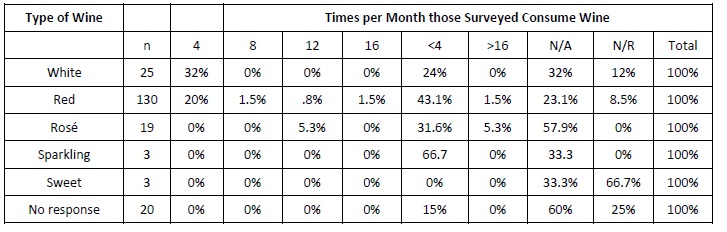
Appendix 1
Cross-tabulation of respondents by choice of wine and frequency of consumption
By Authors
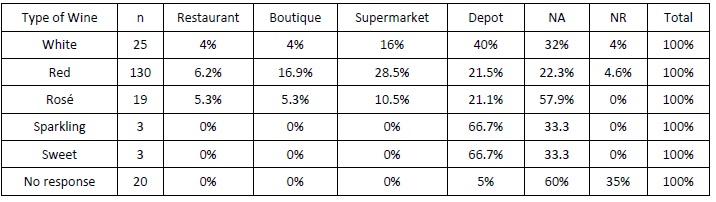
Appendix 2
Cross-tabulation of respondents by choice of wine and type of retailer
By Authors
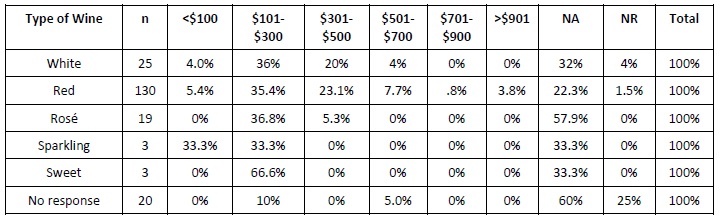
Appendix 3
Cross-tabulation of respondents by choice of wine and willingness to pay for one bottle
By Authors
Notes