Artigos
Antecedents of the Concept of Travel Intention During the Pandemic: A Case Study from Turkey
Antecedentes do Conceito de Intenção de Viagem Durante a Pandemia: Um Estudo de Caso na Turquia
Antecedents of the Concept of Travel Intention During the Pandemic: A Case Study from Turkey
Rosa dos Ventos, vol. 13, núm. 4, Esp., pp. 1-26, 2021
Universidade de Caxias do Sul
Recepción: 28 Junio 2021
Aprobación: 16 Agosto 2021
Abstract: The purpose of this study is to reveal the effect of Covid-19 fear on travel intention and to test the mediating effect of reliance on vaccine in the relationship between fear of Covid-19 and travel intention. In this context, a structural model was created to examine these three variables: the relationship among fear of Covid-19, travel intention and trust in the vaccine. The quantitative study was carried out through a structural model in order to verify the behavior of the three variables together using Ibm Amos 24 package. A case study based on data collected from 467 public employees across Turkey supported empirically the study. At the end of the analysis, it was found that the fear of Covid-19 significantly and negatively affected the travel intention, while the fear of covid-19 significantly and negatively affected the trust in the vaccine, and no significant relationship was found between the trust in the vaccine and the travel intention. In the model in which the mediation effect was tested, it was found that trust in vaccine did not have a mediating effect on the relationship between fear of Covid-19 and travel intention. Considering these results, suggestions were made for the decision makers of travel, tourism and hospitality industry to be able to recover after the pandemic to create plan for policy and strategies.
Keywords: Tourism, Covid-19, Fear, Vaccine, Intention to Travel, Turkey.
Resumo: O objetivo deste estudo é o de revelar o efeito do medo da Covid-19 na intenção de viajar, e testar o efeito mediador da confiança na vacina na relação entre este medo e a intenção de viajar. Neste contexto, foi criado um modelo estrutural para examinar a relação entre essas três variáveis: medo da Covid-19, intenção de viajar e confiança na vacina. Um estudo de caso quantitativo empírico, a partir de dados coletados junto a 467 funcionários públicos da Turquia, foi conduzido utilizando um modelo estrutural para testar o comportamento das três variáveis juntas, utilizando o pacote Ibm Amos 24. No final da análise, verificou-se que o medo da Covid-19 afetou significativa e negativamente a intenção de viajar, enquanto o medo da Covid-19, a confiança na vacina, e não foi encontrada nenhuma relação significativa entre a confiança na vacina e a intenção de viagem. No modelo em que o efeito de mediação foi testado, descobriu-se que a confiança na vacina não teve um efeito mediador na relação entre o medo da Covid-19 e a intenção de viagem. Considerando estes resultados, foram feitas sugestões para que os tomadores de decisão no segmento de viagens, turismo e hospitalidade, pudessem se recuperar após a pandemia para criar um plano de políticas e estratégias.
Palavras-chave: Turismo, Covid-19, Medo, Vacina, Intenção de Viajar, Turquia.
INTRODUCTION
In the last few months of 2019 and the first quarter of 2020, a respiratory infectious disease unexpectedly became a worldwide emergency, and was declared a global pandemic by the World Health Organization on March 11, 2020. The novel coronavirus outbreak 2019 [Covid-19] affected individuals in 180 countries and regions as of April 2, 2020 (Who, 2020a), causing months of education and non-core business activities to lock in many countries, including Italy. This is probably the most severe epidemic over the last century, not just because of the number of deaths but because of its large extension and its complex of world effects (economic, social, psychological, etc.), which has also dramatically affected tourism industry (Korstanje & George, 2021; Şeker, 2022). Almost all economic activities have been adversely affected as a result of the Covid-19 pandemic. As a result of the outbreak of Covid-19, a worldwide socio-economic crisis and profound psychological distress has occurred. However, perhaps the greatest of these adverse effects have occurred in the tourism and hospitality industry (Nicola et al., 2020).
While many reasons such as closing borders and mobility restrictions (aljazeera.com, 2020) prevent individuals from traveling, individuals also avoid travel as a result of the perceived risks regarding the Covid-19 outbreak. Whatever the reason, the decrease in travel has negatively impacted the employment status of those working in these industries (Dias, Costa, Barbosa & Silva Júnior, 2021). It should not be forgotten that travel motions can be a dangerous situation in terms of the spread of the virus in times of epidemics (Qiu, Park, Li, & Song, 2020). Therefore, the most important issue is how to recover the tourism travel and hospitality industries after the pandemic. It is necessary to better understand the current situation for the plans, policies, and strategies to be implemented in order to recover after the pandemic.
Besides the number of deaths, the pandemics has dramatically changed the routines in everyday life all across the world, causing serious complex effects [economic, social, psychological, etc.]. Infected persons have developed socio-psychological disorders related to their situation isolation, loss of income, loneliness (Luchetti et al., 2020; Pillai, Kulshreshtha & Korstanje, 2021; Sariişik, Türkay, Şengül, Bicil & Boğan, 2021) and their particular situation [fear, uncertainty, anxiety, depression and post-traumatic stress] (Guo et al., 2020). Those who were not infected triggered feelings of helplessness, anxiety, and fear, witnessing that their families and friends got sick, and even died (Ahorsu et al., 2020). According to Zheng, Luo and Ritchie (2021), threat violence and vulnerability can cause ‘travel fear’ leading to conservation motivation and protective travel behavior even after the pandemic outbreak.
In order to explain the main problem of the study, it is necessary to clearly state why the study was conducted and which gap it will fill in the field of tourism or how it will contribute to the literature. In the literature research conducted for this purpose, recent studies related to the coronavirus pandemic were found (Atay, 2020; Ayittey et al., 2020; Demir, Günaydın, & Demir, 2020; İbiş, 2020; Kıvılcım, 2020; Lovelace, 2020; Özkoçak, Koç & Gültekin, 2020; Türkmen & Özsarı, 2020; Üstün & Özçiftçi, 2020; Who, 2020b) and travel intention (Çetinkaya & Şahbaz, 2019; Kozak & Doğan, 2014; Luo & Lam, 2020; Reisinger & Mavondo, 2005).
Within the scope of this study, it was aimed to examine the fear of covid-19, trust in covid-19 vaccines and travel intentions and to reveal the relations between them. In this way, efforts were made to obtain findings that can be a source of information for plans, policies, and strategies for post-pandemic economic activities [especially tourism, travel and hospitality]. Although there are quite a lot of studies on covid-19, the fact that there is no study that addresses the effects of reliance on vaccine (Korstanje, 2021). Thus, this kind of information could help taking decisions, public or private ones, to better develop strategies to recover tourism activity, once it can be restarted according to the situation of each specific country and region in the world. This gap filling in the literature emphasizes the originality and importance of the research.
CONCEPTUAL FRAMEWORK
As there are many reasons that push people to travel, it is possible to mention many reasons that may cause them to avoid travel. One of them is the feeling of fear. Fear occurs when people generally perceive danger, pain or harm (de Hoog et al., 2008). In particular, many reasons such as terrorism, health problems and high crime rates may prevent people from traveling to certain destinations (Karakuş & Kalay, 2017; Bayraktaroğlu, Gürsoy, Günay & Karakuş, 2021). Covid-19 outbreak can also be effective in the formation of fear that will prevent people from traveling (Mamun & Griffiths, 2020). A highly contagious disease that can spread rapidly among people, pandemic disease causes high fear and panic among the population (Strong, 1990). Given the uncertainty and possible fatal consequences of the new virus, the fear of pandemics can spread to all populations (Person et al., 2004).
During the Covid-19 pandemic outbreak, normally all governments try to implement the necessary measures to contain the infection, such as travel restrictions, bans of public events, interruption of educational activities, quarantine and isolation measures, all of which further increases the public's fear of the epidemic (Eichelberger, 2007). At the time of the current study, the number of deaths from this virus in the world is close to 3.5 million (worldometers.info, 2021). Therefore, it is normal for people to feel fear due to the Covid-19 outbreak (Ahorsu et al., 2020). Although some people have not yet been infected or have mild symptoms, they will develop negative emotions as they see those who experience severe consequences of this virus or those who lost their lives nearby (Hacimusalar et al., 2020). People were emotionally affected by the feeling of loneliness due to restrictions, negative emotions caused by loss of income, and scarcity of leisure activities and socialization (Luchetti et al., 2020). Naturally, the possibility of experiencing these negative emotions more will create a feeling of fear.
Due to the fear of Covid-19, people will tend to avoid risk. Taken within the scope of protection motivation theory, individuals' perceptions of risk will cause them to avoid travel (Ruan, Kang, & Song, 2020). In fact, this avoidance attitude may be a situation that can continue even if the pandemic ends (Zheng et al., 2021). For this reason, overcoming the fear of Covid-19 is very important for successful tourism and travel activities. For this reason, determining the current situation is a prerequisite for the plans, projects, and strategies to be formed. It would be meaningful to examine the relationship between Covid-19 fear and travel intention. In this direction, the first hypothesis of the current research is as follows:
H1: The fear of Covid-19 negatively and significantly affects the intention to travel - The Covid-19 pandemic, which affects the whole world, stands before us as an obvious example of how human beings can be desperate. It is known that there were viruses that humanity was exposed to before [SARS, MERS, etc.] and the vaccine could not be found. However, Covid-19 virus is a virus that is highly contagious compared to other mentioned viruses. For this reason, it influenced the whole world and stopped life to a great extent. So far, there is no effective drug developed against this virus. However, some medications used for therapeutic purposes are used in the infection of other viruses, and there is no drug that is fully capable of treatment (covid19-druginteractions.org, 2020).
At this point, the greatest weapon of man in the fight against Covid-19 will probably be the vaccine. Many scientists in many locations around the world are striving to produce a vaccine to be used against this virus. Among these attempts, there have been successful vaccine trials, and applications of these vaccines have begun to help people become immune to the covid-19 virus. However, at this point, in order to ensure the immunity of the society, people should develop a positive attitude towards this vaccine. To develop this attitude, people need to trust covid-19 vaccines and believe that they will benefit after use. However, it is interesting that there are many people in societies who are insecure about this vaccine. In fact, it is known that there are significant numbers of medical expert among individuals who do not trust the vaccine (Dror et al., 2020; Lucia, Kelekar, & Afonso, 2020). It should not be forgotten that the attitude of healthcare employees towards vaccination is an important determinant of the perceptions and attitudes of other segments of the society (Verger & Dubé, 2020; Ward et al., 2019). However, the fact that not every healthcare employee is an expert in vaccination can be ignored by society, and people may develop resistance to vaccination.
As Vergara et al. (2021) point out, the quest to suppress and terminate the Covid-19 virus has led to the emergence of vaccines at an unprecedented pace, stemming from the extraordinary efforts of experts and authorities. However, such a rapid emergence causes uncertainties about the long-term side effects of the vaccine and can damage the sense of trust. Another issue that may hinder the public's trust in the vaccine is the spread of false and misleading information, which the world health organization calls ‘infodemic’ (Who, 2021). Such news can lead to the adoption of misleading information such as whether the Covid-19 virus is real or the main purpose of vaccines is not to immunize (Goodman & Carmichael, 2020). For this reason, it may create a situation that may cause vaccine insecurity and undermine the fight against the virus in the long term. In order to achieve social immunity, 60-70% of the population must be vaccinated or develop antibodies by defeating the virus (Science Conversation, 2020).
Therefore, in order to reach normal times from the pandemic period, societies must be vaccinated by transforming them into observable behaviors in order to rely on Covid-19 vaccines and to ensure community immunity. Regarding trust in vaccines, it is possible to talk about two dimensions that will limit travel. The first is that people who do not trust the vaccine and therefore refuse to be vaccinated may be reluctant to travel. In other words, someone whose body has not produced antibodies in any way is likely to avoid travel. Another dimension is the barriers that will be developed for unvaccinated individuals to travel. For example, the vaccine passport application, which we often hear about today, is striking. The practice, which can be defined as a certification where travelers can prove that they have been vaccinated (Renieris, 2021), is a situation that may adversely affect international tourism mobility. Therefore, it is necessary to know the importance of trust in vaccines and to be able to manage them well in order for tourism activities to take place successfully. Considered within the scope of protection motivation theory, Covid-19 infection, which is a perceived risk that may cause individuals to avoid travel, can be eliminated with immunity to the vaccine, and travel intention may be positively affected. The hypothesis created in this context is as follows:
H2: Trust in vaccines positively and significantly affects the travel intention - With Covid-19 infection, the risk of losing life, losing relatives, loss of income, loneliness, etc. naturally causes fear in people. However, existing uncertainties and misleading information about the vaccine may cause a risk perception for people. Therefore, spreading the fear of Covid-19 may reduce the confidence in the vaccine. In other words, when people living with the fear of covid-19 perceive the risks that may come with the vaccine, their trust may decrease in this direction. The hypothesis established in this context is as follows:
H3: The fear of Covid-19 negatively and significantly affects the trust in vaccines - When we act with the assumption that the fear of Covid-19 will negatively affect the intention to travel, the mediate role of trust in vaccines in this relationship is another issue that needs to be examined. It is assumed that the fear of Covid-19 decreases the trust in the vaccine and the travel intention decreases. The hypothesis established in this direction is as follows:
H4: Trust in vaccines mediates the effect of fear of Covid-19 on travel intention.
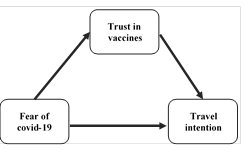
Figure 1
Proposed Research Model
By authors (2021)
METHODOLOGY
Instrument, Data Collection and Sampling - Research data were collected via web questionnaires [Google Form] and reproduced at the end of the paper [appendix]. In the questionnaires, fear of Covid-19 was measured through 7 items. The scale of fear of Covid-19 was adapted considering Luo and Lam's (2020). The scale of trust in vaccines was modified considering Latkin et al. (2021) and Vergara et al. (2021). In this regard, trust in vaccines was measured through 7 items. The scale of travel intention was adapted considering Reisinger and Mavondo's (2005). In this regard, travel intention was measured through 4 items. All items were measured by a 5-point Likert-type scale ranging from ‘strongly disagree (1)’ to ‘strongly agree (5)’. Additionally, items for age, gender, educational level were included in order to collect data on participants’ demographic characteristics.
The validity of the questionnaire form was confirmed in consultation with expert professors in the field of tourism. The statements in the questionnaire form were evaluated by conducting a pilot application consisting of 46 people. Two statements from the scale of trust in vaccination were not fully understood and were excluded from the scale, as they did not differ from other statements. The research population was composed of public employees in Turkey approximately 3 million (sbb.gov.tr, 2021). When the accommodation data are examined, Turkey is a country which more than 80 million tourists visited before the pandemic (2019). It is known that there are more than 30 million domestic tourists in this number (ktb.gov.tr, 2020). In other words, Turkey is a very important tourism destination.
Respondents were selected via the convenience sampling method. They were invited to the research by sending an e-mail to the member lists of unions to which public employees are members. A total of 467 returns were made. Whether the sample size was sufficient to test the model was examined using G*Power (Erdfelder, Faul, Buchner, & Lang, 2009). G*power determines the required minimum sample size for a study while avoiding disturbance of statistical significance. According to G*Power, required minimum sample size should be 99 with these criteria: significance level of 0.05, effect size of 0.15, statistical power of 0.90. However, in order to create a more consistent model, it may be useful to reach two or three times the required minimum sample size (Ringle, Da Silva, & Bido, 2015). Therefore, the sample size of 467 shows sufficient statistical power.
Normality Distributions of the Scales Used in the Study - The variables in the scale used in the research are expected to be normally distributed alone and with combinations of all variables (Çokluk, Şekercioğlu, & Büyüköztürk, 2016). In other words, it is predicted that the mutual effects of the variables used in the research will be normally distributed (Hair et al., 2009). Multivariate tests of normality can be performed graphically and statistically. Test of normality can be graphically tested with scatter diagram matrix (Çokluk et al., 2016). Statistically, the multivariate normal distribution can be said by looking at the values of skewness and kurtosis (Çokluk et al., 2016; Hair et al., 2009; Tabachnick & Fidell, 2014). Significance levels vary in critical skewness and kurtosis values. Hair et al. (2009) stated that the normality threshold values should be at the 0.01 significance level (- + 2.58) and at the 0.05 significance level (- + 1.96). In the light of tests on skewness and kurtosis (p> 0.05), it is observed that the skewness values are between -0.210 and 0.654 and the kurtosis values are between -1.383 and -0.570. The data on the kurtosis and skewness values of the scales used in the study are observed in Table 1.
As seen in Table 1, the highest skewness value observed in the scale data is 0.654. The lowest skew value is observed as -0.210. When the kurtosis values are examined, it is seen that the highest value is -0.570 and the lowest value is -1.383. These values are known to be between the threshold values given above. For this reason, parametric tests will be used in the later stages of the research.
| Statements | Kurtosis | Skewness |
| FOC1 | -1.151 | -.056 |
| FOC2 | -1.125 | -.147 |
| FOC3 | -.869 | .476 |
| FOC4 | -1.329 | .060 |
| FOC5 | -1.225 | -.007 |
| FOC6 | -.570 | .654 |
| FOC7 | -1.120 | .368 |
| TIV1 | -1.276 | -.210 |
| TIV3 | -.835 | .573 |
| TIV5 | -1.272 | -.074 |
| TIV6 | -1.042 | .320 |
| TIV7 | -1.167 | .323 |
| TI1 | -1.316 | .120 |
| TI2 | -1.323 | .173 |
| TI3 | -1.383 | .147 |
Descriptive statistics of respondent employees - The descriptive statistical data [frequency and percentage [%]] of the employees who form the sample in the current study can be seen in Table 2. When examining the gender of the participants of the research, it was seen that the majority (267) were male and represented 57.7% of the total survey participants. It was noted that the number of female participants in the research was 196 with a rate of 42.3%. According to research findings, 41.9% of the overall respondents were aged 31 to 40. To put it another way, it is seen that most of the participants in the research are young aged public employees. Upon examining the other statistics, it was noted that 14 respondent employees were aged 20 or below (3%), 117 employees were aged 21 to30 (25.3%), 96 employees were aged 41 to50 (20.7%), and forty-two employees were aged 50 or above (9.1%).
Regarding the educational status of the respondent employees, it was observed that the majority (194 respondents) was composed of public employees with a bachelor’s degree. When other statistics are examined, it is seen that the number of primary school graduates is 11 (2.4%), 14 employees are graduated from secondary school (3%), 63 employees are graduated from high school (13.6%), and 81 (17.5%) employees have associate degrees. The number of those who have master of sciences and PhD degrees are 100 (21.6%).
| N | Frequency | Percentage (%) | |
| Gender | 463 | ||
| Male | 267 | 57.7 | |
| Female | 196 | 42.3 | |
| Age | 463 | ||
| 20 and Below | 14 | 3 | |
| 21-30 | 117 | 25.3 | |
| 31-40 | 194 | 41.9 | |
| 41-50 | 96 | 20.7 | |
| 51 and Above | 42 | 9.1 | |
| Educational Status | 463 | ||
| Primary Education | 11 | 2.4 | |
| Secondary Education | 14 | 3 | |
| High School | 63 | 13.6 | |
| Associate’s Degree | 81 | 17.5 | |
| Bachelor’s Degree | 194 | 41.9 | |
| Master’s and Doctoral Degree | 100 | 21.6 |
Measurement Model - Validity is "the accuracy of the measurement and it reflects the real differences of the measured features in the observed scale scores" (Nakip, 2006, p.150). More precisely, it is how accurately the expressions in the scales used measure the concept they want to measure (Hair, Black, Babin, & Anderson, 2013). Factor analysis, on the other hand, enables the dimensioning of measurement tools and evaluation of content validity and is used to test the validity of the scale (Hair et al., 2013, p.125). It is defined as "a multivariate statistic used to discover a small number of conceptually meaningful variables by bringing together a large number of interrelated variables or to test measurement models that explain the relationships defined between factors and indicators" (Çokluk et al., 2016, p.175).
Factor analysis is divided into explanatory factor analysis [EFA] and confirmatory factor analysis [CFA] (Tabachnick & Fidell, 2014, p.614). While EFA is generally applied in the early stages of the research (Tabachnick & Fidell, 2014), and mostly preferred in exploratory studies [e.g., structure research within variable sets], CFA can be used in cases where the researcher has a theoretical bias about scale structures (Hair et al., 2013). To put it more clearly, although the exploratory factor analysis is generally applied at the first stage of the research, this analysis is mostly made to explain the factor under which the expressions in the scale are collected. It is mostly used in exploratory research. It is applied to discover the structure within variable sets of a newly created scale (Kurtuluş, 2010).
In the confirmatory factor analysis, the relationships underlying the structure formed by the variables are made by verifying the theoretically developed clear hypotheses. CFA analysis is generally performed to reveal whether the original structure of the scales used previously is verified through the collected data (Gürbüz ve Şahin, 2014). Considering the explanations for the current study, it was determined that all scales other than the Vaccine Trust scale were used before, and it was observed that they had the specified structures. For this reason, only the Vaccine Trust Scale EFA was used. In the following phase, the validity of all scales was tested by CFA analysis. SEM and DFA goodness of fit values based on this study are given in Table 3.
| Fitness Criteria | Good Fit | Acceptable Fit | References |
| Overall Fitness of the Model χ2/df p value | 0 ≤ χ2/df ≤ 2 .05 < p ≤ 1.00 | 2 < χ2/df ≤ 5 .01 ≤ p ≤ .05 | Byrne, 2010 Gürbüz & Şahin, 2014 |
| Comparative Fit Indices RMSEA IFI NFI NNFI CFI | 0 ≤ RMSEA ≤ .05 .95 ≤ IFI ≤ 1.00 .95 ≤ NFI ≤ 1.00 .95 ≤ NNFI ≤ 1.00 .95 ≤ CFI ≤ 1.00 | .05 < RMSEA ≤ .08 .90 ≤ IFI < .95 .90 ≤ NFI < .95 .90 ≤ NNFI < .95 .90 ≤ CFI < .95 | Schermelleh-Engel et. al, 2003 ; Marsh & Hau, 1996 Byrne, 2010 Mulaik et al., 1989 Bentler, 1992; Hu & Bentler, 1999 |
| Absolute Fit Indices GFI AGFI SRMR | .90 ≤ GFI ≤ 1.00 .90 ≤ AGFI ≤ 1.00 0 ≤ SRMR ≤ .05 | .80 ≤ GFI ≤ .89 .80 ≤ AGFI ≤ .89 .05 < SRMR ≤ .08 | Marsh et al., 1988 Doll et al., 1994 Gürbüz & Şahin, 2014 |
Reliability is related to whether a variable or a set of variables to be measured is consistent (Hair et al., 2013). In other words, it is the consistency between the answers given to the statements in the scale (Büyüköztürk et al., 2009). Internal consistency is a method used to determine reliability, and it can be stated that the method generally preferred in measuring internal consistency is the Cronbach Alpha reliability coefficient. The reliability coefficient of the scales used in a study should be (Cronbach Alpha) 0.70 minimum or more (Hair et al., 2017). In other studies, in the literature, 0.60 and 0.50 are also observed to be acceptable. Acceptable reliability was determined to be 0.70 in this study.
| Items | Factor Loading | Common Variance | Eigenvalues | Total Variance |
| TIV1 | .789 | .623 | 3.195 | 63.895 |
| TIV3 | .796 | .634 | ||
| TIV5 | .801 | .642 | ||
| TIV6 | .817 | .667 | ||
| TIV7 | .793 | .629 | ||
| Kaiser-Meyer-Olkin Measure of Sampling Adequacy | .837 | |||
| Bartlett's Test of Sphericity | Approx. Chi-Square | 976.856 | ||
| df | 10 | |||
| Sig. | .000 | |||
EFA results are shown in Table 4. The KMO sample level is between 0.80 and0.90. Çokluk et al. (2016, p.207) state that this value is quite good. According to this test, factor analysis can be applied to these data. According to Eigenvalues, the TIV scale can be stated to have a one-dimensional structure. However, it was determined that the common variance values of the 2nd (.463) and 4th (.458) expressions in the Vaccine Trust scale are lower than the suggested value of .50 (Hair et al., 2013). Therefore, these statements were excluded from the scale and the analysis was carried out with 5 statements. It can be said that the vaccine trust scale has an explanation rate of approximately 64%. According to Hair et al. (2013), the dimensions in the scale are generally asked to explain 60% and above of the total variance.
Accordingly, after the statements under the common variance are removed, the total variance explained is around 64%, which indicates that this expectation has been met. At the same time, it can be stated that the validity of the scale is ensured according to EFA results, since both factor loadings and common variance values are above the threshold values. The FOC and TI scales used in this study were adapted from previously applied studies. Since the TIV scale used in this study has not been used in another study before, EFA was performed for the first time. The validity of the scale is observed as a result of EFA analysis. In the ongoing phase of the analysis, a first-level multi-factor CFA analysis was conducted to determine whether the structures of these scales, whose theoretical explanations were known, were verified through the collected data. First level multifactorial CFA analysis results are shown in Table 5.
| Model | Dimension | Item | Std. Path Coefficients | t | CR | AVE |
| Level | Trust in vaccine (TIV) | TIV.1 | 0,724 | Fixed * | 0,859 | 0,550 |
| TIV.3 | 0,740 | 14,569 | ||||
| TIV.5 | 0,742 | 14,606 | ||||
| TIV.6 | 0,768 | 15,053 | ||||
| TIV.7 | 0,729 | 14,357 | ||||
| Fear of Covid-19 (FOC) | FOC.1 | 0,763 | 17,487 | 0,914 | 0,605 | |
| FOC.2 | 0,741 | 16,844 | ||||
| FOC.3 | 0,752 | 17,263 | ||||
| FOC.4 | 0,838 | 19,748 | ||||
| FOC.5 | 0,787 | 18,264 | ||||
| FOC.6 | 0,762 | 23,662 | ||||
| FOC.7 | 0,796 | Fixed * | ||||
| Travel Intention (TI) | TI.1 | 0,835 | Fixed * | 0,926 | 0,809 | |
| TI.2 | 0,952 | 26,773 | ||||
| TI.3 | 0,908 | 25,468 | ||||
| Fit indices:χ2/sd= 3,768; CFI= 0,948; P= 0,000; GFI= 0,912; AGFI= 0,880; RMSEA= 0,077; TLI= 0,935; SRMR= ,080 | ||||||
As seen in Table 5, it can be said that reliability is ensured since the values regarding the composite structure reliability recommended by Boğan and Dedeoğlu (2019); Dedeoğlu and Demirer (2015); Fornell and Larcker (1981) exceed 0.70. At the same time, it can be said that the convergent validity of the scale expressions is also ensured since the AVE and standardized factor loads of the scale expressions exceed 0.50 (Dedeoğlu et al. , 2016; Hair et al., 2009). Since the researcher expects a harmony between the theoretical expectation and the data in SEM, the x2 value should turn out to be meaningless. However, the x2 value is very sensitive to sampling, so it is usually significant at n <200 sample levels (Gürbüz & Şahin, 2014; Onat & Eren, 2020). The values obtained as a result of the analyses made in this research are among the values given in table 3. As a result, it can be said that both construct validity and reliability are met (see Table 5).
STRUCTURAL MODEL RESULTS
Structural Equation Modeling [SEM] - The main purpose of Structural Equation Modeling (SEM) is to test the relationships between one or more independent variables and one or more dependent variables (Gürbüz & Şahin, 2014, p.323). The model created in this research includes an independent, an intermediary, and a dependent variable. This model can be tested by classical analysis methods. However, the reason for choosing SEM in this study is that the explanatory rate of the model is increased by including the error variances that are not included in the analysis using SEM analysis and classical analysis methods. In addition, in classical analyses aimed at testing relationships between structures, it is difficult to test a particular model holistically. However, whether a model with different relationships through SEM is holistically verified with the data or not can be tested using the produced goodness of fit values (Hayes, 2009). Within the scope of this research, SEM was applied to test the model and hypothesis based on the literature. Findings regarding the SEM analysis applied are given in Table 6 with all details.
| Hypothesis | Relationship | Std. Factor Loading (β) | t value | P value | Result |
| H1 | FOC → TI | -0,454** | -8,618 | <.001 | supported |
| H2 | TIV → TI | 0,023 NS | ,461 | .645 | rejected |
| H3 | FOC → TIV | -0,297** | -5,528 | <.001 | supported |
| Fit indices: X2/df= 3,768; CFI= 0,948; GFI= 0,912; AGFI= 0,880; RMSEA= 0,077 R2: TIV = .088; TI = .213 **p<.01; NS: Not Significant FOC= Fear of Covid; TI= Travel Intention; TIV= Trust in Vaccine | |||||
As seen in Table 6, fear of covid-19 affects travel intention negatively and significantly (β = -0.454; t = -8.618; p <.001). When the second relationship is examined, it is observed that reliance on vaccine does not significantly affect travel intention (= 0.023; t = 0.645; p = 0.645). When the third relationship tested in the model is examined, it is observed that the fear of covid-19 affects the vaccine trust variable negatively and significantly (= -0.297; t = -5.528; p <.001). Therefore, in the light of these findings, the H1 and H3 hypotheses are supported, while the H2 hypothesis is rejected. As can be understood from Table 6, it is predicted that there will be a -45% decrease in travel intention in the face of a one-unit change on the fear of covid-19. In another supported hypothesis, it can be said that a one-unit change in the fear of covid-19 will result in a reduction of -30% in vaccine safety. The goodness of fit values obtained as a result of the analysis in Table 6 are among the goodness of fit values specified in Table 3.
Test Results on Mediating Role - The mediating role of reliance on vaccine was analyzed by the bootstrap method. The preload method provides the strongest and most reasonable method of obtained reliability limits for certain indirect effects under most conditions (Preacher & Hayes, 2008). In addition, booting is a more valid and powerful technique in detecting the effect of the variable in between (Hayes, 2009). For this reason, the mediating role of reliance on vaccine in this study was examined with the bootstrap method. Preload method is defined as the “resampling technique used to estimate statistical parameters such as standard errors and confidence intervals” (Efron & Tibshirani, 1994, p.392). Preload method can be performed differently, such as percentage, t-value based, bias corrected and bias corrected accelerated (Hayes, 2009, p.412). Since bias-corrected [BC] is the most common boot method in the literature (Hayes, 2009; Ledermann & Macho, 2009; MacKinnon, Lockwood & Williams, 2004; Williams & MacKinnon, 2008), this method was also preferred in this study. In BC preloading method, a certain number of sub-samples must be determined first. At this point, a sample size of 1000, which is generally accepted in the literature, was used (Preacher & Hayes, 2008). The results obtained from the model operated using the BC preload method are shown in Table 7.
| Hypothesis | Relationship | Without Trust in Vaccine (β) | With Trust in Vaccine (β) | Result | ||
| H4 | FOCàTI | -0,418** | -0,412* | rejected | ||
| Confidence Intervals for the Mediation Model | ||||||
| Confidence Interval | Lower Bound | -0.485 | ||||
| Upper Bound | -0.336 | |||||
| Direct Effect | -0.412* | |||||
| Confidence Interval | Lower Bound | -0.030 | ||||
| Upper Bound | 0.013 | |||||
| Indirect Effect | -0.006NS | |||||
**p<.01; *p<.05; NS = Not Significant
by authors (2021).As can be seen in Table 7, it was determined that trust in vaccines does not have a mediating effect between fear of corona and intention to travel. The standardized indirect effect of trust in the vaccine, which belongs to the mediating role in the relationship between fear of Covid-19 and travel intention, is -0.006, and this value is between -0.030, which is the lower limit, and 0.013, which is the upper limit. The significance coefficient (Sig) of this indirect effect is 0.632. As a result, this value is above 0.05, which is the desired significance coefficient. Therefore, the H4 hypothesis in this study was rejected. It is observed that the result in the analysis (β = -0.418 **) in which trust in the vaccine is not included in the Table 7 and the result (= -0.412 *) in which trust in the vaccine is included does not differ much. The desired deterioration in the significance coefficients of these values did not even occur (Without Trust in Vaccine p <.01; With Trust in Vaccine p <.05). For these reasons, it can be said in this study that reliance on vaccines does not mediate the relationship between fear of corona and intention to travel.
DISCUSSIONS
Considered within the scope of protection motivation theory, observable behaviors of individuals in matters perceiving risk should be affected in this direction. Considering the fear of Covid-19 from this point of view, people are expected to avoid movements as a result of the risks they perceive. In the current research, an assumption has been adopted from this point of view. We see that different sources reach different results in the literature regarding the subject. For example, Luo and Lam (2020) found in their study that there is no significant relationship between fear of covid-19 and travel intention. Zheng et al. (2021), on the other hand, found a relationship among pandemic-induced fear, protection motive, and travel intention.
Regarding the subject, the findings of Magano et al. (2021) are also noteworthy. These researchers examined the relationship among corona virus anxiety, fear of covid-19 and travel, tourism and hospitality industry, and found that these two concepts affect the travel, tourism and hospitality industry. Similarly, Zenker et al. (2021) concluded that an emotion such as pandemic-induced anxiety may have an effect on travel intention. In the current study, it was found that possible increases in covid-19 fear can reduce travel intentions, and this effect is quite significant.
These results are different from Luo and Lam (2020) findings, but they are broadly consistent with others. The concept of trust in vaccine, which emerged especially during the Covid-19 pandemic and is the subject of this current study, is very important. As it is known, those who have a negative attitude towards the vaccine are divided into two different groups. One of them involves those against all vaccines in general. The other one involves those who have a negative attitude towards the Covid-19 vaccine (Latkin et al., 2021). Regardless of their group, the widespread negative attitude towards vaccination in society is a situation that can undermine the fight against the Covid-19 virus. Insecurity for vaccination, which is a situation that can cause all the negativities of the pandemic period to be experienced for a longer time, should be examined and its current situation should be revealed.
At this point, in order to ensure the trust of the society in the vaccine, it is necessary to raise awareness with a model that includes all stakeholders, including parents, health practitioners, community leaders, policy makers, and the media (Ozawa & Stack, 2013). In this current study, the hypothesis established between fear of Covid-19 and trust in vaccine is supported. Hypothetically, when the perception of risk for Covid-19 increases, confidence in vaccines developed for this virus decreases. It is because, as stated by WHO, societies exposed to misleading and misinformation about the cavid-19 vaccine may also see the vaccine as a threat. Regarding vaccination, it is known that even among healthcare professionals who are scientifically involved in this business, there are negative attitudes towards vaccination for different reasons (Dror et al., 2020; Lucia et al., 2020).
Therefore, it is not surprising that there are people who adopt this attitude among other segments of society as well (Verger & Dubé, 2020; Ward et al., 2019). This situation is well managed by decision makers is a mandatory not only for the travel, tourism and hospitality industry but also for all other fields. Malik et al. (2020) found that trusting the covid-19 vaccine differs according to demographic variables in their study. Therefore, it is essential to identify which groups develop an attitude towards the vaccine and to formulate policies and strategies to overcome it. Another hypothesis created within the scope of the research is related to the relationship between trust in vaccines and travel intention. However, the findings show that it is not possible to talk about a meaningful relationship between these two variables. Although there is no significant relationship between these two variables, it can be indirectly said that travel intention may increase in cases where confidence in vaccination increases.
It is because in an environment where trust in vaccines increases, it can be inferred that it is an environment where the fear of covid-19 decreases (H3). The reduction of covid-19 fear may indirectly affect travel intention positively (H1). However, based on the findings, it can be said that reliance on vaccines does not have a mediating role in the relationship between fear of Covid-19 and the intention to travel. In other words, increasing or decreasing trust in the vaccine has no significant effect on the relationship between covid-19 and travel intention. According to the data of the world tourism organization, due to the coronavirus pandemic, as of January 2021, there has been a serious decrease in the number of tourists and tourism revenues in the tourism sector. The country was also adversely affected by the said decrease. Although there are support and incentives applied to the tourism sector, it is difficult to completely compensate the resulting damage.
On the other hand, it is possible to say that after the coronavirus, there will be a high rate of digital age in the tourism sector and a complete isolation period will begin. It is among the predictions that the robot age will begin in many parts of the world, that non-contact processes will be made, social distance, hygiene and sanitation will be the primary choice. Sterilized kitchens, disinfected transportation vehicles and hotel rooms, an increase in the demand of tourism personnel and tourists for masks and gloves, new technological systems in bellboy services, contactless use in room door cards and such innovations will be experienced. Although the financial burden of all these is high, it appears as a new marketing technique. It can be said that now, instead of an all-inclusive system, everything will be presented in a hygienic system. All these show that a new era will begin in tourism.
People do not want to travel to places where they feel unsafe. In this period, by proving people on digital platforms that masks, distance and cleaning rules are strictly observed, that the fever of tourists are measured at regular intervals, that the common areas of accommodation businesses are constantly disinfected with disinfectants, that all payments are made without contact, and that travels outside the accommodation businesses are kept under control through guides. it should create a sense of trust. On the other hand, in this period, in order to increase the tourism potential of the country even more, it is necessary to work to ensure that the personnel working in the public institutions participate more actively in the field studies, especially by showing sufficient importance to domestic tourism.
As a result, it is essential to recover after the pandemic due to the negative effects of this pandemic period. However, in order to do this quickly and flawlessly, it is necessary to understand the current situation of this period well, and to create policies and strategies to ensure successful travel, tourism and hospitality activities. At this point, it is very important to find antecedents that will prevent people from traveling. In this study, the concepts of fear of covid19 and trust in vaccine were examined. The primary activity regarding these concepts is to raise awareness of societies by being properly informed. The resources that societies respect and where misleading information is spread should be managed well. These resources are actually opportunities at the same time. It will be easy to inform the public correctly through these resources. It is because societies rely on these sources even though they spread false information.
CONCLUSIONS
This study analyzed the effect of covid-19 fear on travel intention and to test the mediating effect of reliance on vaccine in the relationship between fear of covid-19 and travel intention. Supported by the empirical case study with data gathered from 467 public employees in Turkey, the structural model was tested and we have found that: (a) the fear of Covid-19 significantly and negatively affected the travel intention, (b) the fear of Covid-19 significantly and negatively affected the trust in the vaccine, and (c) no significant relationship was found between the trust in the vaccine and the travel intention, and (d) trust in vaccine did not have a mediating effect on the relationship between fear of Covid-19 and travel intention. Like every study, this study also has some limitations. It is thought that this study conducted in the field of tourism for the Covid-19 pandemic will contribute to the literature due to the limited number of similarities. The limitation of the study is that the research data were collected on the internet and the study only covered the personnel working in the public institution. Different communities with potential to participate in tourist travel can be addressed for further studies. On the other hand, in the literature, no study has been found between people's purchasing power and their intention to travel during the pandemic period. For this reason, comparative analysis of holiday prices before the coronavirus epidemic and holiday prices during the covid-19 period can be made, and the effects of accommodation businesses during the pandemic period and the intention to travel can be investigated.
REFERENCES
Ahorsu, D. K., Lin, C. Y., Imani, V., Saffari, M., Griffiths, M. D., & Pakpour, A. H. (2020). The fear of Covid-19 scale: development and initial validation. International Journal of Mental Health and Addiction, 1-9. Link
Aljazeera. (2020, 03 junho). Coronavirus: travel restrictions, border shutdowns by country | coronavirus pandemic news. Al Jazeera. Link
Atay, L. (2020). KOVID-19 Salgını ve Turizme Etkileri. Seyahat ve Otel İşletmeciliği Dergisi, 17(1), 168–172. Link
Ayittey, F. K., Ayittey, M. K., Chiwero, N. B., Kamasah, J. S., & Dzuvor, C. (2020). Economic impacts of Wuhan 2019‐nCoV on China and the world. Journal of Medical Virology, 92(5), 473–475. Link
Bayraktaroğlu, E., Gürsoy, S., Günay, F., & Karakuş, Y. (2021). Geopolitical Risks and International Tourist Arrivals to Turkey: a Causality Study. Anais Brasileiros De Estudos Turísticos - ABET, 11(1), 1. Link
Bentler, P. M. (1992). On the fit of models to covariances and methodology to the Bulletin. Psychological Bulletin, 112(3), 400-404. Link
Boğan, E., & Dedeoğlu, B. B. (2019). The influence of corporate social responsibility in hospitality establishments on students’ level of commitment and intention to recommend. Journal of Hospitality, Leisure, Sport and Tourism Education, 25, 100205. Link
Büyüköztürk, Ş., Çakmak, E. K., Akgün, Ö. E., Karadeniz, Ş., & Demirel, F. (2009). Bilimsel Araştırma Yöntemleri. Ankara: Pegem Akademi Yayıncılık.
Byrne, B. M. (2010). Structural Equation Modeling with AMOS: basic concepts, applications, and programming. New York: Taylor & Francis Group.
Çetinkaya, F. Ö., & Şahbaz, R. P. (2019). Sosyal medyada gelişmeleri kaçırma korkusunun kişinin tatil satın alma niyetine etkisi. Türk Turizm Araştırmaları Dergisi, 3(3), 383–402. Link
Çokluk, Ö., Şekercioğlu, G., & Büyüköztürk, Ş. (2016). Sosyal Bilimler İçin Çok Değişkenli İstatistik SPSS ve LISREL Uygulamaları. Kızılay, Ankara: Pegem Akademi.
covid19-druginteractions.org. (2020). Liverpool Covid-19 Interactions. Covid-19 – Drug Interactions. Link
De Hoog, N., Stroebe, W., & de Wit, J. B. F. (2008). The processing of fear-arousing communications: How biased processing leads to persuasion. Social Influence, 3(2), 84-113. Link
Dedeoğlu, B. B., Balıkçıoğlu, S., & Küçükergin, K. G. (2016). The role of touristsʼ value perceptions in behavioral intentions: the moderating effect of gender. Journal of Travel and Tourism Marketing, 33(4), 513–534. Link
Dedeoğlu, B. B., & Demirer, H. (2015). Differences in service quality perceptions of stakeholders in the hotel industry. International Journal of Contemporary Hospitality Management, 27(1), 130-146. Link
Demir, M., Günaydın, Y., & Demir, Ş. Ş. (2020). Koronavirüs (Covid-19) salgınının Türkiye’de turizm üzerindeki öncülleri, etkileri ve sonuçlarının değerlendirilmesi. International Journal of Social Sciences and Education Research, 6(1), 80-107. Link
Dias, J. R. S., Costa, J. H., Barbosa, R. B., & Silva Júnior, F. W. da. (2021). Trabalho e emoções no Turismo Mossoroense: Um olhar crítico para os quadros situacional-performáticos de trabalhadores. Revista Latino-Americano Turismologia, 7(único), 1- 13. Link
DEMITIDOS DO HOTEL THERMAS DURANTE A PANDEMIA DA COVID-19
Doll, W. J., Xia, W., & Torkzadeh, G. (1994). A confirmatory factor analysis of the end-user computing satisfaction instrument. MIS Quarterly, 453-461.
Dror, A. A., Eisenbach, N., Taiber, S., Morozov, N. G., Mizrachi, M., Zigron, A., Srouji, S., & Sela, E. (2020). Vaccine hesitancy: the next challenge in the fight against Covid-19. European Journal of Epidemiology, 35(8), 775-779. Link
Efron, B., & Tibshirani, R. J. (1994). An Introduction to the bootstrap. Chapman and Hall-CRC.
Eichelberger, L. (2007). SARS and New York’s Chinatown: The politics of risk and blame during an epidemic of fear. Social Science and Medicine, 65(6), 1284-1295. Link
Erdfelder, E., Faul, F., Buchner, A., & Lang, A. G. (2009). Statistical power analyses using G*Power 3.1: Tests for correlation and regression analyses. Behavior Research Methods, 41(4), 1149-1160. Link
Fornell, C., & Larcker, D. F. (1981). Evaluating structural equation models with unobservable variables and measurement error. Journal of Marketing Research, 18(1), 39-50. Link
Goodman, J., & Carmichael, F. (2020, 30 maio). Coronavirus: Bill Gates ‘microchip’ conspiracy theory and other vaccine claims fact-checked. BBC News. Link
Guo, Q., Zheng, Y., Shi, J., Wang, J., Li, G., Li, C., … Yang, Z. (2020). Immediate psychological distress in quarantined patients with COVID-19 and its association with peripheral inflammation: A mixed-method study. Brain, Behavior, and Immunity, 88, 17-27. Link
Gürbüz, S., & Şahin, F. (2014). Sosyal Bilimlerde Araştırma Yöntemleri (V. 2). Ankara: Sözkesen Matbaacılık Tic. Ltd. Şt.
Hacimusalar, Y., Kahve, A. C., Yasar, A. B., & Aydin, M. S. (2020). Anxiety and hopelessness levels in Covid-19 pandemic: A comparative study of healthcare professionals and other community sample in Turkey. Journal of Psychiatric Research, 129, 181-188. Link
Hair, J. F., Black, W. C., Babin, B. J., & Anderson, R. E. (2009). Multivariate Data Analysis: A Global Perspective. Saddle River, NJ: Pearson.
Hair, J. F., Black, W. C., Babin, B. J., & Anderson, R. E. (2013). Multivariate Data Analysis (Pearson Ne). Pearson Higher Ed.
Hair, Joseph F., Hult, G. T. M., Ringle, C. M., & Sarstedt, M. (2017). A Primer On Partial Least Squares Structural Equation Modeling (PLS-SEM). Thousand Oaks: Sage.
Hayes, A. F. (2009). Beyond baron and kenny: statistical mediation analysis in the new millennium. Communication Monographs, 76(4), 408-420. Link
Hu, L.-T., & Bentler, P. M. (1999). Structural Equation Modeling: A Multidisciplinary Journal Cutoff criteria for fit indexes in covariance structure analysis: Conventional criteria versus new alternatives. Multidisciplinary Journal, 6(1), 1-55. Link
İbiş, S. (2020). Covıd-19 salgınının seyahat acentaları üzerine etkisi. Safran Kültür ve Turizm Araştırmaları Dergisi, 3(1), 85–98. Link
Karakuş, Y., & Kalay, N. (2017). A study on the concept and causes of destination rejection. International Journal of Management Economics and Business,13(3), 1-16. Link
Kıvılcım, B. (2020). Covıd-19 (yeni koronavirüs) salgınının turizm sektörüne muhtemel etkileri. Uluslararası Batı Karadeniz Sosyal ve Beşeri Bilimler Dergisi,4(1), 17–27. Link
Korstanje, M. E. (2021). El Turismo en un mundo incierto: Desafios para el siglo XXI en un contexto post Covid19. Anais Brasileiros de Estudos Turísticos, 10(2), 1-11. Link
Korstanje, M. E. & George, B. (2021). The Nature and Future of Tourism a Post-COVID-19 Context. AAP - Apple Academic Press (Hospitality and Tourism Series), USA.
Kozak, M. A., & Doğan, M. (2014). Dinleme davranışının müşterinin satın alma niyeti ve satın alma davranışına etkisi: Seyahat acentası satış temsilcileri kapsamında bir araştırma. Eskişehir Osmangazi Üniversitesi Sosyal Bilimler Dergisi, 15(2), 57-84. Link
ktb.gov.tr. (2020). 2019 yılı konaklama istatistikleri yıllık bülten özeti. Link
Kurtuluş, K. (2010). Araştırma Yöntemleri. İstanbul: Türkmen Kitapevi.
Latkin, C. A., Dayton, L., Yi, G., Konstantopoulos, A., & Boodram, B. (2021). Trust in a Covid-19 vaccine in the U.S.: A social-ecological perspective. Social Science and Medicine, 270, 113684. Link
Ledermann, T., & Macho, S. (2009). Mediation in dyadic data at the level of the dyads: A structural equation modeling approach. Journal of Family Psychology, 23(5), 661-670. Link
Lovelace, B. J. (2020). World Health Organization names the new coronavirus: Covid-19. CNBC – Health and Science. Link
Luchetti, M., Lee, J. H., Aschwanden, D., Sesker, A., Strickhouser, J. E., Terracciano, A., & Sutin, A. R. (2020). The trajectory of loneliness in response to Covid-19. American Psychologist, 75(7), 897-908. Link
Lucia, V. C., Kelekar, A., & Afonso, N. M. (2020). Covid-19 vaccine hesitancy among medical students. Journal of Public Health, 1-5. Link
Luo, J. M., & Lam, C. F. (2020). Travel anxiety, risk attitude and travel intentions towards “travel bubble” destinations in Hong Kong: Effect of the fear of Covid-19. International Journal of Environmental Research and Public Health, 17(21), 1-11. Link
MacKinnon, D. P., Lockwood, C. M., & Williams, J. (2004). Confidence limits for the indirect effect: distribution of the product and resampling methods. Multivariate Behavioral Research, 39(1), 99128. Link
Magano, J., Vidal, D. G., e Sousa, H. F. P., Pimenta Dinis, M. A., & Leite, Â. (2021). Validation and psychometric properties of the portuguese version of the coronavirus anxiety scale (Cas) and fear of Covid-19 scale (fcv-19s) and associations with travel, tourism and hospitality. International Journal of Environmental Research and Public Health, 18(2), 1-14. Link
Malik, A. A., McFadden, S. A. M., Elharake, J., & Omer, S. B. (2020). Determinants of Covid-19 vaccine acceptance in the US. EClinicalMedicine, 26, 100495. Link
Mamun, M. A., & Griffiths, M. D. (2020). First COVID-19 suicide case in Bangladesh due to fear of Covid-19 and xenophobia: Possible suicide prevention strategies. Asian Journal of Psychiatry, 51, 102073. Link
Marsh, H W., Balla, J. R., & McDonald, R. P. (1988). Goodness-of-fit indices in confirmatory factor analysis: the effect of sample size. Psychological Bulletin, 103(3), 391-410. Link
Marsh, Herbert W., & Hau, K.-T. (1996). Assessing goodness of fit: is parsimony always desirable? The Journal of Experimental Education, 64(4), 364-390. Link
Mulaik, S. A., James, L. R., Van Alstine, J., Bennett, N., Lind, S., & Stilwell, C. D. (1989). Evaluation of goodness-of-fit indices for structural equation models. Psychological Bulletin, 105(3), 430-445. Link
Nakip, M. (2006). Pazarlama Araştırmaları Teknikler ve (SPSS Destekli) Uygulamalar. Ankara: seçkin Yayıncılık ve san. ve Tic. Aş.
Nicola, M., Alsafi, Z., Sohrabi, C., Kerwan, A., Al-Jabir, A., Iosifidis, C., … Agha, R. (2020). The socio-economic implications of the coronavirus pandemic (Covid-19): A review. International Journal of Surgery, 78, 185-193. Link
Onat, G., & Eren, D. (2020). The impacts of perceived overqualification on employee performance: a case of chefs. Tourism & Management Studies, 16(4), 35-44. Link
Ozawa, S., & Stack, M. L. (2013, August). Public trust and vaccine acceptance-international perspectives. Human Vaccines and Immunotherapeutics,9(8), 1774-1778. Link
Özkoçak, V., Koç, F., & Gültekin, T. (2020). Pandemilere Antropolojik Bakış: Koronavirüs (Covid-19) Örneği. Electronic Turkish Studies, 15(2), 1183-1195. Link
Person, B., Sy, F., Holton, K., Govert, B., Liang, A., Garza, B., … Zauderer, L. (2004). Fear and Stigma: The epidemic within the SARS outbreak. Emerging Infectious Diseases, 10(2), 358-363. Link
Pillai, S. K. B., Kulshreshtha, S. K., & Korstanje, M. E. (2021). The Real Implications and Effects of Covid19 in the Tourism Industry: what is the future of tourism in a world without tourists?. Anais Brasileiros de Estudos Turísticos, 11(1), 1. Link
Preacher, K. J., & Hayes, A. F. (2008). Asymptotic and resampling strategies for assessing and comparing indirect effects in multiple mediator models. Behavior Research Methods, 40(3), 879-891. Link
Qiu, R. T. R., Park, J., Li, S. N., & Song, H. (2020). Social costs of tourism during the Covid-19 pandemic. Annals of Tourism Research, 84, 102994. Link
Reisinger, Y., & Mavondo, F. (2005, August 19). Travel anxiety and intentions to travel internationally: Implications of travel risk perception. Journal of Travel Research, 43, 212-225. Link
Ringle, C., Da Silva, D., & Bido, D. (2015). Structural equation modeling with the SmartPLS. Bido, D., Da Silva, D., & Ringle, C. (2014). Structural Equation Modeling with the Smartpls. Brazilian Journal of Marketing, 13(2). Link
Renieris, E. M. (2021). What’s really at stake with vaccine passports. Centre for International Governance Innovation. Link
Ruan, W., Kang, S., & Song, H. J. (2020). Applying protection motivation theory to understand international tourists’ behavioural intentions under the threat of air pollution: a case of Beijing, China. Current Issues in Tourism, 23(16), 2027-2041. Link
Sariişik, M., Türkay, O., Şengül, S., Bicil, I. M., & Boğan, E. (2021). Covid-19 shock to Tourism Industry: Possible scenarios for predicted losses between 2020-2024. Anais Brasileiros de Estudos Turísticos, 11(1), 1. Link
sbb.gov.tr. (2021). Kamu İstihdamı - T.C. Cumhurbaşkanlığı Strateji ve Bütçe Başkanlığı - SBB. Link
Schermelleh-Engel, K., Moosbrugger, H., & Müller, H. (2003). Evaluating the fit of structural equation models: tests of significance and descriptive goodness-of-fit measures. Methods of Psychological Research Online, 8(2), 23-74. Link
Science Conversation. (2020). Covid-19 - Science in 5: Episode #1 - Herd immunity. World Health Organization. Link
Şeker, A. (2022). The nexus between tourism and international service trade in the coronavirus pandemic: Evidence from Turkey. Journal of Multidisciplinary Academic Tourism, 7(1), 55-65. Link
Strong, P. (1990). Epidemic psychology: a model. Sociology of Health & Illness, 12(3), 249-259. Link
Tabachnick, B. G., & Fidell, L. S. (2014). Using Multivariate Statistics: Pearson new international edition. Pearson Educat ion Limited.
Türkmen, M., & Özsarı, A. (2020). Covid-19 salgını ve spor sektörüne etkileri. International Journal of Sport Culture and Science, 8(2), 55-67. Link
Üstün, Ç., & Özçiftçi, S. (2020). COVID-19 pandemisinin sosyal yaşam ve etik düzlem üzerine etkileri: Bir değerlendirme çalışması. Anadolu Kliniği Tıp Bilimleri Dergisi, 25(Special Issue on Covid 19), 142-153. Link
Vergara, R. J. D., Sarmiento, P. J. D., & Lagman, J. D. N. (2021). Building public trust: a response to Covid-19 vaccine hesitancy predicament. Journal of Public Health, 43(2), 291-292. Link
Verger, P., & Dubé, E. (2020). Restoring confidence in vaccines in the Covid-19 era. Expert Review of Vaccines, 19(11), 991-993. Link
Ward, J. K., Peretti-Watel, P., Bocquier, A., Seror, V., & Verger, P. (2019, October 1). Vaccine hesitancy and coercion: all eyes on France. Nature Immunology, 20, 1257-1259. Link
Who. (2020a). Coronavirus disease (Covid-19) Situation Report-113. Link
Who (2020b). WHO Director-General’s opening remarks at the media briefing on Covid-19 - 11 March 2020. Link
Who. (2021). Infodemic. Link
Williams, J., & MacKinnon, D. P. (2008). Resampling and distribution of the product methods for testing indirect effects in complex models. Structural Equation Modeling: A Multidisciplinary Journal, 15(1), 23-51. Link
worldometers.info. (2021). COVID Live Update: 165,662,381 Cases and 3,434,027 Deaths from the Coronavirus - Worldometer. Link
Zenker, S., Braun, E., & Gyimóthy, S. (2021). Too afraid to Travel? Development of a Pandemic (Covid-19) Anxiety Travel Scale (PATS). Tourism Management, 84, 104286. Link
Zheng, D., Luo, Q., & Ritchie, B. W. (2021). Afraid to travel after Covid-19? Self-protection, coping and resilience against pandemic ‘travel fear.’ Tourism Management, 83, 104261. Link