2019
131
09072018
17092018
Abstract: This study emerges from the need to understand if marketing strategies consider heritage symbols and signs in tourism branding and image building. This is an exploratory study of a qualitative nature using content analysis (Bardin, 2011) to answer the research question. Identity, heritage, and marketing categories and their subcategories were identified in the literature review on the topic. After, the advertising campaigns of Feira Nacional do Doce (Fenadoce) were analyzed, to understand how the identity and intangible heritage of the ‘sweet culture’ of Pelotas (RS), Brazil, are being used by marketing managers. All categories and subcategories were found, to some extent, in the messages in the five advertising campaigns analyzed. The findings suggest that the relationship between heritage and marketing will only be possible if the first category is inserted in the second. In addition to managerial contributions, the categories and subcategories found can be used in similar studies in future research.
Keywords: MarketingMarketing,HeritageHeritage,IdentityIdentity,TourismTourism.
Resumen: Este estudio surgió de la necesidad de comprender si el marketing, pautado por la estrategia mercadológica, considera los signos y signos patrimoniales para la construcción de la marca e imagen en el turismo. En la búsqueda por responder este cuestionamiento, la metodología utilizada fue la investigación exploratoria de carácter cualitativo, desarrollado por medio de análisis de contenido (Bardin, 2011). Se identificaron las categorías identidad, patrimonio y marketing y sus subcategorías a partir de la literatura levantada en el referencial teórico. En este sentido, se han analizado las campañas utilizadas por la Feria Nacional del Dulce - Fenadoce, para reconocer cómo la identidad y el patrimonio inmaterial de la cultura dulce de Pelotas (RS), Brasil, están siendo insertados por los gestores de marketing. Todas las categorías y subcategorías se encontraron en el contenido de los mensajes, estando más o menos explícitas en las cinco campañas analizadas. Se concluye que la relación entre patrimonio y marketing solamente será posible si la primera categoría está insertada en la segunda. Además de contribuciones gerenciales, las categorías y subcategorías encontradas contribuyen a investigaciones futuras similares.
Palabras clave: Marketing, Património, Identidad, Turismo.
Resumo: Este estudo surgiu da necessidade de compreender se o marketing, pautado pela estra-tégia mercadológica, considera os signos e signos patrimoniais para a construção da marca e imagem no turismo. Na busca por responder este questionamento, a metodolo-gia utilizada foi a investigação exploratória de caráter qualitativa, desenvolvido por meio de análise de conteúdo (Bardin, 2011). Foram identificadas as categorias identi-dade, patrimônio e marketing e suas subcategorias a partir da literatura levantada no referencial teórico. Feito isso, foram analisadas as campanhas utilizadas pela Feira Nacional do Doce - Fenadoce, para reconhecer como a identidade e o patrimônio ima-terial da cultura doceira de Pelotas (RS), Brasil, estão sendo inseridos pelos gestores de marketing. Todas as categorias e subcategorias foram encontradas no conteúdo das mensagens, estando mais ou menos explícitas nas cinco campanhas analisadas. Con-clui-se que a relação entre patrimônio e marketing somente será possível se a primeira categoria estiver inserida na segunda. Além de contribuições gerenciais, as categorias e subcategorias encontradas contribuem para pesquisas futuras similares.
Palavras-chave: Marketing, Patrimônio, Identidade, Turismo.
Papers
Heritage signs and symbols in marketing actions: is a relationship possible? Considerations from the advertising of National Sweets Fair (Fenadoce) in Pelotas, RS, Brazil
Los signos y simbolos del patrimonio en las acciones del marketing, una relación posible? Reflexiones a partir de las campañas de la Feria Nacional del Dulce (Fenadoce) de Pelotas / RS, Brasil.
Os signos e símbolos do patrimônio nas ações do marketing, uma relação possível? Reflexões a partir das campanhas da Feira Nacional do Doce (Fenadoce) de Pelotas/RS, Brasil
Received: 09 July 2018
Accepted: 17 September 2018
Contemporary individuals, especially city dwellers, find themselves in a reality less and less centered in traditions and rituals, thus, they search for self-concept reinforcement mechanisms (Haobin, Qiu, Huawen & Goh 2014; Palmer, Koening & Jones, 2013; Giddens, 2002; Tajfel, 1978). In a certain way, the typologies of cultural, historical, and heritage tourism allow, for a specific space and time, the experience of more traditional cultural and identity expressions, whether for residents reliving a tradition, ritual, and memories of past times; or for tourists seeking these types of tourism for various reasons, such as experience, pleasure, or to satiate desires.
In an increasingly fluid world, due to the globalization process and sustained by consumption, the heritage elements that are part of the identity of places and communities are transformed into images and marketed as brands (Giddens, 2002; Canclini, 2001). In this context, it is evident the importance of heritage in marketing strategies of tourist destinations and attractions, such as events. Marketing manipulates collective identities to make the destinations competitive in a consumer market, highlighting specific aspects capable of arousing desire for new experiences in tourists (Nicolau Netto, 2016).
However, tourism will only be positive for the place if residents have a sense of belonging and participate in tourism (Palmer et al., 2013). In this way, marketing, in addition to carrying out actions aimed at attracting tourists, should be concerned with including residents in the process (Machado, Medeiros & Luce, 2011; Do Valle, Mendes & Guerreiro, 2012; Wang, Zhou, Lee & King, 2014).
Besides these considerations, the present study arose from the need to understand if advertising, within a marketing strategy, considers heritage symbols and signs in tourism branding and image building (destinations or tourist activities). To help elucidate this issue, we have chosen as object of study a festival, a tourism activity that contributes to the economy, image, and market positioning of destinations. In addition, for López-Guzmán, Prada-Trigo, Pérez-Gálvez and Pesantez (2017) there are few empirical studies that relate heritage and tourism focusing on intangible cultural heritage.
The municipality of Pelotas, RS, Brazil, celebrates the sweet culture annually in a fair, the Feira Nacional do Doce (Fenadoce), an event organized since 1986, whose main objective is to highlight the production of traditional sweets and to develop tourism in the municipality. In 2017, 280 000 visitors attended the event and around 2 600 thousand sweets were sold in 19 days of event . In addition, on May 15, 2018, the sweet tradition of Pelotas was listed as Brazilian intangible heritage (IPHAN, 2018).
Thus, the promotional content (2013 to 2017) of Fenadoce, Pelotas, RS, Brazil, was analyzed to understand how the identity and heritage of Pelotas’ sweet culture are used by marketing campaigns. As for the methodological procedures, the present research is descriptive and exploratory, of a qualitative nature using the technique of message content analysis according to Bardin (2011). Through the literature review presented, the categories and subcategories on identity, heritage, and marketing were identified and then the advertising pieces were analyzed through content analysis. In addition to managerial contributions, the categories and subcategories found can be used in similar studies in future research.
Identity is a concept that challenges scholars from the various fields of the social sciences, the construction of the concept is an ongoing challenge within the structure of research. A definition presented by Reed II, Forehand, Puntoni, and Warlop (2012:310) states that "identity can be defined as any category label with which a consumer self-associates, that is amenable to a clear picture of what a person in that category looks like, thinks, feels and does." This is a market definition concerning the current relationship of the individual to the global environment.
For Hall (2006), the global market is making identities increasingly disembodied and displaced from specific places and traditions, as people have contact with new styles, are influenced by the images of new places on the media, as well as greater access to travel. This new identity is what the author calls "hybrid identity" and can be understood as "the fusion between different cultural traditions - a powerful creative source, creating new forms that are more appropriate to late-modernity" (Hall, 2006: 91). Canclini (2001) conceptualizes hybridization as the whole set of cultural exchanges and mixtures that arise when there is contact between cultures and the elements are borrowed from each other.
Tourism is part of a network by which "hosts, guests, buildings, objects and machines are contingently brought together to produce certain performances in certain places at certain times." (Hannam, Sheller & Urry, 2006: 13). Tourism means greater mobility of people and this displacement alters social relations and the processes of production and consumption, even the way of appreciating cultures, identities, and interactions.
Canclini reflects on the consumption of culture in the globalized world and on market demands. For him, the consumption of cultural goods is the final part of the economic cycle also in the field of culture (Canclini, nd). Consumption is part of the globalized world and arises from the needs and desires of consumers where cultural goods provide experiences and pleasure.
Researches in the field of Tourism have sought to understand the motivations related to identity that influence the choice of certain types of tourism, such as heritage tourism (Bond & Falk, 2013). Besides motivation for choosing of a tourism segment, identity is essential throughout the tourism experience, since from experience individuals can explore, maintain, or disassociate themselves from aspects related to identity (Bond & Falk, 2013). In tourism, identities (both individual and social) are negotiated between tourists and residents.
Other studies relate social identity to the concept of community brands . In the field of tourism, it is possible to investigate the relationship between the images managed by tourist destinations and the residents’ attitudes toward destination brand promotion (Palmer et al., 2013). When destinations become brands, they become a source of identification where locals can be emotionally connected and become a mechanism for positive engagement with tourism (Wang et al., 2014).
Tajfel (1978:63) defines the theory of social identity as "that part of an individual's self-concept which derives from his knowledge of his membership of a group (or groups), together with the value and emotional significance attached to the membership". This is how the individual defines his/her self-identity which may be linked to religion, association, ethnicity, etc. (Palmer et al., 2013; Tajfel, 1978).
Brazilian legislation defines Brazilian cultural heritage as assets of a tangible and intangible nature, taken individually or as a whole, which bear reference to the identity, action and memory of the various groups that form the Brazilian society, be they forms of expression, ways of creating, doing and living, scientific, artistic and technological creations, works, objects, buildings and other spaces that house artistic-cultural expressions, urban groups and sites considered of value (Brasil, 2010). Heritage "is the result of a recognition and bestowal of value, which occurs within the framework of social and symbolic relationships that are woven around the object or event itself" (Ferreira, Cerqueira & Rieth, 2008:92). understood as an effort to safeguard the past in the present for the future.
Intangible cultural heritage as defined by UNESCO is "the practices, representations, expressions, as well as the knowledge and skills, that communities, groups and, in some cases, individuals recognize as a part of their cultural heritage" (López-Guzmán et al., 2017:569). Intangible heritage is not related to tangible objects, but to the universe that surrounds these objects, which results in the intangible context of heritage.
In interpreting urban heritage tourism through a cultural political economy framing, Su, Bramwell and Whalley (2018) sought to explain how the relations between culture/semiotics, economy and politics are structured in urban heritage tourism’s social practices in a relational view of inter-connectedness. They discuss production and consumption, meanings and representations, power and governance, and commodification, including the reactions of the actors.
Urban heritage is understood as a set of economic, sociocultural, and political history. In urban spaces we find art, culture, technology, and organization, they are "multidisciplinary physical, relational and governmental spaces" (Rossi & Vanolo, 2012:18) that can attract tourists. Bianchi (2009) argues that tourism research needs to be sensitive to cultural diversities and their subjectivities within contemporary societies and at the same time grounded in the structural analysis of the material forces of power and inequalities of globalized capitalism and tourism development.
The consumption of urban heritage is the result of a process negotiated between producer and consumer that guide the tourist experience; that is, the products of urban heritage are co-created for the tourist experience. Laing, Wheeler, Reeves, and Frost (2014) suggest that the destination can promote, develop, or mediate its assets that, combined by each visitor, create a unique and individual experience.
It is understood that heritage is formed by signs and symbols. Signs function as a support of senses and meanings according to different cultural codes. Codes are significant elements of a given system . Symbols have content meaning possible by human symbolic mind and intelligence, representing simultaneously "the real, the imaginary and the desired; the objective and the subjective" (Tello Fernández, 2017:06). The sign emphasizes and stresses, the symbol designates and gives meaning. Heritage as a symbol raises values and distinctions and guides behaviors (Tello Fernández, 2017).
Semiotic representations (signs and symbols) of heritage are important for cities and tourism marketing . Local cultures, history, and identities selected and marketed to tourists may not represent residents' sense of identity but reflect a collective symbolic capital (Su, Bramwell & Whalley, 2018). In other words, the distinctive features of a place may be significant for the power and capital flows they can generate. However, some scholars, like Nicolau Netto (2016), argue that production in tourism destination marketing will only be legitimate when the identity and collective memory of the place is taken into consideration.
Marketing has been widely used by cities, regions, and countries as a differentiation strategy. For Ramos and Fernandes (2014), globalization and tourism raise the need for innovation, an indispensable condition for the survival and development of businesses and organizations in the tourism industry. Thus, it is essential to have attractions that make destinations stand out from competitors.
Machado et al. (2011) point out that at the heart of marketing is the customer-supplier relationship; however, in the complex context of tourism there are different actors involved as tourists, public agencies, private companies, and residents. These relationships are made of complex tangible and intangible exchanges, social, economic, environmental interactions, and symbolic exchanges between cultures and identities.
According to Marion (2006), marketing is a "performative science", because it conceptualizes and enacts market economy at the same time; in other words, it is a management practice equipped by science. The author continues, stating that marketing does not see itself as an ideology, however, it can be interpreted in three layers: as a practice (actions of marketing practitioners); as a branch of knowledge (by following codified principles and tools, such as the marketing mix); and, it is an ideology (for constructing enduring beliefs and collective representations).
Levy and Luedicke's (2013) study, drawing on Crockett and Wallendorf (2004), considers marketing ideology to be defined as a worldview that includes ideas and values that coexist and are used publicly to justify marketing actions that are shaped by market interactions and political regulations. Objectives, strategies, and research topics are defined based on a narrative of how marketing helps to increase the wealth of the nation (Crockett & Wallendorf, 2004). This definition is consistent with Nicolau Netto’s perspective (2016), because marketing agents produce their legitimation discourse according to their interests, to generate profit.
In analyzing place marketing, Nicolau Netto (2016:500) states that "This field is urged to symbolically produce a type of place, increasingly a model-place in a global imaginary." Destination marketing gains space and justifies its activities by highlighting the differences of places; however, it is important to emphasize that the "difference produced by advertisers can only be legitimate if it bears any relation with a collective memory, minimally identifiable nationally and internationally" (Nicolau Netto, 2016: 503).
As stated by Machado et al. (2011), destination branding research suffers from marketing "myopia" by neglecting some important issues such as: overlooking the competitors' offer; neglecting residents by focusing on tourists; and disregarding wider social issues. The authors stress the importance of considering resident perception in destination branding and image building, because residents are those who give meaning to their own space.
Carvalho, Ferreira and Figueira (2011:460) point out that several authors agree on the "growing contribution of local culture, endogenous resources of the tourist destination, intangible resources, and the proactive role of the local community in shaping a distinctive image of the tourist destination." The image influences the choice of tourists and is understood as the perceptions and expectations of tourists about the destination (Buhalis, 2000). Tourist promotion uses tools that combine destination image and cultural identity (Zucco, Quadros, Schmitt & Fiuzza, 2017; Lavandoski, Tonini, & Barretto, 2012). Several tourism studies have advocated, according to Zucco et al. (2017), the articulation between destination image, cultural identity, and resident participation.
Research by Do Valle, Mendes and Guerreiro (2012) on the impacts of events on the destination image, suggests that resident involvement and participation is essential for the success of the event. Also, marketing communication must convey an event image consistent with residents’ perception and must not focus only on tourists.
In the field of marketing knowledge and practices, professionals focus on branding. The brand is used to identify something through the sum of several attributes, in order to leave a lasting memory in the mind of the consumer , known as brand equity (Aaker, 2009; Lee, Yang, Mizeski & Lambert, 2015; Kotler, 2006). Products, services, tourist destinations, and events can be branded. The brand aims to foster loyalty, guarantee quality, offer greater value-added perception, and assure the consumer of a brand the sense of belonging to a group of shared values .
For Kapferer (2008), brand identity is made of six elements: brand physique, brand personality, brand culture, customer communication, for whom the brand is targeted (target audience) and consumer self-image (consumer connection with the brand by identification) (Janonis, Dovalienė & Virvilai, 2007).
Brands can also be considered as trademarkable devices that serve to identify and differentiate them. These devices include the names, logos, and symbols, characters, slogans and jingles, packaging, and signage . The creation of a logo, symbol or emblem is the basis of any brand identity . These elements result in increased exposure of the brand, increasing the speed recognition and leading to its choice because of the exposure effect .
The concept of marketing, as we can realize, is not limited to promotion, understood as one of the actions of marketing communication. Communication and advertising are only part of a value proposition delivery that needs to include "the design, implementation and monitoring of strategic plans for the positioning of products, services and brands" (Bautzer, 2010, p.26).
Signaling elements are part of the communicational interactions in modernity. Communication is a complex phenomenon, considering interpretation and communication itself as part of social interaction mechanisms (McLuhan, 1967, 1994). The media influence social life and institutions: on the one hand, because of the access to information and knowledge, on the other, by increasing the forms of interaction and social integration that condition message perception and interpretation (McLuhan, 1967, 1994). Media are increasingly "extensions of man" due to the speed of changes in communications and the new languages and media contents delivered to consumers (McLuhan, 1967, 1994).
The present study is exploratory, descriptive, and qualitative in nature, using the technique of content analysis (Prodanov & Freitas, 2009; Gil, 2008). Qualitative research provides the understanding of language, perceptions, and values, while the main objectives of exploratory research are to broaden, clarify, and modify concepts and ideas (Gil, 2008).
For documentary research, primary and secondary data were used to meet the research objectives. Primary data are collected from original sources, information that does not have its structure modified, obtained in scientific journals, academic literature, books (written documents), and photographs, films, videos (non-written documents), among others (Veal, 2011; Decker, 2003). Secondary data are those that have already gone through critical analysis, such as reports. Therefore, we used mainly primary data, such as written documents to develop the theoretical framework and, search in online sites for identification and analysis of Fenadoce advertising pieces, from 2013 to 2017.
Cross-sectional period with a longitudinal perspective was considered adequate to achieve the research objectives. The data were interpreted according to Bardin's (2011) content analysis, performing the following steps: 1) Pre-analysis with the choice of advertising materials; 2) Analysis of materials according to the categories defined in the literature. As for content analysis, Bardin (2011, p.15) emphasizes that "content analysis is a constantly evolving set of methodological tools that apply to extremely diverse discourses (content and continents)."
In this work, the categories were established from the theoretical framework presented: identity, heritage, and marketing. The logical deductions or inferences that will be obtained from the categories will allow to identify the relevant issues in contents.
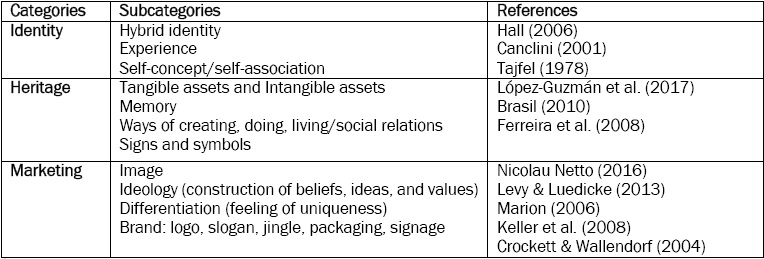
The subcategories were identified through the literature review and may or may not be present in the advertisements under analysis, other subcategories that may appear in the content of the messages will be considered. Data analysis and the subsequent cross-checking results are presented as well as the conclusions drawn from them.
Pelotas is the third most populous municipality in the state of Rio Grande do Sul, Brazil and has its first historical reference in 1758. The consumption of sweets became traditional from the habit of Portuguese jerky producers (“charqueadores”) serving fine sweets as a demonstration of finesse in Pelotas’ high society banquets, soirées, and parties (IPHAN, 2007). The colonial fruit jams tradition dates to the period of decline of jerky producing farms (“charqueadas”), when German, Pomeranian, Italian, and French immigrants developed family farming and used fruits to produce jams (Ferreira; Cerqueira & Rieth, 2008). With the decline of the jerky (“charque”) industry, the fine sweets tradition spreads and becomes heritage of all levels of Pelotas’ society (IPHAN, 2007). In addition, black people learned how to make the fine sweets, contributing to its perpetuation, updating, and adding new meanings by using sweets in their religious rituals. All these ethnic groups contributed to the formation and renewal of the sweet tradition in Pelotas.
In 2005, during the inventory process of the production of traditional Pelotas’ sweets to list them as intangible heritage (Ferreira et al., 2008), it was possible to identify the diversity of the sweet tradition in the region, in urban and rural environments. Production and consumption permeate different social classes and ethnicities, in a social and cultural context of knowledge and actions, with a historical trajectory and continuous practice in the daily life of the community. Today the Pelotas sweets are an important source of income for many people (IPHAN, 2007). Recently, on May 15, 2018, the sweet tradition of Pelotas was recognized as Brazilian’s National Intangible Heritage (IPHAN, 2018).
The first Feira Nacional do Doce (Fenadoce) was held in 1986, resulting from the joint efforts of the public authorities and other entities and recognizing the importance of the sweet culture. In 1995, when the association of Pelotas retailers (Câmara de Dirigentes Lojistas de Pelotas - CDL) took over the coordination of the event, the 4th Fenadoce edition reached an impressive 100 000 visitors, exceeding the expectations of the organization. In 1998, the fair became an annual event with its own specific facilities (Fenadoce, 2016) which contributed to its professionalization, including improved areas and dissemination strategies.
For confectioners, the fair was a landmark because it has widened the possibilities for displaying their products. For organizers, the objective of promoting commerce and industry was achieved, highlighting the sweets made in the municipality. In addition, it is an important tourist attraction that promotes the image of Pelotas and region, boosting tourism and the local economy, attracting Pelotas residents, domestic tourists, and Mercosur1 countries’ tourists.
From the first edition, the fair promotes its brand using various communication strategies. In 2007, the brand mascot-and ambassador-was created, the Ant, which became Fenadoce’s online "persona" on channels such as Facebook, Instagram, Twitter, and YouTube.
Following, we will present the advertising campaigns of the editions under study, analyze the slogans, the posters, the texts of the posters, the music (jingle), and the commercials.
In the 21st edition of Fenadoce the slogan was "Our culture is rejoicing " and presents material in poster format (Figure 1). It is possible to observe in the texts the emphasis on the cultural aspect of the event and the sweets appear as the distinctive element. The text on the poster reads: “The 2013 Fenadoce will keep everyone on the same beat. Come and enjoy the most delicious sweets in Brazil at a party full of flavors, fun, and lots of culture”. As for the images, the ants stand out and, in the background, we can see quindins (Brazilian coconut dessert) and drama masks.
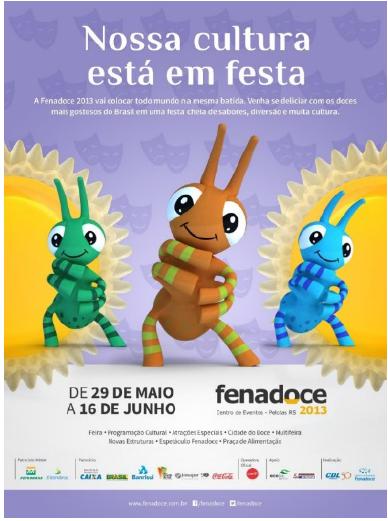
As elements of identity we can perceive in the image two quindins, referring to the sweet culture, the main attraction, and star of the festival. Both the slogan and text have the word "culture". The slogan emphasizes self-concept and self-association by using the words "our culture", because the message conveys the idea that by participating in the event, one becomes part of a group of shared identity. In addition, the drama masks in background alludes to culture, since the event features various cultural performances.
In the message "Come and enjoy the most delicious sweets in Brazil", it can be noticed the differentiation and the ideology of marketing. The Ant, mascot of the event, is presented in the foreground, one of the brand elements addressed by marketing. All marketing subcategories were used.
As for the heritage category, the poster does not explicitly mention the subcategories, the sweet culture is presented through the symbol of the sweets, as well as the identity appear in the text in a superficial context. Tangible assets are represented by the sweets and the intangible by the word "culture."
The 30 seconds commercial features a jingle "inviting" the audience for the event, it refers to the preparation of a Pelotas’ sweet; in addition, the Fenadoce Ant is present.
Call your friends, our joy is ready. Take ant strides left and right. Beat the yolks and fold tight, dip in the syrup, and make your sweets. There is no greater delight than this, in Fenadoce the culture is a feast.
The jingle is one of the brand elements of marketing, as well as the mascot. The aspects of differentiation and ideology appear again in the phrase "there is no greater delight than this." In the heritage category, the ways of creating, doing, and living appear in the sweet’s preparation, characterized as intangible heritage. Memory can be perceived through the mention to the egg yolks, main ingredient of the fine sweets of Pelotas, referring to the Portuguese culture of the period of the “Charqueadas”. The identity category is present, sweets from Pelotas are characterized as hybrid culture and the music promises a cultural and identity experience.
As far as the visual characteristics of the commercial are concerned, the dance of the ants and gestures of candy making are represented. Other visible elements are: quindins, meringes, brushes, confetti, forks, books, and film/cinema. The commercial refers to the cultural and culinary diversity of the event.
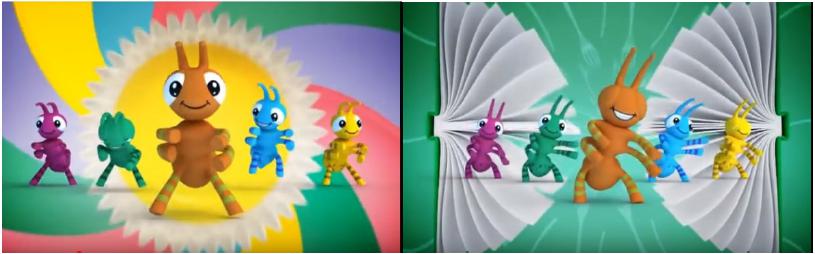
The advertisement explores digital aspects, the mascot is animated and dances with the other ants. The graphic elements demonstrate in a simple way what can be found in the event, the sweets, the culinary, and the variety of artistic performances. Elements that identify heritage and identity in an in-depth and contextualized way are not present in the images.
The 22nd edition of Fenadoce’s slogan was "We are all sweet". In the campaign, the lyrics of the theme and the setting were elaborated referring to various sweets.
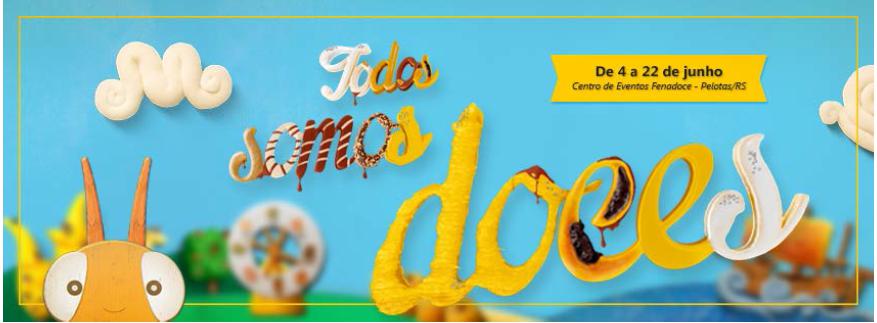
In the poster the sweets are depicted in the letters in the foreground. In the word "doces" (sweets) one can identify some traditional Brazilian sweets (ninho, olho de sogra, quindim, bem-casado). In the identity category, culture and hybrid identity are represented by the allusion to the sweets present in the letters, while visually a food and cultural experience is suggested. Self-concept and self-association can be interpreted through the slogan "We are all sweet".
The background shows a landscape with blue sky, clouds, trees, wind mill, and a sea with a boat that refers to the arrival of the Portuguese, apparently the sail of the boat is a Fatia de Braga (traditional sweet). In the foreground we can see the mascot Ant, the Fenadoce’s symbol and icon. Tangible and intangible assets, as well as memory, are also represented on the poster; the heritage category appears more explicitly with all subcategories being represented.
In addition, 2014 was the year that the FIFA World Cup took place in Brazil, so the campaign sought to explore the idea that all peoples are equal alluding to the different ethnicities that make up the sweet heritage of Pelotas.
In the commercial, little figures representing Arab, German, French, Portuguese, and African ethnicities appear consecutively in the foreground, preparing what is becoming a candy in the form of a terrestrial globe, and in the end of the sequence the Ant appears eating it (Figure 4). The background scenes represent the countries of the characters and are made of traditional Brazilian sweets (bem casado, fatia de Braga, pastel santa clara, ninho, quindim, camafeu, olho de sogra), as well as pieces of fruit.
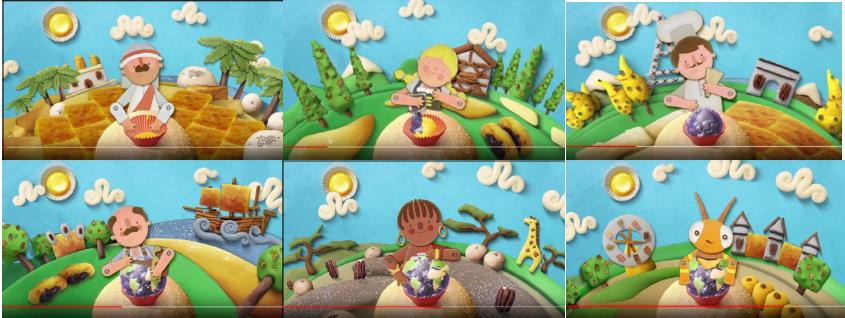
The Arabs are not part of the ethnicities that compose the Pelotas’ sweet culture (Ferreira et. al, 2008); however, historically they introduced the sugarcane on the eastern coast of the Mediterranean (Freyre, 2012; Figueiredo, 2013), an important ingredient for Portuguese sweets (Cavalcanti, 2007; Figueiredo, 2013). It is observed that the Italians were not represented in the commercial.
Although not all ethnicities were represented, identity and heritage are identified in the images. There is fluidity and "cooperation" between the ethnic groups in the sweet preparation, a direct allusion to the universe that composes the intangible heritage. Thus, the ways of doing, creating, and living are present, as well as the tangible and intangible assets, signs, and symbols of heritage.
The lyrics in the jingle complement the images of the commercial, the self-concept and self-association of the identity category are present as well as the promise of a sensory experience when attending the event. The ideology of marketing is, thus, evident.
We are all sweet because inside we are all the same, we are all sweet. Who can make our world better if not us? Come sweeten your heart, in Fenadoce a smile is enough.
This campaign sought to explore the sweetness of people regarding feelings and attitudes linked to the word "sweet", the main product of the event.
The slogan of the 23rd Fenadoce edition was "A full party". This year's commercial shows the ants dancing and working together to assemble the pieces of a jigsaw puzzle that displays images that reflect the festival's diversity.
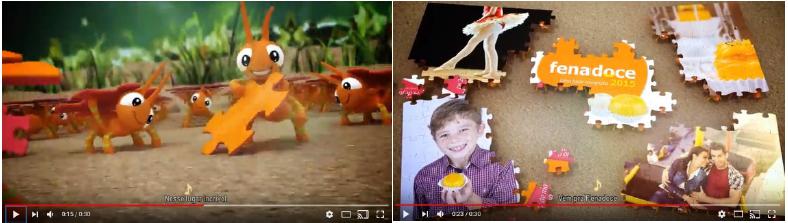
The jigsaw puzzle depicts the images of two traditional Pelotas’ sweets (quindim and fios de ovos), a guitar arm, the legs of a ballerina, a child offering a quindim, and a couple in the amusement park. The jingle reinforces the scenes portrayed in the commercial:
Our party has a taste and is a joy to the eyes. Everyone wants culture and fun, a sweet passion. It's Fenadoce, come to Fenadoce. Come have fun, in this amazing place, everyone is going to enjoy it, sweet tradition, nobody resists it, it's Fenadoce, come to Fenadoce
In the lyrics, the words "culture and fun", "sweet passion" and "sweet tradition" are mentioned, whereas in the images we can see two sweets and references to dance, music, and the amusement park. Although self-concept and self-association of identity are alluded to in the expression "our party" and perceived in marketing ideology, the references to identity and to Pelotas’ sweet heritage are overshadowed by the different entertainment options evidenced in the commercial.
The poster reads "This year Fenadoce is full of novelty. The party won’t be complete without you." Other information on the event novelties are highlighted in three puzzle pieces: Festival Sweet Culture, Video Game Museum, and Fenadoce Food Festival.
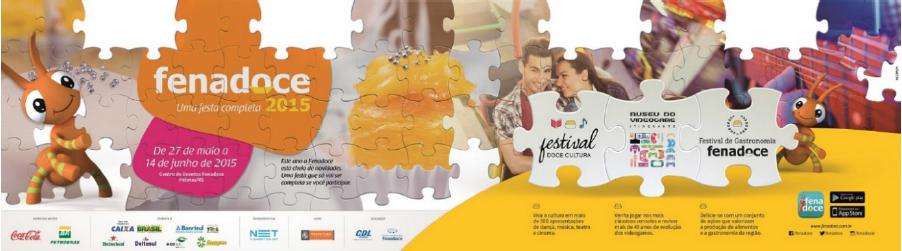
Finally, still regarding the poster, the mascot and the logo of the event are also present; and, apparently, the use of a jigsaw puzzle by marketers is an attempt to represent an event that depends on several people, the community, and joint actions to make it complete.
The 24th edition of Fenadoce celebrated its 30th anniversary. The slogan was "For a large audience, a great show", highlighting the importance of the people who attend and support the various cultural forms in the word "audience" - important in the construction and sustainability of the cultural diversity of the municipality.
The poster features the ants carrying traditional coconut sweets (beijinho de coco and quindim), and in the center of the printed material appears the slogan of the event. The sweets are perceived as a reference to the identity of the sweet culture and to the heritage through the sign and meaning.
The commercial follows the same concept of the poster, the lyrics highlights the importance of the people who attend the event and, therefore, the cultural diversity of the municipality.
The audience is coming to sweeten it, the show is about to start. Come on, you'll smile. Fenadoce 2016, for a great audience, a sweet show. From May 25 to June 12 in Pelotas. The audience is coming to sweeten it, the show is about to start, it's Fenadoce.
In the images, the ants emerge from an anthill and enter the city, passing through images that symbolize the arts and music (various local and regional artists), circus (representing the Tholl Group of Pelotas), and theater (Sete de Abril Theater and Guarani Theater) that are part of the cultural context of Pelotas, while they go to the Fenadoce event represented by a big quindim (food heritage). Icons represent the cultural diversity of the municipality depicting tangible and intangible assets.
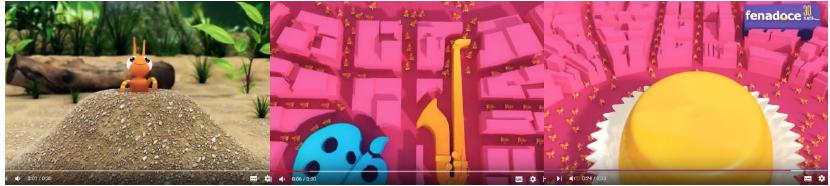
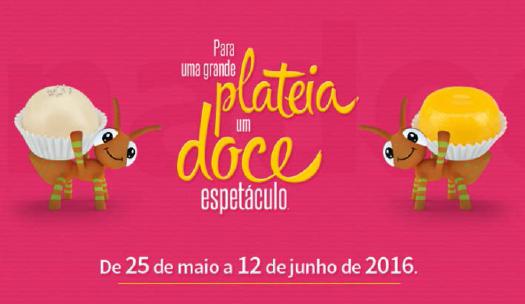
Although in a simplified way, the images represent culture, tangible and intangible assets, social relations, signs and symbols of heritage. The ants' walk through the city towards Fenadoce promises an identity-related experience with the music lyrics complementing the message.
All subcategories of marketing are addressed in a more or less obvious way, and differentiation is not present in this campaign. The logo is only present in the commercial, slogan, and jingle.
In 2017, the advertising pieces underwent a brand refreshment in collaboration with the local artist2, Madu
Lopez, who was also responsible for the elaboration of settings and living characters that tell the story and pay tribute to confectioners and to Pelotas’ sweet culture with the slogan "Sweet, our great story".
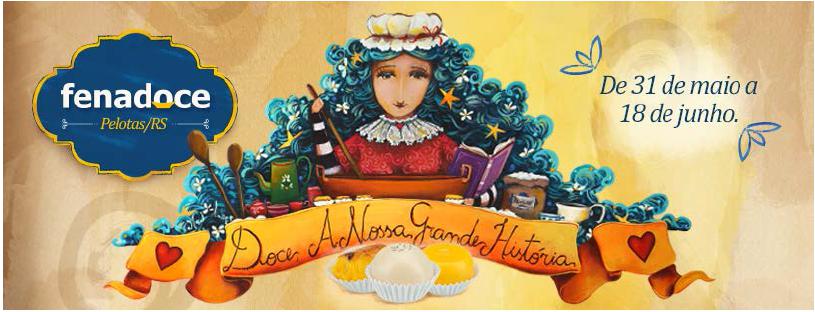
The poster was designed from the artist’s work. A confectioner is depicted, with a cookbook in hand, stirring something in a copper pan with a wooden spoon; sugar and utensils around the bench. The slogan of this edition is written in the banner, and in the foreground, there are three traditional sweets (beijinho de coco, quindim and trouxinha de amêndoas). We can also see the date of the event and the Fenadoce logo.
Culture, hybrid identity, experience, and self-concept are present in both the image and the slogan of the campaign in the words "sweet" and the "our great story" statement. Tangible and intangible assets, memory, ways of creating, doing, and living, the signs and symbols of heritage are present, as well as all categories of marketing.
The commercial begins with the Ant opening a pop-up book. In the first scene there are two confectioners stirring a cooking in a copper pan with wooden spoons, on the table we can see two trays of sweets, a packet of sugar, and in the setting, there are antique pieces of furniture; through the window we see that it is nighttime, representing the past. The second scene depicts an old confectionery, identifiable through the utensils represented, with various types of sweets arranged on a glass counter.
In the third scene, two confectioners are depicted in a modern kitchen (gas stove, blender, and mixer) and there is an open sweet cookbook on the table, through the windows one observes that it is daytime, representing the present. In a modern confectionery, the fourth scene, sweets and pies are arranged on the counter, a couple is eating sweets and having coffee, there is an attendant behind the counter and the confectioner can be seen through the kitchen window.
The fifth scene is set in a factory, the characters are stirring pans on a wood-burning stove, while in the foreground, sweet trays are being prepared and jams are being packed. The following scene refers to Fenadoce and to the confectioners’ square with its booths in the shape of Pelotas’ built heritage. We can see a couple with a tray of sweets dressed in aristocratic attire, two vendors and a consumer. In the foreground there are two confectioners holding a banner with the word "Fenadoce" and three traditional sweets. The commercial ends with the Ant closing the book.
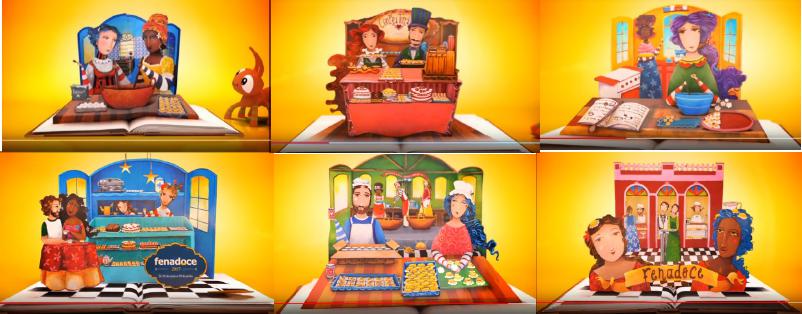
The music lyrics accompanying the scenes are:
Once upon a time, a sweet was made, with so much flavor, everyone loved it. It left the stove, straight to the counter and a mouthwatering nation to conquer. 2017 Fenadoce, Sweet, our great story. From May 31 to June 18 in Pelotas. Once upon a time, a sweet was made, with so much flavor, everyone loved it. It left the stove, straight to the counter and a mouthwatering nation to conquer.
The commercial and jingle bring all elements related to heritage and identity in depth, through signs and symbols. It is possible to understand the evolution of the sweet culture, the old ways of sweet making from the kitchen to the counter to become a source of income (ways of creating, doing, and living, hybrid identity). Social relations are perceived through the various characters who, in an implicit way, through the different costumes and colors, demonstrate the different ethnicities involved (although in the commercial it is not possible to identify stereotypes), besides the question of the feminine universe that involves the art of sweet making, production, consumption, and the experience. Memory is represented by cookbooks; the past and the present by nighttime and daytime, respectively.
In this edition of the event living characters were used to represent confectioners and their ethnic groups. There are children characters, the confectioners’ offspring, and two male characters, among them, a male confectioner. These characters interacted with the audience in the "Sweet Space of Art" located in the exhibition hall, a space which depicted a playful confectionery, sculptures, and paintings related to the sweet culture.
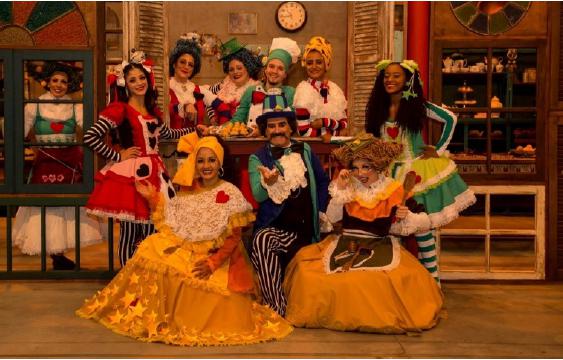
The two African characters stand out, demonstrating the importance and acknowledging their role in the art of sweet making, not only as the work force that stirred the pans (Kosby, 2007). In addition, one of the black characters mentions some African religious practices.
This campaign, when compared to the others, was the one that best presented the universe that involves the intangible heritage of Pelotas’ sweets, because diverse elements appear in the advertising pieces, decoration, and characters linked to culture and identity. It is observed that a detailed study of the history of the sweet tradition was carried out for the elaboration of the material, since it was possible to identify all ethnic groups. The appreciation and recognition of the role of the Africans is evident, as well as the gypsies through the pans that were made and sold by them.
Perpetuation and maintenance of the past culture from generation to generation is evinced by the family recipe books and the confectioners’ daughters. It is observed how much this sweet universe is feminine, since the masculine characters appear mainly as vendors.
It stands out in the scene of the factory the references to the jams. There is a concern to show them as part of the sweet culture; therefore, not only the fine sweets of Portuguese origin, which are best known, are presented.
In short, the scenes show how the fine sweets and colonial jams form the knowledge of intangible heritage in a primarily feminine universe, which has changed over time and is part of the local economy (hybrid identity). The fine sweets and fruit jams form what are known today as "Sweets from Pelotas".
After analyzing the campaigns individually, we cross-analyze them. As for the aspects related to the marketing categories and subcategories: all the campaigns used the resources of the brand Fenadoce logo, slogan, and jingles in the commercials. Other subcategories perceived after analysis were the 30-second commercials, poster, and the mascot Ant.
The mascot Ant (along with the Pelotas’ sweets) was present in all promotional materials; sometimes the ants represented the personification of the people (campaigns 2015 and 2016), which make possible the accomplishment of the event and can be interpreted, according to Machado et al. (2011), as consumers, suppliers, and other actors involved. The ants represented the social relations that involve the knowledge of the sweet culture and the event.
In all the campaigns we can observe the elaboration of long-lasting beliefs of the marketing ideology as identified by Crockett and Wallendorf (2004), Marion (2006), and Levy and Luedicke (2014), when relating the sweets and the event to the promise of a unique experience (differentiation). The main highlight was given to the sweets, as a product to be consumed in the event. Therefore, being the main perceived image about the event, since, according to Buhalis (2000), the image is formed by the tourists’ perceptions and expectations. However, since the image should be linked to the cultural identity and resident participation, as highlighted by Zucco et al. (2017), only the 2014 and 2017 campaigns were more concerned with including the identity and heritage issues related to the residents of Pelotas.
As for the identity category, the subcategories hybrid identity, self-concept, self-association, and experience, we noticed that all the subcategories were, to a greater or lesser degree, evident depending on the campaign. Pelotas sweet culture can be understood as a hybrid identity (Hall 2006; Canclini, 2001), due to the mixture and cultural exchanges of the different ethnicities involved in the universe of Pelotas sweets. Self-concept and self-association are explored explicitly in marketing through the slogans of the 2013 ("Our culture is rejoicing"), 2014 ("We are all sweet") and 2017 ("Sweet, our great story") editions by the sense of inclusion and belonging that the slogans evoke. The sense of belonging and emotional attachment to the event (Tajfel, 1978, 1979) is also present, assuming residents and visitors identify themselves with the sweet culture. It can be said that all campaigns sought to emphasize the "sweet" and pleasurable emotion of experiencing the event.
As for the heritage category, the sweet is the heritage sign and symbol identified in all the campaigns surveyed; from the point of view of marketing, the mascot Ant is the sign and symbol that represents the brand of the festival, we dare to say that it represents a social group that works together to maintain the culture of the community. The sweet culture is considered an intangible heritage with all the subcategories inserted in its context. As for memory, social and symbolic relationships, ways of creating, doing, and living are best represented in the 2014 and 2017 campaigns.
The campaign of 2017 represented the history of the sweet production from its origin in the kitchens of colonial houses to family kitchens of every social classes, becoming a source of income for the municipality. The commercial explores the social context of the sweet culture identified in the inventory process that led to its classification as Brazilian national intangible heritage, as the literature points out (López-Guzmán et al., 2017; Brasil, 2010)
Destinations and events, inserted in a competitive environment, are marketed as brands, promoted as unique and authentic in order to become more competitive and attractive to consumers. On the other hand, due to the new dynamics of the contemporary world of increasingly fluid identities, as Giddens (2002) proposes, place brands become a source of identification for residents (Palmer et al, 2013; Wang et al., 2014).
In this sense, the identities and heritage closely linked to new social practices, even in a process of production and consumption, must be genuine and represent the residents’ sense of local identity, limited by marketing managers, as well as by capital and profit issues. In tourism, marketing is only genuine when it connects with the residents’ memory, identity, and heritage, since the community has a proactive role in the activity, giving meaning to their own place (Carvalho et al., 2011; Machado et al. 2011).
When analyzing the five Fenadoce editions, the aspects related to the identity and heritage used by marketing appear superficially, the references to the sweet culture appear without detail in the 2013, 2015, and 2016 campaigns. The marketing of the event focused mainly on the promise of a unique experience, the consumption of Pelotas’ sweets, and on the dissemination of Pelotas’ cultural diversity.
Considering sweets as a sign loaded with symbology (Horta, 2005; Cassier, 1968; Fernandéz, 2017) bearing implicit values and behaviors, it could be stated that the heritage is present in all the campaigns, considering the presence of sweets. However, future research on how sweets invoke the heritage universe of locals and tourists would be necessary.
Knowing that heritage is understood as an effort to safeguard the past in the present and for the future (Ferreira et al., 2008), each edition of Fenadoce can be considered as an attempt to to keep the heritage alive, whether heritage is explicitly present or not in the advertising. For this, it is essential, as stated by Zucco et al. (2017), that tourism promotion be able to articulate the image of the destination/event with the cultural identity, from resident participation. Therefore, it is necessary to define the parameters for including in the campaigns more detailed aspects about identity, memory, and heritage of a local culture, since they are accepted by some managers involved in the event and considered legitimate by Nicolau Netto (2016) and Bourdieu’s (1996) studies.
The campaigns carried out are part of the marketing actions (the well-known 4Ps) of the event that constitute the brand and branding. Although this study focused on promotion, limitations were observed in the advertising regarding the promotion of the intangible heritage, since they need to encompass the intrinsic and extrinsic attributes of the brand that are considered to be the intangible heritage of the sweet culture. Mainly because it is festival branding, the identity, cultural, and heritage values need to be studied at all managerial and strategic levels. It is evidenced that, because it is an intangible heritage, it becomes a difficult research work, in the light of branding, as well as for marketing. With this, limitations of marketing as a promoter of intangible assets unfold future research.
The content analysis raised the need for innovation and creativity to build the campaigns which was evident in the option for completely different materials each year, so that they do not become repetitive and continue to arouse curiosity and desire to consume the event.
Of the five campaigns analyzed, the 2014 and especially 2017 campaigns are highlighted. The 2017 campaign presented an in-depth elaboration of the history of Pelotas sweet food, with several elements that were possible to identify, also consistent with the literature on the Pelotas’ sweets heritage. It is possible to state that in this campaign carried out a study for developing the materials and interventions based on the identity and intangible heritage Pelotas’ sweets. Assuming that identity and heritage must be conveyed in the messages in such a way that residents feel represented, the campaign of 2017 was the most adequate.
The theoretical framework and the research results presented can contribute both to the management of the event and to the destination as a need to highlight the heritage and identity value related to the sweet culture in its future campaigns.
Heritage is formed by signs and symbols resulting from values and distinctions derived from human consciousness. When questioning the extent to which marketing actions are legitimate in relation to collective identity and memory, where both the community and other stakeholders can recognize themselves, this study sought to understand whether marketing considers the heritage signs in branding and image building in advertising so that the community recognizes itself and feels included in the process.
The findings suggest that the relationship between heritage and marketing is only possible if the first category is included in the second category, i.e., the heritage symbols and signs (in which the subcategories of identity and of the heritage are included) are inserted in the marketing category (image, ideology, and differentiation). Academically, the method of content analysis, according to Bardin (2011), proved to be suitable and allowed the elaboration of categories and subcategories of analysis of advertising materials to find out how the marketing addresses the identity and heritage of the community. However, similar future research is needed to consolidate the categories and subcategories found.
As a limitation of research, we point out that choice of the main advertising pieces that were repeated each year left aside other engagement materials used in social media, newspapers, and television publicity, as well as other activities carried out by the event that could allow a more complete view of the strategies used by the managers regarding the identity and intangible heritage of Pelotas. There are few articles relating marketing actions and heritage, thus research need to address these two fields, as some tourism studies have already pointed out (Zucco et al., 2017; López- Guzmán, 2017).
In addition to further research on the categories and subcategories found, we also suggest that complementary investigations be conducted focusing on the guidelines marketing managers follow when constructing the campaigns related to identity and heritage; survey festival managers and public authorities to understand how participation occurs in the process of elaboration of the campaigns; and in relation to the residents, survey to what extent the festival represents them and how they would like to be represented in the event's marketing actions.
This work was carried out with the support of the Coordination for the Improvement of Higher Education Personnel - Brazil (CAPES) - Financing Code 001.

