Digital humanities
Weaving the past into the future: An overview of the SILKNOW project
Weaving the past into the future: An overview of the SILKNOW project
Mètode Science Studies Journal, vol. 15, núm. 3, e27598, 2025
Universitat de València

Esta obra está bajo una Licencia Creative Commons Atribución-NoComercial-SinDerivar 4.0 Internacional.
Recepción: 30 Octubre 2023
Aprobación: 11 Abril 2024
Abstract: Silk played a crucial role in driving progress in Europe, particularly along the network of production and market centres along the Western Silk Road. The silk trade not only facilitated the exchange of ideas and innovations but also had a huge impact on the economic, technical, functional, cultural, and symbolic levels. However, silk heritage has become critically endangered, despite the existence of many specialised European museums dedicated to its preservation. These museums often lack the resources and capacity to utilise state-of-the-art digital technology. The objective of this paper is twofold: to introduce SILKNOW, an interdisciplinary project funded by the H2020 Program of the European Union to preserve and promote the heritage of silk textiles, and to present the project results which were possible thanks to digital humanities.
Keywords: Silk heritage, digital humanities, technology, interdisciplinarity, heritage conservation.
Introduction: Preserving an intangible heritage
Silk textiles are an extraordinary example of cultural heritage, where memory, identity, creativity, and knowledge can be woven together in a single piece of fabric. Few materials have had such an outstanding impact because of their economic, technical, functional, cultural, and symbolic importance. From flags to canopies, tapestries to furniture, fans to sword sheaths, wedding gowns to traditional costumes, we can find silk in countless contexts over the last millennia. The Silk Road, which connected Asia and Europe for centuries, was later expanded throughout Europe by a network of regions and cities that served as hubs for the textile industry, that reached its peak in the 18th century. European clothing and textile production is predominantly done by small and medium companies, employing 1.69 million people, with half a million job openings expected by 2025. The European Commission recognises the importance of the fashion industry, including textiles, generating economic wealth and preserving European identity, culture, and values.
Silk textiles are now endangered, firstly – but not only – because of their fragile nature, despite being housed in major national collections. However, smaller cultural institutions lack the resources to properly conserve and showcase this heritage. As a result, silk heritage is often inaccessible to the public and information is only partially disseminated. Institutions generate large amounts of poorly tagged, variedly formatted, multilingual, low-quality, and inaccessible digital data. Old weaving techniques, an invaluable example of intangible heritage, are at risk of disappearing as companies using ancient machines are closing. The struggle of the craft workers to compete with transnational businesses and textile industries tries to preserve a rich heritage that is still alive and well and part of the present. It is vital to protect and promote this heritage, which is linked to the development of European culture, and develop strategies for regional interconnection that consider economic, social, and cultural realities. These museum collections remain relevant to large numbers of people who have personal and social connections to this heritage, linked so to many life stories and collective narratives. These holdings are also silent witnesses to the many anonymous female workers who lived before and after the Industrial Revolution.
Digital humanities: Weaving innovation
Digital humanities can be defined as a scientific discipline that builds digital tools for the study of various fields within the humanities, such as linguistics, history, and art history. The Commission on Cyberinfrastructure for the Humanities and Social Sciences of the American Council of Learned Societies (Unsworth, 2006) defined areas where it considered that technology could be useful for the humanities, including the creation of a digital collection of information for further study and analysis; the development of appropriate tools for the creation, research, and study of collections; the use of digital collections and analytical tools to generate new intellectual products; and the creation of authoring tools for these new intellectual products, either in traditional or digital forms.
The SILKNOW project, developed between 2018 and 2021, aimed to use digital tools to conserve and disseminate European silk heritage, by creating a single repository with information about historical textiles scattered across collections, especially in small- and medium-sized museums. The project also aimed to visualise the inner structure of historical textiles and assist non-experts in appreciating their value. Additionally, computers were expected to help with the automated discovery of textiles that are visually similar or related to pieces in other locations. The historical connection between silk weaving and digital technology is worth mentioning, in this context. In fact, we must go back to the 19th century when the first computer programmer and British mathematician, Ada Lovelace (cited in the translator notes in Menabrea, 1843), wrote: «The Analytical Engine weaves algebraic patterns just as the Jacquard loom weaves flowers and leaves». The cardboards used by the first electronic computers in the 1950s were inspired by the cardboards used by Jacquard looms, which were invented at the beginning of the 19th century. With this background, it was no surprise that the research team should be strongly interdisciplinary, comprising cultural heritage scholars as well as specialists in terminology and computer scientists working in 3D imaging, semantic web, data visualisation, Geographic Information Systems, artificial intelligence, computer vision, and text processing. Hence, in the SILKNOW project we collected digital data on silk textiles from various institutions, online catalogues, and APIs. The data were analysed and processed using advanced techniques such as text analytics and image-based deep learning to standardize the content, add missing information, and translate the text into four languages. The data were also organized into a knowledge graph, which can be accessed through ADASilk, the project’s exploratory search engine, and represented in spatiotemporal maps to show the relationships between their properties. Additionally, a virtual loom was used to preserve weaving techniques, including historical techniques like damask, by creating 3D representations of fabrics at the yarn level.
Multilingual thesaurus
One of our main challenges was to overcome language barriers, since focusing only on a single language would result in the loss of significant historical information. The production and sale of silk in Europe was not centrally organized, leading to the development of distinct technical vocabularies in each of the major European languages. Automated translation does not cover these specialized terms, which are still subject to discussion among historical terminology experts. In addition, we sought to reach a wider audience beyond the standard choice of English as the online lingua franca.
To create a multilingual thesaurus of silk terminology (Alba et al., 2020), we undertook vast scholarly efforts. This thesaurus (Figure 1), in Spanish, English, French, and Italian, helped to facilitate the search of our silk fabrics’ database across languages. The thesaurus enabled users to find silk records with Italian terms and also their translations into the other three languages. This tool is valuable for textile scholars, museums, and collections when standardizing fabric inventories. It allows users to better understand the international significance of silk and its localisms, and researchers to contrast terms in archives and items that they study.
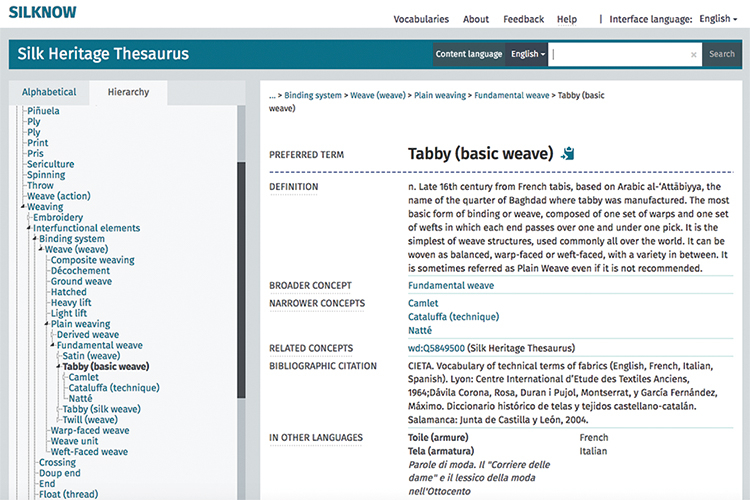
Figure 1
The SILKNOW Thesaurus brings specialized terminology related to silk in four languages.
Virtual loom and 3D printing
Textiles are an intricate area of human research. Options for weaves, threads, and finishings are seemingly limitless. Nevertheless, these technical considerations were of utmost importance to both creators and their clients in many instances. Gaining a deeper understanding of such factors is crucial for gaining a comprehensive appreciation of the textiles represented during their production.
We created digital surrogates of silk heritage with our virtual loom (Portalés et al., 2021), which preserves historical weaving techniques, using 3D visualisation, allowing users to understand the interlacement between wefts and warps by applying the necessary restrictions for each technique (Figure 2). Its user experience was designed with a deep understanding of historical weaving techniques and significant coding efforts. The tool begins by analysing a photograph of a historical textile and allows the user to select the level of detail, weave, and technical features to be incorporated in the reconstruction. An on-screen 3D visualisation of the object is then generated, that the user can manipulate to rotate, zoom in, or zoom out. SILKNOW’s virtual loom also enables traditional industries to reduce costs by allowing them to select colours and techniques with just a click. This encourages designers to create fabrics from historical silk models and allows the creation of new designs for sustainable and recycled materials in 3D printing.
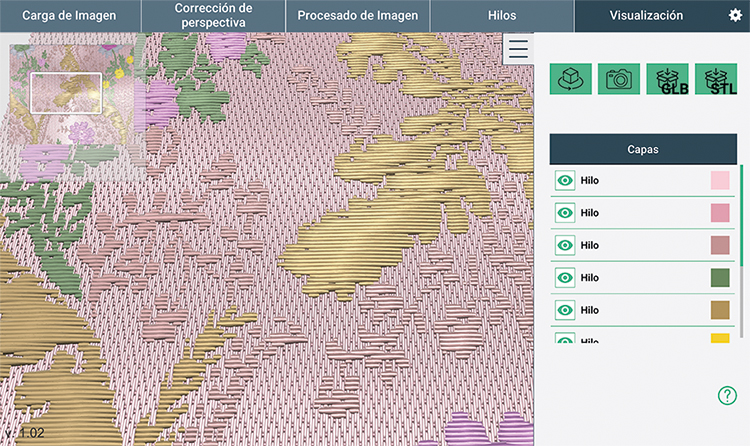
Figure 2
The virtual loom integrates different historical weaving techniques to create 3D models at the yarn level.
On the other hand, the virtual loom provides users with an opportunity to generate an STL file of any fabric created through on-screen interactive viewing. This file can then be printed on increasingly available commercial 3D printers (Figure 3). The scale of the printout can be adjusted to suit user needs, allowing for easy observation of the fabric structure at a size of 20 × 20 cm. This feature is particularly useful for non-expert audiences and can be incorporated into the educational departments of textile museums. We developed a methodology and guidelines to reproduce historical fabrics by printing pieces that represent some designs and weaving techniques. It is also relevant to highlight that most studies related to cultural heritage that make use of 3D printing are intended to reproduce volumetric figures. To the best of our knowledge, the 3D printing of historical fabrics was one of the novelties of our work, with a twofold aim (Pérez et al., 2020): to show the pattern on the fabric and to investigate the weaving technique. Virtual forms and printouts maintain their cultural value as a means to access this fragile heritage, as they democratise technical knowledge and aid in disseminating silk heritage.
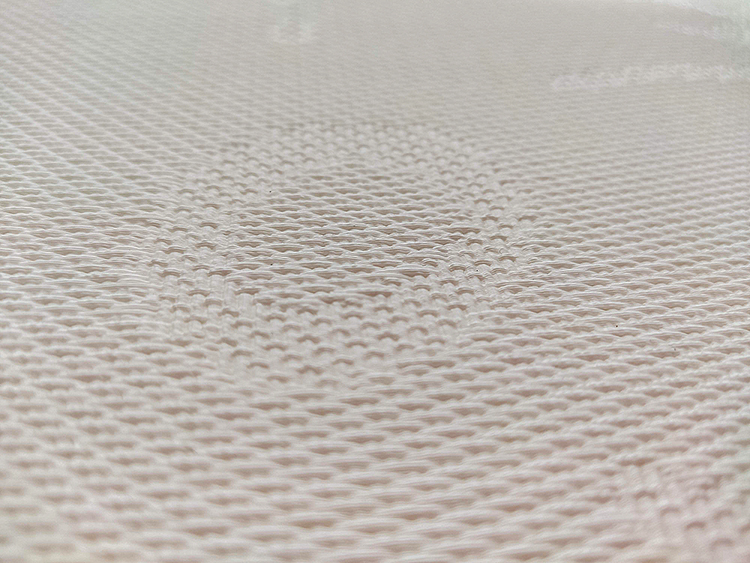
Figure 3
The generated 3D models in the virtual loom can be exported and 3D printed. To that end, the internal structure is simplified, so that 3D standard printers can be used.
STMaps: Geolocate in time and space
The museum records and photos of objects can be informative, but their location and time information are even more useful. We geolocated these records based on their current location in museums or heritage sites and created a timeline selector to visualize them on a map. We called it STMaps (Sevilla et al., 2021), an interactive tool that visualizes silk-related objects on both temporal and spatial scales and shows the relationship between their properties (Figure 4). STMaps is based on ontology support on a knowledge graph and can be used on multiple platforms and for multiple purposes. It is also dynamic and interactive, allowing users to engage in browsing and potentially discover unexpected groupings, trends, patterns, and outliers.
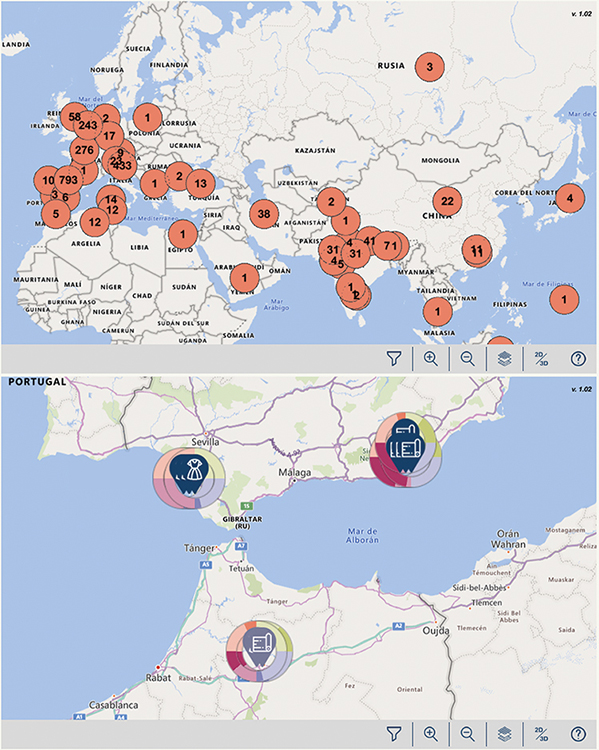
Figure 4
STMaps integrates different visualization techniques to allow discovering semantic relationships among objects.
ADASilk: Travel into the silk heritage
Museums around the world are responsible for preserving valuable silk heritage, but their collections are not easily accessible to the public. Many museums have digitized their collections, but these catalogues remain isolated and disconnected from each other due to their different models, languages, and development processes. SILKNOW solved this issue by creating a unified repository of digital records that describe historical silk fabrics in various collections, relying on existing catalogue records published online or provided by museums in digital format.
We collected over 30,000 records from various museums, some of which were already organized through national databases like CERES or JOCONDE. However, these records lacked a consistent structure, so they were mapped to CIDOC-CRM, a comprehensive data model developed by CIDOC-ICOM to facilitate the interconnection of data created by museums. This enabled the discovery and comparison of objects across different museums, catalogued in different languages and by independent cataloguers, following differing standards or cataloguing traditions.
The result is ADASilk (Advanced Data Analysis for Silk heritage), which integrates an exploratory search engine and a spatiotemporal map (Figure 5). It is built on top of the SILKNOW’s knowledge graph that contains fabric entries with images and other relevant information describing them (e.g., production place, production timespan, material, technique, etc.). This information is enriched by text analytics, that automatically extracts data from the textual description of silk fabrics (Schleider et al., 2021).
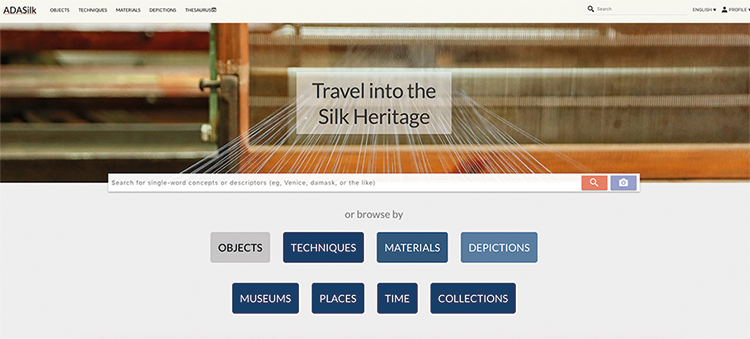
Figure 5
ADASilk contains records about historical silk fabrics, with images and other relevant information.
SILKNOW: Beyond silk heritage conservation
Cultural heritage has an intrinsic value, but it also serves various purposes. One example is the potential to inspire and stimulate new creations. This was a key consideration from the onset of the project, as we sought to engage design students in the rich silk heritage preserved in museums, encouraging them to discover forms and ideas that could inform their design. Furthermore, we discovered that the technical sophistication of textiles sparked their curiosity.
First, we worked with young designers by collaborating directly with a design school (EASD), and students developed jewellery models taking the historic designs of silk as a motif. Another project involved fashion students, inspired by traditional fabrics. The main idea was to bring students closer to a better understanding of the history and cultural heritage linked to the European silk tradition and the history of historical international exchanges. Fashion students produced two collections based on images gathered by the project. Finally, the students from the Product Ideas course gave their insights about SILKNOW and produced creative and innovative experiments to disseminate the project (Alba et al., 2022).
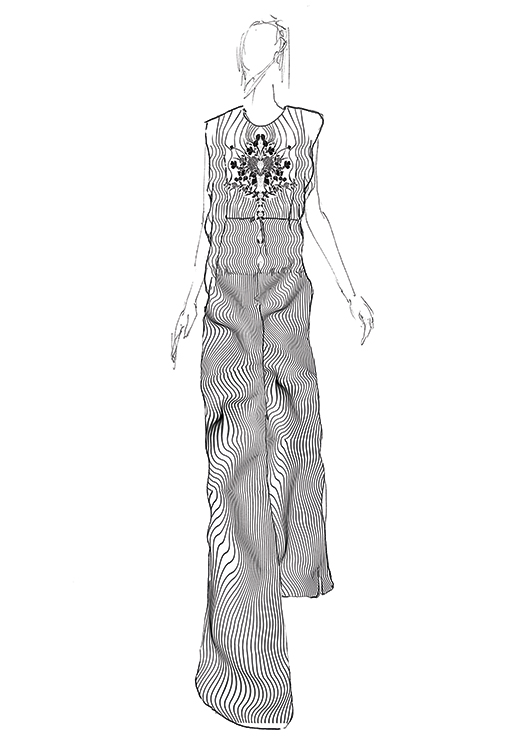
Figure 6
Patryk Wojciechowski’s original design for the SILKNOW project, based on historical silk fabrics.
We contacted the international designer Patryk Wojciechowski, who realised a fashion collection called “Silk Now”, inspired by historical designs, techniques, fashions, and used special 3D printers to experiment with new textile surfaces (Figure 6). This collection was showcased in a fashion catwalk held at Instituto Cervantes in Warsaw. Patryk’s work served to improve the current state of the art in 3D printing technology applied to clothing; he worked together with our partner MonkeyFab, who is tackling these issues, both printing on top of clothes and also directly printing clothes or pieces thereof (Figure 7).
SILKNOW results can be a basis for further R&D&I in 3D printing for the textile industries. It can also become a resource for project-based learning assignments, supporting regional policy makers in the implementation of their smart specialization strategies, with a focus on digital cultural heritage. It offers a case study on how to train an artificial intelligence model for the classification of cultural-related content, that can be adapted to similar scenarios, and therefore bring significant added value to other projects making use of AI technologies.
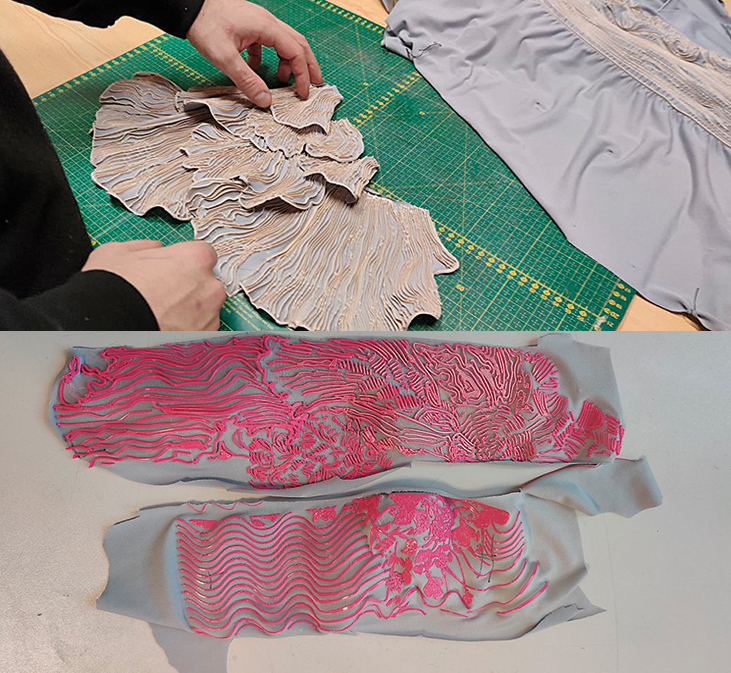
Figure 7
MonkeyFab’s 3D printed textiles, from Patryk Wojciechowski’s original design.
Conclusion
Finally, we reached out to external stakeholders in order to expand the knowledge about silk heritage beyond our consortium. We improved the understanding of European silk heritage and its impact on international relations, industry, technology, and culture. Interdisciplinary teams where heritage and technology worked together provided new approaches to traditional topics. SILKNOW united actors from various sectors, including museums, tourism, creative industries, academia, and international relations. We connected with professionals from Europe, the US, and Mexico. These interactions helped us develop a document with best practices to encourage cultural heritage institutions to open their heritage digitally. We shared our results, tools, and knowledge with colleagues outside academia, confirming that many museums want to open their collections but lack the resources and expertise to do so.
References
Alba, E., Gaitán, M., León, A., Mladenić, D., & Brank, J. (2022). Weaving words for textile museums: The development of the linked SILKNOW thesaurus. Heritage Science, 10(1), 1–14. https://doi.org/10.1186/s40494-022-00681-x
Alba, E., Gaitán, M., Pitarch, M. D., León, A., Toledo, M. D. M. M., Ruiz, J. M., Vitella, M., Lo Cicero, G., Rottensteiner, F., Clermont, D., Dorozynski, M., Wittich, D., Vernus, P., & Puren, M. (2020). From silk to digital technologies: A gateway to new opportunities for creative industries, traditional crafts and designers. The SILKNOW case. Sustainability, 12(19), 8279. https://doi.org/10.3390/su12198279
Menabrea, L. F. (1843). Sketch of the analytical engine invented by Charles Babbage, Esq [Translation and notes by Ada Lovelace]. In R. Hammerman & A. L. Russell (2015), Ada’s legacy: Cultures of computing from the Victorian to the Digital Age. Association for Computing Machinery and Morgan & Claypool. https://doi.org/10.1145/2809523
Pérez, M., Casanova-Salas, P., Twardo, P., Twardo, P., León, A., Mladenic, D., Massri, B. M., Troncy, R., Ehrhart, T., Lo Cicero, G., Vitella, M., Gaitán, M., Gimeno, J., Ribes, E., Fernández, M., & Portalés, C. (2020). From historical silk fabrics to their interactive virtual representation and 3D printing. Sustainability, 12(18), 7539. https://doi.org/10.3390/su12187539
Portalés, C., Pérez, M., Casanova-Salas, P., & Gimeno, J. (2021). Virtual loom: A tool for the interactive 3D representation of historical fabrics. Multimedia Tools and Applications, 80, 13735–13760. https://doi.org/10.1007/ s11042-020-10294-w
Schleider, T., Troncy, R., Gaitan, M., Sebastian, J., Mladenic, D., Kastelic, A., Massri, B., Leon, A., Puren, M., Vernus, P., Clermont, D., Rottensteiner, F., Vitella, M., & Lo Cicero, G. (2021). The SILKNOW knowledge graph. Semantic Web, 1, 1–16. https://www.semantic-web-journal.net/system/files/swj2776.pdf
Sevilla, J., Casanova-Salas, P., Casas-Yrurzum, S., & Portalés, C. (2021). Multi-purpose ontology-based visualization of spatio-temporal data: A case study on silk heritage. Applied Sciences, 11(4), 1636. https://doi.org/10.3390/app11041636
Unsworth, J. (Dir.). (2006). Our Cultural Commonwealth: The report of the American Council of Learned Societies commission on cyberinfrastructure for the humanities and social sciences. American Council of Learned Societies. https://www.acls.org/wp-content/uploads/2021/11/Our-Cultural-Commonwealth.pdf
Notas de autor
cristina.portales@uv.es
Información adicional
redalyc-journal-id: 5117