Reportes de investigación
Duolingo, autonomy, and motivation: Perceptions about third language learning by language experts
Duolingo, autonomía y motivación: percepciones sobre el aprendizaje de terceras lenguas por expertos en idiomas


Duolingo, autonomy, and motivation: Perceptions about third language learning by language experts
IE Revista de Investigación Educativa de la REDIECH, vol. 16, e2514, 2025
Red de Investigadores Educativos Chihuahua A. C.

Esta obra está bajo una Licencia Creative Commons Atribución-NoComercial 4.0 Internacional.
Recepción: 02 Marzo 2025
Aprobación: 17 Agosto 2025
Publicación: 02 Noviembre 2025
Abstract: In recent years, the use of technology has become an important part of language learning and the development and improvement of learner autonomy and motivation. Moreover, it has been found that learning a third language is easier for those who are already proficient in a second language, as they have developed linguistic and cognitive skills that facilitate the acquisition of new languages. Furthermore, if the student has theoretical training in language acquisition, their learning process is expected to be even more effective. This study explores how individuals with a background in language acquisition and teaching make use of technology, specifically the language learning app Duolingo, to learn a third language. Following a qualitative approach, the perceptions and practices of 19 participants with a Bachelor’s, Master’s, or Doctorate degrees in language acquisition, teaching, or similar areas were explored. Data were collected through questionnaires and interviews and were analyzed using the Constant Comparative Method. Findings suggest that, while Duolingo promotes autonomy, those who complemented their learning with real-life interactions made more progress than those who relied solely on the app. Thus, technology is a valuable tool, but it should be combined with other strategies to improve the acquisition of a third language.
Keywords: autonomous learning, educational technology, language learning, multilingualism, self-learning.
Resumen: En los años recientes el uso de la tecnología ha adquirido un papel importante en el aprendizaje de lenguas y en el desarrollo de la autonomía del estudiante y la motivación. Además, se ha encontrado que aprender un tercer idioma resulta más sencillo para quienes ya dominan una segunda lengua, ya que han desarrollado habilidades lingüísticas y cognitivas que facilitan la adquisición de nuevas lenguas. Si además el estudiante tiene formación teórica en adquisición de lenguas, se espera que su proceso de aprendizaje sea aún más efectivo. Este estudio analiza cómo las personas con formación en adquisición y enseñanza de lenguas utilizan la tecnología, específicamente la aplicación Duolingo, para aprender un tercer idioma. Siguiendo un enfoque cualitativo, se exploraron las percepciones y prácticas de 19 participantes con estudios de licenciatura, maestría o doctorado en adquisición, enseñanza de idiomas o similares. Se recabaron datos mediante cuestionarios y entrevistas y se analizaron mediante el método comparativo constante. Si bien Duolingo fomenta la autonomía, quienes complementaron su aprendizaje con interacciones reales progresaron más que quienes se limitaron al uso de la aplicación. Entonces, la tecnología es una herramienta valiosa, pero debe combinarse con otras estrategias para optimizar la adquisición de un tercer idioma.
Palabras clave: aprendizaje autónomo, tecnología educativa, aprendizaje de idiomas, multilingüismo, autoaprendizaje.
Introduction
In recent years, the use of technology in language teaching and learning has increased and has become crucial in the educational field due to its ability to promote learner autonomy and increase motivation (Aysu, 2020; Chik, 2020). Technological tools, such as social media and language learning apps, have changed the way learners interact with the language and relate to other speakers, allowing them to practice and improve their language skills in authentic contexts (Eren, 2012). This phenomenon has increasingly developed thanks to the growing use of mobile devices that allow users to access learning resources without time or place constraints. Moreover, language learning apps such as Duolingo have established themselves as an accessible, both in terms of cost and user-friendliness, and a popular option for beginner and advanced level students, as they present grammar, vocabulary, and even communication practice exercises through tasks that encourage the use of the four language skills (listening, speaking, reading, and writing). In addition, with the use of artificial intelligence, nowadays these types of apps can adapt the content to the level, pace, and needs of the students, thus presenting an option for autonomous learning.
On the other hand, previous studies have shown that those who speak a second language can more easily learn a third one, due to the linguistic knowledge and skills acquired in their previous learning process (Cenoz, 2013; Sánchez, 2020). However, although technology has proven to be effective in promoting autonomous learning and increasing motivation in several contexts, it is still necessary to explore how people with an academic background in language acquisition and teaching use their knowledge to take full advantage of these tools to learn a third language. It is important to understand how their theoretical and practical knowledge in the area of language teaching and learning impacts their use of apps such as Duolingo and the effectiveness of these tools in their learning of additional languages, to find better ways to use them and replicate those practices with other language learners.
To address this research gap, the present qualitative study aimed to examine the perceptions and practices of 19 participants with a background in language teaching, who were learning a third language through the Duolingo app. This tool has been recognized as one of the most popular mobile applications in the field of language learning (Izzyan et al., 2018; Loewen et al., 2019) as it offers a gamified platform that allows users to practice language skills autonomously. This study explores how individuals with an academic background in language teaching and learning use their knowledge and experience to enhance their third language learning process through this app.
Data collection was conducted through questionnaires and interviews between 2022 and 2023, after the Covid-19 pandemic, which was a period where there was a boom in the use of digital platforms and tools for learning due to the mandatory confinement. The data obtained were analyzed using the Constant Comparative Method of Glaser and Strauss (2012), in order to identify emerging patterns and practices in the use of the app Duolingo.
This study has practical implications for language teaching and learning, as it offers an overview of the effective use of technology to foster autonomy and improve outcomes in third language learning, particularly in people with expertise in language acquisition and language teaching. Moreover, the findings of this study can contribute to the improvement of general pedagogical practices in language teaching and to the promotion of more effective approaches in the use of apps for autonomous learning.
Review of the literature
Bilingualism and third language acquisition
The relationship between bilingualism and third language acquisition –TLA– has been a focus of research in recent years. Researchers have studied the cognitive, linguistic, and neural mechanisms that might facilitate or hinder the learning of third or more languages. The literature suggests that bilingualism offers advantages in learning a third language –L3–, emphasizing cognitive benefits, cross-linguistic influence –CLI–, and the role of language aptitude. However, these advantages vary depending on individual learner characteristics, linguistic similarity, and contextual factors.
Different studies suggest that bilinguals have cognitive and linguistic advantages that facilitate the acquisition of a third language. Abu-Rabia and Sanitsky (2010) claim that trilinguals who had mastered two orthographies before learning a third, demonstrated greater phonological awareness and reading accuracy compared to bilinguals. This supports the interdependence hypothesis, which claims that knowledge of multiple languages facilitates the acquisition of more languages. Similarly, Cenoz (2013) argues that it is easier for bilinguals to learn languages than for monolinguals due to their greater metalinguistic awareness, cognitive flexibility, and the broader linguistic repertoire they have as a consequence of speaking more than one language. These advantages are most notable when the third language shares implicative linguistic universals or similarities with languages the learner already knows; for example, it is easier for a Spanish speaker to learn Italian than it is for a Hungarian speaker since both Spanish and Italian belong to the same language family.
Festman (2021) further contributes to these findings as she identifies different effects of multilingualism that facilitate language learning, including greater phonetic sensitivity, an expanded linguistic repertoire, enhanced metalinguistic skills, and greater cognitive control. Similarly, Hirosh and Degani (2018) distinguish between the direct effects (language transfer) and indirect effects (cognitive and social benefits) of multilingualism in language learning. They claim that these effects vary depending on learner-specific factors, such as age, language proficiency, and the typological relationships between the languages spoken. Additionally, the number of languages an individual knows influences the cognitive and linguistic resources available for learning a new language; the more languages people know, the more resources they will have. They argue that multilingualism is not a uniform experience; differences between bilinguals, trilinguals, and speakers of more languages shape how they approach and engage with new language-learning tasks.
Based on the cognitive and linguistic advantages of multilingualism that were previously mentioned, the relationship between multiple languages significantly impacts the process of learning a new language. These advantages, such as enhanced metalinguistic awareness and cognitive flexibility, provide the basis for understanding how CLI works in third language acquisition. The following section explores how CLI works in third language acquisition, particularly regarding vocabulary learning and the progressive effects of multiple language interactions.
Cross-linguistic influence in TLA
CLI plays an important role when learning a third language, as learners use the languages that they already know to help them learn additional ones. Unlike second language learning, CLI in third language acquisition involves complex interactions between multiple languages. Otwinowska (2023) discusses how the combined influence of multiple languages helps in learning vocabulary for a third language. She argues that similarities between the first –L1–, second –L2–, and third –L3– languages make it easier to learn new words. This is different from previous models which focused mainly on how L1 affects L2 learning, showing instead that multilingual learners can draw on a wider range of language knowledge and linguistic resources.
Jensen and Westergaard (2023) discuss the importance of similarity-based models of third language acquisition, showing that vocabulary and grammar patterns from both the first and second languages affect how a third language is learned. Their findings suggest that lexical similarities have a particularly strong effect in learning more languages. Sánchez (2020) highlights the need to draw clear distinctions between bilingualism, multilingualism, and third language acquisition, noting that multilingual learners face unique challenges compared to bilinguals as they manage multiple linguistic systems and, therefore, have higher cognitive demands. Multilinguals tend to have higher cross-linguistic interference as similarities and differences among languages can affect their learning and production. They also hold a higher cognitive load, especially in tasks related to language switching and translation, and they need a stronger effort to maintain proficiency in different languages as attrition can occur due to the limited exposure and use of the languages learnt, among others. Similarly, González et al. (2021) examine transfer selectivity in early third language acquisition and conclude that no single transfer model fully explains the observed patterns. Their research suggests that learners can initially transfer a complete grammatical system from one of their known languages, with further adjustments occurring through language exposure.
Linguistic aptitude and neuronal plasticity in TLA
Besides CLI, researchers have also studied language aptitude as a possible factor influencing third language learning. Cox et al. (2019) carried out a study exploring whether bilingual experience improves language aptitude, particularly in areas such as sound-symbol correspondence and grammatical inference. Their findings suggest that bilingualism may shape certain aspects of language aptitude, although the causal relationship remains unclear.
Neuroscientific research further supports the idea that multilingualism influences language learning at the neural level. Gurunandan et al. (2019) studied the neural plasticity associated with language learning in adults and found that mastery of a second language improves functional connectivity in language-related brain regions. Their study suggests that adult language learners showed continued neural adaptation, even after the initial stages of learning. These findings strengthen the argument that bilingualism may provide cognitive and neurological advantages in multilingual learning.
However, despite the advantages of bilingualism in multilingual learning, there are several challenges that should be pointed out. Festman (2021) identifies factors such as linguistic similarity, literacy skills, and contextual influences as key elements of multilingual learning outcomes. While multilingualism can facilitate language acquisition, these benefits are not automatic and depend on the individual characteristics of learners, their motivation, and their management of cognitive load, making it important to consider sociocultural and cognitive factors in the study of third language learning (Cox et al., 2019).
As can be seen, being bilingual provides cognitive and language-related benefits that help with transferring skills among languages, especially in areas such as phonological awareness, metalinguistic skills, and vocabulary acquisition. CLI plays a major role in third language learning, as learners take advantage of similarities between the languages they know. However, the process is complex and influenced by multiple factors, including individual differences, linguistic similarity, and individual cognitive abilities.
The increasing number of bilingual and multilingual people in today’s globalized society has emphasized the importance of developing effective language learning strategies that can adapt to different linguistic backgrounds. As people are trying to learn languages different to their first or second one, innovative approaches have emerged to support their learning processes. Technology, thus, has played a key role, offering tools that enhance accessibility, engagement, and personalization. From mobile-assisted language learning –MALL– apps to gamified platforms and social media tools, digital resources have changed the way learners interact with and practice new languages.
The use of technology and apps in language learning
The integration of technology into language learning has changed the way people acquire and practice new languages. MALL, gamified platforms, and social media tools have gained importance in both formal and informal learning contexts.
Mobile technologies have become increasingly necessary and demanded as they offer flexibility and accessibility for language learners. Hoi (2020) emphasizes the benefits of MALL, such as facilitating collaborative and autonomous learning while improving vocabulary, reading comprehension, listening, and grammar skills. However, different challenges such as technical limitations (small screens or lack of internet) and cultural barriers can prevent its adoption.
Rosell-Aguilar (2018) further emphasizes the potential of MALL through applications such as Busuu, which encourage learner autonomy and improve vocabulary and writing skills. However, there are still concerns regarding the quality of the pedagogical use of these apps, as many of them focus mainly on receptive skills rather than productive skills, interactive, or socio-cognitive activities. Loewen et al. (2019) analyzed Duolingo as a case study in MALL, mentioning its popularity and accessibility, but also its limitations. While Duolingo effectively improves explicit knowledge (reading and writing), it is very limited in developing real-time speaking and listening skills. These findings suggest that MALL apps, while valuable as complementary tools, cannot fully replace formal instruction, particularly for less frequently taught languages.
On the other hand, gamification has emerged as a powerful tool for enhancing motivation and engagement in language learning. Shortt et al. (2023) reviewed Duolingo’s gamified features, such as challenges, rewards, and leaderboards, which have proved to increase user motivation. However, the app’s repetitive tasks and emphasis on translation exercises limit its effectiveness for advanced learners. Similarly, Izzyan et al. (2018) compared Duolingo to MindSnacks and mentioned that MindSnacks offers a more engaging experience due to having fewer tasks per milestone and additional achievement incentives. Both studies highlight the importance of balancing entertainment with educational value in gamified platforms.
Fathi et al. (2024) explore Duolingo’s impact on self-regulated learning and language achievement, particularly for French language learners. Their study found that Duolingo’s adaptive features and gamified environment foster autonomy and metacognition. Nevertheless, learners expressed a need for more social interaction and personalized content, suggesting areas for improvement in gamified language learning apps.
Another technological tool that has been explored in language learning, especially to foster collaboration and interaction, is the use of social networks. Eren (2012) examined students’ attitudes towards using Facebook in foreign language classes and found that it improves interaction and motivation. However, challenges such as privacy concerns and different levels of engagement among students limit its effectiveness. Similarly, Chik (2020) argues that while social media platforms offer opportunities for language practice, students often engage more with consuming content rather than actively participating in community features.
Perceptions in language learning research
In language learning research, the term perceptions refers to learners’ subjective opinions, assessments, and attitudes toward their learning experiences, resources, and contexts (Nami, 2020; Peng & Woodrow, 2010; Reyes et al., 2025). These perceptions are shaped by prior experiences, beliefs about language learning, and expectations of outcomes, and they influence both the extent and the way learners engage with specific tools or approaches. In technology-enhanced language learning, perceptions often include the perceived usefulness, ease of use, motivational impact, and overall effectiveness of digital resources (Aratusa et al., 2022; Nami, 2020; Puebla et al., 2022).
In the present study, participants’ perceptions refer to their opinions and assessment of using Duolingo for third language learning. These perceptions are closely related to autonomy and motivation: a learner’s positive perception of a tool can strengthen their willingness to take responsibility for their learning, while perceptions of enjoyment, challenge, or relevance can shape their motivational orientation, as described by Self-Determination Theory –SDT– (Ryan & Deci, 2020). Understanding perceptions in this way allows for the examination of how autonomy and motivation interact in technology-mediated language learning, as both are influenced by how learners interpret and value their learning tools and experiences.
Learner autonomy and motivation in language learning
As can be seen, technology has allowed students to take control of their language learning outside of the classroom. Chik (2020) discusses how digital tools, including social media and games, support recreational language learning. Students often integrate language learning with hobbies, creating personalized and engaging experiences. However, the study notes that many digital practices remain passive, such as media consumption, and do not always involve active learning strategies.
Similarly, Panagiotidis et al. (2023) and Aysu (2020) emphasize the role of technology in fostering motivation and self-regulated learning, particularly when students set clear goals and engage with interactive tools. Rosell-Aguilar (2018) and Loewen et al. (2019) also emphasize the importance of autonomy in MALL, showing that students use apps such as Duolingo and Busuu as a complement to their language classes. However, these studies also mention that while apps provide flexibility, they often lack the depth and variety needed for comprehensive language acquisition.
As can be seen, technology has transformed language learning, offering access to different resources and fostering learner autonomy. MALL apps such as Duolingo and Busuu, gamified platforms, and social media tools have shown to be effective in improving motivation and language skills. However, their effectiveness depends on how they are integrated into learning contexts and the extent to which they address diverse learner needs. While numerous studies have explored the role of technology in language learning, research on how language experts –that is, people with academic backgrounds in language teaching and learning– use these tools for third language acquisition remains limited. Understanding how these learners take advantage and make use of their knowledge regarding linguistics, language acquisition, and language learning strategies to maximize the benefits of language learning apps is important for the development of more effective digital learning environments and for the improvement of blended learning practices to develop and encourage autonomous learning in both traditional and flipped classroom contexts.
Moreover, the use of technology in language learning has impacted not only the autonomy of learners but also their motivation, which plays a critical role in language learning, influencing both engagement and achievement (Dörnyei & Ryan, 2015). Gardner and Lambert (1972) introduced two key types of motivation: integrative motivation, which emerges from a desire to establish connections with the target language community, and instrumental motivation, which is driven by practical goals such as career advancement.
Building on these concepts, Deci and Ryan’s SDT presents a continuum of motivation types, ranging from extrinsic motivation, which is based on external rewards, to intrinsic motivation, where learning is driven by personal interest and enjoyment. Within this framework, identified regulation, a form of autonomous motivation, occurs when learners recognize the personal value of language learning and decide to take action, while integrated regulation occurs when the learner does not only recognize the importance of the activity, in this case, language learning, but also perceive it as congruent with their main interests and values (Ryan & Deci, 2020). Research in technology-enhanced language learning contexts, such as Duolingo, highlights the relationship between intrinsic and extrinsic motivators, as learners are often attracted to gamified features (points, streaks, and rewards) while also pursuing personal or professional goals (Munday, 2016). Understanding these types of motivation is essential for analyzing how experienced language learners engage with digital tools to acquire a third language.
As can be seen, despite the benefits of technology in language learning and increased autonomy and motivation, some challenges remain. Technical limitations, uneven access to resources, and concerns about the pedagogical quality of apps still present major barriers. Furthermore, while gamification and social media enhance motivation, their long-term effectiveness and ability to develop advanced language skills require further research, especially when used by people who have knowledge on language learning and teaching.
Methodology
This qualitative case study explored the perceptions and practices of nineteen participants who were learning a third language through the app Duolingo. The qualitative approach was chosen as it aims to explore and understand the meaning individuals attach, in this case, to the use of apps in language learning. Moreover, it was developed as a case-study as we aimed to explore the perspectives of a specific population: language experts learning a third language using Duolingo (Creswell & Creswell, 2018; Hernández-Sampieri & Mendoza, 2018). This app was chosen as it is the most popular in the market because it is free and easily available.
As this study focuses on individuals with an academic background in foreign language acquisition, participants were required to be either enrolled in or have completed a Bachelor’s, Master’s, or Doctoral program related to language teaching and learning or a similar area such as applied linguistics. Therefore, purposeful sampling was used to select participants who could provide relevant insights regarding their practices and experiences using the app (Creswell & Creswell, 2018). The participants were language teachers from both in-person and online schools and B.A. language teaching students, whose shared characteristic –and the main focus of this study– was that they were language experts learning a third language through Duolingo.
Participants’ identities were anonymized to guarantee privacy and confidentiality by assigning them unique identification numbers. Seventeen of the participants spoke Spanish as their first language, one of them Italian and another English. All the participants whose L1 was Spanish and the one who spoke Italian had English as their second language, while the participant whose L1 was English had Spanish as an L2. They were learning different languages in Duolingo, both real and fantasy languages; two of them were learning “High Valyrian”, an invented language for the TV series Game of Thrones. Table 1 shows the relationship of the participants and the languages they were learning:
| First language: | Languages they are learning: | |
| Participant 1 | Spanish | French |
| Participant 2 | Spanish | Japanese, Korean |
| Participant 3 | Spanish | French |
| Participant 4 | Spanish | French |
| Participant 5 | Spanish | French, Korean |
| Participant 6 | Spanish | French, Japanese, Russian, High Valyrian |
| Participant 7 | Spanish | French, Italian, Portuguese, Japanese, Korean, Russian, Welsh |
| Participant 8 | Spanish | German, Portuguese |
| Participant 9 | Spanish | German, Italian, Japanese |
| Participant 10 | Spanish | Japanese |
| Participant 11 | Spanish | German |
| Participant 12 | Spanish | French, Japanese |
| Participant 13 | Spanish | Italian |
| Participant 14 | Spanish | French, German, Italian, Portuguese |
| Participant 15 | Spanish | Korean |
| Participant 16 | Spanish | French, German, Italian |
| Participant 17 | Spanish | Italian, Korean, French, Japanese |
| Participant 18 | Italian | Swedish, French, Spanish, Dutch, Portuguese, German, Arabic, Norwegian, Japanese, Greek, Turkish |
| Participant 19 | English | Spanish, Chinese, High Valyrian |
Duolingo at the time of the study.
Data collection consisted of two phases. First, a Google Forms questionnaire was distributed to gather demographic and background information, including participants’ age, degree, languages that they were learning through the app, and time spent daily using it, among other factors. In the second phase, semi-structured interviews were conducted to explore participants’ perceptions and experiences using the app in greater depth. Interviews were conducted online or face-to-face, depending on the availability of the participants, and lasted approximately 30 minutes.
Thus, this research is a qualitative, cross-sectional case study, as data were collected in two sequential phases within the same study period (Creswell & Creswell, 2018). The instruments mentioned above were developed based on the research questions and in previous literature on language learning, motivation, and autonomy. To ensure content validity, both instruments were reviewed by two experts in the use of technology in language learning, who evaluated their clarity, relevance, and alignment with the objectives of the study. Reliability was enhanced by piloting the instruments with two language teachers who were learning a third language using Duolingo but were not part of the final sample; this allowed us to refine question order and ensure clarity and the consistent interpretation of prompts.
Purposeful sampling was justified by the focus of the study: participants needed formal academic training in language teaching or acquisition, and to be learning a third language using Duolingo. Their background and their active use of the app to learn a third language were self-reported during recruitment, ensuring that participants could contribute relevant, experience-based insights aligned with the purpose of the study.
For data analysis, axial coding and the Constant Comparative Method (Glaser & Strauss, 2012) were used to identify recurring themes, similarities, and differences in participants’ language learning practices with Duolingo. Interview transcripts and open-ended questionnaire responses were read in full to gain an overall understanding of the data before coding. An initial open coding process identified recurring ideas, actions, and perceptions related to participants’ use of Duolingo for third language learning, and only codes directly related to the research questions were included. Codes with similar meaning or thematic focus were grouped to construct broader categories and dimensions that showed patterns in the data (for example, motivation type, app-usage habits, complementary learning practices, and perceived limitations). Participant excerpts were selected to exemplify each category. These categories were then refined through constant comparison, checking them across participants to ensure they were representative and internally consistent.
Results and discussion
As previously mentioned, this study aimed to explore the perceptions and uses of language experts of the app Duolingo to learn a third language. The findings suggest that although Duolingo encourages autonomous learning, participants who complemented their app-based practice with other communicative resources demonstrated greater progress than those who relied exclusively on the app.
Relationship between app-usage and motivation
At the time of data collection, most of the participants (14) had been using the app for less than one year. They claimed to have started using it because it was free, easy to use, and included a variety of languages they could choose from. Chart 1 shows how long in terms of years participants had been using the app at the time of the study.
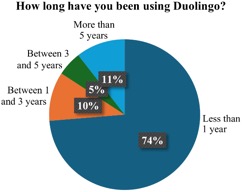
Chart 1
Years using the app
Note:Chart 1 shows the number of years participants had been using the app at the time of the study.
Source: Personal creation.Moreover, participants mentioned that they decided to learn a third language for four main reasons:
-
• Because it was fun or they liked the language (17 participants).
• For academic or work-related purposes (2 participants).
• Because they liked the culture associated with the language(s) they were learning (14 participants).
• Because they had relatives who spoke that language (1 participant).
These motivations were reflected in participants’ personal perspectives. For example, Participant 7 mentioned that her interest in language learning was because of the importance languages have for her: “I want to learn as many languages as possible because I like how learning them shapes differently your view of reality and things in general.”
Similarly, Participant 10 expressed cultural appreciation as his motivation to learn: “I have always loved the culture and want to broaden my knowledge by learning the language and have access to even more information in the original language.”
As can be seen, results show that most participants (89%) had integrative motivation (Gardner & Lambert, 1972) as they were learning the language because they wanted to, thus also having intrinsic motivation, according to Ryan and Deci’s (2020) framework.
The identification of the type of motivation of the participants was also congruent with the ways in which they exercised their autonomy learning the language. During this study, the autonomy of the participants, that is, the responsibility they took regarding their own learning of the third language, was shown in two main ways: through the frequency of their use of the app, and the actions they took to improve their learning of the language. Chart 2 shows how often participants used the app per week, while Chart 3 shows how long they used it per session.
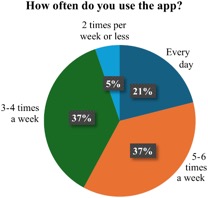
Chart 2
Frequency per week of app use
Note:Chart 2 shows the weekly frequency of app-usage by the participants at the time of the study.
Source: Personal creation.
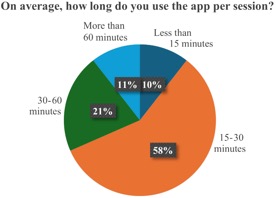
Chart 3
Average app usage time per session
Note:Chart 3 shows the average time per session participants spent using Duolingo at the time of the study.
Source: Personal creation.Results showed that participants who used the app more often were more likely to be engaged with it over time. For instance, Participants 17 and 18 use the app more that 15 minutes daily and they have been learning languages in Duolingo for over five years. Participants claimed that Duolingo has allowed them to create the habit of practicing their languages due to its notifications and streak (number of days in a row using the app) systems: “I practice daily because Duolingo sends a lot of notifications reminding me to do my lessons and I think it is funny how the owl even nags you to practice. I also do not want to break my streak!” (Participant 17); “I use it daily because I do not want to break my streak; using Duolingo and completing the challenges is now part of my routine” (Participant 18).
This constant engagement can be explained using the SDT by Ryan and Deci (2020), which, as previously mentioned, emphasizes the importance of autonomous motivation in long-term commitment to learning activities. In this case, the gamified features of Duolingo act as extrinsic motivators that gradually transform into more autonomous forms of motivation, such as identified and integrated regulation. As participants incorporate language learning into their daily routines, they begin to perceive it as a valuable task which is congruent with their interests and goals, thus sustaining their engagement (Dörnyei & Ryan, 2015).
Moreover, findings show differences in app-usage depending on the type of motivation that participants had. All the participants that had integrative motivation used it three times per week or more, for at least 15 minutes. On the other hand, the participants which had instrumental motivation, that is, who were learning the language because of academic or work-related purposes, used it for less than 15 minutes, one to four times per week. Participants with integrative motivation were more likely to use the app frequently and for longer durations. This aligns with SDT’s concept of integrated regulation, where learners internalize the value of language learning and integrate it into their identity (Ryan & Deci, 2020).
In contrast, participants with instrumental motivation, driven by external rewards such as academic or professional advancement, showed less frequent and shorter engagement. Participant 8, for instance, had this type of motivation as she claimed that “I like Portuguese. German was because I was interested in a master’s program and they needed the candidates to be B2 in German, Italian or French at the end of the program. I preferred German, but I do not know anything at all, so, if I wanted to take classes or something I believe I should have at least the basic vocabulary.”
These findings align to Munday’s (2016) research, which emphasizes the dual role of technology-enhanced language learning environments like Duolingo in promoting both intrinsic enjoyment of language learning and goal-oriented extrinsic motivation. Therefore, the relationship between gamification, notifications, and user motivation shows how technology can facilitate habit formation and the development of autonomous learning, reinforcing previous findings that technological tools can positively impact both engagement and achievement in language learning (Dörnyei & Ryan, 2015).
Perceptions by language experts on using Duolingo
The participants of this study, all with academic backgrounds in language teaching and learning, agree that Duolingo can be an effective tool for language learning when used appropriately. Based on their perceptions and expertise, their insights were organized into four key areas: cognitive and linguistic advantages in third language acquisition, CLI in third language learning, the role of social interaction and teacher guidance, and the importance of exposure and autonomous learning. These findings align with the literature on bilingualism and TLA, showing how cognitive, linguistic, and contextual factors impact language learning. Participants’ reflections also demonstrate how their bilingual academic backgrounds influence their approach to learning a third language, while emphasizing the importance of social interaction, guidance, and regular exposure in the process.
Cognitive and linguistic advantages in TLA
The cognitive and linguistic advantages related to bilingualism were shown in the strategies that participants used for learning a third language. These findings support Abu-Rabia and Sanitsky’s (2010) and Cenoz’s (2013) claims that bilinguals benefit from greater metalinguistic awareness, phonological sensitivity, and cognitive flexibility when learning a third language. Participants frequently mentioned the importance of continuous exposure to the target language, which supports Festman’s (2021) findings on the cognitive benefits of multilingualism.
For instance, Participant 18 emphasized the need for consistent engagement: “Go to class, read, watch YouTube videos, change the settings of your devices to the target language, listen to podcasts.” This aligns with Hirosh and Degani’s (2018) framework, which mentions how both direct (language exposure) and indirect (cognitive flexibility) effects of bilingualism facilitate language learning.
Cross-linguistic influence and third language learning
Another theme that emerged was the role of CLI in third language acquisition, which was reflected in participants’ experiences of taking advantage of their existing language knowledge. Otwinowska’s (2023) study on the cumulative effects of CLI can be reflected in the fact that 12 of the 19 participants were using Duolingo to learn more than one language.
Participants with integrative motivation were also more likely to use the app to learn more languages as they claimed that it became easier, which reinforced their motivation. Participant 7 claimed that this was because language learning got easier with every language she added: “I am becoming addicted to using the app because with each language I add, I start relating the structures to other languages I have been practicing and then it is easier to learn them.”
Similarly, Participant 19 also commented on how she was taking advantage of her academic knowledge: “Now that I know about language acquisition, I understand why I focus on the grammar part and it makes me aware that sometimes I just need to get used to acquiring the structure rather than force myself to understand it.” This demonstrates how prior linguistic knowledge influences learners’ approach to language structures in a third language.
Moreover, Participant 14 mentioned the importance of getting exposed to the language they are learning: “Having contact with the language as much as possible, that is, listening to it, reading it, speaking it as much as you can to practice and of course, if it is possible, having a guide (teacher) that helps you through it.” This comment aligns with Sánchez’s (2020) emphasis on transfer selectivity and the importance of exposure for improving third language learning outcomes.
The role of social interaction and teacher guidance
While cognitive and linguistic advantages emerged, participants also mentioned the importance of social interaction and teacher guidance in overcoming challenges associated with third language acquisition. These findings are related to Jensen and Westergaard’s (2023) work, which emphasized the need for interactive learning environments to fully take advantage of the benefits of bilingualism to learn another language.
Participant 3 emphasized the motivational aspect of collaborative learning: “Sharing the experience whether it is with a teacher of the language or another learner since it keeps you motivated and it’s helpful to have someone else giving you a hand with the problems you may face during the process.” This shows the indirect benefits of bilingualism discussed by Hirosh and Degani (2018), where social engagement enhances the learning experience.
Similarly, Participant 4 mentioned the limitations of technology when there is no social interaction: “Having a teacher is more useful because he/she guides us, an app only shows vocabulary but we do not interact with others. So the purpose of learning a language is lost. Pronunciation is not completely developed.” This is related to Rosell-Aguilar’s (2018) critique of MALL apps, which, while effective for vocabulary acquisition, often lack the interactive and productive skill development that advanced learners need to keep making progress in their language learning process.
Importance of exposure and autonomous learning
Finally, participants also emphasized the importance of autonomous and self-regulated learning strategies in language acquisition, aligning with Cox et al.’s (2019) findings on how bilingual experiences shape language aptitude. For instance, Participant 5 claimed: “It is important to follow content in the target language since we use social media a lot, and to try to communicate with native people.” This supports Fathi et al.’s (2024) study on the role of technology in fostering autonomy and self-regulation among language learners. Among the social media tools that participants use to get exposed to the language were Instagram, TikTok, YouTube, X, SnapChat, Reddit, and Facebook.
Autonomous learning was especially important as it emerged as a factor that can either facilitate or hinder learning. As can be seen in the previous comments by participants, going beyond the app is crucial to actual language learning. Duolingo helped participants to learn vocabulary, practice pronunciation, practice grammar and skills through different types of exercises, stay motivated due to the challenges and friendly competition encouraged by the app, and, especially, as a reminder for practice. However, while participants considered Duolingo a convenient and effective tool for vocabulary building and short daily practice, they also recognized its limitations.
Although participants felt that they were learning words and grammar structures, not all of them felt that they were actually learning the language because they were not practicing outside of the app, that is, they were not exercising their autonomy and taking responsibility of their learning. Participant 1 is an example, as she claimed that she was not using other resources due to lack of time: “I feel I am learning something but I cannot really say I can communicate in French. I know I have to get exposed to the language in some ways, but I do not make time to actually do it.” Similarly, Participant 13 claimed: “I know that with 15 minutes a day I won’t learn Italian but sometimes I am too lazy to do what I know I have to do, which is finding other ways to get language input.”
On the other hand, those who were exercising their autonomy felt they were making more progress in their language learning, and emphasized the need for more interactive and authentic language experiences to complement their app-based learning. Participant 18 claimed that he watches series, movies, and listens to podcasts in the languages he is learning, and that he practices some of the languages he is learning with his partner, who is also a polyglot. Similarly, Participant 10 claims that she enjoys watching anime and reading manga and that she is in social media groups where she can practice Japanese: “I try to get exposed as much as possible to the language, and this has helped me a lot. Now, I can have conversations in Japanese, and that makes me very proud of myself.”
Overall, the participants’ reflections show how bilingualism facilitates third language acquisition through cognitive advantages, cross-linguistic influence, social interaction, and continuous exposure. However, as mentioned by Festman (2021), these benefits are not automatic and depend on individual learner characteristics, language similarities, and contextual factors. Moreover, the importance of exercising autonomy and going beyond the use of the app to learn languages emerged a key factor to successful language learning, as it increased motivation because participants recognized the progress they were making and, hence, wanted to continue learning. The findings of this study, thus, reinforce the need for a balanced approach that integrates technological tools with guided instruction and social interaction to maximize third language learning outcomes.
Conclusions
The findings of this study show that language experts did not rely solely on Duolingo for language learning but strategically complemented its use with their academic knowledge, interaction, and real-life practice. While the app worked as a valuable tool for vocabulary and basic skills practice, meaningful progress occurred when participants engaged in authentic communication and used other resources to complement their learning of the language. Participants who seemed to have been more successful in learning a third language were those who integrated their learning into their everyday context, especially by taking advantage of social media to communicate with speakers of their target languages. This highlights the importance of blending technological tools with human interaction to improve both motivation and communicative competence.
A key factor that emerged from the study was the role of motivation and autonomy in maintaining language learning efforts. Participants who took responsibility for their learning by actively looking for opportunities to apply their knowledge and practice outside the app, showed greater progress and even a greater motivation to learn more languages. This autonomy made them move beyond passive learning to being active learners, changing their learning experience into a more meaningful and lasting process. It also allowed them to reflect on their own teaching practices, promoting a more learner-centered and reflective approach in their professional settings, as they were putting into practice the advice they gave themselves to their own students for language improvement.
However, an interesting inconsistency was observed: while many participants were aware of the need to complement app-based learning with real-life practice, not all of them acted upon this knowledge. This gap between understanding what needs to be done and actually doing it shows the complex nature of autonomous learning, where motivation must be transformed into sustained effort and self-regulation. It suggests that fostering autonomy requires not only access to resources but also the willingness to learn, as well as the development of habits, accountability, and intrinsic motivation to put into practice what one knows.
As can be seen, the implications of these findings may impact both language learners and teachers. The integration of technology, such as language learning apps, can play a significant role in fostering motivation and autonomy to develop language practice habits. However, to maximize its effectiveness, it should be complemented with real-life communication opportunities, guided instruction, and exposure to authentic language use. This holistic approach not only enriches language learning but also helps learners go beyond repetitive exercises to develop real communication skills and cultural awareness, and to even want to learn more languages.
Therefore, we recommend that future research focuses on longitudinal studies to better understand the causal relationships between bilingualism and third-language acquisition, as well as the cognitive and neural mechanisms involved in these processes. Moreover, further exploration of socio-educational and environmental factors shaping multilingual development is needed. Researching how technology can be integrated with best pedagogical practices, including the impact of emerging tools like artificial intelligence and virtual reality, will be crucial in further studies as well. In addition, future research could examine whether and how the use of Duolingo encourages specific types of learning strategies, such as cognitive, memory, metacognitive, affective, social, or comprehension strategies. While the present study focused exclusively on participants’ perceptions and reported practices with the app, incorporating a strategy-based analytical framework could provide a deeper understanding of how these tools support language learning processes. These insights can help tailor language learning approaches to meet the diverse needs of learners and increase their motivation and autonomy while enhancing both their academic progress and teaching practices.
References
Abu-Rabia, S., & Sanitsky, E. (2010). Advantages of bilinguals over monolinguals in learning a third language. Bilingual Research Journal, 33(2), 173-199. https://doi.org/10.1080/15235882.2010.502797
Aratusa, Z. C., Suriaman, A., Darmawan, D., Marhum, M., Rofiqoh, R., & Nurdin, N. (2022). Students’ perceptions on the use of mobile-assisted language learning (MALL) in learning pronunciation. International Journal of Current Science Research and Review, 5(7), 2652-2660. https://doi.org/10.47191/ijcsrr/V5-i7-50
Aysu, S. (2020). The use of technology and its effects on language learning motivation. Journal of Language Research (JLR), 4(1), 86-100. https://dergipark.org.tr/tr/download/article-file/1340883
Cenoz, J. (2013). The influence of bilingualism on third language acquisition: Focus on multilingualism. Language Teaching, 46(1), 71-86. https://doi.org/10.1017/S0261444811000218
Chik, A. (2020). Humorous interaction, language learning, and social media. World Englishes, 39(1), 22-35. https://doi.org/10.1111/weng.12443
Cox, J. G., Lynch, J. M., Mendes, N., & Zhai, C. (2019). On bilingual aptitude for learning new languages: The roles of linguistic and nonlinguistic individual differences. Language Learning, 69(2), 478-514. https://doi.org/10.1111/lang.12341
Creswell, J. W., & Creswell, J. D. (2018). Research design: Qualitative, quantitative, and mixed methods approaches (5th ed.). Sage.
Dörnyei, Z., & Ryan, S. (2015). The psychology of the language learner revisited. Routledge.
Eren, Ö. (2012). Students’ attitudes towards using social networking in foreign language classes: A Facebook example. International Journal of Business and Social Science, 3(20). https://ijbssnet.com/journals/Vol_3_No_20_Special_Issue_October_2012/32.pdf
Fathi, J., Ahmadnejad, M., & Nosrati, S. (2024). Investigating the impact of Duolingo on second language learning achievement and self-regulated learning among French as a foreign language learners. Computer-Assisted Language Learning Electronic Journal, 25(4), 379-413. https://callej.org/index.php/journal/article/view/477
Festman, J. (2021). Learning and processing multiple languages: The more the easier? Language Learning, 71(S1), 121-162. https://doi.org/10.1111/lang.12437
Gardner, R. C., & Lambert, W. E. (1972). Attitudes and motivation in second-language learning. Newbury House.
Glaser, B. G., & Strauss, A. L. (2012). The discovery of grounded theory: Strategies for qualitative research (7th ed.). Aldine Transaction.
González, J., Puig-Mayenco, E., Fábregas, A., Chaouch-Orozco, A., & Rothman, J. (2021). On the status of transfer in adult third language acquisition of early bilinguals. PloS one, 16(3), e0247976. https://doi.org/10.1371/journal.pone.0247976
Gurunandan, K., Carreiras, M., & Paz-Alonso, P. M. (2019). Functional plasticity associated with language learning in adults. NeuroImage, 201, 116040. https://doi.org/10.1016/j.neuroimage.2019.116040
Hernández-Sampieri, R., & Mendoza, C. (2018). Metodología de la investigación. Las rutas cuantitativa, cualitativa y mixta. Mc-Graw Hill.
Hirosh, Z., & Degani, T. (2018). Direct and indirect effects of multilingualism on novel language learning: An integrative review. Psychonomic Bulletin & Review, 25, 892-916. https://doi.org/10.3758/s13423-017-1315-7
Hoi, V. N. (2020). Understanding higher education learners’ acceptance and use of mobile devices for language learning: A Rasch-based path modeling approach. Computers & Education, 146, 103761. https://doi.org/10.1016/j.compedu.2019.103761
Izzyan, F., Huynh, D., Xiong, S., Aziz, N., & Iida, H. (2018). Comparative study: A case study in analyzing gamification between mind-snacks and Duolingo. JP Journal of Heat and Mass Transfer, 1(1), 101-106. http://dx.doi.org/10.17654/HMSI118101
Jensen, I. N., & Westergaard, M. (2023). Syntax matters: Exploring the effect of linguistic similarity in third language acquisition. Language Learning, 73(2), 374-402. https://doi.org/10.1111/lang.12525
Loewen, S., Crowther, D., Isbell, D. R., Kim, K. M., Maloney, J., Miller, Z. F., & Rawal, H. (2019). Mobile-assisted language learning: A Duolingo case study. ReCALL, 31(3), 293-311. https://doi.org/10.1017/S0958344019000065
Munday, P. (2016). Duolingo como parte del curriculum de las clases de lengua extranjera. RIED Revista Iberoamericana de Educación a Distancia, 19(1), 83-101. https://doi.org/10.5944/ried.19.1.14581
Nami, F. (2020). Educational smartphone apps for language learning in higher education: Students’ choices and perceptions. Australasian Journal of Educational Technology, 36(4), 82-95. https://doi.org/10.14742/ajet.5350
Otwinowska, A. (2023). Cross-linguistic influence and language co-activation in acquiring L3 words: What empirical evidence do we have so far? Second Language Research, 40(3), 765-783. https://doi.org/10.1177/02676583231176371
Panagiotidis, P., Krystalli, P., & Arvanitis, P. (2023). Technology as a motivational factor in foreign language learning. European Journal of Education (EJED), 6(1), 69-84. https://doi.org/10.26417/ejed.v1i3.p43-52
Peng, J.-E., & Woodrow, L. (2010). Willingness to communicate in English: A model in the Chinese EFL classroom context. Language Learning, 60(4), 834-876. https://doi.org/10.1111/j.1467-9922.2010.00576.x
Puebla, C., Fievet, T., Tsopanidi, M., & Clahsen, H. (2022). Mobile-assisted language learning in older adults: Chances and challenges. ReCALL, 34(2), 169-184. https://doi.org/10.1017/S0958344021000276
Reyes, C., Narvaéz, O. M., & Perez, E. F. (2025). Pre-service English teacher’s perceptions about learning using artificial intelligence . Enletawa Journal, 18(1), 1-42. https://doi.org/10.19053/uptc.2011835X.19118
Rosell-Aguilar, F. (2018). Autonomous language learning through a mobile application: a user evaluation of the busuu app. Computer Assisted Language Learning, 31(8), 854-881. https://doi.org/10.1080/09588221.2018.1456465
Ryan, R. M., & Deci, E. L. (2020). Intrinsic and extrinsic motivation from a self-determination theory perspective: Definitions, theory, practices, and future directions. Contemporary Educational Psychology, 61, 101860. https://doi.org/10.1016/j.cedpsych.2020.101860
Sánchez, L. (2020). Multilingualism from a language acquisition perspective. In C. Bardel & L. Sánchez (eds.), Third language acquisition: Age, proficiency and multilingualism (pp. 15-41). Language Science Press. http://doi.org/10.5281/zenodo.4138753
Shortt, M., Tilak, S., Kuznetcova, I., Martens, B., & Akinkuolie, B. (2023). Gamification in mobile-assisted language learning: A systematic review of Duolingo literature from public release of 2012 to early 2020. Computer Assisted Language Learning, 36(3), 517-554. https://doi.org/10.1080/09588221.2021.1933540
Notas de autor
Información adicional
redalyc-journal-id: 5216