Exploratory study on sustainable consumer marketing among young adults in México City[1]
Estudio exploratorio sobre mercadotecnia de consumo sostenible entre los adultos jóvenes de la Ciudad de México

Exploratory study on sustainable consumer marketing among young adults in México City[1]
I+D Revista de Investigaciones, vol. 20, núm. 1, pp. 111-132, 2025
Universidad de Investigación y Desarrollo
Recepción: 13 Noviembre 2024
Aprobación: 10 Marzo 2025
Abstract: This study addresses sustainable consumption among young adults in México City to improve marketing strategies. Through interviews with experts and consumers, it describes the individual and collective drivers of sustainable consumption to increase marketing effectiveness. The results highlight the relevance of offering trendy products and expanding perceived value by emphasizing personal and family benefits, such as health, and contributions to the local or national community. Recommendations include improving accessibility by leveraging small businesses and markets, as well as modernizing promotion via online influencers and user-generated content, and building trust with public policies—such as a sustainability rating—like the warning labels on food and beverages in México. Sustainable marketing can reshape consumer perceptions, boosting accessibility, reliability, and value of green products as investments in personal well-being and social progress.
Keywords: sustainable consumption, sustainability, marketing, green marketing, sustainable product.
Resumen: Este estudio explora el consumo sostenible entre los jóvenes adultos en la Ciudad de México para mejorar las estrategias de marketing. A través de entrevistas con expertos y consumidores, describe los factores individuales y colectivos que impulsan el consumo sostenible para incrementar la efectividad en la mercadotecnia. Los resultados destacan la importancia de ofrecer productos de moda y aumentar el valor percibido, al resaltar los beneficios personales y familiares, como la salud, y las contribuciones para la comunidad local o nacional. Las recomendaciones incluyen mejorar la accesibilidad, aprovechando los pequeños negocios y mercados, así como modernizar la promoción mediante influenciadores en línea y contenido generado por los usuarios. También se sugiere fomentar la confianza a través de políticas públicas, como la implementación de una puntuación de sostenibilidad, de manera similar al etiquetado de advertencia de alimentos y bebidas en México. La mercadotecnia sostenible puede remodelar las percepciones de los consumidores, incrementado la accesibilidad, la confianza y la valoración de productos ecológicos, como inversiones en el bienestar personal y el progreso social.
Palabras clave: consumo sostenible, sostenibilidad, mercadotecnia, mercadotecnia verde, producto sostenible.
Introduction
Sustainable marketing, an emerging field at the intersection between consumer behavior and environmental management, has gained interest as global awareness of ecological issues increases (Picard et al., 2024). This article surveys the dynamics of sustainable marketing among young adults in México City, focusing on consumer perceptions of sustainability, and collective and individual drivers (Kilbourne et al., 2002; Liu et al., 2010; Ozcaglar-Toulouse, 2005, 2007; Papaoikonomou et al., 2011; Prothero et al., 2011), as well as consumer responses to sustainable marketing mechanisms. The aim is to explore the factors that shape sustainable consumption behaviors and the challenges and opportunities inherent in promoting sustainable products.
In fact, despite widespread understanding of environmental issues, disparity exists between individual intentions to adopt sustainable behaviors and the actual implementation of such practices (Papaoikonomou et al., 2011). This phenomenon is particularly evident in transactional sustainable consumption (Young et al., 2010).
This paper seeks to bridge the gap in sustainable marketing by qualitatively analyzing the central factors that drive sustainable consumption among the studied population.
To this end, consumers’ perceptions of sustainability are analyzed, delving into consumerism (Shaw et al., 2006), social inequalities (García Martínez & Poole, 2009), and environmental issues (Freestone & McGoldrick, 2007). Lifestyles (Kotler & Armstrong, 2012) and social influence (Lee, 2008) affect collective drivers, while assessment of beliefs and knowledge substantiates individual drivers (Ajzen, 2006). Finally, the components of the sustainable marketing mix are tested.
Thus, the study contributes to a deeper understanding of the factors of sustainable consumption and offers recommendations for more effective marketing strategies.
Literature review
Definition of sustainable consumption
There is no consensus on this meaning, which can also be referred to as ethical (Barnett et al., 2005a; Barnett et al., 2005b; Bezençon & Blili, 2010; Carrington et al., 2014; Freestone & McGoldrick, 2007) or responsible consumption (Dueñas Ocampo et al., 2014; Francois-Lecompte & Roberts, 2006; Guarín & Knorringa, 2014; Ulusoy, 2015; Villa Castaño et al., 2016).
However, the term encompasses all categories of products, such as food, personal care, clothing, furniture, financial (Cruz Reyes, 2016), and transportation services (Fu & Zimm, 2024).
Even so, it is predominantly applied through the purchase of products explicitly marketed as environmentally friendly, animal-friendly, or socially conscious. Physical goods facilitate consumers’ awareness of ethical considerations associated with their value chain: from design and raw material procurement to production, marketing, use, and end-of-life disposal (Villa Castaño et al., 2016).
From this perspective, Greenpeace México (n.d.) categorizes sustainable consumption in three fundamental criteria: geographical proximity between the producer and the consumer; a production process that minimizes or eliminates the use of fertilizers, chemicals, and water; and support for ecosystem resilience. This approach presents a fair distribution of benefits to workers and their communities through a dialectical and respectful relationship.
Research lines
A comprehensive literature review conducted by Papaoikonomou et al. (2011) on ethical consumption behavior identifies three research lines applicable to this field.
The first pursues a profile understanding of the ethical consumer, focusing on sociodemographic, environmental, and personality attributes; thus, this concept remains fragmented due to the diversity of perspectives, resulting in disjointed knowledge that is difficult to harness. The second line aims to develop predictive models of ethical consumption behavior by identifying influential factors, usually based on the theory of planned behavior (Ajzen, 1991). The third one delves into the forms, drivers, and meanings of ethical consumption.
This piece focuses on the third line, offering an understanding of consumers’ perception of sustainability, as well as its collective and individual drivers in comparison with sustainable marketing actions.
Sustainable consumption factors
The roots of sustainable consumption can come from both industrial innovation (pull) and consumer aspirations (push) (García Martínez & Poole, 2009).
Pull factors. In the first case, producers willing to reduce their environmental footprint undertake sustainable innovations on the market, as is often the case in the technology or automotive industries (World Business Council of Sustainable Development, 2008).
Indeed, as a collective driver, organizations must comply with corporate social responsibility (CSR) obligations. From a European perspective, CSR is considered an ideological framework similar to sustainable development oriented towards collective well-being, involving multidimensional collaboration that requires a profound renewal of business models, and contrasting with the American perspective, where CSR is synonymous with business ethics, a moralistic ideology with a financial and patrimonial logic centered on individuals and requiring only an adaptation of business models (Combes, 2005).
To implement CSR, the Organisation for Economic Cooperation and Development (OECD) provides clear guidelines. These include disclosure of
activities, structure, financial situation, and performance; respect for labor rights by avoiding discrimination and child exploitation and ensuring safe working conditions; monitoring the environmental impacts of operations including health and safety; reduction of raw materials and energy use and utilizing sustainable energy sources; combating corruption; addressing consumer interests by providing quality products and adhering to established marketing practices; contributing to the development of innovation in science and technology within the operating country respecting competition laws; and complying with tax obligations. (OECD, cited by Raufflet et al., 2012, p.71)
To reconcile theory with business reality, Raufflet et al. (2012) recommend integrating concerns about sustainable development into the creation of economic and social value, which is rooted in business models, strategies, the value chain, and practices, while fostering synergies with various social actors for the common good, rather than merely improving the company’s image.
Push factors. When the consumer's aspiration drives sustainable consumption expansion, the evolution of the offer results from a change in the demand. For instance, the supply of sustainable food products has grown significantly with organic fair-trade products, in response to more exigent consumers' expectations about those aspects (Micheletti, 2003).
García Martínez and Poole (2009) explain that the shift towards sustainable consumers is the result of a greater awareness of ecological challenges, poverty mechanisms, and trade inequities. Associated with increasing disposable income, it has allowed consumers to access higher-quality products in terms of social and environmental production conditions.
Kilbourne et al. (2002) expand the analysis by introducing a hierarchical model consisting of six critical collective-to-individual factors influencing green consumption: public policies, values, societal environmental beliefs, individual beliefs, behavioral intention, and behavior. Their study indicates that most research targets behavioral intention and behavior, focusing on the symptoms of green consumption rather than on its root causes from collective factors.
Giesler & Veresiu (2014) concur with this position, highlighting the positive and decisive role of institutional influence in the widespread adoption of sustainable consumption. They demonstrate that public institutions can guide consumer behavior toward more responsibility through policies that consider consumers as moral individuals. A process of educating consumers about their potential to contribute to collective solutions supports this change, which experts reinforce by confirming the relevance of sustainable consumption in solving such problems.
Applied to young adults in Hong Kong, Lee’s scale (2008) assesses eight dimensions similarly to Kilbourne et al. (2002), i.e., incorporating collective and individual aspects: social influence, environmental attitude, concern for the environment, perception of the seriousness of ecological problems, perception of environmental responsibility, perception of the effectiveness of sustainable behavior, concern for the self- image reflected through environmental protection, and eco-friendly purchasing behavior.
Social influence (networking of friends) is the most significant factor among the population in this study, followed by emotional concern for the environment, concern for self-image in protecting the environment, and perceived effectiveness of individual behavior. As a valuable contribution to the present document, this variable differs from the models commonly observed for adults, among whom rational and cognitive thinking drives sustainable consumption.
Individually, among the decision models applicable to sustainable consumption, the theory of planned behavior (TPB) (Ajzen, 1991) stands out.
TPB is an explanatory and predictive psychological framework for human behavior based on three factors: (a) attitude toward behavior (positive or negative), (b) subjective norms (perceived social pressure), and (c) perceived behavioral control (ease or difficulty of performing the behavior). These factors shape an individual’s behavioral intention and are the principal predictors of actual behavior. If perceived control is high, intention strongly predicts behavior; if it is low, even strong intentions can lead to inaction.
As a complement to TPB, Gossling (1996) refines the concept of attitude by adding affective sources, which encompass beliefs, feelings, and mood associated with behavior, and cognitive sources, which involve knowledge, explanatory ability, and subsequent understanding of the results of behavior. This distinction helps to observe the formation of attitudes and their development on behavioral intentions, specifically sustainable consumption.
More recently, and specifically for sustainable consumption, Ozcaglar-Toulouse (2005) notes identity as a key factor in responsible consumption, placing it at the intersection of several processes: awareness of uniqueness in comparison to others, consciousness of similarities with others, affective involvement, the aspiration for others to endure, and the evolution of own identity to pursue personal values.
Lavuri et al. (2023) delve deeper into this concept in the emerging markets of India and China,Cliquez ou appuyez ici pour entrer du texte. Where they analyze identity through a personality lens, pinpointing characteristics that influence sustainable consumption behavior, including selfishness, altruism, and social consumption motivation, all of which show a positive impact on pro-environmental identity.
Sustainable marketing
Since marketing practices have assumed unlimited resource availability and minimal environmental consequences, recent perspectives on this awareness need reassessment of strategies. As consciousness of resource boundaries and high ecological impact becomes more prominent, marketers ought to rethink their approaches, which involves reviewing product development, pricing, distribution, and branding policies to align them with sustainable practices (Kotler, 2011).
Picard & Ávila Montes de Oca (2020) define sustainable marketing as the intersection of sustainability and marketing.
According to the 1987 Brundtland report, presented to the United Nations General Assembly, “humanity has the ability to make development sustainable to ensure that it meets the needs of the present without compromising the ability of future generations to meet their own needs” (Brundtland, 1987, p. 15). More broadly, sustainability corresponds with a social and political project aimed at achieving ecological order or global equilibrium (Cruz Reyes, 2016), especially between economy, social development, and ecology (Alhaddi, 2015; Elkington, 1998).
In the field of marketing, Lendrevie & Lévy (2014) refer to a strategy used by organizations to influence the behavior of their target audience by providing an offer with a perceived value that exceeds that of the competitor over time. For the private sector, this means generating revenue by delivering value that customers consider worthwhile enough to pay for. For other types of organizations, it can be extrapolated as the power to influence an audience for their benefit.
Therefore, sustainable marketing is the action of influencing in favor of sustainability. It means creating a marketing mix for a product, service, or idea, at a price, and through distribution channels and promotion policies that are economically viable, socially equitable in the allocation of wellbeing, and that support the preservation and regeneration of the environment. According to Chan (2013), the internet is a particularly suitable medium for promoting sustainable attributes, as is reflected in the study by Bhargava et al. (2023), who examine the critical role of educating consumers through informative storytelling to raise awareness, explore how social media and influencer marketing can expand audience reach, emphasize the role of eco-friendly packaging in enhancing the appeal of sustainable products, and highlight the significance of third-party certifications.
Greenwashing
In this context, many companies have been criticized for emphasizing the ecological properties of their products without reducing the environmental impact or for adopting inconsistent practices; moreover, a growing number exaggerate their sustainability efforts (Dutta-Powell et al., 2024).
Known as greenwashing, this practice involves making false or misleading claims —often through symbolic gestures— to create the appearance of a sound commitment to sustainability and environmental protection. Such practices expose the shortcomings of contemporary capitalism and raise doubts about the true potential of this economic model to support genuine ecological progress (Williams, 2024).
Furthermore, this contributes to consumer mistrust given the perceived discrepancy between claims and facts (Steenis et al., 2023).
As a result, many people argue to avoid “green” products due to skepticism about their environmental claims or concerns about their actual effectiveness. Paradoxically, the increasing demand for natural foods, hybrid vehicles, and other eco-friendly products suggests that consumers remain willing to pay a premium for them —even if environmental problems do not always drive their motivation (Ottman et al., 2006), underlining the need to continue exploring marketing opportunities in sustainability claims.
Method
This article corresponds to a broader study on sustainable consumption factors among young adults in México (Picard, 2020) and uses a mixed-methods approach. It represents the first phase of exploration, in which in-depth interviews are applied to study the sustainable consumption factors identified in the literature, including those related to sustainable marketing. The absence of studies on this population and location justifies the approach, even when the identified factors are from research in developed countries. It is therefore appropriate to assess whether these variables correspond with the population studied. A forthcoming article (under review) presents the resulting quantitative framework designed for subsequent quantitative analysis.
On the one hand, interviews were conducted between April and November 2017, in two stages, with experts in sustainable consumption, educators, and employees of public institutions identified on LinkedIn under the keywords “Sustainability” and “México City.” On the other hand, young people were selected through snowball sampling, originating from a convenience sample, to diversify perspectives based on gender, age, and social class.
First, six experts were interviewed to clarify aspects of sustainable consumption, including preferred product types, associated prices, and existing or proposed marketing strategies aimed at encouraging more sustainable behaviors among young adults. The interviews also examined the most effective distribution channels, public policies related to education, taxation, regulations, and legislation, as well as media communication channels and cultural factors specific to México.
Second, 14 interviews were conducted with young adults to explore both collective and individual factors that drive sustainable consumption and compare them with their perceptions of sustainable marketing. Whereas collective aspects included public policies, lifestyle influences, and social dynamics, individual ones addressed personality traits such as empathy, belief in the ability to influence global challenges (e.g., climate change and social inequalities), socio-environmental concern and commitment, knowledge of verified facts related to these issues, and intention to consume sustainable products, as well as sustainable consumption behaviors Picard et al. defined (2024).
- 1. By product type: Includes local, ecological, organic, fair trade, environmentally friendly, or cruelty-free products purchased through mass retail channels.
- 2. By channel type: Same products purchased through alternative distribution channels, such as direct sales from the producer, short supply chains, local markets, small shops, and individuals.
- 3. By collaborative consumption: Includes shared purchases, product rentals, or the acquisition of second-hand items.
- 4. By non-monetary practices: Involve recycling, reusing, reducing consumption, repairing, redistributing unused goods (the 5 Rs), bartering, and boycotting.
The discussions also compared their perceptions and interpretations of sustainable marketing, their interest in products labeled as sustainable, their preferred channels for purchasing these products, and their willingness to pay a higher price.
The interviews were recorded and transcribed with the participants’ consent, ensuring accuracy via notes and verbatim recordings. The data was then processed using Atlas.ti, where responses were consolidated, standardized, summarized, and analyzed to identify frequencies, correlations, and emerging trends.
In total, six experts and 14 young people were interviewed, as shown in Tables 1 and 2.
| Organization | Number of interviewees |
| Danone | 1 |
| Teachers | 2 |
| Comisión Federal para la Protección contra Riesgos Sanitarios (Federal Commission for Protection against Sanitary Risks) | 1 |
| Secretaría de Medio Ambiente y Recursos Naturales (Secretariat of Environment and Natural Resources) | 1 |
| Total | 6 |
| Gender | Age | Main activity | Marital status | Household composition | Monthly income in USD | |
| Female | 25-29 | Formal salaried worker | Married | Complete (father-mother-siblings) | 610-1780 | |
| Female | 20-24 | Student | Single | Complete (father-mother-siblings) | <610 | |
| Female | 20-24 | Student | Single | Unipersonal | <610 | |
| Female | 20-24 | Student | Single | Complete (father-mother-siblings) | <610 | |
| Female | 25-29 | Formal salaried worker | Single | Complete (father-mother-siblings) | 610-1780 | |
| Female | 25-29 | Formal salaried worker | Single | Horizontal (with friends or siblings) | 610-1780 | |
| Female | 30-34 | Formal salaried worker | Single parent | Own family home | 610-1780 | |
| Male | 30-34 | Formal salaried worker | Single | Complete (father-mother-siblings) | <610 | |
| Male | 30-34 | Student | Single | Single-parent | 610-1780 | |
| Male | 30-34 | Formal salaried worker | Common-law | Own family home | >1780 | |
| Female | 30-34 | Formal salaried worker | Married | Own family home | >1780 | |
| Female | 30-34 | Formal salaried worker | Single | Complete (father-mother-siblings) | >1780 | |
| Female | 30-34 | Independent worker | Common-law | Own family home | >1780 | |
| Male | 30-34 | Formal salaried worker | Single | Unipersonal | 610-1780 | |
Results
Analysis with Atlas.ti
To gain a deeper understanding of consumer perceptions of sustainable consumption, verbatim transcripts of the in-depth interviews were systematically analyzed using Atlas.ti. A coding framework was developed to classify pivotal themes, enabling a structured examination of the factors that shaped sustainable consumer behavior regarding sustainable marketing.
The formed groups interpreted aspects of sustainable marketing from the consumer perspective. They explored product features, the most reliable distribution channels, consumers’ willingness to pay a premium for sustainability, and the promotional strategies brands should adopt to align with consumer concerns. These ideas were then compared to the key factors influencing sustainable consumption identified in the literature. Collective drivers included public policy, lifestyle, social influence, inhibitors, and motivators, while individual ones covered personality, beliefs, knowledge, purchase intention, and behavior, as shown in Table 3.
| Topic | Groups | Theme | Description |
| Sustainable Marketing | Perception of sustainable marketing | Brand messages | Consumer perceptions of sustainability efforts. |
| Sustainable marketing offer | Product attributes | Features and advantages of sustainable products, including quality, animal welfare, eco-friendliness, etc. | |
| Sustainable marketing channels | Distribution methods | Examination of preferred channels for distributing sustainable products, such as small local stores versus supermarkets. | |
| Sustainable marketing pricing | Cost considerations | Information on consumer attitudes toward sustainable product prices, willingness to pay, and perceived value. | |
| Sustainable marketing promotion | Marketing strategies | Analysis of promotional tactics that effectively communicate sustainability efforts and value to consumers. | |
| Collective drivers | Public policy | Regulatory influence | Impact of government policies on consumer behavior and brand practices related to sustainability. |
| Social influence | Peer and community effects | Role of social media and community in shaping consumer attitudes toward sustainable products. | |
| Lifestyle | Consumption habits | Influence of personal lifestyle and habits on sustainable consumption behaviors. | |
| Inhibitors of sustainable consumption | Barriers | Identification of the central obstacles to sustainable consumption. | |
| Motivators of sustainable consumption | Drivers | Identification of the central stimulus to sustainable consumption. | |
| Individual drivers | Personality | Individual traits | Influence of personality traits on consumer preferences for sustainable products. |
| Beliefs | Values and attitudes | Examination of underlying impressions that drive consumer interest in sustainability. | |
| Knowledge | Awareness and understanding | Level of consumer knowledge about sustainability and its impact on purchasing decisions. | |
| Intention | Purchase intention | Information on consumers’ intentions to purchase sustainable products based on various influencing factors. | |
| Behavior | Effective sustainable consumption | Consumers' practices regarding purchasing sustainable products,channels selection, collaborative consumption, and non-monetary actions. |
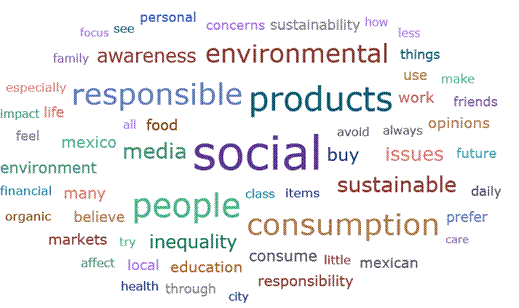
Figure 1
Word cloud from the verbatim content of the interviews
As an initial summary of the results, Figure 1 presents the key terms expressed by the interviewees. The social dimension of sustainable marketing emerges as a dominant theme, with particular emphasis on concerns related to people and inequalities. It suggests that participants discussed these aspects more frequently than environmental issues, although they remained fundamental to responsible consumption.
The responses also underscored various collective and individual causes that influence sustainable behavior; the former included awareness, the media, education, and social class, while individual concerns, work, emotions, beliefs, and the opinions of friends and family determined the latter.
Thus, among the most frequently mentioned terms related to products are “food,” “health,” “local,” “organic,” “use,” “less,” “avoid,” and “care.” For distribution, keywords such as “markets,” “México,” and “city” stood out. Moreover, when it comes to prices, “finance” was the only term explicitly mentioned, suggesting that cost may be perceived as less critical compared to other attributes. Figure 2 provides a more in-depth insight.
These findings offer valuable recommendations for shaping a sustainable marketing mix. From a product perspective, a responsible offering should integrate both environmental and social dimensions, with a particular focus on addressing inequalities within the supply chain. This objective could be achieved through a local sourcing strategy that benefits all parties and ensures affordability for consumers, especially in the context of healthy and organic food. Distribution strategies should prioritize daily urban markets as key retail channels.
In terms of promotion, marketing strategies need to optimize personal awareness and leverage social influence. Emphasizing the benefits of responsible products for México and its population can have a positive impact by appealing to national pride, while also targeting immediate social circles of consumers, such as friends and family. This approach links the values of sustainable consumption with cultural identity, fostering a sense of collective responsibility and empowerment.
In addition, media messages must reiterate the long-term impact of consumption decisions across all product categories, stressing the influence of these determinations on the future, environmental sustainability, and economic well-being. By framing sustainable consumption as a shared social goal, media campaigns can cultivate a broader understanding of its significance, encouraging consumers to consider the profound implications of their purchasing behavior beyond immediate convenience.
Some effective promotional slogans could include “Try local,” “Choose sustainability every day,” “Prioritize care,” “Consume less,” and “Experience the benefits of responsible consumption.”
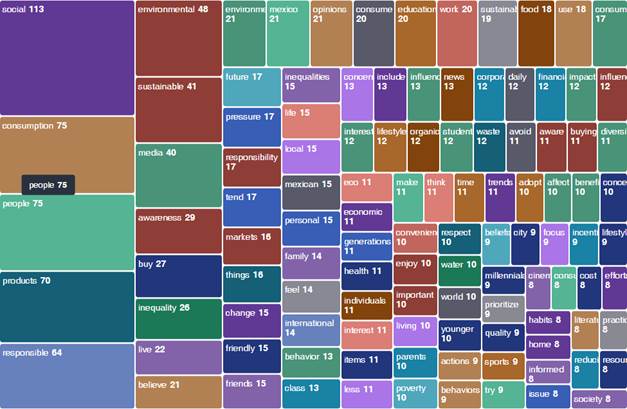
Figure 2
Frequency of keywords from the word map in interview transcripts
Figure 2 presents the frequency of words spoken, like those of Figure 1. It supports the initial analysis, highlighting the prominence of terms such as “social,” “consumption,” “people,” “products,” “responsible,” “environmental,” and “sustainable,” each of them mentioned more than forty times.
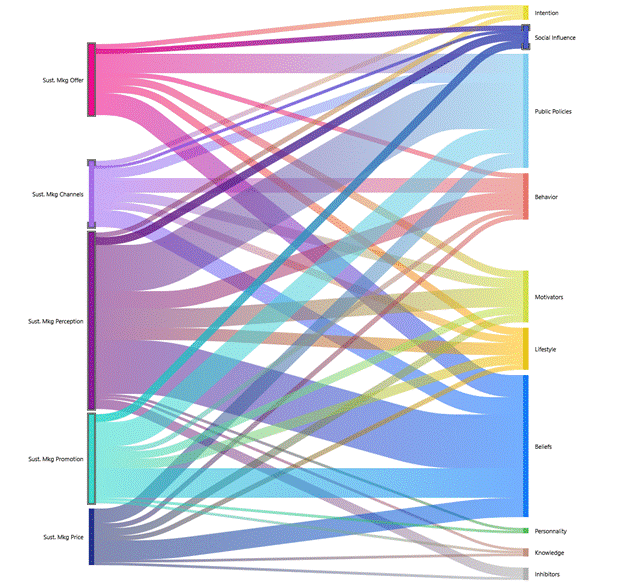
Figure 3
Mapping of the relationship between sustainable marketing and key factors
Figure 3 illustrates the relationships between the identified codes, underpinning the influence of individual and collective factors on sustainable marketing; thus, the issues most frequently addressed in sustainable marketing are beliefs and public policy.
These two primarily influence the perception of sustainable marketing. Within the beliefs category, concerns related to sustainability and sustainable consumption emerge as the most significant, suggesting that, for individuals, values, and levels of awareness play a crucial role in shaping their understanding and expectations of sustainable marketing.
In public policy, the most prominent issue involves the relevance of public-private collaboration in promoting sustainable consumption: it underscores the expectation for synergic working between government and private entities to advance sustainability efforts. Other results include:
First: The degree of consumer concern about sustainability directly influences how sustainable marketing is interpreted. Specifically, individuals with heightened sustainability concerns are more likely to demand greater alignment between public policies—including education, taxation, and regulatory frameworks—and sustainability initiatives undertaken by private companies.
This dynamic reflects a growing social expectation for an integrated approach to sustainability, in which businesses and policymakers share an interest in promoting a more responsible and ethical market. Strengthening policy mechanisms that incentivize sustainable business practices, while raising awareness and encouraging public participation, could improve the effectiveness of sustainable marketing strategies and drive noticeable behavioral changes among consumers.
Second: Sustainable marketing offers are related to beliefs and public policy. Once again, the level of concern for socio-environmental issues plays a decisive role in appreciating sustainable products, particularly the adverse effects of some components on health, the environment, and animal welfare. Consequently, traceability and certification are considered central attributes. However, mistrust of product claims pushes more conscious consumers to engage in green consumption through more reliable and direct methods. Consumers tend to prioritize short supply chains, reflect on their real needs before making a purchase, and favor local, durable, or health-oriented products. Surprisingly, these preferences align with long-term decision-making, contrasting with the short-term orientation usually observed in Mexican culture, as identified by The Culture Factor Group (2017).
From a public policy perspective, interviewees highlighted challenges in identifying and accessing sustainable products, suggesting the need for government interventions to improve market transparency. A standardized sustainability rating system, akin to existing health or nutrition scoring frameworks, would facilitate informed purchasing decisions by making sustainability visible and understandable to consumers. Such an initiative could also provide sellers with a competitive advantage, permitting them to differentiate their offerings and attract sustainability-conscious customers.
Third: Sustainable marketing channels are primarily associated with beliefs and behavior; hence, beliefs, environmental concerns, and a sense of responsibility are the most significant to channel preference. Consumers who are sensitive to environmental issues tend to prioritize channels that align with their sustainability values.
From a behavioral perspective, non-monetary practices, such as reuse and recycling, are associated with a preference for local stores, small markets, direct purchases from producers, and individual sellers. These channels emerge as the most prominent sustainable consumption practices among respondents. The emphasis on accessibility during the discussions suggests that these practices draw attention because of their convenience. The widespread presence of independent retail channels in México City, which offer consumers easy access to sustainable options, supports this hypothesis. According to the Instituto Nacional de Estadística y Geografía (National Institute of Statistics and Geography [INEGI]), micro, small, and medium-sized enterprises (MSMEs) represent approximately 95% of all economic units in México (INEGI, 2021), underscoring the central role these businesses play in shaping consumer access and purchasing behaviors. The predominance of MSMEs is crucial in the context of sustainable marketing channels, as these initiatives offer consumers direct and accessible alternatives to conventional retail outlets, further promoting sustainable consumption habits.
Fourth: Sustainable marketing prices are primarily linked to beliefs and public policies. As in the previous sections, these are close to the level of concern for socio-environmental issues, and consumers are willing to pay a premium for products that align with their values of sustainability and ethical responsibility. Nevertheless, it is also recognized that the cost of products does not always correspond to their origin or quality, and that higher quality standards often result in higher prices, possibly inflated by intermediaries within the supply chain. Therefore, cost remains a significant barrier to the consumption of sustainable products. Despite a disposition for paying more for environmentally and socially responsible products, consumers often face financial constraints that complicate their ability to purchase them accordingly.
Fifth: The promotion of sustainable marketing is also basically bound to beliefs and public policy, as Figure 3 shows: Whereas the principal reasons for consuming sustainable products are health-related, the materialism of younger generations —driven by the desire for social approval and the pursuit of the latest trends— emerges as the foremost inhibitor of sustainable consumption. This materialism is often reflected in the interest in products that enhance social appearance, even if not all features are used. Furthermore, consistent with the results in Figure 3, social concerns tend to be a priority over environmental concerns: An issue that marketing strategies could focus on by adapting the codes of usual products to sustainable alternatives, such as launching sustainable products geared toward trends or fashion to appeal to younger consumers who may not have full social awareness. To this end, alternative communication strategies could highlight the satisfaction of actual needs, collective social benefits, and individual advantages, such as improved well-being, social recognition, and economic savings.
| ● Sust mkg channels Gr = 16 | ● Sustmkg offer Gr = 27 | ● Sust mkg perception Gr = 37 | ● Sust mkg price Gr = 13 | ● Sust mkg promotion Gr = 16 | |
| ● Behavior Gr = 29 | 6 | 5 | 8 | 2 | 2 |
| ● Beliefs Gr = 85 | 7 | 11 | 22 | 8 | 12 |
| ● Inhibitors Gr = 10 | 0 | 0 | 4 | 1 | 0 |
| ● Intention Gr = 10 | 1 | 2 | 2 | 0 | 0 |
| ● Knowledge Gr = 5 | 0 | 3 | 1 | 0 | 0 |
| ● Lifestyle Gr = 47 | 3 | 3 | 5 | 2 | 4 |
| ● Motivators Gr = 33 | 4 | 3 | 8 | 3 | 3 |
| ● Personnality Gr = 8 | 0 | 0 | 1 | 0 | 1 |
| ● Public policies Gr = 49 | 4 | 8 | 19 | 6 | 10 |
| ● Social influence Gr = 37 | 1 | 2 | 3 | 0 | 3 |
Table 4 shows the co-occurrence of code groups between the driving factors and sustainable marketing concepts; it describes how the distribution of codes among the dimensions of sustainable marketing further underscores the dominant influence of beliefs (Gr = 85) and public policies (Gr = 49) in shaping perceptions, offerings, channels, prices, and promotional strategies.
Beliefs emerge as the most significant factor in all categories, reinforcing the idea that values and awareness related to sustainability play an essential role in shaping consumer attitudes and behaviors. Public policies are also substantial, especially in the perception of sustainable marketing (Gr = 19) and promotion (Gr = 10), reflecting consumers’ expectations for stronger regulatory frameworks to support responsible consumption.
Behavior (Gr = 29) is notably linked to the perception of sustainable marketing (Gr = 8) and channels (Gr = 6), suggesting that consumers’ actual purchasing practices align with sustainability values when convenient and accessible alternatives are available.
In contrast, inhibitors (Gr = 10) and intention (Gr = 10) show relatively low influence across all dimensions, indicating that while barriers to sustainable consumption exist, they are not the primary determinants of marketing strategies.
Similarly, social influence (Gr = 37) appears to have a limited presence, contributing more to shaping perception (Gr = 3) than to other aspects of sustainable marketing. While external influences may drive initial awareness, internalized beliefs and policy interventions are stronger determinants of sustainable consumption behaviors.
These findings emphasize the need for marketing strategies that leverage consumer values, strengthen policy support, and improve accessibility to sustainable options, ultimately fostering behavior-based solutions that promote responsible consumption. Table 5 summarizes the results of the interviews.
| In-depth interview codes Quotes = 294 Interviews = 20 | |
| Behavior Gr = 28; Gs = 8 | 28 |
| Beliefs Gr = 84; Gs = 8 | 84 |
| Inhibitors Gr = 11; Gs = 6 | 11 |
| Intention Gr = 22; Gs = 7 | 22 |
| Knowledge Gr = 1; Gs = 3 | 1 |
| Lifestyle Gr = 49; Gs = 32 | 49 |
| Motivators Gr = 55; Gs = 75 | 55 |
| Personality Gr = 9; Gs = 5 | 9 |
| Public policies Gr = 49; Gs = 5 | 49 |
| Social influence Gr = 37; Gs = 8 | 37 |
| Sust mkg offers Gr = 12; Gs = 19 | 12 |
| Sust mkg channels Gr = 16; Gs = 4 | 16 |
| Sust mkg price Gr = 13; Gs = 3 | 13 |
| Sust mkg promotion Gr = 18; Gs = 8 | 18 |
| Sustainable mkt perception Gr = 86; Gs = 16 | 86 |
| Total | 490 |
Focus on the perception of sustainability
Sustainable consumption. In the beliefs section, most interviewees expressed that sustainable consumption involves respecting the environment, with 16 participants mentioning it. This observation includes considering the overall life cycle of products, avoiding excessive use of natural resources, extending their useful life, using renewable energy, recycling or buying recycled products, purchasing eco-friendly, fresh, organic, and natural products, choosing durable goods, making homemade items, consuming only the necessary, eating a vegan or vegetarian diet, and having plants. One of the respondents stated that looking good while helping the planet is more of a fad than a genuine concern.
Although less emphatically, for most interviewees, sustainable consumption also implies respect for the social environment, with 14 participants citing it. This aspect includes a preference for domestic or local consumption, buying directly from producers or at markets, helping surrounding people through purchases, being aware of others, acting ethically, supporting the circular economy, and, in one case, contributing to a fair distribution of resources to ensure that everyone’s basic needs are met and they have access to housing.
Almost half of those surveyed believe that sustainable consumption involves both social and environmental aspects, with a dual responsibility toward society and ecology. They mentioned other reasons, without detailing, because they did not fit within the scope of the project, such as taking care of health by reducing sugar consumption or maintaining sound finances.
As such, although social concerns were more important than environmental ones, participants did not explicitly associate either concept with sustainable consumption.
Consumerism. All interviewees perceive consumerism negatively. When asked, they associated it with “mental programming,” “indoctrination,” “aggressive marketing,” “temptation,” “compulsive shopping,” “unlimited consumption,” “extreme waste,” “fashion,” “superficiality,” “materialism,” “status,” “aspirational consumption,” and the “pursuit of satisfaction” based on appearance. Many expressed concerns about the disconnect between available resources and spending, which often results in excessive debt. However, one respondent acknowledged consumerism as inevitable.
Social inequalities. Most respondents understand social inequalities as extreme economic conditions, with 14 interviewees mentioning it, confusing poverty with the result of unequal wealth distribution. Besides, even with a country's Gini index of 0.498 (Consejo Nacional de Evaluación de la Política de Desarrollo Social, 2016), confirming their reality, several respondents claim not to face social inequalities in their daily lives; thus, a perceptual filter may be present.
Among the most notable comments are discrimination toward indigenous people, differential treatment based on appearance, or sexism. Social concern is perceived as low among the upper and upper-middle classes. Some describe living in a bubble, without perceiving poverty.
In contrast, social concern is greater among the lower and lower-middle classes, who feel more affected. Among young people, social awareness is described as virtual, in the sense that it is based on videos and content shared on social media but lacks action to change reality.
Illustrating this, one respondent suggested that social inequalities are the root cause of all problems in México, creating two blocs: One driven by resentment over lack of access to a decent standard of living, and the other by fear of crime and economic instability.
Environment. Concern for the environment is steadier among respondents, with the majority considering a very worrying situation, especially regarding pollution, contingency situations, waste excess, and exposure to harmful chemicals. Six respondents reported direct health effects from environmental degradation, like allergies, headaches, and rhinitis. Among the main challenges identified are water conservation, waste management, and reducing the use of disposable plastics and polluting detergents; paradoxically, excessive use of private cars was not mentioned.
Young people claim to be more aware than their parents’ generation, whom they try to sensitize; however, some consider young people lack awareness, as they are absorbed in their personal lives and disregard environmental issues; the so-called “millennial generation” was described as two-faced, taking half-measures.
Focus on collective drivers
Public policies. Debates around taxes, education, regulation, and communication were conducted.
The experts’ conclusions revealed significant institutional shortcomings in promoting sustainable consumption, primarily due to a lack of political interest. Additionally, there is insufficient understanding of socio-environmental challenges, reflected in inadequate vision and strategy, which are often institutionally addressed in isolation (e.g., public education versus industrial development); furthermore, there is a shortage of financial and human resources.
According to young adults, opinions were positive regarding incentive measures, such as the proposal of a lower VAT rate for sustainable products. However, resistance was observed to the idea of specific taxes on household waste or penalties for failing to comply with waste sorting rules.
Most participants expressed a strong desire for more information on sustainability, either through specific communication campaigns —currently non-existent— or through a curriculum integrated into the entire educational system.
Lifestyle. This section addressed respondents’ perceptions of sustainable lifestyles about others and their behaviors and practices.
Fifteen variables were tested to relate them to levels of sustainable consumption: (a) available resources, (b) occupation, (c) stance on globalization (national identity vs. global citizenship), (d) use of social media and associated feelings (social pressure vs. freedom), (e) religion, (f) opinions (conservative vs. progressive), (g) hobbies, (h) fashion, (i) innovation (early adoption vs. majority vs. late adoption), (j) risk-taking, (k) educational level, (l) information on socio-environmental challenges, (m) conformity vs. uniqueness, (n) life plans (short, medium, and long term), and (o) level of socio-environmental concern.
The analysis of the interviews suggested variables to consider when assessing lifestyle in terms of sustainable consumption:
- 1. Resources: It is observed that more resources lead to greater consumption of sustainable products, but also increase car use; whereas lower availability results in a reduction in the use of sustainable products and greater dependence on public transport.
- 2. Level of socio-environmental concern: People with higher standards of sustainable consumption also express more socio-environmental concern. As this decreases, the gap between attitudes and behavior increases.
- 3. Household composition: Individuals raising a family tend to be more sensitive to health considerations when selecting products, prioritizing the well-being of their youngest members; similarly, young adults value quality products, seeking the best for themselves.
Social influence. The principal agents of social influence for respondents include family, partners, friends, coworkers, in-laws, the arrival of a baby, virtual groups, social media, and the university environment. When asked who encouraged them to consume more sustainably, participants named a boss, an older coworker, a father, a spouse, close friends, a daughter, Greenpeace or vegan group posts on social media, a documentary, a book, university experiences, or their research.
Interestingly, those with higher levels of sustainable consumption often cited influence outside their immediate circles. Key factors that triggered behavioral change involve books on animal welfare, environmental documentaries, or online communities dedicated to social and environmental issues.
These reasons present an opportunity to harness the credibility of influencers and user-generated content on social media to drive behavioral change as external agents of change.
About social influence on sustainable consumption, both subjective norms and perceived control are generally low. There is little social pressure to adopt green practices, and irresponsible consumption usually does not harm people’s social image.
However, when individuals are exposed to compelling external sources of information or join communities dedicated to sustainability, these factors can become significant drivers of behavioral change.
Focus on individual drivers
Beliefs. Beliefs about the impact of sustainable consumption on sustainable development are generally positive. Most interviewees believe that adopting green behaviors contributes to a more equitable and ecologically healthier world; even so, some consider this an illusion, as they feel that individual efforts are insignificant and the participation of global youth structures meaningful change.
Many perceive challenges —such as limited availability, difficulty finding the products, and the need to read labels carefully— when purchasing sustainable products, and reducing overall consumption is particularly demanding for those accustomed to buying pre-packaged and prepared items.
In contrast, waste separation is believed to be easier as it has become a routine for many. Most participants consider recycling and using short supply chains to be simple but effective ways to benefit the environment.
Knowledge. To estimate personal knowledge and compare it with that of socio-environmental issues, respondents were first asked if they were concerned about any current international conflicts and, if so, which ones. Four people were unable to answer; others mentioned Syria, the Islamic State, Afghanistan, Qatar, Russia, Ukraine, Venezuela, Israel, or North Korea.
In comparison, when asked to name an international agreement on climate change, nine people were unable to respond accordingly. The answers provided were the Paris and Kyoto agreements, reflecting greater awareness of global conflicts than of environmental challenges, even though the interviews were conducted when U.S. President Donald Trump decided to withdraw his country from the Paris Agreement (Le Monde, 2017).
Intention. At the end of the interviews, all participants expressed their intention to adopt more sustainable consumption behaviors, yet not all product categories were identified as priorities. Food was the most cited, mainly because it directly affects health, and participants felt motivated to take care of themselves.
Hygiene and personal care products ranked second for similar reasons. Only two participants identified clothing as an area for potential change, with a preference for local and independent brands.
In terms of transportation, three participants expressed a preference for walking short distances, and those who owned cars were generally reluctant to switch to public transport, citing reasons of safety, comfort, and lifestyle.
Focus on sustainable marketing
Perception of sustainable marketing. For those interviewed, sustainable marketing is “positively influencing consumers to buy sustainable products,” “promoting something that truly meets environmental standards,” or “highlighting the benefits of responsible consumption without criminalizing other products.” Most respondents perceive sustainable marketing as uncommon, and many struggle to identify clear examples.
A noticeable degree of skepticism surrounds this form of marketing. Some respondents express doubts due to the limited availability of organic products, with one commenting: “I would be skeptical because there isn't much organic production.” Others consider small independent businesses to be more credible suppliers than large corporations, stating: “If it’s a handmade product or comes from a direct channel, I believe it more than if it comes from a big business.” One person even remarked: “Corporate social responsibility and other certifications are lies; these products aren’t clean, and it’s unclear what is being certified.”
However, a few others trust large companies, citing their internal controls and compliance with international standards as essential to ensure product integrity.
Tangible aspects of sustainable marketing (product and distribution channels). Interviewees found sustainable articles, such as detergents, food products, and personal care items, to be the most attractive because of their perceived health benefits, quality, and taste; they are typically purchased in supermarkets, independent stores, fairs, street markets, natural food stores, and online platforms.
However, respondents believe that these products should be more widely available in shopping malls, convenience stores, and formal markets.
Intangible aspects of sustainable marketing (pricing and promotion). Local media, billboards, point-of-sale communications, and online platforms are considered the most effective for promoting sustainable products; hence, key messages should focus on health and social benefits, environmental impact, sustainability certification, loyalty programs, and discounts. Despite the usually higher prices of sustainable products, most respondents are willing to pay more for them.
Comments and conclusions
Confirming the World Business Council for Sustainable Development (2008) survey, there is a general awareness of environmental issues among interviewees. Although social awareness may be less emphasized, it remains the most frequently discussed topic, indicating an underlying concern and interest that is not always explicitly acknowledged. In this context, its involvement could be enhanced by strategically emphasizing and communicating the ethical attributes of fair-trade products.
Moreover, socio-environmental concern is identified as a key motivator for sustainable consumption, in line with previous research (Valero-Gil et al., 2023; Yue et al., 2020). Among these motivations, individual health is the primary driver for purchasing responsible products, especially in the categories of organic food, personal care, and household hygiene items.
Conversely, aesthetic appeal, convenience, and affordability are repeatedly cited as the principal barriers to the adoption of these products. This situation should prompt marketers to reconsider and adapt their strategies accordingly, based on established models such as the methodology proposed by McKenzie-Mohr (2000). His approach to encouraging sustainable behaviors through community-based social marketing involves identifying and addressing key barriers, i.e., appearance, convenience, trust, and perceived value relative to cost.
Strategies to overcome these obstacles include designing aesthetically appealing, sustainable products with frequent updates to address psychological resistance. Besides, setbacks related to trust and identification could be mitigated by introducing a clear and visually accessible sustainability rating for products. This initiative could be developed through a consortium of key industry players or, ideally, coordinated by public institutions as part of an incentive-based public policy. To ensure credibility and transparency, the rating system should rely on a standardized and publicly available calculation method.
Also, to build trust, essential elements should include prominently showcasing the company’s sustainability initiatives, with a focus on third-party audits that independently verify sustainability claims.
For example, live-streamed audits at farms, factories, and other facilities, supported by photos and testimonials from farmers, workers, and customers, can enhance transparency and reinforce the credibility of sustainability efforts.
Regarding affordability, marketing strategies should stress the added value of sustainable products by highlighting their personal and collective benefits.
Affordability implies a critical factor, especially in an emerging economy like México, where financial vulnerability remains a significant concern —three-quarters of the population confront economic challenges (The Organisation for Economic Co-Operation and Development et al., 2016). To mitigate this impediment, marketing efforts should focus on reframing the perceived cost of sustainable products by emphasizing their tangible benefits.
Considering family and close social circles as part of this individual-level dynamic, key advantages include improved health, superior taste, and higher product quality, attributes that not only enhance personal well-being but also justify the financial investment, positioning sustainable products as a rational choice rather than a luxury. By shifting the narrative from cost to long-term value, marketers can increase the perceived accessibility of sustainable alternatives to a broader audience.
At the collective level, the focus should be on more comprehensive social and environmental benefits, particularly in local communities. Sustainable consumption supports job creation, fair wages, and improved working conditions, fostering economic stability and social equity. Additionally, reducing negative ecological impacts —such as waste generation, resource depletion, and pollution— reinforces the long-term sustainability of these communities. By framing sustainable choices as direct contributions to societal well-being, marketing strategies can foster a greater sense of collective responsibility, encouraging consumers to view their purchases as a means to drive positive change in their immediate environment.
By reinforcing these advantages, marketers can shift consumer perception from viewing sustainable products as expensive to recognizing them as a meaningful investment in personal well-being and societal progress. This approach directly addresses the concerns of Mexican consumers: Real, tangible issues often overlooked in favor of the aspirational messages of traditional marketing campaigns. A more problem-solving communication strategy could better align with consumer priorities and foster a sounder commitment to sustainable consumption.
Additionally, priorities should be alternative distribution channels, such as convenience stores (tienditas), street markets, and independent vendors, given their prevalence in México. These channels already distribute national and international branded products in retail rather than in bulk, representing an opportunity to integrate higher-quality sustainable products at a premium price with better profit margins for sellers in a mutually beneficial approach. A communication strategy could further publicize these efforts to generate awareness and engagement among consumers.
To modernize communication efforts, social media should play a central role, emphasizing storytelling and leveraging external change agents such as influencers and everyday users. Showcasing real examples of behavior change through user-generated content, interactive challenges, and online community engagement can foster a sense of collective action.
Identifying individuals within these groups to track progress and personally engage members can further reinforce emerging social norms around sustainable consumption. Encouraging individuals to make a small initial commitment can significantly increase the likelihood of adopting more advanced sustainable behaviors over time. Additionally, the promotion of new habits could be supported by visual or auditory prompts designed to remind people to adopt specific actions.
To maximize long-term impact and success and ensure effectiveness, a pilot program on a small scale should test the proposed strategy, allowing refinement and iterative improvements over time.
The implementation of such a strategy aligns with the well-documented attitude-behavior gap in sustainable consumption (Dueñas Ocampo et al., 2014): Even when most interviewees perceive themselves as relatively responsible consumers, their actual behavior does not match their stated values, as they report. A barrier is their low awareness of the collective impact of individual choices and the urgency of socio-environmental challenges. Whereas they criticize the prevailing consumerist model, they acknowledge their participation in it.
This marketing strategy directly addresses a decisive opportunity for behavioral change, as all respondents demonstrate a willingness to increase their sustainable consumption. By bridging the gap between intention and action, the approach leverages targeted interventions to encourage meaningful changes in consumption habits, promoting a more sustainable culture.
Comparing respondents’ statements with The Culture Factor Group’s cultural dimensions (2017), Mexican culture tends to inhibit sustainable consumption. Collectivism undermines individual responsibility, which contributes to underestimating the impact of personal actions on sustainability, as well as eclipsing personal will in favor of the preferences of reference groups. Masculinity drives the desire for social recognition, frequently leading to ostentation; in turn, indulgence encourages unsustainable consumption with a “no problem” attitude, while short-term orientation hinders the ability of young adults to envision long-term scenarios, such as those in 2050. In addition, low tolerance for uncertainty complicates habit change but supports the preservation of traditional sustainable practices, like buying local food from street markets. As an advantage, the hierarchical nature of Mexican society underscores the need to implement legal frameworks to ensure compliance with sustainable consumption practices.
Oh & Yonn (2014) describe a negative aspect in that ethical obligation tends to be weak in linking personality with sustainability, and a sense of guilt for environmental damage is almost non-existent; in contrast, the positive aspect of changing behavior to contribute to global well-being is more easily adopted, which is consistent with the high value placed on actions that promote collective well-being and create happiness by helping others and positioning altruism as the most important aspect of ethical obligation.Cliquez ou appuyez ici pour entrer du texte.
This optimistic perspective provides an opportunity for sustainable marketing to craft messages that tap into this powerful driver of behavior change. Even a simple gesture, such as receiving a "thank you," can serve as a compelling incentive for consumers. One notable example is the French brand Merci (thank you), launched in 2018 by a national distributor to promote fairer compensation for local producers. Initially introduced with milk, the brand has expanded to cover more than thirty products, including eggs, honey, flour, butter, meat, and poultry, and was the largest citizen offer in the French retail sector in 2024. This distributor guarantees that 40-50% of the product price is returned directly to farmers, reinforcing the brand’s commitment to ethical and sustainable sourcing. As part of this partnership, farmers participating in Les eleveurs vous disent merci! (The farmers say thank you!) commit to improving the living conditions of their animals with a portion of the funds received. In addition, they plant trees and shrubs. This holistic approach not only supports farmers and animal welfare but also contributes to sustainable farming practices (Intermarché, 2025).
Conclusions
The challenges to sustainable marketing are manifold: widespread skepticism, limited product availability, and difficult access to sustainable options in mainstream retail outlets. Despite consumer willingness to support sustainable products, overcoming barriers and translating readiness into long-term behavior change requires targeted, comprehensive strategies.
Effective sustainable marketing strategies must focus on improving the entire process, from creating attractive product designs to ensuring easy access to distribution channels for consumers.
Communication should emphasize the individual and social benefits of sustainable products, increasing perceived value and building trust through messages of respect to nature and people, from producers to consumers, and contributing to a healthier and more positive local environment.
It should also acknowledge and celebrate the commitment of consumers who prefer sustainable choices, offering ways to recognize and reward these conscious decisions both online and in physical stores through external initiatives.
Collaborating with public institutions can become vital in promoting sustainable consumption, leveraging tools such as VAT, regulation, messaging, and public education from early schooling to university levels to encourage more consumer engagement with sustainability. Like Nutri-Score in Europe (Santé Publique France, 2025), a public sustainability rating policy could be a game-changer for products in this category, providing consumers with clear and accessible information and incentivizing sustainable choices.
In conclusion, while sustainable marketing faces inherent challenges, there is an opportunity to improve consumer engagement and drive long-term behavioral change. By addressing barriers through targeted programs and amplifying the power of multiple motivators, its impact could be significantly greater.
References
Ajzen, I. (1991). The theory of planned behavior. Organizational Behavior and Human Decision Processes, 50(2), 179–211. https://doi.org/10.1016/0749-5978(91)90020-T
Ajzen, I. (2006). Constructing a theory of planned behavior questionnaire. https://www.researchgate.net/publication/235913732_Constructing_a_Theory_of_Planned_Behavior_Questionnaire
Alhaddi, H. (2015). Triple bottom line and sustainability: A literature review. Business and Management Studies, 1(2), 6–10. https://doi.org/10.11114/bms.v1i2.752
Barnett, C., Cafaro, P., & Newholm, T. (2005a). Philosophy and ethical consumption. In R. Harrison, T. Newholm, & D. Shaw (Eds.), The ethical consumer (pp. 11–24). http://dx.doi.org/10.4135/9781446211991.n2
Barnett, C., Cloke, P., Clarke, N., & Malpass, A. (2005b). The politics of ethical consumerism: Citizenship between individualisation and participation. Consumer Policy Review, 15(2), 45–51. https://www.researchgate.net/publication/42792807_The_Political_Ethics_of_Consumerism
Bhargava, R., Choudhuri, S., Koushik, R., Sathyanarayanan, S. R., & Sureshkumar, V. (2023). A study on marketing strategies for sustainable and eco-friendly products. Tuijin Jishu/Journal of Propulsion Technology, 44(4), 4481–4489. https://doi.org/10.52783/tjjpt.v44.i4.1694
Bezençon, V., & Blili, S. (2010). Ethical products and consumer involvement: What’s new? European Journal of Marketing, 44(9/10), 1305–1321. https://doi.org/10.1108/03090561011062853
Brundtland, G. H. (1987). Report of the World Commission on Environment and Development: Our common future. United Nations. https://www.are.admin.ch/dam/are/en/dokumente/nachhaltige_entwicklung/dokumente/bericht/our_common_futurebrundtlandreport1987.pdf.download.pdf/our_common_futurebrundtlandreport1987.pdf
Carrington, M. J., Neville, B. A., & Whitwell, G. J. (2014). Lost in translation: Exploring the ethical consumer intention-behavior gap. Journal of Business Research, 67(1), 2759–2767. https://doi.org/10.1016/j.jbusres.2012.09.022
Chan, E. S. W. (2013). Gap analysis of green hotel marketing. International Journal of Contemporary Hospitality Management, 25(7), 1017–1048. https://doi.org/10.1108/IJCHM-09-2012-0156
Combes, M. (2005). Quel avenir pour la Responsabilité Sociale des Entreprises (RSE)? [What does the future hold for Corporate Social Responsibility (CSR)?] Management & Avenir, 6(4), 131–145. https://doi.org/10.3917/mav.006.0131
Consejo Nacional de Evaluación de la Política de Desarrollo Social. (2016). CONEVAL informa la evolución de la pobreza 2010-2016 [CONEVAL reports on poverty evolution 2010-2016]. https://www.coneval.org.mx/SalaPrensa/Comunicadosprensa/Documents/Comunicado-09-Medicion-pobreza-2016.pdf
Cruz Reyes, M. A. (2016). Generación de valor sustentable en la industria agroalimentaria en México [Generating sustainable value in Mexico’s agri-food industry] [Doctoral dissertation, Universidad Nacional Autónoma de México]. Repositorio de la Dirección General de Bibliotecas y Servicios Digitales de Información. https://repositorio.unam.mx/contenidos/98461
Dueñas Ocampo, S., Perdomo-Ortiz, J., & Villa Castaño, L. E. (2014). El concepto de consumo socialmente responsable y su medición. Una revisión de la literatura [The concept of socially responsible consumption and its measurement. A review of the literature. Estudios Gerenciales, 30(132), 287–300. https://doi.org/10.1016/j.estger.2014.01.022
Dutta-Powell, R., Rhee, J. J., & Wodak, S. (2024). Two interventions for mitigating the harms of greenwashing on consumer perceptions. Business Strategy and the Environment, 33(2), 882–903. https://doi.org/10.1002/bse.3520
Elkington, J. (1998). Accounting for the triple bottom line. Measuring Business Excellence, 2(3), 18–22. http://dx.doi.org/10.1108/eb025539
Francois-Lecompte, A., & Roberts, J. A. (2006). Developing a measure of socially responsible consumption in France. Marketing Management Journal, 16(2), 50–66.
Freestone, O. M., & McGoldrick, P. J. (2007). Motivations of the Ethical Consumer. Journal of Business Ethics, 445–467. http://dx.doi.org/10.1007/s10551-007-9409-1
Fu, X., & Zimm, C. (2024). Towards a decent transport for all: The transport dimension of decent living standards for just transitions to net-zero carbon emission. Multimodal Transportation, 3(2), 100136. https://doi.org/10.1016/J.MULTRA.2024.100136
García Martínez, M., & Poole, N. (2009). Fresh Perspectives 4–Ethical consumerism: Development of a global trend and its impact on development. In A. Borot de Battisti, J. MacGregor, & A. Graffham (Eds.), Standard bearers: Horticultural exports and private standards in Africa (pp. 18–21). International Institute for Environment and Development & Natural Resources International. http://eprints.soas.ac.uk/7489/
Giesler, M., & Veresiu, E. (2014). Creating the responsible consumer: Moralistic governance regimes and consumer subjectivity. Journal of Consumer Research, 41(3), 840–857. https://doi.org/10.1086/677842
Gossling, P. (1996). Psychologie sociale: L’individu et le groupe [Social psychology: The individual and the group]. Bréal.
Greenpeace México. (n.d.). Consumo responsable, consumo inteligente. [Responsible consumption, smart consumption]. http://www.greenpeace.org/México/es/Campanas/Agricultura--sustentable--y-transgenicos/Y-tu-sabes-lo-que-comes/Somos-lo-que-comemos-comamos-con-inteligencia/Consumo-responsable-consumo-inteligente/
Guarín, A., & Knorringa, P. (2014). New middle-class consumers in rising powers: Responsible consumption and private standards. Oxford Development Studies, 42(2), 196–216. https://doi.org/10.1080/13600818.2013.864757
Instituto Nacional de Estadística y Geografía. (2021). Encuesta Nacional sobre Productividad y Competitividad de las Micro, Pequeñas y Medianas Empresas (ENAPROCE). [National Survey on Productivity and Competitiveness of Micro, Small, and Medium-Sized Enterprises (ENAPROCE)]. https://www.inegi.org.mx/programas/enafin/2021/
Intermarché. (2025, March 5). Garantir une meilleure rémunération aux agriculteurs [Ensuring better remuneration for farmers].
Kilbourne, W. E., Beckmann, S. C., & Thelen, E. (2002). The role of the dominant social paradigm in environmental attitudes: A multinational examination. Journal of Business Research, 55(3), 193–204. https://doi.org/10.1016/S0148-2963(00)00141-7
Kotler, P. (2011). Reinventing marketing to manage the environmental imperative. Journal of Marketing, 75(4), 132–135). https://doi.org/10.1509/jmkg.75.4.132
Kotler, P., & Armstrong, G. (2012). Principles of marketing. Pearson Prentice Hall.
Lavuri, R., Akram, U., & Akram, Z. (2023). Exploring the sustainable consumption behavior in emerging countries: The role of pro-environmental self-identity, attitude, and environmental protection emotion. Business Strategy and the Environment, 32(8), 5174–5186). https://doi.org/10.1002/bse.3411
Le Monde. (2017, June 1). Climat: Donald Trump annonce le retrait des Etats-Unis de l’accord de Paris [Climate: Donald Trump announces US withdrawal from the Paris Agreement]. https://www.lemonde.fr/donald-trump/article/2017/06/01/climat-donald-trump-annonce-le-retrait-des-etats-unis-de-l-accord-de-paris_5137402_4853715.html
Lee, K. (2008). Opportunities for green marketing: Young consumers. Marketing Intelligence & Planning, 26(6), 573–586. https://doi.org/10.1108/02634500810902839
Lendrevie, J., & Lévy, J. (2014). Mercator (11th ed.). Dunod.
Liu, Z., Scrieciu, S., Srivastava, L., García-Montero, L. G., Borne, G., Deng, X., van de Kerk, G., Wohlgemuth, N., Chang, C. T., Demont, M., Stenberg, L., Peña de la Cruz, J., Makhado, R., & Masehela, K. (2010). Should sustainable consumption and production be a policy priority for developing countries, and if so, what areas should they focus on? Natural Resources Forum, 34(1), 85–88. https://doi.org/10.1111/j.1477-8947.2010.01277.x
McKenzie-Mohr, D. (2000). Fostering sustainable behavior through community-based social marketing. American Psychologist, 55(5), 531–537. https://doi.org/10.1037/0003-066X.55.5.531
Micheletti, M. (2003). Political virtue and shopping: Individuals, consumerism, and collective action. Palgrave Macmillan US.
Oh, J. C., & Yoon, S. J. (2014). Theory-Based approach to factors affecting ethical consumption. International Journal of Consumer Studies, 38(3), 278–288. https://doi.org/10.1111/ijcs.12092
Ottman, J. A., Stafford, E. R., & Hartman, C. L. (2006). Avoiding green marketing myopia: Ways to improve consumer appeal for environmentally preferable products. Environment: Science and Policy for Sustainable Development, 48(5), 22–36. https://doi.org/10.3200/ENVT.48.5.22-36
Ozcaglar-Toulouse, N. (2005). Apport du concept d’identité à la compréhension du comportement du consommateur responsable: Une application à la consommation des produits issus du commerce équitable [Contribution of the concept of identity to understanding responsible consumer behavior: An application to the consumption of fair trade products] [Doctoral dissertation, Université du Droit et de la Santé]. https://theses.hal.science/tel-00300664
Ozcaglar-Toulouse, N. (2007). Living for “ethics”: Responsible consumption in everyday life. In R. W. Belk & J. Sherr (Eds.), Consumer culture Theory: Research in consumer behavior, 11, pp. 421–436.
Papaoikonomou, E., Ryan, G., & Valverde, M. (2011). Mapping ethical consumer behavior: Integrating the empirical research and identifying future directions. Ethics & Behavior, 21(3), 197–221. https://doi.org/10.1080/10508422.2011.570165
Picard, M. (2020). Influencia de los factores externos en el consumo sustentable de los jóvenes de la Ciudad de México [Influence of external factors on sustainable consumption among young people in México City] [Doctoral dissertation, Universidad Nacional Autónoma de México]. https://doi.org/10.13140/RG.2.2.30621.49128
Picard, M., & Ávila Montes de Oca, O. (2020). El nuevo concepto de mercadotecnia sustentable [The new concept of sustainable marketing]. In L. E. Fischer de la Vega (Coord.), Estrategias de mercadotecnia en mercados específicos. https://www.researchgate.net/publication/373216439_El_nuevo_concepto_de_mercadotecnia_sustentable
Picard, M. S., Manfredi, L. C., & Ávila-Montes de Oca, O. A. (2024). Estandarización de las definiciones de consumo ético, consumo responsable y consumo sustentable por análisis semántico, y tipología del consumo sustentable [Standardization of definitions of ethical consumption, responsible consumption, and sustainable consumption through semantic analysis, and typology of sustainable consumption]. AiBi Revista de Investigación, Administración e Ingeniería, 12(1), 243–252. https://doi.org/10.15649/2346030X.3426
Prothero, A., Dobscha, S., Freund, J., Kilbourne, W. E., Luchs, M. G., Ozanne, L. K., & Thøgersen, J. (2011). Sustainable consumption: Opportunities for consumer research and public policy. Journal of Public Policy & Marketing, 30(1), 31–38. https://doi.org/10.1509/jppm.30.1.31
Raufflet, E., Lozano, J.-F., Barrera, E., & García de la Torre, C. (2012). Responsabilidad social empresarial [Corporate social responsibility]. Pearson. https://www.cemefi.org/centrodedocumentacion/2143.pdf
Santé Publique France. (2025, June 2). Nutri-Score. https://www.santepubliquefrance.fr/determinants-de-sante/nutrition-et-activite-physique/articles/nutri-score
Shaw, D., Newholm, T., & Dickinson, R. (2006). Consumption as voting: An exploration of consumer empowerment. European Journal of Marketing, 40(9/10), 1049–1067. https://doi.org/10.1108/03090560610681005
Steenis, N. D., van Herpen, E., van der Lans, I. A., & van Trijp, H. C. M. (2023). Partially green, wholly deceptive? How consumers respond to in)consistently sustainable packaged products in the presence of sustainability claims. Journal of Advertising, 52(2), 159–178. https://doi.org/10.1080/00913367.2022.2047841
The Culture Factor Group. (2017). Country comparison tool-México. https://www.hofstede-insights.com/country-comparison/México/
The Organisation for Economic Co-Operation and Development, Comisión Económica para América Latina y el Caribe, & Banco de Desarrollo de América Latina. (2016). Perspectivas económicas de América Latina 2017: Juventud, competencias y emprendimiento [Latin American economic outlook 2017: Youth, skills, and entrepreneurship]. https://hdl.handle.net/11362/40721
Ulusoy, E. (2015). Experiential responsible consumption. Journal of Business Research, 69(1), 284–297. https://doi.org/10.1016/j.jbusres.2015.07.041
Valero-Gil, J., Escario, J. J., Belanche, D., & Casaló, L. V. (2023). Understanding organic food consumption in the European Union: The interaction between health and environmental consumer goals. British Food Journal, 125(11), 4017–4033. https://doi.org/10.1108/BFJ-10-2022-0907
Villa Castaño, L. E., Perdomo-Ortiz, J., Dueñas Ocampo, S., & Durán León, W. F. (2016). Socially responsible consumption: An application in Colombia. Business Ethics: A European review, 25(4), 460–481. https://doi.org/10.1111/beer.12128
Williams, J. (2024). Greenwashing: Appearance, illusion and the future of ‘green’ capitalism. Geography Compass, 18(1). https://doi.org/10.1111/gec3.12736
World Business Council of Sustainable Development. (2008). Sustainable consumption facts and trends, from a business perspective: The business role focus area. https://archive.wbcsd.org/contentwbc/download/479/5182/1
Young, W., Hwang, K., McDonald, S., & Oates, C. J. (2010). Sustainable consumption: Green consumer behavior when purchasing products. Sustainable Development, 18(1), 20–31. https://doi.org/10.1002/sd.394
Yue, B., Sheng, G., She, S., & Xu, J. (2020). Impact of consumer environmental responsibility on green consumption behavior in China: The role of environmental concern and price sensitivity. Sustainability (Switzerland), 12(5), 1–16. https://doi.org/10.3390/su12052074
Notes
Notas de autor
Información adicional
redalyc-journal-id: 5337