Artículos
Composite materials reinforced with fique fibers - a review
Materiales compuestos reforzados con fibras de fique-revisión

Composite materials reinforced with fique fibers - a review
Revista UIS ingenierías, vol. 21, no. 1, pp. 163-178, 2022
Universidad Industrial de Santander
Received: 26 October 2020
Accepted: 17 October 2021
Abstract: Fique is a fiber of South American origin that has adequate properties to be used as reinforcement in composite materials, recently there have been various research for the development of composite materials with this fiber type. This article compiles different studies into composite materials reinforced with fique fiber. Initially discussed the issues related to the properties and treatments most commonly used to fiber to improve their quality and adhesion, then the types of matrix and the main manufacturing techniques that have been used for the manufacture of composites reinforced with fique fiber are described, followed by the different tests and characterization tests that have been applied to them to know their main properties and finally, their applications and the use of micromechanical models to describe them.
Keywords: fique, composite materials, reinforced composites, characterization tests, micromechanical modeling, fiber treatment, composite manufacturing, matrix composite, application composite, natural fiber.
Resumen: La fibra de fique es originaria de Sur América y presenta propiedades adecuadas para ser utilizada como refuerzo de materiales compuestos, recientemente diversas investigaciones han desarrollado materiales con este tipo de fibra. En este artículo se realiza una compilación de estudios respecto a materiales compuestos reforzados con la fibra de fique. Se discute inicialmente los temas relacionados a las propiedades y los tratamientos más utilizados aplicados a la fibra para mejorar su calidad y adhesión, posteriormente se describen los tipos de matriz y las principales técnicas de fabricación que se han empleado para la manufactura de los compuestos reforzados con la fibra de fique, seguidamente las diferentes pruebas y ensayos de caracterización que se les han aplicado para conocer sus principales propiedades y por último, sus aplicaciones y el uso de modelos micromecánicas para describirlos.
Palabras clave: fique, materiales compuestos, compuestos reforzados, prueba caracterización, modelado micromecánico, tratamiento fibra, fabricación de compuestos, compuesto de matriz, aplicación de compuestos, fibra natural.
1. Introduction
According to Raju and Shanmugaraja [1], the climate change, the increase in environmental awareness of humanity, and the search for biodegradable products have driven the research and development of new materials that replace conventional ones, mainly those from fossil sources.
Composites reinforced with natural fibers are one of the solutions that have been raised to the problem mentioned above as proposed by Kerni et al. [2].
Deepak et al. [3] define composite material as the union of two or more materials to achieve properties that are not possible to obtain in each material separately. They are made up of two phases, the continuous (matrix) and the dispersed or reinforced (generally fibers).
Recently, the use of natural fibers as reinforcement has been investigated and that they offer advantages over synthetic fibers such as: availability, varied alternatives, and renewal of them [4]. In addition, this provides a healthier working environment for people who manufacture compared to conventional industrial fibers and reduces wear on tools because natural fibers are less abrasive [5].
However, there are still some disadvantages as described by Dittenber and Gangarao [6], being low adherence to the matrix, uncertainty about long-term performance, moisture absorption, low fire resistance, low mechanical properties and the lower durability accompanied by some difficulties in the manufacturing process.
Despite these drawbacks, various composites have been manufactured using natural fibers as reinforcement, applying them in fields such as the aerospace industry, the automotive industry, the chemical industry, the medical sector, sports, the electric field, musical instrument panels, construction materials and packaging materials as reported by Keya et al. [7].
Some of the natural fibers have been studied and used for the production of composite materials are the following: linseed, hemp, jute, kenaf, sisal, abaca, pineapple, ramina, bamboo, coconut, rice husk, palm oil, bagasse and fique, [8], [9].
The latter, the fique, comes from a plant native to Colombia, the fibers are extracted from the leaves presenting physical characteristics and mechanical properties suitable to be used as reinforcement of polymeric composite materials [10].
The main physical-mechanical properties of fiber and composites reinforced with this type of fiber have been studied, it is for this reason that this review seeks to make a compilation of the different researches that treat the fique fiber properties, its treatments, types of matrix that have accompanied it for the manufacture of composite materials, the main manufacturing techniques, and the different characterization tests that have been applied to them.
The increase in the number of publications in recent years reflects the growing importance of research on new materials reinforced with natural fibers [11]. The novelty and importance of this work is obtained because there is no compilation in the literature where the research on the use of fique fiber as reinforcement in composite materials is gathered. It is for this reason that this review will allow knowing the state of the art of the use of this natural fiber in composite materials and will define the starting point for researchers not very familiar with fique for new studies.
2. Fique fiber
Natural fibers are divided into three large groups according to their origin, these being lignocelluloses (plants), animals and minerals [12].
The group of lignocelluloses is the most used for the elaboration of composite materials, which is divided into wood and non-wood fibers. Within the non-woods are the fibers originating from the bast, the leaf, the seed the fruit, the stalk, and the grass of the plant [13].
As shown in Figure 1, the fique is a non-wood lignocellulose fiber that is extracted from the plant leaf [14].
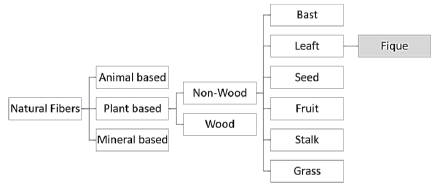
Figure 1
Fique fiber classification.
Source: own.
Fique is a natural fiber native to Colombia (Furcraea andina), grown mainly in the departments of Cauca, Narino, Santander, and Antioquia, generating an average of approximately 11.200 jobs per year [15].
The production of this fiber is carried out mainly in other countries of the American continent, some of them being Brazil, Ecuador, Venezuela, Costa Rica, and the Antilles [16].
The fiber consists of three components: cellulose, hemicellulose, and lignin. Where cellulose is the main component that confers resistance and stability to the cell walls of the plant [17].
The fiber is extracted from the leaf by mechanical techniques and is used mainly in sack packages and ropes. In its manufacturing process it is possible to obtain various presentations, from short fibers to meshes of different weights and textures [18].
During extraction of fique fiber from the leaf, 5% (w/w) fiber, 75% (w/w) juice and 25% (w/w) bagasse are produced [19].
It presents a low production cost in the range of $ 0.36 to $ 0.45 US, providing economic advantages that make its use attractive [20]. Table 1 summarizes the principal properties of fique fiber [21].
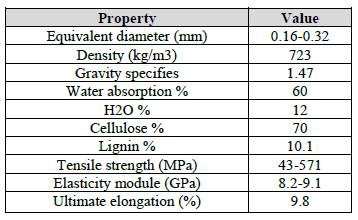
Additionally, the fibers have adequate thermal properties that allow them to withstand temperatures of up to 220 °C without degradation [22].
Fique has similar mechanical properties to the other natural fibers presented, however, the density value reported is one of the lowest, which makes it ideal for use in composite materials due to its low weight.
Table 2 compares the properties of fique fiber versus other relevant natural fibers. [23], [24], [25].
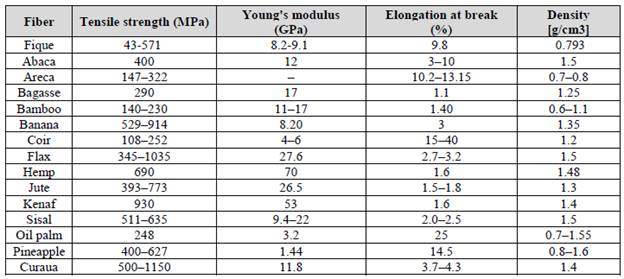
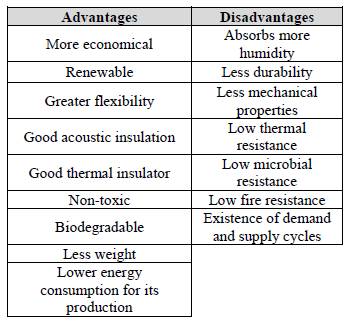
Table 3 shows the advantages and disadvantages of fique fiber when used as reinforcement in composite materials over conventional petrochemical fiber composites [26].
3. Fiber treatments
To improve the compatibility of the natural fique fibers with the matrix used in the different composite materials, which for the most part have been polymeric, different agents have been used through chemical treatments that have improved the homogenization characteristics, degree of crystallization, fiber-matrix adhesion and thermal stability of the fiber [27].
The main treatments found in the literature applied to fique fiber are listed below. However, its application (quantity of substance, additional additives, impregnation time, drying time) is modified according to the objectives of the research which leads to variations in application of them.
-
Thermal modification: The fibers are heated for a period of 30 min to 12 hours at a temperature that varies between 120 °C to 203 °C [28]. Arjona et al. [29] placed the fique fiber to dry at 105 °C for 1 hour, until obtaining complete loss of the water presented by the fiber, which improved its adhesion when the composites were manufactured.
-
Mercerization treatment: Mercerization is a treatment where an alkaline substance is used to break the hydrogen bonds present in the chemical structure of the fiber, it consists of heating the fiber in a solution of NaOH, KOH or LiOH (Its percentage varies according to study) for a set period of time, drying is done at room temperature or in an oven [30]. Castro et al. [31] treated the fique fiber with NaOH for 10, 30, 60, 90, 120 and 300 minutes with concentrations of 2.5%, 3.7% and 5.0% and drying at 25 °C (room temperature) for 72 hours and in an oven at 100 °C for 20 hours. Obtaining that the mechanical properties of the fiber increased in greater proportion using 5% NaOH, and an exposure time of 30 minutes with either of the two drying methods.
-
Treatment with silane: The fibers are immersed in a solution of water and alcohol with a silane base (SiH4) for a certain period of time, then the fibers were washed and dried at room temperature or in an oven [32]. Muñoz et al. [22] treated the fique fiber with a silane coupling agent; immersing them for 1 hour in a water-methanol solution, at a 50/50 v/v ratio, in which 1% and 0.5% of silane and di-cumyl peroxide were dispersed (percentage by weight with respect to the fiber), respectively. The pH of the solution was adjusted to 3.5 and stirred for 30 min. The fibers were dried at 60 °C for 24 hours, to finally be cured for 2 hours at 120 °C.
-
Isocyanate treatment: Isocyanate is a compound that contains the isocyanate functional group -N=C=O. Treatment is typically carried out by immersing the fiber in this agent at intermediate temperatures for a set period of time [33]. Gañan et al. [34], applied this treatment to the fique fibers using methylene diphenyl diisocyanate at a temperature of 70 ± 10 °C.
-
Esterification treatment: the fibers are immersed in a maleic anhydride solution [35]. Gañan et al. [34] applied this treatment to the fique fiber by immersing it in the maleic anhydride agent together with acetone, at a temperature of 55 °C ± 5 °C, then they were washed with acetone and left to dry 24 hours at a temperature of 105 °C ± 5 °C.
Table 4 shows the different treatments that have been applied to the fiber reinforced composites and that subsequently improved the mechanical properties of the composites.
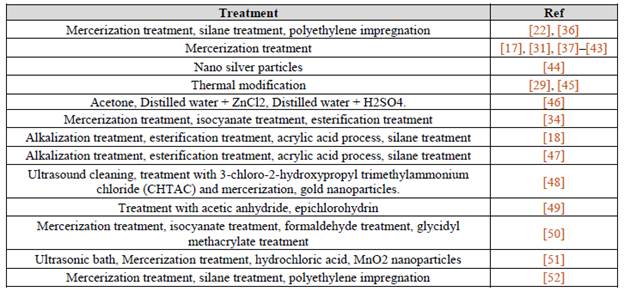
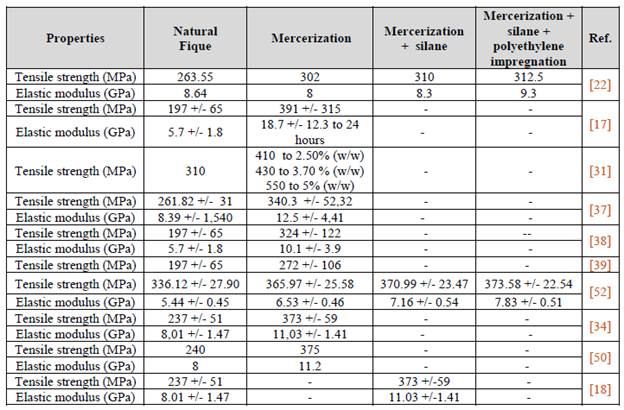
Table 5 shows the variation of the mechanical properties of fique fiber with different surface treatments in some studies with fique fiber.
4. Matrix composites
There are various materials that are used as matrix in the manufacture of composite materials, the most representative being metals, ceramics, and polymers [53]. Polymers are the most mentioned in the literature in the manufacture of fiber-reinforced composite materials, that is why this section will only talk about them.
Polymeric matrix can be divided into three groups: thermoplastics, thermosets and biobases [54].
-
Thermosets: The main characteristic of this type of matrix is that they cannot return to their original state after being heated [8].
-
Thermoplastics: is a polymer that can be softened in temperature processing but returns to the solid state once completed [55].
-
Biobases: they are bio-based polymers, that is, they are biodegradable, and can be thermostable or thermoplastic [56].
Table 6 Contains a compilation of the different works together with the matrix used for the manufacture of fique fiber reinforced composite materials.
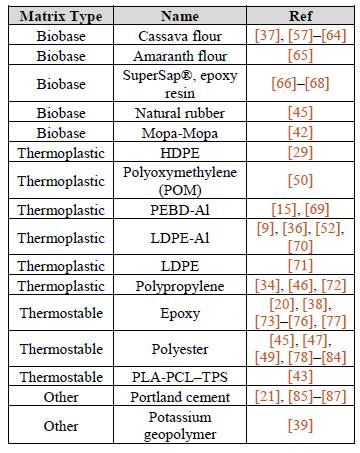
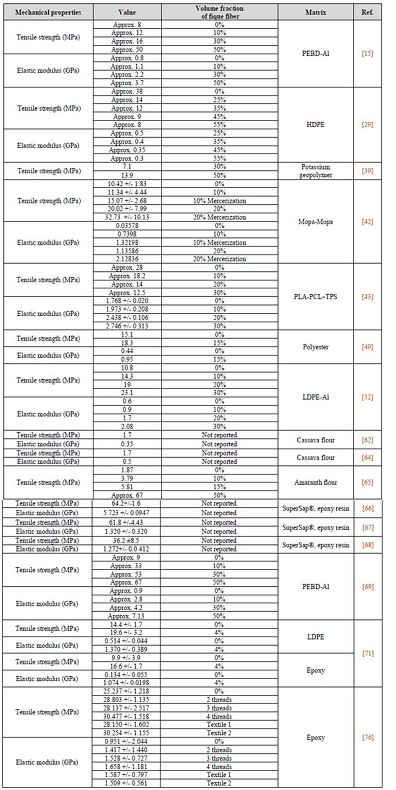
Table 7 shows the variation of the mechanical properties of different composite materials using several matrices and various percentages in volume of fique fiber.
5. Composite manufacturing
-
Pultrusion: It is a process where continuous fibers are impregnated with a matrix that is generally thermoset, then it is pulled and passed through a matrix that gives it the shape and where the curing is carried out, finally the cut is made with the size of the required part. Both the speed with which the fibers are fed, and the temperature of the matrix are the main variables that affect the properties of the composite [88].
-
Hand Lay-Up: It is a process where initially a release agent is applied that facilitates the detachment of the composite from the mold once the curing is finished. After this, a layer of resin is applied which prevents the fibers from moving through the mold. Subsequently, a layer of reinforcement (natural fiber) is placed and resin is added, this process is repeated with more layers until the desired thickness is obtained. Composites are cured at room temperature or in an oven [89].
-
Vacuum infusion: It is a low-cost, high-pressure manufacturing method where different layers of the fiber are stacked in an airtight mold, then various layers are used as tools in the process, such as the release layer, the layer of air purge, blocking film layer and breather layer, finally, the sheets are covered with a vacuum bag and using a vacuum pump the resin is sucked in and the material compaction is carried out. The curing process occurs in an oven, autoclave, or room temperature [90].
-
Compression molding: This process is normally used when high production volumes are required, the same process occurs both hot and cold. The input material is pellets which are previously obtained by an extruder. In cold compression molding only pressure is applied, while in hot compression molding pressure and temperature are applied. Curing can be done at room temperature or in an oven [91].
-
Injection Molding: In this manufacturing process thermoplastic polymer is used mixed with natural fibers (which are short), subsequently the temperature is increased by melting the polymer and injecting it into a mold. Once the composite has cooled, the manufactured part is expelled. Injection molding is used to produce high-volume products as it is normally automated [92].
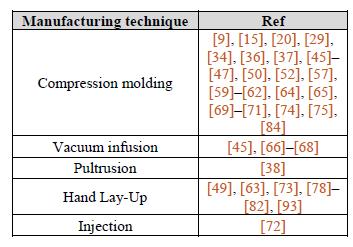
Table 8 shows the different techniques used to manufacture fique fiber reinforced composite materials.
6. Composite manufacturing
Different tests are reported to know the behavior and properties of composite materials reinforced with fique fibers. The most important tests that are carried out and the conclusions drawn from them are listed below.
-
Morphological characterization: Scanning electron microscopy has been used to visualize the morphology of the materials; it shows the adherence that the matrix had with the fiber in the manufacture of the fiber reinforced composites. Hidalgo et al. [36] used this technique and observed a low adherence between the fique fiber and an LDPE-AL matrix, which is improved when chemical treatments are applied to the fiber. Also, Gómez et al. [68] compared the adhesion of a composite with a biomatrix reinforcing with fique fiber versus one of fiberglass obtaining by means of microscopy that the adherence was much higher in the industrial composite.
-
Mechanical characterizations: The main mechanical characterizations applied to composite materials with fique fibers have been the tensile test, together with the flexural test. Hidalgo et al. [69] performed the stress test according to ASTM D38 standard to composites with 10, 30 and 50% fique and LDPE-Al matrix, finding that both the stress and the tension modulus increased with a greater amount of composite fiber. On the other hand, the same author in another investigation of a composite material with LDPE/AL matrix and the same percentages of fiber applied flexural test according to ASTM D790, obtaining that both the modulus and the flexural stress increased versus only the matrix, however the higher values were obtained with a percentage of 30% of fique fiber because with 50%, the fique load reaches a volume in which the matrix does not impregnate all of the fibers, restricting the transmission of loads from the matrix, at a certain volume of fibers [15].
-
Energy Absorption Characterization: Impact test is the technique that has been used to understand the energy required to propagate a crack or the ability of fique fiber composite materials to resist fracture. Navia et al. [62] evaluated the impact resistance according to the ASTM D256-10 standard, in fique fiber composites with a matrix with cassava flour, determining that the energy (J/m) increased by 23.5% of the impact resistance of just the matrix.
-
Thermal properties: Thermogravimetric analysis (TGA) and differential scanning calorimetry (DSC) are the two main techniques that have been used to obtain the thermal properties of composite materials reinforced with fique fibers. Ganan et al. [46] in DSC analysis report an increase in the crystallization temperature of composites with polypropylene when inserting fique fiber, caused by the nucleation influence of the untreated fiber surface as a consequence of the different polarities of the fibers and matrix. On the other hand, Muñoz et al. [52] observed the degradation of hemicellulose and cellulose initially in LDPE-AL matrix material reinforced with fiber of fique before the degradation of LDPE, likewise it increased at the temperature of the greatest loss of mass in the LDPE when entering fibers from 470 °C to 483 °C.
-
Dynamic properties: The dynamic mechanical analysis (DMA) test and the experimental modal analysis or measurement of the frequency response (FRF) are the tests that have been used the most to know the dynamic behavior of fique composites. Oliveira et al. [75] with DMA analysis found that the incorporation of fique fibers increased the viscoelastic stiffness of the epoxy matrix composites, likewise the peaks in both the loss modulus (E'') and the delta tangent (tan 5), shifted towards higher temperatures as the amount of fique fiber increased. On the other hand, Gomez et al. [45] in experimental modal analysis showed an increase in natural frequencies and in the damping of polyester matrix composite by increasing the amount of fique fiber used.
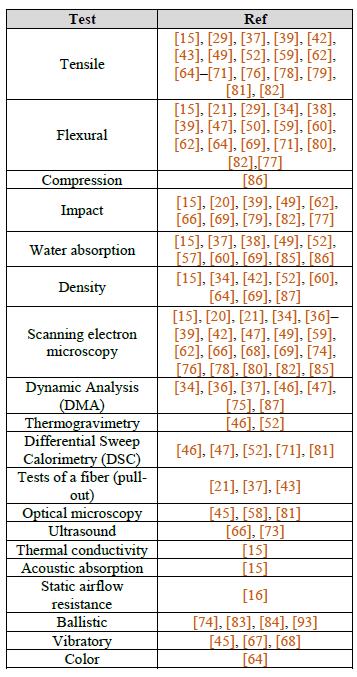
Table 9 shows the different tests applied to composite materials reinforced with fique fibers to know their properties.
7. Applications of natural fiber composites
Currently, composite materials reinforced with natural fibers are used in various commercial and engineering applications due to their properties [94].
The main sectors and applications where they are used are automotive, aerospace, marine, sporting goods, electronic applications, construction, furniture and packaging [95].
For example, door panels, seat backrests, roof coverings, package trays, instrument panels and interior parts are made by vehicle manufacturers in composite materials due to weight reduction and low cost [96].
However, its application has not been widespread due to the limitations of surface finish, moisture repellency, fire retardancy, mechanical properties and degradation due to environmental exposure [97], [98].
Few studies present industrial applications using fiber reinforced composite materials since most research has focused on characterization [99].
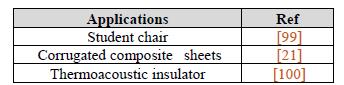
Table 10 shows the different applications of fique fiber composites.
8. Micromechanical modeling
Micromechanical models allow numerical estimation of the general properties of composite materials [101].
The accuracy in estimating the overall composite properties of these models depends on the input components, which are the individual properties and volume fraction of the matrix and fiber [102].
These models are used since estimating the mechanical properties experimentally can be quite expensive. Therefore, simulation methods based on computational micromechanics are very useful [103].
There are two techniques to solve micromechanical models, the first is Mean-Filed Homogenization (MFH), which is based on analytical models and the second is
Finite Element Homogenization (FEH) which is based on finite element formulations [104].
Few studies have been carried out applying micro mechanical models to fiber reinforced composite materials.
González-Estrada et al. [76] performed an analytical modeling using the rule of mixtures and finite element simulation to estimate the modulus of elasticity of unidirectional composites with different volume fractions of fique fiber and epoxy matrix, comparing the results with experimental data. The study presented a maximum error of 5.06% with the analytical model and 4.36% with finite element simulation in unidirectional composites of 3 and 4 fibers.
Gomez et al. [99] performed a static load analysis using finite elements by means of ANSYS software to the seat, backrest and armrest of a student chair made of fique fiber reinforced composite. The simulation showed that the chair would resist a load of 100 kg.
9. Micromechanical modeling
Natural fibers are taking great importance these days for the manufacture of fiber reinforced composite materials since they generate less environmental impact than their synthetic competitors.
One of the fibers that due to its physical characteristics and mechanical properties allow it to be used as a reinforcement of composite materials is the fique fiber.
Various treatments have been applied to the fique fibers, improving their adhesion with the matrix, with mercerization being the most common treatment in research.
Polymer matrix are mainly those that have been used for the manufacture of composite materials reinforced with fique fiber, both thermoset and thermoplastic, additionally present studies with biomatrix being the main use of the starch obtained from cassava.
Regarding manufacturing methods most research has focused on the manufacture of compression molding composites and manual hand lay-up application.
The characterizations of composite materials reinforced with fique fibers have been made using various techniques mainly known the mechanical, structural, dynamic, thermal, and energy absorption capacity.
Few studies report the use of analytical micromechanical models and finite element simulation in composite materials reinforced with fique fiber, so it is a very interesting field of research in future works.
Despite all the studies carried out on fique-reinforced composite materials, there is still scope for research mainly on their employability by developing products or applications that can be used at the industrial level, since there is little information on these topics.
Reference
A. Raju, M. Shanmugaraja, "Recent researches in fiber reinforced composite materials: A review," Mater. Today Proc., 2020, doi: https://doi.org/10.10167j.matpr.2020.02.141.
L. Kerni, S. Singh, A. Patnaik, N. Kumar, "A review on natural fiber reinforced composites," Mater. Today Proc., vol. 28, pp. 1616-1621, 2020, doi: https://doi.org/10.1016/j.matpr.2020.04.851.
R. D. J. Johnson, V. A. Prabu, P. Amuthakkannan, K. A. Prasath, "A review on biocomposites and bioresin based composites for potential industrial applications," Rev. Adv. Mater. Sci., vol. 49, no. 1, pp. 112-121, 2017.
A. F. Jusoh, M. R. M. Rejab, J. P. Siregar, D. Bachtiar, "Natural Fiber Reinforced Composites: A Review on Potential for Corrugated Core of Sandwich Structures," MATEC Web Conf., vol. 74, pp. 7-11, 2016, doi: https://doi.org/10.1051/matecconf/20167400033.
W. Kim et al., "High strain-rate behavior of natural fiber-reinforced polymer composites," J. Compos. Mater., vol. 46, no. 9, pp. 1051-1065, 2012, doi: https://doi.org/10.1177/0021998311414946.
D. B. Dittenber, H. V. S. Gangarao, "Critical review of recent publications on use of natural composites in infrastructure," Compos. Part A Appl. Sci. Manuf., vol. 43, no. 8, pp. 1419-1429, 2012, doi: https://doi.org/10.1016/j.compositesa.2011.11.019.
K. Keya, N. Kona, F. Koly, K. Maraz, M. Islam, R. Khan, "Natural fiber reinforced polymer composites: history, types, advantages, and applications," Mater Eng Res, 2019, doi: https://doi.org/10.25082/MER.2019.02.006.
O. Faruk, A. K. Bledzki, H. P. Fink, M. Sain, "Biocomposites reinforced with natural fibers: 2000-2010," Prog. Polym. Sci., vol. 37, no. 11, pp. 1552-1596, 2012, doi: https://doi.org/10.1016/j.progpolymsci.2012.04.003.
M. A. Hidalgo, M. F. Muñoz, J. H. Mina, "Influence of Incorporation of Natural Fibers on the Physical, Mechanical, and Thermal Properties of Composites LDPE-Al Reinforced with Fique Fibers," Int. J. Polym. Sci., vol. 2015, doi: https://doi.org/10.1155/2015/386325.
M. C. A. Teles, G. R. Altoé, P. A. Netto, H. Colorado, F. M. Margem, S. N. Monteiro, "Fique fiber tensile elastic modulus dependence with diameter using the weibull statistical analysis," Mater. Res., vol. 18, no. Suppl 2, pp. 193-199, 2015, doi: https://doi.org/10.1590/1516-1439.364514.
A. Gaitán-Bermúdez, G. Fonthal-Rivera, "Fabricación y análisis mecánico de compuestos de bambú Guadua angustifolia Kunth," Rev. UIS Ing., vol. 19, no. 3, pp. 207-214, 2020, doi: https://doi.org/10.18273/revuin.v19n3-2020019.
K. L. Pickering, M. G. A. Efendy, T. M. Le, "A review of recent developments in natural fibre composites and their mechanical performance," Compos. Part A Appl. Sci. Manuf., vol. 83, pp. 98-112, 2015, doi: https://doi.org/10.1016/j.compositesa.2015.08.038.
H. M. Akil, M. F. Omar, A. A. M. Mazuki, S. Safiee, Z. A. M. Ishak, A. Abu Bakar, "Kenaf fiber reinforced composites: A review," Mater. Des., vol. 32, no. 8-9, pp. 4107-4121, 2011, doi: https://doi.org/10.1016/j.matdes.2011.04.008.
V. Mahesh, S. Joladarashi, S. M. Kulkarni, "A comprehensive review on material selection for polymer matrix composites subjected to impact load," Def. Technol., 2020, doi: https://doi.org/10.1016/j.dt.2020.04.002.
M. A. Hidalgo, M. Muñoz, K. Quintana, "Análisis Mec ánico del compuesto polietileno aluminio reforzado con fibras cortas de fique en disposición bidimensional," Rev. Lat. Met., vol. 32, no. 1, pp. 89-95, 2012.
M. A. Navacerrada, C. Díaz, P. Fernández, "Characterization of a Material Based on Short Natural Fique Fibers," BioResources, vol. 9, no. 2, pp. 3480-3496, 2014, doi: https://doi.org/10.15376/biores.9.2.3480-3496.
C. Gómez Hoyos, V. A. Alvarez, P. G. Rojo, A. Vázquez, "Fique fibers: Enhancement of the tensile strength of alkali treated fibers during tensile load application," Fibers Polym., vol. 13, no. 5, pp. 632-640, 2012, doi: https://doi.org/10.1007/s12221-012-0632-8.
P. Gañán, I. Mondragon, "Surface modification of fique fibers. Effect on their physico-mechanical properties," Polym. Compos., vol. 23, no. 3, pp. 383-394, 2002, doi: https://doi.org/10.1002/pc.10440.
L. Plata, D. Rivera, L. Castro, C. Guzmán Luna, H. Escalante Hernández, "Jerarquización de tecnologías para el aprovechamiento industrial del subproducto de la digestión anaerobia del bagazo de fque," Rev. UIS Ing., vol. 11, no. 2, pp. 171-185, 2012.
M. S. Oliveira et al., "Statistical analysis of notch toughness of epoxy matrix composites reinforced with fique fabric," J. Mater. Res. Technol., vol. 8, no. 6, pp. 6051-6057, 2019, doi: https://doi.org/10.1016/j.jmrt.2019.09.079.
S. Delvasto, E. F. Toro, F. Perdomo, R. M. de Gutiérrez, "An appropriate vacuum technology for manufacture of corrugated fique fiber reinforced cementitious sheets," Constr. Build. Mater., vol. 24, no. 2, pp. 187-192, 2010, doi: https://doi.org/10.1016/j.conbuildmat.2009.01.010.
M. F. Muñoz, M. A. Hidalgo, J. H. Mina, "Fibras de fique una alternativa para el reforzamento de plásticos. Influencia de la modificación superficial.," vol. 12, no. 2, pp. 60-70, 2014.
V. Yada, S. Singh, "A comprehensive review of natural fiber composites: Applications, Processing Techniques and propierties," Mater. Today Proc., 2021, doi: https://doi.org/10.101016/j.matpr.2021.09.009.
Y. G. Thyavihalli Girijappa, S. Mavinkere Rangappa, J. Parameswaranpillai, S. Siengchin, "Natural Fibers as Sustainable and Renewable Resource for Development of Eco-Friendly Composites: A Comprehensive Review," Front. Mater., vol. 6, no. September, pp. 1-14, 2019, doi: https://doi.org/10.3389/fmats.2019.00226.
M. Zwawi, "A review on natural fiber Bio-Composites, surface modifications and applications," molecules, vol. 26, no. 404, p. 28, 2021, doi: https://doi.org/10.3390/molecules26020404.
S. Kumar, A. Manna, R. Dang, "A review on applications of natural Fiber-Reinforced composites (NFRCs)," Mater. Today Proc., 2021, doi: https://doi.org/10.1016/j.matpr.2021.09.131.
M. Sood, G. Dwivedi, "Effect of fiber treatment on flexural properties of natural fiber reinforced composites: A review," Egypt. J. Pet., vol. 27, no. 4, pp. 775-783, 2018, doi: https://doi.org/10.1016/j.ejpe.2017.11.005.
A. Langhorst et al., "Heat-treated blue agave fiber composites," Compos. PartBEng., vol. 165, no. October 2018, pp. 712-724, 2019, doi: https://doi.org/10.1016/j.compositesb.2019.02.035.
S. D. Arjona, F. Perdomo, R. M. De Gutiérrez, "Ecolaminados de pead-fibras de fique," Ing. y Compet., vol. 3, no. No 1, pp. 43-50, 2001.
S. R. Albinante, É. B. A. V. Pacheco, L. L. Y. Visconte, "Revisão dos tratamentos químicos da fibra natural para mistura com poliolefinas," Quim. Nova, vol. 36, no. 1, pp. 114-122, 2013, doi: https://doi.org/10.1590/S0100-40422013000100021.
C. Castro, A. Palencia, I. Gutiérrez, G. Vargas, P. Gañán, "Determination of optimal alkaline treatment conditions for fique fiber bundles as reinforcement of composites materials," Rev. Téc. Ing. Univ. Zulia, vol. 30, no. 2, pp. 136-142, 2007.
S. Kalia, B. S. Kaith, I. Kaur, "Pretreatments of natural fibers and their application as reinforcing material in polymer composites-A review," Polym. Eng. Sci., vol. 49, pp. 1253-1272., 2009, doi: https://doi.org/10.1002/pen.
X. Li, L. G. Tabil, S. Panigrahi, "Chemical Treatments of Natural Fiber for Use in Natural Fiber-Reinforced Composites: A Review," J. Polym. Environ., vol. 15, no. 1, pp. 25-33, 2007, doi: https://doi.org/10.1007/s10924-006-0042-3.
P. Gañán, I. Mondragon, "Influence of Compatibilization Treatments on the Mechanical Properties of Fique Fiber Reinforced Polypropylene Composites," Int. J. Polym. Mater., vol. 53, no. 11, pp. 997-1013, 2004, doi: https://doi.org/10.1080/00914030490516648.
Q. Wang, X. Yan, Y. Chang, L. Ren, J. Zhou, "Fabrication and characterization of chitin nanofibers through esterification and ultrasound treatment," Carbohydr. Polym., vol. 180, no. June 2017, pp. 81 -87, 2018, doi: https://doi.org/10.1016/j.carbpol.2017.09.010.
M. A. Hidalgo-Salazar, J. H. Mina, P. J. Herrera-Franco, "The effect of interfacial adhesion on the creep behaviour of LDPE-Al-Fique composite materials," Compos. Part B Eng., vol. 55, pp. 345-351, 2013, doi: https://doi.org/10.1016/j.compositesb.2013.06.032.
J. H. Mina, "Caracterización Físico-Mecánica De Un Almidón Termoplastico De Yuca Y Análisis Interfacial Con Fibras De Fique," Biotecnol. en el Sect. Agropecu. y Agroindustrial, vol. 10, no. 2, pp. 99-110, 2012.
C. Gómez Hoyos, A. Vázquez, "Flexural properties loss of unidirectional epoxy/fique composites immersed in water and alkaline medium for construction application," Compos. Part B Eng., vol. 43, no. 8, pp. 3120-3130, 2012, doi: https://doi.org/10.1016/j.compositesb.2012.04.027.
S. Kaushik, M. K. Waltraud, "Potassium Geopolymer Reinforced with Alkali-Treated Fique," in Developments in Strategic Materials and Computational DesignV, 2015, pp. 61-78.
R. E. Guzmán, S. Gómez, O. Amelines, G. M. Aparicio, "Superficial modification by alkalization of cellulose Fibres obtained from Fique leaf," IOP Conf. Ser. Mater. Sci. Eng., vol. 437, no. 1, 2018, doi: https://doi.org/10.1088/1757-899X/437/1/012015.
J. Suarez, J. Restrepo, A. Quinchia, F. Mercado, "Fibras vegetales colombianas como refuerzo en compuestos de matriz polimerica," Tecnura, vol. 21, no. 51, pp. 57-66, 2017, doi: https://doi.org/10.14483/udis-trital.jour.tecnura.2017.1.a04.
J. H. M. Hernandez, E. F. T. Perea, K. C. Mejía, C. A. M. Jacobo, "Effect of fique fibers in the behavior of a new biobased composite from renewable Mopa-Mopa Resin," Polymers (Basel)., vol. 12, no. 7, pp. 1-15, 2020, doi: https://doi.org/10.3390/polym12071573.
J. H. Mina, A. V. González, M. F. Muñoz-Vélez, "Micro- and macromechanical properties of a composite with a ternary PLA-PCL-TPS matrix reinforced with short fique fibers," Polymers (Basel)., vol. 12, no. 1, 2020, doi: https://doi.org/10.3390/polym12010058.
S. A. Ovalle, C. Blanco-Tirado, M. Y. Combariza, "Síntesis in Situ De Nanopartículas De Plata Sobre Fibras De Fique," Rev. Colomb. Química, vol. 42, no. 1, pp. 30-37, 2014.
S. A. Gomez, B. Ramón-Valencia, A. S. Jaimes, "Experimental dynamic characterization of composites reinforced with natural fiber of fique," Ingeniare, Rev. Chil. Ing., vol. 28, pp. 304-314, 2020.
P. Gañán, I. Mondragon, "Thermal and degradation behavior of fique fiber reinforced thermoplastic matrix composites," J. Therm. Anal. Calorim., vol. 73, no. 3, pp. 783-795, 2003, doi: https://doi.org/10.1023/A:1025830430267.
P. Gañán, I. Mondragon, "Fique fiber-reinforced polyester composites: Effects of fiber surface treatments on mechanical behavior," J. Mater. Sci., vol. 39, pp. 3121-3128, 2004, doi: https://doi.org/10.1023/B:JMSC.0000025841.67124.c3.
L. J. Castellanos, C. Blanco-Tirado, J. P. Hinestroza, M. Y. Combariza, "In situ synthesis of gold nanoparticles using fique natural fibers as template," Cellulose, vol. 19, no. 6, pp. 1933-1943, 2012, doi: https://doi.org/10.1007/s10570-012-9763-8.
L. J. Rodríguez, W. A. Sarache, C. E. Orrego, "Compuestos de poliéster reforzados con fibra de plátano/banano (Musa paradisiaca) modificada químicamente. Comparación con fibra de vidrio y fique (Furcraea andina)," Inf. Tecnol., vol. 25, no. 5, pp. 27-34, 2014, doi: https://doi.org/10.4067/S0718-07642014000500005.
P. Gañan, I. Mondragon, "Effect of Fiber Treatments on Mechanical Behavior of Short Fique Fiber-reinforced Polyacetal Composites," J. Compos. Mater., vol. 39, no. 7, pp. 633-646, 2005, doi: https://doi.org/10.1177/0021998305047268.
M. Chacón, C. Blanco-Tirado, M. Combariza, "Biocomposite of nanostructured MnO2 and fique fibers for efficient dye degradation," Green Chem., vol. 15, p. 2920, 2013, doi: https://doi.org/10.1039/c3gc40911b.
M. F. Muñoz-Vélez, M. A. Hidalgo-Salazar , J. H. Mina-Hernández, "Effect of content and surface modification of fique fibers on the properties of a low-density polyethylene (LDPE)-Al/fique composite," Polymers (Basel)., vol. 10, no. 10, pp. 1-14, 2018, doi: https://doi.org/10.3390/polym10101050.
A. K. Sharma, R. Bhandari, A. Aherwar, R. Rimasauskiene, "Matrix materials used in composites: A comprehensive study," Mater. Today Proc., vol. 21, pp. 1559-1562, 2020, doi: https://doi.Org/10.1016/j.matpr.2019.11.086.
D. Verma, "Bagasse fiber composites: A Review," J. Mater. Environ. Sci., vol. 3, pp. 1079-1092, 2012.
N. Banik, "A review on the use of thermoplastic composites and their effects in induction welding method," Mater. Today Proc., vol. 5, no. 9, Part 3, pp. 20239-20249, 2018, doi: https://doi.org/10.1016/j.matpr.2018.06.395.
Y. Zhang, Z. Yuan, C. (Charles) Xu, "8 - Bio-based resins for fiber-reinforced polymer composites," in Natural Fiber-Reinforced Biodegradable and Bioresorbable Polymer Composites, A. K. Lau and A. P.-Y. Hung, Eds. Woodhead Publishing, 2017, pp. 137-162.
D. P. Navia, A. A. Ayala, H. S. Villada, "Determinación de isotermas de adsorción de agua en biocompuestos de harina termoplastica y fique," Biotecnol. en el Sect. Agropecu. y Agroind. , vol. 11, no. 1, pp. 144-154, 2013.
D. P. Navia, H. S. Villada Castillo, G. A. Torres, "Caracterización morfológica de harina de siete variedades de yuca y polvillo de fique por microscopia óptica de alta resolución -Moar-," Biotecnol. en el Sect. Agropecu. y Agroindustrial, vol. 8, no. 2 SE-Artículos originales, pp. 79-85, Dec. 2010.
D. P. Navia, A. A. Ayala, H. S. Villada, "Effect of cassava flour gelatinization on mechanical properties of bioplastics," Biotecnol. en el Sect. Agropecu. y Agroindustrial, vol. 13, no. 1, pp. 38-44, 2015.
D. P. Navia, A. A. Ayala, H. S. Villada, "Biocompuestos de harina de yuca obtenidos por termo-compresión. efecto de las condiciones de proceso," Inf. Tecnol., vol. 26, no. 5, pp. 55-62, 2015, doi: https://doi.org/10.4067/S0718-07642015000500008.
D. P. Navia, A. A. Ayala, H. S. Villada, "Adsorción de vapor de agua Bioplastios elaborados con Harina de dos variedades de yuca," Inf. Tecnol., vol. 25, pp. 23-32, 2014.
D. P. Navia, H. S. Villada, A. A. Ayala, "Evaluación mecánica de bioplasticos semirrígidos elaborados con harina de yuca," Biotecnol. en el Sect. Agropecu. y Agroind., vol. 2, no. 2, pp. 77-85, 2013.
G. Luna, H. Villada, R. Velasco, "Fique s fiber reinforced thermoplastic starch of cassava: Preliminary," DYNA, vol. 76, no. 159, pp. 145-151, 2009.
D. P. Navia, N. Bejarano, "Evaluación de propiedades físicas de bioplásticos termo-comprimidos elaborados co harina de yuca," Rev. del Inst. Nac. Hig. Rafael Rangel, vol. 12, pp. 40-48, 2014.
J. P. Castañeda, S. Villada Castillo, S. A. Mosquera Sanchez, "Evaluación de las propiedades mecánicas en harinas de amaranto termoformadas (amaranthus caudatus)," Fac. ciencias Agropecu., vol. 6, pp. 61-65, 2008.
F. Ramón Valencia, A. Lopez-Arraiza, J. I. Múgica, J. Aurrekoetxea, J. C. Suarez, B. Ramón-Valencia, "Influence of seawater immersion in low energy impact behavior of a novel colombian fique fiber reinforced bio-resin laminate," Dyna, vol. 82, no. 194, pp. 170-177, 2015, doihttps://doi.org/10.15446/dyna.v82n194.48622.
S. A. Gómez, B. A. Ramón, R. E. Guzmán, "Análisis modal de material compuesto de resina bioepoxy/fibra de fique," Entre Cienc. e Ing., vol. 12, no. 23, p. 78, 2018, doi: https://doi.org/10.31908/19098367.3706.
S. Gómez, B. Ramón, R. Guzman, "Comparative study of the mechanical and vibratory properties of a composite reinforced with fique fibers versus a composite with E-glass fibers," Rev. UISIng.,vol. 13, no. 1, pp. 43-50, 2018, doi: https://doi.org/10.18273/revuin.v17n1-2018004.
M. A. Hidalgo, M. F. Muñoz, K. J. Quintana, "Desempeño mecánico del compuesto polietileno-aluminio reforzado con agro fibras continuas de fique," Rev. Lat. Met. Mat., vol. 31, no. 2, pp. 187-194, 2011.
M. Hidalgo, M. F. Muñoz Vélez, J. Mina, T. Osswald, "Study of the interfacial properties of fique fiber reinforced polyethylene aluminium," Annu. Tech. Conf. - ANTEC, Conf. Proc., vol. 1, pp. 575-580, 2012.
M. A. Hidalgo-Salazar , J. P. Correa, "Mechanical and thermal properties of biocomposites from nonwoven industrial Fique fiber mats with Epoxy Resin and Linear Low Density Polyethylene," Results Phys., vol. 8, pp. 461-467, 2018, doi: https://doi.org/10.1016Zj.rinp.2017.12.025.
S. M. Luz, A. R. Gonçalves, A. P. Del'Arco, A. L. Leão, P. M. C. Ferrão, G. J. M. Rocha, "Thermal properties of polypropylene composites reinforced with different vegetable fibers," Adv. Mater. Res., vol. 123- 125, pp. 1199-1202, 2010, doi: https://doi.org/10.4028/www.scientific.net/AMR.123-125.1199.
C. A. M. Valencia, J. F. Pazos-Ospina, E. E. Franco, J. L. Ealo, D. A. Collazos-Burbano, G. F. C. Garcia, "Ultrasonic determination of the elastic constants of epoxy-natural fiber composites," Phys. Procedia, vol. 70, pp. 467-470, 2015, doi: https://doi.org/10.1016/j.phpro.2015.08.287.
M. S. Oliveira et al., "Ballistic performance and statistical evaluation of multilayered armor with epoxy-fique fabric composites using the Weibull analysis," J. Mater. Res. Technol, vol. 8, no. 6, pp. 5899-5908, 2019, doi: https://doi.org/10.1016/j.jmrt.2019.09.064.
M. S. Oliveira et al., "Evaluation of dynamic mechanical properties of fique fabric/epoxy composites," Mater. Res., vol. 22, pp. 1-6, 2019, doi: https://doi.org/10.1590/1980-5373-MR-2019-0125.
O. A. González-Estrada, G. Díaz, J. Quiroga, "Mechanical response and damage of woven composite materials reinforced with fique," Key Eng. Mater., vol. 774 KEM, pp. 143-148, 2018, doi: https://doi.org/10.4028/www.scientific.net/KEM.774.143.
J. Rua, M. F. Buchely, S. N. Monteiro, G. I. Echeverri, H. A. Colorado, "Impact behavior of laminated composites built with fique fibers and epoxy resin: a mechanical analysis using impact and flexural behavior," J. Mater. Res. Technol., vol. 14, pp. 428-438, 2021, doi: https://doi.org/10.1016/j.jmrt.2021.06.068.
G. R. Altoé, P. A. Netto, M. C. A. Teles, G. Daniel, F. M. Margem, S. N. Monteiro, "Tensile strength of polyester composites reinforced with fique fibers," Charact. Miner. Met. Mater. 2015, pp. 465-470, 2016, doi: https://doi.org/10.1007/978-3-319-48191-3_57.
A. Maranon, "Impact performance of natural fique -fiber reinforced composites," Proc. IMECE2008 2008 ASME Int. Mech. Eng. Congr. Expo., pp. 1-2, 2008.
G. R. Altoé, P. A. Netto, M. Barcelos, A. Gomes, F. M. Margem, S. N. Monteiro, "Bending mechanical behavior of polyester matrix reinforced with fique fiber," Charact. Miner. Met. Mater . 2015, pp. 117-121, 2016.
M. Pietroniro, C. Bloem, "Ventajas del algodón frente al fique como refuerzo en compuestos poliméricos," Cienc. e Ing., vol. 36, pp. 51-58, 2015.
M. F. Contreras, W. A. Hormaza, A. Marañón, "Fractografía de la fibra natural extraída del fique y de un material compuesto reforzado con tejido de fibra de fique y matriz resina poliéster," Rev. Latinoam. Metal. y Mater., vol. S1, no. 1, pp. 57-67, 2009, [Online]. Available: https://www.polimeros.labb.usb.ve/RLMM/home.html.
A. C. Pereira et al., "Ballistic performance of multilayered armor with intermediate polyester composite reinforced with fique natural fabric and fibers," J. Mater. Res. Technol., vol. 8, no. 5, pp. 4221-4226, 2019, doi: https://doi.org/10.1016/j.jmrt.2019.07.031.
A. C. Pereira et al., "Evaluation of the projectile's loss of energy in polyester composite reinforced with fique fiber and fabric," Mater. Res., vol. 22, pp. 1-7, 2019, doi: https://doi.org/10.1590/1980-5373-MR-2019-0146.
G. H. D. Tonoli, S. F. Santos, H. Savastano, S. Delvasto, R. Mejía De Gutiérrez, M. D. M. Lopez De Murphy, "Effects of natural weathering on microstructure and mineral composition of cementitious roofing tiles reinforced with fique fibre," Cem. Concr. Compos., vol. 33, no. 2, pp. 225-232, 2011, doi: https://doi.org/10.1016/j.cemconcomp.2010.10.013.
R. Mejia, L. A. Calderón, S. Delvasto, "Degradation of fiber reinforced mortar in a marine environment," Mar. Corros. Trop. Environ., pp. 197-206, 2000.
C. G. Hoyos, R. Zuluaga, P. Gañán, T. M. Pique, A. Vazquez, "Cellulose nanofibrils extracted from fique fibers as bio-based cement additive," J. Clean. Prod., vol. 235, pp. 1540-1548, 2019, doi: https://doi.org/10.1016/j.jclepro.2019.06.292.
R. de Cassia Costa Dias, M. L. Costa, L. de Sousa Santos, R. Schledjewski, "Kinetic parameter estimation and simulation of pultrusion process of an epoxy-glass fiber system," Thermochim. Acta, vol. 690, no. April, p. 178636, 2020, doi: https://doi.org/10.1016/j.tca.2020.178636.
E. Sevkat, M. Brahimi, "The bearing strength of pin loaded woven composites manufactured by Vacuum Assisted Resin Transfer Moulding and hand lay-up techniques," Procedia Eng., vol. 10, pp. 153-158, 2011.
T. Gajjar, D. B. Shah, S. J. Joshi, K. M. Patel, "Analysis of process parameters for composites manufacturing using vacuum infusion process," Mater. Today Proc., vol. 21, pp. 1244-1249, 2020, doi: https://doi.Org/10.1016/j.matpr.2020.01.112.
B. KC, M. Pervaiz, O. Faruk, J. Tjong, M. Sain, "Green Composite Manufacturing via Compression Molding and Thermoforming," in Manufacturing of Natural Fibre Reinforced Polymer Composites, M. S. Salit, M. Jawaid, N. Bin Yusoff, and M. E. Hoque, Eds. Cham: Springer International Publishing, 2015, pp. 45-63.
M. S. Salit, "Manufacturing Techniques of Tropical Natural Fibre Composites," in Tropical Natural Fibre Composites: Properties, Manufacture and Applications, Singapore: Springer Singapore, 2014, pp. 103-118.
S. N. Monteiro et al., "Fique fabric: A promising reinforcement for polymer composites," Polymers (Basel)., vol. 10, no. 3, pp. 1-10, 2018, doi: https://doi.org/10.3390/polym10030246.
M. R. Sanjay, G. R. Arpitha, L. L. Naik, K. Gopalakrishna, B. Yogesha, "Applications of Natural Fibers and Its Composites: An Overview," Nat. Resour., vol. 07, no. 03, pp. 108-114, 2016, doi: https://doi.org/10.4236/nr.2016.73011.
V. K. Thakur, M. K. Thakur, "Processing and characterization of natural cellulose fibers/thermoset polymer composites," Carbohydr. Polym., vol. 109, pp. 102-117, 2014, doi: https://doi.org/10.1016/j.carbpol.2014.03.039.
J. Holbery, D. Houston, "Natural-fiber-reinforced polymer composites in automotive applications," JOM, vol. 58, no. 11, pp. 80-86, 2006, doi: https://doi.org/10.1007/s11837-006-0234-2.
M. S. Huda, L. T. Drzal, D. Ray, A. K. Mohanty, M. Mishra, "7 - Natural-fiber composites in the automotive sector," in Properties and Performance of Natural-Fibre Composites, K. L. Pickering, Ed. Woodhead Publishing, 2008, pp. 221-268.
S. M. Velásquez Restrepo, G. J. Pelaéz Arroyave, D. H. Giraldo Vásquez, "Uso de fibras vegetales en materiales compuestos de matriz polimèrica: una revisión con miras a su aplicación en el diseño de nuevos productos", Inf. tec., vol. 80, n.° 1, pp. 77-86, jun. 2016.
S. A. Gomez-Suarez , E. Cordoba, C. Vega, S. Gomez-Becerra, "Manufacture of student chair in composite material reinforced with fique fiber," Sci. Tech., vol. 26, no. 01, pp. 6-13, 2021.
T. S. Gomez, M. A. Navacerrada, C. Díaz, P. Fernández-Morales, "Fique fibres as a sustainable material for thermoacoustic conditioning," Appl. Acoust., vol. 164, p. 107240, 2020, doi: https://doi.org/10.1016/j.apacoust.2020.107240.
Y. Pan, Z. Zhong, "A micromechanical model for the mechanical degradation of natural fiber reinforced composites induced by moisture absorption," Mech. Mater., vol. 85, pp. 7-15, 2015, doi: https://doi.org/10.1016/j.mechmat.2015.02.001.
F. Chegdani, M. El Mansori , S. T. S. Bukkapatnam, J. N. Reddy, "Micromechanical modeling of the machining behavior of natural fiber-reinforced polymer composites," Int. J. Adv. Manuf. Technol., vol. 105, no. 1-4, pp. 1549-1561, 2019, doi: https://doi.org/10.1007/s00170-019-04271-3.
K. Jagath Narayana, R. G. Burela, "Multi-scale modeling and simulation of natural fiber reinforced composites (Bio-composites)," J. Phys. Conf. Ser., vol. 1240, no. 1, pp. 0-10, 2019, doi: https://doi.org/10.1088/1742-6596/1240/1/012103.
D. Abe, O. Bacarreza, F. M.H. Aliabadi, "Micromechanical Modeling for the Evaluation of Elastic Moduli of Woven Composites," in Advances in Fracture and Damage Mechanics XI, 2013, vol. 525, pp. 73-76, doi: https://doi.org/10.4028/www.scientific.net/KEM.525-526.73.
Notes
Author notes
aEmails: sergio.gomezs@upb.edu.cobedwin.cordoba@upb.edu.co