Artícle
Serviceability analysis for human-induced vertical vibration on pedestrian structures
Análisis por condición de servicio causado por vibración vertical inducida por peatones en estructuras
 Daniel Gómez daniel.gomez@correounivalle.edu.co
Sandra Villamizar sandra.villamizar@correounivalle.edu.co
Albert Ortiz albert.ortiz@correounivalle.edu.co
Daniel Gómez daniel.gomez@correounivalle.edu.co
Sandra Villamizar sandra.villamizar@correounivalle.edu.co
Albert Ortiz albert.ortiz@correounivalle.edu.co
Serviceability analysis for human-induced vertical vibration on pedestrian structures
Revista UIS ingenierías, vol. 21, no. 3, pp. 135-152, 2022
Universidad Industrial de Santander
Received: 24 March 2022
Accepted: 15 July 2022
Funding
Funding source: Universidad del Valle, Colombia
Contract number: 21125
Abstract: Civil engineering structures such as grandstands, slabs, footbridges and staircases have reported unacceptable vertical vibration when they are affected by human activities. Even when most of these structures are designed according to current guidelines and design codes, there are still misunderstandings in the human-structure interaction effects that, in some cases, may increase the vibration response compromising the structural serviceability performance. As a result, the serviceability load conditions due to pedestrian activities control, in most cases, the design for these structures. Therefore, a systematic overview regarding vertical pedestrian-structure interaction is carried out to demonstrate the need for a realistic analysis to properly incorporate these effects toward more rational structural designs. The discussion establishes a body of knowledge regarding pedestrian loads and structural responses, yielding the potential for more rational approaches to improving the analysis and design of pedestrian structures.
Keywords: Vertical human-structure interaction, vibration serviceability, pedestrian-induced load, design guidelines, footbridges, structural vibration assessment, walking loading models, vertical dynamic response, crowd-structure interaction, low frequency vibration.
Resumen: Estructuras civiles tales como tribunas, losas, puentes peatonales y escaleras están presentando vibraciones verticales inaceptables cuando se ven afectadas por actividades humanas. Por lo tanto, todavía no se tiene claridad sobre los efectos producidos por la interacción entre el ser humano y la estructura que, en algunos casos, pueden llegar a aumentar la respuesta estructural comprometiendo el desempeño para condiciones de servicio. Un examen a las normas y códigos de diseño existentes, arroja una amplia gama de resultados, lo que demuestra que no son consistentes cuando las estructuras están expuestas a cargas inducidas por peatones. Este estudio tiene como objetivo identificar los mecanismos de vibración, los modelos matemáticos y los métodos para abordar la vibración vertical excesiva en las estructuras peatonales. Este análisis establece un conjunto de recomendaciones sobre las cargas que producen los peatones y las respuestas estructurales que pueden producir, lo que genera el potencial para futuros enfoques más racionales que mejoren el análisis y el diseño de estructuras peatonales.
Palabras clave: Interacción vertical humano-estructura, análisis de vibraciones verticales en condición de servicio, carga inducida por peatones, códigos de diseño, puentes peatonales, evaluación de la vibración estructural, modelos de carga para peatones, respuesta dinámica vertical, interacción multitud-estructura, vibración a baja frecuencia.
1. Introduction
An increasing number of slender structures such as slabs, footbridges, staircases and grandstands have exhibited problems with annoying vibrations induced by pedestrians, even when most of them were designed following current standards and guidelines [1], [2], [3]. When such constructions have specific combinations of low natural frequency and low structural damping, there is potential for excessive dynamic response. Rising concern regarding the possibility of unexpected structural vibration, especially in footbridges, demonstrates that pedestrians’ effects on structures remain a global problem. However, because such structural issues have occurred sporadically in different countries over a few decades, the problem has not clearly been articulated [4]. It is perhaps for this reason that the final design often deviates significantly from the predicted model response, such as the Millennium Bridge in London, Solférino Bridge in Paris, and Squibb Park Bridge in New York, among others. As a result, the serviceability load conditions due to pedestrian activities are controlling the design for these structures [5], [6].
The main components of the pedestrian-structure interaction (PSI) depicted in Figure 1 can be classified as (1) dynamic actions induced by pedestrians on the structure, (2) pedestrians perception to an excessive vibration causing changes in the walking characteristics, and (3) changes in the dynamic properties of the structural system due to the presence of a crowd. The PSI is particularly pronounced when the lowest structural frequencies are close to the human pace frequency or their harmonics [5], [1], [2], [7]. This condition exposes the pedestrians to excessive structural vibration modifying their gait characteristics that may lead to unexpected structural behavior, increasing the vibration responses and exceeding serviceability limit states [8], [9], [10], [11].
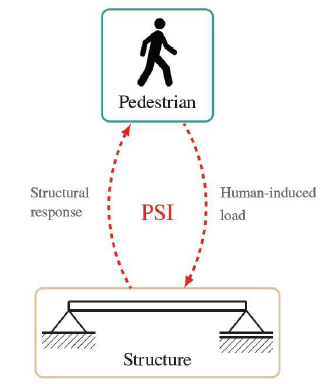
Figure 1
Coupled system to represent the pedestrian structure interaction.
Thus, a designer should use a more refined model to include the interaction when the main components of the PSI might occur in the structural response. Although there has been growing interest in this topic, and updates to some guidelines have been done to provide practical descriptions of the PSI effects, these might be insufficient based on the persistent reported concerns indicating that these interaction effects are still difficult to estimate. Most design codes consider the effects of pedestrians and crowds as a static load distributed per unit area [12], [13], [14]. This static load is known as the live load.
As a result, the prediction of the system’s response due to human activities might be inaccurate and greatly depends on the level of this interaction and synchronization that the structural designer could not anticipate readily. Therefore, the effects produced by human traffic and other activities, such as dancing, running, jumping, and so on, over the structures are still not very well modeled.
The overarching contribution of this paper is to develop the necessary awareness for understanding and modeling the effects of pedestrian-induced dynamic actions on structures, especially on footbridges in the vertical direction.
The increase of reported vibration problems in modern slender structures indicates that future structures should be designed with due consideration of humans’ Dynamic loads to minimize the restrictions to architectural features of very slender or lightweight structures. Research is critically needed because these serviceability load conditions due to human activities do control the design, especially in prominent structures where human occupants congregate, such as stadiums, long-span floors, gymnasiums, footbridges and theaters.
2. Pedestrian-structure interaction
Stevenson (1821) published the first notable consideration regarding excessive vibration in suspension bridges. He noticed appreciable movement when a passing regiment marched on the Montrose and Dryburgh bridges in Scotland. He stated that this type of load should not be considered simply as a static load based on his observations [15]. Later, both the Broughton suspension bridge in England in 1831 and the Angers bridge in France in 1850 collapsed while groups of soldiers marched across them. After the Broughton suspension bridge collapsed, the British Army ordered that soldiers crossing a bridge should break the step.
A remarkable study performed by Tilden (1913) developed an innovative experimental program to measure the dynamic effects of a single subject performing different activities such as standing up from crouching and sitting postures. This study conducted two other novel tests based on his observations when a crowd of people ran from one side to the other side of a bridge during a boat competition.
In the first test, a person walked on a rigid floor while being recorded by an arrangement of several cameras. Using the sequential photos, this study recorded the center of mass (COM) movement of a pedestrian. By obtaining the acceleration from the measured displacements, an intent to estimate the horizontal forces exerted for a walker was made. In the second test, a subject ran from one side to another side on three test bridges. Using a stopwatch, the runner’s speed based on the time and the covered distance was calculated. The person’s instantaneous horizontal force on each side of the bridge was estimated using the runner’s kinetic energy [16].
Later, sporadic reports for large vibration amplitudes were divulged in different countries. Several pedestrian bridges suffered annoying excessivevibrations in the lateral and vertical direction during exceptional crowd events, such as marching soldiers, procession, a crowd walking from one side to another, and a crowd walking from one end to another [4]. In 1958, the Parkovy pedestrian bridge in Ukraine was closed shortly after opening due to excessive lateral vibration. Vibration measurements revealed that the first natural frequency in lateral direction was around 1 Hz, near the dominant pace frequency in the lateral direction of a walker [17]. Another well-documented example of excessive vibration occurred in 1989 when the Toda park bridge, a cable-stayed footbridge in Japan, was heavily used. This pedestrian bridge exhibited lateral vibration induced by crowd traffic due to its natural frequency in the lateral direction at 0.95 Hz [18], [19], [20]. In the vertical direction, the Jatujak bridge in Thailand with a 2 Hz first vertical mode suffered a significant vibration response, causing alarm to users [21], [22].
The most well-known examples of pedestrian-structure interaction occurred when unexpected lateral vibration occurred in two iconic bridges: the Solférino bridge in Paris (Fig.2a) and the Millennium bridge in London (Fig.2b). Such footbridges were closed to the public due to excessive vibrations in 1999 and 2000, respectively.
![Noteworthy pedestrian bridges with reported excessive vibration problems. (a) Solférino bridge. Adapted from [24]; (b) Millennium bridge.](../2145-8456-uisi-21-03-135-gf2.png)
Figure 2
Noteworthy pedestrian bridges with reported excessive vibration problems. (a) Solférino bridge. Adapted from [24]; (b) Millennium bridge.
Adapted from [25].
They received wide attention from researchers because the structural engineers were not able to predict large responses due to human loads in their analysis. Although the lateral vibration problems of the Solférino and Millennium bridges were unusual, this phenomenon is not unique and similar problems in the vertical direction have been observed in other structures. In general, different interactions mechanisms, such as the inter-pedestrian, pedestrian-structure or both, might occur on slender structures [23].
2.1. Walking-induced load models
Frequently, a pedestrian bridge is subjected to different loading scenarios, including a single pedestrian loading, regular spatially unrestricted traffic (each individual can walk freely), crowd loading (the walking of an individual is spatially restricted due to proximity of other pedestrians), joggers and runners (single or groups) and vandal loading (usually involving jumping or bouncing) [26], [27]. Pedestrians produce dynamic forces which have components in all three directions. Several mathematical models have been developed in the last two decades to predict the lateral and vertical structural response due to pedestrians [28], [29], [30], [31], [32], [33]. However, most of them consider a single pedestrian as a deterministic moving periodic force [34], neglecting the interaction as a bidirectional effect between the pedestrian and the vibrating structure. In this approach, a force function is applied to the structure based on measurements of the ground reaction force (GRF) that a pedestrian produces on a force plate while walking on a rigid floor. The GRF is applied directly to the structure as a traveling load crossing the bridge, which is frequently referred to as the moving force (MF) problem. The most common international standards and design codes, such as the Eurocode 1 [35], Ontario Guide [36], Eurocode 5 [37], Sétra [38], ISO 10137 [39], and HIVOSS [40], often adopt this simplified methodology that tends to overestimate the structure’s response [26], [41], [42], [43]. A general overview regarding the classification of the methods of analysis for pedestrian-induced vibrations can be found in Ref. [23].
Several models have proposed a single degree of freedom dynamic system with mass, spring and damper elements to represent a person walking on a structure. This perspective, derived from the moving oscillator (MO) problem [44], [45], [46], [47], implements a periodic force that describes the GRF applied to the footbridge at the pedestrian location [41], [48], [49]. Both the MF and MO models include a periodic function that has been shown to represent the vertical force applied by a pedestrian [6]. This function is expressed as a Fourier series multiplied by the mode shape to obtain the effective modal force as From Eq. (1), the single-step forcing function 𝐹 (𝑡) is represented by an amplitude corresponding to the weight of the pedestrian 𝑊𝑝 and a sinusoidal function, which includes the harmonic components of the step load. The pace frequency is specified by 𝐹𝑝 in the vertical or horizontal direction, 𝜙 (·) is the normalized fundamental mode shape of the structure, 𝑐 is the constant anterior-posterior velocity of the pedestrian and 𝑡 represents the time. 𝛼 and 𝜑 are the Fourier coefficient and phase lag of the first harmonic, respectively.
 (1)
(1)Early developments in biomechanics and robotics representing the human locomotion on a stationary surface as an inverted pendulum were developed [50], [51], [52], [53], [54], [55]. More detailed models have been motivated by these bipedal representations to interact with a moving surface [56], [57], [58]. Despite the fact that the equations for the bipedal alone are simple, when the structure is included in the analysis, the complexity of the models and the high number of input parameters make them hard to use for everyday practice [59], [3].
Pedestrian-structure interaction (PSI) models have been deterministic, with pedestrian parameters represented by specific quantities. However, the biodynamic parameters’ values vary from person to person (inter-subject variability) and from trial to trial, even for a subject walking the same distance and surface condition repeatedly (intrasubject variability) [60], [61], [62]. Consequently, deterministic simulations conducted with a particular set of parameters might produce results that do not fully cover the possible structural responses. Recently, probabilistic approaches have been proposed to model pedestrian loads on structures representing pedestrian dynamic parameters or gait kinematics as known probability density functions [63], [64], [65], [66], [67], [68]. The use of probability methods for the design of structures under pedestrian loads addresses the variability found in the literature, and it is related to the inter- and intra-subject variability.
Živanović (2006) proposed a probability-based framework for a vibration serviceability analysis, which can be used to predict the vertical dynamic response due to a single pedestrian. This study proposed the probability density functions for walking frequencies, step lengths, walking force magnitudes, and imperfections in human walking.
Then, a design procedure that estimates the probability that the vibration response will not exceed any limit is computed [69]. Ingólfsson and Georgakis (2011) developed a novel timedomain load model for the frequency and amplitude dependent pedestrian-induced lateral forces [70]. The pseudorandom model is presented in a stochastic framework based on the Power Spectral Density (PSD) of the load [71]. A pseudo-random time series of the equivalent static load from a single pedestrian is then generated, as follows where 𝑓𝑘 = 𝑘Δ 𝑓 is the frequency from which the power spectrum ordinates are obtained with 𝑘 = 0 𝑡𝑜 𝑁 − 1 and Δ 𝑓 = 1/𝑁Δ𝑡 = 2/𝑇𝑡𝑜𝑡 , the parameters 𝜑𝑘 are randomly generated phase angles from a uniform distribution, 𝑁 is the total number of data points, 𝑁ℎ𝑎𝑟𝑚 is the total number of load harmonics, and 𝑇??𝑜𝑡 is the duration of the time series.
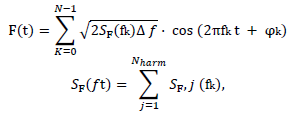 (2)
(2)The fitted PSD function for the 𝑗𝑡ℎ load harmonicis defined as 𝑆𝐹, 𝑗 (𝑓𝑘) in Eq. (3) representing the nondeterministic nature of the load with ̃ as the area of the PSD around the 𝑗𝑡ℎ harmonic, the 𝑗𝑡ℎ Dynamic Load Factor (DLF), the normalized frequency 𝑓/( 𝑗 𝑓𝜔), and parameters 𝐴𝑗 and 𝐵𝑗 for the Gaussian shape spectrum that can be obtained from [30].
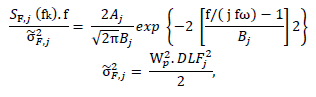 (3)
(3)Muhammad and Reynolds (2020) proposed a time history model accounting for variability in the step length, step duration, and footfall profile for individuals walking as a function of pacing frequency [72]. The models reproduce a time-history load ready to be implemented to any FEM model, and it is amenable for use in Monte-Carlo simulations; however, it does not consider the interaction phenomena. Nevertheless, the available experimental data involving biodynamic parameters, such as damping and stiffness, do not yet allow an extensive probabilistic analysis [73], [74], [75]. Moreover, such measurements are often collected using pedestrians walking on a rigid surface, where the interaction effects between the pedestrian and the structure are not reached [76], [63], [77], [68], [3].
Thus, a reliable representation for a single-person excitation is believed to be the first necessary step towards developing a potential probability-based model for a crowd-loaded scenario [75].
Another kind of model found in the literature use concepts of spectra similar to those commonly used in earthquake engineering [78]. The response spectrum may account for having the induced loads variability and evaluating the structural response. However, the spectrum approach is mainly proposed for one degree of freedom systems, restricting the method to a single pedestrian [79]. A recent study [80] has shown promising results when vibration-based monitoring of bridges is conducted to assess whether comfortable and safe exposure conditions are obtained. This methodology allows different strategies to remotely evaluate the structure’s serviceability conditions based on the observation and analysis of the structural response.
Although a crowd-loaded scenario is a realistic traffic case with different pedestrian densities, there are no accepted criteria regarding the number of individuals to assume in a crowd, the density of pedestrian traffic, or the degree of pace synchronization. Therefore, the complexity of the model becomes impractical and sometimes unrealistic. Thus, guidelines and design codes show severe limitations to predict when large structural response amplitudes due to crowd loads will occur. Further research and experimental data are required to provide an understanding of the crowd dynamics and their interaction with a structure.
2.2. Influence of the vibration level in the gait dynamics
A pedestrian-structure resonant condition exposes pedestrians to excessive structural vibration that may modify their gait characteristics (e.g., step length, step width, pace frequency, COM horizontal speed, among others) [81], [9], [11]. Common modeling approaches neglect, due to the absence of suitable data, the structural effect when the pedestrian is influenced under vibrating conditions and its tendency to adapt one’s gait to the oscillating structure. Even though several studies have successfully looked at characterizing the human gait variability, most of these were conducted on a rigid surface for medical and biomechanical purposes. A previous study by Dang and Živanović (2016) showed the influence of low-frequency vertical vibration on human walking by using a treadmill on top of a bridge. In this study, a shaker was used to produce steady vibration levels while the pedestrian was walking on a treadmill.
This seminal study must be extended to simultaneously measure the structural vibration while gait data of each step is register for a different number of pedestrians that are exposed to self-induced acceleration levels [82].
The effects of an oscillating surface and its influence on the pedestrian gait must be studied further to appropriately incorporate them into the structural analysis and design. The synchronization when pedestrians match their pace frequency with the structure’s natural frequency might be evidence forhorizontalor vertical lock-in in PSI, where pedestrians try unconsciously to modify their gait characteristics [83], [84], [85]. However, different studies suggest that in the vertical direction there is no evidence for lock-in [86], [38]. Additional studies should be conducted to verify if subjects could either decrease their pacing rate to avoid the surface vibration or shift their pacing rate with the surface movement in the vertical direction [59], [11]. These gait variabilities may lead to unexpected structural behavior, increasing the vibration responses and exceeding serviceability limit states [8], [9], [10]. Further analysis is needed to provide the temporal and spatial kinematic changes when pedestrians are walking on a moving surface such as slabs, footbridges, or stairs. A more complete spatial and temporal gait kinematic assessment will provide a better understanding of the pedestrian intra-subject gait changes on a lively surface.
2.3. Anthropometric data
Traditional biodynamic parameters include a main lumped mass 𝑚𝑝, a linear spring 𝑘𝑝 and a viscous dashpot 𝑐𝑝 to represent the dynamic response of a human body. Several studies have attempted to obtain the biodynamic parameters for a single pedestrian on a stationary and vibrating surface. A summary of the reported values, like mean, standard deviation (SD), and the parameter ranges, are summarized in Table1.
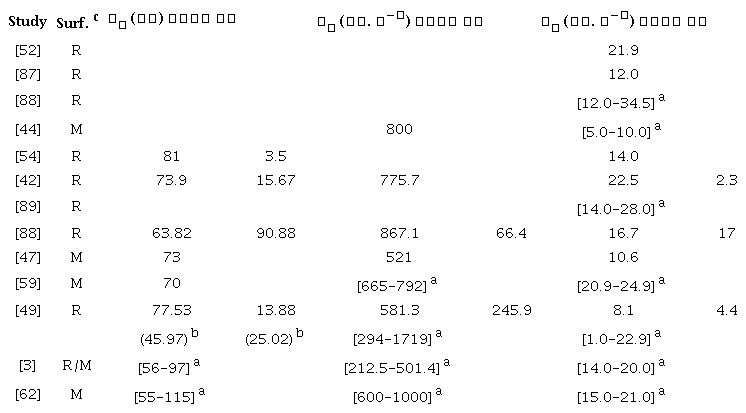
𝑎 Range of values of biodynamic parameters used/obtained in the study. 𝑏 Fraction of the body mass considered to provide the inertial force generated by a walking pedestrian. 𝑐 R=Rigid surface, M=Moving surface. Adapted from [62].
As can be seen, there are significant scarcities of the obtained results in the damping and stiffness coefficient values. Even for most of the obtained values on a stationary surface, a wide range of biodynamic properties are noticeable. It shows that there are still considerable uncertainties involving biodynamic parameters under pedestrian-induced excitation that need to be researched in a more natural environment. Although some efforts have recently been conducted by researchers [67], [73], [90], [11] where the natural frequency and damping ratio are determined as functions of the gait kinematics, there is still no consensus among these studies regarding the parameter values. These uncertainties in any PSI assessment must be considered in the analysis to meet serviceability-based design requirements [62].
3. Guidelines and standards
Between 1860 and 1905, structural engineers and researchers tried to establish the weight of a crowd for design purposes (Table 2). However, the live load values used in the engineering practice at that time differ widely and, in some cases, were understated. The load values traditionally used for a crowd ranging from 1960 to 7500 Pa, revealing a vast criterion to design pedestrian structures.
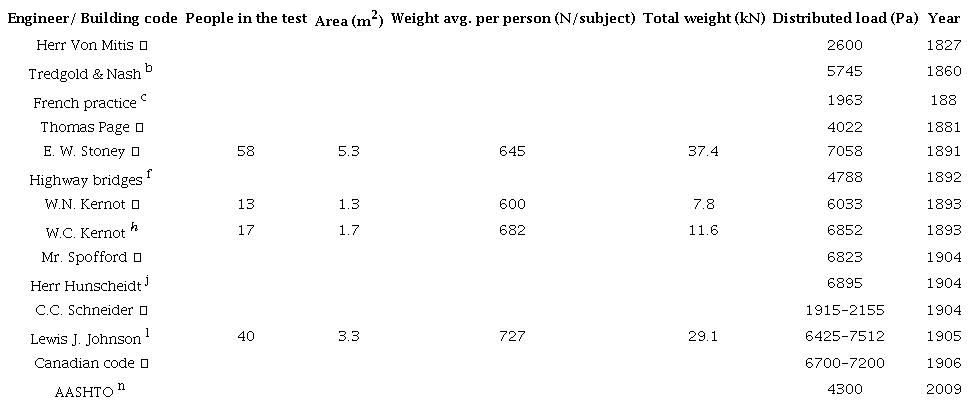
𝑎 Structural designer, suspension bridge over the Danube canal, Austria [91]. 𝑏 Architects of Buckingham Palace, England [92]. 𝑐 Proof load by French government [92]. 𝑑 Engineer to Chelsea bridge, England [92]. 𝑒 Structural designer, Ireland [93]. 𝑓 American highway bridges specifications, USA [93]. 𝑔 Working Men’s College, Melbourne, Australia [93]. ℎ Melbourne University, Australia [93]. 𝑖 Professor at MIT [93]. 𝑗 Structural designer, Bonn, Germany [93]. 𝑘 Structural designer, USA [93]. 𝑙 Professor at Harvard University [93]. 𝑚 Code of building laws and regulations of the city of Montreal [94]. 𝑛 LRFD guide specifications for the design of pedestrian bridges [12].
One of the earliest experimental tests to measure the static load produced by a group of people was conducted by Johnson (1905). He placed his students in a 3.3 m2 wood box to measure the weight of a different number of people, as shown in Fig.3. He found that the maximum allowable load of 8600 Pa might occur in exceptional cases, but 7500 Pa seemed to be the reasonable value that might occur more often [93]. In 1906, the Canadian code stated that 6700 to 7200 Pa could be considered the weight of a stationary group of people [94]. However, for pedestrian structures the Canadian code asserted that when a crowd is moving, the live load value should be increased in the analysis to consider the effect of the human movement in the structural response. Nevertheless, a value to amplify the live load was not specified by this guideline.
Currently, standards and building codes are limited in considering the fact that changes may occur in the dynamic properties of structures due to this interaction with moving pedestrians. Some guidelines still consider the maximum credible pedestrian loading as shown in Fig.3 based on the work done by Johnson (1905), where the test was replicated in 2000 [95] as shown in Fig.4. Based on the latter test program, a value of 90 psf (4309 Pa), as the maximum allowable pedestrian load, is still used in the AASHTO guideline for footbridge design [12]. In general, the static load per unit area neglects the dynamic effect of the human movement; therefore, serviceability guidelines are not able to predict the structural dynamic response accurately, suffering from inconsistent and sometimes illogical design solutions, and indicating the gap in knowledge in this approach [96], [97], [98].
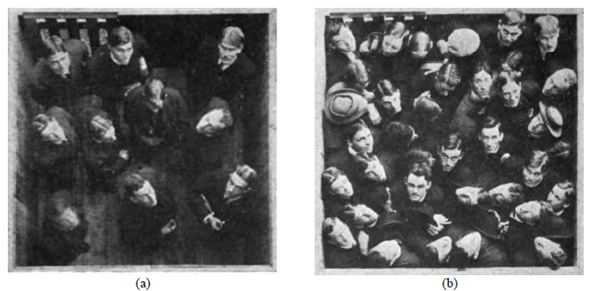
Figure 3
Weight of a crowd. (a) 10 men on 36 ft2, 41 psf (1963 Pa); (b) 37 men on 36 ft2, 154 psf (7373 Pa).
Adapted from [93].
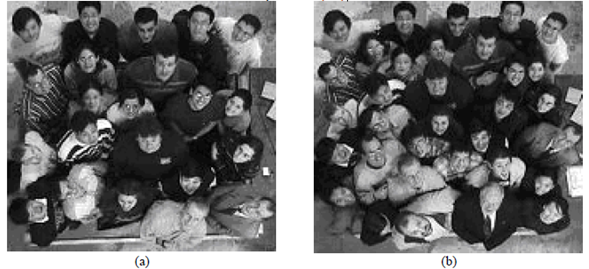
Figure 4
Weight of a crowd. (a) Live load of 100 psf (4788 Pa); (b) Live load of 150 psf (7182 Pa).
Adapted from [12].
A serviceability verification of an in-service footbridge was performed by [99] using the acceptable comfort limits in vertical direction established by current standards and guidelines. The assessment showed that the recorded experimental acceleration data of the bridge differed from the estimated peak acceleration response obtained using the equations provided by guidelines. Similarly, [100] evaluated the dynamic response of six footbridges. The impact on design procedures were assessed following the provisions of existing guidelines, comparing them with allowable comfort levels.
The comparison showed a wide scatter of the results, revealing some inconsistencies of the procedures. It can be concluded that there is no unified agreement in the serviceability assessment procedures to account for vibration comfort levels. Even the most advanced standards and guidelines need to be carefully considered in the design stage due to unforeseen results. Therefore, for any pedestrian structure whose fundamental frequency lies in the range of the pace frequency in the horizontal or vertical direction, a comprehensive procedure must be conducted as an alternative to reduce the structural vibration.
Even with recent advances in load models and response predictions, measured structural responses from in- service footbridges often deviate significantly from those expected [101]. The main reason for this gap is that experimental studies of PSI and the available mathematical models to describe the loads imposed by pedestrians, are unable to predict the dynamic interaction between the coupled systems adequately [102]. Modern design codes and standards commonly address the vibration serviceability of structures at the design stage in a combination of one, two, or even three approaches: (1) setting a lower bound for the static live load value, which must be increased by a factor to compensate for the lack of accuracy to estimate the structural dynamic response; (2) setting a lower bound value for the fundamental frequency of the structure to avoid the possibility of resonant response due to the human activities; or (3) setting an upper bound of the acceptability acceleration criterion limit as an assessment of vibration serviceability of pedestrian structures under walking-induced vibrations [78]. Although these standards are based on frequency and acceleration criteria, they have different comfort limit approaches to account for vibration’s acceptability. This procedure, which is described in different design codes (Table 3), has several shortcomings as incomplete and unrealistic characterization of the actual loads, neglects the interactions between the humans and structures, and the final designs do not reflect the architectural and aesthetic appearance to maintain harmony with the surrounding infrastructure.
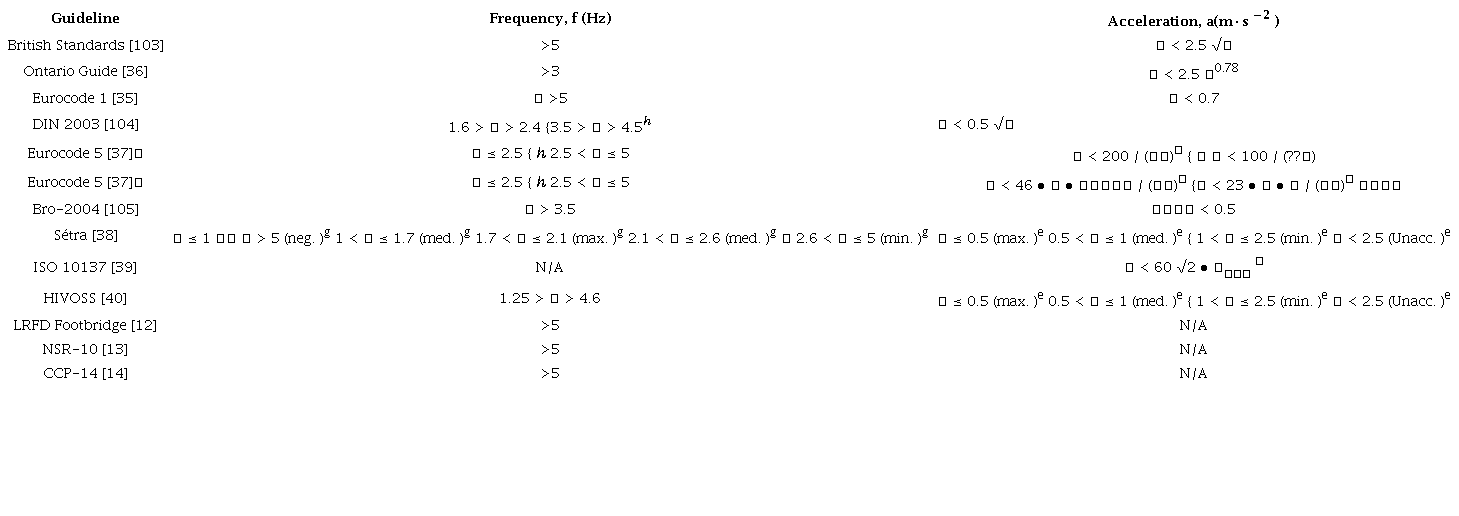
Different guidelines. 𝑎 For one pedestrian crossing the bridge. 𝑏 For several pedestrians crossing the bridge. 𝑐 M is the total mass of the bridge in kg. 𝜁 is the damping ratio. 𝑑n = 13 for a distinct group of pedestrians, n = 0. 6·𝐴 for a continuous stream of pedestrians where A is the area of the bridge deck in m2. kvert is defined in Fig. B-1 in [37]. 𝑒 Level of comfort: max = maximum, med = medium, min = minimum, unacc = unacceptable. 𝑔 Risk of resonance: max = maximum, med = medium, min = minimum, neg = negligible. ℎ Might be excited by the 2𝑛𝑑 harmonic of pedestrian loads. 𝑚 𝑎𝑟𝑚𝑠 is defined in Fig. C-1 [39].
4. Discussion
Pedestrians walking on a structure result in a coupled system requiring expertise spanning the interfaces between different fields. There is still room to develop the necessary knowledge for understanding and modeling the effects of pedestrian-induced dynamic actions on a structure. To bridge this gap, several comprehensive analyses and experimental programs must be conducted.
Three main concepts are proposed to be investigated: (1) spatial and temporal analysis of the variation in gait characteristics when a pedestrian is influenced by vibrating conditions, (2) the sensitivity of the structural response to pedestrian-induced loads, including biodynamic parameters variations, and (3) the use of methodologies for pedestrian-structure monitoring. And supplemental devices to reduce the structural response in a time-variant system. Thus, a common point of interest between human motor behavior, feedback systems, and the serviceability design of structures might be explored.
By melding these three disciplines, future research will leverage tools and theories from kinesiology, to analyze and describe pedestrian gait characteristics (i.e., step length, step with, pace frequency, horizontal speed, among others) and uncertainties in biodynamic parameters (i.e., variations in the pedestrian mass, stiffness, and damping) under oscillatory conditions. Structural monitoring and control theory, to capture the interaction features of a pedestrian-structure system as coupled subsystems that interact dynamically through feedback links directly integrated into the model [7]. Structural engineering, to interpret these models and establish rational serviceability limits toward improving structural designs to meet realistic limit state specifications. By blurring these research boundaries, the understanding of pedestrian-structure interaction can be achieved, enabling structural designers to perform an appropriate analysis and design that accomplish desirable performance with realistic response variations.
Experimental data for footbridges produced by different pedestrian load conditions are critically needed to obtain the dynamic effects for different structural typologies. Experimental programs including ambient measurements and pedestrian-induced vibration should be conducted to obtain the dynamic characteristics of footbridges in both empty and in-service conditions. Then, the vibration serviceability assessment of the in-service footbridges under controlled walking-induced load can be conducted. The experimental information will enable the serviceability verification of the footbridges to update current standards, guidelines and design codes.
Currently, three general design procedures are typically considered to enhance the serviceability performance of a footbridge. First, the structural design process assumes the pedestrian load as static, which might not be appropriate when the structural first vibration mode in vertical direction has a frequency between 1.6 and 2.4 Hz. Experimental results have indicated that footbridges can reach high vibration levels that could compromise the user’s comfort limit state. A simple pedestrian-structure model must be used to include the bidirectional forces between the coupled system. Second, design guidelines must reconsider the frequency criterion where the fundamental frequency needs to be high enough to avoid dynamic amplification under pedestrian activities to offer other options when the system’s frequency cannot be increased up to guideline limits due to aesthetic or economic reasons. Increasing the stiffness to shift the natural frequencies of a footbridge out of the range excited by pedestrians might be unrealistic and even unreasonable. Decreasing the mass is also not easy in pedestrian structures, where non-structural elements are not abundant. Therefore, for any pedestrian structure, whose fundamental frequency in vertical direction lies in the range of the vertical pacing frequency (between 1.6 to 2.4 Hz), the use of supplemental devices such as a tuned mass damper (TMD) and/or damper devices should be recommended to decrease excessive vibration that is present even under low traffic conditions.
Finally, a sequential strategy is proposed to be incorporated into the structural analysis and design to consider the pedestrian-structure interaction effects. In the future, this approach might be followed to become a simple but effective design procedure. First, a refined pedestrian-structure model (and a crowd-structure model) must be used to account for the interaction and randomness in the dynamic properties of the coupled system. Second, by studying the influence of lively structures on the pedestrian gait characteristics, the kinematic variation in terms of step length, step width, pace frequency, gait speed, among others, should be obtained for a vibrating surface under walking conditions instead of using the stationary surface data. The results should help to understand the pedestrian’s tendency to modify and adapt one’s gait based on the amplitude, and the frequency of the vibration, which is likely either for stability balance or metabolic energy minimization [11]. Therefore, assessing these gait changes in the design process could be meaningful and must be included at the design stage of pedestrian structures. Third, an explicit variability description of the pedestrian biomechanical properties based on probabilistic functions should be used to obtain robust design models fully capable of reaching realistic serviceability performance. A systematic approach to combine the developed feedback model with gait variability and intra- and inter-subject biodynamic uncertainties should be implemented to provide a realistic model suited to highlight the sensitivity of the structural response to pedestrian parameter randomness. Based on these variations, appropriate ranges or probability functions for the uncertain biodynamic parameters must be determined and used to generate an arbitrary number of simulations to assess the expected structural responses.
5. Conclusions
The increase of reported vibration problems in modern slender structures indicates that future structures should be designed with due consideration to the coupled dynamic loads induced by humans to minimize the restrictions to architectural features of very slender or lightweight structures.
Research is critically needed because these serviceability load conditions due to human activities do control the design, especially in prominent structures where human occupants congregate, such as stadiums, long-span floors, gymnasiums, footbridges, and theaters. As the field proceeds to pursue innovative and sustainable solutions for designs, codes and procedures need to realistically consider the pedestrian influence on the structure with its considerable randomnesses and uncertainties in the structural response.
Rational analyses of pedestrian-structure interaction have been discussed to properly incorporate the dynamic effects toward a more realistic structural design. Further comprehensive analysis and experimental programs must be conducted in the future to quantify the spatial-temporal variations in gait characteristics when pedestrians are influenced by vibrating conditions (i.e., the intra- and inter-subject variability of the human walking force), the sensitivity of the structural response to walking-induced loads including biodynamic parameter variations, the pedestrian-pedestrian interaction, and the use of supplemental devices in order to decrease the structural response. Therefore, as society strives to build taller and longer high-fidelity models and improved standards, the designer must perform an appropriate analysis to design reliable and robust structures that achieve desirable performance even with realistic response variations.
Acknowledgment
This work was financially supported by the Universidad del Valle, Colombia (Grant No. 21125: Feedback control theory for modeling human-structure interaction)
References
A. Cunha, C. Moutinho, “Active control of vibrations in pedestrian bridges,” in Conference of the European Association for Structural Dynamics (Eurodyn’99), vol. 2, 1999, pp. 783-788.
R. Sachse, A. Pavic, P. Reynolds, “Humanstructure dynamic interaction in civil engineering dynamics: A literature review,” Shock and Vibration Digest, vol. 35, no. 1, pp. 3-18, 2003, doi: https://doi.org/10.1177/0583102403035001624
D. Gomez, S. J. Dyke, S. Rietdyk, “Experimental verification of a substructure-based model to describe pedestrian-bridge interaction,” Journal of Bridge Engineering, vol. 23, no. 4, pp. 1-19, 2018, doi: https://doi.org/10.1061/(ASCE)BE.1943-5592.0001204
B. Wolmuth and J. Surtees, “Crowd-related failure of bridges,” Proceedings of the ICE: Civil Engineering, vol. 156, no. 3, pp. 116-123, 2003, doi: https://doi.org/10.1680/cien.2003.156.3.116
B. Ellingwood, A. Tallin, “Structural service ability: floor vibrations,” J. Struct. Eng., vol. 110, no. 2, pp. 401-418, 1984.
H. Bachmann, W. J. Ammann, F. Deischl, J. Eisenmann, I. Floegl, G. H. Hirsch, G. K. Klein, G. J. Lande, O. Mahrenholtz, H. G. Natke et al., Vibration problems in structures: practical guidelines. Birkhäuser, 1995.
A. R. Ortiz, J. M. Caicedo, “Modeling the effects of a human standing on a structure using a closed loop-control system,” Journal of Engineering Mechanics, vol. 145, no. 5, p. 04019025, 2019.
F. Danion, E. Varraine, M. Bonnard, J. Pailhous, “Stride variability in human gait: The effect of stride frequency and stride length,” Gait and Posture, vol. 18, no. 1, pp. 69-77, 2003, doi: https://doi.org/10.1016/S0966-6362(03)00030-4
H. V. Dang and S. Živanović, “Experimental characterisation of walking locomotion on rigid level surfaces using motion capture system,” Engineering Structures, vol. 91, pp. 141-154, 2015, doi: https://doi.org/10.1016/j.engstruct.2015.03.003
M. García-diéguez, J. L. Zapico-Valle, “Sensitivity of the vertical response of footbridges to the frequency variability of crossing pedestrians,” Vibration, pp. 290-311, 2018, doi: https://doi.org/10.3390/vibration1020020
D. Gomez, S. Rietdyk, S. J. Dyke. “Spatio-temporal assessment of gait kinematics in vertical pedestrian-structure interaction,” Structures, vol. 31, no. February, pp. 1199-1206, 2021, doi: https://doi.org/10.1016/j.istruc.2021.02.024
AASHTO, LRFD Guide Specifications for the Design of Pedestrian Bridges, 2009, no. T-5 (WAI 31).
NSR-10, Norma Colombianas de Diseño y Construcción Sismo Resistente. Asociación Colombiana de Ingeniería Sísmica, 2010.
CCP-14, Norma Colombiana de Diseño de Puentes. Asociación Colombiana de Ingeniería Sísmica, 2014.
R. Stevenson, “Description of bridges of suspension,” The Edinburgh Philosophical Journal, vol. 5, no. 10, pp. 237-256, 1821.
C. J. Tilden, “Kinetic effects of crowds,” Transactions of the American Society of Civil Engineers, vol. 76, no. 1, pp. 2107-2126, 1913.
A. N. Blekherman, “Swaying of pedestrian bridges,” Journal of Bridge Engineering, vol. 10, no. 2, pp. 142-150, 2005, doi: https://doi.org/10.1061/(ASCE)1084-0702(2005)10:2(142)
Y. Fujino, L. Sun, B. M. Pacheco, A. Member, P. Chaiseri, “Tuned liquid damper (TLD) for suppressing horizontal motion of structures,” Journal of Engineering Mechanics, vol. 118, no. 10, pp. 2017-2030, 1992, doi: https://doi.org/10.1061/(ASCE)0733-9399(1992)118:10(2017)
Y. Fujino , B. Pacheco, S. I. Nakamura, P. Warnitchai, “Synchronization of human walking observed during lateral vibration of a congested pedestrian bridge,” Earthquake Engineering & Structural Dynamics, vol. 22, no. December 1993, pp. 741-758, 1993, doi: https://doi.org/10.1002/eqe.4290220902
, Y. Fujino , “Lateral vibration on a pedestrian cable-stayed bridge,” Structural Engineering International: Journal of the International Association for Bridge and Structural Engineering (IABSE), vol. 12, no. 4, pp. 295-300, 2002.
N. Poovarodom, S. Kanchanosot, P. Warnitchai, “Application of non-linear multiple tuned mass dampers to suppress man-induced vibrations of a pedestrian bridge,” Earthquake Engineering and Structural Dynamics, vol. 32, no. 7, pp. 1117-1131, 2003, doi: https://doi.org/10.1002/eqe.265
M. Brand, J. Sanjayan, A. Sudbury, “Dynamic response of pedestrian bridges for random crowdloading,” Australian Journal of Civil Engineering, vol. 3, no. 1, pp. 27-38, 2017, doi: https://doi.org/10.1080/14488353.2007.11463918
F. Ricciardelli, C. Demartino, “Design of footbridges against pedestrian-induced vibrations,” Journal of Bridge Engineering, vol. 21, no. 8, pp. 1-13, 2016, doi: https://doi.org/10.1061/(ASCE)BE.1943-5592.0000825
Skyscrapercity, “Solférino bridge,” 2021, https://www.skyscrapercity.com/
LondonTown, “Millennium bridge,” 2021, http://www.londontown.com/
, A. Pavić, E. Ingólfsson, “Modelling spatially unrestricted pedestrian traffic on footbridges,” ASCE Journal of Structural Engineering, vol. 136, no. 10, pp. 1296-1308, 2010, doi: https://doi.org/10.1061/(ASCE)ST.1943-541X.0000226
G. Piccardo, F. Tubino, “Equivalent spectral model and maximum dynamic response for the serviceability analysis of footbridges,” Engineering Structures, vol. 40, pp. 445-456, 2012, doi: https://doi.org/10.1016/j.engstruct.2012.03.005
P. Dallard, T. Fitzpatrick, A. Flint, A. Low, R. Smith, M. Willford, M. Roche, “London Millennium bridge: pedestrian-induced lateral vibration,” Journal of Bridge Engineering, vol. 6, no. 6, pp. 412-417, 2001, doi: https://doi.org/10.1061/(ASCE)1084-0702(2001)6:6(412)
T. M. Roberts, “Synchronised pedestrian excitation of footbridges,” Proceedings of ICE, Bridge Engineering, vol. 156, no. 4, pp. 155-160, 2003, doi: https://doi.org/10.1680/bren.2003.156.4.155
F. Ricciardelli , A. D. Pizzimenti, “Lateral walking-induced forces on footbridges,” Journal of Bridge Engineering, vol. 12, no. 6, pp. 677-688, 2007, doi: https://doi.org/10.1061/(ASCE)1084-0702(2007)12:6(677)
B. Eckhardt, E. Ott, S. H. Strogatz, D. M. Abrams, A. McRobie, “Modeling walker synchronization on the Millennium bridge,” Physical Review E - Statistical, Nonlinear, and Soft Matter Physics, vol. 75, no. 2, pp. 1-10, 2007, doi: https://doi.org/10.1103/PhysRevE.75.021110
F. Venuti, L. Bruno, N. Bellomo, “Crowd dynamics on a moving platform: Mathematical modelling and application to lively footbridges,” Mathematical and Computer Modelling, vol. 45, no. 3-4, pp. 252-269, 2007, doi: https://doi.org/10.1016/j.mcm.2006.04.007
J. Macdonald, “Lateral excitation of bridges by balancing pedestrians,” Proceedings of the Royal Society A: Mathematical, Physical and Engineering Sciences, vol. 465, no. 2104, pp. 1055-1073, 2009, doi: https://doi.org/10.1098/rspa.2008.0367
S. Živanović, A. Pavić , P. Reynolds, “Vibration serviceability of footbridges under human-induced excitation: A literature review,” Journal of Sound and Vibration, vol. 279, no. 1-2, pp. 1-74, 2005, doi: https://doi.org/10.1016/j.jsv.2004.01.019
E. C. f. S. EN 1991-2, Eurocode 1 - Actions on structures - Part 2: General actions -Traffic loads on bridges, European Committee for Standardization CEN, Brussels, Belgium, 2002.
ONT95, Ontario Highway Bridge Design Code ONT95, Ontario Government, Ontario, Canada, 1995.
E. C. f. S. EN 1995-2, Eurocode 5 - Design of timber structures - Part 2: bridges, Authority: The European Union Per Regulation 305/2011, Directive 98/34/EC, Directive 2004/18/EC,Brussels, Belgium, 2004.
Sétra, “Footbridges, assessment of vibrational behavior of footbridges under pedestrian loading,” inTechnical guide, Service d’Etudes Techniques des Routes et Autoroutes, Paris, France, 2006.
ISO-10137, Bases for design of structures - Serviceability of buildings and walkways against vibrations, International standard, Switzerland, 2007.
HIVOSS, Human induced Vibrations of Steel Structures Design of Footbridges (HIVOSS), 2007.
P. Archbold, J. Keogh, C. Caprani, P. Fanning, “A parametric study of pedestrian vertical force models for dynamic analysis of footbridges,” inEVACES - Experimental Vibration Analysis for Civil Engineering Structures, Varenna, Italy, 2011, pp. 35-44.
C. Caprani, J. Keogh, P. Archbold, and P. Fanning, “Characteristic vertical response of a footbridge due to crowd loading,” inProceedings of the 8thinternational conference on structural dynamics (Eurodyn 2011), Leuven, Belgium, 2011, pp. 90-106.
C. Caprani , E. Ahmadi, “Formulation of human-structure system models for vertical vibration,” Journal of Sound and Vibration, vol. 377, pp. 346-367, 2016, doi: https://doi.org/10.1016/j.jsv.2016.05.015
P. Fanning, P. Archbold, A. Pavic, “A novel interactive pedestrian load model for flexible footbridges,” inProceeding of the 2005 Society for Experimental Mechanics Annual Conference on Experimental and Applied Mechanics, Portland, OR, 2005, pp. 7-9.
M. A. Toso, H. M. Gomes, F. T. Silva, R. L. Pimentel, “A biodynamic model fit for vibration serviceability in footbridges using experimental measurements in a designed force platform for vertical load gait analysis,” in Icem15:15ThInternational Conference on Experimental Mechanics, vol. 22, Porto, Portugal, 2013, pp. 23-33.
M. Pfeil, N. Amador, R. Pimentel, R. Vasconcelos, “Analytic - numerical model for walking person - footbridge structure interaction,” inProceedings of the 9th International Conference on Structural Dynamics, EURODYN2014, Porto, Portugal, 2014, pp. 1079-1086.
M. Zhang, Georgakis, W. Qu, J. Chen, “SMD model parameters of pedestrians for vertical human structure interaction,” IMACXXXIIIA Conference and Exposition on Structural Dynamics, 2015.
J. F. Jimenez-Alonso, A. Saez, E. Caetano, F. Magalhaes, “Vertical crowd-structure interaction model to analyze the change of the modal properties of a footbridge,” Journal of Bridge Engineering, pp. 1-19, 2016, doi: https://doi.org/10.1061/(ASCE)BE.1943-5592.0000828
M. A. Toso, H. M. Gomes, F. T. Da Silva, R. L. Pimentel, “Experimentally fitted biodynamic models for pedestrian-structure interaction in walking situations,” Mechanical Systems and Signal Processing, vol. 72-73, pp. 590-606, 2016, doi: https://doi.org/10.1016/j.ymssp.2015.10.029
S. Mochon, T. McMahon, “Ballistic walking: an improved model,” Mathematical Biosciences, vol. 52, pp. 241-260, 1980. [Online]. Available: https://doi.org/10.1016/0025-5564(80)90070-X
S. Onyshko, D. Winter, “A mathematical model for the dynamics of human locomotion,” Journal of Biomechanics, vol. 13, no. 4, pp. 361-368, 1980, doi: https://doi.org/10.1016/0021-9290(80)90016-0
S. Siegler, R. Seliktar, and W. Hyman, “Simulation of human gait with the aid of a simple mechanical model,” Journal of Biomechanics, vol. 15, no. 6, pp. 415-425, 1982, doi: https://doi.org/10.1016/0021-9290(82)90078-1
R. Alexander, “Simple models of human movement,” Applied Mechanics Reviews, vol. 48, no. 8, p. 461, 1995, doi: https://doi.org/10.1115/1.3005107
H. Geyer, A. Seyfarth, R. Blickhan, “Compliant leg behaviour explains basic dynamics of walking and running,” Proceeding of the royal society of London: Biological science, vol. 1603, no. 273, pp. 2861-2867, 2006, doi: https://doi.org/10.1098/rspb.2006.3637
B. R. Whittington, D. G. Thelen, “A Simple mass-spring model with roller feet can induce the ground reactions observed in human walking,” Journal of Biomechanical Engineering, vol. 131, no. 1, p. 011013, 2009, doi: https://doi.org/10.1115/1.3005147
M. Bocian, J. H. G. Macdonald, J. F. Burn , “Biomechanically inspired modeling of pedestrian-induced vertical self-excited forces,” Journal of Bridge Engineering, vol. 18, no. 12, pp. 1336-1346, 2013, doi: https://doi.org/10.1061/(ASCE)BE.1943-5592.0000490
J. W. Qin, S. S. Law, Q. S. Yang, N. Yang, “Finite element analysis of pedestrian bridge dynamic interaction,” Journal of Applied Mechanics, vol. 81, no. 4, p. 041001, 2013.
, A. Pavic, P. Reynolds, “Pedestrian-bridge dynamic interaction, including human participation,” Journal of Sound and Vibration, vol. 332, no. 4, pp. 1107-1124, 2013, doi: https://doi.org/10.1016/j.jsv.2012.09.02
E. Shahabpoor, A. Pavic , V. Racic, “Identification of mass-spring-damper model of walking humans,” Structures, vol. 5, pp. 233-246, 2016, https://doi.org/10.1016/j.istruc.2015.12.001
S. Živanović , A. Pavic, P. Reynolds, “Probability-based prediction of multi-mode vibration response to walking excitation,” Engineering Structures, vol. 29, no. 6, pp. 942-954, 2007, doi: https://doi.org/10.1016/j.engstruct.2006.07.004
V. Racic, A. Pavić , J. Brownjohn, “Experimental identification and analytical modelling of human walking forces: Literature review,” Journal of Sound and Vibration, vol. 326, no. 1-2, pp. 1-49, 2009, doi: https://doi.org/10.1016/j.jsv.2009.04.020
D. Gomez , S. J. Dyke, S. Rietdyk “Structured uncertainty for a pedestrian-structure interaction model,” Journal of Sound and Vibration, vol. 474, p. 115237, 2020, doi: https://doi.org/10.1016/j.jsv.2020.115237
G. Piccardo , F. Tubino, “Simplified procedures for vibration serviceability analysis of footbridges subjected to realistic walking loads,” Computers and Structures, vol. 87, no. 13-14, pp. 890-903, 2009, doi: https://doi.org/10.1016/j.compstruc.2009.04.006
L. Pedersen and C. Frier, “Sensitivity of footbridge vibrations to stochastic walking parameters,” Journal of Sound and Vibration, vol. 329, no. 13, pp. 2683-2701, 2010, doi: https://doi.org/10.1016/j.jsv.2009.12.022
C. C. Caprani, J. Keogh, P. Archbold , P. Fanning , “Enhancement factors for the vertical response of footbridges subjected to stochastic crowd loading,” Computers and Structures, vol. 102-103, pp. 87-96, 2012, doi: https://doi.org/10.1016/j.compstruc.2012.03.006
S. Krenk, “Dynamic response to pedestrian loads with statistical frequency distribution,” Journal of Engineering Mechanics, vol. 138, no. 10, pp. 1275-1281, 2012, doi: https://doi.org/10.1061/(ASCE)EM.1943-7889.000042
M. Zhang , C. T. Georgakis, J. Chen, “Biomechanically excited SMD model of a walking pedestrian,” Journal of Bridge Engineering, vol. 21, no. 8, p. C4016003, 2016, doi: https://doi.org/10.1061/(ASCE)BE.1943-5592.0000910
L. Bruno and A. Corbetta, “Uncertainties in crowd dynamic loading of footbridges: A novel multi-scale model of pedestrian traffic,” Engineering Structures, vol. 147, pp. 545-566, 2017, doi: https://doi.org/10.1016/j.engstruct.2017.05.066
S. Živanović , “Probability-based estimation of vibration for pedestrian structures due to walking,” Ph.D. dissertation, University of Sheffield, 2006.
E. Ingólfsson, C. Georgakis, “A stochastic load model for pedestrian-induced lateral forces on footbridges,” Engineering Structures, vol. 33, no. 12, pp. 3454-3470, 2011, doi: https://doi.org/10.1016/j.engstruct.2011.07.009
E. Ingólfsson , C. Georgakis, J. Jönsson, “Pedestrian-induced lateral vibrations of footbridges: A literature review,” Engineering Structures, vol. 45, pp. 21-52, 2012, doi: https://doi.org/10.1016/j.engstruct.2012.05.038
Z. O. Muhammad and P. Reynolds, “Probabilistic multiple pedestrian walking force model including pedestrian inter-and intrasubject variabilities,” Advances in Civil Engineering, vol. 2020, 2020, doi: https://doi.org/10.1155/2020/9093037
H. Wang, J. Chen, J. M. Brownjohn, “Parameter identification of pedestrian’s springmass-damper model by ground reaction force records through a particle filter approach,” Journal of Sound and Vibration, vol. 411, pp. 409-421, 2017, doi: https://doi.org/10.1016/j.jsv.2017.09.020
F. Tubino, “Human-structure interaction in pedestrian bridges: A probabilistic approach,” Procedia Engineering, vol. 199, pp. 2883-2888, 2017, doi: https://doi.org/10.1016/j.proeng.2017.09.584
A. Younis, O. Avci, M. Hussein, B. Davis, P. Reynolds, “Dynamic forces induced by a single pedestrian: a literature review,” Applied Mechanics Reviews, vol. 69, no. 2, 2017, doi: https://doi.org/10.1115/1.4036327
J. Brownjohn, A. Pavic , P. Omenzetter, “A spectral density approach for modelling continuous vertical forces on pedestrian structures due to walking,” Canadian Journal of Civil Engineering, vol. 31, no. 1, pp. 65-77, 2004, doi: https://doi.org/10.1139/l03-072
A. Ferrarotti, F. Tubino, “Generalized equivalent spectral model for serviceability analysis of footbridges,” Journal of Bridge Engineering, vol. 21, no. 12, pp. 942-954, 2016, doi: https://doi.org/10.1061/(ASCE)BE.1943-5592.0000963
J. Brownjohn , V. Racic , J. Chen, “Universal response spectrum procedure for predicting walking-induced floor vibration,” Mechanical Systems and Signal Processing, vol. 70-71, pp. 1-15, 2015, doi: https://doi.org/10.1016/j.ymssp.2015.09.010
Z. Muhammad, P. Reynolds, O. Avci , M. Hussein, “Review of pedestrian load models for vibration serviceability assessment of floor structures,” Vibration, vol. 2, no. 1, pp. 1-24, 2019, doi: https://doi.org/10.3390/vibration2010001
C. Demartino, G. Quaranta, C. Maruccio, and V. Pakrashi, “Feasibility of energy harvesting from vertical pedestrian-induced vibrations of footbridges for smart monitoring applications,” Computer-Aided Civil and Infrastructure Engineering, no. 2011, pp. 1-22, 2021, doi: https://doi.org/10.1111/mice.12777
S. Villamizar, D. Gomez , P. Thomson, “Effects of human-structure interaction in slabs,” Dyna, vol. 81, no. 184, pp. 129-137, 2014, doi: https://doi.org/10.15446/dyna.v81n184.39622
H. V. Dang , S. Živanović , “Influence of low-frequency vertical vibration on walking locomotion,” Journal of Structural Engineering, vol. 142, no. 04016120, pp. 1-12, 2016, doi: https://doi.org/10.1061/(ASCE)ST.1943-541X.0001599
S. H. Strogatz, D. M. Abrams, A. McRobie, B. Eckhardt , and E. Ott, “Theoretical mechanics: crowd synchrony on the Millennium Bridge,” Nature, vol. 438, no. 7064, pp. 43-44, 2005, doi: https://doi.org/10.1038/438043a
V. Joshi, M. Srinivasan, “Walking on a moving surface: energy-optimal walking motions on a shaky bridge and a shaking treadmill can reduce energy costs below normal,” Mathematical, physical and engineering science, vol. 471, no. 2174, pp. 1-19, 2015, doi: https://doi.org/10.1098/rspa.2014.0662
V. Joshi , M. Srinivasan, “Walking crowds on a shaky surface: stable walkers discover Millennium Bridge oscillations with and without pedestrian synchrony,” Biol. Lett., vol. 14, no. 10, p. 20180564, Oct. 2018, doi: https://doi.org/10.1098/rsbl.2018.0564
S. Živanović , A. Pavic , P. Reynolds, “Humanstructure dynamic interaction in footbridges,” Proceedings of ICE, Bridge Engineering, vol. 158, no. 4, pp. 165-177, 2005, doi: https://doi.org/10.1680/bren.2005.158.4.165
M. G. Pandy and N. Berme, “Synthesis of human walking: A planar model for single support,” Journal of Biomechanics, vol. 21, no. 12, pp. 1053-1060, 1988, doi: https://doi.org/10.1016/0021-9290(88)90251-5
C. R. Lee, C. T. Farley, “Determinants of the center of mass trajectory in human walking and running,” The Journal of Experimental Biology, vol. 201, pp. 2935-2944, doi: https://doi.org/10.1242/jeb.201.21.2935
S. Kim, S. Park, “Leg stiffness increases with speed to modulate gait frequency and propulsion energy,” Journal of Biomechanics, vol. 44, no. 7, pp. 1253-1258, 2011, doi: https://doi.org/10.1016/j.jbiomech.2011.02.072
, H. M. B. F. Brito, R. L. Pimentel, “Modeling of crowd load in vertical direction using biodynamic model for pedestrians crossing footbridges,” Canadian Journal of Civil Engineering, vol. 40, pp. 1196-1204, 2013, doi: https://doi.org/10.1139/cjce-2011-0587
A. Jakkula, A history of suspension bridges in bibliographical form. USA: Cooperative investigation of bridges types by the public roads administration and the agricultural and mechanical college of Texas, 1941.
R. Hatfield, Theory of transverse strains and its applications in the construction of buildings. USA: Association of Engineering Societies, 1877.
L. J. Johnson, New Data on the Weight of a Crowd of People. Association of Engineering Societies, 1905.
E. Chaussé, Code of Building Laws and Regulations of the City of Montreal. Guertin printing Company, 1906.
A. S. Nowak, K. R. Collins, Reliability of structures. CRC Press, 2012.
I. Roos, “Human induced vibration on footbridges: Application and comparison of pedestrian load models,” Master’s thesis, Delft University of Technology, Netherlands, 2009.
D. Zuo, J. Hua, D. Van Landuyt, “A model of pedestrian-induced bridge vibration based on full-scale measurement,” Engineering Structures, pp. 117-126, 2012, doi: https://doi.org/10.1016/j.engstruct.2012.06.015
K. Van Nimmen, G. Lombaert, G. De Roeck, and P. Van den Broeck, “Vibration serviceability of footbridges: Evaluation of the current codes of practice,” Engineering Structures, vol. 59, no. 0, pp. 448-461, 2014, doi: https://doi.org/10.1016/j.engstruct.2013.11.006
D. Gomez , “Human-induced vertical vibration on pedestrian structures: numerical and experimental assessment,” Ph.D. dissertation, Purdue University, 2019.
A. M. Avossa, C. Demartino , F. Ricciardelli , “Design procedures for footbridges subjected to walking loads: comparison and remarks,” Baltic Journal of Road and Bridge Engineering, vol. 12, no. 2, pp. 94-105, 2017, doi: https://bjrbe-journals.rtu.lv/article/view/bjrbe.2017.12
S. Živanović , I. M. Diaz, A. Pavić , “Influence of walking and standing crowds on structural dynamic properties,” inProceedings of the27thIMAC Conference, Orlando, Florida USA, 2009.
E. Shahabpoor , A. Pavic , V. Racic , “Using MSD model to simulate human-structure interaction during walking,” in Topics in Dynamics of Civil Structures, Volume 4: Proceedings of the 31st IMAC, A Conference on Structural Dynamics, 2013, vol. 4, 2013, pp. 357-364.
B. S. A. BS5400, Steel, Concrete and Composite Bridges—Part 2: Specification for Loads; Appendix C: Vibration Serviceability Requirements for Foot and Cycle Track Bridges. Great Britain, 1978.
DIN-Fachbericht, DIN-Fachbericht 102, Deutsches Instiut für Normung, Betonbrücken, 2003.
Bro2004, Vägverkets allmänna tekniska beskrivning för nybyggande och förbättring av broar, Svensk Byggtjänst, Stockholm, Sverige, 2004.
Notes