Artículos
The value of corporate social responsibility practices in a world more concerned about sustainability: A literature review
El valor de las prácticas de responsabilidad social empresarial en un mundo más preocupado por la sostenibilidad: una revisión de la literatura
 Angélica Robayo-Avendaño angelica.robayo@unad.edu.co
Dorian Prato-García dpratog@unal.edu.co
Angélica Robayo-Avendaño angelica.robayo@unad.edu.co
Dorian Prato-García dpratog@unal.edu.co
The value of corporate social responsibility practices in a world more concerned about sustainability: A literature review
Revista UIS ingenierías, vol. 23, no. 2, pp. 71-90, 2024
Universidad Industrial de Santander
Received: 30 August 2023
Accepted: 03 January 2024
Published: 25 April 2024
Abstract: Corporate social responsibility (CSR) has been seen as an opportunity to increase reputation, cost savings, business and financial opportunities, and create economic and sustainable value. The purpose of this review is twofold: first to draw attention to the complex relationship between common CSR practices used to deal with critical issues for our society and the impact they have on the trust and loyalty of stakeholders. Second, based on a study of 91 documents, to identify the advantages/weaknesses of implementing recognized standards (ISO 14001, ISO 26000, GRI, SA8000, AA1000) in different sectors of the economy. The standards provide a guideline for the elaboration, disclosure, and evaluation of the transparency reports of CSR. Some indicators used to measure CSR are more focused on environmental topics but recognizing social justice as a priority is critical to promoting the well-being of internal and external stakeholders. Furthermore, CSR standards play a crucial role in our world because they encourage ethical behaviors that reinforce the values and integrity of our society. The future research agenda should be oriented to monitor the impact of CSR initiatives in complex scenarios, consider the voices of non-specialized stakeholders, and integrate approaches that make visible the consequences of these practices
Keywords: Corporate social responsibility (CSR), CSR standards, environmental responsibility, strategic management, transparency.
Resumen: La responsabilidad social empresarial (RSE) representa una oportunidad para aumentar la reputación, ahorrar costos y crear valor económico y sostenible. Esta revisión tiene como propósito: primero, llamar la atención sobre la relación entre las prácticas de RSE utilizadas para tratar temas críticos para nuestra sociedad y su impacto en la confianza y lealtad de las partes interesadas. Segundo, basado en un estudio de 91 documentos, identificar las ventajas/debilidades de implementar estándares (ISO 14001, ISO 26000, GRI, SA8000, AA1000) reconocidos en diferentes sectores de la economía. Los estándares brindan una guía para la elaboración, divulgación y evaluación en la transparencia de los informes de RSE. Algunos indicadores usados para medir la RSE, son más enfocados en tópicos ambientales, pero reconocen la relevancia de la justicia social para promover el bienestar de los interesados. Los estándares de RSE juegan un rol crucial en nuestro mundo, debido a que fomentan comportamientos éticos que refuerzan los valores y la integridad de nuestra sociedad. Las futuras investigaciones deberían orientarse a monitorear el impacto de las iniciativas de RSE en escenarios complejos, considerar las voces de los actores no especializados e integrar enfoques que visibilicen las consecuencias de estas prácticas.
Palabras clave: Gestión estratégica, Responsabilidad Social Empresarial (RSE), Estándares RSE, responsabilidad ambiental, transparencia.
1. Introduction
Corporate social responsibility (CSR) is an alternative used by enterprises to evidence their commitment, duties, and responsibilities with society; for this reason, its adoption has favored the good relations between the enterprises and their stakeholders [1], [2], [3]. CSR as such is not new, the role of corporates in fostering and adopting strategies to promote an equitable development has been mentioned since the 30s [1]. The Copenhagen declaration recognized that the economic development, social justice, and sustainable use of the environment are inalienable rights of people and are responsibilities of governments and the productive sectors [4].
Although no particular definition has been adopted for CSR, the proposal for one could date back to the early 1950s with that of Howard Bowen in his book "Social Responsibilities of the Businessman", Bowen (1953); in that book, social responsibility is understood as those commitments, policies, and action lines in agreement with the values of society that should be followed by the entrepreneurs [5]. From an analysis of 37 definitions of CSR, [6] suggests that it involves at least five dimensions: i) the environmental dimension, ii) the social dimension, iii) the economic dimension, iv) the stakeholder dimension, and v) the voluntariness dimension [6]. Although some dimensions are considered by the enterprises, the pressure exerted by the different stakeholders has motivated to ponder the largest possible number of them [6].
The analysis and weighing of the impacts associated with the productive activities are usually influenced by the local context and the reality of each enterprise, therefore, it is necessary to analyze how an enterprise understands CSR [6]. Nowadays, fulfilling economic, legal, ethical, and voluntary duties becomes strategic because they improve the corporate value of organizations [2], [7]. Economic responsibility is the basis of any organization whose goal is to offer quality products and services that will satisfy the needs of customers [8], [9]. On the other hand, legal responsibility involves the compliance with a regulatory frame that an enterprise must respect to become established and functional [8]. Compliance with laws, obligations, and commitments makes any organization's values visible to society, whereas ethical responsibility influences production methods considered acceptable or correct [10]. Ethical behavior has a bearing on the trust and perception of the consumer; for this reason, the enterprises disclose these actions to improve their image [11], [12].
Organizations fulfill the economic requirements and establish CSR actions to reduce costs related with the loss of reputation or non-compliance with regulations [8] [12]. Philanthropic responsibility is usually reflected in altruistic social actions and these are aimed at reducing or eliminating the impacts caused by their activities [10]. These actions are voluntary and displayed as support programs or activities for people in vulnerable conditions, actions to reduce the environmental footprint, donations, and corporate volunteering fellowships, among others [7], [10].
The increasing interest of humankind in social, economic, and environmental impacts associated with the operation of enterprises has motivated the organizations to strengthen the mechanisms to disclose their CSR practices [3], [9]. Adoption of volunteer practices involves entrepreneurial benefits like maintaining a market niche, improving the productivity of collaborators, and increasing the trust and credibility of stakeholders [8], [13]. Their application contributes to create a value (economic and sustainable) and represents an organizational competitive advantage [14]. In addition, their use within an enterprise promotes an environmental commitment and awareness in its workers; this type of actions, eventually, allows developing a voluntary ecological culture and behavior, which, in turn, bears on society and the corporate reputation [15].
2. Methods
In this study, the Web of Science (WoS) database and the VOSviewer software [16] were used to screen and analyze the 22,966 documents provided by the initial search entitled "Corporate Social Responsibility". Most documents are from the USA (22.7%), China (12.1%), United Kingdom (11.6%), Spain (8.1%), Australia (7.3%), Canada (5.6%), and Italy (4.7%). In the first screening, only original research articles, books, book chapters, and proceedings papers were considered, which reduced 7% the number of documents (21,348). For the second screening, the use of keywords reduced markedly the amount of documents in each of the chosen categories of interest for this study: ISO 14001 (159), ISO 26000 (92), GRI (373), AA1000 (6), SA8000 (30), and sustainability and consumer perception (273). In the last screening, duplicated documents were excluded, those not readily available were discarded, and abstracts were revised to verify their pertinence. The co-occurrence analysis for keywords developed in VOSviewer is presented in the supplementary material (Figure 1). It should be pointed out that the aforementioned diagram included a "thesaurus" to eliminate duplicated words. The final manuscript considered 105 documents from original articles (84), institutional reports (12), standards (4), books (2), book chapters (3).
3. Results and discussion
3.1. Background (CSR) of corporate social responsibility
The CSR concept has been implicit since the time that the International Labor Organization (ILO) was created in 1919 (Figure 2); this institution is in charge of dealing with issues that affect workers, especially in terms of labor conditions, quality of life, and reduction of inequity within and among countries [17].
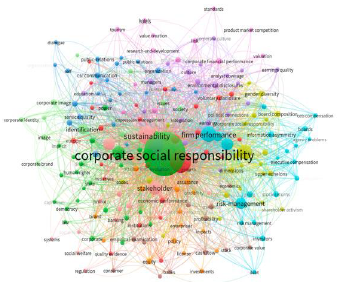
Figure 1
Visualization of the co-occurrence analysis per keyword.
Figure 2 shows the modern concept of CSR, which originated in the 60s based on social events like the civil rights movement, women's rights, and the emergence of environmental movements [18], [19], [20]. These events revealed the bearing of the productive activities on topics of interest for consumers, shareholders, and society in general [19], [20]. Therefore, philanthropic actions (donations, charitable works, inclusions activities) were promoted, which responded to the values and needs of the time [18], [19]. It must be pointed out that the social and environmental events were also the starting point in the 70s for the creation of institutions in favor of the environment, the rights of consumers, and worker's safety and health (Figure 2) [18], [19].
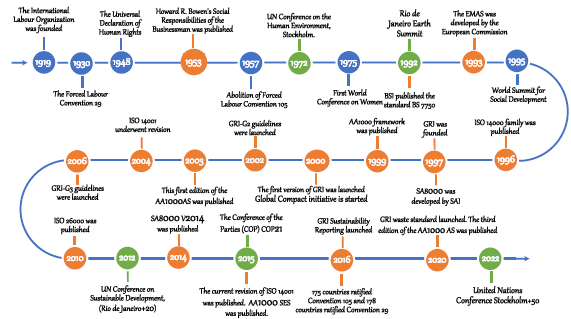
Figure 2
Time line for the corporate social responsibility (CSR) practices.
In 1972, the UN Conference on Human Development was celebrated in Stockholm, Sweden (Figure 2), which was the first world conference to make the environment a major issue, advocating for a clean sustainable environment, free of the contamination caused by the goods and services demanded by society. As a consequence of these initiatives, topics like biodiversity, greenhouse gas emissions, preservation of the ozone layer, and the implementation of sustainable development principles started to be treated actively (Figure 2) [20].
Globalization of enterprises in the 80s and 90s led the social and environmental responsibility to attain a global character, that is, that enterprises developed CSR practices focused on responding to specific concerns of the region or countries in which they had activities. The main concern of organizations was to maintain a good global reputation, visualizing themselves as socially responsible enterprises [18]. The creation of the Global Reporting Initiative (GRI) (Figure 2) enabled establishing transparent, orienting guidelines, written in a common language for the enterprises to measure their economic, social, and environmental performance, i.e., to measure their CSR [21], [22].
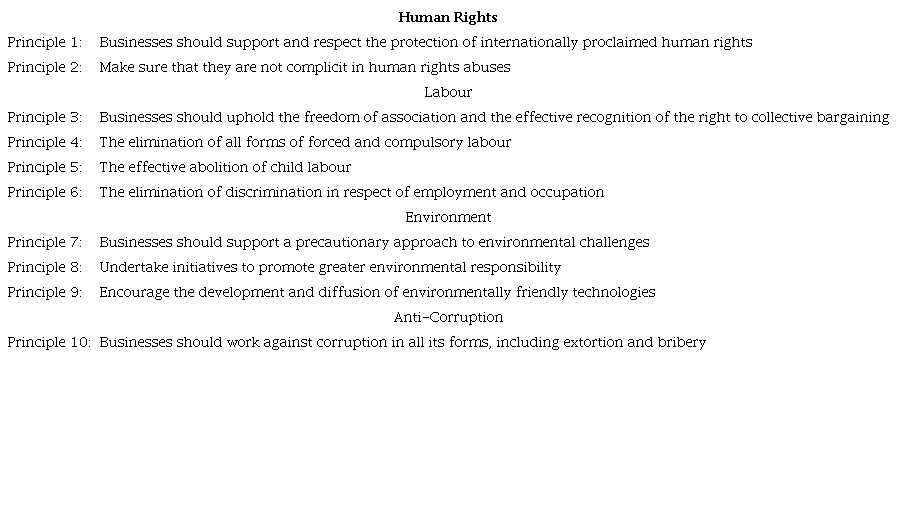
The CSR activities were widened and considered actions to benefit women and consumers, aside from the philanthropic practices, [1], [18]. The year 2000 starts with the launching of the United Nations Global Compact; this initiative is a voluntary commitment in which 15,468 organizations in 165 countries address their strategies considering 10 universal principles that include human rights (2), international working standards (4), environment and sustainable development (3), and the fight against corruption (1) (Table 1) [23], [24], [25].
This agreement gave rise to an ethical approach with the goal of assuming with greater awareness the responsibility of their actions [24].
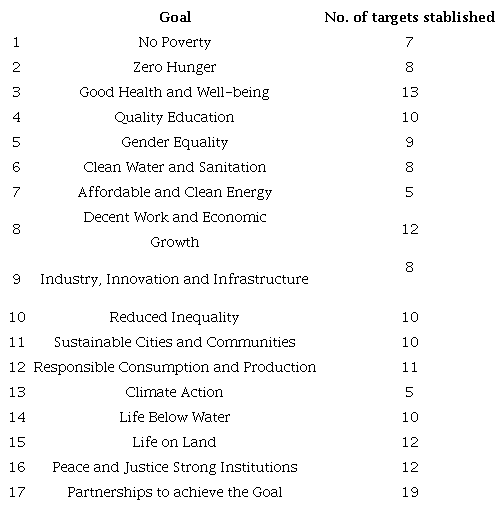
In 2010, the International Organization for Standardization (ISO) publishes the standard ISO 26000: 2010 (guidance on social responsibility), which is of voluntary character, aimed at orienting all types of organizations in the development and communication of social responsibility practices [22], [26]. With the adoption of the Sustainable Development Goals in 2015, governments adopt a set of objectives to eradicate poverty, protect the environment, and ensure the wellbeing of humankind [27]. The 17 proposed objectives (Table 2) consider the participation of the corporations in promoting sustainable development, which involves an equilibrium among the economic, social, and environmental aspects [27].
In 2010, the International Organization for Standardization (ISO) publishes the standard ISO 26000: 2010 (guidance on social responsibility), which is of voluntary character, aimed at orienting all types of organizations in the development and communication of social responsibility practices [22], [26]. With the adoption of the Sustainable Development Goals in 2015, governments adopt a set of objectives to eradicate poverty, protect the environment, and ensure the wellbeing of humankind [27]. The 17 proposed objectives (Table 2) consider the participation of the corporations in promoting sustainable development, which involves an equilibrium among the economic, social, and environmental aspects [27].
Fuente: https://www.un.org/development/desa/disabilities/envision2030.html
3.2. Corporate social responsibility practices and social perception
The CSR comprises the development of organizational actions around economical, legal, ethic, and voluntariness topics [7], [28]. Enterprises apply practices like delivering subsidies, inclusion of the community, events of service days, or providing services as part of their strategies to foster CSR [28]. The organizations drive community support activities related with educational initiatives and access to good living quarters, support to people in vulnerable conditions, and regard for pluriculturalism [29]. Likewise, they support actions to benefit the environment like management of wastes, chemical substances, contamination control, and the use and safe disposal of products [30], [31] The CSR programs bear on the attitudes and, therefore, on the perception of their customers and workers [32]; perception is understood as the set of generated attitudes in a person through the received information, its processing and interpretation, considering for it the influence of different factors from the surroundings [3], [33].
To avoid a negative impact on the corporate's image, [32] manifest that there must be an equilibrium between the intensity of the communication strategies and the amount of the developed CSR activities; in addition, the transmitted image to the stakeholders is influenced by the perceived sincerity and authenticity [34]. The corporate's image is false or poorly sincere when the consumer considers that the performed activities have been made just to compensate the negative impact; the latter evidences a lack of interest in controlling the actual cause of the event or the inflicted damage [34].
CSR practices are considered aspects related with the implementation of green processes (sustainable) as this expects the organizations to share or, at least, know the concerns of the stakeholders regarding the use of natural resources [31], [3]. The CSR practices constitute a link between the interested stakeholders and the enterprise, as they lead people to feel identified and trustworthy of the organizational values and intentions [29], [3]. According to [35], the development of CSR activities influences the satisfaction and loyalty of customers, as they allow the organizations to gain more recognitions and, in turn, to improve their organizational performance. Regarding the personnel, an organizational environment that promotes team work, altruism, and the development of collaboration actions with the stakeholders will be reflected in a greater commitment and satisfaction [36], [37].
Adopting practices that prioritize health, inclusion, and gender equality, and offer dignified working conditions bear upon the performance of the workers and impact the organizational productivity [29]. The reputation and prestige of organizations represent a competitive advantage that is measured from the social approval stand point; therefore, the development of socially responsible actions will affect the perception of the customer, the corporate's reputation, and its competitivity [38], [39]. Some of the attributes that customers value in the socially responsible enterprises include the development of environmentally-friendly products, animal-free tests of goods and services, products elaborated by fair-treated workers, among others [40], [41].
3.3. Information and communication of CSR-related activities
Organizations use considerably varied communication media (web sites, social networks, press magazines, sponsorship) to disclose their CSR activities [42], [43]. Each medium has characteristics that facilitate obtaining information about a product, exchange of opinions, postsale assistance, or feedback on topics of common interest like the environment [22], [44]. In the communication process, the content of the message has a particular bearing on the reaction of the consumer as it visualizes the commitment of the enterprise with the causes of interest [42]. According to [43], this disclosure should be made specifically, that is, pinpointing the cause and detailing the donation (for example, the donation of a specific amount of money for health) and not in a generalized fashion (for example, donation of part of their income for health or education). The authors point out that consumers perceive a greater commitment when efforts are focused on particular causes, arousing their attention and interest [43]. Hence, promoting their actions in favor of the interests of society, in the end, affects the loyalty and buying intentions of consumers [34], [35].
Consumers assess products using their rational criterion and/or emotional criterion; their selection or preferences will depend on the type of product. When products represent a functionality or usefulness, it is considered that consumers use their rational criteria to assess their selection. If the product includes aspects related to enjoyment, consumers use their emotional criterion for the selection. Reactions of consumers regarding CSR practices depend on the type of stimuli, the message's attractiveness (rational/emotional), and the type of service (usefulness). When dealing with environmental topics, consumers use their rational criteria for decision taking. In the case of CSR practices related with working conditions of the employees (safety and health, regard for gender, race rights, and so on), consumers usually adopt emotional attitudes [45].
The size of the enterprise and the availability of resources are relevant aspects associated with the disclosure of information and implementation of CSR practices [46], [47], [48]. The large firms disclose their activities through web sites or CSR reports [46], [49]. Unfortunately, the disclosed information is related to actions that not always impact the perception or the performance of the organization [48]. In small and middle-sized firms, their size favors the implementation of CSR actions at the local level, which is rapidly evidenced in the behavior and attitudes of consumers [47]. Notwithstanding, communication of information could be reduced/limited because the appropriate means or resources are not always available [23], [48].
3.4. Standards used in CSR
Some of the guidelines used by the enterprises to report their performance and to interact with the public include the standards ISO, GRI, SA8000 (Social Accountability International), and AA1000 (Institute for Social and Ethical Accountability) [49], [50], [51]. Although their adoption is voluntary, their use has been a reference to back up the consistency, transparency, and the adoption of sustainability practices [51], [52]. The developed standards favor commerce, exchange of technological advances, and management of the most sustainable practices in the world [53], [54], [55]. Very diverse sectors like the industrial, associations, educational, and governmental institutions, among others participate in the elaboration of standards [52], [54]. These standards apply to organizations of any size and economic sector; they cover the results of an enterprise (economic, social, and environmental) and consider the stakeholders since they regulate the characteristics of the information provided [53], [55].
3.4.1. ISO 14001
The ISO 14000 family of standards is related to the Environmental Management System (EMS). Standard ISO 14001 contains information on the requirements to implement an EMS, whereas ISO 14040 refers to a key tool to improve the sustainability of products and processes, the life cycle analysis (LCA) [56] (Figure 3). Standard ISO 14001 establishes the policies of environmental management in organizations, because of its relevance, enterprises have shown a particular interest in including it within their activities [50], [54]. It must be clear that when companies become certified in this standard they reaffirm their environmental responsibility commitment; the latter impacts positively the perception of the stakeholders, favors the decision taking, the environment, labor relations, facilitates the access to larger markets, and improves the profitability of the enterprise [50], [56], [57].
The number of ISO 14001 certifications in the world has increased along the years; in 2020, a total of 348,218 certifications was reached, 11.4% more than the previous year [58]. This increase can be attributed to the increasing need of firms to respond to the demands of the different stakeholders [59]. Implementation and certification of this type of standards have allowed improving the environmental performance of organizations along the years through the efficient use of resources, reduction of the generated wastes, and development of ecological processes. It must be noted that this impacts positively on the economy of the organization, the efficiency of the processes, and the trust and reputation of the enterprise [57], [60], [61].
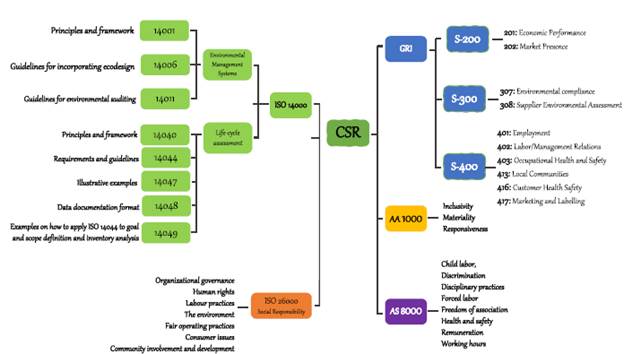
Figure 3
Main standards related to the corporate social responsibility (CSR) practices.
As shown in Table 3, the adoption and certification of this standard has generated diverse benefits like increases in productivity (up to 53%), a better control of costs, and better performances of the operative cycles in firms of diverse sectors (informatics, electronics, chemistry, electrical) [61]. Certification has also been used as a strategy to improve the corporate's image, increase the prestige, and respond to normative pressures [62], [63]. Although the adoption of an EMS favors organizations, sometimes there are barriers related to the lack of knowledge about the standard, the organizational culture, the costs of certification, and the difficulty to identify new environmental objectives when the enterprises advance significantly in dealing with critical environmental issues (Table 3) [62], [63], [64]. The latter is because the enterprises tend to focus their objectives particularly on the operational areas, forgetting to define objectives that should adapt to a changing milieu; for this reason, aspects related with eco-labelling, use of recyclable materials, and the LC are often neglected in the design of products and substitution of materials [64]. Among the identified obstacles for their application are the scarce financial supports and the costs generated by hiring a consulting firm for auditing (Table 2) [62].
The ISO 14001 certification is complementary to other international initiatives like the UN Global Compact (UNGC) and the Eco-Management and Audit Scheme (EMAS) developed by the European Union (EU) [25], [63], [75]. The UNGC aims to foster the incorporation of the principles related with human rights, work, environment, and the fight against corruption; the latter eases accountability in CSR terms [25], [60]. In industrial and commercial enterprises, introduction of UNGC and ISO 14001 principles have made their wastes management practices more efficient (ca. 34%) [60]. EMAS, in turn, is a recognition granted by the EU to organizations that implement and maintain an EMAS [75]. European corporations adopt both EMAS and ISO 14001; the latter as a warrant of their commitment and regard for the environment, their social responsibility, and for the impact they exert on the corporate's image [63].
3.4.2. ISO 26000
ISO 26000 is a reference adopted by enterprises of all types and sizes that wish to report their results in topics of social responsibility and environmental sustainability [50], [51], [76]. This is not a certifiable standard and its adoption follows the characteristics and situations of each organization [76]; therefore, the enterprises adopt topics that they consider pertinent to be transmitted to the public [26], [77]. The seven responsibility principles applicable to this standard are shown in Figure 3 [26]. The fact of not incorporating certification requirement to this standard has generated controversies related to the transparency of the information reported by enterprises.

It must be pointed out that although a certifiable standard could legitimize the reported results, the certification costs, its adaptation within the production processes, and the potential commercial barriers could be some of the obstacles to obtaining it (Table 2) [66], [77].
ISO 26000 includes topics related with the organization, the environment, consumers' issues, and the participation of the community (Figure 3) [26], [77]. Regarding the environment, this standard orients organizations to manage actions aimed at reducing contamination, using sustainably the natural resources, reducing vulnerability to climate change, and protecting biodiversity [26], [52], [77]. As indicated in Table 3, the use of this standard could generate advantages for the organization due to the impact in terms of reputation, its relation with stakeholders, its corporate culture, and the financial performance [26], [66], [78]. Although enterprises can adopt the CSR practices for strategic or altruistic reasons, a good reputation and image are factors that have a bearing on their adoption [66], [78].
3.4.3. GRI standards
The GRI was created in 1997 by the United Nations Environmental Program (UNEP) and the North American Coalition for Environmentally Responsible Economies (CERES) [3], [79]. Due to the importance and deep tie between environmental issues and social responsibility, the GRI indicators provide a guideline to assess the environmental, economic, and social performance of a firm [21], [50], [80].
The GRI standards are of interest for an organization because, aside from being certifiable, they provide key elements/tools for the disclosure of its sustainability initiatives in a clear and easily understandable way for the stakeholders [3], [21], [80]. This type of standards is in line with the SDG (Sustainable Development Goals, see Table 2) because they include topics of great interest for society like the economic and social impact of productive activities, employment, biodiversity, emissions of GHGs, cleaner production, safety and health [50], [79], [80]. To develop these standards, a consensus is needed among the different organizations that participate in their elaboration; besides, they must be applicable and have a significant impact in the firms. This series of standards also aim for coherence and agreement in the presentation of the sustainability reports that are generated in the enterprises pertaining even to very different economic sectors [81]. The GRI reports must consider the following principles: i) stakeholder inclusiveness, ii) sustainability context, iii) materiality, and iv) completeness. Regarding the quality of the reports, these must be characterized by their accuracy, equilibrium, clarity, comparability, reliability, and punctuality [21], [82]. Hence, these reports shall be written clearly and should include positive and negative aspects of the organization's performance so that the stakeholder can perform an equilibrated evaluation of the degree of compliance of the enterprise [67].
The enterprises use a clear and accessible language in their reports, however, the equilibrated disclosure of the entrepreneurial performance can be subjected to the type of required information or the need to fulfill legal demands, avoid sanctions, and maintain a reputation (Table 3) [67], [83]. Another relevant aspect refers to the disclosure of information that could be comparable along time so that the stakeholders can analyze the advancement of the enterprise and contrast it with that of other organizations [67], [83].
The GRI indicators are grouped around three main approaches: the economic (series 200), environmental (series 300), and social (series 400) (Figure 3); the latter helps an enterprise to choose the standards it considers more appropriate for the disclosure of its performance [82]. To comply with the economic topics, the organization uses strategies like training of their personnel in topics such as entrepreneurial ethics to be able to establish internal policies of anticorruption and avoid the use of anticompetitive behaviors. The impact of these strategies is assessed by means of internal control systems aimed at taking actions should the workers or suppliers fail them [69]. The 300 series orients enterprises to identify their impacts on the environment as it considers the used supplies and raw materials, the consumed natural resources (water, air, soil), and the footprint of their actions or activities on biodiversity [21].
To visualize their responsibility with the environment, enterprises have used strategies like establishing policies that institute the optimized use of resources, implementation of other voluntary standards like ISO 14001, the use of clean energies, and the development of responsible production activities [68], [69]. The content of the disseminated information depends on the impacts associated with each entrepreneurial sector; for example, in the automative sector, the most reported environmental information refers to the type of energy used and environmental emissions; notwithstanding, aspects like water use or the impact on biodiversity are reported in less proportion. This could be because the greater impacts caused by vehicles during their life cycle are associated with the raw materials production chains and the emissions generated during their use (Table 3) [68]. In sectors, like the pharmaceutical, disclosure of information could include the development of actions leading to produce goods that regard humans, animals, and the environment, reduce the use of natural resources and the emissions of contaminating precursors [69].
Regarding social topics, standards aim to evidence the relation and the communication mechanisms that an enterprise hase with stakeholders, the latter allows establishing strategies that involve the interests of the different actors [3], [84]. To comply with these standards, policies are established, communication channels are provided, and participation strategies are implemented to integrate the stakeholder to the CSR management [83], [84]. In topics related to health and safety, enterprises report the information concerning the education in occupational safety and health (OSH) toward workers, professional diseases, absentism, accidents, and how these diverse aspects have been dealt with [83], [85]. When enterprises achieve certifications like OHSAS (Occupational Health and Safety Assessment Series), their reports provide more information on health and safety than other enterprises [83]. The use of digital platforms has served as a communication channel between an enterprise and stakeholders, which has allowed identifying the perception of customers about the performance of the enterprise, diseminating information on quality, and monitoring CSR aspects in the supply chain [85].
The GRI guidelines have the advantage of being complementary with other reports used by the enterprises; this is positive because it allows comparing and contrasting the information by using indicators referring to economic, environmental, and social topics [79]. The GRI standards have been adopted in telecommunications, energy, food, construction, logistics, financial services, and mining sectors, in which the impact caused on the environment and society is evidenced in a sensitive way [3], [79]. Some of the reported benefits of their adoption include: maintaining the reputation, improving the organizational values, arousing the interests of investors in sustainable enterprises, and becoming more visible in other markets [23], [79].
3.4.4. SA 8000 (Social Accountability)
The standard SA 8000 was developed in 1997 by the Social Accountability International (SAI), this certifiable standard of international character measures the enterprises performance in terms of their social responsibility and treatment of their workers [72], [86]. As shown in Figure 3, the SA 8000 steers the firms to improve eight areas of interest for social responsibility [55]. These standard warrants that enterprises offer appropriate, safe, and equitable job places; hence, obtaining this certification reveals their compliance regarding their social performance and continuous improvement in the management and prevention of labor and social risks [72], [74], [86]. Adopting this standard is voluntary; however, in 10 years the number of certified firms increased 58%, going from 3000 (2011) to 4760 (2021) (Figure 4a.). In 2021, the largest percentage of certified enterprises were located in Italy (44%), India (26.2%), China (16.7%), Vietnam (2.9%), Pakistan (1.4%), Rumania (1.1%), and Taiwan (0.82%) (Figure 4b).
As indicated on Table 3, SA 8000 has been used as differentiation strategy to attract new customers, improve or renew the corporate image, foster a better labor environment, foster communications, and increase productivity [72], [73], [74]. Its implementation in small enterprises allows improving the commercial relations whereas, in larger-sized firms, it is perceived as a relevant element to be more competitive and ensure markets [73]. Adoption of ISO 14001 and certifications like SA 8000 either independently or integrated could foster the entry of goods and service to environmentally-friendly and socially-sustainable markets [86].
For some firms, the SA 8000 could also lead to a series of internal problems or difficulties for its satisfactory implementation (Table 3) [72], [74]. The economic barriers could be understood as the required investments needed for its operation (quality and characteristics of facilities, safety, health, salaries, training and certification costs). Other difficulties include the training and education of personnel, establishing an internal supervision for health and safety, and promoting equal conditions (Table 3) [72], [73], [74]. Finally, some firms consider as limitations the management and qualification of suppliers and subcontractors to ensure compliance with the standard (Table 3) [74]. In general, adoption of any standard includes advantages and disadvantages; therefore, the firm must consider strategies/means/resources that will ease their implementation. The use of SA 8000 together with other management systems will generate notable benefits like a better perception by local and international customer and suppliers [73].
3.4.5. AA1000
The set of AA1000AP (AccountAbility Principles), AA1000AS (Assurance Standard), and AA1000SES (Stakeholder Engagement Standard) standards were developed by the Institute for Social and Ethical Accountability (ISEA) based on the reference frame AA1000 proposed in 1999.
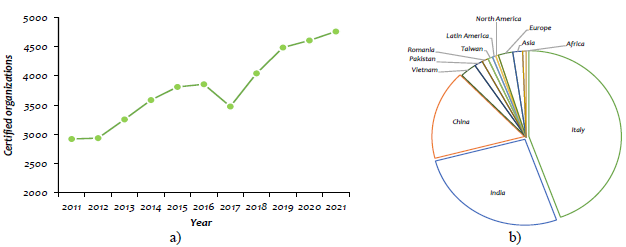
Figure 4
General data about standard SA 8000. a) Growth, b) distribution according to countries of the certifications granted in 202.
Fuente: https://sa-intl.org/wp-content/uploads/2021/10/Number-of-SA8000-Certified-Organisation..-1.pdf
Standards AA1000 consider the principles of inclusivity, relevance (materiality), response capacity, and impact to attain sustainability of an organization based on the creation of an environmental, economic, and social value [70], [87].
With the AA1000 standards, an organization takes-up the responsibilities inherent to its policies, decisions, impacts of its products (goods and services), and productive processes. Besides, the firm commits to communicate assertively, trustworthy, and verifiably the sustainability level of its activities [87]. Inclusivity refers to the way in which it will integrate the participation of the interested groups (people, communities, organizations) in the decisions related with the sustainability of the organization (Table 2) [70], [87]. The active inclusivity proposed in this standard suggests that a firm accepts its responsibility for the impacts caused on the group of stakeholders and vice versa [87].
In the AA1000AP, a topic or action is considered relevant when it exerts a significant impact on the sustainability of the enterprise or the stakeholder in any lapse of time. Through the materiality (relevance) principle, the enterprise and the stakeholder identify, prioritize, and disclose the most relevant topics and actions to comply with the established sustainability goals (Table 3) [70], [71], [87]. Materiality also implies to assess the caused impacts (actual or probable) and to establish mechanisms to approach the possible conflictive topics [87]. The response capacity aims that enterprises act and react timely in the face of encountered sustainability issues [88].
Responses usually consider: i) the establishment of effective policies, processes, and action plans; ii) the analysis and continuous measurement of impacts and sustainability; and iii) the generation of trustworthy reports [87], [88]. Finally, the impact principle is related to the effect that the enterprise and stakeholders will have on the sustainability of their activities. In hotel and mining enterprises, applying these principles together with methodologies like the Balanced Scorecard and working meetings has facilitated the interaction among the stakeholders, the management of strategic practices, and the disclosure of sustainability (Table 2) [70], [71].
The AA1000AS v3 standard (2018) provides the necessary requirements so that an enterprise can ensure its sustainability taking as referencer the four principles proposed in the AA1000. This standard provides information on the nature and the degree of compliance of the principles established in AA1000 and on the qualities of the presented information with the goal of measuring its sustainability. The AA1000SES points out that the commitments established with the stakeholder must be based on the principles of AA1000; for this reason, they should be well-defined and centered on what is considered important, be transparent, and create actual opportunities for the dialogue, have resources available, and be essentially receptive and flexible [88]. This standard considers the development of a methodology for the identification of stakeholder groups, which should comprise their type (civilians, consumers, the state), the cultural or religious context, the area of influence of the enterprise's operations and the possible generated tensions, and the relations with other groups of stakeholders, among others [88].
3.5. CSR: Practical implications for companies
Corporate social responsibility (CSR) practices are voluntary actions that, through support programs and activities, aim to make visible this type of commitment. The concept of CSR has been changing according to the varying demands of stakeholders and of the organizations themselves; therefore, the communication channels, the practices, and the associated demands have also evolved [18], [19]. All the reviewed studies highlight CSR practices allow local and global companies, of any size and economic sector, to promote a fruitful organizational change because they improve customers' perception, foster a positive work environment, create economic and sustainable value, make the company more attractive to investors, and attract and retain talented employees.
Consumers prefer companies with ethical behaviors because they feel they are doing their part in building a more inclusive and sustainable society [11]. Responsible consumers encourage people to incorporate trustworthy actions that can impact global issues, such as global warming, poverty, elimination of discrimination, abolition of child labor, and all forms of forced labor. Importantly, CSR practices cannot be considered by companies as a marketing strategy; in addition, they should be aware of potential greenwashing claims that erode consumers' trust [89].
Regarding the indicators used to measure CSR, they were more focused on environmental topics but recognizing social justice and the rights of people are priorities to promote the well-being of internal and external stakeholders. CSR standards play an important role in our society because they encourage ethical behaviors that reinforce the values and integrity of our society. However, a detailed analysis of the performance of CSR initiatives in countries with political, social, economic, and environmental risks should be addressed [90], [91]. Furthermore, guidelines should allow companies to disclose the real impact of CSR initiatives even in goods and production practices linked to public health threats, natural resources consumption, and the emission of pollutants. Finally, the possible conflict of interest between companies, policymakers, practitioners, and stakeholders should be identified and solved. The future research agenda should be oriented to broadening knowledge of how companies can implement these practices to reduce existing gaps in social, economic, and environmental issues.
3.6. Perspectives and future trends
Generating commitment and compliance with CSR practices allows companies to have a positive impact in the environment, attracting a greater number of investors, financial support, and building customer loyalty [92], [93]. Companies are developing more sustainable and efficient processes along their supply chain; furthermore, they are embracing technological tools that may help to reduce the use of resources and promote sustainable consumption towards stakeholders [92], [93], [94]. The design and development of innovative and greener products is another topic of interest because it encourages creativity for collaborators and strengthens the organization's relationships with interested parties.
Green innovation is a general concept that brings together those novelties that can contribute to the development of processes, products, and services with a reduced footprint. In addition, green innovation implicates the use of technological advances and new management practices (e.g., hardware or software use) that can contribute to the development of more sustainable and efficient processes. These alternatives are profitable and environmentally sound because they impact the image and social performance of organizations [93], [95]. However, the lack of knowledge, technological support, and market maturity can generate barriers to its implementation [96]. From the point of view of the customer's perception, there are additional barriers to keep in mind; for instance, recycled or refurbished products could be less functional, or perhaps, provide a less social status in comparison with conventional products. Unfortunately, these misconceptions may generate a preventive attitude in customers towards alternative or greener products [97].
It should be noted that innovative technologies require financial commitments (related with trained workforce, technological knowledge, R+D capacity, new technology purchase) that can only be assumed according to business capacity [96]. Digital transformation eases the development of digital business skills, improves internal processes and operations in companies, and reduces their ecological footprint [98], [99]. The use of digitalization activities in organizational operations gives more visibility and strengthen overall communication with suppliers, manufacturers, and distributors [99]. Digital transformation positively impacts companies' innovation, reduces costs, promotes interactions, and helps in the interchange of knowledge between organizations and customers, at the same time improves their skills to acquire knowledge and technologies [100].
The use of emerging technologies in business operations contributes to sustainable development, adapting environmentally friendly processes throughout the supply chain [99]. With advances in Artificial Intelligence (AI) and their use in the CSR, comes the appearance of Corporate Digital Responsibility (CDR), which is related to organizational practices and behaviors regarding the use of information and digital technology.
The CDR guides businesses on the topics of responsibility and ethical use of new technologies for their own benefit within society and the environment [101]. Using AI systems includes advantages such as tracking levels of inventories in real time in an easier way, also making demand forecasts and even automatically replenishing stocks when required [102]. Alternatives as the chatbots and virtual assistants allow companies to provide customer service 24/7. However, even if the benefits of AI are widely recognized, some of the disadvantages identified are related to the need of requiring specific information from the customer (for example, profile, age, location, etc.) to conduct a detailed profile of their purchasing practices, which could generate a preventive attitude on the part of customers [102].
Blockchain Technology has been used to improve the management, traceability, and transparency in a supply chain. These alternatives contribute to the development of processes in a more efficient way, such as the easing of traceability in operations (e.g., virtual payments, purchase orders, doubt resolution about the product); also, such options favorably impact companies by reducing costs and the lost and mistakes to fraud [103]. Likewise, big data strategy provides a means to interact between the stakeholders, collects information, identifies consumption habits, and makes market demand forecasts; promoting commitment, trust, and satisfaction for interested parties [104]. Technological tools along with CSR activities, provide benefits in the quality of relationships with stakeholders and promote the development of strategic business alliances [104]. Besides, the development of ethical practices between parties, it provides a collaborative environment and generate differential value in the businesses because it triggers competitive advantages [104], [105]. Innovative and disruptive technologies will play a significant role on the performance of any company because they allow addressing the different components of a supply chain. In addition, it would make possible the introduction of sustainable and strategies practices in a comprehensive way to cope with social and environmental issues.
4. Conclusions
The analyzed documents suggest that CSR fosters the development of entrepreneurial actions that contribute to society and the environment and their adoption has been seen as an opportunity to improve the corporate reputation due to the impact they have on the trust and loyalty of stakeholders The contribution of this work is twofold. First, it evidences the complexity of CSR practices and standards used by firms to prove their commitment to critical issues for our society. Second, it exposes the drivers/barriers for their implementation and highlights the need for considering the impact of CSR practices in complex scenarios.
The most popular standards (ISO, GRI, AA100, SA800) cover a wide range of sectors and industry sizes but the main barriers observed (lack of standardized metrics to present reports, capital expenditures, lack of expertise and an internal control structure) for their implementation do not differ considerably. Nowadays, CSR has advanced beyond image and reputation because it is an opportunity to construct a modern company able to create economic and sustainable value based on the interest/concern of stakeholders. Companies are less likely to report weaknesses because this may end up hurting their economic performance; however, stakeholders' voices are key to triggering valuable knowledge from experience.
With growing awareness about climate change, social justice, and the rights of people, stakeholders will demand both more sustainable initiatives and the development of rigorous tools to measure the CSR performance of firms. Clearly, CSR standards provide a guideline for the elaboration, disclosure, and evaluation of the transparency reports; however, to consider the voices of non-specialized stakeholders it is highly recommended to include guidelines for their interpretation. Future studies should focus on expanding the impact of CSR initiatives in more complex scenarios (countries with political, social, economic, and environmental risks, goods, and services with possible conflict of interest), the integration of new approaches to monitoring the impact of the initiatives, and the desirable and undesirable consequences.
References
A. B. Carroll, A History of Corporate Social Responsibility. Oxford University Press, 2008, doi: https://doi.org/10.1093/oxfordhb/9780199211593.003.0002
S.-L. Han, J. W. Lee, "Does corporate social responsibility matter even in the B2B market?: Effect of B2B CSR on customer trust," Industrial Marketing Management, vol. 93, pp. 115-123, Feb. 2021, doi: https://doi.org/10.1016/j.indmarman.2020.12.008
A. Uyar, A. S. Karaman, M. Kilic, "Is corporate social responsibility reporting a tool of signaling or greenwashing? Evidence from the worldwide logistics sector," Journal of Cleaner Production, vol. 253, p. 119997, 2020, doi: https://doi.org/10.1016/j.jclepro.2020.119997
UN, "World Summit for Social Development 1995," United Nations. [Online]. Available: https://www.un.org/en/conferences/social-development/copenhagen1995
H. R. Bowen, "Social Responsibilities of the Businessman," Social Responsibilities of the Businessman, 2013, doi: https://doi.org/10.2307/j.ctt20q1w8f
A. Dahlsrud, "How Corporate Social Responsibility Is defined: an Analysis of 37 Definitions," Corporate Social Responsibility and Environmental Management, vol. 15, no. 1, pp. 1-13, 2008, doi: https://doi.org/10.1002/csr.132
A. B. Carroll, "A Three-Dimensional Conceptual Model of Corporate Performance," Academy of Management Review, vol. 4, no. 4, pp. 497-505, 1979, doi: https://doi.org/10.5465/amr.1979.4498296
K. Gupta, C. Krishnamurti, "Corporate social responsibility, competition, and firm value," Pacific-Basin Finance Journal, vol. 68, p. 101622, 2021, doi: https://doi.org/10.1016/j.pacfin.2021.101622
P. R. Weerathunga, C. Xiaofang, M. Nurunnabi, K. M. M. C. B. Kulathunga, R. M. N. C. Swarnapali, "Do the IFRS promote corporate social responsibility reporting? Evidence from IFRS convergence in India," Journal of International Accounting, Auditing and Taxation, vol. 40, p. 100336, 2020, doi: https://doi.org/10.1016/j.intaccaudtax.2020.100336
C. H. Chen, "The mediating effect of corporate culture on the relationship between business model innovation and corporate social responsibility: A perspective from small- and medium-sized enterprises," Asia Pacific Management Review, vol. 27, no. 4, 2022, doi: https://doi.org/10.1016/j.apmrv.2022.01.001
M. R. González-Rodríguez, M. C. Díaz-Fernández, B. Simonetti, "The social, economic and environmental dimensions of corporate social responsibility: The role played by consumers and potential entrepreneurs," International Business Review, vol. 24, no. 5, pp. 836848, Oct. 2015, doi: https://doi.org/10.1016/j.ibusrev.2015.03.002
M. Khan, J. Lockhart, R. Bathurst, "A multi-level institutional perspective of corporate social responsibility reporting: A mixed-method study," Journal of Cleaner Production, vol. 265, p. 121739, 2020, doi: https://doi.org/10.1016/j.jclepro.2020.121739
B. M. K. Manda et al., "Value creation with life cycle assessment: an approach to contextualize the application of life cycle assessment in chemical companies to create sustainable value," Journal of Cleaner Production, vol. 126, pp. 337-351, 2016, doi: https://doi.org/10.1016/j.jclepro.2016.03.020
C. Wang, I. Qureshi, F. Guo, Q. Zhang, "Corporate social responsibility and disruptive innovation: The moderating effects of environmental turbulence," Journal of Business Research, vol. 139, pp. 1435-1450, 2022, doi: https://doi.org/10.1016/j.jbusres.2021.10.046
M. Sabokro, M. M. Masud, A. Kayedian, "The effect of green human resources management on corporate social responsibility, green psychological climate and employees' green behavior," Journal of Cleaner Production, vol. 313, p. 127963, 2021, doi: https://doi.org/10.1016/j.jclepro.2021.127963
N. J. van Eck, L. Waltman, "VOSViewer: Visualizing Scientific Landscapes [Software]," VOSviewer, 2022. [Online]. Available: https://www.vosviewer.com
ILO, "About the ILO," Ilo.org, 2022. [Online]. Available: https://www.ilo.org/global/about-the-ilo/lang--en/index.htm
A. B. Carroll, "Corporate Social Responsibility: the Centerpiece of Competing and Complementary Frameworks," Organizational Dynamics, vol. 44, no. 2, pp. 87-96, 2015, doi: https://doi.org/10.1016/j.orgdyn.2015.02.002
M. A. L. Agudelo, L. Jóhannsdóttir, B. Davídsdóttir, "A Literature Review of the History and Evolution of Corporate Social Responsibility," International Journal of Corporate Social Responsibility, vol. 4, no. 1, pp. 123, 2019, doi: https://doi.org/10.1186/s40991-018-0039-y
S. Pätäri, J. Sandström, K. Puumalainen, A. Tuppura, "Mapping the evolution of corporate social responsibility - insights from the Finnish forest industry," International Wood Products Journal, vol. 7, no. 1, pp. 26-35, 2016, doi: https://doi.org/10.1080/20426445.2015.1116493
GRI, "Global Reporting Initiative," https://www.globalreporting.org, 2022.
G. Halkos, S. Nomikos, "Corporate social responsibility: Trends in global reporting initiative standards," Economic Analysis and Policy, vol. 69, no. 1, pp. 106-117, 2021, doi: https://doi.org/10.1016/j.eap.2020.11.008
T. Gonçalves, C. Gaio, E. Costa, "Committed vs opportunistic corporate and social responsibility reporting," Journal of Business Research, vol. 115, pp. 417 - 427, 2020, doi: https://doi.org/10.1016/j.jbusres.2020.01.008
UN, "After the Signature: A guide to engagement in the United Nations Global Compact.," 2007. [Online]. Available: https://www.unglobalcompact.org/library/241
UN, "The Ten Principles | UN Global Compact," Unglobalcompact.org, 2022. [Online]. Available: https://www.unglobalcompact.org/what-is-gc/mission/principles
ISO, "ISO 26000:2010. Guidance on social responsibility," 2010. [Online]. Available: https://www.iso.org/obp/ui#iso:std:iso:26000:ed-1:v1:en
UN, "The 17 sustainable development goals (SDGs) to transform our world," 2018. [Online]. Available: https://www.un.org/development/desa/disabilities/envision2030.html
B. Sheehy, F. Farneti, "Corporate Social Responsibility, Sustainability, Sustainable Development and Corporate Sustainability: What Is the Difference, and Does It Matter?," Sustainability, vol. 13, no. 11, p. 5965, May 2021, [Online]. Available: https://www.mdpi.com/2071-1050/13/11/5965
S. S. Ali, R. Kaur, "Effectiveness of corporate social responsibility (CSR) in implementation of social sustainability in warehousing of developing countries: A hybrid approach," Journal of Cleaner Production, vol. 324, p. 129154, 2021, doi: https://doi.org/10.1016/j.jclepro.2021.129154
C. B. Bhattacharya, S. Sen, "Doing Better at Doing Good: When, Why, and How Consumers Respond to Corporate Social Initiatives," California Management Review, vol. 47, no. 1, pp. 9-24, 2004, doi: https://doi.org/10.2307/41166284
M. R. González-Rodríguez, M. C. Díaz-Fernández, F. Shi, F. Okumus, "Exploring the links among corporate social responsibility, reputation, and performance from a multi-dimensional perspective," International Journal of Hospitality Management, vol. 99, p. 103079, 2021, doi: https://doi.org/10.1016/j.ijhm.2021.103079
B. Viererbl and T. Koch, "The paradoxical effects of communicating CSR activities: Why CSR communication has both positive and negative effects on the perception of a company's social responsibility," Public Relations Review, vol. 48, no. 1, p. 102134, Mar. 2022, doi: https://doi.org/10.1016/j.pubrev.2021.102134
Ø. Ueland et al., "State of the art in benefit-risk analysis: Consumer perception," Food and Chemical Toxicology, vol. 50, no. 1, pp. 67-76, 2012, doi: https://doi.org/10.1016/j.fct.2011.06.006
L. Austin and B. M. Gaither, "Perceived motivations for corporate social responsibility initiatives in socially stigmatized industries," Public Relations Review, vol. 43, no. 4, pp. 840-849, 2017, doi: https://doi.org/10.1016/j.pubrev.2017.06.011
X. Xie, Y. Jia, X. Meng, and C. Li, "Corporate social responsibility, customer satisfaction, and financial performance: The moderating effect of the institutional environment in two transition economies," Journal of Cleaner Production, vol. 150, pp. 26-39, 2017, doi: https://doi.org/10.1016/j.jclepro.2017.02.192
M. B. L. Donia, C. A. Tetrault Sirsly, "Determinants and consequences of employee attributions of corporate social responsibility as substantive or symbolic," European Management Journal, vol. 34, no. 3, pp. 232242, 2016, doi: https://doi.org/10.1016/j.emj.2016.02.004
F. Velasco Vizcaíno, S. L. Martin, J. J. Cardenas, M. Cardenas, "Employees' attitudes toward corporate social responsibility programs: The influence of corporate frugality and polychronicity organizational capabilities," Journal of Business Research, 2021, doi: https://doi.org/10.1016/j.jbusres.2020.11.016
G. Pfajfar, A. Shoham, A. Malecka, M. Zalaznik, "Value of corporate social responsibility for multiple stakeholders and social impact - Relationship marketing perspective," Journal of Business Research, vol. 143, no. 4, pp. 46-61, 2022, doi: https://doi.org/10.1016/j.jbusres.2022.01.051
K. Singh, M. Misra, "Linking Corporate Social Responsibility (CSR) and Organizational Performance: the moderating effect of corporate reputation," European Research on Management and Business Economics, vol. 27, no. 1, p. 100139, 2021, https://doi.org/10.1016/j.anorl.2019.09.002
W. Chi, S.-J. Wu, Z. Zheng, "Determinants and consequences of voluntary corporate social responsibility disclosure: Evidence from private firms," The British Accounting Review, vol. 52, no. 6, p. 100-939, 2020, doi: https://doi.org/10.1016/j.bar.2020.100939
C. Kolling, J. L. D. Ribeiro, J. F. de Medeiros, "Performance of the cosmetics industry from the perspective of Corporate Social Responsibility and Design for Sustainability," Sustainable Production and Consumption, vol. 30, pp. 171-185, 2022, doi: https://doi.org/10.1016/j.spc.2021.12.002
H. Jung, J. Bae, H. Kim, "The effect of corporate social responsibility and corporate social irresponsibility: Why company size matters based on consumers' need for self-expression," Journal of Business Research, vol. 146, pp. 146-154, 2022, doi: https://doi.org/10.1016/j.jbusres.2022.03.024
S. Robinson, M. Eilert, "The role of message specificity in corporate social responsibility communication," Journal of Business Research, vol. 90, pp. 260-268, Sep. 2018, doi: https://doi.org/10.1016/j.jbusres.2018.05.028
S.-C. Chu, H. T. Chen, C. Gan, "Consumers' engagement with corporate social responsibility (CSR) communication in social media: Evidence from China and the United States," Journal of Business Research, vol. 110, no. 1, pp. 260-271, 2020, doi: https://doi.org/10.1016/j.jbusres.2020.01.036
L. Andreu, A. B. Casado-Díaz, A. S. Mattila, "Effects of message appeal and service type in CSR communication strategies," Journal of Business Research, vol. 68, no. 7, pp. 1488-1495, 2015, doi: https://doi.org/10.1016/j.jbusres.2015.01.039
P. Mercadé-Melé, S. Molinillo, A. Fernández-Morales, "The influence of the types of media on the formation of perceived CSR," Spanish Journal of Marketing - ESIC, vol. 21, pp. 54-64, 2017, doi: https://doi.org/10.1016/j.sjme.2017.04.003
F. Rahman, R. T. Norman, "The effect of firm scale and CSR geographical scope of impact on consumers' response," Journal of Retailing and Consumer Services, vol. 28, pp. 189-198, Jan. 2016, doi: https://doi.org/10.1016/j.jretconser.2015.10.006
P.-H. Ting, "Do large firms just talk corporate social responsibility? - The evidence from CSR report disclosure," Finance Research Letters, vol. 38, p. 101476, 2021, doi: https://doi.org/10.1016/j.frl.2020.101476
C. S. B. Ngai, R. G. Singh, "Operationalizing genuineness in CSR communication for public engagement on social media," Public Relations Review, vol. 47, no. 5, p. 102122, 2021, doi: https://doi.org/10.1016/j.pubrev.2021.102122
M. Ikram, Q. Zhang, R. Sroufe, M. Ferasso, "Contribution of Certification Bodies and Sustainability Standards to Sustainable Development Goals: An Integrated Grey Systems Approach," Sustainable Production and Consumption, vol. 28, pp. 326-345, Oct. 2021, doi: https://doi.org/10.1016/j.spc.2021.05.019
M. S. S. Jajja, M. Asif, F. Montabon, K. A. Chatha, "The indirect effect of social responsibility standards on organizational performance in apparel supply chains: A developing country perspective," Transportation Research Part E: Logistics and Transportation Review, vol. 139, p. 101968, 2020, doi: https://doi.org/10.1016/j.tre.2020.101968
Radu Ogarca and S. Puiu, "ISO 26000 Implementation: The Case of Top Romanian Companies," CSR, sustainability, ethics & governance, pp. 11-28, 2018, doi: https://doi.org/10.1007/978-3-319-92651-3
AccountAbility, "AccountAbility Standard," 2022. Online]. Available: https://www.accountability.org/standards
P. Castka, M. A. Balzarova, "The impact of ISO 9000 and ISO 14000 on standardisation of social responsibility-an inside perspective," International Journal of Production Economics, vol. 113, no. 1, pp. 74-87, 2008, doi: https://doi.org/10.1016Zj.ijpe.2007.02.048
AccountAbility, "Social Accountability International," Online]. Available: https://sa-intl.org, 2022. https://sa-intl.org
W. McGuire, "The effect of ISO 14001 on environmental regulatory compliance in China," Ecological Economics, vol. 105, pp. 254-264, Sep. 2014, doi: https://doi.org/10.1016/j.ecolecon.2014.06.007
W. Wu, S. An, C.-H. Wu, S.B. Tsai, K. Yang, "An empirical study on green environmental system certification affects financing cost of high energy consumption enterprises-taking metallurgical enterprises as an example," Journal of Cleaner Production, vol. 244, p. 118848, Jan. 2020, doi: https://doi.org/10.1016/j.jclepro.2019.118848
ISO, "The ISO survey of management system standard certifications - 2020 - Explanatory Note." [Online]. Available: https://isotc.iso.org/livelink/livelink/fetch/-8853493/8853511/8853520/18808772/0._Explanatory_note_and_overview_on_ISO_Survey_2020_results.pdf? nodeid=21899356&vernum=-2
R. Orcos, B. Pérez Aradros, K. Blind, "Why does the diffusion of environmental management standards differ across countries? The role of formal and informal institutions in the adoption of ISO 14001," Journal of World Business, vol. 53, no. 6, pp. 850-861, 2018, doi: https://doi.org/10.1016/j.jwb.2018.07.002
E. M. Mungai, S. W. Ndiritu, T. Rajwani, "Do voluntary environmental management systems improve environmental performance? Evidence from waste management by Kenyan firms," Journal of Cleaner Production, vol. 265, p. 121636, 2020, doi: https://doi.org/10.1016/j.jclepro.2020.121636
R. Treacy, P. Humphreys, R. McIvor, C. Lo, "ISO14001 certification and operating performance: A practice-based view," International Journal of Production Economics, vol. 208, pp. 319-328, 2019, doi: https://doi.org/10.1016/j.ijpe.2018.12.012
F. Mariotti, N. Kadasah, N. Abdulghaffar, "Motivations and barriers affecting the implementation of ISO 14001 in Saudi Arabia: an empirical investigation," Total Quality Management & Business Excellence, vol. 25, no. 11-12, pp. 1352-1364, 2014, doi: https://doi.org/10.1080/14783363.2014.912038
F. Murmura, L. Liberatore, L. Bravi, N. Casolani, "Evaluation of Italian Companies' Perception About ISO 14001 and Eco Management and Audit Scheme III: Motivations, Benefits and Barriers," Journal of Cleaner Production, vol. 174, pp. 691 -700, 2018, doi: https://doi.org/10.1016/j.jclepro.2017.10.337
M. A. Mosgaard, A. M. Bundgaard, H. S. Kristensen, "ISO 14001 practices - A study of environmental objectives in Danish organizations," Journal of Cleaner Production, vol. 331, p. 129799, 2022, doi: https://doi.org/10.1016/j.jclepro.2021.129799
G. Nascimento, C. A. S. Araujo, L. A. Alves, "Corporate sustainability practices in accredited Brazilian hospitals: a degree-of-maturity assessment of the environmental dimension," Revista de Administração, vol. 52, no. 1, pp. 26-35, 2017, doi: https://doi.org/10.1016/j.rausp.2016.10.001
Q. Zhang, B. L. Oo, B. T. H. Lim, "Corporate social responsibility practices by leading construction firms in China: a case study," International Journal of Construction Management, pp. 1 -12, 2020, doi: https://doi.org/10.1080/15623599.2020.1717107
H. Ismail, M. A. Saleem, S. Zahra, M. S. Tufail, and R. A. Ali, "Application of Global Reporting Initiative (GRI) Principles for Measuring Quality of Corporate Social Responsibility (CSR) Disclosure: Evidence from Pakistan," Sustainability, vol. 13, no. 20, p. 11409, 2021, doi: https://doi.org/10.3390/su132011409
E. Ordonez-Ponce and A. Khare, "GRI 300 as a measurement tool for the United Nations sustainable development goals: assessing the impact of car makers on sustainability," Journal of Environmental Planning and Management, vol. 64, no. 1, pp. 1 -29, 2020, doi: https://doi.org/10.1080/09640568.2020.1746906
M. C. Kolsi, M. Ananzeh, A. Awawdeh, "Compliance with the global reporting initiative standards in Jordan: case study of hikma pharmaceuticals," International Journal of Sustainable Engineering, vol. 14, no. 6, pp. 1572-1586, 2021, doi: https://doi.org/10.1080/19397038.2021.1970273
M. Guix, X. Font, "The Materiality Balanced Scorecard: A framework for stakeholder-led integration of sustainable hospitality management and reporting," International Journal of Hospitality Management, vol. 91, p. 102634, 2020, doi: https://doi.org/10.1016/j.ijhm.2020.102634
Å. Lindman, H. Ranängen, O. Kauppila, "Guiding corporate social responsibility practice for social license to operate: A Nordic mining perspective," The Extractive Industries and Society, vol. 7, no. 3, 2020, doi: https://doi.org/10.1016/j.exis.2020.07.013
F. Murmura, L. Bravi, F. Palazzi, "Evaluating companies' commitment to corporate social responsibility: Perceptions of the SA 8000 standard," Journal of Cleaner Production, vol. 164, pp. 1406-1418, Oct. 2017, doi: https://doi.org/10.1016/j.jclepro.2017.07.073
G. Santos, F. Murmura, L. Bravi, "SA 8000 as a Tool for a Sustainable Development Strategy," Corporate Social Responsibility and Environmental Management, vol. 25, no. 1, pp. 95-105, Jul. 2017, doi: https://doi.org/10.1002/csr.1442
V. F. de Andrade, W. A. Bizzo, "Corporate social responsibility in Brazil according to SA 8000: Case studies and the correlation with the supply chain," Journal of Cleaner Production, vol. 210, pp. 1022-1032, Feb. 2019, doi: https://doi.org/10.1016/j.jclepro.2018.10.347
"Eco-Management and Audit Scheme (EMAS)," green-business.ec.europa.eu, Apr. 08, 2024. [Online]. Available: https://ec.europa.eu/environment/emas/index_en.html
W. Zhao, J. Zhang, X. Liu, Z. Jiang, "Application of ISO 26000 in digital education during COVID-19," Ain Shams Engineering Journal, vol. 13, no. 3, p. 101630, 2022, doi: https://doi.org/10.1016/j.asej.2021.10.025
M. A. Camilleri, "Measuring the corporate managers' attitudes towards ISO's social responsibility standard," Total Quality Management & Business Excellence, pp. 1-13, 2017, doi: https://doi.org/10.1080/14783363.2017.1413344
A. Toppinen, M. Mikkilä, K. Lähtinen, "ISO 26000 in Corporate Sustainability Practices: A Case Study of the Forest and Energy Companies in Bioeconomy," ISO 26000 - A Standardized View on Corporate Social Responsibility, pp. 95-113, 2018, doi: https://doi.org/10.1007/978-3-319-92651-3_7
F. Marimon, M. del M. Alonso-Almeida, M. del P. Rodríguez, K. A. Cortez Alejandro, "The worldwide diffusion of the global reporting initiative: what is the point?," Journal of Cleaner Production, vol. 33, pp. 132144, 2012, doi: https://doi.org/10.1016/j.jclepro.2012.04.017
S. Narula et al., "Applicability of industry 4.0 technologies in the adoption of global reporting initiative standards for achieving sustainability," Journal of Cleaner Production, vol. 305, p. 127141, Jul. 2021, doi: https://doi.org/10.1016/j.jclepro.2021.127141
S. Parsa, I. Roper, M. Muller-Camen, E. Szigetvari, "Have labour practices and human rights disclosures enhanced corporate accountability? The case of the GRI framework," Accounting Forum, vol. 42, no. 1, pp. 4764, 2018, doi: https://doi.org/10.1016/j.accfor.2018.01.001
Global Reporting Initiative, "GRI 101: Fundamentos," Global Reporting Initiative, Amsterdam 2016. Available: https://www.globalreporting.org/standards/media/1439/s panish-gri-101-foundation-2016.pdf
T. A. Tsalis, M. S. Stylianou, I. E. Nikolaou, "Evaluating the quality of corporate social responsibility reports: The case of occupational health and safety disclosures," Safety Science, vol. 109, pp. 313-323, Nov. 2018, doi: https://doi.org/10.1016/j.ssci.2018.06.015
C. Campillo-Alhama and D. Igual-Antón, "Corporate Social Responsibility Strategies in Spanish Electric Cooperatives. Analysis of Stakeholder Engagement," Sustainability, vol. 13, no. 12, p. 6810, Jun. 2021, doi: https://doi.org/10.3390/su13126810
M. Safari, A. Areeb, "A qualitative analysis of GRI principles for defining sustainability report quality: an Australian case from the preparers' perspective," Accounting Forum, vol. 44, no. 4, pp. 1 -32, 2020, doi: https://doi.org/10.1080/01559982.2020.1736759
M. Ikram, R. Sroufe, E. Rehman, S. Z. A. Shah, A. Mahmoudi, "Do quality, environment, social (QES) certifications improve international trade? Comparative grey relation analysis of developing vs. developed countries," Physica A: Statistical Mechanics and its Applications, 2020, doi: https://doi.org/10.1016/j.physa.2019.123486
Accountability, "AA1000. Accountability Principles.," 2018. [Online]. Available: https://www.accountability.org/static/6b3863943105f2a 5c4d5fc96affb750d/aa1000_accountability_principles_2018.pdf
Accountability, "AA1000 Stakeholder Engagemen Standard" 2015. [Online]. Available: https://www.accountability.org/static/940dc017198458f ed647f73ad5d47a95/aa1000ses_2015.pdf
C. A. Cedillo Torres, M. Garcia-French, R. Hordijk, K. Nguyen, L. Olup, "Four Case Studies on Corporate Social Responsibility: Do Conflicts Affect a Company's Corporate Social Responsibility Policy?," Utrecht Law Review, vol. 8, no. 3, pp. 51-73, 2012, doi: https://doi.org/10.18352/ulr.205
T. Laudal, "Drivers and barriers of CSR and the size and internationalization of firms," Social Responsibility Journal, vol. 7, no. 2, pp. 234-256, 2011, doi: https://doi.org/10.1108/17471111111141512
OECD, Managing Conflict of Interest in the Public Sector. OECD, 2005. doi: https://doi.org/10.1787/9789264018242-en
B. Nguyen-Viet, C. T. Tran, H. T. K. Ngo, "Corporate social responsibility and behavioral intentions in an emerging market: The mediating roles of green brand image and green trust," Cleaner and Responsible Consumption, vol. 12, p. 100170, 2024, doi: https://doi.org/10.1016/j.clrc.2024.100170
H. Yang, X. Shi, Muhammad Yaseen Bhutto, M. Ertz, "Do corporate social responsibility and technological innovation get along? A systematic review and future research agenda," Journal of Innovation & Knowledge, vol. 9, no. 1, p. 100462, 2024, doi: https://doi.org/10.1016/j.jik.2024.100462
A. A. Bhat et al., "Unlocking corporate social responsibility and environmental performance: Mediating role of green strategy, innovation, and leadership," Innovation and Green Development, vol. 3, no. 2, p. 100112, 2024, doi: https://doi.org/10.1016/j.igd.2023.100112
E. Fosu, F. Fosu, N. Akyina, D. Asiedu, "Do environmental CSR practices promote corporate social performance? The mediating role of green innovation and corporate image," Cleaner and Responsible Consumption, pp. 100155-100155, 2024, doi: https://doi.org/10.1016/j.clrc.2023.100155
H. Gupta, S. Kusi-Sarpong, J. Rezaei, "Barriers and overcoming strategies to supply chain sustainability innovation," Resources, Conservation and Recycling, vol. 161, no. 1, p. 104819, 2020, doi: https://doi.org/10.1016/j.resconrec.2020.104819
D. D. Chiras, Environmental Science. Jones & Bartlett Publishers, 2013.
M. T. Bui, H. L. Le, "Digital capability and creative capability to boost firm performance and formulate differentiated CSR-based strategy," Heliyon, p. e14241, 2023, doi: https://doi.org/10.1016/j.heliyon.2023.e14241
L. J. Zheng, J. Z. Zhang, A. Kai Ming Au, H. Wang, Y. Yang, "Leveraging technology-driven applications to promote sustainability in the shipping industry: The impact of digitalization on corporate social responsibility," Transportation Research Part E: Logistics and Transportation Review, vol. 176, p. 103201, 2023, doi: https://doi.org/10.1016/j.tre.2023.103201
Z. Xue, Y. Hou, G. Cao, G. Sun, "How does digital transformation drive innovation in Chinese agribusiness: Mechanism and micro evidence," Journal of innovation & knowledge, vol. 9, no. 2, pp. 100489-100489, 2024, doi: https://doi.org/10.1016/j.jik.2024.100489
Z. Tóth, M. Blut, "Ethical compass: The need for Corporate Digital Responsibility in the use of Artificial Intelligence in financial services," Organizational Dynamics, p. 101041, 2024, doi: https://doi.org/10.1016/j.orgdyn.2024.101041
D. Scarpi and E. Pantano, "'With great power comes great responsibility': Exploring the role of Corporate Digital Responsibility (CDR) for Artificial Intelligence Responsibility in Retail Service Automation (AIRRSA)," Organizational Dynamics, p. 101030, 2024, doi: https://doi.org/10.1016/j.orgdyn.2024.101030
M. Ltifi, S. Mesfar, "Does the corporate social responsibility of the service based on Blockchain technology affect the real behaviour of the consumer?," Journal of Air Transport Management, vol. 104, p. 102256, 2022, doi: https://doi.org/10.1016/j.jairtraman.2022.102256
J. Lin, Q. Zheng, and J. Benitez, "Impact of digital orientation and corporate social responsibility activities on the alliance relationship stability in contract farming," Information & management, vol. 61, no. 4, pp. 103958-103958, 2024, doi: https://doi.org/10.1016/j.im.2024.103958
T. T. Le, "How do corporate social responsibility and green innovation transform corporate green strategy into sustainable firm performance?," Journal of Cleaner Production, vol. 362, p. 132228, 2022, doi: https://doi.org/10.1016/j.jclepro.2022.132228
How to cite:
Funding acquisition
Autor Contributions
Institutional Review Board Statement
Informed Consent Statement
Conflict of interest declaration