Artículos
The relationship between health literacy and quality of life of elderlies with chronic diseases living in Fasa, Iran 2019
La relación entre la alfabetización en salud y la calidad de vida de los ancianos con enfermedades crónicas que viven en Fasa, Irán 2019
 Najimeh Beygi Najimehbeygi1166@gmail.com
Somayeh Behzadi behzadi.somaye@yahoo.com
Leila kargar leilakargar2021@gmail.com
Rafat Rezapour-Nasrabad rezapour.r@sbmu.ac.ir
Zahra Alizadeh z.alizade8871@yahoo.com
Zhila Fereidouni fereidounizhila@gmail.com
Zahra Khiyali khiyaliz@yahoo.com
Najimeh Beygi Najimehbeygi1166@gmail.com
Somayeh Behzadi behzadi.somaye@yahoo.com
Leila kargar leilakargar2021@gmail.com
Rafat Rezapour-Nasrabad rezapour.r@sbmu.ac.ir
Zahra Alizadeh z.alizade8871@yahoo.com
Zhila Fereidouni fereidounizhila@gmail.com
Zahra Khiyali khiyaliz@yahoo.com
The relationship between health literacy and quality of life of elderlies with chronic diseases living in Fasa, Iran 2019
Archivos Venezolanos de Farmacología y Terapéutica, vol. 40, núm. 8, pp. 753-759, 2021
Sociedad Venezolana de Farmacología Clínica y Terapéutica

Esta obra está bajo una Licencia Creative Commons Atribución-SinDerivar 4.0 Internacional.
Recepción: 28 Junio 2021
Aprobación: 15 Agosto 2021
Publicación: 30 Noviembre 2021
Abstract: Introduction & Background.Health literacy is defined as cognitive and social skills determining motivation and ability of individuals to obtain, understand, and use healthcare information to improve and keep appropriate health. Low health literacy causes undesired health outcomes, harmful health behaviors, dissatisfaction of patients, and a higher death rate. The extant study was conducted to examine the relationship between health literacy and quality of life of elderlies with chronic diseases who live in Fasa, Iran during 2019. Methods. This cross-sectional study was done on 150 elderly with chronic diseases living in Fasa, 2019. Demographic information, quality of life, and health literacy questionnaires were employed to collect data. The gathered data were analyzed by using descriptive statistics, chi-square, one-way Analysis of Variance (ANOVA), and correlation coefficient through SPSS software. Results. Mean value and standard deviation of subjects’ ages equaled 67.68±6.92 in this research. The mean value and standard deviation of disease duration in this group equaled 12.47±9.71. More than half of the studied subjects (50.7%) had inadequate health literacy. There was a significant relationship between age, sex, education level, job, and health literacy. There was a significant association between the total score of quality of life and health literacy level. Moreover, there was a significant correlation between age, education, job, disease duration, and quality of life (P<0.05).Conclusion. Findings indicated the effect of health literacy score on the quality of life of elderlies with chronic diseases. Hence, it is recommended that healthcare system managers make appropriate plans to improve the health literacy level of society.
Keywords: Health Literacy, Quality of Life, Elderlies, Chronic Disease.
Resumen: Introducción y antecedents. la alfabetización en salud se define como las habilidades cognitivas y sociales que determinan la motivación y la capacidad de las personas para obtener, comprender y utilizar la información de salud para mejorar y mantener una salud adecuada. La baja alfabetización en salud causa resultados de salud no deseados, comportamientos de salud nocivos, insatisfacción de los pacientes y una mayor tasa de mortalidad. El estudio existente se realizó para examinar la relación entre la alfabetización en salud y la calidad de vida de los ancianos con enfermedades crónicas que viven en Fasa, Irán durante 2019. Métodos. Este estudio transversal se realizó en 150 adultos mayores con enfermedades crónicas residentes en Fasa, 2019. Para la recolección de datos se emplearon cuestionarios de información demográfica, calidad de vida y alfabetización en salud. Los datos recopilados se analizaron mediante estadística descriptiva, chi-cuadrado, análisis de varianza unidireccional (ANOVA) y coeficiente de correlación a través del software SPSS. Resultados: El valor medio y la desviación estándar de las edades de los sujetos fue de 67,68 ± 6,92 en esta investigación. El valor medio y la desviación estándar de la duración de la enfermedad en este grupo fue de 12,47 ± 9,71. Más de la mitad de los sujetos estudiados (50,7%) tenían conocimientos de salud inadecuados. Hubo una relación significativa entre la edad, el sexo, el nivel de educación, el trabajo y la alfabetización en salud. Hubo una asociación significativa entre la puntuación total de la calidad de vida y el nivel de alfabetización en salud. Además, hubo una correlación significativa entre la edad, la educación, el trabajo, la duración de la enfermedad y la calidad de vida (P <0,05).Conclusión. Los resultados indicaron el efecto del puntaje de alfabetización en salud sobre la calidad de vida de los ancianos con enfermedades crónicas. Por lo tanto, se recomienda a los administradores del sistema de salud que realicen los planes adecuados para mejorar el nivel de alfabetización en salud de la Sociedad.
Palabras clave: Alfabetización en salud, calidad de vida, ancianos, enfermedades crónicas.
Introduction
Increased life expectancy, reduced fertility rate, and many other factors have led to a rising elderly population worldwide1. The increasingly elderly population has become one of the most critical economic, social, and health challenges in the 21st century2. According to World Health Organization (WHO), population aging is the first successful incident for healthcare, economic, and social development. Population aging is considered a human honor and challenge simultaneously3,4. There is an increasing number of elderly in the world. As reported by WHO, 961 million elderlies live in the world. It is predicted that this number will be doubled and 2 billion people by 2025 and 2050, respectively5. The majority of these elderly people live in developing countries. The aging phenomenon is occurring more rapidly in Asian countries rather than western ones. Moreover, as an Asian country, Iran has experienced this phenomenon6. Therefore, the vast and rapid demographic changes over two recent decades have led to population aging in Iran7. According to statistical indicators, the aging trend is expanding in Iran6. As reported in census 2016, about 6.1% of the Iranian population constituted individuals older than 65. It is predicted that the Iranian elderly population makes up 31.5% of the population by 20508. There is a 1.7% rise in the annual population of Iran; estimates indicated a 2.5% growth in the population of individuals older than 659. It has been predicted that more than 10% and about 21-25% of the Iranian population will be elderly in 2025 and 2050, respectively10,11. The rising trend of population aging warns healthcare and social planners and policymakers. This phenomenon has attracted attention to the importance and necessity of appropriate social-economic programs and strategies for elderlies because population texture change and population aging may lead to higher disability and death rates caused by chronic diseases rather than acute illnesses among elderlies12,13. Chronic disease refers to a long-term illness that creates dysfunctions, and somatic changes in the body. Chronic diseases are usually incurable with long treatment periods and recovery stages. In some cases, there is not any definite treatment for chronic disease14. Now, there is a rise in the number of deaths caused by chronic diseases and elderlies' illnesses. The cost and treatment duration of chronic diseases are 20-30 times greater than acute diseases, and these treatments have a lower impact on the longevity and productivity of elderlies15. In line with increasing age, the probability of one or more chronic diseases will increases so that most elderlies older than 60 suffer from at least one chronic disease16. Health literacy has a significant effect on the health outcomes of patients. This variable plays a vital role in making decisions about healthcare needs. Health literacy has been introduced recently as a skill for patients to make the best healthcare decisions in hard situations. Improved health literacy comes up with perfect results, including increases potential ability of patients to make informed decisions, reduced health-threatening risks, increased disease prevention, promoted security, higher quality of life, and quality of care given to patients17,18. Regarding the absence of study on the relationship between health literacy and quality of life of elderlies with chronic diseases in Fasa, south of Iran, the present study was aimed at examining the relationship between health literacy and quality of life of elderlies with chronic diseases in Fasa located in Fars province, south of Iran.
Materials and methods
The present study was carried out based on a descriptive-analytical method with cross-sectional type. The statistical population comprised elderlies older than 60 who live in Fasa located in Fars Province, south of Iran. Of them, 150 eligible elderlies that had inclusion conditions were chosen as sample subjects. The equation below was used to calculate sample size:
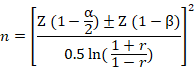
Where α and β represent type 1 (0.05) and type 2 (0.20) errors, respectively; r represents the correlation coefficient between health literacy and quality of life, which reported 0.64 in the study conducted by Husieni et al19. According to the points mentioned above, the minimum sample size obtained to 116, which reached 150 subjects to expand the power of the study. The sampling procedure was performed in three health centers located in Fasa. Subjects were randomly selected from elderlies with chronic diseases that had inclusion conditions in every center. In this research, inclusion criteria were the age of 60 and older, suffering from chronic diseases, informed satisfaction and desire for participation, having mental awareness and ability to answer questions, and lack of psychological problems diagnosed with physicians. Furthermore, those elderly people who had speech disorders, severe hearing loss, lack of consciousness, dementia, Alzheimer's, and lack of awareness of time and place were excluded from the study.
After permission was obtained from the Research Deputy of the University and Ethics Committee, as well as the Health Deputy of Fasa University of Medical Sciences, authors entered the research center of health centers and selected 50 elderlies with chronic diseases as research subjects from each center. The subjects were chosen by consideration of the list of supported elderlies in each center. The registered chronic diseases in comprehensive health centers were as follows: hypertension, hyperlipidemia, backache, osteoporosis, cardiovascular diseases, anxiety, diabetes, depression, gastrointestinal diseases and disorders, chronic respiratory diseases, heart attack, and cancer. We called the studied subjects based on the Fasa PERSIAN COHORT data20. In the next step, the questionnaires were filled out by caregivers working in each center under the supervision of the authors. The elderlies completed the self-report forms. Questionnaires were filled out by authors through interviews with uneducated elderlies. It should be noted that face-to-face training was given to caregivers to learn how to fill the questionnaires out.
A data collecting instrument, a three-part questionnaire was used in this research. The first part of this questionnaire included demographic features (age, sex, education level, and job) of research subjects. The second questionnaire was the WHO's Quality of Life Questionnaire (WHOQOL)21. A study was conducted on 1167 people living in Tehran to examine the validity and reliability of WHOQOL, and participants were divided into two groups with chronic and non-chronic diseases. Test and retest reliability of subscales equaled 0.77, 0.77, 0.75, and 0.84 for physical health, psychological health, social relationships, and environmental health, respectively. The internal consistency of this questionnaire was measured based on the Cronbach's alpha reported in (Table 1) 22. This questionnaire assesses the quality of life in four dimensions of physical health (7 items, total score of 7-35), psychological health (6 items, total score of 6-30), social relationships health (3 items, total score of 3-15), and life environment health (8 items, total score of 8-40). Overall health perception (I item, total score of 1-5) and overall quality of life (I item, total score of 1-5) were also items of this questionnaire. Each item is scored based on five options varying between 1 and 5. It is worth noting some items are scored reversely. The questionnaire was scored between 0 and 100 based on the Likert Scale, in which zero indicates the lower quality of life, while 100 represents the highest quality of life. A health literacy questionnaire was used as the third instrument. Tehrani Banihashemi et al.23, employed the Test of Functional Health Literacy in Adults (TOFHLA) to collect data. TOFHLA is one of the most important and reliable questionnaires in the world. Several translated versions of this questionnaire have been validated. To this end, they implemented the validity and reliability steps on 50 subjects during the primary study. In the next step, some options were changed regarding the difficulty rate of questions and variance of response, and the second primary study was carried out on 50 subjects. This questionnaire includes two parts of numerical skills and reading comprehension. The numerical skill part consists of some explanations about prescribed drugs, appointment time, financial funds, and the result of a medicinal test. Required explanations were given in form of cards to subjects, and then relevant questions (17 items) were asked. The reading comprehension part tests the patient's ability to read real texts related to healthcare by asking 50 questions. The texts included preparation orders for upper gastrointestinal imaging, rights, and duties of the patient in insurance letters, and a standard hospital consent letter. The health literacy score of each subject varied between 0 and 100, which was divided into three inadequate (0-59), borderline (60-74), and adequate (75-100) levels based on separating points of 59 and 7424. This questionnaire was validated for elderlies in Isfahan, Iran by Javadzadeh, Raeesi et al. who reported reliability rates of 0.79 and 0.88 for numerical skills and reading comprehension, respectively24.
| Variable | Levels | Frequency | Percent |
| Health literacy | Inadequate | 76 | 50.7 |
| Borderline | 30 | 20 | |
| Adequate | 44 | 29.3 | |
| Total | 150 | 100 | |
Ethical Consideration
This study was approved as a research project in Deputy of Research and Technology of Fasa University of Medical Sciences. The project was implemented after submitting the official introduction letter of Fasa University of Medical Sciences to the studied healthcare centers. Confidentiality was observed in this study.
Data Analysis
The descriptive data were reported based on the central indicators of mean, standard deviation, percent, and frequency. Data analysis was done by using independent t-test, ANOVA, chi-square, and correlation tests at the significance level of P<0.05 through SPSS22 software.
Results
In this research, 150 elderlies with chronic diseases were studied; of them, 73 subjects (48.7%) were female and 77 subjects (51.3%) were male. Mean and standard deviation of age equaled 67.68±6.92. Some elderlies (41 subjects or 27.3%) had a diploma. The mean and standard deviation of disease duration equaled 12.47±9.71. Diabetes, hypertension, heart attack, lumbar disc, and hyperlipidemia were the most prevalent chronic diseases among elderlies with statistics of 35 subjects (29.7%), 31 (20.6%), 20 (13.3%), 11 (7.3%), and 10 (6.7%), respectively.
(Table 1) reports the distribution of health literacy of the studied population. Accordingly, more than half of the subjects (50.7) had inadequate health literacy.
According to (Table 2), the average quality of life, as well as physical, psychological, social, and environmental dimensions of health equaled 54.35±9.36, 55.46±12.34, 58.62±17.35, 56.75±12.19, and 56.94±15.38, respectively.
According to the statistical test of Pearson correlation reported in (Table 3), there was a significant relationship between health literacy and quality of life.
(Table 4) reports the relationship between variables and quality of life. There was a significant association between sex, education level, job, and total score of quality of life.
| Variable | Dimensions | Min | Max | Mean | SD |
| Quality of life | Physical health | 31 | 75 | 54.35 | 9.36 |
| Psychological health | 19 | 87 | 55.46 | 12.34 | |
| Social relationship | 19 | 95 | 58.62 | 17.35 | |
| Environment health | 25 | 81 | 56.75 | 12.19 | |
| Total | 34 | 98 | 56.94 | 15.38 | |
| Variable | Reading comprehension | Numerical skills | Overall health literacy | Physical health | Psychological health | Social relationships | Environment health | The overall quality of life |
| Reading comprehension | 1 | 0.76** | 0.94** | 0.22** | 0.10 | 0.10 | 0.01 | 0.25** |
| Numerical skills | 0.76** | 1 | 0.93** | 0.25** | 0.13 | 0.13 | 0.06 | 0.29** |
| Overall health literacy | 0.94** | 0.93** | 1 | 0.25** | 0.12 | 0.12 | 0.04 | 0.29** |
| Physical health | 0.22** | 0.25** | 0.25** | 1 | 0.51** | 0.28** | 0.33** | 0.50** |
| Psychological health | 0.10 | 0.13 | 0.12 | 0.51** | 1 | 0.58** | 0.57** | 0.62** |
| Social relationships | 0.10 | 0.13 | 0.12 | 0.28** | 0.58** | 1 | 0.57** | 0.39** |
| Environment health | 0.01 | 0.06 | 0.04 | 0.33** | 0.57** | 0.57** | 1 | 0.53** |
| Overall quality of life | 0.25** | 0.29** | 0.29** | 0.50** | 0.62** | 0.39** | 0.53** | 1 |
| Variable | Subgroup | Quality of life | ||||
| Total score | Physical health | Psychological health | Social relationships | Environment health | ||
| Sex | Female | 48.37±25.59 | 51.84±9.57 | 54.0±13.41 | 58.10±04 | 56.31±12.77 |
| Male | 60.61±27.22 | 56.8±8.52 | 56.75±11.19 | 59.10±16.77 | 57.16±11.69 | |
| Sig. | 0.007 | 0.001 | 0.193 | 0.728 | 0.670 | |
| Education level | Uneducated | 18.05±15.78 | 52.28±10.28 | 55.18±9.74 | 57.09±18.62 | 57.00±12.55 |
| Elementary school | 28.40±12.80 | 47.70±9.28 | 55.6±8.08 | 58.1±11.04 | 61.4±8.34 | |
| Secondary school | 49.03±19.60 | 55.50±9.87 | 57.33±13.75 | 58.88±17.34 | 56.13±13.01 | |
| Diploma | 62.39±18.72 | 55.82±8.38 | 55.02±12.16 | 57.36±17.93 | 56.43±12.76 | |
| Associate degree | 77.41±15.01 | 53.88±8.58 | 51.11±14.11 | 59.33±19.21 | 54.48±11.83 | |
| BA and above | 80.71±20.10 | 55.85±9.67 | 60.71±10.23 | 63.00±15.77 | 59.92±11.14 | |
| Sig. | <0.001 | 0.151 | 0.238 | 0.933 | 0.635 | |
| Job | Unemployed | 44.39±26.66 | 52.58±9.32 | 55.55±12.66 | 57.61±17.16 | 56.93±12.34 |
| Service job | 72.34±16.93 | 56.68±9.52 | 54.11±13.66 | 60.17±19.46 | 56.325±13.22 | |
| Manufacturing job | 57.95±26.78 | 56.28±7.95 | 58.04±6.98 | 59.19±13.17 | 56.95±9.45 | |
| Sig. | <0.001 | 0.035 | 0.484 | 0.718 | 0.961 | |
Discussion
According to the research results, more than half of the studied subjects (50.7%) had inadequate health literacy. This result was consistent with some relevant studies24-27. Mohseni et al.28, concluded that almost the majority of elderlies (52.5%) had inadequate health literacy. Hosieni et al.19 found 24% of elderlies living in Rafsanjan, Iran, had inadequate health literacy. According to results obtained by Javadzade et al.23, about 79% of elderlies had inadequate health literacy. Büssing et al.27, carried out a study on the health literacy of elderlies with cancer in 2018 and results indicated a low score of health literacy and subjects had inadequate health literacy. The difference between results may be associated with the different life statuses of elderlies. For example, Hosieni studied university retired staffs who were educated and employees of the university of medical sciences, while the studied elderlies in other papers were not similar in terms of job and education19.
The obtained results of the present study indicated a significant relationship between age, sex, education level, job, and health literacy. Therefore, there was more inadequate health literacy among men with a higher age average and lower education level. Ghasemi..et al.29, found a significant association between health literacy level, education, and job status. Mohseni argued that physical and mental abilities, environmental situations, economic and social status of individuals depend on their job position; therefore, an appropriate job status affects the health of the person by creating more opportunity for social interactions. Borji et al30, found a significant relationship between health literacy, age, sex, jab, and education level.
Hosieni et al.19 conducted a study on the relationship between health literacy and the quality of life of retirees of Rafsanjan University of Medical Sciences and found a significant relationship between education level and health literacy. Javadzade et al.23 found a significant relationship between health literacy and age. Various studies have proved the significant relationship between health literacy and education level. Accordingly, the higher the education level, the higher the literacy level will be30-34. Further, some studies found an increase in average health literacy in line with higher education levels35-38. Cho et al.35, introduced education as a variable affecting health literacy. Low education level, difficulty in written communications, and less information about medical terms harm the ability of individuals to make successful interactions with the healthcare system. According to the results of the present paper and comparison with other studies, the higher the education level, the more adequate the health literacy will be. On the other hand, the promotion of education leads to higher knowledge levels, which leads to higher health literacy.
In the present study, quality of life scores equaled 55.46 and 54.35 for psychological and physical dimensions, respectively. Accordingly, the psychological aspect had a higher score than the physical dimension. This result was matched with the finding obtained by Hosieni et al.19, which reported a higher score for the psychological dimension (61.66) of quality of life than the physical dimension (56.22). In the study conducted by Ahangari et al. and other papers, the psychological score was higher than the physical dimension of quality of life39. According to findings, elderlies obtained a quality of life score of 54.83. In relevant studies, the mean value of 50 with a standard deviation of 10 has been considered a norm indicator of elderlies' quality of life of elderlies40-42. Hence, comparing these two scores indicated the higher quality of life score of retired elderlies in the present study. However, compared results between Iranian and foreign studies indicated the higher quality of life of foreign elderlies2-6. This difference in the quality of life of foreign and Iranian elderlies may stem from the chronic disease of studied elderlies in the present study since the chronic disease may affect the quality of life. Moreover, another reason for this difference depends on the different support systems and more convenient lifestyles in other countries. Health literacy-promoting program is a type of inexpensive social support that improves the quality of life of elderlies.
According to the present paper results, there was a significant relationship between sex, education level, job, disease duration, and quality of life. This result was matched with results obtained by Khooshemehri et al. 38, who found a significant association between quality of life, sex, and education level. Moreover, Ahangari et al.39 found that the higher the education level, the higher the quality of life. Ghasemi et al.40 introduced age and education level as factors affecting the quality of life. Other researchers also found the positive effect of higher education on the quality of life43-45.
Findings indicate a significant correlation between health literacy and quality of life35-38. Khooshemehri, et al.37, concluded that individuals with adequate health literacy had higher quality of life. Wang et al. found an association between low health literacy and poor quality of life39. These findings were in line with the results of other studies30-33. Husseini, et al. found a significant relationship between health literacy and quality of life among elderlies. Therefore, health literacy plays a vital role in the improvement of the quality of life of elderlies25. Health-promoting behaviors of elderlies have positive effects on the health and quality of life and reduce healthcare costs. Hence, health is taken into account as a factor that promotes healthy behaviors, creates a healthy lifestyle, and improves the quality of life of elderlies.
Conclusion
According to the results, more than half of the studied individuals (50.7%) had inadequate health literacy. There was a significant relationship between age, sex, education level, job, and health literacy. Hence, there was higher inadequate health literacy among unemployed men with higher age averages and lower education levels. There was a significant association between the overall score of quality of life and health literacy. Moreover, there was a significant correlation between sex, education level, job, disease duration, and quality of life. The present study was conducted on the health literacy and quality of life among elderlies who suffer from chronic disease. The absence of the study on this topic can be considered as an initiative aspect of this paper. This research faced some constraints. Regarding the nature of the health literacy assessment tool in this study, only reading comprehension and numerical skills were examined. Although evaluation of these skills is the first step to assess health literacy, this is only a part of the general concept of health literacy. Achievement in the health system must consider other skills, such as listening, speaking, contextual and cultural knowledge. This was a cross-sectional study, so further studies can be done within long-term cases to understand causal relationships between variables.
Disclosure
The authors reports no conflicts of interest in this work.
Funding
This research did not receive any specific grants from funding agencies in the public, commercial, or not –for- profit sectors.
References
1. Bijani M, Rostami K, Ghasemi A, Emami M, Fereidouni Z. Investigation of diabetes prevention behaviors among teachers of different level of education based on pender model in selected educational centers in southwestern Iran, 2019. Revista Latinoamericana de Hipertension. 2019;14(4):290-294.
2. Bijani M, Ghasemi A, Karimi S, Freidooni Z, Beygi N. The Role of Educational Intervention Based on the Health Belief Model in Colorectal Cancer Screening of Teachers in Fasa. Journal of Computational and Theoretical Nanoscience.2019; 16(7):2954-2958.
3. Taheri Kharameh Z, Khoshravesh S, Noori R, Abdolmalaki M, Bakhshi M.Determinants of Medication Adherence Among Iranian Elderly Patients with Chronic Diseases. Jundishapur J Chronic Dis Care. 2018;7(3): 68310.
4. Mellor D, Russo S, McCabe MP, Davison TE, George K. Depression training program for caregivers of elderly care recipients: Implementation and qualitative evaluation. J Gerontol Nurs 2008; 34(9): 8-15.
5. Pequeno NP, de Araújo Cabral NL, Marchioni DM, Lima SC, de Oliveira Lyra C. Quality of life assessment instruments for adults: a systematic review of population-based studies. Health and quality of life outcomes. 2020 Dec;18(1):1-3.
6. Azar A. Selection Census Results of population and Housing 2011. Tehran, Iran: Statistical Centre of Iran; 2011.
7. Tajvar M, Arab M, Montazeri A. Determinants of healthrelated quality of life in elderly in Tehran, Iran. BMC Public Health. 2008; 8: 323.
8. Lu S, Wu Y, Mao Z, Liang X. Association of formal and informal social support with health-related quality of life among Chinese rural elders. International journal of environmental research and public health. 2020 Jan;17(4):1351.
9. WHO, Aging UNIo. Global health and ageing 2011. Available from: http://www.who.int/ageing/publications/global_he alth/en/
10. Azizi Zeinalhajlou A, Amini A, Sadegh Tabrizi J. Consequences of Population Aging in Iran with Emphasis on its Increasing Challenges on the Health System (Literature Review). Health image,2015;6(1):54-64.
11. Grassi L, Caruso R, Da Ronch C, Härter M, Schulz H, Volkert J, Dehoust M, Sehner S, Suling A, Wegscheider K, Ausín B. Quality of life, level of functioning, and its relationship with mental and physical disorders in the elderly: Results from the MentDis_ICF65+ study. Health and quality of life outcomes. 2020 Dec;18(1):1-2.
12. Bani Asadi T, Jamalpour A. Improvement of Senile Chronic Disease Management with Health Information Technologies. Journal of Iran Health Information Management. 2012;7(1):38-43.
13. Habibi A, Nemadi-Vosoughi M, Habibi S, Mohammadi M. Quality of Life and Prevalence of Chronic Illnesses among Elderly People: A Cross-Sectional Survey. journal of health. 2012;3(1):58-66.
14. Gao J, Hu H, Yao L. The role of social engagement in the association of self-reported hearing loss and health-related quality of life. BMC geriatrics. 2020 Dec;20:1-9.
15. Yazdi-Ravandi S, Taslimi Z, Haghparast A, Ghaleiha A. Quality of life in patients with chronic pain disorders: determination the role of intensity and duration of pain. Koomesh 2016; 17: 836-43.
16. Milanovic Z, Pantelic S, Trajkovic N, Sporis G, Kostic R, James N. Age-related decrease in physical activity and functional fitness among elderly men and women. Clinical Interventions in Aging. 2013; 8:549-56.
17. Heo S, Lennie TA, Okoli C, Moser DK. Quality of life in patients with heart failure: ask the patients. Heart Lung 2009; 38(2): 100-8.
18. Reisi M, Javadzade SH, Mostafavi F, Sharifirad G, Radjati F, Hasanzade A. Relationship between health literacy, health status, and healthy behaviors among older adults in Isfahan, Iran. J Educ Health Promot. 2012; 1(1): 31.
19. Hosieni F, Mirzaei T, Ravari A, Akbary A. The relationship between health literacy and quality of life in retirement of Rafsanjan University of Medical Sciences. Journal of Health Literacy. 2016;1(2):92-9.
20. Nejat S, Montazeri A, Holakouie Naieni K, Mohammad K, Majdzadeh S. The World Health Organization quality of Life (WHOQOL-BREF) questionnaire: Translation and validation study of the Iranian version. sjsph. 2006; 4 (4) :1-12
21. Usefy AR, Mallik S, Ghassemi GR, Baghaei AM, Sarrafzadegan N, Rabiei K. Psychometric Properties of the WHOQOL-BREF in an Iranian Adult Sample. Community Ment Health J. 2010; 46(2): 139-147.
22. Tehrani Banihashemi SA, Haghdoost AA, Amirkhani MA, Alavian SM, Asgharifard H, Baradaran H, Barghamdi M, Parsinia S, Fathi Ranjbar S. Health literacy and the influencing factors: a study in five provinces of Iran. Strides in development of medical education. 2007 Jul 1;4(1):1-9.
23. Javadzade SH, Sharifirad G, Radjati F, Mostafavi F, Reisi M, Hasanzade A. Relationship between health literacy, health status, and healthy behaviors among older adults in Isfahan, Iran. Journal of Education and Health Promotion. 2011; 1:31.
24. Yuan Y, Li J, Jing Z, Yu C, Zhao D, Hao W, Zhou C. The role of mental health and physical activity in the association between sleep quality and quality of life among rural elderly in China: A moderated mediation model. Journal of affective disorders. 2020 Aug 1;273:462-7.
25. Maniscalco L, Miceli S, Bono F, Matranga D. Self-perceived health, objective health, and quality of life among people aged 50 and over: interrelationship among health indicators in Italy, Spain, and Greece. International journal of environmental research and public health. 2020 Jan;17(7):2414.
26. Zhuang Y, Ma QH, Pan CW, Lu J. Health-related quality of life in older Chinese patients with diabetes. PloS one. 2020 Feb 27;15(2):e0229652.
27. Büssing A, Recchia DR, Koenig H, Baumann K, Frick E. Factor structure of the Spiritual Needs Questionnaire (SpNQ) in persons with chronic diseases, elderly and healthy individuals. Religions. 2018 Jan;9(1):13.
28. Mohseni M, Khanjani N, Iranpour A, Tabe R, Borhaninejad VR.The Relationship between Health Literacy and Health Status among Elderly People in Kerman. Iranian Journal of Ageing. 2015; 10(2):146-155.
29. Borji M, Tarjoman A, Otaghi M, et al. Health Literacy Level and its Related Factors among the Elderlies in Ilam in 2015. Iran Journal of Nursing (IJN), 2017; 30(107):33-43.
30. Rizzuto D, Melis RJ, Angleman S, Qiu C, Marengoni A. Effect of chronic diseases and multimorbidity on survival and functioning in elderly adults. Journal of the American Geriatrics Society. 2017 May;65(5):1056-60.
31. Park HY, Seo SA, Yoo H, Lee K. Medication adherence and beliefs about medication in elderly patients living alone with chronic diseases. Patient preference and adherence. 2018;12:175.
32. Kutner MA, Greenberg E, Yin J, Paulsen C, White S. The health literacy of America’s adults: Results from the 2003 National Assessment of Adult Literacy. Washington D.C.: Department of Education, National Center for Education Statistics; 2006.
33. Howard DH, Sentell T, Gazmararian JA. Impact of health literacy on socioeconomic an racial differences in health in an elderly population. J Gen Intern Med. 2006; 21(8): 857-61.
34. Sorlie V, Lopez RA. When language, health literacy, and miscommunication collide: Tremors versus seizures. Family Medicine. 2011; 43(1):48-50.
35. Cho YI, Lee SY, Arozullah AM, Crittenden KS. Effects of health literacy on health status and health service utilization amongst the elderly. Social Science and Medicine. 2008; 66(8):1809-16. doi: 10.1016/j.socscimed.2008.01.003
36. Makovski TT, Schmitz S, Zeegers MP, Stranges S, van den Akker M. Multimorbidity and quality of life: systematic literature review and meta-analysis. Ageing research reviews. 2019 Aug 1;53:100903.
37. Dickson VV, Howe A, Deal J, McCarthy MM. The relationship of work, self-care, and quality of life in a sample of older working adults with cardiovascular disease. Heart & Lung: The Journal of Acute and Critical Care. 2012;41(1):5-14.
38. Khooshemehri G, Kaviani M, Asmari M, Rajabian H, Naserkhaki V. Comparison of Quality of Life for Elderly Men and Women Elderly Nursing Home Resident by Alborz Province in 1390. aumj. 2013; 2 (1) :19-24
39. Ahangari M, Kamali M, et al. Quality of Life in the Elderly. Iranian J Ageing. 2007;2 (3):182-9.
40. Ghasemi SR, Rjabi Gilan N, Reshadat S. The Survey of Health-Related Quality of Life in Kermanshah Rural Women and Some Related Factors. J Mazand Univ Med Sci 2014; 24(109): 173-181
41. Kooshyar H, Shoorvazi M, Dalir Z, Hoseini S. Surveying Health-Related Quality of Life and Related Factors in the Diabetic Elderly in Mashhad in 2013. JRUMS. 2015; 14 (3) :175-188
42. Wang C, Kane RL, Xu D, Meng Q. Health literacy as a moderator of health-related quality of life responses to chronic disease among Chinese rural women. BMC women’s health. 2015; 15(1): 34.
43. Abdulelah FM, Abdulbaqi MR. Fast dissolving film nanocrystal (FDFN) preparation as a new trend for solubility enhancement of poorly soluble class ii drug tenoxicam. Archivos Venezolanos de Farmacologia y Terapéutica. 2021;40(4):333-9.
44. Fuster-Guillén D, Ocaña-Fernández Y, Figueroa RP. Estilos de afrontamiento al estrés influyentes en la solución de problemas sociales en estudiantes universitarios en aislamiento social por COVID 19. Archivos Venezolanos de Farmacologia y Terapéutica. 2021;40(4):410-7.
45. Diaz CE, Cordero PM, Castillo AV, Choez KM, Nauñay DC, Freire PI, Pilataxi NE, Cando FC. Explorando la relación entre el confinamiento, ritmos circadianos y la resistencia a la insulina. Diabetes Internacional. 2020;12(1):6-10.
Notas de autor
naz7899@yahoo.com