Artigos
A PRELIMINARY EXPLORATION OF THE DEVELOPMENT OF WISDOM IN ENTREPRENEURSHIP EDUCATION
A PRELIMINARY EXPLORATION OF THE DEVELOPMENT OF WISDOM IN ENTREPRENEURSHIP EDUCATION
Revista de Empreendedorismo e Gestão de Pequenas Empresas, vol. 7, no. 1, pp. 1-34, 2018
Associação Nacional de Estudos em Empreendedorismo e Gestão de Pequenas Empresas

This work is licensed under Creative Commons Attribution-NonCommercial-ShareAlike 4.0 International.
Received: 10 September 2017
Accepted: 15 February 2018
Abstract: Though the development of wisdom is a primary goal of higher education, it has received little empirical attention in an entrepreneurship education (EE) context. We conduct a preliminary, exploratory investigation into the teaching of wisdom in EE. Applying Sternberg’s (1998) balance theory of wisdom, we examine whether entrepreneurship courses deliver on the potential of wisdom development by studying the syllabi of 50 university entrepreneurship courses from around the world. We also examine the contents of the major entrepreneurship textbooks used in EE classrooms today. We find that both textbook use and course design are negatively related to the development of wisdom in the classroom. Theoretical and practical implications are discussed.
Keywords: Wisdom, entrepreneurship education, management education, syllabi, course outlines, textbooks.
NTRODUCTION
The study of wisdom is far-reaching and, over many years, many scholars have undertaken mapping its development, growth, and application. Though its conceptualization is wide in the extant literature (Baden & Higgs, 2015), wisdom has recently been defined broadly as the ability to use judgment to balance one’s own good, and the good of others, toward a common goal or outcome (Sternberg, 1990; 1998). According to research, wisdom is comprised of such things as knowledge (Baltes & Staudinger, 2000), courage (Solansky, 2014), values (Sternberg, 1998), and being aware of one’s own knowledge deficiencies (Ames, 2010), among other things (Govindji, 2014). As such, the development of wisdom is certainly relevant and probably desirable for all who teach and learn at the university level. However, the empirical study of wisdom is limited in most management education contexts (Shotter & Tsoukas, 2014). We would expect that wisdom would be an important asset for entrepreneurs, who must constantly adapt their activities in a dynamic environment. However, our literature review indicates there is scant attention to wisdom in the entrepreneurship education (EE) literature, thus the focus of our study. In the context of this study we define EE much the same way as Fayolle, Gailly, and Lassas-Clerc (2006) “as any pedagogical programme or process of education for entrepreneurial attitudes and skills, which involves developing certain personal qualities” (p. 702).
The dearth of wisdom research in EE is problematic in terms of both pedagogical considerations of EE courses and in terms of the outcomes of such courses. On the face of it, because most EE courses and programs are purportedly designed to contain a prominent practical component, often including interaction with practicing entrepreneurs (Fiet, 2000b), they well suited for transferring wisdom to students at the university level. However, there is little empirical research on the topic in terms of either wisdom-imparting pedagogical methods or outcomes of course interventions. In fact, as discussed in more detail below, our literature search found no empirical studies examining the development of wisdom in EE. As such, we simply do not know if wisdom is being provided in the EE classroom, or if it is well delivered.
This is a troubling finding in the context of the complex challenges facing entrepreneurs and their organizations today. Among other things, entrepreneurs are expected to have integrity, make a profit, be socially responsible, and make tough decisions for the good of their organizations (Edelman, Manolova, and Brush, 2008). Though these actions undoubtedly require wisdom, the empirical investigation as to how entrepreneurs develop wisdom has yet to be rigorously undertaken. Providing a preliminary exploration of the study of the development wisdom in EE, and making a call for rigorous research in the area, are the primary purposes of this paper. In other words, we wish to provide a starting point of serious academic investigation and debate regarding the development of wisdom in EE contexts. We do so by providing preliminary evidence from a large-scale, global study of the outcomes of EE indicating that, at present, introductory EE courses may not be optimally designed for the development of wisdom.
Wisdom is gained primarily through both the acquisition of knowledge and learning from its applications across a variety of situations (Sternberg, 1998). In that light, learning in EE contexts is said to take place in a complex, nonlinear fashion that does not respond well to traditional behavioristic “teaching-centered” pedagogical approaches (Honig, 2004; Krueger, 2009). However, it appears that entrepreneurship courses in higher education often follow such traditional approaches (Solomon, 2007), especially in terms of its reliance on textbooks as a major part of the curriculum (Edelman et al., 2008). As we discuss later, the use of textbooks in management has been described in the literature as hegemonic (Mir, 2003), or directive, and strongly ideological (Cameron, Ireland, Lussier, New, & Robbins, 2003). This adherence to ideology may result more in propaganda, influenced by isomorphic forces, than full discussions of theory in EE classrooms. Thus, EE educators may not be providing optimal experiences in EE contexts for students to develop their wisdom-related judgment skills via their classroom experiences.
Identifying sets of theoretical and pedagogical tools that may assist entrepreneurs to negotiate their ever-changing environments and marketplaces has been a challenge for EE. In this paper we maintain that, though it may serve other important purposes, the use of linear, chapter-by-chapter textbook instruction in the entrepreneurship classroom may not be generating wisdom for entrepreneurship students. Although textbooks may provide descriptions of theory, the development of wisdom requires that knowledge not only be acquired but also be applied appropriately in a variety of contexts (Sternberg, 2001).
Theory is defined as a statement of relationships amongst concepts within a set of boundary assumptions and constraints (Bacharach, 1989). When properly introduced, theory should provide a framework for analyzing and predicting the consequences of decisions (Fiet, 2000a; 2000b). In fact, as researchers and scholars we are obligated to teach theory because it is closer to the truth than observation alone. Mixing knowledge and observations is one of the key ways to develop wisdom (Sternberg, 1998). Unfortunately, the literature on EE pedagogy appears to be replete with practical, “hands-on” interventions (e.g., Hindle & Cutting, 2002), driven by the use of textbooks, while approaches designed to develop and apply theory appear to take a back seat. Indeed, the assessment of EE pedagogy is rarely addressed (Fayolle, 2013; Pittaway et al., 2009). Recognizing these gaps in both research and the development of the wisdom construct, we provide a preliminary exploration into how EE is currently being delivered at the university level.
We suspect that current modes of EE are incomplete in terms of generating wisdom in potential entrepreneurs, and demonstrate that relying on textbooks in EE does not allow students to effectively predict and explain the relationships amongst important variables in entrepreneurship. Further, we argue that pedagogical approaches best suited to generating wisdom are based in theory, s they allow students to apply their knowledge with the goal of developing wisdom. Specifically, after examining a small cross-section of university-level course syllabi collected from around the world, we investigate the application and utilization of theory in EE courses. We address the following primary research question: To what extent are EE courses designed to impart wisdom? In so doing we provide an important window on EE in terms of pedagogical content and its relationship with various constructs, including wisdom.
LITERATURE REVIEW AND THEORY BASED HYPOTHESES
What is Wisdom?
The study of wisdom has a long history. Aristotle (1955) viewed wisdom to be a moral virtue (or habit) that is developed in social contexts. He believed that, when properly developed and applied, moral virtues permit people to make just judgments that can lead to a having a good, fulfilling life. As such he viewed wisdom to be a form of moral judgment that could be either a trait possessed or a state to be developed. Since that time, there have been many conceptualizations of the wisdom construct, although there is still no standard definition of wisdom (Sternberg, 1990). Indeed, the wisdom concept has changed over time (Rowley, 2006) and, though there have been many efforts to define it, little progress has been made to develop the nomological net of the construct in the EE literature. Instead, research on wisdom appears to put to the test the layperson’s conception of wisdom, which usually focuses on some combination - and application - of knowledge and judgment (Sternberg, 1998; 2001).
Several models of wisdom exist in the management literature, most of them cognitive in nature, with a focus on the processing of contextual information (Shotter & Tsoukas, 2014). Many modern theorists view wisdom as a form of expert knowledge that is practiced and developed over time (Baden & Higgs, 2015). The work of one theorist, Sternberg, holds promise for empirical investigation, given its growing dominance in the psychology and management fields (McKenna, Rooney, & Kenworthy, 2013). Sternberg’s (1990; 1998) balance theory of wisdom (BTW) capitalizes on understanding wisdom as a form of expert knowledge manifest of practical intelligence. BTW purports that wisdom is acquired via the regular process of alternately coding new contextual information and reconciling it with older information fit together to form an orderly whole. This, in turn, guides future judgments in new contexts. Such processes are described in the development of many types of intelligence (e.g., Piaget, 1950); however, according to Sternberg what distinguishes those from wisdom is that wisdom is unusually context-dependent, involving “balancing off the various interests of parties about which one needs to make a judgment” (Sternberg, 2000, p. 640). This balancing process is a matter of information processing aimed at problem solving in judgment-related contexts (Shotter & Tsoukas, 2014).
Importantly, BTW highlights the importance of tacit knowledge in wisdom, which Sternberg (1998) proposed to be an important element of overall intelligence. For him, tacit knowledge was a form of knowing what we do not know (Ames, 2010) and is developed exclusively via experience. Tacit knowledge guides individuals to pursue intrinsically meaningful goals and is developed by learning from experience. Importantly, it cannot be developed via vicarious experiences of others or from readings, such as textbooks (Kunzmann & Baltes, 2005). Sternberg (1998) argued that wisdom lies not in what is known, but rather in the manner in which knowledge is held and applied (Rowley, 2006). It is important to note that Sternberg (1998) did not propose that tacit knowledge itself is wisdom. He proposed that wisdom manifests with the application of tacit knowledge to balance various personal goals with the interests of others and other aspects of one’s surrounding context, such as one’s culture, educational setting, or even a higher power or deity (Sternberg, 1998). Thus, wisdom is not just fulfilling one’s own goals in terms of balancing them with the interests of another person, or the needs of one’s external environment, but rather balancing outcomes across all three of these factors. Given this definition, BTW has been described as highly relevant to management education contexts (Shotter & Tsoukas, 2014).
The Context of EE. We suggest that an examination of EE pedagogy should contain, as at least as one of its goals, an exploration of its purported outcomes, including wisdom. For example, if one of the goals of a particular EE intervention is to increase positive levels of entrepreneurial attitudes, then these should be in some way measured. Yet our concrete knowledge about EE outcomes is scant. With at least 79 empirical studies conducted on the subject over the past 25 years (Martin, McNally, & Kay, 2013), EE has attracted the widespread attention of scholars interested in understanding its impact on students. As such, one might expect that there would be some degree of certainty about the kind of impact EE is having on its students in general, and what the relative merits of various pedagogical approaches might be in particular. Unfortunately, the current literature allows for only a limited understanding of these issues (Fayolle, 2013).
Gorman, Hanlon, and King (1997) provide a strong foundation for a comprehensive perspective of the empirical literature on EE outcomes. They examined EE outcomes for a ten-year period ranging from 1985 through 1994. Key among their findings was the assertion that, although there had been some improvement in the EE literature over time, it suffered from methodological weaknesses, including a lack of proper quasi-experimental controls, among others. As such they called for increased levels of methodologically rigorous empirical work that displays a better understanding and reporting of various educational contexts. Importantly, they also called for more work grounded in theory in general and educational theory in particular.
More recently, Matlay (2005; 2006) suggests that because EE research still employs weak methodology it is probably biasing results in favor of positive outcomes. Consistent with Gorman et al. (1997), Matlay notes that much of the research lacks the use of control groups and longitudinal methods that are necessary to provide causal conclusions. Thus, there is still only limited evidence to suggest that EE students are more likely to engage in entrepreneurial attitudes and behaviors compared to those students who do not take EE courses.
After undertaking their own review of the EE literature, Pitaway and Cope (2007) agree with Matlay (2005; 2006) by concluding that, although entrepreneurship education has a positive impact on students’ propensity and intentionality toward entrepreneurship, there is little clear evidence as to whether it helps to create better entrepreneurs. These authors noted that government policy designed to position EE as a way to promote economic growth was based on weak evidence, and that much of the research conducted to examine the outcomes of EE was done in isolation and did not build upon previous findings. Pitaway and Cope (2007) also agreed with both Gorman et al. (1997) and Matlay (2005; 2006) by suggesting that there is a need to improve the quality and rigor of EE research.
Overall, the results of the qualitative reviews discussed above suggest there is little conclusive evidence for a relationship between EE and its purported outcomes. There is also strong agreement that the literature suffers from a weak methodology that may be biasing results. However, the reviews differ when it comes to their conclusions about some important relationships between EE and its purported outcomes. For example, Gorman et al. (1997) report preliminary evidence showing that EE can have a positive impact on entrepreneurship attributes and attitudes. Pitaway and Cope (2007) report evidence to support the claim that entrepreneurship education is associated with increases in intentionality toward entrepreneurship. Matlay (2005; 2006), however, finds no support for either of these relationships.
One way to reconcile inconsistent findings is to examine data quantitatively. The findings of a recent quantitative review of EE (Martin et al., 2013) might help clarify inconsistencies. Examining individual studies in the EE literature using meta-analytic techniques, Martin et al. (2013) note that many researchers indicate that EE had positive outcomes related to entrepreneurship for students, such as a greater ability to identify opportunities (DeTienne & Chandler, 2004), increased intentions to start a business (e.g., Galloway & Brown, 2002), and likelihood of starting a business (e.g., Kolvereid & Moen, 1997; Krueger, 1993). However, they note that other research shows negative outcomes for EE interventions. For instance, Mentoor and Friedrich (2007) found that student levels of entrepreneurial attitudes, knowledge, and skills declined after taking an undergraduate university level EE course. Moreover, Oosterbeek, van Praag, and Ysselstein (2010) found intentions to start a business actually declined after students completed an undergraduate course in entrepreneurship.
A meta-analysis refers to methods focused on contrasting and combining results from different studies, in the hope of identifying patterns of relationships that may come forth in the context of multiple studies (Hunter & Schmidt, 2004). Findings from Martin et al.’s (2013) meta-analysis provide the first large-sample empirical answer to the question of what impact EE has on students. EE was found to have a significant positive relationship with entrepreneurship-related human capital assets (r = .217), such as entrepreneurship-related knowledge and skills, positive perceptions of entrepreneurship and intentions to become an entrepreneur. However, this is a small effect size (Cohen, 1992), which is disconcerting for such an important and proximal outcome of education. In any case, the results suggest that the overall efforts in educating new entrepreneurs may be having only a minimal impact on students’ understanding of what entrepreneurs do and how they do it. Further, the fact that the relationship between entrepreneurship education overall and positive perceptions of entrepreneurship (r = .109) and intentions to become an entrepreneur (r = .137) are much smaller, suggests that entrepreneurship courses may be doing very little to make entrepreneurship an appealing career option.
Learning on the impact of different pedagogies in EE might help address some of the uncertainty found in the EE outcomes literature. Although there is a sizable and growing literature focused on pedagogy in EE, at this point it might be best summarized as nascent, with considerable activity, but lacking an established base of evidence that scholars and educators can draw on for guidance or further development. Much of the literature is descriptive, highlighting a range of pedagogies and practices, but with little rigorous evaluation and rarely employing established theoretical grounding to guide examinations. Fayolle (2013) calls for strengthening the foundations of EE pedagogy literature both intellectually and conceptually, to overcome what might be seen as a taken-for-granted approach. This call is echoed by even the most recent reviews (e.g., Byrne, Fayolle & Toutain, 2014), suggesting the literature is not improving in this regard.
Fayolle (2013) sumarizes three major challenges that the EE pedagogy literature faces. First, the need to overcome the tendency to study variations on learning-by-doing or active pedagogies, without the sort of deep pedagogical understanding that might bring unique insights into entrepreneurial learning. Second, the literature must focus more on evaluation of outcomes and implications of the different pedagogies studied, as opposed to descriptive accounts. Third, a general lack of rigor is hampering the learning gained from an otherwise promising and growing young literature. Our use of wisdom as a theoretical foundation in this study is valuable because, while not a pedagogical approach, it provides a sound theoretical foundation for considering and rigorously examining the merits of different pedagogies. With its focus on both course content and theory, we maintain that EE is an ideal context for the development of wisdom. However, though wisdom has certainly been the subject of essays and reviews in management education in general (e.g., Baden & Higgs, 2015; Shotter & Tsoukas, 2014, etc.), it has received very little empirical attention in EE. In fact, our review of the extant literature found no empirical, quantitative articles on the topic.
Discerning the actual impact of entrepreneurship education continues to be an attainable but unrealized goal for research and scholarship. We believe that addressing the impact requires a closer scrutiny of some of the reasons why some EE courses are performing better than others. Specifically, in the context of wisdom development, we believe that the use of textbooks as the primary tool for learning leads to poorer outcomes (i.e., less wisdom) than courses that are designed to engage in hands-on learning with proper theoretical underpinnings.
Wisdom in the EE Context: Textbook Driven? Many textbooks in the management field are designed to introduce students to both theoretical and practical matters (Edelman et al., 2008; Grant, 2006; McLaren, Mills & Durepos, 2009). The authors’ experience with entrepreneurship textbooks in the past suggested that many did not provide a good balance of both practical and theoretical elements. Theory is important because it helps individuals explore what is known about a particular construct by examining various points of view (Platt, 1964). We suggest that the development of a useful pedagogical method for teaching entrepreneurship requires a sound foundation built on Sternberg’s BTW, as described above.
EE may be an ideal way to familiarize students with the tools necessary to develop wisdom. Knowledge can be presented in class as something to be accumulated, as individuals alternately engage in cycles of considering what is known and what is not known, through theory, forcing students to create new knowledge in new contexts. Piaget (1950) referred to this repetitive interaction as equilibration, and asserts it is responsible for human knowledge and intellect. This requires a student to experience the discomfort of failure and “inoculate” them for future failure (Sitkin, 1996), and to provide a model for how to negotiate the world around them (Honig, 2004). This can be accomplished through simulations, practical experience, or by examining case studies for failure, among other ways, in addition to gathering declarative knowledge from textbooks. Rather than instructing students to pass an examination by assessing their ability to memorize a specific body of knowledge, this view attempts to develop a tolerance for the kind of discomfort entrepreneurs face in the marketplace (e.g., uncertainty, failure, etc.). That is, via the experience of assimilation and accommodation from exposure to theory, knowledge becomes wisdom.
Sternberg points out that it is essential to be able to draw on one’s tacit knowledge (Polyani, 1966). From this perspective, personal interests mediate tacit and formal knowledge to achieve a common good. Formal knowledge is viewed as a necessary, but not sufficient, component of wisely solving problems. In other words, wisdom is not developed from declarative knowledge alone, but rather from the interaction of declarative “facts” and tacit knowledge derived from experience. According to Sternberg, teaching wisdom requires a curriculum based upon: 1) the assignment of classic works; 2) class discussions of projects; 3) class discussions of individual values; 4) critical and creative thinking; 5) a focus on the implications of “good ends” that benefit the broader community.
In EE, the assignment of classic works may include foundational texts in entrepreneurship (e.g., Sarasvathy, 2001; Shane & Venkataraman, 2000, etc.). Further, class discussions of projects should involve the development of both dialogical and dialectical thinking. Dialogical thinking involves taking on multiple perspectives, whereby a student is required to have and express their own views as well as show understanding of the views of others; thus confronting the tensions between alternative perspectives, and the potential for a multiplicity of views and truths. Dialectical thinking involves the evolving and updating development of a view or a truth, using alternative arguments or perspectives to reason through the implications of various options (Koschmann, 1999; Paul, 2001). Discussions of individual values in the EE classroom would actively encourage students to think about their own values and not “force-feed” them. For example, students could be asked in class to come up with creative solutions to classic entrepreneurship problems via the case method, classroom activities, or simulations. Their proposed solutions can be examined in terms of theoretical frameworks that they have learned. Finally, students should be encouraged to think about the implications of their solutions to the broader community in which they live. This could be done via applications of learning from corporate social responsibility (CSR) or ethics, again using case methods, class activities, or simulations.
Entrepreneurship entails practical as well as theoretical instruction. Practice is necessary to provide experience and prepare individuals for professional activity. Theory is necessary to provide a useful framework to deal with uncertainty. Together, both are necessary to develop wisdom. One problem with textbook use is that the texts themselves are static tools of information (Fayolle, 2013) and, as a result, they do not stay on top of cutting edge, recent theoretical advancements. This further reduces the ability of textbook-based approaches to develop wisdom. Our anecdotal evidence, based on discussions with other entrepreneurship educators, suggests that much of the “in-addition-to-the-textbook” activity in EE classrooms relies upon classroom visits by successful entrepreneurs. Unfortunately, while students may enjoy these visits, they lack theoretical grounding and may bias student perceptions according to outlying or unusual circumstances (Fiet, 2000b).
The challenge in educating students for careers in entrepreneurship is that entrepreneurship is very much an activity based on tacit knowledge, whereby individuals put into practice the skills and abilities that they have mastered. Entrepreneurs engage in their activities within a field that is largely built upon the expression of practice or tacit knowledge. In the field of software applications development, for example, practitioners are repeatedly given the opportunity to demonstrate their wisdom in decision-making by not only developing new applications, but by “selling” the value of their designs to their colleagues and other members of their field (Barley & Kaunda, 2004). This depends as much on social relations as it does on formal knowledge structures. Bourdieu (1992; 2005) points out that fields are associated with practice through the social relations of social actors within certain contexts, structures and systems. Entrepreneurship students, in contrast with a knowledge domain that is comprised primarily of a codified body of formal knowledge, need to learn how to make wise decisions in a social field. Thus, while students can learn much relevant foundation material in areas of study such as science, medicine, and engineering through explicit knowledge, the development of tacit knowledge is also important. In fact, it is a critical component of the development of wisdom (Sternberg, 1990; 1998).
Textbooks in the EE Classroom. Although textbooks have a dominant influence in what is being taught in management learning classrooms, including EE, research has demonstrated that what is emphasized in entrepreneurship course textbooks is rarely what entrepreneurs actually face (Edelman et al., 2008). The content of management education textbooks also appears to be highly standardized (Edelman et al., 2008; Pfeffer & Fong, 2004). There is some reason to believe that, via an educational experience constrained by what can be characterized as “textbook learning,” students are not being given the chance to become wise through their EE classroom experiences (Mintzberg, 2004). This is primarily due to the hegemonic influence of management textbooks in general, where often ideology, rather than actual experience, is emphasized in the texts (Cameron et al., 2003; Mir, 2003).
As can be seen in Figure 1, we examined the content of eight of the most popular EE textbooks, used worldwide, in terms of both their content and the theoretical and pedagogical premises underlying their content. The popularity of the books was determined by examining course outlines that were submitted as part of a large-scale study of EE, described below. Our criteria for inclusion were based upon how often the books appeared in outlines, the language of instruction (only English texts were examined), and whether or not the books were written by active scholars. Although it was not possible to determine an underlying pedagogical theory employed by the authors of these texts, we were able to examine the content in an effort to determine common pedagogical themes and topics of learning.
We found that each of the textbooks followed a similar pattern in terms of content, despite the fact that many of them were written as much as a decade apart. As such, we maintain that textbooks will not likely impart wisdom if used as a primary teaching device in the EE classroom. Thus we hypothesize:
Hypothesis 1: When textbooks are required reading for the course, there will be a negative association with teaching wisdom in the EE classroom.
EE textbooks appear to be designed to advance “best practices” in entrepreneurship. For example, most of the textbooks we examined had entire chapters devoted to the instruction of how to write a business plan. However, none of them provided a theoretical rationale for doing so or much evidence in support of their use. This is troublesome chiefly because the teaching of business plans is controversial (Honig & Karlsson, 2004; Karlsson & Honig, 2009). One stream of empirical research tends to view business planning as a rational choice-based process with a positive performance impact (e.g., Delmar & Shane, 2003; 2004). Another stream of research tends to view business planning as independent from performance and an activity that provides questionable benefit in the nascent venturing process (Bhide, 2000; Honig & Karlsson, 2004). Rather than pursuing a causal model of carefully planned behavior, then, entrepreneurial activities may best be described as having an experimental focus that utilizes environmental feedback (Sarasvathy, 2001). Outcomes are frequently impossible to predict, and represent decisions that are next to impossible to anticipate. In fact, research has shown that even when bankers require business plans, they rarely read or systematically examine them (Karlsson and Honig, 2009), and venture capitalists, as rare as they are to most entrepreneurs, have been known to fund firms without any business plans at all (Patel, 2009).
The fact that evidence supporting the value of business planning is mixed suggests that textbook authors are following normative isomorphic trends in education (Boli, Ramires, & Meyer, 1985; Meyer & Rowan, 1977). Isomorphism, as discussed by institutional theorists, is a constraining process that forces one unit in a population to resemble other units that face the same set of environmental conditions (DiMaggio & Powell, 1983). Institutional theory predicts the processes by which organizational practices become accepted and achieve a normative, taken-for-granted status (Meyer & Rowan, 1977). It further suggests that one way in which individuals engage in behaviors that are considered normative is through mimetic means (DiMaggio & Powell, 1983). People imitate behaviors they perceive to be successful to achieve their own measure of success. However, the diffusion of certain practices or patterns of behavior may sometimes be incorrectly mirrored. In these situations, individuals may engage in “loose coupling” (Meyer and Rowan 1977; Orton & Weick 1990; Weick 1976) by imitating desirable behaviors in a superficial manner without understanding why they might be effective.
There have been considerable isomorphic trends in management education worldwide (Honig & Bedi 2012). We are suggesting that isomorphic trends may lead entrepreneurship educators to adopt “textbook learning” methods in their classrooms without a consideration of the relative effectiveness to taking such an approach. In fact, such trends have been described as hegemonic (Mir, 2003) leading to the propagation of potentially incorrect or outdated ideologies (Cameron et al., 2003) via isomorphism. We would further hazard that conforming to long-term normative trends in entrepreneurship education without an accompanying assessment will fail to produce optimum pedagogical results. For example, students may not be encouraged to question the value of various concepts or theories presented in their textbooks due to the very strong and directive – or hegemonic – influence of textbooks as required foundational knowledge (Mir, 2003). This discourages students from thinking critically. In Sternberg’s terms, when textbooks are used as the primary mode of learning, students are not encouraged to use their tacit knowledge and their knowledge of theory to make wise decisions. As such we reasoned that EE courses designed to follow the layout of textbooks would not be conducive to developing wisdom. Thus we hypothesize:
Hypothesis 2: Courses designed to follow the layout of textbooks are negatively associated with teaching wisdom in the EE classroom.
METHOD
Design
Course syllabi were collected during a large-scale, worldwide study of the outcomes of entrepreneurship education entitled the Entrepreneurship Education and Evaluation (EEE) Project. As part of the study, we contacted the course instructors via email and requested their participation in the EEE project. One component of EEE seeks to gain learning on the pedagogical value of major course elements, such as the use of textbooks, computer-based simulations, and journal articles. EEE project collaborators are researchers and instructors who, through their participation, gain access to a global research database. After being given appropriate assurances of confidentiality, instructors were asked to electronically submit their course syllabi into the EEE database.
Participants
The EEE project has, to date, recruited over 200 instructors from over 100 institutions, and has collected preliminary data from over 3,500 student respondents across the globe. For this paper, a total of 57 EE course syllabi have been submitted by participating instructors as a result of our request, providing a response rate of 34 percent. Of the 57 syllabi, seven were eliminated from the present analyses (four were eliminated for duplication, and three were removed because the language of instruction was not in English).
All of the courses were taught at the university level, with 76 percent listed as undergraduate courses and 20 percent listed as graduate courses (4 percent were unknown). In terms of course materials, 66 percent of the syllabi indicated that a particular textbook was required reading for the course. Of those, a 70 percent majority indicated that the course was delivered following the layout of the textbook.
In terms of continent of origin, 52 percent of the outlines were North American, 24 percent were European, 14 percent were Asian, 6 percent were African, and 4 percent were from South America. In terms of country of origin, most of the outlines were submitted from Canada (46 percent), followed by China (10 percent), France (8 percent), England (6 percent), Italy (6 percent), the United States of America (6 percent), and Uganda (4 percent). The rest of the outlines were submitted from Chile, Ecuador, Germany, Kenya, Kuwait, Portugal, and the United Arab Emirates (each with 2 percent).
Variable Coding
Syllabi were coded for a variety of variables, including the independent and dependent variables associated with the present design. Only data found directly in the syllabi were coded. Two research assistants independently coded all 50 syllabi. The intra-class correlation coefficient between the coders was high (ICC = 0.854), indicating high levels of agreement between the two raters. Discrepancies between the raters, which were few, were resolved by the primary researchers via a search for errors in the data sheet and/or the syllabi.
Control Variables. Control variables included in the analyses were country of origin and course level as either undergraduate or graduate by design. Countries of origin were coded numerically according to their alphabetical listing. Course level was coded as a “1” for undergraduate courses and “2” for graduate courses.
Independent Variables (IVs). IVs included textbook assignment and course design. Textbook assignment was coded as a “1” if textbooks were required reading for the course or a “2” if they were not required. Course design was coded as “1” if the course was designed to follow the layout of a textbook or a “2” if it was not.
Dependent Variable (DVs). The primary DV associated with the present design was teaching wisdom. Teaching wisdom was operationalized using Sternberg’s (2001) definition based upon: 1) the assignment of classic works, 2) class discussions of projects, 3) class discussions of values, 4) critical and creative thinking, and 5) a focus on the implications of “good ends” that benefit the broader community. As with the IVs, each of the five variables were coded “1” for the presence of the variable in each syllabus or “2” for its lack of presence. Scores of the five variables were then summed once to provide the “teaching wisdom” variable. This provided a continuous variable with low scores representing courses with high potential to impart wisdom and high scores representing courses not designed to facilitate the development of wisdom.
The business planning DV was coded as a “1” if the syllabus indicated that at least one segment of the course was designed to teach it and “2” if business planning was not mentioned in the outline.
RESULTS
Correlations amongst Study Variables
The means, standard deviations, and correlations amongst the primary study variables associated with this research are presented in Table 1
Hypothesis Testing
Multiple regression analyses were employed to examine H1 and H2 (see Table 2). Results indicated that taken together, when entered at Step 2 (after entering the control variables at Step 1), required textbooks and courses designed to follow the layout of a textbook explained a significant amount of the variance of the teaching wisdom variable, R2 = .28, F (4, 41) = 2.45, p. = .01. In support of H1, requiring textbooks was negatively associated with wisdom (β = -.40, p. = .01). Further, in support of 2H2, courses designed to follow the layout of a textbook negatively predicted teaching wisdom (β = -.64, p. < .001). That is, deploying a course to follow the layout of a textbook is negatively associated with “wise” courses (i.e., courses that are favourably designed for the development of wisdom).
DISCUSSION
We set out to provide a preliminary, exploratory answer to the following research question: To what extent are EE courses designed to impart wisdom? Unfortunately, at least based on the preliminary data gathered from our sample, the answer appears to be that entrepreneurship instructors are not designing courses allowing for the development of wisdom. The courses we examined demonstrate little effort to introduce theoretical concepts, or to evaluate student perspectives and empirical data against theoretical frameworks. We suggest that, by developing wisdom, we are encouraging students to learn from the interaction of their declarative (theoretical) and tacit (practical) knowledge. Lecturers can provide students with educational platforms that help inoculate them from failure (Sitkin, 1996) and provide opportunities to constantly learn by doing. This is akin to the process of developing and improving wisdom as outlined by Sternberg (1990; 1998).
Our call for the increased study of wisdom in EE has the potential to inform both EE pedagogy literature and the broader literature on EE outcomes and effectiveness. For instance, a study such as Klapper and Tegmeier’s (2010) examination of the repertory grid technique might be enhanced by introducing a more macro pedagogical perspective, which a study of wisdom brings. Developing an overarching theoretical framework that includes a wisdom perspective will ensure that such individual pedagogies, as appropriate for different contexts, are examined with a more generalizable frame of reference.
Our work also contributes to the broader EE outcomes and effectiveness literature by highlighting what is potentially an important moderator not previously examined in this much more extensive literature. Including wisdom as an overarching indicator of learning might serve to moderate intervention and outcome relationships, shedding light as to why academic EE, more so than training-focused EE, is associated with entrepreneurship outcomes such as start up and financial success (Martin et al., 2013).
Theoretical Implications
Support for H1 and H2 shows that using textbooks and designing courses to follow the layout of textbooks are both negatively related to the development of wisdom in the EE classroom. Our content analysis indicates that EE textbooks are widely used across the globe and appear to be following isomorphic trends toward hegemonic ends (Mir, 2003). Thus, it is not surprising that their use may not promote the generation of wisdom. We conclude that designing courses to follow textbooks, or “teaching to the text,” may also be detrimental to the teaching of wisdom. Failure to provide students with a theoretical grounding in entrepreneurship may limit their potential to build on classroom learning in later entrepreneurial endeavours. Thus, students are not being given the opportunity to develop wisdom through the application and interaction of their theoretical and tacit knowledge. As mentioned above, we believe that the most popular current EE textbooks are not providing students with sufficient opportunity to develop wisdom in pursuit of entrepreneurial endeavours; rather, they are designed to advance certain ideologies (Cameron et al., 2003) and practices. For example, the need for business planning is presented as a “fact” that is not questioned as part of the entrepreneurial process, which is not reflective of reality. The reason why business planning is included in the majority of EE textbooks may have little to do with empirical evidence in support of its value, but rather as a result of isomorphic trends in textbook development. As a result, textbooks, which are already static instruments of learning, provide little opportunity for students to question their content.
Support for H2 suggests that courses designed to “teach to the text” may be more likely to focus on business planning. We chose business planning as an example of a concept that is included in all of the textbooks listed in Figure 1, the need for which is being presented as fact. By itself, this may be problematic because business planning is controversial in terms of its purported value in the entrepreneurship process (Honig and Karlsson, 2004; Honig and Samuelsson, 2012). The fact that most of the textbooks we reviewed in Figure 1 had chapters devoted to business planning that were largely unquestioning of their value demonstrates the ideological influence of textbooks on EE pedagogy (Cameron et al., 2003; Mir, 2003). At a minimum, this study calls into question the value of such course components. Absent the encouragement of critical thinking about widely accepted concepts, students are unable to learn techniques that might guide them in effective practices for their future entrepreneurial businesses. As such, they are not able to learn the value of examining research when evaluating alternatives, or the utility and application of theory to entrepreneurial life outside the classroom.
Practical Implications
Compared to wisdom in the classroom, a complimentary, or perhaps supplemental, perspective of entrepreneurship pedagogy consists of problem-based learning (Woods, 1985). Because entrepreneurship is essentially problem solving, we believe that appropriate pedagogy should be rooted in real life examples. This suggests that students be presented with opportunities to solve problems, typically in small groups such as those that mirror entrepreneurial start-ups, and are subsequently mentored or advised regarding how experts would have solved the same problems (Gijselaers 1996).
Problem-based learning also provides an opportunity for students to implement and try out theories presented to them in the classroom (Krueger, 2009). In this way, they experience the utility of relying on an existing theory and evaluating how successful the implementation of that theory is in solving their problems. Klapper and Tegtmeier (2010) provide an example of how theory can be incorporated into EE courses and be applied directly to practice. They outline how teaching the theoretical and conceptual aspects of network theory and its implications to entrepreneurship are enhanced by using a repertory grid technique (Beail, 1985). This encourages students to identify how different members of their own network may be called upon to play specific roles in their future entrepreneurial endeavours.
Ollila and Williams-Middleton (2011) describe an innovative EE program at Chalmers University in Sweden, which combines an academic Master’s program, with an early stage incubator, a venture team of students who develop their firms’ shareholders and stakeholders, and a ready entrepreneurial network, consisting of school alumni and a range of participating professionals in the local entrepreneurial ecosystem. Williams-Middleton & Donnellon (2014) go on to assess and determine that this program delivers a more complete or comprehensive entrepreneurial knowledge involving not just what and how, but also why certain entrepreneurial decisions and behaviors are appropriate in certain contexts. Further research of this sort on other innovative EE programs might help to build a body of work that allows scholars to empirically examine the value of wisdom in EE. Some examples of innovative programs to study might be Copenhagen Business School’s Studio Program, which applies studio pedagogy, developed in the design and architecture fields, to business education. This unique design is intended to better integrate theoretical and practical learning in one program (Copenhagen Business School, 2016) which, in turn, is consistent with the development of wisdom (Sterberg, 1998). Another example might be the Improbable progam run by ESCE Business School in France, where students both learn about and directly experience entrepreneurship through interaction with and creation of art (ESCE Business School, 2016). We expect that such programs will aid in the development of wisdom because students are encouraged to reflect upon the interaction of declarative and tacit knowledge.
Potential Limitations
Most empirical research is subject to limitations, and this paper is no exception. For example, our sample size is small. However, despite the small overall N, we have considerable global representation from our course outlines. Further, we were able to obtain significant results in our analyses, affirming that our design had sufficient power to detect the relationships we predicted in our hypotheses.
Another issue relating to our sample is that we have only limited knowledge of the instructor respondents and why they chose to participate in our study. Thus we can make no solid claims as to the generalizability or representativeness of our results. However, this study is meant to provide an important starting point for future research; our main goal has been to shed some preliminary light on the development of wisdom in EE classrooms. As such, replication of our findings with additional samples is certainly warranted.
On a related note, we also have no way to discern how reflective the course outlines in this study actually are in terms of what gets presented in the classroom. Anecdotally, as instructors ourselves, we know from firsthand experience that what is presented in a course outline is not always what happens in the classroom. Topics can be changed, guest speakers can get moved around, and material can be either added or removed from the course as needed, among other things. However, as tools specifically designed to be reflective of course content (Fornaciari & Lund Dean, 2014), and as contracts with students (Davidson & Ambrose, 1994), course outlines can be assumed to be, at a minimum, fairly specific guideposts to how a specific course is implemented. For example, we think it unlikely that instructors would list textbooks as required readings only to set them aside, unused, for the rest of the academic term. As such we have good reason to believe that the outlines in this study are fairly relatively representative of the courses that are offered in the various institutions from which they were collected.
Future Research
In their meta-analysis, Martin et al. (2013) indicated the presence of moderators in the relationship between EE and its purported outcomes. Though it was beyond the scope of their design to examine the pedagogy employed in the courses they examined, the authors noted that course design was likely a fruitful avenue of future research as a potential moderator. Although we believe the findings of this paper to be supportive of those claims, future studies need to further examine moderators of the relationship between EE and its outcomes, including wisdom.
There are a number of examples of studies that do a good job of examining course design as a moderator of the EE-outcome relationship. DeTienne and Chandler (2004), for example, provide a well-designed study that examines, with encouraging results, the impact of a specific pedagogical approach to teaching opportunity recognition. This study employs both pre-and post-intervention comparisons of treatment and control groups to examine the impact of adding an opportunity recognition component to an undergraduate strategy course. In addition, Fayolle, Lassas-Clerc, and Tounés (2009) conducted a quasi-experiment that examined the impact of two entrepreneurship courses. The courses were almost identical except that one used live business planning, where students worked with actual entrepreneurs to develop a real business, and the other used academic business planning, where students were allowed to develop their own business. We encourage further studies such as these to help build a strong empirical foundation for the nascent EE pedagogy literature, from which scholars and practitioners can draw valuable learning.
Concluding Remarks
In this paper, we question the ability to develop wisdom in EE students due to isomorphic, hegemonic claims grounded in the balance theory of wisdom (Sternberg, 1990; 1998). We note that the growing institutionalization of EE too frequently leads to sub-optimal processes and norms in terms of the teaching of wisdom in the EE classroom. We suggest that only with the effective use of principles designed to encourage wisdom can we provide nascent and future entrepreneurs with the necessary tools to adapt to the uncertain and unpredictable dynamic environments so characteristic of entrepreneurial endeavors. We recognize that for some, teaching wisdom might require a considerable reworking of their syllabus, and for some it may not. Whatever the case, we believe the payoff is invaluable by helping our students transform knowledge into wisdom, something that should be a fundamental goal of our educational enterprise. Perhaps we should not be asking ourselves how much theory or how much practice is present in our courses. Instead perhaps the question should be, “What kinds of information and experience in this course will help my students make wise decisions in the future?”
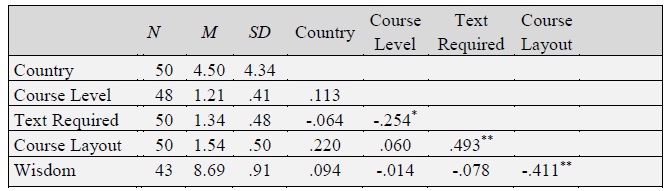
Note. *p. < .05, **p. < .01
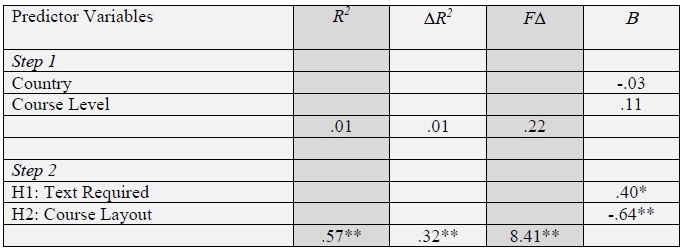
Note. *p = .01, **p = .001
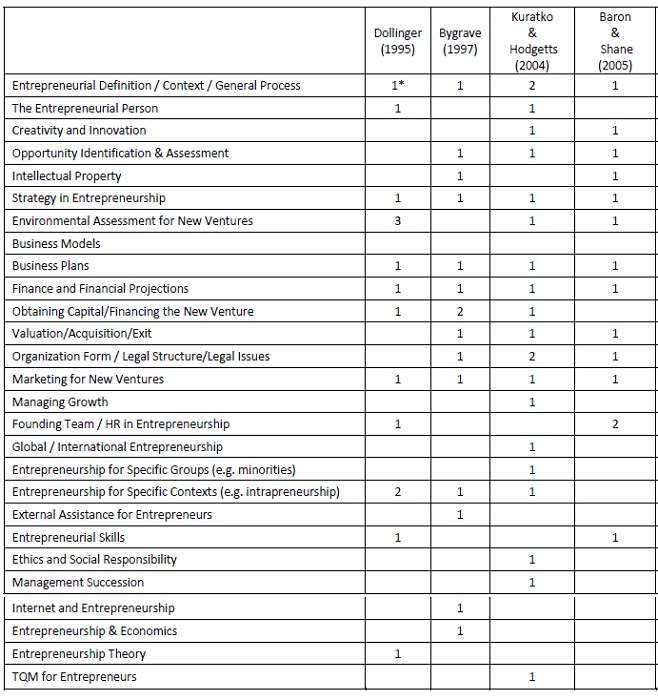
FIGURE 1
Analysis of EE Textbooks: Subject Comparisons
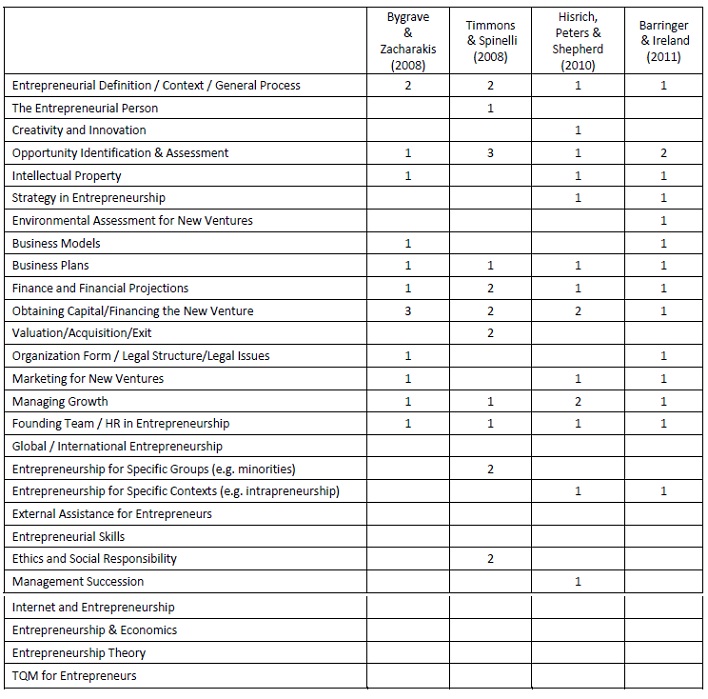
FIGURE 1
Analysis of EE Textbooks: Subject Comparisons (Cont)
Acknowledgments:
This research is supported in part by the International Opportunities Fund and an Insight Grant from the Social Sciences and Humanities Research Council, Government of Canada. The authors gratefully acknowledge the research assistance of Ms. Talia Kollek, Mr. Ye Min Thant, Mr. Emmanuel Albert, Mr. Tuan Bui, and Mr. Heah Jian Pheng. Research assistants contributed via their involvement with the Entrepreneurship Education Evaluation (EEE) Project, www.eeeresearch.com. All author contributions were equal. (Error 4: El enlace externo www.eeeresearch.com debe ser una url) (Error 5: La url www.eeeresearch.com no esta bien escrita)
REFERENCES
Ames, R.T. (2010). The Analects of Confucius: A philosophical translation. Ballantine books.
Aristotle (1955). The ethics of Aristotle: The Nicomachean ethics (Trans. J. A. K. Thompson). Harmondsworth: Penguin Books.
Bacharach, S.B. (1989). Organizational theories: Some criteria for evaluation. Academy of Management Review, 14, 496-515.
Baden, D, & Higgs, M. (2015). Challenging the perceived wisdom of management theories and practice. Academy of Management Learning and Education, 14, 539-555.
Baltes, P., & Staudinger, U. (2000). Wisdom - A metaheuristic (pragmatic) to orchestrate mind and virtue toward excellence. American Psychologist, 55, 122-135.
Barley, S., & Kunda, G. (2004). Gurus, hired guns, and warm bodies. Itinerant experts in a knowledge economy. Princeton, N.J.: Princeton University Press.
Baron, R., & Shane, S. (2005). Entrepreneurship: A process perspective. Mason, OH: Thomson South-Western.
Barringer, B., & Ireland, D. (2011). Entrepreneurship: Successfully launching new ventures, 4th Edition. Upper Saddle River, NJ: Prentice Hall.
Beail, N. (1985). Repertory grid technique and personal constructs: Applications in clinical and educational settings. Croom Helm, Beckenham.
Bhidé, A. (2000). The origin and evolution of new businesses. New York: Oxford University Press.
Boli, J., Ramirez, G., & Meyer, J. (1985). Explaining the origins and expansion of mass education. Comparative Education Review, 29, 145-170.
Bourdieu, P. (2005). The social structures of the economy. Malden, MA: Polity Press.
Bourdieu, P. (1992). Language and symbolic power. Cambridge, MA: Harvard University Press.
Bygrave, W. (1997). The portable MBA in entrepreneurship (2nd Ed.). New York: John Wiley & Sons.
Bygrave, W., & Zacharakis, A. (2008). Entrepreneurship. New York: John Wiley & Sons.
Byrne, J., Fayolle, A., & Toutain, O. (2014). 15. Entrepreneurship education: what we know and what we need to know. In E. Chell, and M. Karata-Ezkan (Eds.) Handbook of Research on Small Business and Entrepreneurship, 261-288. Cheltenham, UK: Edward Elgar.
Cameron, K.S., Ireland, R.D., Lussier, R.N., New, J.R., & Robbins, S.P. (2003). Management textbooks as propaganda. Journal of Management Education, 27, 711-729.
Cohen, J. (1992). A power primer. Psychological Bulletin, 112 (1), 155-159.
Copenhagen Business School (2016). The Studio at Copenhagen Business School. Retreived January 9, 2016 from https://www.cbs.dk/en/research/cbs-research-projects/major-research-projects/studio-cbs
Delmar F., & Shane S. (2003). Does business planning facilitate the development of new ventures? Strategic Management Journal, 24, 1165-1185.
Delmar F., & Shane S. (2004). Legitimating first: Organizing activities and the survival of new ventures. Journal of Business Venturing, 19, 385-410.
DeTienne, D.R., & Chandler, G.N. (2004). Opportunity identification and its role in the entrepreneurial classroom: A pedagogical approach and empirical test. Academy of Management Learning & Education, 3, 242-257.
DiMaggio, P. J. and Powell, W. W. (1983). The iron cage revisited: Institutional isomorphism and collective rationality in organizational fields. American Sociological Review, 48, 147-160.
Dollinger, M.J. (1995). Entrepreneurship: Strategies and resources. Homewood, IL: Austen Press.
ESCE Business School (2016). Improbable. Retreived January 9, 2016 from https://www.cbs.dk/en/research/cbs-research-projects/major-research-projects/studio-cbshttps://www.improbable.strikingly.com/#documentaryhttps://www.nyu.edu/about/university-initiatives/entrepreneurship-at-nyu/inspire/entrepreneurs-festival.html
Edelman, L., Manolova, & Brush, C. (2008). Entrepreneurship education: Correspondence between the practices of nascent entrepreneurs and textbook prescriptions for success. Academy of Management Learning & Education, 7, 56-70.
Fayolle, A., Gailly, B., & Lassas-Clerc, N. (2006). Assessing the impact of entrepreneurship education programmes: A new methodology. Journal of European Industrial Training, 30, 701-720.
Fayolle, A., Lassas-Clerc, N., & Tounés, A. (2009). The effects of real versus virtual business planning as learning process. Paper presented at the Babson College Entrepreneurship Research Conference, Massachusetts.
Fayolle, A. (2013). Personal views on the future of entrepreneurship education. Entrepreneurship and Regional Development, 25, 692-701.
Fiet, J.O. (2000a). The theoretical side of teaching entrepreneurship. Journal of Business Venturing, 16, 1-24.
Fiet, J.O. (2000b). The pedagogical side of entrepreneurship theory. Journal of Business Venturing, 16, 101-117.
Fornaciari, C. J., & Lund Dean, K. (2014). The 21st-Century Syllabus: From Pedagogy to Andragogy. Journal of Management Education, 38, 701-723.
Galloway, L., & Brown, W. (2002). Entrepreneurship education at university: A driver in the creation of high growth firms? Education + Training, 44, 398–404.
Gijselaers, W. A. (1996). Connecting problem-based practices with educational theory. New Directions for Teaching and Learning, 68, 13-21.
Gorman, G., Hanlon, D., & King, W. (1997). “Some research perspectives on entrepreneurship education, enterprise education and education for small business management: A ten year literature review.” International Small Business Journal, 15(3), 56-77.
Govindji, R. (2014). The role of wisdom in organizational leadership (unpublished doctoral thesis). Aston University, Birmingham, UK.
Grant, J. D. (2006). The quiet Americans: Formative context, the Academy of Management leadership, and the management textbook, 1936-1960. Management & Organizational History, 1(2), 201–224.
Hindle, K., & Cutting, N. (2002). Can applied entrepreneurship education enhance job satisfaction and financial performance? An empirical investigation in the Australian pharmacy profession. Journal of Small Business Management, 40, 162-167.
Hisrich, R.D., Peters, M.P., & Shepherd, D.A. (2009). Entrepreneurship (8th edition). New York: McGRaw-Hill/Irwin.
Honig, B. (2004). Entrepreneurship education: Toward a model of contingency-based business planning. Academy of Management Learning and Education, 3, 258-273.
Honig, B., & Bedi, A. (2012). The fox in the hen house: A critical examination of plagiarism among members of the Academy of Management. Academy of Management Learning & Education, 11, 101-123.
Honig, B., & Karlsson, T. (2004). Institutional forces and the written business plan. Journal of Management, 30, 29-48.
Honig, B., & Samuelsson, M. (2012). Planning and the Entrepreneur: A longitudinal Examination of Nascent Entrepreneurship in Sweden. Journal of Small Business Management, 50, 365-388.
Hunter, J.E., & Schmidt, F.L. (2004). Methods of meta-analysis (2nd ed.). Thousand Oaks, CA: Sage Publications, Inc.
Karlsson, T., & Honig, B. (2009). Judging a business by its cover: An institutional perspective on new ventures and the business plan. Journal of Business Venturing, 24, 27-45.
Klapper, R., & Tegtmeier, S. (2010). Innovating entrepreneurial pedagogy: examples from France and Germany. Journal of Small Business and Enterprise Development, 17(4), 552–568.
Kolvereid, L., & Moen, Ø (1997). Entrepreneurship among business graduates: Does a major in entrepreneurship make a difference? Journal of European Industrial Training, 21, 154–160.
Koschmann, T. (1999). Toward a dialogic theory of learning: Bakhtin's contribution to understanding learning in settings of collaboration. International Society of the Learning Sciences, 38, 308-313.
Krueger, N. (1993). The impact of prior entrepreneurial exposure on perceptions of new venture feasibility and desirability. Entrepreneurship Theory and Practice, 18, 5-21.
Krueger, N. (2009). The microfoundations of entrepreneurial learning and... education: the experiential essence of entrepreneurial cognition. In G. P. West, E. Gatewood & K. Shaver (Eds.), Handbook of University-wide Entrepreneurship Education (35-59). Cheltenham: Edward Elgar Publishing.
Kunzmann, U., & Baltes, P.B. (2003). The psychology of wisdom: Theoretical and empirical challenges. Cambridge, UK: Cambridge University Press.
Kuratko, D.F., & Hodgetts, R.M. (2004). Entrepreneurship: Theory, process, practice. Mason, OH: South-Western Publishers.
Martin, B., McNally, J.J., & Kay, M., (2013). Examining the formation of human capital in entrepreneurship: A meta-analysis of entrepreneurship education outcomes. Journal of Business Venturing, 28, 211-224.
Matlay, H. (2005). Researching entrepreneurship and education. Part 1: What is entrepreneurship and does it matter? Education & Training, 47, 665-677.
Matlay, H. (2006). Researching entrepreneurship and education. Part 2: What is entrepreneurship education and does it matter? Education & Training, 48, 704-718.
McKenna, B., Rooney, D., & Kenworthy, A.L. (2013). Introduction: Wisdom and management – a guest-edited special collection of resource reviews for management educators. Academy of Management Learning & Education, 12, 306-311.
Mentoor, E., & Friedrich, C. (2007). Is entrepreneurial education at South African universities successful? An empirical example. Industry and Higher Education, 21, 231-232.
Meyer, J, & Rowan, B. (1977). Institutionalized organizations: Formal structure as myth and ceremony. American Journal of Sociology, 83, 340-363.
Mintzberg, H. (2004). Managers not MBAs: A hard look at the soft practice of managing and management development. San Francisco, CA: Barrett-Koehler Publishers Inc.
Mir, A. (2003). The hegemonic discourse of management texts. Journal of Management Education, 27, 734-738.
Ollila, S., & Williams-Middleton, K. (2011) The venture creation approach: integrating entrepreneurial education and incubation at the university. Int. J. Entrepreneurship and Innovation Management, 13, 161–178.
Oosterbeek, H., van Praag, M. & Ysselstein, A. (2010). The impact of entrepreneurship education on entrepreneurship skills and motivation. The European Economic Review, 54, 442-454.
Orton, D. J., & Weick, K. E. (1990). Loosely coupled systems: A reconceptualization. Academy of Management Review, 15, 203-223.
Patel, N. (2009). Quicksprount (blog) Dec, 15, 2009. Accessed Jan. 6, 2016. Why entrepreneurs shouldn’t write business plans. https://www.quicksprout.com/2009/12/15/why-you-shouldnt-write-a-business-plan/.
Paul, R. W., (2001) Dialogical and dialectical thinking. In A. L. Costa, A. L. (Ed.) Developing minds: A resource book for teaching thinking (3rd ed.). Alexandria, VA: ASCD Press.
Pfeffer, J., & Fong, C. T. (2004). The business school “business”: Some lessons from the U.S. experience. Journal of Management Studies, 41, 1501-1520.
Piaget, J. (1950). The psychology of intelligence. London: Routledge and Kegan.
Pittaway, L., & Cope, J. (2007). Entrepreneurship education: A systematic review of the evidence. International Small Business Journal, 25, 479-510.
Pittaway, L., Hannon, P., Gibb, A., & Thompson, J. (2009). Assessment practice in enterprise education. International Journal of Entrepreneurial Behaviour & Research, 15(1), 71-93.
Platt, J.R. (1964). Strong inference. Science, 146, 347-353.
Polanyi, M. (1966). The tacit dimension. Garden City, New York: Doubleday.
Rowley, J. (2006). Where is the wisdom that we have lost in knowledge? Journal of Documentation, 62, 251-270.
Sarasvathy, S. (2001). Effectuation: Toward a theoretical shift from economic inevitability to entrepreneurial contingency. Academy of Management Review, 26, 243-263.
Shane, S.A. & Venkataraman, S. (2000). The promise of entrepreneurship as a field of research. Academy of Management Review, 25, 217-226.
Shotter, J., & Tsoukas, H. (2014). In search of phronesis: Leadership and the art of judgment. Academy of Management Learning & Education, 13: 224-243.
Sitkin, S. (1996). Learning through failure: The strategy of small losses. In M. Cohen and L. Sproull (Eds.), Organizational learning (541-577). Thousand Oaks: Sage Publications.
Solansky, S. 2014. Education and experience impact leadership development psychological empowerment. Leadership and Organization Development Journal, 35, 412-426.
Solomon, G. (2007). An examination of entrepreneurship education in the United States. Journal of Small Business and Enterprise Development, 14(2), 168–182.
Sternberg, R. J. (1990). Wisdom: Its nature, origins and development. Cambridge: Cambridge University Press.
Sternberg, R.J. (1998). A balance theory of wisdom. Review of General Psychology, 2, 347-365.
Sternberg, R.J. (2000). Intelligence and wisdom. In R. Sternberg (Ed.), Handbook of intelligence: 631–649. Cambridge: Cambridge University Press.
Sternberg, R. (2001). Why schools should teach for wisdom: The balance theory of wisdom in educational settings. Educational Psychologist, 36, 227-245.
Timmons, J. & Spinelli, S. (2008) New venture creation: Entrepreneurship for the 21st century (8th Ed.). New York: McGraw Hill.
Weick, K.E. (1976). Educational organizations as loosely coupled systems. Administrative Science Quarterly, 21, 1-19.
Williams-Middleton, K., & Donnellon, A. (2014). Personalizing entrepreneurial learning: a pedagogy for facilitating the know why. Entrepreneurship Research Journal, 4(2), 167-204.
Woods, D. (1985). Problem-based learning and problem-solving. In D. Boud (Ed.), Problem-Based Learning in Education for the Professions (19-42). Sydney: HERDSA.
Notes
Author notes