
Esta obra está bajo una Licencia Creative Commons Atribución-NoComercial 4.0 Internacional.
Recepción: 03 Agosto 2022
Aprobación: 25 Septiembre 2022
Publicación: 17 Enero 2023
DOI: https://doi.org/10.19094/contextus.0.81400
Abstract: The objective of this work is to analyze the profile of Brazilian dissertations and theses that deal with circular economy and its alignment with the Sustainable Development Goals (SDGs). A systematic literature review was developed with a portfolio of 96 theses and dissertations published in the Brazilian Digital Library of Theses and Dissertations (BDTD). The results suggest that SDGs 9, 12 and 17 have a closer synergy with the circular economy in the bibliographic portfolio analyzed. Based on the existing gaps for engagement with the other 14 SDGs, a research agenda was prepared with 93 research opportunities and 6 exploratory theoretical propositions for future validation in theoretical-empirical studies.
Keywords: sustainability, sustainable development, global solutions, local engagement, SDG.
Resumo: O objetivo deste trabalho é analisar o perfil das dissertações e teses brasileiras que tratam da economia circular e seu alinhamento com os Objetivos de Desenvolvimento Sustentável (ODS). Foi desenvolvida uma revisão sistemática da literatura com um portfólio de 96 teses e dissertações publicadas na Biblioteca Digital Brasileira de Teses e Dissertações (BDTD). Os resultados sugerem que os ODS 9, 12 e 17 apresentam maior sinergia com a economia circular no portfólio bibliográfico analisado. Com base nas lacunas existentes para engajamento com os outros 14 ODS, foi elaborada uma agenda de pesquisa com 93 oportunidades de pesquisa e 6 proposições teóricas exploratórias para futura validação em estudos teórico-empíricos.
Palavras-chave: sustentabilidade, desenvolvimento sustentável, soluções globais, engajamento local, ODS.
Resumen: El objetivo de este trabajo es analizar el perfil de las disertaciones y tesis brasileñas que tratan sobre la economía circular y su alineación con los Objetivos de Desarrollo Sostenible (ODS). Se desarrolló una revisión sistemática de la literatura con un portafolio de 96 tesis y disertaciones publicadas en la Biblioteca Digital Brasileña de Tesis y Disertaciones (BDTD). Los resultados sugieren que los ODS 9, 12 y 17 presentan mayor sinergia con la economía circular en el portafolio bibliográfico analizado. Con base en las brechas existentes para el compromiso con los otros 14 ODS, se elaboró una agenda de investigación con 93 oportunidades de investigación y 6 propuestas teóricas exploratorias para su futura validación en estudios teórico-empíricos.
Palabras clave: sostenibilidad, desenvolvimiento sustentable, soluciones globales, participación local, ODS.
1 INTRODUCTION
Increasingly, society charges and funding entities encourage the carrying out of impact research (Okon et al., 2021), generating social transformations (Nicli et al., 2020) and improvements in different organizational and social contexts (Sehnem et al., 2022a). An incentive for new reflections and discussions that can contribute to generating social, environmental, economic, cultural, political and institutional transformations (Sehnem et. al. 2022b) in favor of a humanized society that allows a dignified life for all and that is committed with the reduction of poverty, vulnerability and asymmetries between people and countries (Rubio, 2021). That instead of reducing, have damage reversal potential. And that contribute to the proliferation of ecosystem biodiversity (Ridaura, 2020).
Several critical issues are addressed and have become objectives and goals of the Sustainable Development Goals (Kumar et al., 2022), namely: poverty eradication, hunger eradication, quality health, quality education, gender equality, clean water and sanitation, renewable and affordable energy, decent work and economic growth, industry, innovation and infrastructure, reducing inequality, sustainable cities and communities, sustainable production and consumption, climate action, protection of marine life, peace, justice and effective institutions, and , partnerships to implement the objectives (SDG, 2015).
Considering this context, curiosity arises to know how Brazilians are engaging in this process of social transformation through scientific research at the stricto sensu level. We know that scientific research is an important way to discover ways, alternatives and possibilities to generate real solutions to problems of society in general. Are we effectively fulfilling our role in generating impact through research? We are strengthening ties and generating synergy between the global development agenda for the coming years and the opportunities and facilities that the circular economy provides to generate an economic transition that promotes regeneration, positive cascading effect, efficient use of resources and circularity of products and materials, in a way that increases efficiency, contributes to the use of clean energy, green chemistry and the generation and retention of value in production chains. Thus, the following research questions emerge:
· RQ1: What is the profile of Brazilian dissertations and theses that deal with circular economy?
· RQ2: What is the alignment of Brazilian dissertations and theses that deal with circular economy with the SDGs?
· RQ3: Which sustainable development objectives have been a priority in Brazilian research?
· RQ4: What gaps and opportunities emerge from the panorama of previous Brazilian research on circular economy and SDGs?
The justification that motivates this study is associated with the role of human beings to generate applied solutions capable of contributing to the minimization of pollution (Lim et al., 2022), which contributes to minimizing the negative effects of climate change (Crecente et al., 2021) and that make relevant stakeholders of production systems (Nazmul et al., 2021) the protagonists of an effective transition to a society that generates fewer negative impacts and has a restorative potential for the losses and damages it has already generated for planet Earth . In the meantime, innovation plays a strategic role capable of creating disruptive and efficient alternatives and solutions (Sehnem et al., 2022b). We have an indicator that only 8.6% of our planet is circular (Circularity Gap Report, 2021), which shows the size of the bottleneck that exists and that can be supplied with creative research that promotes transformations for society.
The paper is structured in sections. After the introduction, a brief theoretical review was prepared that deals with circular economy and Sustainable Development Goals (SDGs). Then, the methodological procedures adopted to conduct the research are presented. Soon after, the presentation and analysis of data, which is followed by final considerations and references.
2 CIRCULAR ECONOMY AND ODS
The circular economy is defined as an industrial system that is restorative and regenerative by intent and design (Ellen MacArthur Foundation, 2012). It includes production and post-consumer strategies designed to close, slow down, or narrow resource cycles. The maximization or extension of the resource's utility directly implies the aggregation of continuous value to materials, which remain active in the production system for a longer time (Deshpande & Haskins, 2021). Closing production cycles promotes the connection of the post-use stage to its re-entry in the initial stage of production, which directly reduces the energy loss of already processed components and human intervention in natural environments for the extraction of virgin raw material. The possibility of extension of use derives from the design and idealization of the product with the aim of prolonging its life and enabling repairs/remanufacturing (Do et al., 2021). Improving the design of products towards a more efficient model allows for the standardization of processes, which benefits society, especially the base of the pyramid, and reduces the possibility of depletion of sources of resources and scarcity of materials (Mercader-Moyano, Porras- Pereira, & Levinton, 2021).
The circular production system aims to integrate the pillars of sustainable development (economic, environmental and social) through a symbiotic logic to recover or maintain energy and materials in the system, generate resources from waste, design sustainable and durable products, as well as how to prolong the life of systems (Sharma et al., 2021). The impact of actions and intentions on the three pillars produces a regenerative model, which has the potential for a balanced integration of economic performance, social inclusion and environmental resilience, for the benefit of current and future generations (Geissdoerfer et al., 2016). The circular economy brings together the most notable set of practices regarding the implementation of sustainable development (Ellen MacArthur Foundation, 2013). By proposing the reduction of human intervention in the natural environment and the addition of value to resources, the objectives stimulated by sustainability and sustainable development are integrated into practical actions and align with socio-environmental issues Geissdoerfer et al., 2016; Ajwani-Ramchandani et al., 2021). In this sense, the circular economy can be a tool to achieve the Sustainable Development Goals (SDGs) stipulated by the United Nations (UN) (Walker et al., 2021). The 2030 Agenda for sustainable development published by the United Nations provides a guide to achieving the goals of peace and prosperity for the planet (United Nations, 2019). The agenda establishes an action plan that includes 17 Sustainable Development Goals, and establishes demands and goals for all countries, regardless of their stage of development, regarding the articulation for the development of economic issues in balance with aspects of health, justice, pollution, equality, among others (Ajwani-Ramchandani et al., 2021).
The main effects of the circular economy reflect with greater affection the economic and environmental dimensions, while the social dimension is not fully developed and is referenced in the literature as lacking solid empirical evidence (Suárez-Eiroa et al., 2019). Therefore, it is relevant to evaluate circular economy practices in the light of the SDGs as a possibility to overcome an evident weakness not only in theory, but also in practice that involves the transition to circularity. By taking the process of changing the production logic to the circular model, an analysis of the consumption model is encouraged from a perspective focused on sustainable development in a holistic sense (Panchal, Singh, & Diwan, 2021). Although the improvements made in the economic and social dimension produce impacts in the social field and vice versa, it is paradoxical that the social dimension is not a direct focus of circular practices, considering that the principles of circular economy are very close to sustainable development (De Pascale et al., 2020). Essentially, the SDGs are centered on the development of human beings and the promotion of decent living conditions for people (Superti et al., 2021). Of the practices encouraged as objectives, the insertion of circular economy principles implies direct collaboration between companies and supply chains, to close production links and reduce resource outflows (Rashed & Shah, 2020). Thus, being circular demands actions in a chain and in a systemic way, in circular networks (Walker et al., 2021), so that the impacts are perceived along a supply chain and the costs and benefits are distributed. Any incidents or violations of objectives or principles can reflect impacts throughout the chain (Walker et al., 2021).
Awareness and responses to challenges are global, as positive or negative results reflect in a systemic way (Molocchi, 2021). Planning in a circular fashion and in line with the SDGs indicates a concern with ensuring the survival and future sustainability of the environment and, consequently, of the human species (Rodrigo-González et al., 2021). The European Commission’s Circular Economy Package initiative, by way of example, emphasizes closing the cycle of material use throughout the life cycle to achieve sustainability (Ragossnig & Schneider, 2019). It encourages the creation of zero waste strategies and the promotion of policies that seek environmental sustainability. In fact, setting growth objectives where there is full recognition of limits is logically correct, since it demands planning and optimization of the resource's utility (Hoehn et al., 2021)
Of the various Sustainable Development Goals, SDG12 focuses on sustainable development with responsible consumption and production. In addition to this, SDG6 deals with access to potable water and sanitation, which is strictly related to sustainable industrial operations, waste disposal and outputs from the production system, among others. SDG7 addresses the production of impa energy and its broad access to populations. SDG8 deals with decent work and economic growth, associated with the social and economic dimension (El Wali, Golroudbary, & Kraslawski, 2021). Other objectives address defined goals for economic growth, social equity and preservation of natural resources, in line with principles of sustainable development. Therefore, the connection between circular economy practices and the SDGs is remarkable, both associated with sustainable development and the promotion of more dignified living conditions and less aggressive to the environment.
3 METHODOLOGICAL PROCEDURES
To answer the established research questions, a systematic literature review is performed. The research model was adopted from the process proposed by Tranfield, Denyer and Smart (2003). The main research objective is the identification and systematization of works in accordance with the previously defined scope. To achieve this purpose, the following steps were followed:
a) Planning: During the planning phase, the basic process of systematic literature review was defined. This included defining the search terms, the search field, as well as the time period, language, and publication types. As this research aims to capture the current understanding of the structure of circular economy studies. The search terms 'circular economy' and 'circular business models' were selected. The scope of the review included dissertations and theses published in the Brazilian Digital Library of Theses and Dissertations (BDTD). This is the most complete database of Brazilian dissertations and theses available to researchers.
b) Realization: The research and assembly of the bibliographic portfolio were carried out on June 26, 2021. 92 results were found for the term 'circular economy' and 5 results for 'circular business models'. Excluding the duplicates and considering only the documents that could be accessed in full (some are under data protection and do not allow full access), 87 documents remained. Finally, 6 more works were added that are known to the authors of this study, and that have not yet been made available in the BDTD. The search was redone on January 29, 2021 and 3 more new results were found, creating a bibliographic portfolio of 96 complete documents for analysis. Therefore, the initial inclusion criterion corresponded to all dissertations and theses published on the topic of circular economy. There were no exclusion criteria regarding the time period. This allowed the inclusion of scientific writings published in the period from 2006 to 2021. Therefore, the inclusion criteria considered scope aligned with the circular economy, availability of the work in full and studies of knowledge of the authors and that have already been completed and defended before public banks. Thus, 96 studies were analyzed.
c) Report: the reporting phase comprised two stages, namely the descriptive phase or bibliometric analysis and then the thematic and categorical analysis, as suggested by Bardin (2011). During the first stage, the MS Excel software package was basically used, which is a freely available computer program that can be used to build and analyze bibliographic mapping. This bibliometric analysis will answer RQ1 and RQ2, which concern the general body of knowledge and the current flow of research in the circular economy knowledge field. Thematic and categorical analyzes aim to answer RQ3 and RQ4, and therefore, use a content and categorical analysis to systematize and identify definitions, conceptualizations, scope of alignment with the SDGs. The study selection process, as detailed above, is illustrated in Figure 1.

Figure 1
The study selection process
Source: Elaborated by the authors.
4 DATA PRESENTATION AND ANALYSIS
Following, Figure 2 presents the distribution of publications by year.

Figure 2
Distribution of publications by year
Source: Elaborated by the authors.
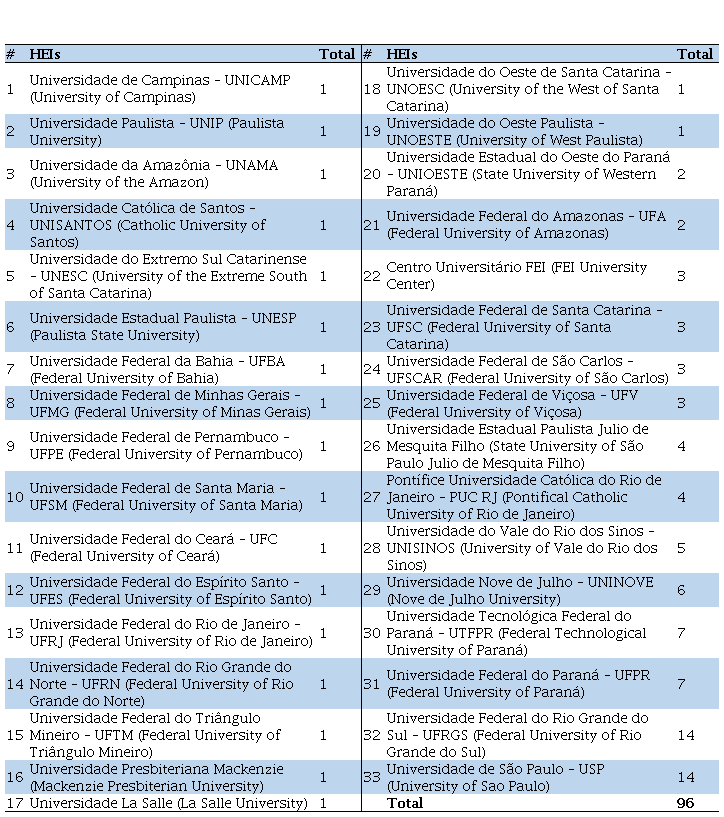
It can be seen in Figure 2 that since 2017 there has been an increase in adherence to the circular economy theme. The year 2021 does not yet have all the documents published and, therefore, cannot yet be adopted as an analysis parameter. The study reveals that the most representative four-year period for circular economy studies in Brazil is from 2017 to 2020, a period in which 77 works were published. This corresponds to 80.21% of the analyzed studies. Soon after, Table 1 presents the higher education institutions (HEIs) that published the studies that were analyzed.
Table 1 shows that USP and UFRGS are at the forefront of publications dealing with circular economy in Brazil. They are followed by UFPR and UTPR. However, there is an engagement of 33 educational institutions, covering all geographic regions of the country. This shows that the circular economy theme has been understood as relevant to the Brazilian context and has aroused interest in different research groups.
HEIs that published the dissertations and theses analyzed
Source: Elaborated by the authors.
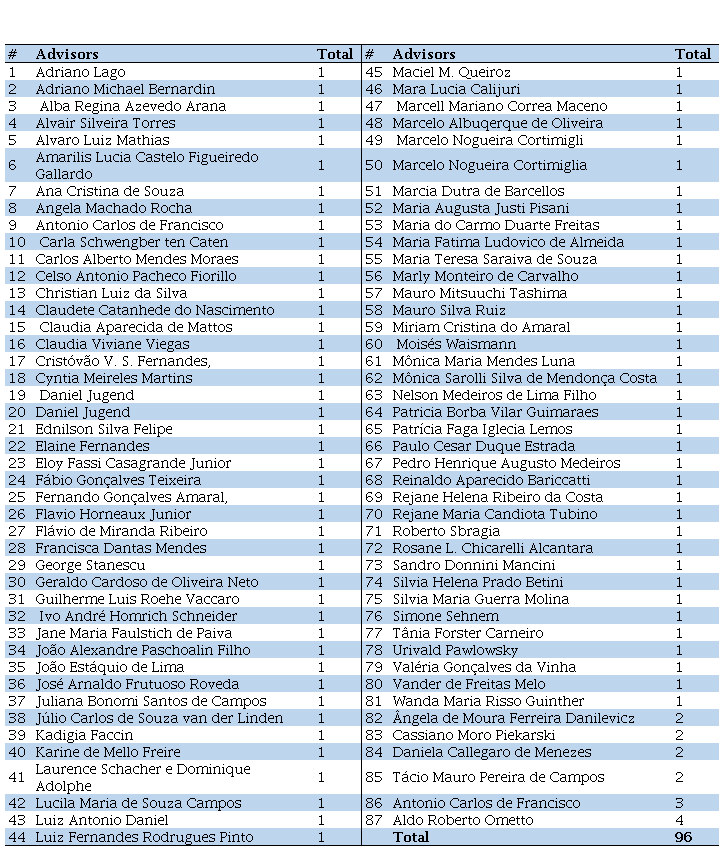
Table 2 shows an engagement of 87 Brazilian researchers with the guidance of dissertations and theses on circular economy. Emphasis is given to Professor Aldo Ometto from USP who supervised 4 works and Professor Doctor Antonio Carlos de Francisco from UTFPR who supervised 3 works. It is noted that because it is an emerging topic, few dissertations and theses have been defended so far. Certainly, there are works in preparation and which should be published soon and others that are not included in the consulted database and that have already been prepared by Brazilian graduate programs. Then, in Figure 3, the type of work analyzed is presented.
Advisors of the dissertations and theses analyzed
Source: Elaborated by the authors.
Figure 3 shows that dissertations defended on the subject still prevail. Considering that the time limit for preparing a dissertation is 24 months, while a thesis is 48 months, this increase in defended dissertations is understandable, which corresponds to 72.92% of the works analyzed in the bibliographic portfolio of this study

Figure 3
Types of analyzed works
Source: Elaborated by the authors.
Some researchers are engaged with research, programs, study scopes and alignment with the SDGs. Emphasis is given to the fulfillment of 3 ODs in particular - 9, 12 and 17, which had more studies aligned with these SDGs. In terms of courses involved. In terms of programs, Administration and Production Engineering stand out, with the largest number of works developed. However, the diversity of programs that engage with the theme is notorious, including Law, Mechanical Engineering, Metrology, Textile and Fashion, Sanitation, Intellectual Property, Sustainable Development, Water Resources, Agricultural Engineering, Mining and Metallurgical Engineering, Design, Forestry and Environmental Sciences, Materials Technology, Smart and Sustainable Cities, Architecture and Urbanism, Agribusiness, Urban and Environmental Engineering, Civil Engineering, Economics, Soil Science, Chemistry, Urban Engineering, Regional Development, Entrepreneurship, Social Memory and Cultural Goods, Food Engineering, Environment, Health and Sustainability, Structural Engineering, Hydraulics and Sanitation, Nuclear Energy in Agriculture, Production and Systems and Agricultural Sciences. This diversity of areas engaged in circular economy studies portrays how systemic the concept is. At the same time, the concept demands multiple fields of knowledge to have an effect on society
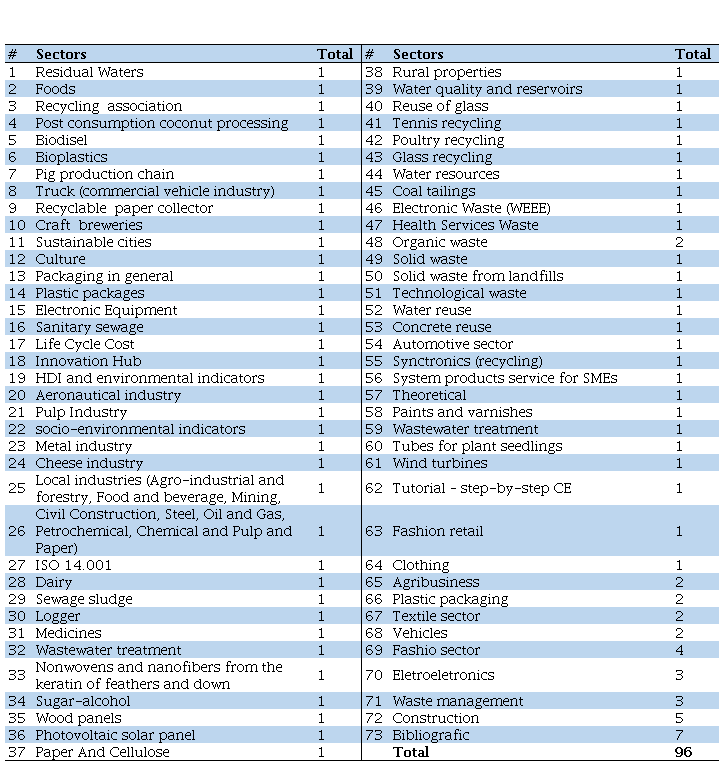
Soon after, Table 3 presents the sectors that were researched in previous studies.
Researched sectors
Source: Elaborated by the authors.
Table 3 shows the diversity of sectors that were surveyed. Even greater prominence for bibliographic studies and the civil construction sector.
4.1 Discussion of Results
It is clear in the dissertations and theses analyzed that the priority scope has been in waste management, especially in civil construction, sustainable fashion, electrical and electronic waste, in the food sector and in agribusiness. The concern with the analysis of the value chain, the engagement of collectors, sectoral agreements, public policies and legislation and in favor of C.E. Only a few studies build the interface between C.E. and ODS, namely, Andrade (2019), Abadia (2019) and Araújo (2020). This shows how great is the potential for scientific investigation of studies generated by impact in society and that link two emerging and relevant themes for society, generators of disruption, regeneration, closed production cycles, creation and retention of value of resources, sustainable operations and supply chains, cascading use of resources. In short, of a more collaborative and inclusive society and less degrading of nature. There are opportunities to explore the SDGs from the perspective of product planning and design, production and remanufacturing, distribution, consumption, use, reuse and repair, collection, recycling, innovation, challenges for creating a culture for circularity, among others. Next, Figure 4 presents a synthesis of the main themes of previous studies, which indicate important avenues of investigation in the circular economy field.
Figure 4 presents a summary of the predominant axes of previous studies, and Figure 5 shows a syntesis about master dissertations and doctoral tesys analysed.

Figure 4
Framework that summarizes the predominant axes in previous studies
Source: Elaborated by the authors.

Figure 5
Summary about documents analyzed
Source: Elaborated by the authors.
It must be remembered that the technological artifacts of Industry 4.0 can become accelerators of the transition to a circular economy. Studies 21, 33, 42, 69, 81 and 82 indicate important premises for the integration of industry 4.0 technologies and the circular economy. They represent the innovative look at sustainable supply chains supported by connectivity, by large databases that bring together information for assertive decision making for productive chaining, integration and synergy between strategic stakeholders. The circular economy assumes the prerogative of cooperation as an essential element for achieving success. Systems that are synergistically and positively linked tend to obtain superior performances. It must be remembered that the technological artifacts of Industry 4.0 can become accelerators of the transition to a circular economy. Studies 21, 33, 42, 69, 81 and 82 indicate important premises for the integration of industry 4.0 technologies and the circular economy. They represent the innovative look at sustainable supply chains supported by connectivity, by large databases that bring together information for assertive decision making for productive chaining, integration and synergy between strategic stakeholders. The circular economy assumes the prerogative of cooperation as an essential element for achieving success. Systems that are synergistically and positively linked tend to obtain superior performances.
4.2 Future Research Opportunities
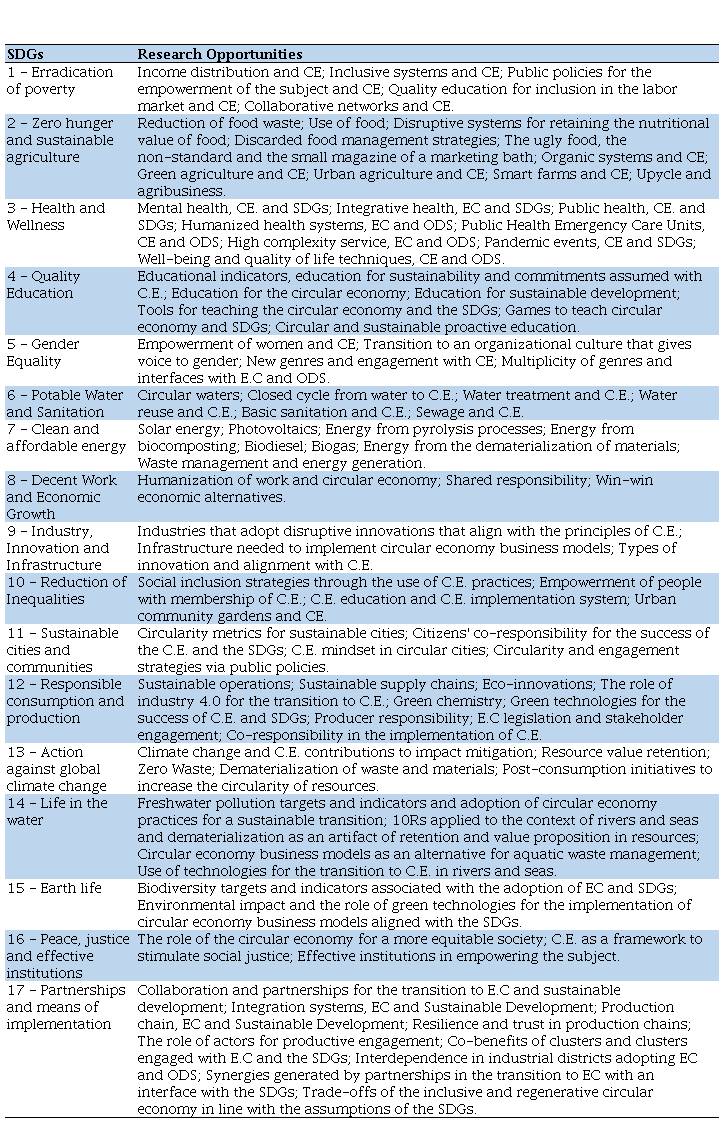
Based on the gaps in previous studies, especially the SDGs not met in previous studies, a research agenda (Table 4) and six research propositions were presented to be validated in future studies that intend to investigate the circular economy and its interface with the SDGs. Empirical validation in different sectors and organizational contexts can bring relevant insights to society. In particular, substantial contributions to the generation of equity principles, minimization of environmental impacts, social inclusion, reduction of inequalities, sustainable production and consumption, productive chaining and responsible and inclusive organizations.
Research Schedule
Source: Elaborated by the authors.
In addition to the suggested research agenda, Table 5 presents potential theories and units of analysis for future studies.
Teories and unit of analisys for future studies
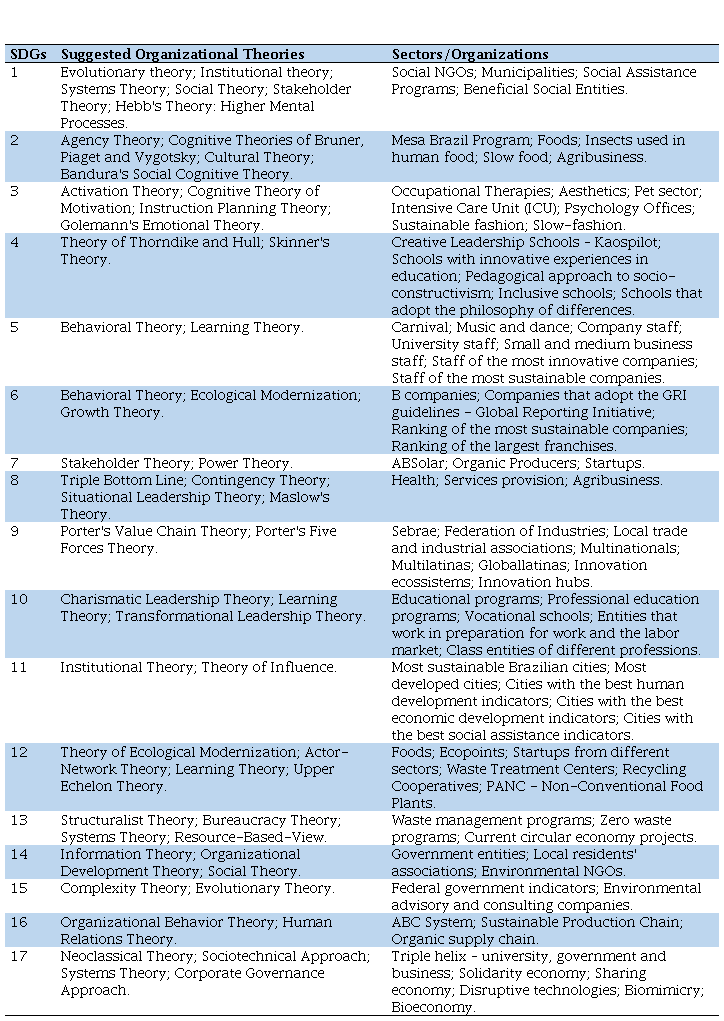
Source: Elaborated by the authors.
To stimulate original and unpublished future studies, we developed six exploratory theoretical propositions, for empirical validation in different sectors and organizations. It is suggested to focus on a sector where there are already studies on circular economy, as can be seen in Table 3.
Proposition 1: Propose alternatives for integrating circular economy practices into the SDGs in the context of emerging countries.
Emerging countries face several structural difficulties, which directly reflect on the possibilities of implementing policies aimed at the SDGs and in alignment with circular economy practices, such as weaknesses in collection logistics and in the material transport chain, processing, composting and recycling of materials, as well as dependence on precarious forms of solid waste disposal (Dwivedi et al., 2021). To address this multidimensional issue, an approach on different fronts is necessary to design a strategy to minimize the problems and enhance the opportunities that each country has. In the environmental, economic and social areas, different aspects can be explored to create viable and implementable alternatives, derived from consistent policies (Fatimah et al., 2020).
Proposition 2: Propose tools focused on poverty eradication and zero hunger policies based on opportunities generated by businesses or circular chains (SDGs 1 and 2).
Access to food and the minimum resources necessary for the maintenance of life is an imperative condition for achieving sustainable development. The combination of new forms of food production associated with the biological cycle of the circular economy, less expensive and more efficient in the consumption of resources, enables the sustainable management of the inputs necessary for food production. The preservation of natural ecosystems creates favorable conditions for climate stability, which directly reduces the risk to food production. Closing the biological cycles of resources enhances the use and development of more equitable production practices and provides a perspective of potential improvement in access to food (Cecchin et al., 2021).
Proposition 3: Analyze the impact of circular businesses on water conservation and non-contamination in light of the principles of resource reduction and reuse (SDG6).
The circular economy seeks to prioritize the use of resources in cycles with the aim of prolonging their use and promoting continuous value creation. The implication on the use of water resources is direct and produces effects on the conservation of this resource, which is necessary not only for production, but also for the maintenance of societies, fauna and flora (Novoa et al., 2019). Access to drinking water is a necessary condition for the establishment of minimum living conditions for human settlements, so it is relevant to mitigate impacts and damages. generated to water resources. Estimates of losses from misuse in this sector are significant and demand a review of the way in which its use is conceived (Sauvé et al., 2021).
Proposition 4: Analyze the job creation potential from circular businesses (SDG8).
The potential for creating companies derived from circular activities is little explored. The increase in demand for jobs specialized in circular businesses tends to grow, following the growth of companies and of the so-called sustainable supply chains. Significant structural differences are operated by the modification of activities and their development can have direct implications from a socioeconomic perspective and job creation, especially those associated with resource recovery, product repair, reconditioning, among others (Christis, Athanassiadis, & Vercalsteren, 2019).
Proposition 5: Propose alternatives to make urban centers in emerging countries more sustainable and resilient (SDG11).
Urban centers are key areas for the implementation of climate change policies in cities. Especially in cities where economies are based on services or commodity production, creating more efficient systems in terms of resource use makes it possible to implement policies and practices effectively. In this sense, cities are the main centers of decision and movement of resources and energy, which dynamize global production chains (Kapoor et al., 2020). For these centers, it is important to promote the development of actions focused on mobility, reduction of waste generation, humanization of work, access to services and resources. In the case of emerging countries, this emergency becomes even more relevant, given the configuration of the economic and social system (Durán-Romero et al., 2020).
Proposition 6: Analyze policies to combat climate change in emerging countries and their alignment with international agreements (SDG13).
International agreements produce effects, goals and commitments for all signatory entities and governments. Although climate change produces effects on a global scale, the commitment to combating it depends directly on the political propensity to promote changes on a regional scale. Indeed, increasing resource efficiency through slowing, closing and reducing material and energy cycles is critical to mitigating or slowing climate change (Gallego-Schmid et al., 2020). The application of circular economy principles is in line with international protocols and agreements, but emerging or developing countries may experience retractions in this field due to chronic deficiencies in infrastructure and resources (Christis, Athanassiadis, & Vercalsteren, 2019).
5 FINAL REMARKS
This research aimed to analyze the profile of Brazilian dissertations and theses that deal with circular economy and its alignment with the Sustainable Development Goals (SDGs). The bibliographic portfolio analyzed includes 96 previous works. The evidence points to a narrowing of the studies analyzed with SDGs 9 – Industry, Innovation and Infrastructure, 12 – Responsible Consumption and Production and 17 – Partnerships and Means of Implementation. This evidence points to an important gap to be explored by Brazilian researchers to meet the other SDGs. To make an applied contribution to these advances, a research agenda and 6 theoretical propositions for future empirical validation are presented.
The main practical contribution of this study is the diagnosis of the interface of circular economy studies developed in the Brazilian context with the SDGs. The theoretical contribution is to explain avenues and opportunities for future studies that encourage Brazilian researchers to advance and develop new studies on the topic of circular economy and SDGs.
The managerial implications of the research are associated with the opportunities that Brazilian companies can take to make their productive cycles circular. The scientific literature analyzed presents many paths and alternatives for carrying out the transition to the circular economy. This knowledge can generate an important social impact, if it is disseminated to potential users and adopters of the technological solutions that the scientific community has consolidated. Furthermore, governments can be inspired by experiences from other countries, such as those reported by Polzer (2017) and Julkovsky (2021).
The limitations of the research are associated with the limited sample, which comprises only previous studies whose educational institutions previously made available in the Digital Library of Theses and Dissertations of Capes – BDTD. Certainly, many other studies have been developed by Brazilian stricto sensu programs in recent years on the topic of circular economy. However, due to the lack of knowledge of the authors of this research, it was not possible to include them in the bibliographic portfolio analyzed. As opportunities for future research, the great opportunity for applied implementation of the proposed research agenda is reinforced, as well as the empirical validation of the theoretical propositions presented in this research.
REFERENCES
Abadia, L. G. (2019). Modelos de negócio alinhados aos princípios da economia circular e sustentabilidade: Estudo de múltiplos casos (Master's dissertation). Polytechnic School of the University of São Paulo, São Paulo, SP, Brazil.
Ajwani-Ramchandani, R., Figueira, S., Torres de Oliveira, R., Jha, S., Ramchandani, A., & Schuricht, L. (2021). Towards a circular economy for packaging waste by using new technologies: The case of large multinationals in emerging economies. Journal of Cleaner Production, 281, 125139. https://doi.org/10.1016/j.jclepro.2020.125139
Andrade, J. M. O. (2019). A gestão dos resíduos tecnológicos em Presidente Prudente/SP: Um estudo baseado na visão da economia circular (Master's dissertation). University of West Paulista, São Paulo, SP, Brazil.
Araújo. C. K. C. (2020). Práticas de economia circular no sistema produtivo de painéis de madeira (Master's dissertation). Federal Technological University of Paraná, Ponta Grossa, PR, Brazil.
Bardin, L. (2011). Análise de conteúdo. São Paulo: Edições 70.
Cecchin, A., Salomone, R., Deutz, P., Raggi, A., & Cutaia, L. (2021). What is in a Name? The rising star of the circular economy as a resource-related concept for sustainable development. Circular Economy and Sustainability, 1, 83-93. https://doi.org/10.1007/s43615-021-00021-4
Christis, M., Athanassiadis, A., & Vercalsteren, A. (2019). Implementation at a city level of circular economy strategies and climate change mitigation – The case of Brussels. Journal of Cleaner Production, 218, 511-520. https://doi.org/10.1016/j.jclepro.2019.01.180
Crecente, F., Sarabia, M., & Teresa del Val, M. (2021). Climate change policy and entrepreneurial opportunities. Technological Forecasting and Social Change, 163, 120446. https://doi.org/10.1016/j.techfore.2020.120446
Deshpande, P. C., & Haskins, C. (2021). Application of systems engineering and sustainable development goals towards sustainable management of fishing gear resources in Norway. Sustainability, 13(9), 4914. https://doi.org/10.3390/su13094914
Do, Q., Ramudhin, A., Colicchia, C., Creazza, A., & Li, D. (2021). A systematic review of research on food loss and waste prevention and management for the circular economy. International Journal of Production Economics, 239, 108209. https://doi.org/10.1016/j.ijpe.2021.108209
Durán-Romero, G., López, A. M., Beliaeva, T., Ferasso, M., Garonne, C., & Jones, P. (2020). Bridging the gap between circular economy and climate change mitigation policies through eco-innovations and Quintuple Helix Model. Technological Forecasting and Social Change, 160, 120246. https://doi.org/10.1016/j.techfore.2020.120246
Dwivedi, A., Agrawal, D., Jha, A., Gastaldi, M., Paul, S. K., & D’Adamo, I. (2021). Addressing the challenges to sustainable initiatives in value chain flexibility: Implications for Sustainable Development Goals. Global Journal of Flexible Systems Management, 22(2), 179-197. https://doi.org/ 10.1007/s40171-021-00288-4
El Wali, M., Golroudbary, S. R., & Kraslawski, A. (2021). Circular economy for phosphorus supply chain and its impact on social sustainable development goals. Science of The Total Environment, 777, 146060. https://doi.org/10.1016/j.scitotenv.2021.146060
Ellen MacArthur Foundation (2012). Towards the circular economy: An economic and business rationale for an accelerated transition. https://www.werktrends.nl/app/uploads/2015/06/Rapport_McKinsey-Towards_A_Circular_Economy.pdf
Fatimah, Y. A., Govindan, K., Murniningsih, R., & Setiawan, A. (2020). Industry 4.0 based sustainable circular economy approach for smart waste management system to achieve sustainable development goals: A case study of Indonesia. Journal of Cleaner Production, 269, 122263. https://doi.org/10.1016/j.jclepro.2020.122263
Gallego-Schmid, A., Chen, H.-M., Sharmina, M., & Mendoza, J. M. F. (2020). Links between circular economy and climate change mitigation in the built environment. Journal of Cleaner Production, 260, 121115. https://doi.org/10.1016/j.jclepro.2020.121115
Geissdoerfer, M., Savaget, P., Bocken, N. M. P., & Hultink, E. J. (2016). The Circular Economy – A new sustainability paradigm?. Journal of Cleaner Production, 143, 757-768. https://doi.org/10.1016/j.jclepro.2016.12.048
Hoehn, D., Laso, J., Margallo, M., Ruiz-Salmón, I., Amo-Setién, F. J., Abajas-Bustillo, R., Sarabia, C., Quiñones, A., Vázquez-Rowe, I., Bala, A., Batlle-Bayer, L., Fullana-i-Palmer, P., & Aldaco, R. (2021). (2021). Introducing a degrowth approach to the circular economy policies of food production, and food loss and waste management: towards a circular bioeconomy. Sustainability, 13(6), 3379. https://doi.org/10.3390/su13063379
Julkovski, D. J. (2021). Modelos de negócios circulares: Níveis de maturidade em economia circular e inovação (Doctoral thesis). University of Western Santa Catarina, Chapecó, SC, Brazil.
Kapoor, R., Ghosh, P., Kumar, M., Sengupta, S., Gupta, A., Kumar, S. S., Vijay, V., Kumar, V., Vijay, V. K., & Pant, D. (2020). Valorization of agricultural waste for biogas based circular economy in India: A research outlook. Bioresource Technology, 123036. https://doi.org/10.1016/j.biortech.2020.123036
Kumar, A., Gaur, D., Liu, Y., & Sharma, D. (2022). Sustainable waste electrical and electronic equipment management guide in emerging economies context: A structural model approach. Journal of Cleaner Production, 336, 130391. https://doi.org/10.1016/j.jclepro.2022.130391
Lim, J. S., Li, C., Fan, Y. V., & Klemeš, J. J. (2022). How circular economy and green technology can address Sustainable Development Goals? Journal of Cleaner Production, 333, 130161. https://doi.org/10.1016/j.jclepro.2021.130161
MacArthur, E. (2013). Towards the circular economy. Journal of Industrial Ecology, 2, 23-44.
Mercader-Moyano, P., Porras-Pereira, P., & Levinton, C. (2021). Circular economy and regenerative sustainability in emergency housing: Eco-efficient prototype design for Subaşi Refugee Camp in Turkey. Sustainability, 13(14), 8100. https://doi.org/10.3390/su13148100
Molocchi, A. (2021). Circular economy and environmental sustainability: a policy coherence analysis of current Italian subsidies. Sustainability, 13(15), 8150. https://doi.org/10.3390/su13158150
Nazmul Islam, K.M., Sultana, A., Wadley, D., Dargusch, P., Henry, M., & Naito, Y. (2021). Opportunities for inclusive and efficient low carbon food system development in Bangladesh. Journal of Cleaner Production, 319, 128586. https://doi.org/10.1016/j.jclepro.2021.128586
Nicli, S., Elsen, S. U., & Bernhard, A. (2020). Eco-social agriculture for social transformation and environmental sustainability: A case study of the UPAS-Project. Sustainability, 12(14), 5510. https://doi.org/10.3390/su12145510
Novoa, V., Ahumada-Rudolph, R., Rojas, O., Sáez, K., de la Barrera, F., & Arumí, J. L. (2019). Understanding agricultural water footprint variability to improve water management in Chile. Science of The Total Environment, 670, 188-199. https://doi.org/10.1016/j.scitotenv.2019.03.127
Okon, E. M., Falana, B. M., Solaja, S. O., Yakubu, S. O., Alabi, O. O., Okikiola, B. T., Awe, T. E., Adesina, B.T., Tokula, B.E., Kipchumba, A.K., & Edeme, A.B. (2021). Systematic review of climate change impact research in Nigeria: Implication for sustainable development. Heliyon, 7(9), e07941. https://doi.org/10.1016/j.heliyon.2021.e07941
Panchal, R., Singh, A., & Diwan, H. (2021). Does circular economy performance lead to sustainable development? – A systematic literature review. Journal of Environmental Management, 293, 112811. https://doi.org/10.1016/j.jenvman.2021.112811
Pascale, A., Arbolino, R., Szopik-Depczyaka, K., Limosani, M., & Ioppolo, G. (2020). A systematic review for measuring circular economy: The 61 indicators. Journal of Cleaner Production, 281, 124942. https://doi.org/10.1016/j.jclepro.2020.124942
Polzer, V. (2017). Desafios e perspectivas rumo ao gerenciamento integrado de resíduos sólidos nas cidades brasileiras: Contribuições a partir dos estudos de caso europeus (Doctoral thesis). Mackenzie Presbiterian University, São Paulo, SP, Brazil.
Ragossnig, A. M., & Schneider, D. R. (2019). Circular economy, recycling and end-of-waste. Waste Management & Research, 37(2), 109-111. https://doi.org/10.1177/0734242X19826776
Rashed, A. H., & Shah, A. (2020). The role of private sector in the implementation of sustainable development goals. Environment, Development and Sustainability, 23, 2931-2948. https://doi.org/10.1007/s10668-020-00718-w
Ridaura, G. (2020). La economía circular en ecuador: Perspectivas de cumplimiento de los ods en la era post COVID-19. CienciAmerica, 9(4), https://doi.org/10.33210/ca.v9i4.339
Rodrigo-González, A., Grau-Grau, A., & Bel-Oms, I. (2021). Circular economy and value creation: Sustainable finance with a real options approach. Sustainability, 13(14), 7973. https://doi.org/10.3390/su13147973
Sehnem, S., Queiroz, A. A. F. S. L., Pereira, S. C. F., Correia, G. S., & Kuzma, E. (2022a) Circular economy and innovation: A look from the perspective of organizational capabilities. Business Strategy and the Environment, 31(1), 236-250. https://doi.org/10.1002/bse.2884
Sehnem, S., Provensi, T., Silva, T. H. H., & Pereira, S. C. F. (2022b). Disruptive innovation and circularity in start-ups: A path to sustainable development. Business Strategy and the Environment, 31(4), 1292-1307. https://doi.org/10.1002/bse.2955
Sharma, H. B., Vanapalli, K. R., Samal, B., Cheela, V. R. S., Dubey, B. K., & Bhattacharya, J. (2021). Circular economy approach in solid waste management system to achieve UN-SDGs: Solutions for post-COVID recovery. Science of The Total Environment, 800, 149605. https://doi.org/10.1016/j.scitotenv.2021.149605
Suárez-Eiroa, B., Fernández, E., Méndez-Martínez, G., & Soto-Oñate, D. (2019). Operational principles of circular economy for sustainable development: Linking theory and practice. Journal of Cleaner Production, 214, 952-961. https://doi.org/10.1016/j.jclepro.2018.12.271
Superti, V., Merino-Saum, A., Baur, I., & Binder, C. R. (2021). Unraveling how the concept of circularity relates to sustainability: An indicator-based meta-analysis applied at the urban scale. Journal of Cleaner Production, 315, 128070. https://doi.org/10.1016/j.jclepro.2021.128070
The Circularity Gap Report (2021). Solutions for a linear world that consumes over 100 illion tonnes of materials and has warmed by 1-degree. Circle Economy. https://www.circularity-gap.world/2021
Tranfield, D., Denyer, D., & Smart, P. (2003). Towards a methodology for developing evidence informed management knowledge by means of systematic review. British Journal of Management, 14, 207-222. https://doi.org/10.1111/1467-8551.00375
United Nations (2015). Sustainable Development Goals. https://pactoglobal.org.br/ods
United Nations (2019). Our Planet - Our Future. https://www.unep.org/news-and-stories/speech/our-planet-our-future
Walker, A. M., Opferkuch, K., Roos Lindgreen, E., Simboli, A., Vermeulen, W. J. V., & Raggi, A. (2021). Assessing the social sustainability of circular economy practices: Industry perspectives from Italy and the Netherlands. Sustainable Production and Consumption, 27, 831-844. https://doi.org/10.1016/j.spc.2021.01.030
