Original papers
Wildlife use and harmful wild species in rural communities around the Communal Natural Protected Area El Gavilán, Oaxaca, Mexico
Uso de fauna silvestre y especies dañinas en comunidades rurales aledañas al Área Natural Protegida Comunitaria El Gavilán, Oaxaca, México

Wildlife use and harmful wild species in rural communities around the Communal Natural Protected Area El Gavilán, Oaxaca, Mexico
Acta zoológica mexicana, vol. 38, e2528, 2022
Instituto de Ecología A.C.
Received: 15 June 2022
Accepted: 20 November 2022
Published: 05 December 2022
Abstract: A large portion of rural human residents in Mexico are established in the states with greater biological diversity, and continue using a variety of wildlife species as sources of protein, fat, medicinal substances, clothes, adornments, ritual objects, and income, among other purposes. Our aims in this study were: 1) identify the main wildlife species that are part of local knowledge and are used, 2) describe the hunting techniques used by inhabitants of rural communities, and 3) identify the main wildlife species considered harmful between two groups of inhabitants of rural communities settled around the Communal Natural Protected Area El Gavilán on the central coast of Oaxaca, in southwest Mexico. We conducted fieldwork during four visits to the communities between June and December 2015. We obtained information through open conversations with structured and in-depth interviews. We calculated the Importance Culture Index (ICI) and the Importance Damage Index (IDI) per wildlife species. We recorded 51 wild species, which are part of the knowledge of the studied communities, and seven different uses were identified. There was no significant difference in the knowledge of wildlife among the study groups, but there was a significant difference in the use of wildlife. In general, the inhabitants of the communities around the NPA El Gavilán have extensive knowledge and make use of its wildlife, but there are differences in the uses of these species. Here we present a synthesis of the most relevant knowledge and uses of wildlife in communities around a natural protected area.
Key words: Interviewees, importance culture index, importance damage index, knowledge, use.
Resumen: En México una gran proporción de habitantes de áreas rurales están establecidos en los estados con mayor diversidad biológica y continúan usando una gran variedad de especies de vida silvestre como fuentes de proteína, grasa, sustancias medicinales, ropa, herramienta, adornos, objetos para rituales e ingresos, entre otros propósitos. Los objetivos de este estudio fueron: 1) identificar a las principales especies de fauna que son parte del conocimiento local y son usadas, 2) describir las técnicas de cacería utilizadas por los habitantes de las comunidades rurales, y 3) identificar las principales especies de fauna consideradas como dañinas entre dos grupos de habitantes de las comunidades rurales aledañas al Área Natural Protegida Comunal (ANPC) El Gavilán, en la costa de Oaxaca, México. Realizamos el trabajo de campo durante cuatro visitas a las comunidades entre junio y diciembre de 2015. Obtuvimos información a través de conversaciones abiertas con apoyo de entrevistas semiestructuradas. Calculamos el Índice de Importancia Cultural (IDC) y el Índice de Importancia de Daño (IDD) por especies de fauna. Registramos un total de 51 especies de fauna silvestre, las cuales son parte del conocimiento de las comunidades estudiadas, así como siete diferentes usos fueron identificados. No existieron diferencias significativas en el conocimiento de la fauna silvestre entre los grupos estudiados. En general, los habitantes de las comunidades aledañas al ANPC El Gavilán tienen un extenso conocimiento y formas de uso de la fauna silvestre, pero existen diferencias en los usos de estas especies. Aquí presentamos una síntesis de los conocimientos y usos más relevantes de la fauna silvestre en las comunidades alrededor de un área natural protegida.
Palabras clave: Entrevistas, índice de importancia cultura, índice de importancia de daño, conocimiento, uso.
Introduction
Humans share the world with a high diversity of species, and throughout history all societies have established a fundamental connection with wildlife (Allaby, 2010; Kalof & Resl, 2007), creating a spatial co-occurrence among biological, ecological, environmental, geographical, linguistic, and cultural components (Loh & Harmon, 2005; Maffi, 2007; Harmon & Loh, 2010; Gutiérrez-Santillán et al., 2019). In addition, the relationship between humans and their environment has made it possible to accumulate knowledge, practices, and beliefs, which changes over time through an adaptative process (Guerrero-Gatica et al., 2020); but, in recent decades human settlements have increased in size and number causing a closer approach to wildlife areas (Songhurst & Coulson, 2014). As a result, a variety of wild vertebrates are responsible for crop-damage (Romero-Balderas et al., 2006; Songhurst & Coulson, 2014).
In this context, wildlife is a constantly used resource for humans and a subject of management practices because of its multiple values, which depend on each taxonomic group and its specific historical and geographical context (Pérez-Gil et al., 1995; Monroy-Vilchis et al., 2008). In Mexico, a large portion of rural human residents and ethnic groups are settled in the states with greater biological diversity, mostly in tropical forests and temperate forests and, to a lesser extent, in arid and semi-arid areas (Toledo et al., 2002). This proximity between human communities and wildlife has enabled the creation of a diversity relationships and partnerships, translating into a knowledge that includes the perception, use, and management of wildlife (Hunn, 2011; Gutiérrez-Santillán et al., 2017). Currently, human communities continue to use a variety of wildlife species as sources of protein, fat, medicinal substances, clothes, tools, adornments, ritual objects, and income, among other purposes (Redford & Robinson, 1991; Ojasti, 2000; Santos-Fita et al., 2012). On the other hand, many wildlife species have been reported to cause crop damage in different parts of the world (Songhurst & Coulson, 2014); therefore, rural farmers face the need to reduce crop damage caused by wildlife (Osborn & Hill, 2005).
In Mexico, several wild fauna species are used for different purposes (Gutiérrez-Santillán et al., 2019). Most are obtained through hunting, which is considered an activity when its primary purpose is to satisfy the hunters and their families’ basic needs (Jorgenson, 1995; Ojasti, 2000). The reported types of wildlife use are personal consumption or for sale of meat, skins for clothes, pets, and medicinal substances (Naranjo et al., 2004; Machkour et al., 2011; Santos-Fita et al., 2012; Perezgrovas, 2014).
Among the wild terrestrial vertebrates that provide food and other products to rural inhabitants in the Neotropics are ungulates, primates, armadillos, and large rodents, as well as psitacids, iguanas, fresh-water turtles, and crocodiles (Bodmer et al., 1997; Nahuat et al., 2021). However, the overhunting of these species may induce severe decreases in their population sizes, potentially leading to their local extinction, especially if they face habitat loss, degradation, and fragmentation (Redford, 1992; Santos-Fita et al., 2012). In Mexico, it is possible that these threats are slowing down due to the local initiatives, like the creation of Communal Natural Protected Areas under the program of Áreas Certificadas para la Conservación, which in this region covers a total of 23,437 ha (Ortega et al., 2010; Monterrubio-Solís 2019). This is a new form of natural protected areas based on conservation efforts by landowners (private or collective), and benefits wildlife survival, mainly those that are endemic to the country and are nationally or internationally threatened (Monterrubio-Solís, 2019).
In the state of Oaxaca, over 60 species of wild mammals, birds and reptiles are used by local communities in Sierra Norte, Tehuacán-Cuicatlán valley, La Mixteca and the Istmo de Tehuantepec (Contreras-Díaz & Pérez-Lustre, 2008; Flores-Manzanero et al., 2013; Zarazúa-Carbajal et al., 2020). However, although the Oaxaca coast has a great diversity of ethnic cultures (Barabas, 2008), only one study on the coast of Oaxaca has focused on assessing the use of wildlife in a natural protected area (Buenrostro-Silva et al., 2016), and another study evaluated the local perception of rural communities about crocodiles living in the Parque Nacional Lagunas de Chacahua (García-Grajales & Buenrostro-Silva, 2015). In addition, the establishment of a Communal Natural Protected Area (CNPA) can produce profound changes in the perception of the environment by human communities in rural areas; however, it should be noted that there are two types of inhabitants in communities around a CNPA, 1) those who are linked through conservation activities to protect and preserve the CNPA, through surveillance, monitoring, and actions aimed at preserving the site; and 2) those who do not have any link with the CNPA. Moreover, under the approach of biocultural diversity, which is understood as the variety of organisms that are known, named, classified, organized, used, exploited, domesticated, and/or manipulated by different human societies (Gutiérrez-Santillán et al., 2019), it is very important to improve and update our understanding about the current practices of wildlife use by resident communities to support better management strategies for conserving species and their habitats based on scientific and traditional knowledge. With this background, our aim in this study was to examine the use of wildlife by two groups of inhabitants (i.e., people involved and people non-involved in conservation actions) of rural communities settled around the Communal Natural Protected Area El Gavilán on the central coast of Oaxaca (Mexico). Specifically, we: 1) identify the main wildlife species that are part of local knowledge and are used by inhabitants; 2) describe the hunting techniques used by inhabitants of rural communities; and 3) identify the main wildlife species considered harmful.
Materials and methods
Study area. This study was carried out in ten rural villages (Table 1) settled around the Comunal Natural Protected Area (CNPA) El Gavilán, located in Santa María Tonameca municipality on the central coast of Oaxaca, Mexico (Fig. 1). These villages are surrounded by extensive tracts of tropical dry forest with secondary vegetation, croplands, and some induced grasslands for livestock production. The central coast of Oaxaca has a warm and subhumid climate with most rains (600-1200 mm) falling between July and October. The mean annual temperature is 26 °C (García, 1988).
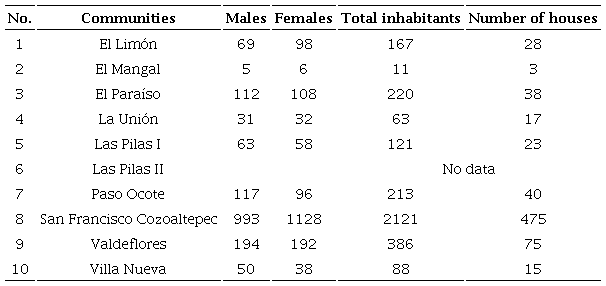
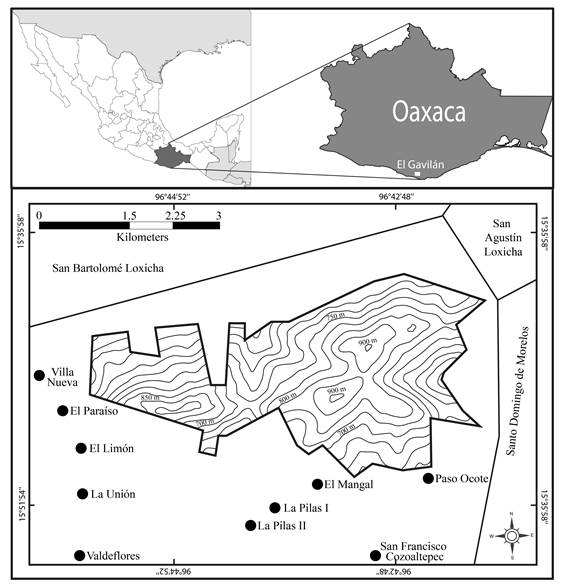
Figure 1
Location of the communities around the CNPA El Gavilán, Oaxaca, Mexico. Black circles show the location of rural villages and thick black line shows the area of the CNPA El Gavilán.
The villages have ca. 500 inhabitants and were founded in the decade of 1960 by the immigrants of Santa María Tonameca municipality. Most of the inhabitants of these villages are Zapotecan descendants and are farmers that harvest corn, beans, and squash for their subsistence. Papaya and watermelon are commercial crops in the area. Other economic activities are palm leaves and livestock production, transportation services, and small grocery stores.
Fieldwork. The fieldwork was conducted during four visits to ten rural communities between June and December 2015. Information was obtained through open conversations with semi-structured and in-depth interviews (Bernard, 2006; Albuquerque et al., 2014), which included questions aimed at studying knowledge and questions aimed at determining the use of fauna. The second technique (in-depth) was used in parallel to obtain details about the species that are used and descriptions of the hunting techniques. At each interview, consent was obtained from the informants (Albuquerque et al., 2014). One person in each village served as a guide for gaining confidence from local interviewees and their families and thus get information about their wildlife use and management practices (Santos-Fita et al., 2012). A total of forty-one interviews were performed in the rural communities around the CNPA El Gavilán; twenty interviews were conducted with people associated with the conservation area, and 21 interviews were carried out with people with no connection to the conservation area.
For the identification of species used or cited by informants, during interviews we showed photographs previously taken by the authors (Santos-Fita et al., 2012), as well as color plates from field guides (Ceballos & Oliva, 2005; Howell & Webb, 2005; Köhler, 2008).
Data analysis. The categories of wildlife use were established based on the use reported by informants. Seven categories were identified: food, medicinal, commercial, ornamental, utensil, mythical, and pet use. The records obtained for use of wildlife and knowledge were organized in an Excel sheet, by analyzing cross variables between the two groups of interviewees and the chi-square statistic (Osbahr & Morales, 2012).
We calculated the Importance Culture Index (ICI) for each wildlife species following the López and Valdez-Hernández (2011) formula. For this, first we calculated the subscripts: A) the Relative Intensity of use (RIu) as the percentage of uses in which a species appears (RIu = (Uz/U) *100; where Uz is the number of uses of species z for all respondents, and U is the total number of uses listed for all species; B) Relative Frequency of mention (RFm) as R defined as the sum of mentions for one species (z) considering all uses and all informants (Garibay et al., 2007); and C) the Relative Value of Use () as the percentage of uses in which a species appears for a given use, where Uzx is the number of species z for a certain use 𝑥 by all informants, and Ux is total number of mentions of all species for use by all informants. With Vux, it was possible calculate the value of the total use of all species (Vutz= ∑ Vux). We then calculated the value of ICI as the sum of RIu (Relative Intensity of Use), RFm (Relative Frequency of Mention), and RVutz (Relative Value of total Use of all species) divided by three (i.e., ICI= ( (López & Valdez-Hernández, 2011).
On other hand, we calculated the harmful index (HI) as those harmful species mentioned by informants using the ICI formula, replacing the use values with those related to harm. Although this index can be considered subjective, it may be a good indicator of the species considered to be harmful (López & Valdez-Hernández, 2011).
Lastly, to determine the relationships between uses and harm by wildlife species, a correspondence analysis (CA) was carried out. The analysis considered the variables (ICI and HI) and those species most often mentioned. The 20 species with higher explanatory value in the CA were used to illustrate these relationships, as they accounted for 78.17% of the variation in the CA. This analysis was conducted with the R software version 1.4.1717 (R Core Team, 2013).
Results
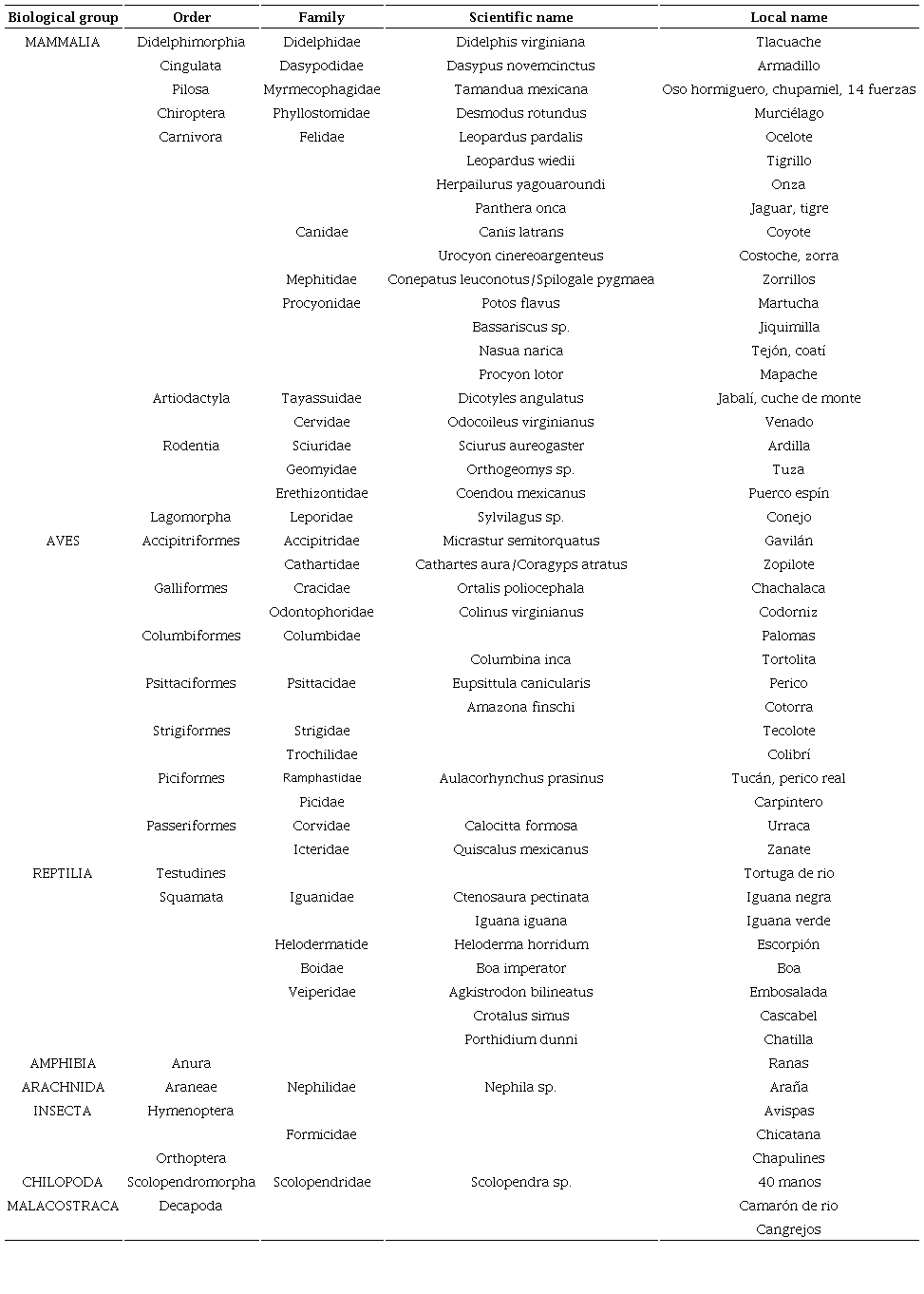
We recorded 51 wild species which were part of the knowledge of the study communities: 21 mammals, 14 birds, eight reptiles, one amphibian, one arachnid, three species of insects, one species of centipede, and two species of crustaceans (Table 2). There was no significant difference in the knowledge of wildlife between the study groups (t = -1.9, g.l. = 38.8, p = 0.060) but people without a link with the CNPA used more wildlife that those associated with the CNPA (= 18.7, g.l. = 6, p = 0.005).
The interviewees recognized a total of 44 species with some type of use. We recorded seven different uses: food, medicinal products, pets, commercial use, ornamental, utensils, and mythical purposes.
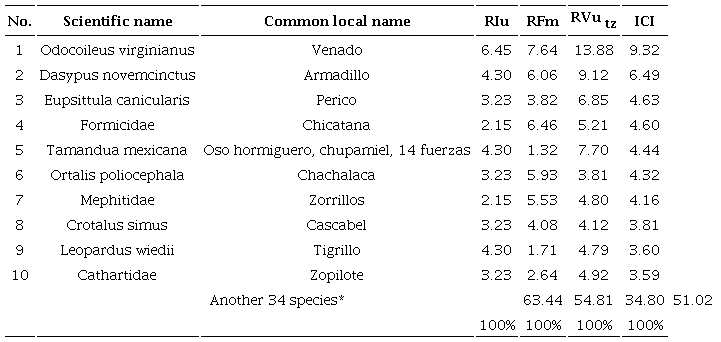
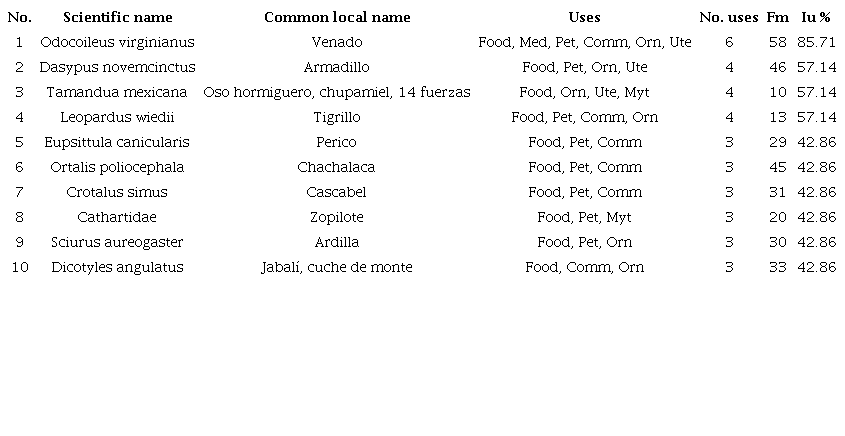
According to ICI, Odocoileus virginianus (Zimmermann, 1780) (ICI = 9.32%), Dasypus novemcinctus (Linnaeus, 1758) (ICI = 6.49%), Eupsittula canicularis (Linnaeus, 1758) (ICI = 4.63%), Atta mexicana (Linnaeus, 1758) (ICI = 4.60%), and Tamandua mexicana (Saussure, 1860) (ICI = 4.44%; Table 3) were the species with the most cultural importance. On the other hand, O. virginianus (Iu = 85.71%), D. novemcinctus (Iu = 57.14%), T. mexicana (Iu = 57.14%), Leopardus wiedii (Schinz, 1821) (Iu = 57.14%), and E. canicularis (Iu = 42.86%) were the species with the highest intensity of use (Table 4).
According to the value of use, the species with the highest value were A. mexicana (Formicidae, Vux = 7.12%), Ctenosaura pectinata (Wiegmann, 1834) (Vux = 7.12%), Ortalis poliocephala (Wagler, 1830) (Vux = 6.73%), and Dicotyles angulatus (Linnaeus, 1758) (Vux = 5.96%; Table 5).
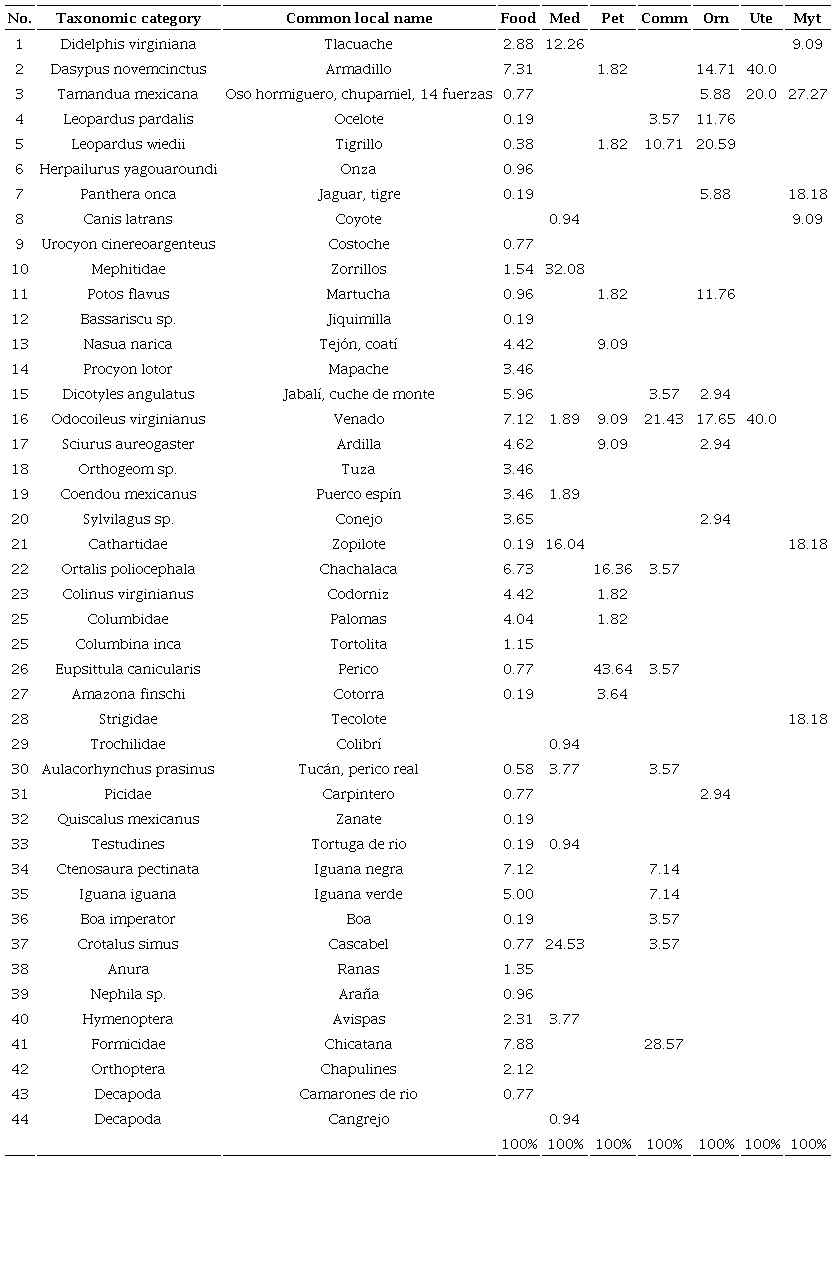
With respect to medicinal use, twelve species were registered for the treatment of 24 diseases or physical inflictions. The species with the highest value of medicinal use were skunks (Mephitidae, Vux = 32.08%), Crotalus simus (Latreille, 1801) (Vux = 24.53%), vultures (Cathartidae, Vux = 16.04%), and Didelphis virginiana (Kerr, 1792) (Vux = 12.26%; table 6). On the other hand, 11 species were recorded as pets E. canicularis (Vux = 43.64%), O. poliocephala (Vux = 16.36%), Nasua narica (Linnaeus, 1766) (Vux = 9.09 %), O. virginianus (Vux = 9.09%), and Sciurus aureogaster (Linnaeus, 1758) (Vux = 9.09%) were the most used species as pets (table 6). On the other hand, 12 species were recorded for commercial use and A. mexicana (Formicidae: Vux = 28.57%), O. virginianus (Vux = 21.73%), and L. wiedii (Vux = 10.71%) were the species most often used commercially.
Eleven species are hunted to be used as ornaments or utensils, including L. wiedii (Vux = 20.59%), O. virginianus (Vux = 17.65%), and D. novemcinctus: (Vux = 14.71%) with the most ornamental uses. As part of the beliefs and customs (mytical use) of the communities around CNPA El Gavilán, two species were attributed to physical strength, such as T. mexicana (Vux = 27.27%), D. virginiana (Vux = 09.09%), while Panthera onca (Linnaeus, 1758) (Vux = 18.18%), and vultures (Cathartidae, Vux = 18.18%) were associated with good luck, and the pygmy-owl (Glaucidium brasilianum) and Canis latrans (Say, 1823) (Vux = 9.09%) were associated with bad luck.
According to the 41 interviewers, hunting is practiced sporadically, particularly during trips to their working plots or in special days (weddings, birthdays, or school graduations). Seven species were recorded as the most preferred to hunt, with O. virginianus, D. angulatus, and O. poliocephala being the principal species mentioned.
Diurnal active search with the use of guns (0.22 caliber rifles and shotguns) was the most frequent hunting technique, followed by nocturnal waiting in trees using flashlights and guns for shooting deer (O. virginianus) and peccaries (D. angulatus). Additionally, using trained dogs to find D. novemcinctus, Iguana iguana (Linnaeus, 1758) and C. pectinata in burrows was another technique recorded. Moreover, occasional group-hunting trips of up to 10 people form a noisy drive so that potential prey come out are killed at a strategic point by waiting shooters along pathways used by the animals (arreada) is a local technique of deer hunting used in special days to obtain food.
Twenty-nine species were recorded as harmful wildlife, and species with the highest intensity of damage (HI) were Calocitta formosa (Swainson, 1827) (HI = 30%), skunks (Mephitidae, HI = 30%) and D. virginiana (HI = 30%), which cause damage to crops (frijolar and corn) and poultry.
According to the CA, the first two dimensions of the association between the use and damage of wildlife explained 78.17% of the cumulative variance (Fig. 2). For uses, the association of species was greater with food, commercial use, ornamental, utensil, and pets; while species that cause damage to corn crops were also associated with pet and food use. Species causing damage to beans were also related to ornamental, commercial, food, and utensil use. Damage to poultry was not related to any use variable.
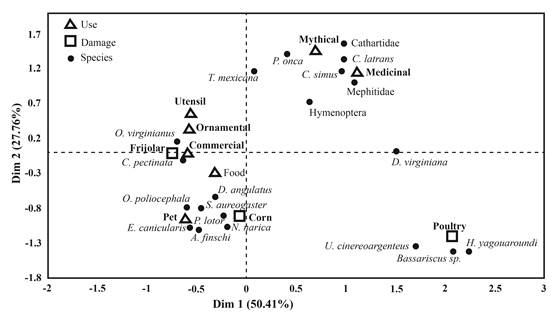
Figure 2
Correspondence Analysis (CA) between the variables of use and harm of wildlife species in the communities around the CNPA El Gavilán, Mexico.
Discussion
The rural inhabitants of southwestern Mexico have good knowledge of the biological and behavioral aspects of wildlife in their communities, which often leads to specific uses (Santos-Fita et al., 2012). In this study, knowledge of wildlife did not vary according to involvement in conservation actions (i.e., with or without links to the CNPA El Gavilán). This is probably because all interviewees coexist in a labor environment based mainly on agriculture in the surroundings of the CNPA El Gavilán. The interactions with wildlife were equitable between groups. Nonetheless, the significant difference in the use of wildlife between groups could be attributed to conservation actions by a group of people, such as surveillance monitoring and firebreaks. Yet, given the small sample of people that were interviewed these results should be taken with caution and confirmed by future research.
Four principal uses were detected in our work (food, medicinal use, pets, and commercial use), but in other studies in Mexico other uses are mentioned such as ornamental, peeler, mythical, handicraft, narrative, artistic, presage, and avoiding damage effects (Naranjo et al., 2004; Racero-Casarrubia et al., 2008; Centeno & Arriaga, 2010; González-Bocanegra et al., 2011; Puc & Retana, 2012; Lira-Torres et al., 2014; García del Valle et al., 2015; Buenrostro-Silva et al., 2016; Zarazúa-Carbajal et al., 2020; Nahuat et al., 2021; Valle et al., 2021), the difference may probably be attributed to cultural differences that exist by regions of the country.
Recent studies show that the most common purpose of hunting is obtaining food (Zarazúa-Carbajal et al., 2020; Nahuat et al., 2021; Valle et al., 2021), and in our study it was the main use of wildlife. Clearly, one of the most fundamental uses of animals is to meet nutritional needs (Reitz & Wing, 2008). In marginalized areas, animal protein is often a luxury; depending on the ability of the villagers to acquire the meat, wildlife becomes an important addition to the native food of the people (Ojasti, 2000). Nontheless, on special days, such as weddings, birthdays, or school graduations, occasional group-hunting trips of up to 10 people form a noisy drive so that potential prey come out are killed at a strategic point by waiting shooters along pathways used by the animals. This local technique is called “arreada” (Valle et al., 2021). Meat and fish have been the primary source of protein for many human cultures throughout history (Gross, 1975) and although vertebrates constitute most of the terrestrial wild animal biomass consumed by humans (Nasi et al., 2008), this study indicated that invertebrates can be locally important dietary items, such as Atta mexicana (Landero-Torres et al., 2005; Martínez-Sánchez et al., 2019).
Of the main vertebrate groups targeted by hunting activities, the most prominent are mammals, birds, and reptiles (Robinson & Redford, 1991; Klemens & Thorbajarnarson, 1995; Buenrostro-Silva et al., 2016; Zarazúa-Carbajal et al., 2020; Nahuat et al., 2021; Valle et al., 2021). Mammals are the preferred source of food because of their size and the possibility of yielding a greater return for the energy invested in hunting (Albuquerque et al., 2012). In those areas where there is not an abundance of large-sized mammals, other vertebrates like birds are hunted (Mendoza, 2012). In El Gavilán, Orthalis poliocephala is the species of birds used for consumption when there are low populations of mammals.
The treatment of illnesses using animal-based remedies is an ancentral practice (Chemas, 2010; Valle et al., 2021). Whole animals, animal parts, and animal-derived products also constitute important elements in the medicinal knowledge of rural communities (Nóbrega-Alves, 2012; Pineda-Posadas et al., 2021). In the communities around the natural protected area, mammals such as skunks and opossums, birds such as vultures, and reptiles such as snakes (including threatened species such as C. simus), are prominent among the main animals used in traditional medicine, substantiating the importance of understanding such uses in the context of animal conservation (Nóbrega-Alves, 2012). In recent years, however, an important number of animals and plants used in traditional medicine faces threats ranging from habitat loss to the global wildlife trade (Cleva, 2006). Additionally, whereas traditional medicine used to be a localized practice, the globalization of commerce in combination with the increased popularity of natural approaches to health worldwide has created a level of demand that threatens the survival of many vulnerable species of wildlife (IFAW, 2011).
Guerrero and Retana (2012) mention the use of wasp piquettes (Hymenoptera) for the treatment of rheums, using vultures (Cathartidae) to treat epileptic rage and attacks, utilizing opossums (D. virginiana) for the treatment of cough, the use of deers (O. virginianus) for fertility and using skunks (Mephitis macroura) for headache and muscle pain. Moreover, García-Flores et al. (2014) and Rodas-Trejo et al. (2014) point to the opossums for the treatment of muscle pain. In several parts of Mexico, the use of the rattlesnake (Crotalus sp.) has been reported to display anti-carcinogenic properties (Gómez & Pacheco, 2010; Monroy-Vilchis et al., 2008; Reyna et al., 2015). In our study, similar medicinal uses were obtained and additionally, we document other sufferings that are treated with different parts or derivatives of animals such as meat, fat, urine, and blood for the treatment of acne, rabies, diabetes, and tumors.
Throughout the history of humanity, different cultures around the world have caught, kept, and bed animals as pets (Collar et al., 2007; Carrete & Tella, 2008). Nóbrega-Alves (2012) explain that native people frequently capture young animals of various kinds and rear them as domesticated animals. Among the most common species used as pets are parrots (Thomsen & Brautigam, 1991), coatis, and squirrels (Nóbrega-Alves, 2012), which were also the pets recorded in this study. The use of many wild species as pets has stimulated the trade of animals with consequential impacts on wild populations (Nóbrega-Alves 2012; Buenrostro-Silva et al., 2021). Deers and wild cats were the main species recorded with most commercial use in and around the natural protected area. People over 50 years (n = 22) argued that there is a decline in the population sizes and even the local extinction of some species, such as Potos flavus (Schreber, 1774), P. onca, and Amazona finschi (Sclater, 1864). They claimed that these animals have disappeared from the region, while in previous decades they were considered abundant.
Since prehistoric times, different animal products have been used by humans as ornaments and decorative materials (Pedersen, 2004). According to Nóbrega-Alves (2012), wild-animal-derived decorations and ornaments are often high-value luxury products and may be bought for adornment, fashion, or as part of traditional wear or for luck and prestige. In our study, the skin of L. wiedii is used as home decoration and deer antlers are used as trophies and placed as ornaments inside houses. A special case is the use of D. novemcinctus skin, which is a utilitarian object (seed-harvesting vessel) widely used in the coastal region of Oaxaca (Buenrostro-Silva et al., 2016).
The links that we found between use and harm may be helpful for the generation of management strategies for the conservation of species. For example, O. virginanus (whitetail deer) is related to use through its flesh, as a pet, and as adornment (antlers), but it is also considered a harmful species to crops, so the opportunity to use such species as an economic resource could be the alternative to hunting them (Mandujano, 2016). It should be mentioned that deer are not included in conservation status under Mexican national laws (Diario Oficial de la Federación, 2010).
The inhabitants of communities around the CNPA El Gavilán have extensive knowledge and make use of the wildlife, but there are differences in use among the species. Here we present a synthesis of the most relevant knowledge and uses of wildlife in communities around a natural protected area. In the case of wildlife conservation, it is evident that an understanding of the cultural, economic, social, and traditional roles played by animals is essential for establishing management plans directed towards sustainable use. These results underscore the importance of ethnozoological studies to create meaningful animal conservation strategies (Nóbrega-Alves, 2012).
Acknowledgments
We give thanks to Universidad del Mar for its logistical support so that this research could be carried out, also to the residents of the study communities who kindly supported this research and contributed their invaluable knowledge. Special thanks to Allison Tai Rosewicz (UMAR) for her revision and suggestions for our English manuscript. JGG thanks the Sistema Nacional de Investigadores (SNI) for its recognition and support. Finally, two anonymous reviewers made comments that helped to improve the present document.
Literature cited
Albuquerque, A. E., Lima, A., Souto, A., Bezerra, B., Freire, E. M. X., Sampaio, E., Casas, F. L., Moura, G., Pereira, G., Melo, J. G., Alves, M., Rodal, M., Schiel, M., Neves, R. L., Azevedo-Junior, S., Telino, W. (2012) Caatinga revisited: ecology and conservation of an important seasonal dry forest. Scientific World Journal, 205182, 1-18. https://doi.org/10.1100/2012/205182
Albuquerque, U. P., Cunha, L., Lucena, R., Alves, R. R. N. (2014) Methods and techniques in ethnobiology and ethnoecology (1a. ed). Springer, New York, USA, 480 pp.
Allaby, M. (2010) Animals: from mythology to zoology. New York, USA: First edition, Facts on File, Inc., 209 pp.
Bernard, H. R. (2006) Research methods in anthropology, qualitative and quantitative approaches (4a ed.). Altamira Press, New York, USA, 803 pp.
Bodmer, R. E., Eisenberg, J. F., Redford, K. H. (1997) The sustainability of subsistence hunting in the Neotropics. Conservation Biology, 11 (4), 977-982.
Buenrostro-Silva, A., Rodríguez de la Torre, M., García-Grajales, J. (2016) Uso y conocimiento tradicional de la fauna silvestre por habitantes del Parque Nacional Lagunas de Chacahua, Oaxaca, Mexico. Quehacer Científico en Chiapas, 11 (1), 84-94.
Buenrostro-Silva, A., Gutiérrez-Sampé, E., García-Grajales, J. (2021) Mexican psittacids held in captivity in Puerto Escondido, Oaxaca and their welfare conditions. Ecosistemas y Recursos Agropecuarios, 8 (2), e2809. https://doi.org/10.19136/era.a8n.2809
Carrete, M., Tella, J. L. (2008) Wild-bird trade and exotic invasions: a new link of conservation concern? Frontiers in Ecology and the Environment, 6 (4), 207-2011. https://doi.org/10.1890/070075
Ceballos, G., Oliva, G. (2005) Los mamíferos silvestres de México. Comisión Nacional para el Conocimiento y Uso de la Biodiversidad- Fondo de Cultura Económica, D. F., México, 986 pp.
Centeno, V. A., Arriaga, L. (2010). Uso y aprovechamiento de fauna silvestre en comunidades del Parque Estatal de La Sierra, Tabasco, México. Pp. 53-77. In: M. M. S. Guerra, S. Calmé, S. Gallina, E. J. Naranjo (Eds.). Uso y manejo de fauna silvestre en el norte de Mesoamérica. Instituto de Ecología A.C., México.
Chemas, R. C. (2010) A zooterapia no ámbito da medicina civilizada. I. Organoterapia humana e animal stricto sensu. Pp. 75-102. In: E. M. Costa-Neto, R. R. N. Alves (Eds.). Zooterapia: Os animais na medicina popular brasileira. NUPEEA, Recife, PE, Brazil.
Cleva, S. (2006) U. S. Conservation laws and treaties: support for the web. Pp. 199-214. In: E. Call (Ed.). Mending the web of life: Chinese Medicine & Species Conservation. First ed. Signature Book Printing, Inc., Beijing, China.
Collar, N. J., Long, A. J., Jaime, P. R. G. (2007) Birds and people: Bonds in a Timeless journey (1a ed.). Birdlife International, USA, 360 pp.
Contreras-Díaz, R. G., Pérez-Lustre, M. (2008) Etnoecología de mamíferos silvestres y los zapotecos del municipio de Santiago Comatlán, Villa Alta, Oaxaca. Etnobiología, 6 (1), 56-67.
Diario Oficial de la Federación (2010) Norma Oficial Mexicana NOM-059-SEMARNAT-2010, Protección ambiental-especias nativas de Mexico de flora y fauna silvestres, categorías de riesgo y especificaciones para su inclusión, exclusión o cambios. Órgano del Gobierno Constitucional de los Estados, Gobierno Federal, México.
Flores-Manzanero, A., González-Pérez, G. E., Vázquez-Dávila, M. A., Manzanero-Medina, G. I. (2013) Conocimiento y uso de Odocoileus virginianus en Santo Domingo Tonalá, Oaxaca. Therya, 4 (1), 103. https://doi.org/10.12933/therya-13-92
García, E. (1988) Modificaciones al sistema de clasificación climática de Köpen, para adaptarlo a las condiciones de la República Mexicana. Offset Larios S. A. de C. V, México, 240 pp.
García del Valle, Y., Naranjo, E. J., Caballero, J., Martorell, C., Ruan Soto, F., Enríquez, P. L. (2015) Cultural significance of wild mammals in mayan and mestizo communities of the Lacandon Rainforest, Chiapas, Mexico. Journal of Ethnobiology and Ethnomedicine, 11, 36. https://doi.org/10.1186/s13002-015-0021-7
García-Flores, A., Lozano-García, M. A., Ortíz-Villaseñor, A. L., Monroy-Martínez, R. (2014) Uso de mamíferos silvestres por habitante del Parque Nacional El Teposteco, Morelos, México. Etnobiología, 12(3), 57-67.
Garibay, R., Caballero, J., Estrada Torres, A., Cifuentes, J. (2007) Understanding cultural significance, the edible mushrooms case. Journal of Ethnobiology and Ethnomedicine, 3, 4. https://doi.org/10.1186/1746-4269-3-4
González-Bocanegra, K., Romero-Berny, E. I., Escobar Campo, M. C., García del Valle, Y. (2011) Aprovechamiento de fauna silvestre por comunidades rurales en los humedales de Catazajá-La Libertad, Chiapas, México. Ra Ximhai, 7 (2), 219-230.
Gómez, G., Pacheco, N. (2010) Uso medicinal de serpientes comercializadas en dos mercados de la ciudad de México. Etnobiología, 8, 51-58.
Guerrero, S., Retana, O. G. (2012) Uso medicinal de la fauna silvestre por indígenas Tlahuicas en Ocuilán, México. Etnobiología, 10 (2), 28-33.
Gutiérrez-Santillán, T. V., Moreno-Fuentes, A., Sánchez-González, A., Sánchez Rojas, G. (2019) Knowledge and use of biocultural diversity by Nahua in the Huasteca region of Hidalgo, Mexico. Ethnobiology and Conservation, 8, 7. https://doi.org/10.15451/ec2019-06-8.07-1-31
Gross, D. R. (1975) Protein capture and cultural development in the Amazon Basin. American Anthropologist, 77 (3), 526-549.
Harmon, D., Loh, J. (2010) The index of linguistic diversity: A new quantitative measure of trends in the status of the world´s languages. Language Documentation & Conservation, 4, 97-151.
Howell, S. N. G., Webb, S. (2005) A guide to the birds of Mexico and Northern Central America. Oxford University Press, New York, USA, 851 pp.
IFAW (2011) Traditional medicine. Available from: http://www.ifaw.org/sites/default/files/Q&A%20Traditional%20medicine.pdf (Consulted August 6, 2018).
Jorgenson, J. P. (1995) Maya subsistence hunters in Quintana Roo, Mexico. Oryx, 29 (1), 49-57.
Kalof, L., Resl, B. (2007) A cultural history of animals: In antiquity. First edition, Berg Publishers, USA, 272 pp.
Klemens, M. W., Thorbajarnarson, J. B. (1995) Reptiles as a food resource. Biodiversity and Conservation, 4, 281-298.
Köhler, G. (2008) Reptiles of central america. 2ª Edition, Herpeton, Verlag, Germany, 400 pp.
Landero-Torres, I., Murguia-González, J., Ramos Elorduy, J. (2005) Estudio etnográfico sobre el consumo de las chicatanas (Hymenoptera: Formicidae) en Huatusco, Veracruz, México. Folia Entomológica Mexicana, 44 (2), 109-113.
Lira-Torres, I., Briones Salas, M., Gómez, F. R., Ojeda-Ramírez, D., Pelaez, A. (2014) Uso y aprovechamiento de la fauna silvestre en la selva zoque, México. Acta Zoológica Mexicana (nueva serie), 30 (1), 74-90. https://doi.org/10.21829/azm.2014.301130
López, J. F., Valdez-Hernández, J. I. (2011). Uso de especies arbóreas en una comunidad de la Reserva de la Biósfera La Sepultura, Chiapas. Pp. 57-79. In: A. R. Endara, A. Mora, J. I. Valdez (Eds.). Bosques y árboles del trópico mexicano: estructuras, crecimientos y usos. Comisión Nacional Forestal, Universiad Autónoma del Estado de México, Colegio de Posgraduados, México.
Loh, J., Harmon, D. (2005) A global index of biocultural diversity. Ecological indicators, 5, 321-241.
Maffi, L. (2007) Biocultural diversity and sustainability. Pp. 267-277. In: J. Pretty, A. Ball, T. Benton, J. Guivant, D. Lee, D. Orr, M. Pfeffer, H. Ward (Eds.). Sage handbook on environment and society. Sage Publications, London.
Machkour, S., Henaut, Y., Winterton, P., Rojo, R. (2011) A case of zootherapy with the tarantula Brachuypelma vagans Ausserer, 1875 in traditional medicine of the Chol Mayan ethnic group in Mexico. Journal of Ethnobiology and Ethnomedicine , 7, 7-12. https://doi.org/10.1186/1746-4269-7-12
Mandujano, S. (2016) Venado cola blanca en Oaxaca: potencial, conservación, manejo y monitoreo. Instituto de Ecología A.C., Comisión Nacional para el Conocimiento de la Biodiversidad, Xalapa, Veracruz, México, 286 pp.
Martínez-Sánchez, A., Rodríguez Díaz, A., Victores-Aguirre, M. (2019) Hábitos y prácticas etnoentomológicas en la comunidad de Puerto Escondido, Oaxaca. Avances en ciencia, salud y medicina, 7 (1), 9-15.
Mendoza, L. E. T. (2012) Atividades cinegéticas por populações rurais e urbanas do municipio de Pocinhos, Estado de Paraíba, Brasil: uma abordagem etnozoológica. MSc. Dissertation, Universidade Federal da Paraíba, Brazil.
Monroy-Vilchis, O., Cabrera, L., Suárez, P., Zarco González, M. M., Rodríguez Soto, C., Urios, V. (2008) Uso tradicional de vertebrados silvestres en la Sierra de Nanchitla. Interciencia, 33 (4), 308-313.
Nahuat, P., Estrada, I. A., Uitzil, M., Basora, R. A., Buenfil, S. A. (2021) Conocimento y aprovechamiento tradicional de vertebrados silvestres en la comunidad maya de Zavala, municipio de Sotuta, Yucatán, México. Estudios de Cultura Maya LVII, 275-304.
Naranjo, E. J., Guerra, M. M., Bodmer, R. E., Bolaños, J. E. (2004) Subsistence hunting by three ethnic groups of the Lacandon Forest, Mexico. Journal of Ethnobiology, 24, 233-253.
Nasi, R., Brown, D., Wilkie, D., Bennet, E., Tutin, C., van Tol, G., Christophersen, T. (2008) Conservation and use of wildlife-based resources: the bushmeat crisis. Secretariat of the Convention on Biological Diversity, Montreal, and Center for International Forestry Research (CIFOR), Bogor, 50 pp.
Nóbrega-Alves, R. R. (2012) Relationships between fauna and people and the role of ethnozoology in animal conservation. Ethnobiology and Conservation , 1, 2-69.
Ojasti, J. (2000) Manejo de fauna silvestre Neotropical. Smithsonian Institution/Man and Biosphere Program, Washington, D.C., USA, 290 pp.
Ortega, D., Sánchez, G., Solano, C., Huerta, M. A., Meza, V., Galindo-Leal, C. (2010) Áreas de conservación certificadas en el estado de Oaxaca. World Wildlife Fund, Comisión Nacional de Áreas Naturales Protegidas, Secretaría de Medio Ambiente y Recursos Naturales, Oaxaca, México.
Osbahr, K., Morales, N. (2012) Local knowledge and wildlife use in the San Antonio del Tequendama municipality (Cundinamarca, Colombia). Revista UDCA Actualidad & Divulgación Científica, 15 (1), 187-197.
Osborn, F., Hill, C. M. (2005) Techniques to reduce crop loss: human and technical dimensions in Africa. Pp. 72-85. In: R. Woodroffe, S. Thirgood, A. Rabinowitz (Eds.). People and wildlife: conflict or coexistence? Cambridge University Press.
Pedersen, M. C. (2004) Gen and ornamental materials of organic origin. First ed. Elsevier Butterworth-Heinemann, 268 pp.
Pérez-Gil, R., Jaramillo, F., Muñiz, A. M., Torres, M. G. (1995) Importancia económica de los vertebrados silvestres en México. PG-7 Consultores S. C. y Comisión Nacional para el Conocimiento y Uso de la Biodiversidad (CONABIO), México, 170 pp.
Perezgrovas, R. (2014) Conocimiento sobre fauna silvestre en las etnias Tzetzal y Tzotzil durante la época colonial. Quehacer Científico en Chiapas , 9, 24-34.
Pineda-Posadas, E., Bá-Velásquez, U., Morales-Álvarez, J., Pellecer-González, J., Ortíz-De León, M., Tox-Cao, R. (2021) Uso y conocimiento de la fauna silvestre de la comunidad q’echi’ de Santa Lucía Lachuá, Alta Verapaz, Guatemala: un abordaje etnozoológico. Ciencias Sociales y Humanidades, 8 (1), 17-24. https://doi.org/10.36829/63CHS.v8i1.1106
Puc, R. A., Retana, O. G. (2012) Uso de la fauna silvestre en la comunidad maya de Villa de Guadalupe, Campeche, México. Etnobiología , 10 (2), 1-11.
Racero-Casarrubia, J. A., Vidal, A., Ruiz, O., Ballesteros, J. (2008) Percepción y patrones de uso de la fauna silvestre por las comunidades indígenas Emberas-Katios en la cuenca del río San Jorge, zona amortiguada del PNN-Paramillo. Revista de Estudios Sociales, 31, 118-131.
Redford, K. H. (1992) The empty forest. Bioscience, 42, 412-422.
Redford, K. H., Robinson, J. G. (1991) Subsistence and comercial uses of wildlife in Latin America. Pp. 6-23. In: J. G. Robinson, K. H. Redford (Eds.). Neotropical wildlife uses and conservation. University of Chicago Press, Chicago, USA.
Reitz, E. J., Wing, E. S. (2008) Zooarchaeology. Second ed. Cambridge University Press. UK., 550 pp.
Reyna, M. A., García, E. E., Neri, A., Alagón, A., Martínez, R. M. (2015) Conocimiento etnoherpetológico de dos comunidades aledañas a la Reserva Estatal Sierra de Montenegro, Morelos, México. Etnobiología , 13 (2), 37-48.
Robinson, J. G., Redford, K. H. (1991) Neotropical wildlife use and conservation. 1 ed. University of Chicago Press, Chicago, 538 pp.
Rodas-Trejo, J., Ocampo González, P., Coutiño Hernández, P. R. (2014) Uso de los mamíferos silvestres en el municipio de Copainalá, región Zoque, Chiapas. Revista Quehacer Científico en Chiapas , 9 (1), 3-9.
Romero-Balderas, K. G., Naranjo, E., Morales, H. H., Nigh, R. B. (2006) Daños ocasionados por vertebrados silvestres al cultivo de maíz en la selva Lacandona, Chiapas, México. Interciencia , 31, 276-283.
Santos-Fita, D., Naranjo, E. J., Rangel-Salazar, J. L. (2012) Wildlife uses and hunting patterns in rural communities of the Yucatan Peninsula, Mexico. Journal of Ethnobiology and Ethnomedicine , 8, 38. https://doi.org/10.1186/1746-4269-8-38
Songhurst, A., Coulson, T. (2014) Exploring the effects of spatial autocorrelation when identifying key drivers of wildlife crop-raiding. Ecology and Evolution, 5, 582-593.
Thomsen, J. B., Brautigam, A. (1991) Sustainable use of Neotropical parrots. Pp. 359-380. In: J. G. Robinson, K. H. Redford (Eds.). Neotropical wildlife use and conservation. University of Chicago Press, Chicago.
Toledo, V. M., Alarcón-Chaires, P., Moguel, P., Olivo, M., Cabrera, A., Leyequien, E., Rodríguez-Aldabe, A. (2002) Biodiversidad y pueblos indios en México y Centroamérica. Biodiversitas, 43, 1-8.
Valle, R., García-Flores, A., Colín Bahena, H. (2021) Fauna silvestre con valor de uso en la Reserva de la Biósfera de Huautla, Morelos, México. Revista Peruana de Biología, 28 (4), e19921.
Zarazúa-Carbajal, M., Chávez-Gutiérrez, M., Romero-Bautista, Y., Rangel-Landa, S., Moreno-Calles, A. I., Alvarado-Ramos, L. F., Smith, S., Blancas, J., del Val, E., del Coro-Arizmendi, M., Casas, A. (2020) Use and management of wild fauna by people of the Tehuacán-Cuicatlán Valley and surrounding areas, Mexico. Journal of Ethnobiology and Ethnomedicine , 16, 4. https://doi.org/10.1186/s13002-020-0354-8
Author notes
*Corresponding author: Jesús García-Grajales. archosaurio@yahoo.com.mx