Articles
Received: 21 March 2024
Accepted: 22 June 2024
Published: 22 January 2025
DOI: https://doi.org/10.1590/1983-3652.2025.51717
Abstract: Among the new methodologies developed to teach the L2, Didactic Audiovisual Translation (DAT) has proven to be highly successful as it deals with the four skills in a multimodal environment, which appears to increase motivation. This paper presents the results of a DAT implementation in an Elementary classroom (11-to12-year-old children) in a school which follows the Montessori Method. Twenty-four children, divided into groups of four, chose their favourite scenes from the TV series Goenkale (broadcast on the Basque channel Euskal Televista 1) and translated, dubbed and subtitled them from their L1, Basque, into the L2, English, by means of the tool VideoPad. As Montessori Pedagogy does not include tests, the authors could not follow the experimental scheme of pre and post-test to observe any improvement in language acquisition. Data was therefore collected by the teacher, and subsequently analysed considering the mistakes made by the pupils during the process. Pupils additionally completed a questionnaire, which indicated high levels of satisfaction towards this approach, thereby opening a new didactic path within Montessori Methodology.
Keywords: Didactic Audiovisual Translation (DAT), Montessori Method, Dubbing, Subtitling, Primary Education.
Resumo: Dentre as novas metodologias desenvolvidas para o ensino de L2, a Tradução Didática Audiovisual (TDAV) tem-se revelado de grande relevância, uma vez que faz convergir as quatro competências num ambiente multimodal, o que motiva os alunos. Neste artigo apresentaremos os resultados de uma implementação baseada nesta metodologia, realizada numa turma do 6º ano do ensino básico (11 a 12 anos de idade), numa escola do método Montessori. Os vinte e quatro alunos, divididos em grupos de quatro, escolheram as suas cenas preferidas da série televisiva Goenkale (da Euskal Televista 1) e desenvolveram uma unidade didática na qual traduziram, dublaram e legendaram indiretamente (basco L1 para inglês L2) utilizando o programa VideoPad. Como a pedagogia Montessori não inclui testes, não foi possível desenvolver o esquema experimental de pré e pós-teste, mas o professor pôde recolher os erros cometidos para os incluir em unidades didáticas posteriores. Outro aspecto positivo foi a resposta dos alunos nos questionários de satisfação, que mostraram resultados favoráveis, abrindo novas vias didáticas na pedagogia Montessori.
Palavras-chave: Tradução audiovisual educacional, Pedagogia Montessoriana, Dublagem, Legendagem, Educação primária.
1 Introduction
Over the past decades there has been a growing interest in the development of new methodologies for second language (L2) learning and teaching, to fulfil the requirements of the new legislation, as defined by the Common European Framework of Reference for Languages (CEFR), which emphasizes the communicative aspect of languages.
One of these new methodologies is Didactic Audiovisual Translation (DAT), i.e., the application of different modes of audiovisual translation (subtitling, revoicing, audio description and voice over) to L2 teaching. This approach has been implemented and its results analysed in different educational stages. Nevertheless, this approach has yet been used in primary education within alternative methodologies, such as the Montessori Method, in blingual contexts (in this case, Basque-Spanish). The present study aims to address this research gap.
This paper shows the results of an intervention combining subtitling and dubbing in a class of 11-12-year-old pupils following the Montessori Method, at a Basque-immersion language primary school. While our study could not assess language acquisition improvements due to the school’s methodology, our findings regarding children satisfaction and the alignment of DAT principles with Montessori principles, as demonstrated in the text, suggest promising avenues for successful DAT use in this environment.
2 Theoretical Framework
2.1 Audiovisual Translation and Didactic Audiovisual Translation
As posited by Díaz-Cintas (2012), Audiovisual Translation (AVT) can be defined as the process of transferring the cultural and linguistic content of an audiovisual medium into another language. In doing so, it is essential to consider the restrictions inherent to the medium in question and to respect the original communicative purpose. Prior to this definition, Díaz-Cintas (2009) expounded that AVT had become a crucial means of disseminating audiovisual content, not only on an international scale, but also to ensure the accessibility of multimodal content to diverse audiences.
The three principal modes of AVT are subtitling, dubbing and audio description. In their study, Talaván, Lertola, and Fernández-Costales (2023) define subtitling as the translation of a dialogue into written form, text which is then placed at the base of the screen. Moreover, dubbing entails the replacement of the original dialogue with that in the target language, ensuring that the translated audio syncronises with the movements of the actors’ lips. As a final point, audio description aims ”to make the visual content of an event accessible by conveying it into spoken words” (Ibáñez Moreno; Vermeulen; Jordano, 2016, p. 246).
Conversely, Talaván (2019) defines Didactic Audiovisual Translation (DAT) as the didactic application of AVT procedures to the teaching of the L2. This researcher posits that DAT has its roots in the 1980s, when researchers and scholars began to recognise the potential of this approach to language teaching and started to incorporate subtitles as a tool in language laboratories. Furthermore, Fernández-Costales, Talaván, and Tinedo (2023) add that students must utilise technology (new tools available on the internet) and employ the specific strategies associated with each mode.
As early as 2009, Jorge Díaz-Cintas emphasised the significance of DAT in L2 instruction, noting that it enables learners to engage with native speakers’ productions, thereby facilitating a more genuine encounter with the L2 and its associated culture. In this way, DAT has demonstrated to be an effective tool, as it engages learners by providing them with authentic audiovisual materials, which allows to immerse themselves not only in the language, but also in the target culture. Fernández-Costales (2021) concurs with this assertion, having conducted research into the effects of DAT on the learning of the L2 in a primary education environment.
Additionally, Chaume (2018) emphasised that this approach facilitates a more profound comprehension of the L2 through the combination of auditory and visual input, thereby enabling learners to discern the authentic, natural usage of language by native speakers. In this regard, González-Vera and Hornero Corisco (2016) illustrate that DAT facilitates more effective learning by offering immediate feedback on pronunciation and grammar, promoting more rapid language development.
2.2 Didactic Dubbing and Subtitling
The combination of didactic dubbing and subtitling facilitates the integration of the four linguistic skills. The primary focus of dubbing is on oral skills, namely listening comprehension and speaking, whereas subtitling is more closely aligned with written skills, namely reading comprehension and writing. In addition to the aforementioned skills, we can include the fifth skill, translation (Carreres; Muñoz-Calvo; Noriega-Sánchez, 2017).
Regarding dubbing, Díaz-Cintas (2012) mentions that students benefit from exposure to a diverse range of dialects and accents. Furthermore, it capacitates learners to enhance their oral comprehension and speaking abilities concurrently, while fostering motivation through the incorporation of a multimodal component. Moreover, it facilitates the acquisition of the L2 in an authentic and natural manner (Fernández-Costales; Talaván; Tinedo, 2023), as students engage with genuine oral language in authentic contexts, diverging from the structured materials typically provided in textbooks.
The benefits of subtitling have also been the subject of academic investigation. Álvarez Sánchez (2017) asserts that the utilisation of subtitles not only fosters the development of linguistic skills but also upgrades the comprehension of paralinguistic and cultural elements. It also encourages selfand cooperative learning, with learners at the core of the learning process. Likewise, she explains that audiovisual media reflects a multitude of communicative scenarios, thus facilitating comprehension of an oral language text through the utilisation of non-linguistic elements. Adding to this, Lertola (2018) elucidates that the advantages of employing subtitling are analogous to those of translation. However, there is an additional benefit, as learners are not merely translating a text from the source language to the target language; they are also exposed to audiovisual material, which enables them to observe and listen to authentic communication scenarios. Additionally, Soler Pardo (2020) states that subtitling enhances vocabulary acquisition, provides motivation, facilitates productive abilities (specifically, speaking and writing), ameliorates the L1, and strengthens attention skills. As will be demonstrated, these characteristics are consistent with the communicative approach that is intended in Spanish L2 curricula.
Two previous studies have examined the combination of dubbing and subtitling in L2 classes. Talaván and Ávila-Cabrera (2015) put forth an implementation of reverse subtitling and dubbing with the objective of ”improving oral and written production skills, along with general translation competence” (Talaván; Ávila-Cabrera, 2015, p. 169). Their approach yielded highly promising outcomes in terms of language acquisition. Similarly, Beltramello (2019) conducted an in-class implementation in accordance with the aforementioned parameters. In her conclusions, she states that the combination of the two modes is effective because, in addition to facilitating language acquisition, students are exposed to ”pragmatic phenomena” (Beltramello, 2019, p. 106). In the process of dubbing, learners are required to direct their attention towards the objectives of the speaker and the utilisation of specific expressions, rather than others. Furthermore, students have the opportunity to practise pronunciation, intonation, and some paralinguistic aspects of language, thereby improving their fluency. According to this scholar, “it seems to reveal an untapped potential in the combination of subtitling and revoicing as an aid to language learning that offers abundant possibilities to practice and develop different areas of language competence, such as pragmatic competence” (Beltramello, 2019, p. 6).
In light of the above, it can be posited that working with both DAT modes concurrently represents an effective pedagogical approach. This combination capacitates learners to simultaneously develop their comprehension and production skills. Additionally, it improves motivation, as students engage in a multimodal environment with controlled exposure to authentic language usage in authentic contexts.
2.3 The Montessori Method
The aim of developing innovative pedagogical approaches that align with the needs of learners can be traced back to the 19th century. In conjunction with the advent of new psychological theories, scholars understood the necessity for a more individualised approach to teaching, with a focus on the needs of the learner. Among the approaches that emerged in this context were the Montessori Method or the Scientific Pedagogy method, which was based on Maria Montessori's observations that children were capable of learning independently, without the direct supervision of adults (Pla; Cano; Lorenzo, 2007).
Lillard (2013) points that the Montessori Method is an educational approach with the aim of promoting the holistic development of the child. Its fundamental premise is the belief that children are innately inclined towards learning. Consequently, educators must establish an engaging and nurturing setting, provide individualized guidance through experiential learning opportunities and encourage selfdirected learning by means of a blend of autonomy, suitable educational resources and self-discipline (Marshall, 2017). Moreover, Pla, Cano, and Lorenzo (2007) assert that this method is founded upon four principal tenets: preparing children for life, fostering a conducive learning environment, refraining from undue interference in the learning process, and providing sensorial materials to improve sensory development.
In addition, Marshall (2017) maintains that this method relies on the development of two essential components: emotional and social skills. The first seeks to ameliorate the emotional skills that help children cope with the challenges of everyday life. The second focuses on cooperation, empathy and mutual respect among students, and is performed by activities which require cooperation. This way, learners build relationships with their peers.
Montessori (1937) challenged the prevailing pedagogical trends of the time, advocating for a teaching approach that empowers children to learn through independent action. She emphasised the importance of educators obtaining precise and logical observations of children, which serve as the foundation for their instructional decisions. Accordingly, the pedagogical approach is founded upon exploration and discovery, wherein pupils progress within a tranquil, respectful, and structured milieu with the objective of fostering autonomy. This signifies a shift in the role of the teacher, moving from a director who oversees both children's learning and behaviour (Denervaud et al., 2019) to a supportive figure who establishes a nurturing environment, in which pupils are able to flourish and reach their full potential (Marshall, 2017). Pupils are encouraged to work independently at their own pace in an environment replete with tangible materials designed to promote discovery, exploration, and, most crucially, creativity (Marshall, 2017). Denervaud et al. (2019) emphasise the necessity for these materials to be self-correcting, thus enabling children to learn through trial and error.
Additionally, Pla, Cano, and Lorenzo (2007) claim that it is imperative to respect the rhythms of pupil growth, requiring that teachers adapt the content and devise individualised plans in accordance with the pace of each child. Moreover, the aforementioned plans must be aligned with the child's interests, while also fostering self-discipline. Furthermore, the learning proposals must develop five key aspects: practice, imitation, repetition, classification and order.
It is therefore necessary to implement changes to the layout of the classes and the grouping of the pupils. In the first case, Pla, Cano, and Lorenzo (2007) explain that the classrooms must be reorganised, with the elimination of desks, banks and class platforms for teachers, and the adaptation of furniture to the height and strength of children. This signifies that the classrooms are constituted as a structured framework, which facilitates access to the materials and delineates specific spaces to play, speak, rest and listen. Secondly, Lillard (2013) points that pupils should be distributed in mixedage classrooms, separated by a range of three years: infants to three-year-olds, three to six-year-olds, six to nine-year-olds, and from nine to twelve-year-olds.
This approach is founded upon the premise that children learn through active engagement (Pla; Cano; Lorenzo, 2007). Consequently, didactic workshops represent an efficacious instrument for the organisation of educational activities. Among the advantages is the fact that workshops facilitate hands-on teaching, which helps to maintain students’ interest and attention. Moreover, workshops can be tailored to the specific abilities and requirements of each pupil, thereby optimising the learning process. Additionally, workshops facilitate teamwork and creativity, as children can engage in collaborative activities. Nowadays, these learning environments have evolved to encompass both physical spaces, such as science laboratories or kitchens, and virtual environments. Nevertheless, the underlying rationale remains consistent: learners engage in experiential learning activities to apply the concepts they have acquired, thereby developing the practical skills they will require in their future endeavours.
Moreover, this approach places an emphasis on the cultivation of critical thinking abilities throughout the learning process (Murray, 2011). Pupils are encouraged to engage in exploration, discovery and questioning to gain a deeper understanding of their surrounding environment, which provides numerous opportunities for mutual assistance (Pla; Cano; Lorenzo, 2007). The efficacy of this approach has been the subject of considerable investigation, with (Lillard, 2013) demonstrating its advantages in domains such as cognitive development, academic achievement and self-discipline.
Some of the objectives of this approach are aligned with those of DAT. On the one hand, both are based on the development of students’ thinking skills. According to Ghaffari, Kashkouli, and Sadighi (2017, p. 214), ”the process of independent problem solving creates self-confidence and critical thinking skills”. Translation is categorized alongside the highest order thinking skills, according to Bloom’s Taxonomy. Conversely, both methods encourage collaborative work, as the majority of DAT activities are conducted in pairs or groups. Lastly, both methods facilitate learners’ autonomy in learning, allowing them to work at their own pace while the teacher serves as a guide, providing access to learning resources.
2.4 Spanish Legislation on Education and DAT
The latest Law on Education (Lomloe, 2020) and the Organic Law on the Foral Decree 67/2022 of the Foral Community of Navarre establish the compulsory curriculum for all schools in the region. With some additions due to the particularities of the Community, the latter specifies what the former decrees.
In regard to the teaching of the L2, it is asserted that the focus should be on the development of oral skills, with educators providing a range of tools to facilitate student engagement with the content. Moreover, educators must promote instrumental learning, which enables learners to develop other competencies and meaningful learning, by integrating the different competences in the execution of projects, so that students solve problems cooperatively, what strengthens autonomy, reflection and responsibility. Additionally, the L1 will be employed solely as a support tool in the acquisition of the L2. Finally, learners must allocate time on a daily basis to audiovisual communication and the promotion of creativity and scientific inquiry.
The legislation requires educators to provide multiple tools to encourage learner engagement. The world in which students live is multimodal. Video clips, online games, films and TV series constitute the majority of their leisure activities. It could therefore be assumed that introducing these new languages into the classroom will make learners feel more at ease, which will in turn improve their motivation and, consequently, the acquisition of the L2.
Undoubtedly, DAT promotes instrumental learning as students work with a variety of inputs, including text, audio and the cultural contexts of multimodal texts, and have to manipulate the language in order to align it with the image. In addition, it strengthens autonomy and reflection, as learners can work independently or in collaboration with others, which encourages them to problem-solve collectively and improves their sense of responsibility. Finally, it integrates a range of competencies, including linguistic communication, plurilingualism, digital proficiency, personal and social skills, the capacity to autonomous learning, consciousness, and cultural expressions (Bobadilla-Pérez; Carballo de Santiago, 2022; Rodríguez-Arancón, 2023), thereby implying life-long learning, which is a fundamental aspect of the current teaching and learning process.
Although the current legislation does not contemplate the use of the L1 and of translation in the class, Carreres, Muñoz-Calvo, and Noriega-Sánchez (2017) and Colina and Lafford (2017) have suggested that translation should be considered as the ‘fifth skill’, which “can be used as a pedagogical tool to integrate the original four skills to enhance second language study” (Colina; Lafford, 2017, p. 2).
3 Proposal
The research conducted was driven by two main questions, intended to complement existing studies, and to gain insights into two key areas: the first refers to the teaching-learning aspect, and the second to the enjoyment of the pupils.
-
Does the implementation of a DAT didactic unit, based on the combination of interlingual indirect subtitling and dubbing (L1 Basque) enhance the results on acquisition of English language?
-
Is DAT a motivational method for students of primary education following alternative schooling methodologies?
3.1 Participants
This implementation was conducted in a primary education school situated in a middle-class neighbourhood of Pamplona, Spain, which follows the Montessori Method, whose L1 is Basque. While not all pupils who participated in this research speak this language at home, all classes are taught in Basque. In the area, there is another school with two lines of L1, Basque and Spanish, and a high school with the same L1 paradigm.
This school is committed to an active approach to learning, utilising Montessori-inspired materials and a class structure that incorporates learning environments and project-based learning as the primary pedagogical methodology. The aforementioned pedagogical approach is employed with the objective of fostering the development of self-regulation and autonomy in students, as well as enhancing their capacity for collaborative work through the utilisation of flexible group structures and other active educational resources.
A total of 24 pupils, comprising the 6th course of primary education and aged between 11 and 12 years old, participated in the project. The pupils were divided into groups of four and worked together throughout the implementation period. The participants demonstrated a level of English proficiency corresponding to A1, as defined by the Common European Framework of Reference for Languages (CEFR). Parents were informed and gave their consent to the project, which has been approved by the corresponding committee of UPNA.
3.2 Materials
During the implementation, learners were provided with the scripts of the scenes and employed the class computers, dictionaries (both physical and online), voice recorders and the editing app VideoPad (https://www.nchsoftware.com/videopad/es/index.html). Finally, the pupils completed a questionnaire (Section A) to ascertain their level of satisfaction with the implementation process, allowing for both quantitative and qualitative results to be gathered.
3.3 Design
One of the distinctive characteristics of the Montessori approach is the absence of conventional testing and examination procedures. Consequently, the implementation did not adhere to the customary experimental pre-test-post-test design. Nevertheless, the instructor could delineate certain guidelines to enhance the acquisition of the L2, based on the errors that students had committed throughout the sessions.
A further aspect of this approach is that learners must be free to select their own areas of interest and determine their own learning strategies. This is reflected in the fact that they spent two sessions searching for a TV series and a particular scene that they wished to translate, dub and subtitle. As this was the first time that such a project was implemented in the school, the instructor elected to develop it in the Kitchen Corner, the designated workspace intended for the duration of the internship. The initial proposal was to implement a didactic unit on subtitling. However, the instructor determined that pupils could undertake a combined project encompassing both dubbing and subtitling, given the absence of time constraints typically encountered in traditional educational settings. This alteration has furnished the implementation with an unanticipated degree of depth. As a result of this expansion, the final products created by the students were the selected scenes translated from the L1 to the L2, and both dubbed and subtitled. The project was developed over four days, in sessions of 45 minutes each. The subsequent schema was followed:
-
Choice of TV series and scene: two sessions
-
Transcription and translation of the script: two sessions
-
Audio recording: three sessions
-
Scene editing: three sessions
3.4 Procedure
3.4.1 Day 1. The choice of series and scenes
The session commenced with the activation of prior knowledge through the posing of questions to the pupils, such as ”What are your favourite TV series?” This enabled the teacher to ascertain the learners' interests, thereby facilitating the personalisation of the learning process in accordance with their preferences. A further crucial element of these two sessions was the formation of flexible groups, comprising learners with diverse abilities, so that they could learn from one another. The pupils elected to work with their preferred scenes from the television series Goenkale, which features teenagers and is set in the Basque Country. It is broadcast on Euskal Telebista 1 (ETB1). This is a highly popular programme with a particularly strong viewership among the adolescent demographic. Prior to the DAT practice session, the children were required to imitate both the intonation and rhythm of the speech of the character they were to dub.
3.4.2 Day 2. Transcriptions and translations
The first session comprised an examination of the scene and an endeavour to identify a suitable transcription. The pupils were initially required to view the scene on multiple occasions, with the objective of facilitating an in-depth comprehension of the nuances embedded within the dialogue. This approach was designed to facilitate a more straightforward engagement with the language.
Following the viewing, the children conducted online research to find the transcriptions of the dialogues, utilising a range of digital platforms. In the event that the desired material was not accessible, the pupils utilized YouTube, as it offers subtitles for a number of videos. They then proceeded to transcribe the scene by manually copying the subtitles.
In the second session, the children completed the transcription and translated it from L1 to L2 using both physical and online dictionaries. The instructor directed the students' attention to the fact that language can convey double meanings and transmit cultural expressions that, when translated literally, are devoid of meaning. The teacher's main role was to provide assistance. She clarified doubts and illustrated the lexicon, ensuring that all learners were able to comprehend the message conveyed in the script.
3.4.3 Day 3. Audio recording
In the initial session, the students engaged in practice activities, which entailed reading the transcriptions in both languages and commencing the recording of the L2 audio. In the subsequent sessions, the children proceeded with the audio recording.
During the audio recording sessions, the pupils concentrated on developing their pronunciation and fluency. As the teacher consistently reiterated the importance of aligning the spoken text with the corresponding mouth movements, the pupils undertook a process of review and editing of their recordings, with the objective of ensuring that they met the desired quality standards. In order to achieve this, it was necessary for the children to consider the previous work, in order to be able to adjust the text in the L2 to the rhythm of the original scene and to align the audio with the video. In addition, pupils were required to become proficient in the use of the VideoPad application in order to gain familiarity with its various functions.
The final stage of the process involved the deletion of the audio from the original scene and the insertion of the new audio files, which were then adjusted to the rhythm of the scenes. The children proceeded to implement the final modifications to their product. The instructor offered feedback and guidance to assist the pupils in enhancing their productive oral skills.
3.4.4 Day 4. Scene subtitling and editing
In the initial session, the pupils were instructed in the techniques of video editing and were given the opportunity to improve their writing skill as they worked on the subtitles. In the remaining two sessions, the children continued subtitling to create the final product, which was a scene that was both dubbed and subtitled. The software utilized by the pupils was once more VideoPad, which also facilitates the creation of subtitles. By the conclusion of the sessions, children had produced videos with high-quality audio and accurate subtitles.
3.5 Assessment
Upon completion of the implementation phase, both the pupils and the teacher conducted an assessment of the various projects using an evaluation rubric (Section B). Children were evaluated on five distinct criteria: translation accuracy, coherence between the visual and auditory content, adequate use of language and grammar, cultural adaptation, and creativity and originality.
This assessment rubric was devised for use by both teachers and learners. The teacher subsequently provided a more detailed assessment in each category, including additional commentary on the areas that require improvement and on those in which the pupils had demonstrated proficiency.
4 Results
4.1 First Expectations
The authors hypothesised that pupils would be able to achieve a higher linguistic level as a result of the unquestionable stimulation provided by the audiovisual tools, which have been demonstrated to address the learning needs of students. Additionally, in accordance with the findings of previous research, it was anticipated that the children's level of motivation for the subject would increase.
Nevertheless, it is reasonable to anticipate certain challenges associated with the computer skills and linguistic proficiency of the pupils. With regard to the latter, it is important to recognise that children are simultaneously acquiring three languages without formal instruction, which could potentially lead to some difficulties.
4.2 Results on Acquisition of the Language
As previously stated, the Montessori Method does not include exams, therefore it was not feasible to propose a pre-test and post-test framework to collect quantitative data. Consequently, it is not possible to provide evidence of language improvement, if any. Nonetheless, it was possible to anticipate certain improvements in their productions, given that the children were engaged in activities such as translating, dubbing and subtitling videos, practising listening comprehension, pronunciation, writing and speaking.
A further defining feature of Montessori is that children select the areas of study that they wish to pursue. Thus, this approach presented a significant challenge for them, as their choices were based on the scenes they enjoyed, irrespective of the level of L2 proficiency required. This is the reason why the implementation resulted in unforeseen language difficulties for the children, which obliged the teacher to provide linguistic support by scaffolding the language.
Although it was not possible to analyse in detail the language improvement resulting from the implementation, some common mistakes committed by the pupils could be identified. These can be divided into two main groups: those related to written productions and those related to oral ones. In general, the children committed grammatical mistakes in order to fit the sentences with the speech, such as the removal of the subjects or the elision of auxiliary verbs. The errors associated with oral production were primarily related to the rhythm of the conversations and the pronunciation, particularly that of the vocalic phonemes, as the pupils read the words in a literal manner. It is important to highlight the intricate nature of these phonemes for speakers of Basque and Spanish. In comparison to English, which has twelve vocalic sounds, the two languages in question possess only five. Furthermore, the pace of the original dialogues also affected the pupils' oral productions, necessitating adjustments in their speaking rate to align with the tempo of the original dialogues.
4.3 Results of the Questionnaire
Following the completion of the implementation, pupils completed a survey about AVT and DAT (see Section A). Unfortunately, as the teachers did not compel the pupils to fill it, and children were being prepared for their incorporation to the formal instruction of the next course (1st of Secondary Education), only seven children answered to the questionnaire. The questions addressed their opinions regarding the utilisation of DAT, the motivation it provides and its potential integration into future English classes. As the pupils are taught in the Basque language, and given the inherent complexity of the vocabulary and the dearth of knowledge about the subject matter, the survey was developed in Basque. However, for the sake of clarity and accessibility, the sentences have been translated into English in the title of the figures.
The initial question (see Figure 1) sought to ascertain the children's level of enjoyment in the workshop. All of the participants provided a rating that was above the minimum passing grade. Four children, representing over half of the sample, rated the workshop with an 8 or 9, while two children assigned a 6, and one child a 7. These ratings indicate that the children felt at ease and content. It is noteworthy that none of the children reached the 10-point mark, given that they live in a multimodal world surrounded by video and gaming platforms, which are likely to exert a strong influence on their preferences. It may be posited that the introduction of this novel activity, coupled with the necessity to master the utilisation of internet-based tools, has instilled a sense of unease and lack of confidence amongst them.
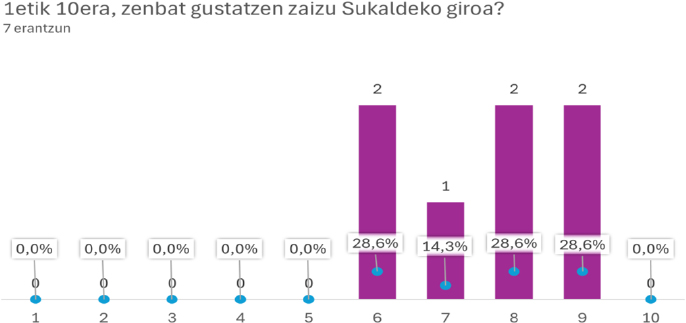
Figure 1
Question 1. From 1 to 10, how much have you enjoyed the ambiance of the workshop?
Source: Owm elaboration.
In question 2 (see Figure 2), the respondents were asked about their previous knowledge of AVT. Four of the participants were unaware of its existence, while the remaining three were cognizant of it. These figures were unanticipated, given that the children have access to audiovisual products in three different languages. This may have led them to assume that there is a process of translation behind that range of options. It seems reasonable to posit that the most probable reason for this lack of awareness is that, due to their age, they are accustomed to consuming audiovisual content in those languages and have not considered the processes involved.
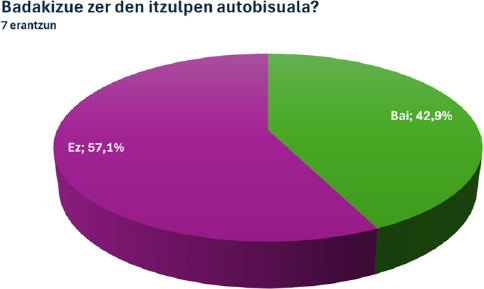
Figure 2
Question 2. Did you know what audiovisual translation was? (green-yes, purple-no).
Source: Owm elaboration.
The answers to question 3, if they had enjoyed learning the L2 by means of the editing of videos (see Figure 3) were also positive. Three-quarters of the children, five, demonstrated a positive attitude towards the methodology employed, while two of them expressed a negative opinion. Once more, we may cite the necessity of learning something new compulsory as the primary reason for their refusal. These results align with the responses to questions 1, 5 and 6, which will be analysed subsequently.
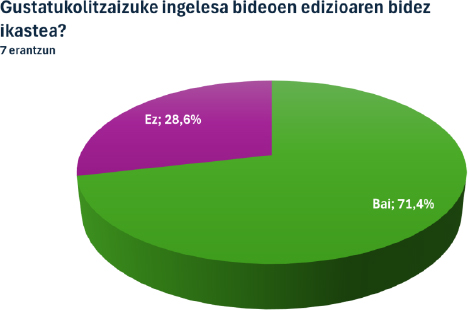
Figure 3
Question 3. Have you enjoyed learning English by means of video editing?
Source: Owm elaboration.
In response to question 4, which pertains to the two modes implemented in class and translation (see Figure 4), it can be observed that data do not provide a clear indication of the pupils' preferences towards either mode. The preference for dubbing is indicated by a single pupil, while the other two modes were selected by two pupils each. It is noteworthy that two children selected translation, a written activity that is not directly relevant to their lived experience, rather than the other two modes, which are inherently more visual.
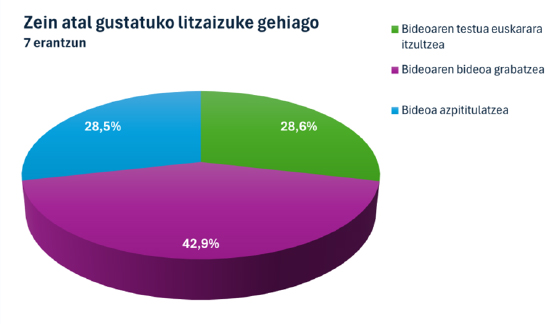
Figure 4
Question 4. Which tool have you liked the most? (Green: interlingual indirect translation of texts; purple: dubbing; blue: subtitling).
Source: Owm elaboration.
In question 5, the children were asked about the process of language acquisition. As illustrated in Figure 5, all pupils demonstrated an understanding that they would benefit from these educational initiatives. It is noteworthy that five of the pupils awarded the project an 8, a high rating that reflects their trust in DAT. One pupil considered the quality to be satisfactory, while one rated it slightly above average. Overall, the marks are deemed satisfactory, as none of the responses were below the passing mark of 5. These responses are consistent with those provided in question 2, in which two children indicated a lack of knowledge regarding AVT.
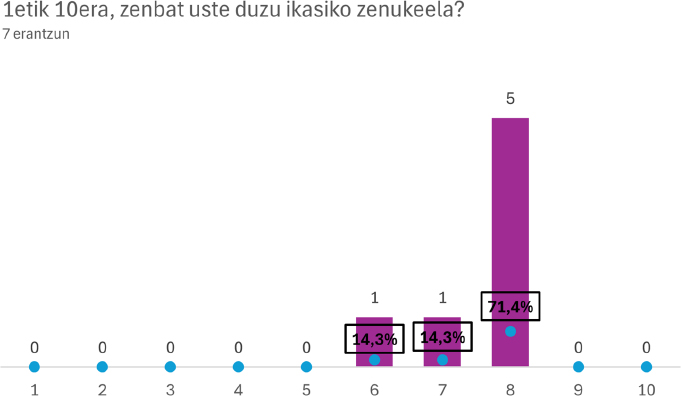
Figure 5
Question 5. From 1 to 10, how much do you think you would learn?
Source: Owm elaboration.
The final question (number 6) asked the pupils whether they would like to engage in DAT activities within the classroom setting. Five pupils responded in the affirmative, while the remaining two expressed opposition to the proposal. However, their responses lacked sufficient clarity or referenced their disapproval of the instructor rather than the DAT activities themselves. It can be inferred that these two students are the same individuals who, in question 1, rated the workshop atmosphere as 6, who provided negative responses to question 3 regarding their enjoyment along the process, and who rated the development as 6 and 7. This is somewhat surprising, given that these ratings are not particularly low.
Question 6 (original answers in Section C)
-
Pupil 1: Yes, because I learn.
-
Pupil 2: Yes, because I like making videos a lot.
-
Pupil 3: Yes, because I have never tried it and I think it would be good.
-
Pupil 4: Yes, because I like recording videos a lot.
-
Pupil 5: Yes, because it is fun.
-
Pupil 6: No, because I do not want X (a teacher) to appear.
-
Pupil 7: No.
5 Discussion
In regard to the learning outcomes, it is not feasible to assess the acquisition of the L2 content. However, we have identified recurring errors in writing and pronunciation that illustrate potential areas for guidance to facilitate pupil improvement in the language. Additionally, the children committed mistales in pronunciation and intonation. Although these issues require resolution, it is acknowledged that mispronunciations of this nature are common among speakers of Basque and Spanish, given the inherent challenges posed by the English vocalic system for those with a limited number of vocalic phonemes.
Regarding the findings of the questionnaire, the outcomes are consistent with our expectations. The pupils have demonstrated predisposition towards this pedagogical approach, which integrates stimuli that align with the fundamental principles of Montessori, namely the diverse classroom environment to which they are accustomed. It is also noteworthy that the method incorporates multimodality, which is a key aspect of the world in which children live. The final products demonstrate that pupils can successfully handle the L2. This is a significant finding, as Alonso-Perez and Sanchez Requena (2018) have demonstrated that observing the final outcome and analysing the progress that the students have achieved “make everyone feel rewarded” (Alonso-Perez; Sanchez Requena, 2018, p. 21), which implies an even stronger boost to motivation.
Conversely, children have demonstrated interest and engagement with the DAT activities. A recurrent 5-2 parameter is evident when analysing questions 3, 5 and 6. This signifies that five of the seven children indicated a high level of enjoyment, with ratings of Bs and As, while the remaining two children achieved a passing grade of C+. It is accurate to conclude that the highest grade awarded was not an A+, which can be attributed to the fact that this task was compulsory and required the learning of internet tools, which served this purpose.
In examining the reasons for the implementation's success or failure, the indicators recur. It is presumed that the two children who provided the lowest ratings were those who responded in the negative. The issue is that the respondents did not provide reasons related to their experiences with DAT activities. One respondent did not provide any reasons, while the other provided a single negative response regarding one of the teachers. This is a mishap, as their answers would have been of great help for the research. Conversely, the remaining five respondents provided positive feedback, citing enjoyment derived from video recording, fun during implementation, and, most notably, two respondents demonstrated appreciation for the activity's didactic potential, stating, ”It would be good” and ”I learn.” This latter response is particularly noteworthy, as it reflects a depth of reflection that not all children possess. These statements are in accordance with Fernández-Costales (2021) regarding the perceptions of primary education pupils towards the didactic possibilities of DAT.
In light of the previous considerations, it can be posited that the findings of this survey indicate a favourable outcome. In terms of learning, this implementation has opened paths for the teacher to work those aspects of language which have proven to be less developed in learners. Conversely, with regard to motivation, the utilisation of DAT has enhanced students motivation, as it is founded upon certain customary activities among children, such as the recording of videos. This results in a more enjoyable process of learning the L2, which undoubtedly facilitates the work of both the teacher and the learners. This research contributes to the existing body of literature on the subject, building upon the findings of previous studies conducted by scholars such as Neves (2004), Talaván (2009, 2010), Baños and Sokoli (2015), Talaván and Ávila-Cabrera (2015), Beltramello (2019), Lertola (2019), Talaván and Lertola (2022), Rodríguez-Arancón (2023) and Talaván and Rodríguez-Arancón (2024).
6 Conclusion
This research has explored the relationship between the Montessori Method and DAT, demonstrating that both have a significant degree of overlap and that the latter can be integrated as an additional workshop within the Montessori classes. We encountered two main limitations. The first limitation is inherent to the methodology itself. Given that children do not take exams, it is not possible to adhere to the experimental scheme that would otherwise be appropriate for this type of research. Consequently, it has not been possible to measure the anticipated improvement in pupils’ language acquisition.
A second limitation of the study is the low response rate to the satisfaction questionnaire, with only seven out of twenty-four students completing it. This is a potential issue, as the sample size is small and the responses are not fully representative. However, they do offer insights into a particular trend. Among the pupils who responded, we have been able to ascertain their motivations and levels of enjoyment regarding the implementation of the DAT. Five of them indicated that they found it motivating, while the other two expressed differing pedagogical opinions. The primary issue that emerged from the data was that learners lacked clarity regarding the specific applications of DAT.
In this particular instance, a class of twenty-four children at an educational institution that employs active methodologies and Basque as the L1 have demonstrated the efficacy of DAT from several perspectives. From the viewpoint of the teacher, the role differs from that of the traditional educator. DAT allows teachers to provide pupils with materials that align with their interests, thereby personalising their learning experience. Although pupils are permitted to select activities that exceed their current capabilities, the provision of effective scaffolding can facilitate their learning process. Furthermore, Montessori advocated the use of self-correcting materials, a concept that is exemplified by DAT. Audiovisual materials allow learners to listen to themselves and receive immediate feedback on their performance, which undoubtedly contributes to the improvement of their oral proficiency in the L2. DAT presents new opportunities for stimulating pupils, given its multimodal nature. It offers language in authentic contexts, which helps pupils comprehend the meaning of language in real situations. Thus, by providing a new lexical variety, children can expand their vocabulary to express themselves in different situations. Lastly, the integration of technology and multimodality has enabled learners to personalise their learning experience, allowing them to progress at their own pace and receive education that is specifically tailored to their needs. This is achieved through the creation of new teaching tools, which are based on interactive games, simulations or educational videos. In this regard, DAT has emerged as a highly valuable instrument in the context of this pedagogical approach, facilitating more engaging and efficacious learning, while fostering autonomous learning and self-regulation.
Importantly, the implementation of DAT is in accordance with both the fundamental principles of the Montessori Method and current legislation. It has been demonstrated that DAT effectively implements the competencies and skills required by law with regard to the teaching of the L2. Furthermore, it facilitates the development of students’ cognitive abilities, which is fundamental for lifelong learning. Future research could encompass a longitudinal study to include an analysis of the role of multilingualism (learners work with three languages: Basque L1 of some pupils and of school, Spanish L1 of some children, and English as L2) in the general learning process and in the Montessori Method.
References
ALONSO-PEREZ, Rosa; SANCHEZ REQUENA, Alicia. Teaching foreign languages through audiovisual translation resources: teachers’ perspectives. Applied Language Learning, Defense Language Institute Foreign Language Center, v. 28, n. 2, p. 1-24, 2018. ISSN 2164-0912. Available from: http://www.dliflc.edu/wp-content/uploads/2018/07/Applied-Language-Learning-28-2.pdf.
ÁLVAREZ SÁNCHEZ, Patricia. Una imagen vale más que mil palabras: : La subtitulación como recurso didáctico en el aprendizaje de lenguas, p. 16-32, Apr. 2017. DOI: 10.24310/REDIT.2017.v0i11.3813. Available from: https://revistas.uma.es/index.php/redit/article/view/2.
BAÑOS, Rocío; SOKOLI, Stavroula. Learning foreign languages with ClipFlair: Using captioning and revoicing activities to increase students’ motivation and engagement. In: BORTHWICK, Kate; CORRADINI, Elena; DICKENS, Alison (eds.). 10 years of the LLAS elearning symposium: Case studies in good practice. Dublin: Research-publishing.net, 2015. p. 203-213. DOI: 10.14705/rpnet.2015.000280.
BELTRAMELLO, Anastasia. Exploring the Combination of Subtitling and Revoicing Tasks: A Proposal for Maximising Learning Opportunities in the Italian Language Classroom. International Journal of Language, Translation and Intercultural Communication, v. 8, p. 93-109, Apr. 2019. DOI: 10.12681/ijltic.20279. Available from: https://ejournals.epublishing.ekt.gr/index.php/latic/article/view/20279.
BOBADILLA-PÉREZ, María; CARBALLO DE SANTIAGO, Ramón Jesús. Estudio de la Traducción Audiovisual como recurso en el aula de lengua extranjera: revisión de la literatura y propuestas de intervención. Porta Linguarum Revista Interuniversitaria de Didáctica de las Lenguas Extranjeras, p. 81-96, Jan. 2022. DOI: 10.30827/portalin.vi.22307. Available from: https://revistaseug.ugr.es/index.php/portalin/article/view/22307.
CARRERES, Ángeles; MUÑOZ-CALVO, Micaela; NORIEGA-SÁNCHEZ, María. Translation in Spanish language teaching: the fifth skill/La traducción en la enseñanza del español: la quinta destreza. Journal of Spanish Language Teaching, Routledge, v. 4, n. 2, p. 99-109, 2017. DOI: 10.1080/23247797.2017.1419030. eprint: https://doi.org/10.1080/23247797.2017.1419030. Available from: https://doi.org/10.1080/23247797.2017.1419030.
CHAUME, Frederic. Audiovisual Translation: Theories, Methods, and Issues. London: Routledge, 2018.
COLINA, Sonia; LAFFORD, Barbara A. Translation in Spanish language teaching: the integration of a “fifth skill” in the second language curriculum. Journal of Spanish Language Teaching , Routledge, v. 4, n. 2, p. 110-123, 2017. DOI: 10.1080/23247797.2017.1407127. eprint: https://doi.org/10.1080/23247797.2017.1407127. Available from: https://doi.org/10.1080/23247797.2017.1407127.
DENERVAUD, Solange; KNEBEL, Jean-François; HAGMANN, Patric; GENTAZ, Edouard. Beyond executive functions, creativity skills benefit academic outcomes: Insights from Montessori education. Plos One, Public Library of Science, v. 14, n. 11, p. 1-13, Nov. 2019. DOI: 10.1371/journal.pone.0225319. Available from: https://doi.org/10.1371/journal.pone.0225319.
DÍAZ-CINTAS, Jorge (ed.). New Trends in Audiovisual Translation. Bristol: Multilingual Matters, 2009.
DÍAZ-CINTAS, Jorge. Los subtítulos y la subtitulación en la clase de lengua extranjera. Abehache: Revista da Associação Brasileira de Hispanistas, v. 2, n. 3, p. 95-114, 2012.
FERNÁNDEZ-COSTALES, Alberto. Audiovisual translation in primary education. Students’ perceptions of the didactic possibilities of subtitling and dubbing in foreign language learning. Meta, Les Presses de l’Université de Montréal, v. 66, n. 2, p. 280-300, 2021. DOI: https://doi.org/10.7202/1083179ar.
FERNÁNDEZ-COSTALES, Alberto; TALAVÁN, Noa; TINEDO, Antonio Jesús. Didactic audiovisual translation in language teaching: Results from TRADILEX: Traducción audiovisual didáctica en enseñanza de lenguas: Resultados del proyecto TRADILEX. Comunicar, v. 77, p. 21-32, 2023. DOI: 10.3916/c77-2023-02.
GHAFFARI, Maryam; KASHKOULI, Sara Mohammadi; SADIGHI, Firooz. Montessori and Conventional Teaching Methods in Learning English as a Second/Foreign Language: An Overview. Journal of Applied Linguistics and Language Research, v. 4, n. 5, p. 209-218, 2017. ISSN 2376-760x. Available from: http://www.jallr.com.
GONZÁLEZ-VERA, Pilar; HORNERO CORISCO, Ana María. Audiovisual Materials: A Way to Reinforce Listening Skills in Primary School Teacher Education. Language Value, v. 8, p. 1-25, 2016.
IBÁÑEZ MORENO, Ana; VERMEULEN, Anna; JORDANO, María. Using Audio Description to Improve FLL Students’ Oral Competence in MALL: Methodological Preliminaries. In: PAREJA-LORA, Antonio; CALLE-MARTÍNEZ, Cristina; RODRÍGUEZ-ARANCÓN, Pilar (eds.). New Perspectives on Teaching and Working with Languages in the Digital Era. Dublin: Research-publishing.net , 2016. p. 245-256. DOI: 10.14705/rpnet.2016.tislid2014.438. Available from: http://dx.doi.org/10.14705/rpnet.2016.tislid2014.438.
LERTOLA, Jennifer. From Translation to Audiovisual Translation in Foreign Language Learning. Trans, v. 22, p. 185-202, 2018.
LERTOLA, Jennifer. Audiovisual Translation in the Foreign Language Classroom: Applications in the Teaching of English and Other Foreign Languages. Dublin: Research-publishing.net , 2019.
LILLARD, Angeline S. Playful Learning and Montessori Education. Namta Journal, v. 38, n. 2, p. 137-174, 2013.
LOMLOE. Ley Orgánica 3/2020, de 29 de diciembre, por la que se modifica la Ley Orgánica 2/2006, de 3 de mayo, de Educación. Boletín Oficial del Estado, v. 340, p. 122868-122953, 30 Dec. 2020. Available from: https://www.boe.es/boe/dias/2020/12/30/pdfs/BOE-A-2020-17264.pdf.
MARSHALL, Chloë. Montessori Education: A Review of the Evidence Base. npj Science of Learning, v. 2, p. 11, 2017. DOI: 10.1038/s41539-017-0012-7. Available from: https://doi.org/10.1038/s41539-017-0012-7.
MONTESSORI, Maria. El Método de la Pedagogía Científica. Barcelona: Editorial Araluce, 1937.
MURRAY, Angela K. Montessori Elementary Philosophy. Montessori Life, v. 23, n. 1, p. 22-33, 2011.
NEVES, Josélia. Language Awareness through Training in Subtitling. In: ORERO, Pilar (ed.). Topics in Audiovisual Translation. Philadelphia and Amsterdam: Benjamins Translation Library, 2004. p. 127-140.
PLA, María; CANO, Elena; LORENZO, Nuria. María Montessori: el Método de la Pedagogía Científica. In: TRILLA, Jaume (coord.) (ed.). El legado pedagógico del siglo XX para la escuela del siglo XXI. 4a. ed. Barcelona: Graó, 2007. p. 69-94.
RODRÍGUEZ-ARANCÓN, Pilar. Developing L2 Intercultural Competence in an Online Context through Didactic Audiovisual Translation. Languages, v. 8, n. 3, 2023. ISSN 2226-471x. DOI: 10.3390/languages8030160. Available from: https://www.mdpi.com/2226-471X/8/3/160.
SOLER PARDO, Belem. Subtitling and dubbing as teaching resources for learning English as a foreign language using software. Lenguaje y textos, v. 51, p. 41-56, 2020. DOI: 10.4995/lyt.2020.12690.
TALAVÁN, Noa. Aplicaciones de la traducción audiovisual para mejorar la comprensión oral del inglés. 2009. Doctoral dissertation Uned, Madrid.
TALAVÁN, Noa. Audiovisual Translation and Foreign Language Learning. The Case of Subtitling. In: CABALLERO RODRÍGUEZ, María Rosario; PINAR SANZ, María Jesús (eds.). Modos y Formas de la Comunicación Humana Vol. 2. Cuenca: Universidad de Castilla-La Mancha, 2010. p. 1313-1320.
TALAVÁN, Noa. La Traducción Audiovisual como Recurso Didáctico para Mejorar la Comprensión Audiovisual en Lengua Extranjera. Doblele, v. 5, p. 85-97, 2019. DOI: https://doi.org/10.5565/rev/doblele.59.
TALAVÁN, Noa; ÁVILA-CABRERA, José Javier. First Insights into the Combination of Dubbing and Subtitling as L2 Didactic Tools. In: GAMBIER, Yves; CAIMI, Annamaria; MARIOTTI, Cristina (eds.). Subtitles and Language Learning. Berna: Peter Lang, 2015. p. 149-172.
TALAVÁN, Noa; LERTOLA, Jennifer. Audiovisual Translation as a Didactic Resource in Foreign Language Education. A Methodological Proposal. Encuentro Journal, v. 30, p. 23-39, 2022.
TALAVÁN, Noa; LERTOLA, Jennifer; FERNÁNDEZ-COSTALES, Alberto. Didactic Audiovisual Translation and Foreign Language Education. Oxford: Routledge, 2023.
TALAVÁN, Noa; RODRÍGUEZ-ARANCÓN, Pilar. Subtitling short films to improve writing and translation skills. Revista Española de Lingüística Aplicada/Spanish Journal of Applied Linguistics, John Benjamins, v. 37, n. 1, p. 57-82, 2024. DOI: https://doi.org/10.1075/resla.21032.tal. Available from: https://www.jbe-platform.com/content/journals/10.1075/resla.21032.tal.
A Motivation Survey Questions
- 1. From 1 to 10, how much have you enjoyed the ambiance of the workshop?
- 2. Did you know what audiovisual translation was?
- 3. Have you enjoyed learning English by means of video editing?
- 4. Which tool have you liked the most?
- 5. From 1 to 10, how much do you think you would learn?
- 6. Would you like to do this type of exercises in class? Why?
B Assessment Rubrics
See Figure 6 on page 16.
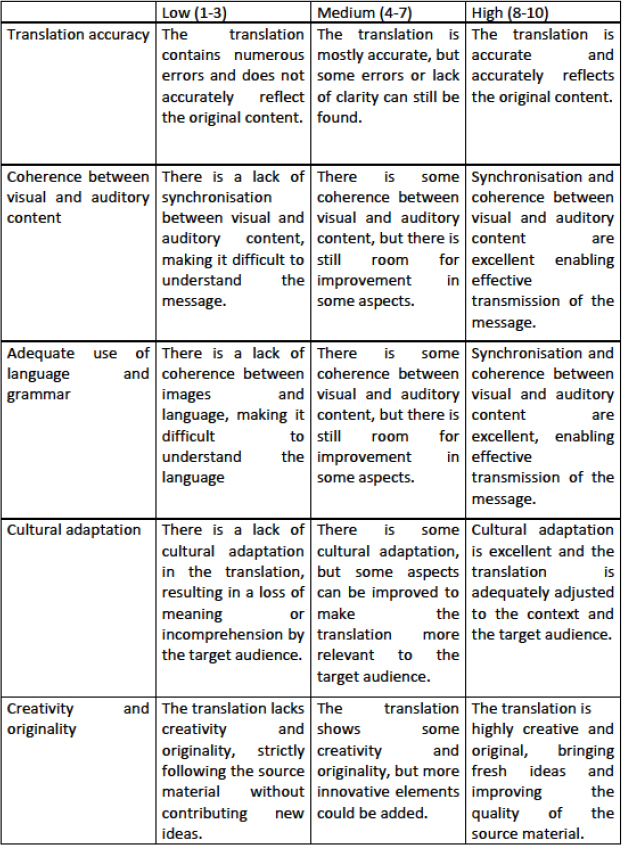
Figure 6.
Assessment Rubrics.
Source: Owm elaboration.
C Original Answers to the Questionnaire.
Honelako ariketak egitea gustatuko litzaizuke? Zergatik?
- 1. Bai, ikasiko nuelako.
- 2. Bai, zeren asko gustatzen zait bideoak egitea.
- 3. Bai, inoiz ez dudalako probatu eta ongi egongo zela uste dut.
- 4. Bai, zeren asko gustatzen zait bideoak grabatzea.
- 5. Bai, dibertigarria izango zelako.
- 6. Ez, nahi dudalako Enara azaltzea.
Author notes
Corresponding author: Edurne Goñi Alsúa
