Artigos
CHALLENGES AND CONTRIBUTIONS REGARDING INTEGRATION OF DISCIPLINES IN THE VOCATIONAL EDUCATION INTEGRATED TO UPPER SECONDARY EDUCATION AT IFMS, NOVA ANDRADINA CAMPUS
CHALLENGES AND CONTRIBUTIONS REGARDING INTEGRATION OF DISCIPLINES IN THE VOCATIONAL EDUCATION INTEGRATED TO UPPER SECONDARY EDUCATION AT IFMS, NOVA ANDRADINA CAMPUS
Revista Ibero-Americana de Estudos em Educação, vol. 13, no. Esp.1, pp. 359-378, 2018
Universidade Estadual Paulista Júlio de Mesquita Filho

This work is licensed under Creative Commons Attribution-ShareAlike 4.0 International.
Received: 30 October 2017
Accepted: 30 January 2018
Abstract: This study aimed to discuss and identify challenges and contributions from the comprehensive curricular proposal in the context of Upper Secondary Education integrated to Vocational Education in Farming, mainly concerning the integration of propaedeutic and technical disciplines, offered by the Federal Institute of Mato Grosso do Sul, Nova Andradina Campus. The research is relevant given that it is necessary to rethink the curriculum model implemented in the current context of Vocational Education, as well as the model to be implemented with the Brazilian Secondary School reform established by the Law 13.415, on February 16th, 2017. A set of methodological procedures has been used, comprehending a qualitative approach, descriptive and explanatory methods (VAN ZANTEN, 2004) with technical procedures of action research (THIOLLENT, 1997; 2011). Data has been analyzed taking into account some curricular studies, the transdisciplinary educational approach (NICOLESCU, 2000) and the complex thinking theory (MORIN, 2001; 2011). The study brought to light that the integration of disciplines may foster greater achievement by students, since the compliance to the process was predominantly positive. Students emphasized greater learning and motivation, especially in respect to the frequent group work activities. Regarding limitations, participants have indicated the importance of integrating all disciplines from the curriculum in order to avoid overload of assessment tasks and, possibly create a more favorable situation relating to time management. In addition, students have pointted their need to be fully aware of the content which will eventually enable them in their professional life.
Keywords: Curricular integration, Transdisciplinarity, Vocational education.
Resumo: Este estudo objetiva identificar e discutir os desafios e contribuições da proposta curricular integrada no contexto da Educação Profissional, considerando as disciplinas da base comum e as disciplinas técnicas do Curso de Educação Profissional Técnica de Nível Médio Integrado em Agropecuária, ofertado pelo Instituto Federal de Mato Grosso do Sul, campus Nova Andradina. A investigação se faz relevante diante da necessidade em se repensar o modelo curricular implementado no contexto atual da Educação Profissional, assim como o modelo a ser implantado com a reforma do Ensino Médio estabelecida pela Lei nº 13.415, de 16 de fevereiro de 2017. Os caminhos metodológicos adotados foram da pesquisa qualitativa, de cunho descritivo e explicativo (VAN ZANTEN, 2004), com procedimentos técnicos da pesquisa-ação (THIOLLENT, 1997; 2011). Os dados foram analisados à luz dos estudos sobre currículo, da abordagem educacional transdisciplinar (NICOLESCU, 2000) e da teoria do pensamento complexo (MORIN, 2001; 2011). O estudo revelou que a integração de disciplinas pode promover uma visão de maior aproveitamento por parte dos estudantes, uma vez que houve uma adesão majoritariamente positiva ao processo. Os estudantes salientaram maior aprendizado e motivação, especialmente em torno do constante trabalho em grupo. Em relação às limitações, os participantes indicaram a importância em integrar todas disciplinas do currículo a fim de ser evitado o acúmulo de atividades avaliativas e, possivelmente, gerar uma situação mais favorável em relação ao tempo. Além disso, foi apontado pelos estudantes a preocupação em relação ao cumprimento do conteúdo base para formação profissional.
Palavras-chave: Integração curricular, Transdisciplinaridade, Educação profissional.
Resumen: El objetivo de este estudio es identificar y discutir los desafíos y contribuciones de la propuesta curricular integrada en el contexto de la Educación Profesional, considerando las disciplinas de la base común y las disciplinas técnicas del Curso de Educación Profesional Técnica de Nivel Medio Integrado en Agropecuaria, ofrecido por el Instituto Federal do Mato Grosso do Sul, campus Nova Andradina. La investigación se hace relevante ante la necesidad de repensar el modelo curricular implementado en el contexto actual de la Educación Profesional, así como, el modelo a ser implantado con la reforma de la Enseñanza Media establecida por la Ley nº 13.415, de 16 de febrero de 2017. los caminos metodológicos adoptados fueron de la investigación cualitativa, de cuño descriptivo y explicativo (VAN ZANTEN, 2004), con procedimientos técnicos de la investigación-acción (THIOLLENT, 1997; 2011). Los datos fueron analizados a la luz de los estudios sobre el currículo, del enfoque educativo transdisciplinario (NICOLESCU, 2000) y de la teoría del pensamiento complejo (MORIN, 2001; 2011). El estudio reveló que la integración de disciplinas puede promover una visión de mayor aprovechamiento por parte de los estudiantes, una vez que hubo una adhesión mayoritariamente positiva al proceso. Los estudiantes destacaron mayor aprendizaje y motivación, especialmente en torno al constante trabajo en grupo. En cuanto a las limitaciones, los participantes indicaron la importancia de integrar todas las disciplinas de la red curricular a fin de evitar la acumulación de actividades de evaluación y, posiblemente, generar una situación más favorable en relación al tiempo. Además, los estudiantes se preocuparon por el cumplimiento del contenido base para la formación profesional.
Palabras clave: Integración curricular, Transdisciplinariedad, Educación profesional.
Introduction
The Federal Network of Professional, Scientific and Technological Education, in Portuguese Rede Federal de Educação Profissional, Científica e Tecnológica (RFEPCT), provides public vocational education and training from secondary to post graduate (lato sensu and stricto sensu) level. Among all the modalities offered, there is the integration of Upper Secondary with Vocational Education, which combines propaedeutic and vocational disciplines that should be taught in an in interdisciplinary and/or transdisciplinary approach (BRASIL, 2011). However, most Federal Institutes organize their pedagogical work in a multidisciplinary way, which may overwhelm students and consequently lead to school dropout or school failure in multiple disciplines.
Concerned with this situation, we have decided to carry out a developmental project that could bring about some answers. The project was a result of an international in-service teacher education program named VET III - Vocational Education and Training - Teachers for the Future in Finland in 2016[4]. Inspired by it, several actions to disseminate best teaching practices have been developed at the Federal Institute of Mato Grosso do Sul, in Nova Andradina campus. Among them, the project regarding integration of disciplines, from the 6th period class of the Upper Secondary integrated to Vocational Education in Farming, aiming at implementing a transdisciplinary approach, beginning with the pedagogical alignment of six educators from different subject areas, either propaedeutic or vocational disciplines.
As an attempt to contribute to the research carried out in Brazil on curriculum and pedagogical practice, this study aims to present efforts towards the integration of disciplines from the Farming Class 6, as well as to identify and discuss challenges and contributions on the integrated curricular proposal in the context of Vocational Education. This article is organized into four topics. The first one is about the transdisciplinary educational approach and the complex thinking, we will discuss the theoretical basis for our analysis. The second topic concerns the experience with the integration of disciplines. Then, in the third and fourth topics, we will present the materials, methods, discussion and data analysis.
Transdisciplinary approach and complex thinking theory
We have been living in a digital culture, driven by technological developments which brought changes in several social fields (LEVY, 1999). Daily practices have been transformed as the relations between time and space changed profoundly. Consequently, the globalized world, multicultural relations, science development and changes in the way people behave convey problems with several variables, which we have never experienced before. The theory of complexity and transdisciplinary approach are attempts to find new solutions to global problems. We understand that the theory of complexity systematized by Edgar Morin in 1991, is compliant with the transdisciplinary approach proposed by Bassarab Nicolescu in 1999 (SANTOS, 2008). From this research and from our teaching experience, we have realized that those theories can bring a new paradigm for teaching and learning relations. As Santos (2008, p.73) states:
In teaching practice, this new theoretical framework represents an epistemological change and it has been suggesting reconceptualization of analytical categories, since, in regard to the dichotomous orientations of dualities, only one of the dimensions was valued: in the subject-object initial dichotomy, there has been an overvaluation of objectivity and rationality, as well as the orientation of decontextualization, simplification and reduction when the phenomenon is complex, to the detriment of the opposite dimension, also integral to the phenomena, which includes subjectivity, emotion, articulation of disciplinary knowledge and context [translated from Portuguese by this article’s authors].
Considering this condition, as dynamic and complex human beings, we recognize the need for a transdisciplinary approach in Vocational Education, which has been discussed and accepted in Brazil for many years, in accordance to the reality paradigms, and as prospective to promote citizenship and autonomy development. According to Morin (1991), it is the role of education to establish new relationships with knowledge, which is a source of more uncertainty than certainties; to create relationships between local and global; to have a sense of our condition as humans; to understand our identity and role on Earth; to know how to face uncertainties; to be able to deal with and understand diversity and also be ethical.
In compliance with those discussions, we have embraced the transdisciplinary concept as in Nicolescu (1999, 08), who affirms that the prefix “trans” in the word transdisciplinarity indicates its meaning and “[…] refers to what is at the same time between the disciplines, through different disciplines and beyond any discipline. Its purpose is to understand the contemporary world, in which unity of knowledge is imperative [our translation].”
Furthermore, Mendes (2016) considers that transdisciplinary approach and the complex thinking assumptions pointed out by Morin (2011) are close and also have a great proximity to the contemporary educational pillars, recognized by Delors (et.al., 2008), which are: learning to know, learning to do, learning to live together, learning to be, with emphasis on "affectivity, dialogue, collaboration for the collective construction of knowledge [our translation].”" (MENDES, 2016, p. 168).
In this perspective, there is the idea that human kind is part of a whole and that it is impossible to conceive a whole without one of its parts, as well as there is no point in isolating a part of a whole as in disciplinary teaching, in an attempt to promote a comprehensive education to human beings. Therefore, as Maturana (2008), we understand that school learning is constructed in social spaces, interactions and continuous transformations. In this sense, Moraes (2008, p. 115) states that
[...] the interrelation is one of the fundamental aspects, one of the conditions to the interdisciplinary knowledge emergency. Interaction among disciplinary specialists, among people involved and the establishment of dialogue among all, a dialogue that allows the construction of a common project capable of supporting overcoming the pedagogical process and knowledge fragmentation [our translation].
In order to disseminate and strengthen a student-centered learning paradigm of as well as develop autonomy and collaborative work and establish an effective dialogue among curricular disciplines, we have proposed and developed a disciplinary integration project, regarding propaedeutic and vocational disciplines, at IFMS, in Nova Andradina Campus.
The experience with the Upper Secondary integrated to Vocational Education course in Farming
At the beginning of the second semester in 2016, six IFMS-NA teachers accepted the challenge of integrating disciplines in which they were commonly responsible for five months (August-December). To do that, first, the students' school hours were organized so that classes would follow a logical sequence. Therefore, on Thursdays, Farming 6 class attended the following classes: Silviculture, Dairy Cattle, Entrepreneurship and Portuguese Language, totaling six consecutive hours for the project development.
In addition to the students' classes on Thursdays, targeting the project achievement, teachers organized themselves so that they could have a day for planning activities every week. The planning sessions were held on Tuesdays from 1:00 pm to 3:00 pm in the campus. In addition to the four disciplines, more disciplines were integrated, such as Rural Development, with classes on Wednesdays and Rural Economy & Administration, with classes on Fridays. Those two disciplines were offered on alternate and non-sequential days, due to the complexity in the organization of teaching and students schedules, concerning several reasons, such as teacher qualification period, transportation schedule, among others.
The first challenge faced by the teachers was to transform curricular contents for each discipline from the Course Pedagogical Project (CPP) into competences, taken as fundamental by the group to the students’ comprehensive education, based on the four pillars of learning in the 21st century: learning to know, to do, to be and to live together (DELORS, 2008). As an alternative, the group of teachers have converted those curricular contents into competences by using Bloom’s Taxonomy, which is defined as “… an instrument to support pedagogical planning, structuring, organization, instructional objective definitions and the assessment instrument selection [our translation]” (FERRAZ; BELHOT, 2010, p. 421). Below, the result of this work will be presented in Table 1.
Table 1: Curricular Unit, course program, competences per discipline.
| Curricular Unit | Discipline Program | Competences Students will be able to: |
| Portugues e Language | Text Reading and productions. Production and reception of texts to the National Upper Secondary Education Examination (in Portuguese ENEM). Linguistic Reflection. Argumentation strategies. Elements of cohesion and coherence in argumentative texts. | Read, interpret and produce argumentative texts. Recognize and use standard variety of Portuguese language. Recognize and use argumentation strategies. |
| Dairy Cattle | Current situation and national and regional cattle breeding perspectives. Specialized bovine breeds for dairy production. Dairy cow Morphology. Dairy heifer breeding. Pre and postpartum dairy cow management. Milk handling. Mammary gland physiology. Nutritional management. Breeding zootechnical control: concepts, importance, methods. Animal identification system. Ambience. Animal behavior. Preparation of animals for auctions and exhibitions. Size and management of facilities and equipment for different categories of livestock. Health management and control. Reproductive management. Anestrus- causes and consequences. Individual dairy productivity and by area. | Recognize the main features of dairy cattle. Know how to manage calves, heifers, cows’ dry or lactation period. Milking, feeding and breeding management. |
| Silviculture | Introduction to Silviculture studies. Planning and implementation of forest vivarium. Sexual and asexual propagation of forest species. Production of seed collection and processing of agroforestry species. Phytosanitary control. Native and exotic forest species. Forestry legislation. Harvesting and storage of forest products. | Identify the main aspects of management that should be considered during implementation of Agriculture, Livestock and Forest. Recognize the Brazilian Forest Code. Prepare seedlings of exotic and native plants cultivated for commercial and environmental purposes. |
| Rural Development | Concepts, objectives, principles, methodology, group work techniques, interpersonal relationship, problematization and diagnosis of urban and rural social reality, development plan applied to community, cooperativism and associativism, sustainable rural development. Cooperativism and associativism. | Recognize rural development methodologies. Be able to perform the diagnosis and development activity plan. Be aware of cooperativism and associativism principles. |
| Entreprene urship | Current market and labor. Entrepreneurship foundation. Business model. Environments to support entrepreneurship. Business plans. | Identify current demands in the labor market concerning rural entrepreneurship. Identify, plan and build a business plan. |
| Rural Economy and Administration | Administration principles. Company organization. Human Resources. Accounting principles. Financial math. Strategic planning. Marketing and agricultural market. Agricultural production systems. Rural businesses. Units of family production, agribusiness / agroindustrialization. Agricultural credit. Entrepreneurship foundations. Business plans. | Same as in other disciplines. |
Source: the authors’ research notes
Once learning outcomes were defined, the second challenge was to integrate all the objectives from the disciplines. As a result of discussions and collaborative reflections, seven (7) integrated competences were listed. By the end of the project, students were expected to be able to:
- 1.
1) recognize properties and rural producers’ profile and suggest alternatives to improve milk production management.
2) identify, plan and construct a business plan based on the principles of cooperativism for milk production taking sustainable development into consideration;
3) identify current demands in the market to the implementation of exotic and native seedlings vivarium;
4) produce and commercialize seedlings of exotic and native plants cultivated for commercial and environmental purposes;
5) report/construct and present argumentative texts on rural development methodologies;
6) know the main aspects of management that should be considered during the implantation of Agriculture-Livestock and Forest Integration;
7) present multimodal reports on the Brazilian Forest Code.
Other aspects agreed at the beginning of the discipline integration activities concerned the assessment methodology and instruments. Regarding assessment, it was decided that 50% of each subject grade would be assigned individually, being at the discretion of the teacher to choose the learning assessment methodology and instruments related to each subject. The other 50% would be the result of the integrated activities, produced from the following instruments: collaborative texts written in GDrive; digital portfolio building with evidence of learning; group publications on facebook, thinklink, padlet, among others.
It is important to mention that the class was composed by thirty-six (36) students, thus, to enable orientation and mediation of students’ learning and competence acquisition, the class was organized in seven (7) groups with five or six students in each.
In addition to the assessment instruments described, two seminars were organized so that students could show evidences their learning related to the integrated assignments from all disciplines. The “First Seminar of Integrated disciplines from Farming Class 6” occurred on June 10, 2016, when groups presented the produced material and socialized what they had learned. Below, in Table 2, an assessment tool used during students’ presentation is shown.
Table 2: assessment tool for the 1st Seminar of integrated disciplines
| ASSESSMENT TOOL – FIRST SEMINAR OF INTEGRATED DISCIPLINES FROM FARMING CLASS 6 | ||||||
| Group: | ||||||
| Student: | ||||||
| Competence | Assessment Criteria | |||||
| Sufficient | Good | Excellent | ||||
| Group collaboration | Student collaborates to the presentation planning accomplishment. | Student collaborates to the presentation planning accomplishment and shows good relationship with classmates from the group. | Student collaborates to the presentation planning accomplishment, shows good relationship with classmates from the group and helps solving possible problems. | |||
| Group interaction cooperation | and | Student demonstrates he/she masters some topics. | Student he/she topics. | demonstrates masters all the | Student demonstrates he/she masters all the topics presented, can add ideas, collaborate, interact with classmates and teachers during group presentation. | |
| Linguistic aspects | Group demonstrates capacity of synthesizing ideas during oral presentation. | Student demonstrates capacity of synthesizing ideas during oral and written presentation, uses oral, written and body language properly. | Student demonstrates capacity of synthesizing ideas during oral and written presentation, uses oral, written and body language properly and can also present good argumentation. | |||
| Master 1 Master topic 1 (free choice ) | Student is present the from the study topic. | able to concept group’s | Student is able to present the concept from the group’s study topic and relate it to practical experiences. | Student is able to present the concept from the group’s study topic, relate it to practical experiences and propose alternatives of application in authentic situations. | ||
| Master competence “Recognize properties and rural producers’ profile and propose alternatives to improve milk production management”. | Student is present the from the study topic. | able to concept group’s | Student is able to present the concept from the group’s study topic and relate it to practical experiences. | Student is able to present the concept from the group’s study topic, relate it to practical experiences and propose alternatives of application in authentic situations. | ||
| Master multidisciplinary topics (zoobe video) | Student demonstrates he/she masters some topics presented in the video. | Student demonstrates he/she masters some topics presented in the video. | Student demonstrates he/she masters some topics presented in the video and can add more to that. | |||
Source: the authors’ research notes.
In addition to cognitive skills, we aimed to encourage and observe the development of attitudinal skills, a pillar for the construction of learning to live together, essential in social interaction and professional performance in contemporary context[5].
From the teachers and students’ assessment, carried out through circle discussion some days after the seminar, it was realized that lack of autonomy was a barrier to the group development, who declared a great need of deadlines and trajectory outline that should conduct them during the process. As most students required, teachers established a study schedule in order to build up those seven (7) integrated competences discussed above.
During the project activities, teachers performed as mediators in individual and group studies, as well as guiding students’ work development. On December 15, 2016, students presented their learning outcomes from the semester, comprehending six integrated disciplines, in the form of a mockup. At the occasion, all the teachers from the vocational disciplines were invited to attend, contribute and assess. An assessment table was used as a tool and is presented in Table 3.
Table 3: Group assessment Sheet – 2nd Seminar of Integrated disciplines
| 2nd Seminar of Learning demonstration from the Integrated disciplines Farming 6 – December, 15th, 2016. | ||||||
| GROUP | STUDENTS | Not good | Average | Good | Very good | Excellent |
| RED LABEL | ... use formal Portuguese language. | |||||
| ... demonstrate capacity of synthesizing ideas during oral presentation. | ||||||
| ... know about milk production management. | ||||||
| ... are aware of commercial activities which aggregates value to properties. | ||||||
| ... know about the management aspects regarding Agriculture, Livestock and Forest integration. | ||||||
| The property represented in the mockup shows students’ concern with the environment. | ||||||
| The mockup presents/ synthesizes items explained by the group. | ||||||
Source: the authors’ research notes.
Each group was encouraged to give themselves a name that represented peculiar features. Thus, the following names came up: Pelinho da Pirraça, Team King Farm, Akip, Team Monstro, Stiglesh, Red Label, and Clube da Coruja. Figures 1, 2 and 3 show the mockups built by the groups.
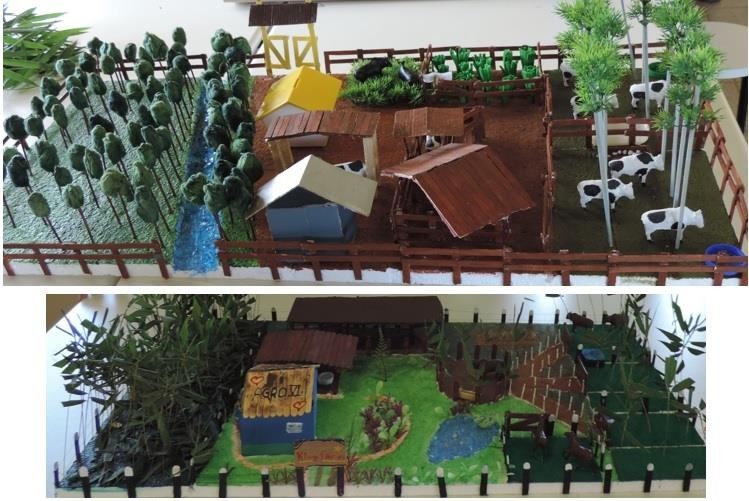
Figure 1: Pelinho de Pirraça and Team King Farm’s mockups
Source: the authors.
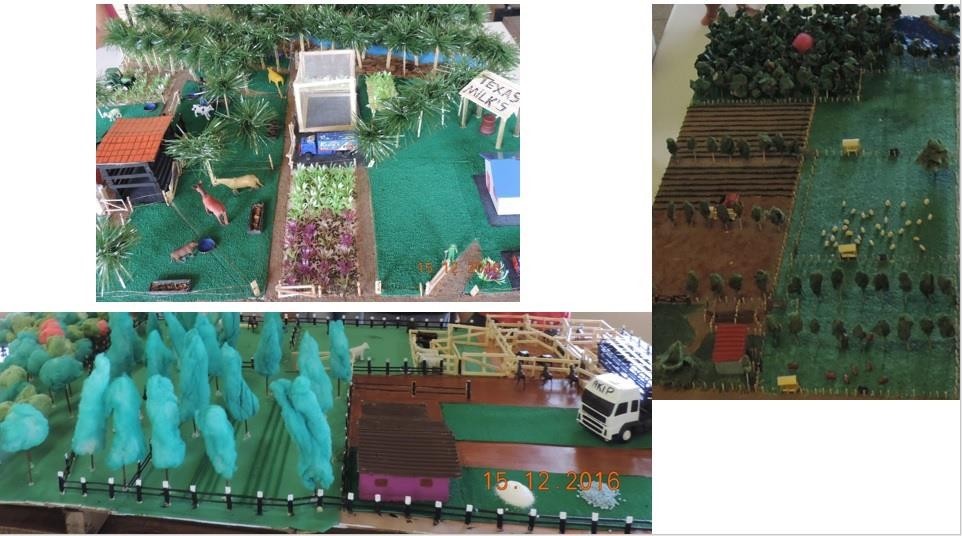
Figure 2: Stinglesh, AKIP and Team Monstro’s mockups.
Source: the authors.
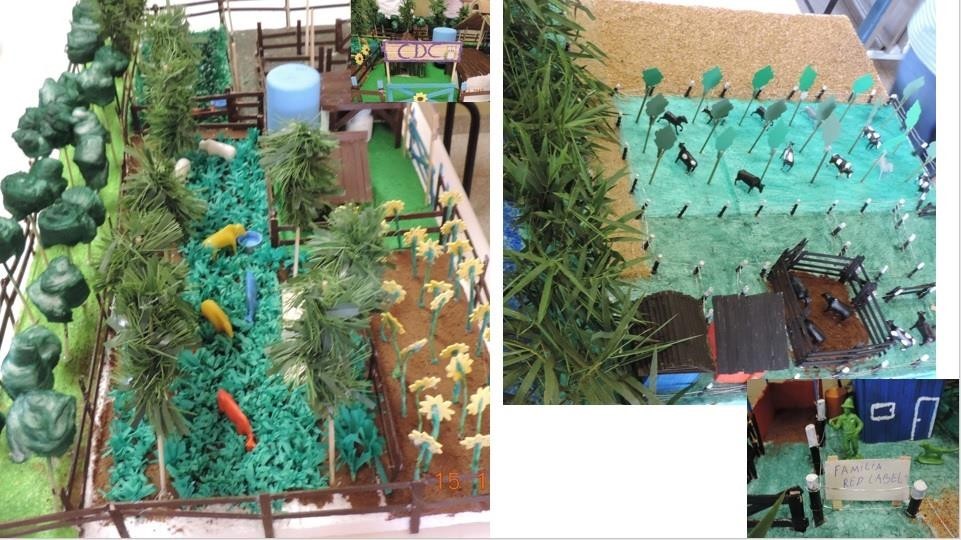
Figure 3: Clube da Coruja and Red Label
Source: the authors.
We will limit ourselves to present students’ work and the theoretical- methodological paths taken. Nevertheless, that does not reduce the importance of making a detailed analysis of all the acquired skills demonstrated by them during their oral presentation, mockup presentations and other material production.
Methodology procedures and data organization
In this study, we approach the process analysis from the teachers and students’ perspective, valuing their own experience. It is worth stressing that we understand individuals as authorial and autonomous beings. Taking that into account, we have based our discussion on some contemporary studies in education. Our study has adopted a qualitative approach, since it is committed to understand the process as authentic as it is. As Van Zanten (2004) argues, our objective is not evaluative. On the one hand, we intend to convey the pedagogical experiences lived in our institution, at the same time, given temporal distance from the events and perceptions collected during the experience, we ponder we are able to reveal an analysis concerning the experience we observed and also went through.
As Van Zanten (op.cit.) points out, we do not intend to achieve generalizations, though our experience brings data that may have a medium-term range since it is not restricted to our own reality. Therefore, it establishes a dialogue with scientific community. Although it seems to be an innovative proposal, as mentioned previously, it is related to other initiatives in Brazil and Finland. The idea of dialogue is important because we do not lose our local voice and we do not stop listening and learning with other voices.
This study is classified according to its nature, as applied research, considering that its result will support the multidisciplinary team of teachers from IFMS-NA in their planning, execution and assessment of new integrated teaching proposals, aiming at providing student-centered learning.
Gerhardt and Silveira (2009, p. 35) explain that applied research "aims to generate knowledge for practical application directed to the solution of specific problems. It involves local realities and interests." Concerning technical procedures, this research is based on the action research presuppositions. The action research procedures were based on Thiollent (2011)’s study, who establishes four phases of action research: exploratory, main phase, action and evaluation. The exploratory phase helped us to identify the problem (the disciplinary model of the Upper Secondary integrated to Vocational Education). The main phase involved planning the teaching action, focusing on the solution of the problem. The action phase concerned the proposal implementation. The evaluation phase was related to the result analysis regarding intervention itself, as presented in this article.
In this study we report a process of action research, in which theory and practice have been walking together. As already mentioned, the experience occurred in the second semester 2016. At the end of the project, a process assessment form was made available to the participants, with an open question involving positive aspects, negative aspects and suggestions for improvement. As mentioned before, the whole class was composed by 36 students. Two questionnaires have been used. All the 36 students answered the first one. The second questionnaire was answered by 25 students and contained 11 items, involving methodologies and assessment styles, with multiple choice, which were excellent, regular and weak. Besides, those 25 students have indicated whether they would recommend this experience to other colleagues.
By analyzing we aim at identifying and discussing challenges and contributions from the integrated curricular proposal in the Vocational Education context in IFMS, Nova Andradina campus.
Data presentation and analysis
Regarding positive aspects, the answers, in general, involved the following ideas: i) construction of knowledge in an autonomous way; ii) improvement of learning;
iii) better class planning compared to the traditional method; iv) greater involvement with the activities. It is worth emphasizing that the most stressed answer was related to the advantages of working in groups. We will address this question, considering that 27 people mentioned it as positive, as we can see below:
S05[6]: I have learned to work in teams, in which you have to accept others’ opinion so that things happen; S11: The main positive aspect in this project related to the class integration, not only in the small groups, but the whole class; S16: [the project]… made learning easier and helped us learn how to work in groups; S28: Team work, administration of teamwork and challenges; S31: Work in teams is a way of preparing ourselves to the reality of the world of work.
The integration of disciplines happened as we chose to integrate students’ diverse knowledge. We understand the school in its traditional model, may be individualizing, and disciplines may rarely dialogue with one another. Group work happens in a fragmented way, in which students often divide tasks among themselves without effectively integrating their work. In an attempt to tackle that idea and aiming at educating citizens who, when getting into the world of work, know how to deal with differences and learn from each other, students were organized in groups to carry out the assignments throughout the semester, such so they could identify this practice as an important competence to be developed by the school. As a group, skills related to affectivity, responsibility, autonomy, time management, respect and collaboration, for example, can be developed.
In relation to the negative aspects, we managed to organize data into three categories: i) relation between time and proposed activities; ii) difficulties among group members’ interaction (7 students pointed out they had problems working in groups); iii) lack of discipline contents (6 students emphasized that issue).
Among the elements mentioned above, we want to bring into discussion the last one related to the “lack of contents in relation to the vocational disciplines”, as they appeared several times.
S8: We do not have class on the curriculum contents; S15: It does not approach all the important themes to the vocational education; E20: The fact that it did not approach specific subjects related to vocational disciplines; S24: Lack of specific knowledge on the disciplines.
By mentioning “lack of content", students seem to search in the proposal a didactic model that fragments knowledge by disciplines. Thus, they become disappointed because they could not find that, and consequently evaluate the transdisciplinary approach as negative. Morin (2001) explains this as one of the important competences for the 21st century, the relevant knowledge competence that recognizes the whole in the parts (contents, in this case), which is difficult when teaching is organized by discipline, since it divides and fragments knowledge in such a way that hinder contextualization and the perception that parts are in the whole and the whole is connected to the parts.
On the other hand, it is important to be attentive to the fact that we cannot subtract learning possibilities and formal education, based on scientific knowledge, from students. For that reason, during the project design and development, it is necessary to negotiate, reflected and constantly assess critical aspects, avoiding gaps. The focus on the development of competences must not happen to the detriment of the scientific knowledge that compose them.
Working in a transdisciplinary approach allows students to expand their horizons, in which multiple knowledge areas overlap and connections among them are perceived in an effective way for a given situation, problem or phenomenon. Contents should never be subtracted, since they are indispensable components in the development of competences and in a transdisciplinary pedagogical practice.
Regarding recommendations given by the students from this research, related to the project development, four categories were found: i) assessment; ii) greater integration among teachers. iii) greater dialogical situations with students; iv) integrating other disciplines from the curriculum; v) working this way from the beginning of the course. Concerning assessment, participants complained on the number of assignments, time management and the difficulty of understanding what was being demanded.
Regarding greater integration among teachers, students revealed their perception that teachers did not understand the integration proposal in the same way, and that situation overwhelmed them with the amount of assignments. This was found in several times, such as in:
S5: follow the actual timeline! Without reports and activities that teachers ask off schedule.
It is important to note that there was a schedule of activities built by the teachers to assist students manage their activities related to the project, nevertheless, by their own choice some teachers demanded other activities, which increased students’ assignments. In the same context, another student, S23, argues that “…when teachers think alike ... [we have] less small assignments, such as using gdrive, and greater assignments such as the mockup construction." The lack of alignment with the transdisciplinary proposal and the idea of teacher as mediator in the student's learning process are also aspects observed when students suggest that teachers should have E23: "... availability and patience" and "more monitoring". It is important that teachers understand their role in this process.
In short, it is possible to reflect that disagreements concerning instructions given to students made the curriculum integration implementation more difficult and brought more students’ assignment overload. This can be perceived when one of the students suggests S4: [...] "do not put more complementary assignments that block students from doing the proposed topics at the beginning of the project because students have to stop what they are doing and focus on another activity".
Due to the lack of agreement among teachers, some students suggested that in future actions related to curricular integration projects: E19 “…a smaller number of teachers involved and greater involvement of all in the students' learning process"
When we observe the item in which participants suggest greater dialogue with students, we can infer that the meaning of mediation practice was not even for all the teachers. As mentioned before, students in the class were organized in groups of five or six members. For each group there was a mediator, who was responsible for guiding and monitoring individual learning development of each group member. Nevertheless, students pointed out some obstacles in the process, for instance:
S28: [...] more support for students who have more questions about the project; S03: improve instructions to students in order to achieve better understanding of the project; S25: try to listen to students, try to be clearer in the instructions; S24: greater dialogue possibilities with students.
To a lesser extent, students suggested integrating other disciplines from the curriculum and integrating assignments since the beginning of the course. In this sense, they argued that the last semester of the Upper secondary education integrated to Vocation Education in Farming is extremely difficult, because they are under pressure from the National Secondary School Examination (called ENEM in Brazil) and the presentation of their Course Completion Assignment. At that point, some students argued: S04: "integrate other disciplines"; S05: "start before the last semester".
Finally, we have questioned them whether they would recommend a transdisciplinary approach to other colleagues and asked them to explain their answers. Among 25 responses taken into account in this study, 76% reported that they would recommend it. The answers were categorized into broad positive responses and positive responses with a specific focus. In the broad responses some expressions came up, such as S19: "The integration of disciplines, in a more organized way, can be extremely importance to other classes"; S11: "A new way of learning".
In addition to the question of innovation and motivation, some students pointed out more specific questions: i) student’s autonomy in relation to the project and expansion of covered topics; ii) combination of theory and practice or greater school approximation from day-to-day reality, iii) improvement of social interaction and learning how to work in group.
In relation to the students who stated they would not recommend this methodology to their colleagues, the following categories were found i) they are not used to working like that and think their colleagues would not be either; ii) assignment overload; iii) certain topics from the curriculum were impaired.
Conclusions and horizons
A transdisciplinary approach may help students develop a broader and more critical perspective. In their answers and explanations, we have predominantly perceived a positive adherence to the process, in which they emphasized greater learning opportunities and motivation. Obviously, we understand that further research in the same context is needed.
It is worth noting that, from the experience reported, working in groups was recurrently pointed out by students as a positive aspect in the project, thus we recognize that is one of the most important elements in their perception. This can demonstrate how school life can be solitary and, in this case, far from the world of work reality. We used Vygotsky's study to understand this "working in groups" phenomenon, which explains why learning is socially constructed, fostered by interaction with others and mediated by language. Therefore, the importance of the teacher’s role is undeniable, as one who must mediate signs and thus knowledge construction.
This allows us to affirm that the transdisciplinary approach grants much more than students' cognitive development. Students are constantly challenged to learn to live together, deal with diversity and accept imperfection and human incompleteness (MORIN, 2001; 2011).
Regarding limitations, we believe that it would have been more interesting if all disciplines from the curriculum had been integrated in such a way that this would possibly generate new positions in relation to the amount of activities developed and a more favorable situation regarding use of time. However, just like Moran (2016), we understand that transformations may occur progressively in the school curriculum, integrating "several disciplines through a broader project (w/p)"
Another critical aspect pointed out that requires more reflection and theorization is related to the accomplishment of curriculum contents. When keeping in mind only a disciplinary agenda as a guiding principle to the whole learning process, students reveal, in our point of view, some fragilities in their understanding about what it is learning to be a comprehensive citizen. However, this understanding comes from the models which they are provided with. Therefore, it is the very form that teaching practices in Brazil have been commonly delineated.
Delors et al (2008) points out four pillars of learning that encompass contemporary education principles, which are: learning to know, learning to be, learning to live together and learning to do. From the students’ answers, we question ourselves: what kind of education do we offer these students? Why are not other pillars commonly integrated to the pillar of learning to know? These are some of the questions that instigate and deserve further study in future research.
REFERENCES
BRASIL. Medida Provisória nº. 746, de 22 de setembro de 2016. Institui a Política de Fomento à Implementação de Escolas de Ensino Médio em Tempo Integral, altera a Lei nº9.394, de 20 de dezembro de 1996, que estabelece as diretrizes e bases da educação nacional, e a Lei nº 11.494 de 20 de junho 2007, que regulamenta o Fundo de Manutenção e Desenvolvimento da Educação Básica e de Valorização dos Profissionais da Educação, e dá outras providências. Diário Oficial da União, Brasília, DF, de 23 set. 2016 - Edição Extra.
BRASIL. Educação: um tesouro a descobrir. Relatório para a UNESCO da Comissão Internacional sobre Educação para o século XXI. São Paulo, Cortez; Brasília, UNESCO Office Brasilia/MEC, 2010.
DELORS, J. Educação: um tesouro a descobrir. São Paulo: Cortez; Brasília: MEC/UNESCO, 2008.
FERRAZ, A. P. do C. M.; BELHOT, R. V. Taxonomia de Bloom: revisão teórica e apresentação das adequações do instrumento para definição de objetivos instrucionais. Gest. Prod., São Carlos, v. 17, n. 2, p. 421-431, 2010.
GERHARDT, T. E.; SILVEIRA, D. T. Métodos de pesquisa. Porto Alegre: Editora da UFRGS, 2009. 120 p.
LÉVY, P. Cibercultura. Trad. Carlos Irineu da Costa. São Paulo: Editora 34, 1999.
MATURANA, Humberto. Formação humana e capacitação. Petrópolis, RJ: Editora Vozes, 2008.
MENDES, P. Formação docente na educação profissional e tecnológica por competências: uma estratégia didática transdisciplinar. 2016. 346f. Dissertação (Mestrado em Educação) - Universidade Católica de Brasília, Brasília, 2016.
MORAES, M. C. Ecologia dos saberes: complexidade, transdisciplinaridade e educação: novos fundamentos para iluminar novas práticas educacionais. São Paulo: Antakarana: Willis Harman House, 2008.
MORAN, J. M. Metodologias ativas para realizar transformações progressivas e profundas no currículo, 2016. S/A. Disponível em http://www2.eca.usp.br/moran/wp-content/uploads/2013/12/transformacoes.pdf. Acesso em: 10 set. 2017.
MORIN, E. Introdução ao pensamento complexo. 4. ed. Porto Alegre: Sulina, 2011.
MORIN, E. Os sete saberes necessários à educação do futuro. 3a. ed. - São Paulo - Cortez; Brasília, DF: UNESCO, 2001.
MORIN, E. Saúde e transdisciplinaridade. Tradução de Marly Segreto. São Paulo: Editora da Universidade de São Paulo, 2013.
NICOLESCU, B. O Manifesto da transdisciplinaridade. Triom: São Paulo, 2000.
SANTOS, A. Complexidade e transdisciplinaridade em educação: cinco princípios para resgatar o elo perdido. Revista Brasileira de Educação, v. 13, n. 37, jan/abr., 2008.
THIOLLENT, M. Metodologia de pesquisa-ação. 18. ed. São Paulo: Cortez, 2011.
VAN ZANTEN, A. Pesquisa qualitativa em educação: pertinência, validez e generalização. Perspectiva, Florianópolis, v. 22, n. 01, p. 25-45, jan./jun., 2004.
VYGOTSKY, L. S. A formação social da mente: o desenvolvimento dos processos psicológicos superiores. São Paulo: Martins Fontes, 1998.
[5] See the electronic News related to the Project available at http://www.ifms.edu.br/2016/10/07/projeto- de-ensino-promove-integracao-entre-disciplinas/.