Artigos
THE USE OF MOBILE DEVICES IN THE COLLEGE CLASSROOM: PROJECT METHOD AND MOBILE TECHNOLOGIES IN HIGHER EDUCATION
THE USE OF MOBILE DEVICES IN THE COLLEGE CLASSROOM: PROJECT METHOD AND MOBILE TECHNOLOGIES IN HIGHER EDUCATION
Revista Ibero-Americana de Estudos em Educação, vol. 13, núm. Esp.1, pp. 500-519, 2018
Universidade Estadual Paulista Júlio de Mesquita Filho

Esta obra está bajo una Licencia Creative Commons Atribución-CompartirIgual 4.0 Internacional.
Recepción: 30 Octubre 2017
Aprobación: 30 Enero 2018
Abstract: This study reports partial results from the research entitled "Project Method and Mobile Technologies: Potentialities and Challenges to the Teaching and Learning Processes in Marketing Undergraduation Course", developed within the Graduate Program in Education of the Universidade do Oeste Paulista (UNOESTE/Presidente Prudente/SP/Brazil). This research has adopted as general objective to analyze how mobile technologies can be articulated to the development of work projects, aiming at their integration to the pedagogical practices in higher education. The research was based on the qualitative approach and was carried out in the form of intervention research. Data were collected through participant observation, semi-structured interview, questionnaire and focus group. As context, we adopted the reality of the Marketing Undergradtion Course, offered by a private higher education institution (HEI) from, located in the city of Lins/SP/Brazil. The results obtained provided an understanding of the profile of higher education students in the contemporary era and the need for (re)construction of pedagogical practices to these students. The importance of work projects as an opportunity to adopt an active methodology articulated to mobile technologies in higher education was also evidenced.
Keywords: Higher education, Mobile technologies, Project Method, Teaching and learning processes.
Resumo: O presente estudo relata resultados parciais da pesquisa intitulada “Pedagogia de Projetos e as Tecnologias Móveis: Potencialidades e Desafios aos Processos de Ensino e de Aprendizagem no Curso Superior de Marketing”, desenvolvida no âmbito do Programa de Pós-Graduação em Educação na Universidade do Oeste Paulista (UNOESTE/Presidente Prudente/SP/Brasil). Esta investigação adotou como objetivo geral analisar como as tecnologias móveis podem ser articuladas ao desenvolvimento de projetos de trabalho, visando à sua integração às práticas pedagógicas no ensino superior. A investigação se desenvolveu embasada na abordagem qualitativa e foi realizada sob a forma de pesquisa-intervenção. Os dados foram coletados por meio da observação participante, entrevista semiestruturada, questionário e grupo focal. Como contexto, adotou-se a realidade do curso superior de Marketing, ofertado por uma IES da rede privada, situada no município de Lins/SP/Brasil. Os resultados alcançados propiciaram a compreensão do perfil dos estudantes de ensino superior na era contemporânea e a necessidade de (re)construção das práticas pedagógicas diante desse alunado. Evidenciou-se ainda a importância dos projetos de trabalho como uma oportunidade de adotar uma metodologia ativa articulada às tecnologias móveis no ensino superior.
Palavras-chave: Educação superior, Tecnologias móveis, Pedagogia de projetos, Processo de ensino e aprendizagem.
Resumen: El presente estudio relata resultados parciales de la investigación titulada "Pedagogía de Proyectos y las Tecnologías Móviles: Potencialidades y Desafíos a los Procesos de Enseñanza y de Aprendizaje en el Curso Superior de Marketing", desarrollada en el ámbito del Programa de Postgrado en Educación en la Universidad del Oeste Paulista (UNOESTE/Presidente Prudente/SP/Brasil). Esta investigación adoptó como objetivo general analizar cómo las tecnologías móviles pueden ser articuladas al desarrollo de proyectos de trabajo, buscando su integración a las prácticas pedagógicas en la enseñanza superior. La investigación se desarrolló basadas en el enfoque cualitativo y se llevó a cabo en forma de investigación- intervención. Los datos fueron recolectados por medio de la observación participante, entrevista semiestructurada, cuestionario y grupo focal. Como contexto, se adoptó la realidad del curso superior de Marketing, ofrecido por una IES de la red privada, situada en el municipio de Lins/SP/Brasil. Los resultados alcanzados propiciaron la comprensión del perfil de los estudiantes de enseñanza superior en la era contemporánea y la necesidad de (re) construcción de las prácticas pedagógicas ante ese alunado. Se evidenció la importancia de los proyectos de trabajo como una oportunidad de adoptar una metodología activa articulada a las tecnologías móviles en la enseñanza superior.
Palabras clave: Educación superior, Tecnologías móviles, Pedagogía de proyectos, Proceso de enseñanza y aprendizaje.
Introduction
The perceptible gap between the current model of teaching and learning and the profile of young students, especially in Higher Education Institutions (HEIs), has been the subject of study by several specialists, who are concerned about the need for changes in pedagogical practices, so that the teaching and learning process is no longer developed with methods and tools that are not used by the students from the 21st Century.
Technologies, for example, have proved to be indispensable for the enrichment and creation of new learning spaces toward various teaching segments, proving to be more than necessary for innovation of methods adopted by teachers. Hence, they offer differentiated proposals for a more attractive, meaningful, contextualized and favorable education for students to build new knowledge.
The use of technological tools in the teaching-learning process as the mobile devices, when used in the classroom, face-to-face courses and/or online courses may provide teachers and students with significant changes in their roles within the school context. Such changes, consistent with the demands of the contemporary world, demand an active role of students in their learning process. The classrooms infrastructure in most Brazilian schools does not yet have the basic resources that can meet these needs.
However, the resistance from some teachers still exist, perhaps because they do not know the potential of these technologies or because they did not appropriate these resources for personal use or, maybe fear of facing new challenges that are imposed by the Presence of Digital Information and Communication Technologies in educational contexts. On the other hand, there are teachers willing to overcome new challenges.
Due to this situation, this is a report on partial results from the study entitled Project Method and Mobile Technologies: potentialities and challenges to the teaching and learning processes in the Marketing Undergraduation Course, in which the objective was to analyze how mobile technologies can be articulated to the development of projects, aiming at their integration into pedagogical practices in higher education.
The research was based on the qualitative approach and was carried out in the form of intervention research. Data were collected through participant observation, semi-structured interview, questionnaire and focus group. This research was developed adopting, as context, the reality of a Higher education course in Marketing, offered by a private university in the city of Lins/SP.
Based on the information collected, the profile of the students in higher education in this contemporary era is described below. It is discussed the necessity of reconstructing pedagogical practices toward this pupil that is present in higher education, as well as the Project Method as an opportunity to adopt an active methodology articulated to mobile technologies in this scenario. Finally, a review of the experience carried out in the context of the Marketing course and respective analysis that emerged from the actions are presented.
Retrospective of the generations: higher education students’ profile
It is important to understand the behavior and personality of the subjects of a given age group, in order to define educational actions that are aligned with learning styles. Each group or generation, in a period of History, in a social time, has ways of thinking, acting and seeing the world, as each generation forms a set of principles, beliefs and values (COMAZZETTO et al, 2016).
For Kupperschmidt (2000 apud COMAZZETTO et al, 2016, p. 146), a generation is "an identifiable group that shares the same years of birth and consequently lived the same significant social events in crucial stages of development." To clarify, generations can be presented as follows: baby boomers - born between 1946 and 1964; Generation X - born between 1965 and 1980; Generation Y - born between 1980 and 2000; And generation Z - born from 2000 to the present.
The baby boomers are originated in the post-war period, World War II, and members from this generation have not experienced the problems of the current generations such as: general pessimism, kidnapping, murder, environmental pollution and terrorism. Therefore, they demonstrate more optimistic attitudes, are motivated and really committed and loyal to employers, called workaholics. For Comazzetto et al (2016, p. 147), they
present a sense of search for opportunities of economic insertion in various occupations in the field of social work. They applied their school efforts to careers that promised facilities in search of guaranteed positions in the business world. Basically, experts on the subject point out as the main characteristics of the baby boomers the fact that they were young rebels who, for the most part, became conservative adults, although not rigid.
In contrast, Generation X members are less loyal to the employer than the baby boomers, due to the perception that such employment loyalty did not create stability. Therefore, the importance of developing skills is meant to improve employability, so this disloyalty is not purely negative since they tend to accept changes, especially technological ones, and, as long as they are well oriented towards the goals, dedicated to themselves to improve their performance, seek to work with freedom, flexibility and feel the need for feedback, like variety, challenges and opportunities (COMAZZETTO et al, 2016; FGI, 2006). These young people want to "work to live" and not "live to work". They believe that long hours of work deteriorate life quality and that there must be a balance between work and leisure (CRAMPTON; HODGE, 2009).
These young people are known for winning the keys of their home doors and they are quite confident (BALC; BOZKURT, 2013). "Generation X found a scenario of changes in the family, with father and mother working, feelings of guilt of women for being absent from home, generating difficulties to put limits on their children." (COMAZZETTO et al, 2016, p. 147).
Generation Y members had most of their needs reached by their parents, thus they seek self-actualization, they are ambitious, have difficulties to deal with criticisms, and they want constant valuation of their supervisors in the work place (WOODRUFF, 2009). Born in the era of great technological innovations and globalization, they suffer the direct impact of this reality and thus, in the way they see the world, they believe that events are unpredictable and dynamic. This group has grown in a world of electronic technologies such as television, cinemas, video games and computer monitors and they are part of the workforce, income and consumption in Brazil, most in college and graduation programs (CLARO et al, 2010).
It is the first generation in History to have greater knowledge than the previous ones in technology. Living with the diversity of families, having spent their childhood with an agenda full of activities and electronic devices, the people of this generation are multifaceted, are too active and manage time well. Capturing events in real time and connecting with a variety of people, they have developed the systemic vision and embrace diversity (COMAZZETTO et al, 2016, p. 147).
This generation, according to Howe and Strauss (1991), is characterized by seven unique traits, as: 1) they are special because the media values and gives much attention to this type of public; 2) they are so protected that they are accommodated in exclusive car seats, baby seats; 3) they are confident because of the family condition in which father and mother work and believe that they will be better than their parents; 4) they are guided by easily developed group activities and behaviors; 5) they are conventional when they accept values transmitted by their parents; 6) they are pressured to different activities throughout the day; and 7) focused on the future, careers and salaries (HOWE; STRAUSS, 1991; SIMÕES; GOUVEIA, 2008).
Generation Z is composed by individuals who have already been born in an accelerated pace, with broadband internet, Google, smartphones, online games, X-box and other technologies (CERBASI; BABOSA, 2009). This generation uses headphones all the time, while doing other activities, they use other technological resources, since they have a skill for fantastic technology. Fast and agile with computers, in turn, find difficulties in traditional schools and in interpersonal relationships, impacts of present technology and they hide verbal communication and they are more impatient, easily becoming bored. They grew up in environments with diverse family structures, consequently they do not see obstacles with regards to cultural differences, family composition or lifestyles. It is still unclear how these individuals will deal with the work environment or the study in higher education (DICECCO, 2006; MITCHELL, 1993; NETO; FRANCO, 2010).
In this context, the contemporary school seeks for new public. The time when students were able to stand for about five hours in front of a blackboard, in silence, listening to the teacher's explanations is over.
The profile of today's students is different, as they are not calm anymore, argumentative and well informed, always with a mobile device in their hands. Thus, getting their attention and motivation in the classroom have become a challenge.
A survey by the McGraw-Hill publishing house answered questions such as: who are today's students? How does technology affect them? How do they want to learn? The result pointed to a new profile. They are very busy, but only with what interests them. They are multitasking people and performing many activities at the same time. They are interested in novelties and do not accept old ideas. They want fun, games and challenges. They like speed and they want everything for now. They like current content with attractive visual approach.
We live amid a new culture, the technological one, which, according to Medeiros and Ventura (2007, p. 273), "refers to new behaviors arising from the use of technology resources, especially communication and information technology." The technological culture demands from teachers a total rethinking of behaviors and pedagogical practices that should not be limited to the insertion of mobile devices into teaching. The changes in the teaching process, in the pedagogical projects and in the university professor’s education do not keep the same pace considering the speed of the technological advances.
The reconstruction of pedagogical practices before the insertion of mobile and wireless information and communication technology in educational contexts
The influence of Information and Communication Digital Technologies (ICDT) on Information Technology and Mobile and Wireless Communication (IT) in the educational field has been urging for rethinking of current pedagogical practices. The concerns mostly relate to the need of improvement of infrastructure and teacher education, including the insertion of these technologies in the educational field, given the profile of the new generations. If, in the past, education was previously focused almost exclusively on content, today it is necessary to consider the need for educational practices to focus on learning and also on the diversified methodologies adopted for this process development.
In this context, new pedagogical practices are proposed, focused on more active methodologies, in which the study of disciplines is not restricted to understanding the content and, rather, helps students to learn what is most appropriate for their needs. From this perspective, the teacher assumes a mediator position in the learning process, guiding possibilities and paths to be covered in order to accomplish the learning outcomes. In this context, Mobile and Wireless Information and Communication Technology appears as a valuable tool to support teachers and an excellent tool to meet the profile of the new generations.
There are many advantages for teachers who want to turn mobile devices into educational tools. In this sense, considering the use of mobile technologies in the classroom, UNESCO (2013) has created a guide with thirteen reasons and ten recommendations for governments. The guide, published in English, was presented in Paris in February 2013 during the Mobile Learning Week5. Among the good reasons for using these devices in education, the following ones are highlighted:
- 1.
1. broadening the reach and equity in education - mobile technology favors a better approach and equality;
2. improvement of education in conflict areas or those that have suffered natural disasters - bringing education closer to children who have suffered trauma in areas of conflict or natural disasters;
3. assisting students with disabilities - promotes social inclusion in the classroom;
4. optimization classroom time - optimize class time, which increases the approach and productivity by covering more content;
5. allowing you to learn at any time and place - it enables learning mobility, since you can access content at any time and place;
6. building new learning communities - builds a communication bridge between learning communities, where it is possible to exchange tips and experiences among students and educators around the world;
7. supports on-the-spot learning - serves as support to support in-class lessons;
8. approximates formal learning from informal - links traditional education to modern education;
9. provides immediate feedback and feedback - enhances internal communication within the institution, improving the lives of managers and administrators;
10. facilitates personalized learning - maximizes cost-effectiveness of educational material;
11. improvement of continuous learning - contributes to a continuing education, always keeping content fresh in the student's memory, since it is possible to access what has been learned beyond the classrooms;
12. improvement of communication - it favors the personalization of the learned contents;
13. maximizes the cost-effectiveness of education - provides feedback and immediate assessments.
In the bank queue, in the movies, in the waiting room of a doctor's office, and in so many other places, one can take advantage of the benefits of mobile devices for education. Considering that many students face traffic jams in their cities or many travelling hours to school, having access to activities in advance helps in the development of the educational process, regardless of the location.
The main advantages of using Mobile and Wireless Information and Communication Technology in educational contexts are: ubiquity and connectivity.
Ubiquity
In the age of connection, mobility and ubiquity have given people new forms of interaction in unthinkable places. Corso, Freitas and Behr (2013) argue that ubiquity is translated by the omnipresence of technology. It means that when a person is at work reading emails, and then leaves the office, whatever s/he was reading earlier is transferred to the smartphone without any user interaction.
Santaella (2013) defines this new reality of hypermobility, that is, the capacity that we have of locomotion and increased informational and communicational mobility, which makes broadband and wireless networks the technological tonic of the present day.
This provides a ubiquitous, pervasive and at the same time embodied and multiply-situated type of communication that is beginning to creep into everyday objects with embedded technology, the so-called internet of things. In fact, these technologies are already being shipped to people, such as radiofrequency labels implanted under the skin of individuals. (SANTAELLA, 2013, p. 15).
Thus, from the moment that ubiquity affects human cognition, it produces considerable repercussions that must be observed in education.
Connectivity
The possibilities of connections in the virtual space are infinite and stimulate sharing, exchange of ideas and access to different information.
Computer and digital culture inaugurates connectivity, computer mediated communication, convergence of sound, image and writing. In addition, simulated spaces allow the creation of interactive, dynamic, plastic spaces that, in turn, enable the representation of a given reality. (ROESLER, 2008, p. 43).
In the words of Roesler (2008), this process of exchanging favors both the assimilation and the reorganization of knowledge, resulting in the association of the knowledge previously absorbed by the students.
Therefore, technology, mobility, connectivity and interactivity are intrinsic attributes of mobile devices, and the task of educational institutions is to investigate how to use them in educational practices to promote teaching and learning in the present day.
Mobility should not be limited to the spatial aspect, that is, to the geographical question of individuals' movement, as is usually found in the literature. Kakihara and Sorensen (2001 apud CORSO, FREITAS, BEHR, 2013, p. 6) "[…] expand the geographical perspective, arguing that mobile technologies provide new dimensions to the interaction between people, enabling spatial, temporal and contextual mobility."
Space Mobility indicates the immediacy of life mobility in society and it is manifested, for instance, since the travel and tourism business increased in the 20th Century. Temporal Mobility, for them, occurs in large part through the efforts of new technologies to accelerate the pace of work and save time, although these are not only temporal transformations caused by new technologies.
The work projects as an active methodology articulated to mobile technologies in higher education
Because of the need to update the school and the demand of a constantly changing society, teacher creativity becomes a crucial element in the teaching and learning processes. Nowadays, it is up to teachers to reflect on their individual practice and to move towards new experiences that can improve this process. Contemporary education must develop in the student the capacity to self-manage or to self-govern the formation process, as explained by Miter et al (2008, p. 2135). According to this author, even if the graduation lasts some years, the professional activity can remain much longer and the knowledge and skills of updating, which makes it necessary to think of an emancipating education forms a professional that is able to learn how to learn.
Every project is developed in stages, as follows: planning; theme choice; problematization; research, systematization and production; disclosure and Evaluation[7].
Planning: should be prepared collectively, by all participants, considering the number of people involved and the resources available, such as: computers, books, magazines, newspapers and others.
Choice of Theme: it should be on everyone’s interest and who will be working in it, with the possibility of having several themes in the same group. It is important to define how many subjects should be worked in the same class.
Problematization: at this point teachers should express their ideas, beliefs, knowledge and questions on the chosen theme, and pay attention to the experiences and life stories, because it is from them that mediation and intervention will take place. It is necessary to challenge students to act as active subjects of their learning, taking advantage of their social experience to discuss aspects of reality and to provoke the confrontation between their own visions of the world with others, exchanging experiences among the group, analyzing their conceptions under other points of view, thus provoking and questioning of their own ideas and attitudes.
Research, Systematization and Production: at this time, it is essential that the educator guides the work development and that the interventions lead students to confront their ideas, beliefs and knowledge with other’s world views, analyzing them and relating them to new elements.
Dissemination: the results obtained, as well as discussions and researches should go beyond the classroom and school walls, since besides the fact that the community takes the reflections beyond the participant group of the project, it is there that we find real conditions on which discussions are held. By disseminating the results, we give concreteness and meaning to what was produced, promoting the participants' self- esteem and valuing their productions.
Assessment: should involve all participants and be focused on the goals proposed by them, individually, and the roles played.
The teacher has a fundamental role in this process and, therefore, "during the educational action, it is necessary to stimulate and encourage the student, by using differentiated strategies, enabling a welcoming reception, integration and inclusion of the knowledge person." (CAVALCANTI NETO; AQUINO, 2009, p. 239).
Mobile projects and technologies in higher education: an experience in the marketing course
In recent years, following the rapid expansion of the internet, social networks, and the convergence of media to mobile, according to Oliveira (2017), the year 2016 consolidated mobility and "challenged companies to rethink their performances in a world with a growing number of new web-connection interfaces." Given this context and considering that among the various activities that involve the Marketing profession, the search for new means of communication with the market is undoubtedly the main one; which is a fact that requires this professional to master the subject.
Oliveira also points out that because they are more connected, consumers have become more demanding with companies and demand immediate responses, which can be fully met by using cell phones.
Fonseca (2015) reinforces the idea by justifying that the deep relationship with the consumers strengthens a brand and favors the commerce of more products and services. "These are some of the activities that can be done through a cell phone, taking advantage of the attention that customers give the device in their daily life."
Hence, the cell phone incorporation in the Marketing course teaching practice can stimulate future professionals to new ideas in search of an ever closer relationship with their clients.
The class was divided into five working groups, with about seven students in each. After each leader of a group was elected, three spaces were defined for the dialogue among students, one of them was the WhatsApp, the other SMS and the third via e-mail. With these means of communication established, the participants visualized the easy possibilities of contact among all, in several ways.
Crossword Game
This group has developed a mobile application in which the user can have fun with some crossword puzzles and at the same time learn about a particular subject. The use of crosswords provides, among other abilities, the stimulation of memory. The use of this pedagogical tool enriches students’ vocabulary and helps them understand several subjects. It can be used in all disciplines, depending only on the information update.
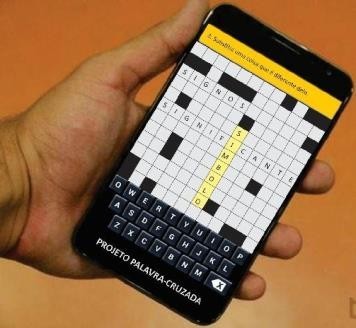
Figure 1
Crossword Game
the author.
WhatsApp competition
Since WhatsApp is the most widely application used by students, this group chose to use it as a channel for performing a kind of "game" among groups from the classroom. In this case, the first need was to discuss the rules to conduct the game. Similar to the crossword puzzle, only the leader of each group received the questions, and the other members conducted quick searches on the internet.
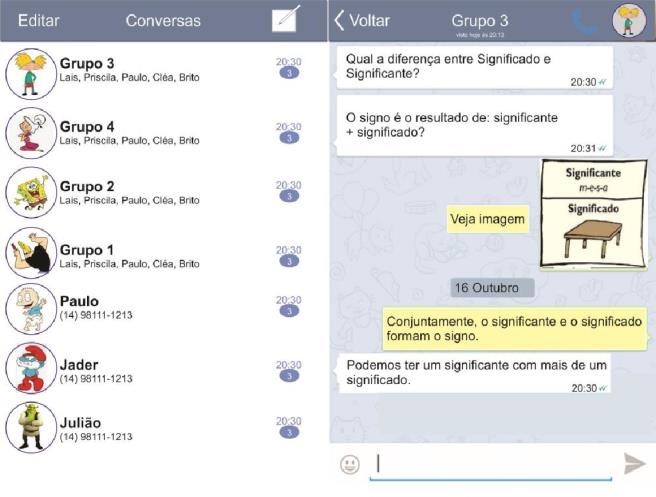
Figure 2
WhatsApp Competition
the author.
Stop motion video
This group decided to produce a video, using the technique of stop motion that is composed by various images, illustrations or photographs, creating quick movements. For Ciríaco (2009, p. 29), Stop Motion is a technique that uses a sequence of photographs or different images of the same object to simulate its movement. Each photograph or image is called a picture, which gives the idea of motion. It is widely used by major entertainment producers, such as Disney, as well as creating home-made animations that do not require beautiful productions.
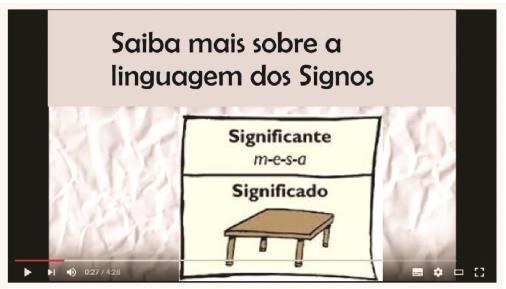
Figure 3
Stop Motion Video
the author
Questions and answers game
This group based on the idea of the game Programa do Milhão, which is presented in Silvio Santos, a Brazilian TV program, and some students were used to watching it as a form of entertainment.
The group’s justification for choosing this activity is that games of this nature are excellent for testing knowledge and stimulating memory. In this case, it served as a tool for the development of a game among the students in class. The questions were developed by the teacher of the Communication discipline, with questions related to the theme Signs.
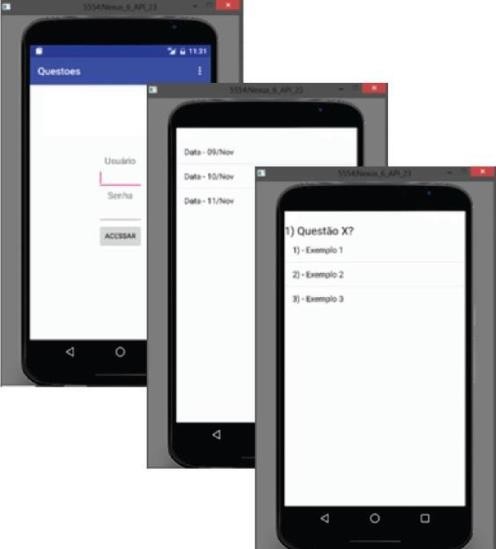
the author
Throughout the development of this research, rather than merely incorporating the cell phone into educational practices, the main objective was to identify how the work projects could guide its use in the classroom, being another tool to support the construction of knowledge and a stimulating factor for the new generations who seem to consider this device as the very extension of the human body.
Final considerations
This research had as main objective to analyze how the mobile technologies can be articulated to the development of work projects, aiming at their integration to the pedagogical practices in higher education.
The theme of this research was related to the professional profile of the researchers and their concern, as educators, with the conservatism of the model of teaching and learning that persists in schools. While other sectors of the economy have been undergoing extraordinary changes, originated from the characteristics of the new generations, the educational sector has remained almost inert, based on its ground of more than three centuries.
From the survey carried out in the area of studies, it is possible to notice that only a few of them actually addressed the use of cell phone in the classroom, however, none with the support of work projects that undoubtedly is an important element that puts these ideas into practice. This was the differential of this research in relation to the others, addressed in this paper, especially in the Introduction.
These work projects indicate a possibility for the integration of mobile technologies in higher education, especially in the Marketing professionals’ development, who already work with a similar tool. Likewise, working with projects will facilitate the development of activities by the researcher in the classroom, with positive effects outside the academic world.
The various features of Mobile and Wireless Information and Communication Technology, such as games, applications and videos, all in real time, make them more and more attractive for educational use as well. With students increasingly motivated by the use of equipment that is part of their routines, educational institutions can benefit from all the resources offered and contextualize them to discuss relevant themes to the development of ethical citizens, aware of their values.
Analyzing the activities developed in this research, it is understood that although Mobile and Wireless Information and Communication Technology is part of students' daily life, many of them have not yet realized that their benefits go far beyond their use only for sending text messages or images and entertainment. They do not envisage the possibility of using these resources at school, as a complement to school activities that require more elaborate, analytical and reflective texts.
As students became more familiar with work projects, meetings became more productive and new ideas emerged. Throughout the development of the topic, the acquired knowledge was articulated to the practice in the university environment and, during the work various phases, it was also evident the real possibility of incorporating the Mobile and Wireless Information and Communication Technology in the list of technological tools that assist the teaching and learning processes. By emphasizing the work projects articulated to the Mobile and Wireless Information and Communication Technology, students' performance in their activities can be improved, which depends not only on the teacher's acceptance, but on their own formation to use these technologies that can become efficient and motivational pedagogic tools. The teacher’s professional development to work with Mobile and Wireless Information and Communication Technology in higher education becomes essential.
It is known that any and every organizational or individual change is subject to distrust and resist, what demands strategies for its implementation. However, when presenting the current context of higher education, its aims and challenges, it was clear the need for reconstructing pedagogical practices with regards to the technological innovations provided by mobility and ubiquity.
The main innovation or major challenge, the central point of this research, is the shift from old teaching practices to the more modern ones, shaped by sound and well- established educational proposals. In this sense, the obtained results were largely satisfactory. Firstly, they allowed university students to try out a technology that is part of their daily life, and secondly, because they experienced different procedures and attitudes, and were able to understand concepts that were unknown.
In the perspective of the effective use of Mobile and Wireless Information and Communication Technology in education, the teacher’s performance will be as important as it has been throughout History. However, instead of focusing on the transmission of information, the teacher will play the role of a mediator in the process of building new knowledge and will be responsible for the interactions between teacher- student and vice-versa, and from each other, so that everyone can build knowledge, from the introduction of technological tools capable of complementing and expanding the learning context.
Regarding the recommendations assigned by UNESCO (2013), the aspects that were considered most relevant by the researchers are: creating or updating policies related to mobile learning; expanding and improving connection options; optimizing time in the classroom; building new communities; creating and optimizing educational content; training teachers using mobile technologies; promoting safe, responsible and healthy use of technologies; improving communication and management of education and providing a continuous learning approach. According to UNESCO (2013), guidelines apply to any government, regardless of the degree of maturity the country is in, but it is important that it is adapted to local needs.
It is well known that many other discussions are coming and it is too early to have conclusions about the impact that Mobile and Wireless Information and Communication Technology have on teaching and learning processes. However, it is clear that education needs considerable changes in its pedagogical practices, transforming the teacher into a moderator of the process and giving students autonomy to become co-responsible for their own learning process, with autonomy and responsibility, to develop their projects. Working with tools that are already part of their routine.
According to Moraes (1997 apud TERÇARIOL, 2003, p. 277), "this process of searching, selecting and organizing information, besides contributing to the student’s critical stance, contributes to the stimulation of autonomy." For Josgrilbert (2001 apud TERÇARIOL, 2003, p. 271), "the teacher must be a provocateur of doubts, an inciter to reflections and questionings, a person who knows the right moment to interfere, but who at the same time learns from the students."
If you evaluate the growth of educational applications, Mobile and Wireless Information and Communication Technology is even more valued in the teaching and learning processes. However, these technologies cannot be seen as the very educational revolution with which one dreams so much, but as an integral part of a larger context that considers other resources already consolidated in the school context.
This research presents valuable information about the potential of Mobile and Wireless Information and Communication Technology and justifies a greater analysis that prompts the development of new research and, therefore, contributes to a bigger reflection about the use of these resources in the classroom, especially in college, emphasizing that its use should not replace other resources already contemplated and, rather, predicting the articulation between all of them.
It is expected that the developed and analyzed projects in this research may stimulate the creation of many others, and that they could be inserted into the pedagogical practice as active methodological proposals, capable of assisting in the achievement of educational objectives, provoking innovation and improving the quality of Teaching and Learning. Finally, this is not a conclusive work, but a document that presents an organization of information on the subject, to serve as a subsidy for new reflections.
REFERENCES
BALC, A.; BOZKURT, S. Job expectations of Generation X and Y Teachers in Turkey. World Applied Sciences Journal, v. 21, n. 4, p. 599-614. 2013.
CAVALCANTI NETO, A. L. G.; AQUINO, J. de L. F. The evaluation of learning as a love act: what the teacher practices? Education in Journal, Belo Horizonte, v. 25, n. 2, p. 223-240, aug. 2009.
CERBASI, G.; BARBOSA, C. More Time More Money: Strategies for a More Balanced Life. 1. ed. Rio de Janeiro: Thomas Nelson Brasil, 2009.
CIRÍACO, D. What is Stop Motion? World Tec. 2009. Available at: https://www.tecmundo.com.br/player-de-video/2247-oque-e-stop-motion-.htm. Access in: 13 mar. 2016.
CLARO, J. A. C. et al. Youthful lifestyle of "Generation Y" and their perspectives of career, income and consumption. In: Seminars in Administation - SEMEAD. 2010. São Paulo. Anais... São Paulo: FEA/USP, 2010.
COMAZZETTO, L. R. et al. The Generation Y in the Labor Market: A Comparative Study Between Generations. Psychology: science and profession, Brasília, v. 36, n. 1, p. 145-157, mar. 2016.
CORSO, K.B.; FREITAS, H. M. R. de.; BEHR, A. The Context in Mobile Work: a discussion in the light of the ubiquity paradigm. Journal Management in Dialogue. Program of Post-Graduate Studies in Administration, Pontifical Catholic University of São Paulo, v. 15, n. 2, p. 01-25, may/aug. 2013.
CRAMPTON, S. M.; HODGE, J. W. Generation Y: Unchartered Territory. Journal of Business & Economics Research, v. 7, n. 4, p. 1-6. 2009.
DICECCO, V. Hey! What's the matter with kids today? Or Managing today's cross-generational workforce. 2006. Available at: http: // www. Sgia.org/feature_articles/kids_today_dicecco.htm. Access in: 20 nov. 2013.
FGI. One workplace, four generations: Managing their conflicting needs. Working Well for Managers, n. 7. 2006. Available at: http://www.mta.ca/hr/managers/workingwell_sept2004.pdf#search=%22Working%20for%20managers%20One%20workplace%2C%20Four%20generations%20FGI%22. Access in: 20 nov. 2013.
FONSECA, M. 5 Ways to Conquer Your Customers by Cell Phone. 2015. Available at: http://exame.abril.com.br/pme/5-maneiras-de-conquistar-seus-clientes-pelo-celular/. Access in: 03 jul. 2017.
HOWE, N.; STRAUSS, W. Generations: The History of America's Future, 1584 to 2069. 1. ed. New York: Morrow, 1991.
MEDEIROS, Z.; VENTURA P. C. S. The concept of technological culture and a study in the educational environment. Ensaio Pesquisa em Educação em Ciência, Belo Horizonte, v. 9, n. 2, p. 272-289, dec. 2007.
MITCHELL, S. How to Talk to Young Adults. American Demographics, v. 15, n. 4, p. 50-54. 1993.
MITRE, S. M. et al. Active teaching-learning methodologies in health professional training: current debates. Science and collective health, Rio de Janeiro, v. 13, suppl. 2, p. 2133-2144, dec. 2008.
NETO, E. S.; FRANCO, E. S. Teachers and the pedagogical challenges facing the new generations: considerations about the present and the future. Journal of Education COGEIME, v. 19, n. 36, p. 9-25. 2010.
OLIVEIRA, P. Mobile Marketing will be imperative in 2017. World of Marketing. Notebook Market. Available at: https://www.mundodomarketing.com.br/reportagens/mercado/37064/mobile- marketing-sera imperativo-em-2017.html?utm_source=akna&utm_medium=email&utm_%20campaign=news+10.01.1 7. Access in: 11 jan. 2017.
ROESLER, J. Communication, Society and Online Education. 2008. 199f. Thesis (Doctorate in Social Communication) - Pontifical Catholic University of Rio Grande do Sul, RS, 2008.
SANTAELLA, L. Ubiquitous communication: repercussions on culture and education. São Paulo: Paulus, 2013.
SIMÕES, L.; GOUVEIA, L. Targeting the Millennial Generation. III Jornada de Publicidade e Comunicação. Advertising for the consumer of the 21st century. Porto: Fernando Pessoa University (UFP), April 10, 2008.
TERÇARIOL, A. A. L. A challenge in the training of educators: the experience and development of human values using technologies. 2003. 313f. Dissertation (Master in Education) – Paulista State University, Faculty of Science and Technology, Presidente Prudente, SP, 2003.
UNESCO. UNESCO policy guidelines for mobile learning. Published by the United Nations Educational, Scientific and Cultural Organization. Paris, France, v. 1, n. 1, feb. 2013. Available at: http://unesdoc.unesco.org/images/0021/002196/ 219641E.pdf. Access in: 15 apr. 2014.
WOODRUFF, C. Generation Y. Training Journal. Ely: Jul, 2009, p. 31-35.
[7] Available in: http://homes.dcc.ufba.br/~frieda/pedagogiadeprojetos/conteudos/a3p2.htm?. Accessed in: dec,12, 2016.