Artigos
Restorative Justice as an Alternative Approach in the Smuggling Case in Aceh
Justicia Restaurativa en el Contrabando de Rohingya: un Examen Exhaustivo y Aplicabilidad en Aceh
Justiça Restaurativa no Contrabando de Rohingya: uma Análise Abrangente e Aplicabilidade em Aceh
 Malahayati Rahman malahayati@unimal.ac.id
Restorative Justice as an Alternative Approach in the Smuggling Case in Aceh
Revista Opinião Jurídica, vol. 23, núm. 42, pp. 55-76, 2025
Centro Universitário Christus
Recepção: 17 Fevereiro 2024
Aprovação: 13 Março 2025
ABSTRACT
Objectives: This article aims to explore the feasibility and applicability of restorative justice as a solution for resolving disputes and crimes related to Rohingya smuggling in Aceh. The study investigates the fundamental features of restorative justice, emphasizing its guiding concepts.
Methodology: Utilizing a multidisciplinary approach, the research incorporates literature studies, case studies, comparative studies, and qualitative analysis to comprehensively analyze the potential of restorative justice in addressing Rohingya smuggling cases.
Findings: The study reveals that applying restorative justice to instances of refugee smuggling can yield significant benefits. Key findings include the active engagement of all parties, the fulfillment of victims' rights, rehabilitation of perpetrators, and sustained reconciliation.
Conclusion: The application of restorative justice increases the likelihood of recovery and justice in Rohingya smuggling cases. By ensuring the active involvement of all stakeholders, respecting victims' rights, rehabilitating perpetrators, and fostering ongoing reconciliation, restorative justice proves to be a promising avenue.
Recommendations: The article concludes with several proposals to address obstacles and enhance the possibilities of implementing restorative justice in resolving incidents of Rohingya smuggling in Aceh. These recommendations aim to strengthen the effectiveness of restorative justice practices and facilitate positive outcomes.
Keywords: Restorative justice+ smuggling+ immigration law+ international protocol+ Rohingya.
RESUMEN
Objetivos: Este artículo tiene como objetivo investigar la aplicabilidad de la justicia restaurativa en el contexto del contrabando de Rohingya. El estudio examinará las características más esenciales de la justicia restaurativa, incluyendo sus conceptos guía.
Metodología: Se emplean estudios de literatura, estudios de casos, estudios comparativos y análisis cualitativo. A través de un análisis, este estudio argumentará que aplicar la justicia restaurativa a casos de contrabando de refugiados puede proporcionar beneficios significativos.
Conclusiones: El estudio concluye que la justicia restaurativa puede aumentar la probabilidad de recuperación y justicia en casos de contrabando de Rohingya al asegurar la participación activa de todas las partes, el cumplimiento de los derechos de las víctimas, la rehabilitación de los perpetradores y la reconciliación continua.
Recomendaciones: Se presentarán varias propuestas para abordar obstáculos y mejorar las posibilidades de implementar la justicia restaurativa en la resolución de incidentes de contrabando de Rohingya en Aceh.
Palabras clave: Justicia restaurativa, contrabando, ley de inmigración, protocolo internacional, Rohingya.
RESUMO
Objetivos: Este artigo tem como objetivo explorar a viabilidade e aplicabilidade da justiça restaurativa como uma solução para resolver disputas e crimes relacionados ao contrabando de Rohingya em Aceh. O estudo investiga as características fundamentais da justiça restaurativa, enfatizando seus conceitos orientadores.
Metodologia: Utilizando uma abordagem multidisciplinar, a pesquisa incorpora estudos de literatura, estudos de caso, estudos comparativos e análise qualitativa para analisar de forma abrangente o potencial da justiça restaurativa em lidar com casos de contrabando de Rohingya.
Resultados: O estudo revela que a aplicação da justiça restaurativa em casos de contrabando de refugiados pode proporcionar benefícios significativos. As principais descobertas incluem o envolvimento ativo de todas as partes, a garantia dos direitos das vítimas, a reabilitação dos perpetradores e a reconciliação contínua.
Conclusão: A aplicação da justiça restaurativa aumenta a probabilidade de recuperação e justiça em casos de contrabando de Rohingya. Ao garantir o envolvimento ativo de todas as partes interessadas, respeitar os direitos das vítimas, reabilitar os perpetradores e promover a reconciliação contínua, a justiça restaurativa se mostra uma via promissora.
Recomendações: O artigo conclui com várias propostas para enfrentar obstáculos e aprimorar as possibilidades de implementação da justiça restaurativa na resolução de incidentes de contrabando de Rohingya em Aceh. Essas recomendações visam fortalecer a eficácia das práticas de justiça restaurativa e facilitar resultados positivos.
Palavras-chave: Justiça restaurativa, contrabando, lei de imigração, protocolo internacional, Rohingya.
1 INTRODUCTION
In recent years, Rohingya smuggling has become highly complex and controversial (Kristin; Dewi, 2017). The Rohingya is a Muslim minority residing in Myanmar's Rakhine state. They confront systemic discrimination, violence, and grave abuses of human rights. Consequently, thousands of Rohingya have fled Myanmar for safety and a better life (Malahayati; Rasyid; Iskandar, 2019). However, their escape routes frequently include exploitative intermediaries or smugglers. Rohingya smuggling involves human trafficking networks that are illegal and possibly hazardous to the lives and well-being of the refugees (Missbach; Hoffstaedter, 2020). It entails dangerous border crossings, exploitation, sex trafficking, and deplorable living conditions.
Traditional criminal law approaches to the Rohingya smuggling problem emphasise perpetrator punishment and law enforcement (Kristin; Dewi, 2017). However, the effectiveness of this technique in achieving full justice and long-term recovery is being called into question. The implementation of restorative justice is an intriguing alternative. Restorative justice emphasises the rehabilitation of shattered relationships, the restitution of victims' losses, and the perpetrators' responsibility to rectify the harmful consequences of their actions (Maglione, 2017). This strategy requires the active participation of all stakeholders engaged in the recovery process, including victims, offenders, and affected communities.
However, applying restorative justice in the context of Rohingya smuggling is currently limited and requires further investigation. This research tries to address this knowledge gap by analysing the possibility of applying restorative justice to the smuggling of Rohingyas. Political, social, and legal context considerations will be considered in this scenario. This study intends to give new and alternative perspectives that can help achieve justice, rehabilitation, and a lasting settlement in the Rohingya smuggling case by understanding the case's complicated background and obstacles.
Some questions that will be addressed in this article are: How may restorative justice be applied to the issue of Rohingya smuggling? What difficulties and roadblocks can be encountered while applying restorative justice to resolve this case? What recommendations may be made to address these obstacles and enhance the prospects for implementing restorative justice in situations of Rohingya smuggling? By posing these questions, this study will attempt to provide answers and analyse various aspects of alternate uses of restorative justice in Rohingya smuggling.
2 METHOD
Here are some methods we used in studying alternative applications of restorative justice in cases of Rohingya smuggling:
-
literature study: we conduct a comprehensive literature review and research relevant to this topic, which involves searching for and analysing books, scientific articles, journals, research reports, and other relevant sources to gain an in-depth understanding of restorative justice and the issue of smuggling Rohingyas (Czaika, 2005);
-
case analysis: we examine relevant cases of smuggling of Rohingyas and analyse the context, causes, and consequences of these cases. It involves collecting data and information related to cases of smuggling of Rohingyas from various sources, including media reports, reports from human rights organisations, government documents, and previous case studies (Takdir, 2022);
-
qualitative approach: we use a qualitative approach to gain deeper insight into the perspectives and experiences of victims, perpetrators, and other related parties in the Rohingya smuggling case. We do interviews with relevant sources, direct observation, and content analysis of related documents.
Based on the analysis conducted, provide recommendations and practical consequences about the application of restorative justice in Rohingya smuggling. It necessitates critical thinking about the potential benefits, barriers, and activities that may be implemented to reinforce this strategy. This article can provide a comprehensive and in-depth explanation of alternate applications of restorative justice in situations of Rohingya smuggling and their broader consequences by employing this mix of methodologies.
3 LITERATURE REVIEW
3.1 PREVIOUS RESEARCH
Experts and institutions with ties to refugee management have produced some pertinent scientific literature on alternate restorative justice applications in Rohingya smuggling cases. Following, we will discuss the findings of this study from a range of viewpoints.
Howard Zehr produced important work in restorative justice (Zehr, 2015). The book discusses a restorative justice approach's fundamental principles and practical applications. The following conclusions can be drawn from this work: a. Emphasis on Restoration over Punishment; b. The Role of Victim Centers and Communities; c. Conflict Transformation; d. Beneficial accountability; e. Impact on the Criminal Justice System. This book covers the basic principles and practical applications of restorative justice, providing a thorough understanding of how this approach might affect criminal justice thought and practice.
From the book "Restorative Justice and Civil Society" edited by Strang and Braithwaite, it can be determined that this book contains a collection of essays discussing various aspects of restorative justice philosophy and practice (Jackson; Strang; Braithwaite, 2001). The main points of this book are the relationship between restorative justice and civil society; social and political considerations; the application of restorative justice theory and practise; collaboration and networking; conflict transformation and recovery. Overall, "Restorative Justice and Civil Society" is an indispensable resource for comprehending the idea and practice of restorative justice in a broader social and political context. In an effort to create a more equitable and responsive society, the contributors to this volume examine the challenges, benefits, and applications of restorative justice.
The book "The Oxford Handbook of Criminology" (Cullen; Wilcox, 2015) contains several important points regarding restorative justice, including Recognition of Restorative justice, Understanding of the Process and Principles of Restorative justice, Critical Evaluation of Restorative justice, Alternative Approach in Law Enforcement, and Context and Developments in Criminology. The Oxford Handbook of Criminology is a comprehensive and diverse resource for comprehending many criminology-related topics. The part devoted to restorative justice and alternative methods to law enforcement offers an in-depth examination of the theory, practice, evaluation, and recent advancements associated with these approaches.
An essay titled "Restorative Justice as an Effort to Strengthen the Law Enforcement System Against Refugee Smuggling Actors" was the initial source for this article (Siregar; Susila; Firmansyah, 2022). The essay aims to examine the penal provisions against offenders of refugee smuggling in Indonesia and their implementation. Second, a restorative justice strategy can be used as an alternative to reinforcing the criminalisation of refugee smuggling offenders. The study's findings indicate that the criminal provisions for offenders of refugee smuggling in Indonesia are outlined in Article 120 of Law No. 6 of 2011 pertaining to Immigration. This arrangement is straightforward and, in practice, creates obstacles for law enforcement officials, including the absence of specific rules, the lack of distinctions in the threat of criminal sanctions between perpetrators, and the constraints on setting specific minimum and maximum prison sentences, which are deemed to severely restrict law enforcement's ability to provide justice for the perpetrators. The process of meeting offenders, victims, and the community, proceeds concurrently with the court procedure. Judges can consider the outcomes when determining each perpetrator's sentence for refugee smuggling.
3.2 RESTORATIVE JUSTICE
Restorative justice is an alternative strategy to resolving conflicts and punishing offenders prioritising repair and reconciliation (Daly, 2002). This strategy focuses on rebuilding damaged relationships, recouping victims' losses, and holding perpetrators accountable for correcting the harmful effects of crime (Maglione, 2017). Restorative justice often emphasises collaboration, active engagement, and open communication among all parties. Restorative justice has been implemented in numerous settings, including the criminal justice system, education, the workplace, and social conflicts (Coates; Umbreit; Vos, 2003). This strategy strives to foster holistic justice, sustained recovery, and improved relationships between all involved parties (Maglione, 2017).
The basic principles of restorative justice include focusing on the victims, reasonable accountability, active participation, re-integration and prevention. This principle emphasises the significance of victim recovery and their demands. In Rohingya smuggling, this idea entails giving space for victims to communicate, listen to their stories, and receive emotional support and trauma healing (Bertolesi, 2017). It also encourages perpetrators to be held accountable for their actions in proportion to the harm caused. In this case, implementation includes facilitating perpetrators' awareness of the consequences of smuggling Rohingyas and encouraging them to acknowledge and understand the social and emotional impact experienced by victims (Burkemper; Balsam, 2007).
Restorative justice also promotes the active participation of all parties involved in the restorative justice process. In this case, active participation involves perpetrators, victims, families of victims, fishing communities, and other stakeholders in discussing the impact of smuggling and seeking solutions together (Dzur; Olson, 2004). The basic principle aims at constructively reintegrating the perpetrator into society and preventing the recurrence of similar acts in the future. In this case, implementation includes rehabilitation, education, skills training and support programs to help perpetrators shift to positive channels and prevent them from being re-engaged in refugee smuggling (Kury, 2016).
Community building circles accomplish exactly what they say they do: they help to establish community. It is considered to be the cornerstones of all RJ practices since, ideally, a strong sense of community encourages resilience when harm happens. Community building circles can be centered on a community, issue, event, or any other notion involving community members' collective resilience (Introduction […], 2024).
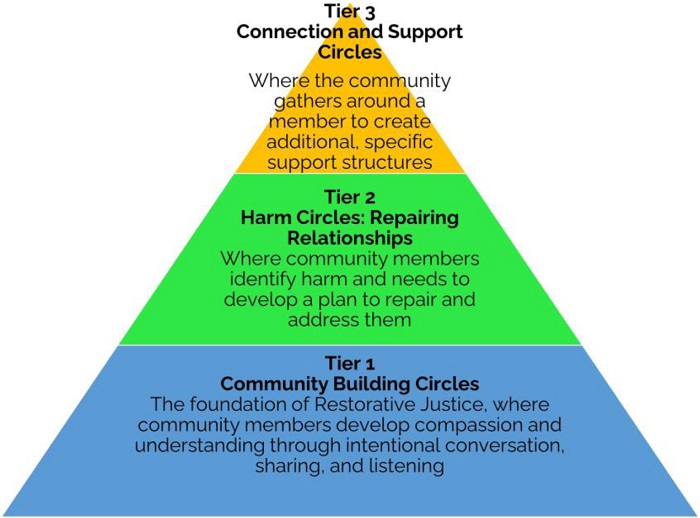
These circles assist communities of all sizes in establishing structure by developing community agreements and establishing community ideals, building relationships via guided and focused debate, and reinforcing the sense of mutual consequence inherent in community. While all community circles have the same basic form, they are all different.
In cases of people smuggling and refugees, such as in Australia, the involvement of most local Indonesians is not very significant when it comes to international smuggling syndicates. Most of them are simply victims of the seduction of a wider syndicate by the lure of money for pick-up services for migrants or refugees. Some are poor fishermen and are not members of international smuggling syndicates (Schloenhardt; Martin, 2012). In the context of Rohingya smuggling, the fundamental concepts of restorative justice can be used in various ways. This technique can, for instance, provide space for victims to speak and share their experiences. At the same time, perpetrators can listen and comprehend the impact of their actions through mediation meetings involving all necessary parties. In addition, educating and enlightening fishermen involved in smuggling refugees helps foster a better grasp of the legal repercussions and promotes reasoned accountability.
Involving the community in the restorative justice process also facilitates victim rehabilitation, social assistance, and future prevention of similar offences. In this setting, offenders can be reintegrated into society through rehabilitation and skills training programmes that assist them in adopting a more positive and productive lifestyle. Implementing the fundamental principles of restorative justice in the Rohingya smuggling case aims to achieve holistic justice, restore victims, promote accountability, limit the danger of repeat crimes, and foster social healing.
In situations of Rohingya smuggling, the active engagement of all stakeholders, including victims, criminals, and impacted communities, substantially impacts recovery and justice (Daly, 2002). Some of the ways in which such active participation may influence the rehabilitation and justice process include victim empowerment, recognising the impact and accountability of actors, restoration, reconciliation, and comprehension of the local context. Victims' active participation in the restorative justice process allows them to speak out and share their experiences. It provides a space for victims to gain recognition for their suffering, express their needs, and receive emotional support. This participation empowers victims and allows them to participate actively in their recovery process (Willigenburg, 2018).
Actors' active participation in restorative justice processes allows them to hear first-hand the impact of their actions on victims and communities. By involving perpetrators, they can understand more deeply the harm caused and be held accountable for their actions. This participation can influence actors' understanding and sense of responsibility for the social and emotional impacts they produce (Luzon, 2016). The active participation of affected communities, including fishing and surrounding communities, is essential in recovery and reconciliation. Engaging the community allows them to understand victims' experiences better, express their concerns and views, and participate in finding solutions together. This participation helps build bridges between victims, perpetrators and communities and creates an environment that supports holistic healing and reconciliation (Boehle, 2021).
The active participation of all parties involved allows for a better understanding of the local context and the factors that may influence the smuggling of Rohingyas. It includes an understanding of the social, economic, political and cultural conditions that may influence acts of smuggling and their impacts. By better understanding the context, remedies and justice processes can be more relevant and effective in addressing the issues underlying the case (Clamp, 2012). The active participation of all parties brings diverse perspectives and enriches understanding of the Rohingya smuggling case. It enables holistic healing, reasoned accountability, and reconciliation, strengthening social cohesion in affected communities. With this active participation, efforts towards justice and recovery can run more effectively and sustainably.
3.3 CRIME OF PEOPLE SMUGGLING
People smuggling refers to criminal operations involving the illicit transit, transfer, or crossing of individuals across particular national or regional borders without complying with the applicable laws (Iselin; Adams, 2003). Typically, this pertains to efforts to circumvent or violate immigration laws and travel arrangements established by the concerned country (Blinder, 2015). People smuggling may involve economic migrants, refugees, or victims of human trafficking, among others (Missbach, 2017). The practice is carried out by human smuggling networks, which are typically composed of individuals who financially gain from this illicit activity (Munro, 2011).
People smuggling often involves high risks to victims, such as hazardous travel conditions, sexual exploitation, forced labour or human trafficking. In many cases, victims of people smuggling become vulnerable to human rights violations and violence (Missbach; Crouch, 2013). The international crime of people smuggling is regulated by international agreements, national law, and cooperation between countries to prevent and take action against this activity. Law enforcement's primary goal in people smuggling cases is to protect the rights and safety of victims, punish perpetrators, and prevent these crimes from being committed on a broader scale (Missbach, 2022).
In Indonesia, human trafficking is also a big problem. In Indonesia, the crime of people smuggling is governed by Law No. 6 of 2011 on Immigration, which controls immigration matters, including preventing and prosecuting people smuggling. In addition, Law Number 21 of 2007 on the Eradication of the Criminal Act of Trafficking in Persons has laws addressing the eradication of human trafficking, which includes the crime of people smuggling.
Several factors influence the reality of human smuggling in Indonesia. As an archipelagic nation with a vast maritime region, enormous waters, and extensive boundaries, Indonesia is susceptible to human smuggling. Several factors determine the actuality of the crime of human smuggling in Indonesia. As an archipelagic nation with huge maritime territory, expansive waters, and extensive borders, Indonesia is susceptible to human smuggling (Missbach; Sinanu, 2011). Victims of human smuggling are frequently subjected to sexual exploitation or forced labour. Indonesia can become a hub for human smuggling networks (Munro, 2011). In Indonesia, active people-smuggling networks are comprised of individuals who engage in these illicit acts for financial gain. The limited participation of law enforcement is another factor contributing to people smuggling (Missbach; Palmer, 2020). Several agencies, including the Immigration Agency, the Police, and the Attorney General's Office, are tasked with addressing the criminal act of people smuggling. To prevent and intervene, interagency cooperation and the expansion of law enforcement capabilities are crucial (Marsita, 2021).
Enforcement of the criminal law regarding people smuggling is currently pretty inefficient due to the lack of a specific law governing it; instead, it is based solely on Immigration Law. Efforts must be made to improve it through penal and non-penal means, with penal means including the addition of special minimum and maximum sanction norms against people smugglers. Through law enforcement operations, strict border restrictions, enhanced international collaboration, and public awareness campaigns, the Indonesian government has taken steps to improve the handling and prevention of illegal human trafficking. In Indonesia, handling cases involving people smuggling is still hindered by reasons such as limited resources, corruption, and the complexity of the cases.
4 DISCUSSION
4.1 THE ALTERNATIVE APPROACH OF RESTORATIVE JUSTICE IN CASES OF SMUGGLING OF ROHINGYAS IN ACEH
An alternative application of restorative justice in cases of smuggling of Rohingyas can be a practical approach for dealing with these cases. Restorative justice offers a different perspective focusing on recovery and reconciliation, not just the punishment of perpetrators (Kury, 2016). Following are some debates regarding using restorative justice in the Rohingya smuggling cases.
Remedies for Victims; A restorative justice approach can pay special attention to recovering victims of people smuggling (Elvaretta et al., 2023). Victims can talk, share their stories, and express their needs through the restorative process. It offers victims a sense of justice and emotional healing and allows them to participate in the decision-making process regarding recovering their losses.
Responsibilities of the Actors; The restorative justice approach pays attention to the responsibilities of the perpetrators in repairing the impact caused by the crime (Bertolesi, 2017). In the case of Rohingya smuggling, the restorative process can involve the offenders in recognising and comprehending the victims' losses. Offenders may be required to participate in reparative acts, including compensating victims, contributing to reintegration programmes, or other actions that help repair the harm their actions caused.
Community Reintegration; Restorative justice also pays attention to the offender's reintegration into society (Rossner; Bruce, 2016). Restorative processes can engage the community in assisting actors with rehabilitation and behaviour modification. By integrating the community, this strategy can facilitate rebuilding damaged connections and lessen the stigmatisation of offenders. Involving a larger community in the victims' healing can also assist in their rehabilitation.
Prevention; In addition to focusing on recovery, the application of restorative justice in cases of smuggling Rohingyas can also have a preventive aspect (Daly, 2002). This method can suggest more effective prevention strategies, such as education and awareness initiatives, boosting regional collaboration, and strengthening refugee protection systems, by considering the root causes and risk factors of people smuggling. It is essential to emphasise, however, that the use of restorative justice in Rohingya smuggling must consider the prevailing legal and political framework. In addition, the commitment and cooperation of numerous stakeholders, including governments, legal institutions, the international community, and civil society organisations, are critical to the achievement of this strategy.
4.2 COMPARATIVE ANALYSIS OF THE JUDGE'S APPROACH IN THE ROHINGYA SMUGGLING CASE IN ACEH
The impact of handling refugee smuggling cases that are decided typically compared to using a restorative justice approach can have significant differences. Here are some impact comparisons between the two approaches:
Focus on Punishment vs Recovery; In conventional treatment, the primary focus is punishing the offender. The purpose of punishing the wrongdoer may involve criminal consequences such as jail or fines (Yeager; Chappelle, 2022). This approach, however, tends to place less emphasis on victim recovery and reconciliation between perpetrators, victims, and affected communities. Restorative justice focuses on victim recovery and restoring the social, emotional, and economic harms incurred (Wenzel; Okimoto; Cameron, 2012). It can help victims in the process of healing and rebuilding their lives.
Victim participation; Typically, the victim's engagement in the legal procedure is restricted to being a witness or receiving court findings. It is possible for victims to feel less engaged and less likely to have a voice (Garbett, 2013). In restorative justice, victims can actively engage in the process and have a part in the decision. It provides awareness and appreciation for the viewpoints and needs of victims and permits them to articulate the personal effect they have encountered.
Offender-Victim-Society Relations; Ordinary treatment divides the offender, the victim, and society. The perpetrator is viewed as a criminal who must be punished, whilst the victim may feel excluded or uninvolved (Armstrong, 2012). Restorative justice aims to improve relationships between offenders, victims, and affected communities. It incorporates open communication, accountability, and reconciliation, which can contribute to rebuilding broken relationships and fostering mutual understanding among all parties.
Prevention and Reintegration; Ordinary treatment typically does not allow for the future prevention of similar offences or the constructive reintegration of the offender into society (Ramya Krishnan, 2017). Prevention is a crucial aspect of the restorative justice strategy. In addition, this strategy considers the reintegration of offenders into society after being held accountable for their misdeeds. It can assist in avoiding recurrence and encourage beneficial behavioural adjustments in the offender.
In the context of smuggling Rohingyas, restorative justice can be applied with several relevant steps and approaches. The first step in implementing restorative justice is to build a restorative process that involves all parties involved in the smuggling of Rohingyas, including perpetrators, victims, victims' families, communities, and other stakeholders. This process must be based on fairness, respect and equity (Augusta-Scott; Harrison; Singer, 2017). In addition, the main focus of the restorative justice approach is the recovery of victims. Victims of smuggling Rohingyas need to be given space to speak and share their experiences. They also need emotional support, trauma recovery, and assistance restoring their lives (Wiratmadinata, 2023).
The perpetrators of Rohingya smuggling must face the repercussions of their conduct. A restorative justice method might involve offenders in processes that allow them to recognise and comprehend the consequences of their acts on victims and society. Offenders must accept responsibility for their acts and may be required to contribute to rehabilitation and reintegration initiatives (Karim, 2017). The restorative process must create space for dialogue and reconciliation between perpetrators, victims and affected communities. It can include supervised meetings where all parties can talk and listen to one another. The goal is to build mutual understanding, reveal the impact of the action, and find solutions together (Boehle, 2021).
In addition, a restorative justice approach must also consider the reintegration of the offender into society in a way that promotes positive change and prevents the recurrence of refugee smuggling. It might involve rehabilitation, education, and training programs to help offenders move on an upbeat track and avoid repeating similar crimes (Dandurand, 2016). Community support and involvement are significant. Communities must understand the principles of restorative justice, the importance of victim recovery, and the need for support for the reintegration of perpetrators. It will help reduce stigma and strengthen recovery and reconciliation (Wood, 2015).
Applying restorative justice in smuggling Rohingyas requires cooperation between the government, legal institutions, civil society organisations and related communities. With this approach, it is hoped that a more just environment can be created, recovery for victims, accountability for perpetrators, reconciliation, and prevention of similar crimes in the future.
4.3 JUDGE'S PERSPECTIVE ON THE ROHINGYA SMUGGLING CASE IN ACEH
Judges' perspectives on Rohingya instances involving human smuggling may differ depending on the case, available evidence, and the judge's interpretation of the law. Nonetheless, in various court decisions involving people smuggling cases, judges may apply a variety of generic perspectives. Judges typically follow the applicable laws, including international laws, rules, and conventions, in cases involving people smuggling. They will evaluate the presented evidence and verify that the legal proceedings adhere to justice and human rights principles. The existence of special minimum sanctions is viewed as requiring further research as to whether they need to be mandatory, as it is difficult for judges to give the fairest possible decision to smugglers, the majority of whom are Indonesian Citizens (WNI) with a relatively low involvement role and who are not the main perpetrators of smuggling, in judicial practise on the field (Missbach; Crouch, 2013).
Judges should pay special attention to protecting victims in cases involving human smuggling. In making an appropriate choice, they can examine victims' vulnerability, rights, and humanitarian interests. The judge may consider the gravity of the crime of people smuggling and the possible risk and suffering of the victims. To discourage such illegal behaviour and safeguard potential future victims, they may be inclined to impose harsh punishments on offenders. The Criminal Code governs disparities in roles and threats of punishment for perpetrators of crimes since, once again, the sentencing process is directly tied to how judges are needed to award the offenders the fairest possible punishment based on their separate responsibilities.
The judge will assess the background of the Rohingya human trafficking case in Indonesia. To reach a fair and accurate conclusion, they can assess evidence, such as perpetrator admissions, recordings, witness testimony, and other evidence. The judge may also consider mitigating considerations, such as the defendant's cooperation with legal authorities, admission of guilt, or personal history, which may influence the sentence.
However, in reality, the confusion of judges in passing a fair verdict on the perpetrators of smuggling refugees, especially residents, is also related to the indecision in regulating refugee smuggling in the Immigration Law, especially regarding the differentiating roles of the parties involved in smuggling (Schloenhardt; Martin, 2012). For example, in June 2021, the Lhoksukon District Court (PN), Lhokseumawe, North Aceh, issued a sentence of 5 years in prison and a fine of Rp. 500,000,000.00 for 1 Rohingya citizen on behalf of Shahad Deen Bin Alm. Ashraf Miya and 3 Acehnese fishermen on behalf of Abdul Aziz Bin M. Yusuf, Faisal Afrizal Bin M. Zaini Bakri, and Afrijal Alias Raja Bin M. Husen. Legally and convincingly, they were determined to have violated Article 120 paragraph (1) of the Indonesian Law Number 6 of 2011 on Immigration by engaging in people smuggling by bringing Rohingyas to the beach of Lancok Village, Syamtalira Bayu District, North Aceh District, in early 2020.
The Banda Aceh High Court raised Shahad Deen's sentence to six years in prison on appeal, while the sentences of three other Acehnese fishermen remained unchanged at five years each. This case demonstrates that the relatively basic arrangement of criminal sanctions in Immigration Law still creates complexity for judges attempting to render a fair decision in cases involving refugee smugglers. In Indonesia, judges' perspectives on cases involving Rohingyas and human smuggling can differ depending on the case's specifics, their knowledge of the law, and their discretion. Therefore, it is essential to examine individual court rulings and judicial opinions in these cases to understand their perspective.
4.4 AN ALTERNATIVE APPLICATION OF RESTORATIVE JUSTICE TO ILLEGAL REFUGEE SMUGGLING OFFENDERS WHO DO NOT COMPREHEND THE LAW
Restorative justice may continue to be applicable in the case of Rohingya smuggling by uninformed fishermen. Even if perpetrators lack a complete understanding of the law, a restorative justice strategy can assist them in comprehending the ramifications of their actions, facilitate reconciliation, and encourage favourable behaviour modification. A restorative justice method can begin by offering legal education and awareness to Rohingya smuggling fishermen. This may involve discussing national and international laws on refugees, the protection of human rights, and the legal ramifications of their conduct. This education seeks to improve comprehension of the pertinent legal background.
To foster understanding and reconciliation is possible to convene mediation sessions between offender fishermen, victims of Rohingyas, and representatives of associated communities. A mediator versed in restorative justice techniques may facilitate these meetings. Mediators can aid in initiating mutually constructive discourse, facilitating the expression of feelings and perspectives, and promoting all parties' efforts toward rehabilitation and reconciliation. It is essential to involve the community in the process of restorative justice. In this instance, fishing communities and communities affected by refugee smuggling must comprehend such conduct's social, economic, and legal ramifications. By incorporating the community, this strategy can alter attitudes and foster social support for victim recovery, perpetrator accountability, and future prevention of similar acts.
In order to prevent a recurrence of refugee smuggling, it is essential to provide support to the fishermen following the restorative process to assist them in transitioning to a positive path and avoiding future violations. It may include rehabilitation programmes, skills training, and alternative employment options suited to their talents. Successful reintegration can also contribute to poverty reduction and economic stability in the community. The use of restorative justice in the context of Rohingya smuggling by uninformed fishermen necessitates a more sensitive approach to their level of legal knowledge. In this sense, education, mediation, and community involvement are crucial for a greater understanding of the law, reconciliation, accountability, and constructive reintegration.
4.5 CHALLENGES AND OBSTACLES IN THE IMPLEMENTATION OF RESTORATIVE JUSTICE
Several challenges and obstacles involve political, security, and international cooperation in implementing restorative justice. Political factors can be a significant challenge in implementing restorative justice. Conflicts of interest, differences in political views, or particular political agendas can affect the willingness and ability of the parties involved to adopt a restorative justice approach (González; Buth, 2019). Political instability, regime change, or lack of political consensus can also hinder resolving cases with a broader restorative approach.
In smuggling Rohingyas, security factors can hinder the implementation of restorative justice (Pali; Maglione, 2023). The existence of smuggling networks, threats to victims, or security tensions in related areas can hinder safe and open access to restorative justice processes (Maley, 2001). The safety of all parties involved must be prioritised to ensure the smooth running of the process.
Settling Rohingya smuggling cases involves complex international cooperation and might involve cooperation with refugee source countries, transit countries, and destination countries (Chavez; Cinco; Drennan, 2015). Challenges in reaching agreement and international coordination can slow down the restorative justice process (Burkemper; Balsam, 2007). In addition, differences in legal systems, immigration policies, and the applicable international legal framework can also become obstacles to achieving holistic justice.
The application of restorative justice requires adequate capacity and resources. Training mediators, facilitators, and experts in restorative justice are necessary to ensure an effective process. However, a lack of adequate capacity and resources at the local, national and international levels can hinder properly implementing a restorative justice approach (Flora, 2019). In this case, the application of restorative justice must also consider the cultural relevance and prevailing values. Existing traditional justice systems, social norms, and community values must be understood and respected for a restorative justice approach to be accepted and effective. This challenge may arise in incorporating restorative justice elements into existing justice systems (Arnaud; Koller, 2017).
Overcoming these challenges and obstacles in implementing restorative justice requires cooperation and commitment from various parties, including governments, legal institutions, civil society organisations, and the international community. Continuous dialogue, diplomacy and collaborative efforts are needed to overcome these obstacles and promote better justice and reconciliation in resolving cases of smuggling of Rohingyas.
5 CONCLUSION AND RECOMMENDATION
5.1 CONCLUSION
In the context of smuggling Rohingyas, applying restorative justice offers a holistic and sustainable approach to dealing with this case. Restorative justice focuses on victim recovery, reintegration of perpetrators, and reconciliation of affected communities. In practice, the active participation of all parties involved, including victims, perpetrators and communities, is crucial to better recovery and justice.
However, the application of restorative justice in the case of smuggling Rohingyas also faces challenges and obstacles. Political, security, and international cooperation factors can affect the smooth running of the restorative justice process. Therefore, efforts are needed to overcome these challenges, such as increasing legal awareness and education, building capacity and cooperation networks, involving local communities, supporting resources and infrastructure, integrating cultural perspectives, and encouraging international cooperation and diplomacy. Through these steps, it is hoped that the application of restorative justice can strengthen the potential for recovery and justice in the smuggling of Rohingyas by ensuring the active participation of all parties, fulfilling the rights of victims, rehabilitation of perpetrators, and ongoing reconciliation.
From the writing above, it can be concluded that in the context of the smuggling of Rohingyas by fishermen who do not understand the law, the application of restorative justice is still possible and relevant. Even if the perpetrator does not understand the law, a restorative justice approach can provide space for understanding, learning, and reconciliation. In these cases, it is essential to recognise that unlawful offenders may require a different approach to restorative justice processes. Legal education efforts and understanding of the consequences of their actions can be carried out as part of the restorative process. The role of a competent and experienced mediator or facilitator is critical to guide and support actors in understanding their responsibilities, recognising the impact of their actions, and finding solutions that can restore and restore damaged relationships.
In this case, the application of restorative justice must also consider the social context, culture and local values. Consideration of fishermen's background, such as knowledge of their culture, customs, and social norms, will help build a better understanding of and participation in restorative justice processes. In this case, the active participation of all parties involved, including victims, perpetrators and affected communities, remains essential. Engaging the fishing community and providing opportunities to share their views, feelings and experiences can strengthen shared understanding, promote empathy and encourage collaboration in achieving holistic restorative justice.
5.2 RECOMMENDATION
The following are some recommendations that can be put forward to overcome challenges and strengthen the potential for implementing restorative justice in cases of smuggling of Rohingyas:
-
raising awareness and understanding of restorative justice and human rights is important. It can be done through legal education programs, public campaigns and training for legal professionals, law enforcers, social workers and the community involved in handling this case. Comprehensive legal education must also include protection against people smuggling and refugee rights;
-
building the capacity of mediators, facilitators and experts in restorative justice is essential. Training related to restorative justice and mediation should be provided to professionals involved in handling these cases. In addition, building regional and international cooperation networks between the countries involved, civil society organisations, and international institutions will strengthen the restorative justice approach in dealing with the smuggling of Rohingyas;
-
the active participation of local communities in the restorative justice process is essential. Holding discussion forums, dialogues, and participatory activities involving fishing and affected communities can help build mutual understanding, resolve conflicts and seek sustainable solutions. Supporting local initiatives to promote reconciliation and reintegration will also strengthen restorative justice processes;
-
ensuring the availability of adequate resources and infrastructure to support the implementation of restorative justice is an important step. It includes strengthening the existing justice system, providing safe and open access for parties involved, and supporting offender rehabilitation and reintegration programs. Appropriate resources from government and international agencies to support restorative justice processes should also be prioritised;
-
the application of restorative justice must consider the cultural perspectives and values of the communities involved. Creating spaces for cultural expression, respecting local traditions, and integrating cultural elements into restorative justice processes will help increase acceptance and active participation by all parties involved;
-
close international cooperation and effective diplomacy are crucial in solving the Rohingya smuggling case. The countries involved must commit to working together in combating people smuggling and providing protection for refugees. Strengthening bilateral and multilateral legal cooperation, information exchange, and coordination in law enforcement will strengthen efforts to implement restorative justice.
Through the implementation of these recommendations, it is hoped that the challenges in implementing restorative justice in the case of smuggling Rohingyas can be overcome, and the potential for holistic recovery and sustainable justice can be increased.
Acknowledgements.
We would like to express our sincere gratitude to all individuals who have contributed to the development and completion of this article. We would like to extend our most profound appreciation to the co-authors and researchers whose works have provided valuable insights and information for the writing process: Laila M. Rasyid and Agustia Rahmi. Their extensive research and scholarly contributions have significantly enriched the content of this article. Additionally, we would like to acknowledge the financial support from Lembaga Penelitian dan Pengabdian kepada Masyarakat (LPPM) - Research Institutions and Community Service of Universitas Malikussaleh. Lastly, we are grateful to our friends and family for their understanding, encouragement, and support throughout this endeavour. Without the contributions and support of all these individuals, the completion of this article would not have been possible. We are sincerely thankful for their involvement and dedication.
REFERENCES
ARMSTRONG, J. R. B. Great expectations: a qualitative examination of restorative justice practices and victim interaction. [S. l.]: University of Chester, 2012.
ARNAUD, A. J.; KOLLER, P. Challenges to Law at the End of the 20th Century: law, justice and culture. [S. l.]: BiblioScout, 2017.
BERTOLESI, L. Victims and responsibility. Restorative justice: a new path for justice towards non-human animals? Relations. Beyond Anthropocentrism, v. 5, n. 2, p. 111-124, 28 Nov. 2017.
BLINDER, S. Imagined Immigration: The Impact of Different Meanings of ‘Immigrants’ in Public Opinion and Policy Debates in Britain. Political Studies, v. 63, n. 1, p. 80-100, 1 Mar. 2015.
BOEHLE, J. Forgiveness, restorative justice and reconciliation in sustainable peacebuilding: contemporary debates and future possibilities. Global Change, Peace & Security, v. 33, n. 2, p. 103-123, 4 May 2021.
BURKEMPER, J. B.; BALSAM, N. Examining the Use of Restorative Justice Practices in Domestic Violence Cases. Saint Louis University Public Law Review, v. 27, n. 1, 2007.
CHAVEZ, P.; CINCO, C.; DRENNAN, D. Restorative Justice: Review of Existing Literature, International Norms and Best Practice. Students Learning with Communities, 1 Jan. 2015.
CLAMP, K. The influence of legal culture, local history and context on restorative justice adoption and integration: the Czech experience. Nottingham Law Journal, p. 107-120, 2012.
COATES, R.; UMBREIT, M.; VOS, B. Restorative justice circles: an exploratory study. Contemporary Justice Review, v. 6, n. 3, p. 265-278, Sept. 2003.
CULLEN, F. T.; WILCOX, P. The Oxford Handbook of Criminological Theory. [S. l.] Oxford University Press, 2015.
CZAIKA, M. A Refugee Burden Index: methodology and its application. Rochester, NY, 7 Nov. 2005. Disponível em: https://papers.ssrn.com/abstract=839233. Acesso em: 3 fev. 2024.
DALY, K. Restorative justice: The real story. Punishment & Society, v. 4, n. 1, p. 55-79, Jan. 2002.
DANDURAND, Y. Alternative Approaches to Preventing Recidivism: Restorative Justice and the Social Reintegration of Offenders. In: KURY, H.; REDO, S.; SHEA, E. (ed.). Women and Children as Victims and Offenders: Background, Prevention, Reintegration: Suggestions for Succeeding Generations. Cham: Springer International Publishing, 2016. v. 2. p. 283-299.
DZUR, A. W.; OLSON, S. M. The Value of Community Participation in Restorative Justice. Journal of Social Philosophy, v. 35, n. 1, p. 91-107, 2004.
ELVARETTA, D. et al. Concepts and Provisions For Recovery Of A Case Through A Justice-Based Restorative Approach By The Prosecutor’s Regulation No. 15 In The Year 2020. Jurnal sosial dan sains, v. 3, n. 1, p. 40-48, 2023.
FLORA, H. Law Enforcement Through The Restorative Justice Approach Reviewed From The Perspective Of Human Rights. In: INTERNATIONAL CONFERENCE ON SCIENCE AND TECHNOLOGY IN ADMINISTRATION AND MANAGEMENT INFORMATION, 1., 2019, Jakarta, Indonesia. Proceedings Indonesia, 2019. Disponível em: https://eudl.eu/doi/10.4108/eai.17-7-2019.2303500. Acesso em: 3 fev. 2024
GARBETT, C. The truth and the trial: victim participation, restorative justice, and the International Criminal Court. Contemporary Justice Review, v. 16, n. 2, p. 193-213, 1 June 2013.
GONZÁLEZ, T.; BUTH, A. J. Restorative justice at the crossroads: politics, power, and language. Contemporary Justice Review, v. 22, n. 3, p. 242-256, 2019.
INTRODUCTION TO RESTORATIVE JUSTICE AT REED - RESTORATIVE JUSTICE - REED COLLEGE. Disponível em: https://www.reed.edu/restorative-justice/introduction-to-restorative-justice-at-reed.html. Acesso em: 3 fev. 2024.
ISELIN, B.; ADAMS, M. Distinguishing between Human Trafficking and People Smuggling. Bangkok: UN Office on Drugs and Crime, Regional Centre for East Asia and the Pacific, 2003.
JACKSON, H.; STRANG, H.; BRAITHWAITE, J. (ed.). Restorative Justice and Civil Society. Current Issues in Criminal Justice, v. 13, n. 2, p. 237-240, 1 Nov. 2001.
KARIM, K. Criminal responsibility of the perpetrators for victims of minor criminal offenses on perspective of restorative justice. Yuridika, 2017.
KRISTIN, D.; DEWI, C. T. I. Tindak Pidana Kejahatan Penyelundupan Manusia (people smuggling) di Indonesia: Tanggug Jawab Indonesia dan Australia. Padjadjaran Journal of International Law, v. 1, n. 1, p. 84-100, 12 Jan. 2017.
KURY, H. Mediation, Restorative Justice and Social Reintegration of Offenders: The Effects of Alternative Sanctions on Punishment. In: KURY, H.; REDO, S.; SHEA, E. (ed.). Women and Children as Victims and Offenders: Background, Prevention, Reintegration: Suggestions for Succeeding Generations. Cham: Springer International Publishing, 2016. p. 249-282. v. 2.
LUZON, G. Restorative justice and normative responsibility. Restorative Justice, v. 4, n. 1, p. 27-40, 2 Jan. 2016.
MAGLIONE, G. Embodied victims: an archaeology of the ‘ideal victim’ of restorative justice. Criminology & Criminal Justice, v. 17, n. 4, p. 401-417, 1 Sept. 2017.
MALAHAYATI, M.; RASYID, L.; ISKANDAR, H. Minimum Protection of Rohingya Refugees (A Moral Approach in Aceh). European Union Digital Library, 19 Mar. 2019. Disponível em: https://eudl.eu/doi/10.4108/eai.5-9-2018.2280979. Acesso em: 3 fev. 2024
MALEY, W. Security, People-Smuggling, and Australia’s New Afghan Refugees. Australian Journal of International Affairs, v. 55, n. 3, p. 351-370, 1 Nov. 2001.
MARSITA, S. Kebijakan hukum pidana terhadap penyeludupan manusia (people smuggling). [S. l.] Magister Ilmu Hukum, 2021.
MISSBACH, A. Facets of Hospitality: Rohingya Refugees’ Temporary Stay in Aceh. Indonesia, v. 104, n. 1, p. 41-64, 2017.
MISSBACH, A. Introduction. In: MISSBACH, A. The Criminalisation of People Smuggling in Indonesia and Australia. [S. l.]: Routledge, 2022.
MISSBACH, A.; CROUCH, M. The Criminalisation of People Smuggling: the Dynamics of Judicial Discretion in Indonesia. Rochester, NY, 18 Dec. 2013. Disponível em: https://papers.ssrn.com/abstract=2369118. Acesso em: 3 fev. 2024.
MISSBACH, A.; HOFFSTAEDTER, G. When Transit States Pursue Their Own Agenda: Malaysian and Indonesian Responses to Australia’s Migration and Border Policies. Migration and Society, v. 3, n. 1, p. 64-79, 1 jun. 2020.
MISSBACH, A.; PALMER, W. People smuggling by a different name: Australia’s ‘turnbacks’ of asylum seekers to Indonesia. Australian Journal of International Affairs, v. 74, n. 2, p. 185-206, 3 Mar. 2020.
MISSBACH, A.; SINANU, F. “The Scum of the Earth”? Foreign People Smugglers and Their Local Counterparts in Indonesia. Journal of Current Southeast Asian Affairs, v. 30, n. 4, p. 57-87, 1 Dec. 2011.
MUNRO, P. People smuggling and the resilience of criminal networks in Indonesia. Journal of Policing, Intelligence and Counter Terrorism, v. 6, n. 1, p. 40-50, 1 Apr. 2011.
PALI, B.; MAGLIONE, G. Discursive representations of restorative justice in international policies. European Journal of Criminology, v. 20, n. 2, p. 507-527, 1 Mar. 2023.
RAMYA KRISHNAN, V. An Insight into the Importance of Restorative Justice and the Rights of Offenders: An Analysis of Issues of Convergence and Divergence. In: THILAGARAJ, R.; LIU, J. (ed.). Restorative Justice in India: traditional practice and contemporary applications. Springer Series on Asian Criminology and Criminal Justice Research. Cham: Springer International Publishing, 2017. p. 143-149.
ROSSNER, M.; BRUCE, J. Community Participation in Restorative Justice: Rituals, Reintegration, and Quasi-Professionalization. Victims & Offenders, v. 11, n. 1, p. 107-125, 2 Jan. 2016.
SCHLOENHARDT, A.; MARTIN, C. Prosecution and Punishment of People Smugglers in Australia 2008-2011. Federal Law Review, v. 40, n. 1, p. 111-140, 1 Mar. 2012.
AUGUSTA-SCOTT, T.; HARRISON, P.; SINGER, V. Creating Safety, Respect, and Equality for Women: Lessons from the Intimate Partner Violence and Restorative Justice Movements. In: AUGUSTA-SCOTT, T.; SCOTT, K.; TUTTY, L. M. Innovations in Interventions to Address Intimate Partner Violence. [S. l.]: Routledge, 2017.
SIREGAR, A. A. I.; SUSILA, M. E.; FIRMANSYAH, I. Keadilan Restoratif sebagai Upaya Penguatan Sistem Penegakan Hukum Terhadap Pelaku Penyelundupan Pengungsi. Jurnal Hukum IUS QUIA IUSTUM, v. 29, n. 3, p. 567-590, 2022.
TAKDIR, S. N. Ancaman keamanan maritim Indonesia: studi kasus penyelundupan manusia di pulau bengkaliS (Indonesia-Malaysia). Jurnal Hukum, Politik Dan Ilmu Sosial, v. 1, n. 4, p. 129-138, 21 Nov. 2022.
WENZEL, M.; OKIMOTO, T. G.; CAMERON, K. Do Retributive and Restorative Justice Processes Address Different Symbolic Concerns? Critical Criminology, v. 20, n. 1, p. 25-44, 1 Mar. 2012.
WILLIGENBURG, T. Restorative justice as empowerment: how to better serve the goals of punitive retribution. The International Journal of Restorative Justice, v. 1, n. 2, p. 274-290, 2018.
WIRATMADINATA, W. Kontekstualisasi Pancasila Dalam Penguatan Perdamaian di Aceh. Jurnal Hukum Samudra Keadilan, v. 18, n. 1, p. 68-79, 11 Mar. 2023.
WOOD, W. R. Soliciting Community Involvement and Support for Restorative Justice Through Community Service. Criminal Justice Policy Review, v. 26, n. 2, p. 131-155, 1 Mar. 2015.
YEAGER, M. G.; CHAPPELLE, M. Restorative justice: the feasibility of alternative models of justice. Contemporary Justice Review, v. 25, n. 1, p. 122-140, 2 Jan. 2022.
ZEHR, H. Changing Lenses: restorative justice for our times. USA: Herald Press, 2015.
Autor notes