SUR-SUR
Statistics of Engagement Resources and Effective Recognition of African American Woman’s Identity: “In the Blood” by Suzan Lori Parks
Estadísticas de recursos de participación y reconocimiento efectivo de la identidad de la mujer afroamericana: “In the Blood” por Suzan Lori Parks
Statistics of Engagement Resources and Effective Recognition of African American Woman’s Identity: “In the Blood” by Suzan Lori Parks
RELIGACIÓN. Revista de Ciencias Sociales y Humanidades, vol. 4, núm. 16, pp. 357-367, 2019
Centro de Investigaciones en Ciencias Sociales y Humanidades

Esta obra está bajo una Licencia Creative Commons Atribución-NoComercial-SinDerivar 4.0 Internacional.
Recepción: 07 Enero 2019
Aprobación: 10 Mayo 2019
Abstract: So as to accomplish the objectives of moral judgement and social commentary pursued in her play as well as to deliver a complete picture of African American woman oppression. Suzan Lori Parks evaluates and describes various aspects of her protagonist ‘Hester’ as well as other characters’ qualifications: moral traits, intellectual qualities, and social attitudes in her play “In the Blood” (1999). The playwright aims to construct a society of shared ethics and participated in values with her audiences/readers. Parks perfectly adopts different opinions and points of view as sources of evaluation. This paper proposes an analysis of the whole corpus of “In the Blood” and particularly focusing on the theme of ‘woman oppression’, to construe the major female character, Hester as well as the most important characters who impact to form her disturbing identity. This paper aims to figure out the reason behind audiences’/readers’ compliment and applaud with that play in general and the theme of oppression in specific. That can be achieved by addressing the dialogic dimension with a big focus on the propositions of Engagement, the category of Appraisal Framework by which the characters in the play express their commitments and willingness to open up and welcome the negotiation space to other opinions and voices. This paper has concluded that the heteroglossic propositions have exceeded the monoglossic resources in order to engage the characters and positions themselves in relation to other viewpoints and opinions from the audiences/readers which helps to convey the playwright’s moral message skillfully and effectively.
Keywords: The woman oppression, Appraisal analysis, Engagement, Parks, Contraction.
Resumen: Con el fin de lograr los objetivos del juicio moral y los comentarios sociales perseguidos en su obra, así como ofrecer una imagen completa de la opresión de las mujeres afroamericanas. Suzan Lori Parks evalúa y describe varios aspectos de su protagonista “Hester”, así como las calificaciones de otros personajes: rasgos morales, cualidades intelectuales y actitudes sociales en su obra “In the Blood” (1999). El dramaturgo tiene como objetivo construir una sociedad de ética compartida y participar en valores con sus audiencias/lectores. Parks adopta perfectamente diferentes opiniones y puntos de vista como fuentes de evaluación. Este artículo propone un análisis de todo el corpus de “In the Blood” y se centra particularmente en el tema de “opresión de la mujer”, para interpretar al personaje femenino principal, Hester, así como a los personajes más importantes que impactan para formar su identidad inquietante. Este documento tiene como objetivo descubrir la razón detrás del cumplido del público/lectores y aplaudir esa jugada en general y el tema de la opresión en particular. Eso se puede lograr abordando la dimensión dialógica con un gran enfoque en las propuestas de Engagement, la categoría del Marco de evaluación mediante el cual los personajes de la obra expresan sus compromisos y su voluntad de abrir y dar la bienvenida al espacio de negociación a otras opiniones y voces. Este documento ha concluido que las proposiciones heteroglosicas han excedido los recursos monoglosicos para involucrar a los personajes y posicionarse en relación con otros puntos de vista y opiniones del público/lectores, lo que ayuda a transmitir el mensaje moral del dramaturgo con habilidad y eficacia.
Palabras clave: La opresión de la mujer, Análisis de evaluación, Compromiso, Parques, Contracción.
1. Introduction
Despite the huge strides in the area of granting African American people and particularly black women in the United States of America their natural rights since the elimination of slavery. Gender, race, and class-based discriminatory applications are still predominant (Ghani & Joodi, 2015). The painful and tragic experiences of black people in the United States led them to struggle and strive so as to construct a particular status of their own. At the middle of the twentieth century and the decades after, African Americans were questing their identity as well as their culture with the assistance of political and social movements, such as the Civil Rights Movements, the Black Arts Movements, and etc. (Alsanafi & Mohd Noor, 2018a). Black Americans’ statuses and identities under the influence of two diverse and in many situations contrasting cultures were established. They did not normally possess a comprehensive sense of integration, assimilation, or belonging into either culture. Therefore, African American people were completely in fixed endeavours to retrieve their black African past alongside their American upbringing. That case was highly discussed and stated by Dubois; (famous American sociologist); indicated to what he called double consciousness that means a person has two identities simultaneously (Nowrouzi &Faghfori,2015).
In order to suit other aspects of life concerning the blacks struggle to gain their identities, the field of literature has witnessed many writers, playwrights, poets, and novelists from both sexes. They have requested to liberate African American people to have their complete rights as normal human beings within the scope of their literary works. Numerous of African American playwrights such as Suzan Lori Parks who has dedicated her literary work to re- quest the complete freedom and unconditional rights of African American people in general and black women in particular. Many literary writers have considered woman as a symbol of salvation all the black Americans (Diyaiy & Saleh, 2013). Throughout the Postmodern literary era, the theme of black Americans’ quest for identity has developed to become a much-discussed idea in the wake of World War II and the disastrous impacts that followed. There were outstanding playwrights who tacked that concept courageously such as Hansberry, Kennedy, Shange, and Parks. In particular, Suzan Lori Parks, the African American playwright that this paper is proposed her play to be discussed, has practically described the oppression and agony of black woman within her community. Parks has a strong belief that drama may have an essential impact and important development in the life of African American people. So, she has selected the effective weapon of creative strive (Borrego 2015).
The present paper attempts to figure out linguistically how does Suzan Lori Parks deliver her play and in particular the theme of black woman’s oppression successfully and masterfully to the audiences/readers. This literary work was highly received, acclaimed, and applauded by black audiences/readers (Hadia, 2012; Ghasemi, 2016a). Park’s “In the Blood” illustrates how the African American woman can be subjugated economically, socially, and sexually in highly patriarch society and how could the black American female gain her self-esteem in the United States of America (Ghasemi, 2016b). The importance of this study is derived from the extended topic of motherhood and womanhood in all the fields of life. The issue of black women identity is relevant to various fields that exploring the impact of gender in other domains. The purpose of this article is to explore linguistically who could the playwright align his characters in relations to other voices and viewpoints from the audiences/readers so as to deliver his moral messages masterfully and brilliantly.
This paper aims to investigate the main theme in this play which is the oppression of African American woman so as to obtain a truthful insight into the evaluative discourse of black woman in the play as well as the other charac- ters who interact with her to impact the formation of her identity with regard to their linguistic resources in their speaking. The considerable issue of the African people who live in the United States is that the Americans with European ancestors and race were valued more than the Americans with African Ancestors and race and that can drive to ethnic hostility and generate a diverse community in the same country (Bell, 2015). While the practical problem of this paper is higher than the class limit, African American women were facing another problem as being a woman in a high patriarch society. In that way the black woman was double oppressed and victimized and due to her gender and race too (Das, 2012).
The current paper utilizes Martin and White (2005) Engagement category, one of the Appraisal Theory Frame- work. The scholars use this framework to figure out the linguistic propositions and other conventional elements that are confirmed the structures of that literary work which enabled the characters to convey their message as well as aligning themselves with putative readers/audiences. The characters’ main intent in “In the blood” is to share the black audiences with the oppression and agony of African American woman in America. For that reason and others, Suzan Lori Parks has adopted many linguistic elements within character’ discourse to help her to get that end (O’Gorman, 2015).
The following paper is intended to have the following objectives as the extent of this study:
- 1.
1. To discover that the Heterogloosic propositions have exceeded the Monoglossic propositions that enabled the characters to align themselves in relation to other views and opinions from the audiences/readers.
2. Display that Contraction is more than Expansion within the Heteroglossic scope, that the characters do not completely welcome and open the diverse views and opinions from the audiences/readers.
This paper consists of six sections, involving the present one. The first section provides a background of the study including a general overview of black oppression, problem statement, research objectives, and significance of this paper. The second section is dedicated to pointing out research questions that required to be replied later on within the discussion part. Third part or section in this paper is to provide a short summary concerning the main plot and theme that the playwright aims to deliver to her audiences/readers. The fourth part is to review the suitable studies that are extremely connected to black woman struggle and the reasons that other scholars have suggested to justify the highly connected relationship between this play and its audiences/readers. The fifth section is indicated to discuss the appropriate methodology that is relevant for this study and the datasets that intended to be examined in this paper. The last section is devoted to exploring the discussions and conclusion by which includes answering the research questions.
2. Research Question
-
• What are the linguistic resources that Parks has adopted in her play to deliver the theme of woman’s oppression masterfully and skillfully?
• In what ways does the playwright portray characters’ language use for engaging with different voices and views to instruct black audiences/readers.
3. A Brief Plot Review
“In the Blood” by Suzan Lori Parks was first performed in 1999 in New York at the Joseph Public Theatre and was strongly nominated for the Pulitzer Prize (Hadia, 2012). This play was a tragedy by form and content, set in a slum neighbourhood, someplace in America. All the play details revolved around black woman protagonist; Hester La Negrita, an impoverished and oppressed woman supported by some social organizations with her five fatherless children (O’Gorman, 2015). From the early start of the play, Hester’s community condemned and rejected her and considered her as a deviant. The playwright for this play has selected the figure of Hester to indicate the bad description and stereotype of all African American women. Black woman in America faced horrible misery from the social, political, and religious systems by which they were victims of financial and sexual persecutions. The playwright depicted Hester as a homeless black woman with her children that she lived under the bridge, and that suggested great dangers for any woman in the world. It is normally, in any case like her, she might search for assistance and protection from people, institutions, and governmental individuals whose duties were to support and alleviate her miserable life. Regrettably, these institutions were the major factors in exploiting, aggravating, and harassing this woman (Ghani & Joodi, 2015).
The play displays the methods by which the characters were challenging audiences to provoke the theme of woman’s issue with identity within the scope of the United States. In specific, by showing the figure of Hester as a poor African American woman, the playwright aimed to examine the plight of underprivileged black American people (O’Gorman, 2015). From the opening moments of the drama, Hester searches cultural and social assimilation through her duty as a mother of five children but she was rejected because of her failure to construct normal family and motherhood within the borders of a marriage system (O’Gorman, 2014). This play is characterized by certain aspects which attracted the audience’s attention because its main theme focuses upon the social ills of hypocrisy, sexual harassment, violence, and discrimination by which all the audiences are victims of these harsh aspects (Hadia, 2012). Besides the figure of the protagonist; Hester, Park’s play shows certain characters which are the symbol of institutionalized religious and social funding for the poor Hester, such as Amiga, Doctor, Welfare, Reverend D, and Chilli, but they were not supporting her at all. Unfortunately, those people make use their statuses to exploit Hester sexually and economically and they make her feel the race variation more clearly as well as increase Hester’s ostracized and finally, involve in her collapse. For that reason and others, the playwright asserts the importance of reshaping African American identities through examining predominant ideologies and metanarratives by destroying the perpetuating racism (Ghasemi, 2016b).
4. Literature Review
The current part in this paper is very substantial for each study because its major concern is to gather related materials, indicates gaps or weaknesses of other scholars’ works. All the collected materials have 1999 Suzan Lori Park’s ‘In the Blood’ is their data, as well as their main concern, were to highlight the oppression of African American woman and the proposed reasons to consider this literary work as well-received by many audiences and readers. The researchers began the query with the assistance of the three important research engines (Web of Science, Science Direct, and IEEE Explore). Because of the importance of this play and its effective theme and plot, the researchers discovered hundreds of research papers as well as scholars’ theses have been written to examine this literary piece. The researchers later made so many filtering procedures to focus only on the papers that concentrate upon the issue of African American woman’s identity. The study focuses also on the scholars’ suggestions to indicate the main factors that enabled the playwright to convey her message masterfully and skilfully to the audiences/readers for the last seven years and disregard the other papers in order to begin when the other scholars end. The researchers established a table 1 for the related studies with chronological order to indicate the gap in the present paper.
| N | Author & year | Theory/ technique | Gap | Reason for audiences’ Engagement | Method | Strengths & weaknesses |
| 1 | (Keene, 2012) | Critical pedagogy (Black feminist approach) | This play is a feminist text. | It concerns with black woman’s issues | Quali. | St. Proves that this text may help to elevate the critical consciousness of African American women. We.The thesis restricts the study as a feminist work written for a black woman only and neglects others. |
| 2 | (Hadia, 2012) | Stage technique. How could the writer occupy her audiences. | Hester is only one who derives her bad destiny | Admire with a courageous black woman. Symbol of freedom | Quali. | St.Conclude that Park’s play moves from the individual to the collective identity.We.In the end the, researcher presents the protagonist as a complete crashed person who is responsible for her fate and neglect the impact of others. |
| 3 | (O’ Gorman, 2014) | heterosexual matrix, Butlerian theory | Bodies and, genders are most concerned themes. | Attracted because of subversive images | Quali. | St. Presents the impacts of social and religious people upon her identity of a poor black woman. We.This article discusses in short and not enough about Hester because the paper covers 3 plays. |
| 4 | (O’ Gorman, 2015) | Narrative approach | Impact of the economy to destroy a black woman | Adopting black vernacular (Rep, Rev) | Quali. | St. Draw a perfect comparative study to prove the effectiveness of the economic aspects upon a black woman. We.Neglect the class and gender aspects and their impacts to suppress black woman in the USA. |
| 5 | (Ghani & Joodi, 2015) | Gender-based discrimination | Race & gender is the main reason for her disaster | Sexual scenes and confessions | Quali. | St.This study shares the current paper the same problems of the black woman which are race, class, & gender. We. The analysis pays more attention to exterior factors outside the text setting. |
| 6 | (Ghasemi (1), 2016) | Feminist Theory | This literary work and others are feminist texts. | Trace back the real history of black people | Quali. | St. Proves that this work is dedicated to present the agony of African American woman with identity. We.Concentrate on the gender aspect and consider it as the main reason for woman’s oppression and neglect others. |
| 7 | (Ghasemi (2), 2016) | Postcolonial theory | This play is a result of the postmodern era | Anti- discrimination | Quali. | St.Proves that this work is dedicated to present the agony of African American woman with an identity We.The study neglects other aspects that the play focuses on and centres on woman identity struggle only. |
| 8 | (Mhayyal & Saleh, 2016) | Black Feminist Theory | Black woman is double victimized. | Historical events. | Quali. | St. proves that a black woman is double marinized because of her race and gender. We. The paper concentrates on the social aspect only and consider it as the only reason for Hester’s bad destiny. |
| 9 | (Anada, 2016) | Theory of Hybridity | Contradictory phases of the world Parks exposes | The presence of the chorus | Quali. | St. adopting black experiences into play and clarify a distinguishing trait of her style. We.The study considers the only success that this work achieve is because of the chronicle record of history. |
| 10 | (Okamoto, 2017) | Narrative theory | Comparative study | Records of historical events | Quali. | St. proves that all the chorus are a mirror to reflect the real life of African American people. We. Much concern about black people and neglect black woman which is the centre. |
| 11 | My current paper | Appraisal theory, Attitude | Utilizing Appraisal Theory to analyse this text. | Linguistic components | Quanti | St. depends on the written text and count words statistically to figure out if the characters have positioned themselves in relation to other voices. We. It is better to adopt the three Appraisal tools in order to indicate the real oppression of a black woman. |
The obtained outcomes from the previous related studies in Table 1 are summarized as follows:
-
• All the prior related papers have qualitative research method; this paper is adopting quantitative method research.
• The preceding studies have applied particular literary theories to be their main frameworks to construe their datasets, while this paper is adopting Martin and White (2005) Appraisal Theory.
• All the previous scholars confirmed that Suzan Lori Park’s play “In the Blood” is a successful literary work and the playwright has brilliantly used her instruments; (characters), to deliver her moral judgement and social commentary to her audiences/readers. They suggested some justifications and reasons for that relationship, and none of them has mentioned that the playwright has utilized certain linguistic propositions within the characters’ discourses. These resources have enabled the characters to position themselves in relation to other voices and viewpoints from the audiences. These linguistics resources are broadly called ‘Heteroglossia’, which is a part of Engagement category, the tool that the researchers are going to adopt to analyse this act of communication; (play).
5. Methodology
The essential design for the whole analysing data for this study is a quantitative research method. This conceptual full research article is highly descriptive and interpretive as it explores characters’ discourses that contain beliefs, ideologies, and messages conveyed by the medium of communication; (language), to society and audiences. The study emphases to construe the discourses inside the text and particularly that revolve around Hester; non-traditional African American woman, her friends, and family members to discover how could the playwright manipulate characters’ language which assisted them to align themselves in relation to other viewpoints and opinions from the audiences/readers. In other words, this study aims to figure out the procedures that the playwright has adopted to make his work and particularly the theme of the black woman’s identity highly received and applauded by audiences. The researchers are going to examine characters’ speeches when they delivered the theme of ‘black woman’s identity struggle’ in the scope of this literary work. The substantial instrument to analyse the data set is ‘Engagement’ one of the important categories of the Appraisal Theory to collect in-depth interpretation, and eventually deliver explanation and understanding to the text. Martin and White (2005) Appraisal Theory has been utilized by many researchers to analyse their literary work, and those researchers have acclaimed and requested other scholars to use this tool within their literary works. Some of the previous literary studies which used this framework in their data are (Peng, 2008; Hadidi & Mohammadbagheri-Parvin, 2015; Alsina, Espunya & Naro, 2017; Dong & Lin, 2018, Alsanafi & Mohd Noor, 2018b).
Appraisal is highly connected to evaluation, or the kinds of stances, attitudes, and feelings that any written or spoken text may express. This framework is a recent growth of M.A.K Halliday Systemic Functional Linguistics (Mohd Noor, 2015). Martin and White, the founders of that theory define it as “the subjective presence of writers/speakers in texts as they adopt stances towards both the material they present and those with whom they communicate” (Martin & White 2005, p.14). This theory provides certain instruments to analyse speakers/ writers’ expressions so as to convey their interpersonal meanings. The Appraisal is split into three major categories: Attitude; (the assessment of persons, things, and actions), Engagement; (the position of the writer/speaker in relation to the reader/hearer in any content given), and the last category is Graduation; (is totally dependent on the other prior two categories, Engagement and Attitude (Alsanafi & Mohd Noor, 2018b). This full research paper is utilized the Engagement category as the only instrument to analyse the data sets.
Engagement is “directed towards identifying the particular dialogic positioning associated with given meanings and towards describing what is at stake when one meaning rather than another is employed” (Martin & White, 2005, p. 97). This important subcategory of Appraisal Framework is connected to the technique that speakers\ writers; (characters in my case study), practise certain linguistic propositions to assume specific stances towards values and towards the audience/readers (Bock, 2007). Furthermore, this category enables speaker or writers to recognize and indicate how they expect their readers/audiences to react to the propositions and values they express. By regarding “In the Blood” as an act of communication, the attention is on how could the playwright searches to align/engage his audiences/readers even if they are disconnected by time and space. The paper has proposed and expected from the early beginning that the playwright has engaged and positioned her tools; (characters), with her audiences/readers in order to convey the message of ‘black woman’s oppression’ properly. The essential relationship between the speaker/writer and the putative listener/reader in constructing and writing texts must be recognized by the author on which spoken or written discourse is applied.
Any spoken or written utterances are divided into two main orientations: The primary type is termed monoglossic (undialogised) utterances such as when we say;
Worms are cold-blooded creatures.
The following utterance or statement is highly considered monoglossic by which writers/speakers state without any acknowledgement or potential opinions are being stated. Writers/speaker’ values or opinions need not be supported in this kind of utterances (Helander,2014). Furthermore, the statement attached above is attributed to no single person or group in particular but acted on specific assertions which are assumed to be self-evident. Li, Lui and Yi (2015) stated that instances of that type of orientation or engagement must suggest the subjectivity of the writer/speaker and his/her tendency towards possible reactions as well as interpersonal meanings. The other main kind of Engagement is named heteroglossic; (dialogized), when utterance opens up or allows for other opinions and viewpoints so as to make certain connection and relationship between the writer/speaker and his/her readers/ audiences (Read & Carroll, 2012). Such as, when we say;
Biologists said Worms are cold-blooded creatures.
The following statement is under heteroglossic orientation, by which writer/speaker indicates external sources; (i.e. Biologists) to assist his assumption. In this case, we can recognize the variation of this utterance from the first one by which the writers/speakers do not make any reference to external resources. Heteroglossic propositions are highly split into two essential subcategories: ‘Expansion’ and ‘Contraction’ (Martin & White, 2005).
(1) Expansion: The first portion of heteroglossia which is emphasized the non-uniqueness of expressions and assumptions by quoting other viewpoints and attitudes objectively to spread the dialogue scope (Ruo-mei, 2016). In this category, the speaker; (play’s characters), acknowledge other attitudes and opinions from the putative audiences. Expansion is also subdivided into two kinds.
(A) Attribution, where the character indicates “some external source” (Martin & White, 2005, p. 111). The linguistics resources related to this type of utterances enable the characters in the play to welcome and open up for many diverse opinions from the audiences (Amornrattanasirichok & Jaroongkhongdach, 2017).
(B) Entertain, by which the character indicates a particular degree of modesty and caution in his/her descriptive formulations. One of the most important characteristics of this kind of heteroglossia resources is relied on particular external opinions and dialogic alternatives that permit writers; (the character in the play), to continue as being apart from the audiences to convince them and deliver the message properly (Alsina, Espunya, & Naro, 2017).
(2) Contraction: The second portion of heteroglossia which is highlighted certain utterances which do not permit other opinions and viewpoints from the audiences to query the speakers/characters’ statements (Helander,2014).Contraction is also subdivided into two kinds.
(A) Proclaim, resources help the character to repress any possible opinions to make her/himself in contradiction of them “by representing the proposition as highly warrantable (compelling, valid, plausible, well-bounded, generally agreed, reliable, etc.)” (Martin & White, 2005, p. 97). This system involves Concur, Pronounce, and Endorse propositions.
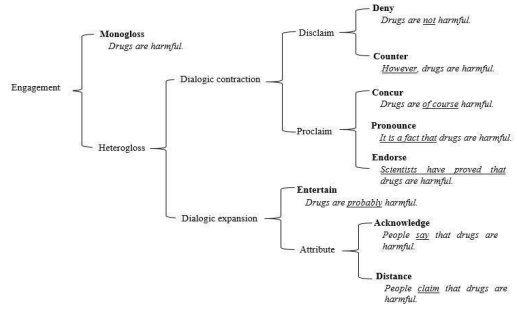
Figure 1. The Category of Engagement (Adapted from Martin and White, 2005)
(B) Disclaim, by which the character sets himself/herself to deny and refuse some contrary or odd viewpoints (Martin & White, 2005). This system contains Deny and Counter propositions. All the engagement subcategories provided with some examples are shown below in figure 1.
6. Discussion and Conclusion
The results of the analysing the data sets with appropriate discussions would be presented here, in this section. It is practically recognized that any written/spoken text is regarded as being a site of communication between audiences and writers. Suzan Lori Parks as a selected writer for this paper establishes solidarity and alignment with the potential audiences throughout her literary text as one of the most important characteristics that any written text must have (Liu, 2013). Added to what we have discussed earlier in this study. Engagement explores the resources of writers’ attitudes. Many speakers/writers have different perspectives and numerous viewpoints, so Engagement as an essential category of Appraisal Theory negotiates the ways of communication and interaction between the writers/speakers and putative audiences (Li, Lui & Yi, 2015). The data sets which are analysed in this study are highly connected to the discourses of the play’s protagonist Hester and other characters who influenced to construct her disturbing identity. The analysis process intends to discover how do Hester as well as other characters in the play impact the audiences’ viewpoints and opinions by showing concepts implicitly. The section aims to make a deeper linguistic understanding of the nature of that kind of play. The quantitative parts of each step of the analysis process are followed by certain statements from the play (Parks, 2000) so as to compare any differences and similarities in the propositions used in the whole play.

Table 2. Classification of Engagement subsystems in the whole corpus.
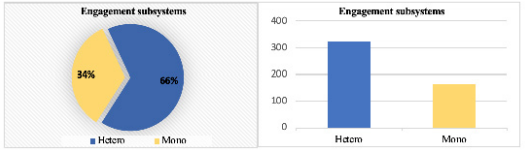
Figure 2. Classification of engagement Figure 3. Hetero and Mono resources
Table 2 presents out the results of the analysis process regarding Parks’ “In the Blood”, that the playwright’s characters utilized more heteroglossic propositions; (almost 66%), than monoglossic propositions; (only 34%), in the whole corpus. The big margin that distinguishes the two Engagement resources; (Monoglossia, Heteroglossia), in the data sets reflects the characteristics, the quality of this literary work, and the circumstances that assisted the playwright to conduct this descriptive text. Suzan Lori Parks in this play expects to create critical opinions by establishing a suitable reference by illustrating the characters’ attitudes about black American woman identity in the work. Liu (2014) argued that any written or spoken text is extremely valued and realized very effective when the heteroglossic propositions exceed monoglossic ones. One of the most important American playwrights is Suzan Lori Parks in a contemporary drama for being occasionally innovative and argumentative. Parks with the assistance of other African American writers have a big impact on American literature and culture. She has written this text as an opposing to the mainstream and dominant culture that denigrates black American women and regards them as being mindless, crude, and expendable (Mhayyal & Saleh, 2016).
The higher percentages of the heteroglossic propositions suggested that all the characters in the play have positioned themselves in relation to other viewpoints and opinions from the audiences. Parks’ play “In the Blood”, recalls the legitimacy of bad stereotypes and negative portrays of African Americans into an interrogation. The playwright aims to abolish that bad stereotypes of a black woman and the predominant ideologies, which have been utilized to prevent them to gain their human rights. It is crystal clear that the play has emphasized the problems of identities for African American people and woman in specific (Ghasemi, 2016b). No way to achieve that end unless she needed to open and welcome audiences’ viewpoints because those people were the vital evidence to what actually happened to black people in the USA. Furthermore, the playwright in this play has utilized the ‘confession’ technique in some scenes, in order to prove that all the characters in the text have confessed their hypocrisy, sexual assault, and, duplicity towards Hester in their confessions. Adopting that technique has the influence to attract audiences’ attention and make them very intimate with the characters’ admissions and how do they recognize Hester’s actions as eccentric (O’Gorman, 2015). As we have expected earlier that all the characters in the work have positioned themselves in relation to diverse viewpoints by opening up rather than rejecting the other voices as illustrated in the statements below taken from the play (Parks, 2000).
-
• “Maybe we should all take in just one. Except they wouldn’t really fit. They wouldn’t really fit in with us. There’s such a gulf between us”. (Ent, Den, Pron), (p. 26) Hetero
• “Look at her! Who does she think. she is the animal? No skills cept one can’t read cant write. She married? What do you think? She oughta be married. she aint married.” Hetero (p. 68) (Den, Ent)
Statement number (1) is stated by the Doctor; (a biological father of one of the protagonist’s child). Linguistically, Doctor’s speech holds heteroglossic standards, the part that gets 66% of Engagement resources in the whole corpus according to the table VI.1. His discourse represents the class discrimination between him as being a doctor and Hester, that they should not be together because of her race as if she was welcomed in his house at certain times to please his animalistic sexual desire. Furthermore, to go further within the heteroglossic values of the statement attached, the analysis process also presents that this extract involves both expansion and contraction subsystems. The Doctor in the initial portion of the discourse welcomes the possibility of various opinions and viewpoints by utilizing the auxiliaries (maybe, should). While in the final portion he rejects the possibility of other various voices and opinions from audiences by utilizing, (wouldn’t, really), in his discourse to refuse or at least to counter all the voices and utterances regarding Hester status and identity. Statement number (2) is stated by the chorus; (all the play’s characters), all of them have appraised Hester negatively. Their discourse is holding heteroglossic values too and has both expansions and contractions standards with noticeable exceeding of contraction propositions in the whole discourse. The result may suggest that they close down all the potentiality of other viewpoints when they say “No skills cept one can’t read cant write” from putative audiences/readers. The statement intends to instruct black audiences and tells them that education is very important to elevate their status and gives them vital prove. Hester’s illiteracy has marginalized her and was the main reason for her disturbing identity (Mhayyal & Saleh, 2016).
“This falls been cold. The wind under the bridge is colder than the wind on the streets.” Mono (p.23)
Concerning the second portion of Engagement resources which is called monoglossia. Table 2 displays that this portion has covered only 34% of all extracts in the play. One of the most important characteristics of this type of Engagement is that it rejects dialogic space for any various viewpoints from the audiences that express the writer’s assertion as factual and ultimate (Liu, 2014). The statement above is stated by the protagonist, Hester, which linguistically makes no indication or reference to any sources. Though, the black audiences of that literary work are familiar and really recognize the circumstances of homeless black people who live under the bridge in the cold weather. Suzan Lori Parks anticipates her audiences to accept her concepts and assumptions when she portrays Hester as well as other figures in the play.

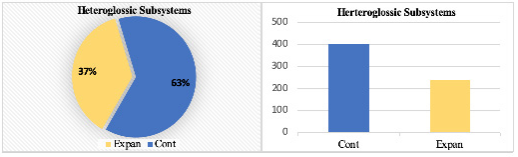
Figure 4. Distribution of heteroglossia Figure 5. Cont and expan
Based on the result of the last step that gives preference to the heteroglossic part of Engagement category. This step is to go further with heteroglossic values to figure out which part has exceeded the other. Table 6.2 which presents a big variation between Contractions (almost 63%) than Expansions (37%) in the whole corpus of the play. The exceeding portion of Contraction propositions may indicate the fact that the interlocutors; (characters), in this literary piece have set themselves away to different voices by rejecting rather than welcoming the possibility of these viewpoints from the audiences (Amornrattanasirichok & Jaroongkhongdach, 2017). This autobiographical play by which the playwright has incarnated herself within her characters and specifically the character of Hester. Parks intends to reject or at least counter the audiences as well as some critics who recognize her as an African American writer who writes for an African people only. She wonders: “Can a Black person be onstage and be other than oppressed? For the Black writer, are there Dramas other than race dramas? Does Black life consist of issues other than race issues?” (Parks, 1995, p.21). The persecutors people in the USA are not practically all white Americans, the black people are also exploiters in some extents. Parks proves that with the figure of Hester the protagonist, who is economically and sexually oppressed by the white people such as, Doctor and Amiga as well as by the black ones such as Reverend and Welfare. The playwright aims to transcend the race issue and make herself as a universal writer so as to consider her play as an American act without giving privilege to any race or class (Ghani & Joodi, 2015; Mhayyal & Saleh, 2016).
Additional to the previous result in the last paragraph, the analysis process in table 3 presents also that the dialogic Expansion has 235 propositions. Entertain has 207; (80.08%), resources out of the complete number. The exceeding number of that subsystem; (Entertain), comparing with other Expansion’s subtypes, indicate a particular grade of warning and humility in the playwright’s portraying formulations. This particular feature may indicate and recognize as audience-friendly because it explicitly allowing those audiences to take part in the discourse (Amornrattanasirichok & Jaroongkhongdach, 2017). Some examples from the text (Parks, 2000) are below.
-
• “Maybe yll grow up to be a boxer, huh? We can watch you ringside, huh?” (p. 18) (Ent)
• (2) “Im gonna talk to Welfare and get an upgrade. The world ll take care of the women and children.” (p. 20) (Ent)
Both extracts above are recounted by the protagonist Hester, first one, she describes her older daughter ‘Bully’ in a positive way. While the last extract, Hester is talking to her children. Both of the extracts above are filled with Entertain values. It is clear that Hester opens up and allows different viewpoints and voices when she evaluates her daughter and anticipates a beautiful future for her (Mhayyal & Saleh, 2016). This feature makes the audiences feel free and less imposed-upon.

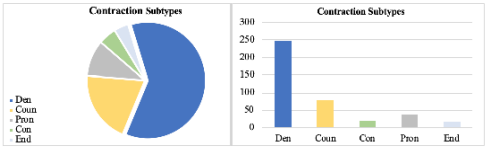
Figure 6. Classification of cont. Figure 7. Subtypes of cont.
Table 4 presents out the exceeding of ‘Deny’ propositions with a sharp difference among all other dialogic Contractions to have (almost 61%) from the whole number of contractions. The second position is occupied by ‘Counter’ resources with (20%) of all dialogic Contraction. Meanwhile, the first, as well as the second positions, are classified under ‘Disclaim’. ‘Deny’ means that the characters in the play do not consider different opinions by challenging any various voice from them. Furthermore, the characters express propositions as practically reliable and credible to audiences. Though, the intensive usage of Disclaim resources, whether (Deny and Counter) make this play deploys a negative mode and content. Linguistically means this literary piece reject and do not welcome possible voices from audiences. Lui (2014) argued that any written or spoken text in which depends on certain Engagement propositions and disregard others, that text could not gain dialogic diversity, because the characters relied heavily on some and not all Engagement options.
BIBLIOGRAPHIC REFERENCES
Alsanafi, I. H., & Mohd Noor, S. N. F. (2018a). Systematic review of African-American women’s identity struggle in American drama. Opción, 34, 1116-1130.
Alsanafi, I. H., & Mohd Noor, S. N. F. (2018b). Black woman identity struggle: An examination of American drama through appraisal theory framework. Journal of Advanced Research in Dynamical and Control Sys- tems, 10(10), 310-318.
Alsina, V., Espunya, A., & Naro, M. W. (2017). An appraisal theory approach to point of view in “Mansfield Park” and its translations. International Journal of Literary Linguistics, 6(1), 1-28.
Amornrattanasirichok, S., & Jaroongkhongdach, W. (2017). Engagement in literature reviews of Thai and interna- tional research articles in applied linguistics. In Proceedings of The International Conference: DRAL 3/19th ESEA, 312-327.
Anada, R. (2016). Enacting black suffering and laughter: Creative restorations of black experiences in Suzan Lo- ri-Parks’s plays. Doctoral Dissertation, Osaka University, Osaka Prefecture.
Bell, J. D. (2015). African American women leaders in the Civil Rights Movement: A narrative inquiry. Doctoral dissertation, Antioch University, California.
Bock, Z. (2007). A discourse analysis of selected truth and reconciliation commission testimonies: Appraisal and genre. Doctoral dissertation, University of Western Cape, Cape Town.
Borrego, S. D. P. C. (2015). Integration, assimilation, and identity in Lorraine Hansberry’s A Raisin in the Sun and Barbara and Carlton Molette’s Rosalee Pritchett. Revista Canaria de Estudios Ingleses, 1(70), 123-142.
Das, S. (2012). Quest for identity: A major concern in the life and literature of African-Americans. A journal of Humanities & Social Science,1(1),28-88
Diyaiy & Saleh (2013). The quest for identity in African American women’s drama from Harlem renaissance to the present an overview? Buhuth Mustaqbalia, 1(1),43–71.
Dong, T., & Lin, X. (2018). Attitude in appraisal theory: A comparative analysis of English versions of Changgan Xing. International Journal of Comparative Literature and Translation Studies, 6(1), 42-49.
Ghani, H. K., & Joodi, I. T. (2015). A bridge is not a home: Gender-based institutional discrimination in Suzan- Lori Parks’s “In the blood”. International Journal of Language Learning and Applied Linguistics World. 9(1), 204-220.
Ghasemi, M. (2016a). Quest/ion of identities in African American feminist postmodern drama: A study of select- ed plays by Suzan-Lori Parks. Thesis dissertation, University of Turku,Turku, Finland.
Ghasemi, M. (2016b). Quest/ion of Identities in Suzan-Lori Parks’s Post-revolutionary Drama. European journal of American studies, 11(11-2).
Hadia, A. A. (2012). Parks’ In the blood: an image of a black woman who is more sinned against than sinning. En- glish Language and Literature Studies, 2(2), 105-115.
Hadidi, Y., & Mohammadbagheri-Parvin, L. (2015). Systemic functional linguistics as interpersonal seman- tics: Appraisal and attitude in the stylistic analysis of an English novel. International Journal of Linguis- tics, 7(1), 129-148.
Helander, R. (2014). Appraisal in political speech: A comparative discursive study of Winston Churchill and Tony Blair. Bachelor’s Degree Essay, Lund University, Lund.
Keene, T. (2012). Theory, praxis and transformation: the dramatic writing of Suzan-Lori Parks as liberatory critical pedagogy. Master thesis, University of Louisville, Louisville
Li, W., Liu, W. Y., & Yi, M. Z. (2015). Effective recognition and statistic of engagement resources in Persian discourses. In 2015 International Conference on Artificial Intelligence and Industrial Engineering. Atlantis Press.
Liu, S. (2014). Engaging with dialogic alternatives in ESL argumentative essays: Systemic functional linguistic and teacher perspectives. Doctoral dissertation, McGill University, Montreal, Quebec.
Liu, X. (2013). Evaluation in Chinese university EFL students’ English argumentative writing: An Appraisal study. Electronic Journal of Foreign Language Teaching, 10(1), 40-53.
Martin, J. R., & White, P. R. R. (2005). The Language of Evaluation: Appraisal in English. New York: Palgrave Macmillan.
Mhayyal, B. & Saleh, A. (2016). Double victimization for black woman in Susan Lori Parks In the blood. Euro- pean Academic Research, 4(3), 3086-3118.
Mohd Noor, F. (2015). Empowering the powerful: A critical discourse analysis of public discourse on graduate employability. Doctoral dissertation. Macquarie University, Sydney.
Nowrouzi, T., & Faghfori, S. (2015). Am I an African or an American? Duboisian double consciousness in A Raisin in the Sun. International Journal of Applied Linguistics and English Literature, 4(3), 174-180.
O’Gorman, S. (2014). (Di) visible layers: Bodies, genders and costumes in the works of Suzan-Lori Parks. Scene, 2(1- 2), 155-167.
O’Gorman, S. (2015). Reorienting scarlet letters: Suzan-Lori Parks’ and Marina Carr’s Hester plays. Journal of Adaptation in Film & Performance, 8(1), 39-60.
Okamoto, T. (2017). The Scarlet Letter Variations# 1: Mutual Percolation Effects between The Scarlet Letter and In the Blood. Studies in Languages and Cultures, Kyusuh Univeristy (39),47-58
Parks, S. L. (1995). Elements of style. The America Play and Other Works, 6–18. New York: Theatre Communica- tions Group.
Parks, S. L. (2000). In the blood. Dramatists Play Service Inc.
Peng, X. (2008). Evaluative meanings in literary texts: The first step towards Appraisal Stylistics. Odense Working Papers in Language and Communication, 29(12), 665-684.
Read, J., & Carroll, J. (2012). Annotating expressions of appraisal in English. Language resources and evaluation, 46(3), 421-447.
Ruo-mei, W. (2016). A practical application of appraisal theory on critical reading in college English teaching. US-China Foreign Language14(12), 868-876.