SUR-SUR
The Role of the Mechanism of Territorial Behavior to Improve Social Skills at the Behavior Setting of Children with Autism Disorders
El papel del mecanismo de la conducta territorial para mejorar las habilidades sociales en el entorno conductual de los niños con trastornos de autismo
The Role of the Mechanism of Territorial Behavior to Improve Social Skills at the Behavior Setting of Children with Autism Disorders
RELIGACIÓN. Revista de Ciencias Sociales y Humanidades, vol. 4, núm. 16, pp. 368-378, 2019
Centro de Investigaciones en Ciencias Sociales y Humanidades

Esta obra está bajo una Licencia Creative Commons Atribución-NoComercial-SinDerivar 4.0 Internacional.
Recepción: 02 Enero 2019
Aprobación: 14 Mayo 2019
Abstract: Improving communication and social responses is the most important issue that should be considered in children with autism disorders. The concept of territory is considered as one of the most important and influential factors in the quality of humanenvironment communication. Territorial behavior through the mechanisms that provides to individuals to monitor social interaction is considered as one of the social behaviors with social nature that can encourage the environment to achieve social interactions with the dimensions of supervision, personalization and meaning (creating signification). Thus, this articles has considered the concept of territory as one of the influential factors on behavior setting in children with autism disorders. In this article, the research method is a combination of both qualitative and quantitative methods. Research findings suggest that the territorial behavior can have a significant effect on reinforcing and providing the social skills of children with autism disorder in adapting to the surrounding environments for social interactions, and since the importance of common privacies for making social solidarity is obvious, therefore, investigating the mechanism of territorial behavior and its important role in increasing social responses and communication behaviors is really significant.
Keywords: Territorial Behavior, Social Skills, Autism, Behavior Setting.
Resumen: Mejorar la comunicación y las respuestas sociales es el tema más importante que debe considerarse en niños con trastornos de autismo. El concepto de territorio se considera uno de los factores más importantes e influyentes en la calidad de la comunicación humano-ambiental. El comportamiento territorial a través de los mecanismos que proporciona a los individuos para monitorear la interacción social se considera uno de los comportamientos sociales con naturaleza social que puede alentar al ambiente a lograr interacciones sociales con las dimensiones de supervisión, personalización y significado (creando significado). Por lo tanto, este artículo ha considerado el concepto de territorio como uno de los factores influyentes en la configuración del comportamiento en niños con trastornos de autismo. En este artículo, el método de investigación es una combinación de métodos cualitativos y cuantitativos. Los resultados de la investigación sugieren que el comportamiento territorial puede tener un efecto significativo en el refuerzo y el suministro de las habilidades sociales de los niños con trastorno de autismo para adaptarse a los entornos circundantes para las interacciones sociales, y dado que la importancia de las privaciones comunes para hacer la solidaridad social es obvia, por lo tanto, Investigar el mecanismo del comportamiento territorial y su importante papel en el aumento de las respuestas sociales y los comportamientos de comunicación es realmente significativo.
Palabras clave: comportamiento territorial, habilidades sociales, autismo, entorno de comportamiento.
Resumo: Melhorar a comunicação e as respostas sociais é a questão mais importante que deve ser considerada em crianças com transtornos do autismo. O conceito de território é considerado como um dos fatores mais importantes e influentes na qualidade da comunicação humano-ambiente. O comportamento territorial, por meio dos mecanismos que propiciam aos indivíduos o monitoramento da interação social, é considerado como um dos comportamentos sociais de natureza social que pode estimular o ambiente a alcançar interações sociais com as dimensões de supervisão, personalização e significado (criação de significação). Assim, este artigo considerou o conceito de território como um dos fatores influentes no estabelecimento de comportamentos em crianças com transtornos do autismo. Neste artigo, o método de pesquisa é uma combinação de métodos qualitativos e quantitativos. Os resultados da pesquisa sugerem que o comportamento territorial pode ter um efeito significativo em reforçar e prover as habilidades sociais de crianças com autismo em adaptação aos ambientes circundantes para interações sociais, e desde que a importância de privacidades comuns para fazer solidariedade social é óbvia, portanto, investigar o mecanismo do comportamento territorial e seu papel importante no aumento das respostas sociais e dos comportamentos de comunicação é realmente significativo.
Palavras-chave: Comportamento Territorial, Habilidades Sociais, Autismo, Comportamento.
1. Introduction
Human beings are not isolated from their environment and are in touch with it at any moment. Hence, human being is influenced by the environment and also affects the environment. Meanwhile, environmental characteristics have a significant effect on behavioral patterns. Behavior settings as a manifestation of social interactions must meet the social needs of the audience, provide the necessary means for accessing and providing necessary services for users, and provide conditions for continuous interaction among the audience.
The extra close relationship between human and environment has long been an integral part of the architectural research. Architecture as a profession is responsible for creating an environment that meets the needs of all types of users, and individuals with special needs should not be excluded from such adaptation. Autism is a mental illness that prevents the person from communicating with the outside world. This illness is a kind of developmental disorder characterized by abnormal verbal and communication behaviors. Symptoms of this disorder occur in the first three years of life. The main cause of this disorder is unknown and is more common in boys than girls. In fact, autism is a brain development disorder that is characterized by deficiencies in social reactions, communications, and repetitive and limited behaviors. According to the research by Iranian researchers, among 77 children in the world, one child is born with autism, and it seems that the rate is increasing. In Iran, out of 1000 children, there are 4 children with autism disorder (Azad, 2015). It is important to keep an appropriate distance from others in order to communicate effectively and have an appropriate interpersonal relationship. Autism spectrum disorder is a developmental disorder that is associated with social problems, so in normal individuals or individuals with intellectual disability, any disturbance in social distance can affect their daily social interactions (Kumagaya, Haesegawa, Saito, Osanai, Asada, Tojo, 2016).
The behavior or reaction of human to the environment refers to the two-way relationship between human and environment. We are in the interaction with the environment at any moment. In this interaction, we find different feelings to different spaces. We believe that we possess some spaces and we try to control the entrance of people; some of spaces are considered public and we do not have the right to control it (Pakzad and Bozorg, 2011). Territorial behavior, which is considered as one of the human spatial behavior with social nature, can greatly enhance the cognitive skills of individuals in the social interactions, whether normal individuals or individuals with mental disability, especially in children with autism disorder (a case study of this research), and since the importance of common borders for creating social solidarity is completely obvious, then the study of the mechanism of territorial behavior and its important role in increasing the social responses and communication behaviors can be important.
2. Autism and Challenges in Social Communication
Autistic children show a deep defect in social behavior. Autistic children show deep deficiencies in their social behavior. Autism is diagnosed with a set of symptoms, not just with a sign. The main characteristic of autism is deficiency in social reactions, communications, limited attention, and repetitive behaviors. Other characteristics, such as eating disorder are important for the diagnosis, but not necessary (Kennedy, 2014). Autism is considered as a spectrum, because its manifestations are very different and heterogeneous. For example, cognitive and verbal disabilities are very severe is some of these patients, while others have high intellectual and talent gains (Jiujias, Kelley, Hall, 2017). Children with autism spectrum disorder may exhibit many behaviors that are challenging for families, teachers, and others. However, these children often turn the world into a challenge, and other individuals’ behavior may be confusing for them. They may focus on objects instead of people. A study examined the tracing of people’s view of watching a video, and it was found that ordinary people in watching a dramatic scene focused on the actor’s face, while those with autism disorder tended to look at the mouth, and other children with autism spectrum disorder paid attention to objects like reflections on the wall (Klin, 2002). In other words, autistic children are non-verbal. In autism spectrum disorder, some individuals are with IQ under 40 and some individuals are genius and highly talented, while they are deficient in social and communication interactions (Gross, 2017).
Children with autism disorder are in exposure to risk because they cannot recognize social signs, such as sign of the face (Baron-Cohen, 2001), body language, or tone of the voice. In fact, if you are trying to assess the child’s ability to read and recognize the social world, relationships with peers are the key points. Adults are often adaptable with a unique approach in interacting with the child. Co-workers rarely consider this issue. Social issues are highlighted in relation to peers. These children generally fail to develop relationships with other people. Autistic children rarely interact with others. They often do not express their emotions, avoid active physical contact (Kaner, 1943), and avoid eye contact. They are not relaxed in the arms of their parents. One of the symptoms of autism is the lack of interest in communicating with others (American Psychiatric Association, 2000). Autism spectrum disorder are recognized by social problems such as interaction, communication challenges, and tendency to participate in repetitive behaviors. However, their symptoms and severity in these three main areas are completely different. They altogether may lead to relatively low challenges for someone with high autism spectrum performance. For other people with autism disorders, symptoms may be more severe, since repetitive behaviors and non-use of verbal language interfere in the daily life. While autism is usually a long-term condition, all children and adults benefit from interventions or treatments resulting in reducing symptoms and increasing skills and abilities. Autistic children show unusual and abnormal responses to the environmental events or stimuli. Studies on children with autism disorder show that autism affects personal space settings and also affects the size (permeability) and changes depending on the social interaction (flexibility). When the flexibility and permeability of personal space are not considered, it leads to severe social disorders and individual’s vision disorder of the person with autism disorder (Candini, Giubert, Manattini, Grittani, di Pellegrino, Frassinetti, 2017).
3. Territory-Behavior Settings
The close relationship of human and the environment has been long an integral part of the architectural research. Architecture as a profession is responsible for creating an environment that meets the needs of all types of users, and individuals with special needs should not be excluded from such an adaptation. One of the important factors in the study of the environment and the social behavior of children with autism is the territorial behavior of autistic children. The concept of territory refers to the bounds and realms that individuals specifically use them and react against the intrusion to the special space by which they determine their position in the space. In other words, the territory includes a domain of individuals or groups, which they use and defend it as a special realm and bound. In the following, we consider the definition of territory from the perspective of theorists:
| Kaufman (1963) | The territory is an area which is defined by virtue of the ownership and exclusivity of its use. |
| Steve (1965) | Territorial behavior expresses the desire to occupy the space and, if necessary, it is defended against the invasion of others. |
| Samer (1966) | Territory is an area which a person, a family, or other groups control it. |
| Lyman and Scott (1967) | The concept of territory includes an attempt to control the place. |
| Irwine Altman (1967) | Spatial territory is a mechanism for providing privacy: territorial behavior is a mechanism for regulating the privacy between yourself and others that is expressed by personalizing or marking a place or an object and its belonging to an individual or a group. |
| Leon Pastellan (1970) | Spatial territory is a limited space, which individuals and groups use and defend it as a specific area (scope) and becomes a symbol with the feelings of ownership and physical composition. |
In Brief, the Main Characteristics of Spatial territory are (Lang, 2011):
| 1 | The sense of ownership and human right toward a place |
| 2 | Personalization and marking an area |
| 3 | The right to defend against disturbance and invasion |
| 4 | Providing functions in the range of physiological needs to cognitive and aesthetic needs |
Different categories presented by theorists:
| Researcher | Presented category of different territories | Nature of the category | |||||||||
| Alexander and Chermayeff | Public space of city | Semi- public space of city | Public space of a group | Private space of a group | Private space of a family | Private space of individuals | Hierarchical | ||||
| Douglas Porteus | Available space at home | Home-based space | Private space | Scale/hierarchy | |||||||
| Lyman and Scott | Interactive territory | Home territory | Conceptual | ||||||||
| Hossein Alshorakawi | Peripheral territory | Sponsored territory | Central territory | Continuous territory | Conceptual | ||||||
| Irwine Altman | Public territory | Secondary territory | Primary territory | Conceptual/ hierarchical | |||||||
| Seyed Hossein Bahreini | Public spaced | Semi- public space | Semi-private space | Private space | Hierarchical | ||||||
| Mahmoud Tavassoli | Territory of a neighborhood unit | Territory of several residential units | Territory of a residential unit | Scale | |||||||
As it is shown in Table 2, some of the categories used to explain the concept of territory are hierarchical and some of them are ordered according to the perceptual concepts of the environment. Some of the influential factors on the concept of territory are social, perceptual-psychological, physical, and functional factors. The geographiccultural factors and the time factor provide the basis for the influence of former factors, and the mentioned factors are the subset of objective and subjective territories.
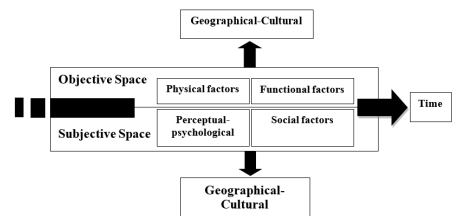
Figure 1. The Proposed Model of the Factors of Territory Formation (Einifar, Aghalatifi, 2011).
The concept of behavior setting in terms of characteristics is very similar to the concept of territory. Barker believes that a behavior setting is a sustainable combination of activity and place, and it consists of four main elements:
- 1.
1. A behavior pattern that is always repeated
2. A context with its own specific feelings and proper to that behavior
3. Synomorphy with the meaning of sufficient relationship between the behavior pattern and the context
4. A specific time period
In other words, if in a given behavioral context, at different times, different permanent behavior patterns are emerged, that environment is examined as a behavior setting and separated (Lang, 2011). By comparing the characteristics of territory and behavior setting, it can be concluded that these two concepts have similarities and differences. The repetitive pattern of behavior in the behavior setting can be in common with the characteristic of providing the territory requirement, because any behavior follows the requirement. In other words, synomorphy is similar to the concept of personalization.
The differences of these two concepts can be seen in the repetitive pattern of behavior, sense of belonging and ownership, and time frame. In fact, it can be argued that making a territory is the desired level that environmental designers intend to achieve. The environment in which users feel the sense of belonging, represent the high quality of social interactions in that space. However, if a behavior setting has the characteristics of the territory, it is considered as a behavior setting (Ansari et al., 2010).
The structure of the territory is something on the core of Darwinian system. According to this structure, we find that territory is not a worthless phenomenon, but is one of the most important features of the natural rights of human, especially children with autism disorder. The important feature of space and place is not only limited to human life, but also influences the majority of territory-oriented species of the world that are in common with us. Territory is an important component that its feature is more important than providing space. Ardrey was the first person discussed this structure that the territory acts as a mechanism for creating three essential requirements of motivation, identity and security. The audience of territory, whether a couple or members of a family, group or nation achieves a security in the life by the internal order of territories and structure (Lawson, 2012)
4. Territory and Social Skills in Children with Autism Disorder
Territories in a behavior setting facilitate social skills and the stability of social systems. With regard to the Lawson’s perspective, different types of territorial behavior have two main common ideas. These two main ideas are as follows: first, the territory is not only vital for the physical comfort, but also necessary in terms of social welfare for the survival of a particular species, and secondly, the territory is obtained through the provision, organization, and structuration of the space (Lawson, 2012).
Autism is a pervasive developmental disorder which is associated with severe disorders in a number of developmental areas, such as social and communication skills, or strange behaviors, tendencies, and activities (Fombonne, 2005). A person with social skills adapts himself thoroughly to the environment and avoids verbal and physical conflicts in his communication with others. However, a person without social skills usually has behavioral problems, conflict with others, and is not popular among peers and adults, and do not get along well with his teacher. These individuals usually ignore the rights of other people and are autonomous (egocentric) in their behavior. One of the most important characteristics of children that is effective in their understanding of the territory is imagination, however, as autistic children do not have the imagination ability of a natural child, the necessity of territorial behavior of children with autism and various shapes in their internal and external spaces is very important; in this way, the imagination ability is grown up and allows them to develop and grow and make the spaces pleasant and desirable. It should be noted that spaces should be created using architectural science in order to allow the child to progress from one step to another step in different educational and entertaining stages. Thus, by organizing the built environment through making explicit objective and subjective definitions boundaries and the way of using space in behavioral territory of autistic children, it helps to strengthen social skills in the environment.
5. The Mechanism of Territorial Behavior in Behavior Setting of Children with Autism Disorder
Territorial behavior is a mechanism for monitoring and controlling the domain of individuals and others, and is an instrument for achieving ideal solitude and privacy. This behavior through the control of social interactions results in simplification of the social relationships of individuals and prevents inappropriate social relationships (Altman, 2016). Territorial behavior, through the provided mechanisms for monitoring social interaction for individuals, especially children with autism, is considered as one of the human actions with a social nature that in the behavioral territory of autistic children with the dimensions of supervision, personalization, and semantics can drive the environment in increasing the social interactions in children with autism disorder. In fact, territorial behavior is a complex behavioral mechanism that varies according to spatial and temporal constraints and results in ownership and supervision of interfacial territory of individuals. Therefore, humans have chosen a symbol or a sign and space for their unique identity in the world, and this symbol and space is visible for personal and social identity, which creates a kind of defense sense and ownership (Einifar and Aghalatifi, 2011).
Territorial behavior such as other behavioral mechanisms is changing with time and space. Functional sharing of behaviors in the relation among territory behavior and personal space and verbal and non-verbal behaviors depends on the effectiveness of individuals in controlling social interactions (Altman, 2016).Meanwhile, Territorial behavior facilitates the individual interactions and prevents social conflict and improper social relations through the supervision on the social interaction (Altman, 2016). Territorial behavior is different in humans and animals, which shows different reactions at different times and spaces.
Territorial behavior in human beings is more varied than other creatures. Human beings improve their fundamental and basic behaviors with their own culture. According to Gilford, the norms that rely on the territorial behavior of human beings in different societies are different; that is to say, human beings with different cultures encounter with a wide range of problems from the selection of territory to privacy (solitude). Therefore, the territorial behavior depends on the culture of the societies. For this reason, we cannot generalize others’ norms, but we must recognize the norms related to the territorial behavior of our community and apply them (Pakzad and Bozorg, 2011). Therefore, according to the theorists’ perspectives, the territorial behavior is in a wide range of environmental and individual characteristics, and especially its role in the behavior setting of children with autism disorder is undeniable. Territorial behavior reduces the stresses of individuals’ life, especially autistic children who suffer from nervous stresses; also, one of the features of this outcome is determining what belongs to who. So, criteria and norms of territorial behavior in the behavior setting of children with autism disorder should be first recognized and then prioritized according to the cases.
6. Process of the Study
With regard to the importance of territorial behavior in the behavior setting of children with autism disorder as a behavior with social nature, the present study tries to identify different concepts forming this behavior and prioritizes the concepts based on their importance in the territory domain. What distinguishes this research from other research is considering the territorial behavior as a phenomenon with two perceptual and structural aspects.
In this research, in order to achieve a solution for increasing the adaptation of objective and subjective territories, and further, to achieve higher levels of desirable territory in children with autism disorders, in the first step, we used library studies and examined different perspectives of scholars about the concept of territorial, and then extracted the frequent concepts in the field of territory behavior.
| Concepts | Scholars | Concepts | Scholars | ||
| 1 | Controllability of the scope of territory | Samer (1966), Lyman and Scott (1967), Pastalan (1970), Westin (Altman, 1975) | 11 | The extent of territory scope | McBride (1964), Lang (1987), Altman (1975) |
| 2 | Interactive and communication priorities as a result of territorial behavior | Einifar and Aghalatifi (2011), Ansari et al., (2010), Bahreini and Tajbakhsh (1999), Altman (1975), Mc Andrew (2008), Rappaport (Lang, 1987), Lang (1987) | 12 | Cultural function of the territory | Lawson (2001), Lang (1987), Pakzad (2012), Altman (1975), Ardry and Dubas (1987) |
| 3 | The formation of an environmental psychology identity | Pastalan (1970), Altman (1975), Lawson (2001), Einifar (2011), Arzhmand and Khani (2012) | 13 | Geographical features of the space in the territorial behavior | Carpenter (1958), McBride (1964), Altamn (1975), Samer (1969), Samer and Becker (1969), Becker (1973), Becker and Mario (1971) |
| 4 | Concepts of psychological comfort in the territorial behavior | Lawson (2001), Rezaei Moghaddam (2011), Lynch (1960), Arzhmand and Khani (2011) | 14 | Environmental management features in the territorial behavior | Lyman and Scott (1967), Hossein Alshorakavi (Land, 1970), Lang (1987) |
| 5 | The inherent features of territorial behavior | Lang (1987), Ardry (Lang, 1987), Steve (1965), Hossein Alshorakavi (Lang, 2011) | 15 | The concepts of physical comfort in the territorial behavior | Lawson (2001), Altman (1975), Lang (1987) |
| 6 | Hierarchical features of the territory place | Lawson (2001), Altman (1975), Alexander and Chermayeff (Bahreini, 1999) | 16 | Characteristics of the forms of territory place (space) | Edney (Altman, 1975), Edney and Jordan (Altman, 1975), Altman (1975) |
| 7 | Physical features of the territory place | Pastalan (1970), Lanf (1987), Hydeger (1960), Altman and Hiturn (1967) | 17 | The physical structure including the territory space | Lyman and Scott (1967), Bahreini and Tajbakhsh (1999) |
| 8 | Environmental features of the territory space | Lang (1987), Ardry and Dubas (Lang, 1987), Gifford (1987), Pakzad (2012), Altman (1975) | 18 | Temporal features of territoriality | Ansari et al., (2010), Altman (1975), Carpenter (1985) |
| 9 | Ability to read the environment as a result of the formation of territorial behavior | Bentley (1985), Einifar and Aghalatifi (2011), Lawson (2001), Steve (1965), Pastalan (1970) | 19 | Emotional dependence to the scope of territory | Lang (1987), Gefman (1963), Westin (1975) |
In the second step, a questionnaire with 41 items was provided based on the frequent vocabularies as a result of the library studies and a survey of psychiatric specialists in the field of Autistic children in Tehran, parents of autistic children and instructors working in the autistic centers of Tehran (instructors of Iranian Autism Centers) ; the study is seeking to achieve a structure that can place the main components of the territorial behaviors based on their nature and priorities in two groups of subjective and objective nature of behavior setting of children with autism through introducing the dimensions, criteria and main indicators of territorial behavior.
Firstly, in this research, in order to assess the validity and credibility of the instrument for collecting data, which is the questionnaire, three criteria of face validity or content validity are used. In order to determine the reliability of the questionnaire, Cronbach’s alpha method was used, and the provided questionnaire with 41 items in the Cronbach’s test was estimated 79.2%, which shows high reliability of the questionnaire and the measurement scale of the research topic.
In order to explain the criteria related to the territorial behavior, the collected data were analyzed through exploratory factor analysis and then, in order to determine the priority of the correspondent indicators to each criterion in its estimation, the obtained structure from the exploratory factor analysis in pervious step was assessed by the confirmatory factor analysis and the coefficients of all indicators are measured in the corresponding criterion estimation.
In analyzing the findings of the criteria (by using SPSS), first, the indicators of each item are extracted; then, the naming the criteria is performed to represent all the effective indicators in its estimation. According to the findings, in factor analysis, 14 criteria were obtained as factors with the highest coefficients in compared to the rest of indicators. For example, based on the exploratory and confirmatory factor analysis, it was found that the items of 6, 7, and 8 of the questionnaire in the estimation of criterion 1 are more effective than the other items. Therefore, in this stage, by referring to the questionnaire, the available indicator in each of these 3 items was extracted. For instance, the item 6 with the question of “the positive mental image of children with autism from a place, can be important in the selection of that place as a territory”, is seeking to measure “the positive assessment indicator of the place” in the territorial behavior.
In the same way, we obtain the available indicator in another item. By determining the content of items, naming the first criterion is performed according to the name of its own formative indicators. A term that includes all the concepts and implies other indicators is selected as the name of this criterion. For example, for naming the criterion 1, a word that includes the meanings of all three indicators of “being familiar”, “experience in the environment”, “a positive assessment of the place”, is named the sense of belonging. This method is used in naming all other criteria.
| Sense of belonging | Need and motivation | Supervision | Identity | Physical comfort | Physical Boundary | Arrange |
| legibility | Security | Interaction | Temporal period | Shape of the territory | Hierarchical | The territory place |
In the third step of the presented structure, the dimensions, criteria, and main indicators of territory behavior, and the main components of the territorial in the children’s behavior setting with autism based on their nature were introduced; in other words, the components in the territorial behavior that have the greatest impact on the enforcement and provision of social skills in the behavior setting of children with autism disorder are presented in two groups of subjective and objective nature. That is to say, the researcher, being aware of various meanings of the titles presented in the following tables in different domains, refers to only those aspects of the titles in his definitions that have been specifically addressed in the behavior setting of children with autism.
| Nature | Dimension | Criteria | Indicator | Explanation | |||
| Subjective | 1 | psychological | 1 | Sense of belonging | 1 | Being familiar | Be familiar with the surrounding environment |
| 2 | Experience in the environment | The existed memories of territory environment in the children’s mind with autism | |||||
| 3 | Positive assessment of the place | Positive mental image of the environment | |||||
| 2 | Need and motivation | 1 | Motivational content | The generating and developing context of the children’s need with autism | |||
| 2 | Formation level of need | The purpose of providing physical and personal needs | |||||
| 3 | legibility | 1 | Orientation | Easily read the environment and easy access to different points | |||
| 2 | Existence of the sign | The existence of indicator elements for recognizing the environment (natural and artificial) | |||||
| 3 | Existence of the guidance | The existence of guidance elements such as signs and pictures | |||||
| 4 | Corresponding the form and function | Facilitation in reading the space in adaptation of the form and function | |||||
| Subjective | 2 | Social | 1 | Security | Individual and collective security | The sense of security in the environment of children with autism | |
| Visual permeability | The impact of the degree of territory’s visibility in its selection | ||||||
| 2 | Supervision | 1 | Natural observing | Controlling the environment and the place of territories through current social observing in the place | |||
| 2 | Artificial observing | Use of surveillance equipment such as CCTV | |||||
| 3 | Interaction | 1 | Privacy and social interaction | The degree of controlling over the degree of interaction in the environment | |||
| 2 | Communication with peer groups | Using the territory in order to communicate with friends and peers | |||||
| 4 | Identity | 1 | Continuity and solidarity | Familiarity and personal experience of the environment | |||
| 2 | effectiveness | The presence of correspondent place with the function and type of activity in the environment | |||||
| 3 | Distinction | Distinguished elements of the territory’s place from other points | |||||
| Subjective | 3 | Temporal | 1 | Period | 1 | Temporary and permanent | The amount of using territory during the week |
| 2 | How to use at night and day | The significance of temporal feature over a day and a night on the selection of the scope of territory | |||||
| Nature | Dimension | Criteria | Indicator | Explanation | |||
| Objective | 1 | Physical | 1 | Physical comfort | 1 | Swarm (crowdedness) moderation | Reducing crowdedness in the territory of children with autism |
| 2 | Having the furniture and lighting equipment | Furniture and lighting appliances to create a sociable space | |||||
| 3 | Compatibility with climate conditions | Providing favorable climate conditions for children with autism, such as light and temperature adjustment | |||||
| 4 | Reducing noise pollution | Reducing undesirable sound in the territory of children with autism | |||||
| 2 | Shape of the territory | 1 | Texture and decorations | The qualitative effect of materials and plants and colors on selecting the territory’s place | |||
| 2 | Relationships and layout | Layout and flexibility of furniture | |||||
| 3 | Geometry | Form and geometric order | |||||
| 3 | Physical separation | 1 | Severity of physical separation | Separating the territory with the surrounding environment through furniture and plants or fixed walls | |||
| 2 | Physical separation goals | Separating the territory place to adjust visual or audio parameters | |||||
| Objective | 2 | Functional | 1 | Hierarchical | 1 | Ease of access | Investigating the spatial situation of territory in terms of proximity to main accesses, entrances, and proximity to services such as buffets and toilets |
| 2 | Visual permeability | The influence of the visual hierarchy of the territory’s place and unexposed to direct contact in the selection of the territory | |||||
| 2 | Arrangements | 1 | Behavioral separation level | Environmental separation based on current behavior patterns within the territory scope | |||
| 2 | Diversity of behavior setting of the surrounding environment | The influence of the proximity to different behavior settings in the selection of territory place | |||||
| Objective | 3 | Geographical | 1 | Territory’s place | 1 | Orientation | The spatial situation of territory in the site in terms of topographical conditions geographical situation |
| 2 | Territory dimensions | The effectiveness of the size of territory’s place on its selection | |||||
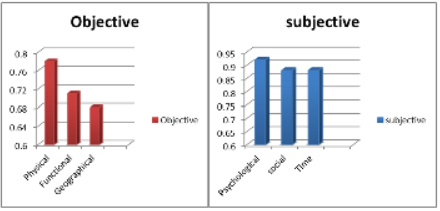
Chart 1. Objective-Subjective Factors of the Territorial Behavior in the Behavior Setting of the Children with Autism (Source: Author)
7. Discussion and Conclusion
The analysis of the effective factors in the formation of the territorial behavior in the children’s behavior setting with autism shows that what cases can be considered both visually and mentally in the children’s environment as a desirable place for them. For example, considering the visual characteristics of the territory of children with autism result in using parameters of the five sense; for example sound of water, material texture, natural elements like trees, considering the ease of designing in order to access easily to different areas of the territory and avoiding the complexity of the route and misleading the children, creating signs to make a memorable environment that leads to positive assessment of children from the territory of the environment. Using surveillance equipment, avoidance of designing blind spots, creation of sociable spaces using furniture and lighting equipment, as well as separating the territories in order to adjust the visual parameters or auditory parameters and provision of desirable climate conditions for children with autism, such as lightening and temperature adjustment, are that factors that have significant roles in creating a desirable environment and are suitable for the behavioral functions of children with autism. In addition, by considering the territorial behavior based on the observable compatibility in children with autism, they become more active in the environment; also, it brings the children with autism a sense of worthiness. Furthermore, the concept of “responsibility” leads to role-taking of children in their surrounding environment and helps their self-confidence; finally, the interaction of these two components with the name of “confidence” in the space, helps in the emergence of security in the environment and make the sense of confidence in the children with autism.
What distinguishes this research from other research of this area is the attention to the behavioral mechanisms of a part children of the society that so far, no attention has been made to these individuals or perhaps they were with less attention. The deficiency in social and communication responses is the biggest problem of children with autism. Territorial behavior as a social-spatial behavior with a social nature can have a significant effect on the communication behavior of children with autism in the social interactions. According to the results of the research and the importance of paying attention to the adaptability of these two territories (subjective and objective territories), considering the different formative dimensions of the territory of children with autism and recognizing and presenting the corresponding objective and subjective strategies can help to improve the children’s communication quality with the surrounding environment. On the other hand, lack of adaptability of the objective strategies for designing the environment with the definition of mental and subjective territory of children with autism from the scope of their territory does not meet the territorial needs of these children in their continuous communication with the surrounding environment, and therefore, reduce the sense of belonging to the environment and the desirable psychological identity for improving or providing their social skill is not properly formed.
BIBLIOGRAPHIC REFERENCES
Asada, Kosuke., Tojo, Yoshikuni., Osanai, Hiroo., Saito, Atsuko., Hasegawa, Toshikazu., Kumagaya, Shinichiro. (2016). Reduced Personal Space in Individuals with Autism Spectrum Disorder. Affiliation Research Cen- ter for Advanced Science and Technology, PloS one.
Altamn, Irwine. (2016). The environment and Social Behavior, Privacy, Personal Space, Territory and Crowded- ness, Translation: Ali Namazian, Shahid Beheshti University Publication.
American Psychiatric Association. (2000). Diagnostic and statistical manual of mental disorders (4th ed., rev.). Washington DC: Author.
Ansari, Mojtaba., Jamshidi, Samaneh., Almasifar, Nina. (2010). Investigating the Sense of Territory and Territorial Behavior in Public Parks. 4:33-48
Arzhmand, Mahmoud., Khani, Somayeh. (2012), The Role of the Private House in Iranian Architecture,Journal of Iranian Islamic Studies, Seventh, Spring, pp. 38-27
Azad, Hossein. (2015). Abnormal Psychology of Child. Tehran, Payam Noor University.
Bahrain, Seyyed Hossein and Taj Mahmood, Golnaz. (1999), The concept of territory in urban spaces and the role of insider city design in its realization, Beautiful Arts, No. 6, pp. 18-31
Baron-Cohen, S., Wheelwright, S., Hill, J., Raste, Y., & Plumb, I. (2001). The “Reading the Mind in the Eyes” test revised version: A study with normal adults, and adults with Asperger Syndrome or high-functioning autism. Journal of Child Psychology and Psychiatry, 42(2), 241-251. Abstract.
Candini, M., Giuberti, V., Manattini, A., Grittani, S., di Pellegrino, G., & Frassinetti, F. (2017). Personal space regulation in childhood autism: Effects of social interaction and person’s perspective. Autism Research.
Einifar, Alireza and Aghalatifi, Azadeh. (2011). The Concept of Territory in the Residential Complexes: A Com- parative Study of Two Residential Complexes in High and Wide in Tehran: beautiful arts, 47: 17-28.
Einifar, Alireza. (2000). The Effective Human-Environmental Factors in Designing Residential Complexes. beau- tiful arts. 8, Tehran University.
Fombonne, E. (2005). The Epidemiology of Autism Spectrum Disorders, . Journal of AWARES Autism.5, 110- 116.
Gross, C. (2017). Defective phosphoinositide metabolism in autism. J Neuro Res; 2017 May. 95(5):1161-1173.
Jiujias, M., Kelley, E., Hall, L. Restricted, (2017), Repetitive Behaviors in Autism Spectrum Disorder and Obses- sive–Compulsive Disorder: A Comparative Review. Child Psych Human Develop:1-16
Kanner, L. (1943). “Autistic disturbances of affective contact”. Nerv Child 2: 217–50. Reprint (1968). Acta Pae- dopsychiatr 35 (4): 100–36.
Kennedy, D.P & Adolphs, R. (2014) Violations of personal space by individuals with autism spectrum disorder. PLoS One.
Klin, A., Jones, W., Schultz, R., Volkmar, F., & Cohen, D. (2002). Visual fixation patterns during viewing of nat- uralisitic social situations as predictors of social competence in individuals with autism. Archives of General Psychiatry, 59, 809-816. Abstract.
Lang, John. (2011). The Creation of Architecture Theory, the Role of Behavioral Sciences in Environmental De- sign, Translation: Alireza Einifar, Tehran: Tehran Universirty.
Lawson, Brian (2012). Language of Space, Translation: Alireza Einifar, Foad Karimian, And Tehran: Tehran Uni- versity.
MacAndrew, Francis T. (2008). Environmental Psychology, Translated by Gholamreza Mahmoudi, Tehran: Zarbaf Asl.
Pakzad, Jahanshah., Bozorg, Hamideh. (2012). Psychology Alphabet of the Environment for Designers, Tehran, Arman Shahr Publishing.
Rezaei Moghaddam, Ali. (2012). Investigating the Design Status in Creating Sense of Security in Residential Complexes, 4th Conference on Urban Planning and Management, Mashhad, University of Mashhad.