Artículo
Challenges and opportunities of global change for sustainability in Central America
Desafíos y oportunidades del cambio global para la sostenibilidad en Centroamérica
 Adolfo Quesada-Román adolfo.quesadaroman@ucr.ac.cr
Challenges and opportunities of global change for sustainability in Central America
Revista de Ciencias Ambientales, vol. 60, no. 1, 21503, 2026
Universidad Nacional
Received: 29 January 2025
Revised document received: 16 June 2025
Accepted: 10 June 2025
Published: 16 July 2025
Abstract
(Introduction): Global change presents pressing challenges for Central America, including increasing hydrometeorological disasters, environmental pollution, and soil degradation.
(Aims): This study examines socio-environmental trends from 1990 to 2020 using comprehensive datasets from the World Bank and EMDAT.
(Methodology): Through country-specific correlation analyses, we uncover complex statistical relationships between socioeconomic and environmental variables.
(Results): The findings highlight critical interactions, such as the link between economic diversification away from agriculture and GDP growth, which is paradoxically accompanied by rising CO2 emissions. Renewable energy consumption emerges as a pivotal factor in mitigating carbon footprints, while sustainable freshwater management is shown to be essential for long-term economic resilience.
(Conclusions): These results offer valuable insights into the dynamics of economic growth, agricultural practices, and environmental sustainability in the region. By addressing these multifaceted challenges through coordinated and integrated strategies, Central America could enhance regional perspective and potential research gaps, safeguard its natural resources, and foster a sustainable and resilient future through international, regional and national institutions initiatives and projects.
Keywords: Climate change+ environmental impacts+ global change+ integrated water resource management+ sustainable development.
Resumen
(Introducción): El cambio global plantea desafíos urgentes para Centroamérica, incluyendo el aumento de desastres hidrometeorológicos, la contaminación ambiental y la degradación de suelos.
(Objetivos): Este estudio analiza tendencias socioambientales entre 1990 y 2020, utilizando conjuntos de datos integrales del Banco Mundial y EMDAT.
(Metodología): A través de análisis de correlación, específicos por país, se identifican relaciones estadísticas complejas entre variables socioeconómicas y ambientales.
(Resultados): Los hallazgos destacan interacciones críticas, como la relación entre la diversificación económica, lejos de la agricultura y el crecimiento del PIB, que paradójicamente se acompaña de un aumento en las emisiones de CO2. El consumo de energía renovable surge como un factor clave para mitigar las huellas de carbono, mientras que la gestión sostenible de los recursos hídricos demuestra ser esencial para la resiliencia económica a largo plazo.
(Conclusiones): Estos resultados ofrecen valiosas perspectivas sobre las dinámicas del crecimiento económico, las prácticas agrícolas y la sostenibilidad ambiental en la región. Abordar estos desafíos multifacéticos mediante estrategias coordinadas e integradas permitirá a Centroamérica fortalecer su perspectiva regional, llenar vacíos de investigación, salvaguardar sus recursos naturales y promover un futuro sostenible y resiliente a través de iniciativas y proyectos de instituciones internacionales, regionales y nacionales.
Palabras clave: Cambio climático, cambio global, desarrollo sostenible, gestión integrada de recursos hídricos, impactos ambientales.
1. Introduction
Global change refers to a series of interconnected transformations and phenomena affecting various aspects of the Earth System. Characterized by phenomena such as climate change, environmental pollution, soil degradation, and biodiversity loss, global change has triggered significant instabilities in the Earth System (Steffen et al., 2020). However, while there is a growing body of research on global change, recent studies have highlighted gaps in understanding the specific socio-environmental impacts of these transformations in regions like Central America, where vulnerability to climate change is particularly high. This paper addresses the lack of comprehensive analysis that integrates both environmental and socio-economic dimensions of global change across multiple countries in this region.
In Latin America and particularly in Central America, one of these global changes, such as climate change, has translated into an increase in the recurrence and intensity of tropical cyclones, torrential rains, severe droughts, floods, and devastating landslides (Quesada-Román, 2023). These events not only cause direct damages, such as infrastructure destruction and loss of lives, but also have indirect impacts, including the disruption of basic services, a profound impact on agriculture, environmental degradation, and loss of livelihoods (Quesada-Román and Campos-Durán, 2023). The economic consequences are considerable, exacerbating poverty and socioeconomic inequality in the region. Despite growing research on climate change impacts in Central America, studies often focus on isolated countries or events, leaving a gap in regional, integrated analyses that could inform cross-border knowledge. This paper aims to fill this gap by providing a multivariate analysis of global change across the seven Central American countries. Given the increasing urgency of these issues, there is a need for regional cooperation, but there remains a lack of research that offers actionable frameworks for such collaboration. This study addresses this gap by proposing regional strategies based on the findings of the analysis.
In recent decades since 1970s, financial openness, economic growth, and higher primary energy consumption have worsened environmental degradation in Central America, both in the short and long term; hence using more renewable energy has helped reduce this degradation. The disparity among the countries of Central America exacerbates their vulnerability and exposure to both climate-related disasters and environmental degradation, accentuating the need for coordinated and equitable regional action to address these challenges in a changing environment (Castellanos, 2022). This paper builds on the existing literature by focusing on how disparities in socio-economic indicators influence the success of mitigation and adaptation strategies at a regional level.
To address the challenges of climate change in Central America, it is essential to implement strategies to enhance climate monitoring, zone natural hazards, and conduct detailed analyses of their socioeconomic implications. This can be achieved through the expansion of the meteorological and hydrological station networks to gather precise data on climatic conditions and water flows (Hidalgo et al., 2013). While much has been written on these strategies, there remains a significant gap in the coordination of cross-border data sharing and collaborative disaster response mechanisms. Moreover, focusing on monitoring areas prone to frequent disasters such as floods and landslides allows for a quicker and more effective response (Garro-Quesada et al., 2023; Quesada-Román, 2021). Strengthening climate resilience in the region requires community training with a gender and environmental sustainability focus. This empowers communities to take preventive, preparatory, and responsive measures against extreme weather events, ensuring the inclusion of all social strata in territorial decision-making processes (Cavazos et al., 2024; Quesada-Román, 2022).
The challenges of global change in the region are compounded by issues such as water scarcity, rapid land use change leading to deforestation and haphazard urban growth, as well as soil, water, and air pollution (Sánchez-Murillo et al., 2020). Despite numerous studies documenting these challenges, the role of socio-economic inequality in exacerbating environmental vulnerability remains underexplored. Furthermore, these conditions increase vulnerability and exposure of the population to various disease vectors (Quesada-Román et al., 2023). Therefore, community-based approaches are effective in addressing other issues related to global change. It is essential to engage in dialogue emphasizing the need to adopt diverse approaches to address global change. While the concept of global change originally emerged from research on climate change, it is used to adopt a more systemic view of environmental changes observed in recent decades. Among the various issues it encompasses are climate change, biodiversity loss, land use changes, environmental pollution, desertification, and natural hazards (Steffen et al., 2020).
Climate change, with its rising global temperatures, has influenced the increase in hydrometeorological disasters worldwide, including storms, droughts, floods, and landslides (Abbass et al., 2022). Between 2000 and 2018, natural origin disasters resulted in economic losses of 3.085 trillion dollars, with hydrometeorological disasters causing the most destructive impacts on the economy and society (Kaur and Sood, 2020). Moreover, biodiversity loss promotes habitat destruction, overexploitation of species, and the introduction of invasive species (Sage, 2020). Additionally, the conversion of natural ecosystems into agricultural or urban lands significantly impacts ecological balance, contributing to climate change and biodiversity loss.
In less developed countries such as Nicaragua and Guatemala, there has been rapid deforestation of humid forests in recent years. Nonetheless, these countries have seen significant recovery of coniferous and dry forests. In contrast, more developed countries such as Panama and Costa Rica have experienced a net gain in woody vegetation and have maintained a more stable forest cover configuration (Redo et al., 2012). Furthermore, air, water, and soil pollution, caused by industrial and domestic activities, have detrimental effects on human health and ecosystems (Ferronato and Torretta, 2019). The widespread and uncontrolled use of personal care products, food items, fertilizers, pesticides, and health products has led to significant environmental contamination of water bodies and soils in Central America (Oliveira Souza et al., 2022). On the other hand, land degradation due to human activities and climatic conditions leads to desertification, affecting the availability of natural resources and sustainability. Approximately 36.8% of Central America’s soils are degraded (Oldeman, 1998). Natural and human systems are interconnected in complex ways. For example, changes in one system have cascading effects on others, amplifying the disasters’ impact of natural, anthropogenic, or environmental origin.
Multivariate analyses are valuable tools for understanding, managing, and making informed decisions about environmental processes in developing countries, where effective resource management and environmental protection are crucial for the well-being of the population and longterm sustainable development (Khan et al., 2022). This paper addresses this gap by using multivariate analysis to assess cross-border environmental and socio-economic challenges in Central America, aiming to provide insights for policy and environmental knowledge. The hypothesis of this study suggests that through environmental efforts and actions, Central American collaboration could be achieved to develop solutions to mitigate the effects of global change in the region. Regional integration has historically been a significant challenge due to its geographical and cultural diversity (Hall, 1985). By establishing joint policies and plans, countries would more effectively confront the challenges of climate change, the consequences of disasters, unregulated land use transformation, environmental pollution, as well as erosion and desertification issues. This paper addresses this gap by examining the socio-economic dimensions of environmental degradation in the region. This is essential to address the challenges of global change properly, sustainably, and in a manner relevant to regional reality. The objective of this paper is to analyze the socio-environmental impacts of global change in Central America through a multivariate, regional approach. It aims to identify key drivers, assess vulnerabilities, and propose coordinated strategies to enhance resilience and regional cooperation. Regional cooperation and integration would lay the groundwork for creating joint action plans involving public institutions, academia, private enterprises, as well as non-governmental organizations, serving as the key to addressing current and future issues in a region vulnerable to global change.
2. Methodology
2.1. Central America physical and socioeconomic setting
Central America’s diverse topography and climate are pivotal to its environmental and socioeconomic landscape (Figure 1). The region is characterized by the Central American Volcanic Arc, a chain of volcanoes stretching from Guatemala to Panama, which significantly influences local climates and agricultural practices. This volcanic range creates fertile soils ideal for agriculture but also poses risks of volcanic eruptions and earthquakes for example in Guatemala City, San Salvador, Managua, or San José. Coastal areas along the Pacific Ocean and the Caribbean Sea are home to rich marine and coastal ecosystems, supporting fisheries and tourism industries. The climate varies dramatically from tropical rainforests in the lowlands, which experience heavy rainfall and high biodiversity, to temperate conditions in the highlands that are more suitable for coffee and other crops. These varied climates provide permeate agricultural and water management practices to sustain local economies and ecosystems.
The region’s susceptibility to hydrometeorological disasters is a defining feature of its geographical context. On the one hand, Central America frequently faces hurricanes, tropical storms, and flooding, particularly during the rainy season (Quesada-Román and Campos-Durán, 2023). These events can cause widespread destruction, affecting both urban and rural areas (Quesada-Román et al., 2024). Floodplains and river basins, such as those around the Motagua, Lempa, and San Juan rivers, are particularly vulnerable, often experiencing severe flooding that impacts agriculture, infrastructure, and local communities. On the other hand, conditions of the warm phase of El Niño-South Oscillation (ENSO) phenomenon (El Niño), can trigger intense droughts in all the region generating big issues in agriculture, water supply, industry, and hydroelectricity (Hidalgo et al., 2025). The interplay between the region’s topography and its climatic patterns means that disaster risk management and preparedness are crucial components of regional planning and development strategies (Hidalgo et al., 2024).
The economies of Central American countries are deeply intertwined with their geographical and environmental contexts. Traditionally agrarian, these economies rely heavily on agriculture, forestry, and fisheries, sectors that are highly sensitive to environmental changes and climate variability (Ley et al., 2023). Key crops include coffee, bananas, and sugarcane, which are significant export commodities but also depend on stable climatic conditions and fertile soils. In recent decades, a growing emphasis on economic diversification to reduce vulnerability to environmental shocks have emerged. This includes investments in renewable energy, tourism, and manufacturing. Urbanization is also increasing, with major cities like Tegucigalpa, San Pedro Sula, San Salvador, San José, Managua, Panamá City, and Guatemala City becoming economic hubs, albeit facing challenges such as pollution and resource management.
Environmental pollution from industrial activities, agriculture, and ineffective waste management systems has led to the contamination of air, water, and soil, posing health risks to the population and degrading natural habitats (Ortiz et al., 2021). Soil degradation is a critical issue, driven by deforestation, unsustainable agricultural practices, and overgrazing, which result in loss of soils, fertility, and productivity. These interconnected challenges highlight the urgent need for integrated environmental and developmental policies to mitigate their impacts and promote resilience.
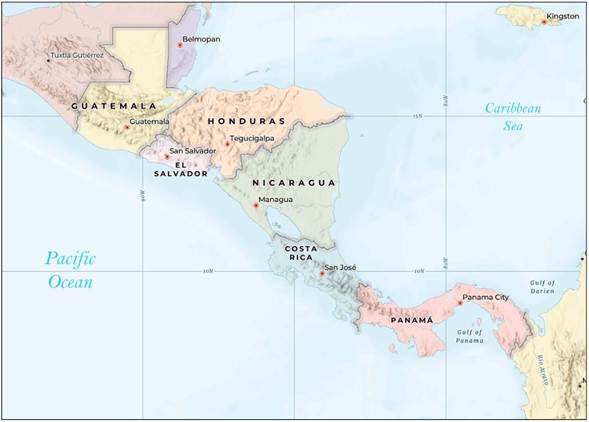
Figure 1
Central America’ main geographical aspects with the Pacific Ocean and Caribbean Sea drawing its isthmus condition and the topographic variety from mountains to lowlands in all the countries.
Renewable energy and sustainable water management are vital components for addressing Central America’s environmental and economic challenges. The region has substantial potential for renewable energy development, particularly in hydropower, geothermal, wind, and solar energy, which can help reduce dependence on fossil fuels, fostering sustainable economic growth (Dolezal et al., 2013). Investment in renewable energy infrastructure not only supports environmental sustainability but also creates jobs and stimulates economic development. Effective water resource management is equally crucial, given the region’s vulnerability to hydrometeorological disasters and the importance of water for agriculture, industry, and domestic use (Nathaniel et al., 2021). Sustainable water management practices, such as improved irrigation techniques, watershed protection, and wastewater treatment, are essential for ensuring the availability of freshwater resources. In Central America, WASH strategies focus on expanding equitable access to clean water, improved sanitation, and hygiene services, particularly in rural, marginalized, and disaster-prone areas. These efforts emphasize community-led total sanitation (CLTS), climate-resilient infrastructure such as rainwater harvesting, school-based hygiene education, and integration of WASH into disaster risk reduction frameworks. Decentralized water governance and public-private partnerships also play a key role, while regional coordination through bodies like SICA and CEPREDENAC supports shared learning and resource management (Sabogal et al., 2014). These strategies are essential for enhancing public health, reducing vulnerability, and building resilience in the face of climate-related challenges.
2.2. Datasets
This study analyzed the socio-economic and environmental dynamics of global change in Central America from 1990 to 2020, focusing on seven countries: Belize, Costa Rica, El Salvador, Guatemala, Honduras, Nicaragua, and Panama. Data were sourced from the World Bank database (https://data.worldbank.org/), which offers consistent parameters across countries, supplemented by disaster loss data from EM-DAT (CRED, 2023). Eleven variables were initially selected, representing critical aspects of global change, including carbon and energy emissions, land use, water resources, and economic impacts. These variables included:
-
GDP per capita (constant 2015 USD) (GDP)
-
Forest area (% of land area) (FA)
-
Agricultural land (% of land area) (AL)
-
Adjusted net national income per capita (current US$) (ANN)
-
CO2 emissions (kt) (COKT)
-
CO2 emissions (metric tons per capita) (COMT)
-
Renewable energy consumption (% of total final energy consumption) (REC)
-
Renewable internal freshwater resources per capita (cubic meters) (RIF)
-
Total greenhouse gas emissions (kt of CO2 equivalent) (GHG)
-
Total natural resource rents (% of GDP) (NRR)
-
Economic losses in thousands of dollars from disasters (DL)
2.3. Regional trends
To explore the temporal evolution of key variables, a time-series analysis was conducted using GDP, AL, COMT, REC, RIF, NRR, and DL. Yearly data for each country were aggregated and visualized using line plots to highlight patterns, fluctuations, and potential drivers of change. These visualizations facilitated the identification of long-term trends (e.g., increases, decreases, or stability) and enabled the contextualization of these trends within regional dynamics such as economic growth, land-use changes, renewable energy adoption, and disaster vulnerability. By contrasting individual country trajectories, the analysis uncovered regional similarities and differences.
2.4. National and subnational analyses
To address multicollinearity and ensure the integrity of the analysis, we conducted a Variance Inflation Factor (VIF) assessment and a correlation matrix. Variables with high multicollinearity (VIF > 10) or strong correlation (|r| close to 1) were excluded, resulting in the removal of FA, ANN, COKT, and GHG. The remaining variables (GDP, AL, COMT, REC, RIF, NRR, and DL) were deemed the most relevant due to their direct representation of socio-economic and environmental transformations in Central America.
Subsequently, correlation matrices were generated to visually and statistically inspect relationships between the retained variables, highlighting changes over the past three decades at national and regional levels. The analysis revealed critical interconnections and trends among variables, providing insights into environmental and economic impacts across the region. To enhance interpretability, variables were normalized using the min-max scaling method, standardizing values to a 0-1 range. Normalized values enabled direct comparison across variables and countries, ensuring comparability without prioritizing one category (e.g., economic vs. environmental). For example, a higher GDP value reflects stronger economic performance, while a higher REC value indicates greater reliance on renewable energy.
3. Results
3.1. Regional-scale spatiotemporal trend analysis
GDP across Central American countries shows consistent growth from 1990 to the present, reflecting economic development and increased production (Figure 2). In general, Panama and Costa Rica demonstrated consistent GDP growth, whereas Honduras and Nicaragua showed slower economic development. Agricultural land use declined in urbanizing countries like Costa Rica and Panama but remained stable in agricultural-dependent economies like Honduras. CO2 emissions varied significantly, reflecting differences in industrialization and energy policies. Panama (PA) exhibits the most significant growth, likely due to its strategic location as a trade hub and the Panama Canal’s contribution to global commerce. Costa Rica (CR) also displays steady GDP growth, driven by its focus on ecotourism, technology, and services. In contrast, countries like Honduras (HN) and Nicaragua (NI) have slower GDP growth, which may be linked to political instability, lower industrialization, and reliance on agriculture. Agricultural land as a percentage of total land area shows a general decline in most countries, particularly in Costa Rica (CR) and Panama (PA). This reduction may reflect urbanization, reforestation, and shifts toward conservation efforts. Belize (BE) and Honduras (HN) show more stable percentages, potentially due to the continued importance of agriculture in their economies. Urban expansion and changing land-use practices are the primary drivers of these trends.
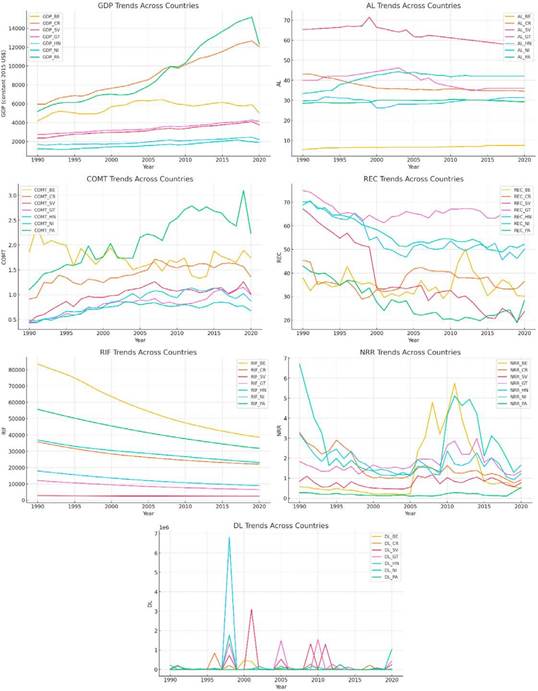
Figure 2
Variables’ trends across countries from 1990 to 2020.
CO2 emissions per capita show a diverse pattern. Panama (PA) and Costa Rica (CR) exhibit relatively low and stable emissions, supported by a strong focus on renewable energy and environmental policies. In contrast, Belize (BE) and El Salvador (SV) see fluctuating emissions, possibly tied to varying levels of industrial activity and energy consumption. Countries with limited industrial bases and small populations, like Nicaragua (NI), maintain lower emissions overall. Renewable energy consumption remains high in Costa Rica (CR), reflecting its commitment to clean energy, with hydroelectricity as a significant contributor. Panama (PA) also demonstrates a consistent reliance on renewable energy, while other countries, such as Honduras (HN) and Guatemala (GT), exhibit lower but stable renewable energy percentages. Variations reflect differences in investment in renewable infrastructure and access to natural resources like rivers for hydropower.
Renewable Internal Freshwater Resources (RIF) per capita are declining across all countries, primarily due to population growth and increased water usage. Belize (BE) and Panama (PA) have the highest per capita freshwater availability, attributed to abundant rainfall and lower population densities. In contrast, countries with higher population densities and agricultural demands, such as El Salvador (SV) and Guatemala (GT), show more pronounced declines, raising concerns about water stress.
Natural Resource Rents (NRR) Trends showed that the share of GDP from natural resource rents is declining in most countries, particularly in Nicaragua (NI) and Honduras (HN). This trend may result from economic diversification, a shift away from resource-intensive industries, or resource depletion. Panama (PA) consistently shows lower reliance on natural resource rents, underscoring its focus on service-based sectors like finance and logistics. Disaster totals vary significantly across countries, with peaks often aligning with specific extreme weather events like hurricanes or droughts. Honduras (HN) and Nicaragua (NI) report higher disaster frequencies, reflecting their exposure to tropical cyclones and floods. Belize (BE) and Costa Rica (CR) show fewer disasters, likely due to better mitigation strategies and lower exposure to extreme weather. Increasing disaster trends across the region emphasize the growing impact of climate change and vulnerability.
3.2. National-scale socio-environmental analysis
The results of this study unveil key patterns of global change across the seven Central American countries between 1990 and 2020. Through a detailed correlation matrix analysis, significant patterns at both regional and country levels are identified, providing a comprehensive understanding of the implications of global change and its challenges (Figure 3). Regionally, the diversification of the economy away from agriculture is associated with greater economic development. This trend is evident in countries that have successfully shifted their economic focus from agriculture to other sectors, resulting in higher GDP per capita. However, this economic growth is also linked to higher CO2 emissions, underscoring the need to balance economic growth with environmental sustainability (Figure 4).
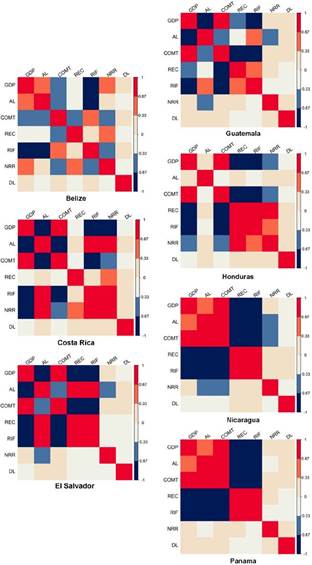
Figure 3
Correlation matrices of the various variables used in the analysis by country. GDP per capita (constant 2015 USD) (GDP), Agricultural land (% of land area) (AL), CO2 emissions (metric tons per capita) (COMT), Renewable energy consumption (% of total final energy consumption) (REC), Renewable internal freshwater resources per capita (cubic meters) (RIF), Total natural resource rents (% of GDP) (NRR), Economic losses in thousands of dollars from disasters (DL).
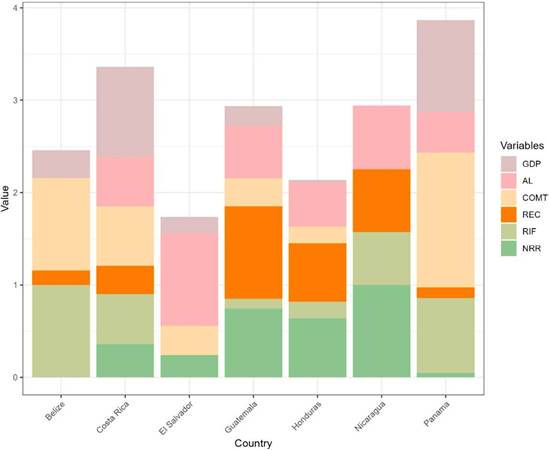
Figure 4
Chart with the most influential variables normalized from 0 to 1, highlighting their influences in each Central American country. GDP per capita (constant 2015 USD) (GDP), Agricultural land (% of land area) (AL), CO2 emissions (metric tons per capita) (COMT), Renewable energy consumption (% of total final energy consumption) (REC), Renewable internal freshwater resources per capita (cubic meters) (RIF), and Total natural resource rents (% of GDP) (NRR).
The analysis highlights that an expansion in renewable energy consumption is positively correlated with reduced CO2 emissions, indicating that a transition to renewable energy sources can mitigate the economic activities impact on environment. Furthermore, sustainable management of freshwater resources emerges as essential for economic development, given its strong positive correlation with per capita GDP. This underscores the importance of effective water resource management strategies to support economic activities while preserving environmental integrity (Figure 5a). Interestingly, the variable of economic losses in thousands of dollars from disasters does not exhibit a strong positive or negative relationship with other environmental or socioeconomic variables across any of the countries (Figure 3). This suggests that the economic impact of disasters is influenced by a complex interplay of factors beyond the scope of the variables studied here, highlighting the multifaceted nature of disaster resilience and recovery.
The country-specific findings show interesting particularities and parallelisms among countries (Figure 4). Belize shows a strong negative correlation between renewable internal freshwater resources and GDP per capita. This finding emphasizes the critical role of freshwater resources in economic development, highlighting the need for sustainable water management practices to ensure long-term economic growth. Costa Rica exhibits a positive correlation between CO2 emissions per capita and GDP per capita, indicating that economic development in the country is associated with higher emissions. This relationship underscores the importance of implementing green policies and promoting renewable energy to balance economic growth with environmental sustainability (Figure 5b). Like Costa Rica, El Salvador shows a positive correlation between CO2 emissions and GDP per capita. This suggests that as El Salvador continues to develop economically, there is a corresponding increase in CO2 emissions, necessitating strategies to decouple economic growth from environmental degradation.
The strong negative correlation between agricultural land and GDP per capita in Guatemala suggests that a heavy reliance on agriculture may hinder economic development. Diversifying the economy and reducing dependence on agriculture could foster greater economic growth and sustainability. Nicaragua exhibits a strong negative correlation between renewable energy consumption and CO2 emissions. This indicates that increasing the share of renewable energy in the country’s energy mix could help lower CO2 emissions and enhance sustainability.
In Honduras, positive correlations between agricultural land, GDP per capita, and CO2 emissions per capita indicate that increasing agricultural land slightly impacts economic development but also leads to higher emissions. This finding highlights the need for sustainable agricultural practices that support economic growth without exacerbating environmental degradation. In Panama, like Honduras, there are positive correlations between agricultural land, GDP per capita, and CO2 emissions per capita. This underscores the importance of balancing agricultural expansion with environmental sustainability efforts to mitigate the adverse impacts of increased emissions. The results indicate that while economic development is crucial for the region, it must be balanced with environmental sustainability efforts to mitigate the negative impacts of CO2 emissions. Renewable energy consumption and sustainable water resource management emerge as key factors in promoting both economic and environmental health (Figure 5c).
The analysis reveals significant interdependence in environmental and socio-economic factors across Central America, such as the shared vulnerability to hydrometeorological disasters and reliance on natural resource-based economies. These commonalities underscore the importance of regional collaboration to develop joint strategies for disaster risk reduction, resource management, and economic development. The results suggest that countries in the region would benefit from coordinated policy actions that leverage collective strengths and address cross-border challenges.
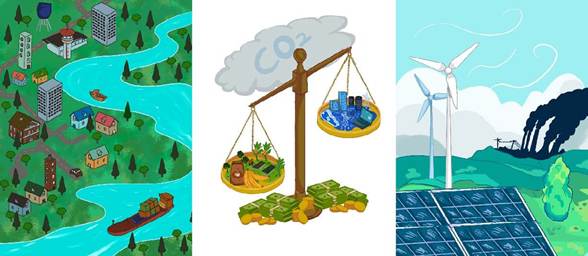
Figure 5
The three global change main challenges requiring urgent attention in Central America: Sustainable water management (left), Economic diversification and environmental sustainability (center), and Renewable energy and emissions reduction (right). Source: Fátima Retana (Graphic designer).
3.2. Subnational variability and socio-environmental dynamics
To deepen the understanding of how global change impacts manifest differently within regions of a country, an additional layer of analysis was conducted at the subnational level using punctual examples. In Guatemala, the department of Petén shows a contrasting pattern compared to the national average. While the country overall shows a negative correlation between agricultural land and GDP per capita, Petén exhibits a slight positive correlation. This suggests that in regions with ongoing agricultural expansion into forested areas, economic activities remain strongly tied to agriculture, unlike other regions transitioning to more diversified economies. Similar patterns were observed in Costa Rica, where the provinces of Limón, Guanacaste, and San José display different dynamics regarding CO2 emissions and economic growth. Limón, heavily reliant on tourism and port activities, has lower emissions per capita growth compared to the national average, while Guanacaste and San José, with its significant agricultural and urban base, aligns more closely with national trends.
In Honduras, on one hand, the department of Cortés and Tegucigalpa show higher CO2 emissions per capita relative to the national average, driven by its industrial activities and urban expansion, emphasizing the need for targeted emissions reduction strategies. The department of Olancho, on the other hand, reflects the national trend of agricultural land expansion correlating with modest GDP growth, highlighting the importance of sustainable agricultural practices. In Belize, the Belize District displays a strong negative correlation between water resource availability and GDP per capita, driven by the high reliance on water-intensive tourism and agriculture. In contrast, the Cayo District shows more balanced water use, suggesting that water conservation policies could be tailored regionally to address specific needs.
In El Salvador, the San Salvador department’s urban areas exhibit a significant positive correlation between economic growth and CO2 emissions, underscoring the need for urban green policies. The department of Ahuachapán, with its focus on agriculture, follows the national trend of agricultural dependence, indicating a need for diversification initiatives. Similarly in Panama, the Panamá Oeste and Panama provinces, with their rapid urbanization and industrial growth, show a sharp increase in CO2 emissions per capita, necessitating robust urban planning interventions. Meanwhile, the rural Bocas del Toro or Chiriquí provinces, with their reliance on agriculture, mirrors the national pattern of agricultural land use correlating with economic growth, suggesting a need for sustainable development strategies. In Nicaragua, the department of Managua stands out with a high positive correlation between economic growth and CO2 emissions, driven by industrial and urban activities, highlighting the urgency of implementing emissions controls. Conversely, the many Nicaraguan regions show a higher dependency on agriculture, suggesting a differentiated approach to regional economic planning.
4. Discussion
4.1. Key socioeconomic and environmental factors in the region
The analysis reveals that the most critical socioeconomic and environmental factors merging in Central America include economic diversification, agricultural practices, CO2 emissions, renewable energy consumption, and water resource management. Economic diversification away from agriculture is positively associated with GDP growth, yet it is also linked to increased CO2 emissions, emphasizing the need for a balanced approach to development. This finding aligns with previous studies that indicate that shifting from an agriculture-based economy to other sectors can drive economic growth, it often comes at the cost of higher environmental degradation (Booth et al., 2020). Renewable energy consumption emerges as a pivotal factor, showing a strong inverse relationship with CO2 emissions, underscoring its potential in promoting sustainable growth. This trend highlights the critical role that renewable energy sources, such as solar and wind, can play in reducing the carbon footprint while supporting economic activities (Dolezal et al., 2013). Water resources, indicated by renewable internal freshwater resources per capita, are also crucial, highlighting the region’s reliance on effective water management for economic development. Sustainable management of water resources is essential for maintaining the balance between economic needs and environmental preservation (Hidalgo, 2021). To enhance environmental sustainability, Nature-based Solutions such as soil and water conservation practices, Ecosystem-based Adaptation (EbA) measures, and tools like the Restoration Opportunities Assessment Method (ROAM) or KeyLine Design offer effective pathways. These approaches support climate resilience while aligning economic development with ecosystem restoration and water security goals.
4.2. Future impacts of climate change on studied variables
The future impacts of climate change are likely to exacerbate the existing challenges in the region. Increased frequency and intensity of hydrometeorological disasters such as floods, droughts, and hurricanes will strain both socioeconomic and environmental systems. These events are expected to become more severe with climate change, causing significant disruptions to infrastructure, agriculture, and livelihoods (Strobl, 2012). As climate change progresses, agricultural productivity could be further compromised, affecting food security and livelihoods (Imbach et al., 2017). This could lead to increased poverty and migration, further stressing the socio-economic fabric of the region. CO2 emissions may continue to rise if economic growth is not decoupled from fossil fuel use, aggravating global warming. Therefore, it is imperative to invest in renewable energy, which will play an even more critical role, necessitating substantial investments to offset the negative impacts of climate change. Water resources will become increasingly scarce, requiring innovative management strategies to ensure sustainability and resilience. Effective water conservation measures and technologies will be essential to adapt to the changing climate and secure water availability for all sectors (Huang et al., 2021).
4.3. Implications of intra-national disparities for policy interventions
The subnational analysis reveals that the impacts of global change are not homogenous within countries, which suggests that policy interventions should be tailored to regional specificities. For instance, in areas like Petén in Guatemala, Northern Costa Rica, Azuero Peninsula in Panama, and Santa Rosa of Copán in Honduras where economic growth remains closely tied to agricultural expansion, policies should focus on sustainable agricultural practices and forest conservation incentives to mitigate environmental degradation. These approaches align with Nature-based Solutions (NbS), which use natural systems to address societal challenges, and include Ecosystem-based Adaptation (EbA) measures-such as sustainable farming and forest restoration-that enhance resilience while preserving biodiversity and ecosystem services. In contrast, regions dedicated to agriculture and tourism throughout Central America could benefit from policies promoting green tourism and sustainable coastal management, capitalizing on the lower CO2 emissions associated with these activities. These targeted strategies would not only address the unique challenges faced by different regions but also enhance overall national resilience to global change. Moreover, the observed disparities in water resource management between regions such as Guanacaste and the Central Valley in Costa Rica, Sula, Cortés and Tegucigalpa in Honduras, San Salvador, Panamá Oeste and Panamá provinces, and Managua highlight the need for localized water conservation efforts. In water-scarce regions, investments in efficient irrigation techniques and rainwater harvesting systems could significantly mitigate the impacts of climate variability on water availability. Moreover, many water laws in Central America are outdated, fragmented, or poorly enforced, lacking alignment with integrated and participatory management principles. This legal obsolescence hinders effective implementation of global water norms like Integrated Water Resources Management (IWRM) and the Human Right to Water and Sanitation (HRWS), limiting progress toward sustainable and equitable water governance (Kauffer and Maganda, 2022).
4.4. Realistic policy changes for mitigating global change
Policymakers in Central America must adopt a multi-faceted approach to address the challenges posed by global change. Promoting economic diversification should be a priority, encouraging sectors beyond agriculture, such as technology and services, to reduce reliance on agriculture and promote sustainable economic growth (Nakamura et al., 2024). This strategy can help mitigate the environmental impact associated with agricultural expansion and promote more balanced economic development. Investing in renewable energy is crucial, enhancing renewable energy infrastructure and incentivizing its use to help reduce CO2 emissions and promote environmental sustainability. Policymakers should create favorable conditions for renewable energy investments through subsidies, tax incentives, and regulatory frameworks that support clean energy initiatives. Integrated water resource management should be developed, with comprehensive policies that prioritize conservation, efficient use, and protection of water resources. This includes measures such as water pricing, recycling, and the development of infrastructure for efficient water use and distribution. Enhancing disaster preparedness through strengthening early warning systems, infrastructure resilience, and community preparedness can mitigate the impacts of climate-related disasters (Alimonti and Mariani, 2024). Regional collaboration is essential, with countries collaborating on policy initiatives that address cross-border environmental challenges and share best practices. Joint efforts in areas like watershed management, disaster response, and climate adaptation can yield significant benefits for all countries involved. Central American countries have made progress in institutional capacity building, early warning systems, and ecosystem-based adaptation-such as mangrove restoration and coastal protection-to reduce climate-related risks. Current regional efforts include the Early Warnings for All (EW4ALL) initiative and various WASH (Water, Sanitation, and Hygiene) programs aimed at enhancing community resilience and health in vulnerable areas.
4.5. Importance of regional analysis for global change and socio-environmental studies
Conducting regional analyses using country-specific data is vital for understanding the complex dynamics of global change and socio-environmental interactions (Abbass et al., 2022). This approach allows for contextual insights, providing nuanced understanding of how global phenomena manifest locally, accounting for unique geographical, climatic, and socio-political contexts. By examining data at the regional level, researchers and policymakers can identify specific vulnerabilities and strengths, guiding targeted interventions and resource allocation. Comparative studies across countries can highlight best practices and common challenges, fostering collaborative solutions (Hoffmann et al., 2020). For instance, successful renewable energy initiatives in one country can serve as models for others, while shared challenges like water scarcity can be addressed through joint strategies. Moreover, insights from regional analyses can inform global strategies for sustainable development, contributing to a broader understanding and action on global change. By integrating findings from diverse regions, global analyses can better capture the complexity of environmental and socio-economic systems, leading to more effective global policies and actions (Jung et al., 2021). Finally, this study underscores the importance of integrating socioeconomic and environmental factors in policy planning to address the multifaceted challenges of global change in Central America. Future research should continue to refine these analyses, considering emerging data and trends, to support sustainable development and resilience in the region and beyond.
Several studies from diverse regions bolster this argument. In India, integrated forest-restoration projects combining carbon sequestration, biodiversity conservation, and rural livelihoods achieved over 80% of their theoretical benefits by also addressing equity concerns(Gopalakrishna et al., 2024). In urban planning contexts-such as multiple North American and European cities-a deliberate integration of socioeconomic inequities and environmental sustainability in mitigation-adaptation strategies led to synergistic improvements in resilience and public health(Grafakos et al., 2018). Similarly, a Guatemala case study coupling system-dynamics modelling with crop-growth projections within Indigenous communities revealed complex feedback and identified policy pathways that could equitably enhance food security under climate stress (Malard-Adam et al., 2024).
The findings of this study highlight the interconnected nature of environmental and socio-economic challenges in Central America. For instance, the high correlation between disaster-related economic losses and environmental degradation across multiple countries indicates that isolated national policies may be insufficient to mitigate the effects of global change. Therefore, regional collaboration is essential to address these transboundary issues effectively. Joint action plans focusing on shared challenges, such as renewable energy expansion and disaster risk reduction, would allow countries to pool resources, share knowledge, and develop cohesive strategies that benefit the entire region.
5. Conclusions
Global change significantly impacts the environmental and socio-economic interrelations in Central America, elucidating the development modes of different countries and common points in the pursuit of regional collaboration and integration to address these challenges. This national and regional analysis reveals that in Belize, Costa Rica, El Salvador, and Guatemala, there is a strong negative correlation between agricultural land and GDP per capita. Consequently, diversifying the economy to reduce dependence on agriculture is recommended to foster greater economic development. Such diversification can lead to a more resilient economy capable of withstanding global changes while promoting sustainable growth.
In Belize, Costa Rica, El Salvador, Guatemala, and Honduras, the positive correlation between CO2 emissions per capita and GDP per capita indicates that economic development is associated with higher emissions. This emphasizes the need to balance economic growth with environmental sustainability by adopting more efficient green policies such as expanding renewable energy sources (e.g., Costa Rica’s hydroelectric and wind power initiatives), promoting sustainable agriculture (e.g., agroforestry systems in Honduras), and improving urban public transportation to reduce fossil fuel dependency (e.g., Panama City metro system). In Guatemala, Honduras, Nicaragua, and Panama, there is a strong negative correlation between renewable energy consumption and CO2 emissions. Increasing the share of renewable energy can help reduce carbon emissions, promoting medium- and long-term sustainability for both the environment and human health. Additionally, in Belize, Costa Rica, Guatemala, Honduras, and Nicaragua, the strong negative correlation between renewable internal freshwater resources and GDP per capita highlights the essential role of freshwater resources in economic development. This highlights the urgent need for integrated water resource management through modern and efficient policies to ensure sustainable development. Energy trade and hydropower generation play a key role in Central America’s economic integration, yet they also pose significant environmental challenges by altering freshwater systems. Thus, future development must reconcile regional energy commerce with integrated watershed management to ensure both economic growth and environmental sustainability.
Despite experiencing millions of dollars in economic losses from disasters over the study period, the lack of strong correlations between this variable and others reaffirms the complexity of studying disasters in a geodynamically and climatically active region with high exposure and vulnerability. These findings underscore the importance of implementing policies and actions at local, national, and regional scales that promote economic diversification and sustainability throughout Central America. This study provides valuable insights into the environmental and socioeconomic dynamics of the region, highlighting the importance of sustainable development practices. The recommendations derived from the findings can inform policymakers, stakeholders, and researchers in their efforts to address global change challenges in Central America. Through regional collaboration and the implementation of sustainable policies, Central American countries can achieve balanced economic growth and environmental preservation, ensuring a sustainable future for the region.
In conclusion, this study demonstrates that the environmental and socio-economic challenges faced by Central America are deeply interwoven across national borders. The analysis of key variables, such as renewable energy consumption and disaster-related losses, suggests that these issues cannot be addressed in isolation. Therefore, regional cooperation is not only a strategic advantage but a necessity for developing robust, long-term solutions to mitigate the impacts of global change. Collaborative efforts that integrate environmental, economic, and social dimensions are critical to ensuring sustainable development in the region. These actions should be implemented through initiatives of regional institutions such as Central American Integration System (SICA), through its member, the Central American Commission for Environment and Development (CCAD), Regional Disaster Risk Reduction Platform, and Central American Economic Integration Bank (CABEI) as well as international partners of United Nations or other NGOs.
6. Ethics and conflict of interest
The authors declare that they have complied with all relevant ethical and legal requirements, both during the study and in the production of the manuscript; that there are no conflicts of interest of any kind; that all financial sources are fully and clearly mentioned in the acknowledgments section; and that they fully agree with the final edited version of the article.
7. Acknowledgements
This research was supported by Universidad de Costa Rica, Vicerrectoría de Investigación, Projects C3991 Potencial aumento del riesgo en Costa Rica y Nicaragua por causa de ciclones tropicales en el Caribe, C4106 Aplicaciones geomorfológicas y dendrocronológicas para reconstrucciones climáticas en Costa Rica, C4114 Riesgos naturales y soluciones basadas en la naturaleza, and C4468 Incorporación de la UCR en la Red Centroamericana de Ciencia sobre el Cambio Climático (RC4-UCR). Gratitude is extended to the anonymous reviewers and the editorial team of the journal for their contributions to the final edited version of the article
8. References
Abbass, K., Qasim, M. Z., Song, H., Murshed, M., Mahmood, H., & Younis, I. (2022). A review of the global climate change impacts, adaptation, and sustainable mitigation measures. Environmental Science and Pollution Research, 29(28), 42539-42559. https://doi.org/10.1007/s11356-022-19718-6
Alimonti, G., & Mariani, L. (2024). Is the number of global natural disasters increasing? Environmental Hazards, 23(2), 186-202. https://doi.org/10.1080/17477891.2023.2239807
Booth, J. A., Wade, C. J., & Walker, T. W. (2020). Understanding Central America: Global forces and political change. Routledge. https://doi.org/10.4324/9780429344282
Castellanos, E. J. (2022). Central America in dire need of inclusive climate resilient development with support from the international community. PLOS Climate, 1(11), e0000105. https://doi.org/10.1371/journal.pclm.0000105
Cavazos, T.; Bettolli, M. L.; Campbell, D.; Sánchez Rodríguez, R. A.; Mycoo, M.; Arias, P. A.; ...; & Mahon, R. (2024). Challenges for climate change adaptation in Latin America and the Caribbean region. Frontiers in Climate, 6, 1392033. https://doi.org/10.3389/fclim.2024.1392033
CRED (2023). EM-DAT: The Emergency Events Database - Disasters by Country, 2023. Database on Disasters. https://www.emdat.be
Dolezal, A., Majano, A. M., Ochs, A., & Palencia, R. (2013). The way forward for renewable energy in Central America. World Watch Institute, Washington D. C. https://www.worldwatch.org/way-forward-renewable-energy-central-america
Ferronato, N., & Torretta, V. (2019). Waste mismanagement in developing countries: A review of global issues. International Journal of Environmental Research and Public Health, 16(6), 1060. https://doi.org/10.3390/ijerph16061060
Garro-Quesada, M. D. M., Vargas-Leiva, M., Girot, P. O., & Quesada-Román, A. (2023). Climate Risk Analysis Using a High-Resolution Spatial Model in Costa Rica. Climate, 11(6), 127. https://doi.org/10.3390/cli11060127
Gopalakrishna, T.; Visconti, P.; Lomax, G.; Boere, E.; Malhi, Y.; Roy, P. S.; ... & Yowargana, P. (2024). Optimizing restoration: A holistic spatial approach to deliver Nature’s Contributions to People with minimal tradeoffs and maximal equity. Proceedings of the National Academy of Sciences, 121(34), e2402970121.
Grafakos, S.; Pacteau, C.; Delgado, M.; Landauer, M.; Lucon, O.; and Driscoll, P. (2018). Integrating mitigation and adaptation: Opportunities and challenges. In Rosenzweig, C.; W. Solecki; P. Romero-Lankao; S. Mehrotra; S. Dhakal; and S. Ali Ibrahim (eds.). Climate Change and Cities: Second Assessment Report of the Urban Climate Change Research Network. Cambridge University Press. New York. 101-138
Hall, C. (1985). América Central como región geográfica. Anuario de Estudios Centroamericanos, 11(2), 5-24.
Hidalgo, H. G. (2021). Climate variability and change in Central America: what does it mean for water managers? Frontiers in Water, 2, 632739. https://doi.org/10.3389/frwa.2020.632739
Hidalgo, H. G.; Alfaro, E.; & Quesada-Román, A. (2024). Flood projections for selected Costa Rican main basins using CMIP6 climate models downscaled output in the HBV hydrological model for scenario SSP5-8.5. Hydrological Research Letters, 18(1), 34-42. https://doi.org/10.3178/hrl.18.35
Hidalgo, H. G., Amador, J. A., Alfaro, E. J., & Quesada, B. (2013). Hydrological climate change projections for Central America. Journal of Hydrology, 495, 94-112. https://doi.org/10.1016/j.jhydrol.2013.05.004
Hidalgo, H. G.; Chou-Chen, S. W.; McKinnon, K. A.; Pascale, S.; Quesada-Chacón, D.; Alfaro, E. J.; ...; & Nakaegawa, T. (2025). Detection and attribution of trends of meteorological extremes in Central America. Climatic Change, 178(5), 1-21.
Hoffmann, R., Dimitrova, A., Muttarak, R., Crespo Cuaresma, J., & Peisker, J. (2020). A meta-analysis of country-level studies on environmental change and migration. Nature Climate Change, 10(10), 904-912. https://doi.org/10.1038/s41558-020-0898-6
Huang, Z., Yuan, X., & Liu, X. (2021). The key drivers for the changes in global water scarcity: Water withdrawal versus water availability. Journal of Hydrology, 601, 126658. https://doi.org/10.1016/j.jhydrol.2021.126658
Imbach, P., Beardsley, M., Bouroncle, C., Medellin, C., Läderach, P., Hidalgo, H., ... & Donatti C. I. (2017). Climate change, ecosystems and smallholder agriculture in Central America: an introduction to the special issue. Climatic Change, 141, 1-12. https://doi.org/10.1007/s10584-017-1920-5
Jung, M.; Arnell, A.; De Lamo, X.; García-Rangel, S.; Lewis, M.; Mark, J.; ...; & Visconti, P. (2021). Areas of global importance for conserving terrestrial biodiversity, carbon and water. Nature Ecology & Evolution, 5(11), 1499-1509. https://doi.org/10.1038/s41559-021-01528-7
Kauffer, E., & Maganda, C. (2022). The adoption of global water norms in Central America: What separates normative coherence from normative hegemony? Development Policy Review, 40, e12626.
Kaur, M., & Sood, S. K. (2020). Hydro-meteorological hazards and role of ICT during 20102019: A scientometric analysis. Earth Science Informatics, 13(4), 1201-1223. https://doi. org/10.1007/s12145-020-00495-0
Khan, S. A. R., Ponce, P., Yu, Z., & Ponce, K. (2022). Investigating economic growth and natural resource dependence: An asymmetric approach in developed and developing economies. Resources Policy, 77, 102672.
Ley, D.; Guillén Bolaños, T.; Castaneda, A.; Hidalgo, H. G.; Girot Pignot, P. O.; Fernández, R.; ... & Castellanos, E. J. (2023). Central America urgently needs to reduce the growing adaptation gap to climate change. Frontiers in Climate, 5, 1215062. https://doi.org/10.3389/fclim.2023.1215062
Malard-Adam, J., Adamowski, J., Tuy, H., & Melgar-Quiñonez, H. (2024). Modelling Indigenous small-scale agriculture and food systems in Guatemala-Hybrid Bayesian inference for data-poor regions. Agricultural Systems, 221, 104102.
Nakamura, J.; Seager, R.; Liu, H.; Cottier, F.; Puma, M. J.; Wrathall, D. J.; ...; & Adamo, S. B. (2024). Recent trends in agriculturally relevant climate in Central America. International Journal of Climatology, 44(8), 2701-2724. https://doi.org/10.1002/joc.8476
Nathaniel, S. P., Nwulu, N., & Bekun, F. (2021). Natural resource, globalization, urbanization, human capital, and environmental degradation in Latin American and Caribbean countries. Environmental Science and Pollution Research, 28, 6207-6221. https://doi.org/10.1007/s11356-020-10850-9
Oldeman, L.R. (1998). Soil Degradation: A Threat to Food Security? Report 98/01. The Netherlands, Wageningen, International Soil Reference and Information Centre. 14 pp.
Oliveira Souza, M. C., Rocha, B. A., Adeyemi, J. A., Nadal, M., Domingo, J. L., & Barbosa Jr, F. (2022). Legacy and emerging pollutants in Latin America: A critical review of occurrence and levels in environmental and food samples. Science of the Total Environment, 848, 157774. https://doi.org/10.1016/j.scitotenv.2022.157774
Ortiz, D. I., Piche-Ovares, M., Romero-Vega, L. M., Wagman, J., & Troyo, A. (2021). The impact of deforestation, urbanization, and changing land use patterns on the ecology of mosquito and tick-borne diseases in Central America. Insects, 13(1), 20. https://doi.org/10.3390/insects13010020
Quesada-Román, A. (2021). Landslides and floods zonation using geomorphological analyses in a dynamic catchment of Costa Rica. Revista Cartográfica, 102, 125-138. https://doi.org/10.35424/rcarto.i102.901
Quesada-Román, A. (2022). Disaster risk assessment of informal settlements in the Global South. Sustainability, 14(16), 10261. https://doi.org/10.3390/su141610261
Quesada-Román, A. (2023). Priorities for natural disaster risk reduction in Central America. PLOS Climate, 2(3), e0000168. https://doi.org/10.1371/journal.pclm.0000168
Quesada-Román, A., & Campos-Durán, D. (2023). Natural disaster risk inequalities in Central America. Papers in Applied Geography, 9(1), 36-48. https://doi.org/10.1080/23754931.2022.2081814
Quesada-Román, A., Hidalgo, H. G., & Alfaro, E. J. (2024). Assessing the impact of tropical cyclones on economic sectors in Costa Rica, Central America. Tropical Cyclone Research and Review, 13(3), 196-207. https://doi.org/10.1016/j.tcrr.2024.08.001
Quesada-Román, A., Pérez-Umaña, D., & Brenes-Maykall, A. (2023). Relationships between COVID-19 and disaster risk in Costa Rican municipalities. Natural Hazards Research, 3(2), 336-343. https://doi.org/10.1016/j.nhres.2023.02.002
Redo, D. J., Grau, H. R., Aide, T. M., & Clark, M. L. (2012). Asymmetric forest transition driven by the interaction of socioeconomic development and environmental heterogeneity in Central America. Proceedings of the National Academy of Sciences, 109(23), 8839-8844. https://doi.org/10.1073/pnas.1201664109
Sabogal, R. I., Medlin, E., Aquino, G., & Gelting, R. J. (2014). Sustainability of water, sanitation and hygiene interventions in Central America. Journal of water, sanitation and hygiene for development, 4(1), 89-99.
Sage, R. F. (2020). Global change biology: a primer. Global Change Biology, 26(1), 3-30. https://doi.org/10.1111/gcb.14893
Sánchez‐Murillo, R.; Esquivel‐Hernández, G.; Corrales‐Salazar, J. L.; Castro‐Chacón, L.; Durán Quesada, A. M.; Guerrero‐Hernández, M.; ...; & Terzer‐Wassmuth, S. (2020). Tracer hydrology of the data‐scarce and heterogeneous Central American Isthmus. Hydrological Processes, 34(11), 2660-2675. https://doi.org/10.1002/hyp.13758
Steffen, W., Richardson, K., Rockström, J., Schellnhuber, H. J., Dube, O. P., Dutreuil, S., Lenton, T.M., & Lubchenco, J. (2020). The emergence and evolution of Earth System Science. Nature Reviews Earth & Environment, 1(1), 54-63. https://doi.org/10.1038/s43017-019-0005-6
Strobl, E. (2012). The economic growth impact of natural disasters in developing countries: Evidence from hurricane strikes in the Central American and Caribbean regions. Journal of Development economics, 97(1), 130-141. https://doi.org/10.1016/j.jdeveco.2010.12.002