Reporte de investigación
Responsabilidad social corporativa y creación de valor compartido en Bimbo México
Corporate social responsibility and shared value creation in Bimbo Mexico

Responsabilidad social corporativa y creación de valor compartido en Bimbo México
Trascender, contabilidad y gestión, vol. 9, no. 25, pp. 2-17, 2024
Universidad de Sonora, División de Ciencias Económicas y Administrativas
Received: 11 December 2023
Accepted: 24 February 2024
Resumen:
El propósito de esta investigación es determinar si una empresa grande y transnacional como Grupo Bimbo es verdaderamente una empresa socialmente responsable de acuerdo con los criterios y teorías discutidas en este artículo. La estrategia de innovación de la Responsabilidad Social Corporativa (RSC) ha sido adoptada en múltiples firmas para tener ventajas competitivas y con fines de mejorar a marca. En este caso, corresponde esta empresa mexicana, una de las líderes en producción de alimentos en todo el mundo. Los materiales y métodos realizados fueron: entrevistas confidenciales con personal clave e investigación documental a través de fuentes oficiales de la empresa y con evidencias recolectadas para acreditar lo establecido. Los resultados sugieren que esta empresa es parcialmente socialmente responsable y parcialmente creadora de valor compartido (CSV). Este tipo de estudios son importantes en términos de contribuir a la discusión sobre la importancia y relevancia de las empresas para involucrarse en actividades que crean valor para la sociedad.
JEL: M1. Administración de empresas. M14. Cultura corporativa, Responsabilidad social corporativa.
Palabras clave: Responsabilidad social corporativa, creación de valor compartido, Bimbo.
Abstract:
This research aims to determine if a large, transnational company meets the criteria and theories of social responsibility discussed in this article. Many companies have adopted innovation strategies through Corporate Social Responsibility (CSR) to gain competitive advantages and enhance their brand reputation. In this case, the focus is on BIMBO, a major food company in Mexico. Confidential interviews and documentary research from the company’s official sources were the primary evidence collected to support the findings. This research compares each of the aspects pointed out in the literature to understand the context of social responsibility of this company. Nowadays, it is essential for society, the business environment, and government regulators to know the real practices and ensure that they are not just deceptive marketing strategies. The results suggest that this firm is partially socially responsible and partially creates shared value (CSV). Studies like this are important for contributing to the discussion on the significance and relevance of companies engaging in activities that create value for society as a whole.
Keywords: Corporate social responsibility, creation of shared value, Bimbo.
Introduction
Large companies are increasingly focused on providing social value as an innovation strategy. While product added value, quality, durability, and customer satisfaction are no longer considered CSR attributes, these companies are striving to shift to a new paradigm where they give back to society what they have received from consumers. In other words, it is becoming more prestigious and important for companies to take on a new, altruistic, and seemingly selfless role. As a result, corporations are adopting innovative strategies called “Corporate Social Responsibility,” where they advertise the positive impact, they have on their environment to improve their reputation. However, is what they do really enough? Is it a strategy of hypocrisy? Is it just a marketing tactic at its core?
Meanwhile, Porter (2016) defines Creating Shared Value (CSV) when the business involvement is going beyond just satisfying customer needs and addressing fundamental societal needs through its business model. Traditionally, businesses have operated with the mindset of running their operations and considering their social impact as a separate matter.
On the other hand, Tiwari, Santhose, Mishra, & Sundararaj (2021) argue that corporate hypocrisy occurs when companies or organizations publicly claim to do something significant that generates corporate social responsibility but end up doing something entirely different. Antonetti, Bowen, Manika, & Higgins (2020) explain that a chronic wave of corporate scandals over the past decade has threatened society’s trust in businesses.
Siegel & Vitaliano (2007) suggest that firms engage in socially responsible behavior because they expect to benefit from these actions. Such benefits may include an improved reputation, the ability to charge premium prices for their products or services, or using CSR to convince consumers that the company is honest. There are also numerous theoretical studies that highlight the potential for this activity to be integrated as a differentiation strategy among firms and emphasize the importance of information asymmetries.
A recent empirical study in China made by Yuan & Xu (2022) explores the underlying motivations and consequences of CSR from the dual perspectives of active and passive corporations and its social implications. The main goal of a firm is to make a profit, which in practice, few enterprises pay CSR without any return. It might be that some companies actively assume social responsibilities in order to obtain more benefits, while passively assume social responsibilities due to oppression. Also, this research found, (1) when enterprises conduct CSR to obtain excess returns, it is easy to form excess goodwill; (2) under the pressure of the government and society, and enterprises passively assume CSR, thereby crowding out R&D funds.
Additionally, studies on CSR date back to the 1970s, when it was established, they are innovative initiatives or strategies t to generate a better perception and reputation in society. Arlow and Gannon (1982) reviewed the relationship between profitability and corporate social responsibility and identified that all the various studies were based on indices that were questionable in terms of social responsibility. The evaluation of profitability is a relatively clear process, but the evaluation of social responsibility was not.
Aupperle, Carroll and Hatfield (1985) mention that the difficulties in studying corporate social responsibility have been the lack of an effort to empirically test definitions, propositions, and concepts; researchers have tended to create their own measures rather than use one of the many pre- existing definitions in the literature. This has not only prevented comparisons and analyzes between studies, as well as definitions in the literature. The development of a research base in the area of social problems is limited. The initial purpose of this study was to develop an instrument to overcome the lack of information when large companies advertise their social responsibility. With this and other references, we want to know if social responsibility is really applied, in addition to addressing various elements that make up social responsibility and contrasting it with theoretical aspects.
On the other hand, Brugmann and Prahalad (2007) mention that non-governmental organizations (NGOs) have had an important influence in promoting a culture of social responsibility in the markets, in areas such as chemical regulation, responsibility for oil spills, emissions atmospheric, liquid waste, food standards and child labor. Instead, companies have spent a lot of time and money launching counter-campaigns to protect their reputations.
Biswas, Tortajada, Joshi & Gupta (2013) discuss an example of CSR where Nestlé, a major multinational food and beverage company operating in over 180 countries, assisted Moga farmers in India in various ways to create “shared value.” However, the company also pursued other incentives such as increased productivity, higher sales, and penetration into new markets.
The European Commission (2022) defines CSR as the responsibility of companies for their impact on society. Companies can demonstrate social responsibility by incorporating social, environmental, ethical, consumer, and human rights concerns into their business strategy and operations while complying with the law.
Nahornyi, Tiurina, Ruban, Khletytska & Litvinov (2022) conducted a study on the current practice of social responsibility among transnational corporations. Their results show that these corporations have internal documents that clearly define the list of stakeholders and their areas of responsibility, greatly simplifying cooperation and accountability processes. As a result, corporations create their own internal institutional environment where ethical norms help prevent opportunistic behavior by personnel, conflicts of interest, bribery, corruption, and fraud.
This paper will review the Mexican company “Bimbo,” which appears to fully institutionalize CSR as an innovation in all its structural processes. According to its website (2017), Bimbo has been recognized as a Socially Responsible Company (ESR) for seventeen consecutive years. However, this research case can be further analyzed by comparing the facts with theoretical arguments beyond the company’s vision and discourse.
The paper is structured as follows: the second part contains the literature review and concepts that supports this research, then the methodology aspects, so that an analysis and discussion of CSR and CVC of this Mexican firm is defined. Finally, the conclusions and reflections of the research are presented.
1. Prior studies
It is crucial to examine each company’s situation to avoid being misled. This section presents two important articles that informed the research approach, published by Porter & Kramer (2011), where they discuss the criteria, a company must meet to be considered socially responsible, as shown in Image 1.
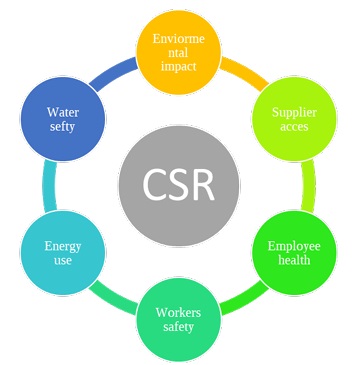
Based on the criteria in Image 1, a literature search was conducted to support each point of Porter’s & Kramer’s proposal. The literature review will then be compared with Grupo Bimbo’s “corporate responsibility” practices (as revealed through interviews) to determine how socially responsible the company is and how much value it generates for society. Alternatively, it may be determined that this Mexican company does not engage in CSR and CVC practices.
Likewise, this particular research is related to other cases that have been carried out on multinational companies, such as the case of Olup (2012) that analyzes socio-environmental aspects in 4 important American companies (Walmart, Coca-Cola, Apple and Canon). Another similar investigation is that of Singh, Bawa, & Sharma (2016) who found that companies such as Nestle, Tata and ITC have used this concept as a marketing campaign to increase only the profits of the company and to make their brand more prestigious.
Article 1 by Porter and Kramer (2011). Creating Shared Value, How to Reinvent Capitalism
This article addresses society’s needs, which extend beyond conventional economic or financial concerns to include a consumer interest in preserving global resources such as climate, water, and biodiversity, as well as the dignity and health of workers.
Shared value can be defined as operational innovative policies and practices that enhance a company’s competitiveness while improving economic and social conditions in the communities where it operates. Companies can create economic value by creating social value. Porter & Kramer (2011) identify three ways to achieve this innovative strategy: 1) reconfiguring products and markets, 2) redefining productivity in the value chain, and 3) creating industrial support clusters at the company’s locations.
Addressing societal concerns can provide significant productivity benefits to a company. Society can benefit in many ways, such as when employees and their families become healthier, reducing employee absences and productivity losses. In the image below, Porter & Kramer (2011) illustrate some important connections between societal well-being and enterprise productivity:
Additionally, numerous of societal issues such as natural resource scarcity, water consumption, safety health, working conditions, and unfair treatment in the workplace, are inextricably linked to a company's processes and value chain. Societal issues might result in economic expenses in the firm's value chain since the consumers are the society, which is why opportunities can create shared value. For example, Wal-Mart reduced carbon emissions and saved $ 200 million by decreasing packaging and saving 100 million miles from its truck delivery routes (Porter & Kramer, 2011).
Another remarkable point from this theory is the “Use of resources”, new approaches to water, raw materials, and packaging, as well as expanded recycling- reuse are being catalyzed by increased environmental consciousness and technological advancements. An interesting example could be the Dow Chemical enterprise that was able to save one billion gallons of fresh water at its largest manufacturing facility, enough to sustain approximately 40,000 people in the U.S for almost a year.
Article 2 by Porter & Kramer, 2007. Strategy & Society: The Link between Competitive Advantage and Corporate Social Responsibility"
This article complements the previous one by providing recommendations for business leaders to implement CSR and CVC actions. The authors’ theoretical foundations suggest that CEOs and company owners should first identify specific social issues to address and then determine where they can make an impact within their entire range of processes, procedures, and logistical structures in their value chains. Ideally, this should be approached in the following manner:

Source: Based on Porter & Kramer (2007).
After identifying the points of intersection and the social issues to be addressed, several research studies that complement what Porter and Kramer explain in each concept of Image 1will be cited. This will allow each point to be compared with the results of the interviews:
A. Green Supply Chains (environmental impact)
The successful integration of environmental protection and insights into supply chain management results in a green supply chain. Some components such as product design, materials procurement, manufacturing, logistics, and life cycle product management are all included.
There are multiple authors who refer to a green supply chain, for example Kogg (2003) takes upthe definitions of GSCM (Green Supply Chain Management) given by Zsidisin and Siferd (2001). Kogg indicates that green chains are a set of supply chain management policies and initiatives made in response to concerns related to the natural environment with respect to the firm's design, procurement, production, distribution, use, reuse and disposal of goods and services.
On the other hand, Srivastava (2007) defined green supply chain management as an integration of environmental thinking into supply chain management, including product design, material sourcingand selection, manufacturing processes, delivery of final products to consumers, and end-of-life product management. While the authors Chin, Tat, & Sulaiman (2015) highlight that Green Supply Chain practices are conceptualized to include green procurement, green manufacturing, green distribution, and green logistics.
Moreover, the empirical research made by Hsu & Chen (2023) where they extend the ecological debate, reconciling the divergent views by modeling and proposing the relationships between CSR, from a level of external perspective and environmental performance, such as pollution reduction. The results testify to the positive relationship between CSR (external orientation) and pollution. Moreover, CSR exerts a moderating effect on pollution.
B. Employees and consumers healthy food
Bancerz (2016) in his study comments that increasing industry involvement in non-traditional corporate food interests (NTCFI's), or "social and environmental concerns", which is in line with CSR; these interests are analyzed and explored by taking advantage of changing governance structures in the food system. Examples of NTCFIs include initiatives around healthy food, food safety, animal welfare, local food, and other social and environmental issues.
On the other hand, Sharma, Teret, & Brownell (2010) comment that there are alarms about the links between poor diet and disease, as well as striking increases in obesity. Policy makers, the public and health professionals have challenged the practices of the food industry.
C. Discriminatory business practices and failure to respect human rights
It is important to comment that companies must take care of the dignity of employees, as well as a broad respect for their human rights and a guarantee of non- discrimination. Weissbrodt & Kruger (2003) mention that some transnational corporations do not respect minimum international human rights standards and, therefore, may be involved in abuses such as the employment of child workers, discrimination against certain groups of employees, lack of safe and healthy working conditions, etc.
In addition, Abreu & Batmanghlich (2014) emphasize that recent studies attempted to explain the role of CSR in discrimination concerning labor, this is possibly the most developed attribute of CSR because the early identification of internationally accepted norms. Also, gender or racial discrimination reduces the spectrum to hire capable employees (Porter & Kramer, 2011).
Moreover, Hayes, Kaylor & Oltman (2020) proposed, mediations and endeavors intended to encourage representatives from the danger of separation at the working environment that positively fit to the reasonable focal point of CSR. Associations should to, in this manner, be urged to pursue cooperative energy between racial awareness coaching programs and other CSR drives.
Likewise, to the fact that there is potential for hierarchical environment benefits (e.g., moral environment and variety environment), yet utilizing such a methodology may straightforwardly impact business related mentalities and practices.
D. Safe working conditions
Bellovi & Senovilla (2004) mention that for a company to be recognized as socially responsible it must provide to its labor with safe and healthy working conditions in which they can develop themselves in a better way. They also describe that within the firm, healthy working conditions should be indispensable as one of the primary objectives of the organization, so that it should be considered as one of its strategic objectives.
In fact, The Safety and Health at the Heart of the Future of Work (2019) states that corporate social responsibility is essential as a driving force for risk prevention, as well as regulation, including both soft and hard law. Researchers and manufacturers need to integrate safety in R & D processes, and demonstrate the harmless character of the materials, products, and production process.
2. Research question and assumptions
How much is “Grupo Bimbo México” a socially responsible company that creates shared social value?
Assumption.
The company has a good reputation in Mexico and is a generator of social value and shared value with respect to the preview theory, this is largely because to its philosophy of "Being a highly productive and fully human company, where the person is at the center of its existence" this values are the main argument for being a company with multiple contributions to civil associations and national recognitions such as the Socially Responsible Company (ESR) that for 17 consecutive years has been awarded by the Mexican Center for Philanthropy (CEMEFI). This is a yearly prize that BIMBO has received since the implementation of socially responsible measures, mainly due to its production and organizational processes.
3. Research methodology
For the case of Grupo Bimbo in Mexico, qualitative methods were used to gather information about the company. The data was collected qualitatively to determine the progress of the Bimbo Company in terms of CSR and CSV.
Following are the two approaches that were utilized:
Documentary information:
Reference was made to the publication by Grupo Bimbo on its annual financial reports through different years, on its website, as well as academic articles published in journals of related sciences.
2. Confidential interviews with key informants:
The chosen informants, whose identities are kept private for confidentiality purposes, they hold executive and supervisory roles within the organization. They have supplied the necessary qualitative data to evaluate if Grupo Bimbo fully, partially, or not at all aligns with a company practicing Corporate Social Responsibility (CSR) and if it creates shared value. The interviews took place in 2020, both face-to-face and virtually.
4. Discussion and results of the CSR and CVC innovation strategy in bimbo Mexico
In the following chapter, we will examine and compare through eight points how well Bimbo aligns with being a company that generates CSR and CSV, based on the theoretical framework. This will be done by discussing and comparing the data obtained from documentary research and interviews with employees (key personnel):
4.1. Reconfiguring the traditional sales channel market
Grupo Bimbo’s website (2013) states that Blue Label Mexico is a technology company with a commercial brand called Red Qiubo, they argued that they made an alliance that focuses on boosting and strengthening the traditional channel, increasing its productivity. They do this through sales points terminals that are offered to micro-entrepreneurs so that they can receive payments of their clients by credit or debit card. Grupo Bimbo, through its extensive distribution network, serves as their commercial arm and point of contact with customers.
Bimbo created financing programs for micro entrepreneurs. Casanova (2009) mentions that the association between Grupo Bimbo and the financial institution “Fin Común” allows them to provide credit lines to their clients and make the value chain more secure and stable. According to primary sources, this program consists of providing credit to clients for an amount of less than $2,000 Mexican pesos (about $100 US dollars) for product purchases, which is undoubtedly an important source of financial assets for micro entrepreneurs who probably do not have access to a financing through the conventional banking system.
4.2. Dietary health and other benefits
Food companies like Bimbo used to prioritize flavor and sales volume, leading to increased consumption. However, they are now shifting their focus to the fundamental need for better nutrition and have introduced healthier product lines such as “Oroweat and Sanissimo,” made with ingredients like grains, wheat, oatmeal, and nopal. However, there is still much work to be done within the “Barcel” organization, which has brands like “Vero, and Coronado” that produce candies, chocolates, and sweets that lack nutritional value and do not contain ingredients associated with a healthy diet. Bimbo also has some brands such as Suandys or Marinela that lacks healthy ingredients.
One of the main ingredients that Bimbo uses the most for the manufacture of its products is "HighFructose 42" which is in the top 10 of the most used inputs according to the interview and is used in multiple industries as a sweetener, it has been replacing other nutritive sweeteners, this ingredient may constitute a risk in the development of type 2 diabetes, which increases the consumption of fructose by 10% according to a publication by (Bellingeri et al, 2016). On the other hand, a study done by Olguín et al (2015) highlight that hyper- triacylglycerolemia, derived from frequent high fructose consumption, is considered one of the most detrimental and earliest onset effects. Even so, they could not determine whether high fructose can cause diabetes, but emphasize that more studies need to be done by taking glucose levels in parallel.
Other studies, for example Goran, Ulijaszek & Ventura (2013) suggest that in all diabetes indicators were higher in countries that use high fructose corn syrup compared to those that do not, and this trend was significant for diabetes prevalence estimates. In another study made by Bray, Nielsen & Popkin (2004) suggest that excessive consumption of high fructose sweetened beverages containing more than 50% free fructoseand increased total fructose intake may play a role in the obesity epidemic. It is unknown whether HFCS (High Fructose Corn Syrup) used in solid foods produces the same overconsumption as in beverages, but they suspect that if high fructose were entirely in solid form, it would not pose the same problem.
In relation with the arguments above, it can be inferred that some Grupo Bimbo products can develop diabetes and obesity, this goes against any CSR measure, as mentioned by authors Bancerz (2016) and Sharma et al (2010) given that these ingredients occur more in “Marinela” and “Barcel” brands, there are products where a large part of their consumers are infants.
4.3. Safe working conditions
Grupo Bimbo on its website grupobimbo.com (2018) indicates that 10 of its work centers have received the Safe Company certification from the STPS (Ministry of Labor and Social Welfare, acronym in Spanish).
Likewise, one of the insiders interviewed commented that often they carry out internal campaigns for the prevention of accidents such as internal audits where the same collaborators participate, informative posters and safety capsules before starting a meeting of more than 10 people, they have also transformed several of their work centers to avoid accidents, their principle is: "every injury can be avoided".
These prevention initiatives undoubtedly generate social value because according to Bellovi & Senovilla, (2004) and the European Agency for Safety at Work, this allows employees to be in physically optimal conditions to spend time with their families and at the same time the company prevents the payment to the Mexican Institute of Social Security (IMSS, acronym in Spanish) for work-related accidents, which represent a cost that all companies want to avoid. This in turn generates shared value creation and social responsibility.
4.4. Discrimination, equity, and diversity
According to the confidential insider respondents (people who were interviewed, we explained this on the research methodology) and the Grupo Bimbo’s website (2018), since 2014 the company has "consciously" sought to ensure that all people of different backgrounds, styles and experiences have the same opportunities to participate, get involved and to be promoted within the company. Likewise, emphasize that before 2014 recruiters discriminated against applicants for a vacancy because of any tattoo, earring, hair color, the way they dressed and even if it was male or female to fill specific vacancies. Now the company has tried to be inclusive, perhaps it was for social pressure and changes in morals worldwide, also it was implemented a policy called "diversity and inclusion" where they try to avoid any type of discrimination in their recruitment processes, and this is intended to permeate all levels of the organization from managers to operatives. Many trainings have been held to promote this culture.
However, there is something that continues to be the "Achilles Heel" of the group, according to several confidential respondents, in order for an internal collaborator to grow and aspire to a higher position from operational to managerial level, he/she must be referred by someone important in the firm. It is said that for executive positions they often invite the sons of higher directors or managers to participate in that type of positions, it is impossible to invite people who do not have a reference from the upper hierarchy of the organization.
This leads to the intuition that the company is very traditionalist and discriminates in its recruitment processes that are unfair or equal, no matter it is a public company, consequently, does not correspond to a CSR practice.
4.5. Procurement and supply chain practices
According to those surveyed, Grupo Bimbo is partnering with one of their primary raw material suppliers, their egg providers, to release birds from cages and only buy free-range eggs. This initiative is also being undertaken by other multinational companies such as Nestlé, Bachoco, and McDonald’s, and it is anticipated that the project will be fully implemented by 2025.
There is no doubt that these practices create CSR by providing better care, protection, and quality of life for animals, exemplifying a sustainable green supply chain. However, this initiative may have unintended consequences, such as increasing the cost of eggs in the market due to higher unit production costs resulting from decreased productivity as space for hens is used less efficiently. Prices may also rise as the supply chain shrinks. Therefore, it is crucial to strike a balance between being productive with this new practice and remaining cost competitive.
4.6. Ecological impact on operations and transportation
Grupo Bimbo has implemented several initiatives to encourage the use of green energy, including the creation of the “Bimbo Solar” self-supply system. On Grupo Bimbo’s website (2018), CEO Daniel Servitje stated that incorporating this technology into their operations and corporate building is crucial. He emphasized that Grupo Bimbo is taking another significant step towards sustainability and protecting the planet, and that every action and effort counts towards preserving our environment.
With the Bimbo Solar energy production network, Grupo Bimbo will integrate 33 systems, which together will generate 3.7 MW, equivalent to avoiding the annual emission of 2,500 tons of CO2. This is in favor of a green and sustainable supply chain.
Three ecological sales centers have also been created in the cities of Guadalajara, state of Jalisco, Monterrey, state of Nuevo León and Mexico City, each city with approximately 100 electric vehicles, this units are supplied by the Piedra Larga wind farm in Oaxaca (a state located on Southeast of Mexico). This wind farm will produce 333 GW/h (gigawatts per hour) per year from 45 wind turbines of 2 megawatts each.
It is worth noting that while Bimbo has made significant efforts to invest in renewable energy, these efforts appear insufficient for the company’s level of operation. Despite boasting of having three green sales centers, these represent only 1% of their 240 sales centers. According to information provided by interviewees, Bimbo’s entire fleet of electric vehicles in Mexico consists of 393 units, representing only 0.01% of the total.
The number of electric vehicles owned by the organization is significantly lower compared to the total number of vehicles, which contradicts theories on green supply chains. What is the purpose of promoting sustainability or boasting about reducing CO2 emissions when only 0.01% of the company’s vehicles are electric? Interestingly, the electric vehicles are used to deliver products to the final customer, serving as a useful advertising tool.
In the 21st century and the new era of capitalism and social inclusion, this company still lags behind in terms of CSR and creating shared value. Bimbo has been promoting itself for years on social media and its website as a socially responsible company, but there are critical issues that need to be addressed to become a model company in CSR and CSV:
The company still has work to do to create a truly green supply chain, as its CO2 footprint from non- electric vehicles remains large. However, it should be noted that the company has achieved an efficient and sustainable level in its treatment of water, waste, and packaging processes. Perhaps Bimbo should develop new business models and strategies that effectively address its environmental impact while creating value and remaining profitable. The company has already entered into agreements with technology companies to enter new markets more effectively.
There is also a significant lag in promoting the consumption of healthy products, as some contain excessive amounts of sweeteners, including high fructose, which can contribute to diabetes or obesity. This raises questions about whether this constitutes a practice of Corporate Social Responsibility, especially since many of its consumers are children.
4.7. Water use
On the website of the company Grupo Bimbo’s website (2018) the firm mentions that it celebrates World Water Day with concrete actions to reduce the water footprint:
"In 2017, the reused water that Grupo Bimbo used represented 11% of its total consumption, which is equivalent to the content of more than 215 Olympic swimming pools, achieving a cumulative increase of 25% in the last 3 years".
According to the aforementioned interviewers, there are 38 plants or factories in Mexico and all of them have water treatment plants, practically 100% of the production units, and 9 of these 38 have storage, capture and use of rainwater in their operations. The company also has 90 arches for washing its vehicles in the workshop area; these automatic washing arches are supplied with treated water, which is part of the company's sustainability policy.
With these actions, Grupo Bimbo is a model to follow in the treatment of water, because in addition to being green supply chain initiatives, they are also creators of shared value, since the company, by reusing and treating water, has significant savings that help it to be profitable and sustainable over time.
4.8. Use and disposal of packaging
The company began using degradable polyethylene packaging in 2008, what respondents said is that Bimbo was the first Mexican company to use this type of material for the production and distribution of its operations, initially the transformation was only in the packaging of boxed bread and subsequently other categories of products were incorporated until completing 100%. This packaging preserves the freshness and quality of bread, crackers, toast, etc.
Previously used packaging used to degrade in 80 or 90 years and now with the new packaging it takes no more than 10 years, there are packages that can degrade in 3 or 5 years, depending on the characteristics of the wrapper. This decision helps to protect the environment and thus results in a CSR practice but not necessarily a CSV practice, as the economic and social development impact it has had is unknown.
5. Conclusions
Companies are social benefactors, this company is a great example of investment and job creation, however, as a society we must point out the factors that these large businesses suffer in order to meet the expectations of the society.
In Mexico there is little research focused on evaluating performance in terms of social responsibility and value generation, which is why this research is relevant. In a way, this type of research’s encourages companies to always make continuous improvements in each of their processes.
Further, the large firm, Bimbo in Mexico, is partially a company that promotes CSR and CSV. Despite having innovative practices that respect and improve the ecosystem and economic environment, there is still a gap for improvement. In the past, Bimbo had values rooted in the last century, which included discrimination based on religion, physical appearance, or because a lack of recommendation. However, with its new “diversity and inclusion” model, it represents an important change. Nonetheless, in the 21st century and the new era of capitalism and social inclusion, this company still lags behind in some innovative aspects such as CSR and shared value generation.
On the other hand, we also see how Bimbo helps its traditional channel grow through credit mechanisms and technology support for small retail customers. This helps generate economic value for both sides and is a win-win strategy.
Bimbo has been promoting itself for years on its social networks and website as a good social marketing strategy. However, there are critical aspects that need to be addressed in order to be a model company in the areas of CSR and CSV. The environmental impact of the company still needs work to form a true green supply chain. The CO2 emissions from its vehicles are still high compared to electric vehicles. However, the firm has reached an efficient and sustainable level in the treatment of water, waste, and packaging processes. Perhaps this company should develop new business models and strategies that effectively address environmental impact while creating value and being profitable.
Additionally, there is a significant lag in promoting healthy products. Some products contain too many sweeteners, including high fructose, which can cause diabetes or obesity problems. This raises questions about whether this corresponds to a practice of Corporate Social Responsibility since a large part of its consumers are children.
References
Abreu, J. L., & Batmanghlich, C. (2014). Corporate Social Responsibility, Human Rights and Discrimination Corporate Social Responsibility, Human Rights and Discrimination. Daena: International Journal of Good Conscience, 9(3), 205-211.
Antonetti, P., Bowen, F., Manika, D., & Higgins, C. (2020). Hypocrisy in corporate and individual social responsibility: Causes, consequences and implications. Journal of Business Research, 114, 325-326.
Arlow, P., & Gannon, M. J. (1982). Social responsiveness, corporate structure, and economic performance. Academy of Management Review, 7(2), 235-241.
Aupperle, K. E., Carroll, A. B., & Hatfield, J. D. (1985). An empirical examination of the relationship between corporate social responsibility and profitability. Academy of management Journal, 28(2), 446-463.
Bancerz, M. (2016). New CSR in the food system: Industry and non-traditional corporate food interests. Canadian Food Studies/La Revue canadienne des études sur l'alimentation, 3(2), 127-144.
Bellingeri, L., Laborde, M., Ferro, R., Salvatore, L., Fernanda, A. M., & Bottesi, R. (2016). Association between high fructose corn syrup and type 2 diabetes.
Bellovi, M., & Senovilla, L. (2004). Social responsibility and working conditions. Prevención, trabajo y salud: Revista del Instituto Nacional de Seguridad e Higiene en el Trabajo, (31), 4.
Biswas, A. K., Tortajada, C., Biswas-Tortajada, A., Joshi, Y. K., & Gupta, A. (2013). Creating Shared Value: Impacts of Nestlé in Moga, India. Springer Science and Business Media.
Bray, G. A., Nielsen, S. J., & Popkin, B. M. (2004). Consumption of high-fructose corn syrup in beverages may play a role in the epidemic of obesity. The American journal of clinical nutrition, 79(4), 537-543.
Brugmann, J., & Prahalad, C. K. (2007). Cocreating business's new social compact. Harvard business review, 85(2), 80.
Casanova, L., & Dumas, A. (2009). Corporate social responsibility and Latin American multinationals.
Chin, T. A., Tat, H. H., & Sulaiman, Z. (2015). Green supply chain management, environmental collaboration and sustainability performance. Procedia CIRP, 26, 695-699.
European Commission (2022). CSR a European issue. contribution to the work of the French Presidency of the Council of the European Union. France Stratégie. https://www.strategie.gouv.fr/english-articles/csr-european-issue-contribution-work-french-presidency-council-european-union
Goran, M. I., Ulijaszek, S. J., & Ventura, E. E. (2013). High fructose corn syrup and diabetes prevalence: a global perspective. Global public health, 8(1), 55-64.
Grupo Bimbo’s website (2013). Grupo Bimbo, Blue Label Mexico and Visa, increase acceptance of electronic payments in Mexico. Grupo Bimbo. https://www.grupobimbo.com/es/prensa/comunicados/innovacion/grupo-bimbo-blue-label-mexico-y-visa-incrementan-la-aceptacion-de
Grupo Bimbo’s website (2018a). Con el reconocimiento de empresa segura, Bimbo reafirma su compromiso con la seguridad y salud se sus colaboradores. Grupo Bimbo. https://www.grupobimbo.com/index.php/es/prensa/comunicados/liderazgo/con-el-reconocimiento-de-empresa-segura-bimbo- reafirma-su-compromiso
Grupo Bimbo’s website (2018b). Grupo Bimbo Celebrates World Water Day With Concrete Actions To Reduce Water Footprint. Grupo Bimbo. https://www.grupobimbo.com/es/prensa/comuni cados/medio-ambiente/grupo-bimbo-celebra-el-dia-mundial-del-agua-con-acciones
Grupo Bimbo’s website (2018c). Grupo Bimbo ratifies its environmental commitment through its new energy self-supply system, Bimbo solar. Grupo Bimbo. https://www.grupobimbo.com/es/prensa/comuni cados/medio-ambiente/grupo-bimbo-ratifica-su-compromiso-ambiental-traves-de-su-nuevo
Grupo Bimbo’s website (2018d). Grupo Bimbo Reaffirms Its Commitment As A Safe Company On World Day For Safety And Health At Work. Grupo Bimbo. https://www.grupobimbo.com/es/prensa/comuni cados/liderazgo/grupo-bimbo-reafirma-su-compromiso-como-empresa-segura-en-marco- del
Grupo Bimbo's website (2017). Grupo Bimbo Recibe el Distintivo de Empresa Responsable por 17 Años Consecutivos. Grupo Bimbo. https://www.grupobimbo.com/es/prensa/noticias/liderazgo/grupo-bimbo-recibe-el-distintivo-de-empresa-socialmente-responsable-por
Hayes, T., Kaylor, H., & Oltman, K. (2020). Coffee and controversy: How applied psychology can revitalize sexual harassment and racial discrimination training. Industrial and Organizational Psychology: Perspectives on Science and Practice, 13(2), 117-136.
Hsu, B. X., & Chen, Y. M. (2023). The relationship between corporate social responsibility, external orientation, and environmental performance. Technological Forecasting and Social Change, 188, 122278.
Kogg, B. (2003) Greening a Cotton-textile Supply Chain: A Case Study of the Transition towards Organic Production without a Powerful Focal Company. Greener Management International, (43), 53-64.
Nahornyi, V., Tiurina, A., Ruban, O., Khletytska, T., & Litvinov, V. (2022). Corporate social responsibility in modern transnational corporations. Amazonia Investiga, 11(53), 111-121.
Olguín, M. C., Posadas, M. D., Revelant, G. C., Labourdette, V., Marinozzi, D. O., Venezia, M. R., & Zingale, M. I. (2015). Effects of high fructose and sucrose consumption on metabolic parameters in obese and diabetic rats. Revista chilena de nutrición, 42(2), 151-156.
Olup, L. (2012). Four Case Studies on Corporate Social Responsibility: Do Conflicts Affect a Company’s Corporate Social Responsibility Policy?
Porter, M. E. (2016). On Creating Shared Value. Rotman School of Management. https://www.rotman.utoronto.ca/Connect/Rotman-MAG/IdeaExchange/Page3/Michael-Porter#:~:text=Creating%20Shared%20Value%20(CSV)%20is,a%20separate%20set%20of%20 considerations.
Porter, M. E., & Kramer, M. R. (2011). The big idea: Creating shared value.
Porter. M. E, & Kramer, M. R. (2007). Strategy and society: The link between competitive advantage and corporate social responsibility. Harvard business review .
Safety and health at the heart of the future of work. (2019). International Labour Organization. https://www.ilo.org/wcmsp5/groups/public/---ed_protect/---protrav/---safework/documents/publication/wcms_724000.pdf
Sharma, L. L., Teret, S. P., & Brownell, K. D. (2010). The food industry and self-regulation: standards to promote success and to avoid public health failures. American Journal of Public Health, 100(2), 240-246.
Siegel, D. S., & Vitaliano, D. F. (2007). An empirical analysis of the strategic use of corporate social responsibility. Journal of Economics & Management Strategy, 16(3), 773-792.
Singh, S., Bawa, J., & Sharma, G. D. (2016). A case study on Corporate Social Responsibility in NESTLE, TATA, ITC. ADR Journals.
Srivastava, S. K. (2007). Green supply-chain management: a state-of-the-art literature review. International Journal of Management Reviews, 9(1), 53-80.
Tiwari, M., Tiwari, T., Santhose, S., Mishra, L., MR, R., & Sundararaj, V. (2021). Corporate social responsibility and supply chain: A study for evaluating corporate hypocrisy with special focus on stakeholders. International Journal of Finance & Economics.
Weissbrodt, D., & Kruger, M. (2003). Norms on the responsibilities of transnational corporations and other business enterprises with regard to human rights. American journal of international law, 97(4), 901-922.
Yuan, L., Zheng, L., & Xu, Y. (2022). Corporate social responsibility and corporate innovation efficiency: evidence from China. International Journal of Emerging Markets, (ahead-of-print).
Zsidisin, G. A., & Siferd, S. P. (2001). Environmental purchasing: a framework for theory development. European Journal of Purchasing and Supply Management, 7(1), 61-73.
Author notes
*Hugo César Enríquez García. E-mail: hugo.enriquez@academicos.udg.mx.