Abstract:
This research evaluated the impact of effective microorganisms (EM) on cacao fermentation and their influence on its physical, chemical, and antioxidant characteristics. A completely randomized statistical design with two factors -type of fermentation (jute sack or wooden boxes) and EM concentration (1 %, 3 %, and 5 %)- was used over six fermentation intervals (0, 24, 48, 72, 94, and 120 h). Parameters analyzed included temperature, pH, °Brix, and grain weight. Results showed significant impact from EM application. The highest phenol content (24.17 g GAE/100g) was observed with 3 % EM in boxes. Antioxidant capacity was highest with 5 % EM in jute sacks (ABTS method) and 3 % EM in sacks (DPPH method, 184.01 µmol Trolox Equivalent/g). Optimal fermentation was achieved with 5 % EM in boxes and 1 % EM in sacks, yielding quality values of 79 % and 85 %, respectively. Instrumental color analysis showed no significant differences. EM inclusion positively affected cacao grain quality, enhancing its physical, chemical, and antioxidant properties, though results varied with EM concentration and fermentation type.
Keywords: Cacao, antioxidant capacity, phenols, effective microorganisms.
Resumen:
Esta investigación evaluó el impacto de los microorganismos efectivos (ME) en la fermentación del cacao y su influencia en sus características físicas, químicas y antioxidantes. Se utilizó un diseño estadístico completamente aleatorizado con dos factores: tipo de fermentación (saco de yute o cajas de madera) y concentración de ME (1 %, 3 % y 5 %), durante seis intervalos de fermentación (0, 24, 48, 72, 94 y 120 h). Los parámetros analizados incluyeron temperatura, pH, °Brix y peso del grano. Los resultados mostraron un impacto significativo de la aplicación de ME. El mayor contenido de fenoles (24.17 g GAE/100g) se observó con 3 % de ME en cajas. La capacidad antioxidante fue mayor con 5% de ME en sacos de yute (método ABTS) y 3 % de ME en sacos (método DPPH, 184.01 µmol Equivalente Trolox/g). La fermentación óptima se logró con 5 % de ME en cajas y 1 % de ME en sacos, obteniendo valores de calidad del 79 % y 85 %, respectivamente. El análisis de color instrumental no mostró diferencias significativas. La inclusión de ME en la fermentación del cacao afectó positivamente la calidad del grano, mejorando sus propiedades físicas, químicas y antioxidantes, aunque los resultados variaron según la concentración de ME y el tipo de fermentación.
Palabras clave: cacao, capacidad antioxidante, fenoles, microorganismos eficientes.
Carátula del artículo
Induction of effective microorganisms (EM) in the fermenting mass of cacao ( Theobroma cacao L.) and their impact on physicochemical and antioxidant characteristics
Inducción de microorganismos eficaces (ME) en la masa fermentativa del cacao (Theobroma cacao L.) y su incidencia las características físico química y antioxidante.
 Frank Intriago Flor frank.intriago@utm.edu.ec
Universidad Técnica de Manabí, Ecuador
Jossenka Cedeño Loor jcedeno5320@utm.edu.ec
Universidad Técnica de Manabí, Ecuador
Carlos Parraga Muñoz cparraga2151@utm.edu.ec
Universidad Técnica de Manabí, Ecuador
Kerly Alvarado Vásquez kalvarado6940@utm.edu.ec
Universidad Nacional de Cuyo, Argentina
Luis Vásquez Cortez lvasquez7265@utm.edu.ec
Universidad Nacional de Cuyo, Argentina
Karol Revilla Escobar vrevillak12@gmail.com
Universidad Nacional de Cuyo, Argentina
Jhonnatan Aldas Morejon jhonnatanaldas719@gmail.com
Universidad Nacional de Cuyo, Argentina
Biotecnia, vol. 26, e2422, 2024
Universidad de Sonora, División de Ciencias Biológicas y de la Salud
Received: 24 August 2024
Accepted: 25 October 2024
Published: 27 November 2024
Introduction
The cocoa, scientifically called theobroma which in Greek is interpreted as “food of the gods”, is native to America. Historical compilations indicate that the Mayans cultivated it, and the pepa was used as currency (Quevedo et al., 2018). In South America there are cocoa varietals within the region, where countries such as Ecuador, Brazil, Peru, Colombia and Venezuela stand out. Ecuador and Peru are recognized for the best bean and for the fine aroma cocoa (Alvarado et al., 2022).
In 2014, world production of cocoa (Theobroma cacao L.) reached 4.45 million tons. More than 70% of the world’s production of fine aroma cocoa is sourced in Ecuador, making it the largest producer of the superior quality product. In addition, it is a source of income and employment as it is the fifth most exported product (from non-oil exports) by the country (ANECACAO, 2014). The year 2014 was a critical year for cocoa production in Ecuador, since this sector was hit hard by pest problems and other alterations caused by climatic phenomena that led to high rainfall (Intriago et al., 2023).
The distribution of cocoa in Ecuador, both the planted area and the production, is concentrated in the province of Guayas, the rest is distributed in the provinces of Los Ríos, Cantar, Manabí and Esmeraldas. National cocoa is considered unique in the world, its recognition is based on its short fermentation, resulting in a chocolate with a good aroma and smooth flavor, simply our National Cocoa is recognized with the classification of Fine Aroma Cocoa (Erazo et al., 2023).
In Ecuador, the cocoa bean is fermented for chocolate production using fermenting crates of various materials, such as: wooden boxes, plastic, and cabuya sacks. In this context, the trial carried out in Ecuador with National cocoa is taken as a reference in both nations, from which a higher percentage of cocoa beans fermented in wooden boxes was obtained, compared to those fermented in plastic boxes; likewise, there is a lower percentage of violet cocoa beans in wooden boxes and a higher percentage in plastic boxes. Another way to ferment the bean is by means of the heap technique, known as mounds of cocoa beans placed on an open surface and covered with leaves. Similarly, the technique applied with cabuya sacks is known, which consists of placing the cocoa beans inside the bag and letting them ferment for an estimated time (Jaimez et al., 2022).
Efficient microorganisms (EM) consist of liquid formulated products that contain more than 80 species of microorganisms, some species are aerobic, anaerobic and even photosynthetic species whose main achievement is that they can coexist as microbial communities and can even be completed. EMs have shown beneficial effects for sewage treatment, reduction of bad odors, production of agrochemical-free food, the management of solid and liquid waste generated by agricultural production, the food processing industry, paper mills, slaughterhouses, and municipalities, among others (Morejon et al., 2022).
For what has been described above, the objective of the research was to use efficient microorganisms (EM) in the fermentation of cocoa and determine their effect on the physical, chemical and sensory composition of organic cocoa (Theobroma cacao L.).
Material and methods
The research was carried out on the premises of the Fruit and Vegetable Laboratory of the Faculty of Zootechnical Sciences of the Technical University of Manabí, geographically located at the coordinate South latitude 0°41′ and 17”, West longitude 80° 7′ 25.60”. The collection of the grains was carried out at the “Finca Adelaida”, located on Jordán de Mosquito Street, in Sitio San Andrés, Chone canton, with the following coordinates: S 0° 40’ 2.541740” and W 80° 2’ 26.704981”.
Research design
An investigation was carried out with a Completely Random Two-Factor Statistical Design, in the InfoStat statistical program free version, where the effects of two factors in the cocoa fermentation process were studied. The factors were type of fermentation (jute bags and wooden crates) as Factor A, and concentration of microorganisms (1 %, 3 % and 5 %) as Factor B. Three replicates were carried out for each treatment. The microorganisms used were acquired from the company EMBIOECSA S.A.
The following variables were evaluated:
Fermentation in jute bags
50 cm x 50 cm jute sacks were used to ferment the cocoa beans after manual harvesting and separation of the cobs (Rivera et al., 2012).
Fermentation in wooden bags
Wooden crates (Cedar) of 20 cm x 20 cm x 20 cm with holes in the bottom were used for the fermentation of the grains (Alvarado et al., 2024).
Fermentation time
Fermentations were carried out for 0, 24, 48, 72, 94 and 120 hours, with manual turning and removal of the grains to homogenize the temperature and aeration (Vera et al., 2022).
Chemical evaluation of cocoa beans
The pH was measured using a potentiometer after sample preparation. The °Brix was determined with a digital brixometer (brand: Atago, model: PAL-1, country: Japan), utilizing 5 grams of the sample. The temperature was measured with a tip thermometer (Lanza et al., 2021).
Grain weight
They were weighed before and after each fermentation stage with a 30 kg digital scale (Mora et al., 2021).
Phenolic content of cocoa beans
To measure the total phenolic content, the Agilent Technologies spectrophotometer, model Cary 60 UV-Vis, manufactured in the United States, was used. A 200 μL aliquot of the sample was taken, to which 1.5 mL of distilled water and 100 μL of the Folin-Ciocalteu reagent were added. Subsequently, 200 μL of 20 % sodium carbonate were incorporated, and the mixture was allowed to stand for 30 min in the dark. Finally, the absorbance was measured at 725 nm, and the total phenolic content present in the sample was calculated using these data.
Antioxidant capacity of cocoa samples
It was evaluated using the ABTS and DPPH methods. The sample was dehydrated and pulverized, an aqueous extract was prepared, and the antioxidant capacity in TEAC (Trolox equivalent to antioxidant capacity) was quantified by constructing a standard curve.
Evaluation of the physical parameters of cocoa beans
It was carried out with the objective of knowing the amount of well-fermented, medium-fermented almonds, violets and slates as a result of the cocoa fermentation, which were evaluated in accordance with the NTE INEN 176 standard (INEN, 2018) (Perea et al., 2019).
Colorimetric evaluation of cocoa beans
The colorimetric evaluation of the cocoa beans, for this a digital colorimetric equipment HunterLab ColorFlex EZ, manufactured in the United States. This evaluation focused on measuring L* = luminosity were evaluated; a* coordinate = red/green coordinates (+a indicates red, -a indicates green) and b* coordinate = yellow/blue coordinates (+b indicates yellow, -b indicates blue). This parameter was measured at the end of the research.
Results and discussion
Effect of the efficient microorganisms (EM) concentration on cocoa fermentative mass
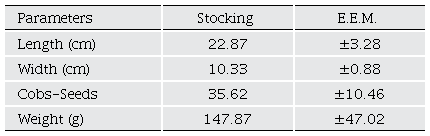
Data from 100 cocoa pods revealed an average of 22.87 cm long, 10.33 cm wide, and an average weight of 147.87 g. The corn/seed ratio had an average of 35.62. Previous studies support the positive influence of efficient microorganisms on cocoa growth (Vera et al., 2023).
Sánchez et al. (2020) when studying the agronomic behavior of the cocoa fruit, found a significant behavior (p>0.05) when supplying efficient microorganisms in the cocoa plantation, reaching values of 11.65 cm in control treatment and 22.24 cm when supplying 6 l/ha, describing the importance of this type of microorganisms on productive yields and on the ecosystem. In this context, the results presented by Vera et al. (2022) show a weight per cob of 146 g per cob, results that are within those reported in the research.
After the second day, statistical differences (p ≤ 0.05) were observed between treatments with 3 % and 5 % EM in crates and control treatments in bags and wood, with an average temperature of 39.67 °C. On the third day, the treatments in drawers outperformed those in bags (40 - 41 °C). This effect could be related to the external temperature. According to Castillo and Machacuay (2019), cocoa fermentation involves microbial succession influenced by acetic bacteria and aeration of the beans.
According to Mite et al. (2010) during the fermentation process of cocoa beans, there is a microbial succession, where different microorganisms intervene, including acetic bacteria that have the ability to metabolize the alcohol generated in fermentation, mentioning that this biochemical reaction occurs during exothermic fermentation which in turn is influenced by the removal of the beans, in which the aeration of the grains is generated and with it the correct development of fermentative bacteria.
These results are close to those reported by Chancay et al. (2022), when evaluating the fermentation temperature of Criollo cacao (Theobroma cacao L.) under eco-efficient systems (Semicylindrical, square and rectangular) obtained higher values on the third day, documenting averages that ranged from 30 °C to 48 °C, indicating that these values are within the appropriate ranges.
Neira et al. (2020), highlights that when comparing the pH and temperature of Nacional cocoa in the fermenter, it is on the rise while the temperature fluctuates due to the consortium of microorganisms and their activity of production of secondary metabolites such as alcohols, ethers, phenols, furans, esters, aldehydes, ketones, among others, precursors of the flavor and aroma of chocolate (Portillo et al., 2017).
Table 1
Characterization of the national cocoa pods.
 Means with a common letter in the same column are not statistically different (p ≤0.05).
Table 2
Temperature in degrees Celsius of the beans during fermentation.
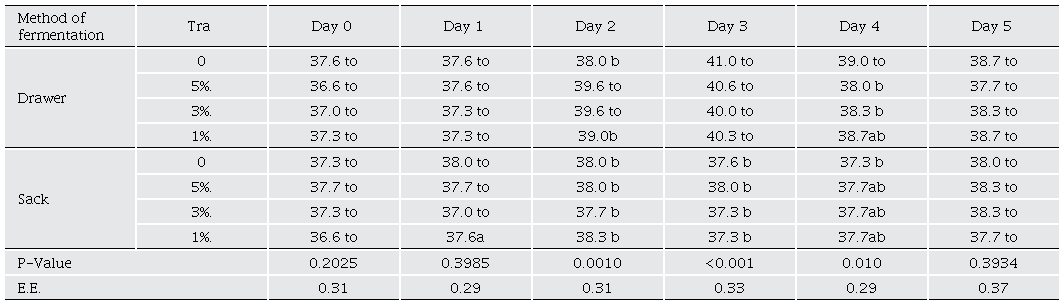 Means with a common letter in the same column are not statistically different (p ≤ 0.05). CV = Coefficient of variation; EEM = Standard error of the mean.
The pH of the treatments varied significantly (p ≤ 0.05) during fermentation. The initial values were similar (between 3.66 and 3.71), but then fluctuated. Treatments with 3 % and 5 % EM in crates had decreases to 3.63 and 3.66, while in bags, control treatments and 1 % EM showed fermentative activity with values of 4.27 and 4.37. Subsequently, all treatments maintained pH values above 5.04. The inclusion of EM improved fermentation, with pH values of 6.10 in crates and 6.07 in bags with 5 % EM. These results coincide with the optimal pH range for quality cocoa.
The decrease in pH was reported until day 2 in the treatments that included 3 and 5 % EM in box fermenters, which showed a decrease reaching values of 3.63 and 3.66 %, while fermentation in bags showed a greater fermentative activity in the treatments that controlled and with the inclusion of 1 % of EM with values of 4.27 and 4.37. Aguilar (2016), comments that these variations in pH allow the increase of acetic acid and biochemical reactions of the proteins diffused through the head, by the increase in temperature in fermentation, causing the death of the grain due to the formation of a hard crust that prevents the exit of acetic acid. which causes the cocoa to have greater acidity; in this case the author mentions that until 48 h the pH content was higher than 5.00, however, after 72 h there is a decrease in pH of the cocoa with values below 5.00.
Table 3
pH of the beans during fermentation.
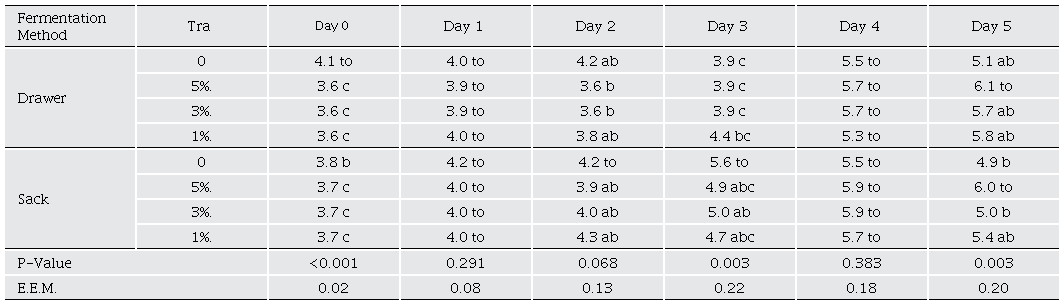 Means with a common letter in the same column are not statistically different (p ≤ 0.05). CV = Coefficient of variation; EEM = Standard error of the mean.
Table 4
°Brix of cocoa beans during fermentation..
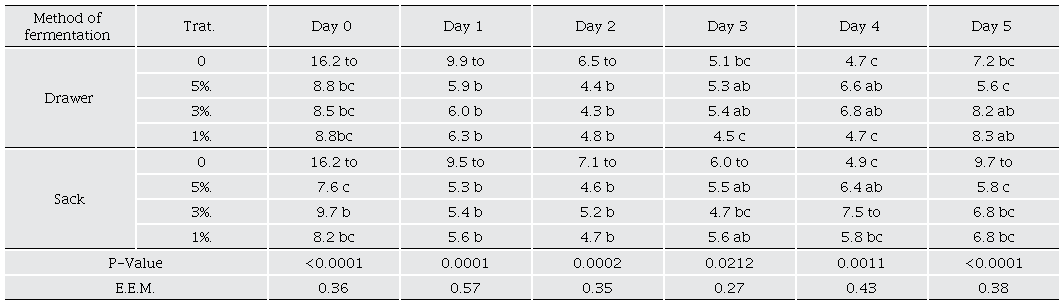 Means with a common letter in the same column are not statistically different (p ≤ 0.05).
Quintana and Aguilar (2018), mentions that optimal pH for quality cocoa should be between 4.75 and 5.5, which are considered values that lead to an increase in the aromatic potential of the beans, however, these values can be influenced by the variety and type of cocoa. In this case, it can be seen that these values were presented when fermentation was applied in bags during day 3, however, after day 4 the results were statistically equal (p ≤ 0.05) in each of the treatments studied, maintaining higher values of 5.04 and 6.10 until the fifth day, with the exception of the control treatment with fermentation in bags where a pH of 4.98 was observed, as the lowest, in accordance with what was stated by Mesa et al. (2022), who mentions that after four days the pH value should oscillate in a range of 4.85 - 5.0.
The °Brix content in the cocoa beans varied significantly during fermentation, with higher values on day zero in the control treatments. Then, there was a steady decrease until the second day, followed by an increase in efficient microorganism treatments on the third day. These results are consistent with previous studies that attribute the decrease in °Brix to the fermentation and degradation of mucilage sugars by microorganisms.
Table 5
Weight of cocoa beans during the morning.
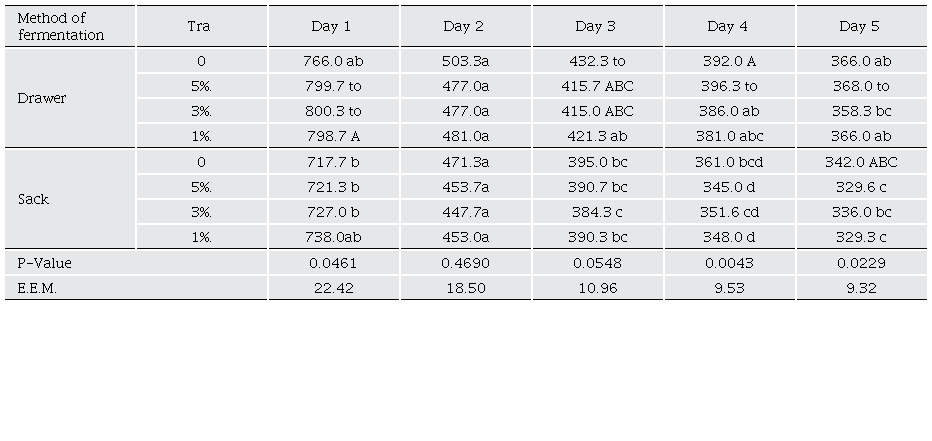 Means with a common letter in the same column are not statistically different (p ≤ 0.05). CV = Coefficient of variation; EEM = Standard error of the mean.
Similar behavior is reported by Alvarado et al. (2024), when evaluating the variation of total soluble solids (°Brix -Bx-) during fermentation in a period of 40 hours, a downward behavior was obtained as the days went by, documenting initial values of 19 Bx and final values that ranged between 7 and 11 Bx, between the treatments under study, describing that this behavior is due to the fact that the anaerobic phase is much larger. This favours the degradation of the sugars in the mucilage by the action of yeasts.
During the third day, the treatments that included the three EM concentrations with the two fermentation methods showed as a result an increase in the Bx content until the fifth day, reaching a superiority in the control treatment in bags with a total of 9.73, which is similar to the treatments that included 1 and 3% in box fermentation with averages of 8.30 and 8.27 Bx.
Results presented by Baroni et al. (2019), when evaluating the content of brix degrees during the pre-drying of white almond cocoa during nine hours of fermentation, documents as initial results of 20.16 Bx, which presented a decrease of 13.77 Bx, which differ from the results obtained in the research. This decrease is due to the fact that the presence of mucilage is reduced due to the presence of microorganisms that use the substrate for the fermentation of the grain.
In the study, the weight of cocoa showed significant differences (p ≤ 0.05) on days 1, 3, 4 and 5. On day 2 there were no significant differences in the morning. At the end of the study, treatment with 5 % EM in drawers showed the least weight loss (368 g), while treatments with 5 % and 1 % EM lost more weight (329.67 and 329.33 g). These results are consistent with previous studies that report similar yields in crate and bag fermentations.
Gutierrez and Andrade et al. (2019), when evaluating the fermentation process in criollo cocoa through the application of two fermentation methods (bag and box), obtained a yield of 68 % in the fermentation in boxes with an initial mass of 12000 g and a final mass of 8000 g, while for the fermentation in bags a yield of 69 % was obtained, documenting an initial weight of 15000 g and final mass of 10000 g.
Table 6 shows that during the second and fifth days there were no significant differences (p ≤0.05) in grain weight between treatments. However, on days 1, 3, and 4, significant differences were observed. Box fermentation resulted in less weight loss compared to bag fermentation, with averages of 365 g to 374 g vs. 337 g to 352 g.
Gutierrez and Andrade et al. (2019), describe that during the first days there is a greater weight loss of the beans, due to the draining of the juice by a process of hydrolysis and fermentation of the sugars of the mucilage and the cotyledons of the cocoa seeds.
Table 6
Weight of cocoa beans during the afternoon.
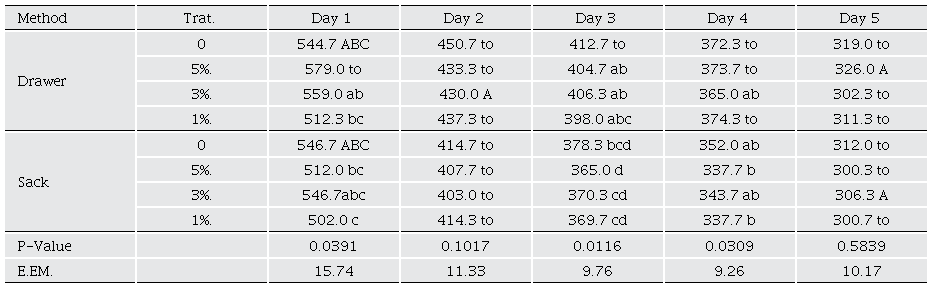 Means with a common letter in the same column are not statistically different (p ≤ 0.05). CV = Coefficient of variation; EEM = Standard error of the mean.
Umaña (2015), when evaluating the loss of weight of cocoa during the fermentation process of the beans, obtained as results that the fermenting mass loses between 30 and 35% of its initial weight, in this case an initial weight of 9.78 kg and a final weight of 6.13 kg are described.
Antioxidant activity of cocoa beans induced with effective microorganisms by two fermentation techniques
The fermentation of cocoa in jute bags favors a higher phenol content due to its better ventilation and humidity regulation, which enhances the activity of microorganisms and the enzymatic action released by these compounds. Using moderate concentrations of EMs, such as 3 %, in jute bags optimizes phenol production, while higher concentrations in fermenter boxes can reduce phenols due to lack of oxygenation. The highest value of 24.27 g EAG/100g corresponded to the use of EM (fermentation in jute bags). The treatments in crates had a lower amount of phenols, varying between 2.67 and 4.16 g EAG/100 g, with a tendency to decrease with the concentration of efficient microorganisms.
Sosa et al. (2017) and other previous studies highlight the importance of the type of fermentation, the selection of microorganisms and the oxidation time to obtain higher levels of phenols in fermented cocoa states that, when evaluating the presence of total polyphenols analyzed in the cotyledon and husk of cocoa beans, he describes as results values that ranged between 6.08 and 5.18 g EAG/100 g, however, it is noteworthy that the inclusion of Saccharomyces cerevisiae at 1 % w/w presented a better proportion of polyphenols.
Table 7
Phenolic composition of the treatments under study.
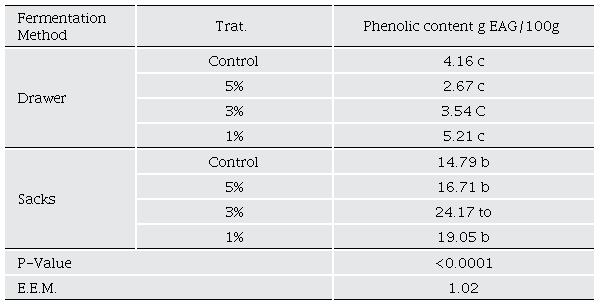 Means with a common letter in the same column are not statistically different (p ≤0.05). CV = Coefficient of variation; EEM = Standard error of the mean.
Table 8
Physical characterization of cocoa beans by applying two fermentation methods.
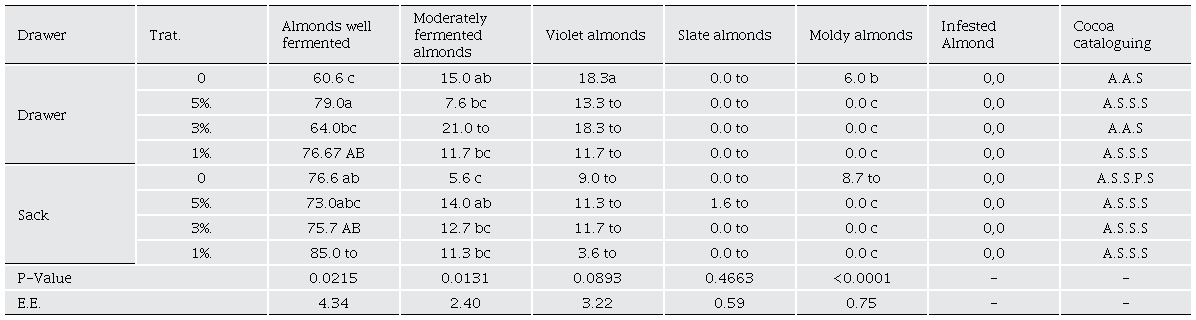 Means with a common letter in the same column are not statistically different (p ≤ 0.05). CV = Coefficient of variation; EEM = Standard error of the mean. A.S.S.P.S: Top Superior Summer Select Plantation. A.S.S.S: Top Superior Summer Select. A.A.S: Top Superior Select. A.S.N: Arriba Superior Navidad. A.S.E: Upper Epoch.
Torres and Torres (2024) , when studying the presence of polyphenols in cocoa fermentation by applying different fermentation methods, obtained results that the national variety has a higher percentage of polyphenols regardless of the type of fermenter used, indicating that this parameter is directly influenced due to the fermentation time, because polyphenols undergo oxidation processes and decrease due to diffusion. In this case, a total of 53.24 mg of gallic acid/g of defatted cocoa in the national variety and 42.36 mg of gallic acid/g of defatted cocoa in the CCN-51 variety are documented.
Identification, through physical and instrumental analysis, of the variations existing in the two fermentative techniques in the cocoa bean, applying the requirements of the INEN 176 standard (2018-02)
The results of the physical characterization of the cocoa beans showed significant differences (p ≤ 0.05) between the treatments under study in the parameters of well- and moderately-fermented almonds, and moldy almonds. In this case, the results of the percentage of fermented almonds were higher results in the treatments with fermentation in bags with 1 % and in boxes with 5 % of the efficient microorganisms with averages of 85 and 79 %, respectively.
On the other hand, Dubón (2016) when carrying out a cutting test of fermented almonds of hybrid and national cocoa varieties, obtained a higher percentage of fermented beans in the national variety with a value of 77.75 %, a total of 21 violet beans and 0.50 in slate beans. On the other hand, Mite et al. (2010) when using two types of yeasts, a BAL (lactic acid bacteria) and a LAB, obtained the results that up to 120 hours the average fermentation was 81.82 %, with a pH of 4.71.
The content of moderately fermented almonds was lower in the control treatment whose fermentation took place in bags where a percentage of 5.67 % was obtained, close to that reported with the inclusion of 5 % of the microorganisms in the fermentation in crates where a total of 7.67 % can be seen, however, for the treatment with 3 % in the same fermentation method, a greater numerical difference was obtained with a total of 21.00 %.
The content of violet almonds did not show significant differences (p ≤ 0.05) between the average values recorded in each of the treatments, however, it is important to note that fermentation in crates showed a slight tendency to an increase in violet beans with values of 11.67 to 18.33. Morejon et al. (2022), when analyzing the physical properties of dried cocoa beans, mentions that the lower percentage of fermented almonds increases the amount of violet and slate almonds, which is why it can be deduced that the right time and temperature have not been reached for biochemical changes, embryo death, and change from violet to brown color to occur (Alvarado et al., 2022). In this case, the author documents a violet grain content of 8 to 16 grains, slate grains 4 to 12 and the absence of moldy grains.
In accordance with the requirements of the Ecuadorian Technical Standard INEN 176 in Ecuador, the results obtained in fermentation in bags and crates are within the parameters described in the standard, in the same way the percentage of violet grains, slate and molds meet the requirements of the INEN standard (INEN, 2018). Acceptance of the control treatments (bag and drawer) where a content of 6 and 7 moldy grains can be appreciated. In this case, the categorization of cocoa beans shows a superiority in the control treatment and with the inclusion of 1 % of EM in bags where a categorization of Arriba Superior Summer Plantation Select (A.S.S.P.S) was obtained.
Table 9
Colorimetric evaluation of the treatments under study..
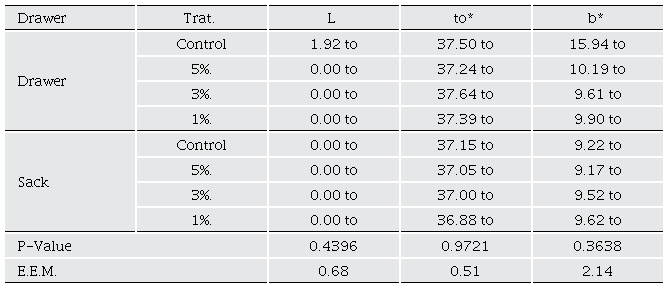 Means with a common letter in the same column are not statistically different (p ≤ 0.05). CV = Coefficient of variation; EEM= Standard error of the mean.
Mora et al. (2021), indicates that the variations between the characteristics of fermented grains can be influenced by the temperature exchanges generated by the removal of the grains, leading to the development of very high acidity. Morales et al. (2012), when analyzing the physical parameters of cocoa beans of the CCN51 variety (Theobroma cacao L.), obtained as results a total of 6 violet beans, 33 partially violet beans, and the absence of moldy and slate beans.
Conclusions
The inclusion of efficient microorganisms (EM) in cocoa fermentation had a significant impact (p ≤ 0.05) on temperature, pH and °Brix content during the five days of fermentation. In addition, it influenced grain weight loss, with less loss in treatment with 5 % EM in drawers in the morning (368 g), although no significant differences were found (p > 0.05) in the afternoon of the fifth day. In terms of phenolic content, fermented treatments in bags stood out, especially with 3 % EM, reaching 24.17 g EAG/100g. The antioxidant capacity was higher in the fermented treatments in bags with 5 % DM (240 μmol Equivalent to Trolox/g of cocoa by ABTS) and with 3 % of DM (184.01 μmol Equivalent to Trolox/g of cocoa by DPPH).
Physical analysis showed that treatments with 5 % EM in crates and 1% EM in bags achieved the highest percentage of fermented almonds, with values of 79 % and 85 %, respectively. The control treatment in bags had the lowest percentage of moderately fermented almonds (5.67 %) and the treatment with 1 % of EM showed the lowest content of violet almonds (3.67 %). Only the control treatments of both fermentation methods presented almonds with molds, without finding infested almonds. In terms of quality, the control treatment and the one that included 1 % EM in bags obtained the classification of Arriba Superior Summer Plantation Selecta (A.S.S.P.S). The instrumental color analysis did not show significant differences between the treatments, highlighting a greater fixation of the red (+a*) and yellow (+b*) tones.
References
Alvarado, K., Rivadeneira, C. and Intriago, F. 2024. Utilización de extracto natural del Muicle (Justicia spicigera) en la elaboración de chocolate a partir de dos variedades de cacao (Theobroma bicolor Humb. & Bonpl. y Theobroma cacao L.). ¿Revista? 4(1), 1-19. https://doi.org/10.51252/raa.v4i1.6
ANECACAO. 2014. Actualidad y perspectivas del sector cacaotero en Ecuador. 26.
Baroni, M.V., Calandri, E., Di Paola Naranjo, R., Martínez, M. and Moiraghi, M. 2019. Análisis fisico-quimícos y sensoriales. In VI Congreso Internacional de Ciencia y Tecnología de los Alimentos. ¿Fuente?
Castillo, J. and Machacuay, J. 2019. Diseño de un fermentador orientado a mejorar el proceso de fermentación del cacao criollo blanco de Piura. Universidad de Piura. ¿Fuente?
Chancay, L.F., Delgado Demera, M. and Salas Macías, C.A. 2022. Cadmio en el cultivo de cacao (Theobroma cacao L.) y sus efectos ambientales. La Técnica: Revista de Las Agrociencias. ISSN2477-8982, 91. https://doi.org/10.33936/la_tecnica.v0i0.4324
Erazo, C., Vera, J., Tuarez, D., Vásquez, L., Alvarado, K., Zambrano, C., Mindiola, K., Mora, R. and Revilla, K. 2023. Phenotypical characterization of Cocoa flowers (Theobroma cacao l.) in 40 experimental hybrids at La Represa experimental farm. Bionatura, 8(3), 1-16. https://doi.org/http://dx.doi.org/10.21931/RB/2023.08.03.11
Giancarlo. 2021. Optimización del tiempo y temperatura de infusión de cascarilla de cacao en el contenido teobromina, polifenoles y actividad antioxidante. Universidad Nacional del Centro del Perú.
INEN. 2018. Granos de cacao. Requisitos NTE INEN 176. Instituto Ecuatoriano de Normalización, 5, 1-8.
Intriago, F., Macías, M., Napa, B., Vásquez, L., Alvarado, K., Revilla, K., Aldas, J. and Vera, J. 2023. Inclusión de mucílago de cacao (Theobroma cacao) como estabilizante en néctar de jackfruit (Artocarpus heterophyllus). Agroindustrial Science, 13(2), 75-81. https://doi.org/https://doi.org/10.17268/agroind.sci.2023.02.03
Jaimez, R.E., Barragan, L. and Fernández-Niño, M. 2022. Theobroma cacao L. cultivar CCN 51 : a comprehensive review on origin, genetics, sensory properties, production dynamics, and physiological aspects. Plant Biology, 6(12), 1-20.
Lanza, J., Churión, P., Liendo, N. and López, V. 2021. Evaluación del contenido de metales pesados en cacao (Theobroma cacao L.) de Santa Bárbara de Zulia, Venezuela. Multidisciplinaria Del Consejo de Investigación de La Universidad Del Oriente, 28(1), 106-115. https://www.redalyc.org/pdf/4277/427746276012.pdf
León, A., Rosati, V. and Tonetti, G. 2022. Evaluación de la capacidad antioxidante de diferentes extractos de Cannabis sativa. ¿Fuente?
Mesa, G., Contrera, P., Quintana, G., Castro, H., González Mesa, O., Gómez Quintana, I. and Hidalgo Castro, Y. 2022. La cadena de valor como una herramienta de gestión para la producción de arroz consumo The value chain as a management tool for the production of consumer rice A cadeia de valor como ferramenta de gestão para a produção de arroz para consumo. 10(1), 2310-2340.
Mite, F., Carrillo, M. and Durando, W. 2010. Avances del monitoreo de presencia de cadmio en almendras de cacao, suelos y aguas de ecuador. Xii Congreso Ecuatoriano de La Ciencia Del Suelo, November, 17-19.
Mora, C., Quevedo Guerrero, J., Zhiminaicela Cabrera, J., Herrera Reyes, S., Morocho Castillo, A. and León Toro, J. 2021. Influencia de la madurez de las mazorcas de cacao: calidad nutricional y sensorial del cultivar CCN51. Ciencias Químicas, October, 26-40. https://doi.org/10.33936/rev
Morejon, R., Vera, J., Salgado, I., Flores, C. and Morejon, M. 2022. Use of enzymes and leavening agents as a strategy to reduce the presence of cadmium in the fermentation process of Theobroma cacao L . almonds. Journal of Pharmaceutical Negative Results, 13(3), 604-614. https://doi.org/10.47750/pnr.2022.13.03.089
Neira, J.A., Revilla Escobar, K.Y., Aldas Morejon, J.P. and Sánchez Llaguno, S.N. 2020. Métodos de fermentación del cacao nacional (Theobroma cacao) y su influencia en las características físico-químicas, contenido de cadmio y perfiles sensoriales. Alternativas, 21(3), 42-48. https://doi.org/10.23878/alternativas.v21i3.339
Perea, J., Cadena, T. and Herrera, J. 2019. El cacao y sus productos como fuente de antioxidantes. Revista de La Universidad Industrial de Santander, 41(2), 128-134.
Quevedo, J.N., Romero Lopez, J.A. and Tuz Guncay, I.G. 2018. Calidad fisico quimico y sensorial de granos y licor de cacao (Theobroma cacao L.) usando cinco metodos de fermentacion. Revista Cientifica Agrosistemas, 6(May), 115, 127.
Quintana, M. and Aguilar, J. 2018. Denominación de origen de cacao ecuatoriano: ¿un aporte de marketing, global? INNOVA Research Journal, 3(10), 68-76. https://doi.org/https://doi.org/10.33890/innova.v3.n10.1.2018.825
Rivera, R., Mecías, F., Guzmán, Á., Peña, M., Medina, H., Casanova, L., Barrera, A. and Nivela, P. 2012. Efecto del tipo y tiempo de fermentación en la calidad física y química del cacao (Theobroma cacao L.) tipo Nacional. Ciencia y Tecnología, 5(1), 7-12. https://doi.org/https://doi.org/10.18779/cyt.v5i1.120
Sánchez, M., Vargas, Y., Burbano, R., Calero, A. and Ramírez, C. 2020. Evaluación del grano de cacao (Theobroma cacao L.), usando dos fermentadores, provincias Orellana y Sucumbíos, Ecuador. Green World Journal Artículo, 3(1), 1-9.
Torres, J. and Pérez, R. 2023. Caracterización de los residuos de cacao generados con potencial valor, para su uso en la industria alimentaria, en el cantón Santo Domingo, provincia de Santo Domingo de los Tsáchilas. ¿Fuente?
Vera, J., Benavides, J., Vásquez, L., Alvarado, K., Reyes, J., Intriago, F., Naga, M. and Castro, V. 2023. Effects of two fermentative methods on cacao (Theobroma cacao L.) Trinitario, induced with Rhizobium japonicum to reduce cadmium. Revista Colombiana de Investigación Agroindustriales, 10(1), 95-10 6. https://doi.org/10.23850/24220582.5460
Vera, J., Erazo, C., Intriago, F. and Vásquez, L. 2022. Induction of Rhizobium japonicum in the fermentative mass of two varieties of cacao (Theobroma cacao L.) as a strategy for the decrease of cadmium. International Journal of Health Sciences, 6(3), 11354-11371. https://doi.org/10.53730/ijhs.v6nS3.8672
Vera, J., Intriago, F., Vásquez, L. and Alvarado, K. 2022. Inducción anaérobica de bradyrhizobium japonicum en la postcosecha de híbridos experimentales de cacao y su mejoramiento en la calidad fermentativa. Journal of Science and Research, 7(2), 50-69. https://doi.org/https://zenodo.org/record/7723254.
Notes
Conflicts of interest
The authors declare no conflict of interest.
Author notes
*Author for correspondence: Kerly Alvarado Vásquez e-mail: kalvarado6940@utm.edu.ec
