Artigos em fluxo contínuo
Mortality rates from suicide among Brazilian teachers: base year 2020
Taxas de mortalidade por suicídio entre professores brasileiros: ano base 2020
Tasas de mortalidad por suicidio entre los profesores brasileños: año base 2020
Mortality rates from suicide among Brazilian teachers: base year 2020
Olhar de Professor, vol. 27, pp. 01-22, 2024
Universidade Estadual de Ponta Grossa

Esta obra está bajo una Licencia Creative Commons Atribución 4.0 Internacional.
Recepción: 10 Abril 2024
Aprobación: 18 Octubre 2024
Abstract: The increasing incidence of suicides among teachers in Brazil reveals a concerning reality that demands detailed analysis and the urgent implementation of effective preventive measures. This article investigates suicide data among Brazilian teachers by analyzing the 2020 edition of the Ministry of Health's Mortality Information System database. This cross-sectional, quantitative-descriptive study examined 1,556,824 death notifications for the Brazilian population. In 2020, Brazil reported 13,835 suicide cases, equating to one self-inflicted death for every 112 fatalities. Among teachers, of the 13,351 recorded deaths, 142 were suicides, which translates to three cases per week. Therefore, it is essential to develop comprehensive suicide prevention strategies, including improvements in access and preventive care for educators through workers' mental health systems, making it a priority on the global public health agenda.
Keywords: Suicide, Mental health, Teacher.
Resumo: A crescente incidência de suicídios entre professores no Brasil revela uma preocupante realidade que demanda análise detalhada e a implementação urgente de medidas preventivas eficazes. Este artigo investiga os dados de suicídios entre professores brasileiros por meio da análise do banco de dados do Sistema de Informações sobre Mortalidade do Ministério da Saúde, na edição de 2020. Este estudo transversal e de abordagem quantitativa-descritiva, examinou 1.556.824 notificações de mortes por todas as causas para a população brasileira. Em 2020, houve 13.835 casos de suicídio no Brasil, representando uma morte autoprovocada para cada 112 fatalidades. Entre os professores, dos 13.351 falecimentos registrados, 142 foram suicídios, o que equivale a três casos por semana. Portanto, é essential promover estratégias abrangentes de prevenção do suicídio, incluindo melhorias no acesso e no acolhimento preventivo para os profissionais do magistério pelos sistemas de saúde mental dos trabalhadores, com prioridade na agenda global de saúde pública.
Palavras-chave: Suicídio, Saúde mental, Professor.
Resumen: La creciente incidencia de suicidios entre profesores en Brasil revela una preocupante realidad que exige un análisis detallado y la implementación urgente de medidas preventivas efectivas. Este artículo investiga los datos de suicidios entre profesores brasileños mediante el análisis de la base de datos del Sistema de Información sobre Mortalidad del Ministerio de Salud, correspondiente a 2020. Este estudio transversal y de enfoque cuantitativo-descriptivo examinó 1.556.824 notificaciones de muertes por todas las causas para la población brasileña. En 2020, Brasil reportó 13.835 casos de suicidio, lo que equivale a una muerte autoprovocada por cada 112 fatalidades. Entre los profesores, de los 13.351 fallecimientos registrados, 142 fueron suicidios, es decir, tres casos por semana. Por lo tanto, es esencial desarrollar estrategias integrales de prevención del suicidio, incluyendo mejoras en el acceso y la atención preventiva para los educadores a través de los sistemas de salud mental laboral, priorizando esta cuestión en la agenda global de salud pública.
Palabras clave: Suicidio, Salud mental, Profesor.
Introduction
The occupational health of teachers has become a critical area of concern due to its significant impact on both educational outcomes and the well-being of educators. Recent research has underscored troubling trends in teachers' mental health, particularly highlighting increases in stress, burnout, and suicidal tendencies within the profession (Bockhoff; Ellermeier; Bruder, 2023). This event is a grave issue in any setting, but when it involves teachers, the effects extend beyond the individual to affect the entire school community. Teachers play a significant role in shaping students' lives, and their absence, especially under such tragic circumstances, can have profound and far-reaching consequences (Haugen, 2023).
Teachers' mental health is a critical aspect of occupational health, addressing the unique pressures and challenges of the teaching profession. This study focuses on the troubling rise in teacher suicides, highlighting the urgent need for effective prevention strategies. By investigating contributing factors, the research aims to develop measures to safeguard teachers' mental well-being.
In Brazil, teachers currently retire at 55 after 30 years of service, with female teachers retiring five years earlier (Souza; Monteiro; Paiva, 2021). This retirement age and contribution period may not fully account for the demanding nature of the teaching profession. Consequently, teachers often experience burnout well before retirement, which can negatively impact their mental and physical health.
Psycho-behavioral burnout among teachers is a significant concern in many educational systems, arising from the demanding nature of the profession. Burnout can manifest as emotional exhaustion, depersonalization (such as cynicism and detachment from students), and reduced personal fulfillment at work. If not addressed, these symptoms can lead to severe mental and physical health issues, including anxiety disorders, depression, heart problems, and an increased risk of suicide (Mijakoski et al., 2022; Favril et al., 2022).
To effectively address teacher burnout, educational institutions must implement proactive measures, such as providing emotional support, appropriate resources, stress management training, and work-life balance policies. Raising awareness and fostering a culture of respect and collaboration within the school community are also essential (Goularte; Cássio; Ximenes, 2019). In light of ongoing discussions about teachers' pension schemes, it is significant to invest in teachers' mental health to ensure they have long and healthy careers. Such investment not only prevents burnout but also supports effective instruction and fosters a positive societal impact, recognizing the essential link between educators' well-being, the learning environment, and educational outcomes (Lima et al., 2024b).
Personal characteristics, physical capacity, age, and overall health significantly influence teachers' functional reserves. As teachers' health declines due to the unique demands of the profession, which often involve both physical and psycho-emotional stress, their professional lifespan and effectiveness can be compromised, potentially affecting their retirement in good condition (Silva et al., 2021; Bachmann, 2018). Psycho-emotional stress, which acts as a defensive mechanism, can initially be beneficial through the release of stress hormones like cortisol and adrenaline. However, prolonged exposure to such stress depletes teachers' reserve energy and, when psycho-emotional regulation fails, can lead to psychopathological instability and psychosomatic disorders (Bowman et al., 2022; Bostwick, 2016).
Early detection of psycho-emotional exhaustion, often marked by symptoms such as emotional stress (66%), depression (54%), allergies (47%), insomnia (42%), and high blood pressure (41%), is significant as these signs can indicate impending collapse (King etal., 1999). Accompanying symptoms like anxiety, fatigue, and voice abnormalities further highlight the need for prompt intervention. Educational institutions and teachers must recognize these signs and act swiftly to implement appropriate interventions, such as stress management programs, self-care promotion, and access to counseling. By fostering a supportive work environment that prioritizes both physical and mental well- being, these measures can mitigate the harmful effects of burnout and significantly enhance teachers' overall health and quality of life.
An even more concerning scenario arises from accumulated manifestations, such as the intensification of teachers' work activities and significant changes in labor relations due to workplace restructuring. The precariousness of institutional ties, coupled with the need to travel between schools, generates excessive stress and fatigue, adversely affecting teachers' integration with their work environment, their work-life balance, and overall well-being, which creates a condition of social vulnerability (Hahn, 2021).
According to a 2017 survey conducted by the National Confederation of Education Workers (CNTE), approximately 71% of public school teachers in Brazil were absent from the classroom between 2012 and 2017 due to psychological and/or psychiatric issues. The CNTE's study recommended the development of preventive interventions to maintain teacher effectiveness and promote health and professional longevity, with a focus on restoring functional capacities.
The philosophical foundation supporting the integration of psycho-emotional care with the goal of preserving teachers' longevity is reflected in the development of Occupational Health policies. These policies aim to address and monitor injuries resulting from the work process, establishing regulatory measures that ensure the worker's physical, mental, and social well-being. This approach is essential for maintaining reliability in professional activities and maximizing career longevity (Woolf; Schoomaker, 2019).
By integrating occupational health policies that address teachers' psycho-emotional needs, it is recognized that their mental and emotional well-being is essential for their ability to perform their jobs efficiently and sustainably over time. Effective preservation and monitoring of psycho-emotional harm from work-related stress are key to creating practices and policies that support educators' overall well-being. This, in turn, enhances their dependability, work quality, and capacity to remain motivated and productive throughout their careers (Liang; Zhang, 2023).
Therefore, occupational health policies that support comprehensive care for teachers benefit not only the individuals but also enhance the overall efficacy and sustainability of the educational system, given the recognized link between psycho-emotional health and professional performance.
In the realm of teachers' occupational health, various interrelated components must be addressed. Traditionally, occupational health has concentrated on physical ailments, while attention to teachers' mental health-equality is important has been less developed. Consequently, early signs of behavioral impairment may be overlooked and insufficiently addressed (Sampaio etal., 2023).
Detecting and assessing the initial signs of systemic psycho-physiological adaptation are essential for preventing the negative impacts of adverse exposures teachers face while performing their duties. Early indicators of unrecognized psycho-physiological adaptation could lead to a combination of factors that jeopardize teachers' mental health, potentially resulting in severe outcomes such as suicide, which has increasingly become a significant cause of mortality among teachers (Nadeen etal., 2011).
Given this context, the purpose of this study was to review epidemiological surveillance data from the 2020 edition of the Brazilian Ministry of Health's Mortality Information System (SIM) on reports of intentional self-harm among teachers. This review aims to illuminate a problem that is increasingly challenging to address epidemiologically.
The primary objective of this study is to gather statistics on suicide among Brazilian teachers. By utilizing secondary epidemiological monitoring data from the SIM, 2020 edition, this study employs a method documented and collected by the Brazilian government.
Material and methods
This quantitative, descriptive, cross-sectional study analyzes secondary data from the 2020 version of the Mortality Information System (SIM). Established by the Ministry of Health in 1975, the system is linked to the Health Surveillance Secretariat and compiles nationwide mortality data to generate indicators and support epidemiological analyses, informing decision-making across various health care sectors. The system was computerized in 1979 and is officially managed by the National Epidemiology Center (CENEPI) of the National Health Foundation (FUNASA) (Brasil, 2021a).
The SIM offers an online platform for information sharing with a variety of applications and uses. Access to this platform is restricted to registered individuals to ensure the confidentiality of the personal data recorded. The Ministry of Health is responsible for registering state managers, who, in turn, register new state, regional, and municipal users. Municipal managers can then register additional users at the municipal level, with each user’s access limited to their specific areas of responsibility. Registration is obtained through these intermediaries and requires signing a responsibility agreement (Brasil, 2021a).
The latest regulation governing data collection, flow, and the frequency of reporting deaths and live births to the information systems managed by the Health Surveillance Secretariat is the Ordinance. Death Certificates are completed by the reporting units, typically at the place of death, and are regularly collected by Municipal Health Departments. At the Municipal Health Departments, the certificates are entered, processed, reviewed, and consolidated into the local SIM.
The mortality data reported by municipalities at the local level are transmitted to the state- level database, which consolidates and forwards the information to the federal level. This process occurs simultaneously across all three management levels via the Internet. At the federal level, the SIM is managed by the General Coordination of Epidemiological Information and Analysis within the Department of Epidemiological Analysis and Surveillance of Non-Communicable Diseases. This coordination is responsible for analyzing, evaluating, and disseminating SIM data, aggregating it by state and producing analytical reports, indicator panels, and other statistical tools on mortality for nationwide distribution.
The SIM supports the development of mortality indicators for specific causes, which are essential for the analysis and evaluation of local, micro-regional, state, and national health systems. Additionally, this system allows for the comparison of Brazil's epidemiological profile with that of other countries based on mortality data (Brasil, 2021a).
The World Health Organization (WHO) evaluated the SIM as a system of intermediate quality. This evaluation was based on a study conducted by the WHO and published in 2005, that analyzed mortality information systems in several countries, classifying them as high, intermediate, or low quality. Only 23 countries achieved a high-quality classification. Brazil was grouped with nations such as France, Italy, Belgium, Germany, Denmark, Russia, the Netherlands, and Switzerland, among others, which are considered part of the wealthier country bloc (Mathers et al., 2005).
The Death Certificate (DC), standardized nationwide, is the key to accessing the system. Data access is restricted to registered and authorized users, though the National Mortality Information Database is publicly available. SIM data can be retrieved from the Yearbook of Mortality Statistics (Brasil, 2021a).
The SIM statistical year ends on June 30 of each year, with data from the previous calendar year being analyzed and released. This process occurs in three stages, involving both states and municipalities. Initially, local health departments collect the data through active searches in Notification Units. The data is then processed, reviewed, and corrected by state health departments before being consolidated into state databases and submitted to the General Coordination for Health Information Analysis, which integrates the data into a nationwide database. The Ministry of Health communicates this information every two years (Brasil, 2021b).
The underlying cause of death is recorded by transposing the codes according to the rules for classifying causes of mortality, as outlined in Volume II of the International Classification of Diseases and Related Health Problems (ICD-10; 10th Revision), published by the World Health Organization (WHO) to standardize the coding of diseases and health-related problems. The Death Certificate, linked to the medical certificate and based on the global ICD model, serves as the standard document for the SIM. The codes used to identify suicides due to deliberately self-inflicted external causes range from X60 to X84 (WHO, 1994).
The tool utilized is Tab Net, which has provided access to vital statistics and mortality data since 1996, organized by ICD-10 codes, including both general mortality and deaths from external causes. Criteria specific to the study include deliberate self-harm and other related factors, with children under five years of age excluded from the analysis of self-harm mortality within the general population (Brasil, 2022a). The Brazilian Institute of Geography and Statistics classifies personal identity into four categories: white, black, yellow (Asian), brown, and indigenous (Brasil, 2022b).
Marital status was divided into six categories: single, married, widowed, separated/divorced, in a stable union, and unknown. For analytical purposes, the married and stable union categories were combined. Educational attainment was classified based on years of schooling as follows: none, 1 to 3 years, 4 to 7 years, 8 to 11 years, and 12 years or more. For analysis, these were grouped into three categories: no schooling, 1 to 7 years, and 8 years or more. Methodological details related to the Mortality Information System can be found in earlier publications (Brasil, 2021a).
Teachers were categorized into 117 subgroups based on their professional activity, following SIM processes defined by the Brazilian Occupation Code (revised in July 2013 and approved by the Ministry of Health). Teacher codes range from 231205 to 233225 (Brasil, 2009).
To comply with the legal provisions regarding copyright with the journal Cenas Educacionais (CEDU), it is noted that the journal holds the original publication rights to the article while preserving the authors' copyright over the manuscripts. The authors have freely granted the right to publish this adaptation in English. Results
In 2020, SIM recorded a total of 1,556,824 deaths in Brazil. Men had a higher mortality rate than women, accounting for 55.4% of deaths compared to 44.5% for women. External causes were responsible for 146,038 deaths, or 9.4% of the total. Of these, deaths from self-harm (suicide) numbered 13,835, representing approximately one in every 100 deaths nationwide. Men made up 78.5% of these self-inflicted fatalities. In terms of profession, 13,351 teacher deaths were reported, accounting for 1.2% of all deaths. Teachers comprised 77.5% of all deaths within the working population. The average age of teachers who died by suicide was 44.5 years, with a higher prevalence among white and single individuals (Table 1).
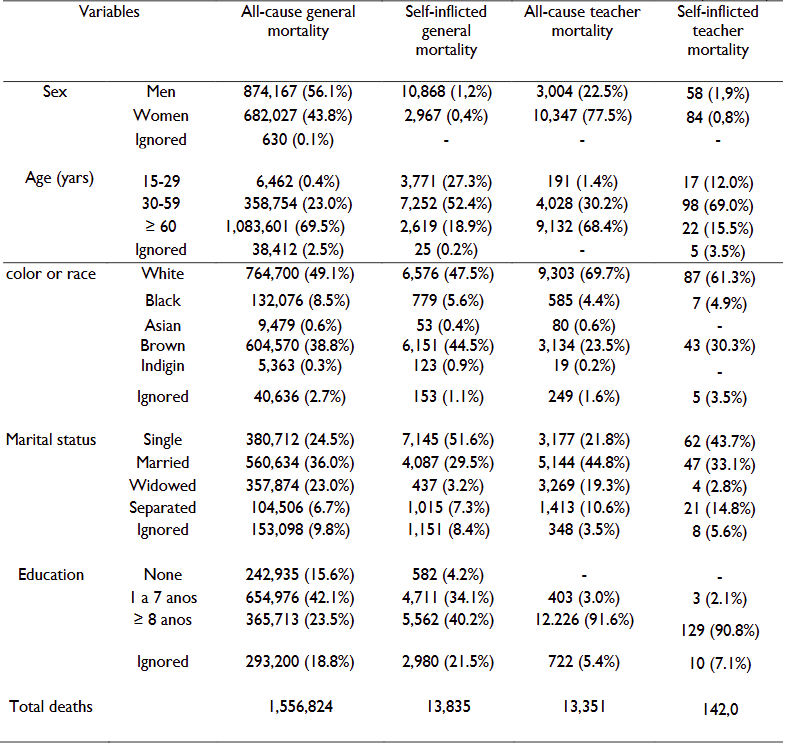
TABLE 1. Relative and absolute distribution of all-cause and intentionally self-harm mortality among Brazilians, by general population and teachers, Mortality Information System, Brazil, 2020.
Source: Lima et al. 2022.
Discussion
Suicide is typically the result of a combination of factors rather than a single cause. Influences such as personal behaviors, genetic predispositions, functional difficulties (including physical or mental health issues), belief systems, and social engagement contribute to suicidal behavior. Recognizing suicide as a multi-cause phenomenon highlights the necessity of considering a broad range of factors in the investigation, prevention, and response to suicidal behavior. It underscores the importance of fostering a supportive environment, reducing stigma, and ensuring access to mental health resources and professional support for individuals in distress (Kõlves et al., 2017).
However, while this multifaceted approach is essential, it could be argued that it risks oversimplifying the complexity of suicide by suggesting that all contributing factors hold equal significance across various individuals and contexts. This notion invites scrutiny regarding the effectiveness of generalized strategies in addressing suicidal behavior. Shouldn't more tailored interventions be prioritized to reflect the unique experiences and backgrounds of those at risk? By exploring the specific circumstances and triggers that each individual faces, we might cultivate more effective prevention and intervention strategies that more accurately address the distinct nuances of suicidal behavior. This cyclical examination encourages a continual reassessment of our approaches, advocating for personalized solutions that resonate with the diverse realities of individuals experiencing distress.
The results consistently indicate that suicide mortality rates among teachers in 2020 were comparable to those of the general population, being higher among female teachers, particularly those with an average age of 44.5 years. The profile of reported teacher suicides showed similar patterns for both sexes: individuals were predominantly white, aged between 30 and 59, and single, with the home being the most common location for these incidents. Among male teachers, the two most frequently used methods were firearms and hanging, while poisoning was the most common method employed by female teachers (Woolf; Schoomaker, 2019).
Even so, while these findings provide valuable information on the demographics and methods associated with teacher suicides, they may inadvertently overlook the wider social and systemic factors that contribute to these tragedies. For example, the focus on demographics can divert attention from underlying issues related to workplace stress, mental health stigma and the need for support resources that address more than just statistics, but also support teacher well-being.
The findings that teachers have higher suicide rates than the general population are particularly alarming for male educators. These statistics highlight the urgent need to address teachers' psychological and mental health problems. Given the higher prevalence of suicide among male instructors, targeted interventions may be necessary. Such measures could include mental health education campaigns, better access to counseling and therapy services, emotional support programs and policies that promote a positive and supportive work environment.
The profile of teacher suicide cases, regardless of gender, offers valuable information on the factors that may contribute to these incidents. The significant presence of middle-aged, Caucasian and single educators emphasizes the importance of recognizing and supporting individuals who may be facing social isolation or other personal challenges.
Nonetheless, while these statistics and profiles provide essential information, they may not take into account the complex interplay of environmental, institutional and systemic factors that also contribute to teachers' mental health problems, They should also consider how workplace culture, administrative support and educational policies affect teachers' mental well-being. A more holistic approach that examines these wider influences could lead to more effective solutions to prevent suicide in this vulnerable population.
The findings, indicating that teachers have higher suicide rates compared to the general population, are particularly concerning for male educators. These statistics underscore the urgent need to address psychological and mental health issues among teachers. Given the higher prevalence of suicide among male instructors, targeted interventions may be required. Such interventions could include mental health education campaigns, improved access to counseling and therapy services, emotional support programs, and policies that promote a positive and supportive work environment.
The profile of teacher suicide cases, irrespective of gender, offers valuable insights into the factors that may contribute to these incidents. The notable presence of middle-aged, Caucasian, and single educators emphasizes the need to recognize and support individuals who might be facing social isolation or other personal challenges. Additionally, the prevalent methods of suicide, such as firearms, hanging, and poisoning-highlight the critical necessity of restricting access to lethal means and implementing preventive measures aimed at identifying and addressing suicidal behavior at an early stage.
These statistics underscore the urgent need for effective strategies to prevent teacher suicides. Such strategies should encompass fostering a respectful and supportive school environment, improving access to mental health resources, and reducing the stigma associated with seeking psychological help. Ensuring teachers' mental health is essential for their overall well-being and effectiveness in educating and supporting students.
Yet, while the results provide important information, they may not fully capture the wider systemic issues that contribute to teacher suicide, such as workplace culture, administrative pressures and inadequate support systems. So broadening the approach should, for future research, also include advocating for policy changes that address these underlying factors. By examining the entire ecosystem in which teachers operate, we can develop more robust and effective strategies for suicide prevention. The gender disparity in suicide rates is a significant observation in the epidemiology of suicide.
Data from various regions, including Brazil, consistently demonstrate that suicide rates are higher among men than among women. Although men have a cumulative suicide rate that is four times greater, women exhibit a higher incidence of non-lethal suicide attempts. This discrepancy between suicide attempts and completions highlights substantial differences in patterns of suicidal behavior between genders (Mijakoski et al., 2022).
It is essential to address these factors systematically through prevention strategies that consider gender differences. Such strategies may encompass awareness campaigns, efforts to reduce the stigma surrounding mental health, alcohol abuse prevention programs, and initiatives aimed at encouraging help-seeking behavior among men (Matchers et al., 2005).
According to the Epidemiological Bulletin from the Ministry of Health's Health Surveillance Secretariat, there were 124,292 reported intentional self-inflicted injuries that did not result in death in 2019, with women accounting for 71.3% of these cases. This data suggests that for every 30 suicide attempts by women, one results in death, whereas one in three attempts by men leads to fatality. Statistics indicate that for every suicide death, there may be up to 25 suicide attempts; furthermore, 60% of individuals who die by suicide do so on their first attempt, and 32% die within a year of their initial attempt (Haugen et al., 2021).
This pattern is also evident across different occupational groups. It is important to acknowledge that suicides and intentional self-harm are often underreported or denied. Consequently, the true prevalence of suicide remains challenging to quantify. Each teacher’s suicide represents a profound tragedy affecting families, colleagues, students, and parents. The lingering questions and emotional toll on those closest to the deceased can endure, raising concerns about whether the incident was an isolated case or if it might trigger similar occurrences among other teachers. Neglecting to address the pain experienced by teachers reflects poorly on the teaching profession and risks further diminishing its appeal (Malacarne; Strieder; Lima, 2011).
However, while these findings provide essential information about gender differences in suicide rates, they may not fully address the cultural and social factors that contribute to these trends. There is a need to explore how socio-economic conditions, educational environments and community support systems influence these disparities. Such an analysis that includes these broader contexts could improve our understanding of suicide prevention and the support needed by teachers and other vulnerable populations.
Female teachers exhibit a higher absolute suicide rate; however, this statistic does not necessarily indicate a gender differential in suicide rates when considering the broader context. It is significant to interpret these figures with caution, as female teachers generally experience higher mortality rates from various causes due to the predominantly female makeup of the profession. According to the Brazilian Ministry of Education, women dominate early childhood education roles: 98% in nurseries, 96% in preschools, 91% in the early years of elementary school, 75% in the later years of elementary school, and 65% in secondary education. In contrast, men are more prevalent in technical education, comprising 55% of that workforce (MacDonald, 2004).
The significant female representation in early childhood education settings, such as nurseries and preschools, stands in contrast to the higher presence of men in higher education and the later stages of secondary school. This distribution likely contributes to the observed higher suicide rates among male teachers when adjusted for gender. Various risk factors and pressures associated with different phases of educational and professional contexts, as well as differing social and personal experiences based on gender, may influence these rates.
These findings underscore the need for educators to implement gender-sensitive suicide prevention strategies. This includes tailoring support programs to meet the specific needs and challenges faced by male and female teachers. Additionally, mental health programs and policies should be adapted to address the diverse demands and stressors experienced by educators across different genders and educational levels.
The development of effective preventive and support initiatives relies on understanding the gender distribution among teachers and its implications for mental health and suicide risk. Such insights facilitate the promotion of teacher well-being and the creation of more supportive and inclusive working conditions within the teaching profession. While these findings highlight the importance of gender-sensitive strategies, they may not fully account for the intersectionality of other factors, such as socio-economic status, cultural background, and geographic location. We should also consider how these overlapping factors interact with gender to better inform suicide prevention efforts.
Teachers often encounter significant stress due to the demands of their profession, which can be intensified by feelings of loneliness. The connection between loneliness and an increased risk of suicide underscores how a lack of social connections can lead to emotional isolation and heightened vulnerability to mental health issues, including suicidal thoughts. Social and emotional support, such as that provided through marriage, can act as a protective factor for teachers' mental well-being. However, the effectiveness of this protective effect may vary depending on cultural and demographic contexts, making it significant to consider these factors when interpreting results (Brasil, 2009).
When comparing participants who are separated to those who are married or in stable partnerships, the likelihood of suicide is greater among the separated group. Separation often entails emotional upheaval and significant alterations in living conditions, routines, and economic stability, which may contribute to an elevated risk of suicide. This increased risk is likely a reaction to the breakdown of marital relationships (Montez et al., 2022). In Brazil, over half of children are born into cohabiting couples (married or in long-term partnerships). Research indicates that women with at least one child have a lower risk of suicide, though it is uncertain whether this finding applies to men as well. Having two or more children may enhance social cohesion within a marriage, potentially serving as a protective factor against suicide even in the event of marital dissolution (Lima; Lima; Sampaio, 2020). This study did not find that teachers have higher suicide rates compared to the national average. In fact, teachers generally possess specific protective factors, such as higher levels of education. Globally, research shows a clear inverse relationship between suicide rates and educational attainment, with lower education levels being associated with higher suicide rates.
The increasing demands of an academic lifestyle have made it increasingly challenging for educators to maintain psycho-functional balance. While schools have progressively focused on addressing students' mental health issues, it remains questionable whether educators receive equivalent attention and support (Øien-Ødegaard; Hauge; Reneflot, 2021). Several factors contribute to the disparity in mental health care between educators and students. Limited resources within schools to support teachers effectively are one issue. Additionally, the stigma surrounding mental health in the workplace may deter teachers from seeking help or acknowledging their struggles.
It is essential for educational institutions to recognize the importance of supporting the mental health of all employees, including teachers. This support involves not only fostering a respectful and supportive school culture, but also providing mental health resources such as counseling and therapy to educators. School administrators should raise awareness about mental health issues among teachers, offer training on stress management techniques, and implement policies that promote self-care and facilitate access to assistance. In summary, ensuring that educators receive the same level of mental health care as students is vital. This approach benefits everyone involved in the educational environment, contributing to a healthier and more productive school climate.
The stigma surrounding mental health issues poses a significant challenge in the teaching profession and other fields. Workplace culture, high expectations, and pressure to meet demands often create an environment where professionals may hesitate to acknowledge and seek help for mental health concerns. Concerns about job security, the trust of colleagues and students, and maintaining a professional image can contribute to the reluctance to address mental health issues openly. Such fears can act as barriers to seeking help and can significantly hinder efforts in suicide prevention (Lima; Malacarne; Strieder, 2012).
Suicide is preventable, and there are various strategies that can be employed at multiple levels to assist in prevention. The global burden of suicide and suicide attempts impacts individuals, families, and societies, highlighting the need for effective prevention strategies to be prioritized in public health agendas. Teachers' occupational health is influenced by numerous factors that affect their professional longevity. Stress management is essential, and effective coping strategies, along with work environments that reduce stress, are essential. A supportive social network, both within and outside the workplace, contributes to teachers' emotional well-being. Support from colleagues, management, and friends, as well as involving teachers in decisions affecting their work environment, fosters a sense of control and belonging, which is vital for occupational health. Addressing these factors comprehensively can create a more supportive environment for teachers, thereby enhancing their professional longevity. However, it is important to recognize that high professional performance does not always equate to a healthy life, and professional success alone does not ensure well-being (Lima, 2023).
Therefore, establishing specialized care facilities for teachers with psycho-emotional challenges is essential. Such facilities can help reintegrate these individuals into the workforce securely, ensuring that they are able to fulfill their professional responsibilities effectively over the long term (Lima, Souza; Sampaio, 2024a).
The COVID-19 pandemic occurred concurrently with the data collection period.
It is equally essential to underscore that the COVID-19 pandemic, which profoundly impacted global health and socio-economic systems in 2020, likely had significant implications for the mental health of teachers in Brazil. The prevalence of teacher suicides, as documented by the Mortality Information System, must be examined within the context of this unprecedented crisis. The pandemic's effects on educational settings, the heightened stress associated with remote teaching, and the broader societal disruptions form an essential framework for understanding these tragic events (Robinson et al., 2023; Padmanabhanunni; Pretorius, 2024).
Firstly, the abrupt transition to online teaching imposed considerable stress on educators. Many teachers were ill-prepared for the sudden shift to virtual platforms, lacking both the technical skills and resources necessary for effectively engaging students remotely. This sudden change not only increased their workload but also led to feelings of inadequacy and frustration, contributing to heightened levels of anxiety and depression. The absence of face-to-face interaction further isolates teachers, depriving them of the usual social support from colleagues and students, which is essential for maintaining mental health (Kotowski; Davis; Barratt, 2022).
Secondly, the pandemic exacerbated existing socio-economic pressures. Teachers, like many other professionals, faced financial uncertainties due to reduced household incomes, job instability, and additional expenses incurred from setting up home offices. These economic stresses, compounded by the fear of contracting the virus and the responsibility of managing their own families' well-being, created a perfect storm of stressors that could lead to mental health deterioration and suicidal ideation. Moreover, the pervasive atmosphere of fear and uncertainty during the pandemic cannot be overlooked. The constant threat of illness, the grief over losing loved ones, and the continuous exposure to distressing news all contributed to a pervasive sense of hopelessness. For teachers, whose roles are inherently stressful even in normal times, these additional pressures could have significantly amplified feelings of despair and helplessness, potentially influencing the suicide rates recorded by the SIM.
Additionally, the lack of access to mental health support during the pandemic likely played a role. Social distancing measures and the overburdening of healthcare systems make it difficult for individuals to seek and receive mental health care. Teachers, already grappling with the pressures of their profession, may have found it particularly challenging to access timely and effective psychological support, exacerbating their mental health struggles and increasing the risk of suicide (Pressley; Ha; Learn, 2021).
Finally, it is essential to consider the long-term effects of the pandemic on teacher well-being. The prolonged nature of the crisis meant sustained exposure to high-stress conditions without adequate recovery periods. Chronic stress can lead to burnout, a state of physical and emotional exhaustion that significantly impairs an individual's ability to function. For teachers, burnout not only affects their professional efficacy but also their overall mental health, potentially leading to severe outcomes such as suicide. The SIM data from 2020, therefore, must be interpreted with these multifaceted influences in mind, highlighting the urgent need for targeted mental health interventions for educators in the long-term post-pandemic effects (Ratten, 2023).
Overview of mental health policy in Brazil
Brazil's mental health policy has undergone significant evolution over recent decades, reflecting a shift from institutionalization to community-based care. The Brazilian government has made substantial efforts to integrate mental health services into the primary healthcare system through the Unified Health System (SUS). This approach aims to ensure comprehensive, accessible mental health care across various levels of the health system, emphasizing early intervention, prevention, and the reduction of stigma associated with mental health issues. Notable initiatives include the establishment of Psychosocial Care Centers (CAPS), which provide localized support and treatment for individuals with severe mental disorders, and the expansion of mental health services within primary care units.
Despite these advancements, several challenges remain in the implementation of Brazil’s mental health policies. One major issue is the disparity in the quality and availability of mental health services between urban and rural areas, which exacerbates access inequalities. Additionally, while the integration of mental health services into primary care has improved accessibility, there are concerns about the adequacy of training for primary care professionals and the continuity of care. The increased demand for mental health services, particularly in the context of the COVID-19 pandemic, has also highlighted the need for greater resources and support for mental health professionals to manage the rising cases of anxiety, depression, and other mental health conditions.
Critical analysis of mental health policy in Brazil
Brazil's mental health policy has undergone significant evolution over recent decades, reflecting a shift from institutionalization to community-based care. The Brazilian government has made substantial efforts to integrate mental health services into the primary healthcare system through the Unified Health System (SUS). This approach aims to ensure comprehensive, accessible mental health care across various levels of the health system, emphasizing early intervention, prevention, and the reduction of stigma associated with mental health issues. Notable initiatives include the establishment of Psychosocial Care Centers (CAPS), which provide localized support and treatment for individuals with severe mental disorders, and the expansion of mental health services within primary care units.
Despite these advancements, several challenges remain in the implementation of Brazil’s mental health policies. One major issue is the disparity in the quality and availability of mental health services between urban and rural areas, which exacerbates access inequalities. Additionally, while the integration of mental health services into primary care has improved accessibility, but there are concerns about the adequacy of training for primary care professionals and the continuity of care. The increased demand for mental health services, particularly in the context of the COVID-19 pandemic, has also highlighted the need for greater resources and support for mental health professionals to manage the rising cases of anxiety, depression, and other mental health conditions (Araújo; Torrenté, 2023).
In the context of Brazilian mental health policy, the specific needs of teachers have not been adequately addressed. Teachers face unique stressors, including high workloads, emotional demands, and often insufficient institutional support. Although general mental health policies have improved access to care, there remains a significant gap in tailored interventions for educators. The lack of targeted mental health support for teachers contributes to high levels of burnout and mental health issues within the profession. Furthermore, the stigma surrounding mental health in the workplace, combined with inadequate resources for mental health care within educational settings, exacerbates the problem. Effective mental health policy for teachers should include dedicated support systems, professional development on stress management, and the creation of a supportive work environment to address these specific challenges. This would ensure that teachers receive the necessary care and support to maintain their well-being and sustain their significant role in the education system (Pitta, 2011).
Research strengths
The research presented in the article offers a significant contribution to understanding the multifaceted nature of suicide among teachers, particularly during the 2020 COVID-19 pandemic. One of the strong points of this study is its comprehensive approach to identifying the elevated suicide rates among educators compared to the general population. The data revealing a 17% higher suicide mortality rate among teachers, with a striking focus on male teachers, underscores the urgent need for targeted mental health interventions. The study effectively highlights demographic patterns, such as the predominance of suicides among middle-aged, white, and single teachers, and the use of specific methods like firearms and hanging. This detailed demographic profiling is essential for designing tailored preventive measures and support systems that address the unique vulnerabilities of teachers.
Another notable strength of this research is its contextual analysis of the pandemic’s impact on teachers' mental health. By examining the stressors introduced by the rapid shift to online teaching, increased socio-economic pressures, and the pervasive sense of fear and uncertainty, the study provides a nuanced understanding of the factors exacerbating teacher suicides. The research also emphasizes the importance of accessibility to mental health resources, which were severely constrained during the pandemic. By highlighting the gaps in mental health support and the prolonged exposure to high-stress conditions, the study advocates for the development of targeted mental health interventions and supportive policies for educators. This comprehensive approach not only enhances our understanding of the crisis but also offers practical recommendations for improving teacher well- being and preventing future tragedies.
Research limitation
The article has some limitations. The SIM emphasizes the usefulness of this system in developing mortality profiles at various geographic levels in Brazil. However, it acknowledges that the SIM's data has both quantitative and qualitative shortcomings that must be addressed in order to provide a more accurate and trustworthy study of mortality.
The SIM records more than 80% of the data on adult mortality recommended by the UN. However, the indicator's reliability/incompleteness were only partially adequate for both socioeconomic factors and the underlying cause of death, due to considerable regional differences. The indicator's specificity was poor, since it did not distinguish between causes of death. When the SIM is used to assess indicators between municipalities, more than 30% are of poor quality (over 7% incomplete). There is a two-year gap between recording and confirming the data (Romero; Pires; Rodrigues, 2019).
Some information may be underreported because it comes from municipal sources, and you find that the technician responsible for the work routines related to managing and analyzing the data generated by the SIM has outdated training due to frequent staff replacements. The system will not monitor the function of deficiencies in the flow of information from all sources.
Conclusion
The study's findings underscore the critical importance of addressing suicide as a significant public health issue in Brazil, particularly within occupational groups such as teachers. The 2020 data reveal a concerning pattern: teachers experienced higher suicide rates compared to the general population, with a notable prevalence among middle-aged, white, and single individuals. This elevated suicide rate, coupled with the specific methods employed, highlights the urgent need for tailored interventions aimed at mitigating mental health risks within this profession. The research contributes substantially to the field by providing a detailed demographic profile and contextual analysis, revealing that male teachers are disproportionately affected. This study also underscores the broader implications of the COVID-19 pandemic, which exacerbated existing stressors and hindered access to mental health resources. The findings advocate for comprehensive strategies to improve mental health support for teachers, including targeted mental health education, enhanced counseling services, and supportive workplace environments. By addressing these specific needs and challenges, educational institutions can better support teachers' well-being, thereby fostering a more effective and resilient educational system. This study not only fills a critical gap in understanding the mental health landscape of teachers but also provides actionable insights for developing preventive measures and policies to reduce suicide rates and improve overall mental health support in the educational sector. Finally, teachers often receive insufficient mental health training, leaving them poorly equipped to manage their own well-being. Compounding this issue are significant administrative burdens, which add to the pressures of their teaching responsibilities. This combination strains teachers' ability to maintain mental health and perform effectively.
References
ARAÚJO, T. M.; TORRENTÉ, M. O. N. Mental Health in Brazil: challenges for building care policies and monitoring determinants. Epidemiol Serv Saude, Brasília, v. 32, n. 1, p. e2023098, 2023. Available: https://www.scielo.br/j/ress/a/sHG86NSQNyMdLY5CxdBc3gN/?lang=en. Accessed: 11 Jan. 2022
BACHMANN, S. Epidemiology of Suicide and the Psychiatric Perspective. Int J Environ, Milano, v.15, n. 1, p. 1425, 2018. Available: https://www.mdpi.com/1660-4601/15/7/1425. Accessed: 24 Sep. 2023
BOCKHOFF, K.; ELLERMEIER, W.; BRUDER, S. Evaluation of a Suicide Prevention Program Encompassing Both Student and Teacher Training Components. Crisis. Virginia, v. 44, n.4, p. 276- 284, 2023. Available: https://pubmed.ncbi.nlm.nih.gov/35548882/. Accessed: 4 Oct. 2023.
BOSTWICK, J. M. Suicide attempt as a risk factor for completed suicide: even more lethal than we knew. Am J Psychiatry, Washington, v. 173, n. 11, p. 1094-100, 2016. Available: https://psychiatryonline.org/doi/10.1176/appi.ajp.2016.15070854. Accessed: 4 Jan. 2023.
BOWMAN, S.; et. al. Perceptions of rural high school teachers - on the frontline of youth suicide. Aust J Rural Health, Sydney, v.5, p. 608-618, 2022. Available: https://pubmed.ncbi.nlm.nih.gov/35767662/. Accessed: 19 Apr. 2024.
BRASIL. Manual de procedimento do sistema de informações sobre mortalidade. Brasília: Ministério da Saúde/Fundação Nacional de Saúde, 2021a. Available: https://bvsms.saude.gov.br/bvs/publicacoes/sis_mortalidade.pdf. Accessed: 14 Nov. 2022
BRASIL. Estudo exploratório sobre o professor brasileiro com base nos resultados do Censo Escolar da Educação Básica 2007. Brasília: Inep, 2009. Available: http://portal.mec.gov.br/dmdocuments/estudoprofessor.pdf. Accessed: 15 Jan. 2022
BRASIL. Instituto Brasileiro de Geografia e Estatística (IBGE). Conheça o Brasil – População cor ou raça. Brasília: Ministério da Economia, 2022. Available: https://educa.ibge.gov.br/jovens/conheca-o-brasil/populacao/18319-cor-ou-raca.html#:~:text=Em%202022%2C%20a%20popula%C3%A7%C3%A3o%20amarela,envelhecimento%20para%20todos%20os%20grupos. Accessed: 15 Jan. 2022
BRASIL. Tabnet. Ministério da Saúde. Brasília: Ministério da Saúde, 2022. Available: https://datasus.saude.gov.br/informacoes-de-saude-tabnet/. Accessed: 29 Jan. 2023.
BRASIL. Boletim Epidemiológico 33: Mortalidade por suicídio e notificações de lesões autoprovocadas no Brasil. Ministério da Saúde, Brasília, v. 52, n. 33, p. 1-10, 2021b. Available: https://www.gov.br/saude/pt-br/centrais-de-conteudo/publicacoes/boletins/epidemiologicos/edicoes/2021/boletim_epidemiologico_svs_33_final.pdf. Accessed: 28 Jan. 2024.
FAVRIL, L.; et. al. Risk factors for suicide in adults: systematic review and meta-analysis of psychological autopsy studies. Evid Based Ment Health. London, v. 25, n. 4, p. 148-155, 2022. Available: https://mentalhealth.bmj.com/content/25/4/148. Accessed: 24 May. 2022.
GOULART, D. C.; CÁSSIO, F. L.; XIMENES, S. B. School occupations, knowledge production and new strategies in defence of public education in Brazil. The International Education Journal: Comparative Perspectives, San Lucia, v. 8, n. 1, p. 34-47, 2019. Available: https://openjournals.library.sydney.edu.au/index.php/IEJ. Accessed: 16 Jan. 2021
HAHN, S. Itinerância, intensificação e condições de trabalho de professores de educação. Caderno de Educação Física e Esporte, Marechal Cândido Rondon, v. 19, n. 3, p. 135–142, 2021. Available: https://e-revista.unioeste.br/index.php/cadernoedfisica/article/view/27654. Accessed: 16 Jul. 2022.
KING, K. A.; et. al. High school health teachers' perceived self-efficacy in identifying students at risk for suicide. J Sch Health, Basel, v. 69, n. 5, p. 202-207, 1999. Available: https://pubmed.ncbi.nlm.nih.gov/10363224/. Accessed: 4 Aug. 2024.
KÕLVES, K.; et. al. The impact of a student's suicide: Teachers' perspectives. J Affect Disord, London, v. 1, p. 276-281, 2017. Available: https://www.sciencedirect.com/science/article/pii/S0165032716311612?via%3Dihub. Accessed: 1 Sep. 2023.
KOTOWSKI, S. E.; DAVIS, K. G.; BARRATT, C. L. Teachers feeling the burden of COVID-19: Impact on well-being, stress, and burnout. Work, Morel, v. 71, n. 2, p. 407-415, 2022. Available: https://content.iospress.com/articles/work/wor210994. Accessed: 1 Jan. 2024.
LIANG, Z.; ZHANG, H. Australian first-year teachers need support when transitioning to work during the Covid-19 Pandemic. The International Education Journal: Comparative Perspectives, San Lucia, v. 22, n. 1, p. 30-43, 2023. Available: https://openjournals.library.sydney.edu.au/IEJ/article/view/15702. Accessed: 26 Jan. 2022
LIMA, D. F. A síndrome do impostor: um olhar para a saúde mental de professores. Perspectivas Em Diálogo: Revista de Educação e Sociedade, Naviraí, v. 10, n. 22, p. 144-158, 2023. Available: https://periodicos.ufms.br/index.php/persdia/article/view/15864. Accessed: 10 Oct. 2023.
LIMA, D. F.; SOUZA, D. C.; SAMPAIO, A. A. O entusiasmo pelo trabalho docente e o burnout profissional. APRENDER - Caderno de Filosofia e Psicologia da Educação, Vitória da Conquista, v. 31, p. 78-88, 2024a. Available: https://periodicos2.uesb.br/index.php/aprender/article/view/13838/8704. Accessed: 2 Oct. 2024.
LIMA, D. F.; et. al. Desafios da educação escolar em saúde para o enfrentamento de morbidades evitáveis e mortalidade precoce. Areté, Revista Digital del Doctorado enEducación. Caracas, v. 10, n. 19, p. 53 –68, 2024b. Available: http://saber.ucv.ve/ojs/index.php/rev_arete/article/view/27599/144814493379. Accessed: 2 Oct. 2024.
LIMA, D. F.; LIMA, L. A.; SAMPAIO, A. A. Análise da imagem e da condição de saúde de professores no Brasil. Perspectivas em Diálogo: Revista de Educação e Sociedade, Naviraí, v. 7, n. 1, p. 94-101, 2020. Available: https://periodicos.ufms.br/index.php/persdia/article/view/10256. Accessed: 28 Jan. 2022.
LIMA, D. F.; MALACARNE, V.; STRIEDER, D. M. O papel da escola na promoção da saúde - uma mediação necessária. EccoS Revista Científica, São Paulo, v.28, p. 191-206, 2012. Available: https://periodicos.uninove.br/eccos/article/view/3213. Accessed: 15 Sep. 2022.
LIMA, K. R. L.; et. al. Building knowledge: using didactic models in cytology in the pandemic. Research, Society and Development, Vargem Grande Paulista, v. 11, n. 11, p. e447111133756, 2022. Available: https://rsdjournal.org/index.php/rsd/article/view/33756. Accessed: 11 Aug. 2023.
MACDONALD, M. G. Teachers' knowledge of facts and myths about suicide. Psychol Rep, New York, v. 95, n. 2, p. 651-666, 2004. Available: https://pubmed.ncbi.nlm.nih.gov/15587234/. Accessed: 14 Aug. 2023.
MALACARNE, V.; STRIEDER, D. M.; LIMA, D. F. Ética, ciência e formação de professores: a escola na sociedade contemporânea. Rev. Ensaio, São Paulo, v. 13, n. 3, p. 51-66, 2011. Available: https://www.scielo.br/j/epec/a/FLxMQkPZ5ygxXmKYfdPgWpd/abstract/?lang=pt. Accessed: 14 Jan. 2022.
MATHERS, C. D.; et. al. Counting the dead and what they died from: an assessment of the global status of cause of death data. Bull World Health Organ., Virginia, v. 83, p. 171-177, 2005. Available: https://pubmed.ncbi.nlm.nih.gov/15798840/. Accessed: 22 Feb. 2022.
MIJAKOSKI, D.; et. al. Determinants of Burnout among Teachers: A Systematic Review of Longitudinal Studies. Int J Environ Res Public Health. Basel, v. 19, n. 9, p. 5776, 2022. Available: https://www.mdpi.com/1660-4601/19/9/5776. Accessed: 11 DEC. 2023.
MONTEZ, J. K.; et. al. U.S. state policy contexts and mortality of working-age adults. PLoS One, [S.I.], v. 17, n. 10, p. e0275466, 2022. Available: https://journals.plos.org/plosone/article?id=10.1371/journal.pone.0275466. Accessed: 4 Jan. 2024.
NADEEM, E.; et. al. The Role of Teachers in School-Based Suicide Prevention: A Qualitative Study of School Staff Perspectives. School Ment Health, Basel, v. 3, n. 4, p. 209-221, 2011. Available: https://link.springer.com/article/10.1007/s12310-011-9056-7. Accessed: 17 Dec. 2022.
ØIEN-ØDEGAARD, C.; HAUGE, L. J.; RENEFLOT, A. Marital status, educational attainment, and suicide risk: a Norwegian register-based population study. Popul Health Metrics. Oslo, v. 19, n. 33, p. 1-11, 2021. Available: https://pophealthmetrics.biomedcentral.com/articles/10.1186/s12963-021-00263-2. Accessed: 10 Jul. 2022.
ORGANIZAÇÃO MUNDIAL DA SAÚDE (OMS). Classificação Estatística Internacional de Doenças e Problemas Relacionados à Saúde: CID 10. São Paulo: EDUSP, 1994.
PADMANABHANUNNI, A.; PRETORIUS, T. B. Fear of COVID-19 and PTSD: The Protective Function of Problem-Solving Appraisals in Mental Health. Int J Environ Res Public Health, Washington, v. 21, n. 2, p. 220, 2024. Available: https://www.mdpi.com/1660-4601/21/2/220. Accessed: 3 Jul. 2022.
PITTA, A. M. An assessment of Brazilian psychiatric reform: institutions, actors and policies. Cien Saude Colet., Rio de Janeiro, v. 16, n. 12, p. 4579-89, 2011. Available: https://www.scielo.br/j/csc/a/JnBHtt8Q8NNHFHbVw5ww5mC/?lang=pt. Accessed: 9 Aug. 2022.
PRESSLEY, T.; HA, C.; LEARN, E. Teacher stress and anxiety during COVID-19: An empirical study. Sch Psychol. Washington, v. 36, n. 5, p. 367-376, 2021. Available: https://psycnet.apa.org/fulltext/2021-89954-005.html. Accessed: 14 Jan. 2022
RATTEN, V. The post COVID-19 pandemic era: Changes in teaching and learning methods for management educators. The International Journal of Management Education. Amsterdam, v. 21, n. 2, p. 100777, 2023. Available: https://www.sciencedirect.com/science/article/pii/S1472811723000150?via%3Dihub. Accessed: 24 Sep. 2023.
ROBINSON, L. E.; et. al. Teachers, Stress, and the COVID-19 Pandemic: A Qualitative Analysis. School Ment Health. New York, v. 15, n. 1, p. 78-89, 2023. Available: https://link.springer.com/article/10.1007/s12310-022-09533-2. Accessed: 14 Nov. 2022.
ROMERO, D. E.; PIRES, D. C.; RODRIGUES, J. M. Potencialidades e limitações do SIM para estimativa do indicador de mortalidade prematura por DCNT dos ODS. In: Congresso Brasileiro de Ciências Sociais e Humanas em Saúde, 8, 2019, João Pessoa. Anais... João Pessoa: ABRASCO, 2019. 2 p. Available: https://www.arca.fiocruz.br/handle/icict/38199. Accessed: 28 Jan. 2022.
SAMPAIO, A. A. et. al. Validação do questionário saúde docente para o contexto brasileiro. J. Phys. Educ, Maringá, v. 32, p. e3228, 2023. Available: https://periodicos.uem.br/ojs/index.php/RevEducFis/article/view/48749. Accessed: 10 May. 2024.
SILVA, M. P.; et. al. Time trends of physical inactivity in Brazilian adults from 2009 to 2017. Rev. Assoc. Med. Bras., São Paulo, v. 67, n. 5, p. 681-689, 2021. Available: https://www.scielo.br/j/ramb/a/RNGG4WNZYRWRv7nyqy3xTbq/?format=pdf&lang=en. Accessed: 11 Sep. 2023.
SOUZA, P. H. G. F.; MONTEIRO, F.; PAIVA, L. H. Efeitos redistributivos da Reforma da Previdência. Estud. Econ., São Paulo, v.51 n.3, p.565-600, jul.-set. 2021. Available: https://www.scielo.br/j/ee/a/mVH8q6Mgkm4brjnZQG6HtVR/?format=pdf&lang=pt. Accessed: 14 Jan. 2022
HAUGEN, J. et. al. O. Teachers as Youth Suicide Prevention Gatekeepers: An Examination of Suicide Prevention Training and Exposure to Students at Risk of Suicide. Child Youth Care Forum, Klein, v. 52, n. 2, p. 583-601, 2023. Available: https://link.springer.com/article/10.1007/s10566-022-09699-5. Accessed: 18 Oct. 2023.
HAUGEN, J.; et. al. The Teacher Expectations and Values for Suicide Prevention Scale. Crisis, Denver, v. 42, n. 3, p. 186-193, 2021. Available: https://pubmed.ncbi.nlm.nih.gov/32781900/. Accessed: 19. Jan. 2022.
WOOLF, S. H.; SCHOOMAKER, H. Life Expectancy and Mortality Rates in the United States, 1959- 2017. JAMA, Chicago, v. 322, n. 20, p. 1996-2016, 2019. Available: https://jamanetwork.com/journals/jama/fullarticle/2756187. Accessed: 11 Nov. 2022.