Artigo original
Influence of sociodemographic factors on sedentary behavior in adolescents
Influência de fatores sociodemográficos sobre comportamento sedentário em adolescentes
Influence of sociodemographic factors on sedentary behavior in adolescents
PsychTech & Health Journal, vol. 7, no. 1, pp. 79-88, 2023
PSYCHTECH-PUB
Received: 15 November 2022
Accepted: 16 May 2023
Abstract:
Sedentary behavior, intestinal constipation, and eating habits were examined concerning sociodemographic factors. A cross-sectional and analytical study was conducted with adolescents from municipal public schools in Montes Claros-MG, Brazil, through questionnaires investigating sociodemographic factors, pediatric gastrointestinal symptoms (Questionnaire Roma III), and eating habits (VIGITEL). Data were treated in the Statistical Package for Social Science program (version 22.0) through descriptive analysis of variables and the chi-square test. Of the 880 participants, the majority were female (51.93%) and aged between 13 and 19 (60.11%). A percentage of 16.7% exceeded 5 hours of sedentary behavior per day, and 15% were constipated. When comparing Sedentary Behavior with the sociodemographic profile, adolescent boys were more sedentary (p = .02), as were older adolescents (p = .01). In conclusion, there was a low prevalence of Sedentary Behavior, and the associations referred to sociodemographic factors. However, considering the studied population and the damage caused by sedentary behavior to the health of adolescents, these results are important to help in tracking this disorder.
Keywords: Adolescent, sedentary behavior, intestinal constipation, feeding behavior.
Resumo: Esse estudo teve por objetivo estimar a prevalência do Comportamento Sedentário e sua associação com fatores sociodemográficos, Constipação Intestinal e hábitos alimentares. Para tal, foi realizado um estudo transversal e analítico, desenvolvido com adolescentes do 6° ao 9° anos das escolas públicas municipais da cidade de Montes Claros-MG, Brasil. Foram utilizados questionários que abordavam fatores sociodemográficos, sintomas gastrointestinais pediátricos (Questionário Roma III) e hábitos alimentares (VIGITEL). Os dados foram tratados no programa Statistical Package for the Social Science versão 22.0 por meio de análise descritiva das variáveis e do teste qui-quadrado. Participaram 880 adolescentes. 16.7% ultrapassavam 5 horas diárias com adoção do Comportamento Sedentário, sendo a maior prevalência encontrada no sexo feminino (51.93%), e faixa etária de 13 a 19 anos (60.11%). 15% dos entrevistados eram constipados. Ao comparar o Comportamento Sedentário com o perfil sociodemográfico, percebe-se que os meninos adolescentes eram mais sedentários (p = .02) e aos adolescentes com maior idade (p = .01). Concluindo, verificou-se baixa prevalência de Comportamento Sedentário, e as associações referiram a fatores sociodemográficos. No entanto, considerando a população estudada e os prejuízos advindos do Comportamento Sedentário para a saúde dos adolescentes, esses resultados são importantes para auxiliar no rastreamento desse distúrbio.
Palavras-chave: Adolescente, comportamento sedentário, constipação intestinal, comportamento alimentar.
Introduction
Research indicates that sedentary lifestyles are linked to various diseases (Silva Júnior et al., 2017). Within this context, there is a growing prevalence of physical inactivity among students, often attributed to extended periods spent using televisions, smartphones, and computers (Moreno et al., 2014). The practice of sitting for more than 4 hours is now recognized as a form of sedentary behavior within the literature (Moreno et al., 2014), which has been associated with unfavorable health outcomes (Stanczykiewicz et al., 2019). This highlights both physiological concerns and broader social issues (Botero et al., 2021), with special attention being given to conditions like Intestinal Constipation (IC) (Leal et al., 2018).
According to Rojer et al. (2020), sedentary behavior can be defined as a habit that produces little or no energy expenditure above the resting metabolic rate. Santos et al. (2021) add that this behavior is characterized by the state of wakefulness typically performed in the sitting, reclining, or lying down positions. The prevalence of sedentary behavior has also attracted attention in younger populations, as highlighted in the study by Ferreira et al. (2016), in which students demonstrated a high prevalence of this habit every day of the week, especially on weekends.
The rapid advancement of technology and the ubiquitous utilization of electronic devices have contributed to the adoption of less healthy behavioral and dietary patterns among individuals across various age groups, including children, youth, and adults. This development has prompted researchers, exemplified by Zhang et al. (2020), to express concern regarding the excessive engagement of children, adolescents, and even adults in activities such as television viewing, video gaming, computer usage, and cellphone interaction. Such behaviors often lead to prolonged periods of sedentary posture, diminishing daily energy expenditure.
The purpose of this study is to recognize the crucial significance of adolescence as a pivotal phase for health promotion and risk factor prevention. The behaviors cultivated during this period often persist into adulthood. Considering the profound influence of a sedentary lifestyle on adolescents' quality of life and its interconnectedness with dietary habits and constipation, this research seeks to determine the prevalence of sedentary behavior. The hypothesis of the study aims to explore the associations between the sociodemographic categories, such as gender and age, eating habits (fruit, vegetables, sweets, fast food, and soda), constipation, and sedentary behavior.
Methods
This study is an epidemiological, cross-sectional, quantitative, and descriptive investigation conducted within Montes Claros, Minas Gerais, Brazil. It was carried out in municipal public schools as part of a broader research initiative titled "School Health: Nutritional Assessment and Cardiovascular Risk among Adolescents in Public Schools."
Sample
The study encompassed 880 students (393 females and 181 males) enrolled in grades 6th to 9th, who consistently attended the educational institution between May and September 2017. Informed consent was obtained from parents or guardians of participants after the research objectives were explained. Exclusions comprised students not meeting the specified inclusion criteria and those afflicted with chronic debilitating illnesses.
Procedures
Data collection took place within the schools between May and September 2017. This occurred after obtaining authorization from the municipal education department, within a designated and supervised room by the research team. The data gathering involved utilizing questionnaires that addressed several aspects including sociodemographic factors (such as gender and age), pediatric gastrointestinal symptoms (classified as without constipation or with constipation), and dietary habits encompassing the consumption of fruits, vegetables, sweets, fats, and sugary beverages.
The diagnosis of constipation was assessed using the Rome III criteria, established through consensus among gastroenterologists and grounded in published evidence. This criterion aids in diagnosing functional gastrointestinal disorders, with functional constipation being a prominent disorder in adolescence (Drossman, 2006). The Pediatric Gastrointestinal Symptoms Questionnaire - Rome III (QPGS-RIII), a self-administered questionnaire, was employed to assess constipation, which comprises 13 multiple-choice questions, evaluating specific behavioral aspects and characteristics of bowel habits in adolescents.
To investigate eating habits, a questionnaire aligned with the surveillance of risk and protective factors for chronic diseases was utilized. This questionnaire involved inquiries such as the frequency of fruit and vegetable consumption per week, as well as the intake of biscuits, sweet biscuits, cupcakes, and soda or artificial juice.
The outcome variable, "Sedentary Behavior," was determined based on objective questions regarding the number of hours that teenagers spent using electronic devices and participating in Physical Education classes. Excessive TV and computer/game time was defined as surpassing 2 hours/day, in line with research from the American Academy of Pediatrics (2001).
The research protocol was submitted to the Ethics and Research Committee of the State University of Montes Claros. Approval for execution was granted under the reference number 1,908,982.
Statistical procedures
Initially, a descriptive analysis of variables was conducted, followed by the application of the chi-square test to ascertain associations between the outcome variable, eating habits, and intestinal constipation. The significance level was set at 5% (p ≤ 0.05). A cross-tabulation contingency table was constructed to illustrate the connection between categorical variables in the analysis. The aim was to investigate whether these relationships hold statistical significance using Chi-square tests.
In the context of this study, the decision to utilize the Chi-square test was guided by specific criteria. First, the sample size was chosen to be sufficiently large to ensure accurate and robust outcomes. Generally, it is recommended that all expected cell frequencies exceed 5, and ideally, most of them should surpass 10. Additionally, the independence of observations within each cell of the contingency table was crucial. In epidemiological studies, this independence implies that the presence or absence of one factor must not influence the presence or absence of another factor.
Furthermore, the categories assigned to each variable were carefully defined as mutually exclusive. This designation guarantees that every observation is allocated to only one category for each variable. This approach ensures that each observation contributes to a single cell within the contingency table.
Regarding the sampling technique, a non-probabilistic method was employed. It's important to note that convenience sampling, due to its lack of randomness in the selection process, can introduce limitations regarding generalizations.
Statistical analysis employed the Statistical Package for Social Science (PSS), version 22.0.
Results
Of the 880 teenagers participating in the survey, 16.7% spent more than 5 hours a day adopting sedentary behavior (Graph 1). The highest prevalence of sedentary behavior was concentrated in females (51.93%) and the age group from 13 to 19 years (60.11%).
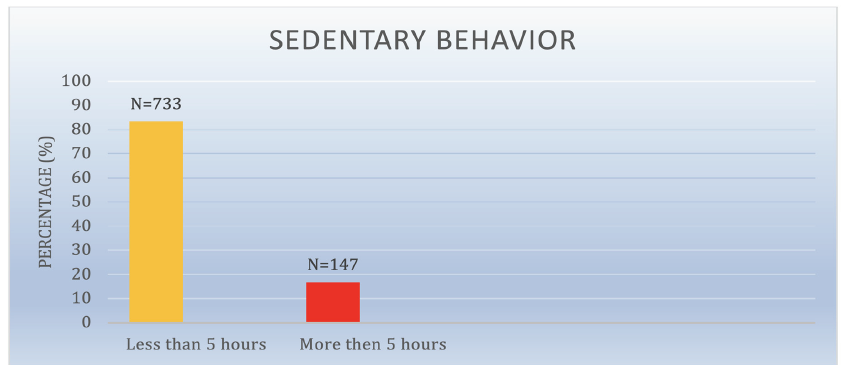
Graph 1
Prevalence of Sedentary Behavior According to Hours per Day.
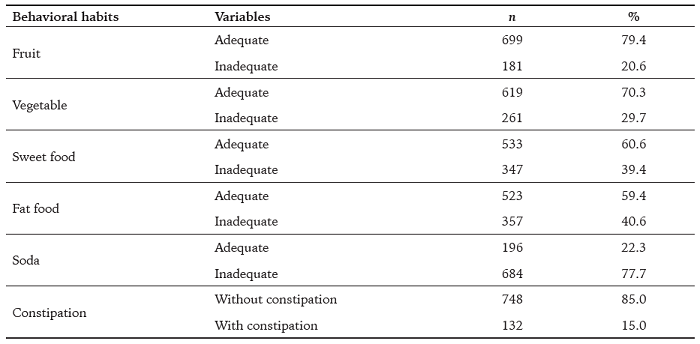
Table 1 shows the profile of eating habits of Elementary School II students, in which 74.85% reported adequate consumption of fruits and vegetables. However, 77.7% of them claimed to have an inadequate intake of soft drinks. Almost 40% reported having an inadequate relationship with sweet foods, and 40.6% reported inadequate consumption of fatty foods. Regarding constipation, 15% of respondents declared themselves constipated.
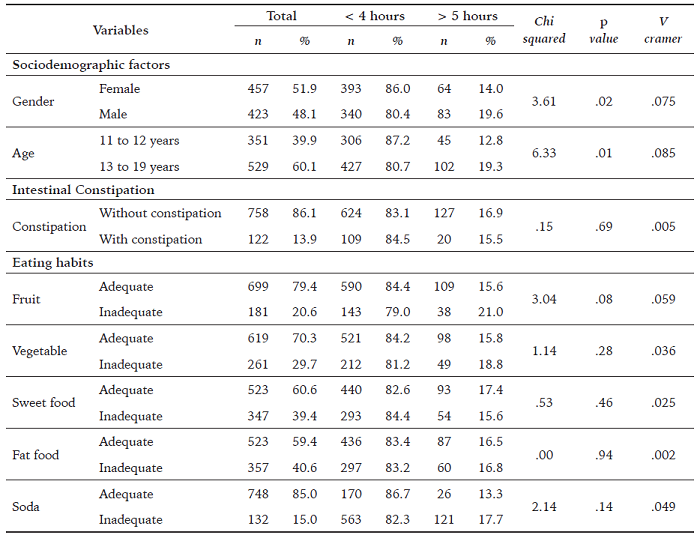
When examining the sociodemographic characteristics in relation to sedentary behavior, it was observed that both adolescent boys (p=0.02) and older adolescents (p=0.01) exhibited higher levels of sedentary behavior. Regarding the connection between sedentary behavior and eating habits, no significant associations were identified. Nonetheless, there was a potential link between inadequate fruit consumption and sedentary behavior, although it fell just short of statistical significance (p=0.08) (Table 2). Cramér's V coefficient was used to identify the statistically significant association intensity between investigated categorical variables.
Discussion
This study reveals that approximately 17% of the adolescents included in the research exhibit sedentary behavior (SB). Although this percentage is lower than the 47.5% reported in the study conducted by Christofoletti et al. (2020), it is still a concerning finding given the pivotal role of habit formation during the adolescent period.
Current literature extensively demonstrates the negative impacts of adopting sedentary behavior on adolescents' quality of life. According to Silva Filho et al. (2020), prolonged periods in static positions-sitting, reclining, or lying down-can lead to increased abdominal adipocytes, reduced cardiorespiratory fitness, and heightened insulin resistance. Consistent with this, SB contributes to the development of non-communicable chronic conditions like obesity, diabetes, hypertension, diminished school performance, and cognitive function decline (Oliveira & Guedes, 2016). Thus, given the implications of inappropriate behavioral habits, there's a clear imperative for raising awareness and implementing preventive measures against potential risk factors.
In our study sample, we observed a significant p-value indicating that sedentary behavior (SB) is more prevalent among female students, which is consistent with Bacil et al.'s (2018) findings. However, it's important to interpret these results cautiously because V Cramer's value suggests there is no substantial association between gender and SB. Nonetheless, the observed gender differences in SB might be explained by the tendency of boys to be more active during physical education (PE) classes in school, as suggested by Monteiro et al. (2020). This reflects a pattern where girls often spend more time sitting during both PE as noted by Morais et al. (2017). The V Cramer values indicate some similarities between genders, possibly reflecting progress in achieving gender equality in sports participation. Therefore, it's crucial to investigate and develop strategies to boost motivation among students, both in PE classes and in their daily lives. This can contribute to addressing the observed disparities and promoting a more active lifestyle among all students.
The age group of 13 to 19 years suggests an association with sedentary behavior, which deserves to be interpreted with caution in view of the value estimated by the V of Cramer. Costa et al. (2018) describe, based on their findings, a relationship between age and SC with generalized exposure to advertisements that promote ultra-processed foods. Due to the significant amount of time teens spend on television, computers, and electronic devices, they are vulnerable to marketing campaigns that promote these products. As a result, this exposure often leads to long periods of sitting and less healthy food choices. Consequently, parents need to monitor their children's food intake and create healthier behaviors among teens.
Turning to constipation, this study reveals a 15% prevalence among the analyzed students. This rate concurs with averages observed in other Brazilian studies, indicating a 25% prevalence among adolescents (Bastos et al., 2018). This data is concerning due to constipation's significant influence on the health of adolescents and potential persistence into adulthood without appropriate prevention and/or treatment, notably through mitigating risk factors like sedentary behavior (Chien et al., 2011). However, upon analyzing this study's data, a substantial association between this variable and sedentary behavior did not emerge, in contrast to the findings of Andreoli (2018) and Huang et al. (2014), who identified significant connections between SB and constipation. This discrepancy might arise from variations in methods, including self-reports versus validated questionnaires like ROMA III, which can affect results by relying on the patient's symptom recall ability (Silva & Pinho, 2016).
In a study conducted by Silva et al. in 2021, they investigated the relationship between sedentary behavior and insufficient fruit consumption among adolescents. Their findings indicated robust associations between these variables, which contrasts with the results of our current study. This discrepancy may be attributed to differences in the interview methods employed. It's important to note that the simultaneous presence of these risk behaviors, sedentary behavior, and inadequate fruit consumption, can significantly worsen the overall well-being of adolescents, leading to both immediate and long-lasting consequences, as demonstrated in prior research by Silva and Silva (2015). Therefore, it becomes imperative to prioritize initiatives that promote a more active lifestyle and implement interventions aimed at fostering healthier dietary habits among adolescents.
Given the significance of the topic, this study has limitations. The cross-sectional design impedes analysis of causal relationships between physical activity levels, constipation, and detailed dietary behavior. The use of self-reported questionnaires, while in line with existing literature (Tavares et al., 2014), presents a limitation. Nonetheless, these findings contribute substantially to monitoring and analyzing adolescent health, aiding in the formulation of strategies to enhance their quality of life and well-being.
All studies using chi-square statistics need to take into consideration some limitations before reaching conclusions. In the present study, the p-values in several associations were not significant. However, readers should keep in mind that a non-significant result from a Chi-square test does not necessarily indicate the absence of a relationship. It might indicate insufficient statistical power or other limitations. The Chi-square test indicates whether a significant relationship exists, but it does not quantify the strength or direction of the relationship. Researchers looking for effect sizes should consider using other measures in conjunction with the Chi-square test. The Chi-square test can identify associations between variables but cannot establish causal relationships. Additional research and experimental designs are needed to establish causality.
In future studies investigating the association between the age group of 13 to 19 years and sedentary behavior, it is crucial to take a holistic approach considering the multifaceted factors influencing this relationship. Three adolescence periods are blended into one (13-19). Are there any differences between the three adolescent periods? Researchers should explore the psychological and sociocultural aspects that drive teenagers' choices regarding screen time and dietary habits. This could involve examining how peer pressure, media literacy, and parental role modeling impact sedentary behaviors and food choices among adolescents. Additionally, researchers should explore the influence of school environments, academic pressures, and access to healthy alternatives on teenagers' daily routines.
Furthermore, future studies should investigate the long-term health implications of sedentary behavior and unhealthy diets during adolescence to understand the potential consequences in adulthood better. It is essential to assess the effectiveness of health education programs and interventions targeting this age group, aiming to promote healthier behaviors. Comparative studies across different cultural and socioeconomic contexts could shed light on the role of cultural norms and economic disparities in shaping teenagers' choices. Overall, comprehensive future research should consider these multifaceted aspects to provide a more nuanced understanding of the complex relationship between adolescence, sedentary behavior, and dietary choices, ultimately informing effective strategies for intervention and prevention.
Conclusion
This study reveals a relatively modest occurrence of sedentary behavior among the examined adolescents, which is linked to factors such as gender and age. Considering the potential adverse effects of sedentary behavior on adolescent well-being, these findings hold significant implications for monitoring and addressing this concern. As a result, it becomes crucial to heighten awareness among adolescents and their caregivers regarding the importance of maintaining an active lifestyle and adopting healthier dietary practices. Such efforts are vital for enhancing overall quality of life.
References
American Academy of Pediatrics. Committee on Public Education (2001). American Academy of Pediatrics: Children, adolescents, and television. Pediatrics, 107(2), 423-426. https://doi.org/10.1542/peds.107.2.423
Andreoli, C.S. (2018). Hábitos alimentares, adiposidade corporal, estilo de vida e constipação intestinal em crianças de 4 a 7 anos de idade / Cristiana Santos Andreoli, - UFViçosa. https://www.locus.ufv.br/bitstream/123456789/22662/1/texto%20completo.pdf
Bacil, E.D., Watanabe, P.I., Silva, M.P., &Fantineli, E.R. (2018). Validity of a questionnaire to measure sedentary behavior in 9- to 15-year-old students. Revista Brasileira de Ciências da Saúde, 24(4), 341-348. https://doi.org/10.4034/RBCS.2018.22.04.07
Bastos, M. D., Pereira, B. F., Chaves, J.,Tabile, P.,Pereira, L. M. (2018). Características da constipação funcional em crianças de zero a doze anos atendidas em um ambulatório de gastroenterologia pediátrica. Revista de Epidemiologia e Controle de Infecção,8(4), 415-421. https://doi.org/10.17058/reci.v8i4.11253
Botero, J. P., Farah, B. Q., Correia, M. A., Lofrano-Prado, M. C., Cucato, G. G., Shumate, G., Ritti-Dias, R. M., & Prado, W. L. (2021). Impact of the COVID-19 pandemic stay at home order and social isolation on physical activity levels and sedentary behavior in Brazilian adults. Einstein (São Paulo, Brazil), 19, eAE6156. https://doi.org/10.31744/einstein_journal/2021AE6156
Chien, Y., Liou, Y. M., & Chang, P. (2011). Low defecation frequency in Taiwanese adolescents: Association with dietary intake, physical activity and sedentary behaviour. Journal of Paediatrics and Child Health, 47(6), 381-386. https://doi.org/10.1111/j.1440-1754.2010.01990.x
Christofoletti, A. E., Benites, L. C., Sebastião, E.,Ueno, D. T.,Nakamura, P. M. (2020). Prevalence and sociodemographic factors associated with the sedentary behavior in adolescents of the Rio Claro-SP. Journal of Physical Education,31(1), e-3159. https://doi.org/10.4025/jphyseduc.v31i1.3159
Costa, C. D., Flores, T. R., Wendt, A., Neves, R. G., Assunção, M. C., & Santos, I. S. (2018). Sedentary behavior and consumption of ultra-processed foods by Brazilian adolescents: Brazilian National School Health Survey (PeNSE), 2015. Comportamento sedentário e consumo de alimentos ultraprocessados entre adolescentes brasileiros: Pesquisa Nacional de Saúde do Escolar (PeNSE), 2015. Cadernos de Saúde Pública, 34(3), e00021017. https://doi.org/10.1590/0102-311X00021017
Drossman D. A. (2006). The functional gastrointestinal disorders and the Rome III process. Gastroenterology, 130(5), 1377-1390. https://doi.org/10.1053/j.gastro.2006.03.008
Ferreira, R. W., Rombaldi, A. J., Ricardo, L. I., Hallal, P. C., & Azevedo, M. R. (2016). Prevalence of sedentary behavior and its correlates among primary and secondary school students. Revista Paulista de Pediatria, 34(1), 56-63. https://doi.org/10.1016/j.rppede.2015.09.002
Huang, R., Ho, S-Y., Lo, W-S., & Lam, T-H. (2014) Physical activity and constipation in Hong Kong adolescents. PLoS ONE. 9(2): e90193. https://doi.org/10.1371/journal.pone.0090193
Leal, B. D., Caetano, D., Dias, F. A., Moura, G., Rocha, L., Zambotti, R., & Alvarenga, M. (2018). Avaliação da hidratação e hábito intestinal de atletas de handebol feminino. RBNE - Revista Brasileira De Nutrição Esportiva, 12(70), 170-177. http://www.rbne.com.br/index.php/rbne/article/view/997
Monteiro, L. Z., Varela, A. R., Souza, P., Maniçoba, A. C., & Braga Júnior, F. (2020). Eating habits, physical activity and sedentary behavior among Brazilian schoolchildren: National Student Health Survey, 2015. Hábitos alimentares, atividade física e comportamento sedentário entre escolares brasileiros: Pesquisa Nacional de Saúde do Escolar, 2015. Revista Brasileira De Epidemiologia = BrazilianJournalofEpidemiology, 23, e200034. https://doi.org/10.1590/1980-549720200034
Moraes, A., Lombardi, G., & Hahn, I. S. (2017). ALTMANN, Helena. Educação física escolar: Relações de gênero em jogo. São Paulo: Cortez. 2015. 176 p. (Coleção Educação & Saúde. v. 11). Caderno Espaço Feminino, 30(1). https://doi.org/10.14393/CEF-v30n1-2017-20
Moreno, L. A., Gottrand, F., Huybrechts, I., Ruiz, J. R., González-Gross, M., & DeHenauw, S. (2014). Nutrition and lifestyle in European adolescents: The HELENA (Healthy Lifestyle in Europe by Nutrition in Adolescence) study. Advances in Nutrition, 5(5), 615S-623S. https://doi.org/10.3945/an.113.005678
Oliveira, R. G., & Guedes, D. P. (2016). Physical activity, sedentary behavior, cardiorespiratory fitness and metabolic syndrome in adolescents: Systematic review and meta-analysis of observational evidence. Plos ONE, 11(12), e0168503. https://doi.org/10.1371/journal.pone.0168503
Rojer, A. G., Ramsey, K. A., Trappenburg, M. C., van Rijssen, N. M., Otten, R. H., Heymans, M. W., Pijnappels, M., Meskers, C. G., & Maier, A. B. (2020). Instrumented measures of sedentary behaviour and physical activity are associated with mortality in community-dwelling older adults: A systematic review, meta-analysis, and meta-regression analysis. Ageing Research Reviews, 61, 101061. https://doi.org/10.1016/j.arr.2020.101061
Santos, D. A., Galvão, L. L., Santos, R. G., Viana, R. B., Santos, E. C., Silva, R. R., Tribess, S., Virtuoso Júnior, J. S., & De Lira, C. A. (2021). Smartphone e folder podem ser uma alternativa para reduzir o comportamento sedentário? Estudo piloto. Rev. Bras. Ativ. Fís. Saúde, 26, 1-7. https://rbafs.org.br/RBAFS/article/view/14478
Silva Filho, R. C., Lemes, T. M., Sasaki, J. E., Gordia, A. P., & Andaki, A. C. (2020). Comportamento sedentário em adolescentes brasileiros: Uma revisão sistemática. Rev. Bras. Ativ. Fís. Saúde, 25, 1-13. https://rbafs.org.br/RBAFS/article/view/14335
Silva Junior, F. G., Silva, T. B., Ferreira, J. S., & Fonseca Junior, S. J. (2017). Sedentarismo e inatividade física em adolescentes com faixa etária de escolares do ensino médio e reflexões para educação física escolar. Rev Saúde Fís& Mental, 5(5), 76-88.https://revista.uniabeu.edu.br/index.php/SFM/article/view/2993
Silva, D. A., & Silva, R. J. (2015). Associação entre prática de atividade física com consumo de frutas, verduras e legumes em adolescentes do Nordeste do Brasil. Revista PaulistaPedriatria, 33(2), 167-173. https://doi.org/10.1016/j.rpped.2014.09.003
Silva, M. S., & Pinho, C. P. S. (2016). Intestinal constipation: Prevalence and associated factors in hospital outpatients in Brazilian Northeast. NutriciónClínica Y Dietética Hospitalaria, 36(1), 75-84. https://doi.org/10.12873/361sousa
Silva, R. M., Andrade, A. C., Caiaffa, W. T., & Bezerra, V. M. (2021). Coexistência de comportamento de risco à saúde e o contexto familiar entre adolescentes brasileiros. Pesquisa Nacional de Saúde do Escolar (2015). Rev. Bras. Epidemiol.24. E210023
Stanczykiewicz, B., Banik, A., Knoll, N., Keller, J., Hohl, D. H., Rosińczuk, J. & Luszczynska, A. (2019). Sedentary behaviors and anxiety among children, adolescents and adults: Asystematic review and meta-analysis. BMC Public Health19. 459. https://doi.org/10.1186/s12889-019-6715-3
Tavares, L.F., Castro, I.R., Cardoso, L.O., Levy, R.B., Clarom, R.M.,Oliveira, A.F. (2014). Validade de indicadores de atividade física e comportamento sedentário da pesquisa nacional de saúde do escolar entre adolescentes do Rio de Janeiro. Brasil. Cadernos Saúde Publica,30. https://www.arca.fiocruz.br/handle/icict/28915
Zhang, T., Lu, G., & Wu, X.Y. (2020). Associations between physical activity, sedentary behaviour and self-rated health among the general population of children and adolescents: A systematic review and meta-analysis. BMC Public Health 20. 1343. https://doi.org/10.1186/s12889-020-09447-1