Estudios
An exploration of institutional and personal barriers to online academic engagement at a Brazilian university
Una exploración de las barreras institucionales y personales para el compromiso académico en línea en una universidad brasileña
 Cinthia Bittencourt Spricigo
Bárbara Maria Camilotti
Charles R. Graham
Ruth Baptista
Cinthia Bittencourt Spricigo
Bárbara Maria Camilotti
Charles R. Graham
Ruth Baptista
An exploration of institutional and personal barriers to online academic engagement at a Brazilian university
Educación XX1, vol. 26, no. 2, pp. 17-50, 2023
Universidad Nacional de Educación a Distancia

Esta obra está bajo unaLicencia Creative Commons Atribución-NoComercial 4.0 Internacional.
Received: 16 November 2022
Accepted: 22 March 2023
Published: 13 June 2023
Abstract: The recent global pandemic has raised institutional awareness around the world concerning the importance of having high quality online learning options for students. Learner engagement is often correlated with quality outcomes such as student academic success and student satisfaction. Learner engagement is commonly thought of as having three important dimensions: affective engagement, behavioral engagement, and cognitive engagement (ACE framework). Engagement is also enabled or limited by facilitators/barriers. Three important categories of facilitators/barriers are learner characteristics, personal environment, and course environment. Elements in each of these three areas enable or are barriers to students fully engaging in a course. This research explored what the barriers are to students fully engaging in their online courses at a Brazilian university to determine which areas will be most productive for the university program administrators and designers to focus on increase student academic engagement. A survey was applied to students from the Brazilian university under graduation online programs. It included items related to engagement facilitators barriers in the three areas described in the ACE framework and received 429 valid responses. The affective and behavioral dimensions were perceived by students as the lower engagement indicators in the ACE framework. Among facilitators or barriers for engagement, the ones under the course environment category were predominantly perceived as barriers, while learner characteristics and student environment were perceived as facilitators. However, all three categories were more barrier than facilitator for over 40% of the students. Although course environment is the barrier most under control of the institutions, understanding students´ personal environment and characteristics of learning can help them to provide support and facilitate full engagement in online courses.
Keywords: online learning, student engagement, facilitators and barriers to engagement, higher education.
Resumen: La reciente pandemia mundial ha aumentado la conciencia institucional en todo el mundo sobre la importancia de contar con opciones de aprendizaje en línea de alta calidad para los estudiantes. La participación de los estudiantes a menudo se correlaciona con resultados de calidad, como el éxito académico y la satisfacción de los estudiantes. Comúnmente se piensa que el compromiso del alumno tiene tres dimensiones importantes: compromiso afectivo, compromiso conductual y compromiso cognitivo (marco ACE). La participación también está habilitada o limitada por facilitadores/barreras. Tres categorías importantes de facilitadores/barreras son las características del alumno, el entorno personal y el entorno del curso. Los elementos en cada una de estas tres áreas permiten o son barreras para que los estudiantes participen plenamente en un curso. Esta investigación exploró cuáles son las barreras para que los estudiantes participen plenamente en sus cursos en línea en una universidad brasileña para determinar qué áreas serán más productivas para que los administradores y diseñadores de programas universitarios se centren en aumentar la participación académica de los estudiantes. Se aplicó una encuesta a estudiantes de la universidad brasileña en programas de pregrado en línea. Incluyó elementos relacionados con las barreras de los facilitadores de participación en las tres áreas descritas en el marco ACE y recibió 429 respuestas válidas. Las dimensiones afectivas y conductuales fueron percibidas por los estudiantes como los indicadores de compromiso más bajos en el marco ACE. Entre los facilitadores o las barreras para la participación, los de la categoría entorno del curso se percibieron predominantemente como barreras, mientras que las características del alumno y el entorno del estudiante se percibieron como facilitadores. Sin embargo, las tres categorías fueron más una barrera que un facilitador para más del 40% de los estudiantes. Aunque el entorno del curso es la barrera más controlada por las instituciones, comprender el entorno personal de los estudiantes y las características del aprendizaje puede ayudarlos a brindar apoyo y facilitar el compromiso académico en los cursos en línea.
Palabras clave: aprendizaje en línea, compromiso académico de los estudiantes, facilitadores y barreras del compromiso académico, enseñanza superior.
INTRODUCTION
The context for this study is a common one that has been repeated across the world in the last several years. The recent global pandemic increased awareness of the online learning practices within a prominent Brazilian university. University leaders recognize that quality online learning is an essential part of the learning options that should be available to students at a major university in the 21st Century. At the same time, the pandemic shone a light on many online educational practices that did not seem to be fully meeting the needs of students. Specifically, there was anecdotal evidence that online students were struggling to engage effectively in their educational opportunities.
In this study we present the story of a Brazilian university that used research to look carefully at student engagement in their online courses and to identify real facilitators and barriers to that engagement. We share how an instrument for identifying barriers was developed and used across the institution. We also share reflections of university stakeholders on barriers to student engagement and how they might be addressed. The purpose of this paper is to present a case study that we believe will be useful to many institutions of higher education experiencing similar challenges. It contributes significantly to the online student engagement literature by providing concrete examples and experiences of institutional and personal engagement barriers/facilitators at a world-class Brazilian university.
The Academic Communities of Engagement
The Academic Communities of Engagement (ACE) framework (Borup et al., 2020) was used to guide the study. The ACE framework was chosen because it was developed specifically for looking at engagement within online and blended contexts and it explicitly represents the relationship between facilitators/barriers and important dimensions of engagement. The ACE framework considers learner engagement to be central and necessary to academic success of many types including achievement of learning outcomes, learning satisfaction, and persistence (Chen et al., 2018; Jung & Lee, 2018; Soffer & Cohen, 2019; Rajabalee & Santally, 2021). ACE represents learner engagement as a multi-dimensional construct with affective, behavioral, and cognitive dimensions (Martin & Borup, 2022). There are many factors that influence engagement which are referred to as facilitators of engagement (or barriers to engagement from the negative side). Examples of facilitators/barriers from the ACE framework fall into categories of (1) learner characteristics, (2) personal environment, and (3) course environment and will be discussed later in the paper. A challenge for engagement researchers is confusing facilitators with indicators of engagement (Halverson et al, 2019). Long-time engagement researchers (Skinner et al., 2008) distinguish facilitators/barriers this way, “Indicators refer to the features that belong inside the construct of engagement proper, whereas facilitators are the causal factors (outside of the construct) that are hypothesized to influence engagement” (p. 766).
Indicators of Engagement
The ACE framework builds on three dimensions of engagement identified in a seminal review of literature on engagement (Fredricks et al., 2004) and popularized in the Handbook of Research on Student Engagement (Christenson et al., 2012). Affective engagement relates to a student’s emotional energy associated with a learning experience. For example, this might include positive emotions like excitement or belonging or negative emotions such as boredom, frustration, or loneliness. Behavioral engagement is represented by the physical observable behaviors and energy that students expend in the learning experience. For example, this might include elements like attendance, active participation, and submitting work. Cognitive engagement is represented by the mental energy exerted in the learning process. For example, this might involve the use of metacognitive learning strategies or giving persistent mental effort or attention to a learning task. The ACE framework identifies engagement indicators for each of the three dimensions of engagement which we have used to identify levels of learner engagement.
Facilitators/Barriers of Engagement
Engagement facilitators and barriers are the factors that influence the increase or decrease of learner engagement. Researchers have identified different categories of facilitators. For example, Halverson et al. (2019) identify personal facilitators (like learner characteristics) and contextual facilitators (like the learning experience). Panigrahi et al. (2018) similarly identify personal and environmental factors as engagement facilitators. The ACE framework identified three categories of facilitators which include,
-
Learner Characteristics - includes students cultural background, long term interests, dispositions, and motivations as well as self-regulation skills developed over time.
-
Personal Environment - includes home and work conditions as well as personal communities that can support engagement.
-
Course Environment - includes institutional and course conditions as well as the peers, instructors, and other supports to engagement.
More recently ACE lead author expanded the three categories of facilitators to include a fourth that is labeled “personal background” which could include historical and cultural factors influencing engagement (Martin & Borup, 2022). The course environment facilitators/barriers are the ones that universities have the greatest control over. However, it is still important for institutions to understand the facilitators/barriers in the other categories because it has an influence on the kinds of support that may be needed for learner engagement and ultimately academic success. For example, awareness of barriers in students’ personal environment, including home and work conditions, is essential to designing online learning that meets their needs and can help them to successfully engage in their personal context. This study focuses on the three original facilitator categories in the ACE framework as the study was designed prior to the fourth category being introduced in 2022.
METHOD
In this study we used the ACE framework as a guide to understand the facilitators/barriers that students felt influenced their engagement (see Figure 1). The specific question university stakeholders were interested in was: What facilitators/barriers related to the course environment, personal environment, and learner characteristics did BUNIV online learners feel influenced their academic engagement?
This is a mixed-methods case study of an institution seeking to better understand the barriers students were facing to online engagement. The research was intended to deepen our understanding of the institutional as well as personal facilitators/ barriers experienced by online students at BUNIV. We provide descriptive statistics from an exploratory survey to help provide the larger picture of categories from the ACE framework where significant percentages of students report they are experiencing barriers. We use a thematic network analysis of open ended student responses to add emphasis to the barriers that students are most concerned about and willing to spend time elaborating on. Below we describe the context that the research took place in, the development of the survey instrument, and our data collection and analysis procedures.
Research Context
BUNIV has 37 online undergraduate programs, with approximately 6950 enrolled students. Those programs are 2 to 5 years long. Most of them are formed by 9 week-long courses, grouped in modules of 3 courses. So, students have 4 modules of 3 courses every year. Professors are hired to plan the course, produce materials, learning and assessment activities. Course mediation is conducted by an online adjunct instructor, not the same that designed the course or who teaches the course on campus.
Survey Development
The exploratory survey was developed in collaboration between online learning experts external to the university and internal stakeholders with responsibilities for online learning at the university. Two external experts and two internal stakeholders met weekly for several months reviewing the ACE framework and identifying categories and items that were connected to facilitators/barriers identified in the ACE framework and that seemed relevant to the institutional context. One of the experts was an original author for the ACE framework and peer debriefing on the development was sought from another original author of the framework. University stakeholders were particularly interested in a more qualitative and deep understanding of barriers to student engagement, so both a Likert scale (1=Very Strongly Disagree to 6=Very Strongly Agree) and open-ended questions were used. Generally, questions were stated in positive terms where scores 4-6 would indicate that the item facilitates engagement while scores 1-3 would indicate barriers to engagement with only a couple of items reversed.
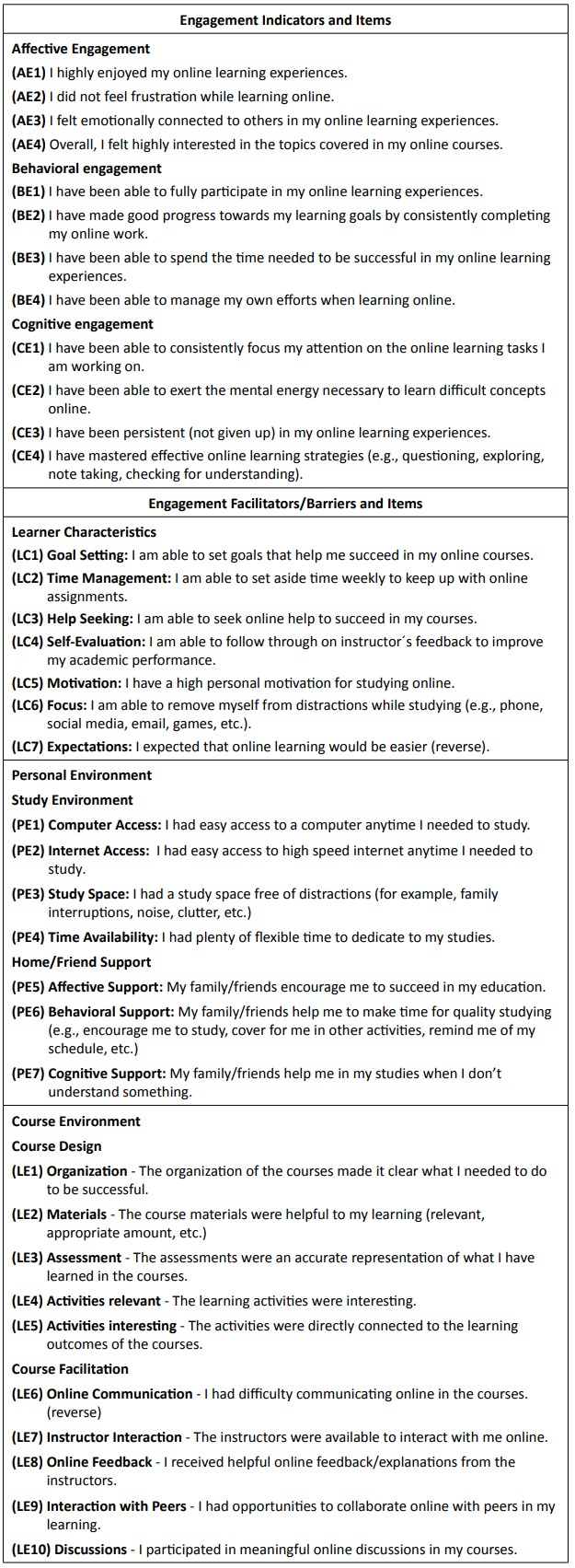
The survey included items related to engagement facilitators barriers in the three areas described in the ACE framework (see Table 1). Initial items in each category were developed based on input from online learning experts as well as a knowledge of barriers experienced by online learning leaders at BUNIV. Internal consistency of the survey subscales was measured using Cronbach’s α and were all considered acceptable to good: Affective Engagement (AE) (α=.757), Behavioral Engagement (BE) (α=.87), Cognitive Engagement (CE) (α=.747), Learner Characteristics (LC) (α=.798), Personal Environment (PE) (α=.754), Course Environment (CE) (α=.839). The items in each category were exploratory and not intended to be exhaustive. For example, barriers related to learner characteristics were primarily related to student self-regulation (Cleary & Zimmerman, 2004; Panadero, 2017), but could have also included emotional aspects related to academic anxiety or stress. There were also obvious limitations to how long a survey could take without participants experiencing dropout due to survey fatigue. So, we acknowledge that this exploratory survey is not comprehensive, but that it does contain many important barriers/facilitators and we hope that important elements to students not included will surface in the qualitative data. Each section also included an open-ended question that allowed participants to identify additional barriers to their online learning engagement that might not have been identified in the items. Researchers developed the items in English and then had them translated into Portuguese (https://doi.org/10.5281/zenodo.7319503). The instrument was piloted with a small group of students and minor adjustments were made to clarify item wording based on their input.
Data Collection
The survey was administered using Qualtrics. A link was sent by e-mail to students enrolled in all online undergraduate programs, except for freshmen (who did not have enough experience in the courses in order to reliably answer the questions), or 5416 students. The survey was available for 30 days, during the first month of the academic year. The answers were anonymous and voluntary and there were no compulsory questions. There were 429 valid responses, that means, at least one block of questions was answered. Four blocks of questions were proposed for students, and their sequence was random for each respondent: barriers related to course environment, barriers related to student characteristics, barriers related to personal environment and overall engagement. The existing dataset initially collected by the university for evaluation purposes, was approved by the Research Ethics Committee at BUNIV to be analyzed for research as it did not contain personally identifying information.
Data Analysis
The survey data was analyzed in two distinct ways. The quantitative data was analyzed primarily using descriptive statistics (generated using SPSS) which allow researchers to see patterns in the data related to student engagement and barriers to student engagement. The open-ended qualitative data was analyzed using a slightly modified approach to thematic network analysis as described by (Attride- Stirling, 2001). The lead researcher began coding for three global themes framed by the engagement barriers identified in the ACE framework (Borup, et al., 2020): course environment, personal environment, and learner characteristics. Initial basic codes were combined with similar codes into organizing themes. Then, in order to improve the trustworthiness of the coding, a second researcher was given the codebook with organizing themes and independently re-coded the identified basic codes using the themes that had been developed. Initial agreement for the organizing codes related to course environment were all above 88%, personal environment above 79%, and learner characteristics above 79%. Differences in coding were discussed until researchers were able to come to agreement regarding the codes. Visuals and descriptions of the thematic networks are available in the findings.
RESULTS
The findings will be organized around indicators of engagement (Table 2) and the three types of facilitators/barriers to online student engagement (Table 3) identified in the ACE framework: course environment, personal environment, and learner characteristics. A one-way repeated ANOVA was calculated comparing the three dimensions of engagement: affective, behavioral, and cognitive. A significant effect was found (F(2,772) = 73.97, p <.001). Follow-up protected t tests revealed that the differences between scores in the three dimensions as shown in Table 2 are statistically significant. We present these findings primarily to show that students’ affective engagement in the online context was the lowest of the three dimensions which may have implications for the types of course facilitators that institutions need to consider emphasizing.
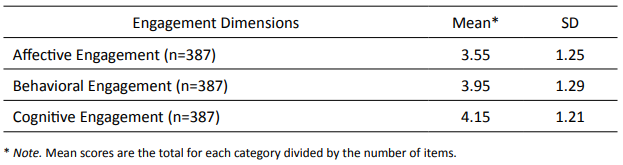
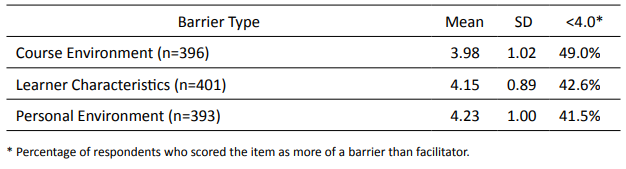
Table 4 shows a comparison of how the students perceived the three categories. Of the three categories of barriers, the course environment barriers are the ones that universities have the most control over. We considered scores below 4.0 to indicate that the item or category was more of a barrier to engagement while scores greater than or equal to 4.0 were more of a facilitator to engagement. With this perspective in mind, each of the categories were more barrier than facilitator for over 40% of the students and a larger percentage of students reported barriers in the course environment than the other two categories.
In each of the following sections we will explore the facilitator/barrier categories in more depth looking at both quantitative and qualitative data from the students.
Barriers Related to Course Environment
The course environment data consists of 10 items, five that are related to the design of the course and five that are related to the facilitation (i.e., human interaction) in the course. Table 4 contains descriptive data for all the course environment survey items. Lack of opportunities for peer collaboration and discussion were the lowest scores with the greatest number of students scoring them below a 4.0. Assessment was next with just over 40% scoring this item below a 4.0. All items except the two related to instructors (both interaction and feedback) had at least a third of the students score them below 4.0 in the barrier range.
Students had an opportunity to respond to an open-ended question about the course environment related barriers. This data helps us to triangulate the quantitative findings, identify potential elements that were not considered in the survey, and understand details of the student experience with barriers at a deeper level. Figure 1 represents the thematic network of the qualitative coding with 17 basic themes flowing into 8 organizing themes under the global theme of course environment barriers. Overall, 136 students left open ended comments that related to barriers in the course environment (the largest number of comments in the three barrier categories). The numbers in the thematic network represent the number of times that the theme was coded and is a soft representation of the prevalence or strength of the theme. In the sections below we will provide quotes to highlight the themes.
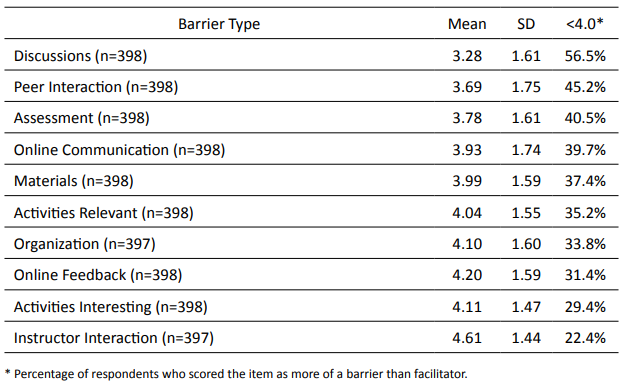
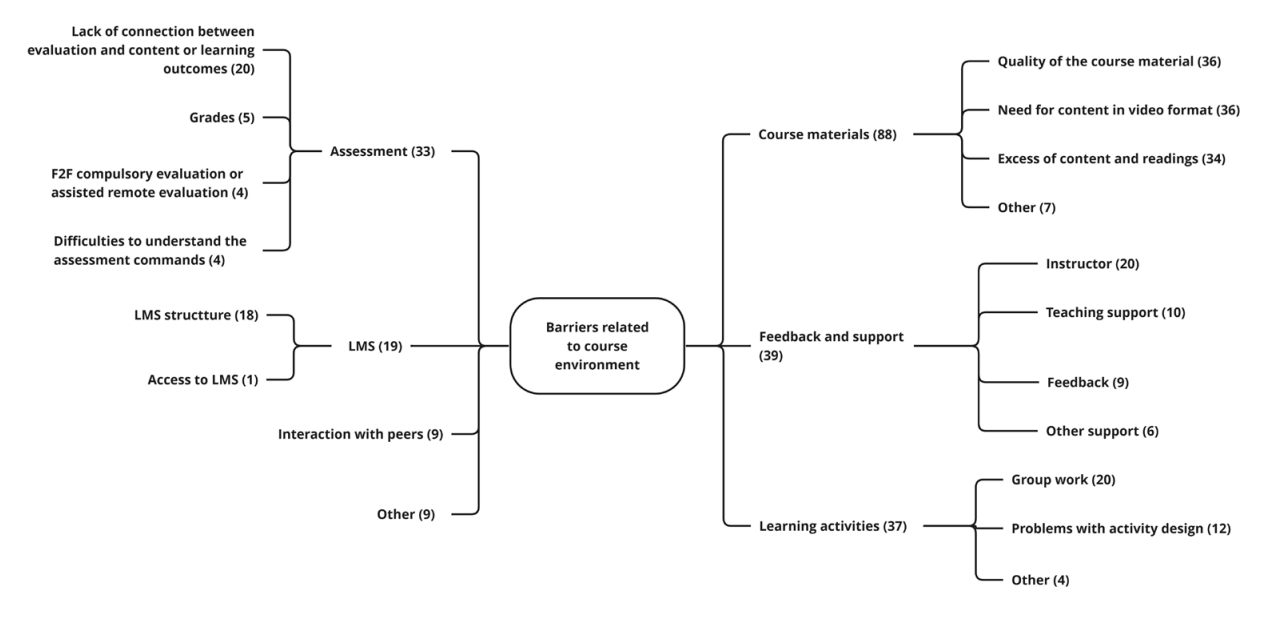
Figure 1
Organizing and Basic Themes Related to Course Environment Barriers (the numbers in the network represent the number of comments coded to the theme)
Course Materials
Course materials was the most commented barrier. Some students reported frustration with the quality of course materials and associated their learning with the use of other resources: “My good performance is related to internet research and interaction with other students” and “The [course provided] content is all written ...and I learn by watching videos on YouTube”. Another student pointed out that there were “a lot of irrelevant and outdated texts…where some excerpts of 30- 40 sheets, only 5 sheets are useful” and “The course content is exhausting, too much text, few web conferences, the support material is insufficient and leaves something to be desired”. Many students expressed a desire for less text-heavy materials and more video content: “It would be ideal to present regular video lessons with the content and use reading material only as a support”.
Feedback and Support
Sometimes students felt that instructors either didn’t know enough about the course content or couldn’t provide clear explanations, “Often the meeting with instructors is irrelevant or not very guiding.” Some comments mentioned the lack of feedback on some activities, or that it was not promptly delivered: “We do not have feedback from teachers regarding activities in which our performance was average or poor.” They also desired more relevant feedback, which would result in opportunities to reflect on mistakes and correct them: “I believe that the feedback system needs to be improved a bit, because when we do poorly on a project and we get the grade, we don’t have the opportunity to learn and redo.” There is a lack of meaningful feedback. [...] but what I received was “that’s missing...”, “very good”, and I believe that this is not quality feedback, it didn’t make me reflect on my work, nor did it help me improve my weaknesses”.
Students desired closer contact with the instructor, so they could quickly ask questions without having to write them down and wait more than a day for an answer. One student commented, “I should have faster access to the instructors because I have to wait another day to clear my doubts and I lose focus.” Another added, “I like to have autonomy in my learning, but I miss a teacher who is more present in my daily life.” Some believed it would be nice to have more synchronous meetings with the instructor during the week: “I realized that we don’t have a direct channel with the teacher, which makes it very difficult to ask questions. Many questions are answered on the spot, not by e-mail and within 3 business days”.
Learning Activities
Comments about learning activities concentrated in complaints about group work, the design of learning activities and other less frequently mentioned factors. Many students reported difficulties communicating with their peers online and organizing teamwork, “I believe group work can be better by creating a channel of communication with other peers. I know of the existence of the blog, but I believe that a direct channel with peers would be necessary”. Also, students complained that some peers did not commit to the team. For example, one student said: “One of the biggest difficulties is the development of work in groups, mainly because it is stressful to meet agendas and to communicate with peers sometimes, we have never seen before. Another factor is the lack of commitment of peers to group work”. Students mentioned they might spend more time figuring out how to organize the team than doing the activities. Online communication was often difficult and caused some students to express their preference to study alone. One student said: “My experiences in group work have not been positive mainly due to a lack of communication”.
About activity design, students mentioned that activities did not fit the available time: “The biggest barrier has been the lack of time, there is a lot of content in the disciplines”. Also, there were gaps between activities and availability of supporting course materials, as well as a lack of practical activities, “The lack of exercises in the learning units leaves a lot of room for doubt”. Other comments mentioned the incompatibility between synchronous and asynchronous activities in blended courses, where there is an instructor responsible for assisting students with online activities and another teaching synchronous face-to-face classes.
Assessment
Most of the comments under this theme stated that there were assessment questions on the exams that were inconsistent with the content taught, “We study based on the material provided during the weeks and when it comes time for the test, there is always a surprise. It gives the impression that whoever prepares the material is not the same as whoever prepares the tests”. Major assessments were often proctored face-to-face, so some students complained about the lack of flexibility that created, “A barrier will be to go to campus to do a face-to-face assessment activity”. Finally, for some students, having assessments that focused on memorization rather than authentic activities was a barrier to their motivation for learning, “I feel punished by these meaningless memorizing assessments”.
Learning Management System (LMS)
The LMS was considered a barrier as some students found it confusing and difficult to navigate, and some of them expressed missing guidelines and assistance. One student commented, “It is complex to find activities, class content, scripts, etc.” while another stated, “there is a lack of guidance on the use of the platform. A confusing platform, difficult to navigate. And there is also a lack of people who know how to deal with people to help”. Finally, some students felt that the LMS did not adequately facilitate communication, a barrier was “The lack of practicality in communication with colleagues and teachers. All done by a portal without online experience in real time, confusing”.
Interaction with Peers
Some comments demonstrated that students miss knowing their peers and being able to study and discuss with them: “The low interactivity with peers and teachers does affect me a little. There are no debates that enable full academic development”. and “Distance study can often be lonely, maybe it is a point that there’s no way to change because we don’t see our classmates every day .. At the end of every module, I always felt a little lonely, which demotivated me a little”.
Barriers Related to Learner Characteristics
The Learner Characteristics survey data consists of 7 items shown in Table 5. By far the lowest score and hence largest barrier in this category was student expectations that “online learning would be easier”. Time management, focus, and motivation were also items in which more than a third of students rated below four in the barrier range of the scale.
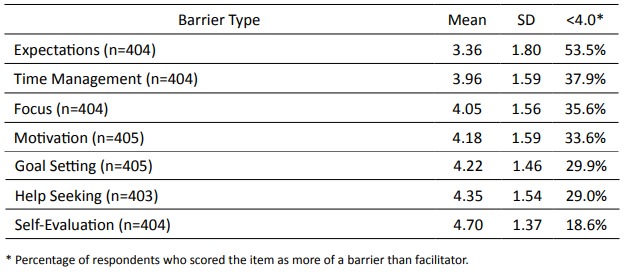
A slightly larger number of students responded to this section of the survey than any other section, with 125 students elaborating on the learner characteristic barriers through a response to the open-ended question. The thematic network resulting from the coding of the open-ended question is represented in Figure 2. The barriers related to learner characteristics were divided in three organizing themes: Emotional Issues (24 comments), Behavioral Issues (54 comments) and Cognitive Issues (17 comments).
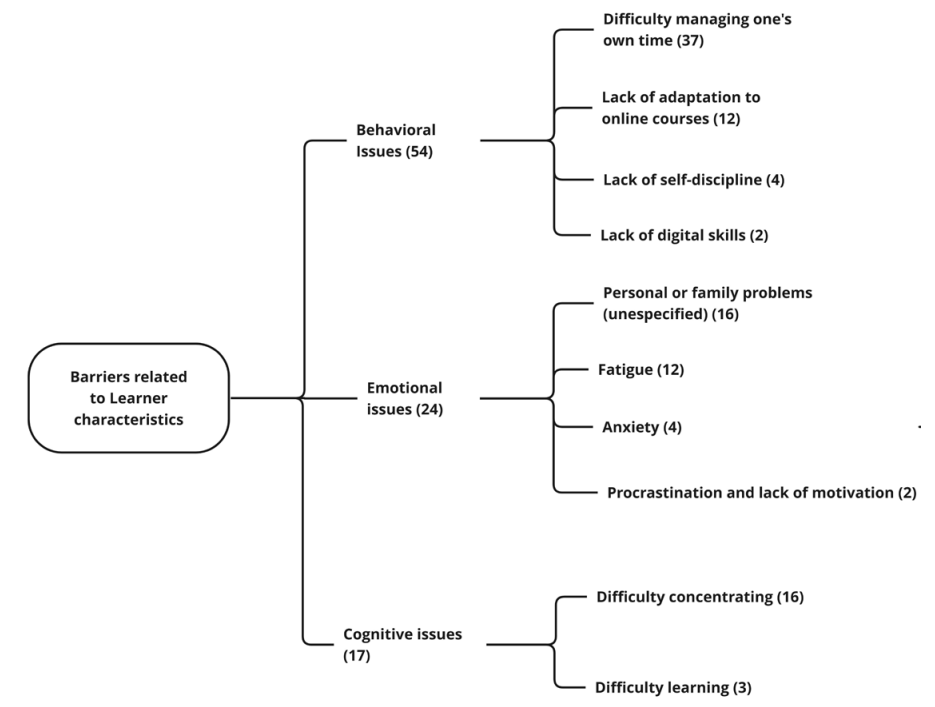
Figure 2
Organizing and Basic Themes Related to Personal Characteristic Barriers (the numbers in the network represent the number of comments coded to the theme)
Many of the themes correspond to items in the quantitative portion of the survey. For example, difficulty concentrating and difficulty managing one’s own time in the thematic network are similar to focus and time management items in the survey. However, some personal barriers acknowledged by students including emotional factors and digital competency are important new elements raised by the students. The sections below provide qualitative details to support the basic themes identified.
Emotional Issues
Students mentioned emotional issues such as anxiety, procrastination, lack of motivation and fatigue, which were often associated with personal problems such as financial difficulties, unemployment, and family issues. Fatigue was often related to heavy workloads and the balance between work, family, and studies. So, certain conditions in the personal environment section such as work and study balance were associated with learner characteristics such as fatigue or motivation to study, creating a larger barrier to engagement. The quotes below exemplifies these situations.
“Work’s exhausting. When the workday ends, I just want to lie down and rest, because my work demands a lot from me. I spent the day thinking and consuming information, so when it ends, I feel like my mind has already been used up. I think that if I could go to the library every day it would be great, because I would be able to force myself to be awake studying, but because the costs of public transportation and the time is too late to come back home from the bus stop, I must study at home. The degree is important to me, so I’m going to find ways to get energy for studying”.
“Financial issues, familiar problems, mental suffering, loneliness, lack of time management, real lack of time, tiredness, exhaustion, poor diet, lack of friends and support, lack of social bonding, back pain due to be seat all day long and keep going after work doing a total of over 10 hours a day in front of the computer and just make me want to run out of the computer”.
Behavioral Issues
The self-management of one’s own study practices was considered a barrier for most of the students. Some students related that they had difficulty with time management, and they needed to learn how to schedule the time to study more effectively while others did not feel motivated to study or described themselves as lazy. Others acknowledged difficulties organizing their schedules to focus on their coursework and to minimize the distractions at home.
Many of the students related that it was difficult to balance the time between work and study (31 comments) or between family and study (12 comments). And many times, this difficulty was associated with the excess of content and text to read. The comment below expresses these difficulties:
“I work two jobs and study. I often lose concentration during very extensive readings. I have a lot of difficulty doing group work, which causes me a lot of frustration for not having the commitment of people who don’t work and just study”.
“My biggest difficulty is the book readings…I work 8 hours a day from Monday to Friday and 4 hours on Saturday. I cannot read on the way to work. I find this kind of material exhausting. And the material I learn the most are the videos, which I can watch several times…I chose Online Course to make my life easier and not to make it difficult”.
Another barrier was adapting to learning in predominantly asynchronous online courses. Some quotes exemplify these perceptions: “I knew I would have difficulties with online learning, but the barriers are a little more complex than I imagined. I am afraid that in this matter only I can solve this problem, since the [BUNIV’s] system is excellent.” and “Studying alone without the support of at least one live class was very difficult. Discouraging”.
A few students reported that a lack of digital skills posed a barrier to their learning experience. For instance, some students expressed difficulty with activities involving folders and word processing, with one student stating, “I don’t have the knowledge to complete these activities”. Another student mentioned feeling overwhelmed by the influx of daily emails, and the pressure to deal with computer programs due to limited time and a lack of extensive computer knowledge, stating, “I don’t have vast knowledge to deal with computer/notebook and its programs”.
Cognitive Issues
The difficulty concentrating was another barrier described by the students. Some of them reported personal problems like lack of motivation, focus, and difficulty managing their own time, others reported that the noises at home made it difficult for them to concentrate. The lack of printed content was described as a barrier also and some students reported to have disorders such as dyslexia and attention deficit hyperactivity disorder (ADHD).
Another barrier was difficulty learning and the students pointed to external factors to explain the difficulties, for example: “Sometimes I have difficulty with comprehension in the courses. Some teachers do not explain clearly.” Another student pointed out that the difficulty with learning in the course was the lack of important prerequisite knowledge, “I had a lot of difficulty with programming, I felt like I had to have studied programming as a prerequisite to start the course”.
Barriers Related to Personal Environment
Barriers related to the students’ personal environments are reported in Table 6. The first four barriers are related to their study environment and involve access to computers and the internet as well as a distraction-free space to study and time availability to study. The last three questions relate to how supportive family and friends are within their personal environment.
Two items stand out as significant barriers for most of the students: time availability and family and friend’s cognitive support. These are not surprising as many students engaged in the online programs are working full time in addition to having family obligations which restrict the time they have for studying. Additionally, for college-level courses, it is common for family and friends to be able to provide emotional and behavioral support, while they do not have the subject-matter knowledge to help with the cognitive aspects of the learning.
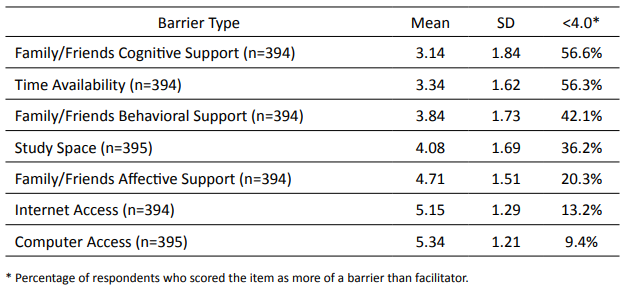
The next most prevalent barriers related to having a distraction-free study space and behavioral support where family and friends help make time for undistracted studying. Access to computer hardware and the internet were barriers to relatively few students (9.4% and 13.2% respectively), although these kinds of access barriers have the potential to significantly impact other dimensions like time for learning and the convenience of where students can study.
Figure 3 shows the thematic network with organizing themes for personal environment barriers. Comments were grouped under four organizing themes: study time and priorities, environment, relationships, and financial issues. These categories connect with challenges in the learner characteristics section. The nature of the comments under the personal environment dimension are discussed in the subsections below.

Figure 3
Organizing and Basic Themes Related to Personal Environment Barriers (the numbers in the network represent the number of comments coded to the theme)
Student Priorities
Comments grouped under this organizing code were often related to the lack of time to study, which was considered as a barrier to academic engagement for many students. Although some students simply mentioned they didn´t have enough time to study, “I have little time available”, others reported having difficulties reconciling study and working and/or family hours, connecting with challenges categorized as behavioral issues in the learner characteristics section: “I have a 1 year and 5 month old baby girl, she has Down Syndrome, so outside the work period I still have to accompany her in therapies and care at home, although my husband is very helpful I don’t think I have the time that I would like to dedicate myself to studies”.
Study Environment
The study environment was a barrier pointed out by many students that mentioned problems like noise, interruptions, and ergonomics, “In the environment where I study there is noise all day”; “Well, I don’t have a very comfortable table and chair... This makes me feel a lot of pain while I’m sitting and studying”; “What hinders my performance is the interruptions in the middle of the study”.
Technology issues were also mentioned by some students, such as low internet speed or internet instability, computers that lacked audio and/or video, low performance computers for the course needs and sharing the computer with someone else at home, “In the city where I live, there are a lot of power outages, the internet is very slow due to being a country town, which also affects teaching productivity”; “Old personal computer with poor performance”.
Personal Problems
Lack of family or friends support was considered a barrier by some students, “I have been feeling let down by my family and friends because they claim that the job prospects are disappointing and they charge me to enter the job market so that I can emancipate myself economically”; “In my case, my family’s lack of understanding that an online college requires, if not the same level, a higher level of dedication and attention, had a huge impact on my availability to study”. Some reported personal and family problems, “Recurrent family problems hinder performance and discourage a study routine”, and some pointed out financial issues as a barrier, “Being with few financial resources stresses, demotivates”.
Experiencing Multiple Barriers Across Categories
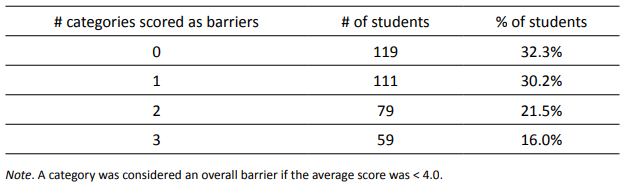
Students who experience multiple categories of barriers may be at greater risk for lower engagement. Table 7 shows that 37.5% of students experienced multiple categories as barriers (average score <4.0).
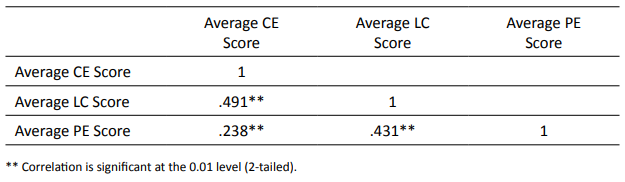
We also noticed that students with LC barriers often experienced the other barriers. Table 8 shows the correlations between the average scores in the three different barrier categories. The LC scores are correlated with the course and personal environment scores at almost double the level that the barriers in the two environments are correlated with each other. Additionally overall engagement was most strongly correlated positively with learner characteristics (.761) and second with course environment (.674) and least with personal environment (.413).
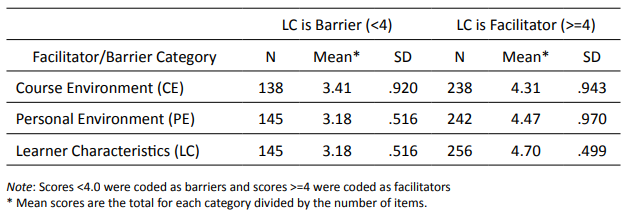
Students with high barriers related to Learner characteristics (LC) often experienced higher levels of barriers in the other areas. To explore this observation, we divided students into two groups, ones where LC was considered a barrier (average LC < 4.0) and ones where LC was considered a facilitator (LC >=4.0). Table 9 reports the comparison of means across barrier categories under these conditions. Independent sample t-tests were run to verify that the differences in mean scores were significant: CE results were (t(374)=9.067, p<.001, Cohen’s d=.970), LC results were (t(399)=28.981, p<.001, Cohen’s d=3.006), for PE (t(377)=7.113, p<.001, Cohen’s d=.761). In all cases effect sizes as measured by Cohen’s d were high and differences were especially high for the classification variable which is fairly normal.
DISCUSSION
This study examined which were the most important barriers to online academic engagement as reported by students of undergraduate online courses at a higher education institution in Brazil. The barriers were grouped in three categories identified in the Academic Communities of Engagement (ACE) framework (Borup et al., 2020): course environment, personal environment, and learner characteristics. Most barriers reported in the open-ended questions were related to the course environment, followed by student characteristics. In the following sections the findings on the research questions will be discussed.
Course Environment Barriers
Barriers related to the course environment were the most cited and are the ones under greatest institutional control. Those barriers could be addressed by appropriate course design strategies, so that learning activities, assessments, and course materials become more interrelated and more practical (e.g., connected to a real-world context). We learned anecdotally from BUNIV leaders that for online courses there is often a disconnect between course designers and faculty who are teaching the online courses and using the online materials. This challenge may limit the kind of feedback loop that exists in traditional courses that allows for rapid adjustment of learning activities and materials that students experience. Evidence of these design barriers that are certain to increase cognitive load for students included among other activities that were not closely connected to intended outcomes, course materials that were lengthy and not concise, and materials that were very text heavy and didn’t rely on the use of video and other visual media (Guo, et al., 2014). Institutional actions may involve refining course materials and organizing them to minimize extraneous cognitive load during learning (Kalyuga & Liu, 2015). Based on the cognitive theory of multimedia learning (Mayer, 2014), researchers have formulated some design principles for online learning with three main goals: reducing extraneous processing (by avoiding cognitive engagement with aspects not relevant to learning objectives such as irrelevant material, text, or narration redundancies), managing essential processing (by providing scaffolding for lessons), and fostering generative processing (by encouraging cognitive effort from students) (Mayer, 2019; Mayer & Fiorella, 2014).
Students also viewed lack of regular contact with faculty as a barrier to their learning. According to Pelikan et al., (2021) social interaction plays an important role in learning behavior and in the intrinsic motivation to study. Also, the communication via email and assignment feedback is not enough to motivate and engage students (Dennen et al., 2007). Converting courses to a bichronous modality by adding synchronous weekly schedules could be a possible solution to the students’ reports about missing personal contact with the instructors and more relevant and frequent feedback (Lowenthal, et al., 2022; Martin et al., 2023). Additionally, discussion forums must be a place where students feel safe in asking and answering questions from colleagues. Collective discussion activities are opportunities for collective feedback that favor collaboration in learning and could support communities of investigation in the courses and instructors need to be trained with effective facilitation skills so that they know how to take advantage of the course design to help students (Martin, et al., 2019). Muilenburg and Berge (2005) conducted a large-scale exploratory study and found that students perceived a lack of social interaction as the primary barrier to effective online learning. Furthermore, their study revealed a strong association between social interaction and the effectiveness of online learning.
Some students complained about the need to do some assessment activities on campus. This can be connected to students’ rushed life reported under learner characteristics and personal environment barriers and might be addressed with the use of online authentic assessments associated with educational technologies to supply the institutional need to certify the student identity in summative assessments.
Learner Characteristics Barriers
Some students struggle to organize their studies or their schedules, arguing they are not autonomous enough for the kind of self-study that online courses demand and that many were not aware of. In fact, there seemed to be a prevailing attitude among online students that online learning would be less rigorous. However, the prevailing understanding of researchers is that online learning generally requires a higher level of autonomy and self-regulation than traditional learning (Klingsieck, et al., 2012; Koçdar, et al., 2018). Academic self-efficacy positively influences students’ regulations, and online instructors can promote students’ academic self-efficacy through elements of teaching presence, such as course design and organization, facilitation, and direct instruction (Cho & Shen,2013). So, in order to help the students to thrive in the online courses, the institution might help students to diagnose their self-regulation abilities and provide some support for students who need to improve their skills in this area. Students mentioned that BUNIV has some initiatives to help students learn how to study, especially when they are taking their first undergraduate course, however, they did not feel that it was sufficient. Additionally, it is unclear whether those who need the help are actually getting it.
The study also revealed that students who experienced significant learner characteristic (LC) barriers also experienced greater barriers in the other two categories as well as experience overall lower engagement. While this study data is correlational and does not imply that LC barriers cause barriers in the other areas, programs that identify barriers at an early stage in the program, have an opportunity to implement institutional initiatives to help students with issues such as self- regulation so that they can thrive in online courses. Klingsieck, et al., (2012) mention that learning strategies plays an important role in student’s ability to plan and regulate their study behavior. The inability to self-regulate is commonly associated with procrastination, which reduces the academic performance, increases in stress and anxiety levels and can also affect the engagement (Kim & Seo, 2015; Klingsieck, et al., 2013). Klingsieck, et al., (2012) point out that implementing strategies to prevent procrastination might strengthen students’ abilities to self-regulate and organize their own learning.
To support student success in online learning environments, experienced faculty members recommend adopting a systematic approach to course design. This approach involves grouping course content in a meaningful way and providing clear and frequent guidance to students throughout the course, with explanations for the purpose of each activity and rubrics for all assignments (Kumar et al., 2019; Martin & Bolliger, 2018). Students themselves have identified course organization as a critical facilitator of academic achievement in online learning (Fayer, 2014; Young & Norgard, 2006). Shin & Cheon (2019) reviewed 90 online courses using the Quality Matters rubric, and found that consistent course organization and a thoughtful amount of learning activities impacted positively on student satisfaction. Therefore, by organizing course content in a logical and meaningful manner, instructors can help students stay focused and engaged, which can lead to better academic outcomes.
To further reduce extraneous cognitive load during learning, LMS navigation can be made less complex and more intuitive. Investing in a mobile Learning Management System (LMS) is also a viable option to enhance student engagement in course activities. Studies have demonstrated that the integration of mobile LMS has positively impacted student achievement and learning satisfaction (Han & Shin, 2016; Shin & Kang, 2015).
Personal Environment Barriers
Conditions in a personal environment are stressful for many of the students because of conflicting student priorities, less than ideal study spaces, personal problems, and technology challenges. The personal environment barriers are amplified when combined with certain personal characteristics, such as difficulties with time management and lack of self-discipline. Other students need to balance study, work, and family duties. Many students complained that the workload online was greater than the expected work time for the credits. Kaymak and Horzum (2022) conducted a study at a public Turkish university to investigate the barriers that students faced in online learning and their impact on academic performance and perceived learning. Their findings indicate that time management and adequate support for studies were significant predictors of perceived learning, but they were not significant predictors of academic achievement in the context of online learning.
It could be useful for the institution to determine how much time they expect each activity in the courses to take and if that estimate is accurate with how much time it actually takes students to complete. Regarding technology, institutions could diagnose student’s needs of hardware and software, and means of identifying areas where students may need support to reduce barriers in their personal learning environments. Also, talking to students about how to intentionally create a personal environment conducive to effective study could help many of them.
Students Experiencing Multiple Barriers
Finally, it is clear from the research that students at most risk are those experiencing multiple barriers. This study showed that over a third of students were experiencing overall barriers in multiple categories. In a recent study of online student engagement, Tuiloma et al. (2022) also documented that 46% of online university students in another South American country reported at least two barriers to online engagement with 31% reporting three or more barriers. More research needs to be done related to how institutions can identify and support students who are experiencing multiple barriers to learning - especially barriers related to learner characteristics and personal environment that are typically considered outside of the control of the institution. An important aspect of online learning is that it is increasing access to learning opportunities. However, current research is clear that more than physical access is important for there to be equity in online learning. Institutions also need to attend to the social resources and human resources that are often directly connected with reducing barriers outside of the course environment (Tate et al., 2022).
CONCLUSIONS
This study was done with one university in Brazil to better understand the different barriers to engagement that its online students were facing. Like most universities, BUNIV has its own unique online programs and processes. So while we hope the findings are transferable to other similar contexts, they are not intended to be generalizable in a statistical sense. Additionally, while the full population of online learners at the university were invited to participate, only a small percentage (7.9%) chose to respond. We do not have data to indicate how well the respondents represent the full population. Therefore the data is an important snapshot of actual perceptions and feelings but we don’t know how well it generalizes to the whole population of online students. However, readers can learn from the efforts of BUNIV as they seek to understand barriers to engagement in their own university context. Future research can also be done to update the items and constructs in this exploratory survey using additional information about what was learned in the qualitative responses.
This exploratory study was able to pinpoint the most important barriers to online academic engagement that the participating students struggled with at the institution. Students identified course environment (CE) barriers to be the most significant for them. These barriers are ones that can be directly addressed with institutional support. Students identified several significant CE barriers including lack of opportunity for peer collaboration and discussion, text-heavy and sometimes overwhelming course materials, limited interaction and feedback with instructors, and confusions with the learning management system (LMS) and organization of learning materials. These barriers are all directly within university control and can be addressed with policies and professional development to help improve the online and blended teaching skills of instructors.
Barriers related to learner characteristics (LC), involved challenges with managing one’s own time and finding life balance. Other LC barriers mentioned by many students were of an emotional nature such as anxiety and severe fatigue that limited the ability to concentrate on learning. These barriers were often exacerbated by elements in their asynchronous learning environment such as unintuitive organization and lack of feedback that added cognitive load rather than reducing it. Future research might explore more deeply the nature of these emotional barriers and what institutions are doing to try and help address this barrier that online students are experiencing. Lastly, when looking at barriers related to personal environment (PE), busy and noisy spaces coupled with low internet bandwidth and overall low performance quality computers were stated to be an issue or barrier. Finally, fragile family relationships and lack of support from friends and employers was also a barrier reported by students. The study revealed that students facing LC barriers were often experiencing barriers in the other categories also. Future research might further explore causal relationships between barriers as well as expand LC barriers to include other emotional barriers identified by participants in the study.
This study provides concrete examples and insights into the barriers that online university students are experiencing when trying to participate in online learning. While university stakeholders have direct control over course environment barriers, it is also useful for them to understand underlying contextual barriers in students’ personal environments as well as internal characteristics influencing the students’ ability to engage fully. Institutions can learn to adjust the course environment and provide support for online students that can limit the effects of barriers to engagement in all three categories identified in the Academic Communities of Engagement framework (Borup, et al., 2020). Finally, this study makes a contribution to the ACE framework, by deepening our understanding and providing concrete examples of the three categories of student engagement barriers the framework identifies.
REFERENCES
Attride-Stirling, J. (2001). Thematic networks: An analytic tool for qualitative research. Qualitative Research, 1(3), 385–405. https://doi.org/10.1177/146879410100100307
Borup, J., Graham, C. R., West, R. E., Archambault, L., & Spring, K. J. (2020). Academic communities of engagement: An expansive lens for examining support structures in blended and online learning. Educational Technology Research and Development, 68(2), 807–832. https://doi.org/10.1007/s11423-020-09744-x
Chen, B., Bastedo, K., & Howard, W. (2018). Exploring design elements for online STEM courses: Active learning, engagement & assessment design. Online Learning Journal, 22(2), 59–76. https://doi.org/10.24059/olj.v22i2.1369
Cho, M. H., & Shen, D. (2013). Self-regulation in online learning. Distance Education, 34(3), 290-301. http://dx.doi.org/10.1080/01587919.2013.835770
Christenson, S. L., Reschly, A. L., & Wylie, C. (2012). Handbook of research on student engagement. Springer.
Cleary, T. J., & Zimmerman, B. J. (2004). Self-regulation empowerment program: A school-based program to enhance self-regulated and self-motivated cycles of student learning. Psychology in the Schools, 4(15), 537–550. https://doi.org/10.1002/pits.10177
Dennen, V. P. Darabi, A. A., & Smith, L. J. (2007). Instructor-learner interaction in online courses: The relative perceived importance of particular instructor actions on performance and satisfaction. Distance Education, 28(1), 65-79. https://doi.org/10.1080/01587910701305319
Fayer, L. (2014). A multi-case study of student perceptions of online course design elements and success. International Journal for the Scholarship of Teaching & Learning, 8(1), Artículo 13. https://doi.org/10.20429/ijsotl.2014.080113
Fredricks, J. A., Blumenfeld, P. C., & Paris, A. H. (2004). School engagement: Potential of the concept, state of the evidence. Review of Educational Research, 74(1), 59–109.
Guo, P., Kim, J., & Rubin, R. (2014). How video production affects student engagement: An empirical study of mooc videos. Proceedings of the First ACM Conference on Learning at Scale Conference, 41–50. https://doi.org/10.1145/2556325.2566239
Halverson, L. R., & Graham, C. R. (2019). Learner engagement in blended learning environments: A conceptual framework. Online Learning, 23(2), 145–178. https://doi.org/10.24059/olj.v23i2.1481
Han, I., & Shin, W. S. (2016). The use of a mobile learning management system and academic achievement of online students. Computers & Education, 102 (Noviembre 2016), 79-89. https://doi.org/10.1016/j.compedu.2016.07.003
Jung, Y., & Lee, J. (2018). Learning engagement and persistence in massive open online courses (MOOCS). Computers & Education, 122(Julio 2018), 9–22. https://doi.org/10.1016/j.compedu.2018.02.013
Kalyuga, S., & Liu, T. C. (2015). Guest editorial: managing cognitive load in technology- based learning environments. Educational Technology & Society, 18(4), 1-8.
Kaymak, Z. D., & Horzum, M. B. (2022). Student barriers to online learning as predictors of perceived academic learning and academic achievement. Turkish Online Journal of Distance Education, 23(2), Artículo 7. https://doi.org/10.17718/tojde.1096250
Kim, K. R., & Seo, E. H. (2015). The relationship between procrastination and academic performance: A meta-analysis. Personality and Individual Differences, 82, 26-33. https://doi.org/10.1016/j.paid.2015.02.038
Klingsieck, K. B., Fries, S., Horz, C., & Hofer, M. (2012). Procrastination in a distance university setting. Distance Education, 33(3), 295-310. http://dx.doi.org/10.1080/01587919.2012.723165
Klingsieck, K. B., Grund, A., Schmid, S., & Fries, S. (2013). Why students procrastinate: A qualitative approach. Journal of College Student Development, 54(4), 397- 412. https://doi.org/10.1353/csd.2013.0060
Koçdar, S., Karadeniz, A., Bozkurt, A., & Buyuk, K. (2018). Measuring self-regulation in self-paced open and distance learning environments. International Review of Research in Open and Distributed Learning, 19(1), 25–42. https://doi.org/10.19173/irrodl.v19i1.3255
Kumar, S., Martin, F., Budhrani, K., & Ritzhaupt, A. (2019). Award-winning faculty online teaching practices: Elements of award-winning courses. Online Learning, 23(4), 160-180. http://dx.doi.org/10.24059/olj.v23i4.2077
Lowenthal, P. R., West, R. E., Archambault, L., Borup, J., & Belt, E. S. (2021). Faculty perceptions of using synchronous video-based communication technology. Online Learning Journal, 25(4), 49–78. https://doi.org/10.24059/olj.v25i4.2890
Martin, F., & Bolliger, D. U. (2018). Engagement matters: Student perceptions on the importance of engagement strategies in the online learning environment. Online Learning, 22(1), 205-222. https://doi.org/10.24059/olj.v22i1.1092
Martin, F., Ritzhaupt, A., Kumar, S., & Budhrani, K. (2019). Award-winning faculty online teaching practices: Course design, assessment and evaluation, and facilitation. Internet and Higher Education, 42(Julio 2019), 34–43. https://doi.org/10.1016/j.iheduc.2019.04.001
Martin, F., Kumar, S., Ritzhaupt, A. D., & Polly, D. (2023). Bichronous online learning: Award-winning online instructor practices of blending asynchronous and synchronous online modalities. Internet and Higher Education, 56, Artículo 100879. https://doi.org/10.1016/j.iheduc.2022.100879
Martin, F., & Borup, J. (2022). Online learner engagement: Conceptual definitions, research themes, and supportive practices. Educational Psychologist, 57(3), 162–177. https://doi.org/10.1080/00461520.2022.2089147
Mayer, R. (2019). Thirty years of research on online learning. Applied Cognitive Psychology, 33(2), 152–159. https://doi.org/10.1002/acp.3482
Mayer, R. E. (2014). Cognitive theory of multimedia learning. En R. E. Mayer (Ed.), The Cambridge handbook of multimedia learning (2ª ed.) (pp. 43–71). Cambridge University Press. https://doi.org/10.1017/CBO9781139547369.005
Mayer, R. E., & Fiorella, L. (2014). Principles for reducing extraneous processing in multimedia learning: Coherence, signaling, redundancy, spatial contiguity, and temporal contiguity. En R. E. Mayer (Ed.), The Cambridge handbook of multimedia learning (2ª ed.) (pp. 279–315). Cambridge University Press. https://doi.org/10.1017/CBO9781139547369.015
Muilenburg, L. Y., & Berge, Z. L. (2005). Student barriers to online learning: A factor analytic study. Distance Education, 26(1), 29-48. https://doi.org/10.1080/01587910500081269
Panadero, E. (2017). A review of self-regulated learning: Six models and four directions for research. Frontiers in Psychology, 8, 1–28. https://doi.org/10.3389/fpsyg.2017.00422
Panigrahi, R., Srivastava, P. R., & Sharma, D. (2018). Online learning: Adoption, continuance, and learning outcome—A review of literature. International Journal of Information Management, 43, 1–14. https://doi.org/10.1016/j.ijinfomgt.2018.05.005
Pelikan E. R., Korlat S., Reiter J., Holzer J., Mayerhofer M., Schober B., …, & Lüftenegger, M. (2021) Distance learning in higher education during COVID-19: The role of basic psychological needs and intrinsic motivation for persistence and procrastination–a multi-country study. Plos One, 16(10), 1-23. https://doi.org/10.1371/journal.pone.0257346
Rajabalee, Y. B., & Santally, M. I. (2021). Learner satisfaction, engagement and performances in an online module: Implications for institutional e-learning policy. Education and Information Technologies, 26(3), 2623–2656. https://doi.org/10.1007/s10639-020-10375-1
Shin, S., & Cheon, J. (2019). Assuring student satisfaction of online education: A search for core course design elements. En G. Marks (Ed.), Proceedings of International Journal on E-Learning 2019 (pp. 147-164). Association for the Advancement of Computing in Education (AACE).
Shin, W., & Kang, M. (2015). The use of a mobile learning management system at an online university and its effect on learning satisfaction and achievement. International Review of Research in Open and Distributed Learning, 16(3), 110– 130. https://doi.org/10.19173/irrodl.v16i3.1984
Skinner, E., Furrer, C., Marchand, G., & Kindermann, T. (2008). Engagement and disaffection in the classroom: Part of a larger motivational dynamic? Journal of Educational Psychology, 100(4), 765–781. https://doi.org/10.1037/a0012840
Soffer, T., & Cohen, A. (2019). Students’ engagement characteristics predict success and completion of online courses. Journal of Computer Assisted Learning, 35(3), 378–389. https://doi.org/10.1111/jcal.12340
Tate, T., & Warschauer, M. (2022). Equity in online learning. Educational Psychologist, 57(3), 192–206. https://doi.org/10.1080/00461520.2022.2062597
Tuiloma, S., Graham, C. R., Martinez Arias, A. M., & Parra Caicedo, D. M. (2022). Providing institutional support for academic engagement in online and blended learning programs. Education Sciences, 12(10), Artículo 641. https://doi.org/10.3390/educsci12100641
Young, A., & Norgard, C. (2006). Assessing the quality of online courses from the students’ perspective. The Internet and Higher Education, 9(2), 107-115. https://doi.org/10.1016/j.iheduc.2006.03.001
Additional information
How to reference this article: Bittencourt Spricigo, C., Camilotti, B.M., Graham, C.R., & Baptista, R. (2023). An exploration of institutional and personal barriers to online academic engagement at a Brazilian university. Educación XX1, 26(2), 17-50. https://doi.org/10.5944/educxx1.35847