Perspectiva
The importance of numerical symbols for the development of mathematical skills
La importancia de los símbolos numéricos para el desarrollo de las competencias matemática
A importância dos símbolos numéricos para o desenvolvimento de habilidades matemáticas

The importance of numerical symbols for the development of mathematical skills
MedUNAB, vol. 27, núm. 3, pp. 262-267, 2024
Universidad Autónoma de Bucaramanga

Esta obra está bajo una Licencia Creative Commons Atribución-NoComercial 4.0 Internacional.
Recepción: 16 Diciembre 2024
Aprobación: 18 Marzo 2025
Abstract: How do young children develop numerical and mathematical skills? In this paper, I review what we have learnt over the past few decades about the foundational skills that underpin children’s numerical and mathematical development. I discuss the importance of learning the meaning of numerical symbols and review studies that show that early number symbol knowledge predicts later math skills and that training numerical symbol knowledge can enhance children’s early math skills. I close by discussing future directions.
Keywords: Mathematics, Learning, Human Development, Child, Research.
Resumen: Introducción. Mucho se ha descrito sobre el aprendizaje en general, y más aún en campos tan complejos como las matemáticas. Sin embargo, la pregunta permanece: ¿Cómo desarrollan los niños pequeños las habilidades numéricas y matemáticas? Objetivo. En este documento se revisa lo que hemos aprendido en las últimas décadas sobre las habilidades fundamentales que sustentan el desarrollo numérico y matemático de los niños. Temas de reflexión. Algunos de los temas revisados son: Comprensión de las asociaciones entre palabras numéricas, dígitos y cantidades, ¿Cómo se construye la enseñanza formal de las matemáticas en el conocimiento temprano de los números en los niños?, Las capacidades de comparación simbólica predicen el rendimiento en matemáticas y, Futuras líneas de investigación. Conclusiones. Se discute la importancia de aprender el significado de los símbolos numéricos y se revisan estudios que muestran que el conocimiento temprano de los símbolos numéricos predice habilidades matemáticas posteriores y que entrenar el conocimiento de los símbolos numéricos puede mejorar las habilidades matemáticas tempranas de los niños. Por último, se concluye discutiendo las direcciones futuras.
Palabras clave: Matemática, Aprendizaje, Desarrollo Humano, Niño, Investigación.
Resumo:
Introdução. Muito já foi descrito sobre a aprendizagem em geral, e ainda mais em áreas tão complexas como a matemática. No entanto, a questão permanece: como as crianças pequenas desenvolvem habilidades numéricas e matemáticas? Objetivo. Este documento analisa o que aprendemos nas últimas décadas sobre as habilidades fundamentais que sustentam o desenvolvimento numérico e matemático das crianças. Tópicos para reflexão. Alguns dos tópicos revisados incluem: Compreensão das associações entre palavras numéricas, dígitos e quantidades; Como o ensino formal de matemática se baseia no conhecimento numérico inicial das crianças?; As habilidades de comparação simbólica predizem o desempenho em matemática?; e Linhas futuras de pesquisa. Conclusões. A importância de aprender o significado dos símbolos numéricos é discutida, e são revisados estudos que demonstram que o conhecimento precoce de símbolos numéricos prediz habilidades matemáticas futuras e que o treinamento no conhecimento de símbolos numéricos pode aprimorar as habilidades matemáticas iniciais das crianças. Por fim, conclui-se com uma discussão sobre as direções futuras.
Palvras-chave:
Matemática; Aprendizagem; Desenvolvimento Humano; Criança; Pesquisa
Palavras-chave: Matemática, Aprendizagem, Desenvolvimento Humano, Criança, Pesquisa.
Introduction
One of the central goals of education is to develop students’ literacy and numeracy to prepare them for success beyond school. Both math and reading skills measured at school entry are predictive of academic achievement several years later (1). Phonological awareness, the ability to identify the sounds that make up words, has been well established as an important precursor of reading (2,3). Although researchers have investigated fundamental skills for learning to read for decades, research into early predictors of mathematics achievement has lagged.
More recently, however, studies investigating the foundations of mathematics learning have received increasing attention (4). In particular, a growing body of research has amassed to demonstrate that understanding the meaning of numerical symbols (words and digits) is a crucial early mathematical skill (5). In this article, we discuss how symbolic numerical abilities (e.g., judging which of two Arabic digits is smaller/ larger) are related to individual differences in arithmetic achievement and could be used to identify children who struggle with learning mathematics.
Topics for reflection
Understanding the Associations among Number Words, Digits, and Quantities
Learning number symbols requires understanding the associations between number words, digits, and quantities.
For example, the word “three” refers both to the digit 3 and to this many items: ***. Children must therefore learn to flexibly use these multiple ways of representing numbers. Importantly, children are only considered to know the meaning of number symbols once they can both a) label digits with their corresponding word and b) use digits and words to designate exact quantities (6). This is a considerable challenge, and children are slow to acquire the meaning of number symbols (7). Children first learn to recite the count sequence by rote. However, the count list is initially a series of meaningless words, and young children do not understand that a number word represents a specific quantity. For example, when asked to give five toys to a puppet, a 3-year-old child would likely give a handful of items rather than counting out exactly five. Similarly, when asked how old he is, a child may say “this many” while holding up four fingers, but not be able to produce the correct word without counting. Both examples demonstrate immature understanding of the meaning of number words. Children gradually acquire understanding of the cardinality, or the quantity of objects a number refers to, and the order of numbers (7)(Figure 1).
How does formal math instruction build on children’s early number knowledge?
Formal mathematics knowledge includes skills that are explicitly taught in elementary school, such as arithmetic. In contrast, informal mathematics abilities are those that are acquired prior to or outside of school, such as reciting the count sequence. Studies have shown correlations between early informal skills and later formal mathematics abilities (8). For example, children’s ability to judge the larger of two arrays of objects, known as nonsymbolic magnitude comparison, was related to their performance on a standardized math assessment more than two years later (8). In a longitudinal study of children between the ages of 3 and 5, It was revealed that individual differences in children’s knowledge of number symbols accounted for the relationship between informal math abilities and formal math knowledge (6). This suggests that learning the meaning of number symbols is critical for transitioning from grasping informal concepts to learning formal math skills in school.
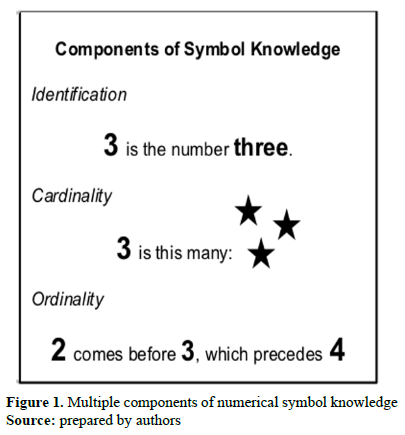
Figure 1. Multiple components of numerical symbol knowledge
Figure 1. Multiple components of numerical symbol knowledge
Source: prepared by authors
Symbolic Comparison Abilities Predict Math Achievement
Once children have learned the meaning of numerical symbols, their ability to judge the larger of two numbers has been found to be correlated with their arithmetic performance (9). Symbolic comparison is measured by a task in which children are instructed to choose the larger of two simultaneously presented digits. For example, they might be asked to choose which is larger: 5 or 7. Efficiently comparing numbers requires a good understanding of the quantities that the symbols represent (i.e., their cardinality). Individual differences in symbolic comparison have been found to be related to individual differences in arithmetic achievement both concurrently (9) and longitudinally (10). In a cross-sectional study with children in grades 1-6, symbolic comparison performance was also found to be the best predictor of arithmetic ability in grades 1 and 2 when compared to other numerical abilities, such as counting or estimating the number of objects in a set (11). Furthermore, a recent longitudinal study showed that symbolic comparison measured in third grade was as strongly related to arithmetic one year later as phonological awareness was to reading (12). This suggests that symbolic comparison is a robust predictor of later math achievement and could be used to identify children at risk for mathematics learning difficulty at the start of formal education, once children have learned the meaning of digits.
Indeed, a two-minute Numeracy Screener (13), available for free at http://www.numeracyscreener.org/, has been established as a useful measure of individual differences in young children’s math abilities. It includes both symbolic (choosing the digit that corresponds to the larger magnitude) and nonsymbolic magnitude comparison (choosing the more numerous of two sets of dots). The test was normed using a sample of Canadian students in senior kindergarten (approximately 5 years of age) through to grade 3. Scores on the screener have been shown to be significantly correlated with individual differences in children’s arithmetic performance (13). Specifically, children who scored higher on the screener tended to also do better on a test of math fluency, a timed arithmetic test, as well as an untimed calculation test. Symbolic comparison scores were stronger predictors of arithmetic scores than nonsymbolic comparison scores. This suggests that symbolic comparison is a particularly powerful predictor of arithmetic abilities. Therefore, the Numeracy Screener is a tool that teachers can administer quickly and easily to identify students who might be at risk for falling behind their peers. Other similar tools have been developed, such as The Number Sense Screener (14), which includes measures of counting, number recognition and other numerical competencies.
Further research is needed to determine whether tools like the Numeracy Screener could be used to discriminate between typically developing children and those with mathematical learning difficulties. Developmental dyscalculia is a learning disorder characterized by severe and specific difficulties with mathematics. Developmental dyscalculia is about as prevalent as dyslexia is, as it affects about 6% of the population (15); yet less is known about it. The development of screening tools for mathematics learning difficulties has therefore lagged in comparison to the reading domain. Some studies have found that children with developmental dyscalculia perform significantly worse than typically developing children on symbolic but not nonsymbolic comparison (16,17), whereas others have found deficits across both formats (18,19). Therefore, more work is needed to elucidate the cognitive profiles associated with math learning disorders.
Future Research Directions
Further research is needed to determine exactly what is driving the relationship between early symbolic comparison and later arithmetic skills. One study investigated 6-7-year-olds’ ability to choose the physically larger of two digits while ignoring the numerical magnitude of the symbols (20). For example, when shown the numbers 2 and 9, they should choose 2. This is an example of a trial in which the size of the number conflicts with its numerical magnitude, as 2 is less than 9. Results showed that children’s performance on the size comparison task was not correlated with their arithmetic scores, but their symbolic magnitude comparison performance was (20). This highlights that intentionally processing the numerical magnitude of a symbol is related to mathematical ability. Furthermore, judging whether or not a sequence of digits is in numerical order was also shown to be correlated with children’s arithmetic scores (21). Therefore, having a good understanding of both the order and cardinality of number symbols is related to developing mathematical proficiency. The correlation between order judgment performance and arithmetic was stronger in older children compared to younger children, whereas the correlation between symbolic comparison and arithmetic was stronger in younger children (11). The precise relationships between, on the one hand, cardinal and ordinal processing of numerical symbols and, on the other, arithmetic abilities remain to be investigated.
It is important to note that correlations do not indicate that early symbolic skills causally influence subsequent math performance. Therefore, increasing early symbolic comparison skills may not lead to higher math achievement or remediate learning difficulties. Intervention studies are essential for testing this hypothesis. For example, one recent study showed that a computerized numeracy intervention, called the Number Race (www.thenumberrace.com), led to improvements in mental calculation in 5-year-old children (22). Furthermore, there is correlational evidence that the types of numeracy activities parents do with their children are related to children’s number knowledge (23). Specifically, formal activities correlated with symbolic number knowledge, and informal activities correlated with nonsymbolic arithmetic (adding sets of objects) (Table 1). More research is necessary to investigate how children learn the meaning of numerical symbols, and how parents and teachers encourage this knowledge. This could lead to the development of effective early interventions for children with math learning difficulties.
Table 1. Examples of formal and informal home numeracy activities. Based on Skwarchuk
| Table 1. Examples of formal and informal home numeracy activities. Based on Skwarchuk | |
| Formal Activities | Informal Activities |
| Singing counting songs | Dominoes |
| Teaching children to recognize | Card Games (e.g., Go Fish) |
| printed numbers | Board Games (e.g., Snakes and |
| Measuring and comparing | Ladders) |
| quantities | |
| Source: prepared by authors. | |
Symbolic number understanding has emerged as the most significant domain-specific predictor of success in mathematics. However, one predictor alone cannot fully account for individual differences, as multiple cognitive processes contribute to math abilities (24). Other cognitive skills such as working memory and attention also relate to math abilities (25). Furthermore, despite the fact that dyslexia and dyscalculia are defined as specific learning disorders, there is some overlap across mathematics and reading ability. For example, individual differences in phonological awareness were related to performance on arithmetic problems with solutions less than 10, which are more likely to be retrieved from memory, in 10-year-old children (26). Similarly, adults with dyslexia who struggled with phonological processing also showed difficulties in multiplication fact retrieval (26). Remarkably, children with mathematics learning difficulty were four times more likely to have deficits in reading performance than typically developing children were (27). Altogether, learning disorders are characterized by variable, potentially overlapping, deficits.
Conclusions
Research on the early predictors of later mathematical skills has lagged behind research on the precursors of reading success, yet progress has been made in recent years. Symbolic number skills have been identified as important early predictors of arithmetic ability. Learning the meaning of numerical symbols is a critical step in mathematical development. The ability to compare numerical symbols, which requires understanding the quantities they represent, is a robust predictor of math achievement. Symbolic comparison performance could potentially be used to identify children at risk for mathematical learning difficulties, but more research is needed. Furthermore, children’s understanding of ordinality (that numbers carry positional information) has recently emerged as a strong correlate of their mathematical abilities. Going forward, it is necessary to develop and test interventions for remediating learning disorders such as developmental dyscalculia.
References
1. Duncan GJ, Dowsett CJ, Claessens A, Magnuson K, Huston AC, Klebanov P, et al. School readiness and later achievement. Dev Psychol [Internet]. 2007;43(6):1428- 1446. doi: https://doi.org/10.1037/0012-1649.43.6.1428
2. Bradley L, Bryant PE. Difficulties in auditory organisation as a possible cause of reading backwardness. Nature [Internet]. 1978;271(5647):746-7. doi: https://doi.org/10.1038/271746a0
3. Hulme, C, Snowling, MJ. Learning to read: What we know and what we need to understand better. Child Dev Perspect [Internet]. 2012;7(1):1–5. doi: https://doi.org/10.1111/cdep.12005
4. Chu FW, vanMarle K, Geary DC. Early numerical foundations of young children’s mathematical development. J Exp Child Psychol [Internet]. 2015;132:205-12. doi: https://doi.org/10.1016/j.jecp.2015.01.006
5. Merkley R, Ansari D. Why numerical symbols count in the development of mathematical skills: Evidence from brain and behavior. Curr Res Behav Sci [Internet]. 2016;10:14–20. http://doi.org/10.1016/j.cobeha.2016.04.006
6. Purpura DJ, Baroody AJ, Lonigan CJ. The transition from informal to formal mathematical knowledge: Mediation by numeral knowledge. Journal of Educational Psychology [Internet]. 2013;105(2):453–464. http://doi.org/10.1037/a0031753
7. Wynn K. Children’s understanding of counting. Cognition [Internet]. 1990;36(2):155-93. doi: https://doi.org/10.1016/0010-0277(90)90003-3
8. Mazzocco MM, Feigenson L, Halberda J. Preschoolers’ precision of the approximate number system predicts later school mathematics performance. PLoS One [Internet]. 2011;6(9):e23749. doi: https://doi.org/10.1371/journal.pone.0023749
9. Holloway ID, Ansari D. Mapping numerical magnitudes onto symbols: the numerical distance effect and individual differences in children’s mathematics achievement. J Exp Child Psychol [Internet]. 2009;103(1):17–29. doi: http://doi.org/10.1016/j.jecp.2008.04.001
10. Vanbinst K, Ghesquière P, De-Smedt B. Does numerical processing uniquely predict first graders’ future development of single-digit arithmetic? Learning and Individual Differences [Internet]. 2015;37:153-160. doi: http://doi.org/10.1016/j.lindif.2014.12.004
11. Lyons IM, Price GR, Vaessen A, Blomert L, Ansari D. Numerical predictors of arithmetic success in grades 1-6. Dev Sci [Internet]. 2014;17(5):714-26. doi: http://doi.org/10.1111/desc.12152
12. Vanbinst K,Ansari D, Ghesquière P, De Smedt B. Symbolic Numerical Magnitude Processing Is as Important to Arithmetic as Phonological Awareness Is to Reading. PLoS One [Internet]. 2016;11(3):e0151045. doi: http://doi.org/10.1371/journal.pone.0151045
13. Nosworthy N, Bugden S, Archibald L, Evans B, Ansari D. A two-minute paper-and-pencil test of symbolic and nonsymbolic numerical magnitude processing explains variability in primary school children’s arithmetic competence. PLoS One [Internet]. 2013;8(7):e67918. doi: http://doi.org/10.1371/journal.pone.0067918
14. Jordan NC, Glutting J, Ramineni C, Watkins MW. Validating a number sense screening tool for use in kindergarten and first grade: Prediction of mathematics proficiency in third grade. School Psychology Review [Internet]. 2010;39(2):181–195. doi: https://doi.org/10.1080/02796015.2010.12087772
15. Butterworth, B. (2008). Developmental dyscalculia. In J. Reed & J. W. Rogers (Eds). Child neuropsychology: Concepts, theory, and practice (pp. 357-374). Oxford: Blackwell
16. De Smedt B, Gilmore CK. Defective number module or impaired access? Numerical magnitude processing in first graders with mathematical difficulties. J Exp Child Psychol [Internet]. 2011;108(2):278-92. doi: http://doi.org/10.1016/j.jecp.2010.09.003
17. Rousselle L, Noël MP. Basic numerical skills in children with mathematics learning disabilities: a comparison of symbolic vs non-symbolic number magnitude processing. Cognition [Internet]. 2007;102(3):361-95. doi: http://doi.org/10.1016/j.cognition.2006.01.005
18. Landerl K, Bevan A, Butterworth B. Developmental dyscalculia and basic numerical capacities: a study of 8-9-year-old students. Cognition [Internet]. 2004;93(2):99-125. doi: https://doi.org/10.1016/j.cognition.2003.11.004
19. Mussolin C, Mejias S, Noël MP. Symbolic and nonsymbolic number comparison in children with and without dyscalculia. Cognition [Internet]. 2010;115(1):10-25. doi: https://doi.org/10.1016/j.cognition.2009.10.006
20. Bugden S, Ansari D. Individual differences in children’s mathematical competence are related to the intentional but not automatic processing of Arabic numerals. Cognition [Internet]. 2011;118(1):32-44. doi: http://doi.org/10.1016/j.cognition.2010.09.005
21. Lyons IM, Ansari D. Numerical order processing in children: From reversing the distance-effect to predicting arithmetic. Mind, Brain, and Education [Internet]. 2015;9: 207-221. doi: https://doi.org/10.1111/mbe.12094
22. Sella F, Tressoldi P, Lucangeli, D, Zorzi M. Training numerical skills with the adaptive videogame “The Number Race”: A randomized controlled trial on preschoolers. Trends in Neuroscience and Education [Internet]. 2016;5(1):20–29. doi: http://doi.org/10.1016/j.tine.2016.02.002
23. Skwarchuk SL, Sowinski C, LeFevre JA. Formal and informal home learning activities in relation to children’s early numeracy and literacy skills: the development of a home numeracy model. J Exp Child Psychol [Internet]. 2014;121:63-84. doi: https://doi.org/10.1016/j.jecp.2013.11.006
24. LeFevre JA, Fast L, Skwarchuk SL, Smith-Chant BL, Bisanz J, Kamawar D, Penner-Wilger M. Pathways to mathematics: longitudinal predictors of performance. Child Dev [Internet]. 2010;81(6):1753-67. doi: https://doi.org/10.1111/j.1467-8624.2010.01508.x
25. Cragg L, Gilmore C. Skills underlying mathematics: The role of executive function in the development of mathematics proficiency. Trends in Neuroscience and Education [Internet]. 2014;3(2):63-68. doi: https://doi.org/10.1016/j.tine.2013.12.001
26. De Smedt B, Boets B. Phonological processing and arithmetic fact retrieval: evidence from developmental dyslexia. Neuropsychologia [Internet]. 2010;48(14):3973-81. doi: http://doi.org/10.1016/j.neuropsychologia.2010.10.018
27. Landerl K, Göbel SM, Moll K. Core deficit and individual manifestations of developmental dyscalculia (DD): The role of comorbidity. Trends in Neuroscience and Education [Internet]. 2013;2(2):38–42. doi: https://doi.org/10.1016/j.tine.2013.06.002
Notas de autor
daniel.ansari@uwo.ca
Información adicional
How to reference.: Ansari D. The importance of numerical symbols for the development of mathematical skills. MedUNAB [Internet]. 2024;27(3):262-267. doi: https://doi.org/10.29375/01237047.5393
Author Contributions: DA. Conceptualization, writing - original draft, writing - review & editing.
Información adicional
redalyc-journal-id: 719
Enlace alternativo
https://revistas.unab.edu.co/index.php/medunab/article/view/5393 (html)
https://revistas.unab.edu.co/index.php/medunab/article/view/5393/4180 (pdf)
https://revistas.unab.edu.co/index.php/medunab/article/view/5393/4224 (xml)