Perspectiva
Mathematics and Decisions
Matemáticas y Decisiones
Matemática e Decisões

Mathematics and Decisions
MedUNAB, vol. 27, núm. 3, pp. 268-273, 2024
Universidad Autónoma de Bucaramanga

Esta obra está bajo una Licencia Creative Commons Atribución-NoComercial 4.0 Internacional.
Recepción: 16 Diciembre 2024
Aprobación: 18 Marzo 2025
Abstract: Introduction. While there is broad consensus that mathematics is important across all education levels, decision-making is often treated as secondary in most curricula. Objective. This paper explores the relationship between mathematical ability and decision-making. Topics for Reflection. It suggests three models: one where mathematical ability influences decisions, another where decision-making influences mathematical ability, and a third proposing mutual influence. The authors review existing research supporting the first two models, highlighting the role of numeracy and decision parameters. Finally, they argue for the likelihood of a mutual influence model, emphasizing the importance of considering both mathematical skills and decision-making processes in understanding mathematical achievement. Conclusions. The mutual influence model has consequences for the future of mathematical education because it would require explicit training in decision making abilities at some point in school. Students need to be aware of such influence.
Keywords: Decision Making, Mathematics, Cognition, Learning, Aptitude.
Resumen: Introducción. Aunque existe un amplio consenso sobre la importancia de las matemáticas en todos los niveles educativos, la toma de decisiones suele considerarse secundaria en la mayoría de los planes de estudio. Objetivo. Este documento explora la relación entre la capacidad matemática y la toma de decisiones. Temas de reflexión. Se proponen tres modelos: uno en el que la capacidad matemática influye en las decisiones, otro en el que la toma de decisiones influye en la capacidad matemática, y un tercero que propone una influencia mutua. Los autores repasan la investigación existente en apoyo de los dos primeros modelos, destacando el papel de la aritmética y los parámetros de decisión. Por último, defienden la probabilidad de un modelo de influencia mutua, haciendo hincapié en la importancia de tener en cuenta tanto las habilidades matemáticas como los procesos de toma de decisiones para comprender el logro de las matemáticas. Conclusiones. El modelo de influencia mutua tiene consecuencias para el futuro de la educación en matemática porque requeriría una formación explícita en habilidades de toma de decisiones en algún momento de la escuela. Los alumnos deben ser conscientes de dicha influencia.
Palabras clave: Toma de Decisiones, Matemática, Cognición, Aprendizaje, Aptitude.
Resumo: Introdução. Embora haja amplo consenso sobre a importância da matemática em todos os níveis educacionais, a tomada de decisões costuma ser considerada secundária na maioria dos currículos. Objetivo. Este artigo explora a relação entre habilidade matemática e tomada de decisão. Tópicos para reflexão. São propostos três modelos: um em que a habilidade matemática influencia as decisões, outro em que a tomada de decisões influencia a habilidade matemática e um terceiro que propõe uma influência mútua. Os autores revisam pesquisas existentes que dão suporte aos dois primeiros modelos, destacando o papel da aritmética e dos parâmetros de decisão. Por fim, eles defendem a probabilidade de um modelo de influência mútua, enfatizando a importância de considerar tanto as habilidades matemáticas quanto os processos de tomada de decisão para entender o desempenho matemático. Conclusões. O modelo de influência mútua tem implicações para o futuro da educação matemática porque exigiria treinamento explícito em habilidades de tomada de decisão em algum momento da escola. Os alunos devem estar cientes dessa influência.
Palavras-chave: Tomada de Decisões, Matemática, Cognição, Aprendizagem, Aptidão.
Introduction
In his 1945 book The Psychology of Invention in the Mathematical Field, Jacques Hadamard stated that ‘to invent is to choose’. He was referring to the vast combinatorial space of mathematical axioms, theorems, and ideas, where a mathematician must navigate and make choices. Arguably, making good decisions within this space is what leads to successful inventions and solutions.
Hadamard’s statement was speculative, almost rhetorical, drawing from his personal experience and knowledge of the mathematical field. To this day, there is limited empirical and theoretical understanding of the connection between mathematics and decision-making. Nevertheless, Hadamard is certainly not alone in his perspective. Fields Medal winner Maryam Mirzakhani expressed a similar sentiment in an interview with the Clay Mathematics Institute, stating that “… the beauty of mathematics only shows itself to more patient followers.” (1).
To clarify the arguments in this essay,Figure 1 presents generic models that illustrate the connection between mathematics and decision-making. The first two models assume a unidirectional influence, and subsequent paragraphs will provide evidence to support them. In general, the first model proposes that mathematical abilities influence decision-making-such as risk-taking-either positively or negatively. This model has been widely explored in the current literature. The second model, which reflects Hadamard’s view, suggests that decision-making influences mathematics (as in, ‘to invent is to choose’). This idea has received less research attention, but this essay will review some of the existing work. The final row in Figure 1 introduces a model of mutual influence. To the author’s knowledge, no research has yet explored this possibility.
It is important to establish the nature of this link. Let’s illustrate with an example: imagine two students at the same school level, both possessing identical mathematical abilities. However, one has greater decision acuity-a skill that can be distinct from other cognitive abilities (2). According to Model One in Figure 1, the information about the students’ decision acuity would be irrelevant to their mathematical performance, both students would likely achieve similar outcomes in school. However, Models Two and Three suggest otherwise, as they consider a direct or reciprocal influence between decision acuity and mathematics. While there is broad consensus that mathematics is important across all education levels, decision-making is often treated as secondary in most curricula.
The following sections will provide a brief review of math cognition and decision making. The objective is to provide some key ideas and concepts, rather than a full scoping review. The final discussion will center on the third model in Figure 1, and how it is likely that it is the correct way of thinking about mathematics and decision making.
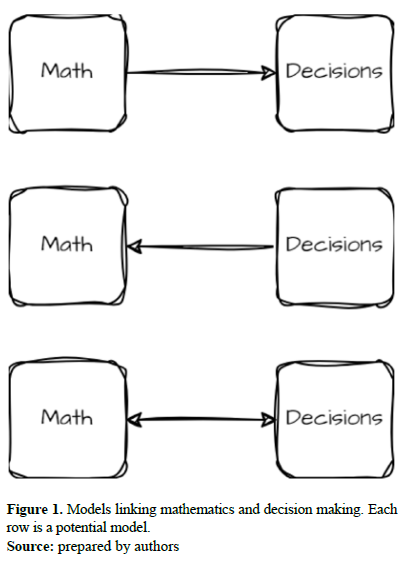
Figure 1. Models linking mathematics and decision making. Each row is a potential model.
Figure 1. Models linking mathematics and decision making. Each row is a potential model.
Source: prepared by authors
Topics for Reflection
Evidence for the linking models
Model 1 in Figure 1 suggests that mathematical abilities are linked to decision-making, with the direction being ‘math influences decisions.’ It is important to note that ‘influences’ is used as a neutral term, as this impact could be either positive or negative. For instance, some individuals may associate emotions with numbers, which could interfere with making optimal choices (3).
One-way mathematics influences decisions are through number comprehension. The basic idea is that stronger mathematical abilities, as measured by standardized tests, reflect a better conceptual understanding of numbers and the causal structures they represent. In fact, there is now substantial research linking performance on mathematical tests to real-world economic outcomes, such as financial wealth (4,5). The implicit conclusion of these financial wealth studies is that the measurement of mathematical abilities serves as a proxy for a deeper understanding of financial numerical structures — such as knowing that saving is beneficial, understanding compound interest, recognizing the value of buying low and selling high, or grasping concepts like shorting a stock. In this sense, mathematical abilities help individuals make more informed decisions, with ‘better’ behavior defined by the specific context as it is not an effect exclusively found in finance (6,7). This is because most decision-making scenarios convey information through numbers, or the information can be encoded numerically. As a result, having strong mathematical abilities tends to be advantageous in most situations.
Mathematical understanding often implies a conscious awareness of how numbers function and how to apply them to the problem at hand. However, there is another mechanism that doesn’t require such deliberate reasoning. Mathematical abilities can also be more implicit and automatic. Some brains are naturally better at processing numbers, such as quickly and accurately estimating visual quantities-like how many chairs are in a room at a glance. This ability, known as ‘number sense,’ is a recognized concept in cognitive science (8). Researchers have linked number-sense, or intuitive numeracy, to decision-making. For example, a more precise number- sense is associated with better intertemporal and risky choices in controlled environments. (9,10).
The impact of precise number representations on choice is even evident at the neural level. A well-established neural network, including parietal, temporal, and frontal regions, is sensitive to mathematical information (11). Researchers can measure the network’s precision and sensitivity to external stimuli. Intriguingly, these brain metrics correlate positively with risk-taking behavior. (12).
Figure 2 presents a simplified schematic of a model that links the mathematical brain to observed behavior. The diagram illustrates how the brain’s mathematical representations of, for example, product prices, store discounts, or retirement plans, serve as inputs to higher- order computations like utility functions. The utility ultimately drives the observed behavior. Therefore, understanding how the brain represents numbers (the neurocognitive filter) is crucial to comprehending decision-making. While this may not be a definitive schematic, Figure 2effectively conveys that, according to Model 1 of Figure 1, the direction of influence is from mathematical abilities/computations to decisions, not the other way around.
For a more comprehensive conceptual framework, refer to Lipkus & Peters (7). They propose a complex interplay between number sense, attention, moods, and education to understand the influence of mathematics on decision-making.

Figure 2. Example of an implementation of model 1 (1st row of Figure 1).
Figure 2. Example of an implementation of model 1 (1st row of Figure 1).
Source: prepared by authors
The key takeaway is that numeracy, the ability to understand and interpret numbers, is a fundamental component of decision-making. This is intuitively true, as much information is encoded with numbers, and the ability to decode them is essential for making informed choices in various contexts, including health, education, finance, and politics.
For Model 2, the relationship between decision-making and mathematical abilities is reversed compared to Model 1 (Figure 1). In this model, decision-making abilities influence mathematical performance. Consider two students with identical mathematical skills but differing decision-making acuity. As Maryam Mirzakhani suggests, they might vary in patience. The question is whether this difference affects their mathematical output. Mirzakhani would affirm that it does. While evidence is still limited, research in this direction has increased. There are some findings to support this perspective.
One approach to understanding how the brain makes decisions is the evidence accumulation framework (13). This framework posits that the brain does not make decisions based on initial neural activity favoring an option (14). For example, while the brain can process visual stimuli relatively quickly, it does not decide based on the first neuronal spike. Instead, it waits for a threshold level of neural activity, such as 300 spikes from neuron or network X. This strategy is sensible because neural responses are stochastic, and waiting for a minimum level of activity helps ensure that the decision is based on a genuine choice-relevant signal, rather than random noise.
Using the evidence accumulation framework, we can characterize students by estimating their decision-making parameters. Ratcliff et al. (15) found that these parameters explained accuracy in a number comparison task. Their results suggested that variations in decision parameters, such as the boundaries of information accumulation in the brain, could lead to different accuracy among students with identical numerical abilities. This is a significant finding. Only a decision parameter could distinguish these students; performance alone was insufficient to describe their mathematical behavior. We also found a similar result. In a number comparison task, a decision confidence parameter was necessary to explain the accuracy and response times of undergraduate students (16).
More recently, we collected standardized math scores and other cognitive measures, including number sense, from 4th and 6th grade students in Bogotá (17). Following Model 2 in Figure 1, we hypothesized that math scores and cognitive measures would correlate, as expected. However, we also collected a decision metric: the speed of choice in the number sense tasks. Our results revealed that this variable was predictive of standardized math scores, even when controlling for performance in number sense tasks and other cognitive measures, such as fluid intelligence and working memory. This is consistent with Ratcliff et al. (15) suggestion that decision-making parameters are essential for understanding students’ mathematics outcomes.
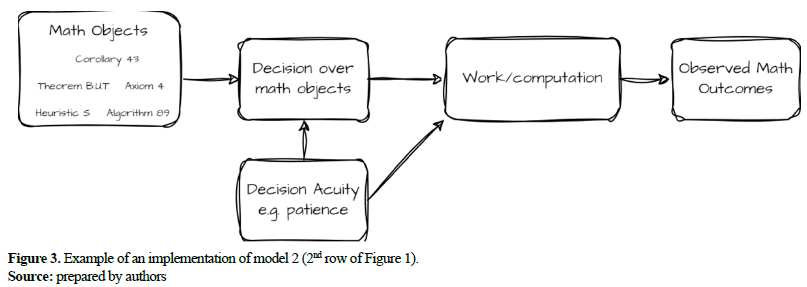
Figure 3. Example of an implementation of model 2 (2nd row of Figure 1).
Figure 3. Example of an implementation of model 2 (2nd row of Figure 1).
Source: prepared by authors
Figure 3 presents a simplified schematic of how decision parameters can influence mathematics. For simplicity, assume constant math/cognitive ability. In this model, changes occur only through decision parameters. The final observed math outcomes in Figure 3 would result from differences in how individuals select mathematical objects to work with and other personal decision dimensions, such as patience. Note that the amount of effort or computation devoted to a task also affects the observed math outcomes. Whether Figure 3 is accurate or not, the key point is that mathematics relies on complex processes and ignoring them could be a mistake. Current research even suggests a strong connection between sensorimotor decisions and number systems in the brain (18).
Final words: a mutual influence of math and decision making
The field of decision-making has incorporated ideas from mathematical cognition. There is now significant research connecting the mathematical brain to human decision-making (see examples in previous paragraphs). However, the reverse relationship is less developed, as mathematical cognition has been reluctant to adopt concepts, theories, and tools from the decision-making literature.
The reason for this asymmetry is unclear. One possibility is the notion that mathematics is a tool. Thus, it might be natural to view mathematics as an aid to our decision-making. Indeed, market signals surrounding mathematicians suggest that they are better decision-makers. For example, there is extensive hiring of quants in finance, and even Amazon is now hiring extensively quantitative economists. These market signals are real and may explain why the fields of neuroscience, cognition, and education have primarily focused on connecting mathematical abilities with decision-making in the direction suggested by Model 1 of Figure 1.
Another possible explanation for the asymmetry is an erroneous perception of mathematicians and their work. The notion of a genius who experiences mathematics as if it were revealed by their brain’s workings obscures the human element of the field. But it is a human endeavor still. For instance, Villani (19), a Fields medal winner, compares the creation of a theorem to birth and the entire process to a mathematical adventure. This myth of the ideal mathematician may explain why the field of mathematical cognition has not adopted more decision-making theories and tools. Perhaps the most notable exception is the evidence accumulation framework modificar por (15,20). However, this is just one of many available theories.
Conclusions
To conclude, there are individuals who excel at both mathematics and decision-making. However, it’s also possible to be a poor mathematician but a good decision-maker. This suggests that mathematical ability and decision-making skills are not necessarily correlated in a simple manner (21). Instead, it’s more likely that there is a mutual influence between these two cognitive functions.
Conflicts of interest
The authors declare that they have no conflicts of interest.
Funding
No external funding was provided to the authors for this study.
References
1. Mirzakhani M. Interview with Research Fellow. Maryam Mirzakhani [Internet]. London: Claymath; 2008. Available from: https://www.claymath.org/library/annual_report/ar2008/08Interview.pdf
2. Moutoussis M, Garzón B, Neufeld S, Bach DR, Rigoli F, Goodyer I, et al. Decision-making ability, psychopathology, and brain connectivity. Neuron [Internet]. 2021;109(12):2025-2040.e7. doi: https://doi.org/10.1016/j.neuron.2021.04.019
3. Peters E, Västfjäll D, Slovic, P, Mertz CK, Mazzocco K, Dickert S. Numeracy and Decision Making. Psychol Sci [Internet]. 2006;17(5):407-413. doi: https://doi.org/10.1111/j.1467-9280.2006.01720.x
4. de Bruin WB, Slovic P. Low numeracy is associated with poor financial well-being around the world. PLoS ONE [Internet]. 2021;16:1–15. doi: https://doi.org/10.1371/journal.pone.0260378
5. Estrada-Mejia C, de Vries M, Zeelenberg M. Numeracy and wealth. J Econ Psychol [Internet]. 2016;54(1):53-63. doi: https://doi.org/10.1016/j.joep.2016.02.011
6. Boyce-Jacino C, Peters E, Galvani AP, Chapman GB. Large numbers cause magnitude neglect: The case of government expenditures. Proc Natl Acad Sci USA [Internet]. 2022;119(28):e2203037119. doi: https://doi.org/10.1073/pnas
7. Lipkus IM, Peters E. Understanding the role of Numeracy in Health: Proposed Theoretical Framework and Practical Insights. Health Educ Behav [Internet]. 2009;36(6):1065-1081. doi: https://doi.org/10.1177/1090198109341533
8. Dehaene S. The number sense: How the Mind Creates Mathematics. Oxford University Press [Internet]. 1997. Available from: https://cognitionandculture.net/wp-content/uploads/the-number-sense-how-the-mind-creates-mathematics.pdf
9. Peters E, Slovic P, Vastfjall D, Mertz CK. Intuitive numbers guide decisions. Judgm Decis Mak [Internet]. 2008;3(8):619–635. Available from: https://www.cambridge.org/core/journals/judgment-and-decision-making/article/intuitive-numbers-guide-decisions/DAA7308D7EDA088EEAABCD673FC496E1
10. Schley DR, Peters E. Assessing “Economic Value”: Symbolic-Number Mappings Predict Risky and Riskless Valuations. Psychological Science [Internet]. 2014;25(3):753–761. doi: https://doi.org/10.1177/0956797613515485
11. Nieder A. The neuronal code for number. Nat Rev Neurosc [Internet]. 2016;17(6):366–382. doi: https://doi.org/10.1038/nrn.2016.40
12. Barretto-García M, de Hollander G, Grueschow M, Polanía R, Woodford M, Ruff CC. Individual risk attitudes arise from noise in neurocognitive magnitude representations. Nat Hum Behav [Internet]. 2023;7(9):1551–1567. doi: https://doi.org/10.1038/s41562-023-01643-4
13. Ratcliff R, McKoon G. The diffusion decision model: theory and data for two-choice decision tasks. Neural Comput [Internet]. 2008;20(4):873–922. doi: https://doi.org/10.1162/neco.2008.12-06-420
14. Gold JI, Shadlen MN. The neural basis of decision making. Annu Rev Neurosc [Internet]. 2007;30:535–574. doi: https://doi.org/10.1146/annurev.neuro.29.051605.113038
15. Ratcliff R, Thompson CA, Mckoon G. Modeling individual differences in response time and accuracy in numeracy. Cognition [Internet]. 2015;137:115–136. doi: https://doi.org/10.1016/j.cognition.2014.12.004
16. Alonso-Diaz S, Cantlon JF, Piantadosi ST. A threshold-free model of numerosity comparisons. PLoS One [Internet]. 2018;13(4):e0195188. doi: https://doi.org/10.1371/journal.pone.0195188
17. Alonso-Diaz S, Giraldo-Huertas JJ. Choice Velocity in AQS Tasks and its Relation to Symbolic Mathematics in 4th and 6th grade students. PsyArXiv Preprints [Internet]. 2024. doi; https://osf.io/preprints/psyarxiv/z492x
18. Anobile G, Arrighi R, Castaldi E, Burr DC. A Sensorimotor Numerosity System. Trends Cogn Sci [Internet]. 2021;25(1):24–36. doi: https://doi.org/10.1016/j.tics.2020.10.009
19. Villani C. Birth of a theorem: A mathematical adventure [Internet]. Farrar, Straus and Giroux; 2015. Available from: https://pdfarchived.net/docs/Birth%20Of%20A%20Theorem%20A%20Mathematical%20Adventure-4934488
20. Dehaene S. Symbols and quantities in parietal cortex: elements of a mathematical theory of number representation and manipulation. Attention and Perfomance: Sensorimotor Foundations of Higher Cognition [Internet]. 2007;527–574. Available from: https://www.researchgate.net/publication/237443138_Symbols_and_quantities_in_parietal_Cortex_Elements_of_a_mathematical_theory_of_number_representation_and_manipulation
21. Bruguier AJ, Quartz SR, Bossaerts P. Exploring the Nature of “Trader Intuition.” The Journal of Finance [Internet]. 2010;LXV(5). Available from: https://www.its.caltech.edu/~squartz/jfinance.pdf
Notas de autor
santiagoalonso@tec.mx
Información adicional
How to reference.: Alonso-Díaz S. Mathematics and Decisions. MedUNAB [Internet]. 2025;27(3):268-273. doi: https://doi.org/10.29375/01237047.5328
Author Contributions: SAD. Conceptualization, writing - original draft, writing - review & editing.
Información adicional
redalyc-journal-id: 719
Enlace alternativo
https://revistas.unab.edu.co/index.php/medunab/article/view/5328 (html)
https://revistas.unab.edu.co/index.php/medunab/article/view/5328/4181 (pdf)
https://revistas.unab.edu.co/index.php/medunab/article/view/5328/4225 (xml)