LETTER TO THE EDITOR
Longevity: the 1000-year-old human Longevidade: o humano de 1.000 anos
Longevidade: o humano de 1.000 anos Longevity: the 1000-year-old human

Longevity: the 1000-year-old human Longevidade: o humano de 1.000 anos
Geriatrics, Gerontology and Aging, vol. 19, e0000312, 2025
Sociedade Brasileira de Geriatria e Gerontologia, SBGG
Received: 20 March 2025
Accepted: 31 March 2025
Dear Editor,
Promoting actions that support healthy aging is a crucial principle that should guide both clinical practice and public policies, directly influencing the work of health professionals and the decisions made by managers and politicians. From a population standpoint, recognizing and intervening in the determinants of healthy aging can help reduce the occurrence of chronic diseases and improve quality of life for older adults. On an individual level, these actions enable individuals to maintain their autonomy, functional status, and well-being as they age, which directly impacts their self-esteem and social participation.
In the context of public policies, it is essential that the State provides access to strategies that encourage healthy lifestyles, offers adequate care to those who need it (including long-term care), and integrates the mental and physical well-being of older adults, ensuring social inclusion, combating ageism, and guaranteeing access to quality health services.1,2 Care for older people living with dementia is particularly relevant, given the rising prevalence of this condition.3 In this scenario, how could new technologies contribute to this challenging process, especially in Brazil?
In 2025, I had the opportunity to contemplate the past and future of the History of Medicine during successive visits to England. I was able to observe the technical and scientific advances that have shaped most of the contemporary medical practices, from Victorian Medicine, in the gallery of the famous observatory in Greenwich, to the Medicine Exposition at the Science Museum in London, where empirical evidence suggests the possibility of significant increases in human longevity in the near future.4-6
Scientific and technological advances in recent centuries have led to the discovery of living organisms that are thousands of years old, such as the seemingly immortal Turritopsis dohrnii and ancient trees estimated to be between 2000 and 4000 years old, such as the incredible “Pando” in Utah’s Fishlake National Forest in the United States.4-6 Unlike the trees and animals that are merely long-lived, a common characteristic shared by these two entities is self-cloning.6
The path to long-lived superhumans is genetic mutation.7 However, we know that there are multiple barriers limiting our own capacity for mutations, as random mutations can be extremely deleterious in the vast majority of cases. And our lifespan is too short to identify those that could enhance our adaptability.
The convergence of artificial intelligence, supercomputers, and advanced gene editing techniques such as CRISPR-cas9 (which allows altering cell DNA in a precise and efficient way, as in the case of CRISPR-associated protein 9 [Cas9], an enzyme that acts as “molecular scissors” capable of cutting DNA at specific locations) is paving the way for human gene modification. Furthermore, scientists will be able to shorten the time and improve the chances of success of these genetic changes by combining such technologies with bioelectronics, with the possibility of storing the brain’s information in a database.7
Could genetic engineering transfer genes from other living organisms to create an even longer-lived generation? Could the use of senolytics represent another frontier of aging becoming a reality?8 In a world of such rapid change, we are faced with tools that still need to be better understood and explored, particularly from bioethical, safety, and effectiveness perspectives.
Other questions will arise: Why live longer? Is our fast-paced, nihilistic, and hedonistic time compatible with a centenarian existence? Will we go crazy and bored? Will we suffer endlessly, like Tolstoy’s Ivan Ilich?9 Death, as a possibility, or life, as an urgency, is perhaps a necessity, because, according to Kierkegaard, death is by no means an ending, nor even a simple episode lost in the unique reality that is eternal life, which implies for us infinitely more hope than life can bear.10 This viewpoint extends far beyond the happiness, justice, or eternal life promised by the Silicon Valley religion and its gurus. But they promise to achieve this through technology and propaganda.
In terms of healthcare for older adults, what will be the physiological effects resulting from prolonged exposure to environmental aggressions and behavioral changes? And in Brazil, where there are abysmal inequalities in living conditions, such as low average income, older individuals contend with various environmental aggressions, inadequate nutrition, and, in the vast majority, limited access to outdoor activities and qualified professionals, in addition to a decline in spirituality, being particularly condemned to social isolation and excessive reliance on social media in the cities.11
Beyond these challenges inherent to aging, the dissemination of unethical information related to aging, health, and disease is a concern. The lack of regulation surrounding fake news, misleading, stigmatizing and ageist content, and the promotion of interventions without proven efficacy and safety creates a vulnerable environment. This is undoubtedly fertile ground for the anti-aging market.12
At the University of Oxford, founded in 1096 by the Catholic Church, medieval versions of the Trivium (teaching of grammar, rhetoric, and logic) and the Quadrivium (knowledge of arithmetic, geometry, astronomy or astrology, and music, including harmony) can be found in the spectacular Bodleian library and were used in classical education (Figures 1 and 2). Adapting these tools could provide a solution to this emblematic and damaging moral crisis, involving not only individuals in the healthcare field but also society as a whole.4,13
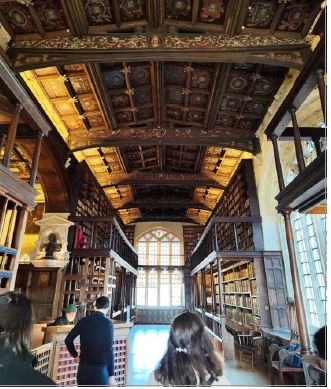
Figure 1
The Bodleian Library millenary collection.
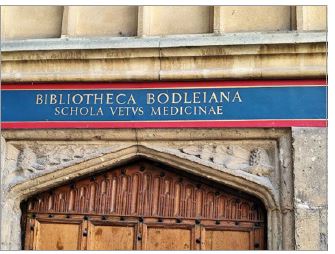
Figure 2
Bodleian Library, Oxford Medical School with records of medical education since 1300.
However, several issues remain, two of which are most relevant:
- 1. Investment in translational research focused on aging;
- 2. Ethical education for current healthcare professionals.
We anticipate research emerging from Brazil that considers recent advances as well as profound behavioral transformations. New times, same old and new issues, but with more resources and intensity. Life expectancy, associated with its quality, remains the scope of geriatrics. A healthy existence, if possible.
REFERENCES
Palomo I, Murgieri M, Pizarro-Mena R, Chavarro-Carvajal DA, Lopez MF, Mongelos J, et al. Rede interuniversitária para o envelhecimento saudável, América Latina e Caribe (RIES-ALC): uma contribuição universitária para a década do envelhecimento saudável. Geriatr Gerontol Aging. 2023;17:e0000096. https://doi.org/10.53886/gga.e0000096_PT
Rudnicka E, Napierała P, Podfigurna A, Męczekalski B, Smolarczyk R, Grymowicz M. The World Health Organization (WHO) approach to healthy ageing. Maturitas. 2020;139:6-11. https://doi.org/10.1016/j.maturitas.2020.05.018
GBD 2019 Dementia Forecasting Collaborators. Estimation of the Global Prevalence of Dementia in 2019 and Forecasted Prevalence in 2050: an Analysis for the Global Burden of Disease Study 2019. Lancet Public Health. 2022;7(2):e105-e125. https://doi.org/10.1016/S2468-2667(21)00249-8
University of Oxford. Ox.ac.uk 2025 [Internet]. Disponível em: https://info.oxford-onlineprogrammes.getsmarter.com/presentations/lp/oxford-executive-leadership-programme/?cid=15365210105&utm_contentid=564047479899&ef_id=c%3A564047479899_d%3Ac_n%3Ag_ti%3Akwd-1226993302058_p%3A_k%3Aleadership±course±oxford±university_m%3Ab_a%3A129704205506&utm_source=google&utm_medium=cpc&gad_source=1&gbraid=0AAAAADmgJP0f8SJbZeSLVNOqtx1r0zq5V&gclid=Cj0KCQjw8cHABhC-ARIsAJnY12wU1q3uI94twbkTYOVW2hWwughtWqIOONUO8mEtLsDNyxDmHB9DLxsaAlNZEALw_wcB&gclsrc=aw.ds&rv_source=PaidMedia. Accessed Mar 20, 2025.
Royal Museums Greenwich. Royal Observatory [Internet]. Available from: https://www.rmg.co.uk/royal-observatory. Acessado em Mar 20, 2025.
Science Museum. Home [Internet]. Available from: https://www.sciencemuseum.org.uk/. Acessado em Mar 20, 2025.
Jinek M, Chylinski K, Fonfara I, Hauer M, Doudna JA, Charpentier E. A programmable dual-RNA-guided DNA endonuclease in adaptive bacterial immunity. Science. 2012;337(6096):816-21. https://doi.org/10.1126/science.1225829
Aprahamian I, Pain A, Moreira VG. Moving from an “anti-aging” paradigm toward the concept of “disease-free aging”: the role of senolytics in modern medicine. Geriatr Gerontol Aging. 2024;18:e0000240. https://doi.org/10.53886/gga.e0000240_EN
Tolstoi L. A morte de Ivan Ilitch. Rio de Janeiro: Antofágica; 2020.
Kierkegaard S. The sickness unto death. São Paulo: LeBooks Editora; 2024.
Neumann LTV, Albert SM. Aging in Brazil. Gerontologist. 2018;58(4):611-7. https://doi.org/10.1093/geront/gny019
Terapias do antienvelhecimento é tema de reportagem do G1 [Internet]. Sociedade Brasileira de Geriatria e Gerontologia; 2017. Available from: https://sbgg.org.br/terapias-do-antienvelhecimento-e-tema-de-reportagem-do-g1/. Acessado em Mar 19, 2025.
Peinado MRSS. O ensino do Trivium e do Quadrivium, a linguagem e a história na proposta de educação agostiniana. Imagens da Educação. 2012;2(1):1-10. https://doi.org/10.4025/imagenseduc.v2i1.15808
Notes
This work received no specific grant from any funding agency in the public, commercial, or not-for-profit sectors.
Not applicable.
Not applicable.
Not applicable.
Author notes
Correspondence data Fausto Aloísio Pedrosa Pimenta – Universidade Federal de Ouro Preto, Escola de Medicina – Campus Morro do Cruzeiro, S/N – Bauxita – CEP: 35400-000 – Ouro Preto (MG), Brazil. Email: fpimenta@ufop.edu.br
Conflict of interest declaration
FAPP is an associate editor at Geriatrics, Gerontology and Aging.