Article
Main Self-Care Deficits Found in Elderly People with Diabetic Foot Ulcer: An Integrative Review
Principales déficits de autocuidado encontrados en ancianos con úlcera de pie diabético: una revisión integradora
Principais déficits de autocuidado encontrados em idosos com úlcera de pé diabético: uma revisão integrativa
 Pauliana Caetano Lima paulylima1@gmail.com
Greicy Kelly Gouveia Dias Bittencourt greicykel@gmail.com
Wynne Pereira Nogueira wynne.nogueira@academico.ufpb.br
Thainá Karoline Costa Dias thainakaroline@gmail.com
Janislei Soares Dantas janisleisd@gmail.com
Mariana Albernaz Pinheiro de Carvalho mariana.albernaz@professor.ufcg.edu.br
Pauliana Caetano Lima paulylima1@gmail.com
Greicy Kelly Gouveia Dias Bittencourt greicykel@gmail.com
Wynne Pereira Nogueira wynne.nogueira@academico.ufpb.br
Thainá Karoline Costa Dias thainakaroline@gmail.com
Janislei Soares Dantas janisleisd@gmail.com
Mariana Albernaz Pinheiro de Carvalho mariana.albernaz@professor.ufcg.edu.br
Main Self-Care Deficits Found in Elderly People with Diabetic Foot Ulcer: An Integrative Review
Aquichan, vol. 23, no. 3, pp. 1-21, 2023
Universidad de La Sabana
Received: 23 January 2023
Accepted: 11 July 2023
Abstract
Introduction: The increase in the incidence of diabetes mellitus has led to public health consequences. Several individuals with diabetes lose sensitivity and may present foot deformities, resulting in diabetic foot. Knowing about self-care deficits can allow for planning healthcare in the management of diabetic foot and improve the patient’s quality of life.
Objective: To identify, from the scientific literature, the main selfcare deficits present in elderly people with diabetic foot ulcers, based on Orem’s self-care deficit theory.
Materials and methods: This is an integrative review study. The search for studies was performed in January 2022, using the descriptors “diabetic foot”, “self-care,” and “aged.” The following virtual library and databases were used: BVS, Lilacs, Medline and BDEnf via PubMed. The adaptation of the Prisma flowchart was used. A synthesis of the articles was performed with the description of the main results and self-care deficits according to Orem’s self-care theory.
Results: Socioeconomic conditions, skin characteristics, activities, leisure and rest, diet, neurological conditions, and lack of knowledge about the need for therapeutic support and treatment were the main factors related to self-care deficits.
Conclusion: The scientific evidence generated provides a foundation for carrying out new studies on the theme, as well as assisting in decision-making by nurses to adopt measures that assist in the self-care of this population group, in addition to guiding this population regarding the necessary care.
Keywords: Diabetic foot+ nursing+ aged+ diabetes mellitus+ disease prevention.
Resumen
Introducción: el aumento de la incidencia de la diabetes mellitus ha tenido consecuencias para la salud pública. Muchos individuos con diabetes pierden sensibilidad y pueden desarrollar deformidades en los pies, dando lugar al pie diabético. Conocer los déficits de autocuidado puede permitir la planificación de la asistencia sanitaria en el manejo del pie diabético y mejorar la calidad de vida del paciente.
Objetivo: identificar, desde la literatura, los principales déficits de autocuidado presentes en adultos mayores con úlceras de pie diabético, con base en la teoría del déficit de autocuidado de Orem.
Materiales y método: se trata de una revisión integradora. La búsqueda de estudios se realizó en enero de 2022, utilizando los descriptores “pie diabético”, “autocuidado” y “anciano”. Se utilizaron las siguientes bases de datos y bibliotecas virtuales: BVS, Lilacs, Medline y BDEnf a través de PubMed. Se utilizó la adaptación del diagrama de flujo Prisma. Se realizó una síntesis de los artículos con la descripción de los principales resultados y déficits de autocuidado según la teoría de autocuidado de Orem.
Resultados: condiciones socioeconómicas, características de la piel, actividades, ocio y descanso, alimentación, condiciones neurológicas y desconocimiento de la necesidad de apoyo terapéutico y tratamiento fueron las principales situaciones relacionadas a los déficits de autocuidado.
Conclusiones: se destaca la importancia de la educación sanitaria, el manejo terapéutico, los cuidados individualizados y el uso de una herramienta de consultas de enfermería para apoyar la prevención del pie diabético y mejorar la calidad de vida de los ancianos.
Palabras clave: Pie diabético, enfermería, ancianos, diabetes mellitus, prevención de enfermedades.
Resumo
Introdução: o aumento da incidência do diabetes mellitus vem acarretando consequências à saúde pública. Muitos indivíduos com diabetes perdem a sensibilidade e podem desenvolver deformidades nos pés, ocasionando o pé diabético. Conhecer os déficits de autocuidado pode permitir o planejamento da assistência à saúde no manejo do pé diabético e melhorar a qualidade de vida do paciente.
Objetivo: identificar, a partir da literatura científica, os principais déficits de autocuidado presentes em idosos com úlceras de pé diabético, fundamentando na teoria do déficit de autocuidado de Orem.
Materiais e método: trata-se de um estudo do tipo revisão integrativa. A busca dos estudos ocorreu em janeiro de 2022, a partir dos descritores “pé diabético”, “autocuidado” e “idoso”. Utilizaram-se as bases de dados e biblioteca virtual: BVS, Lilacs, Medline e BDEnf por meio da PubMed. A adaptação do fluxograma Prisma foi utilizada. Uma síntese dos artigos foi realizada com a descrição dos principais resultados e déficits de autocuidado conforme a teoria de autocuidado de Orem.
Resultados: condições socioeconômicas, características da pele, atividades, lazer e repouso, alimentação, condições neurológicas e falta de conhecimento sobre a necessidade de suporte terapêutico e de tratamento foram as principais situações relacionadas aos déficits de autocuidado.
Conclusão: a evidência científica gerada serve como base para realizar novos estudos sobre a temática, assim como auxilia na tomada de decisões por parte do enfermeiro para adotar medidas que auxiliem no autocuidado desse grupo populacional, além de orientar essa população quanto aos cuidados necessários.
Palavras-chave: Pé diabético, enfermagem, idoso, diabetes mellitus, prevenção de doenças.
Introduction
The exponential and fast increase in the incidence of diabetes mellitus (DM) has led to consequences for public health, due to the severity of the sequelae caused by the disease. Several individuals with diabetes lose sensitivity and may present foot deformities, which lead to “diabetic foot,” defined as the infection, ulceration, and/or destruction of deep tissues associated with neurological abnormalities and varying degrees of peripheral vascular disease in lower limbs. This represents a significant health and economic problem, particularly if it results in amputation and prolonged hospitalization, rehabilitation, as well as loss of productivity and impact on the individual’s quality of life 1.
In addition, elderly people with DM are twice more likely to suffer from dementia. Cognitive dysfunction hinders the performance of self-care tasks for patients, such as the management of capillary blood glucose, the administration of insulin doses, and the adoption of an adequate diet. In addition, brain aging, osteoarticular problems, and the presence of cataracts associated with diabetic retinopathy can negatively impact self-care activities and add to the incidence of diabetic foot in this population 2.
In this context and since it is a profession directly related to care, nursing provides self-care teaching, which is a relevant strategy to address the problems related to the disease process and consequent reduction of disabilities caused by diabetic foot syndrome, since the educational interventions employed by nurses stimulate individuals to act in the promotion of their own health (2.
This category has been responsible for endeavoring all efforts and strategies for the relief of suffering, during and after the disease, and playing a pioneering role in the development of know-how competence, performing effective care and safe clinical management. As a science, the profession went through distinct moments and gathered strength from Florence Nightingale’s care theories, which placed the profession in a new paradigm, as a holder of not only technical but also scientific knowledge, in which nursing knowhow intensifies the need for formal, organized, and scientific education with the consolidation of the administrative, managerial, and intellectual roles 3.
Nursing theories can be described as a set of interrelated concepts, definitions, or premises that present a systematic approach to observing, describing, or predicting phenomena/events to explain or propose the correlations between them 4. They provide a basis for the foundation of care as they guide the development of the systematization of nursing care (SNC) and the application of the nursing process (NP) based on patient-centered premises and foundations and on nursing as a promoter of comprehensive and holistic care, which provides an essential basis for autonomous, resolutive practice based on scientific evidence 5.
Orem’s theory is one of the theoretical constructs that have inspired Brazilian nursing practice the most 2. Orem’s general theory of self-care consists of three interrelated theoretical constructs: the theory of self-care, the theory of self-care deficit, and the theory of nursing systems, highlighting the importance of patient commitment to self-care 6. Within the scope of this theory, nursing practices directed to individuals are intended to enable them to be fully or partially capable of providing care for themselves or their dependents 7.
Since elderly people are the age group with the highest prevalence of DM and the most vulnerable to the onset of sequelae, there was interest in searching the current literature about the problems found in this population with diabetic foot ulcer (DFU) to identify their self-care deficits, focusing on Orem’s self-care theory, based on the following guiding question: What are the factors related to self-care deficits of elderly people with DFU? This is an extremely relevant study given the scarcity of other reviews on this issue. It is hoped that it will contribute to the production of new studies on this subject, as well as to the improvement of the care provided by nurses to this population. Considering the above, the objective was to identify, from the scientific literature, the main self-care deficits present in elderly people with DFU, based on Orem’s self-care deficit theory.
Materials and Methods
This is a bibliographic, descriptive, integrative literature review study, which provides the retrieval and systematic summarization of a given theme and leads to practice based on scientific knowledge. The steps proposed in the literature 8 were followed: 1. Identification of the theme and selection of the hypothesis or research question for the development of the integrative review; 2. Establishment of criteria for the inclusion and exclusion of studies/sampling or literature search; 3. Definition of the information to be extracted from the selected studies/categorization of studies; 4. Evaluation of studies to be included; 5. Interpretation of results; 6. Presentation of the review/synthesis of knowledge. The study was conducted based on the following question: What are the factors related to self-care deficits of elderly people with DFU?
The study selection for analysis was performed in January 2022. For the literature search, the Health Sciences Descriptors (DeCS) and the Medical Subject Headings (MeSH) were selected. The search strategy selected was “pé diabético” AND “autocuidado” AND “idoso” and the descriptors in English “diabetic foot” AND “self-care” AND “aged”. The descriptor “enfermagem” (nursing) was excluded, as it greatly limited the number of articles found. The following databases indexed in the Virtual Health Library (BVS) were used: Latin American and Caribbean Health Sciences Literature (Lilacs), Medical Literature Analysis and Retrieval System Online (Medline), through the Public Publisher Medline database (PubMed) and Nursing database (BDEnf). Initially, 424 articles were found, using the following filters: scientific articles (original), published between 2011 and 2021, available in full text online and in Portuguese, English, and Spanish.
As inclusion criteria, studies addressing the following descriptors in the abstract were selected: “pé diabético,” “autocuidado,” and “idoso,” that had an absolute number of elderly people in their sample (aged 60 years or above) and were original articles (cross-sectional, case-control, cohort, clinical trials). The exclusion criteria were defined as titles that did not correspond to the guiding question, review articles, theses, dissertations, monographs, books, book chapters, manuals, commentaries, opinion articles, and non-scientific production. Then, the articles were refined by verifying the titles and keywords, and those that mentioned at least two of the descriptors defined in the pre-established criteria were selected.
After the search, all identified articles were loaded into the EndNote basic reference manager and then into the Rayyan software; duplicates were removed, and the review steps were performed 9-10. In the first step, 424 articles were identified, 179 were excluded due to being duplicates, with 245 remaining, of which 4 were found in BDEnf, 21 in Lilacs, 102 in Medline, and 118 in PubMed. The studies pre-selected in Step 1 were restored in full and evaluated in Step 2. All those that failed to meet the inclusion criteria were excluded, and the reasons were registered.
After reading the titles and abstracts, 101 studies were excluded for being duplicates, with 144 remaining, of which 104 were excluded for not meeting the inclusion criteria such as mean age, ineligible methodological design, and not addressing the researched theme, and only one article was excluded for not being found in full. Thus, the present review was composed of 37 studies. The flow diagram of the Preferred Reporting Items for Systematic Reviews and Meta-Analysis (Prisma [11]) was used to report the search and selection process of the studies (Figure 1).
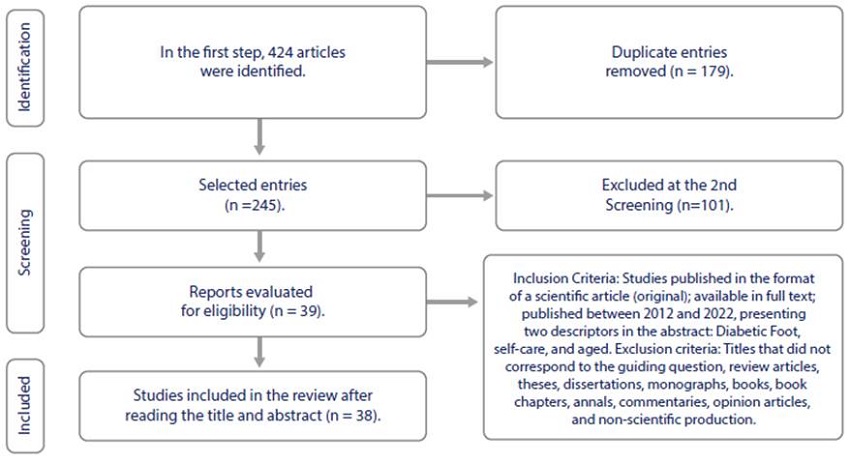
Figure 1
Descriptor Flowchart of the Results Obtained from the Search Strategy, according to the Prisma Strategy.
Source: Adaptation of the Prisma flowchart
The data obtained were grouped and presented in tables, with information regarding the articles and the self-care deficits found, for a clearer display of the studies included in the integrative review. The findings were summarized to identify the central theme addressed in each analyzed study. For the discussion of the results found, the findings of the studies regarding the adaptive problems experienced by elderly people were integrated.
Results
In the database search step, 245 studies that addressed the theme of self-care in elderly people with diabetic foot were found. Those were analyzed according to the methodological steps. Of these, 101 were selected for full reading, thus the sample of this review was composed of 37 studies.
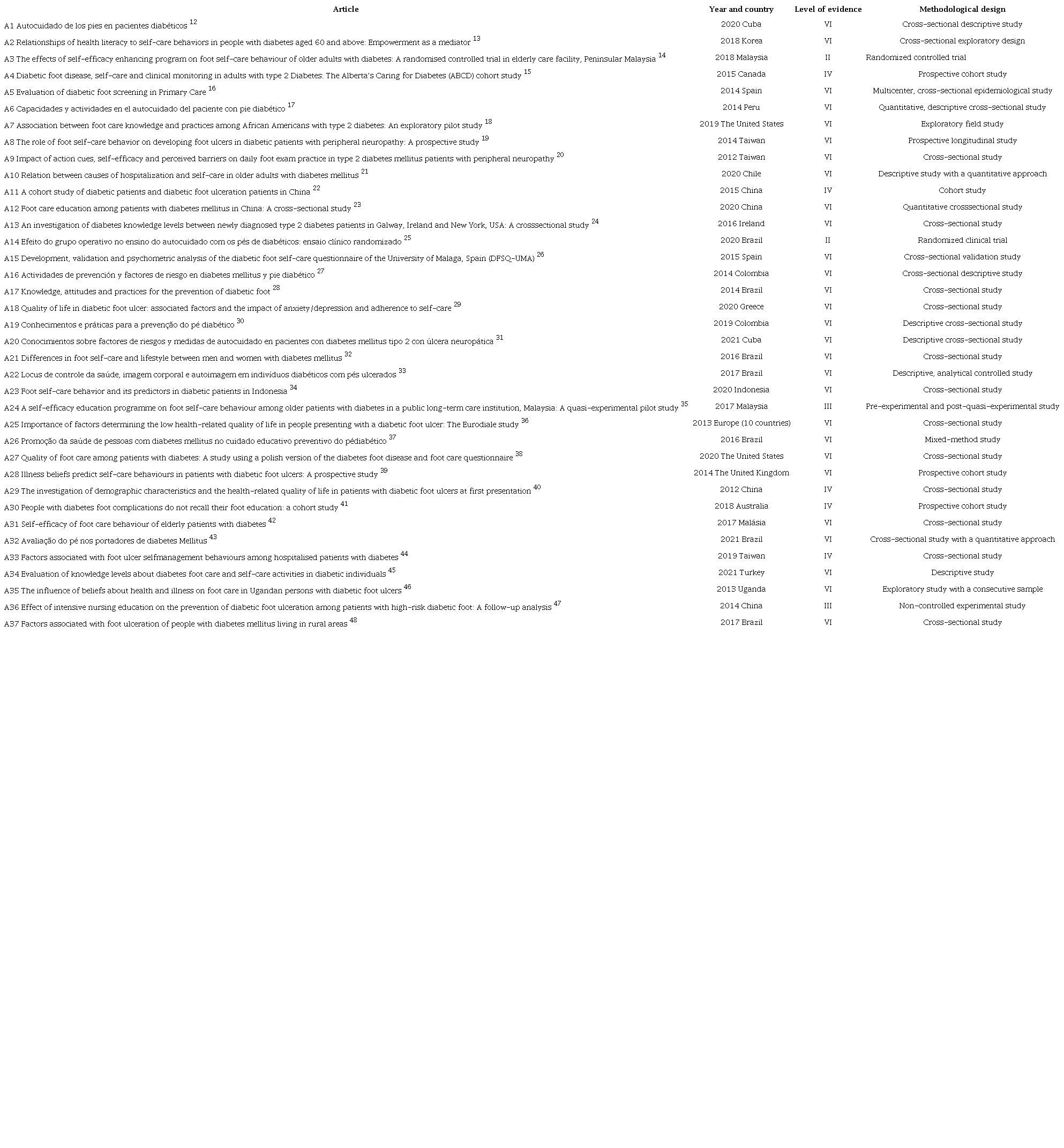
Table 1 presents an overview of the articles analyzed. They were published from 2012 to 2022, with a prevalence of articles published in 2014 and 2020, with 7 (18.9 %) published each year. Regarding nationality, the country with the highest prevalence of articles on the theme was Brazil, with a total of 7 (18.9 %).
Source: prepared by the authors.
The analysis of the studies that composed the review sample allowed identifying a variety of research methods, with descriptive and cross-sectional exploratory methods being used the most (level of evidence VI). Only two articles were randomized studies with level II evidence.
The level of evidence of 29 (78.4 %) of the articles from the sample of this integrative review was classified as weak (grade 6), except for those with clinical trials, with studies A2 and A14 being classified as level II evidence, and A26 and A38 as level III (Table 1).
In Table 2, to clarify the presentation and organization of the articles’ outcomes, a summary is presented, describing the main results and self-care deficits found according to Orem’s self-care theory. Regarding the universal requirements, 69 deficits were found, of which 15 were related to socioeconomic conditions, 26 to skin conditions, 8 to activities, leisure, and rest, 5 to nutrition, 10 to neurological conditions, and 5 to neurological condition deficits. Regarding incidence requirements, 5 deficits were found; on the other hand, regarding those on health deviations, 102 were evidenced, of which 72 were deficits in knowledge of self-care measures for feet and injuries, 24 about knowledge about the need for therapeutic support and treatment, and 6 about health status.

Source: prepared by the authors.
Discussion
Elderly People with Diabetes and Self-Care in the Prevention of Foot Injuries
The results presented indicate a prevalence of the elderly population group considering the other age groups, given that the present review aimed to identify self-care deficits in this group. Elderly people with diabetes have a shorter life expectancy and are particularly burdened by foot diseases that can lead to amputation and other disabilities in addition to physical and psychological suffering. In Malaysia, it was reported that 55.3 % of patients with diabetes experience diabetic foot problems and 38.3 % of them were among the elderly 35.
People with diabetes need to adopt regular foot self-care behaviors to prevent and delay potential complications, such as avoiding skin dryness, damage between the toes and calluses on the feet that can reduce blood circulation and lead to early occurrence of trauma and complications. However, several factors in the elderly population can have an impact, including physical limitations, health status, as well as cognitive and psychosocial aspects. Thus, the aging of the world population and the exponential sharp increase of elderly diabetics make DFU a challenge for health professionals 14.
The study conducted in 2017 on the self-care behavior of diabetic elderly people reported that the adoption of foot care can help mitigate problems in these body segments by 49-85 % 14. Analysis of respondents through a set of validated questionnaires showed that participants were aware of the importance of foot care for the prevention of complications, but the professional and skin care subscales received only moderate scores. The same study pointed out that only a limited number of elderly people with diabetes seek medical advice when they experience the onset of the disease; most only seek professional assistance for treatment when the disease becomes severe.
Adherence to self-care behavior is considered low in people with diabetes, so the underlying determinants need to be identified 49. In a study conducted in Cuba, misinformation on foot selfcare measures prevailed (84.3 %), with higher percentages in the 61-70 years group (100 %) versus 65 % in the 50-60 years group. Most patients qualified as having poor foot self-care habits (86.6 %). It was noted by the researchers that in the 61-70 age group, this category rose to 96 %; however, in the 50-60 age group, 5 patients had good and regular habits (2 and 3 representing 10 % and 15 %, respectively). The variable “foot self-care” showed a prevalence of patients with poor evaluation (82.1 % [12]).
DFU can be reduced through adequate guidance on podiatric care, as early identification of tissue at risk of ulceration can enable appropriate preventive care, thus reducing the incidence of foot ulceration. Such results were shown in a study that evidenced a substantial decrease in the incidence of DFU, in which 185 patients with diabetes at high risk for foot disease received intensive nursing education and, after two years of follow-up, the incidence of DFU was significantly reduced. More ulcers were healed, and fewer surgical procedures were required in patients who were monitored 47. However, the rates of foot examinations and prevention activities carried out by health professionals are low. According to the literature, only 14 % of respondents have ever received guidance on foot care and only 26 % have had their feet examined by a professional 43.
In a Colombian study, diabetic foot prevention activities performed by medical doctors were found to be precarious, as 59.5 % of patients reported not having received guidance on foot self-care. Only 106 (40.5 %) reported having received guidance on foot self-care. Similarly, 57.1 % of patients reported that the outpatient medical doctor had not examined their feet, i.e., in the last year, only 42.9 % of patients had had their feet examined. Similarly, 68.3 % were not asked about dysesthesia and intermittent claudication in 74.8 % of the total group of patients surveyed 27.
This reality contrasts with what is recommended by the International Diabetic Foot Group guidelines, which highlight the cost-effectiveness of prevention activities to reduce the prevalence of ulcers and amputations. It has been shown that patients at high risk of diabetic foot injuries need timely diagnosis and education for appropriate diabetes self-care behaviors and foot self-examination. In light of the above, every clinician providing care to a patient with DM should question them regarding risk factors for diabetic foot (dysesthesias, intermittent claudication, ulceration, and amputation), perform a primary foot examination (inspection, protective tenderness with the Semmes Weinstein monofilament, vibration with a 128 Hz tuning fork), and screen them for peripheral vascular disease 50.
Orem’s Theory and Its Self-Care Requirements
It should be noted that nursing theories are used as a basis to substantiate care and are considered a relevant strategy to aid in the educational interventions employed by nurses and consequently reduce the disabilities caused by diabetic foot syndrome and stimulate patients to act in the promotion of their health as they guide the development of the SNC and implementation of the NP.
Orem’s theory is one of the theoretical constructs that have inspired Brazilian nursing practice the most2. Among its three interrelated theoretical constructs, there are the self-care theory and the universal, development, and health deviation requirements.
Self-Care Deficits of Universal Requirements
The articles that presented universal deficits point out that elderly people were less confident in protecting and checking their feet daily for any abnormality such as redness, cuts, blisters, and dry skin. The barriers to performing these tasks may be explained by geriatric conditions such as visual impairment and other medical conditions that limit the ability to adequately inspect and protect the feet. The highest self-care subscale scores in this study were for footwear, hygiene, and safety. This finding is supported by previous research showing that self-efficacy is significantly associated with foot self-care behavior of elderly people with diabetes 12.
A study 17 performed with 60 patients hospitalized for diabetic foot used the questionnaire on capacities and self-care activities of patients with diabetic foot as an instrument, which highlighted that, when it came to foot care, 58.3 % had an inadequate level; 50 % of users had lesions, that is, calluses, fungal infections, and bad odor. This is due to their poor condition and the use of cloth, plastic, and leather sandals, the latter being traditionally used.
In the primary health care system of a city in the countryside of São Paulo, a study was performed to evaluate the feet of individuals with DM 43, it was found that 94 % of the respondents had no lesions on their feet; in the sensitivity test, 88 % had preserved sensitivity and 77 % had preserved pedic pulse, showing that, in both tests, a percentage of patients already present alterations in the exams, allowing timely guidance to be provided.
Thus, the effect of intensive nursing education on the prevention of DFU in patients at high risk for diabetic foot is not only possible but also highly beneficial for the patient, so that they can have their feet inspected regularly. At the end of the follow-up, the onset of DFU was prevented and the participants were educated about sensory neuropathy, which leads to a deficit or loss of the skin’s self-protection mechanism 47.
Motor neuropathy alters the plantar pressure load, and autonomic neuropathy reduces the perspiration of the foot skin, making the skin dry and easily damaged or cracked. Visual inspection of the skin for signs of dryness is often vital to prevent skin integrity cracking. Checking the skin will provide an early warning of impending problems and such inspections should be encouraged and guided by healthcare professionals in their care 47.
Self-Care Deficits of Development Requirements
Regarding development deficits, the literature shows that 50.4 % of patients have mobility problems, 28.2 % have self-care problems, and 47.6 % have regular activities problems 51. In addition to finding a significant association between adherence to foot care and mobility problems, self-care, and regular activities (p < 0.05). A significant association was also found between lack of adherence to exercise and poor mobility, self-care, regular activities, pain, and anxiety (p < 0.05). Non-adherence to diet was associated with poor mobility (p < 0.05). In this study, patients who had a non-adherence index also had lower quality of life.
According to descriptive results in one study 29, 42.1 % of the elderly participants suffered from some other disease other than diabetes, 26.3 % were current smokers and 30.8 % were alcoholics. Ulcers are associated with an increased risk of all-cause mortality, fatal myocardial infarction, and fatal stroke. These patients have insulin resistance, central obesity, dyslipidemia, and hypertension. The finding that 26.3 % of participants were current smokers needs to be carefully considered due to the vasoconstrictive effects of nicotine on late or non-healing ulcers and the increased risk of diabetic foot amputation.
When analyzing the self-care and social support variable, it was possible to note that patients who live alone, who live with their partner, and with their family presented a higher percentage in the partially adequate self-care category: 2 (50 %), 4 (44.4 %), and 10 (55.6 %), respectively; and 3 (33.3 %) of those who live with a partner presented adequate self-care 21.
Regarding the level of education, it is worth noting that participants with higher education, when compared to those with secondary education, obtained significantly higher foot care behavior scores than those with low education. Thus, it emphasizes that less educated people tend to be less knowledgeable about health, leading to unhealthy behaviors compared to those with higher levels of education 34.
It was also possible to note that patients with DFU are more likely to have depression and anxiety compared to those without foot complications, while patients with DM are twice more likely to have anxiety and depression when compared to the general population. Anxiety is associated with DM duration (< 10 years), comorbid conditions, and HbA1c level > 7 %, while depression is associated with patients’ age (< 50 years), being female, being a current smoker, foot ulcer duration, and comorbid conditions. Depressive symptoms are associated with ulcer recurrence in DM patients aged 60 years old. Depression at the first ulcer occurrence is associated with a 2-fold increase in mortality within 5 years and an increased amputation rate 29.
Self-Care Deficits of Health Deviation Requirements
Regarding health deviation deficits, the mean number of years since diagnosis of the participants studied was 17.1 (SD = 12.6). In the group with less than 11 years since diagnosis, the category “partially adequate self-care” prevailed (n = 6; 37.5 %); but in the group with 11 to 20 years, the category “no self-care capacity” was more frequent (n = 3.5 %). In people with more than 20 years since diagnosis, there was still a higher percentage of “partially adequate self-care”. The category that presented the highest percentage was “partially adequate self-care” in all groups, with 5 (71.4 %) in the group with 21 to 30 years, but in the group with 10 to 20 years, there were 2 (40 %) that presented the category “self-care deficit” 21.
In this same study, when evaluating the relationship between selfcare and hospitalization in elderly people, it was found that the main cause of hospitalization of elderly diabetics was due to diabetic foot, followed by patients with metabolic decompensation 21.
It was found that 51.7 % of patients with diabetes received foot care education from a nurse, 80 % knew the negative effect of diabetes on the feet, 69.2 % had no foot problems after diagnosis, 40 % attended a health care institution in case of any foot problem, 76.7 % performed leg and foot gymnastics, 63 % performed leg and foot gymnastics regularly daily, and 30.8 % performed foot examination daily 45.
The aforementioned study also found that patients’ knowledge about diabetic foot and diabetes self-care behaviors increased significantly as the duration of diabetes increased, but they failed to convert this knowledge into foot-care behaviors. This result suggests that the patients included in the study had difficulty converting their knowledge into behaviors due to their older mean age 45. Therefore, when evaluating the effect of the operating group in teaching foot self-care for the prevention of diabetic foot, with the participation of 209 people with diabetes, several aspects were considered in the intensive nursing teaching. Dry and cracked foot skin was addressed and patients were instructed to wash their feet correctly, including care for adequate water temperature and how to keep the feet dry. In addition, patients were advised on the choice of adequate shoes and socks and their awareness of self-protection was improved. Therefore, patients were encouraged to perform an inspection of their feet and consequently to practice daily self-care 6.
Conclusions
The findings of the selected studies evidenced that participants had a low level of knowledge on the theme, in addition to limitations to self-care in elderly people, who are affected by the long-term complications of diabetes. In addition, the progression of the disease associated with gaps in communication and guidance from health professionals could be noted in the studies that had a large number of participants who stated that they had never received foot care guidelines, which resulted in serious consequences in the onset and healing of DFU.
It should be stated to patients that adequate foot care in diabetes is essential to prevent the occurrence of wounds. In this sense, Orem’s self-care theory proved to be compatible with the study, enabling the identification and classification of the main self-care deficits and their categorization, which can ease care and improve the self-care perspective.
Therefore, the importance of carrying out the present study is highlighted, which contributes to the identification and categorization of the most common self-care deficits in elderly people. The scientific evidence hereby produced provides a basis for further studies on the theme, in addition to assisting nurses in decision-making to adopt measures that promote self-care in this population group, besides guiding this population regarding the necessary care. It also contributes to training and qualifying the team to emphasize the need for self-care awareness.
References
Netten JJ, Bus SA, Apelqvist J, Lipsky BA, Hinchliffe RJ, Game F, et al. Definitions and criteria for diabetic foot disease. Diabetes Metab Res Rev. 2020;36(supl. 1):e3268. DOI: https://doi.org/10.1002/dmrr.3268
Bezerra MLR, Faria RPR, Costa de Jesus CA, Reis PED, Pinho DLM, Kamada I. Aplicabilidade da teoria do déficit do autocuidado de ordem no Brasil: uma revisão integrativa. J Manag Prim Health Care [Internet]. 2019 [citado 10 dez. 2022];9. DOI: DOI: https://doi.org/10.14295/jmphc.v9i0.538
Silva BDS, Campos KM, Alcantara JR, Costa HMGS, Nogueira CMCS, Bezerra KP et al. O papel da enfermagem no contexto da pandemia do novo coronavírus: reflexões à luz da teoria de Florence Nightingale. Revista de Enfermagem UFPE on line [Internet]. 2021 [citado 10 dez. 2022];15(1). DOI: DOI: https://doi.org/10.5205/1981-8963.2021.247807
George JB. Nursing theories: The base for professional nursing practice. 6ª ed. Harlow: Pearson; 2014.
Engela MHT, Rodarte AC, Júnior AR, Seixas CT, Viegas SMF, Lanza FM. Use of health technology in primary health care in approach to hypertension. R Pesq cuid fundam online. 2018;10 (1):75-84. DOI: https://doi.org/10.9789/2175-5361.2018.v10i1.75-84
Moreira LAB, Dias DS, Freitas MG, Alves ÁKP, Fernandes PKRS. A utilização da teoria do autocuidado na assistência a gestante portadora de HIV. Em: VI Encontro de Monitoria e Iniciação Científica. Fortaleza: Conexão Fametro; 2018.
Mendonça SCB, Zanetti ML, Sawada NO, Barreto IDC, Andrade JS, Otero LM. Construction and validation of the Self-care Assessment Instrument for patients with type 2 diabetes mellitus. Rev Latino-Am Enfermagem. 2017;25(0). DOI: https://doi.org/10.1590/1518-8345.1533.2890
Mendes KDS, Silveira RC de CP, Galvão CM. Revisão integrativa: método de pesquisa para a incorporação de evidências na saúde e na enfermagem. Texto contexto - enferm. 2008;17(4):758-64. DOI: https://doi.org/10.1590/S0104-07072008000400018
Estorniolo Filho, J. EndNote basic: guia de uso. 12ª ed. São Paulo: Biblioteca/CIR/ FSP/USP; 2018.
Couban R. Covidence and Rayyan. Journal of the Canadian Health Libraries Association/Journal de l’Association des bibliothèques de la santé du Canada [Internet]. 2016 [citado 15 dez. 2022];37(3). DOI: DOI: https://doi.org/10.5596/c16-025
Page MJ, McKenzie JE, Bossuyt PM, Boutron I, Hoffmann TC, Mulrow CD et al. The PRISMA 2020 statement: an updated guideline for reporting systematic reviews. Syst Rev [Internet]. 2021 [citado 15 dez. 2022];10(1):89. Disponível em: Disponível em: https://systematicreviewsjournal.biomedcentral.com/articles/10.1186/s13643-021-01626-4
Artiles AM, Ramirez EAB, Duarte RF. Autocuidado de los pies en pacientes diabéticos. Medicentro [Internet]. 2020 [citado 19 dez. 2022];24(4):819-25. Disponível em: Disponível em: https://www.medigraphic.com/cgi-bin/new/resumen.cgi?IDARTICULO=104392
Shin KS, Lee EH. Relationships of health literacy to self-care behaviors in people with diabetes aged 60 and above: Empowerment as a mediator. J Adv Nurs. 2018;74(10):2363-72. DOI: https://doi.org/10.1111/jan.13738
Sharoni SKA, Rahman HA, Minhat HS, Shariff-Ghazali S, Ong MHA. The effects of self-efficacy enhancing program on foot self-care behaviour of older adults with diabetes: A randomised controlled trial in elderly care facility, Peninsular Malaysia. PLoS ONE;13(3):e0192417. DOI: https://doi.org/10.1371/journal.pone.0192417
Sayah FA, Soprovich A, Qiu W, Edwards AL, Johnson JA. Diabetic foot disease, self-care and clinical monitoring in adults with type 2 diabetes: The Alberta’s caring for diabetes (ABCD) cohort study. Can J Diabetes. 2015;39(3):S120-6. DOI: https://doi.org/10.1016/j.jcjd.2015.05.006
Fernández MA, Bravo JJM, Simarro FL, Samper JMC, Barrera FC, Romero JM, et al. Evaluation of diabetic foot screening in Primary Care. Endocrinol Nutr. 2014;61(6):311-7. DOI: https://doi.org/10.1016/j.endonu.2014.01.007
Ochoa MB, Ruíz YE, Díaz CC, Carranza DV. Capacidades y actividades en el autocuidado del paciente con pie diabético. Rev enferm Herediana. 2015;7(2):63. DOI: https://doi.org/10.20453/renh.v7i2.2529
Bonner T, Guidry J, Jackson Z. Association between foot care knowledge and practices among African Americans with type 2 diabetes: An exploratory pilot study. J Natl Med Assoc;111(3):256-61. DOI: https://doi.org/10.1016/j.jnma.2018.10.004
Chin YF, Liang J, Wang WS, Hsu BR, Huang TT. The role of foot self-care behavior on developing foot ulcers in diabetic patients with peripheral neuropathy: A prospective study. Int J Nurs Stud. 2014;51(12):1568-74. DOI: https://doi.org/10.1016/j.ijnurstu.2014.05.001
Chin YF, Huang TT, Hsu BR. Impact of action cues, self-efficacy and perceived barriers on daily foot exam practice in type 2 diabetes mellitus patients with peripheral neuropathy. J Clin Nurs. 2013;22(2):61-8. DOI: https://doi.org/10.1111/j.1365-2702.2012.04291.x
Figueiroa VPM, Guanilo MEE, Fuculo Junior PRB. Relation between causes of hospitalization and self-care in older adults with diabetes mellitus 2. Texto contexto - enferm. 2020;29(esp.):e20190296. DOI: https://doi.org/10.1590/1980-265x-tce-2019-0296
Jiang Y, Wang X, Xia L, Fu X, Xu Z, Ran X et al. A cohort study of diabetic patients and diabetic foot ulceration patients in China. Wound Repair Regen. 2015;23(2):222-30. DOI: https://doi.org/10.1111/wrr.12263
Liu J, Lu Q, Pang D, Yang P, Jin S, Yuan G et al. Foot care education among patients with diabetes mellitus in China: A cross-sectional study. J Wound Ostomy Continence Nurs. 2020;47(3):276-83. DOI: https://doi.org/10.1097/WON.0000000000000653
Mahon AM, Moore GD, Gazes MI, Chusid E, MacGilchrist C. An investigation of diabetes knowledge levels between newly diagnosed type 2 diabetes patients in Galway, Ireland and New York, USA: A cross-sectional study. Int J Low Extrem Wounds. 2016;15(3):194-202. DOI: https://doi.org/10.1177/1534734616638775
Moreira JB, Muro ES, Monteiro LA, Iunes DH, Assis BB, Chaves ECL. Efeito do grupo operative no ensino do autocuidado com os pés de diabéticos: ensaio clínico randomizado. Rev esc enferm USP. 2020;54. DOI: https://doi.org/10.1590/s1980-220x2019005403624
Flores EN, Asencio JMM, Marín JAC, Manzanares MTL, Nogueron GG. Development, validation and psychometric analysis of the diabetic foot self-care questionnaire of the University of Malaga, Spain (DFSQ-UMA). J Tissue Viability. 2015;24(1):24-34. DOI: https://doi.org/10.1016/j.jtv.2014.11.001
Pinilla AE, Barrera MDP, Rubio C, Devia D. Actividades de prevención y factores de riesgo en diabetes mellitus y pie diabético. Acta Med Colomb. 2014;39(3):250-7. DOI: https://doi.org/10.36104/amc.2014.260
Policarpo NS, Moura JRA, Melo Júnior EB, Almeida PCM, Silva ARV. Knowledge, attitudes and practices for the prevention of diabetic foot. Rev Gaúcha Enferm. 2014;35(3). DOI: https://doi.org/10.1590/1983-1447.2014.03.45187
Polikandrioti M, Vasilopoulos G, Koutelekos I, Panoutsopoulos G, Gerogianni G, Babatsikou F et al. Quality of life in diabetic foot ulcer: Associated factors and the impact of anxiety/depression and adherence to self-care. Int J Low Extrem Wounds. 2020;19(2):165-79. DOI: https://doi.org/10.1177/1534734619900415
Perdomo CR, Perdomo AP, Rodríguez VM. Conhecimentos e práticas para a prevenção do pé diabético. Rev Gaúcha Enferm. 2019;40. DOI: https://doi.org/10.1590/1983-1447.2019.20180161
Abella MR, Hernández YN, Walton SM, Pérez CAS. Conocimientos sobre factores de riesgos y medidas de autocuidado en pacientes con diabetes mellitus tipo 2 con úlcera neuropática. Rev inf cient. [Internet]. 2021 [citado 20 mar. 2022];100(3):e3446. Disponível em: Disponível em: http://scielo.sld.cu/scielo.php?script=sci_arttext&pid=S1028-99332021000300010&lng=es
Rossaneis MA, Haddad MC, Mathias TA, Marcon SS. Differences in foot self-care and lifestyle between men and women with diabetes mellitus. Rev Lat Am Enfermagem. 2016;15(24):e2761. DOI: https://doi.org/10.1590/1518-8345.1203.2761
Salomé GM, Ferreira LM. Locus de controle da saúde, imagem corporal e autoimagem em indivíduos diabéticos com pés ulcerados. Rev enferm UFPE online. 2017;11(9):3419-28. DOI: https://doi.org/10.5205/1981-8963-v11i9a110241p3419-3428-2017
Sari Y, Upoyo AS, Isworo A, Taufik A, Sumeru A, Anandari D et al. Foot self-care behavior and its predictors in diabetic patients in Indonesia. BMC Res Notes. 2020;13(1):38. DOI: https://doi.org/10.1186/s13104-020-4903-y
Sharoni SKA, Rahman HA, Minhat HS, Ghazali SS, Ong MHA. A self-efficacy education programme on foot self-care behaviour among older patients with diabetes in a public long-term care institution, Malaysia: A quasi-experimental pilot study. BMJ Open. 2017;7(6):e014393. DOI: https://doi.org/10.1136/bmjopen-2016-014393
Siersma V, Thorsen H, Holstein PE, Kars M, Apelqvist J, Jude EB et al. Importance of factors determining the low health-related quality of life in people presenting with a diabetic foot ulcer: The Eurodiale study. Diabet Med. 2013;30(11):1382-7. DOI: https://doi.org/10.1111/dme.12254
Silva LWS, Silva JS, Squarcini CFR, Souza FG, Ribeiro VS, Gonçalves DF. Promoção da saúde de pessoas com diabetes mellitus no cuidado educativo preventivo do pé-diabético. Cienc enferm. 2016;22(2):103-16. DOI: https://doi.org/10.4067/S0717-95532016000200008
Świątoniowska N, Chabowski M, Jankowska-Polańska B. Quality of foot care among patients with diabetes: A study using a polish version of the diabetes foot disease and foot care questionnaire. J Foot Ankle Surg. 2020;59(2):231-8. DOI: https://doi.org/10.1053/j.jfas.2019.07.020
Vedhara K, Dawe K, Wetherell MA, Miles JN, Cullum N, Dayan C et al. Illness beliefs predict self-care behaviours in patients with diabetic foot ulcers: A prospective study. Diabetes Res Clin Pract. 2014;106(1):67-72. DOI: https://doi.org/10.1016/j.diabres.2014.07.018
Yao H, Ting X, Minjie W, Yemin C, Xiqiao W, Yuzhi J et al. The investigation of demographic characteristics and the health-related quality of life in patients with diabetic foot ulcers at first presentation. Int J Low Extrem Wounds. 2012;11(3):187-93. DOI: https://doi.org/10.1177/1534734612457034
Yuncken J, Williams CM, Stolwyk R, Haines TP. People with diabetes foot complications do not recall their foot education: A cohort study. J Foot Ankle Res. 2018;11:12. DOI: https://doi. org/10.1186/s13047-018-0255-4
Sharoni SA, Razi MNM, Rashid NFA, Mahmood YE. Self-efficacy of foot care behaviour of elderly patients with diabetes. Malays Fam Physician [Internet]. 2017 [citado 22 mar. 2022];12(2):2-8. Disponível em: Disponível em: https://www.ncbi.nlm.nih.gov/pmc/articles/PMC5791827/
Bernardo AV, Lô CLN, Lombardi FR, Silva SPZ. Avaliação do pé nos portadores de diabetes Mellitus. Nursing (São Paulo). 2021;24(278):5922-31. DOI: https://doi.org/10.36489/nursing.2021v24i278p5922-5931
Chin YF, Huang TT, Hsu BR, Weng LC, Wang CC. Factors associated with foot ulcer self-management behaviours among hospitalised patients with diabetes. J Clin Nurs. 2019;28(11-12):2253-64. DOI: https://doi.org/10.1111/jocn.14822
Gökdeniz D, Şahin ZA. Evaluation of knowledge levels about diabetes foot care and self-care activities in diabetic individuals. Int J Low Extrem Wounds. 2022;21(1):65-74. DOI: https://doi.org/10.1177/1534734620926266
Hjelm K, Beebwa E. The influence of beliefs about health and illness on foot care in Ugandan persons with diabetic foot ulcers. Open Nurs J. 2013;7:123-32. DOI: https://doi.org/10.2174/1874434601307010123
Ren M, Yang C, Lin DZ, Xiao HS, Mai LF, Guo YC et al. Effect of intensive nursing education on the prevention of diabetic foot ulceration among patients with high-risk diabetic foot: A follow-up analysis. Diabetes Technol Ther. 2014;16(9):576-81. DOI: https://doi.org/10.1089/dia.2014.0004
Silva JMTSD, Haddad MDCFL, Rossaneis MA, Vannuchi MTO, Marcon SS. Fatores associados à ulceração nos pés de pessoas com diabetes mellitus residentes em área rural. Rev Gaucha Enferm. 2017;38(3):e68767. DOI: https://doi.org/10.1590/19831447.2017.03.68767
Lee YJ, Shin SJ, Wang RH, Lin KD, Lee YL, Wang YH. Pathways of empowerment perceptions, health literacy, self-efficacy, and self-care behaviors to glycemic control in patients with type 2 diabetes mellitus. Patient Educ Couns. 2016;99(2):287-94. DOI: https://doi.org/10.1016/j.pec.2015.08.021
Monteiro-Soares M, Russell D, Boyko EJ, Jeffcoate W, Mills JL, Morbach S et al. International Working Group on the Diabetic Foot (IWGDF). Guidelines on the classification of diabetic foot ulcers (IWGDF 2019). Diabetes Metab Res Rev. 2020;36(supl.1):e3273. DOI: https://doi.org/10.1002/dmrr.3273
Liu J, Ren ZH, Qiang H, Wu J, Shen M, Zhang L, Lyu J. Trends in the incidence of diabetes mellitus: results from the Global Burden of Disease Study 2017 and implications for diabetes mellitus prevention. BMC Public Health. 2020;20(1):1415. DOI: https://doi.org/10.1186/s12889-020-09502x
Notes
Conflict of interest declaration