Article
Development and Content Validation of an Instrument Covering Care for Pregnant Women with Sickle Cell Disease*
Desarrollo y validación del contenido de un instrumento para la atención de mujeres embarazadas con anemia de células falciformes**
Desenvolvimento e validação de conteúdo de instrumento para cuidados às gestantes com doença falciforme
 Eliene Almeida Santos elienemac.enf@gmail.com
Silvia Lucia Ferreira silvialf100@gmail.com
Karina Araújo Pinto karina.araujo.pinto@gmail.com
Rosa Cândida Cordeiro rosa@ufrb.edu.br
Ueigla Batista da Silva ueigla.sillva@gmail.com
Elionara Teixeira Boa Sorte Fernandes naratbsorte@gmail.com
Eliene Almeida Santos elienemac.enf@gmail.com
Silvia Lucia Ferreira silvialf100@gmail.com
Karina Araújo Pinto karina.araujo.pinto@gmail.com
Rosa Cândida Cordeiro rosa@ufrb.edu.br
Ueigla Batista da Silva ueigla.sillva@gmail.com
Elionara Teixeira Boa Sorte Fernandes naratbsorte@gmail.com
Development and Content Validation of an Instrument Covering Care for Pregnant Women with Sickle Cell Disease*
Aquichan, vol. 24, no. 1, e2415, 2024
Universidad de La Sabana
Received: 14 February 2023
Accepted: 13 December 2023
Abstract
Introduction: The lack of discussions on nursing care for pregnant women with sickle cell disease in Brazil and the urgent need for intervention and improvements in the nursing care provided to these women sparked this study. In addition, validity is an essential attribute for instruments used in research and/or clinical practice.
Objective: To develop and validate an instrument covering the care of pregnant women with sickle cell disease.
Materials and methods: This is a methodological, content validation study conducted with specialist judges. The instrument was structured with 19 nursing diagnoses that addressed the biological, psychological, and social dimensions, as well as 126 nursing interventions. The Delphi technique was used with the participation of 18 judges. The results were analyzed using the content validity index and a level of agreement above 0.80.
Results: Of the 145 items analyzed, 22 (15.17 %) scored a content validity index < 0.80, and the adjustments suggested by the judges were implemented. The instrument’s general content validity index was calculated at 0.87. The instrument reached acceptable content validity parameters, according to the criteria used.
Conclusions: The instrument’s potential stands out, and it can be improved through its use as a resource for guiding nursing practices directed to pregnant women with sickle cell disease, both in primary health care and in hospital networks.
Keywords (Source: DeCS) Validation study+ nursing research+ nursing diagnosis+ nursing care+ pregnant women+ sickle cell anemia.
Resumen
Introducción: la escasez de debates sobre la atención de enfermería a gestantes con anemia de células falciformes en el país y la urgente necesidad de intervención y mejora de los cuidados de enfermería prestados a esas mujeres motivaron la realización de este estudio. Además, la validez es un atributo esencial en los instrumentos para uso en investigación y/o práctica clínica.
Objetivo: elaborar y validar un instrumento de atención a gestantes con anemia de células falciformes.
Material y método: estudio metodológico, de validación de contenido con jueces/as expertos/as. El instrumento se estructuró con 19 diagnósticos de enfermería que abordaban las dimensiones biológica, psicológica y social, y 126 intervenciones de enfermería. Se utilizó la técnica Delphi, con la participación de 18 jueces/as. Los resultados se analizaron utilizando el índice de validez de contenido y un nivel de acuerdo superior a 0,80.
Resultados: de los 145 ítems analizados, 22 (15,17 %) tenían un índice de validez de contenido < 0,80, y se aplicaron los ajustes sugeridos por los/las jueces/as. El índice global de validez de contenido del instrumento se calculó en 0,87. El instrumento alcanzó parámetros de validez de contenido aceptables, según los criterios utilizados.
Conclusiones: se destaca el potencial del instrumento, que puede ser perfeccionado a través de su utilización como recurso para orientar las prácticas de enfermería dirigidas a gestantes con anemia de células falciformes, tanto en la atención primaria de salud como en la red hospitalaria.
Palabras clave (Fuente: DeCS) Estudio de validación, investigación en enfermería, diagnóstico de enfermería, atención de enfermería, mujeres embarazadas, anemia de células falciformes.
Resumo
Introdução: a escassez de debates sobre o cuidado de enfermagem às gestantes com doença falciforme no país e a urgente necessidade de intervenção e melhorias na assistência de enfermagem prestada às essas mulheres, motivaram este estudo. Além disso, em instrumentos para uso em pesquisa e/ou na prática clínica, a validade é um atributo essencial.
Objetivo: desenvolver e validar um instrumento para cuidados às gestantes com doença falciforme.
Materiais e método: estudo metodológico, de validação de conteúdo com juízas(es) especialistas. O instrumento foi estruturado com 19 diagnósticos de enfermagem que abordaram as dimensões biológica, psíquica e social, e 126 intervenções de enfermagem. Utilizou-se a técnica Delphi, com participação de 18 juízas(es). Os resultados foram analisados por meio do índice de validade de conteúdo e nível de concordância acima de 0,80.
Resultados: dos 145 itens analisados, 22 (15,17 %) apresentaram índice de validade de conteúdo < 0,80, e os ajustes sugeridos pelas(os) juízas(es) foram implementados. O índice de validade de conteúdo geral do instrumento foi calculado em 0,87. O instrumento alcançou parámetros aceitáveis de validade de conteúdo, segundo o critério utilizado.
Conclusões: destaca-se o potencial do instrumento, que pode ser aprimorado a partir do seu uso, como recurso na orientação das práticas de enfermagem voltadas às mulheres grávidas com doença falciforme, nos âmbitos da atenção primária à saúde e da rede hospitalar.
Palavras-chave (Fonte DeCS): Estudos de validação, pesquisa em enfermagem, diagnóstico de enfermagem, cuidados de enfermagem, gestantes, anemia falciforme.
Introduction
Sickle cell disease (SCD) is part of a group of chronic hereditary hemolytic diseases, with conditions that include frequent pain crises, anemia, and recurrent infections, among others, which significantly impact the quality of life of those affected (1). Recent data (2) from Africa estimate a global prevalence of 7.74 million people with SCD in 2021, while in Brazil the estimated mean prevalence is 2 % in the general population, and 6 to 10 % in black and mixed people (3).
Women with SCD face significant challenges when they become pregnant and require multi-professional care to maintain their health until the end of pregnancy (4). Prenatal care for pregnant women with SCD requires a monitoring protocol for normal risk and highrisk care, considering the potential for complications and the need for early intervention in the event of alterations during pregnancy (5).
In fact, studies show that the presence of SCD renders women more vulnerable to pre-eclampsia, intrauterine growth restriction, premature birth, and perinatal mortality (6), in addition to exacerbating the risks of pain crises, acute chest syndrome, and thromboembolism (4). The relative risk of maternal mortality in women with SCD was 18.5 (concordance index [CI] 95 %; 8.63-39.72) whilst the relative risk of perinatal mortality was 2.9 per 1000 deliveries compared to women without SCD in a cohort study conducted in the UK (7). Biosocial factors, such as socioeconomic status, nutritional status, and lack of access to healthcare and education, increase the severity of the condition and influence adequate management of the disease (8).
Care provided to pregnant women with SCD must be thorough and individualized, performed by an experienced multi-professional team to identify possible alterations early on and/or avoid complications that could lead to hospitalization, pregnancy loss, or even maternal and perinatal death (9, 10). The organization and maintenance of a care network, with preventive and health protection and promotion practices, is necessary for women with SCD (11). From this perspective, the focus on the promotion of self-care is essential for women with SCD to develop self-observation skills and competencies for measures intended to reduce the complications of the disease and improve their quality of life (12).
Countries in the European Union (13) and the United States (6) have made investments in the education and training of nursing teams, medical doctors, and other healthcare professionals who provide care to people with SCD, considering the lack of knowledge on the disease (14, 15) has been highlighted as an obstacle to the implementation of care lines for hemoglobinopathies. Therefore, it can be noted that the gap in knowledge on the management of SCD in pregnant women is not restricted to the nursing team, but to healthcare professionals in general. Studies similar to the present one will enable filling these gaps to reduce maternal and fetal morbidity and mortality in women with this disease, corroborating the achieve ment of the goals of the United Nations Sustainable Development Goals for the global reduction of this indicator (16).
It is worth noting that, as of December 2023, no validated instrument has been found in the literature for nursing care for pregnant women with SCD, highlighting the relevance and unprecedented nature of the results of this research for the health sector, nursing praxis, and the line of care for pregnant women with SCD.
In Brazil, it is vital to highlight the role of the nursing team in recognizing self-care deficits in women with SCD, especially during the pregnancy and puerperal stages. The absence of discussions on the subject nationwide and the urgent need for intervention and improvements in the nursing care provided to this group (11) sparked the present study, which aimed to develop and validate an instrument covering nursing care for pregnant women with SCD.
This is an instrument developed in Brazil by a Brazilian researcher, and its initial version consisted of 19 nursing diagnoses and 126 nursing care measures for pregnant women with SCD, stemming from qualitative research analyzed in the light of Orem’s theory. As of December 2023, it has not been translated into other languages.
Materials and methods
Type of study
This is a psychometric study covering the creation and validation of an instrument, developed in two stages. First, the design of the instrument, based on data from Santos’ research (17) as part of the development of her master’s thesis; and second, the content validation, conducted with the participation of Brazilian judges.
Instrument design
The instrument, entitled “Nursing care for pregnant women with sickle cell disease”, was developed for use in clinical practice and its design was based on Orem’s self-care theory (18), applied to the findings of a previous qualitative study performed with 15 pregnant women diagnosed with SCD (17). In that study, pregnant women with SCD were interviewed using a semi-structured script divided into two parts. The first contained questions on sociodemographic data, SCD history, obstetric history, and current pregnancy; the second part covered universal self-care requirements (oxygenation and circulation; eating habits; fluid intake; bowel and bladder elimination; daily activities; rest; social interaction/ participation; health promotion/well-being; sexual function; self-esteem; self-image), developmental self-care requirements, self-care requirements, health deviations, racial requirements, and gender requirements.
The content of the interviews with the pregnant women with SCD, in the light of Orem’s theory, was used to formulate the nursing diagnoses that comprise this instrument, which covers the biological, psychological, and social dimensions. For each nursing diagnosis, the respective nursing care items were defined, and the first version of the instrument (13) consisted of 19 diagnoses and 126 nursing care items.
Content validity
Content validity consists of an evaluation performed by specialist judges who determine whether an instrument measures exactly what it is intended to measure (19). In instruments for use in research and/or clinical practice, validity is an essential attribute.
The study was conducted from March 2017 to February 2018. Potential study participants were identified through a curriculum search on the Lattes platform and in a multi-professional healthcare unit specializing in SCD care. Content validation was conducted using a round of the Delphi technique (20, 21) with judges who had been selected for convenience, following the following inclusion criteria: Having at least one year of professional knowledge and experience in the subject and clinical practice and/or health management; holding at least an undergraduate degree. A total of 24 invitations were sent to professionals who met the criteria for participating as judges, with a response rate of 75 %. The invitation letter and informed consent form (ICF) were sent by email, with 18 participants responding by returning the signed ICF and receiving a link to the Google Forms form to fill it in and send it back to the researcher within a deadline of 60 days.
The form consisted of three parts: Identification data of the judges; an instrument containing 19 nursing diagnoses and 126 proposed nursing interventions, and a final opinion on the instrument analyzed. Each judge rated the items (nursing diagnoses and interventions) regarding their permanence in the instrument’s composition, using the response options on a Likert scale (22, 23) with scores ranging from 1 to 5, where 1 - irrelevant, 2 - not very relevant, 3 - relevant, 4 - very relevant, and 5 - extremely relevant. In addition, the judges answered two questions concerning the need to add other items to the instrument and the intelligibility (clarity, spelling, coherence) of all the items presented, where they recorded comments and/or suggestions. A validation round was performed with the judges.
To analyze the final opinion regarding the instrument in question, the following criteria were listed: Usefulness and relevance, consistency, clarity, objectivity, simplicity, feasibility, updating, accuracy, and instructional sequence of topics. The response options ranged from 0 to 4, where 0 - strongly disagree, 1 - disagree, 2 - neither disagree nor agree, 3 - agree, and 4 - strongly agree.
Data analysis
The agreement analysis of the judgment of the instrument’s items was performed using the content validity index (CVI), calculated using the number of 4 and 5 responses on the Likert scale, divided by the total number of responses (24). To assess the agreement with the final opinion on the instrument analyzed, the CVI was calculated using the number of 3 and 4 responses obtained at this stage. For all the analyses, Polit and Beck’s (25) criteria for analyzing the CVI were used, which establishes items with a CVI higher than 0.80 as relevant. The instrument’s general CVI was also calculated from the sum of all the CVIs calculated separately, divided by the total number of items (24).
Ethical aspects
This study was approved by the Research Ethics Committee of the Nursing School of the Universidade Federal da Bahia under Opinion 2.242.672 and it complied with the ethical precepts of the Declaration of Helsinki, Resolution 466, of December 12, 2012, and Resolution 516, of June 3, 2016, of the National Health Council of Brazil.
Results
The instrument was developed based on a previous qualitative study conducted in clinical practice with pregnant women with SCD entitled “Nursing care for pregnant women with sickle cell disease.” The instrument’s content was organized in the form of nursing diagnoses, based on Orem’s self-care theory, and was consolidated into an initial version with 19 diagnoses and 126 nursing cares, which was submitted for evaluation to the judges. Of the 24 judges who agreed to participate in the survey, 6 did not submit the completed form, even after extending the deadline for submitting it. This resulted in 18 responses to the validation form, of which 7 (38.89 %) were via Google Forms and 11 (61.11 %) via printed material. Nurses (61.11 %), psychologists (11.11 %), social workers (11.11 %), nutritionists (5.56 %), speech therapists (5.56 %), and anthropologists (5.56 %) participated as judges in the study, thus casting a holistic eye on the care of pregnant women with SCD. Considering that pregnant women require multi-professional assistance and comprehensive care, it was decided to include healthcare professionals in the sample who are part of the multi-professional team at a multicenter facility specialized in SCD. To ensure aspects related to the specific nursing language, over 60 % of the sample consisted of nurses.
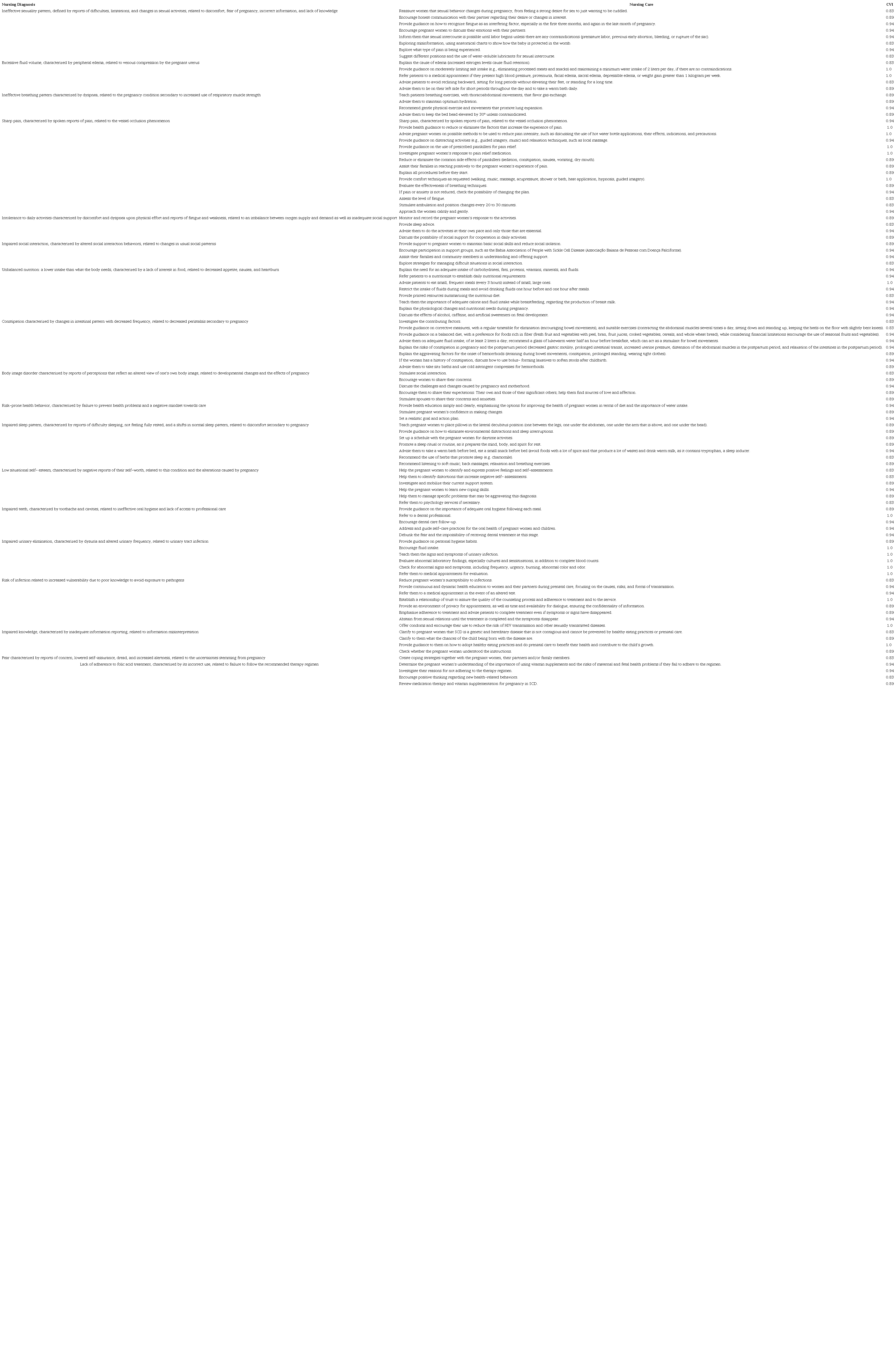
Most participants were working in teaching, research and extension (61.11 %), and/or in outpatient clinics specializing in providing care to people with SCD (33.33 %), had between 1 and 5 years of professional experience (55.56 %), had experience with SCD in care (61.11 %), and in teaching and research (61.11 %). The level of training ranged from undergraduate (22.22 %), to specialization (33.33 %), residency (5.56 %), master’s (16.67 %), and doctorate (22.22 %). All the judges were living and working in the Northeast region of Brazil at the time of the study. Regarding content validation, the nursing diagnoses and nursing care that comprised the instrument and had a CVI higher than 0.80, as rated by the judges, are described in Table 1.
Source: Prepared by the authors.
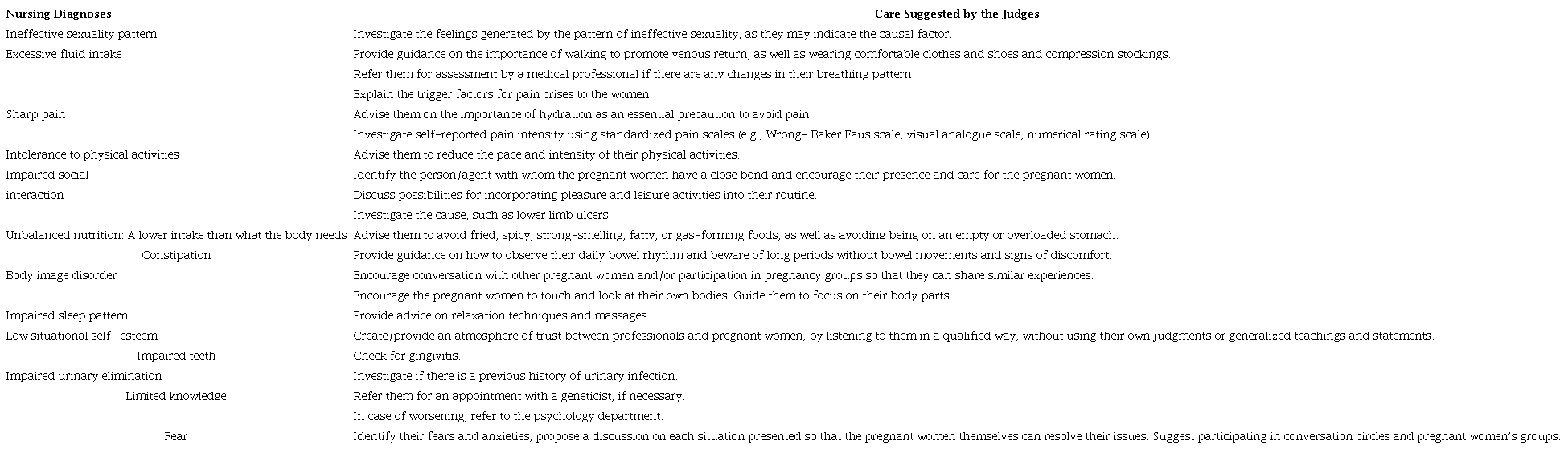
The 9 diagnoses and their respective forms of nursing care (22) that did not score a CVI higher than 0.80 were checked against the literature to exclude or adjust them, depending on the presence or absence of suggestions from the judges. They also analyzed the need to insert new guidelines for the proposed diagnoses, and only the “ineffective respiratory pattern” and “risk of infection” diagnoses did not have new items added to them. Some items were adjusted based on the judges’ suggestions (Table 2).
Source: Prepared by the authors.
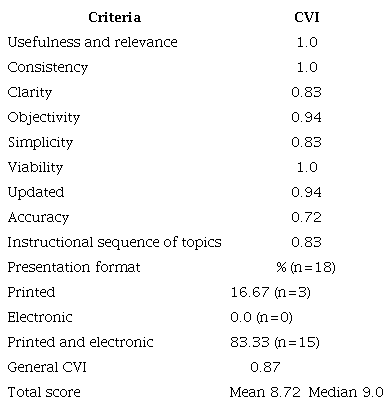
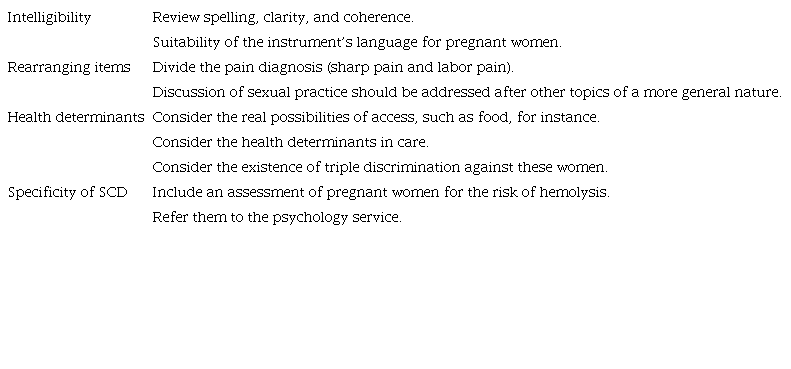
In terms of nursing interventions, the judges provided contributions, suggesting emphasis on the following aspects: The social determinants of health should be emphasized to prompt a consistent reflection on who women with SCD are; to consider the existence of triple discrimination (being black, being a woman, having SCD); to encourage the participation of the partner in childcare; to use accessible language, without technical terms; to consider healthy eating, but also the socio-economic conditions of these women; to refer them to the psychology service, in light of the effects of racism and discrimination, and the possibility of the loss process. The result of the final opinion on the instrument: Nursing Care for Pregnant Women with Sickle Cell Disease was evaluated satisfactorily by the judges, based on the evaluation criteria, form of presentation, and total score of the instrument (Table 3).
Source: Prepared by the authors.
After assigning the total score, the judges issued their final opinion on the instrument as a whole (Table 4).
Source: Prepared by the authors.
After the content validation process, the instrument presented 19 diagnoses and 127 forms of nursing care in the final version. In general, the judges presented positive comments on the proposed instrument, stating it addresses the health of pregnant women with SCD, establishing an interface between biological, social, and health education, as well as being a way of directing and promoting important items for maternal and fetal well-being to be addressed by nursing professionals in their health care. Furthermore, they found that the instrument can guide nurses’ practice. It is deemed that this instrument is a prototype that can guide the care provided to pregnant women with SCD and, in its use, it can be further improved.
Discussion
The results indicated that there was acceptable agreement between the judges’ evaluations, with the general CVI being higher than that of other health instrument validation studies (26, 27). Content validation was important for reaching an agreement among the judges, correcting possible inconsistencies, and providing methodological rigor for the use of technologies such as booklets and protocols (24). The use of the Delphi technique helped to reach a consensus among the judges regarding the instrument, corroborating other studies (23, 28-30) which found similar results when using the same technique.
It is worth highlighting the importance of validating the instruments that will be used in the health field, so that they are reliable and suitable for a given population, with the content validation process being an essential stage in the development and adaptation of various instruments, such as questionnaires and scales (24). In addition to the evaluation of the instrument’s items, the considerations registered by the judges emphasized the importance of the social determinants of health in the process of chronic diseases, which should be more closely understood and monitored during the health care of pregnant women with SCD.
The ethnic-racial discussions that have been raised are extremely important, especially considering the origin of SCD in sub-Saharan Africa (6) and the prevalence of cases of the disease and sickle cell trait in the black population (31) in Brazil. This fact implies a stigma that the disease has developed over a period of just over a hundred years since its first case was discovered. Brazil is a country with a high percentile of black population, but pregnant women with SCD still suffer racism in healthcare services. In a study performed in Bahia, a Brazilian state that ranks first in terms of number of people with SCD nationwide, researchers demonstrated the presence of institutional racism during the stay of black women with this condition in healthcare services, with unfair, discourteous, and humiliating treatment provided by the healthcare team (32), which seems to be a naturalized phenomenon, compromising healthcare measures. The authors of the study also found indirect racial discrimination against this group in healthcare units.
Considering women with SCD, the literature indicates they suffer triple discrimination based on race, gender, and social status, and that the discrimination they suffer is reflected in the care they receive in healthcare units, such as prenatal care, which has its quality compromised (33). This can lead to various maternal and fetal complications as a result of iatrogenic and negligent care. Healthcare professionals should deepen their knowledge of the aspects surrounding the reality of these women and offer care to pregnant women with SCD in a conscious and comprehensive way, adapting the language used to their level of education, with economically accessible guidelines and investigating signs of racism in their coping with the disease or emotional and psychological aspects.
Gender, class, and race inequalities (34) lead to difficulties in accessing healthcare services for black women with SCD, as well as having reduced access to education, which is why they are employed in occupations that require fewer qualifications for the job market (32). It is therefore essential that the judges make the necessary adjustments to the language of the educational resources for all women, including those who are not literate, allowing them equal opportunities to build the knowledge they need to implement self-care measures.
The instrument is an assistive technology, but nursing care has a living dimension, and each appointment is special and unique, as it brings the professionals and patients face to face, with numerous possibilities for experiences and exchanges. According to Orem (18), the nurse is the main healthcare professional responsible for care and developing health education activities to help people cope with self-care deficits. In this sense, the aim of nursing care is to improve quality of life through guidance and encouragement for self-care, considering the chronic nature of SCD and its prognosis, which requires changes in lifestyle habits and health management at all stages of life.
The use of this instrument in care practice by the nursing team should be the guiding object of nursing actions, but it is worth considering the importance of the individuality and integrality of care for pregnant women with SCD. These pregnant women have specific characteristics stemming from the disease that require special attention, as highlighted by the judges in the study when they recommended referral to the psychology service as a nursing intervention. This recommendation can be understood by the frequent occurrence of spontaneous abortion in pregnant women with SCD (10, 34) and the increased risk of maternal death due to exacerbated complications during pregnancy and puerperium (4, 6, 35).
Thus, considering the complications caused by the disease, even though it is not a deterrent to pregnancy, the possibility of miscarriage is a sensitive issue for these pregnant women, generating feelings of anguish, anxiety, and fear over the outcome of the pregnancy. Faced with pregnancy losses caused by miscarriage and stillbirth, the emotional state of these women is altered in the process of miscarriage, and the absence of a qualified team and the presence of institutional racism intensify these feelings in the process of loss, but the support of their partner and family generates the strength to endure the process of loss (10).
Limitations of the study include technical difficulties in filling out the online validation form through the Google Forms platform, as well as the delay of some participants in responding to the form sent, considering that their participation is voluntary and requires time. Another limitation may be the presence of judges from a single region of the country.
Conclusions
The creation and validation of the guiding instrument: Nursing Care for Pregnant Women with Sickle Cell Disease, is intended to enable the management of care for pregnant women with SCD, based on scientific knowledge, to become accessible in the clinical practice of healthcare professionals. Pregnant women with SCD require comprehensive care with a biopsychosocial perspective, which goes beyond the disease, including the particularities of race and class, as well as social and cultural factors, given the specificities that are inherent to women with this disease. The dissemination of information and guidance on SCD among the population and healthcare professionals is particularly necessary in the context of pregnancy to preserve the health of pregnant women and their babies, from conception to puerperium.
Furthering the knowledge on SCD and its nuances during pregnancy, even during professional training in undergraduate nursing and healthcare courses, is a key strategy for ensuring the long-term quality of care for this group of pregnant women. More importantly, the existence of a specific nursing care instrument for pregnant women with SCD is within the limits of nurses’ professional practice and should guide pertinent clinical conduct. It is worth noting the existing gap in care for people with SCD, which, despite having protocols defined by the Brazilian Ministry of Health, lacks the availability of instruments in clinical practice.
The instrument’s potential stands out, and it can be improved through its use as a resource for guiding nursing practices directed at pregnant women with SCD, both in primary health care and in the hospital network; thus, contributing to the scientific knowledge of nurses for the care of pregnant women with SCD to prevent complications throughout the pregnancy-puerperal cycle.
References
Sundd P, Gladwin MT, Novelli EM. Pathophysiology of sickle cell disease. Annu Rev Pathol [Internet]. 2019 [cited 2023 Mar 2];14:263-292. DOI: DOI: https://doi.org/10.1146/annurev-pathmechdis-012418-012838
Thomson AM, McHugh TA, Oron AP, Teply C, Nikhil Lonberg, Victor Vilchis Tella et al. Global, regional, and national prevalence and mortality burden of sickle cell disease, 2000-2021: A systematic analysis from the Global Burden of Disease Study 2021. The Lancet [Internet]. 2023 [cited 2023 Nov 23];10(8):e585- 99. DOI: DOI: https://doi.org/10.1016/S2352-3026(23)00118-7
Ministério da Saúde. Doença falciforme: conhecer para cuidar. Brasília: Ministério da Saúde [Internet]. 2015 [cited 2023 Nov 23]. Disponível em: Disponível em: https://telelab.aids.gov.br/moodle/pluginfile.php/39506/mod_resource/content/4/Doenca Falciforme_SEM.pdf
Smith-Whitley K. Complications in pregnant women with sickle cell disease. Hematology Am Soc Hematol Educ Program [Internet]. 2019 [cited Mar 2];(1):359-66. DOI: DOI: https://doi.org/10.1182/hematology.2019000039
Jain D, Atmapoojya P, Colah R, Lodha P. Sickle cell disease and pregnancy. Mediterr J Hematol Infect Dis [Internet]. 2019 [cited 2021 Sept 21];11(1):e2019040. DOI: DOI: https://doi.org/10.4084/mjhid.2019.040
Kato GJ, Piel FB, Reid CD, Gaston MH, Ohene-Frempong K, Krishnamurti L et al. Sickle cell disease.Nat Rev Dis Primers [Internet]. 2018 [cited 2021 Sept 21];4(18010):1-22. DOI: DOI: https://doi.org/10.1038/nrdp.2018.10
Oteng-Ntim E, Ayensah B, Knight M, Howard J. Pregnancy outcome in patients with sickle cell disease in the UK - A national cohort study comparing sickle cell anaemia (HbSS) with HbSC disease. Br J Haematol [Internet]. 2015 [cited 2023 Nov 24];169:129-37. DOI: DOI: https://doi.org/10.1111/bjh.13270
Tewari S, Brousse V, Piel FB, Menzel S, Rees DC. Environmental determinants of severity in sickle cell disease. Haematologica [Internet]. 2015 [cited 2021 Sept 10];100(9):1108-16. DOI: DOI: https://doi.org/10.3324/haematol.2014.120030
Moukalled NM, Fakhredin RB, Taher AT. Pregnancy and sickle cell disease: An overview of complications and suggested perinatal care. Expert Rev Hematol [Internet]. 2022 [cited 2023 Mar 2];15(12):1055-61. DOI: DOI: https://doi.org/10.1080/17474086.2022.2151432
Silva UB, Ferreira SL, Cordeiro RC, Almeida LCG, Santos EA. Experiences of women with sickle cell disease who experienced pregnancy losses. Acta Paul Enferm [Internet]. 2021 [cited 2021 Nov 12];34:eAPE02394. DOI: DOI: https://doi.org/10.37689/acta-ape/2021AO02394
Lacerda FKL, Ferreira SL, Nascimento ER, Costa DO, Cordeiro RC. Self-care deficits in women with leg ulcers and sickle cell disease. Rev Bras Enferm [Internet]. 2019 [cited 2021 Sept10];72(supl. 3):72-8. DOI: DOI: https://doi.org/10.1590/0034-7167-2018-0005
Costa DO, Araújo FA, Xavier ASG, Araújo LS, Silva UB, Santos EA et al. Self-care of men with priapism and sickle cell disease. Rev Bras Enferm [Internet]. 2018 [cited 2021 Sept 12];71(5):2418-24. DOI: DOI: https://doi.org/10.1590/0034-7167-2017-0464
Ware RE, Montalembert M, Tshilolo L, Abboud MR. Sickle cell disease. Lancet [Internet]. 2017 [cited 2021 Sept 12];390(10091):311-23. DOI: DOI: https://doi.org/10.1016/S0140-6736(17)30193-9
Jonathan A, Tutuba H, Lloyd W, Ndunguru J, Makani J, Ruggajo P, et al. Healthcare workers’ knowledge and resource availability for care of sickle cell disease in Dar es Salaam, Tanzania. Front Genet. [Internet]. 2021 [cited 2023 Feb 2];12:773207. DOI: DOI: https://doi.org/10.3389/fgene.2021.773207
Tusuubira SK, Nakayinga R, Mwambi B, Odda J, Kiconco S, Komuhangi A. Knowledge, perception and practices towards sickle cell disease: A community survey among adults in Lubaga division, Kampala Uganda. BMC Public Health [Internet]. 2018 [cited 2023 Feb 2]; 27;18:561. DOI: DOI: https://doi.org/10.1186/s12889-018-5496-4
Organização das Nações Unidas. Objetivos de Desenvolvimento Sustentável [Internet]. Geneva: WHO; 2023. [cited 2023 Feb 2]. Disponível em: Disponível em: https://brasil.un.org/pt-br/sdgs
Santos ACC. Self-care of pregnant women with sickle cell disease: Construction of a nursing protocol [Dissertação]. [Internet]. Salvador: Universidade Federal da Bahia; 2015. 191 p. [cited 2019 Feb 20]. Disponível em: Disponível em: https://pgenf.ufba.br/sites/pgenf.ufba.br/files/Dissertação Ane Caroline da Cruz Santos.pdf
Orem DE. Nursing: Concepts of practice. 6ª edição. St. Louis: Mosby; 2001.
Elangovan N, Sundaravel E. Method of preparing a document for survey instrument validation by experts. MethodsX [Internet]. 2021 [cited 2023 Feb 3];8:101326. DOI: DOI: https://doi.org/10.1016/j.mex.2021.101326
Drumm S, Bradley C, Moriarty F. “More of an art than a science?” The development, design and mechanics of the Delphi Technique. Res Social Adm Pharm [Internet]. 2022 [cited 2023 Feb 3];18(1):2230-6. DOI: DOI: https://doi.org/10.1016/j.sapharm.2021.06.027
Albertella L, Kirkham R, Adler AB, Crampton J, Drummond SPA, Fogarty GJ et al. Building a transdisciplinary expert consensus on the cognitive drivers of performance under pressure: An international multi-panel Delphi study. Front Psychol [Internet]. 2022 [cited 2023 Feb 3];13:1017675. DOI: DOI: https://doi.org/10.3389/fpsyg.2022.1017675
Jebb AT, Ng V, Tay L. A Review of key likert scale development advances: 1995-2019. Front Psychol [Internet]. 2021 [cited 2023 Mar 2];12:637547. DOI: DOI: https://doi.org/10.3389/fpsyg.2021.637547
Guldager MJ, Melchiors J, Andersen SAW. Development and validation of an assessment tool for technical skills in handheld otoscopy. Ann Otol Rhinol Laryngol [Internet]. 2020 [cited 2021 Oct 20];129(7):715-21. DOI: DOI: https://doi.org/10.1177/0003489420904734
Alexandre NMC, Coluci MZO. Content validity in the development and adaptation processes of measurement instruments. Ciênc Saúde Coletiva [Internet]. 2011 [cited 2021 Oct 5];16(7):3061-8. DOI: DOI: https://doi.org/10.1590/S1413-81232011000800006
Polit DF, Beck CT. The content validity index: Are you sure know what’s being reported? Critique and recommendations. Res Nurs Health [Internet]. 2006 [cited 2021 OCT 5];29(5):489-97. DOI: DOI: https://doi.org/10.1002/nur.20147
Ferreira RC, Montanari FL, Ribeiro E, Correia MDL, Manzoli JPB, Duran ECM. Development and validation of a nursing care instrument for patients in intensive care units. Cogitare Enferm [Internet]. 2018 [cited 2021 Oct 5];23(4):57539. DOI: DOI: https://doi.org/10.5380/ce.v23i4.57539
Lebet RM, Asaro LA, Zuppa AF, Curley MAQ. Face and content validity of variables associated with the difficult-to-sedate child in the paediatric intensive care unit: A survey of paediatric critical care clinicians. Aust Crit Care [Internet]. 2018 [cited 2023 Mar 2];31(3):167-73. DOI: DOI: https://doi.org/10.1016/j.aucc.2017.12.091
Maher E, Nielsen S, Summers R Wood P. Competências essenciais para farmacêuticos australianos ao fornecer opioides prescritos: um estudo Delphi modificado. Int J Clin Pharm [Internet]. 2021 [cited 2023 Mar 2];43:430-8. DOI: DOI: https://doi.org/10.1007/s11096-020-01060-x
Agla G, Formiga NS, Oliveira SHS, Sousa ATO, Soares MJGO, Costa MML. Instrument validation on nurses’ knowledge and practice in palliative care for people with cutaneous malignant tumor wound. Aquichan [Internet]. 2020 [cited 2021 Oct 6];20(1):e2012. DOI: DOI: https://doi.org/10.5294/aqui.2020.20.1.2
Boyle JA, Black K, Dorney E, Amor DJ, Brown L, Callander E, et al. Setting preconception care priorities in Australia using a Delphi Technique. Semin Reprod Med [Internet]. 2022 [cited 2023 Mar 2];40(3-4):214-26. DOI: DOI: https://doi.org/10.1055/s-0042-1749683
Niu X, Parry CS, Mason A, Harrison B, Nouraie SM, Ammosova T, et al. Prevalence of sickle cell trait and rare hemoglobin variants in the Metropolitan Washington DC Area. J Hematol [Internet]. 2020 [cited 2023 Jan 14];9(3):93-5. DOI: DOI: https://doi.org/10.14740/jh603
Cordeiro RC, Ferreira SL. Racial and gender discrmination on the discourses of black women with sickle cell anemia. Esc Anna Nery Rev Enferm [Internet]. 2009 [cited 2021 Oct 22];13(2):352-8. DOI: DOI: https://doi.org/10.1590/S1414-81452009000200016
Fraga FA, Sanino GEC. Black women’s health steps and unbalances: are the affirmative actions in health, the light in the end of the tunnel? Revista da ABPN [Internet]. 2015 [cited 2021 Oct 15];7(15):192-211. Disponível em: Disponível em: https://abpnrevista.org.br/index.php/site/article/view/121/118
Rosanwo TO, Kean LS, Archer NM. End the pain: Start with antiracism. Am J Hematol [Internet]. 2021 [cited 2023 Feb 2];96(1):4-6. DOI: DOI: https://doi.org/10.1002/ajh.26032
Sousa VT, Ballas SK, Leite JM, Olivato MCA, Cancado RD. Maternal and perinatal outcomes in pregnant women with sickle cell disease: An update. Hematol Transfus Cell Ther [Internet]. 2022 [cited 2023 Feb 2];44(3):369-73. DOI: DOI: https://doi.org/10.1016/j.htct.2020.12.009
Notes
Conflict of interest declaration