artículos
Social-emotional skills and emotional intelligence development programs for elementary school teachers: a systematic review
Programas de desarrollo de habilidades socioemocionales e inteligencia emocional en docentes de educación básica: una revisión sistemática
Programas de desenvolvimento de habilidades socioemocionais e inteligência emocional para professores de educação básica: uma revisão sistemática
 Edgar Fabián Torres-Hernández ef.torres@ugto.mx
Social-emotional skills and emotional intelligence development programs for elementary school teachers: a systematic review
Revista UNIMAR, vol. 43, núm. 1, pp. 75-98, 2025
Universidad Mariana
Recepción: 03 Julio 2024
Revisado: 20 Septiembre 2024
Aprobación: 08 Noviembre 2024
Abstract: The present study corresponds to a systematic review of the literature, considering a period between 2019 and January 2024, focusing specifically on interventions aimed at promoting socio-emotional skills and emotional intelligence in primary school teachers. Therefore, 25 relevant articles were selected from different databases. From the review, a variety of approaches implemented in the programs was found, all of them with positive effects in different aspects. In addition, a positive effect on teachers’ mental health was observed, helping to reduce stress, anxiety, depression, and job burnout. These interventions promoted greater overall well-being among teachers, including improvements in their quality of life and job satisfaction. The importance of these interventions for teacher professional development is highlighted, and recommendations for future research are offered.
Keywords: social competencies, evaluation, teacher, teaching, bibliographic study, training program.
Resumen: El presente estudio corresponde a una revisión sistemática de la literatura, en la cual se contempló un periodo comprendido entre 2019 y enero de 2024, centrándose específicamente en las intervenciones dirigidas a promover habilidades socioemocionales e inteligencia emocional en el profesorado de educación básica. Por lo tanto, se seleccionaron 25 artículos relevantes provenientes de diversas bases de datos. A parir de la revisión, se encontró una diversidad de enfoques implementados en los programas, todos ellos con impactos positivos en diferentes aspectos. Además, se observó un efecto benéfico en la salud mental de los docentes, contribuyendo a la reducción del estrés, la ansiedad, la depresión y el agotamiento laboral. Estas intervenciones promovieron un mayor bienestar general entre el personal docente, incluyendo una mejora en su calidad de vida y en la satisfacción con su trabajo. Se destaca la importancia de estas intervenciones para el desarrollo profesional docente y se ofrecen recomendaciones para futuras investigaciones.
Palabras clave: competencias sociales, evaluación, profesor, docencia, estudio bibliográfico, programa de formación.
Resumo: O presente estudo corresponde a uma revisão sistemática da literatura, considerando um período entre 2019 e janeiro de 2024, com foco específico em intervenções destinadas a promover habilidades socioemocionais e inteligência emocional em professores do ensino fundamental. Portanto, foram selecionados 25 artigos relevantes de diferentes bancos de dados. A partir da revisão, foi encontrada uma variedade de abordagens implementadas nos programas, todas elas com efeitos positivos em diferentes aspectos. Além disso, foi observado um efeito positivo na saúde mental dos professores, ajudando a reduzir o estresse, a ansiedade, a depressão e o esgotamento profissional. Essas intervenções promoveram maior bem-estar geral entre os professores, incluindo melhorias em sua qualidade de vida e satisfação no trabalho. É destacada a importância dessas intervenções para o desenvolvimento profissional dos professores e são oferecidas recomendações para pesquisas futuras.
Palavras-chave: competências sociais, avaliação, professor, ensino, estudo bibliográfico, programa de treinamento.
Introduction
The role of the teacher goes beyond the mere transmission of knowledge; it involves an overwhelming emotional component that has a direct impact on the quality of learning, the teachers’ well-being, and the adequacy of the teacher-student relationship (Vettori et al., 2022). However, various studies indicate that a significant number of elementary teachers experience substantial challenges in managing their own emotions and in effectively handling emotional situations in the classroom (Pennington et al., 2021; Valente et al., 2019). These challenges can manifest in high levels of stress (Ssenyonga & Hecker, 2021), agotamiento profesional (Schoeps et al., 2021) and difficulties in developing healthy relationships with both students and the rest of the school community (Alarcón-Espinoza et al., 2022).
Thus, inadequate socio-emotional skills can have a negative impact on the quality of the educational environment, affecting student motivation and performance (Fontanillas-Moneo et al., 2022). In addition, teachers who have difficulty managing their emotions may have difficulty adapting to change, dealing with conflict situations, or maintaining a positive attitude, which directly affects their ability to provide effective and meaningful education (Valente et al., 2020).
As a result, socio-emotional skills have acquired a special relevance in the field of education, focusing mainly on their development in students (Muñoz-Oliver et al., 2022). These skills, as an integral part of emotional intelligence, are defined as the ability of an individual to perceive, understand, express and manage his or her emotions (Bru-Luna et al., 2021). In addition, they are intrinsically linked to the interaction with other individuals (Bisquerra & Pérez, 2007). Although socio-emotional skills and emotional intelligence are qualitatively different concepts, they may be closely related and necessary for human development (Llorent et al., 2021). Therefore, given their differences, it is relevant to include both dimensions in current research.
There is growing research interest in understanding the socio-emotional skills and emotional intelligence of teachers (Bonesso et al., 2020). However, when compared to programs or interventions aimed at promoting and developing them, the proportion of the latter is significantly lower. In addition, there are virtually no reports of systematic literature reviews documenting progress in the study of these issues.
Some program-based reviews focus on the clinical practices of nurse educators (Gcawu & Van Rooyen, 2022) or on pedagogical models used by physical education teachers (Rico-González, 2023). However, there has been no recent review of programs or interventions that promote social-emotional skills or emotional intelligence in elementary school teachers. Based on the above, the question that guided this research was: what programs or interventions have been implemented to promote and develop social-emotional skills and emotional intelligence in elementary school teachers? Therefore, the main objective of this study is to analyze the characteristics of research and its impact on the promotion of social-emotional skills and emotional intelligence in basic education teaching staff, from 2019 to January 2024. Through this review, we seek to contribute to the field of knowledge of said construct, providing effective alternatives for the personal development of teachers.
Literature review
Socio-emotional skills and emotional intelligence in education
Socio-emotional skills include a variety of competencies such as empathy, responsible decision-making, conflict resolution, effective communication, and emotional self-regulation (Santos et al., 2023). These skills not only influence academic performance, but also have a lifelong impact, facilitating personal and professional success (Winardi et al., 2022). Emotional intelligence, in turn, focuses on the ability to identify, understand, and manage one’s own and others’ emotions. In the field of education, emotional intelligence is manifested in the ability to understand and manage emotions, work appropriately with others, make informed decisions, and pursue goals effectively (Kaur & Hirudayaraj, 2021).
Integrating these skills into the educational environment has become an essential approach for educators. Promoting a positive school climate, implementing emotional education programs, and training teachers are common strategies to cultivate social-emotional skills and emotional intelligence (Khassawneh et al., 2022). The relationship between these skills and academic achievement is clear. Students with high levels of emotional intelligence tend to have better academic performance, greater ability to concentrate, and more positive attitudes toward learning (Quílez-Robres et al., 2023). In addition, these skills contribute to the creation of an inclusive and respectful school environment that fosters healthy relationships between students and educational staff (Skura & Świderska, 2022).
Impact of Emotion management programs
Emotion management programs have proven to be valuable tools in education, especially for teachers. Teaching and managing emotions is essential to the well-being of educators and, therefore, to the quality of teaching and learning in the classroom (Zych & Llorent, 2020).
One of the most important impacts of emotional management programs for teachers is the improvement of mental and emotional well-being (Penteado & Neto, 2019). Teaching can be a demanding profession, and educators often experience elevated levels of stress (Gutiérrez-Torres & Buitrago-Velandia, 2019). These programs provide strategies for recognizing, understanding, and managing emotions to help teachers more effectively manage stress, frustration, and other emotional challenges. In addition, emotional management directly contributes to the quality of the educational environment. Educators who participate in these programs are better able to create positive and healthy classrooms where empathy and effective communication are fostered. The result is a school climate that is more conducive to learning, where students feel emotionally supported and motivated to actively participate in their studies (Ismail et al., 2023).
Emotional management programs also impact the quality of interpersonal relationships in educational settings. By developing emotional intelligence skills, teachers can build stronger relationships with colleagues, administrators, students, and their families (Lane & Smith, 2021). The ability to understand and respond appropriately to the emotions of others strengthens collaboration and community in the school.
Ultimately, the impact of emotional management programs on teachers is reflected in their resilience, job satisfaction, and ability to face the daily challenges of teaching more positively. These programs not only benefit educators individually, but also have a cascading effect on the overall quality of the educational environment, improving the educational experience for everyone involved (Kaur & Kaur, 2022).
Methodology
Search strategy
A systematic literature review was conducted, covering the period from 2019 to January 2024. The search was conducted in the Web of Science, Scopus, Eric and Ebsco databases, using the following Boolean operator: (‘socio-emotional skills’ or ‘emotional skills’ or ‘socio-emotional competencies’ or ‘emotional competencies’ or ‘emotional intelligence’), (teachers or educators) and (interventions or course* or programs). Specific filters were applied: year of publication, full-text documents, peer-reviewed or refereed publications and publications in English, Spanish and Portuguese.
The search strategy and the selection of articles were carried out individually; an expert was invited to discuss the results and possible inconsistencies in a consensual manner. The result of this expert’s analysis helped to improve the organization of the topics and their grouping; it also helped to contextualize the results of the interventions. No automation tool, collective collaboration or crowdsourcing was used during the selection process.
Inclusion and exclusion criteria
The selection of articles was based on the following criteria: 1) interventions or programs applied to teachers at the basic level (preschool, primary and secondary); 2) documents written in English, Spanish and Portuguese; and 3) studies that followed a qualitative, quantitative or mixed methodology, both experimental and nonexperimental, due to the limited scientific production on the subject and the consequent need to expand its understanding. Likewise, only the last five years have been taken into account, since, due to current challenges, changes in educational policies and social transformations, it is necessary to obtain a more up-to-date picture of the most recent intervention approaches in the promotion of emotional management skills by teachers.
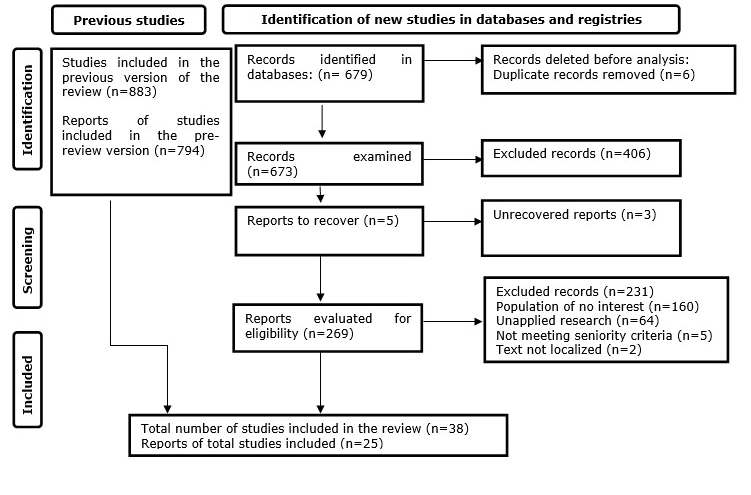
In terms of exclusion criteria, articles that referred to interventions with teachers in undergraduate vocational education or with students in education or related professions were not included. Documents that were not full-text or that were review articles were also excluded. Figure 1 illustrates the process of the review stages.
Data collection
A total of 679 articles were identified from the database search. After reviewing the titles and abstracts, duplicate records and papers that did not focus on faculty research were eliminated. As a result, 269 eligible studies were selected, while 231 texts were excluded because they did not meet the inclusion criteria or because the full text was not accessible. A more detailed analysis of the included studies was then performed, eliminating 13 documents that were considered irrelevant according to the established criteria. Finally, a sample of 25 articles was selected for the final analysis.
Results
Table 1, describes the main elements of the articles reviewed, specifying aspects such as authors, year of publication, sample analyzed, and general characteristics of each study.
| Authors | N | Educational level | Experimental design | Duration | Instruments | Associated variables | Main results | Observations |
| Al-Jbouri et al., 2023 | 201 | Primary | Experimental | 3 months | Overall confidence in teaching social and emotional learning (SEL) Perceptions of student SEL Perceptions of classroom climate Perceptions of student motivation and school engagement Perceptions of student academic performance Life satisfaction* | Classroom climate Motivation and commitment Student performance and satisfaction | Strengthen self-confidence Improve perceptions of social-emotional skills and climate Student engagement and motivation | Program also implemented in students |
| Beltman y Poulton, 2019 | 73 | Basic | Non- experimental | 5 online modules over 2 years | Open questionnaire (items not specified) | Resilience | Strengthen emotional management Ability to be more reflective Breath control and space appropriation Increased proactivity | A technology-enhanced distance learning program for Australian, European, and North American teachers |
| Bruno et al., 2023 | 19 | Secondary | Non-experimental | 20 hours | Bar-On Emotional Competence Inventory | Not declared | Strengthening emotional sensitivity Responsibility for the reality surrounding teachers | None |
| Carbonero-Martín et al., 2022 | 190 | Basic education | Experimental | 32 hours | Trait Metamood Scale-24* | Improvement in all dimensions of teachers’ emotional intelligence The factors with the greatest impact were emotional awareness, emotional understanding, and emotional regulation | The article refers to resources used by researchers | |
| Cheng, et al., 2022 | 35 | Preschool | Experimental | 6 classroom hours and 14 hours independently | Mindfulness in Teaching Scale | Depresión, ansiedad, estrés y burnout | Significant improvement in Emotional Intelligence Mindfulness in the classroom Reduced burnout and depression Improved present moment awareness and emotional regulation Increased compassion and acceptance | Program based on mindfulness or full attention |
| Chianese y Prats Fernández, 2021 | 20 | Secondary | Non-experimental | 25 hours | Emotional Development Questionnaire Focus Group Technique | Not declared | Increase emotional autonomy and social skills Better use of teaching and coaching skills | Recovering student perceptions |
| Cristóvão et al., 2020 | 7 | Primary | Non- experimental | 30-45 minutes a week for two years | Interviews | Not declared | Personal growth in relationships with students, in the learning process, and in integration into the school community | Program also focused on student population |
| De Carvalho et al., 2021 | 13 | Primary | Experimental | 30 hours | Five facets of Mindfulness Questionnaire Emotion Regulation Questionnaire Self-compassion Scale Teacher efficacy Scale Mental Health Continuum Maslach Burnout Inventory Observation Guide | Classroom climate Mindfulness Self-efficacy Burnout Well-Being Self-compassion | Significant increases in mindfulness, emotional regulation, self-efficacy, and well-being skills Decrease in burnout symptoms Significant improvement in teacher classroom behavior | Program based on mindfulness or full attention. Perceptions collected from teachers, students, and parents |
| Eraldemir-Tuyan, 2019 | 17 | Basic level | Non- experimental | 30 hours | Map and Checklist | Meaningful learning | Significant learning achieved through the teacher-student relationship | Applies to English teachers only |
| Giordano et al., 2021 | 15 | Basic level | Non- experimental | 8 weeks, approxi-mately 16 hours | Teaching Pyramid Observation Tool | Fidelity to framework | Greater motivation to change | Use of internal (colleagues) and external (experts outside the institution) coaching |
| Haslip y Donaldson, 2021 | 17 | Basic level | Non- experimental | 20 hours | Planning and Reflection Worksheet | Strength of character | Teachers were more likely to use kindness, leadership, fairness, hope, love, self-regulation, persistence, forgiveness, and humility to meet work challenges related to working with children, colleagues, parents, and themselves. Better adjustment to work | Ninguna |
| Hatzichristou et al., 2021 | 429 | Basic level | Non-experimental | 4 years, time not specified | The School as a Caring Community Profile-II-SCCP-II Questionnaire | Subjective Well-Being and Resilience | Better support for immigrant or refugee students Greater acceptance Increased teamwork Greater expression of student emotions | International and multicultural online program |
| Iskandar et al., 2021 | 30 | Basic level | Non- experimental | Not specified | Program Evaluation Survey and Interview | Pedagogical and Technological Content TPACK | Understanding the pedagogical model influences the improvement of emotional management | Program focused on improving teacher performance |
| Izquierdo et al., 2022 | 70 | Primary | Experimental | 14 weeks | Emotional Quotient Inventory | None | Enhance intrapersonal and interpersonal intelligence Improve stress management, adaptability, and mood | None |
| Luong et al., 2019 | 46 | Secondary | Non- experimental | 8 weeks, approxi-mately 16 hours | Mindfulness Inventory Perceived Stress Questionnaire Hospital Anxiety and Depression Scale General Self-Efficacy Scale Teacher Self-Efficacy Scale Self-Regulation Scale Emotional Regulation Skills Questionnaire Interpersonal Problems Inventory Openness to Experience Scale Thinking Test for Creative Production Unusual uses of the Verbal Creativity Test (VCT) Interviews | Mental health and creativity | Stress Reduction Coping with negative emotions and their impact on interpersonal experiences Increased self-care | Mindfulness applied to teachers and students |
| Martinsone et al., 2020 | 312 | Basic level | Non- experimental | 4 months | Open and online questionnaire | None | Increased emotional literacy for both teachers and students Increased capacity for reflection | International program; student opinions collected |
| Martyniak y Pellitteri, 2020 | 60 | Preschool | Experimental | 3 months | Polish Mayer-Salovey-Caruso Emotional Intelligence Test | None | Significant increase in facilitation Emotional intelligence knowledge and regulation | Applies to women only |
| Mihić et al., 2020 | 25 | Basic level | Experimental | 30 hours | Cuestionario de cinco facetas para la atención plena Five-Facet Mindfulness Questionnaire Maslach Burnout Inventory Self-Compassion Short Form Scale Compassion for Others Scale Digital Blood Pressure and Heart Rate Monitor | Mindfulness, Burnout, Self-Pity and Compassion Blood Pressure and Heart Rate | Increase self-compassion and mindfulness Improve self-observation and compassion Lower heart rate | Mindfulness-based program, including physiological data |
| Pozo-Rico et al., 2020 | 70 | Primary | Experimental | 14 weeks | Perceived Stress Questionnaire Perceived Stress Scale RED Questionnaire Maslach Burnout Inventory Emotional Quotient Inventory | Perceived stress Burnout at work Psychosocial risk at work | Improve stress management and reduce burnout Introducing emotional intelligence into the classroom Increased competence in the use of ICT | Online program implemented during COVID-19 Pandemic lockdown |
| Pozo-Rico et al., 2023 | 70 | Primary | Experimental | 14 weeks | Connor-Davidson Resilience Scale Spanish version of the Resilience Scale Goldberg Mental Health Scale Psychological Well-Being Scale Trait Meta-Mode Scale Norwegian Teacher Self-Efficacy Scale | Subjective well-being, self-efficacy and resilience | Positive impact on teacher well-being, resilience, emotional literacy, and self-efficacy | Program delivered in-person and remotely |
| Pozo-Rico y Sandoval, 2020 | 23 | Primary | Experimental | 7 weeks | Student Grade Records | Gamification | Improve student academic performance | Evaluation of results in terms of impact on students |
| Schoeps et al., 2019 | 135 | Basic level | Experimental | 10 hours | Burnout Inventory in Spain Depression, Anxiety and Stress Scales Rosenberg Self-Esteem Scale Life Satisfaction Scale | Depression, anxiety, stress, burnout, self-esteem, and life satisfaction | Reduced burnout and emotional symptoms (anxiety, depression, and stress) Increased self-esteem and life satisfaction | None |
| Sheridan et al., 2019 | 48 | Preschool | Experimental | 48 hours | Student-Teacher Relationship Scale* | Teacher-Student Relationship | Improvement of the relationship between faculty members and students | Program also focused on student population and parents |
| Stejskalová et al., 2022 | 27 | Preschool and primary school | Non- experimental | 26 hours | Teamwork and classroom climate questionnaires | Teamwork and classroom climate | Improved communication awareness and emotional intelligence | None |
| Tatalović Vorkapić et al., 2023 | 76 | Basic level | Experimental | 16 hours | Teacher Effectiveness Connor Davidson Resilience Teacher Social and Emotional Competence Short Burnout Scale | Self-efficacy, resilience, and burnout | Strengthen self-efficacy, resilience, and social-emotional skills | None |
First of all, it should be noted that some of the interventions were carried out remotely (n=4). It is natural to assume that, due to the period of confinement caused by the COVID-19 pandemic and the consequent restructuring of school work mediated by technology, remote modalities were integrated. However, this phenomenon was preceded by research with the following characteristics.
Another aspect worth mentioning is that in addition to the programs implemented for teachers, the student population was also involved (n=4); in one case, parents were too implicated. It should be noted that different techniques and approaches were used to strengthen teachers’ emotional management skills, such as professional or pedagogical development programs, and others that put special emphasis on mentoring or coaching, mindfulness, effective communication, self-awareness, conflict resolution, or positive feedback.
In terms of the research design of the programs implemented, a wide variety was observed, including both experimental and nonexperimental studies. In some cases, exclusively qualitative approaches were adopted (n=5), using data collection instruments such as questionnaires, interviews, checklists and worksheets or reflection sheets. The quantitative approach predominated in the analysis of the scope of the interventions (n=13), while other studies opted for mixed or complementary approaches (n=7). It should be noted that in one case, the focus group technique was used with the participants of the project as part of the evaluation of the programs. The most commonly used instruments were primarily those related to socio-emotional skills and emotional intelligence (n=13), followed by the Maslach Burnout Scale (n=4), teacher self-efficacy scales (n=4), stress measurement scales (n=4), and those measuring mindfulness (n=3).
The characteristics of the participants and the duration of the programs varied. First, one study included only seven teachers, while others, more than 100 teachers (n=6). It is worth noting that the latter involved students (n=2) and even parents (n=1). In most cases, the sample of teachers did not exceed 100 participants (n=19). Secondly, the duration of most of the interventions ranged from 10 to 48 hours (n=14); in the rest, less specific time periods were observed, ranging from seven weeks to four years (n=10). In one case, the duration was not specified.
The analysis identified three areas in which the programs had a positive impact on teachers: mental health, overall well-being, and the quality of the educational environment.
Benefits for teachers’ mental health
One of the most relevant aspects was a significant decrease in levels of stress, anxiety, depression and exhaustion (Cheng et al., 2022; Izquierdo et al., 2022; Luong et al., 2019). In addition, a decrease in symptoms related to mental health problems was observed (Schoeps et al., 2019). On the other hand, an increase in self-awareness, self-care, and self-compassion was detected, derived from the regular practice of reflection and mindfulness promoted by the mindfulness technique (Luong et al., 2019; Mihić et al., 2020). Significant increases were also observed in other characteristics, such as resilience, subjective well-being, and self-esteem (Pozo-Rico et al., 2023; Tatalović Vorkapić et al., 2023).
Collaterally, the interventions also benefited students by increasing their social skills and improving their relationships with peers and parents (Hatzichristou et al., 2021; Sheridan et al., 2019). Finally, the programs reduced stress, anxiety, depression, and burnout, and improved self-awareness, self-care, and resilience. Mindfulness-based approaches have shown consistent results, and some programs have also shown benefits for students and parents.
General well-being
Regarding the participants’ perception of their own well-being, an increase was observed, as well as the quality and satisfaction with their own life (De Carvalho et al., 2021; Schoeps et al., 2019). On the other hand, and in relation to their work, teachers reported a positive impact on their pedagogical practice (Cristóvão et al., 2020; Iskandar et al., 2021), along with greater motivation and commitment to their work (Al-Jbouri et al., 2023). Another positive aspect was the increase in socio-emotional skills, both in the faculty and in the student population (Bruno et al., 2023; Chianese & Prats, 2021).
Teachers reported increased life satisfaction and a positive impact on their teaching practice. The programs also showed benefits for both teachers and students.
Improving the quality of the school environment
As a priority and depending on the object of study of the reviewed interventions, a significant impact was observed in the improvement of socio-emotional skills and emotional intelligence, mainly in teachers, but also in students o (Beltman & Poulton, 2019; Carbonero-Martín et al., 2022; Eraldemir-Tuyan, 2019; Martinsone et al., 2020; Martyniak & Pellitteri, 2020; Tatalović Vorkapić et al., 2023). As a result, relationships between teachers and students were also strengthened (Bruno et al., 2023; Haslip & Donaldson, 2021; Hatzichristou et al., 2021; Sheridan et al., 2019). Moreover, at the academic level, several transformations were observed: the effective implementation of innovative teaching methods (Giordano et al., 2021; Pozo-Rico et al., 2023), improvements in classroom climate and attitudes towards learning (Martinsone et al., 2020; Stejskalová et al., 2022) and, as a consequence, an increase in academic performance (Pozo-Rico y Sandoval, 2020).
It can be said that these programs strengthen the socio-emotional skills and emotional intelligence of teachers and students, which in turn improves relationships and classroom climate. Some programs also have an impact on academic achievement and the implementation of innovative teaching methods.
Discussion
The purpose of this study was to analyze the characteristics of research and its impact on the promotion of socio-emotional skills and emotional intelligence in basic education teachers from 2019 to January 2024. Despite the small number of interventions in favor of the management of emotions, it was possible to identify some patterns of action worth mentioning.
Overall, each intervention had a positive impact on the development of socio-emotional skills and emotional intelligence, either in combination or in some of its components. This contributes to the field of teacher training, from their time at university (Aspelin & Jonsson, 2019) to their continuing education (Jones et al., 2019), and provides benefits such as strengthening their own efficacy, better adapting to the environment around them, and maintaining positive interpersonal relationships (Alarcón-Espinoza et al., 2022). This underscores the importance of continued research on the long-term effects of these programs on teacher well-being and performance.
In addition, an improvement is observed in other psychological aspects of the participants, such as symptoms related to stress, anxiety, depression, burnout and resilience, promoting an increase in overall well-being. This may be due to the fact that emotional management skills are associated with the promotion of more adaptive living conditions and healthier lifestyles (Montero & Florentino, 2023). It may be valuable to explore whether these benefits are maintained after the intervention, and how they may affect faculty retention and job satisfaction.
The approach of the programs analyzed was varied, as were the research designs and data collection instruments. In terms of approach, group interventions predominated, promoting reflection and sharing of experiences among participants, facilitating beneficial collaboration, and reinforcing positive psychological practices (Schussler et al., 2020).
Regarding research designs, experimental and nonexperimental studies were observed. The latter may have some drawbacks, such as the lack of defined and standardized outcome measures and the inability to conduct meta-analyses that can estimate objective effect sizes (Townsley et al., 2023). Future studies could compare the effectiveness of different methodological approaches and examine which elements of interventions are most critical in achieving positive outcomes.
On the other hand, the instruments used are mostly self-report and, although they are inexpensive and easy to use, they can lead to bias because individuals can make significantly different assessments of emotional management. Therefore, it is necessary to include other ways of evaluating the impact of the programs implemented (Aldrup et al., 2020).
In addition to the above, the duration of the different interventions varied; this may be due to various conditions, such as the nature and scope of the intervention, the underlying theoretical models, its purposes, the configuration of the samples, the evaluation, and the possibility of transferring the learning to the daily environment of the individuals. If sufficient attention is paid to the above-mentioned aspects, positive psychology interventions may have greater replicability. It is recommended to complement these measures with objective indicators, such as classroom observations or teacher performance evaluations, to obtain a more complete picture of the impact of the programs.
There are some limitations to this work that should be noted. First, there is a possible risk of bias associated with the publication of those works that have proven successful in promoting socio-emotional skills or emotional intelligence in teachers, probably leaving out those that had neutral results or no significant changes in the participants’ management of emotions, affecting the validity of the results. Another limitation is the issue of measurement, as the use of different actions to evaluate the effectiveness of the programs makes it difficult to compare across studies. Similarly, there may be bias at the level of the review, mainly related to the search and selection of studies, as well as the communication of results.
To mitigate these limitations, it is recommended to broaden the search to include reports from academic conferences and exploration of other databases, to make the inclusion criteria more flexible, and to invite expert peers to verify the systematicity of the review and the transparency in the presentation of the results, with the aim of avoiding the selective omission of relevant information.
On the other hand, the evidence found must be taken with some reservations, mainly because the programs evaluated are specific contexts with heterogeneous evaluation techniques and instruments. This fact makes it preferable to consider experimental designs, with greater control of the variables, as well as randomization in the composition of participants, which allows increasing their external validity or a greater possibility of generalizing their results (Manterola et al., 2013).
Conclusiones
Promoting the social-emotional skills and emotional intelligence of teachers is essential to cultivating a positive educational environment and improving the academic performance and well-being of students. By implementing effective interventions, educational institutions can empower teachers to develop and strengthen their emotional skills and intelligence, creating an environment conducive to learning and the emotional well-being of all involved (Vizoso-Gómez, 2022).
Conflict of interest
The author declares that he has no conflict of interest in the conduct of this research.
Contribution
The author participated in the preparation of the manuscript, read, and approved it.
References
Al-Jbouri, E., Andrews, N. C., Peddigrew, E., Fortier, A., & Weaver, T. (2023). Building elementary students’ social and emotional skills: A randomized control trial to evaluate a teacher-led intervention. School Mental Health, 15(1), 138-150. https://doi.org/10.1007/s12310-022-09538-x
Alarcón-Espinoza, M., Sanduvete-Chaves, S., Anguera, M. T., Samper García, P., & Chacón-Moscoso, S. (2022). Emotional self-regulation in everyday life: A systematic review. Frontiers in Psychology, 13. https://doi.org/10.3389/fpsyg.2022.884756
Aldrup, K., Carstensen, B., Köller, M. M., & Klusmann, U. (2020). Measuring Teachers’ Social-Emotional Competence: Development and Validation of a Situational Judgment Test. Frontiers in Psychology, 11, 1–20. https://doi.org/10.3389/fpsyg.2020.00892
Aspelin, J., & Jonsson, A. (2019). Relational competence in teacher education. Concept analysis and report from a pilot study. Teacher Development, 23(2), 264-283. https://doi.org/10.1080/13664530.2019.1570323
Beltman, S., & Poulton, E. (2019). “Take a step back”: teacher strategies for managing heightened emotions. Australian Educational Researcher, 46(4), 661-679. https://doi.org/10.1007/s13384-019-00339-x
Bisquerra, R., & Pérez, N. (2007). Las competencias emocionales [Emotional competencies]. Educación XX1, 10, 61-82. https://www.redalyc.org/articulo.oa?id=70601005
Bonesso, S., Gerli, F., Zampieri, R., & Boyatzis, R. E. (2020). Updating the debate on behavioral competency development: State of the art and future challenges. Frontiers in Psychology, 11, 1267. https://doi.org/10.3389/fpsyg.2020.01267
Bru-Luna, L. M., Martí-Vilar, M., Merino-Soto, C., & Cervera-Santiago, J. L. (2021). Emotional intelligence measures: A systematic review. Healthcare, 9(12), 1696. https://doi.org/10.3390/healthcare9121696
Bruno, L., Iborra, A., & García-Varela, A. B. (2023). Value creation through an emotional management program adapted to the needs of a group of adult learners. Journal of Transformative Education, 21(4), 534-555. https://doi.org/10.1177/15413446221144040
Carbonero-Martín, M., Arteaga-Cedeño, W. L., Martín-Antón, L. J., & Molinero-González, P. (2022). Group segmentation as a strategy for implementing the intervention programme in emotional education for infant and primary teachers. International Journal of Environmental Research and Public Health, 19(23). https://doi.org/10.3390/ijerph192315702
Cheng, X., Zhang, H., Cao, J., & Ma, Y. (2022). The effect of mindfulness-based programs on psychological distress and burnout in kindergarten teachers: A pilot study. Early Childhood Education Journal, 50(7), 1197-1207. https://doi.org/10.1007/s10643-021-01254-6
Chianese, C., & Prats, M. À. (2021). Development of emotional competences of secondary school teachers through a comprehensive intervention in coaching. Revista Española de Orientación y Psicopedagogía, 32(2), 110-131. https://doi.org/10.5944/REOP.VOL.32.NUM.2.2021.31282
Cristóvão, A. M., Candeias, A. A., & Verdasca, J. L. (2020). Development of socio-emotional and creative skills in primary education: Teachers’ perceptions about the Gulbenkian XXI School Learning Communities Project. Frontiers in Education, 4. https://doi.org/10.3389/feduc.2019.00160
De Carvalho, J. S., Oliveira, S., Roberto, M. S., Gonçalves, C., Bárbara, J. M., De Castro, A. F., Pereira, R., Franco, M., Cadima, J., Leal, T., Lemos, M. S., & Marques-Pinto, A. (2021). Effects of a mindfulness-based intervention for teachers: A study on teacher and student outcomes. Mindfulness, 12(7), 1719-1732. https://doi.org/10.1007/s12671-021-01635-3
Eraldemir-Tuyan, S. (2019). An emotional literacy improvement (ELI) program for EFL teachers: Insiders’ views. European Journal of Educational Research, 8(4), 1113-1125 https://doi.org/10.12973/eu-jer.8.4.1113
Fontanillas-Moneo, J., Torrijos Fincias, P., & Rodríguez-Conde, M.-J. (2022). Relación entre inteligencia emocional y rendimiento académico en la educación secundaria [Relationship between emotional intelligence and academic performance in secondary education]. REOP, Revista Española de Orientación y Psicopedagogía, 33(2), 102-118. https://doi.org/10.5944/reop.vol.33.num.2.2022.34362
Gcawu, S. N., & Van Rooyen, D. (2022). Clinical teaching practices of nurse educators: An integrative literature review. Health SA Gesondheid, 27, a1728. https://doi.org/10.4102/hsag.v27i0.1728
Giordano, K., Eastin, S., Calcagno, B., Wilhelm, S., & Gil, A. (2021). Examining the effects of internal versus external coaching on preschool teachers’ implementation of a framework of evidence-based social-emotional practices. Journal of Early Childhood Teacher Education, 42(4), 423-436. https://doi.org/10.1080/10901027.2020.1782545
Gutiérrez-Torres, A. M., & Buitrago-Velandia, S. J. (2019). Habilidades socioemocionales de los docentes, herramientas de paz en la escuela [Socio-emotional skills of teachers, tools for peace in schools]. Praxis & Saber, 10(24), 167-192. https://doi.org/10.19053/22160159.v10.n25.2019.9819
Haslip, M. J. & Donaldson, L. (2021). What character strengths do early childhood educators use to address workplace challenges? Positive psychology in teacher professional development. International Journal of Early Years Education, 29(3), 250-267. https://doi.org/10.1080/09669760.2021.1893666
Hatzichristou, C., Lianos, P., Lampropoulou, A., Yfanti, T., & Athanasiou, D. (2021). WeCARE intervention program: An online multilevel international program for promoting well-being and resilience in the school community during unsettling times. European Journal of Psychology and Educational Research, 4(1), 51-67. https://doi.org/10.12973/ejper.4.1.51
Iskandar, Jumadi, J., Sastradika, D., & Defrianti, D. (2021). Development of TPACK and EQ-based 21st century learning through the teacher certification programme in Indonesia. South African Journal of Education, 41(2), 1-9.https://doi.org/10.15700/saje.v41ns2a1952
Ismail, S. M., Patra, I., Yang, H. X., & Ajanil, B. (2023). Language teacher psychological well-being: an insight into the impacts of emotion regulation, reflective teaching, self-efficacy, and identity in an EFL context. Asian-Pacific Journal of Second and Foreign Language Education, 8(1). https://doi.org/10.1186/s40862-023-00215-3
Izquierdo, A., Gilar-Corbí, R., Pozo-Rico, T., & Castejón, J. L. (2022). Results of training program in emotional competences for primary school teachers. European Journal of Education and Psychology, 15(1), 1-17. https://doi.org/10.32457/ejep.v15i1.1746
Jones, S. M., McGarrah, M. W., & Kahn, J. (2019). Social and emotional learning: A principled science of human development in context. Educational Psychologist, 54(3), 129-143. https://doi.org/10.1080/00461520.2019.1625776
Kaur, J. & Kaur, M. (2022). A life skills intervention for enhancing psychological well-being of secondary school students. MIER Journal of Educational Studies Trends and Practices, 12(2), 285-300. https://doi.org/10.52634/mier/2022/v12/i2/2263
Kaur, N., & Hirudayaraj, M. (2021). The role of leader emotional intelligence in organizational learning: A literature review using 4I framework. New Horizons in Adult Education and Human Resource Development, 33(1), 51-68. https://doi.org/10.1002/nha3.20305
Khassawneh, O., Mohammad, T., Ben-Abdallah, R., & Alabidi, S. (2022). The relationship between emotional intelligence and educators’ performance in higher education sector. Behavioral Sciences, 12(12), 511. https://doi.org/10.3390/bs12120511
Lane, R. D., & Smith, R. (2021). Levels of emotional awareness: Theory and measurement of a socio-emotional skill. Journal of Intelligence, 9(3), 42https://doi.org/10.3390/jintelligence9030042
Llorent, V. J., Zych, I., Fontans, M., & Álamo, M. (2021). Diversidad étnico-cultural, inteligencia emocional y competencias socioemocionales en la educación secundaria andaluza [Ethnic-cultural diversity, emotional intelligence and socio-emotional skills in Andalusian secondary education]. Psychology, Society & Education, 13(2), 61-75. https://ojs.ual.es/ojs/index.php/psye/article/view/3829
Luong, M. T., Gouda, S., Bauer, J., & Schmidt, S. (2019). Exploring mindfulness benefits for students and teachers in three German high schools. Mindfulness, 10(12), 2682-2702 https://doi.org/10.1007/s12671-019-01231-6
Manterola, C., Astudillo, P., Arias, E. y Claros, N. (2013). Revisiones sistemáticas de la literatura. Qué se debe saber acerca de ellas [Systematic literature reviews. What you should know about them]. Cirugía Española, 91(3), 149–155. https://doi.org/10.1016/j.ciresp.2011.07.009
Martinsone, B., Ferreira, M., & Talić, S. (2020). Teachers’ understanding of evidence of students’ social emotional learning and self-reported gains of monitored implementation. Journal of Education Culture and Society, 2, 157-170.
Martyniak, M., & Pellitteri, J. (2020). The effects of short-term emotional intelligence training on preschool teachers in Poland. Psihologijske Teme, 29(1), 85-94. https://doi.org/10.31820/pt.29.1.5
Mihić, J., Oh, Y., Greenberg, M., & Kranželić, V. (2020). Effectiveness of mindfulness-based social-emotional learning program CARE for teachers within Croatian context. Mindfulness, 11(9), 2206-2218. https://doi.org/10.1007/s12671-020-01446-y
Montero, M., & Florentino, B. (2023). Programas de intervención para el desarrollo de competencias socioemocionales en docentes de educación escolar: Una revisión narrativa [Intervention programs for the development of socio-emotional skills in primary school teachers: A narrative review]. Revista Psicológica Herediana, 15(2), 61-76. https://doi.org/10.20453/rph.v15i2.4413
Muñoz-Oliver, B., Gil-Madrona, P., & Gómez-Ramos, J. L. (2022). The development of emotional programmes in education settings during the last decade. Children, 9(4), 456. https://doi.org/10.3390/children9040456
Page, M. J., McKenzie, J. E., Bossuyt, P. M., Boutron, I., Hoffmann, T. C., Mulrow, C. D., Shamseer, L., Tetzlaff, J. M., Akl, E. A., Brennan, S. E., Chou, R., Glanville, J., Grimshaw, J. M., Hróbjartsson, A., Lalu, M. M., Li, T., Loder, E. W., Mayo-Wilson, E., McDonald, S., … Moher, D. (2021). The PRISMA 2020 statement: An updated guideline for reporting systematic reviews. The BMJ, 372. https://doi.org/10.1136/bmj.n71
Pennington, S., Richards, K. A., Trad, A. M., Gaudreault, K. L., & Graber, K. C. (2021). Developing resilience and enhancing appraisals of mattering: A conceptual framework for elementary level, non-core subject teachers. Quest, 73(3), 264-282. https://doi.org/10.1080/00336297.2021.1915350
Penteado, R. Z., & Neto, S. (2019). Teacher malaise, suffering and sickness: From narratives of teacher work and culture to teaching as a profession. Saude e Sociedade, 28(1), 135-153. https://doi.org/10.1590/s0104-12902019180304
Pozo-Rico, T., Gilar-Corbí, R., Izquierdo, A., & Castejón, J. L. (2020). Teacher training can make a difference: tools to overcome the impact of COVID-19 on primary schools. An experimental study. International Journal of Environmental Research and Public Health, 17(22), 1-23. https://doi.org/10.3390/ijerph17228633
Pozo-Rico, T., Poveda, R., Gutiérrez-Fresneda, R., Castejón, J. L., & Gilar-Corbi, R. (2023). Revamping Teacher Training for Challenging Times: Teachers’ Well-Being, Resilience, Emotional Intelligence, and Innovative Methodologies as Key Teaching Competencies. Psychology Research and Behavior Management, 16, 1–18. https://doi.org/10.2147/PRBM.S382572
Pozo-Rico, T., & Sandoval, I. (2020). Can Academic Achievement in Primary School Students Be Improved Through Teacher Training on Emotional Intelligence as a Key Academic Competency? Frontiers in Psychology, 10(January), 1–8. https://doi.org/10.3389/fpsyg.2019.02976
Quílez-Robres, A., Usán, P., Lozano-Blasco, R., & Salavera, C. (2023). Emotional intelligence and academic performance: A systematic review and meta-analysis. Thinking Skills and Creativity, 49, 101355. https://doi.org/10.1016/j.tsc.2023.101355
Rico-González, M. (2023). Developing Emotional Intelligence through Physical Education: A Systematic Review. Perceptual and Motor Skills, 130(3), 1286-1323. https://doi.org/10.1177/00315125231165162
Santos, A. C., Simões, C., Melo, M. H. S., Santos, M. F., Freitas, I., Branquinho, C., Cefai, C., & Arriaga, P. (2023). A systematic review of the association between social and emotional competencies and student engagement in youth. Educational Research Review, 39, 100535. https://doi.org/10.1016/j.edurev.2023.100535
Schoeps, K., Tamarit, A., De la Barrera, U., & González, R. (2019). Effects of emotional skills training to prevent burnout syndrome in schoolteachers. Ansiedad y Estres, 25(1), 7-13 https://doi.org/10.1016/j.anyes.2019.01.002
Schoeps, K., Tamarit, A., Peris-Hernández, M., & Montoya-Castilla, I. (2021). Impact of emotional intelligence on burnout among Spanish teachers: A mediation study. Psicología Educativa, 27(2), 135–143. https://doi.org/10.5093/psed2021a10
Schussler, D. L., Harris, A. R., & Greenberg, M. T. (2020). A qualitative investigation of a mindfulness‐based yoga program for educators: How program attendance relates to outcomes. Psychology in the Schools, 57(7), 1077–1096. https://doi.org/10.1002/pits.22374
Sheridan, S. M., Knoche, L. L., Boise, C. E., Moen, A. L., Lester, H., Edwards, C. P., Schumacher, R., & Cheng, K. (2019). Supporting preschool children with developmental concerns: Effects of the Getting Ready intervention on school-based social competencies and relationships. Early Childhood Research Quarterly, 48, 303–316. https://doi.org/10.1016/j.ecresq.2019.03.008
Skura, M., & Świderska, J. (2022). The role of teachers’ emotional intelligence and social competences with special educational needs students. European Journal of Special Needs Education, 37(3), 401-416. https://doi.org/10.1080/08856257.2021.1885177
Ssenyonga, J., & Hecker, T. (2021). Job perceptions contribute to stress among secondary school teachers in Southwestern Uganda. International Journal of Environmental Research and Public Health, 18(5), 2315. https://doi.org/10.3390/ijerph18052315
Stejskalová, I., Komárková, L., Sláma, J., Přibyl, V., & Štych, P. (2022). Personality development as a key aspect of teacher learning: A pilot study of the training programme effects within the clima concept. Journal on Efficiency and Responsibility in Education and Science, 15(3), 168-180. https://doi.org/10.7160/eriesj.2022.150304
Tatalović, S., Colomeischi, A. A., & Onaghi, V. (2023). PROMEHS Teachers’ Training: The effect of PROMEHS curriculum on teachers’ mental health in Croatia and Romania. Revista Romaneasca Pentru Educatie Multidimensionala, 15(3), 400-418. https://doi.org/10.18662/rrem/15.3/773
Townsley, A. P., Li-Wang, J., & Katta, R. (2023). Healthcare workers’ well-being: A systematic review of positive psychology interventions. Cureus, 15(1), 1-8. https://doi.org/10.7759/cureus.34102
Valente, S., Monteiro, A. P., & Lourenço, A. A. (2019). The relationship between teachers’ emotional intelligence and classroom discipline management. Psychology in the Schools, 56(5), 741-750. https://doi.org/10.21615/cesp.13.2.2
Valente, S., Lourenço, A. A., Alves, P., & Domínguez-Lara, S. (2020). El papel de la inteligencia emocional del profesor para la eficacia y la gestión del aula [The role of teacher emotional intelligence in classroom effectiveness and management]. Revista CES Psicología, 13(2), 18-31. https://doi.org/10.1002/pits.22218
Vettori, G., Bigozzi, L., Vezzani, C., & Pinto, G. (2022). The mediating role of emotions in the relation between beliefs and teachers’ job satisfaction. Acta Psychologica, 226, 103580. https://doi.org/10.1016/j.actpsy.2022.103580
Vizoso-Gómez, C. (2022). Inteligencia emocional y compromiso laboral en el profesorado: revisión de la literatura [Emotional intelligence and teacher commitment: A literature review]. Profesorado. Revista de Currículum y Formación del Profesorado, 26(3), 395-414. https://doi.org/28.30827/profesorado.v26.i3.21451
Winardi, M. A., Prentice, C., & Weaven, S. (2022). Systematic literature review on emotional intelligence and conflict management. Journal of Global Scholars of Marketing Science, 32(3), 372–397. https://doi.org/10.1080/21639159.2020.1808847
Zych, I., & Llorent, V. J. (2020). An intervention program to enhance social and emotional competencies in pre-service early childhood education teachers. Psychology, Society and Education, 12(1), 17-30. https://doi.org/10.25115/psye.v10i1.2374
Notes
Información adicional
redalyc-journal-id: 7584