Varia. Artigos/Articles/Artículos

Esta obra está bajo una Licencia Creative Commons Atribución 4.0 Internacional.
Recepción: 22 Abril 2025
Aprobación: 26 Junio 2025
Publicación: 18 Noviembre 2025
DOI: https://doi.org/10.58050/comunicando.v14i2.466
Abstract: In the digital age, Instagram has become a key platform for amplifying cultural narratives. The present research investigates the over-objectification of Brazilian women on Instagram, exploring how this phenomenon reflects societal overreactions to Brazil’s traditional beauty and cultural symbols. Employing a qualitative methodology, this research presents a focused case study of five top Brazilian influencers known for visually driven content, analyzing 25 posts per influencer from the past year (early 2024-early 2025). Using content analysis and visual semiotics, we examine variables such as body language, captions, fashion (outfits used and clothing choices) and audience engagement to explore how excess in self-representation intersects with cultural identity. Grounded in theories of objectification and visual rhetoric, we explores how Brazilian influencers navigate the culture of excess on Instagram through practices of self-representation, highlighting how digital aesthetics intersect with empowerment and objectification. This work contributes to understanding how the culture of excess in digital spaces perpetuates and reshapes gendered expectations, focusing particularly on the context of Brazilian women and their images online. By examining the role of female objectification in visual culture, we offer insights into how excess influences societal norms, self-perception, and identity. The outcomes will be interpreted to outline the broader implications of how digital representations amplify excessive beauty ideals and objectification, strengthening a cycle of cultural overreaction and self-expectation in Brazilian society.
Keywords: Instagram, Brazilian Beauty, Objectification, Online Representation, Online Communities.
Resumo: Na era digital, o Instagram tornou-se uma plataforma-chave para amplificar narrativas culturais. A presente investigação analisa a objetificação excessiva de mulheres brasileiras no Instagram, explorando de que forma este fenómeno reflete reações sociais exacerbadas perante os símbolos tradicionais de beleza e identidade cultural do Brasil. Recorrendo a uma metodologia qualitativa, este estudo apresenta um caso de análise focado em cinco influenciadoras brasileiras de grande notoriedade, reconhecidas por conteúdos visualmente orientados, com a análise de 25 publicações por influenciadora no último ano (início de 2025-início de 2025). Através da análise de conteúdo e de uma abordagem semiótica visual, examino variáveis como a linguagem corporal, legendas, moda (escolha de roupas e estilo estético das mesmas) e o envolvimento do público, a fim de compreender como o excesso na autorrepresentação se cruza com a identidade cultural. Ancorada em teorias da objetificação e da retórica visual, este estudo explora como influenciadores brasileiros navegam pela cultura do excesso no Instagram por meio de práticas de autorrepresentação, destacando como a estética digital se cruza com o empoderamento e a objetificação. Este trabalho contribui para a compreensão de como a cultura do excesso nos espaços digitais perpetua e reformula expectativas de género, com especial foco no contexto das mulheres brasileiras e das suas representações online. Ao analisar o papel da objetificação feminina na cultura visual, oferece-se uma reflexão crítica sobre o modo como o excesso molda normas sociais, perceções de si e construções identitárias. Os resultados são interpretados à luz das implicações mais amplas das representações digitais no reforço de ideais estéticos excessivos e da objetificação, intensificando um ciclo de excessiva reação cultural e de autoexigência na sociedade do Brasil.
Palavras-chave: Instagram, Beleza Brasileira, Objetificação, Representação Online, Comunidades Digitais.
Resumen: En la era digital, Instagram se ha convertido en una plataforma clave para amplificar narrativas culturales. Esta investigación analiza la sobreobjectificación de las mujeres brasileñas en Instagram, explorando cómo este fenómeno refleja reacciones sociales exageradas ante los símbolos tradicionales de belleza e identidad cultural en Brasil. Utilizando una metodología cualitativa, el articulo presenta un estudio de caso centrado en cinco influencers brasileñas de alto perfil, conocidas por su contenido visualmente orientado, con el análisis de 25 publicaciones por influencer durante el último año (principios de 2024-principios de 2025). A través del análisis de contenido y de un enfoque de semiótica visual, examino variables como el lenguaje corporal, los textos de las publicaciones, la moda (atuendos utilizados y elección de ropa) y la interacción del público para comprender cómo el exceso en la autorrepresentación se entrelaza con la identidad cultural. Basado en teorías sobre la objectificación y la retórica visual, Exploramos cómo los influencers brasileños navegan por la cultura del exceso en Instagram a través de prácticas de autorrepresentación, destacando cómo la estética digital se cruza con el empoderamiento y la cosificación. La investigación contribuye a entender cómo la cultura del exceso en entornos digitales perpetúa y redefine expectativas de género, enfocándose especialmente en el contexto de las mujeres brasileñas y su imagen en línea. Al analizar el papel de la objectificación femenina en la cultura visual, se ofrecen reflexiones sobre cómo el exceso influye en las normas sociales, la autopercepción y la identidad. Los resultados se interpretan a partir de las implicaciones más amplias de las representaciones digitales que refuerzan ideales estéticos excesivos y la objetivación, consolidando un ciclo de sobrerreacción cultural y autoexigencia en la sociedad brasileña.
Palabras clave: Instagram, Belleza Brasileña, Objectificación, Representación Digital, Comunidades en Línea.
1. Introduction
As we embrace the constant advancements and changes of the digital era, social media platforms that were once an unknown novelty have pivoted to be at the centre of movements of shaping and spreading different angles of various cultural narratives. Among the many social media channels used nowadays, Instagram, created in 2010, stands out because of its visual-centric nature that has the power to deeply impact perceptions of beauty and senses of identity in various cultures and communities around the globe. Especially in the context of Brazil, a country that is globally known for its cultural miscegenation, Instagram has a significant impact on the way Brazilians depict their identities and societal norms, which has a direct impact on the beauty standards involving Brazilian bodies and the representation of Brazilian women (Edmonds, 2010; Jarrín, 2018; Pinho, 2006).
Brazil’s cultural identity is rooted in issues with colonization and slavery, and the nation has made significant efforts toward modernization in the past century. It cannot be ignored that the historical blueprints of Brazil’s supremacy have resulted in a society that honours but also grapples with cultural heritage and diverse races. Goldstein (2003) has criticized the overall concept of “racial democracy” and its weight on the notions of beauty formed worldwide. In his view, this idea sustains also the existence of racial inequalities, which are the basis of the evolution of Eurocentric beauty standards. However, those have evolved significantly in the past years with the amplified access to visual social media platforms, where people also found a new space to embrace elements of once marginalized cultures, e.g., African, and Indigenous, often represented in Brazil’s miscegenetic identity.
The pursuit of beauty in Brazil goes beyond aesthetics and is also reflected by economic and social structures. For many years, Brazil led the charts of the number of plastic surgeries performed, with procedures being bought by different socio-economic classes (Edmonds, 2010). This phenomenon is not just a representation of individual desires to achieve what is considered “beautiful” but it is also influenced by pressures that give people the notion that their appearance can positively impact — or even completely change — acceptance in the overall society. In this context, beauty becomes a social category that people invest in to send a message regarding where they stand in society (Jarrín, 2018).
Considering Instagram’s emphasis on visual content, it is realistic to assume that it has become a contemporary and digital conduit for different scopes of beauty ideals. Brazilian influencers pursuing a constant surge in the number of followers dedicate time and effort to curate content that represents traditional standards of beauty. This curation of the “perfect content” can perpetuate a culture of excess, since the daily display and sharing of idealized bodies and lifestyles easily becomes the overall norm, ultimately influencing people’s personal aspirations and perceptions of their own lives. On top of this trend, there is also the weight of Instagram’s algorithms, which tend to favour and continue to deliver visually appealing content, making these representations even more normalized in a loop that never allows us to question the standards we have been consuming, creating a feedback loop that reinforces existing beauty standards.
It is based on this scenario that this study draws its focus to explore how how Brazilian influencers navigate the complex dynamics of self-representation within Instagram’s culture of excess. In doing so, the proposed discussion explores how digital aesthetics serve both to reinforce and challenge gendered beauty standards, revealing the platform’s dual role as a site of empowerment and commodification. Here, we examine whether their visual content reinforces or goes against traditional beauty standards and discuss the extent to which these visual data can contribute to a culture of excess perpetuated particularly on Instagram. By examining the combination of visual and textual elements of selected influencers’ posts, this research’s ultimate goal is to further understand the role of digital media in continuing to spread or eventually transform norms related to beauty and identity within Brazilian society.
2. Theoretical Framework
2.1. Objectification Theory and the Digital Gaze
In the realm of media studies focused on feminist causes, the concept of objectification has been articulated in different contexts, all of them having in common the interest in understanding how women’s bodies are represented in visual culture. Originally proposed by Fredrickson and Roberts (1997), the objectification theory goes around the idea that women in patriarchal societies are constantly vulnerable to the consequences of an external, objectifying gaze that does not recognize them as complete social agents, rather reducing female individuals to the sum of their physical features. Consequently, self-objectification occurs as a common phenomenon among women, making them prompt to view their own bodies as objects to be judged and evaluated according to external standards. The theory was first developed to understand the psychological effects of objectification on women, assessing themes such as body shame, body surveillance, and reduced cognitive performance. However, as our relationship with media evolves, it has also been applied to studies on media representations and to analysis of women and the means they access to perform their identities under the rules and pressures of visual culture (Calogero et al., 2011).
Instagram’s highly visual and performative nature offers a new and unique environment in which the objectifying gaze can be self-imposed and at the same time, external. In such a visual and dynamic context, women are not just constantly receiving the gaze of others; they are also subjected to an environment that leads them to anticipate and internalize this gaze, which then impacts the way they actively construct their own self-presentations to align with the most common beauty standards (Gill, 2007). In Brazil, beauty is culturally intertwined with the country’s standards of socio-economic mobility and national identity (Edmonds, 2010), so this digital gaze escalates to extreme significance. Brazilian influencers, particularly those with a solid number of followers who consume their visual identities, perpetuate dominant beauty ideals by often emphasizing content that refers to sensuality, bodily perfection, and hyper-femininity. In this process, women are no longer just the subjects of the gaze — they become the actual producers of their own objectification and put themselves as a “commodity” in a competitive digital marketplace where the prize is the sense of visual appeal and the boost in social media engagement metrics. This phenomenon aligns with Fraser’s (1990) paradox of visibility, which affirms that increased visibility for marginalized subjects does not necessarily lead to empowerment and can amplify their vulnerability towards self-surveillance and commodification.
Mulvey’s (1975) concept of the male gaze can be used as a support to understand the underlying mechanisms of objectification in digital spaces. Originally developed to contest the standards portrayed in classical Hollywood cinema, Mulvey’s theory suggested that visual culture is structured around a central masculine perspective that in turn puts women in a position of passive objects worthy of “male desire”. While Instagram functions differently compared to traditional film because it allows women to actively produce and share personal content, the core logic of the male gaze is relevant to the context. Inevitably, social media function and grow based on a capitalist and algorithmic structure that will always prioritize engagement, and in such an environment, hyper-visible or even sexually appealing images receive higher reach and interaction, which is the ultimate prize in such a context (Duffy & Hund, 2019). This nurtures a cycle in which women are inclined and incentivized to act in conformity to the aesthetic expectations of the platform and its users, encouraging even more the existence of norms of objectification. However, it is important to acknowledge that this is not always the case. Instagram has also been used as a counter-space and as a tool of resistance and questioning of dominant beauty standards. Users may use Instagram to present non-conforming bodies and rely on digital platforms for critical visual activism, but despite the existence of this approach to women’s visuals, what is considered “norm” continues to perform strongly.
Gill's (2017) concept of “postfeminist sensibility” fits the discussion of self-objectification in the social media era. Her views are that the modern digital culture is opening a space to form an empowerment discourse that puts self-objectification as a personal achievement. Therefore, the “personal commodification” women do on Instagram is no longer considered to be rooted in a structural problem of gender inequality. Considering that many influencers present their “objectified self” form of agency, Gill’s concept is true, and this trend is covering the original and more concerning cultural pressures that put people in a constant state of pursuing conformity. In Brazil, the normal mix of race, class, and beauty standards that sustain the country’s century-long miscegenation add more weight to the discussion around objectification and agency (Jarrín, 2018). Thus, Instagram is interpreted as a space for female self-expression and an environment that easily embraces the culture of excess in bodily representation, and — more importantly — it normalizes it for the sake of desirable content and profitable visual narratives that lead to economic gain. In this sense, Instagram functions as a modern and digital version of Arendt’s (1958) “space of appearance”, where individuals mark their presence because their actions lead to visibility. However, in the digital sphere, this space is shaped by rules and dynamics that are native to Instagram itself. The visual norms that dominate the platform allow content producers to be constantly seen and categorized by their consumers, and this is particularly true in the case of women navigating beauty cultures and communities that are algorithmically driven.
While objectification theory offers a useful lens for analysing how women engage with the digital gaze, we still need to address that women suffer objectification in different ways. As Akotirene (2019) and Carneiro (2023) argued, femininity in Brazil was built in a framework that excludes certain bodies from normative ideals of beauty. This exclusion process affects minorities, e.g., Black, Indigenous, and trans women, so these women in Brazil have no choice but to navigate digital platforms with compounded layers of visibility sustained by gendered and racialized rules. Platforms like Instagram are just an algorithmic representation of this exclusion, and they reproduce it through the marginalization of non-normative bodies in suitable formats within the platform functions such as “explore” pages, brand partnerships, or viral content cycles.
2.2. Platform Capitalism and Objectification
The work of Duffy and Hund (2019) suggests the existence of a concept named “aspirational labour”, which is intertwined with how social media users, particularly influencers, are encouraged to act on behalf of self-objectification as a means of achieving digital visibility and uncovering various professional opportunities. In this model, self-objectification is no longer taken as a psychological consequence and ends up being a strategic tool that can be quite advantageous to use within platform economies (Abidin, 2016a).
According to Banet-Weiser (2018), the intersection of “platform capitalism” and this new type of gendered labour is at the centre of how we discuss the contemporary rules of objectification phenomena. The natural environment that digital media created for people opened a new avenue of feminism, something that can be interpreted as a “commodified feminism” where empowerment is only valid if it comes accompanied by personal branding and high visibility and does not tackle discourses of structural change as it did in the past. This is in line with Bourdieu’s (1973/1984) interpretation of beauty as cultural capital — we are now living in a world where physical appearance is a type of currency that works in the digital labour “markets” and in favour of digital entrepreneurship (Duffy, 2017), allowing people to escalate positions in favour of their social and financial progress. For Brazilian influencers, this is even more relevant, as class escalation is directly related to physical appearances (Edmonds, 2010).
As agency and objectification walk side-by-side in the context of social media, empowerment per se becomes secondary, and content producers and influencers often find themselves prioritising gaining more for the sake of surging their content in the competitive attention economy (Marwick, 2015a). Objectification is no longer a consequence, it becomes a strategic move to achieve so-called “success” based on the excess of self, following platform-driven norms.
Adding to the idea of the existence of platform capitalism, Poell et al. (2019) came up with a definition for the term “platforsization” and explained that it is a process sustained by the merging of digital platforms that create and are used to influence and trigger changes in the cultural, social, and economic structures we have around us. They highlight the importance of acknowledging that this influence happens specifically through data-driven, algorithmic control. Going in the opposite direction of traditional media models that still follow agendas imposed by what the authors called “institutional gatekeeping”, platformisation allows individual users to produce (and eventually, profit from) content while also submitting to the top-tier control of the algorithmic rules.
Specifically in the context of Instagram, this means that content creators and influencers follow a routine where their self-representation needs to be constantly revised to align with platform incentives, i.e., algorithms that will favour visibility and engagement metrics. This dynamic becomes particularly evident when we discuss the objectification of women online, especially considering that these sets of platform norms tend to give the spotlight to body-centric content (Cotter, 2019). When platformisation touches the self-objectification phenomenon, beauty standards that were once a result of cultural forces become even more reinforced and further quantified to generate revenue advantages. These perks are what motivate influencers to perform strategic self-objectification, so they can use and rely on their appearance as a channel of economic gain. In other words, their idea of “self” goes through a process of commodification and becomes an asset shared online to create profit.
2.3. Visual Amplification and Culture of Excess
Understanding the notion of excess in cultural representations is crucial to engaging in the discussion about the over-objectification of Brazilian women on Instagram. The concept of excess has been discussed broadly in media studies based on different perspectives (e.g., excessive aesthetic appeal and hyper-consumption) but the role and measurable impact of digital self-representation is still a theme worthy of new scholarly data. Long before the popularization of social media, Baudrillard (1981/1994) proposed the concept of hyperreality in a media environment and defended that the representations of topics and people we see in the media are not meant to be treated as a reflection of reality, but as an exaggerated version of it that can reinforce the formation of a system of ideals. On Instagram, this happens daily through the over-curation of digital personas, particularly in the context of influencers building excessively idealized versions of their personal identities to dialogue with extreme visual standards (Marwick, 2015b).
In Brazil, the culture of excess is part of the country’s social and aesthetic norms and it can be related to some historical and performative forms of self that represent the particularities of Brazilian society. Goldstein (2003) specifically mentions the worldwide famous Brazilian Carnival as an example of excess and what he understands as a celebration of spectacle, sensuality, and visual grandeur. He also pointed out that although Carnival is rooted in cultural and historical expressions of body politics, it has had a solid impact on the way other countries and cultures perceive and consume Brazilian femininity, leading it to be more hypersexualized and exoticized (Goldstein, 2003). On Instagram, influencers can incorporate these cultural symbols of excess and spectacle into how they make their content, normalizing the emphasis on excess as a form of becoming more desirable (Edmonds, 2010).
Additionally, Cotter (2019) has shown that the culture of excess in self-representation is sustained by Instagram’s algorithmic behaviour. His research showed that highly edited, idealized, and revealing images receive a lot more engagement than pictures with the opposite traits, creating a type of feedback loop that is constantly showing and benefiting excessive forms of self-presentation. This perception is a reinforcement of Bourdieu’s (1973/1984) notion of cultural capital, and modern proof that beauty and desirability are indeed the contemporary social assets one can use to leverage economic opportunities in the digital world. In this sense, Brazilian influencers navigate a space where visual excess is not just aesthetic but also strategic, allowing them to capitalise on beauty-driven economies.
3. Methodology
3.1. Research Design
The proposed research design employs a qualitative, mixed-method approach that combines visual semiotics analysis and qualitative content analysis, framed within a digital ethnographic sensibility. The goal of this methodological design is to explore how Brazilian influencers navigate the culture of excess on Instagram through practices of self-representation, and how this intersects with broader dynamics of objectification, visibility, and aesthetic labor. Instead of putting the focus on user behaviour or dynamics of online communities, this study centres on what happens post-level content production and its symbolic impact. However, audience interaction is not ignored; patterns of engagement (e.g., comment tone and frequency) were also examined as part of the broader meaning-making process between influencers and their followers. To complement the visual analysis, other variables were coded following the principles of qualitative content analysis (Krippendorff, 2018) such as post captions, hashtags, and audience comments. This additional step was included to better understand how influencers tend to frame their own content, how followers tend to engage with it, and how this engagement may be reinforcing objectification. For this, a structured coding framework grounded in themes of objectification, aesthetic amplification, and cultural identity is used.
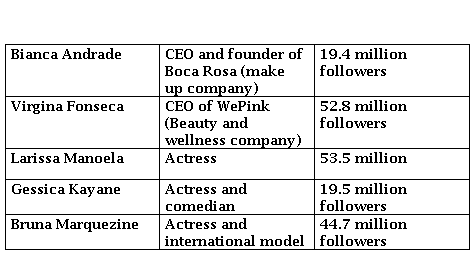
The qualitative content analysis was conducted on a curated selection of 25 posts from five Brazilian influencers (five posts from each account) with high engagement rates countrywide on Instagram. Only macro-influencers were included (those with over 1,000,000 followers; Table 1), and the accounts chosen embrace multiple niches e.g., beauty, fashion, and lifestyle, allowing the researcher to analyse content types that are more aligned with Instagram’s reward logic.
Influencers included in the data corpus, their professional status and number of followers as of August 2025
3.2. Data Collection and Sampling
To ensure the relevance and reliability of the data corpus, the sample was selected using clear inclusion criteria for both influencers and posts. Influencer selection criteria were as follows:
- 1. each influencer must have at least 1,000,000 followers to ensure high visibility and audience impact (macro-level reach);
- 2. their Instagram presence must be primarily visually driven, meaning their content focuses on body, beauty, and aesthetic trends (i.e., oriented toward visual self-representation);
- 3. selected influencers must represent different professional fields (e.g., lifestyle, music, acting, entertainment) to ensure cross-sector diversity within Brazilian digital culture.
Post selection criteria included:
- 1. posts must be recent, published between early 2024 and March 2025;
- 2. each post must contain an image or video in which the influencer is visibly present and cantered;
- 3. content must be representative of the influencer’s typical aesthetic and communication style;
- 4. posts must have generated a minimum threshold of audience engagement (e.g., likes and comments above the influencer’s average) to ensure relevance in the platform’s visual economy.
Regarding the posts selected inside each influencers’ account, the content was selected based on visual prominence, thematic variety, and engagement levels, aiming to capture both recurrent patterns and occasional variations in self-representation and audience response.
The dataset was gathered through manual data collection from public Instagram profiles and organized in a spreadsheet. Each selected post was archived and categorised based on predefined variables (refer to details in Section 3.3). All the matching, captions, hashtags, and relevant comments were also collected to contextualise audience engagement and make it possible to assess how followers interact with and bring strength to the discourse used by each influencer to portray their beauty and femininity. It is important to acknowledge that ethical considerations were followed, ensuring that only publicly available content was analysed.
3.3. Analytical Framework
3.3.1. Visual Semiotics and Content Analysis
The analytical process combined Barthes’s (1977) semiotics method for decoding visual signs with Krippendorff’s (2018) content analysis framework, applied to captions, hashtags, and comments. This dual-method approach allowed a systematic examination of both the visual and textual dimensions of influencer content, with a focus on how meaning is consumed and generated inside these accounts. The examination process considered how images function as signs that carry different connotations that can deliver different messages to those on the consumer side. To outline a more rigorous and systematic approach, each of the selected posts in the dataset was coded according to a detailed A–X variable structure (refer to the complete list below) that was created to support the comparative and thematic analysis of the posts. While not every variable listed below is directly explored in the results section, all were part of the initial coding process. The selective emphasis in the analysis reflects the thematic focus mentioned earlier, to match the purposes of this research.
The components of each post was interpreted using the following indicators:
-
A-E: Influencer’s name, link to the post, post date, post format;
-
(E): pose type - classification of the influencer’s body posture and assessment of whether the pose suggested confidence, sensuality, playfulness, etc.;
-
(F) skin exposure: measured on a scale from zero to three to assess the degree of body visibility and how much skin is shown (higher numbers were associated with higher objectification);
-
(G) focus on body area: coding of specific body parts that were visually emphasized, e.g., as abdomen, cleavage, hips, or legs;
-
(H) facial expression: assessment of emotional display and self-presentation through facial cues, e.g., neutral, seductive, smiling, playful, or serious;
-
(I) use of filter/editing : variable to dictate the use of digital enhancements, e.g., skin smoothing, vibrant colour filters, or professional retouching, and if these were used to create a hyperreal aesthetic;
-
(J) cultural symbols present: notes the appearance of culturally significant visual themes (e.g., carnival themes, beach settings, regional costumes) that may be connected to the overall Brazilian identity;
-
(K) aesthetic style: description of the overall visual styling of the image e.g., glamor, naturalism, minimalism, etc.
To complement the visual analysis, other variables were coded following the principles of qualitative content analysis (Krippendorff, 2018) such as post captions, hashtags, and audience comments. This additional step was included to better understand how influencers tend to frame their own content, how followers tend to engage with it, and how this engagement may be reinforcing objectification. Hence, the following variables were included:
-
(L-M) caption text and tone: captions were analysed for tone (e.g., self-celebratory, humorous, neutral, promotional, etc.) to help assess how influencers frame their self-image through words;
-
(N-O) hashtag use and brand mentions: included to understand how influencers align their visual content with wider brand strategies, beauty discourses, or promotional actions;
-
(P) self-objectification language: included to assess if captions explicitly or implicitly encouraged objectification through word choices or emojis that may collaborate to emphasise desirability or visual perfection.
In addition, audience engagement was also coded to assess how meaning is co-produced between informal producers and consumers, so the following variables were also added:
-
(Q-R) likes and comment count: quantitative indicators of audience reaction;
-
(S) comment tone: mainly categorised by themes e.g., admiration, sexualization, humor, critique, or emotional support.
Other additional interpretative categories allowed for deeper analytical examination, such as:
-
(T) audience objectification: used to evaluate how frequently the comment section included objectifying language or references to the influencer’s physical appearance;
-
(U) visual excess level: measured on a zero to three scale to capture the degree of each post in terms of hyper-visuality;
-
(V) empowerment indicator: included to qualitatively assess whether the post conveyed autonomy, agency, or empowerment, based on the shown body language, caption tone, and contextual cues;
-
(X) notes: open-ended field used to gather additional observations regarding context or patterns that required further explanation.
The aforementioned coding framework made it possible to not only compare influencers across similar metrics but also surface patterns related to digital aesthetics, body politics, and audience participation. By expanding traditional visual semiotics methods with this structured, multidimensional grid, the analysis could more accurately capture how objectification, cultural signification, and influencer performance operate within Brazil’s social media ecosystem. It is noteworthy that the coded categories draw on established literature in media and gender studies. Variables like skin exposure and body emphasis are informed by objectification theory (Fredrickson & Roberts, 1997) and visual media studies (Hatton & Trautner, 2011). The empowerment indicator builds on Gill’s (2008) work on postfeminist agency, and facial expression and pose types are adapted from Goffman’s (1979) framework on gender display. Furthermore, it is important to mention that, to ensure rigor despite the limited data size, multiple rounds of analysis were conducted to refine coding categories and minimize subjective bias.
4. Data Analysis
4.1.Contextualizing the Influencer Landscape
Brazil’s reputation has been long cultivated around its vibrant cultural identity, and mixed beauty ideals, features that have been amplified and later turned into a national commodity through social media (Jarrin, 2010). With one of the largest user bases in the world[1], Brazil is a growing hub for digital influence and an active player in the intersection of visual storytelling, lifestyle, and beauty politics, an environment especially populated by the growing number of influencers that are setting new trends in beauty and entertainment every day. The shift from content producers to trendsetters is accompanied by the tendency to rely on cultural symbols, embodied by influencers to produce content around beauty, desirability, femininity, and desirability (Abidin, 2016b).
The boom of online, profitable fame in Brazil has generated a saturated market that is now a place of competition for influencers that rely on their photos, poses, and appearances to generate not just attention, but also commercial partnerships and algorithmic and cultural relevance (Abidin, 2016a, 2016b). This context is populated by several “big names” that are known across the country, and the five most prominent women were selected to be the centre of the data corpus of this study. The names/accounts included in this analysis have substantial follower bases, high engagement levels, and consistent visual branding that emphasises their aesthetic strength, produced beauty, and curated excess. Each of the names selected offers a different entry point into the broader conversation around digital performance, online content, and (self) objectification. While not representative of all Brazilian influencer types, these five figures were chosen for their dominance in mainstream digital culture and their discourses around beauty, personal branding, and performative femininity.
Bianca Andrade currently (as of March 2025) holds almost 20,000,000 followers on Instagram. Popularly known as “Boca Rosa”, Bianca made herself famous on YouTube in the last decade and escalated her popularity by embracing popular topics such as beauty and health. She is now a businesswoman with her own makeup brand and one of Brazil’s biggest digital voices, often being referred to as an example due to her successful and profitable entrepreneurial trajectory and bold visual persona. Her online popularity is a bridge for big brand collaborations that she carries with sexualized and over-produced aesthetics, pointing out her dual role as both object and agent within the economy of influence. Her public image often fluctuates between empowerment and hyper-femininity, which makes her a solid example of the commonplace between self-objectification and professional ascension.
Virginia Fonseca, another influencer who is popular nationwide in Brazil, currently attracts over 53,000,000 followers on Instagram. Her content, despite relying heavily on her appearance, represents the contrasting archetype[2]of the blonde, Eurocentric beauty long idolized in Brazilian media (Pinho, 2006). Publications on her account are largely centred around motherhood, luxury consumption, and heteronormative family life, and she grounds all those themes in the same root: the spectacle of her body and physical appearance. Virginia frequently posts hyper-visual representations of her family's wealth and beauty and has successfully created a branded aesthetic around her surname. Her approach to self-objectification seems to merge sensuality and domesticity seamlessly.
Larissa Manoela is a Brazilian actress and singer with a younger fan base. Her public career started at five years old, so her base of followers is still densely populated by minors and kids, which might explain why she embodies a more transitional form of influence on Instagram. The content she posts to her 54,000,000 followers is curated to appeal to both teenage and adult audiences, creating a space where innocence and eroticization can co-exist. Her image management reflects the ups and downs of growing up in the public eye, with a particular point of attention on women expected to perform maturity and sensuality at the same time, as they become their grown selves. Larissa’s most-used online aesthetics subtly mimic older influencer archetypes in a “discrete” way.
Gessica Kayane, popularly known as “Gkay”, gained visibility producing comedic content, but as her popularity increased, she rebranded herself as a fashion-forward public figure. Her Instagram account has over 19,000,000 followers and is marked by theatrical excess transformations and bold fashion choices. She also often parodies or exaggerates beauty norms and brings spectacle into her publications that are heavily reliant on logics of body display and desirability, despite the comic relief that she attempts to produce.
Bruna Marquezine is a globally recognized actress and model who slowly transitioned into the influencer space. In the past years, she fed her 45,000,000 followers with a distinctly polished brand and curated content emphasizing elegance and international appeal. Bruna’s content deviates slightly from the hyper-sexualized trend followed by other popular content creators in Brazil, as she relies more on collaborations with luxury brands that direct her body usage in photos. In addition, Bruna keeps a strategic silence on her personal life, which has turned her into a symbol of unattainable beauty and an image of online beauty mixed with restraint. In her specific case, self-objectification might be manifesting based on subtlety and sophistication that together create a sense of illusion around her “natural” beauty.
These five female influencers can exemplify different nuances of Brazilian digital femininity and their content ranges from aspirational and timid to comedic and bold. The point of unification of these popular figures is their trust and reliance on visual storytelling strategies to sustain their personal brands that are always foregrounded on the body, even when framed through different and complementary narratives, e.g., entrepreneurship, fashion, or career empowerment. These influencers’ talent to generate attention and emotional investment from their followers is sustained by aesthetic excess and sensuality, which might prove their awareness of how Instagram rewards them with visibility if they use their feminine aesthetics to generate the visual spectacle expected by the platform.
By analysing their content across selected posts, the analysis presented below unpacks how objectification is normalised and somehow negotiated within members of the Brazilian digital environment. Results from the analysis show that these influencers are far from being passive recipients. Instead, they actively shape and respond to the online stores, creating portrayals that reinforce objectifying norms in different stances.
4.2. Thematic Analysis of Influencer Content
4.2.1. Bodily Exposure and Strategic Posing
The images selected as part of this study’s dataset show that bodily exposure is not incidental. Influencer performance motions around the exposure of different body parts, particularly the abdomen, breasts, and legs. This combination was shown in 39 of the 50 posts included in this discussion. However, the visuals of the selected posts also show that exposure is highly controlled and framed through posing techniques that can vary from one content to another. For instance, Virginia Fonseca and Bruna Marquezine seem to be more familiar with the hip-swaying pose or the hand-on-hip position that elongates their silhouettes and suggests a level of sensuality without explicit nudity. On the other hand, Larissa Manoela, who is more reserved because of her public, replicates these “popular rules” through more frontal stances with arched backs, embracing dominant aesthetic norms that are less revealing, such as high-waisted outfits and styles based on soft colour palettes that suggest a more modest approach, while still aligning with beauty expectations.
Differently, Gessica Kayane offers a more playful version of body posing and relies on exaggerated versions of traditional poses with an added comedic flair. Her facial expressions are accompanied by over-the-top gestures but despite the diversification attempt, her body remains the centre of her highly stylised and performative content. Bianca Andrade tends to be more assertive in poses that emphasise her abdomen and chest and combines exposed clothing with a confident gaze to communicate her sexual, financial, and brand autonomy.
The data collected for this analysis also showed that the alignment between bodily exposure and strategic posing is a bridge that connects self-expression and the need to embrace the pressures of performative femininity on Instagram to make a profit and/or achieve success. Influencers actively compose their bodies in ways that invite engagement because they know the return they will have if they align themselves with the platform logic that will reward their visibility and exposure in other ways.
4.2.2. Fashion and Excessive Aesthetics
Another common pattern that surfaces in the dataset is the use of staged and visually excessive aesthetics, e.g., rhinestones, glitter, reflective gear, elaborate props, and artificial lighting. These features dominate many of the photo compositions that were collected and are apparently used to create a hyperreal presentation of femininity. Influencers like Gessica Kayane and Bianca Andrade epitomize this excess. In one post, Gkay presents herself wearing a crystal-threaded ensemble paired with dramatic eye makeup and heavy jewelry. From the consumer side, the combination produces a surreal sense of exaggeration that relies on her feminine glamour. Similarly, Bianca’s Carnival-inspired looks are heavy on metallic body suits and saturated colours, inviting the consumer to get lost between her real body and her fake costume.
In the case of Bruna Marquezine, who tends to reproduce a more minimalist aesthetic, her type of visual excess happens through immaculate lighting, high-resolution images, and productions with props and fashion items that show luxury and exclusivity. Her sleek makeup and styling do not place her as a figure escaping the perfectionist culture perpetuated on Instagram. Instead, her timid yet bold style shows as an attempt to rebrand excess into effortlessness. The visual hyperbole that is part of the content produced by these female influencers is proof of how unstoppable the spectacle of beauty is on Instagram. In this open-space environment, their bodies are displayed and stylized to the point of desirability, and achieving such a state is in perfect alliance with the core of the influencer economy. The economic gains of this self-based spectacle seem to be inseparable from aesthetic labour and a constant pursuit of visual popularization for the sake of economic advantage.
Furthermore, when it comes to fashion, influencers are openly using it and relying on it to sustain their narrative and to promote their branded character. Commonly, costumes associated with Carnival or fantasy-like scenarios (e.g., Cleopatra-inspired fashion) are used to tell visual stories that bridge Brazilian cultural features — and the power of these influencers’ motherland — with global trends. For instance, Virginia’s wardrobe is heavy on white, gold, and pink, colours that can be semiotically associated with purity and luxury (Heller, 2009). Her choice of colours for fashion is associated with her personal branding as a young mother and aspirational figure.
When analysing Bianca Andrade’s outfits, it became clear that she opts for a bolder, more maximalist style that can communicate her strong, yet traditional femininity and also her business-savvy mind and trajectory. In contrast, Larissa Manoela’s costumes represent a timid sensation of age transition, dialoguing with her personal trajectory of going from teenage stardom to adult womanhood in front of everybody’s eyes.
Among these influencers, Bruna Marquezine has a restrained style in terms of overt costume. However, she still relies on fashion to communicate her elegance and curated rebellion. Her posts often include high-fashion evening outfits, cut-out dresses, and nostalgic clothing aesthetics. Her style is made to appear effortless but is still saturated with very intentional stylistic moves. All the five figures included in this research use fashion to enhance appearance, as is obvious on Instagram’s visuals. On top of that, they also seem to be using fashion to build their layered identities within an economy that rewards how novel and consistent they are regarding their personal brands and styles.
4.2.3. Audience, Engagement, and the “Compliment” Economy
Another core dimension of objectification was identified in the comment sections of the posts analysed. Most of the captions used by these influencers tend to tackle simple communication of empowerment, symbolism (mostly done through emoji use), and references to brand partnerships. On the complete opposite side, the comments mostly revolve around physical appearance. Words such as "perfeita", "deusa", and "maravilhosa" (in direct English translation, perfect, goddess, gorgeous) accompanied by fire, in-love, and explosion emojis appear with high frequency across all influencers. In Bruna’s and Virginia’s posts for example, comments like "a barriga dos sonhos" (belly of my dreams) or "corpo perfeito" (the perfect body) highlight how audiences frame influencers as visual ideals that are consumer far from the lens of their multidimensional individuality.
At times, audience reaction comes across as merely celebratory; at others, it can be interpreted as objectifying or intrusive. Comments such as “tá muito magrinha” (you are too skinny), “será que está de calcinha?” (Is she wearing underwear?) or comparisons with other women (e.g., "Virginia te invejou com esse vestido"/ Virginia is jealous of you in this dress) reveal how often followers feel entitled and comfortable to comment on women’s bodies, police their physical appearance, and give their open thoughts on how these content producers choose to portray their femininity and desirability. The analysis results showed that most of the supportive comments often emphasise the physical body as the primary site of value.
Interestingly, influencers rarely respond to these comments, which shows that despite their popularity, they prioritise maintaining a curated distance that sustains an idea of unattainability. It can be inferred that the reciprocity based on silence might be reinforcing the influencer-audience power dynamic; that is, from one side, the influencer (producer) provides aesthetic pleasure, while on the other side, the audience (consumer) reciprocates through validation, likes, and textual praise, reinforcing the dynamics of Instagram’s objectifying gaze.
Together, the themes and trends identified in the data analysis prove that the picture of how objectification is performed, reinforced, and negotiated in Brazilian influencer culture is quite complex. The above-mentioned findings suggest that although influencers work to present themselves as empowered agents of their self-images, the structures they operate within continue to privilege the display of their body, as well as comment/consumer validation and continuous aesthetic excess. In the next section, these insights will be theoretically unpacked to discuss the broader implications of digital objectification on Instagram.
5. Discussion
5.1. The Nuanced Politics of Self-Visibility, Empowerment, and Algorithms
Data from the analysis showed that all five influencers consistently engaged in a performance of curated visibility that embraced dominant beauty standards. However, the way each woman chooses to do this varies from context to context. Bianca Andrade and Virginia Fonseca, for instance, embraced hypervisibility through very stylised content that put their physical attributes in the spotlight. This behaviour aligns with what Banet-Weiser (2018) called the "economy of visibility", where being seen is the core value followed by creators on social media platforms. However, this visibility has a downside, which is allowing objectification to become both a commodity and a condition for staying relevant in the environment.
As mentioned above, Bruna Marquezine relies on a form of self-representation based on curated minimalism that maintains high aesthetic value and falls a bit distant from overt hypersexualisation. However, even in her more restrained posts, objectifying comments are constantly happening. This context is in line with Fraser’s (1990) paradox of visibility which claims that to be visible is to be consumed. His notions of female autonomy are focused on the idea that women inevitably navigate dominant discourse spaces with limited autonomy, and this is why they must rely on overperformed femininity to achieve or maintain influence. This context is a solid example of objectification theory in digital environments, where the digital gaze is sustained by both viewers and platform logic. In turn, this dynamic strengthens the tendency of putting the female body up for surveillance and evaluation, regardless of how the subject chooses to frame herself (Fredrickson & Roberts, 1997).
Furthermore, the analysis also revealed that influencers produce content around a highly aestheticised, tropical, and sensual version of Brazilian femininity. These portrayals go beyond their personal expressions and become products that are algorithmically rewarded inside the platform, which is a great example of platform capitalism. Gill’s (2007) views on Instagram’s monetisation is that it encourages a culture where hyper-visual or emotional content with a focus on the self (and the body) brings more return to the content producer, a theory that seems to be sustaining the way these influencers reinforce their own cycle of self-objectification for performance. This directly connects to the culture of excess, a concept central to this research’s theoretical lens: through visual amplification, the female body becomes a spectacle. In the case of Gessica Kayane’s content, for example, this is particularly true as she reproduced a multifaceted approach to cultural excess that combines humour, sexuality, and costume-like aesthetics (e.g., Carnival, cowboy, or beach tropes). These choices exemplify what Silva (2021) describes as the “spectacularization of the self”, a condition where exaggerated self-performance becomes normal and a requirement to maintain visibility, almost as if it was impossible to remain seen without joining the spectacle. In some of the posts analysed in this study, the body functions as an affective trigger and commercial commodity, mixing sexual appeal, national identity, and social currency to achieve the “perfect” aesthetic framework. The reward to those who unlock this achievement is the amplified celebration in the online community.
If Instagram’s platform logic relies on engagement, virality, and visibility, producing posts that align with the algorithm’s understanding of value is the way to achieve success within this context. Value seems to be attained, in many cases, through sensuality, beauty, and spectacle, so the Brazilian body, especially the female body, becomes a type of digital capital, as posited by Hu & Cheong (2021). It is noteworthy that tension emerged in the data between algorithmic conformity and perceived empowerment. Although many captions written by these influencers relied on self-assured or humorous tones, which may be pointing out to a sense of autonomy far from objectification (e.g., “orange is the new black”; “my favourite snow look”), the reactions on comments sections showed that audience barely engaged with this discursive framing, and continued to focus instead on body-based objectification (e.g., “gostosa”, “zero gordura”, “a perfeição”/“hottie”, “zero fat”, “perfection”). This reflects Banet-Weiser’s (2018) critique of “popular feminism” and the notion that empowerment becomes a performative rather than transformative act in this shift. While some influencers may attempt to reframe their content through self-irony or defying lenses, audience participation brings them back to the traditional roles they played for a long. Recent scholarship has strengthened the discussion around the empowerment discourse happening in the era of digital capitalism through the lens of a phenomenon called “market feminism”. This concept was proposed by Januário (2021) and is rooted in robust debates around intersectional feminism (Collins & Bilge, 2021; Crenshaw, 1989). It explains that feminist imagery and language can be adopted strategically to follow market logic, shadowing the political strength of the movement. On Instagram, influencers may perform gendered identities that they frame as empowerment, but the reality is that their visual content remains dependable on the commercial partnerships and aesthetics that they embrace because they reinforce consumption and consequently, profit.
This duality shows how empowerment may have gone through a rebranding process where it is no longer associated with resistance but with monetizable aesthetics. Specifically in the Brazilian context, this commodification intersects with historical issues of racism and representation. Akotirene (2019) and Carneiro (2023) surfaced that influencers are promoting a commodified feminist discourse and disregarding the racialized foundations behind the beauty norms followed nowadays in Brazilian culture.
The Eurocentric beauty standards currently amplified by Instagram’s algorithm are rooted in a long history of symbolic validation that links whiteness and affluence to ideals of attractiveness. Even when empowerment messages are evident, they often reflect what Moreno (2008) calls a “beleza impossível” (the impossible beauty), that is, an unattainable ideal that was formed by navigating racial and gendered hierarchies.
Therefore, the relation with empowerment in influencer content needs to be seen through critical leans that do not label this type of content as genuine feminist expressions. It would be more accurate to perceive them as expressions of market feminism, where the language of choice, agency, and self-love becomes part of a structure that is there to lead to brand expansion and, ultimately, to profit. This creates a paradox in which feminism becomes aesthetically obvious but politically shadowed, matching what Banet-Weiser (2018) refers to as “popular feminism”.
Furthermore, the affective economy of Instagram rewards emotional stimulation over ideological nuance, so empowerment becomes crucial only when and if paired with visual desirability. This also resonates with Arendt’s (1958) concept of the "space of appearance" and her notion that public personas are shaped through interaction. On Instagram, however, the space where this happens is asymmetrical by default, so the influencer presents herself to an audience whose feedback loops are charged with emotion, but very unequal. Trapped in this loop, personal agency can exist, but it is heavily linked to the platform’s engagement metrics.
5.2. Platformed Stereotypes and the Limits of Resistance
Finally, the data revealed a solid persistence of platformed stereotypes that form expectations around Brazilian femininity. Influencers who deviate from the expected (e.g., Bruna Marquezine's more introspective style) still have a chance of being interpreted through the lens of beauty and exoticism. However, in most cases, comments ignore intention, and users project meanings that are not necessarily in line with the producer’s backlog ideas for that post, suggesting that Instagram and interactions on the platform are acting as stereotype amplifiers. This finding is in line with Noble’s (2018) theory on the existence of algorithms of oppression, which argues that the platform’s rules intensify preexisting social hierarchies and gendered norms. So, even when influencers try to resist or reframe the way they represent themselves on Instagram, the algorithm moves them back to being trapped in the cycle of self-representation that prioritises the body as a consumable object.
In such a context, resistance is possible but very limited. Some influencers, particularly Bruna, strategically avoid overexposure, and others like Gessica incorporate humour or irony as a distancing device. Despite the attempts, the affective labour required to remain relevant in the algorithmic scene while running away from full self-commodification creates a double bind.
6. Conclusions and Final Reflections
This study was designed to examine how Brazilian influencers how Brazilian influencers navigate identity, objectification, and digital aesthetics on Instagram within a broader culture of excess. By analysing visual and textual content, the data showed how self-representation on the platform can simultaneously reinforce and resist dominant beauty ideals, confirming Instagram’s dual nature as a space of both empowerment and commodification. Through a detailed visual and textual analysis of 25 posts from five high-profile influencers, the analysis here highlighted patterns of performative femininity, audience-driven objectification, and the intersection of beauty and platformisation. The outcomes demonstrate how influencer content is trapped between waves of empowerment and commodification that reinforce the existence of normative ideals through self-branding accompanied by strategy and curated visuals.
It is important to note that while the methodology followed in this study provides a rich, qualitative exploration of objectification on Instagram, the scope of the proposed research comes with limitations. Since the focus here is only on a specific subset of influencers, the findings are not meant to be generalizable to all Brazilian Instagram users. Also, since Instagram’s algorithm is constantly evolving, engagement and visibility patterns around influencer content change over time, and these changes cannot be fully addressed in this paper due to the limited time to complete the experiment execution. No direct user perspectives about the subject under study were included as part of the data used in this analysis, as the audience engagement variables were based only on textual comments inside Instagram (while likes were recorded as supporting quantitative indicators, they were not central to the interpretative process). However, despite these limitations, the study design was successful in adding a critical and timely contribution to the scholarly dialogue around the intersection of Brazilian beauty ideals, self-objectification, and digital excess in today’s social media landscape.
To amplify the scope of this research, it is expected that future follow-up studies benefit from expanding the sample to include micro- and nano-influencers, integrating ethnographic approaches, or examining algorithmic amplification mechanisms that may directly impact visibility and engagement inside Instagram. A comparative study across regions, racial identities, and platforms would also deepen the understanding of how objectification and digital identity operate within Brazil’s media landscape and may be part of future endeavours related to the content presented here.
Ultimately, this study is an experimental contribution to the growing literature on digital self-representation, platformisation, and algorithm economy. Further exploration is encouraged and welcomed to add to the discussion of how beauty, belonging, and visibility are built within platform economies that function around attention, personal aspiration, and excess.
References
Abidin, C. (2016a). Internet celebrity: Understanding fame online. Emerald Publishing.
Abidin, C. (2016b). Visibility labor: Engaging with influencers’ fashion brands and #OOTD advertorial campaigns on Instagram. Media International Australia, 161(1), 86–100. https://doi.org/10.1177/1329878X16665177
Akotirene, C. (2019). Interseccionalidade. Pólen Produção Editorial.
Arendt, H. (1958). The human condition. University of Chicago Press.
Banet-Weiser, S. (2018). Empowered: Popular feminism and popular misogyny. Duke University Press.
Barthes, R.(1977). Image, music, text. The Journal of Aesthetics and Art Criticism, 37, 220.
Baudrillard, J. (1994). Simulacra and simulation (S. F. Glaser, Trans.). University of Michigan Press. (Original work published 1981)
Bourdieu, P. (1984). Distinction: A social critique of the judgement of taste (R. Nice, Trans.). Harvard University Press. (Original work published 1973)
Calogero, R. M., Tantleff-Dunn, S., & Thompson, J. K. (Eds.). (2011). Self-objectification in women: Causes, consequences, and counteractions. American Psychological Association.
Carneiro, S. (2023). Dispositivo de racialidade: A construção do outro como não ser como fundamento do ser. Editora Schwarcz – Companhia das Letras.
Collins, P. H., & Bilge, S. (2021). Intersectionality (2nd ed.). Polity Press.
Cotter, K. (2019). Playing the visibility game: How digital influencers and algorithms negotiate influence on Instagram. New Media & Society, 21(4), 895–913. https://doi.org/10.1177/1461444818815684
Crenshaw, K. (1989). Demarginalizing the intersection of race and sex: A Black feminist critique of antidiscrimination doctrine, feminist theory, and antiracist politics. University of Chicago Legal Forum, 1989(1), 139–167. https://chicagounbound.uchicago.edu/uclf/vol1989/iss1/8/
Duffy, B. E. (2017). (Not) getting paid to do what you love: Gender, social media, and aspirational work. Yale University Press.
Duffy, B. E., & Hund, E. (2019). Gendered visibility on social media: Navigating Instagram’s authenticity bind. International Journal of Communication, 13, 4983–5002. https://ijoc.org/index.php/ijoc/article/view/11729/2821
Dyer, R. (1993). The matter of images: Essays on representations. Routledge.
Edmonds, A. (2010). Pretty modern: Beauty, sex, and plastic surgery in Brazil. Duke University Press.
Fraser, N. (1990). Rethinking the public sphere: A contribution to the critique of actually existing democracy. Social Text, (25/26), 56–80. https://doi.org/10.2307/466240
Fredrickson, B. L., & Roberts, T. A. (1997). Objectification theory: Toward understanding women’s lived experiences and mental health risks.” Psychology of Women Quarterly, 21(2), 173–206. https://doi.org/10.1111/j.1471-6402.1997.tb00108.x
Gill, R. (2007). Gender and the media. Polity Press.
Gill, R. (2008). Empowerment/sexism: Figuring female sexual agency in contemporary advertising. Feminism & Psychology, 18(1), 35-60. https://doi.org/10.1177/0959353507084950
Gill, R. (2017). The affective, cultural and psychic life of postfeminism: A postfeminist sensibility 10 years on. European Journal of Cultural Studies, 20(6), 606–626. https://doi.org/10.1177/1367549417733003
Goffman, E. (1979). Gender advertisements. Red Globe Press London.
Goldstein, D. (2003). Laughter out of place: Race, class, violence, and sexuality in a Rio shantytown. University of California Press.
Hall, S. (1997). Representation: Cultural representations and signifying practices. Sage.
Hatton, E., & Trautner, M. N. (2011). Equal opportunity objectification? The sexualization of men and women on the cover of Rolling Stone. Sexuality & Culture, 15(3), 256-278. https://doi.org/10.1007/s12119-011-9093-2
Hu, Q., & Cheong, P. H. (2021). Understanding digital generations: Social media habitus and capital. International Journal of Communication, 15, 4505–4527.
Heller, E. (2009). Psychologie de la couleur: Effets et symboliques. Pyramid.
Januário, S. B. (2021). Feminismo de mercado: Um mapeamento do debate entre feminismos e consumo. Cadernos Pagu, (61), Article e216112. https://doi.org/10.1590/18094449202100610012
Jarrín, A. (2010). Cosmetic citizenship: Beauty, affect and inequality in southeastern Brazil. Duke University.
Jarrín, A. (2018). The biopolitics of beauty: Cosmetic citizenship and affective capital in Brazil. University of California Press.
Jung, C. G. (1959). The archetypes and the collective unconscious (R. F. C. Hull, Trans.). Princeton University Press.
Krippendorff, K. (2018). Content analysis: An introduction to its methodology (4th ed.). SAGE Publications.
Marwick, A. (2015a). Instafame: Luxury selfies in the attention economy. Public Culture, 27(1 75), 137–160. https://doi.org/10.1215/08992363-2798379
Marwick, A. (2015b). Status update: Celebrity, publicity, and branding in the social media age. Yale University Press.
Moreno, R. (2008). A beleza impossível: Mulher, mídia e consumo. Editora Ágora.
Mulvey, L. (1975). Visual pleasure and narrative cinema. Screen, 16(3), 6–18. https://doi.org/10.1093/screen/16.3.6
Noble, S. U. (2018). Algorithms of oppression: How search engines reinforce racism. NYU Press.
Pinho, P. S. (2006). Mama Africa: Reinventing blackness in Bahia. Duke University Press.
Poell, T., Nieborg, D. B., & van Dijck, J. (2019). Platformization. Internet Policy Review, 8(4), 1–13. https://doi.org/10.14763/2019.4.1425
Silva, T. T. (2021). A espetacularização de si nas redes sociais: Cultura digital, feminilidade e performatividade. Revista Famecos, 28(1), Article e40659. https://doi.org/10.15448/1980-3729.2021.1.40659
Statista. (2025). Countries with the most Instagram users 2023. Retrieved March 30, 2025, from https://www.statista.com/statistics/578364/countries-with-most-instagram-users/
Notes
Notas de autor
Información adicional
redalyc-journal-id: 7747
