Technological Article
Received: 29 July 2024
Revised document received: 17 October 2024
Accepted: 04 December 2024
Published: 14 March 2025
DOI: https://doi.org/10.1590/1982-7849rac2025240218.en
Funding
Funding source: Fundação Norte-Rio-Grandense de Pesquisa e Cultura
Contract number: 552023
Funding statement: The authors thank to the Fundação Norte-Rio-Grandense de Pesquisa e Cultura (FUNPEC) for the support through the project Project 552023.
ABSTRACT
Objective: training for sustainable practices can mitigate the environmental impacts of expanding production systems. Brazil, a leader in agriculture, is a favorable setting for this type of training. Recently, it included entrepreneurship education (EE) in the National Common Curricular Base (BNCC). Thus, there is an opportunity to integrate the teaching of sustainable entrepreneurship with innovative approaches, such as gamification. From this perspective, the literature highlights two main problems: (I) the lack of a gamified tool for teaching sustainable entrepreneurship in Brazil that considers local elements such as biomes and geographical characteristics; and (II) the scarcity of gamified approaches in EE in high school. This article presents the proposed gamified simulation called EcoFarming, a multiplayer web platform aimed at the high school context, simulating entrepreneurship and sustainable agricultural management in Brazil.
Method: the study followed the methodological steps of design science research (DSR), including the design, ideation, and conceptual model of the game.
Results: in summary, the resulting prototype considers that players will make decisions for the creation and management of an agricultural enterprise, integrating dynamics based on the Brazilian context, its different biomes, and specific environmental conditions of the country.
Conclusions: the article presents opportunities for future studies and recommendations. Its application in the educational context has the potential to increase awareness among students and professionals, empowering them to adopt attitudes aligned with the Sustainable Development Goals (SDGs): 2 (Zero Hunger and Sustainable Agriculture), 7 (Affordable and Clean Energy), 12 (Responsible Consumption and Production), and 13 (Climate Action).
Keywords: Gamification, entrepreneurship education, sustainable development, energy transition, sustainable agricultural economy.
RESUMO
Objetivo: a capacitação para práticas sustentáveis pode mitigar os impactos ambientais da expansão dos sistemas de produção. O Brasil, destaque na agropecuária, é um cenário propício para esse tipo de formação. Recentemente, incluiu a educação para o empreendedorismo (EE) na Base Nacional Comum Curricular (BNCC). Assim, há uma oportunidade de integrar o ensino de empreendedorismo sustentável com abordagens inovadoras, como a gamificação. Nessa perspectiva, a literatura aponta dois problemas principais: (I) a falta de uma ferramenta gamificada para o ensino de empreendedorismo sustentável no Brasil, que considere elementos locais como biomas e características geográficas; e (II) a escassez de abordagens gamificadas na EE no ensino médio. Este artigo propõe a simulação gamificada denominada EcoFarming, uma plataforma web multijogador, direcionada ao contexto do ensino médio, que simula empreendedorismo e gestão agropecuária sustentável no Brasil.
Método: o estudo seguiu as etapas metodológicas do design science research (DSR), incluindo a concepção, ideação e modelo conceitual do jogo.
Resultados: o protótipo resultante considera que os jogadores tomarão decisões para criação e gestão de um empreendimento agropecuário, integrando dinâmicas baseadas no contexto brasileiro, seus diferentes biomas e condições ambientais específicas do país.
Conclusões: o artigo apresenta oportunidades para estudos futuros e recomendações. Sua aplicação no contexto educacional tem o potencial de aumentar a sensibilização de estudantes e profissionais, capacitando-os a adotar atitudes alinhadas aos Objetivos de Desenvolvimento Sustentável (ODSs): 2 (fome zero e agricultura sustentável), 7 (energia limpa e acessível), 12 (consumo e produção sustentáveis) e 13 (ação contra a mudança global do clima).
Palavras-chave: Gamificação, ensino de empreendedorismo, desenvolvimento sustentável, transição energética, economia agrícola sustentável.
INTRODUCTION
Global population growth has driven the demand for food and energy, fostering a transformation in agri-food systems. In this context, the agribusiness sector stands out globally, not only for its role in economic development, but also, especially, for its influence on socio-environmental issues and food security (Basso et al., 2024; Oberoi et al., 2023). Furthermore, Brazil’s agricultural production potential is noteworthy, as the country is projected to become the world’s leading exporter as of 2024 (Empresa Brasileira de Pesquisa Agropecuária [EMBRAPA], 2024).
According to estimates from the United Nations Food and Agriculture Organization (FAO) and the Brazilian Agricultural Research Corporation (EMBRAPA), the global population is projected to reach 8.6 billion by 2030 and approximately 9.7 billion by 2050 (United Nations/Organização das Nações Unidas [ONU], 2022). Thus, agribusiness is responsible for sustainably meeting the growing demand for food. In contrast, to achieve the goal of developing an inclusive, sustainable, and resilient agribusiness sector, it is essential to recognize the importance of individual capacity building (FAO, 2024), fostering innovation in the educational system to enhance knowledge transfer and skill development in this field (Santos et al., 2024; Khademi-Vidra et al., 2024; Xu et al., 2023).
From this perspective, the lack of training may compromise compliance with social and environmental requirements in production systems (FAO, 2024). This argument becomes even more evident when considering the several ways to qualify individuals, ranging from continuous training programs to debates and awareness initiatives. Without proper training, an individual may be motivated to act sustainably but lack the necessary knowledge to apply best practices. Therefore, it is crucial to develop teaching and learning programs that simulate agricultural and livestock production while considering the challenges inherent in these activities (Santos et al., 2024).
One way to contribute to this training is to strategically enhance entrepreneurship education (EE) programs, with a focus on agribusiness and sustainable practices (Paredes-Rodríguez et al., 2023; Strousopoulos et al., 2023; Torralba-Burrial & Dopico, 2023), aiming to prepare students, future professionals, and entrepreneurs in the field to address the scarcity of natural resources (Melo & Soares, 2024; Melo et al., 2023). The Brazilian context is particularly favorable for addressing this topic, as the country stands out in agricultural and livestock production. Moreover, with the recent inclusion of entrepreneurship education (EE) in the National Common Curricular Base (BNCC) (Brasil, 2018; Lei no. 14.945, 2024), there is an opportunity to integrate EE with an emphasis on environmental issues. This reinforces the need to develop new methodological approaches for its implementation, particularly tailored to young high school students.
In this context, three strategies stand out for bridging classroom learning with real-world situations: games, simulations, and gamification. According to Kapp (2013) and Boller and Kapp (2018), these three concepts coexist but are not synonymous. Games can be classified into categories focused on entertainment and enjoyment (entertainment games), knowledge creation, learning, and skill development (serious games), as well as simulations, which recreate real-life situations. Simulation, therefore, is a category of games whose primary objective is the recreation of realities. Additionally, gamification involves applying game elements in non-game contexts, such as education (Boller & Kapp, 2018; Kapp, 2013).
Gamification has been widely used in entrepreneurship education in general, and some studies highlight opportunities for its application in agribusiness education (Kovács et al., 2021; Oberoi et al., 2023), demonstrating increased student motivation and engagement (Langendahl et al., 2017). Additionally, the use of games has been shown to foster the development of strategic thinking and decision-making in beekeeping practices (Strousopoulos et al., 2023), as well as raise awareness about sustainable fishing (Huang et al., 2020; Khademi-Vidra et al., 2024; Paredes-Rodríguez et al., 2023; Torralba-Burrial & Dopico, 2023).
In summary, gamified approaches in entrepreneurship education, particularly those focused on agriculture or livestock, may face limitations in the selection of tools used. For instance, some business games or simulations tend to address generic themes, disregarding local socioeconomic and environmental aspects (Hernandez-Aguilera et al., 2020; Torralba-Burrial & Dopico, 2023; Xu et al., 2023). Although the educational objectives of gamification should align with the Sustainable Development Goals (SDGs), this is not always reflected in the dynamics of these activities (Huang et al., 2020; Khademi-Vidra et al., 2024; Paredes-Rodríguez et al., 2023; Torralba-Burrial & Dopico, 2023). Furthermore, the literature highlights a scarcity of gamification applications in secondary education, with a predominance of approaches aimed at higher education (Faisal et al., 2022; Soares et al., 2024; Talukder et al., 2024).
Based on the foregoing, the research problem lies at the intersection of two main dimensions: (I) the challenge of finding an effective gamified tool for teaching sustainable entrepreneurship in Brazil, one that adequately addresses specific elements of the local context, such as biomes and geographical characteristics; and (II) the scarcity of gamified approaches aimed at entrepreneurship education (EE) in secondary education. Thus, this article aims to propose and present a gamified simulation titled EcoFarming. This multiplayer web-based tool is designed for high school students and seeks to simulate entrepreneurship and sustainable agribusiness management within the Brazilian context. To achieve this, the study adopted the methodological stages of design science research (DSR), covering the conception, ideation, and conceptual model of the game. The performance metric used in EcoFarming’s dynamics will be the clean economy index (CEI), a composite indicator that optimizes revenue generation while ensuring compliance with operational sustainability goals.
When developing a learning technology based on gamification, it is essential to recognize commonalities between games (entertainment, serious games, and simulations) and gamification. Thus, the central purpose of this proposal is educational/instructional (as in serious games) while incorporating elements of fun to make the process more engaging and enjoyable (a characteristic of entertainment games), along with reality simulation (Boller & Kapp, 2018). Therefore, when referring to a ‘gamified simulation,’ this study proposes a simulation of real-life scenarios involving the creation and management of sustainable entrepreneurship. However, its scope goes beyond merely replicating reality, as it integrates game elements such as challenges, rules, feedback, scoring, rewards, and levels to enrich educational activities, engage and motivate students, and enhance their skills, thereby characterizing it as gamification.
It is worth noting that by targeting high school education within the Brazilian context, this study has the potential to contribute to the cross-curricular approach emphasized by the National Common Curricular Base (BNCC), fostering the integration of contemporary topics such as sustainable development. In this sense, the gamified simulation, adapted to the local context, is based on the premise that entrepreneurship education can create value for young individuals even before they enter higher education (Lackéus, 2018). Additionally, the focus on Brazilian biomes as a key element of the EcoFarming proposal is supported by the literature, as it facilitates the contextualization and application of content, preventing the use of examples and scenarios that are distant from the participants’ reality (Lackéus, 2018; Pombo Menezes et al., 2024).
This paper reinforces the need to dissociate entrepreneurship education (EE) from a purely capitalist ideal, as it is not limited to fostering skills for business creation. According to the National Common Curricular Base (BNCC), the objective is to support young people in recognizing their entrepreneurial potential and vocations, allowing them to “identify perspectives and possibilities, build aspirations and goals for present and/or future education and professional integration” (Brasil, 2018, p. 466). Thus, it contributes to the development of more creative and innovative individuals, capable of facing the new challenges of the world (Lackéus, 2018).
Although some studies criticize entrepreneurship education (EE), viewing it as “a new work order that shifts focus away from rights and job stability, reduces business costs, and favors big capital” (Costa & Caetano, 2021, p. 21), this proposal aligns with Lackéus (2018) perspective and acknowledges the relevance of the topic at various societal levels. It highlights that the effectiveness of entrepreneurship education goes beyond job creation, as it can help empower young people to apply their knowledge in addressing socio-environmental challenges.
The consolidation of the EcoFarming simulation presents technological and social contributions and can be justified for several reasons. First, by leveraging the potential of digital technologies to develop gamification-based educational tools, this application can assist in training a new generation of individuals for the Brazilian agribusiness sector. These individuals would be prepared to tackle global challenges such as the environmental crisis and pursue long-term sustainability through responsible production practices. This justification aligns with the agenda of the United Nations Food and Agriculture Organization (FAO), which emphasizes that eradicating hunger and poverty is not possible without empowering men and women in agri-food systems (FAO, 2024).
Finally, another key contribution of this proposal is that the gamified simulation prototype incorporates elements overlooked in previous approaches. These include a narrative centered on decision-making that requires good practices and reflection on the environmental impacts of agribusiness expansion, as well as the integration of dynamics based on the Brazilian context, its diverse biomes, and the country’s specific environmental conditions. From a theoretical perspective, this article contributes to expanding academic discussions on the potential of gamification in teaching sustainable practices in agribusiness. The next stages of EcoFarming’s development and its application in entrepreneurship education, with a focus on Brazilian agribusiness, may encourage future empirical studies, involving experiments that seek to understand the causal relationships between gamified approaches, perceptions of sustainability practices, and entrepreneurial behavior - considering agricultural production not in isolation but as integrated with the demands of other economic sectors.
GAMIFICATION IN ENTREPRENEURSHIP EDUCATION (EE)
In recent years, gamification has been increasingly employed for educational purposes, leveraging the potential of game dynamics and elements in academic settings (Isabelle, 2020). This approach aims to make the teaching-learning process more engaging and interactive (Fox et al., 2018; Chen, Albert et al., 2022; Chen, Tang et al., 2022), complementing traditional methodologies (theoretical classes) and enhancing student participation and engagement across various fields of knowledge (Lyons et al., 2023; Zulfiqar et al., 2019).
Regarding the theoretical foundations of gamification, several theories help explain the outcomes observed in gamified approaches, notably flow theory (Csikszentmihalyi, 1990) and self-determination theory (SDT) (Deci & Ryan, 2000). In this context, flow theory is applied in gamified education to illustrate how a mental state can lead to more enjoyable and engaging learning experiences (Melo & Soares, 2024). When students are deeply engaged in a task, they experience increased motivation, autonomy, and a desire to persist, which can be explained by the concept of flow (Csikszentmihalyi, 1990). Thus, flow can help account for students’ satisfaction and participation levels when using games in the classroom (Fox et al., 2018; Liu & Wang, 2019).
To understand human motivation, it is essential to consider psychological needs such as autonomy, competence, and social connection, as highlighted by self-determination theory (Deci & Ryan, 2000). From this perspective, immersion in a gamified simulation is linked to competence, as it presents challenges, achievements, mistakes, successes, and growth opportunities for students (Deci & Ryan, 2000; Melo & Soares, 2024). Additionally, the sense of control and interest in progressing within the game reflect the pursuit of autonomy (Deci & Ryan, 2000). Lastly, the need for social connection involves the sense of belonging to a group (Deci & Ryan, 2000). In educational gamification, cooperation and competition between teams are key dynamics that can influence participants’ motivation.
The gamified simulation for entrepreneurship education follows a methodological approach based on experience, reflection, thinking, and action, in line with experiential learning theory (ELT). According to this theory, learning occurs through a four-stage cycle: concrete experience, reflective observation, abstract conceptualization, and active experimentation (Kolb & Kolb, 2009; Kolb et al., 2014). In the context of the EcoFarming proposal, students go through all four phases. Concrete experience takes place when participants make initial decisions about starting a business, acquiring new experiences. Then, in reflective observation, they analyze the outcomes of these decisions and consider the significance of their experiences. Next, abstract conceptualization occurs when participants develop innovative ideas or refine their strategies based on acquired information. Finally, in active experimentation, they apply these innovative ideas in the simulation, assess the results, and determine whether further adjustments are needed.
Gamification, entrepreneurship, and sustainable agribusiness: Research scope
Gamification can help bridge the gap between intention and action, encouraging agricultural entrepreneurs to adopt new practices and technologies (Oberoi et al., 2023). In this study, recent systematic and scoping reviews on gamification and entrepreneurship education (EE) were consulted as part of the problem identification process. Talukder et al. (2024) conducted a comprehensive analysis, reviewing 3,787 articles published up to December 2022. Their study highlighted the need to integrate EE with gamification. Additionally, the review revealed that most publications and methodologies focus on higher education. Soares et al. (2024) found similar results, suggesting the expansion of gamification in EE to primary and secondary education. In this regard Talukder et al. (2024) emphasize the importance of focusing on developing countries, where many high schools include entrepreneurship as a curricular pathway (Talukder et al., 2024).
Talukder et al. (2024) also highlight that EE can serve as a key mechanism for achieving the Sustainable Development Goals (SDGs) by encouraging entrepreneurs to create businesses aimed at solving social and environmental issues. This is particularly reflected in the following actions: (1) promoting entrepreneurship, socioeconomic development, poverty eradication, and decent work (SDGs 1 and 8); (2) encouraging female participation in entrepreneurship, fostering gender equality (SDG 5); (3) contributing to sustainable practices when business ideas focus on social or environmental impact (SDG 12); (4) fostering technological advancement, innovation, and infrastructure through entrepreneurship (SDG 9); and (5) supporting learning and quality education (SDG 4).
The systematic review conducted by Faisal et al. (2022) analyzed 57 empirical studies on the use of serious games and business simulations, published between 2015 and 2022. Their research indicates that learning assessments can occur at distinct stages of the games, using qualitative measurements (instructor observations) and quantitative metrics (game results). The authors emphasize that this methodological approach positively impacts skill development, knowledge acquisition, and behavioral change.
Silva et al. (2019), in their analysis of 244 articles published between 2012 and 2017, highlight the great potential of gamification in management education but stress the need to further investigate the educational resources used, their applications, and their contributions to the teaching-learning process in different management fields. Meanwhile, Crespo-Martinez et al. (2024), in a quantitative synthesis of 171 articles and a meta-analysis of 65 studies, identified key factors that contribute to simulated entrepreneurial learning. These include realism, usability, continuous feedback, personalized content for different entrepreneurial skills, cultural and demographic influences, and contextual relevance, ensuring that the game’s narrative and dynamics reflect students’ realities.
Gamification presents opportunities for educational innovation and training in the agribusiness sector (Khademi-Vidra et al., 2024; Strousopoulos et al., 2023; Xu et al., 2023). Although evidence in this field remains limited, innovative gamified methodologies for agriculture, livestock farming, and related areas hold significant importance - not only by making training more engaging but also by promoting awareness and the adoption of pro-environmental behaviors (Charkova, 2024; Oberoi et al., 2023), This reinforces the role of education in sustainable development as a response to growing global challenges (Charkova, 2024).
Some potential outcomes of gamification in sustainable agricultural entrepreneurship education, from a systemic perspective, are illustrated in Figure 1.
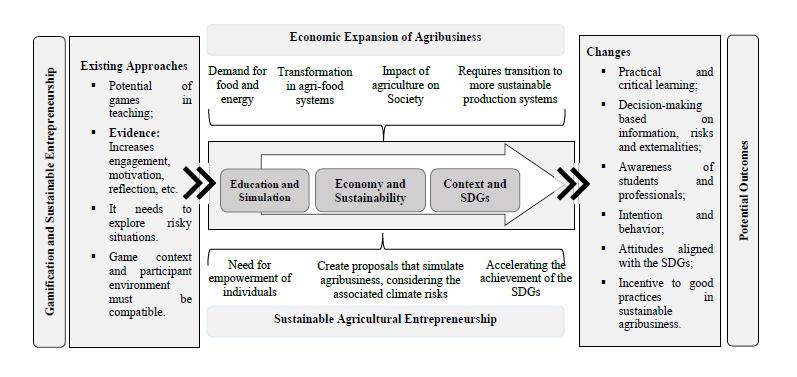
Figure 1
Overview of potential outcomes of gamification in sustainable agribusiness education.
Source: Elaborated by the authors.
According to Langendahl et al. (2017), entrepreneurship education in the agricultural sector requires an interdisciplinary approach, where participants must actively engage in activities. For this reason, gamification can be implemented as a pedagogical tool to achieve more effective learning outcomes. In this context, games that address risk, uncertainty, cooperation, and coordination encourage students to develop collective decision-making skills that promote production aligned with nature conservation and the management of scarce resources (Huang et al., 2020; Melo & Soares, 2024).
In summary, regarding the outcomes of gamification in agricultural education, researchers have observed that this strategy enhances student engagement in agricultural management and development education (Kovács et al., 2021; Langendahl et al., 2017), fosters behavioral change, and promotes more efficient and sustainable agricultural practices (Oberoi et al., 2023). Supporting this discussion, Strousopoulos et al. (2023) analyzed the use of a game for agriculture and beekeeping education, finding that positive impacts on strategic thinking and decision-making ability are related to the game’s design, elements, and core mechanics. In other words, it is essential for game dynamics to place students in managerial roles, requiring them to apply information and knowledge to responsibly manage resources.
In the context of sustainable fisheries, challenges, narratives, and multiple pathways to achieve objectives - along with the sense of progress in games - have enhanced decision-making skills in educational activities. Students reported increased awareness of the socio-environmental impacts of fishing and the importance of ocean conservation (Huang et al., 2020; Khademi-Vidra et al., 2024; Paredes-Rodríguez et al., 2023; Torralba-Burrial & Dopico, 2023). As a result, participants recognize the importance of advancing fisheries while addressing urgent environmental sustainability challenges (Kovács et al., 2021; Langendahl et al., 2017).
To provide an overview of the key studies discussed in this subsection, Table 1 summarizes the context, game segment, focus of analysis, and gamification outcomes in recent research.
Synthesis of studies on gamification in the sustainable agribusiness sector.

Note. * Not applied to a specific educational level; this study consists of a scoping analysis across various contexts where gamification has been implemented for agricultural training activities. Source: Elaborated by the authors.
Based on the identified literature, gamification can be applied in various contexts for teaching sustainable entrepreneurship, encouraging students to explore different approaches to this economic activity (Khademi-Vidra et al., 2024; Langendahl et al., 2017). All the studies highlighted in this section utilized pre-developed and validated gamification tools. This suggests that, even when carefully selected, these resources may contain general elements that do not fully align with all agricultural and fisheries environments. For instance, some games may be designed to simulate international agriculture, featuring narratives that do not necessarily reflect the local reality of a given region, as countries have diverse climatic, economic, cultural, and social characteristics.
Thus, there are opportunities for educators, game developers, policymakers, and other professionals involved in entrepreneurship education (EE) - particularly in the agribusiness sector - to develop new tools or adapt existing games to enhance their functionality and applicability in specific contexts. This can help reduce the gap between gamified experiences and their real-world application in entrepreneurship (Ruiz-Alba et al., 2019), considering the unique characteristics of the environment that will likely become the future workplace of participants.
Finally, as previously contextualized, considering the recent reforms in Brazilian high school education, implemented through Federal Law No. 14,945/2024, which restructured the National High School Policy on July 31, 2024 (Lei no. 14.945, 2024), it is relevant to align this reform with the potential of gamification. Additionally, the new guidelines of the National Common Curricular Base (BNCC) for high school include entrepreneurship as a core axis within the Human and Social Sciences curriculum, aiming to foster youth empowerment, with a focus on self-awareness and life planning (Lei no. 14.945, 2024; Pombo Menezes et al., 2024). The reform is set to be fully adopted by 2027, starting in 2025. In this context, this gamified simulation proposal will be implemented in high school, with a focus on education for sustainable entrepreneurship, leveraging the academic and policy discussions surrounding the topic.
METHODOLOGY
The design science research (DSR) approach in this study guided the creation of the EcoFarming simulation proposal. The DSR method is based on iterative cycles and is used to propose and develop artifacts, referring to solutions specifically designed to address particular problems (Hevner & Chatterjee, 2012). This approach structures the stages of ideation, design, development, evaluation, and refinement of the proposed solution, which is the main objective of this research (Angeluci et al., 2020; Silva et al., 2023).
The choice of DSR is justified by its ability to combine environmental characteristics with a knowledge base, integrating theory and practice in the development of the artifact. This methodology allowed the simulation design to be built upon theoretical foundations of gamification in entrepreneurship education and sustainable agribusiness management, while also ensuring that it will be tested and validated in practice in future stages, involving potential users.
We emphasize that, at the time of concluding this manuscript, a team of software developers involved in this project continues to develop and implement the proposal. After completing the initial version, the team will conduct comprehensive tests and necessary adjustments. Figure 2 illustrates the stages considered in this process.
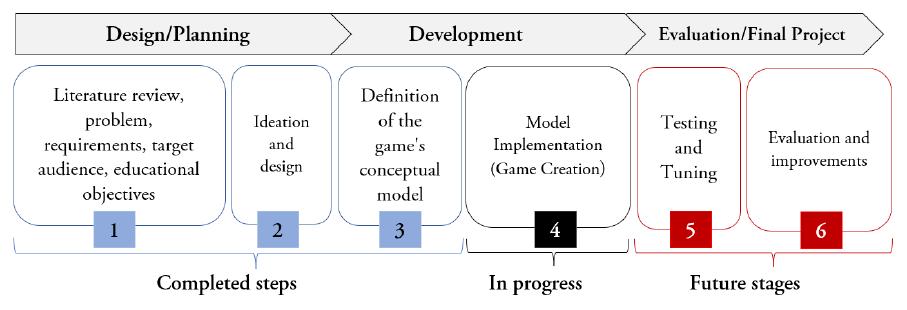
Figure 2
Stages of EcoFarming creation.
Source: Elaborated by the authors.
The proposal began with the literature review, as design science research (DSR) recommends that the identified problem should be grounded in theoretical frameworks and empirical evidence. Additionally, the results must contribute to scientific knowledge and provide new evidence in a specific field (Angeluci et al., 2020; Hevner & Chatterjee, 2012).
In designing EcoFarming, decisions were based on widely recognized theories in the literature as well as recent empirical evidence. Furthermore, the proposal aims to contribute to the knowledge base through documentation, application, and publication of results, thus offering perspectives, insights, and recommendations for other researchers and stakeholders interested in the topic.
This research sought to integrate interactions between the environment and the knowledge base through the three methodological cycles of the DSR process:
-
Relevance: which involves recognizing needs and identifying the problem (Hevner & Chatterjee, 2012);
-
Design: which represents the core stage where the solution or artifact is designed and developed, ensuring a connection between the relevance and rigor cycles (Hevner & Chatterjee, 2012);
-
Rigor: the stage in which efforts are made to ensure that the technology/solution is developed and tested based on appropriate methods and theoretical foundations.
During the relevance cycle, an opportunity was identified to introduce a contextually relevant educational tool into the Brazilian landscape to address a key challenge: existing digital games do not comprehensively incorporate the specific elements of the Brazilian context, such as distinct biomes, climates, and geographical characteristics. Furthermore, as part of the problem identification process, a review of recent literature was conducted, focusing on systematic and scoping reviews on gamification, entrepreneurship education, and sustainable agribusiness, covering data from different countries, including Brazil.Talukder et al. (2024) and Soares et al. (2024) revealed that most publications and methodologies primarily focus on higher education, and no Brazilian studies were identified in the high school context.
Although Soares et al. (2024) mention the Brazilian study by Melo et al. (2023), it was not analyzed, as it was published after the systematic review period (2017-2022). The cited study implemented a simulation on sustainable fisheries entrepreneurship in high schools, but the tool used was developed by American researchers, meaning it did not accurately reflect the Brazilian reality.
In the rigor cycle, an academic knowledge mapping was also conducted through literature review, scoping analysis, and the examination of empirical evidence from quasi-experiments and case studies. This initial scoping review served as the foundation for generating ideas on the structure and dynamics of the simulation. This ideation process was integrated into the DSR methodology as a reflective stage, assessing how the proposed simulation could contribute to the development of entrepreneurial competencies focused on sustainable production practices among high school students. Thus, it acted as a link between problem identification and the definition of functional requirements. Additionally, since some members of this project are educators in the fields of entrepreneurship and organizational management, with experience in using gamification in their teaching, their scientific expertise was leveraged to support the collection of information needed for defining the conceptual model of the proposed tool.
It is important to highlight that the EcoFarming simulation is being developed by a multidisciplinary team of professionals from the fields of management and information technology (IT). This team includes three educators with expertise in management, entrepreneurship education at both high school and university levels, and the application of gamification in teaching. This solid foundation enabled regular brainstorming sessions, where each team member contributed insights on the effective integration of gamification elements into the proposed design.
After compiling the observations and collecting data, the team held meetings with three IT specialists to discuss the software engineering and development process. During these discussions, educators and developers assessed potential platform functionalities, explored best practices, and refined the functional requirements of the simulation. This iterative process ensured that developers could proceed with implementing the initial version, setting the stage for future testing and refinements.
Finally, in the design cycle, which represents the central stage of the research, the researchers developed the conceptual model of the simulation, integrating it with the other two cycles mentioned previously. Furthermore, subsequent tasks were defined, including their implementation, evaluation, and testing for the refinement of the research-generated product (Hevner & Chatterjee, 2012). The elements considered for implementation in the simulation, in accordance with the environment and the knowledge base, will be presented later in the section on the functional requirements of EcoFarming.
During the literature review for problem and requirement identification, it became clear that gamification provides a promising foundation for entrepreneurship education at the high school level. However, there is a need for clear guidelines on how to design the elements of this approach. The game science paradigm emphasizes key aspects such as play, knowledge in action, reflection, learning, and understanding (Wijse-van Heeswijk & Kriz, 2023). Furthermore, game science argues that game design is the starting point (Klabbers, 2018).
In this context, throughout the three methodological cycles of the DSR process (relevance, rigor, and design), the EcoFarming simulation was designed based on the integration of: (1) actors - professionals with expertise in gamification for high school entrepreneurship education and game developers; (2) contexts - specific characteristics of Brazilian biomes; (3) technological systems - a multiplayer platform. These three factors align with the recommendations of Wijse-van Heeswijk and Kriz (2023), which provide guidance on designing and evaluating games and simulations for educational purposes.
Figure 3 presents the research model, adapted from the information systems framework proposed by Hevner and Chatterjee (2012), and also applied by Silva et al. (2023).
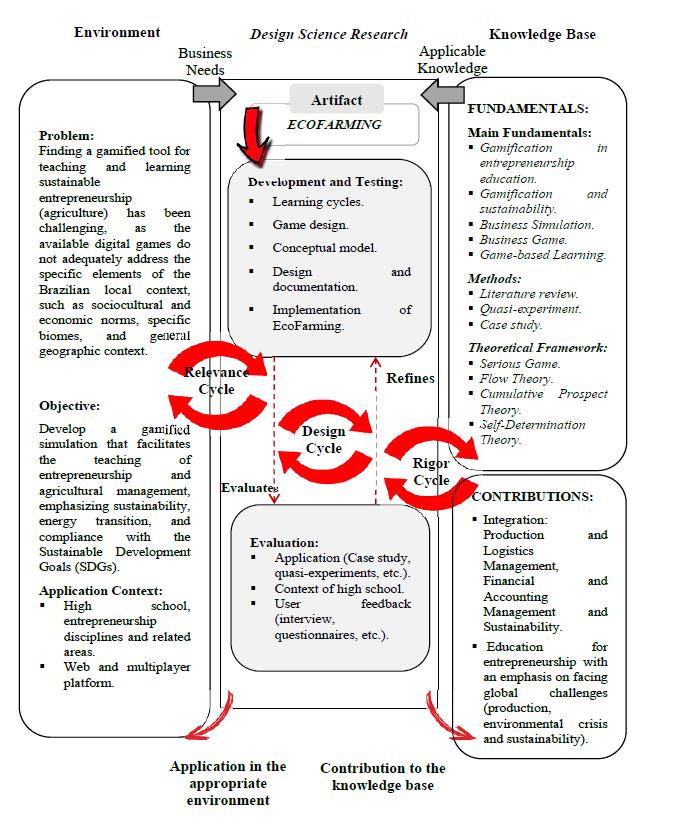
Figure 3
Research model.
Source: Designed by the authors based on Hevner, A. R., & Chatterjee, S. (2012). Design Science in Information Systems. In Information System Theory (vol. 28). Springer. https://doi.org/10.1007/978-1-4419-6108-2 and Silva, A. E., Albuquerque, E. G. M., Lira, K. G., Lima, F. F., & Luna, A. J. H. O. (2023). MASTER-CIO: Uma aplicação transdisciplinar de serious games para o ensino de Tecnologia da Informação. Gestão.Org - Revista Eletrônica de Gestão Organizacional, 21, 1-29. https://doi.org/10.51359/1679-1827.2023.256853
The performance metric adopted in the artifact will be the clean economy index (CEI), an indicator that balances revenue optimization with the achievement of sustainability goals in operations. The choice of the CEI is justified by the need for gamified strategies that incorporate sustainability objectives (Charkova, 2024), as focusing solely on wealth maximization would not be an adequate sustainability indicator (Melo & Soares, 2024; Melo et al., 2023).
To optimize the performance measurement process in the game, the developers chose to employ data envelopment analysis (DEA). This method examines multiple inputs, such as the decisions made in each round, and generates corresponding outputs, including feedback and results. DEA establishes an efficient frontier to identify the most efficient units in the game, represented by agricultural farms managed by the teams. In this way, the CEI metric is estimated, which ranks the participants in the simulation. Furthermore, the inputs considered include cultivable land area, preserved land area, clean energy generated, technology level, and operational cycle cost. As for the outputs, the model incorporates operational cycle revenue, total assets, and overall cycle production.
The procedures for testing the first version of the EcoFarming simulation, scheduled to begin between late 2024 and early 2025, will include conducting quasi-experiments with high school classes, initially at a federal institution offering entrepreneurship and organizational management courses. In addition to a pilot empirical study on the impact of gamification on learning and other variables, questionnaires will be administered, observations will be made, and interviews will be conducted with students and teachers to collect qualitative data on user experience. This information will allow for adjustments and improvements before the definitive version of the proposal is consolidated.
Functional requirements of EcoFarming
The relevance and rigor cycles enabled the definition of the main functionalities to be implemented in the simulation. For this purpose, eventual limitations found in gamifications applied in the context of entrepreneurship related to sustainable agribusiness were verified in the literature. Table 2 summarizes the EcoFarming requirements, defined based on a scoping review that identified the primary limitations of gamification initiatives targeting entrepreneurship in the context of sustainable agribusiness. Additionally, cycles of relevance and rigor guided the definition of these requirements, enabling the selection of critical functionalities to implement in the proposed simulation. Based on the scoping review, we incorporated the elements highlighted in Table 2 as essential requirements, aiming to overcome the identified deficiencies and promote a sustainable approach. Thus, these elements were highlighted as possible requirements for the simulation proposed in this study. The results of this analysis are presented in Table 2.
Definition of EcoFarming requirements.

Note. Elaborated by the authors.
It is relevant to highlight that these are some components currently being implemented to compose the simulation’s dynamics, and they may be unfolded into other criteria throughout the development process. In general, the relevance and rigor cycles enabled the identification of various management and sustainability elements that can be explored in classes through EcoFarming. Therefore, this concern with the existing limitations in other methodologies distinguishes this proposal from other tools, which, although robust and relevant, fail to consider the identified requirements. Finally, the stages of the proposed simulation, as well as the detailing of its parameters, will be presented in the following section.
PARAMETERS AND CYCLES OF THE PROPOSED SIMULATION
In the sustainable entrepreneurship education simulation called EcoFarming, the narrative places players in the role of managers of an area of up to 100 hectares, acting as entrepreneurs in the Brazilian agribusiness sector. In this context, participants must make important decisions related to the energy source, water resource use, types of activities (agriculture or livestock), operation mode (organic or conventional), and production management. Thus, the requirement to stimulate the students involved to assume roles like real entrepreneurs in the addressed area is fulfilled (Torralba-Burrial & Dopico, 2023).
Regarding the phases of the proposed simulation, to advance in the dynamics, the participant will encounter two main stages: (1) Phase 1 - Operation setup, which concerns the configuration of the operation, involving seven decisions for the creation of the business; and (2) Phase 2 - Simulation, which consists of the cycles in which the student will effectively manage their property. Thus, in the second phase, the farm’s performance will be evaluated over time, divided into seasons.
First phase: Operation setup
Figure 4 highlights that participants begin the simulation with seven decisions to configure the creation of the business, including the team’s name, biome, type of cultivation/breeding, production system (organic or conventional), usable area to be utilized, technology to be employed, and energy source. In this stage, participants structure their operation before starting farm management. The seven decisions made can have a positive or negative impact throughout the game, with each one being associated with a financial allocation. Thus, participants start Phase 1 with a capital of 10,000 monetary units, which they must distribute throughout the dynamics.
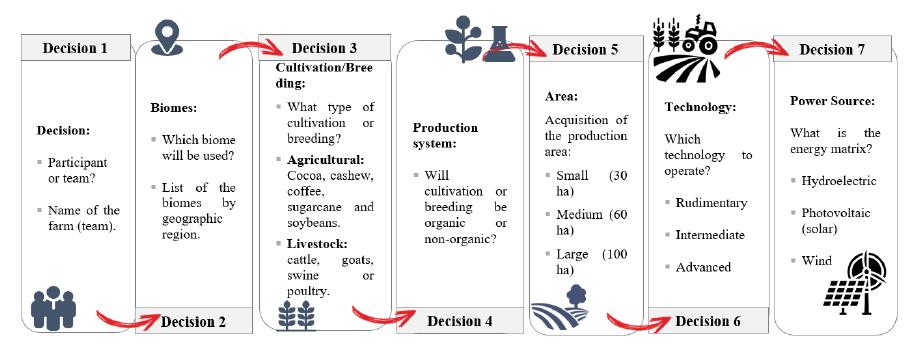
Figure 4
Participant setup stage decisions.
Source: Elaborated by the authors.
After defining the team and farm name in Decision 1, the participant/group must choose, in Decision 2, the geographic area to work in (biome). In this stage, six biomes are available, representing all Brazilian regions: Caatinga, Atlantic Forest, Cerrado, Araucaria Forest, Amazon Rainforest, and Pantanal. Each region of Brazil presents one or more characteristic biomes that can be incorporated into the simulation to add variety and authenticity, meeting the need to include elements in the game that demonstrate the real scenario of each region (Hernandez-Aguilera et al., 2020; Torralba-Burrial & Dopico, 2023; Xu et al., 2023).
Thus, all regions of Brazil are represented by the EcoFarming simulation. However, participants must make strategic decisions about which activity would be most appropriate for the chosen geographic area, aiming to achieve better results, since different biomes can influence the types of crops and animals most suitable for each farm, in addition to presenting specific challenges, such as water resource management in the Caatinga or adaptation to flood seasonality in the Pantanal.
Next, in Decision 3, cultivation, participants will choose the type of agricultural or livestock activity for their area. Thus, if they select agricultural cultivation, the production possibilities are soybeans, cashew, sugarcane, coffee, or cocoa. On the other hand, if the participant decides to operate in livestock, they must select the breeding of cattle, pigs, goats, or poultry. The choice of breeding should present better adaptation to the previously selected geographic area, as the alignment between biome and cultivation/breeding will be decisive for the participant/team’s performance.
In Decision 4, participants must choose between operating with organic or non-organic cultivation/breeding methods. This choice will influence the calculation of the clean economy index, which will determine the ranking of participants/teams. In this context, opting for organic cultivation will imply a higher initial cost for production control. However, depending on the cultivation and biome selected, the added value of production can make this decision more efficient. On the other hand, non-organic cultivation can result in higher productivity rates, but with lower added value and greater environmental impact on the operation.
Decision 5 falls on the production area. Participants/teams must allocate resources to acquire a productive area. Thus, the simulation provides three options: (1) small area (1 to 30 hectares), with lower cost; (2) medium area (31 to 60 hectares), with intermediate initial cost and production capacity; and (3) large area (61 to 100 hectares), with the highest initial cost, but enabling economies of scale. Thus, once the choice is made, participants can expand or reduce their productive area through land auctions, provided they remain within the limits established by the initial size of their property.
After choosing the production area, still in the setup stage, the participant/team will move on to Decision 6, which involves the choice of technology. Thus, they must select which productive technology paradigm they will operate in. The proposed tool lists three options: rudimentary technology, intermediate technology, or precision agriculture/livestock. Each selection will imply distinct costs, but depending on the scenario, biome, and cultivation/breeding, it may operate on the efficiency frontier curve.
In the last stage of the setup phase (Decision 7), the participant must choose their energy matrix, being able to be a consumer, prosumer, or producer. In this context, each configuration will allow benefits in the clean economy index, as well as affect the participants’ performance. The energy options are hydroelectric, photovoltaic (solar), and wind energy.
After the setup, the team’s operation background screen is generated, showing the returns of the decisions made. To illustrate this process, Figure 5 presents results for two different teams. On the left side of Figure 5, a dairy production operation in the Brazilian Cerrado is demonstrated. It is observed that the participant selected a cultivation suitable for the biome. Furthermore, they chose an advanced agriculture operation, and their energy source is photovoltaic.
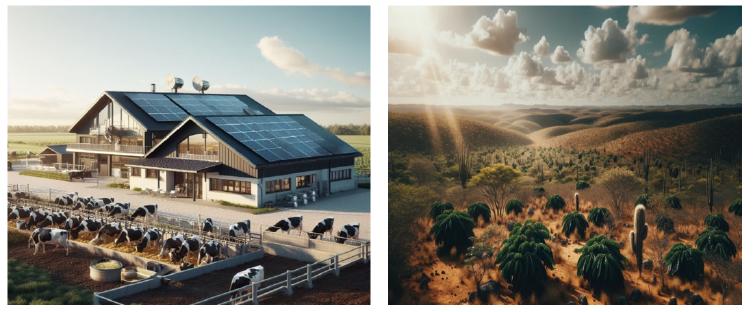
Figure 5
Operation with cattle raising in the Cerrado and coffee cultivation in the Caatinga.
Source: Elaborated by the authors (2023), with the help of generative artificial intelligence.
On the right side of Figure 5, it is possible to observe the screen of a participant who selected coffee cultivation in the Brazilian Caatinga, with rudimentary technology, as well as did not opt for energy production. Therefore, it portrays the low suitability of the Caatinga biome for coffee cultivation, which will impact the participant’s productivity, as well as their performance.
Furthermore, for each setup configuration, the participants will have access to a results screen associated with their choices. Thus, before advancing to Phase 2 of the simulation, it will be possible to explore the student’s observation, reflection, and strategy development for the next stages of gamification. This seeks to meet the need for participants to reflect, during the dynamics, on the sustainability of the economic activities they are involved in (Torralba-Burrial & Dopico, 2023). The next section presents Phase 2 of the simulation, with the decision stages by season.
Second phase: Simulation
In the second phase of the EcoFarming simulation, decisions are made by seasons, resulting in four decision stages per year. During this cycle, participants begin to manage their farms, having the option to play synchronously or asynchronously. The simulation allows matches with 4 to 100 seasons. Furthermore, in the configuration, participants can choose between two and ten years to evaluate their production, with each year consisting of four decision rounds (seasons). A season is considered as the operational production cycle, with the objective of standardizing and normalizing the production cycles, given the difference in crops and breeding among participants. Thus, each season represents a standardized operational cycle for the participants. Figure 6 presents the main parameters considered.
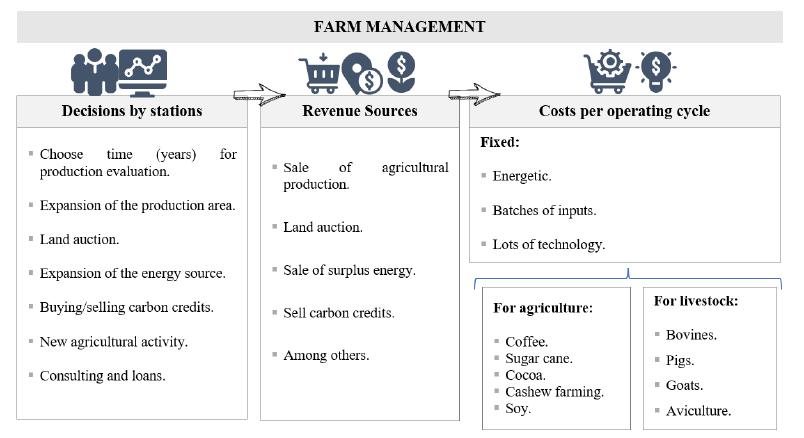
Figure 6
Phase 2 cycle: Simulation.
Source: Designed by the authors.
In summary, the decisions in each cycle will be influenced by the chosen activity (agriculture or livestock). However, all participants will assume the role of farm managers, making decisions related to production, revenues, costs, and other parameters. Thus, they will need to apply knowledge and establish strategies to maximize results, which depend on both the achievement of economic-financial and sustainable goals.
An interesting functionality of EcoFarming for participants is the option to request consulting during the game. The tool has a comprehensive knowledge base that provides guidance on the most suitable activities for each biome, cultivation, or breeding, the costs of different production systems, technologies, and energy sources. Additionally, it offers proposals for addressing various situations and guidance on legal requirements, such as the minimum percentage of rural property area that must be covered by native vegetation for the Legal Reserve (RL). Thus, the tool can highlight the need to maintain or expand preserved areas and acquire land to meet current legislation and preserve the environment. However, it is up to the students to analyze this information and make informed and assertive decisions.
Figure 7 summarizes the structure of the EcoFarming proposal for the teaching-learning process, highlighting that the simulation addresses decision-making, challenges, knowledge acquisition, resource use, local context, and activity progression, which are fundamental elements for increasing participation, motivation (Langendahl et al., 2017; Lyons et al., 2023) and knowledge acquisition about sustainability practices in agribusiness (Khademi-Vidra et al., 2024; Paredes-Rodríguez et al., 2023; Torralba-Burrial & Dopico, 2023). Furthermore, the proposal explores experiences that involve collaboration, competition, risk management, observation, reflection after feedback (background screens with results), and other emotional or psychological responses relevant for training.
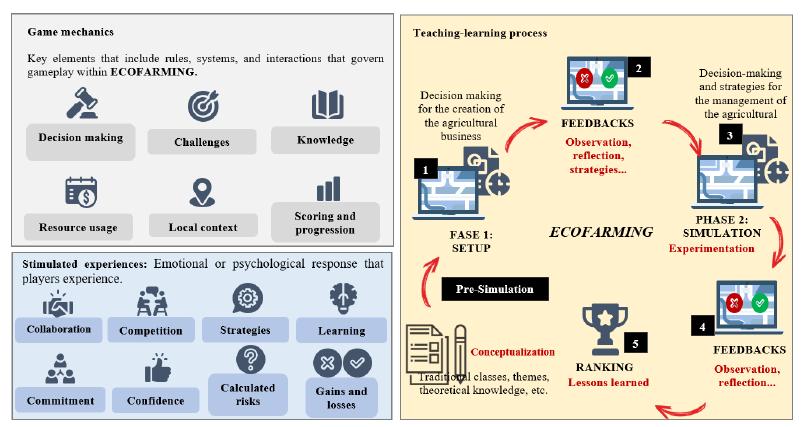
Figure 7
EcoFarming: Structure of the proposal for teaching-learning.
Source: Designed by the authors.
Considering the design cycle, integrated with the DSR approach, this dynamic is present in the first version under development, requiring evaluation and testing to refine the research-generated model. Finally, this study resulted in documentation of the design of a gamification proposal for sustainable agricultural entrepreneurship education, aligned with the needs of the Brazilian environment, as well as grounded in solid theoretical-empirical knowledge.
CONCLUDING REMARKS
This paper presented the proposal for the creation of the EcoFarming simulation for teaching sustainable agribusiness management. Its scope allows for the teaching of various aspects of administration, economics, and sustainability through gamification, preparing students - future entrepreneurs - to contribute to the national agricultural and livestock economy. It is noteworthy that EcoFarming allows for the evaluation of managerial success or failure from a multivariate perspective, differentiating itself from other simulations that consider only asset maximization or the completion of specific tasks as success metrics. Additionally, this proposal incorporates elements ignored in previous approaches, such as the integration of dynamics based on the Brazilian context, its different biomes, and the country’s specific environmental conditions.
Through this study, it was possible to carry out the initial stages of developing an educational game, including needs identification, ideation, knowledge base, definition and design of the conceptual model, and model implementation (ongoing). Therefore, for future work, the remaining development stages will be completed. It is expected that this gamification strategy will raise student awareness, empowering them to adopt attitudes aligned with the Sustainable Development Goals (SDGs): 2 (zero hunger and sustainable agriculture), 7 (affordable and clean energy), 12 (responsible consumption and production), and 13 (climate action).
As main contributions, EcoFarming stands out as an applicable mechanism for gamified teaching, grounded in principles such as sustainability and energy transition. From an educational standpoint, the simulation will allow professors, instructors, and students - not only from the target group (high school) but also from various courses and areas, such as production engineering, administration, accounting, agronomy, among others - to understand the impacts of decisions in agricultural management and clean energy generation. Finally, from a theoretical perspective, the simulation draws attention to the pillars of a new economic matrix and energy transformation, raising awareness among participants about the importance of the circular economy, renewable energy sources, and sustainable agricultural management, fostering reflection on such productive practices.
As limitations, it is noted that the simulation does not consider elements such as the understanding of the tax context and specificities of the agricultural sector, such as differences in productivity by species in the case of livestock. This reduces the accuracy of the data for each operation, which is based on sector averages. However, this is a necessary trade-off to control the level of complexity of the simulation.
As avenues for future research, it is recommended to evaluate the learning impact on high school and university students using EcoFarming as an innovative methodology. Given the possibility of using the tool in the educational context, it is possible to design experiments to find its eventual causal effect on learning and on the perception of sustainability practices, entrepreneurial behavior, and the decision-making process.
REFERENCES
Angeluci, A. C. B., Redigolo, G. L., da Silva, P. S. F., & Arakaki, P. J. (2020). Design Science Research como método para pesquisas em TIC na educação. In Anais do CIET: EnPED: 2020-(Congresso Internacional de Educação e Tecnologias| Encontro de Pesquisadores em Educação a Distância). https://ciet.ufscar.br/submissao/index.php/ciet/article/view/683
Basso, M. F., Neves, M. F., & Grossi-de-Sa, M. F. (2024). Agriculture evolution, sustainability and trends, focusing on Brazilian agribusiness: a review. Frontiers in Sustainable Food Systems, 7, 1296337. https://doi.org/10.3389/fsufs.2023.1296337
Boller, S., & Kapp, K. (2018). Play to learn: Everything you need to know about designing effective learning games. DVS Editora.
Brasil. (2018). Base Nacional Comum Curricular (BNCC). Educação é a base. Versão final. MEC.
Charkova, D. A. (2024). Utilizing gamification to promote pro-sustainable behavior among information technology students. Discover Education, 3(21). https://doi.org/10.1007/s44217-024-00105-x
Chen, J., Tang, L., Tian, H., Ou, R., Wang, J., & Chen, Q. (2022). The effect of mobile business simulation games in entrepreneurship education: a quasi-experiment. Library Hi Tech. https://doi.org/10.1108/LHT-12-2021-0509
Chen, Y., Albert, L. J., & Jensen, S. (2022). Innovation farm: Teaching Artificial Intelligence through gamified social entrepreneurship in an introductory MIS course. Decision Sciences Journal of Innovative Education, 20(1), 43-56. https://doi.org/10.1111/dsji.12253
Costa, M. O., & Caetano, M. R. (2021). Um novo ethos educacional no ensino médio: Da formação integral ao empreendedorismo. Revista Exitus, 11, e020179. https://doi.org/10.24065/2237-9460.2015v1n1id1655
Crespo-Martinez, E., Bueno, S., & Gallego, M. D. (2024). Taxonomy of studies on the use of video games in entrepreneurship education: A Systematic literature review with a textometric analysis. Games and Culture, https://doi.org/10.1177/15554120241273392
Csikszentmihalyi, M. (1990). Flow: The psychology of optimal experience. Harper and Row.
Deci, E. L., & Ryan, R. M. (2000). The ‘‘what’’ and ‘‘why’’ of goal pursuits: Human needs and the self-determination of behavior. Psychological Inquiry, 11(4), 227-268. https://doi.org/10.1207/S15327965PLI1104_01
Empresa Brasileira de Pesquisa Agropecuária. (2024). Intensificação e sustentabilidade dos sistemas de produção agrícolas. Embrapa. https://www.embrapa.br/olhares-para-2030/intensificacao-e-sustentabilidade-dos-sistemas-de-producao-agricolas/-/asset_publisher/MpEPEYHn8qxt/content/tarcisio-hubner?inheritRedirect=true
Faisal, N., Chadhar, M., Goriss-Hunter, A., & Stranieri, A. (2022). Business simulation games in higher education: A systematic review of empirical research. Human Behavior and Emerging Technologies, 2022(1), 1578791. https://doi.org/10.1155/2022/1578791
Fox, J., Pittaway, L., & Uzuegbunam, I. (2018). Simulations in entrepreneurship education: Serious games and learning through play. Entrepreneurship Education and Pedagogy, 1(1), 61-89. https://doi.org/10.1177/2515127417737285
Hernandez-Aguilera, J. N., Mauerman, M., Herrera, A., Vasilaky, K., Baethgen, W., Loboguerrero, A. M., ... & Osgood, D. (2020). Framed experiments and Games in Agriculture: A systematic review of the 21st century in economics and social science. Preprints. http://doi.org/10.20944/preprints202008.0262.v1
Hevner, A. R., & Chatterjee, S. (2012). Design Science in Information Systems. In Information System Theory (vol. 28). Springer. https://doi.org/10.1007/978-1-4419-6108-2
Huang, S. Y., Kuo, Y. H., & Chen, H. C. (2020). Applying digital escape rooms infused with science teaching in elementary school: Learning performance, learning motivation, and problem-solving ability. Thinking Skills and Creativity, 37, 100681. https://doi.org/10.1016/j.tsc.2020.100681
Isabelle, D. A. (2020). Gamification of entrepreneurship education. Decision Sciences: Journal of Innovative Education, 18(2), 203-223. https://doi.org/10.1111/dsji.12203
Kapp, K. M. (2013). The gamification of learning and instruction fieldbook: Ideas into practice. John Wiley & Sons.
Khademi-Vidra, A., Urbányi, B., & Bakos, I. M. (2024). Educational and training innovation opportunities in the aquaculture and fisheries sector of Hungarian secondary agricultural education. Aquaculture International, 1-23. http://doi.org/10.1007/s10499-024-01432-4
Klabbers, J. H. (2018). On the Architecture of Game Science. Simulation & Gaming, 49(3), 207-245. https://doi.org/10.1177/1046878118762534
Kolb, A. Y., & Kolb, D. A. (2009). The Learning Way: Meta-cognitive Aspects of Experiential Learning. Simulation & Gaming, 40(3), 297-327. https://doi.org/10.1177/1046878108325713
Kolb, D. A., Boyatzis, R. E., & Mainemelis, C. (2014). Experiential learning theory: Previous research and new directions. In R. J. Sternberg & L. Zhang (Eds.), Perspectives on thinking, learning, and cognitive styles (pp. 227-248). Routledge. https://doi.org/10.4324/9781410605986-9
Kovács, T., Szilágyi, R., & Várallyai, L. (2021). The role of gamification in sustainable agricultural higher education. In Bio-Economy and Agri-production (pp. 279-288). Academic Press.
Lackéus, M. (2018). “What is value?”: A framework for analyzing and facilitating entrepreneurial value creation. Uniped, 41(1), 10-28. https://doi.org/10.18261/issn.1893-8981-2018-01-02
Langendahl, P. A., Cook, M., & Mark-Herbert, C. (2017). Exploring gamification in management education for sustainable development. Creative Education, 8(14), 2243-2257.
Lei no. 14.945 (2024) Lei nº 14.945, de 31 de julho de 2024. Altera a Lei nº 9.394, de 20 de dezembro de 1996 (Lei de Diretrizes e Bases da Educação Nacional), a fim de definir diretrizes para o ensino médio. https://www.planalto.gov.br/ccivil_03/_ato2023-2026/2024/lei/L14945.htm
Liu, B., & Wang, J. (2019). Demon or angel: an exploration of gamification in management. Nankai Business Review International, 11(3), 317-343. https://doi.org/10.1108/NBRI-02-2018-0013
Lyons, R. M., Fox, G. & Stephens, S. (2023). Gamification to enhance engagement and higher order learning in entrepreneurial education. Education + Training, 65(3), 416-432. https://doi.org/10.1108/ET-05-2022-0204
Martin, J., Torres, D., Fernandez, A., Pravisani, S., & Briend, G. (2018, September). Using citizen science gamification in agriculture collaborative knowledge production. In Proceedings of the XIX International Conference on Human Computer Interaction (pp. 1-8). https://dl.acm.org/doi/10.1145/3233824.3233859
Melo, F. L. N. B. D., Soares, A. M. J., Sampaio, L. M. B., & Lima-de-Oliveira, R. (2023). The impact of gamification on entrepreneurial Intention in a Brazilian technical business school. BAR-Brazilian Administration Review, 20(1), e210033. https://doi.org/10.1590/1807-7692bar2023210033
Melo, F. L. N. B. D., & Soares, A. M. J. (2024). Gamification and Risk Aversion: An Empirical Essay With Management Students. Revista de Administração de Empresas, 64(2), e2023-0136. https://doi.org/10.1590/S0034-759020240206
Oberoi, Z., Peterson, N., Vyas, S., & Girvetz, E. (2023). Gamification in agriculture: A scoping study on opportunities and challenges. Technical Report. 22 p. https://hdl.handle.net/10568/137558
Organização das Nações Unidas. (2022). População mundial chegará a 8 bilhões em novembro de 2022. ONU. https://brasil.un.org/pt-br/press-centre/press-releases
Organização das Nações Unidas para a Alimentação e a Agricultura (2024). Gênero. Não podemos erradicar a fome e a pobreza sem capacitar homens e mulheres nos sistemas agroalimentares. https://www.fao.org/gender/es/
Paredes-Rodríguez, A. C., Burrial, A. T., & Rodríguez, E. D. (2023). Teachers’ Perceptions of Fisheries Ecolabels and Game-Based Learning Activities in the Framework of Education for Sustainable Consumption. In Global Challenges for a Sustainable Society: EURECA-PRO The European University for Responsible Consumption and Production (pp. 468-475). Springer Suiza.
Pombo Menezes, R., Holanda Mariano, S. R., & Moreira Cunha, R. (2024). A educação para o empreendedorismo no novo ensino médio: Uma análise dos documentos orientadores curriculares estaduais. Revista Pensamento Contemporâneo em Administração, 18(Ed. Espec). https://doi.org/10.12712/rpca.v18iEspecial.58848
Ruiz-Alba, J. L., Soares, A., Rodríguez-Molina, M. A., & Banoun, A. (2019). Gamification and entrepreneurial intentions. Journal of Small Business and Enterprise Development, 26(5), 661-683. https://doi.org/10.1108/JSBED-09-2018-0266
Santos, M. L., Santos, P. M., Barioni, L. G., Pereira, B. H., Cuadra, S. V., Pequeno, D. N. L., Marin, F. R., & Sollenberger, L. (2024). Yield gap analysis framework applied to pasture-based livestock systems in Central Brazil. Field Crops Research, 314, 109416. https://doi.org/10.1016/j.fcr.2024.109416
Silva, A. E., Albuquerque, E. G. M., Lira, K. G., Lima, F. F., & Luna, A. J. H. O. (2023). MASTER-CIO: Uma aplicação transdisciplinar de serious games para o ensino de Tecnologia da Informação. Gestão.Org - Revista Eletrônica de Gestão Organizacional, 21(1), 1-29. https://doi.org/10.51359/1679-1827.2023.256853
Silva, R. J. R. , Rodrigues, R. G., & Leal, C. T. P. (2019). Gamification in management education: A systematic literature review. Brazilian Administration Review, 16(2), e180103. https://doi.org/10.1590/1807-7692bar2019180103
Soares, A. M. J., Melo, F. L. N. B. D., Dantas, S. D. T. A., Silva, M. P. D., & Genuino, S. L. V. P. (2024). Gamification in entrepreneurship education: A systematic literature review and future research agenda. REGEPE Entrepreneurship and Small Business Journal, 13, e2389. https://doi.org/10.14211/regepe.esbj.e2490
Strousopoulos, P., Troussas, C., Papakostas, C., Krouska, A., & Sgouropoulou, C. (2023, September). Revolutionizing Agricultural Education with Virtual Reality and Gamification: A Novel Approach for Enhancing Knowledge Transfer and Skill Acquisition. In Novel & Intelligent Digital Systems Conferences (pp. 67-80). Cham: Springer Nature Switzerland.
Talukder, S. C., Lakner, Z., & Temesi, A. (2024). Development and State of the Art of Entrepreneurship Education: A Bibliometric Review. Education Sciences, 14(3), 295. https://doi.org/10.3390/educsci14030295
Torralba-Burrial, A, & Dopico, E. (2023). Promoting the sustainability of artisanal fshing through environmental education with game-based learning. Sustainability 15(17). https://doi.org/10.3390/su151712905
Wijse-van Heeswijk, M., & Kriz, W. C. (2023). Design Science Perspective on Formative Evaluation in Simulation Games. In Angelini, M.L., Muñiz, R. (Eds.), Simulation for Participatory Education. Springer Texts in Education. Springer, Cham. https://doi.org/10.1007/978-3-031-21011-2_7
Xu, Z., Adeyemi, A. E., Landaverde, R., Kogut, A., & Baker, M. (2023). A scoping review on the impact of educational technology in agricultural education. Education Sciences, 13(9), 910. http://doi.org/10.3390/educsci13090910
Zulfiqar, S., Sarwar, B., Aziz, S., Ejaz Chandia, K., & Khan, M. K. (2019). An analysis of influence of business simulation games on business school students’ attitude and intention toward entrepreneurial activities. Journal of Educational Computing Research, 57(1), 106-130. https://doi.org/10.1177/0735633117746746
Notes


Author notes
Sheila Serafim da Silva (FIA Business School, Brazil) https://orcid.org/0000-0002-7104-003X
* Corresponding Author
Conflict of interest declaration
