Case for Teaching
Sustainable International Expansion: Raízen's Path to Green Leadership
Expansão Internacional Sustentável: Os Caminhos da Raízen para a Liderança Verde
 Renata Luiza de Castilho Rossoni renatalcrossoni@gmail.com
Renata Benigna Gonçalves rebenigna@gmail.com
Mario Henrique Ogasavara mario.ogasavara@espm.br
Renata Luiza de Castilho Rossoni renatalcrossoni@gmail.com
Renata Benigna Gonçalves rebenigna@gmail.com
Mario Henrique Ogasavara mario.ogasavara@espm.br
Sustainable International Expansion: Raízen's Path to Green Leadership
Revista de Administração Contemporânea, vol. 29, no. 1, e240146, 2025
Associação Nacional de Pós-Graduação e Pesquisa em Administração
Received: 15 June 2024
Revised document received: 17 October 2024
Accepted: 24 October 2024
Published: 07 March 2025
Funding
Funding source: Coordination for the Improvement of Higher Education Personnel
Contract number: 001
Funding statement: This work was carried out with the support of the Coordination for the Improvement of Higher Education Personnel - Brazil (CAPES, Brazil) - Financing Code 001.
ABSTRACT: Raízen, a leading multinational in the energy sector recognized for its innovation and commitment to sustainability, faces a pivotal strategic challenge in its international expansion. Under the guidance of CEO Roberto Silva, the management team-comprising Sustainability Director Marina Costa and International Expansion Director Carlos Mendes-deliberates on the best approach to align the company’s global growth with the Sustainable Development Goals (SDGs) of the 2030 Agenda. The core dilemma is whether to license second-generation ethanol (E2G) technology, enabling local production in other countries and fostering global sustainable development, or pursue direct investment to ensure adherence to Raízen’s values and sustainability standards internationally. The objective of this teaching case is to encourage thoughtful analysis of how the SDGs can shape the international expansion strategies of companies. It is designed for undergraduate and graduate courses in Strategic Management, International Business, Corporate Sustainability, Environmental Marketing, and Regulatory Policy.
Keywords: Sustainable Development Goals (SDGs), international business, sustainable business model.
RESUMO: A Raízen, uma destacada multinacional do setor energético, reconhecida por sua liderança em inovação e compromisso com a sustentabilidade, enfrenta um desafio estratégico significativo em seu processo de expansão internacional. Sob a liderança do CEO Roberto Silva, a equipe de gestão, composta pela diretora de Sustentabilidade, Marina Costa, e pelo diretor de Expansão Internacional, Carlos Mendes, debate a melhor forma de conciliar a expansão internacional da empresa com os Objetivos de Desenvolvimento Sustentável (ODSs) da Agenda 2030. O dilema do caso está na decisão de licenciar a tecnologia de etanol de segunda geração (E2G), permitindo a produção local em outros países e promovendo o desenvolvimento sustentável global, ou optar pelo investimento direto para garantir a implementação de seus valores e padrões de sustentabilidade além das fronteiras brasileiras. A partir disso, o objetivo deste caso para ensino é fomentar reflexões sobre como a expansão internacional de empresas pode ser influenciada pelos ODSs. Este caso para ensino é indicado para cursos de graduação e pós-graduação que envolvam Gestão Estratégica, Negócios Internacionais, Sustentabilidade Corporativa, Marketing Ambiental e Política Regulatória.
Palavras-chave: Objetivos de Desenvolvimento Sustentável (ODS), negócios internacionais, modelo de negócio sustentável.
INTRODUCTION
In a well-lit conference room at the top of Raízen’s headquarters in São Paulo, a group of managers convened under the leadership of the company’s charismatic and visionary CEO, Roberto Silva. Among them was Marina Costa, the dedicated Director of Sustainability, renowned for her commitment to integrating responsible environmental practices into the company’s operations. Also present was Carlos Mendes, the seasoned Director of International Expansion, who brought decades of experience in successfully guiding businesses into global markets.
The meeting had a vital purpose: to outline Raízen’s strategy for international expansion. Known for its innovation and commitment to sustainability in the sugar-energy sector, the company aimed to achieve an ambitious objective - expanding into emerging markets while maintaining alignment with the Sustainable Development Goals (SDGs) outlined in the 2030 Agenda.
Roberto began the discussion by emphasizing the unique opportunity to lead the industry in sustainable growth through the introduction of second-generation ethanol (E2G). However, the team faced a critical strategic decision: Should Raízen license its E2G production technology to promote local production in other countries and advance global sustainable development, or should it retain centralized control to ensure its sustainability standards are consistently applied in international markets?
Marina emphasized the importance of not just expanding but also becoming a global role model for sustainability, inspiring better business practices in emerging markets. Conversely, Carlos expressed concerns about the challenges and risks of licensing technology in new markets, including the potential loss of control over how sustainable practices are implemented.
Given this context, the team faced a critical decision: should they proceed with international expansion by licensing E2G technology, which might compromise control over sustainability practices, or opt for a growth strategy that upholds the company’s values? This could involve exploring alternatives such as strategic partnerships or new business models focused on direct investment in E2G production while adhering to the Sustainable Development Goals (SDGs).
MARKET ANALYSIS AND EXPANSION OPPORTUNITIES
Before advancing discussions on international expansion opportunities, Raízen’s management team prioritized assessing the alignment of its sustainability strategies with the Sustainable Development Goals (SDGs) of the 2030 Agenda. Marina Costa led the discussion, underscoring the importance of integrating all of Raízen’s actions, particularly those related to expansion, with the SDGs. She stressed that, for Raízen, growth alone is insufficient; it must be tied to practices that support clean energy (SDG 7), foster innovation in infrastructure (SDG 9), and build partnerships that reinforce global sustainability commitments (SDG 17).
Roberto Silva emphasized that sustainability is at the core of Raízen’s corporate identity, highlighting E2G technology as a prime example of the company’s potential to lead globally in sustainability while expanding its international operations. He noted that aligning this strategy with the SDGs strengthens Raízen’s socio-environmental commitment and enhances its competitive position in global markets.
Roberto reaffirmed Raízen’s status as a multinational leader in sugar, ethanol, and bioenergy production, as well as fuel distribution and renewable energy generation. He highlighted key company figures, including 35 production units for sugar, ethanol, and bioenergy, one E2G production unit, one biogas production facility, 16 bioenergy generation plants, 67 airport fueling bases, 68 fuel distribution hubs, and over 860,000 hectares of agricultural land dedicated to sugarcane cultivation.
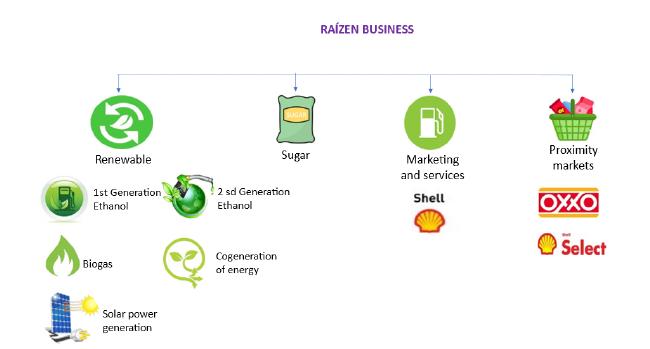
The company is also active in sugar and ethanol exports through trading operations in various countries. In 2018, it acquired Shell’s assets in Argentina for over US$950 million, becoming the second-largest player in the country’s fuel distribution market. With a workforce of more than 30,000 employees and net operating revenue of BRL 246 billion in 2022/2023, Raízen operates under a model driven by integrated ecosystems, a robust corporate culture, and advanced technologies, enhancing synergy across its business segments (Figure A1).1
Carlos Mendes then provided a comprehensive analysis of the national sugar and ethanol market. He detailed the export volumes for both commodities (Table A1) and identified the primary importing countries for sugar and ethanol (Tables 2 and 3)2. He also highlighted a significant market opportunity for ethanol, particularly second-generation ethanol, emphasizing its critical role in advancing vehicle electrification3.
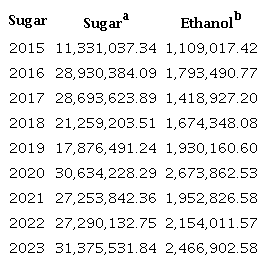
Note. Retrieved from Observatório da Cana Unicadata (2024).2 a Volume in tons. b Volume in cubic meters.
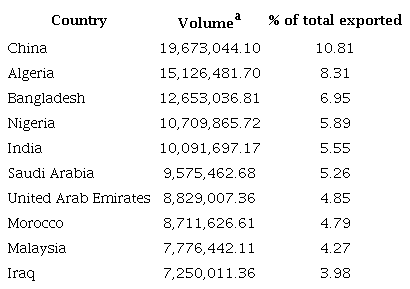
Note. Retrieved from Observatório da Cana Unicadata (2024).2 a Volume in tons.
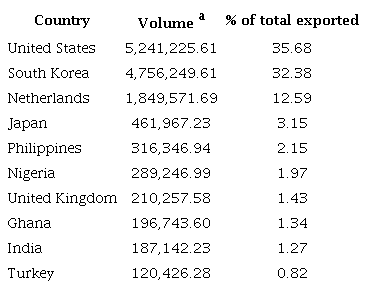
Note. Retrieved from Observatório da Cana Unicadata (2024).2 a Volume in cubic meters.
“Our leadership in E2G production is more than just a competitive edge; it represents a chance to redefine industry standards and make a substantial contribution to reducing global carbon emissions,”4 Roberto stated.
Marina raised important questions about how Raízen could ensure its expansion contributes positively to the SDGs and how the company’s E2G technology could act as a catalyst for change in new markets. She proposed that Raízen go beyond merely selling products by promoting sustainability through knowledge sharing. She also highlighted the increasing demand for sustainable solutions driven by the climate crisis, emphasizing Raízen’s potential to play a pivotal role in this movement, particularly through the innovation of E2G and its application in electric vehicles.
After his remarks, the team’s discussion centered on licensing the E2G technology as a strategy to establish Raízen as a global leader in sustainability. Carlos highlighted the economic advantages and the potential for Raízen to expand its influence by licensing the technology. However, he also cautioned against the risks of losing control over quality and the consistent application of the company’s values. To support his argument, he presented Raízen’s data (Table A4), enabling the team to estimate potential impacts and explore different scenarios. Additionally, he showcased how the company is positioned compared to its competitors (Table A5).
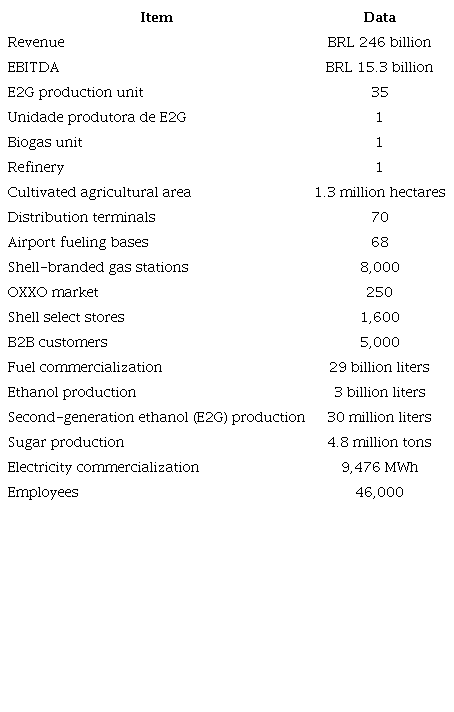
Note. Developed by the authors based on Relatório Integrado de Raízen (2024)5.
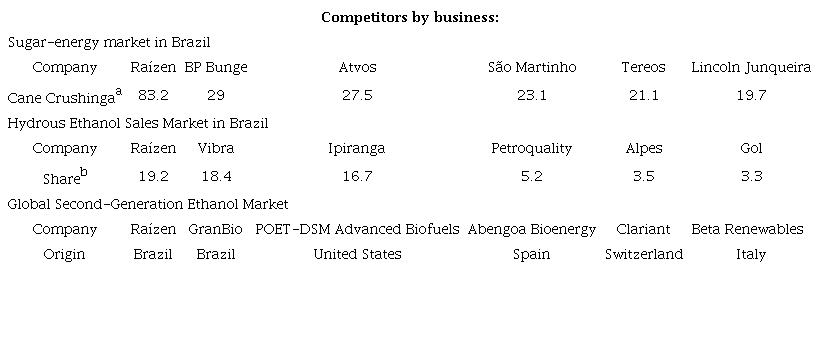
Note. Retrieved from FG/A and RPAnews. 6 a Harvest 23/24 in million tons.b Market share percentage in 2022.
Marina stressed the importance of adopting a business model that integrates international expansion with social impact. She proposed that every new project abroad incorporate local corporate social responsibility initiatives aligned with the SDGs, ensuring tangible benefits for the communities involved.
The group concurred that Raízen should undertake comprehensive feasibility studies, assessing not only the market potential but also the environmental and social impacts of its operations. They emphasized that the company should position itself as a partner in promoting sustainable development in emerging markets rather than solely focusing on maximizing profits.
SUSTAINABILITY STRATEGIES AND ALIGNMENT WITH THE SDGs
After reviewing the market analysis and exploring potential expansion opportunities, the managers shifted their focus to a new agenda. They recognized the challenge of adapting or expanding Raízen’s existing sustainability strategies to fit international operations while maintaining a balance between economic growth and environmental and social responsibility.
Roberto Silva, the CEO, opened the agenda by highlighting the company’s success in aligning its sustainability strategies with the SDGs of the 2030 Agenda (https://sdgs.un.org/goals). He emphasized Raízen’s dedication to sustainability, as demonstrated by achievements such as the Bonsucro certification and the Programa Reduzir, which showcase the company’s capability to operate responsibly and efficiently. He also drew attention to the publicly stated goals Raízen has committed to in support of the 2030 Agenda’s SDGs1 (Figure 2).
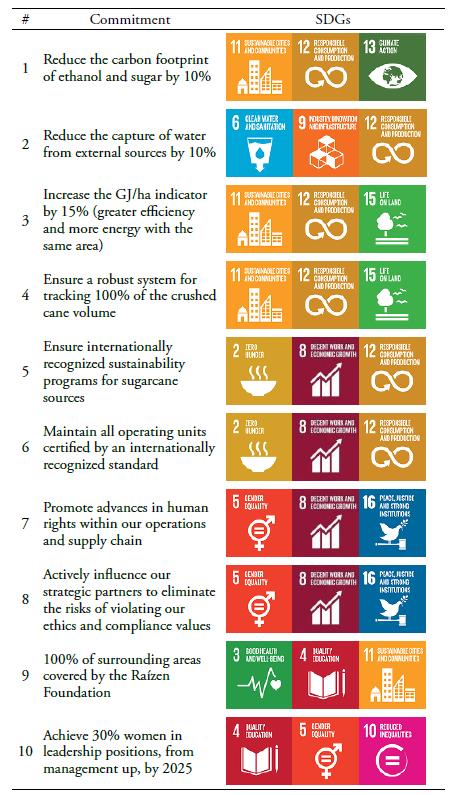
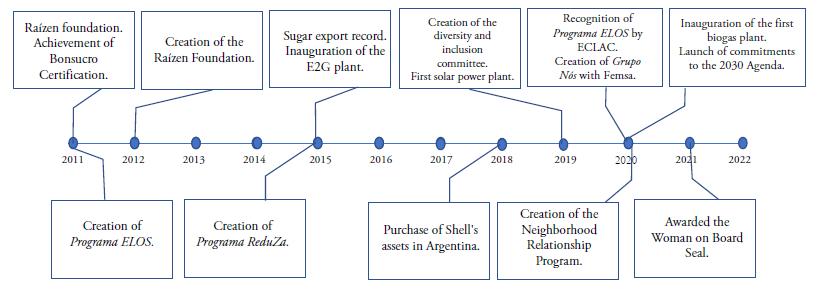
Marina Costa built on the CEO’s remarks by proposing a plan to adapt and expand these initiatives in new international operations. She suggested forming local partnerships in emerging markets to implement sustainable practices tailored to local conditions while ensuring alignment with the SDGs. She also emphasized Raízen’s capacity to undertake this initiative, presenting the company’s timeline to illustrate how sustainability has been a core element of its ‘DNA’ since its founding (Figure A3). This commitment is reflected in Raízen’s certifications, innovative technologies, awards, and recognition from stakeholders.
The team discussed the advantages and disadvantages of pursuing joint ventures or strategic partnerships instead of advancing independently5. They proposed identifying local partners who share Raízen’s values and can help navigate the regulatory and cultural complexities of emerging markets while also supporting local sustainable development efforts.
Carlos Mendes emphasized the importance of thoroughly evaluating the environmental and social impacts in the regions targeted for expansion. He proposed incorporating socio-environmental impact studies into the expansion process to ensure that new operations not only meet local regulatory requirements but also make meaningful contributions to the communities and the environment (https://sdgs.un.org/goals).
The managers explored specific ways Raízen could implement sustainable practices in new markets. One example was expanding the Programa ELOS to include international suppliers, fostering sustainable agricultural practices to improve environmental and social management across the supply chain. Another idea involved adapting the Programa Reduzir for new operations, emphasizing water conservation and the optimization of effluent treatment processes tailored to diverse geographical and climatic conditions5.
Raízen could also replicate its circular economy model, utilizing by-products from sugarcane and ethanol production to generate additional energy or create new products, such as biogas and sugarcane bagasse pellets. This approach not only minimizes waste but also supports the diversification of the energy matrix in the countries where Raízen operates1.
By the end of the second part of the meeting, the managers reached a consensus that Raízen’s international expansion must remain firmly rooted in its commitment to sustainability. They emphasized that the company’s growth should align with its core values and actively contribute to achieving the SDGs. This approach, they agreed, would not only enhance Raízen’s reputation but also generate long-term value for the company, its stakeholders, and the planet.
THE DILEMMA OF INTERNATIONAL EXPANSION: TWO ROADS AHEAD
As evening approached, the conference room at Raízen became the setting for a pivotal decision. Under Roberto’s leadership, the management team found themselves divided over a strategic dilemma that would shape the company’s path forward in its international expansion efforts.
Roberto, with a focused expression, listened carefully to his colleagues’ arguments as he considered the options before him: licensing the E2G technology to enable local production in other countries and support global sustainable development or choosing direct investment to ensure the company’s values and sustainability standards were upheld in operations beyond Brazil’s borders.
Marina Costa shared her perspective, advocating for the licensing of E2G technology as a way to amplify Raízen’s global impact. She emphasized that this approach could promote sustainable practices across borders and contribute to the SDGs of the 2030 Agenda. In Marina’s view, sharing Raízen’s technology could drive positive change in emerging markets and solidify the company’s position as a global leader in biofuel sustainability.
Carlos Mendes, however, voiced concerns about the potential loss of control over quality and the enforcement of Raízen’s values if the E2G technology were licensed. He argued that licensing could compromise these key aspects, suggesting that keeping all operations under the company’s direct control would better ensure the high standards that have driven Raízen’s success. In contrast, Marina pointed out that this approach would demand substantial financial investment to make the operation feasible, posing a significant short-term challenge.
Roberto considered the benefits of each approach. Direct expansion would give Raízen full control over its international operations, ensuring the preservation of its commitments and values. Conversely, licensing the E2G technology could significantly expand the company’s global influence, encouraging widespread adoption of sustainable practices and making a meaningful contribution to combating climate change. This option would also require less direct financial investment, freeing up resources for other initiatives. However, sharing financial risk through licensing would mean relinquishing some operational control, necessitating trust in partners and ongoing negotiations throughout various decision-making processes.
Both perspectives echoed in Roberto’s mind, each offering significant advantages and challenges for the company’s future. The room fell silent as he contemplated the decision that would shape Raízen’s direction and sustainable legacy. Bearing the weight of this critical choice, Roberto understood that the path forward must strike a balance between economic growth and an unwavering commitment to the planet and society.
As night descended over the city, Roberto recognized that the decision before him would shape not only Raízen’s future but also its potential influence on the global renewable energy and sustainability landscape. In the weeks ahead, he would need to present the chosen strategy to the board. Yet, the choice was anything but straightforward. So now, which path should he take?
Raízen was established in 2011 as a joint venture between Cosan and Shell, with each holding a 50% stake. That same year, it became the first company globally to receive the Bonsucro Certification, recognizing sustainable practices in sugar and ethanol production. In 2012, Raízen introduced Programa ELOS to enhance its supply chain and founded the Raízen Foundation, dedicated to social initiatives.
In 2015, Raízen introduced Programa ReduZa to improve energy efficiency in its industrial plants. The following year, it invested BRL 237 million to build its first second-generation ethanol plant, leveraging sugarcane residues to enhance biofuel production efficiency. In 2018, Raízen acquired Shell’s assets in Argentina for USD 950 million, expanding its network with over 600 fuel stations and refineries. By 2019, the company launched its first solar power plant and established a diversity and inclusion committee.
In 2020, Raízen partnered with Femsa, a global leader in the beverage and retail industries, to create Grupo Nós, a strategic joint venture backed by an investment of BRL 1 billion. The initiative aimed to strengthen Brazil’s fuel retail sector, with a focus on expanding the OXXO convenience store network. That same year, Programa ELOS was recognized by ECLAC as a model for sustainable practices. One of the year’s most significant achievements, however, was Raízen’s public commitment to 15 of the 17 United Nations Sustainable Development Goals (SDGs).5
EDUCATIONAL OBJECTIVES
This teaching case aims to encourage reflection on how the Sustainable Development Goals (SDGs) can influence a company’s international expansion. Raízen’s approach to global growth provides valuable insights for the field of International Business, particularly given its strong commitment to the SDGs. Since the integration of the SDGs into International Business (IB) literature is still evolving, this case demonstrates how these goals can be embedded into multinational strategies. It also underscores the critical role companies play in advancing practices that foster a more inclusive society and a more sustainable environment.
The secondary objectives of this teaching case are framed using Bloom’s Revised Taxonomy, as outlined by Anderson et al. (2001):
-
(a) To analyze how Raízen can achieve a balance between growth and sustainability during its international expansion, focusing on alignment with the SDGs and its effects on the company’s reputation and market position.
-
(b) To evaluate Raízen’s approach to licensing its E2G technology internationally, weighing the benefits of spreading sustainable practices worldwide against the potential risks of losing control over the company’s values and quality standards.
-
(c) To explore how a sustainable business model can be adapted to different international contexts, considering the advantages of the OLI Model and its alignment with the SDGs.
Sources and data collection methods
The information about the company was gathered from public sources, including the official website, national and international news portals, market reports, institutional documents, and videos. The characters and their dialogues are fictional and were created to serve as a teaching resource designed to engage students in this educational tool.
Case pre-test
The case was pre-tested in three graduate classes on sustainability and internationalization and one undergraduate International Trade class. These pre-tests enabled the evaluation of the case’s effectiveness across different educational levels and allowed for adjustments to optimize student learning.
Recommended use and difficulty level of the case
This teaching case is designed for undergraduate and graduate courses covering the topics of Strategic Management, International Business, Corporate Sustainability, Environmental Marketing, and Regulatory Policy. It encourages students to apply knowledge from these fields to meet the educational objectives. To structure the use of this teaching case, the dimensions proposed by Leenders and Erskine (1989) were adopted. The case is rated as difficult, intermediate, and easy for the analytical, conceptual, and presentation dimensions, respectively, as shown in Table 6.
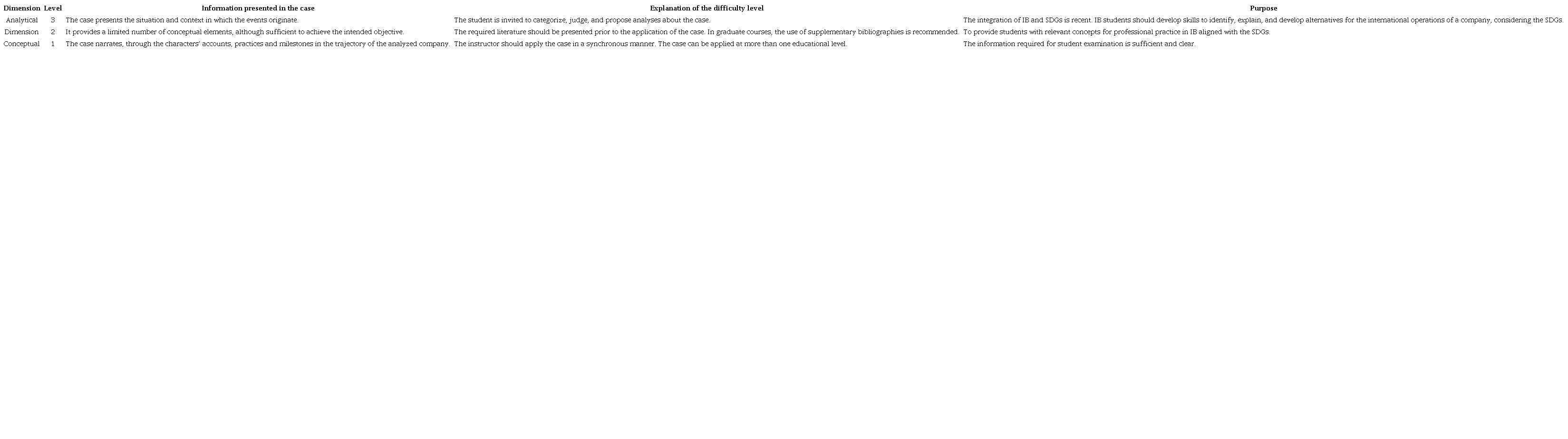
Note. Developed by the authors based on Leenders, M. R., & Erskine, J. A. (1989). Case research: The case writing process. University of Western Ontario: Research and Publications Division.
Suggested lesson plan
The proposed teaching-learning plan outlines the use of the case in both undergraduate and graduate courses. It assumes that students have already engaged with the recommended literature, supported by theoretical lectures and seminars. While students can review the materials in advance, the case is designed to be discussed and applied during a synchronous class session.
Teaching strategy: Role-playing supported by group discussion
Applying these principles to the Raízen case study aims to help students develop critical skills in an interactive and engaging way. Before introducing the case, it is important for the instructor to cover the relevant theoretical concepts, such as the OLI Model and the Sustainable Development Goals, to ensure students have the foundational knowledge needed for meaningful participation in the activity.
Role-playing is an instructional strategy where participants take on specific roles, often centered around decision-making in a dilemma. In this case, a simulated jury is recommended, where students work in teams to develop and present arguments that support their analyses, applying theoretical concepts to a real-world scenario. The case application process is illustrated in Figure 4.
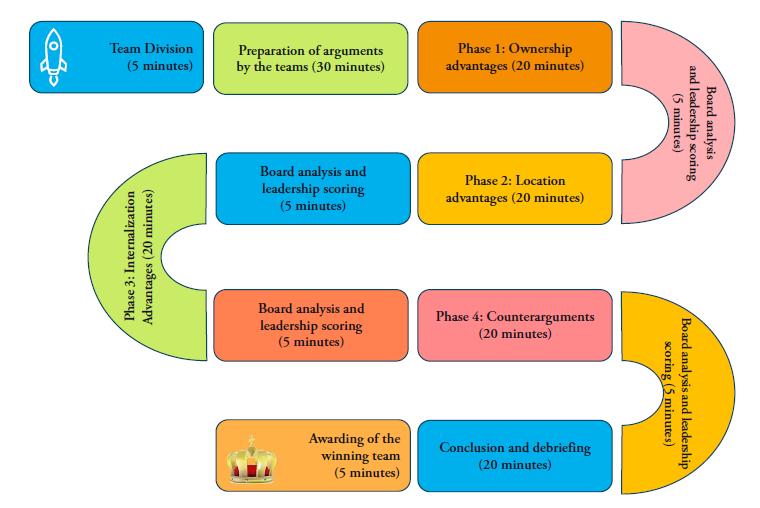
Figure 4
Flow for Case application.
Team formation (5 minutes)
In the first stage, the instructor can organize the students into the following groups:
-
Licensing Team: This team will advocate for the company’s international expansion through the licensing of E2G technology.
-
Direct Investment Team: These students will argue for the company’s international expansion via direct investment.
-
Board of Directors Team: A smaller group of students will take on the role of evaluators, acting as the Board of Directors. They will assess the arguments presented by the two competing teams and award points based on the strength of their arguments in each dimension of the OLI Model.
Preparation of arguments (30 minutes)
Each team will have a fixed amount of time to prepare their arguments, focusing on the three dimensions of the OLI Model while aligning them with the SDGs. Students are expected to address the following points:
-
Ownership Advantages: Explain how the team’s proposed decision leverages Raízen’s ownership strengths, such as its E2G technology.
-
Location Advantages: Highlight how the proposed decision takes advantage of the specific benefits offered by the target locations for international expansion.
-
Internalization Advantages: Discuss how the proposed decision ensures effective internalization of the company’s operations.
Presentation and evaluation (80 minutes)
The simulated jury process can be divided into four phases: the first three align with the dimensions of the OLI Model, and the final phase focuses on counter-arguments. In each phase, the team that receives the highest score from the Board of Directors will be awarded a leadership symbol, signifying their advantage at that stage. The Board of Directors will assign points based on the clarity and consistency of the arguments and the extent to which the SDGs are effectively integrated.
-
Phase 1: Ownership Advantages (20 minutes, 2 points)
-
Phase 2: Location Advantages (20 minutes, 2 points)
-
Phase 3: Internalization Advantages (20 minutes, 2 points)
-
Phase 4: Counter-arguments (20 minutes, 4 points).
The teams will evaluate and challenge the arguments presented by their opponents across all three dimensions of the OLI Model. Each team must develop counter-arguments that question the logic, coherence, and applicability of the concepts used by the opposing team. The goal is to expose weaknesses or inconsistencies in the opponent’s arguments while reinforcing the strength of their own strategy. After this phase, the board will assess the effectiveness of the counter-arguments and responses, awarding points based on each team’s ability to refute the opposing arguments and convincingly defend their position.
-
Conclusion and Debriefing: In this final stage, the instructor will summarize the key lessons from the activity, emphasizing the most important points discussed. The winning team will be acknowledged for its performance and the strength of its arguments during the exercise.
Questions for group discussion
OLI and SDG analysis
-
How can Raízen integrate the OLI Model, the SDGs, and a sustainable business model into its international expansion strategy?
-
What ownership, location, and internalization advantages can Raízen leverage to ensure its business model supports sustainability across various markets?
Challenges and opportunities in creating a sustainable business model
-
What key challenges and opportunities might Raízen encounter in creating a sustainable business model, whether through licensing E2G technology or pursuing direct investment in international markets?
-
How could these decisions affect the company’s commitment to achieving the SDGs?
Cultural and regulatory impact on expansion strategies
-
How might cultural and regulatory differences in emerging markets influence Raízen’s expansion strategy and the creation of a sustainable business model?
-
How can Raízen adjust its sustainability practices to fit these new contexts?
Strategic partnerships and sustainable business model
-
How can Raízen leverage strategic partnerships to develop and implement a sustainable business model that supports the SDGs and ensures successful international expansion?
-
What types of partnerships would be most effective in this process, considering the advantages outlined in the OLI Model?
Observations for the instructor at the case closing
Integration of theory and practice
Stress the importance of combining International Business theories, such as the OLI Model, with global sustainability initiatives like the SDGs. Show how this integration can create a solid framework for companies to make well-informed and sustainable strategic decisions.
Relevance of the SDGs for multinational enterprises (MNEs)
Highlight the importance of the SDGs for multinational enterprises (MNEs), not just as a matter of ethical and social responsibility but also as a strategic opportunity to drive innovation and gain a competitive edge in a global market that increasingly values sustainability.
Sustainable business model
Highlight that creating a sustainable business model that integrates the SDGs with the competitive advantages outlined in the OLI Model enables the company to ensure its operations are economically viable, environmentally responsible, and socially inclusive.
Critique and reflection
Encourage students to critically analyze the role of MNEs in advancing sustainable development, using Raízen as an example of how to balance economic growth with socio-environmental responsibility. Additionally, prompt discussion on how the company can further adapt its strategies to meet both market needs and global sustainability goals.
Suggested theoretical foundation
The proposed theoretical foundation consolidates key concepts to facilitate classroom discussion of the case and provides guidance for interpreting it through the lens of the OLI Model and the SDGs. Raízen, a Brazilian company established in 2011, serves as an example of a business model aligned with the increasing socio-environmental demands of the 21st century, emphasizing the production of more environmentally and socially sustainable products such as sugarcane ethanol. This teaching case offers a valuable opportunity to explore how multinational companies can contribute to achieving the SDGs while examining how these goals shape their strategies and behavior.
The SDGs, established by the United Nations in 2015, comprise 17 goals designed to reduce social and environmental inequalities and promote sustainable development worldwide (United Nation, 2021). Given their pivotal role in the global economy, MNEs bear both a significant responsibility and a strategic opportunity to contribute to these goals (Celone et al., 2022). However, a key challenge remains: translating these broad global objectives into actionable strategies within the business context (Montiel et al., 2021).
Recent studies in International Business have examined how MNEs can align their strategies with the SDGs. Montiel et al. (2021) offer a practical approach, suggesting that MNEs can manage their external impacts and contribute to the SDGs through strategic investments in their subsidiaries. They argue that aligning operations with the SDGs in host countries can maximize the positive impact of MNEs, effectively translating these global goals into actionable business strategies. This model serves as a valuable framework for both researchers and practitioners in International Business, demonstrating how multinational companies can actively engage with the SDGs.
The SDGs can be translated into three dimensions: (1) the type of externalities created by the MNE, (2) how the SDGs are integrated within the value chain, (3) and the organization of the MNE’s investments as internal or external (Montiel et al., 2021). In the first dimension, the authors categorize the goals based on the type of externality, whether positive or negative, forming six distinct groups. In the second dimension, the SDGs are positioned along the value chain (supply, production, distribution, use, and disposal), allowing them to be translated into tangible actions at the company level and making SDG management more accessible for multinational companies. Finally, the authors classify MNE investments as internal, involving parts with a contractual relationship with the company, and external, encompassing parts without such relationships.
Celone et al. (2022) emphasize the importance of proactive engagement, suggesting that MNEs should actively integrate the SDGs into their operations rather than simply responding to external pressures. Zanten and Van Tulder (2018) add to this discussion by proposing an institutional perspective, highlighting how MNEs engage with the SDGs. They point out that companies often prioritize goals that can be managed internally while avoiding those associated with negative environmental impacts.
Integrating the SDGs into the International Business (IB) research agenda presents a valuable opportunity to update IB theories. Within its range of economic and behavioral frameworks, the OLI Model is particularly well-suited for expansion to include an SDG-focused perspective in IB.
The OLI Model, introduced in the 1970s, offers a theoretical framework for understanding the motivations behind MNEs’ internationalization strategies, focusing on three key advantages: ownership, location, and internalization. Each of these dimensions can be expanded to include an SDG-focused perspective, enabling a more integrated analysis of sustainability and internationalization. This approach is particularly relevant for fostering a broader reflection on how the SDGs create a bidirectional flow for MNEs, where their actions not only contribute to achieving goals in both home and host countries but are also shaped by the resulting impacts (Montiel et al., 2021).
Ownership advantages refer to the unique assets a company holds, such as technology and expertise, that provide a competitive edge. For Raízen, its second-generation ethanol technology exemplifies an ownership advantage, aligning directly with SDG 7 (Affordable and Clean Energy). This technology not only establishes Raízen as a leader in the energy sector but also reinforces its commitment to global sustainability.
Location advantages refer to specific factors in the target markets for expansion, such as resource availability and government incentives. Raízen can capitalize on these advantages by focusing on markets that value sustainable practices and have regulations promoting renewable energy, aligning its efforts with SDG 13 (Climate Action).
Internalization advantages refer to the choice to keep operations under direct control rather than outsourcing them. By internalizing sustainable practices, Raízen can ensure its global operations remain aligned with the SDGs and uphold high standards of socio-environmental responsibility. This approach aligns with SDG 12 (Responsible Consumption and Production), promoting environmentally sustainable and socially inclusive operations. Alternatively, licensing the E2G technology could speed up the adoption of the technology, amplifying its environmental and social benefits.
The application of the OLI Model combined with the SDGs provides an innovative framework for analyzing the international expansion of multinational enterprises (MNEs) like Raízen, using their competitive advantages to foster sustainable development. Integrating the SDGs as key drivers of these advantages not only broadens the scope of the model but also modernizes its relevance in the pressing context of global sustainability. As Montiel et al. (2021), suggest, incorporating the SDGs can reshape how MNEs develop their internationalization strategies, affecting everything from market selection to the management of their global operations.
By combining these dimensions, Raízen establishes a sustainable business model (Abdelkafi & Täuscher, 2016; Evans et al., 2017) that not only supports its international expansion but also contributes to achieving the SDGs. A business model is defined as the “design or architecture of the mechanisms for creating, delivering, and capturing value that it employs” (Teece, 2010, p. 172). In contrast, a sustainable business model places sustainability at the core of the company’s value proposition and the way it generates value (Abdelkafi & Täuscher, 2016).
To shift from a traditional business model, companies must drive innovations within their business models (Bocken & Geradts, 2020; Evans et al., 2017). A sustainable business model fulfills four key criteria: (1) it enables managers to understand how the company’s actions affect the environment, (2) it demonstrates how environmental factors influence the company, (3) it highlights ways to manage resources and flows to enhance the model’s performance, and (4) it acknowledges the interactions between the company and the environment (Abdelkafi & Täuscher, 2016).
A sustainable business model considers a wider range of stakeholders, enabling the company to actively contribute to development while creating value both with and for its stakeholders (Freudenreich et al., 2020).
DISCUSSION
The discussion should be provided ahead of time to the team representing the company’s management board in the simulated jury. However, it should only serve as a starting point for analyzing the groups’ responses.
OLI and SDGs analysis
Raízen can strategically apply the advantages outlined in the OLI Model to integrate the Sustainable Development Goals (SDGs) and a sustainable business model into its international expansion strategy. By leveraging these OLI advantages, the company can promote sustainability while expanding into new markets. A key advantage is its E2G technology, which provides a substantial competitive edge. This innovation not only strengthens the company’s intellectual property but also directly supports SDG 7 (Affordable and Clean Energy) and SDG 9 (Industry, Innovation, and Infrastructure). By leading the energy sector in sustainability, Raízen can attract consumers in new markets and stakeholders who prioritize sustainable practices, reinforcing its global leadership in sustainable innovation.
Location advantages play a key role in choosing emerging markets that prioritize sustainability and have regulations aligned with the SDGs, especially in Europe. These advantages can give Raízen a competitive edge through benefits such as tax incentives, supportive regulations, and stronger connections with local consumers and partners who value sustainability. This aligns with Dunning and Lundan (2008) insights, highlighting the critical role of location in attracting foreign direct investment. Markets with strong sustainability policies not only ease Raízen’s entry but also provide a supportive environment for sustainable growth.
Internalization advantages enable the company to manage its resources and processes more effectively while integrating the SDGs into its global value chain. By internalizing sustainable practices, as outlined in the case, Raízen has enhanced operational efficiency, minimized risks and costs tied to unsustainable practices, and bolstered its global image. This approach ensures greater consistency in the company’s sustainable practices across markets while aligning its operations with global expectations for corporate responsibility and sustainability.
Challenges and opportunities in creating a sustainable business model
Raízen’s development of a sustainable business model, whether by licensing its E2G technology or directly expanding its operations into international markets, presents a range of challenges and opportunities. These can be analyzed through the lens of the OLI Model (Dunning, 1988; Dunning & Lundan, 2008) and recent research on the SDGs and MNEs (e.g., Celone et al., 2022; Montiel et al., 2021).
If the company chooses to license its E2G technology, it may face the challenge of ensuring that licensees uphold the brand’s high sustainability standards, highlighting the complexity of managing ownership advantages in an international setting. Transferring knowledge could also pose difficulties, as Raízen must ensure that licensed partners fully understand and correctly implement the technology, maintaining the alignment seen in its domestic operations. Additionally, creating contracts that safeguard intellectual property and ensure compliance with the SDGs requires careful attention to internalization processes. However, licensing offers Raízen the chance to expand the global reach of its E2G technology, significantly advancing SDG 7 (Affordable and Clean Energy) and SDG 9 (Industry, Innovation, and Infrastructure). This approach could also generate a new revenue stream through royalties, enhancing the company’s financial performance.
Direct expansion, however, comes with challenges, including the need for substantial investment and the risks of adapting to diverse cultural and regulatory environments, which are tied to location advantages. Managing international operations adds complexity to aligning with the SDGs, particularly in maintaining consistency between the objectives’ principles and sustainable practices across different contexts. Despite these challenges, direct expansion allows the company to retain full control over its operations, ensuring the consistent implementation of its sustainability practices and SDG-aligned strategies. This approach also strengthens Raízen’s global presence and reputation, positioning the company as a sustainability leader while unlocking new market opportunities.
The choice between licensing and direct expansion will have a significant impact on Raízen’s commitment to the SDGs. Licensing enables the global dissemination of its sustainable technology but requires strict oversight to ensure partners adopt practices aligned with the SDGs. In contrast, direct expansion guarantees that Raízen’s international operations fully adhere to the SDGs, reinforcing its commitment to global sustainability and generating long-term value for the company and the communities it serves. However, this approach is slower for technology diffusion and involves substantial costs. The company must carefully balance these challenges and opportunities while maintaining its dedication to the SDGs, ensuring that its international expansion strengthens its position as a driving force for positive change in global sustainability.
Cultural and regulatory impact on expansion strategies
Cultural and regulatory differences in emerging markets are critical factors in shaping Raízen’s international expansion strategy and its development of a sustainable business model. The location dimension, as outlined by Dunning and Lundan (2008), offers a theoretical framework to understand how these local factors can affect Raízen’s effectiveness and alignment with the SDGs. Cultural differences, in particular, can significantly impact stakeholder expectations, consumer behaviors, and the acceptance of sustainable products and technologies.
In emerging markets, where cultural norms vary greatly, the company must tailor its communication and engagement strategies to connect with local communities and encourage acceptance of its sustainable initiatives. This adaptation is crucial to align Raízen’s products and practices with the SDGs and to maximize the positive impact of its initiatives in diverse cultural settings.
Regulatory differences, on the other hand, can pose significant challenges for Raízen. Emerging markets often have widely varying regulations, impacting areas like environmental standards, tax incentives for sustainable practices, and renewable energy policies. Successfully navigating these regulations will be essential for Raízen’s international expansion, enabling the company to comply with local laws while also capitalizing on opportunities to lead in sustainability.
The company can draw on its experience and expertise from other markets to manage regulatory complexities, adapting its practices to ensure compliance and take full advantage of incentives offered by local governments. To align its sustainability practices with new contexts, the company can adopt a strategic approach that leverages its ownership and internalization advantages. By tailoring its innovations, such as E2G technology, to fit the cultural and regulatory specifics of each market, Raízen can turn these adaptations into competitive advantages, establishing itself as a leader in sustainable innovation.
By internalizing sustainable practices across its subsidiaries, Raízen can ensure consistency in its global operations, aligning with the SDGs and enabling each unit to contribute to global sustainability. This process may involve training programs, sharing best practices, and implementing sustainable management systems tailored to cultural and regulatory differences. Adapting its strategies to local contexts will not only help the company align its operations with the SDGs but also promote sustainability in a cohesive and flexible manner, maximizing its positive impact in emerging markets.
Strategic partnerships and sustainable business model
Raízen can leverage strategic partnerships as a vital tool to develop and implement a sustainable business model that supports the SDGs and facilitates successful international expansion. From an internalization perspective, strategic partnerships are essential for managing cross-border operations, enabling the company to benefit from synergies and shared expertise. These partnerships are especially important in emerging markets, where local knowledge and access to unique resources are critical for achieving success.
Montiel et al. (2021) argue that strategic partnerships provide multinational companies with an effective way to leverage competitive advantages while positively contributing to sustainable development in local communities. Engaging with stakeholders is seen as a vital component in creating sustainable business models (Freudenreich et al., 2020). Through such partnerships, Raízen can better integrate the SDGs into its operations, aligning its corporate goals with global development objectives. From a location perspective, strategic partnerships can help the company navigate regulatory and cultural challenges, easing its entry into new markets. These collaborations might involve local companies, NGOs, and governments, enabling Raízen to tailor its sustainability practices to the unique needs and conditions of each market.
Celone et al. (2022) highlight the importance of local collaboration in achieving the SDGs, noting that partnerships with local stakeholders are essential to the success of Raízen’s sustainability strategy. These partnerships can provide valuable access to local supply chains and market insights, enabling the company to integrate more effectively and responsibly into new markets.
In terms of ownership advantages, collaborations with academic and technological institutions can accelerate the development and dissemination of Raízen’s sustainable innovations, such as E2G. By sharing intellectual property, technical expertise, and knowledge with partners, Raízen can boost its innovation capabilities, creating products and services tailored to the specific sustainability needs of different regions. This approach not only strengthens Raízen’s competitive edge but also ensures its new operations align with the SDGs.
The most impactful partnerships for Raízen include:
-
Partnerships with environmental and social NGOs to strengthen the implementation and impact of sustainability initiatives, reflecting the location dimension.
-
Collaborations with academic institutions to advance research in sustainable technologies, enhancing ownership advantages.
-
Joint ventures with local companies to gain access to new markets and resources while leveraging vital local knowledge for more effective and responsible integration.
-
Partnerships with governments to ensure regulatory compliance and access to incentives, emphasizing the importance of a well-structured internalization strategy.
Through these partnerships, Raízen can expand its international presence while strengthening its commitment to global sustainability. This approach will enable the company to develop innovative solutions that align with the SDGs and solidify its position as a leader in sustainability within the energy sector.
REFERENCES
Abdelkafi, N., & Täuscher, K. (2016). Business Models for Sustainability From a System Dynamics Perspective. Organization & Environment, 29(1), 74-96. https://doi.org/10.1177/1086026615592930
Agência Nacional do Petróleo, Gás Natural e Biocombustíveis (2023). Anuário Estatístico Brasileiro do Petróleo, Gás Natural e Biocombustíveis. ANP. https://www.gov.br/anp/pt-br/centrais-de-conteudo/publicacoes/anuario-estatistico/arquivos-anuario-estatistico-2023/anuario-2023.pdf
Anderson, L. W., Krathwohl, D.R., Airasian, P. W., Cruikshank, K. A., Mayer, R. E., Pintrich, P. R., Raths J. & Wittrock M. C. (2001). A Taxonomy for Learning, Teaching, and Assessing: A Revision of Bloom’s Taxonomy of Educational Objectives. Addison Wesley Longman.
Agência Nacional do Petróleo. (2023). Anuário Estatístico Brasileiro do Petróleo, Gás Natural e Biocombustíveis. ANP. https://www.gov.br/anp/pt-br/centrais-de-conteudo/publicacoes/anuario-estatistico/arquivos-anuario-estatistico-2023/anuario-2023.pdf
Bocken, N. M. P., & Geradts, T. H. J. (2020). Barriers and drivers to sustainable business model innovation: Organization design and dynamic capabilities. Long Range Planning, 53(4), 101950. https://doi.org/10.1016/j.lrp.2019.101950
Celone, A., Cammarano, A., Caputo, M. & Michelino, F. (2022). Is it possible to improve the international business action towards the sustainable development goals?, Critical Perspectives on International Business, 18(4), 488-517. https://doi.org/10.1108/cpoib-08-2020-0122
Cherubin, N. (2024, 23 de abril). Veja quais são os 15 maiores grupos sucroenergéticos da safra 2023/24. RPAnews: Cana & Industrias. https://revistarpanews.com.br/veja-quais-sao-os-15-maiores-grupos-sucroenergeticos-da-safra-2023-24/
Dunning, J. H. (1988). The Eclectic Paradigm of International Production: A Restatement and Some Possible Extensions. Journal of International Business Studies, 19(1), 1-31. https://doi.org/10.1057/palgrave.jibs.8490372
Dunning, J. H., & Lundan, S.M. (2008). Institutions and the OLI paradigm of the multinational enterprise. Asia Pacific Journal of Management, 25(4):573-593. https://doi.org/10.1007/s10490-007-9074-z
Evans, S., Vladimirova, D., Holgado, M., Van Fossen, K., Yang, M., Silva, E. A., & Barlow, C. Y. (2017). Business Model Innovation for Sustainability: Towards a Unified Perspective for Creation of Sustainable Business Models. Business Strategy and the Environment, 26(5), 597-608. https://doi.org/10.1002/bse.1939
Freudenreich, B., Lüdeke-Freund, F., & Schaltegger, S. (2020). A stakeholder theory perspective on business models: Value creation for sustainability. Journal of Business Ethics, 166(1), 3-18. https://doi.org/10.1007/s10551-019-04112-z
Leenders, M. R., & Erskine, J. A. (1989). Case research: The case writing process. University of Western Ontario: Research and Publications Division.
Montiel, I., Cuervo-Cazurra, A., Park, J., Antolín-López, R., & Husted, B.W. (2021). Implementing the United Nations’ Sustainable Development Goals in international business. Journal of International Business Studies, 52(5):999-1030. https://doi.org/10.1057/s41267-021-00445-y
Raízen. (2021). Annual Report 2020-2021. https://www.raizen.com.br/relatorioanual/2021/pdf/raizen-rs2021-pt.pdf
Teece, D. J. (2010). Business Models, Business Strategy and Innovation. Long Range Planning, 43(2-3), 172-194. https://doi.org/10.1016/j.lrp.2009.07.003
United Nation. (2021). The 17 goals. https://sdgs.un.org/goals
Zanten, J. A., & Tulder, R. (2018). Multinational enterprises and the sustainable development goals: An institutional approach to corporate engagement. Journal of International Business Policy, 1(3-4), 208-233. https://doi.org/10.1057/s42214-018-0008-x
ADDITIONAL REFERENCES
Cantwell, J. (2015). An Introduction to the Eclectic Paradigm as a Meta-Framework for the Cross-Disciplinary Analysis of International Business. In J. Cantwell (Eds), The Eclectic Paradigm. Palgrave Macmillan. https://doi.org/10.1007/978-1-137-54471-1_1
Ferreira, M. A. S. P. V., Pinto, C. S. F., Serra, F. A. R., & Santos, J. C. 2013. A bibliometric study of John Dunning’s contribution to international business research. Review of Business Management, 15(46), 56-75. https://doi.org/10.7819/rbgn.v15i46.1163
Wirtz, B. W., Pistoia, A., Ullrich, S., & Göttel, V. (2016). Business models: Origin, development, and future research perspectives. Long Range Planning, 49(1), 36-54. https://doi.org/10.1016/j.lrp.2015.04.001
Notes

Author notes
One reviewer did not authorize the disclosure of his/her identity.
* Corresponding Author
Conflict of interest declaration