ABSTRACT: Motivated by the return of the investment promotion agenda for the City of Rio de Janeiro in 2021, this case aims to put students in the role of Alexandre Vermeulen, CEO of the newly created Municipal Investment Promotion Agency (IPA) Invest.Rio, so that they can reflect on how new projects led by the agency such as Porto Maravalley, the Center for Entrepreneurship and Finance of Tomorrow, the Web Summit Rio, and the structuring of an urban marketing plan that can be able to give new meaning to the international image of Rio de Janeiro, making the city the capital of entrepreneurship and innovation of Brazil and Latin America. The case was designed for undergraduate and graduate business administration and marketing students who wish to discuss destination image, urban marketing, and policies for attracting investments.
Keywords: Destination image, urban marketing, international investments, subnational investment promotion agencies, Invest, Rio.
RESUMO: Motivado pela retomada da agenda de promoção de investimentos para a Cidade do Rio de Janeiro a partir de 2021, o presente trabalho tem por objetivo colocar os alunos no papel de Alexandre Vermeulen, CEO da então recém-criada Agência de Promoção e Atração de Investimentos (API) municipal Invest.Rio, de forma que possam refletir acerca dos desafios da agência na entrega e sucesso operacional de projetos prioritários como o Porto Maravalley, o Centro de Empreendedorismo e Finanças do Amanhã, o Web Summit Rio, e a estruturação de uma plano de marketing urbano que possa ser capaz de ressignificar a imagem internacional do Rio de Janeiro, tornando a cidade a capital do empreendedorismo e inovação do Brasil e da América Latina. O caso foi pensado para alunos de graduação e pós-graduação dos cursos de administração de empresas, turismo e marketing, que queiram discutir temas como imagem destino, marketing urbano, posicionamento e políticas para atração de investimentos.
Palavras-chave: Imagem destino, marketing urbano, investimentos Internacionais, agencias de promoção de investimentos, Invest, Rio.
Case for Teaching
Rebranding Rio: From Marvelous City to the Capital of Entrepreneurship and Innovation
Rebranding Rio: De Cidade Maravilhosa a Capital do Empreendedorismo e Inovação
Received: 02 May 2024
Revised document received: 27 August 2024
Accepted: 09 November 2024
Published: 17 March 2025
In 2021, Invest.Rio was created with the goal of attracting foreign investments, promoting the city of Rio de Janeiro and its business opportunities internationally, and fostering the development of strategic economic sectors such as energy, infrastructure, technology and innovation, and tourism, among others. Subordinated to the Municipal Secretariat for Urban and Economic Development (SMDUE), Invest.Rio provided support and assistance to investors, helping them identify opportunities and providing relevant information to facilitate contact with governmental institutions and local partners.
Leading a highly streamlined team, Alexandre Vermeulen, the agency’s CEO, knew that the challenges were significant. More than just promoting Rio de Janeiro’s business environment, the agency was expected to be capable of leading major projects (Figure 1) that, in the medium term, would be the forerunners of a larger transformation involving the international rebranding of the city in order to make Rio de Janeiro the capital of entrepreneurship and innovation in Brazil and Latin America.

On the eve of new municipal elections and with a turbulent political scenario, Alexandre knew the urgency of developing a consistent and long-term action plan aimed at rebuilding the city’s urban marketing strategy, as well as repositioning and internationalizing the Rio de Janeiro brand. This plan would also be crucial to safeguard the survival of the agency and detach it from political-party projects. However, many doubts and contradictions remained about the path to take:
Where to start without repeating the same mistakes still so evident in the city’s past? How to reposition the brand of the ‘marvelous city,’ so firmly established as an international tourist destination, to make it attractive for new businesses? How to implement this change without losing the city’s natural vocation?
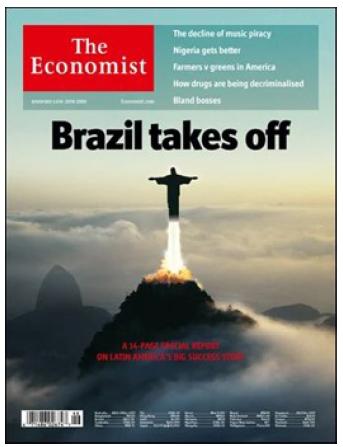
In 2009, The Economist introduced the world to the image of Christ the Redeemer taking off along with the title “Brazil Takes Off” (Figure 1). At that time, the article highlighted the country as Latin America’s greatest success story. With high expectations for economic growth in the coming years, the piece put the country firmly on the global stage. At that moment, the financial crisis that erupted in the United States in 2008 was already hitting the world’s major markets, and according to the magazine, “Brazil would be one of the last to feel the effects of the crisis and one of the first to emerge from it.”
Amid this positive phase, Brazil, and especially the city of Rio de Janeiro, won the right to host major international sports mega-events, notably the 2014 FIFA World Cup and the 2016 Summer Olympics.
To seize the moment, attract international investments to the city, promote its image, and foster local development, Rio Negócios was created in 2010 from a public-private initiative between the city of Rio de Janeiro and the Federation of Industries of the State of Rio de Janeiro (FIRJAN). In the following years, the agency assumed a fundamental role in attracting international investments that were responsible for enabling major structural projects aimed at revitalizing neglected areas of the city, such as the port region with Porto Maravilha. However, with a change in the city’s political management starting in 2017, Rio Negócios ended up being downsized, along with several other important initiatives on the international investment attraction agenda.
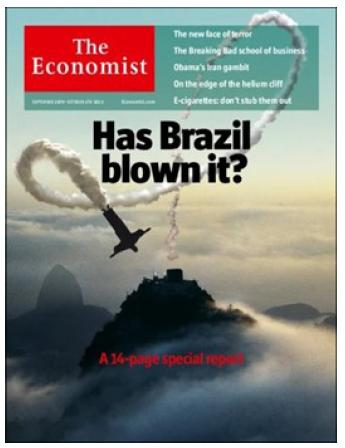
By then, Brazil, the state of Rio de Janeiro, and the city of Rio itself were already experiencing a severe financial and fiscal crisis, contradicting The Economist’s expectations from years earlier (Figure 2). The following years were marked by successive delays in public servant salaries and a lack of investments in essential areas such as health, education, and security.

In 2021, Eduardo Paes once again assumed the municipality of Rio de Janeiro, reviving old projects. During this same period, the state of Rio de Janeiro was already in the process of implementing its fiscal recovery regime, a long-term plan until 2031 aimed at rebalancing the government’s accounts. However, the renegotiation of the public debt was subject to a series of reforms such as the approval of a spending cap and adjustments to the social security model that had been adopted until then.
Amid this turbulent political and economic context, Rio de Janeiro never abandoned its vocation for tourism, being the most visited destination in Brazil, with an annual average of 7 million tourists, both domestic and foreign.
However, in times of instability and crisis, as highlighted earlier, further aggravated by COVID-19 in 2020, the need for economic diversification became more evident. In this context, Eduardo Paes, during his launching speech for one of the main innovation projects promised for his third term as municipal government, said:
“Tourism will continue to be a vital piece of Rio de Janeiro’s economic mosaic, but our goal of transforming the city into an innovation hub will provide economic resilience and a new impetus for its sustainable growth. However, we still need to work hard on our city’s image in the eyes of investors and entrepreneurs, especially foreign ones.”
The project mentioned in the speech, which would be under the responsibility of Invest.Rio, was called Porto Maravalley. By leveraging the structures created for the 2016 Rio Olympics, which revitalized the city’s port area, the project sought to draw inspiration from the Cambridge region in the Boston metropolitan area to make the city of Rio de Janeiro an innovation and education hub. The project aimed to transform 10,000 square meters of one of the old port warehouses into an innovation hub that by 2024 would be able to house 400 startups, generating direct jobs for a region that had already received 8 billion BRL in infrastructure investment years earlier, according to data from Panorama Crypto. Additionally, the initiative would share space with the Institute of Pure and Applied Mathematics (IMPA), one of the most renowned educational institutions in Brazil, which would launch its first undergraduate course in Rio focused on technology, IMPA Tech. Established in 1952, IMPA was recognized for being a research center that had so far only offered postgraduate programs in the fields of mathematics and physics.
With courses focused on artificial intelligence and big data, it was expected that IMPA would be capable of training the so-called ‘IT Generals’ of the city - those who would write algorithms and Python libraries for the neighboring technology companies, in an open innovation space logic. Alongside these, the ‘IT Soldiers’ would come from initiatives such as the Programadores Cariocas, which aimed to train low-income youth in programming. Funded entirely by the Rio de Janeiro City Hall, the Programadores Cariocas operated based on a logic of granting partial or full scholarships, plus financial aid of 500 BRL for six months and a computer for each student at the end of the course. Focusing on students who had graduated from public education, as well as other minorities, by early 2023 the program had over 3.6 thousand registered students.
Essentially, Alexandre and the entire Invest.Rio team understood that the project sought to optimize characteristics that the city of Rio de Janeiro had always possessed by aligning its vocations for the creative and climate economy, finance, and biotechnology with the cutting-edge knowledge available at the best higher education institutions in the country already present in the city. Thus, to attract technology companies and people to the region, the City Hall approved a law that reduced the Service Tax (ISS). The so-called ISS Tech supported by Municipal Law 7,000/2021 reduced the main municipal tax to 2% for companies that moved to the port area, making the region more competitive in fiscal terms even compared to other competing cities, such as the neighboring São Paulo. Along with this, the creation of the Economic Freedom Law, installed by Complementary Law 238/2021, facilitated the opening of low-risk service businesses such as retail stores, consultancies, and information technology (IT) companies, thereby eliminating the need for a license for low-impact businesses in the city.
The recipe for creating an innovation hub, along with the granting of tax benefits, generated a trend for the entire port region to be repopulated, even including residential projects that promised to bring 13,000 new residents to the area by the end of 2024. Alexandre knew that this second step was precisely what was missing in 2016 for the original Porto Maravilha project to have succeeded. Along with startups and universities, there was also movement from large companies. Thus, the ultimate goal of this project was to propose a repositioning of the region’s image, making the city of Rio de Janeiro the capital of innovation, entrepreneurship, and technology in Brazil, thereby proposing an important economic diversification for a state that still had nearly 75% of its economy based on the oil and gas sector. Alexandre knew, however, that despite Porto Maravalley being a municipal initiative, the cooperation of the private sector was essential for the project’s success. He argued that “without startups, no innovation hub can sustain itself,” and the challenge of convincing them to move to Rio de Janeiro was yet another of the many difficult variables to control.
As part of this strategy for diversification, image repositioning, and making the region’s economy greener and more sustainable, another priority project of Invest.Rio was called the Center for Entrepreneurship and Finance of Tomorrow. Also located in the city center, but this time in Cinelândia, in the old building of the Automobile Club of Brazil, the new energy hub promised to allocate 100 million BRL in investments to create an education, research, and development center capable of transforming the city into one of the global capitals of the energy transition. Developed in partnership with the Massachusetts Institute of Technology (MIT), along with local private energy sector companies such as Eletrobras, Petrobras, Vibra Energy, and the Securities and Exchange Commission (CVM), among other representatives, the idea was that the Center for Entrepreneurship and Finance of Tomorrow would assist in this journey of repositioning Rio de Janeiro’s urban image, attracting zero-carbon businesses to the city’s central region.
As a counterpart from the City Hall, Rio de Janeiro’s capital would reserve 60 million BRL in its budget for companies from any sector that wanted to access the carbon offset market. The idea was that companies that had demonstrably reduced their carbon emissions could receive a reduction in the municipal Service Tax (ISS). At the launch event of the project called Rio Energy Bay, Alexandre had the opportunity to hear João Pedro Nascimento, president of the CVM, saying that “the capital market sees a green and digital future, with agendas involving sustainable finance bringing many opportunities and resources to the country and the private sector. It is worth noting, however, that companies need to take on environmental counterparts.” In this context, the city’s energy transition hub should be committed to turning past expenses and problems into opportunities, as had already happened in the carbon market. “At a certain point, the goal was to make Rio de Janeiro a national, and perhaps international, reference in green economy matters,” Alexandre explained.
Thus, the Center for Entrepreneurship and Finance of Tomorrow would be responsible for boosting businesses with high sales potential in the international market, such as tokenization, securities, and even the cryptocurrency market. In the path of also making Rio de Janeiro a ‘crypto city,’ since early 2022, the City Hall had already established a working group focused on developing a business environment related to digital currencies, payment methods, and blockchain technology. The creation of a Municipal Committee on Crypto Investments promised to encourage the arrival of companies in the sector to the city, making Rio de Janeiro the first municipality in Brazil to accept Property Tax (IPTU) payments with cryptocurrencies. Connected to the technology ecosystem, companies in the crypto world would also benefit from the already mentioned ISS Tech.
Although they were initiatives of the City Hall, both in the case of Porto Maravalley and the Center for Entrepreneurship and Finance of Tomorrow, there was a plan for them to be subsequently managed by the private sector, in a concession model very similar to what had already been done with the Museum of Tomorrow and the Museum of Art of Rio (MAR). This strategy, resembling a public-private partnership, had already been tested and approved by the main infrastructure projects carried out by the city during the 2016 Olympics. Still, Alexandre knew there was much to learn from past experiences of the city and its way of relating to the private sector. “Not all of our PPP projects have been successful, and we need to learn from our mistakes so as not to repeat them,” he added.
The third major project of Invest.Rio and Alexandre’s mission during the 2021-2024 quadrennium was precisely bringing the Web Summit to the city. Created in 2010, the Web Summit was by that time already recognized as one of the largest conferences on technology, entrepreneurship, and innovation in the world. After its first edition was held in Dublin, Ireland, the conference quickly grew in size and relevance. By attracting a network of entrepreneurs, investors, technology leaders, marketing professionals, and media, the event had been contributing to discussions on topics such as artificial intelligence, cryptocurrencies, robotics, digital marketing, and startups, among others, through a wide range of lectures, discussion panels, workshops, and networking sessions. One of the main features of the conference was precisely its format, with multiple stages and a variety of sessions happening at the same time. Additionally, the Web Summit also served as a trade show where companies and startups had the opportunity to showcase their innovative solutions and products. Alexandre understood the importance of the project, especially because of its ability to project the hosting regions that received the event internationally.
After its first six editions in Ireland, the Web Summit moved to Lisbon, Portugal, in 2016, where it remained until recently. In 2023, the event organizers decided to expand and brought it to Latin America for the first time. The chosen stage was precisely the city of Rio de Janeiro, the gateway to Brazil and a place that had previously hosted the historic United Nations Sustainable Development Conferences Rio 92 and Rio+20. In the first edition of the event in Rio, more than 20,000 people attended. Among the participants, 6,000 were tourists from other regions of Brazil and another 3,000 were foreign tourists. During the four days of the event, a daily impact of 6 million BRL was observed in the city’s hospitality sector and another 2.3 million BRL in the bar and restaurant sector.
Confirming expectations, in 2024, Web Summit Rio grew by 25% compared to the previous year, attracting over 34,000 participants from 102 countries to the Riocentro pavilions. At least another four annual editions of the Web Summit, until 2028, were predicted for the city, and during this period, the City Hall estimated that the event could inject a total of 1.2 billion BRL into the local economy.
In an interview given by Mayor Eduardo Paes to the news agency Globo.com, he highlighted the importance of the event coming to the city as follows: “The six editions of Web Summit Rio have the potential to attract more than 800,000 people, with potential revenue to the City Hall of 100 million BRL in ISS from tourism during the month of the event each year.” Besides the impact on tourism and city revenue, the mayor emphasized that the event would place the city of Rio de Janeiro on the global stage in discussions of innovation and technology, reinforcing the identity they intended to create for the region. As the editions progressed, the expectation was that the event would grow even larger, and the roughly 34,000 people present in the 2024 edition could become up to 70,000 by 2028. Consequently, there was also an expectation of increased spending by the event attendees, going from 11.6 million BRL per day in the first edition to 54.3 million in 2028.
Investment promotion agencies (IPAs) often form part of a governmental structure or a non-profit organization that aims to provide advisory services to businesses and attract international investments to a country, region, or city. Often, these IPAs adopt a dual role by also promoting businesses from these regions to other parts of the country or even internationally. In Brazil, this activity has historically been the responsibility of the federal entity, especially since the founding of the Brazilian Trade and Investment Promotion Agency (ApexBrasil) in 1997. In recent years, however, to fill the gaps left by the federal government in terms of attraction and commercial promotion, states and municipalities have started to move toward creating their own agencies, in a phenomenon known as the Brazilian subnational IPAs.
This model, already widely tested and approved by foreign subnational entities, was first put into practice in 2008 with the creation of the São Paulo State Investment and Competitiveness Promotion Agency, an entity created by the Government of the State of São Paulo through Decree 53,766/2008 (https://www.al.sp.gov.br/norma/147183).Currently known as InvestSP, the agency in 2023 had over 100 employees and four international offices located in Shanghai (China), Dubai (United Arab Emirates), Munich (Germany), and New York (United States). Operating through a hybrid governance model that brings together public capital through the budget of the State Department of Economic Development and private capital through the contribution of associated companies, the agency has managed to ensure continuity in its actions and projects over the years.
As a result of years of maturity and stability of InvestSP, the state of São Paulo has stood out in recent years by strengthening ties with international actors such as multilateral banks, consular representations, and foreign chambers of commerce. These initiatives, besides leveraging development and attracting international investments to the state, also promise to facilitate São Paulo’s foreign trade by projecting the state’s image internationally. The agency’s priority projects on the investment attraction agenda have been within concessions and public-private partnerships, which, by 2023, attracted 180 billion BRL to the region. In addition to the articulation through the agency’s already mentioned international offices, the state of São Paulo has invested in a series of international roadshows, as well as coordination with different government departments.
The good results from InvestSP’s performance drew the attention of other states and municipalities to the importance of institutionalizing the agenda for attracting international investments and commercial promotion, making them permanent within governments. Consequently, what was observed in the following years was the creation of several other Brazilian subnational agencies, such as Invest Minas, Invest Paraná, Bahia Invest, Invest Piauí, Invest Rondônia, Invest Amazonas, Invest Mato Grosso, Invest Recife, São Paulo Negócios, Invest Curitiba, among others. Invest.Rio itself was reborn within this context in 2021, having been one of the main organizations responsible, within the Municipality of Rio de Janeiro, for coordinating between the public and private sectors to promote businesses and investments capable of diversifying the economy and transforming Rio’s image.
Alexandre was under pressure to deliver priority projects such as the Center for Entrepreneurship and Finance of Tomorrow, besides ensuring the operational success of the newly inaugurated Porto Maravalley. Despite having IMPA Tech already functioning with classes on-site, Porto Maravalley still faced the challenge of attracting more companies and startups. Alongside the Web Summit Rio, these projects could become the main catalysts for reshaping the image of the city of Rio de Janeiro as the capital of innovation, entrepreneurship, and sustainability in the country by attracting more technology sector companies capable of generating green jobs in the region, thus eliminating the city’s dependence on tourism and the long-ailing oil industry. However, by mid-2024, the problems were evident, as the delivery of the Energy Center of Tomorrow was delayed in its schedule, and the newly launched Maravalley was still far from operating at full capacity. Recent examples of discontinuities in the public policies of the city and the state of Rio de Janeiro had left the private sector wary, and the lack of their support was directly affecting the projects.
Nevertheless, Alexandre and his team were aware of the great potential that Rio de Janeiro’s lifestyle environment could offer as a differential for the city, aligning with the values upheld by many technology startups. The significant challenge for Alexandre remained: “How can I sell this image to those on the outside?” Within this context, Invest.Rio had a fundamental role as a subnational IPA capable of influencing the final decision of companies, especially foreign ones, on the location of their investments. However, the agency alone, despite being an important facilitator, sometimes found itself constrained, as it still depended on other government departments responsible for deciding on direct and indirect incentives essential for attracting new international investments.
The general sentiment was that more needed to be done and delivered to meet the ambitious goals set by City Hall and truly transform the city’s image to attract these foreign entrepreneurs along with their businesses and investments. If Invest.Rio’s final goal was to make Rio de Janeiro a smarter and more sustainable city, capable of being seen as the capital of entrepreneurship and open innovation in Brazil, and possibly even in Latin America, many questions still needed to be answered. Could Porto Maravalley and the Center for Entrepreneurship and Finance of Tomorrow truly propose this shift in the city’s image, attracting and securing new international investments in the region? Or would the arrival of greener and technology-focused businesses in the city be enough to promote the sustainable, digital, and innovative profile that Rio de Janeiro so desired? Alexandre knew that, in addition to delivering these projects effectively, it was imperative to have an urban marketing repositioning plan that aimed at the future and provided a long-term vision.
Alexandre felt pressured for answers from all sides. In a meeting with his team, he pointed out:
“I never thought it would be so difficult to be this bridge between the public and private sectors. The City Hall demands results from us, while investors and companies want answers and guarantees that do not always depend on us. What I can tell you is: keep working and be prepared. We will have challenging months ahead, and very likely, our actions today will define how they see our city tomorrow.”
ISS Tech - Initiative that reduces the Service Tax rate from 5% to 2% for technology companies located in the Porto Maravilha region.
Porto Maravalley - The largest innovation and education hub in Latin America, aimed at bringing together companies, startups, investors, academia, and research centers in a single space, providing connection and business opportunities among the various agents of the innovation ecosystem. Additionally, the Institute of Pure and Applied Mathematics (IMPA), a leading teaching reference worldwide, would offer an undergraduate degree in Mathematics for the first time, focused on technology.
Programadores Cariocas - In response to the significant shortage of qualified labor nationwide, the city launched a project aimed at training and qualifying young people in vulnerable situations in the field of programming. Through full and partial scholarships, the program would positively impact the lives of thousands of young cariocas, with a priority for minorities.
Sandbox.Rio - Allowed innovative products, services, and processes that do not yet fit into the city’s current regulations to be tested through a temporary authorization in a controlled environment. During the testing period, the activity would be monitored to collect data that might be useful for possible regulation.
Crypto Rio - Working group created to propose actions to transform Rio into a crypto-friendly city, establishing a favorable ecosystem for investments and the development of technologies based on blockchain and crypto assets. Starting in 2023, Rio would be the first city in the country to accept tax payments in crypto assets.
Reviver Centro - It was an urban, cultural, and economic recovery project that, in addition to reviving the downtown region of the city, has attracted new businesses and residents.
COR - A hub that centralized, managed, monitored, and integrated Rio’s urban operations in real time. The city was the first to operate NASA’s global landslide model. Today, the Rio Operations Center (COR) was used as one of the triggers to decide whether to change the operational level during heavy rains. The partnership with the space agency also included an urban flood forecasting model and an application that would issue air quality alerts.
Naves do Conhecimento - A social and digital inclusion project that promoted training and qualification courses, mainly in the areas of technology and information. Located in the northern and western zones of the city, the units also promoted cultural events, workshops, and internet access, all free of charge. The project has already received international awards, such as the Visionary of The Year Award.
Center for Entrepreneurship and Finance of Tomorrow - Innovation hub focused on energy and sustainability, with the aim of generating new businesses in the city.
ISS Neutro - Incentive for companies in the carbon credit chain to settle in Rio. Reduced the ISS rate from 5% to 2% for activities related to the development and auditing of carbon credit projects, registration activities, and the provision of carbon credit transaction platforms, in addition to an incentive of 60 million BRL per year for carbon credit buyers1.
The case aims to place students in the role of Alexandre Vermeulen, CEO of Invest.Rio, so that they can reflect on the repositioning of the city’s international brand and the strategies for attracting international investments aimed at enabling projects capable of impacting the urban image of Rio de Janeiro and making the city the capital of innovation and entrepreneurship in Brazil and Latin America. At the end of the case, students are expected to be able to: (1) identify tools for attracting investments; (2) understand urban marketing strategies used to promote destination image; and (3) reflect on the repositioning of international brands.
The data and information about the company were obtained from public sources, such as the official website, national and international news portals, market reports, institutional documents, and videos. The characters and their dialogues are fictional, created with the aim of serving as an educational resource to engage students in the educational tool.
The case was designed for undergraduate and graduate students in business administration, marketing, and tourism courses who want to discuss topics such as destination image, vocational studies, urban marketing, and policies for promoting and attracting international investments.
The case was based on secondary data sources such as scientific and journalistic articles, as well as public and consultancy reports. In parallel, primary data sources were also used through in-depth interviews with the CEO of Invest.Rio, the undersecretary for Urban and Economic Development of the City Hall of Rio de Janeiro, an international relations advisor from the Government of the State of Rio de Janeiro, and members of French Tech and Swiss Nex based in Rio. Additionally, members of various subnational Investment Promotion Agencies (IPAs), such as InvestSP and other agencies cited throughout the work, were also interviewed, totaling a fieldwork of 34 interviews.
Questions for small groups discussion:
This teaching plan assumes that students have done prior preparation and includes a two-hour class, as proposed below:
Start of the class and division of the room into small groups of five students (10 minutes);
Discussion in small groups (30 minutes);
Presentation of the case by the instructor (10 minutes);
Plenary discussion (60 minutes);
Conclusion of the discussion (10 minutes).
During the initial moments, it is suggested that the instructor warm up the discussion by introducing the following opening question to the group:
(Opening Question) What was the context of the city of Rio de Janeiro at the time of Invest.Rio’s creation, and how did the agency aim to promote its urban marketing?
Literature on urban marketing has increasingly focused on strategies that allow cities to stand out in a competitive global scenario, attracting investments, talent, and tourists (Della Corte et al., 2017). Urban marketing, a confluence of traditional marketing practices applied to the urban context, seeks to promote not only a city’s image and identity but also its economic, social, and sustainable development (Page & Hardyman, 1996). Within this field, various approaches are discussed, such as the revitalization of degraded urban areas, the promotion of large-scale events, and the creation of innovation ecosystems that attract startups and investors (Roundy, 2017). These efforts aim to reconfigure public and private perceptions of a city’s potential and attractiveness.
Recent literature (von Schönfeld & Ferreira, 2021) on urban marketing has emphasized the importance of strategic partnerships between public authorities, the private sector, and educational institutions, as well as the development of advanced technological infrastructures, such as high-speed internet and coworking spaces, to foster an innovation-friendly environment. Fiscal and regulatory incentives, training programs, and networking events are also crucial elements that, when combined, can transform the urban environment and reshape a city’s image in crisis, making it more attractive to various stakeholders (Coaffee et al., 2018). Successful examples of these strategies are observed in cities that implement ‘smart cities’ projects (Dameri, 2017), seeking not only operational efficiency but also sustainability and improved quality of life for their inhabitants.
Within the context of the case, when Mayor Eduardo Paes assumed his third mandate in 2021 and proposed the creation of Invest.Rio to resume the agenda of attracting international investments to the city of Rio de Janeiro, the city and state were suffering from a severe fiscal crisis that reduced public investment capacity, especially compared to the previous period of mega-events such as the 2014 FIFA World Cup and the 2016 Summer Olympics. Simultaneously, Invest.Rio was tasked with leading major transformation projects such as Porto Maravalley and the Center for Entrepreneurship and Finance of Tomorrow, in addition to bringing the Web Summit, which together aimed to transform the city’s image by developing the local innovation and technology environment and making Rio de Janeiro a smarter and more sustainable city, as described by the UN’s 2030 Agenda’s SDGs 9 and 11 (Cunha et al., 2016).
Given this context, Invest.Rio aimed to create a favorable environment for technology and innovation, capable of fostering the emergence and collaboration between companies, startups, educational institutions, and public bodies, which together could implement these technologies to create a more innovative environment. In addition to these strategic partnerships, which are essential for accessing resources, knowledge, and financing needed for technological development, regions intending to become innovation hubs must also invest in high-quality technological infrastructure, such as high-speed internet, research spaces, coworking spaces, and incubators, thus creating an environment capable of developing smart solutions for the city and society in general (Nam & Pardo, 2011).
Simultaneously, it is necessary to consider fiscal and regulatory incentives capable of attracting companies to specific areas of the city. These incentives can include tax reductions, fee exemptions, simplification of bureaucratic processes, and the creation of regulations favorable to the development of innovative technologies (Kim et al., 2021). Furthermore, training and education programs focused on technology and innovation through courses, workshops, lectures, and partnerships with educational institutions to provide training in areas such as the internet of things (IoT), data analysis, sustainable energy, and urban mobility need to be considered (Liu et al., 2017).
These combined strategies could support the process of transforming the city’s image by creating a more entrepreneurial environment, with regular networking events, startup competitions, and hackathons. Such activities could demonstrate the capacity to connect entrepreneurs, mentors, and investors, stimulating collaboration and the emergence of new ideas and projects for the city. Behind this environment, it is also necessary to consider entrepreneurship support programs capable of promoting startup financing as well as mentoring activities, technical assistance, and access to investor networks (Dempwolf et al., 2014).
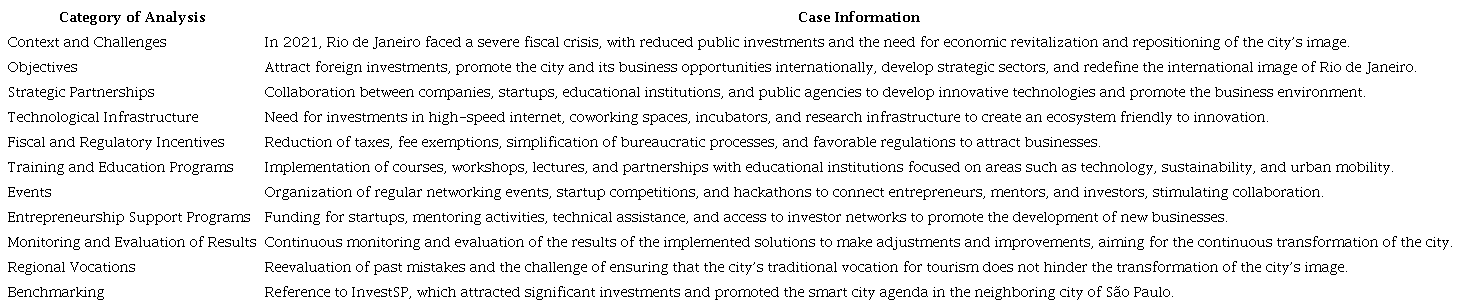
With this in mind, sustainable cities and communities need to be committed to creating opportunities to test and implement technological solutions in a real urban environment, allowing for the refinement of solutions before their large-scale deployment (Van Winden & Van den Buuse, 2017). All these initiatives need to be continuously considered, as urban spaces and society are in constant transformation. Thus, sustainable cities and communities that aim to promote positive images of their destinations need to be capable of monitoring and evaluating the results of implemented solutions, allowing those involved in the local technology and innovation environment to adjust their approaches, learn from the results, and continuously improve the solutions offered (Waghmare & Singhal, 2022). In part, we can observe that projects being developed by the city of Rio de Janeiro such as Porto Maravalley follow this playbook and, if well implemented, could transform the local innovation environment, reshaping its image, and increase the sustainability of the city and its community. The following table highlights some urban marketing categories that could be worked on with the students vis-à-vis the information contained in the case.

Initiatives of more mature subnational IPAs, such as InvestSP itself, have been performing this type of work for a longer time. Created in 2008 through a state decree, the agency has played an important role in articulating the state of São Paulo with international agents, creating a friendlier environment for both attracting international investments and promoting the state’s foreign trade. With priority agendas on privatization projects and public-private partnerships, the agency’s actions were already able to attract around 180 billion BRL in investments by 2023 (SP Notícias, 2023), bringing significant advancements in the smart city agenda for São Paulo.
After this initial discussion, the instructor could present the following transition question to continue the case analysis:
(Transition Question 1) Do you believe that the city’s historical vocation for tourism and some past mistakes could hinder the city in its project to transform its image?
At this moment, the instructor can once again highlight the political and economic difficulties faced by the country and the city of Rio de Janeiro in recent years, emphasizing that issues of political and institutional insecurity have negatively impacted the local business environment. In parallel, it can be mentioned that the strong vocation for tourism may at times hinder the attraction and retention of investments in the region, which is still not widely recognized as a business destination in the country. After this brief discussion, the following question could be presented to the group:
(Discussion Question) In the path to repositioning the international brand of Rio de Janeiro, what is the importance of discussions on innovation and sustainability in this transformation agenda?
The concept of ‘smart cities’ has evolved considerably in recent decades, focusing on the use of innovative technologies to improve citizens’ quality of life and promote urban sustainability (Sharida et al., 2020). According to Chourabi et al. (2012), a smart city is characterized by the integration of information and communication technologies (ICT) in areas such as urban infrastructure, public services, governance, and planning. This integration aims to optimize the efficiency and effectiveness of urban operations while promoting citizen participation and transparent governance. Elements such as smart grids, advanced transportation systems, smart waste management, and efficient use of energy resources are crucial components of a smart city. According to (Chourabi et al., 2012), the interconnection between these areas allows for more effective resource management, reducing environmental impacts and improving citizens’ quality of life.
When we talk about smart cities and communities, the topics of the green economy and energy transition can be seen as interconnected, playing a fundamental role in building a smarter, more sustainable, and resilient future (Haarstad, 2016). This interconnection can be observed in the attempt of sustainable cities and communities to adopt technological solutions capable of promoting their international image by adopting measures such as energy efficiency, carbon emission reduction, and efficient resource management, thus contributing to the overall improvement of their citizens’ quality of life (Ferrara, 2015). In the case of Rio de Janeiro, it is expected that projects such as the Center for Entrepreneurship and Finance of Tomorrow will promote initiatives capable of providing clean and renewable energy for the region, reducing dependency on fossil fuels in favor of a greener economy.
The concept of the green economy, in turn, derives from an economic approach that seeks to reconcile economic growth with environmental sustainability (Mingaleva et al., 2019). Thus, greener jobs and businesses would be those that promote more efficient use of natural resources, lower pollutant emissions, and the development of more sustainable sectors such as renewable energies, energy efficiency, sustainable agriculture, clean transportation systems, and recycling.
Considering that a large part of its economy is still based on the oil and gas industry, thinking about energy transition is also important for the region of Rio de Janeiro. In this sense, energy transition can be understood as the shift from the current fossil-fuel-based model to a more sustainable energy system, based on renewable energy sources and low environmental impact (Lim et al., 2019). According to the authors, in addition to reducing greenhouse gas emissions and improving energy efficiency, renewable energies such as solar, wind, hydroelectric, and biomass can mitigate climate change and ensure long-term energy security, contributing to the creation of smarter cities.
Projects linked to the Center for Entrepreneurship and Finance of Tomorrow aimed to promote a favorable environment for the energy transition of the energy suppliers and distributors in the state of Rio de Janeiro. In this way, the region hoped to renew its business environment by strengthening and diversifying the energy matrix used by the local industry, which had been lagging. By combining tax incentives with the creation of a qualified workforce for this market niche, it was expected that Rio de Janeiro could become the capital of energy transition in Brazil, leveraging its image toward a greener and more innovative city.
All these initiatives aimed ultimately to promote sustainability in an attempt to balance the economic, social, and environmental aspects of development. This balance involves precisely the adoption of practices and policies that meet present needs without compromising the ability of future generations to meet their own needs (Bătăgan, 2011). By promoting natural resource conservation, reducing the ecological footprint, ensuring social justice, inclusion, equity, resilience, and biodiversity protection, the sustainability of cities needs to be seen as an integrated measure that recognizes the interdependence between natural, economic, and social systems (Chourabi et al., 2012).
But to truly achieve the goals of SDGs 9 and 11 of the 2030 Agenda, it is still necessary for governments, companies, academic institutions, and civil society to work together in formulating appropriate policies and regulations (Myeong et al., 2018). These regulations must also be capable of encouraging investment in research and development of clean technologies, promoting citizen participation and engagement, environmental education, and fostering green and collaborative entrepreneurship. By adopting such approaches, it would be possible to build more efficient, resilient, inclusive, and healthy cities that offer a high quality of life to their inhabitants while preserving natural resources and mitigating the impacts of climate change (Thornbush et al., 2013).
After this discussion, the instructor could begin the final stage of the analysis. To do this, the following transition question could be presented to the group:
(Transition Question 2) What other cities around the world could Rio de Janeiro use as benchmarks to further develop initiatives to make the city smarter and more sustainable?
The answer to this question can be more open, as there are various examples worldwide that students could mention. To contribute to this discussion, the instructor could mention cities like Copenhagen for its carbon neutrality goal and smart energy solutions; Barcelona, with its vast network of urban monitoring sensors; Seoul, for its efficient infrastructure management and citizen participation; Singapore, with its ‘Smart Nation’ program focusing on mobility and health; and Amsterdam, for its initiatives in the circular economy and open data. These cities offer valuable lessons and strategies to optimize sustainability and urban quality of life, which can serve as references for Rio de Janeiro. After this stage, the following closing question could be introduced.
(Closing Question) In order to lead all these city transformation projects, Invest.Rio still needed to focus on improving Rio de Janeiro’s image as a destination for investors, highlighting its strengths and future vision to leave a positive legacy for the city. In this sense, what investment attraction tools could Alexandre and his team use?
According to Belderbos et al. (2020), foreign companies tend to prefer investing in global cities as these locations are capable of showing a smaller perceived distance between the region of origin and the target investment region. In this context, subnational investment promotion agencies like Invest.Rio play a fundamental role in reducing the so-called cost of doing business with foreigners, as they can provide essential local context information, thereby shortening the distance from foreign investors.
Head and Ries (1996) point out, however, that the competition between cities to create a more attractive environment for investments, especially international ones, is not new. In this sense, Invest.Rio should observe the movements being carried out by other subnational IPAs, especially those more mature agencies from nearby states with similar competencies such as São Paulo, Minas Gerais, and Paraná. On the other hand, Fetscherin (2010) highlights that the issue of destination image is relative and tends to vary from company to company based on characteristics that consider not only their country of origin but also the manager’s background, previous international experiences, among others. Although there are some indices that measure the attractiveness of a country’s brand, they are still scarce when brought to the city or regional level, creating additional evaluation challenges for companies.
Especially in emerging countries, the way regions and cities are viewed internationally becomes essential for the investment decision (Meyer & Nguyen, 2005). Within this perception, the authors emphasize the role of local institutions. The better the image of local institutions, the more committed international companies would be in terms of resources. In this context, the security of continuity of Invest.Rio’s work becomes essential for investor confidence. Increasingly concerned with global competitiveness, multinationals have been paying close attention to the choice of their business location (Ma et al., 2013), with regional headquarters almost always positioned in global cities due to their connectivity, geographic position, and institutions promoting local entrepreneurship (Belderbos et al., 2017).
On the other hand, policies to attract international investments would aim to facilitate the entry of foreign capital through fiscal and financial incentives, regulatory reforms, and leveraging bilateral agreements that the country is part of (Blomström et al., 2003). Promotion tools include the work of investment promotion agencies (IPAs), participation in fairs and trade missions, international marketing campaigns, and online investment portals. At the same time, considering strategic partnerships, investment facilitation services, and sustainability programs would also be essential to this dynamic (Miškinis & Byrka, 2014). Finally, examining case studies of successful countries and implementing monitoring and evaluation systems would help refine these strategies, ensuring a favorable and attractive business environment (Yamin & Sinkovics, 2009).

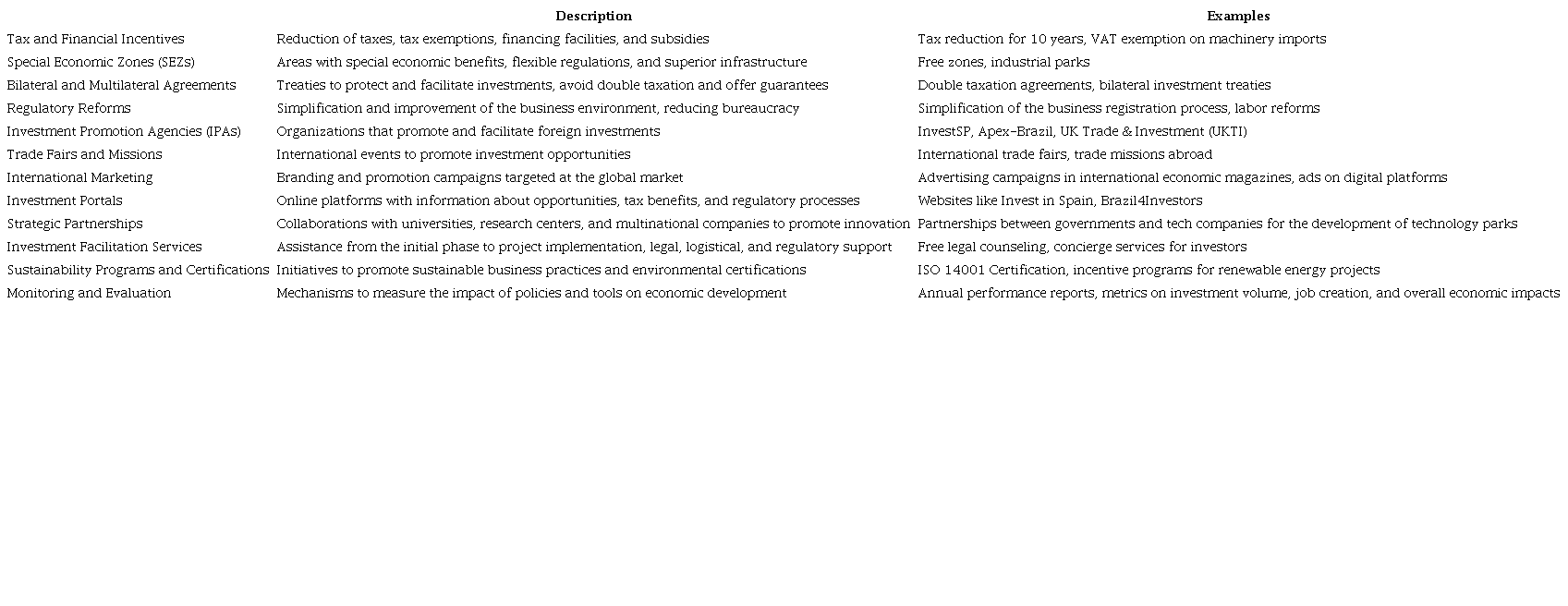
What Invest.Rio aims to achieve through its priority projects, such as Porto Maravalley, the Center for Entrepreneurship and Finance of Tomorrow, and the Web Summit, aligns with these principles as they contribute to the urban marketing of the city of Rio de Janeiro on a global level and boost competitiveness for city spaces with the arrival of new businesses. According to Doel and Hubbard (2002), however, for this dynamic to be successful, it always needs to be supported by local institutions through long-term government plans. To conclude the debate, Alexandre and his team could look at what other regions, examples of re-signifying the local image, have been doing. Among the most internationally known examples, the instructor could present to the group slides with news reports on Saudi Arabia in sports (The Guardian, 2023), Japan with anime (BBC, 2019), Colombia with tourism (CNTraveler, 2017), as well as Chinese efforts to cleanse the country’s image of low-quality or second-rate products(China Daily, 2017). A summary of policies and tools for attracting international investments to the city can be seen in the following chart.
The authors declare that they have no conflicts of interest and did not receive any financial support for this research. Additionally, although inspired by real events, the facts described in the case do not necessarily reflect the opinions or viewpoints of the mentioned agencies or individuals.
Bruno Fernandes (Universidade Federal do Rio de Janeiro, Brazil) https://orcid.org/0000-0002-1455-0092
*Corresponding Author