2025
292
29102024
30032025
 Érica Maria Lopes Menezes ericamarialmenezes@gmail.com
Universidade Federal do Rio de Janeiro, Brazil
Marie Anne Macadar marie.macadar@coppead.ufrj.br
Universidade Federal do Rio de Janeiro, Brazil
ABSTRACT
Objective: this paper examines how academic literature addresses the governance of Smart City Living Labs (SCLLs) and their role in promoting sustainability, inclusivity, and alignment with the Sustainable Development Goals (SDGs). This proposal presents a framework that synthesizes SCLL governance, structured around infrastructure needs, motivating elements, and tools for citizen co-creation. The goal is to support stakeholders in shaping labs that foster innovation and sustainability. The study argues that SCLLs’ success relies on governance models beyond hierarchical or technocratic logic, emphasizing co-creation, shared responsibility, and local solutions. It critiques the lack of Global South representation and calls for inclusive engagement.
Theoretical approach: drawing on collaborative, experimental and relational governance theories, the paper integrates insights from innovation management, urban studies, and sustainability science. The main provocation concerns the epistemological and geographic imbalance in literature, dominated by Northern contexts. The paper urges broader inclusion of Southern perspectives.
Methods: this study employs a mixed-methods approach that combines bibliometric analysis and content-based review from Scopus, Web of Science, EBSCO, Scielo, and Spell, analyzed using R Studio.
Results: the findings reveal a concentration in the Global North, rising interest in co-creation, and the identification of various governance types.
Conclusions: the proposed framework systematizes key factors for implementing sustainable SCLLs, guiding inclusive and adaptive urban innovation.
Keywords: Smart city, living lab, governance, bibliometric analysis, sustainability.
RESUMO
Objetivo: O artigo analisa como a literatura acadêmica aborda a governança dos Living Labs de Cidades Inteligentes (SCLLs) e seu papel na promoção da sustentabilidade, inclusão e alinhamento aos Objetivos de Desenvolvimento Sustentável (ODS). Apresenta-se um modelo que sintetiza a governança dos SCLLs, estruturado com base nas necessidades de infraestrutura, elementos motivadores e ferramentas de cocriação cidadã. O objetivo é apoiar os atores na criação de laboratórios que estimulem inovação e sustentabilidade. O estudo argumenta que o sucesso dos SCLLs depende de modelos de governança que vão além da lógica hierárquica ou tecnocrática, com ênfase na cocriação, responsabilidade compartilhada e soluções locais. Critica a baixa representação do Sul Global e defende maior inclusão.
Abordagem teórica: com base em teorias de governança colaborativa, experimental e relacional, o artigo integra perspectivas da gestão da inovação, estudos urbanos e sustentabilidade. A principal provocação é o desequilíbrio epistemológico e geográfico na literatura, dominada por contextos do Norte Global. Defende-se a maior inclusão de visões do Sul Global.
Métodos: o estudo adota abordagem mista, com análise bibliométrica e revisão de conteúdo a partir das bases Scopus, Web of Science, EBSCO, Scielo e Spell, analisadas no R Studio.
Resultados: os achados mostram concentração no Norte Global, maior interesse pela cocriação e diferentes tipos de governança.
Conclusões: o modelo propõe fatores-chave para implementar SCLLs sustentáveis, orientando uma inovação urbana inclusiva e adaptativa.
Palavras-chave: Smart city, living lab, governança, análise bibliométrica, sustentabilidade.
Theoretical-empirical Article
Smart City Living Lab Governance Paths to Sustainability: Bibliometric and Content Analysis
Caminhos de Governança para a Sustentabilidade em Living Labs de Cidades Inteligentes: Análise Bibliométrica e de Conteúdo
Érica Maria Lopes Menezes ericamarialmenezes@gmail.com
Marie Anne Macadar marie.macadar@coppead.ufrj.br
Received: 29 October 2024
Revised document received: 30 March 2025
Accepted: 30 March 2025
Published: 19 May 2025
The term ‘smart cities’ is increasingly popular among scholars, urban planners, and public managers. There is not only one definition for the term (Cugurullo, 2018), as there is no single way to transform cities. The only unanimous point is the need to make cities more efficient, responsive, sustainable, and resilient.
People must change their way of dealing with the world and natural resources. In partnership with the United Nations, environmental specialists warn government representatives, manufacturers, agricultural producers, and civil society about the necessity of adopting new habits and more efficient processes. This call is embodied in the 17 Sustainable Development Goals (SDG) of the 2030 Agenda, in which 16 specific targets must be pursued using more inclusive, egalitarian methodologies, resulting in less harm to the environment. The efficiency claimed in the 2030 Agenda encompasses less water waste, more trash recycling, more clean energy generation, and any actions that reduce the pressure on nature, social inequalities, and poverty. It is a global goal that must involve all countries, despite their individual challenges and socio-economic limitations (Biglari et al., 2022).
Practical changes can occur on multiple scales, from the global and continental levels to the scale of a city or local community. As the smallest geopolitical unit, cities have become the focus of debates and emergent technologies. Technological prospects are diverse but share the same main goal: contributing to a more sustainable world. Technological solutions need testing in a controlled environment before being introduced to society. Living labs (LLs) and test beds aim to provide a real-life space to experiment with these technologies in collaboration with various stakeholders (Gasco, 2017).
The smart city living lab (SCLL) theme is multidisciplinary because there are differences in urban contexts between countries and continents. The differences between North and South contexts are mainly explained by the lack of infrastructure, essential services, and socio-economic constraints (Marchetti et al., 2019). Tackling infrastructural issues resulting from cities’ cultural formation to achieve sustainable and resilient cities that respond to the SDGs is challenging. Roll et al. (2024) point out the biases present in smart cities living labs due to the number of studies developed in the European context, while Robaeyst et al. (2023) highlight the need to better understand “stakeholder governance, knowledge sharing, and generation” (p. 18)in multiple living lab contexts. Changing the governance of societies’ processes and amplifying the discussions to include the Global South in actions to reach long-term city sustainability is necessary. The first step to expand the LLs discussion is understanding the current academic production and where the discussion is happening, in order to propose new fields for exploration. Thus, this study aims to answer the research question: What is the state of the art in the literature regarding the discussions of smart city living labs governance and sustainability?
This article is structured as follows: it begins with the theoretical background, followed by the methodology and the bibliometric and literature analyses. The final section presents the study’s conclusions and highlights opportunities for future research in the field.
The theoretical background is categorized into three areas: living labs, governance, and sustainability. The first focuses on LL formation, the second on governance types in smart cities, and the third on governance mechanisms in living labs with sustainability objectives.
Extreme weather, resource scarcity, epidemics, and social vulnerability are global challenges, especially in large cities (Toppeta, 2010). While these urban centers centralize services, innovation, and wealth (Giffinger et al., 2007), they also face urban sprawl, poor infrastructure, traffic, and excessive waste. Albino et al. (2015) note that cities’ metabolism is characterized by resource input and waste output, which exacerbates social and economic problems.
Members of academia and the market look for global, multidisciplinary solutions to transform cities into smart spaces, focusing on smart economy, mobility, living, people, and governance (Hollands, 2008). These solutions integrate information and communication technology (ICT), social innovation policies, and new urban management approaches.
Nam and Pardo (2011) point out that cities must be shaped to be smart using technology, policies, and management. Technology is the infrastructure that allows connection between people, reduces water and energy consumption, and enables data collection. This technology needs proper management to mitigate unexpected problems. Policies work together with management to ensure the balance between government and other actors and the experimentation of technologies that will benefit citizens.
The need for urban alternatives prompted academics to develop collaborative tools for based on experimentation and prototyping. The tool adopted was the living lab, a concept still under construction. This study adopts Schaffers and Turkama’s (2012) definition, which explains it as a collaborative platform for research, development, and experimentation in real-life contexts, based on specific methodologies, innovative tools, and collectively constructed activities. According to the definition, living labs are built on three pillars: innovation-driven methodology, experimentation, and co-creative development. Additionally, Campos and Marin-Gonzalez (2023) complement it highlighting that it is usually situated in a specific space and is driven by search for solutions to complex problems. To solve these complex problems, Yilmaz and Ertekin (2023)propose that LLs must be areas for open ideas, fostering empowerment and spontaneity from participants.
Baran and Berkowicz (2021), Schaffers et al. (2011), and Tanda and De Marco (2021) consider living labs and test beds as methodologies for research, development, and testing technologies. The purpose is to generate innovation concomitantly with community knowledge construction and dissemination (Acuto et al., 2019; Cappellaro et al., 2019; Günther et al., 2023; Koens et al., 2024). Given this, these spaces can also be treated as platforms for pedagogical development (Chang et al., 2018; Huertas et al., 2021). The flow of knowledge generated is in the technology sector with teaching development tools and interfaces (Baran & Berkowicz, 2021), in the social sector with teaching about inclusion (Afacan, 2023) and community education (Petrescu et al., 2022), and in the environmental industry with teaching about sustainability and network actions (Keeler et al., 2018).
Cuomo et al. (2020) consider living labs (LLs) as enabling spaces because creative ideas can be tested and experimented with on a controlled scale, with the participation of diverse actors that make up cities (Nesti, 2017). Experimentation involves creating prototypes of applied technology (Benabbas et al., 2017) that can have their scale adjusted at each phase of testing according to the maturation of ideas and participants (Sharp & Raven, 2021) in an incremental manner (Berker & Woods, 2020). This evolutionary process also involves prototyping new socio-technical arrangements and networks (Van Waes et al., 2021).
For Andreani et al. (2019), the path to building more human and intelligent spaces using technology is to invest in the cities’ collaborative evolution. Positive outcomes are more frequent in community-citizen projects with active civic engagement because this path becomes smoother (Park & Fujii, 2023). Living labs can be the spaces for this co-evolution, as they function as enabling spaces for innovation (Della Santa et al., 2024) and a social arena (Sharp & Raven, 2021) in which everyone is invited to contribute with their experiences and behaviors (Della Valle et al., 2021; Dupont et al., 2015). These spaces can attract and activate collaborative networks aimed at solving community problems (Robaeyst et al., 2021). These problems are complex because they involve breaking social, environmental, and technological paradigms (Pereira et al., 2020).
Menny et al. (2018) explore different degrees of stakeholder collaboration, ranging from non-participation to active co-creation. Co-creation can be co-design, co-implementation, and co-monitoring (Arlati et al., 2021). Both collaboration degrees (Menny et al., 2018) and formats (Arlati et al., 2021) depend on actors’ profiles: passive, reactive, and proactive (Brown et al., 2017). Although passive and reactive actors are common, they can become proactive through understanding their impacts on problem solving directly or indirectly (Puerari et al., 2018).
Haug and Mergel (2021) conclude that co-creation relies on the leadership-motivation-space tripod. A leader who shows the value of participation keeps actors motivated to create a safe space to test new social and technological arrangements. These arrangements are shaped by the role of technology in living labs and its interaction with people.
Living labs are powerful tools regarding open innovation, as they act as intermediaries between the actors (Gasco, 2017). Also, they can capture users’ perceptions (Jeong & Kim, 2020), needs (An et al., 2020), and feedback (Cardone et al., 2014), training them with new technologies (Papadopoulou & Hatzichristos, 2020) and fostering knowledge dissemination (Vilarino et al., 2018).
The construction of living labs is not spontaneous and relies on changes in socio-technical arrangements and governance models (Engels, 2019). Key elements that influence LLs’ success can be organized into three groups. The first group is citizen involvement, which involves participation (Alavi et al., 2020; Lepik & Krigul, 2021; Voytenko et al., 2016), empowerment (Alavi et al., 2020; Anton et al., 2022), communication (Anton et al., 2022; Westerlund et al., 2018), partnership (Alavi et al., 2020; Chroneer et al., 2019; Ruijer & Meijer, 2020; Westerlund et al., 2018), and community organization (Gadille & Siarheyeva, 2014).
The second group refers to providing the necessary infrastructure for testing and experimentation. The elements include ICT and infrastructure, financial models (Chroneer et al., 2019; Ruijer & Meijer, 2020), methods and organization (Lepik & Krigul, 2021; Ruijer & Meijer, 2020; Westerlund et al., 2018), and governance (Anton et al., 2022; Chroneer et al., 2019; Westerlund et al., 2018). These elements enable the space to function as a LL since citizen mobilization is insufficient.
The third group involves motivating elements that guarantee the long-term sustainability of living labs. These include trust (Alavi et al., 2020), transparency, openness of information (Anton et al., 2022; Westerlund et al., 2018), community animation (Gadille & Siarheyeva, 2014), and leadership (Engels, 2019). These elements result in shared accountability, integrative policies, and collective thinking (Willems et al., 2023), which helps the space to be a disruptive space in technological, managerial, and governmental experimentation (Willems et al., 2023). Table 1 summarizes the groups:

Despite LLs fostering collaboration and disruptive innovations, Schneider and Loesch (2019), Aniche et al. (2024), Berberi et al. (2023), Herth et al. (2024), and Supangkat et al. (2024) point out problems and barriers to their development. The main problems are the living labs’ short life cycles and their disconnected operations (Esashika et al., 2023; Schneider & Loesch, 2019), the time and cost required to keep fostering collaboration among actors (Berberi et al., 2023), lack of technical knowledge and experience in LL implementation (Aniche et al., 2024), limited funding and financial resources (Herth et al., 2024), and the inability to meet all citizens’ demands in the new services proposed in LLs (Choo et al., 2023). These issues require extra effort for LL success, requiring cooperation between residents (Kemec, 2023), formalization of roles and rules (Della Santa et al., 2024), and stronger inter-lab connections (Schneider & Loesch, 2019). The process of co-creation, exploration, experimentation, and evaluation (Vicini et al., 2012) must be more widely adopted to enhance these connections and innovation efforts (Von Wirth et al., 2019). Since each living lab has unique goals, different governance models are needed to achieve optimal outcomes (Cardullo et al., 2018).
Managing diverse interests, expectations, and actors in SCLLs is challenging, (Calzada, 2019) and can jeopardize projects aiming for efficient, resilient, and sustainable cities. Stokes (2013) explains that ‘old’ governance, marked by rigid command and control, is unfavorable for knowledge flow, partnership creation, and new technology incorporation. Instead, flexibility and adaptability are needed (Campos & Marin-Gonzalez, 2023). McCrory et al. (2020) highlighted that reflexive governance favors deliberation among actors, promoting knowledge co-creation and innovation. This transformation aligns with the smart governance concept (Papadopoulou & Giaoutzi, 2017), enhancing transparency and participatory decision-making.
Changes in governance affect power distribution between actors (Ruhanen et al., 2010). Thu Nguyen and Marques (2022) define powerholders as actors who can influence others to achieve specific goals. Traditionally, in an urban environment, power is concentrated in the government (the authority holder) or in industry (the economic power holder), which generates the unheard voice of citizens. LLs help with power distribution, formalizing popular participation. Randrup et al. (2024) point out that all groups must be included in, reducing non-users and marginalized populations. Tools to engage this audience need to be informal, frequent in the initial stages, and step-by-step (Gimenez et al., 2024) to enhance trust, mutual understanding (Voorwinden et al., 2023), and a sense of community and belonging (Leminen et al., 2024).
Public governance allows a holistic understanding of the economic, cultural, and political complexity of cities (Wahyuddin & Wibowo, 2021). Mapping local peculiarities helps identify collective problems, often related to social inequality, lack of opportunities, and environmental vulnerability (Amenta et al., 2019). As a result, academics have prompted governance model research to address these issues.
Borgstrom (2019) defines governance as institutions or processes mediating actors’ interactions. Multi-actor governance can work as a typology for coordinating relationships between cities’ authorities and organizations. Zingraff-Hamed et al. (2019) point out that LLs involve sociology, urban planning, political sciences, and technology, and a shared governance divided between actors helps trust development and collective work. The result is a shared decision-making process (Florez Ayala et al., 2022; Obersteg et al., 2021), breaking the rigidity of traditional authority (Zingraff-Hamed et al., 2019).
Transitional urban governance aims at the process transformation that results in a metropolitan space with more sustainable alternatives. This governance follows components such as learning through uncertainty (McCrory et al., 2022; Sharp & Salter, 2017), incorporation of knowledge developed in the process (Scholl et al., 2018), citizen empowerment by local governments (Zvolska et al., 2019), and transparency (Amenta et al., 2019). Transitioning requires industry, academia, and civil society to design new versions of the city, without fear of failure, with government support and transparency.
Experimental governance offers an alternative to New Public Management by fostering collaboration across sectors to address common challenges (Eneqvist et al., 2022). Frantzeskaki et al. (2018) define it as necessary to transition to sustainable models, requiring a stakeholders’ network and a statement of roles to establish long-term commitments (Gänzle & Mirtl, 2019) The municipality’s role shifts from bureaucratic to active in legitimizing and enabling action (Eneqvist et al., 2022; Kronsell & Mukhtar-Landgren, 2018). Experimentation, sometimes political, instigates citizens to develop innovations for urban, environmental, and social problems, safeguarding public interest through the government’s authority and legitimacy (Mukhtar-Landgren, 2021; Rehm et al., 2021; Taylor, 2021). In this sense, key components of experimental governance include legitimacy (Eneqvist et al., 2022), sense of place (Frantzeskaki et al., 2018), commitment (Gänzle & Mirtl, 2019), and authority (Mukhtar-Landgren, 2021).
Kronsell and Mukhtar-Landgren (2018) observed around 50 LLs in Europe to create a framework capable of making the evolution of cities from ‘old’ urban areas to sustainable and climate-resilient cities easier. While each municipality has peculiarities, such as socio-economic backgrounds and physical contexts (Soini et al., 2023), all can be examples of local sustainable governance in experimental phases, with technology incorporated into cities. The government sometimes worked as a regulator, sometimes a decision-maker, and sometimes a supporter of private initiatives. Three roles for the municipality were mapped: promoter, enabler, or partner.
Key components of co-governance, another type mapped, are: democracy (Brons et al., 2022; Scholl & Kemp, 2016), social justice (Temmerman et al., 2021), transparency and responsive feedback (Mahmoud et al., 2021), stakeholder engagement (Schade & Granell, 2014), mutual respect (Dvarionienė et al., 2023), leadership (Van Der Graaf & Veeckman, 2014; Ruijer, 2021), and shared responsibility (Acke et al., 2021; Scholl & Kemp, 2016). Temmerman et al. (2021) frame living lab as experimental platforms. During the experimentation, interest negotiation techniques are applied (Mahmoud et al., 2021), which also allows testing the relationships built between participants (Scholl & Kemp, 2016). One point of attention regarding stakeholders’ relationship is participation terms. Sometimes, participants that are testing the technology or managing the living lab are salaried, while civil stakeholders participate for free, which can generate conflict, as non-civil actors are also citizens. To avoid the sense of unequal treatment, the terms must be clearly communicated and disclosed (Witteveen et al., 2023).
Van Der Graaf and Veeckman (2014) and Ruijer (2021) point out that these relationships need management from a leadership that encourages everyone’s democratic participation. Although there are multiple digital participation methods available, Bradley and Mahmoud (2024) explain that participation becomes easier when the leader balances online and face-to-face activities, manages conflicts proactively as soon as they emerge, and communicates successes. Also, when citizens are involved in all phases (research, development, and innovation), local government can prioritize cost-effective investments for citizens, which will better affect their lives (Zamani et al., 2023) avoiding the decline of stakeholder engagement and jeopardizing the technological maturation of prototypes due to the lack of feedback (Mahmoud et al., 2021; Schade & Granell, 2014).
Cantu et al. (2021) emphasize the importance of stakeholder relationships in building and expanding innovation ecosystems. Dignum et al. (2020) highlight that these ecosystems are activated through stakeholder networks governed by relational norms. Key components are commitment, collaborative activities (Cantu et al., 2021), the involvement of heterogeneous stakeholders (Dignum et al., 2020), and empirical knowledge, formal or informal (Fuglsang & Hansen, 2022). Heterogeneous realities and perceptions (Fuglsang & Hansen, 2022) contribute to research insights, innovation, and empirical knowledge development (Marrades et al., 2021).
Bulkeley et al. (2016) explain that governance innovation involves new processes, ensuring power distribution. Hansen et al. (2021) emphasize inclusive language to encourage citizen participation in transforming services and public spaces alongside authorities (McGuirk et al., 2022). Pettersson et al. (2018) highlight that this approach fosters institutional change.
Engels et al. (2019) proposed a governance framework for living labs to understand how future society can work for scaling up urban technology. They identified three frictions: difficulty in controlling the messy process of co-creation, pressure from society to see effective results, and the shocks between socio-cultural specificities versus the necessity of generating scalable features. This led to the conclusion that sometimes top-down decisions are necessary to order the chaotic collaborative creation process. The rush for positive results within the usual limited timeframes of financial lines for these living labs is a challenge for the collaborative process as well (Holscher et al., 2024) because mobilization takes time and experimentation in society needs the safeguard of life and social consequences as the first concern (Battisti et al., 2024), building human and user-centered spaces.
Governance in living labs requires more than altering power dynamics and stakeholder relationships. Frick-Trzebitzky et al. (2022), Jager (2016), Levenda (2019), and Yuan and Lo (2022) emphasize changing how people engage with natural resources for sustainability. Toppeta (2010)previously explained that urban growth without responsible, sustainability-focused management can exacerbate issues like social exclusion, land depletion, and reduced productivity.
Levenda (2019) and Shin and Li (2023) emphasize the importance of living labs in resource governance and ESG practices, fostering sustainable processes, particularly in mobilizing actors through experimental solutions. Levenda’s work focuses on energy governance, while Frick-Trzebitzky et al. (2022) study similar principles applied to water governance, emphasizing the need for technical expertise diffusion to address power asymmetries. At the same time, Shin and Li (2023) present a broad view of ESG performance regarding resource management and public value creation.
Van Neste et al. (2024) developed the concept of resilient climate urbanism, which involves securing important urban infrastructure to reduce vulnerabilities for the population and transforming the city into a more resistant space against climate events. In this line, Lima et al. (2020) defend sustainable development with a balance between economic, social, and environmental progress, based on governance - represented by the city statute - as the primary tool to guarantee the “right to a sustainable city,” protecting “the natural and built environment” for citizens. Despite each city having its own statute, natural resources like rivers transcend political boundaries. Jager (2016)emphasizes that neighboring governments must cooperate on environmental issues to reduce shared vulnerabilities across territories. The actions do not encompass only natural environment preservation but also the dissemination of information about sustainability to raise awareness of possible disasters and vulnerabilities (Perney & D’Angelo, 2023), especially in low-income neighborhoods where climate change can be abstract (Roll et al., 2024).
Yuan and Lo (2022) point out nexus thinking as a framework for sustainability, proposing paradigm shifts based on broad scientific research. Nexus focuses on efficiency in resource and land-use investments (Yan & Roggema, 2019), operating on three axes: assessment, awareness, and accessibility. Assessment addresses connectivity, innovation, and equality; awareness emphasizes participation, coordination, and sharing; accessibility focuses on legitimacy, empowerment, and strategy. These principles align with governance types discussed earlier. Nexus governance, according to Yuan and Lo (2022), fosters inter-governmental cooperation to build partnerships for environmental preservation.
Environmental preservation involves political changes and shifting attitudes. LLs bring opportunities to test technologies and processes supporting ecological causes. Acke et al. (2021) and Amenta et al. (2019) work on the circular economy as an option to reduce costs and promote reuse. Despite this, Varjú et al. (2022) highlight challenges like municipal control issues and citizen disengagement in waste separation. LLs aim to address these issues by increasing public engagement. Arlati et al. (2021) and Zingraff-Hamed et al. (2019) advocate nature-based solutions for resource management, emphasizing collaboration and decentralized governance for efficiency and legitimacy.
Barone et al. (2018) work on sustainable development to improve citizens’ quality of life, protect the environment, and generate economic growth. Turku et al. (2022) outline a plan with three pillars: persons, place and permanence. People drive changes; place unites people, linking the sense of belonging and constructing identity and culture; permanence involves maintaining sustainable practices through people’s engagement, which is often challenging due to a lack of governance models. Turku et al. (2022) propose temporal phases for living labs: catalyze (establishment change conditions), revamp (implementation new processes), and routinize (search durability).
The continuity of sustainability projects depends on maintaining citizen engagement, information dissemination, and ecological awareness. Gebhardt et al. (2019) explain that sustainable adaptation involves dialogue among stakeholders, exchanging learning. These conversations help to understand technically the adaptations needed. Mazurek and Czapiewski (2021) say that these dialogues build ecological awareness and shared ecological responsibilities for sustainable policies. Mohamad et al. (2018) note that in spaces with a strong sense of community and shared values, dialogues flow naturally, as a motivating force for collaboration.
Kok et al. (2021) highlight the need to establish inclusive dialogues in sustainable development, warning that vulnerable and marginalized groups are sometimes excluded. The inclusion of diverse actors is essential to democratizing sustainable technologies, especially those related to health and education. Purcell et al. (2019) suggest the creation of living labs inside universities to bring the ‘safe environment’ to foster dialogue, learning, and innovation for all.
The bibliometric analysis aimed to understand the subject, where and by whom it is discussed. Although the subject is not as mature compared to other fields, an explosion of publications occurred in the last two decades. Bibliometrics allows a broad analysis of data through statistical methods and mathematical formulas in a transparent and reproducible way.
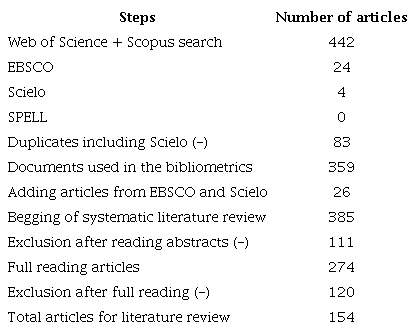
The bibliometric analysis review was built from Scopus, Web of Science, EBSCO, SPELL, and SCIELO. In SPELL, there was no result. In EBSCO, it was identified that most articles extracted were in Scopus or Web of Science, with 24 articles not being included. SCIELO returned four articles; two were already in the main query due to Scopus research. As RStudio does not accept SCIELO and EBSCO queries due to technical incompatibility, it was decided to exclude these 24 articles from the bibliometric analysis. They were analyzed, and their low citation index aligns with a small amount, which would not interfere with the results if considered. After the bibliometric analysis, a literature review was performed with all articles, including the 26 (24 from EBSCO and 2 from Scielo).
The search occurred in January 2025 and selected only peer-reviewed articles in English. In each database, the following query was applied:
TITLE-ABS-KEY ((“Test Beds” OR “Living Labs” OR “Prototyping Space” OR “Experimentation Space” OR “Testing Space” OR “Fab Labs”) AND (“Smart Cities” OR “Digital Cities” OR “Intelligent Cities” OR “Smart Governance” OR “Experimental Governance” OR “Governance” OR “Stakeholder Management” OR “Technological Parks” OR “PMO”)) AND (LIMIT-TO (DOCTYPE, “ar”))
This query was built to capture as many documents as possible about living labs within the context of smart cities (SC). The strategy was to identify the LLs synonymously and work with Boolean operators ‘OR’ and ‘AND’ to combine constructs regarding SC, innovation processes, and management.
All the analysis and graphics were built in the software RStudio. The bibliometric criteria are summarized in Table 2 as follows:
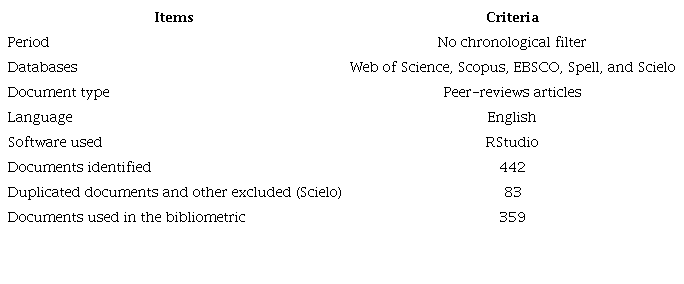
The analysis was divided into three subchapters. The first provided a base description of statistical counts such as the number of authors, citations, affiliations, journals, and keywords. The second analyzed the relationship between constructs, the frequency of publication of each content by country and journal, and the evolution of the theme over the years, mapping the academic production. The third part analyzed the network and cooperation between researchers and universities around the globe.
The bibliometric analysis provides a panorama, but the need to deeply understand the content discussed guided the research toward a systematic literature review. From this perspective, new concepts and relationships between constructs can emerge. The literature review is a form of talking with peers interested in the subject and delimiting the research question for future studies. It brings types of reviews to perform. This study adopts a scoping review to summarize and comprehend the prior body of knowledge. The method for analyzing the findings is thematic or content analysis (Paré et al., 2015).
Starting from the 359 articles used in bibliometrics and adding the 26 articles originating from SCIELO and EBSCO databases, the systematic literature review began with 385 articles. After reading all titles and abstracts, 111 articles were excluded because the language was not English, despite the previously selected filter, or because they were from areas not correlated with the proposed topic, such as medicine, software engineering, or food engineering.
After that, the full reading of the 274 articles began. The full reading resulted in some articles that were not initially discarded because they seemed related to the topic and had possible contributions to the analysis, but ended up being abandoned. Most of these articles were discarded because they provided technical details about technologies applied in living labs, with the governance of these spaces only as a theoretical background that had not been explored. This last filter left the final base of articles for the systematic literature review with 154 articles. All the steps are disclosed in Table 3.
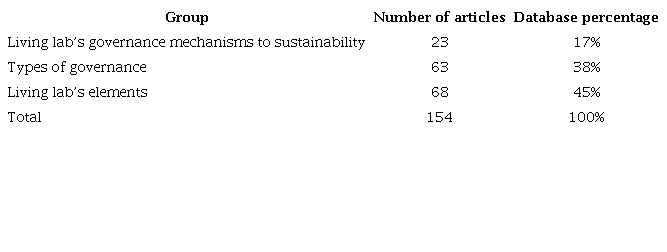
A content analysis was conducted to prepare the systematic literature review (SLR). The content analysis process consisted of building mental maps in which the constructs and ideas were related so that it was possible to create relationships between mental maps and perform clustering. Three large groups of subjects were identified and are disclosed in Table 4. With the content identified and stratified, it was possible to trace the relationships between the ideas developed by the academics.
The final database presented 359 peer-reviewed articles written by 1,350 authors. Some authors published more than one paper, resulting in 1,218 researchers working on the theme from 47 countries. The studies were published in 236 journals between 2004 and 2025, with an annual growth rate of 6.82%. Most articles are multi-authored (89,13%), with an average of 3.39 researchers per study (Table 5).
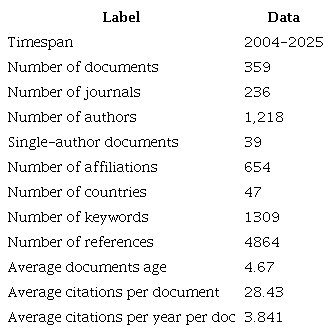
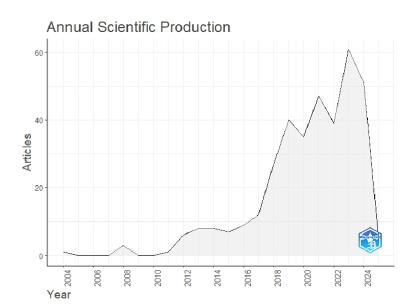
The data analysis shows that the topic is recent, spanning 20 years. Without a time restriction during the database query, the results reflect real-time production. The discussion’s maturity is evident, with an average publication age of around 4.6 years. Figure 1 shows that production began in 2004, took shape in 2013-2014, with small peaks in 2019 and 2021, and a bigger peak in 2023. A decline in 2020 may be due to the coronavirus pandemic and lockdowns, which impacted research, especially those requiring field data collection. The growth year after year shows that the topic has increasingly gained relevance in academia.
Out of 1,218 authors, a few publish multiple papers on SCLL, while many contribute just one. This distribution aligns with Lotka’s Law, which states that the productivity of an author is inversely related to the square of the number of authors writing only one article. Here, the law’s confidence is 95.50%, indicating that production is concentrated among a small group of researchers. Given the topic’s importance, more studies were expected to be disseminated.
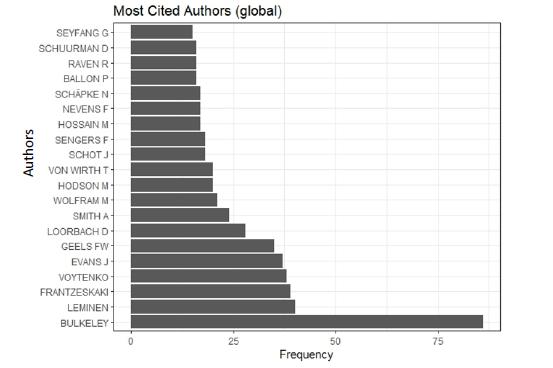
The authors with the most global citations are Bulkeley, Leminen, Evans, Frantszeskaki, and Voytenko, as reported in Figure 2. Bulkeley’s article is relevant because it was one of the first to relate the living lab concept with sustainability, arguing that LL could be a path to transition to a more sustainable way to produce and live in urban areas.
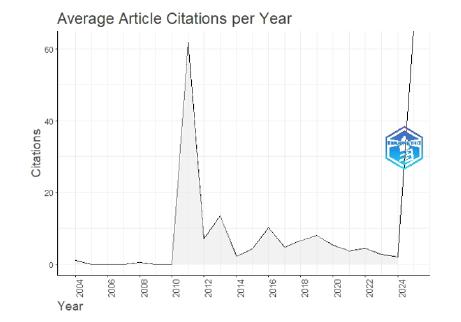
While citation counts are a common metric in academia, including for an author’s H-index, productivity analysis provides additional insight. These two metrics together help determine if an author is interested in continuing to develop the SCLL theory. By comparing productivity and relevance year by year, we see that highly productive authors do not always receive many citations, whereas authors with fewer publications can have more impact. For example, Voytenko et al. (2016) and Bulkeley et al. (2016) introduced sustainable transition, and Kronsell and Mukhtar-Landgren (2018)proposed experimental governance. These contributions led to citation peaks in Figure 3.
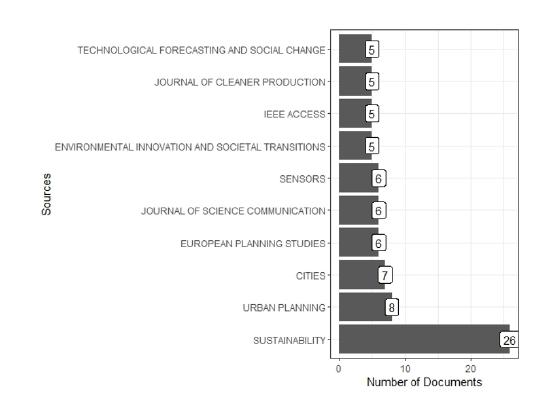
The theme appeared in publications from 236 different journals, resulting in an average of 1.52 articles per journal. Besides the variety, the plot (Figure 4) below highlights the focus on sustainable practices. From the ten journals that publish the subject, many articles on ‘sustainability’ focus on the efficiency of natural resources. There is another group related to urban planning and management of cities, represented by the journals Urban Planning, Cities, and European Planning Studies. Another group of research is related to technological innovation and social changes, represented by the journals Journal of Science Communication, Environmental Innovation and Societal Transitions, and Technological Forecasting and Social Change. As living labs have the idea of experimentation and testing of new technologies, a group of journals reports applied technology, formed by IEEE Access, Sensors, and Journal of Cleaner Production.
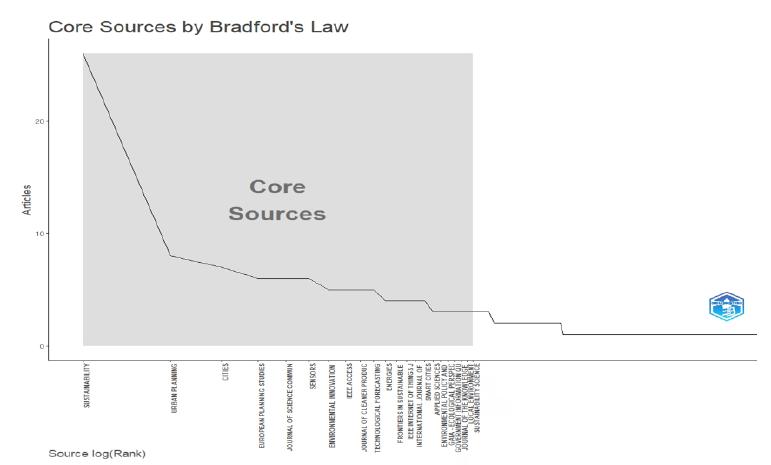
The journal’s participation in the discussion regarding smart cities living labs can also be explained by Bradford’s Law, which shows the productivity of journals on the topic of interest. The graphic distribution in Figure 5 shows a higher incidence of publications in the journals Sustainability, Urban Planning, and Cities, followed by other journals and showing a large number of journals that occasionally publish on the subject. This shows a concentration of academic discussion and the most relevant sources of information and research.
The keywords’ analysis shows four groups in the journal’s background: natural resources efficiency, urban planning, technological innovation, and applied technology. They reflect the focus of SCLL: spaces for experimentation (living labs/urban living labs), goals of experimentation (innovation/sustainability), and models of management (governance/co-creation). This reinforces the idea that living lab creation and implementation depend on multidisciplinary work. Figure 6 shows the words with higher frequency larger than the others.
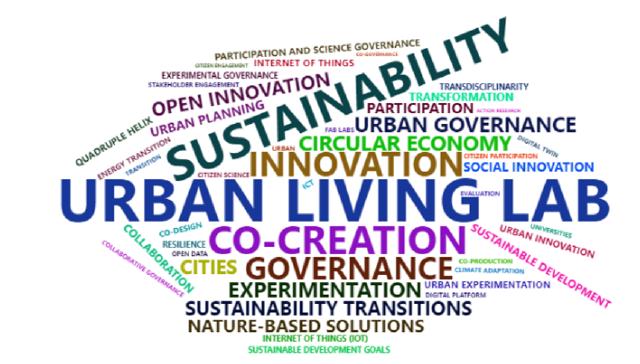
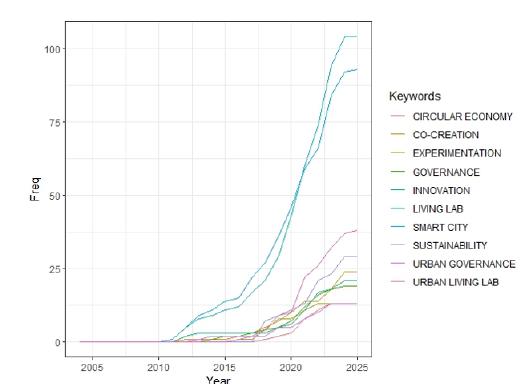
Figure 7 shows how the use of the main keywords has evolved over the years of discussion of the topic in question. Among the words that have shown the greatest growth in incidence are ‘smart cities’ and ‘living lab.’ This is not surprising since many authors select general words for keywords as a way of increasing the possibility of the article being included in more general search queries. From 2020 onward, it is possible to see greater growth in the use of the words ‘urban living labs,’ ‘experimentation,’ and ‘co-creation.’ This shows a trend toward studying spaces for testing and experimenting with urban technologies with citizen involvement and prioritizing co-creation.
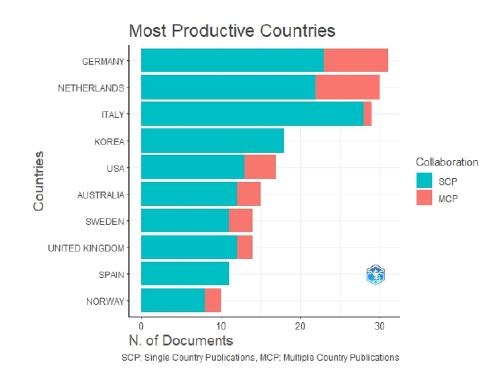
The affiliations’ analysis reveals that studies on smart cities living labs are concentrated in the Netherlands, Italy, Germany, and the U.S., highlighting a focus in northern countries. This is also reinforced by the ‘most productive countries’ graph (Figure 8), which, in addition to showing the number of articles produced in the countries already highlighted, shows the level of collaboration between countries in producing research with scholars from other countries. Of the most productive countries, Germany and the Netherlands, less than a third of the productions are in collaboration with other countries. Throughout the list of the most productive countries, this production decreases or becomes non-existent, as is the case with Spanish and Korean productions. This underscores the need for more research in South America and Africa, where the topic remains underexplored. This could happen through the expansion of the field geographically or even with the increase of collaboration networks.
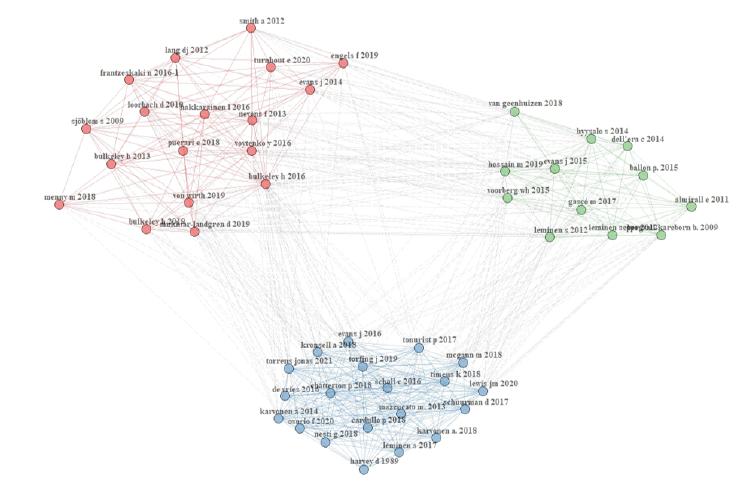
University cooperation fosters internationalization, knowledge flow, and experience exchanges, which are key to achieving living labs’ goals. Multi-author articles and citation networks reflect this, with Figure 9 showing three main, concentrated research groups due to the field’s novelty.
Academic production points out that there are several governance models that can be applied in smart cities living labs as a way of managing the different expectations of stakeholders. This task is delicate because it touches individual perceptions and hopes for the community inserted in the living lab context. Several academics highlighted the necessity of improving governance in these areas to align all participants toward the goal of sustainability and improvements in services and spaces for citizens (Gimenez et al., 2024; Roll et al., 2024; Supangkat et al., 2024; Yilmaz & Ertekin, 2023).
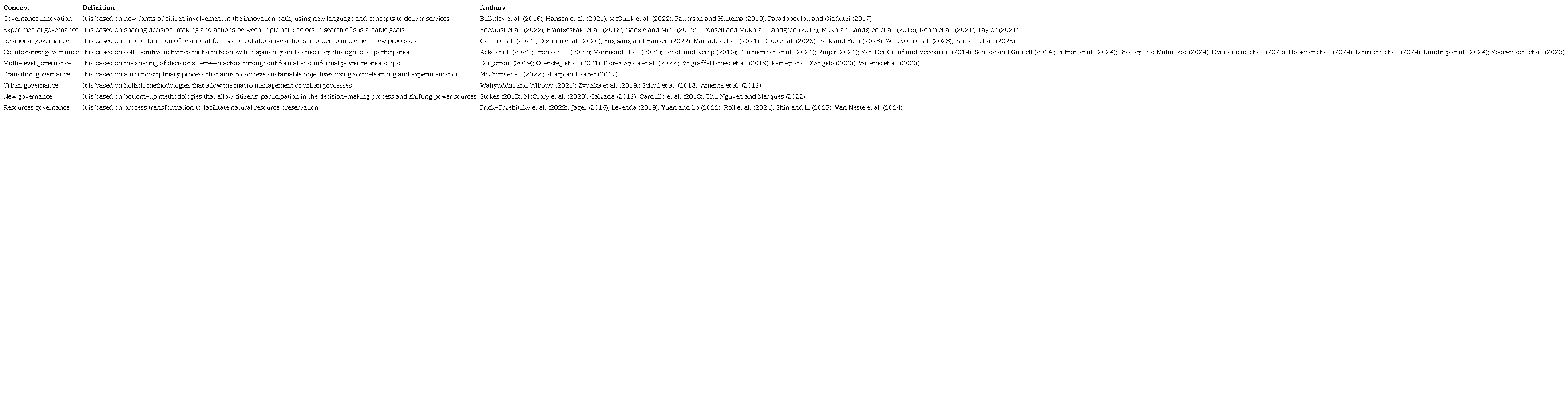
Table 6 shows the different types of governance discussed in the literature. In each of these forms of governance, the objective is to generate the dissemination of knowledge, stimulate creativity and democracy, apply new technologies to urban areas, and implement new socio-technical arrangements through collective intelligence and collaboration. In the framework, these elements appear horizontally in these spaces because content analysis shows that every living lab’s manager seeks to bring at least one of these elements to the co-creation space. Citizen involvement appears as the main articulator of governance models and is expressed through the sharing of responsibilities in decision-making, changes in relational patterns with a prioritization of the bottom-up approach, and the division of power between participants. The proposed framework (Figure 10) shows that there should be an effort to adopt elements that motivate participation aligned with citizen involvement, such as transparency, spatial democratization, and a change in the role of leadership, seeking to deconstruct an imposing model and applying the acceptance of multiple perceptions. These models outlined in the literature use technological, physical, and political structures as organizations to achieve the objectives proposed by the SCLL, seeking more sustainable ways to use resources and prioritizing the resolution of local problems and anxieties.
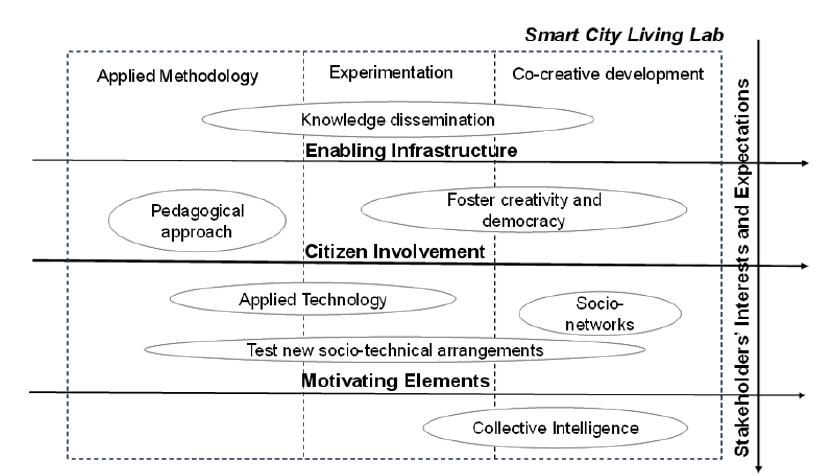
Through the content analysis of the literature, it was possible to identify that the formation of smart cities living labs is conditioned to the existence of an applied methodology that allows experimentation to happen collectively and collaboratively, resulting in co-developed solutions for real problems. These three points - applied methodology, experimentation, and co-creative development - serve as the background for the emergence of smart city living labs. The background requires elements to support the transposition of the living lab from conception to practical implementation. These elements are technological and spatial infrastructure, active leadership, and effective mapping of local needs. The first enables the space to receive the testing process, referred to in the theoretical background chapter as the enabling infrastructure, identified in the work of Chroneer et al. (2019), Ruijer and Meijer (2020), Westerlund et al. (2018), Lepik and Krigul (2021), and Anton et al. (2022). The second is the most important motivating element, representing the points worked by Alavi et al. (2020), Alavi et al. (2020), Westerlund et al. (2018), Gadille and Siarheyeva (2014), Engels et al. (2019), and Willems et al. (2020). Leadership can mobilize people to unite and collaborate for a solution that best fits the territory. The third represents the process inherent to living labs in achieving citizen involvement, as present in the articles from Alavi et al. (2020), Lepik and Krigul (2021), Voytenko et al. (2016), Alavi et al. (2020), Westerlund et al. (2018), Chroneer et al. (2019), Ruijer and Meijer (2020), and Gadille and Siarheyeva (2014).
The smart city implementation generates not only the testing and experimentation processes but also others that appear in the literature. These include the dissemination of knowledge throughout the community, a pedagogical approach to technological development, the exclusion of creativity and democracy in the experimental environment, the practical application of prototyped technology, the emergence and testing of new networks and socio-technical arrangements, and the generation of knowledge and collective intelligence. For example, the dissemination of knowledge is facilitated when individuals have contact with others to exchange experiences (co-creation development) and can test alternative ways of solving problems (experimentation). This is only possible if this interaction is guided by a practical method (applied methodology) that allows ideas to move from the conceptual realm to the real world. The proposed framework shows that the three previously mentioned conditions influence many of these processes.
The proposed framework articulates all the topics identified in the literature and makes an innovative contribution to the field as it can facilitate future living lab constructions by addressing key points of attention. It helps to streamline the governance model definition process, reducing trial and error, and predicting movements of citizen engagement. Authors from several countries have mapped factors and elements that influence the development of living labs, and the proposed framework represents an applied summary of more than a hundred studies in the area. The living lab construction processes are facilitated by the elements that appear graphically in a horizontal arrangement: enabling infrastructure, citizen involvement, and motivating elements. In the same proportion, they can be hampered by the different expectations and interests of stakeholders, as shown in governance literature, and therefore appear vertically in the process.
This study sought to understand how academia has been working on the development of smart cities living labs in relation to their processes, organization, and the way participants interact. The article began with 359 documents in a bibliometric analysis and culminated in a deep analysis of 154 articles in a systematic literature review. To this end, the pillars that form SCLL, the elements that facilitate their development, their processes and objectives, and possible difficulties in their construction were identified. The exploration of the literature generated a mapping of the governance models applied to date and revealed that there is a need to focus on citizen involvement through motivation, considering that there is already a consolidated infrastructure to support these spaces.
The innovative framework developed seeks to contribute to the development of the field of study through the schematization and compilation of knowledge observed in academic production related to living labs. Using this tool, it is possible to identify the points that need to be addressed during the structuring and implementation of a smart city living lab. As a result, it is expected that there will be greater clarity in the process, seeking agility in the implementation of living labs, possible changes in urban areas, and the achievement of more sustainable communities aligned with the Sustainable Development Goals.
In addition to contributing to the identification of key concepts and the evolution of the discussion, it emphasizes the importance of bringing the Sustainable Development Goals as a backdrop for actions related to smart cities and the implementation of living labs, paying attention to the specificities of the communities. The bibliometric analysis showed that studies are geographically concentrated in the Global North, mainly in Western Europe and North America. In this sense, the theoretical framework could be modified if the case studies were spread geographically, considering diverse urban formation contexts. Therefore, it is necessary to emphasize that the theoretical framework has limitations due to the lack of diversity regarding socioeconomic aspects and geography in the databases, which should reflect on more robust supporting structures for living labs.
The study of living labs is still not fully explored. Future studies may seek to analyze the factors identified in the framework, considering practical living lab cases and paying attention to specific challenges in the development process. Additionally, future studies could examine how these elements vary across different geographic, historical, socio-economic, and cultural contexts, as the framework was developed based on existing studies, most of which are concentrated in the Northern Hemisphere. Another future opportunity for study is to analyze which governance model might be more accurate for each reality and to what extent the current governance models can explain the unexplored geographical areas regarding the smart city living lab theme.
* Corresponding Author