Theoretical-empirical Article
Received: 13 September 2024
Revised document received: 30 March 2025
Accepted: 30 March 2025
Published: 21 May 2025
DOI: https://doi.org/10.1590/1982-7849rac2025240257.en
ABSTRACT
Objective: this study aims to examine whether the macro and individual contexts can alter the behavioral dynamics of environmentally oriented consumption and anti-consumption.
Theoretical approach: the study emphasizes the role of the interaction between institutional factors and personal perceptions - mediated by social and cultural networks - in promoting sustainable practices.
Method: multilevel modeling was used to analyze both individual and country-level effects using data from over 24,000 individuals across 25 European countries.
Results: the findings reveal that supportive macro conditions and stronger individual concern for climate change increase the likelihood of environmentally responsible consumption. As basic conditions to sustainable development and climate change mitigation are met, individuals are more likely to adopt behaviors that respect planetary limits.
Conclusion: this research contributes to the literature on sustainability by quantitatively integrating both contextual levels - an approach that is still uncommon - and by demonstrating how individual perceptions and broader political and cultural environments jointly shape sustainable consumer behavior. The results provide valuable information for public policies that aim to achieve climate goals and advance the Sustainable Development Goals (SDGs).
Keywords: Sustainable Development Goals, manifesto on environmental issues, environmental performance index, give political priorities to climate change.
RESUMO
Objetivo: este estudo visa examinar se o contexto macro e o contexto individual podem mudar a dinâmica comportamental do consumo e do anticonsumo ambientalmente orientados.
Marco teórico: o estudo enfatiza o papel da interação entre fatores institucionais e percepções pessoais - mediadas por redes sociais e culturais - na promoção de práticas sustentáveis.
Método: a modelagem multinível foi utilizada para analisar os efeitos a nível individual e de país, utilizando dados de mais de 24.000 indivíduos em 25 países europeus.
Resultados: a existência de condições macroeconómicas favoráveis e uma maior preocupação individual com as alterações climáticas aumentam a probabilidade de um consumo ambientalmente responsável. À medida que o desenvolvimento sustentável e a atenuação das alterações climáticas são cumpridos, indivíduos tender a adoptar comportamentos que respeitem os limites do planeta.
Conclusão: contribui-se para a literatura sobre sustentabilidade ao integrar quantitativamente ambos os níveis contextuais e ao demonstrar como as percepções individuais e os ambientes políticos e culturais mais amplos moldam conjuntamente o comportamento sustentável do consumidor. Os achados fornecem informações para as políticas públicas que visam atingir os objetivos climáticos e fazer avançar os Objetivos de Desenvolvimento Sustentável.
Palavras-chave: Objetivos de Desenvolvimento Sustentável, manifesto sobre questões ambientais, índice de desempenho ambiental, dar prioridades às políticas sobre mudanças climáticas.
INTRODUCTION
In the challenging context of climate change and growing global environmental awareness, the adoption of climate policies and sustainable production and consumption patterns, as well as individual perceptions of climate change, have been analyzed in the literature (Pinto & Casais, 2023; Rawat & Sahni, 2023; Sharma, 2023) as constructs predisposing individuals to consumerist and anti-consumerist practices. Sustainable Development Goal (SDG) 12, which aims to promote responsible production and consumption patterns, is an important guideline for building more sustainable policies and behaviors (Rawat & Sahni, 2023; Silva et al., 2023). It underscores the need for significant changes in both consumption practices and public policies that promote more conscious and responsible consumption, directly aligning with movements that reject excessive consumption (Chatzidakis & Lee, 2013; García-de-Frutos et al., 2018; Ortega-Egea & García-de-Frutos, 2020; Raman et al., 2024; Silva et al., 2023).
In this context, neo-institutional theory provides a valuable framework for understanding how these changes in consumption practices and public policies interact. According to this theory, government institutions and citizens are seen as key actors in the process of institutional change (Fredriksson et al., 2013). Their interactions are fundamental to shaping new social norms, behaviors, and practices, such as sustainable consumption. Neo-institutionalism emphasizes that the relationship between individual perceptions and institutional policies is critical for the formation of rules and practices that can align with sustainability goals (Alvesson & Spicer, 2019; Sekerka et al., 2022). This theoretical lens suggests that both top-down policy initiatives, such as SDG 12, and bottom-up shifts in individual behavior are interconnected forces that drive the transformation of societal norms toward greater sustainability (Alvesson & Spicer, 2019; Fredriksson et al., 2013; Silva et al., 2023).
However, this transformation is not without challenges, as the influence of consumer culture remains pervasive in many societies. The media, in particular, plays a fundamental role in promoting consumption as a key indicator of success (Burroughs & Rindfleisch, 2002), often in contrast to the ideals of sustainable or anti-consumption movements. Despite initial progress, there are still significant gaps in the literature on environmentally oriented consumption and anti-consumption. Although studies on sustainable consumption focus on the choice of responsible products and behaviors, anti-consumption, which rejects excessive consumption and promotes a simpler lifestyle, has not been sufficiently explored in an integrated manner (Chatzidakis & Lee, 2013; García-de-Frutos et al., 2018; Ortega-Egea & García-de-Frutos, 2020). This gap is relevant because, although both concepts aim to reduce environmental impacts, they have different motivational and behavioral underpinnings.
Anti-consumption or sustainable consumption movements advocate the idea that a simpler life with less emphasis on consumption can be a valid alternative to the dominant consumer culture (Oral & Thurner, 2019). This oriented consumption and anti-consumption is currently emerging as an expanding field of study dedicated to investigating the underlying motivations that drive people to resist consumption or practice it in a conscious and responsible manner (Chatzidakis & Lee, 2013; Iyer & Muncy, 2009; Lee & Ahn, 2016; Rawat & Sahni, 2023).
Despite initial progress, there are still significant gaps in the literature on environmentally oriented consumption and anti-consumption. Although studies on sustainable consumption focus on the choice of responsible products and behaviors, anti-consumption, which rejects excessive consumption and promotes a simpler lifestyle, has not been sufficiently explored in an integrated manner (Chatzidakis & Lee, 2013; García-de-Frutos et al., 2018; Ortega-Egea & García-de-Frutos, 2020). This gap is relevant because, although both concepts aim to reduce environmental impacts, they have different motivational and behavioral underpinnings.
In addition, growing awareness of climate change and its environmental impacts has led to an intensification of climate policies focused on sustainable production and consumption practices (Pinto & Casais, 2023; Raman et al., 2024; Sharma, 2023; Silva et al., 2023). SDG 12, which promotes responsible consumption and production, is an example of how these global policies can be aligned with individual and collective concerns for the environment (Raman et al., 2024; Rawat & Sahni, 2023). These policies, along with individual perceptions of climate change, have been associated with sustainable consumption and anti-consumption behaviors in the literature (García-de-Frutos & Ortega-Egea, 2015; Silva et al., 2023); Soneryd & Uggla, 2015). However, despite these associations, little has been done to explore how these constructs relate to each other in an integrated manner, and there is a significant gap in the analysis of these phenomena in a concatenated way.
Although sustainable consumption and anti-consumption practices are discussed separately, little research (Ortega-Egea & García-de-Frutos, 2020; Peng et al., 2024) addresses these practices in an integrated manner, especially with regard to the interdependence between government policies and individual perceptions of climate. Although the literature suggests that climate policies can influence consumption behavior, there is a lack of studies that examine how public policies, together with individual perceptions, shape environmental consumption and anti-consumption practices (Silva et al., 2023; Soneryd & Uggla, 2015). Furthermore, few studies have investigated these constructs in a multilevel manner, considering both country-level policy variables and individual consumer perceptions.
Adjusting the focus of this multilevel analysis, which simultaneously examines the individual level and the policy context, is crucial because consumption and anti-consumption practices are often shaped by external factors, such as national and global policies, as well as by individual values and behaviors (García-de-Frutos et al., 2018; Ortega-Egea & García-de-Frutos, 2020; Pinto & Casais, 2023). This approach is particularly relevant in the European context, where climate policy and sustainable consumption behaviors are increasingly discussed (Echavarren et al., 2019; Silva et al., 2023).
With these considerations in mind, this study has collected data from 25 European societies in order to examine the movements of environmentally oriented consumption and anti-consumption from a multilevel perspective, evaluating both the individual level and establishing relationships with the political dimension of the countries analyzed. This holistic approach, taking into account different contextual levels, is still little explored and has the potential to enrich the understanding of the complex interactions that stimulate environmentally oriented consumption and anti-consumption (García-de-Frutos et al., 2018; Ortega-Egea & García-de-Frutos, 2020). In this context, the research objective is to determine whether the macro context (effects of political climate influences and sustainable production and consumption patterns - SDG 12) and the individual context (individual perceptions of climate change) can change the behavioral dynamics of environmentally oriented consumption and anti-consumption.
SDG 12 and environmentally oriented consumption and anti-consumption
SDG 12 (Responsible Consumption and Production) aims to ensure sustainable production and consumption patterns by 2030, recognizing that current practices have significant environmental, social, and economic impacts. This goal was conceived with the aim of promoting more sustainable consumption and production practices and includes several measures, such as specific regulations and global agreements to control environmentally harmful products (Rawat & Sahni, 2023)).
It is noteworthy that, in general, the SDGs appear to be a valuable opportunity for all nations to set realistic goals aimed at the efficient management of natural resources and environmental capital (Silva et al., 2023). Therefore, it is imperative that these goals are promoted and adopted by countries, regardless of their level of development, acting as a catalyst for the creation of practical tools to address systemic issues and universal challenges.
In the context of conscious consumption, citizens play a crucial role in achieving the governmental goals set out in SDG 12, contributing through behavioral changes that respect the limits of the planet’s resources (Sekerka et al., 2022; Silva et al., 2023). In fact, the interaction between government institutions and citizens is a key action for social mobilization to create, disseminate, and implement global ideas and models in local contexts (Fredriksson et al., 2013). According to neo-institutional theory, these actors can be understood as sources of institutional change, whose social interaction is paramount for the formation and transformation of rules, norms, ideas, and practices, as well as the achievement of specific goals and priorities (Alvesson & Spicer, 2019).
In the specific context of sustainability, some preconceived and widespread social actions need to be continuously questioned and reshaped in order to achieve sustainable consumption practices. Government institutions play an important role in translating the emergence of environmental issues, promoting the transformation of social orders, and linking consumer behavior to sustainability (Alvesson & Spicer, 2019). However, following the idea of cyclical relationships, Rawat and Sahni (2023) argue that sustainable production and consumption patterns also act as catalysts for consumer awareness and education. In other words, as individuals become more informed about the environmental and social impacts of their consumption choices, they may adopt more responsible behaviors. This includes preferring products that follow sustainable practices from production to disposal, which encourages the search for more ecological options - i.e., the search for environmentally oriented consumption behavior (García-de-Frutos et al., 2018; Ortega-Egea & García-de-Frutos, 2020).
On the other hand, sustainable production and consumption patterns can also be analyzed from the perspective of environmentally oriented anti-consumption. Consumers seeking to reduce their environmental footprint often opt for a more minimalist lifestyle, avoiding unnecessary consumption (Iyer & Muncy, 2009; Khan & Lee, 2014; Touchette & Nepomuceno, 2020). In this sense, sustainable standards can influence an anti-consumption mentality, encouraging a more considered and conscious approach to purchases (Oral & Thurner, 2019; Sekerka et al., 2022). However, it is important to emphasize that the effectiveness of these standards depends, at the very least, on the cooperation between consumers and government policies (Pinto & Casais, 2023; Sharma, 2023). Governments play a crucial role in establishing regulations and incentives that favor sustainable practices, while consumers have the power to shape the market through their choices (Ortega-Egea & García-de-Frutos, 2020; Pinto & Casais, 2023). Given these considerations, and supported by neo-institutional theory, it is therefore hypothesized that:
H1: Sustainable production and consumption patterns (SDG 12) positively influence individuals’ environmentally oriented consumption (H1a) and anti-consumption (H1b) behaviors.
Climate policy and environmentally oriented consumption and anti-consumption
Environmentally oriented consumption and anti-consumption are related to self-manifestation, whether in political, social, or economic aspects (Oral & Thurner, 2019; Ortega-Egea & García-de-Frutos, 2020; Sekerka et al., 2022). It is part of a choice, a conscious and more responsible lifestyle regarding the limits of the planet’s resources (Sekerka et al., 2022; Silva et al., 2023). Current research attention on these constructs has often focused on individual aspects of consumer behavior, which has generated a significant gap in the recognition of the public policy implications arising from these guidelines (Nepomuceno & Laroche, 2017; Pinto & Casais, 2023). By comparing existing knowledge and topics of interest in the field of consumption and anti-consumption relevant to public policy, this research contributes to the expansion and integration of the topics of anti-consumption, sustainability, and climate policy.
In this sense, policies that address the issue of climate change can play a significant role in the behavior of individuals and their consumption patterns (Pinto & Casais, 2023; Sharma, 2023; Tian et al., 2022). Effective climate policies can set standards and regulations that promote sustainable practices in the production and consumption of goods and services (Ortega-Egea & García-de-Frutos, 2020; Silva et al., 2023). For example, by imposing limits on carbon emissions, promoting energy efficiency, and regulating the use of natural resources, climate policies create an enabling environment for consumers to adopt more conscious and sustainable behaviors. In fact, these policies can promote anti-consumption by encouraging practices such as reducing waste, reusing, and sharing resources (Iyer & Muncy, 2009; Khan & Lee, 2014; Touchette & Nepomuceno, 2020).
Following this line of reasoning, Echavarren et al. (2019) defends the proposition that political demonstrations through bills related to the environment and climate change have a direct relationship with the perception of the risk of climate change and the level of climate awareness. According to neo-institutional theory, governments can motivate individuals to pay attention to certain external ideas and change behavioral models. Similarly, institutional action can help them internalize new practices tailored to the local environment (Alvesson & Spicer, 2019). In this sense, it is speculated that environmental awareness and climate concern are constructs that explain individuals’ consumption behavior (Lin & Niu, 2018; Tian et al., 2022):
H2: Manifestation about environmental issues positively influences individuals’ environmentally oriented consumption (H2a) and anti-consumption (H2b) behaviors.
Climate policies reflect the interconnections between government actions and individual behavior in response to climate change (Silva et al., 2023; Soneryd & Uggla, 2015). Therefore, public awareness is also an essential facet of climate policy. This can be done by raising the awareness of individuals, drawing attention to their responsibilities, and stimulating educational campaigns on the environmental impact of consumption (Silva et al., 2023; Tian et al., 2022). These stimuli, understood as institutional efforts of public relations, need to be integrated into public policy in order to influence social behavior (Fredriksson et al., 2013). In this sense, individuals who are aware of how they are supported by climate policies, as well as the importance of their daily choices and how they contribute to climate challenges, can adopt more responsible attitudes (Pinto & Casais, 2023; Sharma, 2023; Lin & Niu, 2018). It is therefore hypothesized that:
H3: Individuals’ perception that climate policy should be a priority positively influences their environmentally oriented consumption (H3a) and anti-consumption (H3b) behavior.
H4: Individuals’ perception that responsibility for combating climate change should lie with them and the government positively influences their environmentally oriented consumption (H4a) and anti-consumption (H4b) behavior.
This complex relationship between climate policies and individual choices reflects the essential interconnection between national-level actions, driven by institutional efforts, and citizen engagement to address global environmental challenges (Pinto & Casais, 2023; Soneryd & Uggla, 2015). In this sense, studies such as that of Silva et al. (2023) show how parameters that assess each nation’s performance in promoting environmental protection and sustainable development play a crucial role in shaping individuals’ climate perceptions and behaviors. Therefore, the dissemination and understanding of climate change-related indicators provide a fundamental educational foundation for citizens (Echavarren et al., 2019; Rawat & Sahni, 2023). By providing clear information on the impact of human activities on the climate, these indicators raise public awareness and emphasize the urgency of more sustainable practices.
The direct link between individual behavior and tangible climate impacts promotes a deeper understanding of personal responsibility in mitigating environmental problems (Silva et al., 2023; Tian et al., 2022). Therefore, based on previous research (e.g., Lin & Niu, 2018; Pinto & Casais, 2023; Rawat & Sahni, 2023), it is understood that as environmental policies become more prominent and sustainability goals are emphasized, there is a tendency to change social norms that may be reflected in the form of consumption and anti-consumption. The widespread acceptance of sustainable practices creates an atmosphere conducive to the voluntary adoption of greener behaviors, as society reevaluates and redefines its priorities (Ortega-Egea & García-de-Frutos, 2020; García-de-Frutos et al., 2018). Based on this rhetoric, it is speculated that:
H5: Environmental performance efforts positively influence individuals’ environmentally oriented consumption (H5a) and anti-consumption (H5b) behaviors.
Climate change perception and environmentally oriented consumption and anti-consumption
In this study, perception of climate change is understood as an individual’s level of awareness and belief about these climate change phenomena (Silva et al., 2023). However, in addition to awareness of the facts, perception is also understood as the belief that human actions are responsible for environmental and climate changes on the planet (Poortinga et al., 2019). Despite the subtle conceptual nuances, this study adopts the convergence between the concepts of climate change perception, environmental awareness, and climate concern.
The evidence that general environmental awareness, including issues such as climate change, can positively influence individuals’ anti-consumption and consumption attitudes has been the subject of study and debate in various research fields, whether in environmental psychology (Kaynak & Ekşi, 2014), social sciences (García-de-Frutos et al., 2018), or sustainability (Culiberg et al., 2022; Taufique et al., 2016). Among the main studies that have dealt with these constructs, the study by Kaynak and Ekşi (2014) stands out, whose results show that individuals who demonstrate environmental awareness are more likely to endorse anti-consumption practices that express concern for the environment. This tendency stems from the belief that avoiding consumption can lead to benefits for society and the world. In this way, individuals who recognize environmental threats and understand the connection between their daily actions and their impact on the global climate are more likely to adopt more conscious and sustainable consumption practices (Ortega-Egea & García-de-Frutos, 2020; Tian et al., 2022).
Environmentally conscious consumption and anti-consumption can be understood not only as an antagonistic power strategy, such as boycotts, but also in terms of personal reflection, individual fulfillment, responsible consumption, and self-awareness (Chatzidakis & Lee, 2013; Lee & Ahn, 2016). We suggest that conscious consumption and anti-consumption emerge from consumer subjectivity, incorporating self-interest and socio-environmental motivations (Iyer & Muncy, 2009; Lee et al., 2009). Whether perceived as a practice driven by self-interest motives and/or socio-environmental concerns, studies on green consumption and anti-consumption highlight the situated, localized, and subjective nature of these practices (Ortega-Egea & García-de-Frutos, 2020; García-de-Frutos & Ortega-Egea, 2015). In this context, understanding perception as part of the process of building environmental awareness, and knowing that most boycotts that transform anti-consumerist tendencies into activism are supported by consumers who demonstrate both social and environmental concerns (Diermeier & Van Mieghem, 2008), the following hypothesis is proposed:
H6: Individuals’ perceptions of climate change positively influence their environmentally oriented consumer (H6a) and anti-consumer (H6b) behavior.
METHODS
Study area
This research covers 25 of the 28 European countries present in the database (Figure 1). These countries were selected from the 2021 Eurobarometer 95.1 database. Eurobarometer is a comparative social survey that regularly monitors public opinion in the member countries of the European Union, with at least 1,000 complete responses for each nation. The advantage of using it is having comparable data across several societies with different social structures, which allows us to estimate with greater precision the relationship between these constructs and individuals’ environmentally oriented consumption and anti-consumption behavior. In total, the database contained 26,669 individuals, with an average of 952.5 individuals per country. However, the sample for this research consisted of only 24,056 respondents (90.2% of the total sample). This results in an average of 962.2 respondents per country. This reduction in the sample is due to the linking of the different databases, as the countries of Cyprus and Germany were not covered in all the databases and were therefore eliminated.
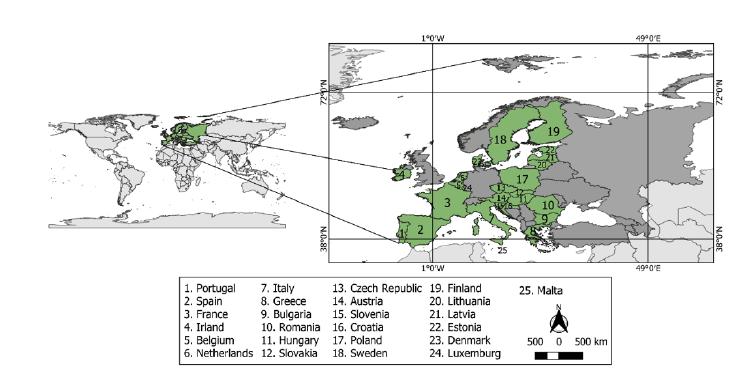
Figure 1
25 countries surveyed (highlighted in green).
Source: Developed by the authors.
Database
This study is quantitative and based on secondary data. These data have been collected and consolidated from the following sources: (1) Eurobarometer 95.1 (2021), a biennial survey conducted by the European Commission on various topics, including green consumerism; (2) the World Bank (2020), whose database is pooled by country on various topics, including socio-economic indicators (e.g., GDP per capita); (3) the Environmental Performance Index (Wolf et al., 2022), which provides a quantitative basis for comparing, analyzing, and understanding the environmental performance of 180 countries; (4) the Sustainable Development Report (2022), which annually assesses the progress of all UN member states toward the SDGs and measures the performance of these countries through a database that compiles 120 indicators of these goals; and (5) the Manifesto Project Dataset (Volkens et al., 2017), whose foundation provides the scholarly community with the policy positions of more than 1,000 parties in more than 50 countries from 1945 to the present. Using content analysis of election manifestos, the project quantifies statements and messages, allowing for a comparative measurement of party and presidential positions. The secondary sources used were selected based on their comprehensiveness, reliability, and relevance to the research objective. Each of these databases provides quantitative data that allow not only for a detailed analysis of the variables in question but also for the execution of robust multilevel linear regressions, taking into account different countries and socioeconomic contexts (Bryan & Jenkins, 2016). These sources are widely recognized for their credibility and for allowing a comparative analysis across different geographic regions and their environmental and socioeconomic performance indicators. In addition, multilevel linear regressions are suitable for capturing variations in consumer attitudes and behaviors across countries and contexts, taking into account differences in public policies, economic indicators, and levels of development.
Measures
Dependent variables
Environmentally oriented anti-consumption (see Table 1), extracted from Eurobarometer 95.1 (2021), includes the sums of the following habits: (1) reducing waste (and regularly separate it for recycling), (2) reducing car use (e.g., through alternative modes of transport), (3) avoiding short‐haul flights, (4) cutting down on consumption of disposable items, and reducing the carbon footprint of your food purchases, (5) try to cut down on your consumption of disposable items whenever possible (plastic bags from the supermarket, excess packaging). Meanwhile, environmentally oriented consumption was assessed using six items from the same base: (1) purchasing a fuel‐efficient car, (2) installing solar panels at home, (3) installing energy‐efficient home appliances, (4) switching to an energy supplier with greater share of renewable sources, (5) buying a low‐energy home, (6) insulating the home better, (7) installing home equipment to control and reduce energy consumption (e.g., smart meter), (8) buying and eating more organic food. In this study, these measures were self-reported, with individuals indicating whether they engaged in these practices (0 = ‘no’ and 1 = ‘yes’), so that the sum of each respondent’s score could vary from 0 to 5 for anti-consumption and from 0 to 8 for consumption. It is noteworthy that the higher the score, the greater the environmentally oriented consumption and anti-consumption behavior. The choice of environmentally oriented consumption and anti-consumption variables in the study is justified by their relevance in the context of sustainability and consumer behavior, as widely discussed in the existing literature, including the studies by Ortega-Egea and García-de-Frutos (2020) and García-de-Frutos et al. (2018). These studies provide a solid empirical foundation for understanding how consumption and anti-consumption attitudes can influence consumption practices in different contexts.
Analysis variables in research on macro and individual factors that influence environmentally oriented consumption and anti-consumption.

It is important to note that the selection of these variables was carefully based on the issues they address, which are consistent with the central themes of the study. Environmentally oriented consumption reflects consumers’ willingness to adopt consumption practices that promote sustainability, while anti-consumption is related to the tendency to avoid or reduce excessive consumption of goods as part of a movement toward more sustainable lifestyles.
Independent variables
Control variables. Gender was included in the model as a control variable (a dichotomous variable indicated as 1 - Man and 2 - Woman) to address individual heterogeneity, which is a common practice in studies dealing with individual consumption behavior internationally (Ortega-Egea & García-de-Frutos, 2020; García-de-Frutos et al., 2018). GDP per capita in 2018, taken from the World Bank (2020), was also included in the model. Similarly, age and education were also included in the model, with the former divided into years and the latter divided into 11 categories: (1) pre-primary education (include no education), (2) primary education, (3) lower secondary education, (4) upper secondary education, (5) post-secondary non tertiary (including pre-vocational or vocational education), (6) short-cycle tertiary, (7) bachelor or equivalent, (8) master or equivalent, (9) doctoral or equivalent, (10) education up to ISCED 4 completed abroad, and (11) education ISCED 5 and above completed abroad. This variable had absolute asymmetry and kurtosis values above ±1.0, which falls within an acceptable range for normalizing data in large samples (Leech et al., 2005; Field, 2009). Hence, it underwent a rank-based inverse normal transformation. By adopting this method, the impact of outliers was reduced while maintaining the Type I standard error rates and improving the multivariate statistical analysis (Templeton, 2011).
Individual level variables. The construct ‘perception of climate change’ was measured by a single item. Responding individuals were asked: “How serious a problem do you think climate change is at this moment?” Respondents could use a 10-point response scale ranging from “not at all a serious problem” to “an extremely serious problem.” On the other hand, the constructs ‘climate change responsibility’ and ‘give political priority to climate change’ were each assessed using a dichotomous variable of 1 (yes) and 0 (no). Aware of social desirability bias and in an attempt to minimize this effect in this research, several strategies were employed. First, the secondary data used were carefully selected from reliable sources that applied rigorous data collection methods, such as anonymous questionnaires and guarantees of confidentiality. Eurobarometer is a series of public opinion surveys conducted regularly since 1973 on behalf of the European Commission, an institution committed to understanding the opinions and concerns of citizens. In addition, it is worth noting that these institutions pay attention to the questions formulated in the data sources to design them in a way that minimizes pressure on respondents. They also seek a more neutral approach that focuses on actual attitudes and behaviors rather than simple ideological statements. Another important measure was the analysis of aggregated data, which provides a broader perspective and reduces the impact of possible individual biases, so that the results reflect an average pattern of behavior in the population rather than specific responses influenced by external factors. These precautions are intended to ensure that the results are more representative and less subject to social desirability bias, while maintaining the validity and relevance of the research.
Countries level variables. The ‘SDG 12’ variable was collected from the Sustainable Development Report (2022), whose final indicator is represented by the assessment of eight variables: (1) municipal solid waste (kg/capita/day), (2) electronic waste (kg/capita), (3) production-based SO₂ emissions (kg/capita), (4) SO₂ emissions embodied in imports (kg/capita), (5) production-based nitrogen emissions (kg/capita), (6) nitrogen emissions embodied in imports (kg/capita), (7) exports of plastic waste (kg/capita), (8) non-recycled municipal solid waste (kg/capita/day). It should be noted that, in the model, we only used the final value of the indicator that aggregates all variables, which could vary from 0 to 100 for each country (the higher the value, the higher the level of SDG compliance in the country). On the other hand, ‘manifestos on environmental issues’ were assessed using the Manifesto Project Dataset (Volkens et al., 2017). This variable indicates the proportion of terms on environmental issues in the total number of codes assigned by political manifestos in national elections in a given country (Echavarren et al., 2019). The variable used refers to environmental issues of all parties represented in national parliaments from the first baseline period until 2017. Therefore, the ‘environmentalism’ variable represents the proportion of environmental issues in political manifestos, with higher values indicating a greater focus on environmental issues. Finally, the ‘climate performance effort’ variable was extracted from the CCPI (Burck et al., 2022). The indicator brings together 14 variables divided into four dimensions (including the dimension of climate policy). For the model, we considered the final value of the indicator that aggregates all the variables, which could vary from 0 to 100 per country (the higher the value, the higher the level of performance of the country in the fight against climate change). It is worth noting that in order to use these different variable scales, the raw values of the distributions of the variables used were converted into Z-scores (Heck et al., 2013).
Model development and specification
Multilevel linear regression with a random intercept was used to examine the proposed relationships. To ensure that there was no multicollinearity, a Pearson correlation test was performed on the sample to determine the level of dependence between variables (see Table 2), which is a prerequisite for multilevel regression (Tabachnick & Fidell, 2001). Multilevel modeling was chosen because it allows for the analysis of data measured at different levels, such as individuals and countries (Heck et al., 2013; Huang, 2016; Peugh, 2010). In this study, lower-level entities (individuals) were nested within higher-level collectives (countries).
Means, standard deviations, skewness, and kurtosis of the study variables (values before standardization).
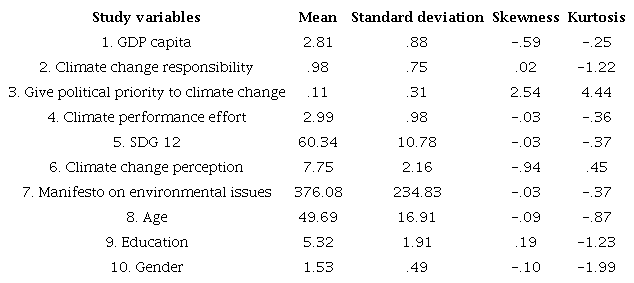
Table 2 shows the descriptive statistics for the study variables, including means, standard deviations, skewness, and kurtosis. The variables exhibit significant diversity in terms of dispersion and distribution.
Table 3 presents the correlations between the study variables. The most significant correlations include the positive relationship between education and GDP per capita (r = 0.23, p < 0.01), suggesting that individuals with higher levels of education tend to reside in countries with higher GDP per capita. There is also a positive correlation between perception of climate change and responsibility for climate change (r = 0.22, p < 0.01), indicating that those who perceive climate change as a more serious issue are more likely to take responsibility for it. Additionally, education correlates positively with SDG 12 (r = 0.30, p < 0.01), suggesting that individuals with higher education levels are more likely to commit to sustainable consumption and production.
Correlations between variables 1 to 10 for European countries.
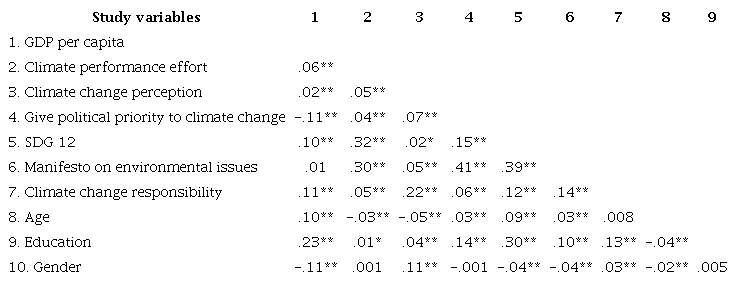
Note. * p < 0.1; * *p < 0.05; ***p < 0.01.
Analyzing the correlations between the study variables presented in Table 3, it can be seen that, in general, there are no strong or problematic correlations among the independent variables. The correlations are mostly weak to moderate, with values indicating the absence of significant multicollinearity. The highest correlations are observed between ‘education’ and ‘responsibility for climate change’ (r = 0.30, p < 0.01), and between ‘climate performance effort’ and ‘SDG 12’ (r = -0.32, p < 0.01). However, these correlations are not high enough to raise concerns about multicollinearity. Furthermore, most variables show correlations well below 0.5, suggesting that the independent variables are not strongly correlated with one another.
To construct the multilevel model, we followed the step-up recommendation for multilevel strategic analysis proposed by Snijders and Bosker (2011), which consists of a sequence of two steps for each dependent variable (environmentally oriented consumption and anti-consumption). The first step consists of estimating an unconditional (null) model using a random effects analysis of variance to assess the variability of the dependent variable across countries. The second step consists of estimating the model with a fixed slope and random intercept, in which hypotheses regarding direct lower-level and cross-level effects can be tested. To illustrate this relationship, the equation below shows the construction of the model:
Level 1 (individual level) and Level 2 (country level):
Here, environmentally oriented consumption and anti-consumption represent the individual outcome measure for person i in country j. The intercept is represented by β0j, and β0j ... β6j are the country-specific slopes. Level-1 covariates consist of sex, education, age, climate change perception (CCR), climate change responsibility (CCR), and give political priority to climate change (GPPCC). The residual term at Level 1, rij, captures the variance not explained by the model, while the group-level error components are represented by u0j. At Level 2, γk0 represents the fixed effects of second-level variables.
Within this framework, I would like to draw attention to the empirical-theoretical model (Figure 2) developed through multilevel regression analysis, using SPSS software version 26.0. We used maximum likelihood estimators to examine the relationships posited in the study, as they allow comparisons between successive models using model fit criteria (Peugh, 2010).
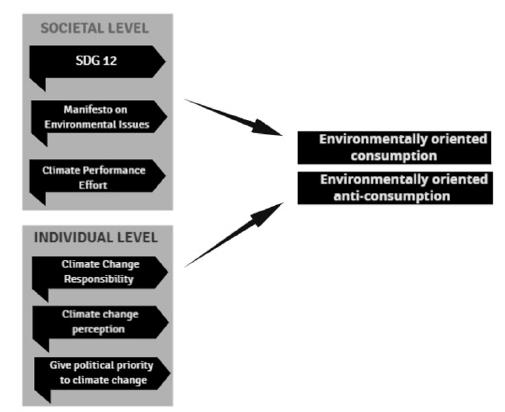
Figure 2
Theoretical model proposed to test the hypothesis constructed in this article and the two levels of analysis (Level 1 - individuals and Level 2 - 25 European countries).
Source: Developed by the authors.
RESULTS
The research sample (according to Table 2 and 3) consisted of 24,056 individuals from 25 European countries who responded to the environmentally oriented consumption questionnaires, and 24,568 individuals who responded to the anti-consumption questionnaires. The age of the sample ranged from 15 to 97 years, with an average of 49.6 years for both samples. In terms of gender, women were in the majority, accounting for 52.5% of the consumption sample and 52.6% of the anti-consumption sample. On the other hand, in terms of educational level, the majority (32%) had completed only upper secondary education. Finally, when evaluating the dependent variables, the results of the constructs show that the majority (81.4%) of individuals demonstrated only two or fewer environmentally oriented consumption behaviors (on a scale from 0 to 8), while in terms of anti-consumption, 69.3% of individuals demonstrated only two or fewer behaviors (on a scale from 0 to 5). Thus, more than half of the respondents in these countries show medium or low levels of environmentally oriented consumption and anti-consumption behaviors.
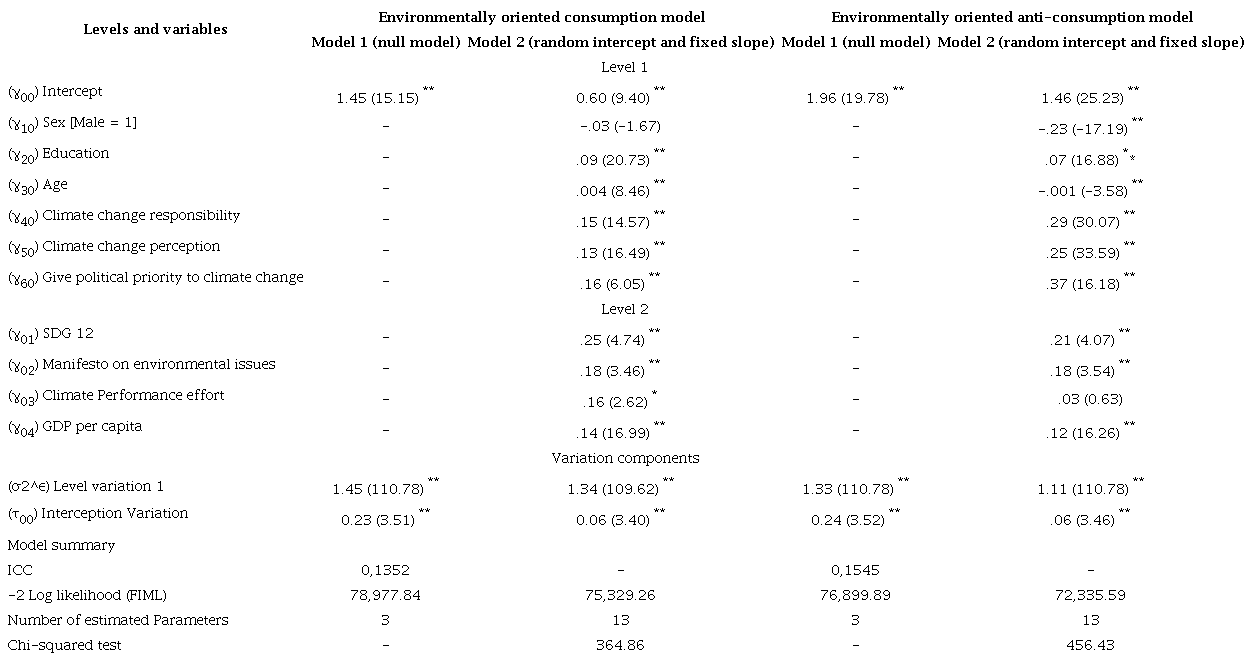
In the context of multilevel regression analyses, the null model (Table 4) proved to be statistically significant for both dependent variables, with an average behavioral intercept considering the 25 countries analyzed (p < 0.05). This initial model aims to investigate whether the level of environmentally oriented consumption and anti-consumption behavior among the individuals analyzed varies significantly between the countries studied, including only the intercept in the model (consumption and anti-consumption) (Heck et al., 2013; Peugh, 2010). A key indicator in the multilevel regression analysis, the intraclass correlation coefficient (ICC), was calculated to be 0.1352 for consumption and 0.1545 for anti-consumption. These values suggest that 13.5% and 15.5% of the individual variation in green consumption and anti-consumption behaviors, respectively, can be attributed to differences in Level 2 (country) variables (Peugh, 2010).
Environmentally oriented consumption and anti-consumption model results: Null model and model with individual- and country-level variables.
Note.* p < 0.05; ** p < 0.01.
The second model (Table 4) incorporates all the covariates examined and includes individual, control, and country-level variables for each dependent variable. For comparison with the null model, the likelihood ratio test was applied between the models, revealing a significant critical value (χ^2(10) = 18.307, p < 0.05) for both environmentally oriented consumption and anti-consumption. This indicates a significant improvement in Model 2 compared to the null model.
In the analysis of the variables at the individual level, all were positively significant in the construction of the environmentally oriented consumption and anti-consumption model. Thus, the perception of climate change generated positive effects on both consumption (γ50 = 0.13; p < 0.01) and anti-consumption (γ50 = 0.25; p < 0.01). Similarly, responsibility for climate change and political prioritization of climate change positively influenced both environmentally oriented consumption (climate change responsibility - γ40 = 0.15; p < 0.01; give political priority to climate change - γ60 = 0.16; p < 0.01) and anti-consumption (climate change responsibility - γ40 = 0.29; p < 0.01; give political priority to climate change - γ60 = 0.37; p < 0.01). Therefore, the model results confirm the proposed hypotheses: H3a, H3b, H4a, H4b, H6a, and H6b.
Similar results were found for the country-level variables. The SDG 12 indicator showed a significant positive relationship with consumption (γ01 = 0.25; p < 0.01) and anti-consumption (γ01 = 0.21; p < 0.01). Thus, hypotheses H1a and H1b are supported, suggesting that sustainable production and consumption patterns do indeed influence environmentally oriented consumer and anti-consumer behavior. Furthermore, in the aspects of climate policy, there was also a significant positive effect of the manifestos on climate change in both dependent variables. However, the effort on climate performance generated a significant positive effect only on consumption (γ03 = 0.16; p < 0.05). Therefore, the results support hypotheses H2a, H2b, and H5a and reject hypothesis H5b.
As for the control variables at Levels 1 and 2, the effects of gender, education level, and age are highlighted. In anti-consumption, the results showed that males were less likely to engage in environmentally oriented anti-consumption behaviors compared to females, as evidenced by the beta coefficient (γ10 = -0.23; p < 0.01), which showed a negative relationship. For consumption, this relationship was not significant. The level of education was positively significant in both models, showing that the higher the level of education of individuals, the higher their environmentally oriented consumption (γ20 = 0.09; p < 0.01) and anti-consumption (γ20 = 0.07; p < 0.01) behaviors. Finally, age was also significant in both models, being proportional for consumption (γ30 = 0.004; p < 0.01) and inversely proportional to anti-consumption (γ30 = -0.001; p < 0.01). In other words, the older an individual is, the more environmentally oriented consumption behavior they exhibit, but their anti-consumption behavior decreases with age.
Based on the results obtained, we observed that the variables with the greatest impact on environmentally oriented consumption and anti-consumption behaviors show a clear difference in their associations. For environmentally oriented consumption, the variable with the greatest impact was SDG 12, with a beta value of 0.25, indicating that sustainable production and consumption patterns have a significant relationship with consumer behavior, reinforcing the importance of public policies that encourage environmental responsibility. This was followed by ‘environmental manifesto,’ with a beta of 0.18, suggesting that adherence to discourses and movements in favor of environmental awareness also plays a relevant role. ‘Climate performance effort,’ with a beta of 0.16, was the third most significant variable, indicating that the commitment of individuals and governments to concrete actions to mitigate climate change directly influences sustainable consumption behavior, albeit in a slightly more moderate way.
In the case of environmentally oriented anti-consumption, the variable with the greatest impact was climate change perception, with a beta of 0.25, indicating that individual awareness and concern about climate change are strong determinants of the adoption of anti-consumption behaviors. Climate change responsibility, with a beta of 0.215, was the second most influential variable, indicating that individual responsibility for mitigating climate change is also a strong motivator for reducing consumption. Finally, SDG 12 stood out again, with a beta of 0.212, but with a slightly more modest impact on anti-consumption behaviors compared to environmentally oriented consumption. This suggests that global policies and sustainability goals are also relevant, but their effect is more pronounced when it comes to promoting sustainable consumption practices. These results also suggest that while climate awareness and a sense of responsibility are crucial for anti-consumption behavior, global policies and sustainable social movements have a more direct impact on environmentally oriented consumption behavior.
DISCUSSIONS
The construction of a responsible consumption model incorporating SDG 12 is a significant challenge that has yet to be fully explored, with few studies attempting to follow a similar approach (see Rawat & Sahni, 2023; Sekerka et al., 2022). This is primarily due to the complexity of the interactions between individual consumption practices, public policies, and social norms. Neo-institutional theory provides a valuable perspective for understanding how changes in consumer behaviors and public policies are not only driven by political decisions but also by social interactions between citizens and institutions (Alvesson & Spicer, 2019; Fredriksson et al., 2013). According to this theory, both public policies and individual perceptions and behaviors are fundamental to institutional change, which is essential for transforming social norms and practices, such as those associated with sustainable consumption (Fredriksson et al., 2013; Sekerka et al., 2022).
In this sense, SDG 12 can be seen as a classic example of institutional change, where a global guideline is provided to modify consumption practices at both individual and collective levels. Adherence to this goal, as demonstrated in the research results, promotes not only awareness of the environmental impacts of consumption but also contributes to a broader transformation in consumption practices, aligning public policy with consumer expectations and behavior. Neo-institutional theory helps us understand that the success of initiatives such as SDG 12 depends not only on the implementation of public policies but also on their acceptance and internalization by society. This leads to the creation of new social norms that favor sustainable consumption (Alvesson & Spicer, 2019; Fairbrass et al., 2024; Ortega-Egea & García-de-Frutos, 2020; Raman et al., 2024).
The impact of SDG 12 on responsible consumption is also influenced by the creation of an institutional environment that favors more sustainable consumption choices, as suggested by the literature (Rawat & Sahni, 2023; Silva et al., 2023). Neo-institutional theory emphasizes that the integration of sustainable practices at both individual and collective levels is fundamental to transforming social norms (Fredriksson et al., 2013). This is reflected in how public policies can not only guide but also reinforce collective behaviors that respect the planet’s environmental limits. Furthermore, the interaction between public policies and individual perceptions, as seen in the importance of the environmental manifesto and the climate performance effort, illustrates how neo-institutional theory can explain the forces that motivate consumers to adopt more responsible practices, aligning these practices with the structural changes promoted by SDG 12.
However, the results also indicate that the adoption of responsible consumption practices alone is insufficient to promote a radical change in anti-consumption behaviors. Neo-institutional theory suggests that for deeper change to occur, social norms must be challenged and reshaped (Fredriksson et al., 2013; Sekerka et al., 2022). In many cases, as demonstrated by the rejection of hypothesis H5b, the adoption of environmental performance practices, while positive, does not necessarily lead to the active rejection of excessive consumption. This can be explained by the limitations of individual actions when confronted with broader social norms, such as those promoted by consumer culture, which are sustained by social and cultural institutions. Thus, the transformation from consumption practices to anti-consumption behaviors requires not only individual awareness but also a reconfiguration of the social and political norms that underpin consumption behaviors (Burroughs & Rindfleisch, 2002; García-de-Frutos et al., 2018).
Furthermore, the perception of climate responsibility and its role in anti-consumption, as discussed in the literature, can be better understood through neo-institutional theory, which emphasizes how individual beliefs are shaped by social interactions and public policy (Alvesson & Spicer, 2019; Fredriksson et al., 2013). The anti-consumption movement is not only a personal response to the environmental crisis but also an ideological and political resistance against a consumption model supported by institutions that reinforce excessive consumption practices. In this sense, changes in individual perceptions, fueled by manifestos and public policies, can be seen as reflections of the transformation of social and political norms in a process of institutional change that aligns with global sustainability goals (Alvesson & Spicer, 2019).
Regarding the results of the model, the relationship between this variable and environmentally oriented consumption can be explained by several factors present in the literature. ‘SDG 12’ emerges as the variable with the greatest impact, reflecting the importance of global guidelines for responsible consumption. According to previous studies (Raman et al., 2024; Rawat & Sahni, 2023), awareness of the SDGs, especially SDG 12, has been shown to be an important motivating factor for pro-environmental behavior, as it provides a clear and normative framework that guides consumers to adopt more sustainable practices, such as choosing environmentally friendly products and reducing waste. Thus, SDG 12 not only encourages a change in individual behavior but also strengthens a collective movement toward consumption practices that respect the planet’s environmental limits.
The literature shows that the adoption of responsible production and consumption patterns is directly linked to changes in consumer behavior toward more environmentally oriented practices (García-de-Frutos et al., 2018; Silva et al., 2023). Awareness of the SDGs, and SDG 12 in particular, can motivate individuals to reconsider their consumption choices, opting for more sustainable products, reducing waste, and prioritizing practices that minimize environmental damage. Thus, the promotion of SDG 12 not only provides global direction but also contributes to a paradigm shift in consumer behavior, encouraging individuals to adopt more sustainable lifestyles (Rawat & Sahni, 2023; Tian et al., 2022).
In addition, SDG 12 requires the creation of a public policy infrastructure that encourages sustainable consumption, such as regulations that favor greener products and production processes (Rawat & Sahni, 2023; Tian et al., 2022). Public policies aligned with this goal can also directly influence consumer behavior by providing incentives for more responsible choices, such as using recyclable products, reducing waste, and preferring low-impact options (Silva et al., 2023). In this sense, the impact of SDG 12 on environmentally oriented consumption is explained by the integration of sustainable values and practices, both at the individual and collective levels, as a reflection of global policies and efforts to foster a culture of environmental responsibility.
On the other hand, ‘manifesto on environmental issues’ reflects consumers’ environmental commitment and identity. The literature suggests that adherence to environmental movements, such as manifestos that promote awareness of climate issues, strengthens responsible consumption identity and promotes the adoption of more sustainable practices (Echavarren et al., 2019; Lubowiecki-Vikuk et al., 2021; Shatnawi & Chin, 2019). Such manifestos serve as a reflection of environmental values and beliefs, promoting conscious actions that are consistent with a responsible consumption ethic (Echavarren et al., 2019; Volkens et al., 2017). This is particularly relevant in contexts where political and social awareness of climate issues directly influences purchasing behavior and preferences for products that minimize environmental impact (Tian et al., 2022).
Finally, ‘climate performance effort’ stands out as an important factor in the adoption of environmentally oriented consumption. Studies show that perceived efforts to combat climate change, such as adopting more sustainable habits in daily life, are correlated with an increase in consumers’ willingness to change their behavior and consumption choices (García-de-Frutos et al., 2018; Ortega-Egea & García-de-Frutos, 2020; Silva et al., 2023). Individual efforts to reduce one’s carbon footprint, such as choosing more sustainable modes of transportation or reducing resource consumption, are widely recognized as indicators of responsible consumption. Research has shown that individuals who perceive that their efforts can produce tangible results are more likely to engage in environmental practices aimed at mitigating the effects of climate change, such as conscious consumption and choosing products with a lower environmental impact (García-de-Frutos et al., 2018; Ortega-Egea & García-de-Frutos, 2020).
Therefore, the influence of these three variables on environmentally oriented consumption can be understood as a combination of normative, identity-based, and practical factors. ‘SDG 12’ provides a normative basis and global direction, while the ‘manifesto on environmental issues’ strengthens personal and political commitment to environmental issues, and the ‘climate performance effort’ catalyzes changes in everyday behavior and promotes consumption choices that seek to reduce environmental impacts (Ortega-Egea & García-de-Frutos, 2020; Rawat & Sahni, 2023; Silva et al., 2023; Volkens et al., 2017). Together, these variables comprehensively explain how people are influenced to adopt more responsible and sustainable consumption practices in line with global climate challenges.
The variable ‘perception of climate change,’ which has a significant impact on environmentally oriented anti-consumption, can be explained by the relationship between individual beliefs about climate change and the motivation to adopt anti-consumption behaviors (Chatzidakis & Lee, 2013; Poortinga et al., 2019; Weber, 2010). Anti-consumption is not simply a decision not to consume but is often linked to an ideological and political conviction that reflects a critical stance toward the dominant consumer culture, its environmental consequences, and social inequalities (Chatzidakis & Lee, 2013; Iyer & Muncy, 2009). The rejection of excessive consumption is closely linked to climate perceptions, as those who recognize the severity of climate change often associate unbridled consumption with the exacerbation of these problems, leading to intentional behavior to reduce consumption (García-de-Frutos et al., 2018).
Studies show that individuals who are more aware of climate change are more likely to engage in anti-consumerist practices, as awareness of the environmental impacts of excessive consumption can create a sense of responsibility and urgency, motivating them to adopt a simpler and more sustainable lifestyle (Chatzidakis et al., 2007; García-de-Frutos & Ortega-Egea, 2015; Rawat & Sahni, 2023). Furthermore, climate perceptions can be influenced by political ideologies that emphasize the need for a less consumerist lifestyle as a form of resistance to the current economic and social model, promoting a cultural shift toward more conscious and ethical consumption (Bardhi & Eckhardt, 2017). Thus, perceptions of climate change not only shape individuals’ attitudes toward responsible consumption but also contribute to a critical stance toward prevailing patterns of consumption, highlighting how beliefs about the environmental impact of individual actions can stimulate anti-consumption behaviors. These behaviors can be linked not only to ecological awareness but also to a political and moral commitment to reducing global environmental impacts, demonstrating that anti-consumption is often more than an individual practice of not consuming, but an active opposition to the logic of mass consumption (Chatzidakis & Lee, 2013).
The relationship between the ‘climate responsibility’ variable, SDG 12, and environmentally oriented anti-consumption also finds support in the literature. Studies suggest that anti-consumption, as a pro-environmental behavior, is often associated with a deep sense of personal and collective responsibility for the environmental impacts of excessive consumption practices (Chun, 2024; Peng et al., 2024; Pinto & Casais, 2023). Climate responsibility is crucial to understanding environmentally oriented anti-consumption, as it reflects the belief that individuals have an important role to play in mitigating the effects of climate change through their consumption choices (Chun, 2024; Pinto & Casais, 2023). The literature highlights that climate responsibility is directly related to a greater commitment to adopting practices that seek to reduce unnecessary consumption and its negative impacts on the environment (Tian et al., 2022). Those who feel a strong sense of personal responsibility for climate change are more likely to adopt anti-consumerist attitudes, such as rejecting unbridled consumerism and seeking alternatives that minimize waste and the exploitation of natural resources. This sense of responsibility can lead to an active stance of resistance to excessive consumption, coupled with the idea that consuming less is an act of environmentalism (Chatzidakis & Lee, 2013).
SDG 12, which aims to promote responsible consumption and production patterns, also has significant implications for anti-consumption. The literature suggests that adapting to the SDGs, especially SDG 12, promotes awareness of the impact of consumption and the role of each individual in global sustainability (Silva et al., 2023). In this context, SDG 12 can be seen as a normative framework that not only promotes responsible consumption but also reinforces the need to reduce excessive consumption, which is directly aligned with the concept of anti-consumption. Adherence to this goal implies the elimination of the unsustainable consumption model and promotes the idea that reducing consumption is necessary to achieve long-term environmental goals and preserve the planet’s resources (Rawat & Sahni, 2023). Therefore, both climate change responsibility and SDG 12 play an important role in fostering environmentally oriented anti-consumption. Climate responsibility motivates individuals to question the need for excessive consumption, while SDG 12 provides a normative framework for promoting sustainable alternatives that seek to reduce environmental impacts.
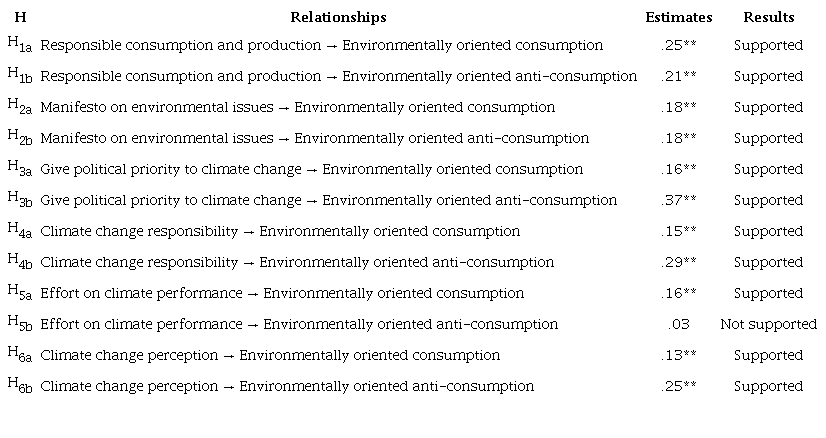
On the basis of these findings and the discussions provoked here, the following table (Table 5) summarizes the main findings from the data examined in the research. It is noteworthy that, as confirmed by the results, all but one of the hypotheses were confirmed. Regarding the unexpected results, another important finding was the rejection of hypothesis H5b, which postulated that environmental performance efforts positively influence individuals’ environmentally oriented anti-consumption behaviors. Although the literature suggests that engaging in environmental performance actions can generate greater awareness of the negative impacts of excessive consumption (Tian et al., 2022; Silva et al., 2023), our results did not confirm this relationship. This finding can be interpreted in light of several theoretical and contextual considerations.
Theoretical model hypothesis tests.
Note. * p < 0.05; ** p < 0.01.
In this sense, neo-institutional theory suggests that the adoption of environmental performance practices may, in fact, be insufficient to promote deep anti-consumption (Alvesson & Spicer, 2019; Fredriksson et al., 2013). This is because anti-consumption involves a broader critique of the mass consumption model, which is sustained not only by individual actions but also by the institutional structures that promote these practices (Iyer & Muncy, 2009). Therefore, shifting consumption behavior from responsibility to anti-consumption requires a transformation of the social institutions that regulate consumption. This aligns with the central idea of neo-institutional theory, which posits that social and political interactions are crucial for changing norms (Fredriksson et al., 2013).
First, it can be argued that the adoption of environmental performance practices alone is not sufficient to provoke a direct change in anti-consumer behavior. The literature suggests that anti-consumption is often associated with deeper ideological and political motivations, such as opposition to consumerism itself, which do not necessarily translate directly into actions related to environmental performance (Iyer & Muncy, 2009). In other words, individuals may adopt environmentally responsible practices in certain contexts, but this does not imply a radical change in attitudes toward consumption in general. Anti-consumption behavior involves a broader refusal to overconsume, not just an improvement in individual environmental performance.
Furthermore, it could be suggested that environmental performance may be more related to environmentally oriented consumption, where individuals strive to reduce the impact of their consumption but do not necessarily reject consumption as a whole. Therefore, while environmental performance may encourage more responsible consumption practices, it may not be a strong enough factor to motivate anti-consumption, which requires a more radical stance and greater commitment to reducing overconsumption.
Finally, it is possible that the social and cultural context in which individuals find themselves played an important role in this rejection of the hypothesis. The relationship between environmental performance actions and anti-consumption attitudes may vary significantly among different cultural and social groups, and it may be that in the context studied, individuals are more inclined to adopt environmentally responsible practices without necessarily adopting an anti-consumption stance.
In summary, our evidence shows that the less cautious countries are in terms of climate policies and the less efficient they are in terms of guidelines for sustainable consumption and production patterns, the lower the commitment of the population to become environmentally oriented consumers and anti-consumers. Such findings are understandable, as climate policies play a crucial role in creating a structure that promotes environmental sustainability (Pinto & Casais, 2023; Sharma, 2023; Tian et al., 2022). If a country does not adopt effective policies in this regard, there may be a lack of direction and encouragement for sustainable practices on the part of the population. The relationship between climate policy and sustainable consumption and production patterns is critical, as government policies can influence individual and collective choices and shape attitudes toward more responsible behavior toward the environment (Silva et al., 2023; Soneryd & Uggla, 2015; Tian et al., 2022).
These findings have practical implications for the development of effective strategies to stimulate consumption and anti-consumption behaviors in populations not only in developed countries but across the global population. In this sense, governments can prioritize the creation and implementation of climate policies that address both emissions and sustainable consumption and production patterns (Rawat & Sahni, 2023; Tian et al., 2022). There is also a need to invest in education and environmental awareness programs to raise awareness of the importance of responsible consumption (Pinto & Casais, 2023; Sharma, 2023; Silva et al., 2023). This can be done through policies that integrate environmental education into school curricula and promote awareness campaigns at the national level (Lin & Niu, 2018; Zsóka et al., 2013). In addition, the development of policies that provide tax incentives, rebates, or other rewards for products and behaviors that meet sustainable standards is also essential. Finally, the effectiveness of these policies needs to be continuously evaluated. Therefore, establishing effective mechanisms to evaluate the impact of implemented policies and practices, as well as creating strategies to regularly assess progress toward sustainable goals, will help with this continuous monitoring (Pinto & Casais, 2023; Tian et al., 2022).
CONCLUSIONS
This article assesses whether macro contexts (effects of political climate influences and sustainable production and consumption patterns - SDG 12) and individual contexts (individuals’ perceptions of climate change) can change the dynamics of environmentally oriented consumption and anti-consumption behaviors. These interrelated contexts play a crucial role in shaping sustainable attitudes and are essential for promoting effective policies against global warming and climate impacts. Our findings suggest that individuals are more likely to adopt environmentally responsible behaviors as sustainable policy conditions and consumption patterns strengthen.
The theoretical contributions of this study are particularly relevant for advancing the literature on pro-environmental and anti-consumer behavior by integrating individual and contextual factors in explaining environmental behavior. In contrast to previous studies that examine isolated factors such as political ideology or environmental awareness, our work adopts a multilevel approach that simultaneously considers the individual level and the macro-political context. This integration is essential because it allows us to understand how individual perceptions of consumption behavior interact with public policies and sustainable consumption patterns, proposing a more dynamic and complex analysis of the motivations that guide pro-environmental behavior. While the existing literature is often limited to a one-dimensional analysis, focusing on sustainable consumption or anti-consumption behavior separately, our study breaks with this approach by examining the interdependence between these phenomena, offering a new perspective on how they coexist and reinforce each other. Moreover, by integrating SDG 12 into the analysis, the study advances the theory of pro-environmental behavior by directly linking global sustainable consumption policies to individual consumption and anti-consumption practices, and by highlighting how these policies can shape behaviors in different national contexts.
It should be noted that the selection of the 25 European countries for this study was based on the Eurobarometer 95.1 database, which contains a representative sample of the member states of the European Union. The choice of 25 countries was motivated by the availability of complete and comparable data for each nation, with a minimum of 1,000 complete responses per country, which ensures the robustness and reliability of the analyses. Although the data are from European countries, the methods and conclusions of this study have broad implications and can be applied to other contexts, as the issues of environmentally oriented consumption and anti-consumption behavior are of global relevance. The generalizability of the results to other countries or regions depends on socio-economic and cultural similarities, and the trends observed can provide valuable insights for public policies and behaviors in different parts of the world.
Although the use of secondary databases is valuable because it allows the analysis of large amounts of data on a broad scale, it has important limitations. The main one is the lack of control over the data collection, which may not be fully aligned with the specific objectives of the research. In addition, there may be problems related to data quality, selection bias, and lack of contextualization, which can affect the accuracy and interpretation of the results. Acknowledging these limitations, however, does not diminish the relevance of the work, and in order to avoid these problems, some practices were adopted in this research. Firstly, the data sources and their collection methodology were reviewed to check the quality and representativeness of the sample. In addition, the Eurobarometer data were supplemented with additional sources, thus strengthening the robustness and reliability of the results.
Another limitation of the study is the social desirability bias. To minimize this effect, secondary data were selected from reliable sources, such as Eurobarometer, which uses rigorous methods such as anonymous questionnaires and guarantees of confidentiality. In addition, aggregated data analysis was used to reduce individual biases and provide a more representative view of the population, ensuring the validity and relevance of the results. To fill potential gaps in this area, we highlight the urgent need for research that addresses: (1) monitoring and evaluating climate policies in a longitudinal manner to examine how these changes affect the attitudes and consumption patterns of the population; (2) exploring other contexts related to policy issues, such as social norms and cultural differences in shaping environmental behavior, recognizing that cultural diversity among nations can lead to different attitudes and perceptions toward environmental issues; and (3) conducting comparative studies between countries with different sustainable approaches to identify best practices and challenges related to the implementation of climate policies and sustainable production and consumption patterns.
REFERENCES
Alvesson, M., & Spicer, A. (2019). Neo-institutional theory and organization studies: A mid-life crisis? Organization Studies, 40(2), 199-218. https://doi.org/10.1177/0170840618772610
Bardhi, F., & Eckhardt, G. M. (2017). Liquid consumption. Journal of Consumer Research, 44(3), 582-597. https://doi.org/10.1093/jcr/ucx050
Bryan, M. L., & Jenkins, S. P. (2016). Multilevel modelling of country effects: A cautionary tale. European Sociological Review, 32(1), 3-22. https://doi.org/10.1093/esr/jcv059
Burck, J., Marten, F., Bals, C., & Höhne, N. (2022). Climate change performance index. November, 2022. https://ccpi.org/download/climate-change-performance-index-2022/
Burroughs, J. E., & Rindfleisch, A. (2002). Materialism and well-being: A conflicting values perspective. Journal of Consumer Research, 29(3), 348-370. https://doi.org/10.1086/344429
Chatzidakis, A., Hibbert, S., & Smith, A. P. (2007). Why people don’t take their concerns about fair trade to the supermarket: The role of neutralisation. Journal of Business Ethics, 74, 89-100. https://doi.org/10.1007/s10551-006-9222-2
Chatzidakis, A., & Lee, M. S. (2013). Anti-consumption as the study of reasons against. Journal of Macromarketing, 33(3), 190-203. https://doi.org/10.1177/0276146712462892
Chun, H. (2024). The influence of culture and other factors on consumer attitudes towards sustainable consumption [Master’s thesis] - Universitat Politècnica de Catalunya, Spain.
Culiberg, B., Cho, H., Kos Koklic, M., & Zabkar, V. (2022). The role of moral foundations, anticipated guilt and personal responsibility in predicting anti-consumption for environmental reasons. Journal of Business Ethics, 182, 1-17. https://doi.org/10.1007/s10551-021-05016-7
Diermeier, D., & Van Mieghem, J. A. (2008). Voting with your pocketbook-a stochastic model of consumer boycotts. Mathematical and Computer Modelling, 48(9-10), 1497-1509. https://doi.org/10.1016/j.mcm.2008.05.043
Echavarren, J. M., Balžekienė, A., & Telešienė, A. (2019). Multilevel analysis of climate change risk perception in Europe: Natural hazards, political contexts and mediating individual effects. Safety Science, 120, 813-823. https://doi.org/10.1016/j.ssci.2019.08.024
Eurobarometer 95.1 (2021). GESIS, Cologne. ZA7781 Data file Version 1.0.0. GESIS. http://dx.doi.org/10.4232/1.14079
Fairbrass, A. J., O’Sullivan, A., Campbell, J., & Ekins, P. (2024). The SDGs provide limited evidence that environmental policies are delivering multiple ecological and social benefits. Earth’s Future, 12(5), e2024EF004451. https://doi.org/10.1029/2024EF004451
Field, A. (2009). Discovering statistics using SPSS. SAGE.
Fredriksson, M., Pallas, J., & Wehmeier, S. (2013). Public relations and neo-institutional theory. Public Relations Inquiry, 2(2), 183-203. https://doi.org/10.1177/2046147X13485956
García-de-Frutos, N., Ortega-Egea, J. M., & Martínez-del-Río, J. (2018). Anti-consumption for environmental sustainability: Conceptualization, review, and multilevel research directions. Journal of Business Ethics, 148, 411-435. https://doi.org/10.1007/s10551-016-3023-z
García-de-Frutos, N., & Ortega-Egea, J. M. (2015). An integrative model of consumers’ reluctance to buy foreign products: Do social and environmental country images play a role? Journal of Macromarketing, 35(2), 167-186. https://doi.org/10.1007/s10551-016-3023-z
Heck, R. H., Thomas, S.L., & Tabata, L.N. (2013). Multilevel and longitudinal modeling with IBM SPSS. Routledge. https://doi.org/10.4324/9780203701249
Huang, F. L. (2016). Alternatives to multilevel modeling for the analysis of clustered data. The Journal of Experimental Education, 84(1), 175-196. https://doi.org/10.1080/00220973.2014.952397
Iyer, R., & Muncy, J. A. (2009). Purpose and object of anti-consumption. Journal of Business Research, 62(2), 160-168. https://doi.org/10.1016/j.jbusres.2008.01.023
Kaynak, R., & Ekşi, S. (2014). Effects of personality, environmental and health consciousness on understanding the anti-consumptional attitudes. Procedia-Social and Behavioral Sciences, 114, 771-776. https://doi.org/10.1016/j.sbspro.2013.12.783
Khan, M. A., & Lee, M. S. (2014). Prepurchase determinants of brand avoidance: The moderating role of country-of-origin familiarity. Journal of Global Marketing, 27(5), 329-343. https://doi.org/10.1080/08911762.2014.932879
Leech, N. L., Barrett, K. C., & Morgan, G. A. (2005). SPSS for intermediate statistics: use and interpretation (2nd ed.). Lawrence Erlbaum Associates.
Lee, M. S., & Ahn, C. S. Y. (2016). Anti‐consumption, materialism, and consumer well‐being. Journal of Consumer Affairs, 50(1), 18-47. https://doi.org/10.1111/joca.12089
Lee, M. S., Motion, J., & Conroy, D. (2009). Anti-consumption and brand avoidance. Journal of Business Research, 62(2), 169-180. https://doi.org/10.1016/j.jbusres.2008.01.024
Lin, S. T., & Niu, H. J. (2018). Green consumption: Environmental knowledge, environmental consciousness, social norms, and purchasing behavior. Business Strategy and the Environment, 27(8), 1679-1688. https://doi.org/10.1002/bse.2233
Lubowiecki-Vikuk, A., Dąbrowska, A., & Machnik, A. (2021). Responsible consumer and lifestyle: Sustainability insights. Sustainable Production and Consumption, 25, 91-101. https://doi.org/10.1016/j.spc.2020.08.007
Nepomuceno, M. V., & Laroche, M. (2017). When materialists intend to resist consumption: The moderating role of self-control and long-term orientation. Journal of Business Ethics, 143, 467-483. https://doi.org/10.1007/s10551-015-2792-0
Oral, C., & Thurner, J. Y. (2019). The impact of anti‐consumption on consumer well‐being. International Journal of Consumer Studies, 43(3), 277-288. https://doi.org/10.1111/ijcs.12508
Ortega-Egea, J. M., & García-de-Frutos, N. (2020). Behavioral prediction of environmentally oriented anticonsumption and consumption: A multilevel study of five Eurobarometer surveys. Psychology & Marketing, 37(2), 308-325. https://doi.org/10.1002/mar.21302
Peng, F., Long, A., Chen, J., & Kang, K. Q. (2024). A narrative review of Environmentally Oriented Anti-consumption: Definitions, dimensions, and research framework. Sustainable Production and Consumption, 51, 199-221. https://doi.org/10.1016/j.spc.2024.07.001
Peugh, J. L. (2010). A practical guide to multilevel modeling. Journal of School Psychology, 48(1), 85-112. https://doi.org/10.1016/j.jsp.2009.09.002
Pinto, O., & Casais, B. (2023). Multilevel implications for anti-consumption social marketing within the public policy framework for SDG realization: a systematic literature review. International Review on Public and Nonprofit Marketing, 1-30. https://doi.org/10.1007/s12208-023-00375-5
Poortinga, W., Whitmarsh, L., Steg, L., Böhm, G., & Fisher, S. (2019). Climate change perceptions and their individual-level determinants: A cross-European analysis. Global Environmental Change, 55, 25-35. https://doi.org/10.1016/j.gloenvcha.2019.01.007
Raman, R., Das, P., Mandal, S., Vijayan, V., Amritesh, A. R., & Nedungadi, P. (2024). The impact of Gen Z’s pro-environmental behavior on sustainable development goals through tree planting. Sustainable Futures, 8, 100251. https://doi.org/10.1016/j.sftr.2024.100251
Rawat, K., & Sahni, P. (2023). Embedding SDG 12 in consumer behavior: a survey towards knowledge, attitude and perception for sustainable consumption. Visions for Sustainability, 20, 379-393. https://doi.org/10.13135/2384-8677/8015
Sekerka, L. E., Kipfelsberger, P., Stimel, D., & Bagozzi, R. P. (2022). Choosing not to buy when tempted: Advancing sustainable development with consumer moral restraint. In World Scientific Encyclopedia of Business Sustainability, Ethics and Entrepreneurship (pp. 137-161). https://doi.org/10.1142/9789811248870_0007
Sharma, P. (2023). Promoting sustainable consumption in India: Challenges and a path forward. International Journal of Sustainable Development Through AI, ML and IoT, 2(2), 1-11. https://ijsdai.com/index.php/IJSDAI/article/view/31
Shatnawi, Y., & Chin, T. A. (2019). Bird’s‐eye view of the environmental attitude types in the sustainable consumption context. Environmental Quality Management, 28(4), 15-20. https://doi.org/10.1002/tqem.21638
Silva, F. R., Melo Filho, J. I. B., Victor, C., de Oliveira Mota, M., Câmara, S. F., Pinto, F. R., ... & Soares, M. O. (2023). A multilevel analysis of the perception and behavior of Europeans regarding climate change. Environmental Development, 46, 100861. https://doi.org/10.1016/j.envdev.2023.100861
Snijders, T. A., & Bosker, R. J. (2011). Multilevel analysis: An introduction to basic and advanced multilevel modeling. Sage.
Soneryd, L., & Uggla, Y. (2015). Green governmentality and responsibilization: New forms of governance and responses to ‘consumer responsibility’. Environmental Politics, 24(6), 913-931. https://doi.org/10.1080/09644016.2015.1055885
Sustainable Development Report. (2022). Sustainable Development Report 2022. https://dashboards.sdgindex.org/
Tabachnick, B. G., & Fidell, L. S. (2001). Using multivariate statistics (4th ed.) Needham Heights, MA.: Allyn and Bacon.
Taufique, K. M. R., Siwar, C., Chamhuri, N., & Sarah, F. H. (2016). Integrating general environmental knowledge and eco-label knowledge in understanding ecologically conscious consumer behavior. Procedia Economics and Finance, 37, 39-45. https://doi.org/10.1016/S2212-5671(16)30090-9
Templeton, G. F. (2011). A two-step approach for transforming continuous variables to normal: implications and recommendations for IS research. Communications of the Association for Information Systems, 28(1), 41-58. https://doi.org/10.17705/1CAIS.02804
Tian, J., Sun, M., Gong, Y., Chen, X., & Sun, Y. (2022). Chinese residents’ attitudes toward consumption-side climate policy: The role of climate change perception and environmental topic involvement. Resources, Conservation and Recycling, 182, 106294. https://doi.org/10.1016/j.resconrec.2022.106294
Touchette, L., & Nepomuceno, M. V. (2020). The environmental impact of consumption lifestyles: Ethically minded consumption vs. Tightwads. Sustainability, 12(23), 9954. https://doi.org/10.3390/su12239954
Volkens, A., Lehmann, P., Matthieß, T., Merz, N., Regel, S., Weßels, B. (2017). The Manifesto Data Collection. Manifesto Project (MRG/CMP/MARPOR). Version 2017a. Wissenschaftszentrum Berlin für Sozialforschung (WZB). https://doi.org/10.25522/manifesto.mpds.2017a
Weber, E. U. (2010). What shapes perceptions of climate change?. Wiley Interdisciplinary Reviews: Climate Change, 1(3), 332-342. https://doi.org/10.1002/wcc.41
Wolf, M. J., Emerson, J. W., Esty, D. C., Sherbinin, A., Wendling, Z. A. (2022). Environmental Performance Index 2022. Yale Center for Environmental Law & Policy. https://epi.yale.edu/
World Bank. (2020). Data Bank. https://databank.worldbank.org/home.aspx
Zsóka, Á., Szerényi, Z. M., Széchy, A., & Kocsis, T. (2013). Greening due to environmental education? Environmental knowledge, attitudes, consumer behavior and everyday pro-environmental activities of Hungarian high school and university students. Journal of Cleaner Production, 48, 126-138. https://doi.org/10.1016/j.jclepro.2012.11.030
Notes



Author notes
Two reviewers did not authorize the disclosure of their identity.
* Corresponding Author
Conflict of interest declaration
