Artículos

Esta obra está bajo una Licencia Creative Commons Atribución-NoComercial 4.0 Internacional.
Abstract: The present research evaluates the productive performance of guinea pigs fed with two different feed rations. Three groups of 15 male Peruvian guinea pigs were formed, each with three repetitions of five individuals. The guinea pigs in the control group (T0) were fed only with alfalfa, the first treatment group was fed with a combination of alfalfa and concentrated feed in a 3:1 ratio, respectively (T1), and the second experimental group was fed with ryegrass and the same balanced supplement, also in a 3:1 ratio (T2). At the end of the nine-week study, the average live weights obtained were 917.67 g in T0, 948.13 g in T1, and 911.60 g in T2. The average feed intake based on dry matter per guinea pig/day was increased gradually, with lower quantities for the group of guinea pigs fed only with alfalfa and higher quantities for the group of guinea pigs fed with ryegrass and concentrated feed. The feed conversion was better in T1 compared to the other two groups (p = <0.001). It is concluded that guinea pigs fed with alfalfa and supplemented with concentrated feed show greater weight gain.
Keywords: Cavia porcellus, feeding, weight gain, feed conversion, production.
Resumen: En esta investigación, se evalúa el desempeño productivo en cuyes alimentados con dos raciones alimenticias distintas. Se formaron tres grupos de 15 cuyes machos de la raza Perú, cada uno con tres repeticiones de cinco individuos. Los cuyes del grupo de control (T0) fueron alimentados únicamente con alfalfa; el primer grupo de tratamiento, con alfalfa y alimento concentrado en proporciones de 3:1, respectivamente (T1); y el segundo grupo experimental, con ryegrass y el mismo suplemento balanceado, también en proporción 3:1 (T2). Al culminar el estudio de nueve semanas, se obtuvieron pesos vivos promedios de 917,67 g en el T0 , 948,13 g en el T1 y 911,60 g en el T2. La ingesta media de alimento con base en materia seca por cuy/día fue creciente, con aumentos menores para el grupo de cuyes alimentados únicamente con alfalfa y mayores para el grupo de cuyes alimentados con ryegrass y alimento balanceado. La conversión alimenticia fue mejor en el T1 en comparación con los otros dos grupos (p = <0.001). Se concluye que, los cuyes alimentados con alfalfa y adición de concentrado tienen una mayor ganancia de peso.
Palabras clave: Cavia porcellus, alimentación, ganancia de peso, conversión alimenticia, producción.
INTRODUCTION
The guinea pig (Cavia porcellus) is distributed worldwide. Its breeding has generated increasing interest as it has positioned itself as a regular source of high-quality animal protein for domestic consumption. Due to its prolific nature, it contributes to food security and provides a small but frequent economic income to the population in developing countries. Moreover, guinea pigs reproduce in different habitats and adapt to a wide range of climates and diets (Lammers et al., 2009; Sánchez-Macías et al., 2016; Ngoula et al., 2017).
Guinea pig breeding has gained importance because its protein production is possible at a low cost due to its diet based on feed, forages, and vegetable waste from crops and traditional markets (Sánchez-Macías et al., 2018). However, if meat production is to be increased, they can be fed with concentrates and supplements (Sánchez-Macías et al., 2018). Guinea pigs are considered contributors to food security due to their health properties and high content of proteins, B-group vitamins, linoleic and linolenic acids, and low content of saturated fats and cholesterol (Quevedo, 2012; Avilés et al., 2014).
Guinea pigs have a broad capacity to utilize different types of food, making good use of everything-from fiber-rich to protein-rich foods. Despite fiber having lower nutritional value, guinea pigs utilize it better than other monogastric animals due to their functional cecum, resulting in lower utilization of nutrients and metabolizable energy. Additionally, protein intake contributes to greater energy utilization, while including concentrates and other supplements in their diet enhances their nutritional intake (Kouakou et al., 2013; Sánchez-Macías et al., 2018; Castro-Bedriñana and Chirinos-Peinado, 2021).
Traditionally, guinea pigs have been fed with green forage. However, to improve productive variables such as weight gain, feed consumption, feed conversion, etc., various supplements and foods have been used, such as balanced feed with vitamin C (Reynaga et al., 2020), barley flour, and mineral blocks (Quintana et al., 2013). Biological fish silage (Mattos et al., 2003), probiotic mixtures (Cano et al., 2016), and vitamin and mineral mixtures (Paredes and Díaz, 2023) have also been used.
Guinea pig breeding is increasingly widespread in Peru and around the world. It represents an important source of animal protein supply and economic income (Kouakou et al., 2011; Avilés et al., 2014; Ngoula et al., 2017). However, there is still limited information on the effects of different feeds used in their diet. For this reason, the present research was conducted to evaluate the productive variables of feed consumption, weight gain, and feed conversion in Peruvian guinea pigs in the fattening phase fed with two feed rations.
MATERIALS AND METHODS
Study location: The present research was conducted at the guinea pig shed San José (-7.1281072 S, -78.479220 W), located within the district of Los Baños del Inca, Cajamarca (Peru). It is situated at 2749.53 meters above sea level and has a temperate climate, with an average annual temperature of 14.5ºC and a relative humidity of 69.75%.
Experimental design: In this study, a completely randomized design was proposed using forty-five male Peruvian guinea pigs, 21 days old and with similar body condition scores, which were divided into three groups randomly and then each group was randomly assigned one of the three treatments (T0, T1, and T2). Each cage housed 15 animals (of each treatment), divided into three compartments in which 5 guinea pigs were randomly placed, forming three replicates per cage, as shown in figure 1. Each cage was built with galvanized wire mesh and wood (dimensions 3 m long, 0.90 m wide and 0.90 m high).
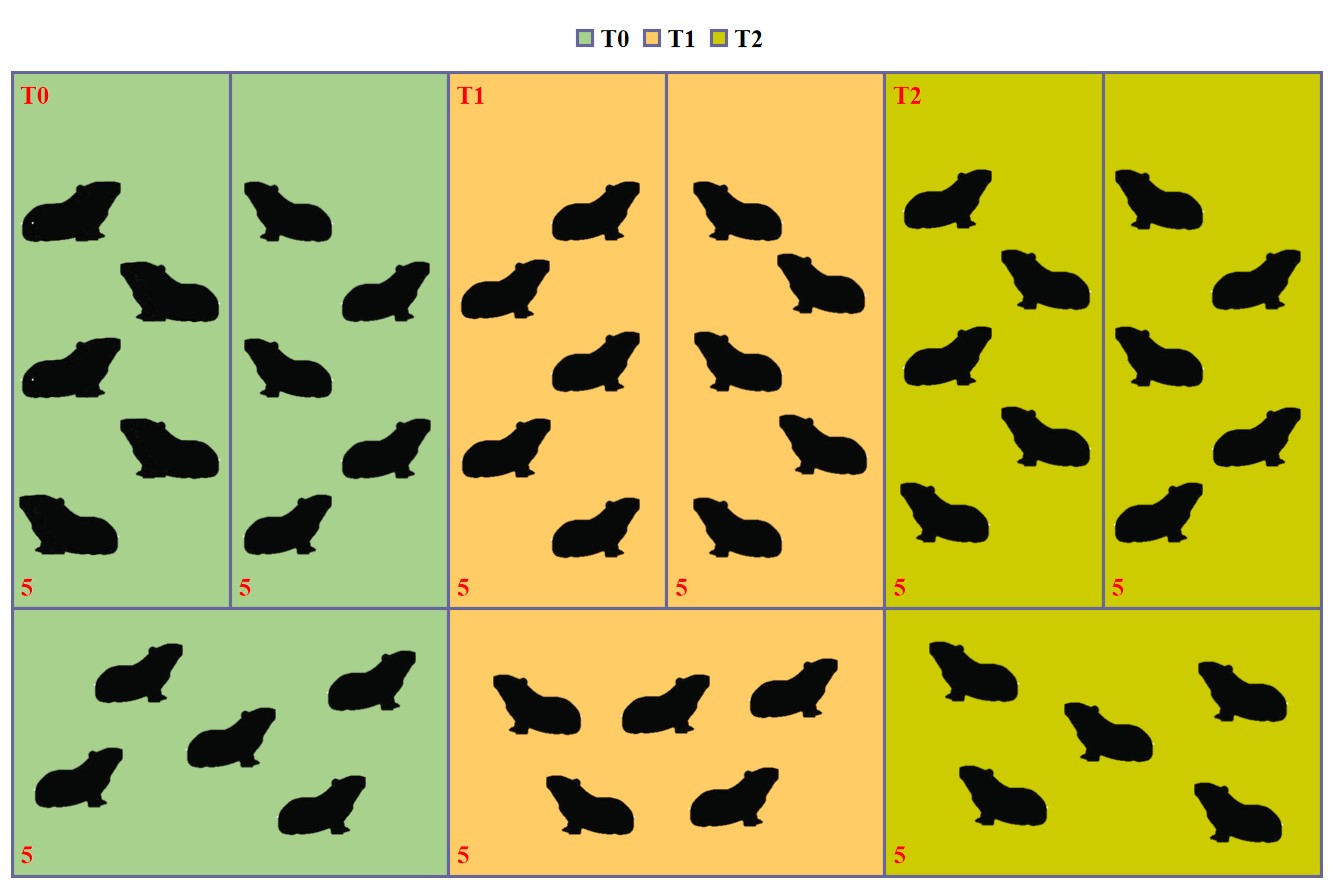
Figure 1
Distribution of guinea pigs in the three groups: control group and two treatment groups.
The guinea pigs in the control group (T0) were fed only with fresh alfalfa at the flowering phase (10%) (Medicago sativa). The guinea pigs in T1 were fed with fresh alfalfa and commercial concentrate in a 3:1 ratio, and the guinea pigs in T2 were fed with Cajamarca ecotype Ryegrass (Lolium multiflorum) and commercial concentrate in a 3:1 ratio, respectively. The concentrated feed in T1 and T2 was given in clay deposits, that is, it was given separately from the forage. The food quantities administered were based on the 30% of their body weight per day. The nutritional composition of the inputs is shown in table 1.
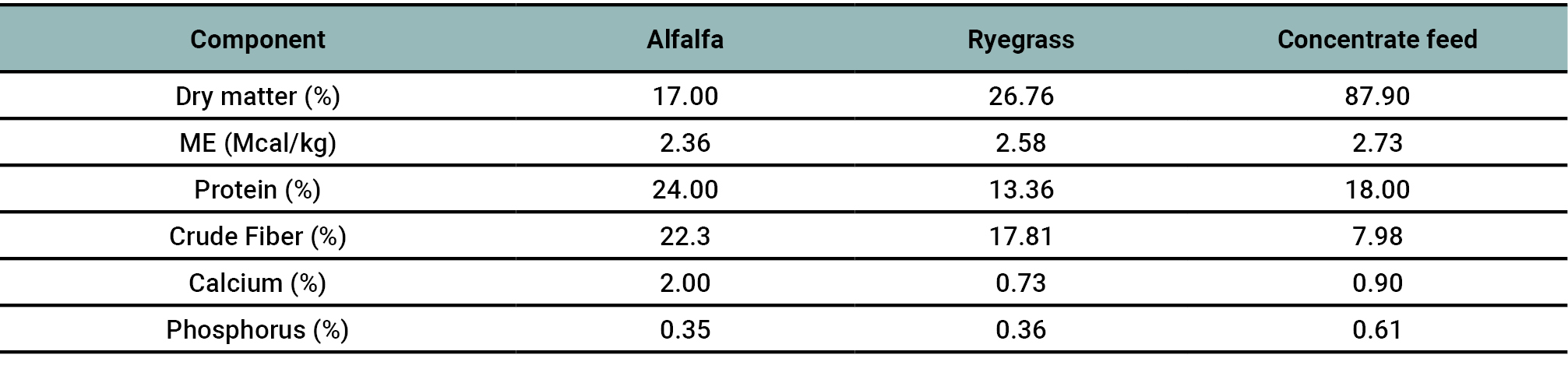
Table 1
Nutritional composition of the feed inputs used in the control group and treated groups of guinea pigs.
Water was supplied through nipple drinkers. Seven days before the start of the study, all guinea pigs underwent a parasitological examination using the sugar flotation method and natural sedimentation to concentrate the eggs of gastrointestinal and hepatic parasites. The guinea pigs that tested positive for parasite eggs were treated with a formulation based on ivermectin-clorsulon at a dose of 0.2 mg/kg - 2 mg/kg, administered subcutaneously. The study continued once the effectiveness of the antiparasitic treatment was verified through fecal egg counts. For 63 days, a strict health and biosafety program was followed, and the cleaning and collection of manure and food waste were carried out daily. Additionally, the guinea pig housing area floor was periodically disinfected with lime (CaO) every week.
Collection of data: Each guinea pig was weighed at the beginning (IBW) and at the end of the study (FBW) total weight gain, feed intake - FI (difference between the given feed quantity and residue), and feed conversion - FC (Feed intake [DM]/weight gain) were calculated weekly using a digital balance.
Statistical analysis: The data obtained from the productive parameters were subjected to a completely randomized analysis of variance with normally distributed variables (ANOVA). Post hoc, Tukey’s Honestly Significant Difference test was applied to determine statistical differences between the treatment means, with a significance level of p < 0.05. The analysis of variance for the variables of feed intake and feed conversion ratio was conducted separately for each week.
RESULTS
At the end of the nine-week study, guinea pigs fed with fresh alfalfa plus concentrated feed (T1) achieved the highest FBW 948.13 g (p < 0.05). Guinea pigs fed T0 and T2 showed statistically similar FBW (T0 = 917.67 g and T2 = 911.6 g, respectively) (figure 2).
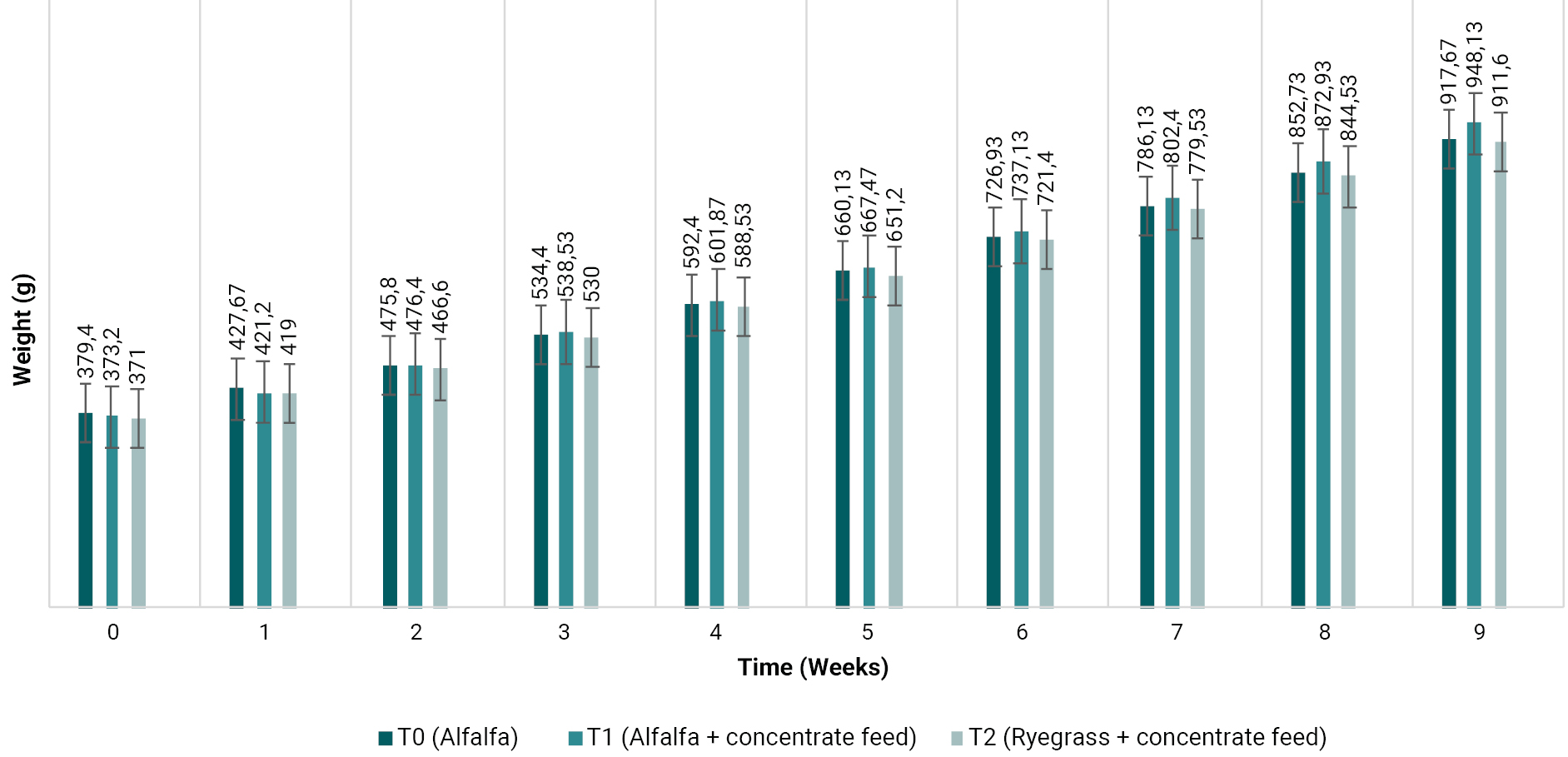
Figure 2
Average live weights of guinea pigs at the end of the nine-week study.
Similarly, the guinea pigs in T1 showed higher weekly and daily weight gains in the ninth week compared to T0 and T2 (p = < 0.001) (table 2).
FI and FC were numerically similar during the first two weeks in all three groups. Between the third and eighth weeks, FI and FC of T0 and T2 were the most notable differences (p = <0.001), showing the highest FI and FC. However, in the ninth week, FI was again similar between T0 and T1 (p > 0.05). FC showed a statistical difference between T0, T1, and T2 (p = <0.001). Notably, T1 exhibited the lowest value of feed conversion (table 2).
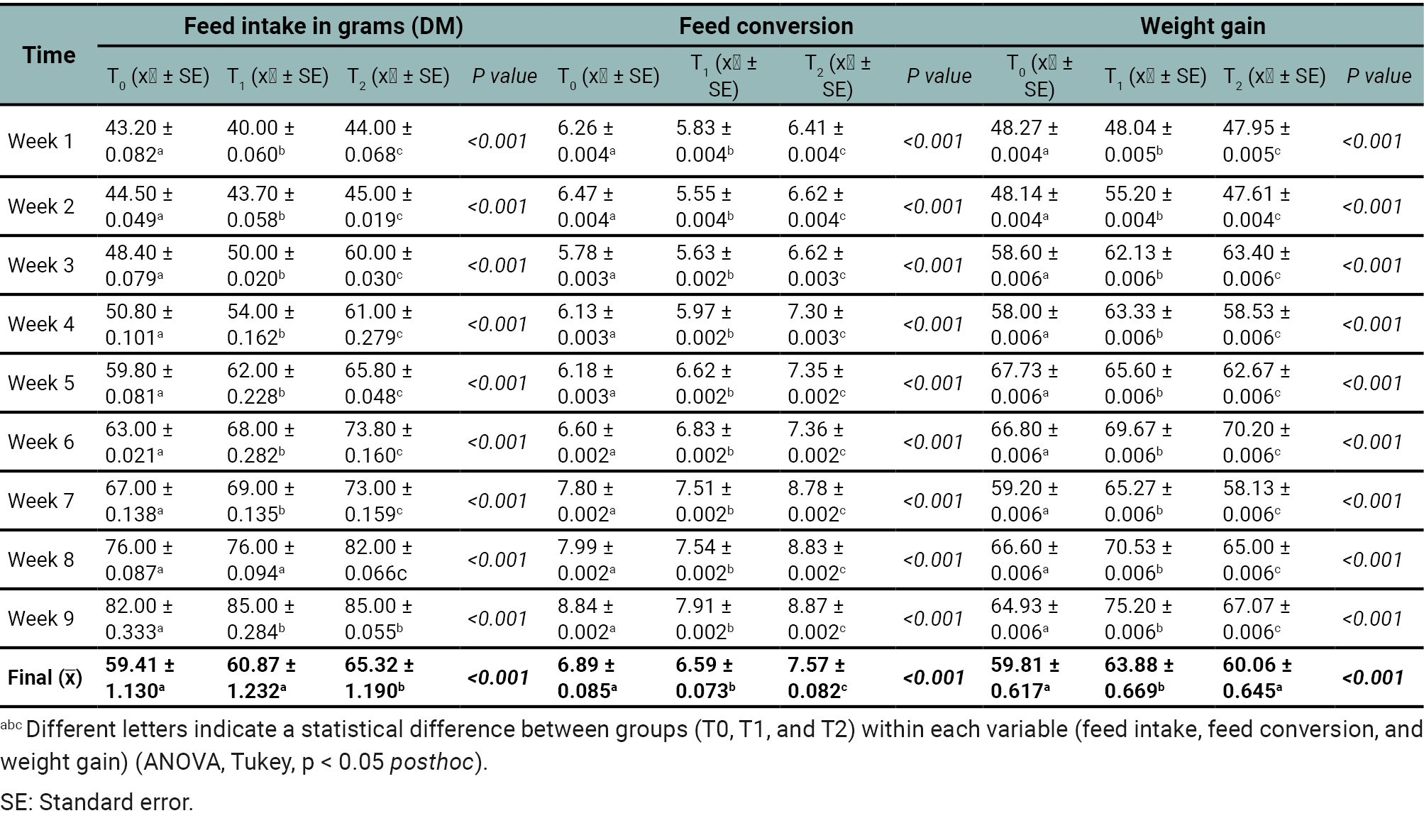
Table 2
Feed intake, feed conversion, and weight gain of guinea pigs fed with only alfalfa (T0), alfalfa plus concentrated feed (T1), and ryegrass plus concentrated feed (T2).
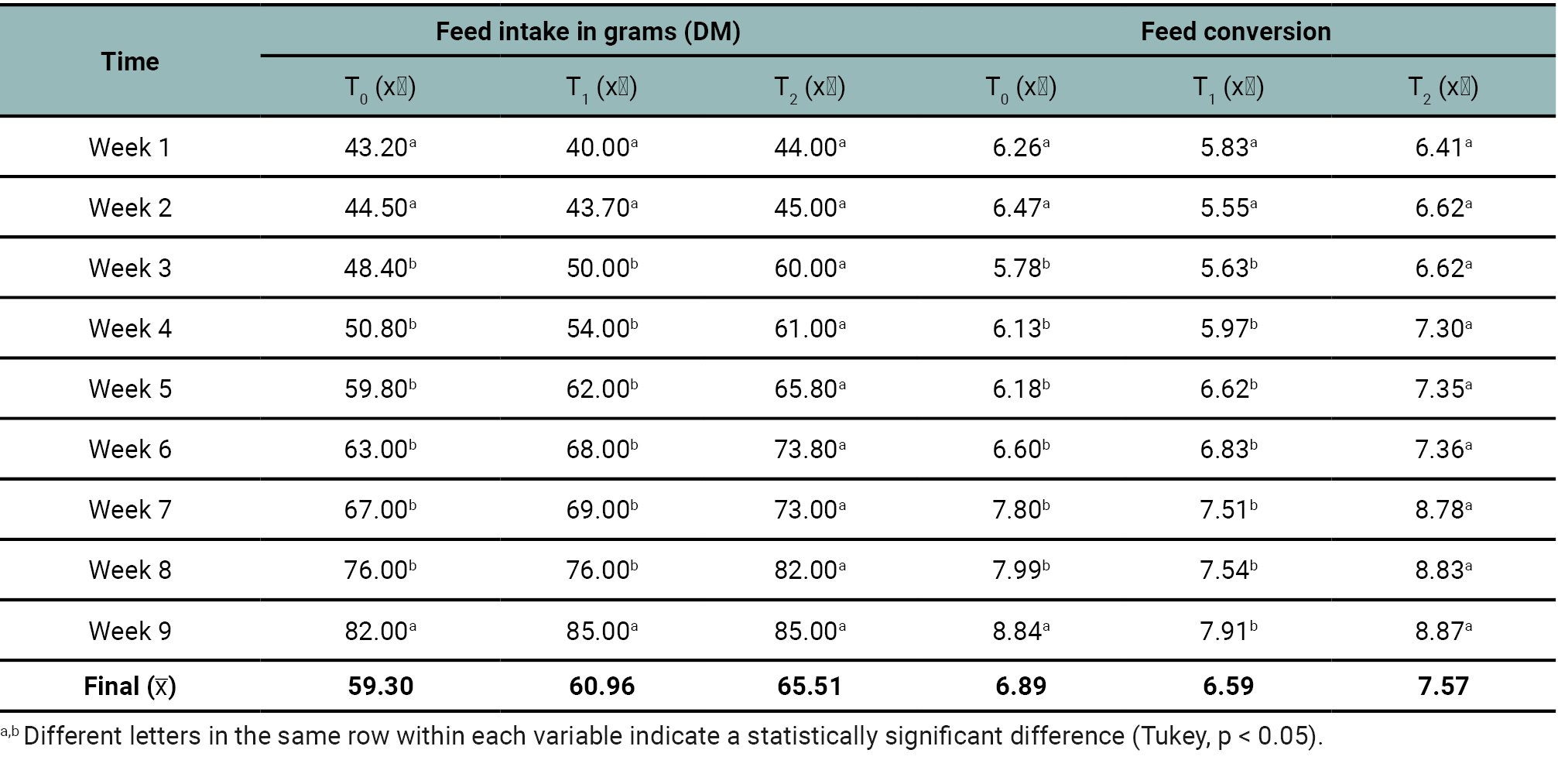
Table 3
Food consumption and feed conversion of guinea pigs fed with sole alfalfa (T0), alfalfa plus concentrated feed (T1), and ryegrass plus concentrated feed (T2).
DISCUSSION
One of the reasons why guinea pigs fed with T1 showed higher FBW compared to those fed T0 and T2 may be due to the higher protein content of both components when administered together. The results showed that alfalfa contained 24% CP, while the concentrated feed had 18%, and the ryegrass was 13.36% CP.
Although FI and FC showed statistical differences at the beginning and end of the study, these were not numerically considerable. The similarity initially observed could be explained by the fact that the internal organs of the guinea pigs complete their development to become fully functional, enabling them to begin consuming large quantities of high-fiber, low-energy-density feeds (Kholes, 2014). This same pattern of difference persisted throughout the remaining weeks, which could be attributed to the intrinsic requirements of each animal, as not all have the same metabolism, leading some to consume more than others. FI was similar in the final week, possibly due to the guinea pigs completing their growth stage, as they are mature for reproduction by day 50 after birth (Hirakow and Gotoh, 1980). At the end of the study, the guinea pigs were 84 days old.
On the other hand, T0 and T2 exhibited higher FI between the third and eighth week, which could be due to increased consumption to acquire the necessary protein levels. The best FC was achieved in the group of guinea pigs fed with fresh alfalfa and concentrated feed (T1). This outcome might be influenced by specific characteristics of the forage itself, such as lower dry matter percentage and higher protein content in the feed, allowing the guinea pigs to meet their nutritional requirements with lower FI. However, specific studies are needed to evaluate individual ingredients and examine the effects of each component.
Due to the ability of guinea pigs to efficiently utilize fibrous and protein-rich foods, thanks to their functional cecum that optimizes nutrients and energy, especially when supplemented with concentrated feed and other supplements (Kouakou et al., 2013; Sánchez-Macías et al., 2018; Castro-Bedriñana and Chirinos-Peinado, 2021), the higher protein and metabolizable energy provided by alfalfa and concentrated feed resulted in the best productive variables. Therefore, alfalfa plus concentrated feed could optimize and standardize results, leading to guinea pigs with higher live weights, as the market demands standard-sized and high-quality guinea pigs (Flores-Mancheno et al., 2017).
The type of feeding also influences the productive variables of guinea pigs. The combination of forage and concentrated feed, as seen in groups T1 and T2 in this study, represents a mixed feeding system. In some studies, integrated and mixed feeding systems have shown similar results or no statistical differences (Huamaní et al., 2016; Yoplac et al., 2017; Choez and Ravillet, 2018). However, in other studies, guinea pigs fed under a mixed system achieved better productive variables, such as higher final weights and daily weight gains, leading to a better carcass performance, albeit with a higher feed consumption (Quintana et al., 2013; Reynaga et al., 2020).
Although a more efficient feed conversion has been achieved in guinea pigs under an integrated feeding system in some studies (Morales et al., 2011; Airahuacho and Vergara, 2017; Reynaga et al., 2020), the addition of alfalfa or other green forages is necessary for the proper functioning of the digestive system and to prevent wear of the teeth and malocclusions that could affect feed consumption (Saunders, 2010).
CONCLUSIONS
The administration of alfalfa and concentrated feed showed better performance of guinea pigs compared to those achieved through the administration of only alfalfa and ryegrass supplemented with concentrated feed.
AUTHOR CONTRIBUTIONS
All authors contributed to the conception and design of this study, along with the supervision and conduction of the research. Herrera H and Niño J contributed to the validation, data curation, and writing-preparation of original drafts. Vargas-Rocha L and Torrel S collaborated in viewing, writing-reviewing, and editing the manuscript. All authors read and approved the final manuscript.
FUNDING
The authors declare that the present study was financed by the authors. This research did not receive any specific grant from funding agencies in the public, commercial, or not-for-profit sectors.
DATA AVAILABILITY
All data pertinent to this study are included in this study.
COMPETING INTEREST
The authors declare that they have no known competing financial interests or personal relationships that could have appeared to influence the work reported in this paper.
REFERENCES
AIRAHUACHO, F.; VERGARA, V. 2017. Evaluation of two levels of digestible energy based on nutritional standards of the NRC (1995) in growth diets for guinea pigs (Cavia porcellus L). Revista de Investigaciones Veterinarias del Perú, 28(2), 255-264. http://dx.doi.org/10.15381/rivep.v28i2.13079
AVILÉS, D.F.; MARTÍNEZ, A.M.; LANDI, V., DELGADO, J.V. 2014. The guinea pig (Cavia porcellus): an Andean resource of interest as an agricultural food source. Animal Genetic Resources, 55, 87-91. https://doi.org/10.1017/S2078633614000368
CANO, J.; CARCELÉN, F.; ARA, M.; QUEVEDO, W.; ALVARADO, A.; JIMÉNEZ, R. 2016. Effect of a probiotic mix supplementation on the productive performance of growing and finishing guinea pigs (Cavia porcellus). Revista de Investigaciones Veterinarias del Perú, 27(1), 51-58. https://doi.org/10.15381/rivep.v27i1.11458
CASTRO-BEDRIÑANA, J.; CHIRINOS-PEINADO, D. 2021. Nutritional value of some raw materials for guinea pigs (Cavia porcellus) feeding. Translational Animal Science, 5(2), txab019. https://doi.org/10.1093/tas/txab019
CHOEZ, K.; RAVILLET, V. 2018. Cowpea (Vigna unguiculata l. walp) as ingredient in growing-fattening rations of improved guinea pigs (Cavia porcellus). Revista de Investigaciones Veterinarias del Perú, 29(1), 180-187. http://dx.doi.org/10.15381/rivep.v29i1.14086
FLORES-MANCHENO, C.I.; DUARTE, C.; SALGADO-TELLO, I.P. 2017. Characterization of the guinea pig (Cavia porcellus) meat for fermented sausage preparation. Ciencia y Agricultura, 14(1), 39-45. https://doi.org/10.19053/01228420.v14.n1.2017.6086
HIRAKOW, R.; GOTOH, T. 1980. Quantitative studies on the ultrastructural differentiation and growth of mammalian cardiac muscle cells. II. The atria and ventricles of the guinea pig. Acta Anatomica (Basel), 108(2), 230-237. https://doi.org/10.1159/000145304
HUAMANÍ, G.; ZEA, O.; GUTIÉRREZ, G.; VÍLCHEZ, C. 2016. Effect of three feeding systems on productive performance and on carcass fatty acid profile in guinea pigs. Revista de Investigaciones Veterinarias del Perú, 27(3), 486-494. http://dx.doi.org/10.15381/rivep.v27i3.12004
KOHLES, M. 2014. Gastrointestinal anatomy and physiology of select exotic companion mammals. Veterinary Clinics of North America: Exotic Animal Practice, 17(2), 165-178. https://doi.org/10.1016/j.cvex.2014.01.010
KOUAKOU, N.D.; GRONGNET, J.F.; ASSIDJO N.E.; THYS, E.; MARNET, P.G.; CATHELINE, D.; LEGRAND, P.; KOUBA, M. 2013. Effect of a supplementation of Euphorbia heterophylla on nutritional meat quality of Guinea pig (Cavia porcellus L.). Meat Science, 93(4), 821-826. https://doi.org/10.1016/j.meatsci.2012.11.036
KOUAKOU, N.D.; SPEYBROECK, N.; ASSIDJO, N.E., GRONGNET, J.-F.; THYS, E. 2011. Typifying Guinea Pig (Cavia Porcellus) Farmers in Urban and Peri-Urban Areas in Central and Southern Côte d’lvoire. Outlook on Agriculture, 40(4), 323-328. https://doi.org/10.5367/oa.2011.0066
LAMMERS, P.J.; CARLSON, S.L.; ZDORKOWSKI, G.A.; HONEYMAN, M.S. 2009. Reducing food insecurity in developing countries through meat production: the potential of the guinea pig (Cavia porcellus). Renewable Agriculture and Food Systems, 24(02), 155-162. https://doi.org/10.1017/S1742170509002543
MATTOS, J.; CHAUCA L.; SAN MARTÍN, F.; CARCELÉN F.; ARBAIZA, F. 2003. Uso del ensilado biológico de pescado en la alimentación de cuyes mejorados. Revista de Investigaciones Veterinarias del Perú, 14(2), 89-96. https://doi.org/10.15381/rivep.v14i2.1612
MORALES, M.; CARCELÉN, F.; ARA, M.; ARBAIZA, T.; CHAUCA, L. 2011. Effect of two energy levels on the productive performance of guinea pigs (Cavia porcellus) of the Peru breed. Revista de Investigaciones Veterinarias del Perú, 22(3), 177-182. https://doi.org/10.15381/rivep.v22i3.254
NGOULA, F.; TEKAM, M.G.; KENFACK, A.; TCHINGO, C.D.; NOUBOUDEM, S.; NGOUMTSOP, H.; TSAFACK, B.; TEGUIA, A.; KAMTCHOUING, P.; GALEOTTI, M.; TCHOUMBOUEA, M. 2017. Effects of heat stress on some reproductive parameters of male cavie (Cavia porcellus) and mitigation strategies using guava (Psidium guajava) leaves essential oil. Journal of Thermal Biology, 64, 67-72. https://doi.org/10.1016/j.jtherbio.2017.01.001
PAREDES, M.; DÍAZ, J. 2023. Effect dietary vitamins and minerals premix levels on the productive performance of fattening guinea pigs. Revista de Investigaciones Veterinarias del Perú, 34(1), e24599. https://doi.org/10.15381/rivep.v34i1.24599
QUEVEDO, M. 2012. Agroindustrialización de la carne de cuy. Revista Científica Guillermo Ockham, 10(2), 217-218. https://doi.org/10.21500/22563202.2374
QUINTANA, E.; JIMÉNEZ, R.; CARCELÉN, F.; SAN MARTÍN, F.; ARA, M. 2013. Effect of diets based on alfalfa, barley meal and mineral block on the productive performance of guinea pigs. Revista de Investigaciones Veterinarias del Perú, 24(4), 425-432. https://doi.org/10.15381/rivep.v24i4.2744
REYNAGA, M.F.; VERGARA, V.; CHAUCA, L.; MUSCARI, J.; HIGAONNA, R. 2020. Mixed and integral feeding systems in the growth stage of guinea pigs (Cavia porcellus) of Peru, Andina and Inti breeds. Revista de Investigaciones Veterinarias del Perú, 31(3), e18173. http://dx.doi.org/10.15381/rivep.v31i3.18173
SÁNCHEZ-MACÍAS, D.; BARBA-MAGGI, L.; MORALES-DE LA NUEZ, A.; PALMAY-PAREDES, J. 2018. Guinea pig for meat production: a systematic review of factors affecting the production, carcass and meat quality. Meat Science, 143, 165-176. https://doi.org/10.1016/j.meatsci.2018.05.004
SÁNCHEZ-MACÍAS, D.; CASTRO, N.; RIVERO, M.A.; ARGÜELLO, A.; MORALES-DE LA NUEZ, A. 2016. Proposal for standard methods and procedure for guinea pig carcass evaluation, jointing and tissue separation. Journal of Applied Animal Research, 44(1), 65-70. https://doi.org/10.1080/09712119.2015.1006234
SAUNDERS, R. 2010. BSAVA Manual of Exotic Pets - Edited by Anna Meredith and Cathy Johnson Delaney. Journal of Small Animal Practice, 51(8), 455-455. https://doi.org/10.1111/j.1748-5827.2010.00984.x
TANDZONG, C.; MBOUGUENG, P.; WOMENI, H.; NGOUOPO, N. 2015. Effect of Cassava Leaf (Manihot esculenta) Level in Guinea-Pigs (Cavia porcellus) Meal on the Physico-Chemical and Techno-logical Properties of Its Meat. Food and Nutrition Sciences, 6, 1408-1421. http://dx.doi.org/10.4236/fns.2015.615146
YOPLAC, I.; YALTA, J.; VÁSQUEZ, H.V.; MAICELO, J.L. 2017. Effect of coffee (Coffea arabica) pulp meal as feed on productive parameters of guinea pigs (Cavia porcellus L) – Peru Breed. Revista de Investigaciones Veterinarias del Perú, 28(3), 549-561. http://dx.doi.org/10.15381/rivep.v28i3.13362
