Articulos Originales
Adaptability of tractors Maxxum Marries 150 and New Holland TM-7010 for operations of technical maintenance
Adaptabilidad de tractores Maxxum Case 150 y New Holland TM-7010 para operaciones de mantenimiento técnico
Adaptability of tractors Maxxum Marries 150 and New Holland TM-7010 for operations of technical maintenance
Revista Ciencias Técnicas Agropecuarias, vol. 26, núm. 2, 2017
Universidad Agraria de La Habana Fructuoso Rodríguez Pérez
Recepción: 22 Febrero 2016
Aprobación: 13 Marzo 2017
Abstract: Maxxum Case 150 and New Holland TM – 7010 tractors are part of the new technologies introduced in Cuba which works in “Jesus Rabí” Enterprise Unit (UEB), Matanzas Province. The objective of the present investigation is to determine the level of adaptability of these tractors, to know the reality about the fulfillment of the daily technical maintenance operations (every 10 h) and Technical Maintenance Type 1 (MT-1) every 50 h, as well as the working comfort of operators during their execution in real conditions of operation. Quality standards and observation methods combined with other procedures or techniques like interview, questionnaire and timing are used in order to determine the level of adaptability. The level of adaptability for the technical service was determined by calculating the quantitative maintainability indicators that characterize the adaptation of the machines design for technical maintenance operations. It was found that in the production conditions not all operators of Maxxum tractors comply strictly with the periodicity of technical maintenance, only 92% of the lubrication points for both cases are lubricated. Comfort coefficient of the position; coefficient of accessibility and coefficient of the working tension during the maintenance operations reach values of 0.66 and 0.67; 0.74 and 0.73; 1.66 and 1.69 for Maxxum Case 150 and New Holland TM-7010 tractors, respectively.
Keywords: Quality standards, interview, questionnaire, timing.
Resumen: Dentro de las nuevas tecnologías introducida en Cuba y que laboran en la Unidad Empresarial de Base (UEB)”Jesús Rabí” provincia Matanzas, se encuentran los tractores Maxxum Case 150 y New Holland TM–7010. El objetivo de la presente investigación es determinar el nivel de adaptabilidad de estos tractores, conocer la realidad sobre el cumplimiento de las operaciones de mantenimientos técnicos diarios (cada 10 h) y Mantenimientos Técnicos de tipo1 (MT-1) cada 50 h, así como la comodidad de trabajo del personal durante su ejecución en las condiciones reales de explotación. Para la determinación del nivel de adaptabilidad se recurre a las normas de calidad y se utilizan los métodos de observación combinados con otros procedimientos o técnicas: la entrevista, el cuestionario y el cronometraje. El nivel de la adaptabilidad para el servicio técnico se determinó a través de cálculo de los indicadores cuantitativos de mantenibilidad que caracterizan la adaptación del diseño de las máquinas para las operaciones de mantenimientos técnicos. Entre los principales resultados se encuentra que en las condiciones de producción no todos los operadores de los tractores Maxxum cumplen rigurosamente con la periodicidad de los mantenimientos técnicos, solo el 92% de los puntos de engrase para ambos casos son lubricados. El coeficiente de comodidad de la posición; el coeficiente de accesibilidady el coeficiente de la tensión de trabajo durante las operaciones de mantenimiento alcanzan valores de 0,66 y 0,67; 0,74 y 0,73;1,66 y 1,69 para los tractores Maxxum Case 150 y New Holland TM-7010 respectivamente.
Palabras clave: normas de calidad, entrevista, cuestionario, cronometraje.
INTRODUCTION
The machinery in general must undergo adequate maintenance processes to ensure that they work efficiently over a long period of time without failures and thus provide greater productive benefit (Behera et al., 2016). Machinery technical maintenance, in general and, in particular, agricultural machinery maintenance, as well as the means available for their assurance are issues requiring greater attention. Tractors are the main source of power in agriculture, and represent a high cost component, which decreases if, with consistent maintenance, they operate long periods of time, achieving large production volumes before the most complex repairs are required. The economic benefits of a tractor depend on the effectiveness and way of its use. The tractor must, therefore, be properly maintained, so that it can work effectively for long periods without breakdowns and thus, provide a greater economic benefit to its owners. A tractor that loses its capacity of work prematurely generates great expenses of investment. As an example, in developing countries approximately 53% of the total costs of the machine have been due to their repairing (Zhou, 2014;Afsharnia et. al., 2015; Sopegno et al., 2016).
The maintainability of tractors depends to a great extent on the design and consists in the fact that the equipment is the least complex possible to anticipate and detect the causes of the emergence of the faults and deteriorations, as well as the elimination of their derivations by means of the accomplishment of the technical maintenance and repairs. As less time is spent in maintenance and repair work, the maintenance level is higher (Shkiliova, 2010; Fernandez & Shkiliova, 2012), and the cost of repairs and maintenance is also lower (Hunt, 2001; Rashid y Ranjbar, 2010; Abubakar, 2013).
Studying the level of adaptability for the technical service to the machinery allows progressing in this area. The maintainability of agricultural machinery depends to a great extent on access to maintenance points, ease of disassembly, interchangeability of aggregates and sets, adaptation for control and measurements, possibility of using unified equipment for maintenance and repair, etc., aspects that are developed in the design process and to which adequate attention is not always provided (Fernandez & Shkiliova, 2012). On that purpose, determining quantitative indicators of maintainability of agricultural machinery becomes essential. Among these indicators, an important group is represented by the coefficients that characterize the adaptation of the machinery design for the technical maintenance operations (Ermolov, 1980).
It is essential to pay special attention to daily technical maintenance (every 10 h) and technical maintenance of type 1 (MT-1) every 50 h, to achieve a good working capacity of agricultural machinery. Studies show that when the daily technical maintenance and all the operations planned are carried out in the established time, the machine fault flow decreases by 50%, in average operating conditions, which makes possible the reduction of the expenses on repairs and labor (Shkiliova, 2010; Fernandez & Shkiliova, 2006).
Last decades the design and construction of tractors has been greatly perfected, reducing the number of lubrication points with difficult access and complex regulations.
In order to carry out the greasing and regulation operations, according to the established rules, in uncomfortable positions, it is necessary to know that these positions have negative influence on the mechanics’ health and therefore, diminish the productivity of their work. In order to prevent uncomfortable working positions of mechanics and specialists, which cause fatigue, energy expenditure and working time increase, it is necessary to consider during the design, the rational location of the points that need maintenance (Shkiliova, 2010). Research on this issue under Cuban conditions has been poorly addressed. Considering the importance of that theme, researches on the availability of rice harvesters of different models (New Holland L-520, L-624, L- 626, TC-57 and Laverda 225 REV) of Italian and Brazilian origin were made to assure the working capacity of agricultural machinery in general (Shkiliova et al., 2010; Fernandez & Shkiliova, 2012). In the particular case of tractors it has been scarcely treated. The present work aims to determine the main adaptability indexes of Maxxum Case 150 and New Holland TM - 7010 tractors for the accomplishment of daily technical maintenance and MT - 1, as well as the work comfort of the mechanics during its execution in the conditions of “Jesus Rabí” Enterprise Unit (UEB).
METHODS
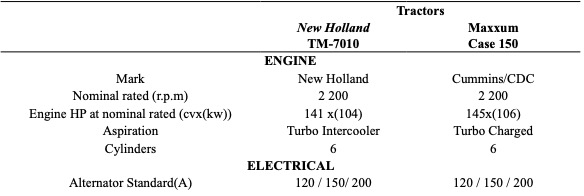
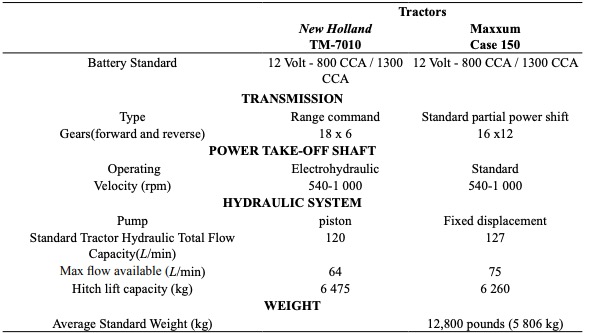
The experimental investigations are carried out under the conditions of the UEB “Jesus Rabbi”, belonging to AZCUBA Enterprise Group, Matanzas Province. The test period was from January, 2014 until completing the 3 000 h under loading, minimum time that should be taken to analyze the reliability in modern tractors (Shkiliova, 2010). For the case of Maxxum Case 150 (10) tractors that work as movers during the harvest, the analyzed period was up to June, and for New Holland tractors TM-7010 (8) that carry out the activities of soil farming, up to October. To determine the level of adaptability, the norms of quality are consulted and the observation methods combined with other procedures or techniques like interview, questionnaire and timing are used1 . In Table 1 the main technical specifications of tractors appear
The level of adaptability for the technical service was determined through calculation of quantitative indicators of maintainability that characterize the adaptation of the machine design for the operations of technical maintenances that are the following (Ermolov, 1980):
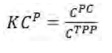
Coefficient of position comfort: relationship of the total quantity of comfortable positions during the realization of the works and the total quantity of possible positions.
 (1)
(1)Where:
WCPC - Quantity of comfortable positions,
CTPP - Total quantity of possible positions
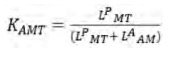
Coefficient of accessibility: it is related to total labor of the auxiliary operations (preparation of the machine, works of assembling and dismantling, etc.) that is necessary to carry out during the elimination of flaws and technical maintenances.
 (2)
(2)Where:
LPMT - Labor of main works, man-h,
LAAM - Labor of auxiliary works, man-h.
Maintenance labor is measured in man-hours and it depends on different factors like: design of the equipment, technical state of the equipment, technological level of the equipment, instruments to use, organization of technical maintenances of the technological process and operators’ qualification and preparation (Fernandez & Shkiliova, 2011).
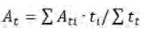
Coefficient of work tension during lubrication operations (At ): It characterizes the amount of energy the worker spends during the realization of the maintenance operations in a given position, compared with the one spent during the execution of the same volume of the work, but in position 1, that is considered more comfortable (Figure 1). The machine is more adapted for technical maintenances when its coefficient (At ) takes value near 1.
 (3)
(3)Where:
Ati - indicator of the tension of maintenance operations in position i,
t i - time of work in the position i, s.
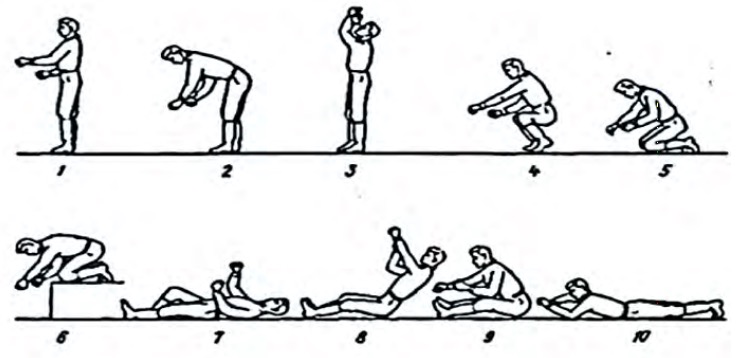
FIGURE 1
Working positions of workers during technical maintenances. Source: A. Kopchikov, 1980
RESULTS AND DISCUSSION
The calculation Coefficient of comfort of the position is carried out by means of expression (1), based on the information in Tables 3 and 4 on the quantity of points that receive maintenance in each position for each tractor brand.



According to the interview to operators, mechanics and specialists, the most comfortable positions are 1 and 2, based on the information of Tables 3 and 4. In these positions 18 points receive maintenance in the comfortable positions of a total of 29 there are in Maxxum Case 150 tractors. In New Holland TM-7010 tractor, 21 points receive maintenance in comfortable positions of a total of 31. The result of the comfort coefficient of the position during lubrication operations (KCP lub) for Maxxum Case 150 and New Holland TM-7010 tractors was 0.66 and 0.67, respectively.
In Maxxum Case 150 and New Holland TM-7010 tractors the value of the comfort coefficient of the position is high since more than 65% of the maintenance operations are carried out in the most comfortable positions, which allows carrying out the operations with quality, even when 100% of them are not carried out due to operators’ carelessness.
Coefficient of accessibility: Average times of execution of auxiliary and main operations correspond to their laboriousness, since they are executed by a person under real conditions of operation. In Table 5 the values of laboriousness of auxiliary and main works of daily technical maintenances and MT-1 are offered.
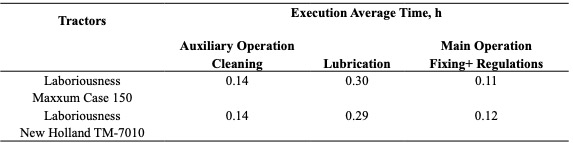
Regarding the data presented in Table 5, the result of the coefficient of accessibility (KAMT) for the Maxxum Case 150 and New Holland TM-7010 tractors was 0.74 and 0.73, respectively.
According to Ermolov (1980), Topolin & Zabrodskii (1984), Fernandez & Shkiliova (2012), and Afsharnia et al. (2015), it is considered a level of acceptable accessibility for these types of technical maintenances, existing the possibility of their elevation by means of improving the work tools, preparation and experience in the operators’ work.
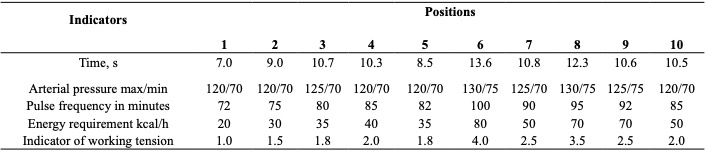
Coefficient of the work tension during maintenance operations (At): The averages times of execution of maintenance operations in a given position are recorded in Table 6.
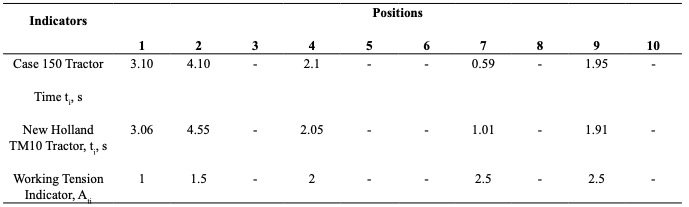
The tractor is more adapted for technical maintenances when its coefficient (At) has a value close to one (Fernandez & Shkiliova, 2012). Both tractors have the same design, but New Holland TM-7010 tractors possess two points more that receive technical maintenance during planning, according to the technical instructive. The coefficient (At )=1.66 for Maxxum Case 150 tractors and (At )=1.69 for New Holland TM-7010 tractors, are between high (1.0) and half (2.0) levels (Fernandez & Shkiliova, 2012), which is influenced by the location of maintenance and lubrication points, the work tools, but also by the operators’ preparation. The analysis of the investigation results on the determination of Maxxum Case 150 and New Holland TM-7010 tractors’ adaptability level for daily technical maintenances and MT-1, as well as workers’ labor comfort, during its execution under the conditions of the UEB “Jesus Rabbi”, allows concluding that the tractors design permits to reach a high level of adaptability and work comfort for these maintenances. Nevertheless, the lack of adapted work tools and the operators’ training can influence negatively in the results which deserves greater attention.
CONCLUSIONS
• Under production conditions, not all the operators of Maxxum Case 150 and New Holland TM-7010 tractors accomplish rigorously the regularity of the technical maintenances; only 92% of the points conceived in the technical instructive receive maintenances.
• The coefficient of position comfort during the maintenance operations in the Maxxum Case 150 is
• 0.66 and in the New Holland TM-7010 is 0.67.
• The coefficient of accessibility in the Maxxum Case 150 tractors is 0.74 and in the New Holland TM-7010 is 0.73.
• The coefficient of the work tension during the maintenance operations in the Maxxum Case 150 tractors is 1.66 and in the New Holland TM-7010 is 1.69.
REFERENCES
ABUBAKAR, M.S.; ZAKARI, D.; SHITTU, S.K.; ATTANDA, M.L.: “Determination of repair and maintenance cost for MF375 tractor: A case study in Kano Metropolis, Nigeria”, Arid Zone Journal of Engineering, Technology and Environment, 9: 27-35, 2013, ISSN: 2545-5818.
AFSHARNIA, F.; ASOODAR, M.A.; ABDESHAHI, A.; MARZBAN, A.: “Repair and Maintenance Capability and Facilities Availability for MF 285 Tractor Operators in North of Khouzestan Province”, International Journal of Mechanical, Aerospace, Industrial, Mechatronic and Manufacturing Engineering, 9(6): 1153–1156, 2015.
ERMOLOV, L.: Fundamentos de la fiabilidad de la técnica agrícola, Ed. Kolos, Moscú, 271 p., 1980.
FERNÁNDEZ, A.O.; SHKILIOVA, L.: “Adaptabilidad de la cosechadora de arroz Laverta 225 REV para las operaciones de mantenimientos técnicos”, Revista Ciencias Técnicas Agropecuarias, 21(2): 76-80, 2012, ISSN: 1010-2760, 2071-0054.
FERNÁNDEZ, S.M.; SHKILIOVA, L.: “Validación de un método para el cálculo de indicadores de mantenimiento”, Revista Ciencias Técnicas Agropecuarias, 21(4): 72-79, 2012, ISSN: 1010-2760, 2071-0054.
FERNÁNDEZ, M. y SHKILIOVA, L.: “Los servicios técnicos y los medios de producción en un taller de empresa agropecuaria. Su estado actual e incidencia sobre los indicadores de mantenimiento”, Revista Ciencias Técnicas Agropecuarias, 15(Suppl.): 72-76, 2006, ISSN: 1010-2760, 2071-0054.
HUNT, D.: Farm power and machinery management, Ed. Iowa State University Press, 10.. ed., USA, 368 p., 2001, ISBN: 978-0-8138-1756-9.
RASHID, M.; RANJBAR, I.: “Modeling of Repair and Maintenance Costs of John Deere 4955 Tractors in Iran”, American-Eurasian Journal of Agricultural & Environmental Sciences, 9(6): 605-609, 2010, ISSN: 1818-6769.
BEHERA, P.K.; SAHOO, B.S.: “Leverage of Multiple Predictive Maintenance Technologies in Root Cause Failure Analysis of Critical Machineries”, Procedia Engineering, 144: 351-359, 2016, ISSN: 1877-7058, DOI: 10.1016/j.proeng.2016.05.143.
SOPEGNO, A.; CALVO, A.; BERRUTO, R.; BUSATO, P.; BOCTHIS, D.: “A web mobile application for agricultural machinery cost analysis”, Computers and Electronics in Agriculture, 130: 158-168, 2016, ISSN: 0168-1699, DOI: 10.1016/j.compag.2016.08.017.
SHKILIOVA, L.; RIBET, Y.; GONZÁLEZ, C.: “Disponibilidad de las cosechadoras de arroz New Holland TC-57 durante el período de garantía en las condiciones del Complejo Agroindustrial Arrocero “Los Palacios”, Revista Ciencias Técnicas Agropecuarias, 20(4): 63-68, 2011, ISSN: 1010-2760, 2071-0054.
SHKILIOVA, L.: “Diseño y mantenibilidad de la maquinaria agrícola”, En: V Conferencia de Ingeniería Agrícola de La Habana, AgrIng´2010, Ed. UNAH, La Habana, Cuba, 2010, ISBN: 978-959-16-1214-4.
TOPILIN, G. y V. ZABRODSKII: Capacidad de trabajo de tractores, 303pp., Ed. ¨Kolos ¨, Moscú, 1984.
ZHOU, D.; ZHANG, H.; WENG, S.: “A novel prognostic model of performance degradation trend for power machinery maintenance”, Energy, 78: 740-746, 2014, ISSN: 0360-5442, DOI: 10.1016/j.energy.2014.10.067.