ORIGINAL ARTICLE
Analysis of the Use of Shift Time of the ERP-60 Rice Transplanter
Análisis de la utilización del tiempo de turno de la trasplantadora de arroz ERP-60
 Calixto Domínguez-Vento
Michel Ruiz-Sánchez
Guillermo S. Díaz-López
Pedro Paneque-Rondón
Calixto Domínguez-Vento
Michel Ruiz-Sánchez
Guillermo S. Díaz-López
Pedro Paneque-Rondón
Analysis of the Use of Shift Time of the ERP-60 Rice Transplanter
Revista Ciencias Técnicas Agropecuarias, vol. 30, no. 3, e04, 2021
Universidad Agraria de La Habana
Received: 10 January 2021
Accepted: 18 June 2021
ABSTRACT: The present work was carried out in experimental areas of the Los Palacios Base Scientific and Technological Unit in the province of Pinar del Río. The mechanized transplanting process of rice was investigated, with the objective of increasing productivity through the efficient use of the components of the shift time of the ERP-60 transplanter. The results obtained indicate that an increase in productivity per hour of exploitation time of 0.382 ha/h is achieved, equivalent to 3.0 ha per 8-hour shift.
Keywords: Transplanting Process, Mechanized, Productivity, Operation.
RESUMEN: El presente trabajo fue llevado a cabo en áreas experimentales de la Unidad Científico Tecnológica de Base Los Palacios en la provincia de Pinar del Río. Fue investigado el proceso de trasplante mecanizado del arroz, con el objetivo de aumentar la productividad mediante la utilización eficiente de los componentes del tiempo de turno de la trasplantadora ERP-60. Los resultados arrojados indican que se logra un incremento de la productividad por hora de tiempo de explotación de 0,382 ha/h, equivalente a 3,0 ha por turno de 8 horas.
Palabras clave: proceso de trasplante, mecanizado, productividad, explotación.
INTRODUCTION
In Cuba, rice is the most common food in the Cuban diet, with a national demand of 700 thousand tons and an average consumption rate of more than 70 kg per person per year. However, national production only guarantees 40 percent of this demand, for which the country is obliged to import more than 400,000 tons of rice annually.10 Faced with this situation, since 2012 a comprehensive program of development that foresees before 2030 to guarantee 85% of the national demand, with the incorporation of new zones, the introduction of modern technology and the gradual increase of the yield in the fields, with the purpose of substituting imports, which contributed to achieving in 2018 more than 300,000 tons, the highest historical record of rice production in the country (Reyes, 2019).
Current commercial cultivars have shown to have a yield potential that exceeds 7 t ha-1; however, in the productive conditions of Cuba, in the last 20 years, it does not exceed 3.5 t ha-1 on average. Among the most common causes of this problem, technological indiscipline and non-compliance with good agricultural practices, edaphic and nutritional problems and the availability of water resources to face production plans were identified. That is why we are working on the search for water management alternatives that allow maintaining or increasing the production of this cereal (Pérez et al., 2009).
Rice needs a special plant breeding for its efficient cultivation; It consists of flooding the soil with a sheet of water that is established before or after sowing and lasts in the field until practically the harvest, this presupposes different production technologies and the effect caused by one or other practices is discussed and analyzed. since they all affect the physical properties of the soil (Rivero & Suárez, 2014; Hernández et al., 2016).
Rice transplantation is one of the most laborious and important technological operations within this crop, an activity that is generally carried out by our farmers manually. Only in some reference farms and research institutions is rice transplantation carried out mechanically, due to the high cost of this technology and the technical requirements it needs to achieve stable production of this grain, higher culinary quality and economic efficiency for the peasant who is dedicated to the production of popular rice (Hernandez et al., 2016; Hernández et al., 2016; Miranda, 2020).
The international project Environmental Bases for Local Food Sustainability (BASAL) has been contributing together with the Ministry of Agriculture and the Base Los Palacios Scientific Technological Unit, belonging to the National Institute of Agricultural Sciences in the materialization of new technologies that generate great impacts on the country's grain production (Pérez et al., 2018; Díaz-Canel y Delgado, 2020; Díaz-Canel, 2021).
With this project, an ERP-60 rice transplanter was acquired, for the mechanized transplantation of rice with which it is intended to make different exploitation evaluations of this equipment since there are no exploitation studies of any equipment for transplantation technology.
The technology of transplantation in Pinar del Río and the specialized cultivation of rice, requires a high degree of mechanization, due to the complexity of its technology, and the extensions that are destined for its exploitation, so that the rice mechanization processes are subjected to constant studies and research to achieve a more adequate exploitation and a harmony between the technologies that are developed and the environment (Menéndez et al., 2012b, 2012a; Ramirez et al., 2019; Ramirez et al., 2021). The objective of this research was to evaluate productivity through the efficient use of the components of the shift time of the ERP-60 transplanter.
MATERIALS AND METHODS
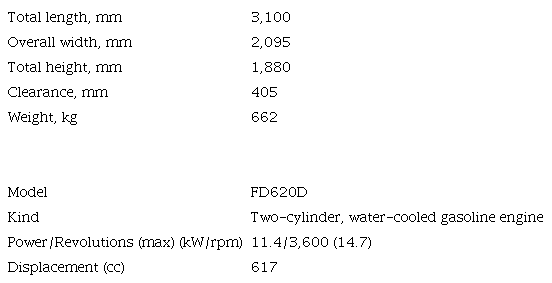
The experimental investigations were carried out in areas of the Los Palacios Base Scientific and Technological Unit in the province of Pinar del Río and had the objective of evaluating the mechanized transplanting process of rice through the efficient use of the components of the shift time of the transplanter. ERP-60, Figure 1 and Table 1 show some of its technical characteristics. For the development of the research work, methodologies and research aimed at the evaluation of agricultural machinery and / or equipment were consulted, using the following:
-
PNO PG-CA-043: Quality Management System. Agricultural machine test. Technological and exploitation evaluation, Inst. IAgric, Cuban standard, Havana, Cuba, 1-13 p., 2013 (PNO PG-CA-043, 2013).
-
Evaluation results of the automatic ISEKI rice transplante, (Hernández et al., 2016).
-
Analysis of the use of shift time by CLAAS DOMINATOR rice harvesters (Miranda et al., 2013).
-
Evaluation of the quality of work of the semi-mechanized transplanting machine TMA-4 in the rice cultivation (Menéndez et al., 2012b).
-
Methodology for determining test conditions. Agricultural machines and implements. Agricultural and forestry testing machines (NC 34-47: 2003, 2004).
-
ISO 8210 Standard (1989): Equipment for harvesting-Combine harvesters Test procedure (ISO 8210: 1989, 1989).
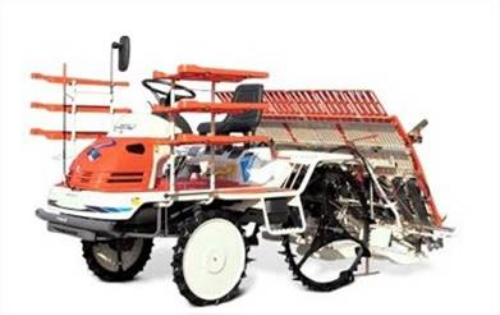
FIGURE 1
ERP-60 transplanter machine.
RESULTS AND DISCUSSION
In Figure 2, the use of time during the mechanized transplant work is analyzed in a general way, a clean time (T1) of work equivalent to 38.9% of the total time was obtained; due to the unproductive stops caused mostly by the turns and the supply of trays to the machine, auxiliary time (T2) occupies 39.5%; the time of technical maintenance (T3) reached a value of 2.6%; the fault elimination time (T4) was equivalent to 2.8%; the staff's rest time during the performance of the work (T5) represents 10.1% of the total time; the empty travel time (T6) that depends directly on the distance between the field and the parking lot occupied 6.1%. If they separately analyze the operation parameters evaluated in this variant;
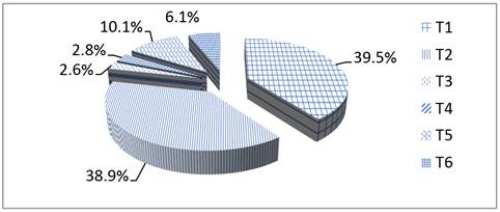
FIGURE 2
Time utilization scheme.
Clean working time (T1):
He occupied 38.9% of the time of the working day, carrying out the transplant activity with the ERP-60 transplant machine in full operation of its six working organs when traveling the distance of 86.02 m of clean working distance.
Auxiliary time (T2):
This reached a value of 39.5% of the time of the working day, being essentially distributed in two defining activities in the transplanting process and that depend fundamentally on the skill of the operators, turn time (T21) to complement the planting diagram and supply time. of trays to the machine (T23), the first represented 24.2% and the second 75.8%, of the auxiliary time (Figure 3a). Auxiliary time has a direct dependence on the dimensions of the plots
Machine technical maintenance time (T3):
The expenses of this time correspond to the activities of the process and this reached a value of 2.6% of the time of the working day, with 40% of it being distributed in the performance of revisions, adjustments and regulations to the transplanter before going to the field, 23% for the manual refueling of fuel and the other time remaining 37%, caused by the tasks of daily technical maintenance (Figure. 3b)
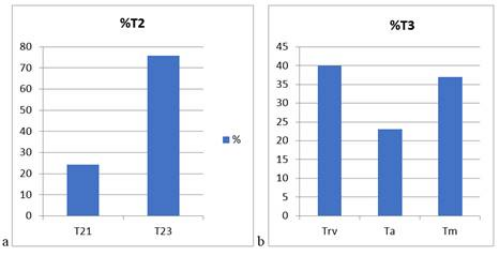
FIGURE 3
Behavior of auxiliary and maintenance time.
Fault elimination time (T4):
This time was 2.8% of the time of the working day, which is considered as a minimum due to the technical state of the machine with just eight months of operation, the incidents of failures were purely technological (T41), caused by defects in the carpets of the seedlings and coalitions of the working organs with metallic objects in the plot, unrelated to the operation of the machine and of rapid solution, the first represented 26% and the second 74%, Figure 4a.
Staff rest time during the performance of the work (T5):
The same reached a value of 10.1% of the working day, realization of the physiological needs of the operator occupied 11%; the rest of the same was 89% of the time, influencing the time of the snack and the lunches, Figure 4b.
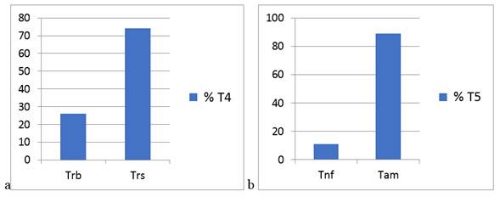
FIGURE 4
Behavior of failure and rest time.
Empty transfer time (T6):
It occupied 6.1% of the working day, the transfer time of the transplanter from the parking lot to the field was 31% and the transfer time from the field to the parking lot reached a value of 69% mainly due to the time occupied in the scrubbing the machine after working in conditions of low muddy floors, as shown in Figure 5.
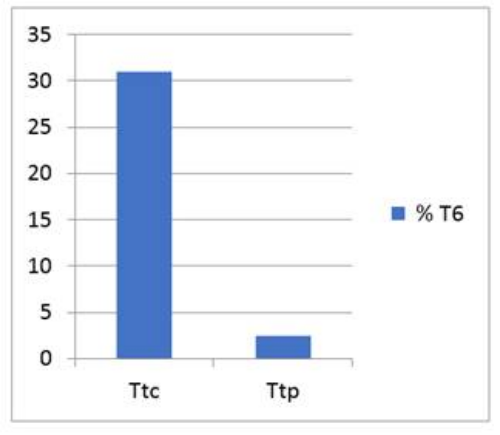
FIGURE 5
Behavior of travel time.
Time stops for reasons beyond the control of the group under study (T7)
As a result of T7, on the dates the sowings were carried out, there were no stops due to causes other than mechanized transplantation.
In Figure 6; the evolution of the productivity per hour of cleaning time (W1), exploitation time (W07), operating time (W02), shift time (Wt) and productive time (W04) respectively for rice planting is observed. to transplant.
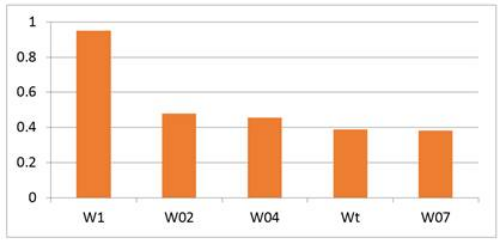
FIGURE 6
Productivity behavior.
Productivity per hour of clean time (W1):
Analyzing the productivities, is observed that for the clean working distance 86.02m, reaches the highest productivity with 0.951 ha/h.
Productivity per hour of operating time (W02):
A marked difference can be observed between the productivity per hour of clean time (W1) and the productivity per hour of the operating time (W02), it is given by the inversely proportional dependence with the time used for the turns and the supply of positions to the machine.
Productivity per hour of uptime (W04):
Analyzing its behavior, it is observed that for the study from sowing to transplantation, there is a minimal decrease in it due to the low incidence of time expenses due to technical and technological problems caused in the management to solve the failures.
Productivity per hour of exploitation time (W07):
The productivity in exploitation time was determined from the data obtained during its timing, considering the incidence of the expenses of unproductive times determined and mentioned previously; being the same 0.382 ha/h, equivalent to 3.0 ha per 8-hour shift, being in the range described by the manufacturer 2… 4 ha/day.
CONCLUSIONS
-
The analysis of the results allowed to determine that there is a low use of the components of the shift time and of the potentialities of the transplanter during the sowing, mainly caused by unproductive stops caused mostly by the turns and the supply of trays
-
The ERP-60 transplanter machine achieves a productivity per hour of operation time of 0.382 ha/h, equivalent to 3.0 ha per 8-hour shift; coinciding with the range described by the manufacturer 2… 4 ha/day
REFERENCES
DÍAZ-CANEL, B.M.M.: “¿Por qué necesitamos un sistema de gestión de gobierno basado en ciencia e innovación?”, Anales de la Academia de Ciencias de Cuba, 11(1): 1000, 2021, ISSN: 2304-0106.
DÍAZ-CANEL, B.M.M.; DELGADO, F.M.: “Modelo de gestión del gobierno orientado a la innovación”, Revista Cubana de Administración Pública y Empresarial, 4(3): 300-321, 2020, ISSN: 2664-0856.
HERNANDEZ, B.M.D.; DIAZ, L.G.; CASTELLS, H.S.; LEON, S.L.E.: “Adequacy of substrate in rice seedlings for mechanized transplanting”, Avances, 18(1): 49-+, 2016, ISSN: 1562-3297.
HERNÁNDEZ, L.J.; RODRÍGUEZ, C.D.; GUERRERO, P.P.A.; RODRÍGUEZ, R.P.W.: “Resultados de la evaluación de la trasplantadora automática de arroz ISEKI”, Revista Ingeniería Agrícola, 6(1): 51-55, 2016, ISSN: 2306-1545, e-ISSN: 2227-8761.
ISO 8210: 1989: Equipment for Harvesting Combine Harvesters Test Procedure., Inst. International Standard Organization, ISO Standard, La Habana, Cuba, Vig de 1989.
MENÉNDEZ, C.L.; RAMOS, D.S.; MIRANDA, C.A.: “Determinación de la tecnología para la obtención de parámetros de calidad de las posturas exigidas por la trasplantadoraTMA-4 para el cultivo del arroz”, Revista Ingeniería Agrícola, 2(1): 59-64, 2012a, ISSN: 2306-1545, e-ISSN: 2227-8761.
MENÉNDEZ, C.L.; RAMOS, D.S.; MIRANDA, C.A.: “Evaluación de la calidad de trabajo de la trasplantadora semimecanizada TMA-4 en el cultivo del arroz”, Revista Ciencias Técnicas Agropecuarias, 21(2): 34-37, 2012b, ISSN: 1010-2760, e-ISSN: 2071-0054.
MIRANDA, C.A.: “Impacto de la tecnología de trasplante mecanizado de arroz”, Revista Cubana de Administración Pública y Empresarial, 4(3): 334-349, 2020, ISSN: 2664-0856.
MIRANDA, C.A.; CASTELLS, H.S.; FERNÁNDEZ, A.O.; SANTOS, G.F.; IGLESIAS, C.C.E.: “Análisis de la utilización del tiempo de turno por las cosechadoras arroz Claas Dominator”, Revista Ciencias Técnicas Agropecuarias, 22(4): 27-31, 2013, ISSN: 1010-2760, e-ISSN: 2071-0054.
NC 34-47: 2003: Metodología para la determinación de las condiciones de prueba. Máquinas e implementos agrícolas. Máquinas de pruebas agropecuarias y forestales, Inst. Oficina Nacional de Normalización, La Habana, Cuba, julio de 2004.
PÉREZ, L.N. de J.; DÍAZ, L.G.; CASTELL, S.; CASTRO, A.R.; MIRANDA, C.A.: “La producción arrocera frente a las variaciones del clima en la localidad “Los Palacios””, Revista Ingeniería Agrícola, 8(1): 26-32, 2018, ISSN: 2306-1545, e-ISSN: 2227-8761.
PÉREZ, N.; GONZÁLEZ, M.C.; CASTRO, R.I.; CÁRDENAS, R.M.: “Selección de progenitores resistentes a la Piriculariosis para los programas de cruzamientos en arroz”, Cultivos Tropicales, 30(3): 47-49, 2009, ISSN: 0258-5936.
PNO PG-CA-043: Sistema de Gestión de la calidad. Prueba de máquinas agrícolas. Evaluación tecnológica explotativa, Inst. Instituto de Investigaciones de Ingeniería Agrícola (IAgric), Norma Cubana NC, La Habana, Cuba, 1-13 p., Vig. de 2013.
RAMÍREZ, W.Y.; SOTTO, B.P.; GONZALEZ, G.F.: “Análisis comparativo de nuevas tecnologías para el empacado de heno en Cuba”, Revista Ingeniería Agrícola, 9(1): 53-58, 2019, ISSN: 2306-1545, e-ISSN: 2227-8761.
RAMIREZ, W.Y.; VALDÉS, H.P.A.; SOTTO, B.P.D.; RAMOS, G.R.: “Determinación de los Indicadores tecnológicos y de explotación de la segadora Nogueira SN-165”, Revista Ingeniería Agrícola, 11(2): 55-60, 2021, ISSN: 2306-1545, e-ISSN: 2227-8761.
REYES, D.: “Del arroz en barco al arroz que cultivamos”, Periódico Granma-Cuba, 10 de enero de 2019, ISSN: 0864-0424, e-ISSN: 1563-8278.
RIVERO, L.E.; SUÁREZ, E.: Instructivo técnico del cultivo del arroz, Ed. Instituto de Investigaciones de Granos, Artemisa, Cuba, 73 p., 2014, ISBN: 978-959-7210-86-3.
Notes
Author notes
*Author for correspondence: Alexander Miranda-Caballero, e-mail: alex@inca.edu.cu
Conflict of interest declaration