ORIGINAL ARTICLE
Plan of Measures to Increase the Management of Water Use in Livestock Systems
Plan de medidas para incrementar la gestión de uso del agua en sistemas ganaderos
 Pedro A. Guerrero-Posada
Lisset Maria Pérez-Gómez
Yasmani La Rosa-Fernández
Bárbara Mola-Fines
Pedro A. Guerrero-Posada
Lisset Maria Pérez-Gómez
Yasmani La Rosa-Fernández
Bárbara Mola-Fines
Plan of Measures to Increase the Management of Water Use in Livestock Systems
Revista Ciencias Técnicas Agropecuarias, vol. 31, no. 1, 2022
Universidad Agraria de La Habana
Received: 12 April 2019
Accepted: 11 December 2021
ABSTRACT: In the study that is presented, a comprehensive diagnosis is carried out on the use of available water in livestock agroecosystems linked to the Project Environmental Bases for Local Food Sustainability (BASAL) of Jimaguayú Municipality, Camagüey Province and its possibilities of responding to the potential needs of the agricultural sector. As a result, it was found that the availability of groundwater is limited to flows below 3 L/s in most of the wells. In addition, it was determined that there are 4 dams and 25 micro dams in the municipality belonging to the Ministry of Agriculture (MINAG), which, however, cannot be used because they are distant from the study area. The available forecasts on the climate behavior in the studied area indicate that drought conditions must increase, due to which, in order to supply the water requirements of irrigation activities and of livestock, it will be necessary to apply measures for increasing water use efficiency. A plan of measures was drawn up that includes the installation of 10 sprinkler irrigation systems, the drilling of 18 wells, the colocation of 8 windmills, the repairing of 12 tanks and hydraulic installations and the maintenance of 16 reservoirs. The actions to be applied were specified through the Irrigation Advisory Service (IAS) to increase the efficiency in the use of available water.
Keywords: Climate Change, Water Use, Rain, Irrigation Advisory Service.
RESUMEN: En el estudio que se presenta se realizó un diagnóstico integral del uso del agua disponible en agroecosistemas ganaderos vinculados al Proyecto Bases Ambientales para la Sostenibilidad Alimentaria Local (BASAL) del municipio Jimaguayú en la provincia Camagüey y sus posibilidades de dar respuesta a las necesidades potenciales del sector agropecuario. Como resultado se comprobó que la disponibilidad de agua subterránea está limitada a caudales inferiores a 3 L/s en la mayoría de los pozos, además, se dispone en el municipio de 4 presas y 25 micro presas pertenecientes al Ministerio de la Agricultura (MINAG), sin embargo, no se pueden aprovechar por estar distantes del área de estudio. Los pronósticos disponibles sobre el comportamiento climático en el área estudiada indican que las condiciones de sequía deben incrementarse, debido a lo cual para suplir los requerimientos de agua de las actividades de riego y de abasto a la ganadería será necesario aplicar medidas que permitan un incremento en la eficiencia de uso del agua. Se elaboró un plan de medidas que incluye la instalación de 10 sistemas de riego por aspersión, perforación de 18 pozos, instalación de 8 molinos a viento, reparación de 12 tanques e instalaciones hidráulicas y mantenimiento a 16 embalses, y se precisaron las acciones a aplicar a través del Servicio de Asesoramiento al Regante (SAR) para lograr incrementar la eficiencia de uso del agua disponible.
Palabras clave: cambio climático, uso del agua, lluvia, servicio de asesoramiento al regante.
INTRODUCTION
Livestock areas in Camagüey Province have suffered the consequences of extreme events due to climate variability for several years, therefore, agricultural and livestock results have been affected, observing a deterioration of the agroecosystems. The causes of the general degradation are given by the incidence of diverse natural factors and linked to man´s action. Drought is an important aspect, which can sometimes spread and bring dire consequences for livestock, so it is necessary to prepare the areas and guarantee the conditions for the efficient use of the water available during that time (Planos, 2014, cited by López et al. (2016).
Given the agricultural economy of Jimaguayú Municipality, its role as the main producer of milk in the province and its importance in the national balance of livestock production, MINAG decided to include it among the territories benefited by BASAL project, which aims to support adaptation to Climate Change in Cuba.
The insufficient availability of water for livestock supply and irrigation has been identified among the main vulnerable points of livestock systems, related to a low use of supply sources and available irrigation systems, whose causes are related not only to the insufficient infrastructure, but also with the lack of preparation of the producers (BASAL, 2014). Advising to the producers is a fundamental direction of work, which will require an adequate conception and organization based on the natural, technical and social conditions of the study area. There is experience in the world and in Cuba on the application of the Irrigation Advisory Service (IAS), whose main objective is to improve the use and management of irrigation water (Cisneros et al., 2005; 2013; Ruiz et al., 2005; 2007). The achievement of satisfactory productive results that guarantee the necessary food base will largely depend on the efficient use of available water (Doorenbos & Kassam, 1980).
Given the existing situation in the study area, the following objective is proposed: to establish a plan of measures aimed at improving the management of water use in the livestock agroecosystems of BASAL Project.
METHODS
The study for the implementation of measures is carried out in units dedicated to livestock production belonging to BASAL Project in Jimaguayú Municipality (Table 1)
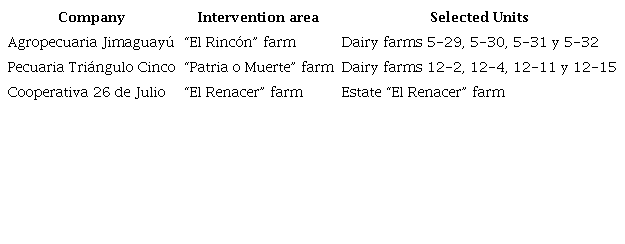
The municipality is located in the central area of the province and presents geoclimatic and vegetation conditions that promote evaporation and accelerated runoff of water on the surface, which makes it vulnerable in terms of water resources. In studies carried out, Jimaguayú Municipality was classified as having a high climatic risk because almost all its sources are depleted in periods of drought, a condition that affects the supply to the population, agricultural productions and livestock according to BASAL (2014). During the last 5 years, average rainfall has been lower than the historical average according to INSMET (2018, 2018). Figure 1 shows an example of the behavior of drought in Jimaguayú Municipality.
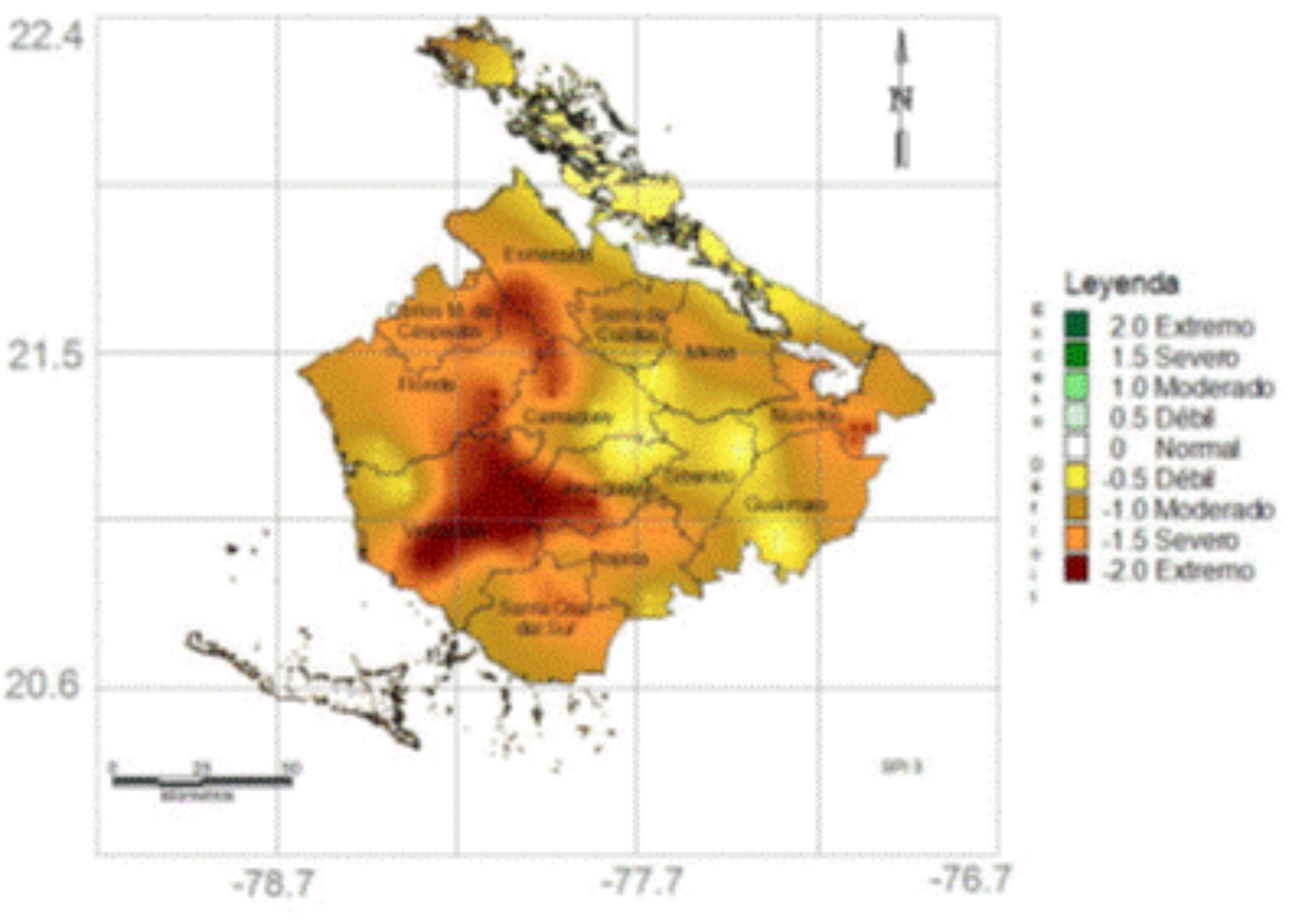
FIGURE 1
Accumulate of rains in the third trimester of the year 2018 (INSMET, 2018).
For the execution of the study, the following procedure is developed.
-
Diagnosis of the initial situation, carried out through a tour through the intervention areas and direct exchange with producers and managers linked to the selected Production Units.
-
Irrigation study included needs of irrigation areas and possibilities of increasing them based on water availability, soil characteristics and topographic conditions. For the evaluation of irrigation systems, the following methodologies were used: uniformity of distribution of the emitter and efficiency of discharge (Merrian and Keller, 1978, cited by Bonet & Guerrero (2016); uniformity of distribution and coefficient of uniformity of the system (Keller and Bliesner, 1990, cited by Bonet & Guerrero (2016); coefficient of uniformity of the emitter (Christiansen, 1942, cited Bonet & Guerrero (2016); losses due to evaporation and wind drag (Fisher and Allen, 1988, cited by Bonet (2016).
-
Study of the water supply to livestock.
-
Establishment of the plan of measures to be executed.
RESULTS AND DISCUSSION
Diagnosis Results
Location of Available Water Supply Sources and Their Technical Status
Underground water. In the case of the intervention areas, 19 wells are controlled by MINAG and data were collected from pumping tests of seven of them. It can be seen in Table 2, that the available flow values are not significant.
The analysis of flow in the points analyzed and taking into account the values of all the wells of the municipality destined to livestock, the available underground water potential was determined, obtaining a flow map which shows that the predominant expenditure in the municipality ranges between 0.5 and 3.0 L/s, a result that coincides with that reported in the study carried out for the implementation of BASAL project (Cisneros et al., 2016, cited by López et al. (2016).
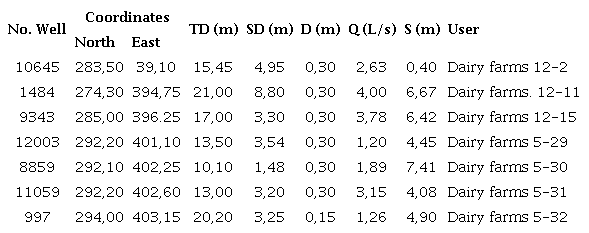
TD. Total depth; SD. Static depth; D. Diameter; Q. Flow; S. Dejection
Superficial water. The municipality has a wide hydraulic infrastructure that includes 4 dams and 25 micro dams, of these 5 in poor condition and 12 in regular technical condition according to a study carried out by MINAG (2016).
It is observed in Figure 2, that the reservoirs are not located within the areas. The feasibility of using water from nearby reservoirs was assessed by carrying out certain access works which proved that the possibilities are extremely complex because they are located relatively far away (more than 1 km) and downstream from the study areas.
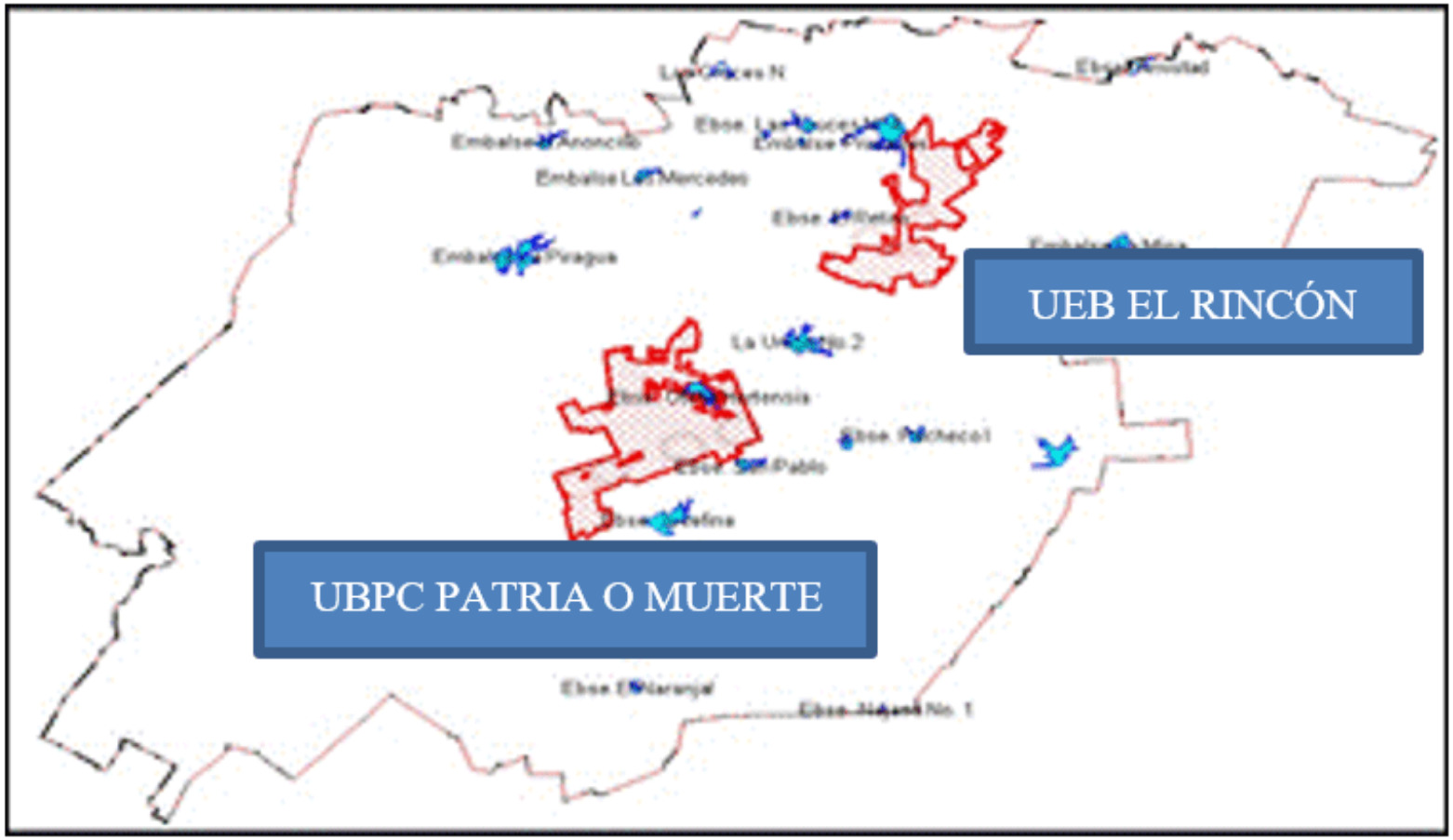
FIGURE 2
Reservoirs located in the vicinities of the study area.
Irrigation
The study carried out by specialists from the Soil Institute (BASAL, 2014) and by Hernández et al. (2016), allowed determining that the predominant types of soils are Brown without carbonates, Brown with carbonates and Fersialitic reddish brown, which are characterized in general for a light texture and they are located in an undulating to slightly undulating topography, identifying potential erosion, shallow effective depth, high slope and rockiness as limiting factors to be considered when defining the irrigation technology.
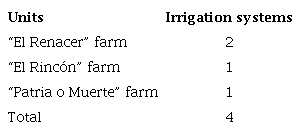
In the intervention areas there are four sprinkler irrigation systems of 1 ha which are not in good technical condition due to the deterioration of their components (Table 3).
The technical evaluation of one of these systems was carried out (Table 4).
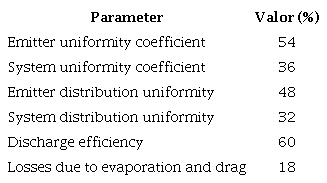
The results are unsatisfactory according to the indicators established for these systems (Tarjuelo et al., 2000, cited by Bonet & Guerrero (2016a), and show the great technical insufficiencies that characterize the operation of irrigation systems today, which is due fundamentally to the ignorance on the part of the producers of the fundamental aspects about crop irrigation (Bonet & Guerrero, 2016b). Among the main deficiencies identified are: sprinkler mix, insufficient pressure, leaks, etc. There are antecedents in the municipality of obtaining satisfactory productive results in forage production when these systems are properly exploited and agrotechnical measures are properly applied (Muñoz et al., 2012).
From the food balance prepared by specialists from the Estación Experimental de Pastos & Forrajes (EEPF) it was possible to know the need to establish areas under irrigation in each productive unit to improve the food balance of animals, as well as in the EEPF itself to ensure seed production.
Water Supply to Animals
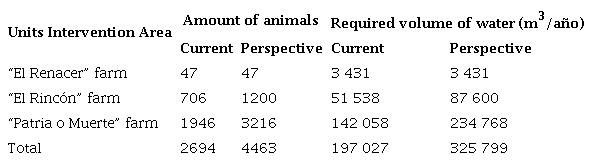
The supply of water to the animals is currently one of the main limitations for the increase in milk production. Water supply facilities are basically made up of windmills, however, it was found that the technical state of the facilities is deficient, with problems both in the tanks and in the hydraulic network, which limits the use of the mills and it causes water losses, in addition, these mills are generally installed in the dairy farms, while the animals remain during the day in the pastures where they only have access to water in spring through dams built in some units. Based on the mass of animals, the real needs of the resource were determined, which are currently guaranteed in a limited way (28%), a situation that tends to worsen in times of drought.
Table 5 shows the expected increase in the volume of water required. This situation has forced the use of alternative solutions such as the transfer of water in tankers, a solution that not only does not achieve the necessary effectiveness, but also creates a high dependence on the availability of fuel.
Plan of Measures
Irrigation. The use of surface water in the immediate term is impossible in the areas studied, as groundwater is limited from a quantitative point of view to expenses below 3.0 L/s, which conditions the need to use technologies of irrigation that allow a low hydromodule. Likewise, it will be necessary in some cases to drill wells since in some units they are not available or they are located far away from possible irrigation areas.
Based on the soil conditions, topography and water availability, it is proposed to use semi-stationary sprinkler irrigation systems of 1 ha in each of the productive units studied, as well as in the EEPF (total 10 irrigation systems), which would use, for pumping, electrical energy supplied by submersible electric pumps (Table 6).

Water supply to livestock. To achieve an adequate supply of water to the animals, it will be necessary to implement a group of measures in the short or medium term (Table 7).
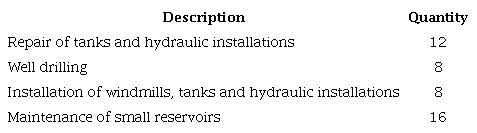
The proposed plan of measures would make it possible to meet the animals' water needs and would only need water flushing with tankers in exceptional situations.
HE. In addition to the knowledge already established regarding the limitations in the availability of water, the little development of the irrigation activity and the low level of water supply to the animals, the results of the diagnosis allowed to identify the following problems: there is not elementary knowledge about irrigation management, there is no control of rainfall for irrigation scheduling, nor are rain gauges available, and the information on the hydrophysical properties of the soils available requires an update on a more detailed scale.
The following were also identified as potentialities: information on the situation of availability of groundwater and surface water, agrometeorological information that can be used for the IAS and the existence in the municipality of entities that can support the implementation of the system (BASAL, 2014).
As a result of the studies carried out, it was decided to orient the IAS towards:
- 1. Advice to producers. It is carried out through a training program, aimed at producers linked to the operation of irrigation systems. The achievement of the expected productive and economic results requires the application of an intense and systematic training program.
- 2. Implementation of a rainfall gauge network. The execution of efficient irrigation requires strict control of rainfall, for which BASAL Project implements the installation of a rainfall gauge network that includes a rain gauge in each of the irrigation systems (10).
- 3. Establishment of file of each irrigation system. In order to achieve a control that allows the necessary analysis to be carried out, the implementation of the file of each irrigation system is established, which will be prepared and updated by the previously qualified producers themselves.
- 4. Application of irrigation scheduling. One of the fundamental objectives of the IAS is to achieve the execution of irrigation according to technical criteria from the local conditions of soils, crops, climatic conditions and irrigation systems (Chipana & Osorio, 2007; Pacheco et al., 2008). For that, a system is established according to which the technical staff of the EEPF will be in charge of processing the information by monitoring the water inputs from rain and irrigation.
- 5. Establishment of the communication system (Figure 2). An effective communication system is a prerequisite for the effective implementation of the IAS (Calera & Osann, 2007). The network proposal for our conditions includes two information directions.
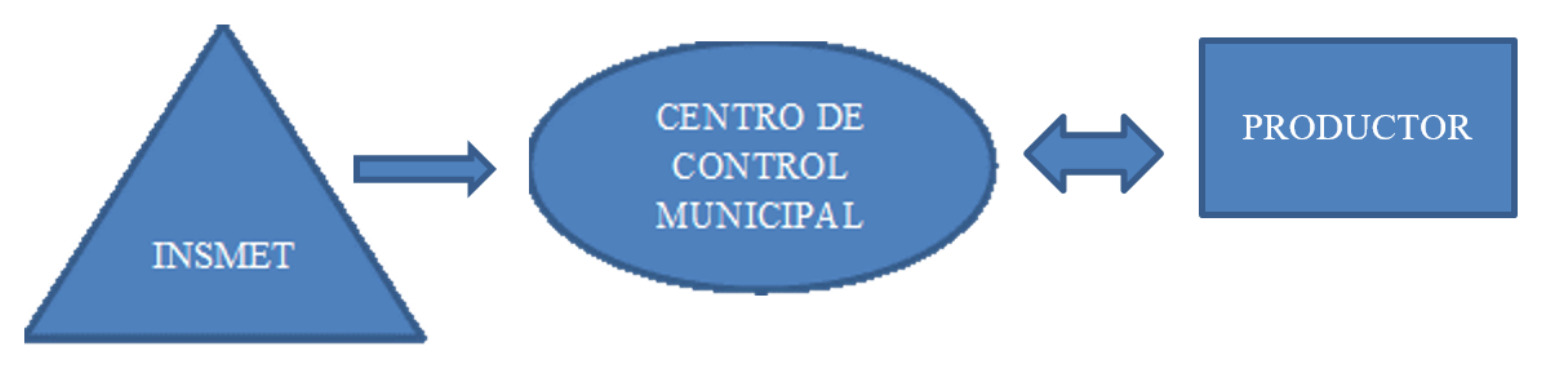
FIGURE 2
IAS communication scheme.
For the fulfillment of this program, the information referred to Evapotranspiration will be received in the Center for Capacity Building and Knowledge Management of the EEPF weekly. Similarly, the information on irrigation and rainfall will be received from each area through the extension system of BASAL Project.
- 1. Implementation of demonstration areas. As part of the agricultural extension work, demonstration areas are created that will serve as a reference for producers with irrigation systems.
- 2. Establishment of measures to increase the efficiency of water use. The limitations with water in the intervention areas imply the need to use the available water with the greatest efficiency. At present, the indicators on water efficiency are not controlled, for the evaluation of indicators on the management of water use, technical and productive indices are proposed, both for irrigation and for animal consumption.
Results achieved. The results achieved to date show a group of significant achievements: precision of water availability, identification of factors that limit the efficient use of water, achievement of motivation among producers about the need to implement adaptation measures to the conditions imposed by climate change and definition of the plan of measures to achieve the project objectives.
CONCLUSIONS
-
The availability of water for the agricultural sector in the intervention areas of BASAL project is limited.
-
It is possible to achieve better productive results with available water from the implementation of a plan of advisory measures for producers (IAS) that allow increasing the efficiency of water use.
REFERENCES
BASAL: Informe a la Junta de Coordinación Territorial, Inst. Proyecto Bases Ambientales para la Sostenibilidad Alimentaria Local (BASAL), Jimaguayú, Camagüey, 2014.
BONET, P.C.: El riego de la piña. Resumen de investigaciones realizadas en Cuba, Ed. Académica Española, España, 2016, ISBN: ISSN 978-3-8417-5155-3.
BONET, P.C.; GUERRERO, P.: “Análisis de la calidad de riego de dos sistemas por aspersión de producción nacional”, Revista Ingeniería Agrícola, 6(1): 14-18, 2016a, ISSN: 2306-1545, E-ISSN: 2227-8761.
BONET, P.C.; GUERRERO, P.: “Operación de sistemas de riego por aspersión en el cultivo de la piña”, Revista Ingeniería Agrícola, 6(3): 26-32, 2016b, ISSN: 2306-1545, E-ISSN: 2227-8761.
CALERA, B.; OSANN, A.: Servicios de Asesoramiento de Riegos Asistidos por Satélite, Inst. Grupo de Teledetección y SIG, Universidad de Castilla, Castilla La Mancha, España, 2007.
CHIPANA, R.; OSORIO, A.: “Necesidades de agua y programación de riegos: Avances basados en nuevas tecnologías de la información. Síntesis de Resultados”, En: Taller Internacional: Modernización de Riegos y Uso de Tecnologías de Información. Síntesis de Resultados. La Paz, Bolivia, La Paz Bolivia, pp. 9-13, 2007.
CISNEROS, E.; PLACERES, Z.; JIMÉNEZ, E.: “Beneficios obtenidos con la implementación del Servicio de Asesoramiento al Regante (SAR) en diferentes zonas regables de la provincia Mayabeque, Cuba”, Revista Ingeniería Agrícola, 3(2): 46-52, 2013, ISSN: 2306-1545, E-ISSN: 2227-8761.
CISNEROS, Z.E.; GONZÁLEZ, P.; SOLANO, O.; PLACERES, Z.; LAMBERT, M.; MONTERO, L.; DOMÍNGUEZ, M.; JIMÉNEZ, E.: “Resultados preliminares de la implementación del servicio de asesoramiento al regante en una empresa piloto de la provincia La Habana”, En: Congreso Internacional CUBA-RIEGO 2005, Palacio de las Convenciones, La Habana, Cuba, 2005, ISBN: 959-7164-95-7.
DOORENBOS, J.; KASSAM, A.H.: Efectos del agua sobre el rendimiento de los cultivos, Ed. Organización de las Naciones Unidas para la Agricultura y la Alimentación., Roma, Italia, 1980, ISBN: 92-5-300744-3.
HERNÁNDEZ, O.; LA O, M.; CALERO, M.B.: Diagnóstico de las propiedades y factores limitantes de la fertilidad del suelo en los municipios Los Palacios, Güira de Melena y Jimaguyú, Ed. Publicaciones BASAL, vol. Memorias de Convención de Ing. Agrícola 2016, La Habana, Cuba, 2016.
INSMET: Boletín de vigilancia del clima en Camagüey, Inst. Centro Meteorológico Camagüey., noviembre de 2018.
LÓPEZ, S.T.; DUARTE, D.C.; CALERO, M.B.: “Matrices integradoras de acciones para la implementación de medidas de adaptación al cambio climático a escala local”, Revista Ingeniería Agrícola, 6(4): 23-31, 2016, ISSN: 2306-1545, E-ISSN: 2227-8761.
MINAG: Informe sobre estado de las micropresas pertenecientes al sistema del Minag en Camagüey, Inst. Ministerio de la Agricultura, delegación Camagüey, Departamento Provincial de Riego y Drenaje, Camagüey, Cuba, 2016.
MUÑOZ, D.; GUERRERO, P.; BONET, P.C.; AJETE, M.; KAIDA, E.: “Producción de forrajes con riego para la ceba bovina en la provincia de Camagüey”, Revista Ingeniería Agrícola, 2(2): 23-28, 2012, ISSN: 2306-1545, E-ISSN: 2227-8761.
PACHECO, J.; DOMÍNGUEZ, I.; LAMADRID, J.: Servicio de Asesoramiento al Regante en Villa Clara, Inst. MINAG, Servicio de Asesoramiento al Regante en Villa Clara, Informe final Proyecto Ramal, Santa Clara, Villa Clara, Cuba, 53 p., 2008.
RUIZ, N.; BEHORQUEZ, J.M.; GAVILÁN, P.: El Servicio de Asesoramiento al Regante de Andalucía, Inst. Servicio de Asesoramiento al Regante en Andalucía AIMCRA, Andalucía, España, 14-16 p., 2007.
RUIZ, N.; SALVATIERRA, B.; FERNÁNDEZ, R.; GAVILÁN, P.: “Evolución del servicio de asesoramiento al regante en andalucía”, En: XXIII Congreso Nacional de Riegos, Elche (Alicante), España, pp. 14-16, 14 de junio de 2005.
Author notes
*Author for correspondence: Camilo Bonet-Pérez, e-mail: esp.iagric@cmg.minag.cu
Conflict of interest declaration