Artículos
¿Inclusión real o simulación? Estudio exploratorio de una campaña publicitaria para la comunidad gay en México
¿Inclusión real o simulación? Estudio exploratorio de una campaña publicitaria para la comunidad gay en México
 Oscar Montiel Méndez oscar.montiel@uacj.mx
Claudia Rodríguez Lucio ivette.rodriguez@uacj.mx
Oscar Montiel Méndez oscar.montiel@uacj.mx
Claudia Rodríguez Lucio ivette.rodriguez@uacj.mx
¿Inclusión real o simulación? Estudio exploratorio de una campaña publicitaria para la comunidad gay en México
Telos, vol. 22, núm. 1, pp. 204-222, 2020
Universidad Privada Dr. Rafael Belloso Chacín
Recepción: 09 Septiembre 2019
Aprobación: 19 Noviembre 2019
Publicación: 22 Enero 2020
Resumen: La comunidad gay generalmente ha sido estereotipada y excluida de los espacios en nuestra sociedad. Esto se refleja en las campañas publicitarias políticas o comerciales, y las que han sido inclusivas son muy escasas a nivel mundial. Con el objetivo de reflexionar sobre qué y cómo serían los mecanismos bajo la comunidad gay percibe su diversidad e inclusión en la dinámica actual de las campañas publicitarias, y qué diseño de estos podría implementarse para una posible modificación de este escenario, el presente estudio de caso hace una revisión de la literatura y reflexión sobre este hecho social, abordando la viabilidad y la necesidad de dar voz a esta comunidad, haciendo un análisis crítico de la importancia de ser inclusivo en la sociedad actual, sugiriendo una propuesta basada en el modelo de Gross (2001) y Moreno (2006), aplicado en campañas publicitarias para comunidad gay en México, que podría conducir a un gran potencial tanto para empresas y agencias de publicidad el también dirigirse hacia esta comunidad, no solo como un elemento de mercado, sino también como elemento de justicia social. Los resultados sugieren que la brecha existente en la publicidad es evidente tanto en el contexto de México como en América Latina, e incluir estas comunidades se sugiere relevante tanto para sus economías como para sus sociedades.
Palabras clave: comunidad gay, campañas publicitarias, mercado rosa, estudios críticos.
Abstract: The gay community has generally been stereotyped and excluded from spaces in our society. This is reflected in political or commercial advertising campaigns, with those that have been inclusive being very scarce at a global level. With the aim of analyzing the mechanisms in the current dynamics of advertising campaigns, the present case study makes a literature review and a reflection on this social fact, addressing the feasibility and need to give voice to this community, making a critical analysis of the importance of being inclusive in today's society, suggesting a proposal based on Gross (2001) model applied in advertising campaigns for the gay community in Mexico, and Moreno (2006), that could lead to a huge potential for both Mexican companies and advertising agencies to address this community, not only as a market element, but also as an element of social justice. The results suggest that the existing gap in advertising is evident both in Mexico and Latin American context and including these communities seems to be relevant for both its economies and societies.
Keywords: Gay community, advertising campaigns, pink market, critical studies.
Background
Currently we can perceive variations in the profiles of modern consumers, with the passage of time new trends have emerged (Martín & Alvarado, 2007), changing roles in society and new lifestyles, thus identifying new opportunities for brands and products today, advances that have prompted organizations to study or develop new markets, allowing them to identify well their target group and to know more in detail what consumers are looking for to be more attracted to the brand/product.
Thus, the gay community has become a social fact that has always been present in society and it is suggested that not enough attention has been given to the dynamics of advertising in general, but in spite of that it has been transformed and It has an influence on the economic, political and cultural aspects that have been approached from different points of view. However, in the field of globalization, a series of cultural, ideological and re-signification changes have occurred in society, attracting new markets and the acceptance of new segments. An analysis of the literature shows that in Mexico it is subjects rarely addressed and even less in the economic and advertising form. It is suggested that marketing campaigns generally use lifestyle strategies or ideal images (Elliot & Elliot, 2005) and move towards the market as a common profile segment (heterosexual men and women).
For Castañón, Briano & López (2015), the conception of homosexuality is the result of historical construction, determined by economic, cultural, ideological, and religious factors and it is generally considered as a fact that it breaks with the social order, the only notion of gender allowed. that defines the masculine and feminine. Cultural attitudes towards the gay community have changed, its members have become more visible and have become a market with great presence. For Castañón et al. (2015), this community represents one of the fastest-growing segments in the market, they have brand preferences and many value aspects. According to Del Muro, López, Téllez & Torres (2012), the National Institute of Statistics and Geography counts 112 336 538 inhabitants in the Mexican Republic, and nearly 11 million belong to the LGBT community (Lesbian, Gay, Bisexual, and Transsexual), with 87% of them under a bachelor's educational level. This suggests a great purchasing power of this market, but even so few brands have taken advantage of the gay market in Mexico, suggesting that a possible reason for this to happen is that brands are afraid of losing interest in the rest of the market (heterosexual) to see campaigns that are directed for that gay community or offend certain social or cultural values in those.
Moner, Royo & Ruiz (2007), states:
In the design of the advertisements, it is important to pay attention to the content of the message….such as freedom, security, images of couples of the same sex (preference)…that does not usually reflect conventional advertisements. (p.186)
But without forgetting that they look for an image of acceptance, they are people with desires and needs that they want to satisfy. Conraud (2013), affirms that in Mexico gay does not consume direct, open or very obvious advertising, but rather that suggested, that handles signs that only they detect, fear that, if a product is handled "for gay", is used as an element to classify, separate or reject them. They are not the stereotypes that society has formed over time, they work in normal jobs such as doctors, teachers, artists, students, and they live with heterosexual people every day without any problem because of their sexual orientation.
Del Muro et al. (2012), mention that this market has an interest in culture, personal growth and ease of socialization, they seek to position themselves in a high status, they enjoy having a good standard of living, at the vanguard and elitist, not everyone belongs to their social circle. It is suggested that they have a great desire to belong or be part of society, but without suffering discrimination, at the same time, they can close themselves in their own social circle and not leave it or allow anyone else to enter. from the same community. This so-called "pink market" (which groups the entire LGBT community) has hardly been explored nationally even though there is a great demand from this segment. Perhaps the brands have not done so since the homosexual market can become very selective or simply because they are afraid of failing to direct their advertisements in an appropriate way or because the same cultural barriers do not allow it and they are bad views. The present article only addresses the gay homosexual term since according to Del Muro, et al. (2012), The term gay refers to male homosexuality, the lesbian to female homosexuality.
For Castañón et al. (2015), there are companies and transnational brands from different industries that have commercial and print ads with content oriented to the gay segment, and even several products or services are designed for them. If the companies directed their advertising also to this market it would be a great opportunity, the brand would gain the loyalty of this potential market. He comments that these goods and services are important in facilitating the creation and maintenance of urban and modern gay subcultures, consistent with their behavior as consumers (Camargo 2013), since, unlike other segments; the gay community meets in places where their values as freedom, self-expression, security, individualism, hedonism, and diversity among others, can be respected. This segment has socio-economic and cultural characteristics that position it as a potential segment for advertising since it represents a market of 700 billion dollars worldwide (Carballo, 2010). This suggests that Mexican brands are neglecting a great opportunity. Why do not brands really advertise for this market? Is it due to social taboos that brands do not dare to address this market? Thus, we suggest the assumption that current advertising campaigns in Mexico exclude the gay community due to constructions of ideals, cultural and social barriers of our community, leaving aside a great socio-economic opportunity for the advertising industry, business, and community in general.
This case study presents a literature review that includes an introduction on the gay community and its diverse and multidimensional community affairs, a brief view on this community in Mexico and its advertising context, and a method proposal to analyze theoretically (Gross, 2001, with the use of focus group) and empirically (following Moreno, 2006), the massive campaigns (scarce) that are directed to this market segment.
Literature review
An approach to the gay community
González (2007), points out that we are not the only species with homosexual manifestations, but we are the only one who punishes her. Of the 76 cultures studied by Beach and Ford, 64% consider homosexual activities normal and do not exclude them from heterosexuals. Others admit some forms of homosexuality. These cultures establish that people can have homosexual practices, but that not only some make them exclusive or preserve their whole lives. Homosexuality remains a grave sin in Judaism, Christianity, and Islam. Mondimore (1998) talks about the anti-homosexual prejudice in our society, which is transmitted to children from a very early age, incorporated into parents, peers and penetrates deeply into the psyche. It would also be related to the term of discrimination on the gay community where Lara (2015) points out the notion that discrimination is not abstract, since it refers to an action that implies the unjustified denial of rights, acts of contempt against a person or group of people and that is based on the cultural and are systematically and socially placed in a situation of vulnerability.
According to Cava (2004), the gradual secularization of society, the sensible and juristic separation between State Churches, private and public life, brought consequences; in medicine, take the post office with respect to homosexuality from 1869, when the term was coined as such, and until 1973 it was no longer considered a mental illness. In this way, according to Power & Ellis (1999), the homosexual community begins a series of celebrations and rituals, such as the celebration of Gay Pride Day.
Does society really accept the gay community?
Data generated by the National Survey on Discrimination in Mexico (CONAPRED, 2010), refers to the fact that one in two homosexuals, lesbians or bisexuals perceives that the main problem they face is discrimination, 26.2%, considers in second place the lack of acceptance; 6.2%, criticism and ridicule, and 6.1% respect. On the other hand, 42.8% of them answered that the police is the most intolerant sector regarding homosexuality; 35.3% your church or congregation; 19.8% local government; 19.1% mentioned the Federal Government, 19.7% referred to the people of their neighborhood or neighborhood; and 15.1% said the media. The absence of this community in advertising campaigns could be considered as an addition to the previous context.
For Lara (2015) there is a "heterocentric" conception, which generates difficulties for the LGBT community, and they are forced to "integrate" into an environment that in principle does not consider their existence. It happens at home, at work and in social groups, where their sexual preference is a reason for clarification or confidence, while heterosexuality is presupposed and, therefore, all actions and social links. This is not a monopoly of the family or social relationships (which always assumes heterosexuality in its members), but it is clearly reflected in advertising, in social or sports groups, in politics, etc., where homosexuality is considered a risk factor even for the electoral triumph. Lara (2015), also affirms that there is a lack of knowledge and a great rejection of sexual diversity, which affects attitudes of hatred that produce discriminatory actions, as we saw in the results of CONAPRED.
Cava (2004), points out that discrimination is different from what is equal and equal to what is different:
To affirm that all human beings are equal is to depersonalize humanity, deprive it of the richness of its differences, thoughts, a form of life, culture, way of being, behaving….ways of expressing themselves. (p. 43).
Therefore, it is suggested that inclusion, giving a voice to the gay community through commercial advertising campaigns would help this process superlatively, due to its massiveness (social networks or mass media) and where the fallacy of practicality which claims that all human beings are equal would be left behind breaking paradigms.
The gay community as a social fact
They need to transmit what they seek as a society through voice. Giving a voice to the gay community has been approached from various positions such as those studied by Harper, Jernewall & Zea (2004), from science and the emerging theories of color, cultural diversity and the psychology of ethnic minorities.
Lara (2015), states that in 2009 the civil code of the Federal District was reformed to recognize equality rights under the principle of non-discrimination due to sexual diversity. Castañeda (2014), addresses the watershed that was the gay liberation movement: there is homosexuality before and after this cultural and social phenomenon. People who were born before 1980, heterosexuals who almost did not know openly homosexual people, and what little they knew had more to do with prejudice than with reality. Homosexuals, says Castañeda (2014), lived their sexual orientation as pathology without being able to inform themselves about it, understand it, and be able to share it.
His self-image, family, social and couple relationships, were tinged with homophobia, shame, and fear of rejection. Today's urban and globalized youth find not only normal but even attractive the idea of homosexuality; they have gay friends, they go to gay clubs, and they do not understand how or why it was so problematic. For his part, the young gay does not feel any shame, they do not see the need to hide until the topic bores them. In many countries, homosexuals have conquered full civil rights, protections against discrimination and a majority social acceptance. This historical change suggests has completely transformed the meaning and experience of homosexuality. However, this has not been reflected in the advertising campaigns. The lists of eminent homosexuals that Castañeda (2014), shows leads to the phenomenon of outing in the 80s and 90s of the last century, as another way of fighting for the recognition and civil rights of the gay population. Outing (the public disclosure of a person's homosexuality, with or without their consent) became a strategic weapon that was and still is very controversial.
The presence of the gay community in México
Del Muro et al. (2012), points out that the pink market movements in Mexico began in the '70s. In the 90's they began to protest the murders of homosexuals and an attempt was made to defend respect for sexual diversity. As explained by Castañón et al. (2015), in Mexico City the law of civil marriage and the right to the adoption of same-sex persons was approved in 2010. The gay consumer spends between ten and fifteen percent more than the heterosexual (El Financiero, 2014, cited in Castañón et al. 2015), and they usually have the following characteristics: Average age between 10 to 32 years (age of acceptance over sexual belonging, before society), they study or have a profession, their socioeconomic level is usually high (Level A / B, C + YC), and they live in condominiums. Few companies have dared to direct their advertising to them.
Mateos (2013), comments that currently, you can find global companies from different branches that have produced commercials and print ads with gay content, most of these proposals made abroad, with their exceptions as the brand Colgate-Palmolive who introduced the first commercial massive in Mexico aimed at the gay community. In our country, Bacardi, American Express, Levi's, Blue Shot, etc., are promoted, but only in the main places of gay encounter, they do not do it massively, since there are examples that make visible prejudices and discrimination even existing before the homosexuality as it is the promotional one made by the secretary of Tourism of Mexico whose handling in advertising content used the phrase "Remember that Mexico has stated to be able to carry out your marriage and you take unique memories" causing a stir to those who they consider the promotion of homosexual couples unseemly.
Advertising campaigns and the gay community
The gay community has been relatively little addressed in empirical research in marketing and advertising (Kates, 1999), which results in little information about marketing directed to the LGBT community, especially in print media (Um, Kyung-Ok, Eun-Sook & Wilcox, 2015), and LGBT marketing is considered to be at an early stage in its development (Ginder & Byun, 2015). The use of traditional media for advertising campaigns directed to this market still creates doubts in many marketing professionals (Oakenfull & Greenlee 2005), since the main fear of these is a negative reaction of those heterosexual consumers, the largest and most lucrative market, situation that some studies support (Angelini and Bradley, 2010; Um, 2014),. To avoid this, one strategy is to use signs or signs that will be identified by the gay community, but that will go unnoticed by the rest (Borgerson, Schroeder, Blomberg & Thorssén, 2006; Um, 2012). The homosexual community (gay and lesbian) suggests that they appreciate those brands that include them specifically (Dotson, Hyatt & Petty, 2009), who would tend to buy these products or services (Smith & Malone, 2003; Um, 2014).
Dhoest & Simons (2012), find that there is a strong desire of the LGBT community to be represented as "normal" in the mass media. Economically, companies have visualized that this community represents an important market niche since, according to several studies, it would represent even more investment than the heterosexual segment, therefore it is a highly potential segment and it is important to strengthen its presence in the market as well as a Positioning through the study of their consumption habits so we suggest that the problem for our country would be that found by Hester & Gibson (2007), who mention that consumers who have a high degree of acceptance towards the gay community, also have a positive attitude towards those brands that present images of gay life or its members in their advertisements. That is where the methodology proposed in the present could contribute a lot.
Method
On this exploratory case study, the methodology begins with the theory of Gross (2001), which explains some reflections about advertising campaigns and the gay community, providing a model through which these are influenced in their design from the "of", "by" and "for", functions of the media with respect to a target or mixed audience, where the traditional way in which heterosexual (majority) and homosexual (minority) images are created and transmitted is observed (figure 1):
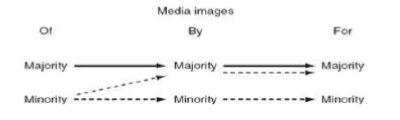
Figure 1: Media framework using the concept “Of”, “By” and “For” regarding the development of images for the majority and minority audiences
Source: Gross (2001, p.11).
Therefore, it can be observed how those aimed at minorities are also designed based on the expectations of the majority, not only of the former, something that does not happen when they are directed only towards the majority.
The aim of this research is the search to give voice to the gay community, through a critical analysis referring to an advertising publication that was shown through social networks, which in this case is Facebook, aimed at minority as explained previously in the Gross diagram referring to multimedia images, in order to contrast, another analysis was also carried out in the same way, that an advertising publication of the same company on the same product, was chosen that is directed but to the majority, in order perform a critical analysis, an exploration under the critical studies of advertising, to know how the advertisements for the minority consider the characteristics of the majority and the publications that are directed for most do not consider the characteristics of the minority.
The two advertising ads, selected because it was the same company but each ad directed to a different market segment, were selected with specific characteristics, for example, same product, that is published through social networks in Mexico, that are directed to the minority where we refer to the gay community and also to the majority that represents the heterosexual community in general.
-
A mini focus group was made, with the aim of giving voice to the community regarding this issue and to the researcher an initial exploration of the context, to support the analysis stage.
-
A process of reflection an analysis of the 2 advertisements mentioned, made exclusively by the researcher.
With these announcements and the pilot focus group made, it is sought that the minority express their position as potential consumers and suggest to the advertising agencies and companies an inclusion of this in the advertising campaigns, not only in the brands that are directed for them, but also in the brands that address a wider market, new market niche, and as a means of social justice (Baum, MacDougall & Smith, 2006).
A one session (table1) pilot mini focus group (Anderson, 1990), was applied on members of the gay community (3 participants by invitation, young adults between 18-22 years old, low to middle income as the majority of young adults in Mexico are, no higher education studies necessary, where the sample in focus groups represents the characteristics of a population, not its size), contributing priority issues that affect their lives, recognizing their resources, and with concrete actions to modify it, starting with practical problems and from the point of view of those who live it, the researcher’s proceed to reflect and act on the problematic situation with the aim of improving it, involving them in the processes the people who live in the problem lives, producing knowledge (Baum, et al. 2006).
Also, a qualitative study was done, where the researcher’s reflections (Atkins & Murphy, 1993), accounts of reflective processes and past experiences, play a crucial role, based on an adaptation of the “Model of Analysis of Ads” of Moreno (2006).
Results and discussion
These are the main results of the pilot study:
| Code | Participant 1 | Participant 2 | Participant 3 | ||||
| Have you seen inclusive advertising? | Yes, often on fashion designers and travel offers. | Yes, the majority is from foreign countries. | The truth, I have not paid much attention to that. | ||||
| Bothers you that there are not enough inclusive ads in Mexico? | On some occasions, I do have seen gay ads in Mexico, but what bothers me it’s that sometimes are very feminine. | No, but I would like it, more ads because it’s a growing market. | No, I do not care. | ||||
| Will you buy products that have inclusive ads? | Yes, because I do that with foreign brands. | Of course, that will be very interesting to see. | Yes. | ||||
In the analysis of the ads (image 1 & 2) based on Moreno (2006), the reflective process of the researcher will be considered, where reflexive skills will be put into practice where it will allow us to learn more about practical situations and identify what we are learning from situations as they arise. According to Atkins et al. (1993), in the process of reflection, individuals use several personal and cognitive skills: self-awareness, description, critical analysis, synthesis, and evaluation.

Image 1: ¨Mexican Cookies¨ Towards the Minority
Font: https://www.facebook.com/MariasGamesaMx/photos/a.294834133997860/1022313794583220/?type=3&theater
| 1.GENERAL DATA |
| a) What product do you advertise? Mexican Cookies b)Describe the listing by listing the elements that make it up, in the order, they call the most attention. 1. A-frame that has a photograph showing a couple of the gay community about to kiss each other in the mouth. 2. An older lady holding the photograph while watching it. 3. The logo of the brand with the product, which is the cookies. 4. An orange stripe was above it has a text that refers to the image in general, “Mother's love has no barriers”. |
| 2. IMAGE |
| d) What type of plane do you use? Medium short shot f) Are planes loose, or do they tell a story? Tells a story of a mother who looks at the photograph of her son very happy with his sentimental partner. g) Are tricks and special effects used? If lighting tricks are used, edit the photograph by focusing the camera on the main element of the ad. h) Does color play an important role in the ad? Yes, the official colors of the brand are present, which use the orange colors that according to the theory of color represent a warm color. i) How is the image in general? (Iconicity, original, etc.) It is iconic, where it represents a real story, today it is already normal to see sentimental couples of the same sex. j) What visually rhetorical figures appear? None k) What function do the iconic signs fulfill? Show that the gay community can also promote a brand in advertising without needing to be offensive and uncomfortable for the rest of the communities that are not part of the gay one. l) Do well-known characters appear? If so, why do you think they appear? No, not known character appears. m) Provide enough information about the product in the image? No, only the logo and two cookies, that is the product. |
| OTHER OBSERVATIONS In this ad, we show a story that makes us reflect on the current situation, where it shows that the gay community is increasingly important in the market and brands. |
| n) Main features The photograph of the same-sex couple. The mother seeing the photograph without any negative position or attitude. The logo of the brand and the text. |
| 3. PURPOSE OF THE ANNOUNCEMENT |
| o) Who is the ad for?Age: To all ages.Sex: Indistinct, it is an advertisement and a product that uses elements for both genders.p) Social or professional group to which it is addressed It is directed for a social group that is the gay community, and for the community in heterosexual since it also appears a person of the opposite sex and also that it is a brand that is directed for the general public. q) Indicate, in each case, the elements that have helped them determine who is addressed: Photography, the position in which people find themselves. r) What world is represented in the ad? In a real-world, where nowadays we have to take into account the gay community in advertising campaigns, and not only in the brands that are directed specifically towards them but to all that are for a public in general, since the community It is a social reality that is constantly growing in the market and that is in search of products in which they take them into account. s) Does that world have to do with reality? Why? Yes, since it demonstrates a social fact that is the gay community. t) Is all the information given in the advertisement true? Why? Yes, the main thing that is shown is a sentimental couple of the same sex, referring to homosexuality, a subject that has always existed but was not sufficiently addressed. u) List the items that you think are true or falseTrue The photograph Actors The cookies False v) Is equality of the sexes respected, or is it a "machista" ad? This ad is a clear example where it shows equality, since it is taken into account as elements for the image of the gay community, it does not specifically say in the ad that it is also aimed at the gay community but with only the elements of the same-sex couple was given to understand that it is so, also in the comments provided by the public it is understood that they did get the message that was intended to provide. w) Are there signs of racism and xenophobia? There is none of them. x) Does it encourage collaboration or, on the contrary, is it aggressive and encourages competition? It encourages inclusion in advertising campaigns, to which the product is also directed for the gay community. |
| 4. OPINION AND CRITIC THAT DESERVES The elements used in this publication are very well structured and selected, it was not necessary to say or specify that this ad is also aimed at the gay community and even then, the public got the idea. It is important to mention that a search of previous and after ads of this specific one under analysis the company issued, were made, and this was the ad with the most reactions and comments. One of the relevant ones was the commentary of a user saying: “I am heterosexual; however, I am in favor of not only tolerance but of inclusion. My children do not get upset or uncomfortable with affectionate samples among people from the LGBTTI + community, and that gives me great pleasure because they learn to respect others and demand respect”, in line with what is suggested by Hamilton, Bodle & Korin (2016) on the challenges this era demand on advertising and its influence on society. |
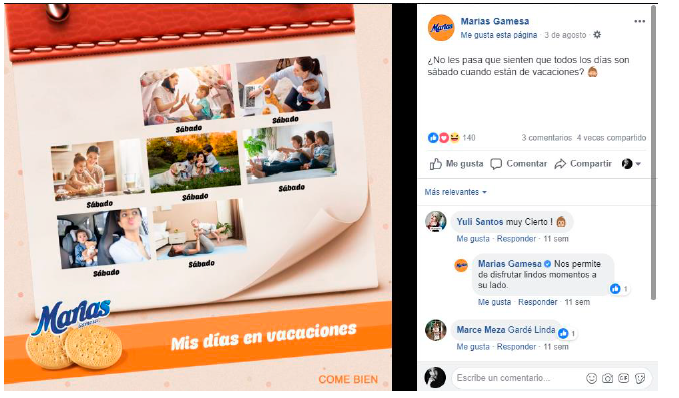
Image 2: Commercial ¨Mexican Cookies¨ Towards the Majority
Font: https://www.facebook.com/MariasGamesaMx/photos/a.294834133997860/1059876890826910/?type=3&theater
| 1.GENERAL DATA |
| a) What product do you advertise? Mexican Cookies b)Describe the listing by listing the elements that make it up, in the order, they call the most attention. 1. Calendar 2. Instead of saying every day of the week, in the calendar only says Saturday, hinting that every day is Saturday. 3. Every day different images, activities, and characters come out. For example: First picture. a lady playing with her daughter under some sheets. Second picture, a lady working on the computer while holding her baby in her arms. Third picture, a lady cooking with her daughter. Fourth picture, the whole family (father, mother, son, pet) are playing in the park. Fifth picture, a pregnant woman and two children bounded on a bed watching television. Sixth picture, a woman driving and playing with her son who is sitting in the back of the car. Seventh painting, a lady doing yoga with her baby. 4. The logo of the brand. 5. A couple of cookies representing the product. 6. An orange stripe and above it the phrase "My days on vacation". |
| 2. IMAGE |
| d) What type of plane do you use? • Very first close-up • Detail plane •American plane •Chopped flat plane • Medium plane • Full plane f) Are planes loose, or do they tell a story? In each of the pictures the advertisement tells a different story, mentioned above, but in general, says that every day is Saturday, hinting that every day she is a mother. g) Are tricks and special effects used? Lighting tricks, scenario planning, program editing was used. h) Does color play an important role in the ad? Yes, the official colors of the brand are present, which use the orange colors that according to the theory of color represent a warm color. i) How is the image in general? (Iconicity, original, etc.) It is an iconic image since it shows a certain number of images of activities that take place in daily life. j) What visually rhetorical figures appear? None k) What function do the iconic signs fulfill? Show the activities that mothers do, that every day they are with their children and that for her, there is never a vacation. l) Do well-known characters appear? If so, why do you think they appear? No m) Provide enough information about the product in the image? Only a couple of cookies are shown, which are your product. |
| OTHER OBSERVATIONS An announcement that is easy to appreciate and that shows a reality in ordinary families. |
| n) Main features The calendar The mothers Children The cookies The families |
| 3. PURPOSE OF THE ANNOUNCEMENT |
| o) Who is the ad for?Age: To all ages.Sex: Indistinct, it is an advertisement and a product that uses elements for both genders.p) Social or professional group to which it is addressed For the heterosexual community, families in general, mainly mothers and children. q) Indicate, in each case, the elements that have helped them determine who is addressed: In each painting a mother of a family leaves with her or her children, in a photo she leaves with the whole family. r) What world is represented in the ad? A real-world, with common situations that happen every day within a family. s) Does that world have to do with reality? Why? Yes, they are already common families in society. t) Is all the information given in the advertisement true? Why? Yes, it is since they show images of family coexistence where a couple of images show several activities that families usually do together. u) List the items that you think are true or falseTrue 1. Each box on the calendar showing the family life between mother and child. 2. The product.False None v) Is equality of the sexes respected, or is it a "machista" ad? There are no exclusionary characteristics, but neither does it provide inclusion characteristics having the opportunity to do so. w) Are there signs of racism and xenophobia? It does not represent any. x) Does it encourage collaboration or, on the contrary, is it aggressive and encourages competition? Only limited to the purchase of the product and the family coexistence, in no time the competition |
| 4. OPINION AND CRITIC THAT DESERVES This announcement was published days after the image 1 was made, aimed at the minority, in this announcement we can see that it does not have the same impact as the previous one, referring to the interactivity of the social network users. This beginning was chosen because it showed a valuable opportunity to add a family that was not only from the majority (of the seven paintings could be from a gay family), but to take the opportunity and approach the minority as it was done correctly with the previous announcement, maybe the same interaction from the users would have been had and reaction that was caused by the announcement of the minority, in line with what is suggested by Hamilton et al. (2016) on the challenges this era demand on advertising and its influence on society. |
CONCLUSIONS
Giving voice to the diverse communities that make up our current society, has been widely recognized by literature on the subject. The results suggest empirical support for the Gross model. It is worth noting that in the first ad, there is no father of grandfather along with the old lady, something that it occurs on the second ad, sending a message that the company was even more conservative and cautious, not so inclusive, (something that it occurs on the second one, keeping selling the idea of the “ideal family) in terms of the “machista” culture that exists in Latin America, not only in Mexico. The results suggest more studies are needed in our region applying the Gross model, exploring more methods, in-deep interviews with businessman and ad agencies directors, semiotic and discourse analysis, and of course within the gay community, helping them to raise their voice.
Develop a strategy according to the present global context and thus further enhance the social and market potential of the gay community, as in other regions has begun to happen, suggests can be a relevant element for future research in various fields, not only in that of advertising and marketing, where there is a greater need for more critical studies, but also for management, to promote inclusive spaces (where women are not part usually of the top organizational hierarchies), and in entrepreneurship so that the new companies support this change in offering its innovative services and products in new ways our society as a whole, and of course every area of economic and social activity in this global arena demands.
REFERENCES
Anderson, G. (1990). Fundamentals of educational research. London. The Falmer Press.
Angelini, James & Bradley, Samuel (2010). Homosexual imagery in print advertisements: Attended, remembered, but disliked. Journal of Homosexuality. Vol.57, No.4. USA (Pp.485-502).
Atkins, Sue & Murphy, Kathy (1993). Reflection: a review of the literature. Journal of Advance Nursing. Vol. 18. USA (Pp.1198-92)
Baum, Fran, MacDougall, Colin & Smith, Danielle (2006). Participatory Action Research. Journal of Epidemiology and Community Health, Vol.60. USA (Pp.854-857).
Borgerson, Janet, Schroeder, Jonathan, Blomberg, Britta & Thorssén, Erika (2006). The gay family in the ad: Consumer responses to non-traditional families in marketing communications. Journal of Marketing Management. Vol. 22, No.9-10. USA (Pp.955-978).
Camargo, Sergio (2013). El Comportamiento de Compra en el Mercado Gay. Tesis de pregrado. Universidad Nacional Autónoma de México. México.
Carballo, David (2010). Nuevos Consumidores. ITAM Segmento. Extraído de http://segmento.itam.mx/Administrador/Uploader/material/48%20-%20Segmento%2048.pdf consulta: 18/06/17.
Castañeda, María (2014). La Nueva Homosexualidad (primera edición). Paidós. México
Castañón, Esther, Briano, Guadalupe, & López, Andrea (2015). El Pink Market como opción de negocios de alto crecimiento en México. XIX Congreso Internacional de Investigación en Ciencias Administrativas. Durango, México.
Cava Fiorella (2004). Identidad, cultura y sociedad: un grito desde el silencio (primera edición). Cisne. Perú.
CONAPRED (2010). Encuesta Nacional sobre Discriminación en México. México. Disponible en https://www.conapred.org.mx/documentos_cedoc/Enadis-2010-RG-Accss-002.pdf , accesado el 12 de noviembre de 2019.
Conraud, Eva (2013). Contextualización de la homosexualidad en México desde una perspectiva de comportamiento del consumidor. XVII Congreso Internacional de Investigación en Ciencias Administrativas. Guadalajara, México.
Del Muro, N., López, F., Téllez, E. & Torres, V. (2012) Mercado Rosa Importancia y Valor de Mercado. Tesis de pregrado. Instituto Politécnico Nacional, Escuela Superior de Comercio y Administración Unidad Santo Tomas. México.
Dhoest, Alexander, & Simons, Nele (2012). Questioning Queer Audiences. The handbook of gender, sex, and media. Extraído de https://www.researchgate.net/publication/289930330_Questioning_Queer_Audiences, consulta:18/06/17.
Dotson, Michael, Hyatt, Eva & Petty Lisa (2009). Sexual orientation and gender effects of exposure to gay-and lesbian-themed fashion advertisements. Journal of Fashion Marketing and Management: An International Journal. Vol.13, No.3. USA (Pp. 431-447).
Elliott, Richard & Elliott, Christine (2005). Idealized images of the male body in advertising: a reader-response exploration. Journal of Marketing Communications. Vol. 11, No.1, Inglaterra (Pp. 3-19).
Ginder, Whitney & Byun, Sang (2015). Past, Present, and Future of Gay and Lesbian Consumer Research: Critical Review of the Quest for the Queer Dollar. Psychology & Marketing. Vol.32 No.8. USA. (Pp. 821-841)
González, Luis (2007). La Orientación Sexual: reflexiones sobre la bisexualidad originaria y la homosexualidad (primera edición). Paidós. México.
Gross, Larry (2001). Up from Invisibility: Lesbians, Gay Men, and the Media in America (primera edición). Columbia University Press. USA.
Hamilton, James, Bodle, Robert & Korin, Ezequiel (2016). Explorations in Critical Studies of Advertising. New York: Routledge.
Harper, Gary, Jernewall, Nadine, & Zea, Maria (2004). Giving voice to emerging science and theory for lesbian, gay, and bisexual people of color. Cultural Diversity and Ethnic Minority Psychology, Vol.10, No.3. USA (Pp.187-199)
Hester, Joe & Gibson, Rhonda (2007). Consumer Responses to Gay-Themed Imagery in Advertising. Advertising Educational Foundation. Vol.8 No.2. USA. http://doi.org/10.1353/asr.2007.0039
Kates, Steven (1999). Making the Ad Perfectly Queer: Marketing ‘Normality’ to the Gay Men’s Community?. Journal of Advertising, Vol.28, No.1. USA (Pp.25–37)
Lara, Diana (2015). Grupos en Situación de Vulnerabilidad (primera edición). Comisión Federal de los Derechos Humanos. México.
Martín, María & Alvarado, María (2007). Nuevas tendencias en la publicidad del siglo XXI (primera edición). Comunicación Social Ediciones y Publicaciones. Sevilla.
Mateos, José (2013). Pink Market. Tesis de pregrado. Universidad Veracruzana. México.
Mondimore, Francis (1998). Una Historia Natural de la Homosexualidad (primera edición). Paidós. España.
Moner, Caryn, Royo, Marcelo & Ruiz María (2007). Oferta y demanda en el mercado turístico homosexual: una propuesta de estrategias de intercambio para la mejora del marketing en el segmento. Cuadernos de Turismo. No.20. España (Pp. 171-197).
Moreno, Isidro (2006) Prácticas de Tecnología Educativa Propuestas Para una Metodología Participativa (primera edición). Grupo Editorial Universitario. México.
Oakenfull, Gillian, & Greenlee, Timothyc (2005). Queer eye for a gay guy: Using market‐specific symbols in advertising to attract gay consumers without alienating the mainstream. Psychology & Marketing. Vol.22 No.5. USA (Pp.421-439)
Power, Bob & Ellis, Alan (1999) Acéptate, acéptalo. Como explicar y comprender las distintas orientaciones sexuales (primera edición). Paidós. España.
Smith, Elizabeth, & Malone, Ruth (2003). The outing of Philip Morris: advertising tobacco to gay men. American Journal of Public Health. Vol.93 No.6. USA (Pp.988-993).
Um, Nam-Hyun (2012). Seeking the holy grail through gay and lesbian consumers: An exploratory content analysis of ads with gay/lesbian-specific content. Journal of Marketing Communications Vol.18, No.2. USA (Pp.133-149).
Um, Nam-Hyun (2014). Does gay-themed advertising haunt your brand? The impact of gay-themed advertising on young heterosexual consumers. International Journal of Advertising. Vol.33, No.4. USA (Pp 811-832).
Um, Nam-Hyun, Kyung-Ok, Kim, Eun-Sook, Kwon, & Wilcox, David (2015). Symbols or icons in gay-themed ads: How to target a gay audience. Journal of Marketing Communications. Vol. 21, No.6. USA. (Pp.393-407)
Información adicional
Como citar:: Martínez Martínez, Cinthya; Montiel Méndez, Oscar; Rodríguez Lucio, Claudia; Tovar Herrera, José. (2020). Real inclusion or simulation? An exploration of an advertising campaign for the gay community in Mexico. Telos: revista de Estudios Interdisciplinarios en Ciencias Sociales, 22 (1), Venezuela. (Pp. 204-222).