Clinical Psychology
Received: 25 December 2020
Accepted: 31 August 2021
DOI: https://doi.org/10.5935/1980-6906/ePTPCP14238.en
Abstract: Child maltreatment is highly prevalent in the family environment. Thus, programs intended for parents are implemented to combat it. This study aimed to analyze systematic reviews that evaluated the effects of parental programs on the prevention of child maltreatment. An integrative literature review was conducted according to the PRISMA model. A search was performed in the Web of Science, PsycInfo, Ebsco, Lilacs, and SciELO databases. Fifty-four studies were retrieved, and 14 were included in the analysis. Consensus was identified as the favorable results of the implementation of the programs in decreasing symptoms and child maltreatment and increasing positive parenting practices. Controversies concerned the formats and theoretical frameworks adopted by the programs. As for the gaps, the studies indicate the need for more studies conducted in low- and middle-income countries and investments in more robust and longitudinal methodologies. In conclusion, intervening with parents can be a promising way to prevent child maltreatment.
Keywords: Child abuse, systematic review, psychological intervention, parents, parent-child relations.
Resumo: Os maus-tratos infantis têm alta prevalência no ambiente familiar. Assim, programas destinados aos pais são implementados para combatê-los. Este estudo objetivou analisar revisões sistemáticas que avaliaram os efeitos de programas parentais na prevenção de maus-tratos infantis. Conduziu-se uma revisão integrativa da literatura conforme o modelo PRISMA. Uma busca nas bases de dados Web of Science, PsycInfo, Ebsco, Lilacs e SciELO foi realizada. Recuperaram-se 54 artigos e incluíram-se 14 na análise. Os resultados consensuais mostraram dados favoráveis da implementação dos programas na redução de sintomas e maus-tratos infantis e aumento de práticas parentais positivas. As controvérsias pautaram-se pelo formato e pela base teórica dos programas. Como lacunas, os estudos indicam a necessidade de mais pesquisas em países de baixa e média rendas e investimentos em metodologias mais robustas e longitudinais. Conclui-se que um trabalho de intervenção destinado aos pais pode ser um caminho promissor para a prevenção de maus-tratos infantis.
Palavras-chave: Maus-tratos infantis, revisão sistemática, intervenção psicológica, pais, relações pais-filho.
Resumen: El maltrato infantil es prevalente en el entorno familiar. Por lo tanto, se implementan programas para padres para combatirlo. Este estudio tuvo como objetivo analizar revisiones sistemáticas que evaluaron los efectos de programas parentales en la prevención del maltrato infantil. Se realizó una revisión integradora de la literatura según PRISMA. Se realizó una búsqueda en las bases Web of Science, PsycInfo, Ebsco, Lilacs y SciELO. Se recuperaron 54 artículos y 14 fueron incluidos. Se identificó como consenso los resultados favorables de los programas para reducir los síntomas y el maltrato infantil y aumentar las prácticas parentales positivas. Las controversias fueron el formato y la base teórica de los programas. Como brechas, los estudios indican la necesidad de investigación en países de ingresos bajos y medianos e inversiones en metodologías más robustas y longitudinales. Se concluye que un trabajo de intervención dirigido a los padres puede ser una forma prometedora de prevenir el maltrato infantil.
Palabras clave: Maltrato a los niños, revisión sistemática, intervención psicológica, padres, relaciones padres-hijo.
Violence against children involves all forms of abuse that harm a child’s health and survival, resulting in deficits in child development. It is divided into four types of violence: physical, sexual, emotional/psychological, and neglect (World Health Organization & International Society for Prevention of Child Abuse and Neglect, 2006). Physical violence occurs when intentional physical force is used, such as pushing, kicking, or slapping. Sexual violence refers to a child’s involvement in any sexual activity, e.g., rape or erotic communication. Emotional violence, also known as psychological violence, consists of controlling a child’s behavior through humiliation, intimidation, manipulation, or threat. Neglect is the omission of primary care and basic needs, such as lack of hygiene and food, in addition to abandonment (World Health Organization & International Society for Prevention of Child Abuse and Neglect, 2006).
The different forms of maltreatment are associated with long-term physical, emotional, cognitive, behavioral, social, and neurobiological damage, potentially compromising the child’s development (World Health Organization, 2014). In addition, studies assessing the impact of child maltreatment on mental health indicate that chronic maltreatment during childhood can be an indicator of negative consequences, such as the presence of psychiatric symptoms, increased risk for substance use and suicide, in addition to brain and cognitive alterations that may increase vulnerability to the emergence of psychopathologies (Coelho et al., 2016; Pinquart, 2016; Gershoff & Grogan-Kaylor, 2016).
Despite evidences, national and international research indicates that the use of physical punishment is widespread (Clemens et al., 2019; Gershoff & Grogan-Kaylor, 2016). The report by the United Nations Children’s Fund – UNICEF (2017) on violence against children reveals that 80% suffer physical maltreatment worldwide. The numbers also indicate that about 6 out of 10 children and adolescents are likely to be victims of physical violence through punishment inflicted by caregivers, considering that 3 out 10 ten adults believe that physical punishment is a way of disciplining children. In the same direction, a study hypothesizes that the recurrent use of violence as a parenting strategy to discipline children may evolve into increasingly severe punishments (Macedo et al., 2020). A meta-analysis conducted by Gershoff and Grogan-Kaylor (2016) revealed that the use of physical force by caregivers to discipline children was associated with the presence of internalizing and externalizing problems in children, in addition to conflicting relationships between parents and children.
Data reveal different types of violence committed against children and adolescents in the context of a power relationship (Malta et al., 2017). Furthermore, a study surveyed epidemiological data from the Brazilian Notifiable Diseases Information System (Sistema de Informação de Agravos de Notificação [SINAN]) and identified that the highest percentage of child maltreatment occurs in the family environment, and parents are the primary aggressors (Macedo et al., 2020). In order to analyze reports to Brazilian public services of violence against children between 0 and 9 years old, a study was conducted using data from the Brazilian Violence and Accidents Surveillance System. Neglect was the type of violence with the highest percentage, followed by physical, sexual, and psychological violence. Regarding the environment, 73.6% of the cases occurred in the family context, and 43.6% concerned recurrent violence, mainly among children between 6 and 9 years old, and physical abuse was the most frequent in this age range (44.9%) (Rates et al., 2015).
Given the alarming data on the use of physical violence as a common practice to discipline children, the prevalence of parents as the main aggressors, and the harm caused to victims of violence, the World Health Organization emphasizes the importance of developing healthy relationships between children and caregivers to prevent children’s behavioral difficulties and decrease child violence rates (World Health Organization, 2009, 2014). To achieve this objective, there is scientific evidence supporting the implementation of preventive programs directed to parents or caregivers to promote positive parenting practices and, consequently, decrease child abuse (Benedetti et al., 2020; Desai et al., 2017; World Health Organization, 2009, 2014). Recently, systematic literature reviews presented the main features of different parenting programs and analyzed the effects of these programs on both caregivers and children. Most of the studies assessed by these reviews report the improvement of positive parenting practices and, consequently, a decrease in the use of violence after caregivers take part in these programs (Benedetti et al., 2020; Efeybera et al., 2018; Guisso et al., 2019).
There has been an increase in studies addressing this topic, as well as promising results on the effects of these programs on parents and children (Desai et al., 2017; Guisso et al., 2019; Benedetti et al., 2020). However, systematic reviews addressing such interventions raise questions about some peculiarities, for example, how benefits hold over the long term, suggesting that future studies implement more robust methodologies, such as longitudinal follow-ups and randomized clinical trials (Altafim & Linhares, 2016; Efeybera et al., 2018). Another issue concerns the high number of studies conducted in developed countries compared to developing countries (Guisso et al., 2019) and a lack of analyses considering the programs’ cost-benefit and community accessibility (Efeybera et al., 2018; WHO, 2009).
A review of existing literature revealed an analysis of systematic reviews addressing interventions directed to parents, authored by Mikton and Butchart (2009). It sought to assess the methodological quality and results concerning the effectiveness of universal and selective child maltreatment, including papers published from 2000 to 2008. However, an update is required due to recent large-scale production on this topic and the prevalence of child maltreatment. From this perspective, this study’s objective was to analyze the results of these programs by synthesizing the findings obtained in systematic reviews. More specifically, the objective was to assess the studies’ consensus, controversies, gaps, and suggestions.
Method
An integrative review of systematic literature reviews was conducted according to the Preferred Reporting Items for Systematic Reviews and Meta-Analysis (PRISMA) (Moher et al., 2009).
Search procedures
Two judges selected the papers in October 2020 in the following databases: Web of Science, American Psychological Association Database (PsycInfo), Ebsco, Literatura Latino-Americana e do Caribe em Ciências da Saúde (LILACS), and Scientific Electronic Library Online (SciELO). The descriptors “systematic review” AND (violence OR maltreatment) AND (“parent* intervention” OR “parent* training” OR “parent* program” OR “parent* orientation”) were used. The searches were conducted in English, but, in the Latin American databases, LILACS and SciELO, the equivalent descriptors were adopted in Portuguese (“revisão sistemática” AND (“violência” OR “maus-tratos”) AND (“intervenção parental” OR “treino parental” OR “programa parental” OR “orientação parental”) and in Spanish (“revisión sistemática” AND (“violencia” OR “maltrato”) AND (“intervención de los padres” OR “capacitación de los padres” OR “programa de los padres” OR “orientación de los padres”).
The papers were selected according to the inclusion and exclusion criteria. Systematic reviews aimed to assessing programs that addressed parents to prevent child maltreatment, written in English, Portuguese, and Spanish, were included, not restricted to any timeframe. Dissertations, studies that were not in line with the theme addressed and this research’s objective, and duplicate studies were excluded.
Figure 1 presents the flowchart describing the process of search and selection of the studies. Fifty-four papers were retrieved in the first search, 11 from Web of Science, 16 from PsycInfo, 18 from Ebsco, four from SciELO, and five from LILACS. After reading the titles, 15 duplicate papers were excluded. Next, the abstracts of 39 papers were read, and considering the inclusion and exclusion criteria, 22 were excluded. Finally, the full texts were read, and three papers were excluded for not addressing this study’s objective, i.e., systematic reviews evaluating programs directed to parents for the prevention of child abuse. Thus, 14 articles met the criteria and were included in this review.
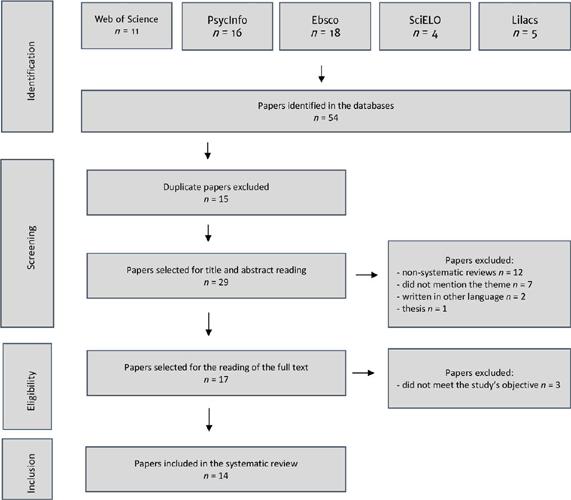
Figure 1
Flowchart of the Search in the Databases
Data analysis
A descriptive analysis was conducted, identifying the objectives, number of studies, programs, and results. A table was developed to organize data and characterize the studies. Additionally, thematic analysis (TA) was adopted to analyze the studies and answer this study’s objectives. The TA enables identifying, analyzing, and establishing themes to summarize key elements from large amounts of data (Braun & Clarke, 2006). Initially, the papers were read in detail, and the main ideas were recorded. Next, data were grouped according to similarity with the three themes established a priori, considering this study’s objectives: consensus among the studies, controversies between the studies, the gaps, and suggestions.
Results
Characterization of the studies
The characterization of the systematic reviews included in this study is presented in Table 1. According to data, most studies (n = 10) were published in the last four years. All reviews aimed to assess the effects of programs directed to parents, including the impacts on the prevention or decrease of child maltreatment. The number of papers in each systematic review varied, with an average of 30.14 papers (SD = 22.43) (minimum = 9; maximum = 75). Most reviews reported a high number of programs, with a minimum of one and a maximum of 102 programs assessed. One review (Pontes et al., 2019) focused on evaluating studies that had addressed a specific parenting program, three included studies with interventions such as home visits or parenting groups (Knerr et al., 2013; Landers et al., 2018; Mikton & Butchart, 2009), two reviews did not specify the names of the interventions tested in the studies (Dretzke et al., 2009; Martins et al., 2020), and one review exclusively investigated online resources for parents (Nieuwboer et al., 2013).
Characterization of the Studies Included

According to the reviews included here, most studies were randomized clinical trials (Dretzke et al., 2009; Knerr et al., 2013; Martins et al., 2020; McCoy et al., 2020; Mikton & Butchart, 2009; Pedersen et al., 2019; Santini & Williams, 2016; Vlahovicova et al., 2017) with follow-up assessments in 64.28% of the reviews (Altafim & Linhares, 2016; Kemmis-Riggs et al., 2018; Knerr et al., 2013; Landers et al., 2018; Lozano-Rodríguez & Valero-Aguayo, 2017; Pedersen et al., 2019; Pontes et al., 2019; Santini & Williams, 2016; Vlahovicova et al., 2017). Most reviews (n = 11) included studies in which the participants were caregivers and children (Altafim & Linhares, 2016; Dretzke et al., 2009; Kemmis-Riggs et al., 2018; Knerr et al., 2013; Landers et al., 2018; Lozano-Rodríguez & Valero-Aguayo, 2017; Martins et al., 2020; Nieuwboer et al., 2013; Pedersen et al., 2019; Pontes et al., 2019; Santini & Williams, 2016). Two reviews indicate that the programs focused on mothers and fathers only (McCoy et al., 2020; Vlahovicova et al., 2017), while one review does not report the participants assessed (Mikton & Butchart, 2009). It is noteworthy that the assessment instruments used to measure the variables were not analyzed due to high heterogeneity. Heterogeneity was also found in the terminology used in search descriptors, though all the studies included descriptors that refer to parenting intervention programs. Among all the interventions, eight reviews present some programs aimed exclusively at mothers (Altafim & Linhares, 2016; Kemmis-Riggs et al., 2018; Knerr et al., 2013; Landers et al., 2018; McCoy et al., 2020; Nieuwboer et al., 2013; Pedersen et al., 2019; Pontes et al., 2019; Santini & Williams, 2016) and four emphasize the higher participation of women, primarily the mothers (Kemmis-Riggs et al., 2018; Knerr et al., 2013; Landers et al., 2018; Pedersen et al., 2019). One review does not provide explicit information about the participants (Mikton & Butchart, 2009). Only in the review by Vlahovicova et al. (2017) all the studies include a minimum percentage of 15% of physically abusive parents. However, the review by Santini and Williams (2016) also found studies that included samples of parents who committed child maltreatment practices. The programs addressed in the remaining reviews were aimed at parents or caregivers without considering the history or occurrence of maltreatment as a criterion. The review by Kemmis-Riggs et al. (2018) addressed programs directed to foster family members, while Landers et al. (2018) was the only review that gathered studies focusing on interventions directed to the parents of young children aged between 0 and 5 years.
As for the format of interventions, two reviews included studies addressing only group programs (Altafim & Linhares, 2016; Pontes et al., 2019), and a predominance of group programs was found in the remaining reviews (Dretzke et al., 2009; Kemmis-Riggs et al., 2018; McCoy et al., 2020; Pedersen et al., 2019; Santini & Williams, 2016), though three reviews did not report on the prevalence of one format over another (Lozano-Rodríguez & Valero-Aguayo, 2017; Martins et al., 2020; Vlahovicova et al., 2017). In addition, most studies included in the reviews did not explain the theoretical framework supporting the programs (Altafim & Linhares, 2016; Dretzke et al., 2009; Landers et al., 2018; Martins et al., 2020; McCoy et al., 2020; Mikton & Butchart, 2009; Pedersen et al., 2019).
Regarding the geographic distribution of the studies included in the reviews, most studies addressing parenting programs intended to prevent child maltreatment were conducted in high-income or developed countries (Mikton & Butchart, 2009; Santini & Williams, 2016). Additionally, the United States stands out in terms of programs directed to parents (Altafim & Linhares, 2016; Kemmis-Riggs et al., 2018; Landers et al., 2018; Martins et al., 2020; Mikton & Butchart, 2009; Pontes et al., 2019; Vlahovicova et al., 2017). Three studies specifically focused on low- and middle-income countries (Knerr et al., 2013; McCoy et al., 2020; Pedersen et al., 2019). Regarding studies conducted in Brazil, only four reviews identified at least one study assessing the effects of a program intended to prevent child maltreatment (Knerr et al., 2013; Pedersen et al., 2019; Pontes et al., 2019; Santini & Williams, 2016).
Based on this review’s objectives, three thematic axes were established to analyze the results: consensus among the studies, controversies between the studies, gaps and suggestions.
Consensus among the studies
Regarding the interventions’ results, the most significant effect was in decreasing child maltreatment (Altafim & Linhares, 2016; Kemmis-Riggs et al., 2018; Knerr et al., 2013; Landers et al., 2018; Lozano-Rodríguez & Valero-Aguayo, 2017; McCoy et al., 2020; Mikton & Butchart, 2009; Pontes et al., 2019; Santini & Williams, 2016; Vlahovicova et al., 2017). In addition, the studies included in the reviews report that most programs emphasized the use of techniques such as improving positive parenting skills (Altafim & Linhares, 2016; Dretzke et al., 2009; Kemmis-Riggs et al., 2018; Knerr et al., 2013; Landers et al., 2018; Martins et al., 2020; McCoy et al., 2020; Mikton & Butchart, 2009; Nieuwboer et al., 2013; Pedersen et al., 2019; Pontes et al., 2019; Santini & Williams, 2016; Vlahovicova et al., 2017), problem-solving skills (Altafim & Linhares, 2016; Kemmis-Riggs et al., 2018; Lozano-Rodríguez & Valero-Aguayo, 2017; McCoy et al., 2020 ; Pontes et al., 2019; Santini & Williams, 2016), anger and stress management (Altafim & Linhares, 2016; Kemmis-Riggs et al., 2018; Lozano-Rodríguez & Valero-Aguayo, 2017; Martins et al., 2020; McCoy et al., 2020; Pontes et al., 2019; Santini & Williams, 2016), and improving the parents’ knowledge regarding child development (Altafim & Linhares, 2016; Kemmis-Riggs et al., 2018; Knerr et al., 2013; Lozano-Rodríguez & Valero-Aguayo, 2017; Mikton & Butchart, 2009; Pedersen et al., 2019; Pontes et al., 2019), reporting favorable results in these measures. Additionally, the level of behavior problems and emotional difficulties among children decreased (Altafim & Linhares, 2016; Dretzke et al., 2009; Kemmis-Riggs et al., 2018; Lozano-Rodríguez & Valero-Aguayo, 2017; Pedersen et al., 2017; Pedersen et al., 2018; al., 2019; Pontes et al., 2019; Santini & Williams, 2016), and improvement was also found in the quality of the relationship established between parents and children (Altafim & Linhares, 2016; Kemmis-Riggs et al., 2018; Knerr et al., 2013; Landers et al., 2018; McCoy et al., 2020; Pedersen et al., 2019). Thus, even though one of the reviews (Martins et al., 2020) did not identify positive effects on decreased cortisol levels after the individuals participated in the programs, there seems to be a consensus regarding the favorable results of the parenting programs.
Another aspect that seems to have reached consensus is the value of practical activities adopted in the programs, such as role-play or discussions of parenting practices recorded in videos. Although some studies addressed by the reviews did not report this specific issue, all those mentioning practical activities consider them to be a positive aspect (Kemmis-Riggs et al., 2018; Knerr et al., 2013; Landers et al., 2018; Lozano-Rodríguez & Valero-Aguayo, 2017; McCoy et al., 2020; Santini & Williams, 2016; Vlahovicova et al., 2017).
Controversies among studies
The reviews do not reach a consensus regarding some aspects, such as the formats of interventions or theoretical frameworks supporting the programs. Even though many studies adopted group interventions, many individual interventions were also found (Knerr et al., 2013). Two reviews report a more significant number of interventions implemented through home visits and support groups (Knerr et al., 2013; Landers et al., 2018), while two addressed online programs and resources, both individual and group programs (Lozano-Rodríguez & Valero-Aguayo, 2017; Nieuwboer et al., 2013).
Regarding the theoretical frameworks supporting the interventions, only six out of the 14 reviews included in this study report the theoretical framework supporting most of the interventions, two reviews were based on the Social Learning Theory (Pontes et al., 2019; Vlahovicova et al., 2017), one reports using the cognitive behavior therapy (Santini & Williams, 2016), and one reports behaviorism (Dretzke et al., 2009). In addition, two reviews report a prevalence of more than one framework, one based on both the Social Learning Theory and cognitive behavior therapy (Kemmis-Riggs et al., 2018) and one based on the Social Learning Theory and behaviorism (Lozano-Rodríguez & Valero-Aguayo, 2017).
Gaps and suggestions pointed out by the studies
The reviews identified gaps in the studies and suggested more studies are needed to advance scientific evidence (Altafim & Linhares, 2016; Knerr et al., 2013; Landers et al., 2018; Martins et al., 2020; Mikton & Butchart, 2009; Pedersen et al., 2019; Pontes et al., 2019; Vlahovicova et al., 2017). However, as previously mentioned, evidence concerning parenting programs intended to prevent child maltreatment in high-income countries is already well established. For this reason, the reviews highlight the importance of further research addressing programs to prevent child maltreatment implemented in low- and middle-income countries (Altafim & Linhares, 2016; McCoy et al., 2020; Mikton & Butchart, 2009; Pedersen et al., 2019), as well as in Brazil (Pontes et al., 2019; Santini & Williams, 2016).
New studies are suggested to implement greater methodological rigor (Altafim & Linhares, 2016; Kemmis-Riggs et al., 2018; Knerr et al., 2013; Landers et al., 2018; Mikton & Butchart, 2009; Pontes et al., 2019; Vlahovicova et al., 2017), especially concerning longitudinal monitoring, to assess whether the results obtained in the interventions hold over time (Altafim & Linhares, 2016; Dretzke et al., 2009; Kemmis-Riggs et al., 2018; Landers et al., 2018; Lozano-Rodríguez & Valero-Aguayo, 2017; McCoy et al., 2020; Pedersen et al., 2019; Pontes et al., 2019; Santini & Williams, 2016; Vlahovicova et al., 2017). Still concerning the methodology, although the studies included in the reviews present data on the effectiveness of the programs, there is a concern related to measuring the mechanisms through which change occurs in these interventions (Landers et al., 2018; Pedersen et al., 2019; Pontes et al., 2019; Vlahovicova et al., 2017), as well as a need to compare the programs (Dretzke et al., 2009; Lozano-Rodríguez & Valero-Aguayo, 2017; Pontes et al., 2019).
As for the participants, the reviews suggest forming diversified groups, including mothers and fathers, in addition to promoting greater participation of fathers (Landers et al., 2018; Pedersen et al., 2019; Pontes et al., 2019) and including more than one informant to assess children (Altafim & Linhares, 2016; Kemmis-Riggs et al., 2018; Pontes et al., 2019). Future studies should also investigate factors associated with engagement in interventions and the low retention of participants in the post-intervention assessments (Lozano-Rodríguez & Valero-Aguayo, 2017; Pontes et al., 2019; Santini & Williams, 2016).
One aspect to be highlighted in future interventions is improving the quality of the relationship between parents or caregivers and children, prioritizing skills such as empathy, sensitivity, and responses in tune with the children’s needs. From this perspective, most reviews included here support the possibility and importance of assessing the relationship between parents and children through observation and practical activities (Altafim & Linhares, 2016; Kemmis-Riggs et al., 2018; Knerr et al., 2013; Landers et al., 2018; Lozano-Rodríguez & Valero-Aguayo, 2017; McCoy et al., 2020; Pedersen et al., 2019; Pontes et al., 2019; Santini & Williams, 2016; Vlahovicova et al., 2017). Finally, one review suggests that future studies implement and assess online interventions directed to parents (Nieuwboer et al., 2013), which would allow for a comparison of the effectiveness of different formats of intervention, for example.
Discussion
Based on the characterization of systematic reviews, assessing programs intended to prevent child maltreatment reveals the importance of carefully establishing criteria for including participants in parenting programs. One reason is that different risk factors exist between caregivers who do not use violent strategies or are not at risk of child abuse and those who already perpetrate violence (Beatriz & Salhi, 2019). These differences are based on individual factors, such as stress level and parental psychopathology, interpersonal and family issues, cultural factors related to the rules and behaviors expected in their contexts, and socioeconomic factors, for example, low education and income (Altafim et al., 2018; Beatriz & Salhi, 2019; Clemens et al., 2019).
From this perspective, the literature indicates that the participants’ individual and social factors need to be considered, as these may be related to the occurrence of child maltreatment, influence the parents’ motivation to adhere to programs intended to prevent or decrease violence against children, as well as the interventions’ effects (Beatriz & Salhi, 2019; Clemens et al., 2019; Santini & Williams, 2016). It is worth noting that, even though the reviews by Vlahovicova et al. (2017) and Santini and Williams (2016) refer to studies addressing programs directed to parents who abuse their children, these reviews do not report data on adherence rates or comparisons with non-violent parents in the intervention’s outcome. Perhaps stigma and social judgment may be related to a lower adherence of parents who already perpetrate violence, as these individuals may resist recognizing the consequences of these practices, which they may consider to be an acceptable way of relating to their children and exercising parenting. Hence, the various risk factors associated with parenting and the family and social environment, as well as the frequency in which the types of parenting practices are adopted, need to be further explored (Beatriz & Salhi, 2019; Altafim et al., 2018) to better adjust the planning and the implementation of interventions in order to achieve satisfactory results in reducing child maltreatment.
Gender differences in the participation of caregivers reported by the reviews are in line with the literature, which highlights the prevalence of people who play the role of mothers in the assessment and monitoring of children (Smith et al., 2012; Guisso et al., 2019). It was hypothesized that this is related to cultural aspects regarding the care provided to children and involvement with children, which are usually deemed a maternal responsibility. This assumption is reinforced by studies that indicate that the higher participation of mothers and the focus of programs on the mother-child pair may be related to cultural and institutional gender issues (Smith et al., 2012; Panter-Brick et al., 2014). This bias can lead to increased recruitment of mother participants and greater accessibility of women to programs.
However, there is evidence of the relevance of fathers’ involvement in child development, an aspect seldom explored in parenting programs (Landers et al., 2018; Panter-Brick et al., 2014). The lack of participation of fathers in guidance programs is corroborated by a systematic review that assessed the involvement of fathers in 15 programs intended to prevent child maltreatment and identified that only two interventions exclusively focused on fathers, and, in the others, the percentage of fathers participating was small compared to the mothers’. This information reveals that it is difficult to analyze the effectiveness of programs among fathers due to the samples’ prevalence (Smith et al., 2012). Thus, to better understand this phenomenon, it is crucial to conduct new studies to assess participation and the factors associated with recruitment, engagement, and attendance of fathers in parenting programs, considering that fathers are the individuals who most frequently perpetrate violence against children (Malta et al., 2017; Macedo et al., 2020).
Analysis of the programs addressed in the studies included in the systematic reviews shows that the Triple P, Incredible Years, and Parent-Child Interaction Therapy (PCIT) programs were cited in at least 50% of the studies included in the reviews. Furthermore, one of the reviews (Pontes et al., 2019) reports that empirical studies investigated the ACT Raising Safe Kids Program. These programs may have received greater attention because they have a long scientific trajectory with randomized controlled studies in different countries demonstrating their effectiveness and applicability (Altafim et al., 2021; Long et al., 2017; Webster-Stratton & Bywater, 2019). Finally, given the scientific framework supporting these four programs, they are also supported by large institutions, such as the World Health Organization (Hardcastle et al., 2015), which possibly influences large-scale dissemination. The ACT program, for instance, stands out in Brazil, a fact that is possibly explained by its good results in promoting positive parenting practices and decreasing emotional and behavioral problems among children, as reported by randomized clinical trials (Altafim & Linhares, 2019; Altafim et al., 2021; Pontes et al., 2019).
The systematic reviews show that intervening with parents is a promising strategy to prevent and decrease child maltreatment, which can positively influence child development and reduce emotional and behavioral problems in children. However, in parenting programs, the changes regarding decreased child maltreatment are not derived from the direct prevention of violent behavior but by developing the parents' skills, changing parenting styles and improving interactions with children (Altafim & Linhares, 2016; World Health Organization, 2009). Studies show that problem-solving techniques, the development of positive parenting practices, and anger and stress management predominated among the approaches adopted to prevent violence against children. A recent literature review indicates that conducting programs based on these aspects can lead to positive outcomes for parents and children (Benedetti et al., 2020).
Thus, it is noteworthy that it is valid to assess and monitor whether results hold over time among children and parents to measure the impact of interventions. In this analysis, we noticed that most of the studies (Kemmis-Riggs et al., 2018; McCoy et al., 2020; Pedersen et al., 2019; Pontes et al., 2019; Santini & Williams, 2016; Vlahovicova et al., 2017) suggest more extensive follow-ups, while the question of whether the positive effects hold over time remains.
Although most reviews include randomized clinical trials with programs presenting effective results, there is a need to investigate the mechanisms through which changes occur and influence the scores obtained by parents and children after interventions (Landers et al., 2018; Pedersen et al., 2019; Pontes et al., 2019; Vlahovicova et al., 2017). It is assumed that this emphasis on specific change mechanisms can help understand how programs work and promote a reflection on how effectiveness can be scientifically sustained.
Most studies did not report the theoretical frameworks supporting the programs reviewed. Hence, we cannot determine whether one prevents violence more effectively than others. This finding is in line with a recent systematic review presenting parenting programs' characteristics, observing that most studies did not mention the theory behind the programs (Benedetti et al., 2020). Even though some studies report the prevalence of the cognitive-behavioral approach (Bochi et al., 2016; Santini & Williams, 2016), it seems that no consensus was reached in the literature regarding the predominance of one theoretical approach in parenting programs. The hypothesis is that it occurs because, despite the programs having a theoretical basis, the studies report only the techniques or topics covered, not clearly explaining the assumptions that support the interventions.
Even though most of the programs investigated by the studies included in the reviews are group interventions, individual interventions focusing on the interaction between parents and children are also highlighted in the literature. One of the reasons is the possibility of intervening with the children’s natural environment, implementing practical activities that focus on changing the pattern of interactions, and seeking assertive strategies (Knerr et al., 2013; Landers et al., 2018). Online platforms are another modality adopted by the programs. Although empirical research is still incipient, parents can benefit from resources available on the internet to seek clarification of doubts, acquire knowledge, and get involved in online interventions (Nieuwboer et al., 2013). Given the different formats of interventions, it is essential to consider the programs’ applicability and cost-effectiveness, considering the context in which a program will be provided, its target population, the access to the training, and the price of the training and material used in the interventions (Altafim & Linhares, 2016; Desai et al., 2017; Efeybera et al., 2018; Knerr et al., 2013; McCoy et al., 2020; Santini & Williams, 2016; World Health Organization, 2009). In this sense, investing in technological innovation to implement online parenting programs seems to be a good opportunity. Furthermore, the use of technology allied with interventions can be justified by the high number of parents accessing the internet to seek parenting support, in addition to the scientific gap in the effectiveness of online programs (Nieuwboer et al., 2013).
There are Brazilian studies addressing the implementation and effects of parenting programs on the prevention of child maltreatment (Altafim et al., 2021; Altafim & Linhares, 2019; Pontes et al., 2019). However, these studies should consider the diversity of the Brazilian context, filling in gaps indicated in studies reporting the lag of interventions in Brazil, as in other middle- and low-income countries (Desai et al., 2017). This difference among countries and the lack of Brazilian studies were also reported by systematic reviews on parenting programs (Benedetti et al., 2020; Bochi et al., 2016).
In short, these considerations are expected to improve studies in terms of methodological aspects, contributing to more reliable and scientific results. Considering the previous discussion, future studies adopting refined methodological rigor are suggested to minimize biases and obtain clear and scientific assessments regarding how parenting programs afect the different dimensions of the relationship between parents and children.
This study reviewed the results of parenting interventions described in systematic reviews. Hence, it presents an overview of the studies’ consensus and controversies regarding the characteristics, participants, techniques, theoretical frameworks, and results. The gaps identified in the reviews can guide future research and contribute to science, enabling the implementation of interventions with scientific and empirical basis. Thus, although many systematic reviews were retrieved, we observed there may be the risk of bias due to the descriptors and databases chosen, and thus, some studies may not have been located.
Concerning the findings, despite the large number of parental violence prevention programs assessed by the reviews, there is a lack of sufficient evidence to determine whether a given program is more effective than others. Therefore, parenting programs with scientific evidence should be integrated so that existing content and structures can be used and adapted according to parental needs identified in different social contexts. Unifying the programs can favor the development of a single robust program with great potential for dissemination.
Finally, a lack of studies conducted in low- and middle-income countries was found. Therefore, there is a need to encourage programs directed to parents in these contexts to improve and promote positive parenting practices constantly. The gaps also indicate a need for studies implementing greater methodological rigor to ensure in-depth scientific evidence is obtained using randomized clinical trials with a longitudinal approach in order to monitor the benefits of interventions over the long term.
References
Altafim, E. R. P., & Linhares, M. B. M. (2016). Universal violence and child maltreatment prevention programs for parents: A systematic review. Psychosocial Intervention, 25(1), 27–38. https://doi.org/10.1016/j.psi.2015.10.003
Altafim, E. R. P., & Linhares, M. B. M (2019). Preventive intervention for strengthening effective parenting practices: A randomized controlled trial. Journal of Applied Developmental Psychology, 62, 160–172. https://doi.org/10.1016/j.appdev.2019.03.003
Altafim, E. R. P., McCoy, D. C., & Linhares, M. B. M. (2018). Relations between parenting practices, socioeconomic status, and child behavior in Brazil. Children and Youth Services Review, 89, 93–102. https://doi.org/10.1016/j.childyouth.2018.04.025
Altafim, E. R. P., McCoy, D. C., & Linhares, M. B. M. (2021). Unpacking the impacts of a universal parenting program on child behavior. Child Development, 92(2), 626–637. https://doi.org/10.1111/cdev.13491
Beatriz, E., & Salhi, C. (2019). Child discipline in low and middle income countries: Socioeconomic disparities at the household and country-level. Child Abuse & Neglect, 94, 104023. https://doi.org/10.1016/j.chiabu.2019.104023
Benedetti, T. B., Rebessi, I. P., & Neufeld, C. B. (2020). Programas de orientação de pais em grupo: Uma revisão sistemática. Psicologia: Teoria e Prática, 22(1), 368–398. https://dx.doi.org/10.5935/1980-6906/psicologia.v22n1p399-430
Bochi, A., Friedrich, D., & Pacheco, J. T. B. (2016). Revisão sistemática de estudos sobre programas de treinamento parental. Temas em Psicologia, 24(2), 549–563. http://dx.doi.org/10.9788/TP2016.2-09
Braun, V., & Clarke, V. (2006). Using thematic analysis in psychology. Qualitative Research in Psychology, 3(2), 77–101. https://doi.org/10.1191/1478088706qp063oa
Clemens, V., Decker, O., Plener, P. L., Brähler, E., & Fegert, J. M. (2019). Autoritarismus wird salonfähig in Deutschland: Ein Risikofaktor für körperliche Gewalt gegen Kinder? Zeitschrift fur Kinder und Jugendpsychiatrie und Psychotherapie, 47(5), 453–465. https://doi.org/10.1024/1422-4917/a000684
Coelho, R., Levandowski, M. L., Mansur, R. B., Cunha, G. R., Asevedo, E., Zugman, A., Salum, G. A., Gadelha, A., Pan, P. M., Rizzo, L. B., Mandro, G., Mari, J. J., Rhode, L. A., Miguel, E. C., Bressan, R. A., Brietzke, E., & Grassi-Oliveira, R. (2016). Serum copeptin in children exposed to maltreatment. Psychiatry and Clinical Neurosciences, 70(10), 434–441. https://doi.org/10.1111/pcn.12412
Desai, C. C., Reece, J.-A., & Shakespeare-Pellington, S. (2017). The prevention of violence in childhood through parenting programmes: A global review. Psychology, Health & Medicine, 22, 166–186. https://doi.org/10.1080/13548506.2016.1271952
Dretzke, J., Davenport, C., Frew, E., Barlow, J., Stewart-Brown, S., Bayliss, S., Taylor, R. S., Sandercock, J., & Hyde, C. (2009). The clinical effectiveness of different parenting programmes for children with conduct problems: A systematic review of randomised controlled trials. Child and Adolescent Psychiatry and Mental Health, 3, Article 7. https://doi.org/10.1186/1753-2000-3-7
Efeybera Y., McCoy, D. C., Wuermli, A. J., & Betancourt, T. S. (2018). Integrating early child development and violence prevention programs: A systematic review. New Directions for Child and Adolescent Development, (159), 27–54. https://doi.org/10.1002/cad.20230
Gershoff, E. T., & Grogan-Kaylor, A. (2016). Spanking and child outcomes: Old controversies and new meta-analyses. Journal of Family Psychology, 30(4), 453–469. https://doi.org/10.1037/fam0000191
Guisso, L., Bolze, S. D. A., & Viera, M. L. (2019). Práticas parentais positivas e programas de treinamento parental: Uma revisão sistemática da literatura. Contextos Clinicos, 12(1), 226–255. https://doi.org/10.4013/ctc.2019.121.10
Hardcastle, K., Bellis, M., Hughes, K., & Sethi, D. (2015). Implementing child maltreatment prevention programmes: What the experts say. World Health Organization. https://apps.who.int/iris/handle/10665/326346
Kemmis-Riggs, J., Dickes, A., & McAloon, J. (2018). Program components of psychosocial interventions in foster and kinship care: A systematic review. Clinical Child and Family Psychology Review, 21, 13–40. https://doi.org/10.1007/s10567-017-0247-0
Knerr, W., Gardner, F., & Cluver, L. (2013). Improving positive parenting skills and reducing harsh and abusive parenting in low- and middle-income countries: A systematic review. Prevention Science, 14, 352–363. https://doi.org/10.1007/s11121-012-0314-1
Landers, A. L., McLuckie, A., Cann, R., Shapiro, V., Visintini, S., MacLaurin, B., Trocmé, N., Saini, M., & Carrey, N. J. (2018). A scoping review of evidence-based interventions available to parents of maltreated children ages 0-5 involved with child welfare services. Child Abuse & Neglect, 76, 546–560. https://doi.org/10.1016/j.chiabu.2017.09.012
Long, N., Edwards, M. C., & Bellando, J. (2017). Parent training interventions. In J. L. Matson (Ed.), Handbook of childhood psychopathology and developmental disabilities treatment (pp. 63–86). Springer.
Lozano-Rodríguez, I., & Valero-Aguayo, L. (2017). Una revisión sistemática de la eficacia de los programas de entrenamiento a padres. Revista de Psicologia Clinica con Niños y Adolescentes, 4(2), 85–101. https://www.redalyc.org/pdf/4771/477152556001.pdf
Macedo, D. M., Lawrenz, P., Von Hohendorff, J., Freitas, C. P. P., Koller, S. H., & Habigzang, L. F. (2020). Characterization of child maltreatment cases identified in health services. Paideia, 30, e3018. https://doi.org/10.1590/1982-4327e3018
Malta, D. C., Bernal, R. T. I., Silva, M. M. A. da, & Freitas, M. I. F. (2017). Fatores associados a violências contra crianças em Serviços Sentinela de Urgência nas capitais brasileiras. Ciência & Saúde Coletiva, 22(9), 2889–2898. https://doi.org/10.1590/1413-81232017229.12752017
Martins, R. C., Blumenberg, C., Tovo-Rodrigues, L., Gonzalez, A., & Murray, J. (2020). Effects of parenting interventions on child and caregiver cortisol levels: Systematic review and meta-analysis. BMC Psychiatry, 20, Article 370. https://doi.org/10.1186/s12888-020-02777-9
McCoy, A., Melendez-Torres, G. J., & Gardner, F. (2020). Parenting interventions to prevent violence against children in low- and middle-income countries in East and Southeast Asia: A systematic review and multi-level meta-analysis. Child Abuse & Neglect, 103, 104444. https://doi.org/10.1016/j.chiabu.2020.104444
Mikton, C., & Butchart, A. (2009). Child maltreatment prevention: A systematic review of reviews. Bull World Health Organization, 87, 353–361. https://doi.org/10.2471/BLT.08.057075
Moher, D., Liberati, A., Tetzlaff, J., Altman, D. G., & The PRISMA Group. (2009). Preferred Reporting Items for Systematic Reviews and Meta-Analyses: The PRISMA Statement. PLoS Medicine, 6(7), e1000097. https://doi.org/10.1371/journal.pmed.1000097
Nieuwboer, C. C., Fukkink, R. G., & Hermanns, J. M. (2013). Peer and professional parenting support on the internet: A systematic review. Cyberpsychology, Behavior and Social Networking, 16(7), 518–528. https://doi.org/10.1089/cyber.2012.0547
Panter-Brick, C., Burgess, A., Eggerman, M., McAllister, F., Pruett, K., & Leckman, J. F. (2014). Practitioner review: Engaging fathers-recommendations for a game change in parenting interventions based on a systematic review of the global evidence. Journal of Child Psychology and Psychiatry, 55(11), 1187–1212. https://doi.org/10.1111/jcpp.12280
Pedersen, G. A., Smallegange, E., Coetzee, A., Hartog, K., Turner, J., Jordans, M. J. D., & Brown, F. L. (2019). A systematic review of the evidence for family and parenting interventions in low- and middle-income countries: Child and youth mental health outcomes. Journal of Child and Family Studies, 28, 2036–2055. https://doi.org/10.1007/s10826-019-01399-4
Pinquart, M. (2016). Associations of parenting dimensions and styles with internalizing symptoms in children and adolescents: A meta-analysis. Marriage & Family Review, 53(7), 613–640. https://doi.org/10.1080/01494929.2016.1247761
Pontes, L. B., Siqueira, A. C., & Williams, L. C. D. A. (2019). A systematic literature review of the ACT raising safe kids parenting program. Journal of Child and Family Studies, 28, 3231–3244. https://doi.org/10.1007/s10826-019-01521-6
Rates, S. M. M., Melo, E. M. de, Mascarenhas, M. D. M., & Malta, D. C. (2015). Violência infantil: Uma análise das notificações compulsórias, Brasil 2011. Ciência & Saúde Coletiva, 20(3), 655–665. https://doi.org/10.1590/1413-81232015203.15242014
Santini, P. M., & Williams, L. C. A. (2016). Parenting programs to prevent corporal punishment: A systematic review. Paideia, 26(63), 121–129. https://doi.org/10.1590/1982-43272663201614
Smith, T. K., Duggan, A., Bair-Merritt, M. H., & Cox, G. (2012). Systematic review of fathers’ involvement in programmes for the primary prevention of child maltreatment. Child Abuse Review, 21(4), 237–254. https://doi.org/10.1002/car.2195
United Nations Children’s Fund. (2017). A familiar face: Violence in the lives of children and adolescents. https://data.unicef.org/resources/a-familiar-face/
Vlahovicova, K., Melendez-Torres, G. J., Leijten, P., Knerr, W., & Gardner, F. (2017). Parenting programs for the prevention of child physical abuse recurrence: A systematic review and meta-analysis. Clinical Child and Family Psychology Review, 20, 351–365. https://doi.org/10.1007/s10567-017-0232-7
Webster-Stratton, C., & Bywater, T. (2019). The Incredible Years series: An internationally evidenced multimodal approach to enhancing child outcomes. In B. H. Fiese, M. Celano, K. Deater-Deckard, E. N. Jouriles, & M. A. Whisman (Eds.), APA handbook of contemporary family psychology (Vol. 3, pp. 343–359). American Psychological Association.
World Health Organization. (2009). Preventing violence through the development of safe, stable and nurturing relationships between children and their parents and caregivers. https://apps.who.int/iris/handle/10665/44088
World Health Organization. (2014). Global status report on violence prevention. https://www.who.int/publications/i/item/WHO-NMH-NVI-14.2
World Health Organization, & International Society for Prevention of Child Abuse and Neglect. (2006). Preventing child maltreatment: A guide to taking action and generating evidence. https://www.who.int/publications/i/item/preventing-child-maltreatment-a-guide-to-taking-action-and-generating-evidence
Author notes
Correspondence concerning this article should be addressed to Marina Heinen, Universidade do Vale do Rio dos Sinos, Centro de Ciências da Saúde, Avenida Unisinos, 950, Cristo Rei, São Leopoldo, RS, Brazil. CEP 93022-750. Email: m.marinaheinen@gmail.com
